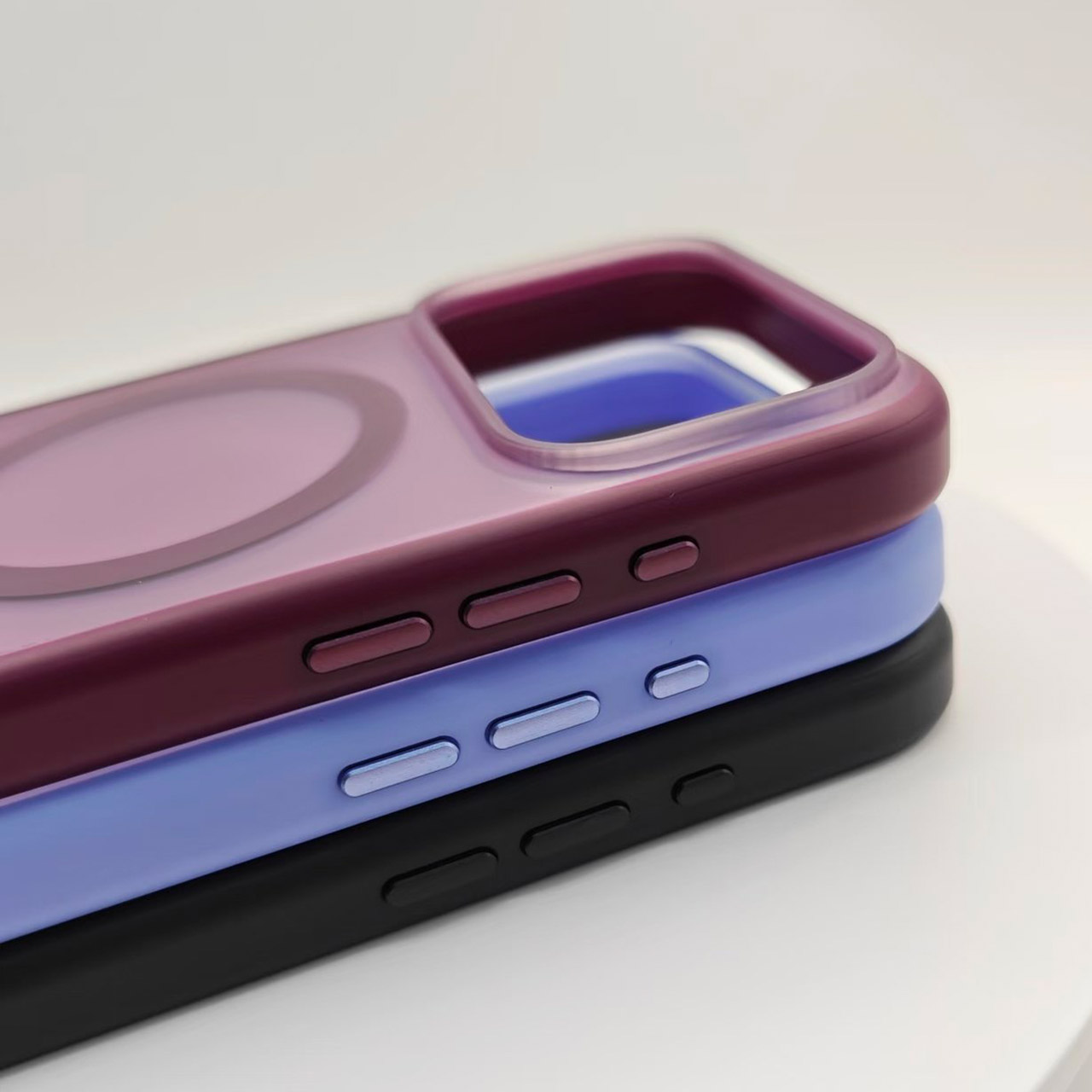
Photo credit: Pipfix Protective cases for the upcoming iPhone 18 Pro models have now appeared in clear detail through recent leaks. These accessories give an early sense of the colors and subtle shifts Apple has prepared for its 2026 flagships. Dark Cherry stands out among the options on display. This shade brings a rich, wine-like red that feels warm and substantial rather than bright.
Cases in the leaks also show a Light Blue and Dark Gray option, as well as Silver to round out the expected lineup (albeit it is not in every sample we’ve seen). This quartet of options shows that Apple intends to cater to everyone while also maintaining a coherent appearance. The phone bodies under these cases keep the same overall design as current Pro models, with smooth aluminium on the sides and a large camera bar on the back.
The iPhone 18 Pro and Pro Max have a slightly larger design, which gives it a thicker profile and hints there’s extra capacity inside for some new toys. That extra depth is most likely home to a 48-megapixel main camera with a variable aperture, which allows the camera to change how much light enters based on the conditions rather than the user having to manually switch modes.
Of course, MagSafe rings fit nicely in every case, though some of the clear versions appear to be a little smaller than last year, with a cleaner magnetic region that doesn’t cover nearly as much of the phone back, which should make the end product feel a little more open and true to the underlying color. One thing to keep in mind is the size change, so if you’re one of the lucky ones upgrading to the new model, you’ll most likely need fresh protection once they arrive, and the cases from last year won’t fit quite as neatly anymore. [Source]
HiFiMAN helped turn planar magnetic headphones into a serious personal audio category, and the company has never been shy about taking weird swings. Nanometer-thin diaphragms, Stealth Magnets, and open-back designs that look like they escaped from an engineering lab with no adult supervision — this is familiar territory. But the HiFiMAN HE1000 WiFi is not just another wireless headphone with a luxury badge and a bigger invoice.
The high-performance wireless headphone market has already moved well past “good for Bluetooth.” The Focal Bathys MG pushed wireless ANC into more serious audiophile territory at $1,499, while the DALI IO-12 went even higher at $1,750 with its SMC driver technology and hi-fi-first tuning. Mark Levinson’s No. 5909 also helped prove that premium wireless headphones could be more than airport jewelry for people who alphabetize their boarding passes.
HiFiMAN, however, has taken a bigger and riskier step. At $2,699, the HE1000 WiFi is an open-back planar magnetic headphone with built-in WiFi streaming, Bluetooth, USB audio, Stealth Magnet drivers, and support for high-resolution playback well beyond what conventional Bluetooth headphones can deliver. It is less “wireless ANC rival” and more “high-end headphone system with the cable surgically removed.”
The question is whether WiFi streaming actually moves the HE1000 closer to wired high-end headphone performance, or whether HiFiMAN has spent two years building one of the smartest ideas in wireless headphones and left just enough unfinished to make the price sting.
Advertisement
HiFiMAN HE1000 WiFi
Specifications and Technology
The HE1000 WiFi is more than a passive planar magnetic headphone with wireless connectivity added on. HiFiMAN has integrated a complete playback chain inside the earcup, including its HYMALAYA Mini DAC, headphone amplifier, and WiFi streaming platform. The HYMALAYA Mini DAC measures only 8mm, which makes the internal packaging impressive given the limited space available inside a headphone.
The DAC section is specified with THD+N of 0.0055% and 105dB of channel separation. Via USB-C, the HE1000 WiFi supports up to 768kHz/32-bit PCM and DSD512, which is far beyond the resolution of most commercially available music files. Those figures are technically impressive, but the more relevant question is how well the DAC, amplifier, wireless platform, and planar drivers work together as a complete system.
As expected from a headphone carrying the HE1000 name, the driver section includes HiFiMAN’s nanometer-thickness diaphragm and Stealth Magnet technology. These are designed to reduce unwanted acoustic interference, improve transient response, and preserve clarity. The engineering is familiar from HiFiMAN’s higher-end planar magnetic headphones, but the WiFi implementation makes this version meaningfully different from the passive HE1000 models.
The main feature is WiFi streaming. Bluetooth has improved, and the HE1000 WiFi still supports it, but Bluetooth remains limited by codec bandwidth and compression. WiFi gives the headphone a wider path for high-resolution and lossless playback over a home or office network, which is the core argument for this product. The goal is straightforward: deliver more of the sound quality associated with a wired planar headphone while retaining the freedom of wireless listening.
Advertisement
That does not automatically make the HE1000 WiFi better than every premium Bluetooth headphone, nor does it remove the usual questions about app support, setup, stability, battery life, and daily usability. But it does give HiFiMAN a different technical angle in a category where most wireless headphones are still built around Bluetooth first. At its asking price, that difference needs to be clearly audible and easy to live with.
They can also be used over standard Bluetooth, with a Qualcomm QCC5181 chip that supports LDAC for up to 96kHz playback. That is more than enough for Spotify, YouTube, and most casual listening sessions where convenience matters more than chasing every last bit. Bluetooth also gives the HE1000 WiFi a meaningful battery life advantage over WiFi mode, but we’ll get to battery longevity shortly.
Design & Comfort
A quick word on what comes in the package. Technically, it is not really a box, but the same kind of faux leather-wrapped display case HiFiMAN has used with other HE1000 models. It looks the part, although the previous hardback owner’s manual has been replaced by a more ordinary paperback version. Accessories are also minimal: one six-foot USB-C to USB-A cable. That is about it. When the headphone is wireless, HiFiMAN clearly decided the accessory drawer did not need to audition for Hoarders.
Advertisement. Scroll to continue reading.
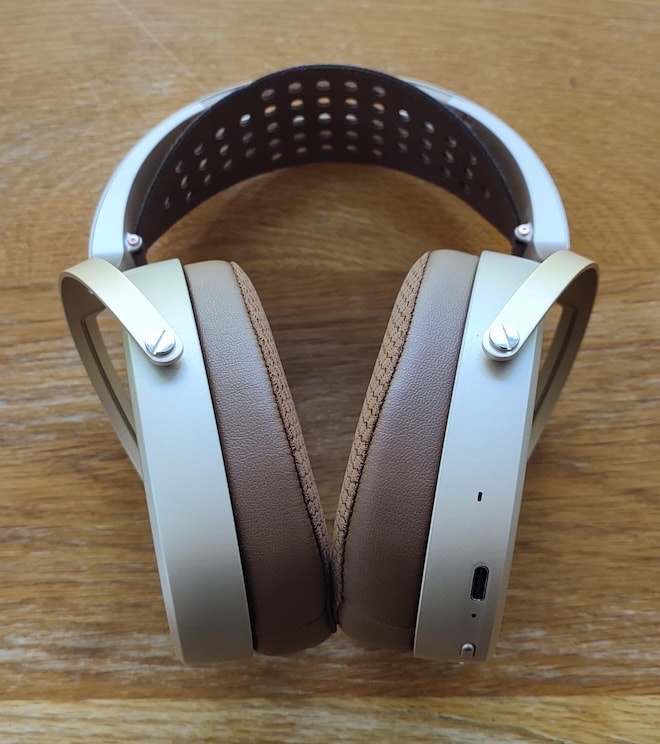
HiFiMAN has used its Gen. 2 headband on the HE1000 WiFi, which is a bit of a mixed bag. The upside is weight reduction, with the newer design shaving roughly 20 to 30 grams compared to some older HiFiMAN headbands. The trade-off is that it does not offer the same 360-degree earcup swivel found on the wired HE1000 and Arya models. It does feel reasonably sturdy, however, and should survive the occasional knock without requiring a grief counselor.
Advertisement
The earcups retain the familiar egg-shaped profile used across the HE1000 and Arya lines, but they are slightly deeper here to accommodate the internal circuitry. That extra depth does not hurt comfort. One of the long-standing advantages of this design is the amount of space inside the pads, with little risk of the driver or earpad pressing against the outer ear.
Materials are a mix of metal and plastic, which helps keep weight under control while still giving the HE1000 WiFi some visual connection to HiFiMAN’s higher-end models. At 452 grams, or almost exactly one pound, it is not especially light, but it is manageable for an open-back planar headphone with built-in amplification, DAC, Bluetooth, and WiFi streaming hardware.
The catch is that the build quality and finish do not fully communicate a $2,699 asking price. It feels solid enough, and comfort is generally strong, but this is not the kind of physical object that immediately makes the near-three-grand number feel self-explanatory. The HE1000 WiFi is clearly betting that the sound quality and wireless execution will do the heavy lifting. At this price, they need to.
The color? I like it, although I can see it being somewhat divisive. It is more interesting than another safe silver or black finish, and there is a faint luxury-car interior vibe to it — Rolls-Royce or Bentley from a distance, with the understanding that nobody from Crewe is losing sleep over the upholstery.
Advertisement
Comfort is far less debatable. The suspension strap distributes the weight evenly across the head, making longer listening sessions easy to manage without obvious hotspots or fatigue. Clamp force is on the firmer side, but I actually prefer that here. The HE1000 WiFi stays put when you move your head, which is rather important when the whole point is wireless freedom.
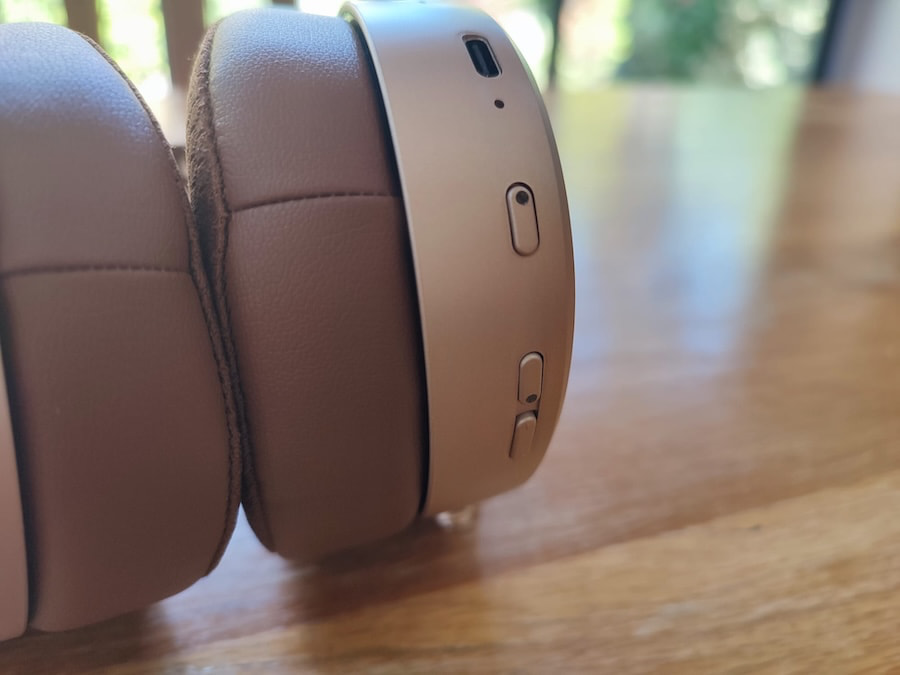
The controls are sensibly arranged and easy to understand. From top to bottom, there is a volume rocker, a function button that switches between WiFi, USB, and Bluetooth modes, and a power button. The function button includes an indicator light for the selected mode, while the power button uses colored lighting to show charging and battery status. The volume control could use finer adjustment, but the overall layout is simple and practical, which is exactly how it should be.
Battery life, unfortunately, is where things get less flattering. In my testing, the HE1000 WiFi managed roughly five hours over WiFi and about 12 hours over Bluetooth, the latter falling well short of HiFiMAN’s quoted figure of up to 23 hours. Charging takes around the claimed four hours, which is not exactly a rapid turnaround. In daily use, that means you need to charge them at the end of the night or risk starting the next day with a very expensive pair of silent earmuffs.
Most wireless headphones are easy to get running. Power them on, open the Bluetooth menu on your phone, select the model, and you are usually listening within seconds. Not exactly NASA.
Advertisement
The HE1000 WiFi is different, and not always in a good way. Connecting the headphones to my home network proved more troublesome than expected, and the process feels less polished than it should for a product at this level.
HiFiMAN seems aware of the issue, because the company has released several setup videos to guide users through the process. That helps, but it also says something. Getting the HE1000 WiFi online requires users to navigate local network pages that look rather basic, follow multiple steps, and make sure the headphones are properly connected before WiFi playback becomes available. For some audiophiles, especially those comfortable with networking and streaming hardware, this may not be a major obstacle. For everyone else, it could be the point where the WiFi promise starts to feel more like homework.
That matters because the HE1000 WiFi’s best argument is its WiFi mode. If setup friction pushes owners toward Bluetooth or wired use out of frustration, the product loses some of its reason for being. Bluetooth works, and it is useful, but nobody is spending $2,699 on these because they needed another Bluetooth headphone.
Advertisement. Scroll to continue reading.
Advertisement
There is also the issue of software support. Not every music app can cast over WiFi in the way the HE1000 WiFi requires, and some services reserve that functionality for paid tiers. Spotify and YouTube Music, for example, require premium subscriptions for casting support. That does not make the HE1000 WiFi unusable, but it does mean buyers need to understand exactly how they plan to stream before assuming WiFi playback will be seamless across every app they use.
Firmware updates are another sore spot. Bluetooth updates run through HiFiMAN’s GAIA app, but WiFi module updates require manually downloading files and uploading them through a browser-based local interface. That feels clumsy for a headphone built around WiFi.
HiFiMAN needs to fold the entire update process into one app. These issues do not ruin the HE1000 WiFi, but they do make the experience feel less polished than the hardware concept deserves.
Listening
The HiFiMAN HE1000 WiFi delivers a listening experience that very few headphones currently offer. Being able to listen to lossless music without being tied to a desk, or dealing with a cable brushing against your shirt every time you move, is genuinely liberating. You can walk around the house or office and still listen at a level that feels closer to a serious headphone rig than a typical wireless setup. Yes, you could plug a passive headphone into a DAP and get some of that mobility, but not carrying anything at all is a different proposition.
That is the HE1000 WiFi’s strongest argument. It gives you real freedom without reducing the experience to background listening. That alone helps offset some of the complaints about setup, build quality, and day-to-day usability. The better news is that the headphones also sound very good on their own terms.
Advertisement
The jump from Bluetooth to WiFi is not subtle. Detail retrieval improves, staging opens up, and the presentation feels more composed. To give the HE1000 WiFi the best possible chance, I spent most of my listening time in WiFi mode, playing lossless FLAC files from my phone.
What became clear rather quickly is that the HE1000 WiFi does not simply follow HiFiMAN’s older house sound. There is still plenty of planar speed and openness, but the tuning has moved in a slightly different direction. Let’s start with the bass.
Bass
Throughout the review process, I compared the HE1000 WiFi with the HE1000 Unveiled, which I had on hand and know well. The first meaningful difference showed up in the bass.
The HE1000 WiFi does not deliver the kind of exaggerated low-end weight found in many wireless headphones, especially ANC models, but there is a subtle midbass lift that gives music some added warmth and body. It is not overdone, and it helps the headphone sound a little fuller without turning the presentation thick or sluggish.
Advertisement
Sub-bass extension is also strong, with only a slight sense of roll-off below roughly 30Hz. On Hans Zimmer and James Newton Howard’s “Why So Serious?,” the deep 20Hz rumble was still present enough to be felt, not merely heard. That is not something every open-back planar handles convincingly, and it gives the HE1000 WiFi more low-end authority than expected.
Midrange
A bass lift usually comes with a trade-off, and with the HE1000 WiFi, that shows up in the midrange. Compared again with the HE1000 Unveiled, the wireless model sounds a little more restrained through the mids and does not deliver the same top-tier clarity or immediacy. Vocals are smooth and well controlled, but they do not step forward with the same transparency, and guitar solos do not quite dig in with the emotional pull you get from the HE1000 Unveiled or Audio-Technica ATH-ADX7000.
That is not a deal-breaker. The HE1000 WiFi has a relaxed, easygoing midrange that many listeners may actually prefer, especially for longer sessions. It is not trying to spotlight every breath, string scrape, or studio chair creak like a detective with a grudge. It is more forgiving than that.
Advertisement. Scroll to continue reading.
Advertisement
The context matters as well. We are comparing the HE1000 WiFi against serious wired audiophile headphones that live in rarefied air. The fact that HiFiMAN’s wireless implementation can stay in the conversation at all is impressive. It may not match the best passive models for midrange openness or resolution, but it gets close enough to make the cable start looking less essential.
Treble
Some previous HiFiMAN headphones, including the Arya Organic, could lean a little hot in the upper frequencies. The HE1000 WiFi avoids that trap. There is still plenty of treble energy and sparkle, but it walks the line between excitement and sharpness without turning cymbals into dental work.
Extension is excellent, with enough air and control to give woodwinds, hi-hats, and upper harmonics real presence. L’Impératrice’s “La lune” was a good example, with the faint triangle hits cutting through the mix cleanly and sounding natural rather than etched for effect.
There are no obvious peaks or dips that call attention to themselves, which helps the HE1000 WiFi maintain a more natural and cohesive presentation. HiFiMAN got the treble balance right here: lively, open, and detailed, but not aggressive enough to make you start bargaining with the volume control.
Advertisement
Soundstaging & Imaging
The HE1000 WiFi does not throw an especially wide soundstage, but what it does inside that medium-sized space is far more important. Imaging is impressively precise, especially for a wireless headphone, and placement feels stable rather than vague or artificially stretched.
As with other egg-shaped HiFiMAN designs, the tall driver geometry helps create a convincing sense of height when the recording calls for it. The center image is clearly locked in, and individual layers remain easy to follow even during busier passages.
TOOL’s “Chocolate Chip Trip” is a useful stress test here, because the track is basically Danny Carey throwing percussion, electronics, and spatial chaos around the room to see what survives. The HE1000 WiFi keeps those sounds organized, with effects appearing from distinct positions rather than collapsing into a confused blob. It may not be the widest presentation HiFiMAN has ever produced, but the focus and positional accuracy are excellent.
The Bottom Line
The HiFiMAN HE1000 WiFi is one of the more compelling wireless headphone concepts to come along in years because it does something most premium wireless models still do not: it treats sound quality as the main event, not a bonus feature hiding behind ANC, app tricks, and faux-luxury packaging.
What makes it unique is the WiFi streaming implementation. The ability to walk around the house or office listening to lossless music through an open-back planar headphone without a cable hanging off your body is not a small thing. It changes how and where you listen. The HE1000 WiFi delivers much of the speed, openness, bass control, treble refinement, and imaging precision listeners expect from a serious HiFiMAN planar design, but without chaining you to the desk like a suspect in a bad procedural.
Advertisement
It is not perfect. The setup process is clumsy, firmware updates feel less polished than they should, battery life is underwhelming, and the build quality does not fully sell the premium positioning. The midrange is also smoother and less immediate than the HE1000 Unveiled, so those expecting the same level of transparency from HiFiMAN’s best passive designs should temper expectations.
But taken as a complete product, the HE1000 WiFi is still a bold and largely successful swing. It is for listeners who want high-end planar sound with real freedom of movement, who mostly listen at home or in an office, and who are willing to tolerate some early-adopter friction for a genuinely different experience.
The bigger question is whether the less expensive Arya WiFi, which we are also reviewing, can deliver enough of the same magic for a lot less money. If it gets close, HiFiMAN may have an even more interesting problem on its hands.
Advertisement. Scroll to continue reading.
Advertisement
Pros:
Excellent sound quality for a wireless headphone
WiFi streaming delivers a clear step up over Bluetooth
Lossless playback without being tethered to a desk
Strong bass extension with tasteful midbass warmth
Smooth, non-fatiguing midrange
Treble is lively, airy, and well controlled without getting sharp
Precise imaging and strong layer separation
Comfortable for long listening sessions
Secure fit with firmer clamp force
Supports WiFi, Bluetooth, and USB modes
LDAC support over Bluetooth
Clever all-in-one design with built-in DAC, amplifier, and streamer
Cons:
Setup process is more complicated than it should be
WiFi firmware updates require an awkward browser-based process
Battery life is disappointing, especially in WiFi mode
Charging time is slow
Build quality and finish do not fully feel premium
Volume control could use finer adjustment
No 360-degree earcup swivel like some wired HiFiMAN models
Midrange lacks the clarity and immediacy of the best passive HE1000 models
Not all music apps or free service tiers support WiFi casting
Early-adopter product that still needs software polish
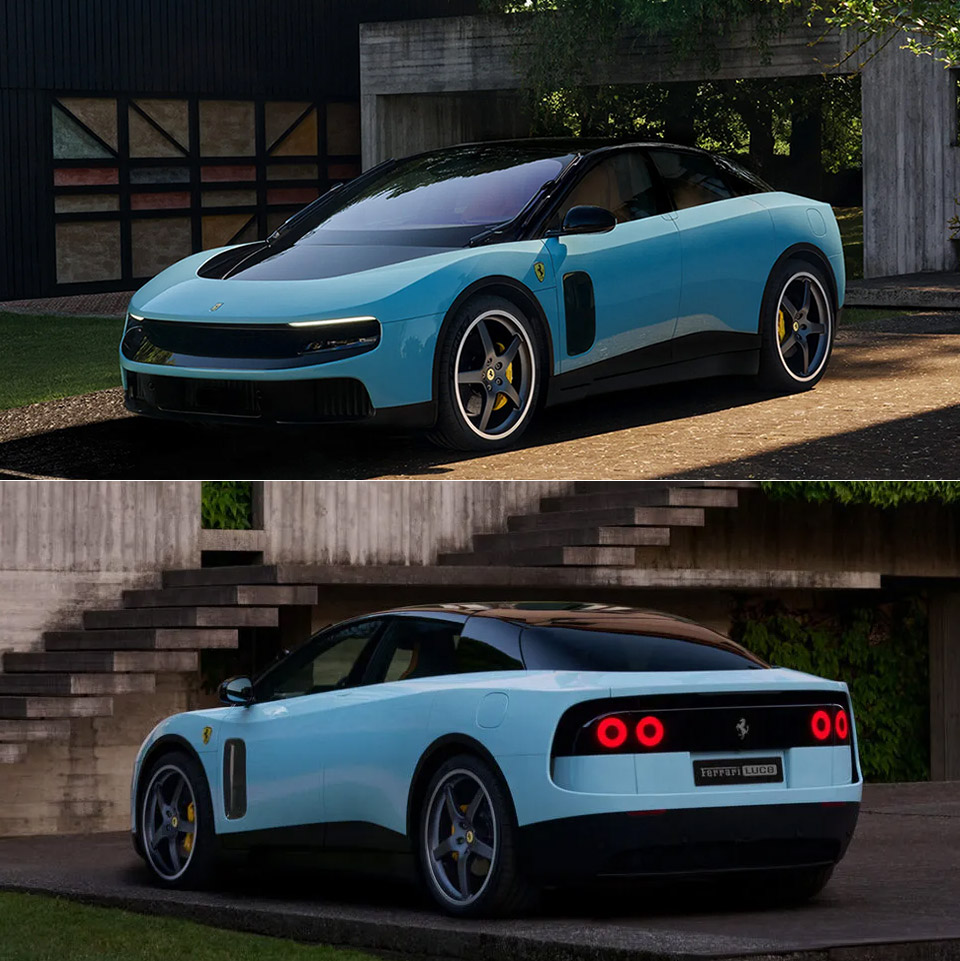
Sliding behind the wheel of the Ferrari Luce brings an immediate sense of openness. Four doors open onto room for five passengers, a first for the marque, thanks to the electric platform that tucks the battery pack low beneath the floor and rear seats. No central tunnel interrupts the flow, so legs stretch out and shoulders settle easily whether up front or in back. Ferrari will open European orders later this year with a starting price around €550,000 ($640,000). Deliveries in the United States begin in the second quarter of 2027.
There are four electric motors delivering a whopping 1000 horsepower to all four wheels, while the battery will cheerfully consume 122 kilowatt-hours of energy to provide you with a reasonable range of over 330 miles in Europe and closer to 280 miles in the United States. It will take you from 0 to 60 in 2.5 seconds and hit 190 on the dot.
Iconic LEGO Collection – The LEGO Speed Champions collection is full of iconic toy car models, including the Pagani Utopia (76915) and Porsche…
LEGO Ferrari Collectible – Features a LEGO Speed Champions collectible model car replica of the Ferrari 812 Competizione plus a driver minifigure with…
Race Driver Minifigure – The set includes a LEGO race driver minifigure to be placed behind the wheel of the race car toy for superfast action on the…
Jony Ive’s mindful material choices makes this cabin feel like a place you’d like to be. Take recyclable aluminum, for example, which, after some TLC from the machining and anodizing process, appears simple yet classy throughout the controls and pieces of flair. Then there’s the Italian leather, which wraps around the seats and main surfaces with a delightful softness to the touch, and the Gorilla Glass, which emerges in a variety of neat tiny bits and pieces to provide a smooth, stable sensation. The Alcantara on the storage compartments offers another layer of tactility, reducing daily contacts with the vehicle.
You’re right in there when you start messing with the controls, because the metal bits that come out of the machining have a great weight and a distinct click when you press or turn them. Along with them are digital displays, which are clutter-free and include only the most important information. Everything is properly put out, allowing you to keep your eyes on the road and your hands in a comfortable position.
Advertisement
It’s all about the steering wheel and the rev counter that follows you around, while the wheel itself is made of recycled aluminum for weight and a leather grip for feel, with some beautiful glass highlights to keep things calm. As you adjust the steering column, the rev counter follows you, keeping the speedometer, rev counter, and major dials all in the same place. The ring of metal and parabolic glass above the OLED screens provide excellent clarity from all angles, not to mention the extra excitement of a tactile needle sweeping over the speedo.
The audio system is one of the most used features in this vehicle, with twenty-one speakers that have been adjusted to be both nice and versatile. You may experiment with numerous settings to find the ideal sound for you, even isolating the sound to a single seat for a more intimate listening experience. When you’re driving, you can hear all of the engine’s lovely mechanical noises, plus or minus a little bit depending on how you configure it.
Inside the cabin, everything is tailored to your preferences, so whether you’re just driving about town or taking a lengthy road trip, the bolsters and adjustments make it simple to become comfortable. Sight lines are still very decent, and all of the storage places are neatly tucked away so as not to disrupt the overall serenity.
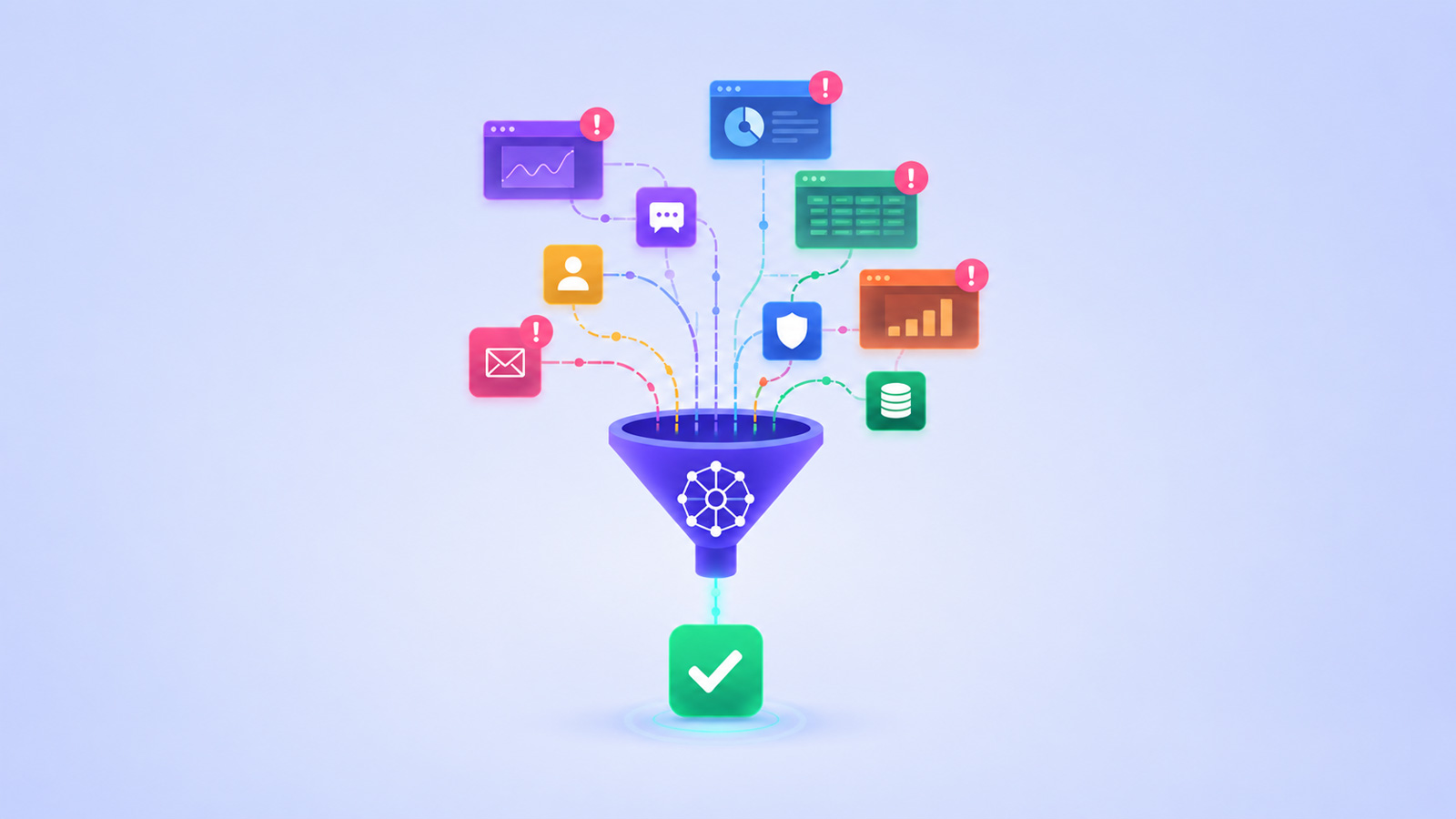
Network incidents often force IT teams to move between monitoring dashboards, infrastructure tools, ticketing platforms, identity systems, and communication platforms just to understand what happened and coordinate a response.
The webinar will explore why network incident response workflows still slow down during high-pressure incidents and how automation and AI-assisted workflows can help IT teams reduce delays and improve operational coordination across complex environments.
As organizations continue adopting additional monitoring, infrastructure, and operational platforms, responders are increasingly required to manually collect context, determine ownership, prioritize incidents, and coordinate actions between teams. These fragmented workflows can slow response times and increase the risk of outages and service disruptions.
Advertisement
Tines helps organizations build intelligent workflows that connect systems, automate repetitive operational tasks, and streamline incident response processes.
Attendees will learn how automation, AI, and intelligent workflows can help reduce investigation delays and simplify incident coordination across multiple platforms.
Fragmented workflows continue to slow response times
Network incidents often require IT teams to manually jump between monitoring systems, infrastructure dashboards, ticketing platforms, and communication tools to investigate alerts and coordinate next steps.
The webinar will show how automation and AI-assisted workflows can help teams reduce manual coordination, streamline investigations, and respond more efficiently during incidents.
Advertisement
The upcoming webinar will cover:
How network incidents typically evolve from initial alert to service impact
Where triage, enrichment, and routing break down in real-world workflows
How to automatically enrich alerts with network, identity, and threat context
Techniques to prioritize and route incidents without manual intervention
How to move from fragmented response to coordinated resolution across systems
Learn how IT teams can reduce response delays and improve operational coordination with automation and AI-assisted workflows.
Ryan Spies, Alaska Airlines’ managing director of sustainability. (Photo courtesy of Spies)
Ryan Spies, Alaska Airlines’ managing director of sustainability, isn’t a climate perfectionist. Yes, he drives an EV — but he also eats a relatively carbon-intensive cheeseburger now and then.
What matters more, he says, is when people work to drive larger-scale change: engaging in collective action, being mindful of who you vote for, and being intentional with your dollars. Spies also encourages consumers to contact companies directly with sustainability concerns.
“Any company I’ve been at, if a customer writes in with a complaint or a suggestion or a passionate plea, those make their way around inside a company,” Spies said. “That moves needles.”
It’s a philosophy that shapes how he approaches his day job leading sustainability efforts at Alaska — which operates nearly 1,500 daily flights across its mainline, Hawaiian Airlines and regional subsidiaries. Spies oversees climate reporting and public policy, employee engagement, operational efficiency and waste reduction.
A central focus is scaling up production and use of sustainable aviation fuel, or SAF. Alaska is a founding driver of the Cascadia Sustainable Aviation Fuel Accelerator, an initiative launched in January that aims to establish the Pacific Northwest as a global leader in SAF development.
Advertisement
Keep reading to learn more about Spies’ sustainability journey. His quotes have been edited for clarity and length.
What was the moment you realized you had to work in sustainability?
It was probably 20 years ago. I was a civilian engineer for the Navy, which wasn’t working on sustainability at all, and I saw “An Inconvenient Truth,” Al Gore’s film. I have always considered myself an environmentalist and someone who understands that we need to take care of the planet, but I didn’t have an idea of the stark crisis that we were going to be up against. That spurred me to leave my job, go back to school, get an MBA, and focus on strategy and how do we get corporations to do their part, and use the power of business to do good.
What’s your biggest worry when it comes to solving climate change?
Advertisement
A lot of people understand that it’s a big problem, but most people don’t feel empowered to do something about it. And look, I’m a father of three little kids. I understand that we all have day-to-day challenges, and these big existential challenges are not something that we can dedicate a lot of mind or time space to. So my biggest worry is that it just falls off of a level of importance. I don’t expect everyone to do something every day about it, but I would hope that we find a way to enable things like our government and governments around the world to tackle these big challenges.
What gives you the most hope for the planet?
I see how fast solutions to the climate crisis can scale and be implemented. Sixteen years ago when I started in this space in a real way, the promise of renewable energy was there, that it could save you money over the long term, but you wouldn’t quickly turn around and make money. Today I see the exponential growth of those solutions and the reduction in costs to make them the most affordable solutions. If you want to install new energy today, the absolute best choice is solar and storage. There’s no longer an economic argument against them.
Spies’ sustainability leadership extends to Hawaiian Airlines. (Photo courtesy of Spies)
If you could invent one climate solution overnight, what would it be?
It’s how do you make the most energy-dense battery in the world. If you can do that, you can pair it with clean renewable energy. EVs are a great example of where there’s been a lot of progress: They’re clearly an advantaged way to travel, and I love that, but in the airline business, we’re not close to that. It’s purely a physics problem. The densest batteries today are 300 watts per kilogram. Jet fuel is 14,000 watts per kilogram. It’s just not close.
Advertisement
Coffee with any climate leader, past or present — who do you pick?
I’ve had coffee with Al Gore, so I’ve already achieved that. It was at New York Climate Week. I was invited to this leaders’ breakfast and the surprise guest was Mr. Gore. It was great to be able to talk to him.
What’s an underrated sustainability solution that deserves more attention?
The idea of collective action is tremendously important — it takes so many people in different roles and organizations to actually move big things. Here in the Pacific Northwest, we started this collaboration with many of our partners called the Cascadia Sustainability Aviation Accelerator. We look at ourselves as a leader here in Washington state and the region, but we cannot solve the sustainable aviation fuel problem alone. We know that we need the state, we know that we need Boeing, we know that we need big corporates, we know that we need the universities.
Advertisement
What’s one metric you watch obsessively as a climate leader?
The price of oil is on all of our minds. And it’s a hard one because it’s so much of our costs at the airline, but on the other hand, the higher that price goes, the less demand there is and that’s probably a good thing for climate, for accelerating alternative solutions. I’m keyed in on that every day, and that was before the Strait of Hormuz closed, and will be long after it reopens. That’s a global metric that moves mountains.
The scope of the climate challenge is daunting – how do you approach this work?
Control what you can control, influence where you can, use your passionate voice, but also understand the pragmatic realities. Businesses are here to make money, and you’re not going to always win with a climate argument. When I think about influencing other leaders, other parts of the organization, to me it is about meeting them where they’re at and understanding what their priorities are and seeing how our priorities align. Ultimately, most folks are not thinking about climate and how their job can affect it. That’s what my job is.
Advertisement
What impact do you hope your work has in 20 years?
Meaningfully moving us away from a carbon-heavy lifestyle. We have the power to make these changes happen, and I think we’re all going to benefit from them. Even if you don’t care about climate or don’t think it’s going to affect your life, it will, and so how do we meaningfully improve the lives of every person on the planet and all the ones who are still to come. I hope my work plays a part in that.
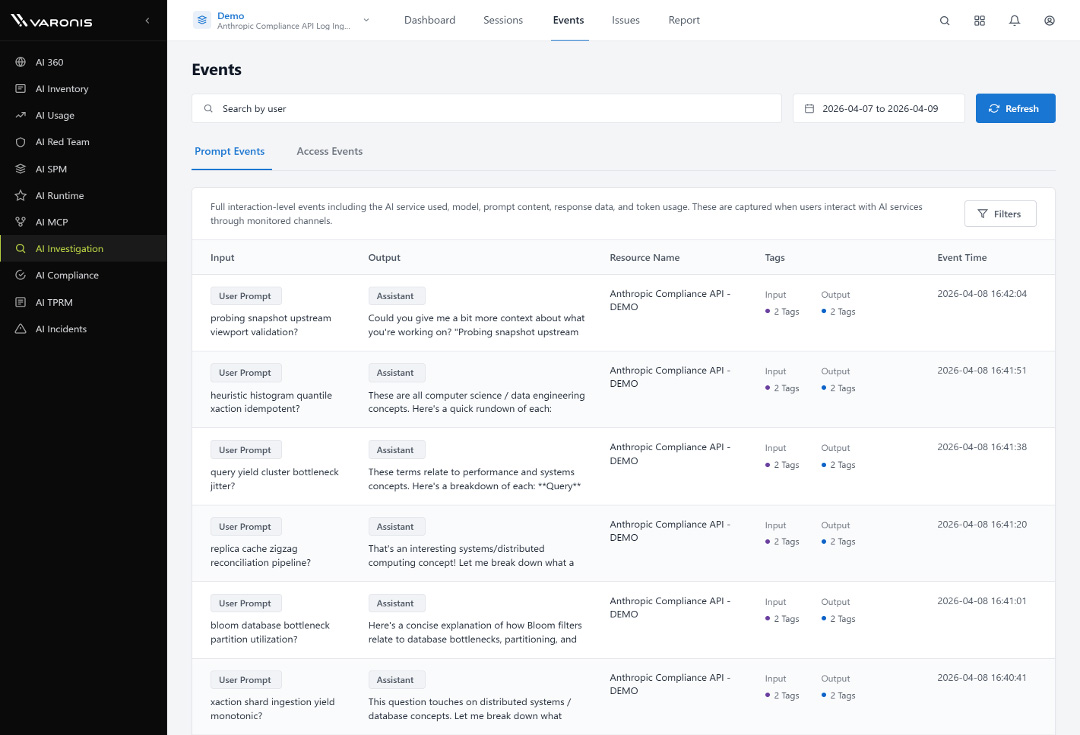
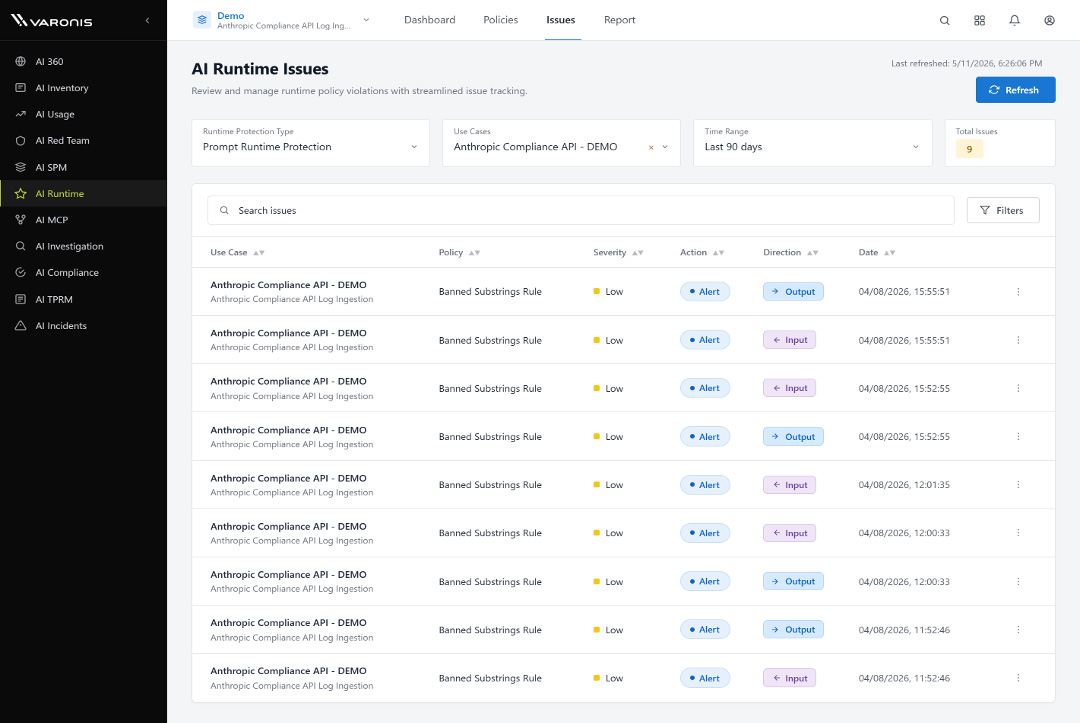
Varonis announced an integration with the Claude Compliance API, bringing Claude Enterprise and Claude Platform activity into Varonis’ Atlas AI Security Platform.
Organizations across industries rely on Claude Enterprise for day-to-day knowledge work and analysis, and Claude Platform to build, deploy, and operate applications, tools, and AI agents. Varonis Atlas provides the visibility and oversight that enterprises need to adopt AI with confidence.
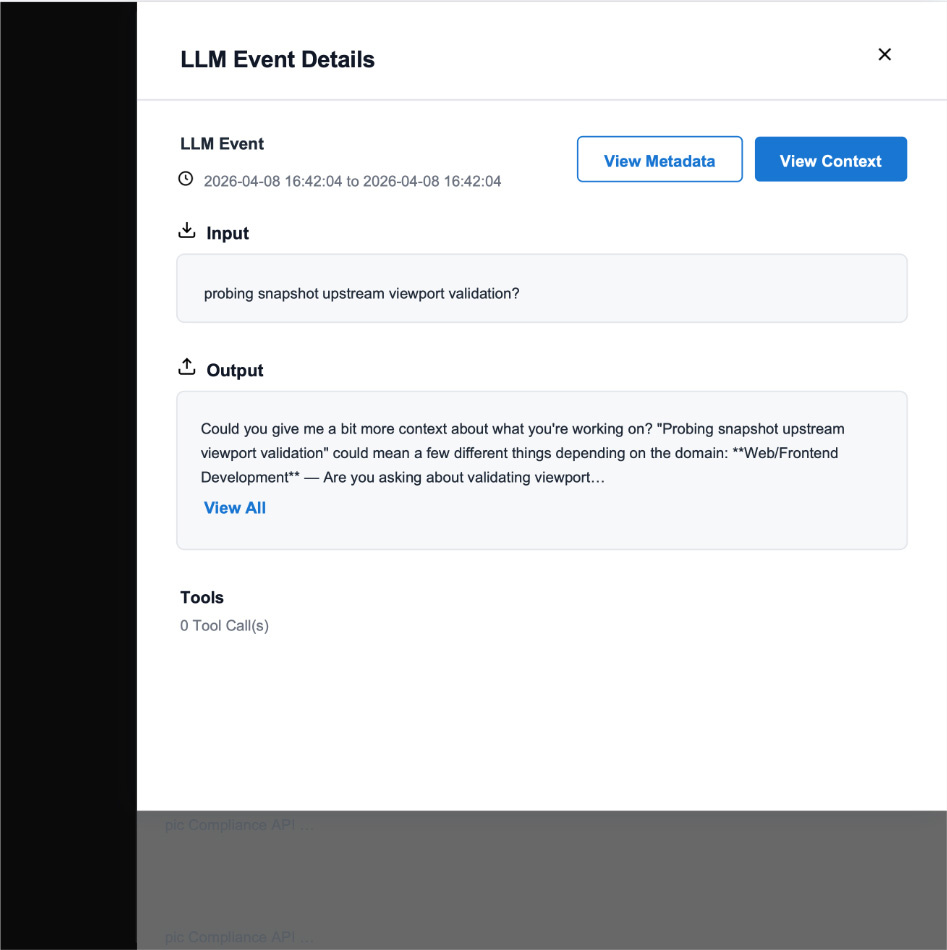
The Compliance API integration deepens Varonis’ support for Claude, enabling security and governance teams to monitor usage, investigate misuse across full sessions, and assess AI-related risk with data context.
Experience how Varonis Atlas finds AI risk, fixes exposure, and stops dangerous AI behavior before it becomes a breach.
Advertisement
Request a free trial with full access to Atlas’ AI inventory, posture management, security testing, runtime guardrails, and compliance reporting functionality.
Extending visibility and oversight to Claude Enterprise
Claude Enterprise is used across departments, including legal, engineering, marketing, finance, and support for everything from analyzing documents and summarizing research to drafting content and generating code.
Varonis Atlas monitors Claude Enterprise usage, detects potential misuse and threats, and helps ensure compliance.
Continuous AI Monitoring: Continuously monitor conversation content, including chats, uploaded files, and projects for centralized investigations and oversight.
Advertisement
AI Detection and Response: Detect sensitive data exposure, jailbreak attempts, and suspicious prompt patterns as they occur across a session — not as standalone events.
Session-level investigations: View complete Claude chat sessions in chronological order to understand activity, intent, and misuse in full context.
Supporting secure development on Claude Platform
Claude Platform embeds Claude into custom applications, products, and agents — powering AI-driven features such as assistants, workflows, and internal tools.
Varonis Atlas provides visibility into admin, configuration, and resource activity.
Advertisement
AI Observability: Visibility into audit and admin events from Claude Platform stored for investigation.
Real-Time Alerts: Surface risky behavior tied to policy violations and session activity as it happens.
Proactive AI Pen Testing: Stress-test assistants and agents for vulnerabilities such as prompt injection and jailbreaks.
In addition, Varonis Atlas can stress-test assistants and agents for vulnerabilities such as prompt injection and jailbreaks.
Advertisement
Secure AI and the data that powers it
Varonis Atlas connects AI activity to the underlying data, including permissions, sensitivity, classification, and access. Security teams understand not just what AI systems exist, but what data they can reach and whether that access is safe.
Complete Data Context. Atlas is built on the Varonis Data Security Platform, combining AI security with deep data context — sensitivity, permissions, and access activity. Organizations can discover AI risk, remediate exposures proactively, enforce guardrails, and manage governance at scale.
Complete Coverage. Atlas is designed to cover any AI system you build or run, including hosted AI platforms, custom LLMs, chatbots, MCP, and every major agentic framework.
Complete Lifecycle. Atlas secures AI across the entire lifecycle, from posture management and security testing to runtime protection and governance.
Advertisement
Varonis Atlas is available today. Watch the demo or, with a free trial, get full access to Atlas’ AI inventory, posture management, security testing, runtime guardrails, and compliance reporting functionality.
Bank of America just gave Apple one of Wall Street’s most aggressive price targets yet after betting that AI could become the company’s next major growth engine, rather than just another iPhone feature.
The firm raised its Apple price target to $380 from $330 on Tuesday, arguing that “agentic AI” could become a major long-term revenue driver for the company. Bank of America believes Wall Street continues to underestimate Apple’s AI revenue potential across its ecosystem.
Bank of America had previously trimmed its Apple target to $320 in March 2026 over concerns tied to staggered iPhone launch timing and shifting revenue seasonality. The firm maintained a Buy rating at the time and continued to argue AI would remain a major long-term growth driver for Apple.
Bank of America analyst Wamsi Mohan kept a Buy rating on Apple stock and laid out a bullish case for the company’s AI strategy. The note argued Apple could generate far more revenue from AI services than investors currently expect.
Advertisement
The note also pointed to Apple’s slower rollout of Apple Intelligence features relative to rivals. Bank of America expects Apple to generate between $15 billion and $30 billion in AI-related revenue between its own offerings and App Store commissions by fiscal 2030 under its base-case assumptions.
Bank of America tied that outlook to the rise of “agentic AI,” a term used for AI systems that can complete tasks more autonomously across apps and services.
Wall Street’s Apple AI narrative is changing
Some analysts are starting to view Apple’s AI business differently. Earlier Wall Street discussions around Apple Intelligence focused on Siri delays, staggered feature rollouts, and concerns that Apple had fallen behind rivals in generative AI.
Morgan Stanley has taken a more aggressive view on Apple stock in recent months. The firm raised its Apple price target to $315 in December 2025 and pointed to long-term growth opportunities tied to AI, Services, and the strength of Apple’s ecosystem.
Advertisement
Apple has focused its AI strategy on private, on-device processing and tighter integration across the iPhone, iPad, and Mac. The company has also argued that its control over hardware and software gives it an advantage as AI tools gain deeper access to personal data, apps, and payment systems.
Apple is betting long-term on Apple Intelligence
Bank of America’s revised outlook centers on that broader ecosystem strategy. The note reportedly focused less on Apple leading the race to build large language models and more on the company turning AI into a services and ecosystem layer across its devices.
Through that lens, Apple’s AI strategy becomes less about standalone chatbot features and more about long-term platform growth.
Apple stock has traded on steady iPhone demand, Services growth, and aggressive share buybacks. Bank of America’s new $380 price target suggests the firm sees AI becoming a more meaningful long-term driver of Apple’s valuation.
The company hasn’t publicly detailed long-term revenue expectations tied to Apple Intelligence or future Siri capabilities. Apple is expected to discuss additional AI features during WWDC in June 2026.
At the end of every quarter, marketing leaders are asked some version of the same question: what actually drove growth?
It should be easier to answer by now. Teams have more data than ever, better analytics, and increasingly sophisticated AI. And yet, most leaders still hesitate before responding, or fall back on directional answers they don’t fully trust.
In fact, 78% of marketers still struggle with attribution, which tells you something important hasn’t changed.
Advertisement
Latest Videos From
Bridget Perry
That’s because the issue isn’t measurement. Most organizations can explain what happened, but turning insight into action while it still matters remains a challenge.
That gap between insight and action is what I think of as the customer decision gap.
Advertisement
More data hasn’t changed the outcome
Marketing teams have invested heavily in understanding performance – and still, the outcomes don’t match the investment. Dashboards update in real time. Attribution models attempt to connect the dots across channels. AI helps surface patterns that would have been impossible to spot manually just a few years ago.
And still, the outcomes are underwhelming.
Sign up to the TechRadar Pro newsletter to get all the top news, opinion, features and guidance your business needs to succeed!
Advertisement
Customer acquisition costs continue to climb. Experiences often feel disjointed. Growth is harder to sustain, even for brands that are doing “all the right things” on paper.
When you step back, the reason becomes clearer. Most marketing organizations are still structured around campaigns, channels, and reporting cycles. Those systems are useful for explaining what already happened, but they aren’t designed to guide what should happen next.
So teams end up optimizing toward what’s easy to measure instead of what actually moves the business forward. They generate insights, but those insights don’t consistently translate into better decisions.
Data creates potential value. What matters is whether you turn it into action.
Where the gap shows up
The customer side of this is easy to recognize because we all experience it.
You buy something online and get a promotion for the same product the next day. You browse once and get retargeted for weeks, even after you’ve clearly moved on. You switch from an app to a store or a support channel and have to start from scratch, as if the company has no memory of you.
Advertisement
None of these moments happen because there isn’t enough data. In most cases, the signals are already there. What’s missing is the ability to act on them in a coordinated, timely way.
Part of the challenge is fragmentation. Customer data still lives across ecommerce platforms, email marketing platforms, loyalty systems, and service environments, each with its own version of the customer. Even when organizations invest in unifying that data, they often stop at creating a better view.
A unified profile is important, but it doesn’t solve the problem on its own. The real test is whether that understanding changes what happens next. Can a team use it to make a better decision in the moment? In many cases, the answer is still no.
Advertisement
Why AI isn’t fixing it
There’s been a lot of hope that AI tools would close this gap. In reality, it’s exposed it.
Many teams have layered AI on top of environments where data is still incomplete, delayed, or inconsistent. When that happens, AI doesn’t improve decision-making. It accelerates whatever is already happening, for better or worse.
If the underlying data is fragmented, the outputs will be too. If the context is missing, the recommendations won’t land. And when those decisions are wrong, they don’t just stay small, they scale quickly.
That’s why many AI initiatives struggle to deliver meaningful business impact. The models themselves aren’t the issue. It’s the lack of a reliable, shared understanding of the customer and a way to act on that understanding in real time.
Advertisement
Shifting from measurement to decisioning
What’s needed is a shift in how marketing actually operates. Instead of focusing primarily on measuring performance after the fact, teams need to get better at making and executing decisions as things are happening.
It means moving beyond optimizing individual campaigns or channels and thinking about the full customer experience. It means being able to adjust in real time rather than relying on predefined journeys that assume customers will behave in predictable ways.
For example, if a customer shows signs of churn, the right response isn’t a scheduled campaign that goes out next week. It’s an immediate adjustment in how that customer is treated across channels. If someone has just made a high-value purchase, the next interaction should reflect that, whether it happens in email, on the website, or through customer support.
Advertisement
In other words, decisions need to be continuous and connected, not episodic.
This is what an outside-in model looks like. Instead of organizing around internal timelines and processes, you organize around what the customer is doing and what they need in that moment.
What this requires from organizations
Making that shift isn’t just a marketing exercise. It changes how teams work together.
Advertisement
Marketing, data, and technology can’t operate in parallel tracks. They need a shared foundation and a shared understanding of the customer that stays current as new signals come in. Just as importantly, they need the ability to act on that information without having to move it between systems first.
It also changes how performance is evaluated. When you can connect decisions directly to outcomes, you get a clearer picture of what’s actually driving growth. You start to see not just which campaigns performed well, but which actions improved retention, increased lifetime value, or reduced churn.
The organizations getting this right tend to treat customer intelligence as something that’s always evolving. They focus on keeping data connected and current, and on making it usable in the moments where decisions are made.
Advertisement
Closing the gap
Closing the customer decision gap is quickly becoming the core challenge for marketing leaders.
It’s no longer enough to understand your customers or to report on performance. The expectation is that you can translate that understanding into action, consistently and in real time.
That’s what closes the gap between what you know and what you can actually do.
And over time, it’s what separates brands that simply collect data from those that turn it into consistent, measurable growth.
This article was produced as part of TechRadar Pro Perspectives, our channel to feature the best and brightest minds in the technology industry today.
The views expressed here are those of the author and are not necessarily those of TechRadarPro or Future plc. If you are interested in contributing find out more here: https://www.techradar.com/pro/perspectives-how-to-submit
I’ve been using GoPro’s Mission 1 Pro action camera for a few weeks now. I’m not quite ready to slap a final verdict on it, but I’ve definitely learned a few things that are worth knowing if you’re considering buying one. I’ve tested a range of features, from the new slow-motion mode to shooting 50 megapixel stills, and it’s impressed in some ways — and left me wanting more in others.
But I’m not yet ready to give it a review score. The reason being that I’ve had a very early sample with unfinished software that isn’t representative of how it might work if you went and bought one. My first model even had a pre-production lens, which was changed on the second unit I received. So while there are some things I’ve been able to test, it’s not fair to the camera to base my review off what I’ve seen so far.
But here’s what I can tell you.
Advertisement
How much is the Mission 1 Pro?
The Mission 1 Pro is on sale now for $700. Then there’s the base Mission 1, which has the same large sensor and new processor of the Pro model but lacks the slow-motion skills. It costs $500. At the top of the range is the Mission 1 Pro ILS, which has the same specs as the model I’ve been testing but uses an interchangeable micro four thirds lens mount — a first for any GoPro.
The ILS model — due out later in the year — will also cost you $700. It’s the model I’m most excited about, but I’ll get into that later.
Taken in DNG raw and adjusted in Lightroom, the wide-angle lens of the camera allowed me to capture a lot in one shot.
Advertisement
Andrew Lanxon/CNET
Why is the Mission 1 Pro exciting?
The Mission 1 Pro’s got a new GP3 image processor and a larger 1-inch sensor. GoPro says it offers better dynamic range and low-light performance. More importantly, it offers an astonishing 960fps frame rate for slow-motion video and 8K open-gate recording, meaning it captures footage using the entire sensor.
Those are potent specs from a device that still fits in the palm of your hand and is fully waterproof, even without a dive case.
Is the Mission 1 Pro slow motion good?
On paper, very. It can shoot at an astonishing 960 frames per second, which is the sort of speed you’d normally only get from dedicated slow-motion cameras. But there are caveats. First, it’ll only capture this footage at full HD, so if you’re working on a 4K or 8K project, you’ll need to upscale that footage and you could potentially lose quality as a result.
Advertisement
The camera cage, grip and shutter button add a lot of bulk to the camera, but they do make it much more ergonomic when you’re out and about shooting away.
Andrew Lanxon/CNET
It also only shoots in short bursts of 10 seconds at a time, so you’ll need to get your timing right if you want an epic shot; you can’t simply leave it running for minutes and hope you get the shot. But I don’t think that’s a problem. It’s important to keep in mind that slowing 10 seconds of 960fps footage to a 30fps timeline results in roughly five minutes of slow-motion video.
My preferred slow motion is shooting at 240fps, which the camera can achieve at 4K resolution and in its Log color profile for better color grading in post production. That 240fps frame rate still offers an impressive 8x slow-motion effect when played back at 30fps and goes well beyond what even my professional Canon R5 or Blackmagic Cinema Camera 6K Pro can achieve.
What is the general Mission 1 Pro video quality like?
Here’s where I can’t really answer with any certainty. The footage I’ve shot so far has been hit and miss. I’ve found the auto white balance to be a bit unreliable, often producing slightly unnatural colors and forcing me instead to shoot using manual white balance — which, to be honest, I would probably want to do anyway to ensure consistent colors in a shot.
Advertisement
I also sometimes found the image processing went a bit too far in brightening shadows and saturating the color, resulting in more of an HDR look than I would have wanted. It’s why I’d rather shoot my footage mostly using in the 10-bit Log profile, which gives me more flexibility for adjusting my footage in post production.
I heavily edited this still image, taken in DNG raw. Apart from adjusting the white balance, as the auto settings looked very cool and magenta, I also brought the highlights down a touch. The footage looks good, although the wide lens’s fixed focus means I’m not quite sharp, as the focal plane is optimized more toward infinity.
Andrew Lanxon/CNET
Overall, image quality seems solid, though not noticeably better than the already excellent Hero 13 Pro it replaces. The biggest upgrades in this model appear to be aimed at those who want more advanced slow-mo capabilities.
Advertisement
That said, it’s important to remember that I’ve installed at least four firmware updates during my testing and only received the final production hardware a few days ago. I haven’t yet had the chance to re-test it in a wide range of scenarios. It’s certainly off to a good start, but whether it does enough to justify an upgrade from the previous model remains to be seen once I’ve spent more time shooting in both daylight and low-light conditions.
How about still images?
They’re fine, at least based on my tests so far. The super-wide angle lens means that fine details aren’t great, but if you’re into capturing those huge, sweeping vistas on your travels, then it’ll be fantastic. It shoots in DNG raw and my advice is to use it: Having manual control over the colors has been critical for me, as has the ability to pull back shadow and highlight detail in Adobe Lightroom.
This straight-out-camera photo, taken in JPEG with manual white balance, isn’t bad but I think it looked too over-processed, with shadows that have been artificially brightened too much, resulting in an HDR-style image.
Advertisement
Andrew Lanxon/CNET
By editing my DNG raw file, I was able to keep the shadows at a more realistic level, thereby maintaining the darker vibe I was going for. I love how the wide-angle lens allowed me to use these leaves as a natural frame for the waterfall.
Andrew Lanxon/CNET
What about battery life?
Again, it’s impossible to say with certainty at this point as the software updates will certainly play a big part in how energy efficient the camera is. However, the battery life from the new Enduro 2 battery already seems solid. Even after a long day out shooting footage on the levada walks on the stunning island of Madeira, I still got back to my lodgings with plenty of battery to spare.
What new accessories are there for the Mission 1 Pro?
There’s a new camera cage that comes with a detachable grip and a sort of shutter button that fits into the cold shoe slot. While it makes the usually very small camera a lot bigger, it also makes it easier to hold and operate more like a regular compact digital camera.
Advertisement
The new Enduro 2 battery should offer enough juice for a day of mixed shooting.
Andrew Lanxon/CNET
GoPro has also announced a set of wireless microphones which will natively work with the cameras without the need for external receivers — much like DJI does with its mics and Osmo cameras. I haven’t tried these yet, but for content creators and vloggers these will likely be a must buy.
What about the interchangeable lens Mission 1 Pro ILS?
This is the model I’m most excited about. While the specs on paper for the Mission 1 Pro are awesome — especially when it comes to slow motion — I’m generally not a fan of the super-wide angle, fixed-focus look achieved by “traditional” action cameras like this. Sure, they’re great if you want a big field of view when strapping one to your head and hurling yourself down a mountain on a bike, but GoPro cameras have never challenged traditional filmmaking.
Advertisement
But strap on a high quality micro four thirds lens from the likes of Panasonic, Olympus or Voigtlander and now you’ve got a proper setup capable of high-speed shooting at a range of focal lengths, adjustable focus and shallow depth of fields for cinematic bokeh –all from a camera body small enough to slip into your jacket pocket.
I’m genuinely excited about spending some real time with the Mission 1 Pro ILS and seeing whether GoPro can truly play in a more professional cinematography arena.
There’s still a screen on the front to help you frame up those selfies.
Advertisement
Andrew Lanxon/CNET
Should you buy the GoPro Mission 1 Pro?
I’m still in the early days of testing but I can say a few things with certainty. The 960fps slow-motion mode is an amazing headline, but its application is arguably quite niche. I struggled to even find things to shoot and was only really happy with a brief clip of a pigeon flapping its wings. Think hard about whether that sort of slow motion is really important to you, especially considering its limitations.
Beyond the slow-mo skills, the overall quality that I’ve seen so far isn’t leaps and bounds beyond what the company offers from its Hero 13 camera. So if you already have a recent GoPro and mostly use it to shoot at 4K at a standard 24, 30 or 60fps, then I don’t think you’ll see much benefit. But for those of you upgrading from a much older model — such as the Hero 7 — you’ll certainly see the boost in quality.
The real excitement will come when the ILS model arrives and we’re able to pair that larger image sensor and slow-motion skills with a professional-standard lens. Stay tuned for that.
After the James Webb Space Telescope (JWST) began operations in 2022, it soon made a tantalizing discovery in the form of mysterious red dots: small, red-tinted astronomical objects of unknown origin and composition. So far well over 300 of such little red dots (LRDs) have been identified, with many theories on what they are. Fortunately the Chandra X-ray Observatory recently added some more clues as detailed in an accompanying paper.
Current theories include them being a form of primordial galaxy, or a supermassive black holes embedded in a dense gas cloud. The LRD discussed in the paper with the designation 3DHST-AEGIS-12014 was found to emit X-rays unlike other LRDs. By comparing the data between JWST and Chandra for this LRD it lends credence to the theory that these LRDs are a transitional phase as a supermassive black hole ingests the material of said gas cloud.
X-rays produced during this can sometimes make it out of the gas cloud, after which we can observe it. If that’s the case, these LRDs should cease to exist the moment the black hole has consumed enough of the cloud, which is something that we may be able to find evidence for if we’re lucky.
Microsoft is testing a new Defender for Endpoint capability that will automatically isolate compromised endpoints to thwart attackers’ attempts to move laterally across the network.
This is now available in preview mode and works as part of automatic attack disruption, a feature designed to contain attacks, limit their impact, and provide security teams with more remediation time.
Compromised endpoints that are automatically isolated are disconnected from the network to reduce the risk of further impact, but they retain connectivity to the Microsoft Defender for Endpoint service, which will continue to monitor the device.
“When a device in your organization is suspected to be compromised, Microsoft Defender for Endpoint can automatically isolate the device as part of automatic attack disruption,” Microsoft said.
Advertisement
“Automatic isolation helps reduce the risk of further impact on the organization, limit attacker lateral movement, and prevent impacts such as data exfiltration and ransomware propagation.”
Automatic device isolation works only on onboarded end-user workstations managed by Microsoft Defender for Endpoint.
As Microsoft explained, they can also be released from containment at any time by security operators after completing the incident investigation and mitigating the risks.
To release a device from automatic isolation, select the device from the “Device inventory” or open the device page and select “Release from isolation” from the action menu.
Advertisement
Defender for Endpoint automatic device isolation (Microsoft)
Nearly four years ago, in June 2022, Microsoft also announced that admins could manually contain compromised, unmanaged Windows devices by cutting off incoming and outgoing communication with onboarded Defender for Endpoint endpoints.
Microsoft also began testing device isolation support for Defender for Endpoint on onboarded Linux devices in January 2023, with the capability reaching general availability in October 2023.
The same month, it revealed that Defender for Endpoint could also isolate compromised user accounts as part of automatic attack disruption to block lateral movement in hands-on-keyboard ransomware attacks.
More recently, Microsoft began testing another new feature for the Defender for Endpoint enterprise endpoint security platform that automatically blocks traffic to and from undiscovered Windows endpoints, preventing attackers from breaching other non-compromised devices on the network.
Earlier this month, it revealed another Defender for Endpoint preview feature that will allow admins to schedule antivirus scans on onboarded Linux systems using the Microsoft Defender portal, mdatp managed JSON configuration, or the mdatp command-line tool.
Advertisement
“Scheduled scans support daily quick scans, interval-based quick scans, and weekly full scans, with options for low-priority execution, idle-time scheduling, and randomized start times,” it said.
Automated pentesting tools deliver real value, but they were built to answer one question: can an attacker move through the network? They were not built to test whether your controls block threats, your detection rules fire, or your cloud configs hold.
This guide covers the 6 surfaces you actually need to validate.















































































You must be logged in to post a comment Login