
Security teams log 54% of successful attacks and alert on just 14%. The rest move through your environment unseen.
The Picus whitepaper shows how breach and attack simulation tests your SIEM and EDR rules so threats stop slipping by detection.



Anyone who works at Meta or knows anyone who works at Meta will tell you the same thing: It is not a happy place, particularly given the seemingly endless layoffs the company has executed over the last few years — cuts that have only accelerated as the company funnels billions into AI.
Now, a new report in Wired suggests the company’s Applied AI team is on the verge of revolt.
The drama kicked off when someone hijacked a livestreamed, employee-only presentation this week with an expletive-laden meltdown, demanding that attendees tell a senior Meta AI executive that he was “a piece of sh*t.” One presenter reportedly covered their face with their hands.
That outburst, Wired reports, reflects simmering rage inside the three-month-old unit of roughly 6,500 engineers and product managers who have been tasked with supporting the company’s AI research ambitions.
Employees describe being forced into the group with no real choice: join or quit. Many call themselves “draftees.” Their assigned work? Generating puzzles and coding problems to train AI models. “It’s literally the gulag,” one employee told Wired. “Most people find the work soul-crushing,” said another.
A report last month in Business Insider shed light on how many employees learned they’d be moved into the group — through a surprise email, a process that one self-described draftee described later on Reddit as “quite random.” According to an internal announcement in April reviewed by Business Insider, Meta’s AI models still lacked the knowledge to outperform humans at technical tasks like coding. “For agents to understand how people actually complete everyday tasks using computers, we need to train our models on real examples,” the post read.
In a leaked audio recording from an internal meeting that same month, Meta CEO Mark Zuckerberg explained the logic behind drafting Meta’s own engineers rather than outside contractors: Alexandr Wang — who sold his data-labeling startup Scale AI to Meta for $14.3 billion before taking the chief AI officer role and heading up Meta Superintelligence Labs — knows the data-labeling world well, and the company believes Meta’s average employee has “significantly higher” intelligence than third-party contractors. Better, then, to enlist them.
Meanwhile, more than 1,600 Meta employees company-wide have signed a petition protesting a program that monitors their clicks and keystrokes for AI training data. The mood across the company is dark enough that Meta’s chief product officer, Chris Cox, felt compelled to address the “brutal” environment on a call with employees this week.
TechCrunch has reached out to Meta for comment.
According to earlier reports, the Applied AI team is led by Maher Saba, a 12-year veteran of Meta who was previously a vice president in its Reality Labs division, the division that burned through $83 billion on the metaverse before Meta moved on to AI. The new organization reports up to Meta CTO Andrew Bosworth.
Originally, it was structured in such a way that up to 50 employees reported to one manager.
Zuckerberg, for his part, reportedly addressed the situation in an internal memo Friday, acknowledging that recent changes had “caused distress” and admitting the company had made mistakes that it plans to address. According to Wired, he added in his memo that “Meta’s north star is to be the best place for the most talented people in the world to make an impact.”
When you purchase through links in our articles, we may earn a small commission. This doesn’t affect our editorial independence.
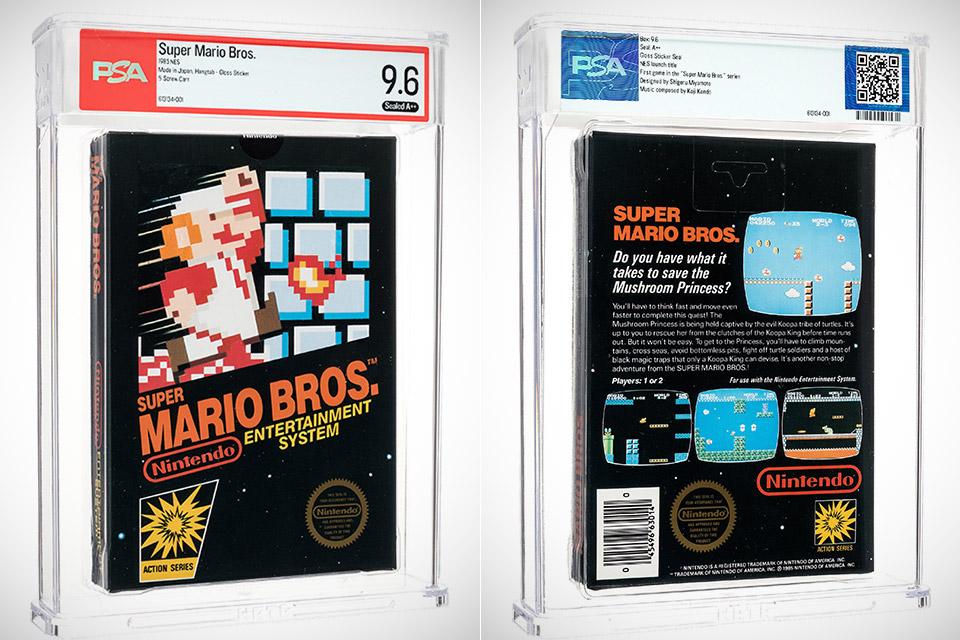
Bidders drove one exceptional sealed copy of Super Mario Bros. to a final price of $3 million during Heritage Auctions’ Video Games Signature event on June 12. The result cleared the previous high mark by a full million dollars and established a new record for any video game sold at public auction. Heritage presented the cartridge as lot 28025 in its June 12–13 sale. Professional graders at PSA assigned it a 9.6 A++ rating, the strongest score this particular variant has received. The copy carries Nintendo’s gloss sticker seal, a detail that places it in the second production run from early 1986.
Nintendo began distributing the NES and its launch software in late 1985. Some of the first sealed copies used a gloss sticker to seal the box, rather than the shrink wrap that became popular later. The boxes from the second batch, with the sticker seal, are the first known sealed Super Mario Bros. There have never been any confirmed public collections with sealed copies from the first production run.
There are only three known examples of this specific gloss sticker and second-production version, and this one is most likely the highest graded. What makes it even more rare is that it is the first time a sealed copy of this particular seal type has been sold in a public auction. According to accounts, this book was only recently made available to collectors, and its sealed state has greatly enhanced the bid. Last year, Heritage sold another unopened Super Mario Bros. for a cool $660,000. The only distinction was that each came from a different production run.
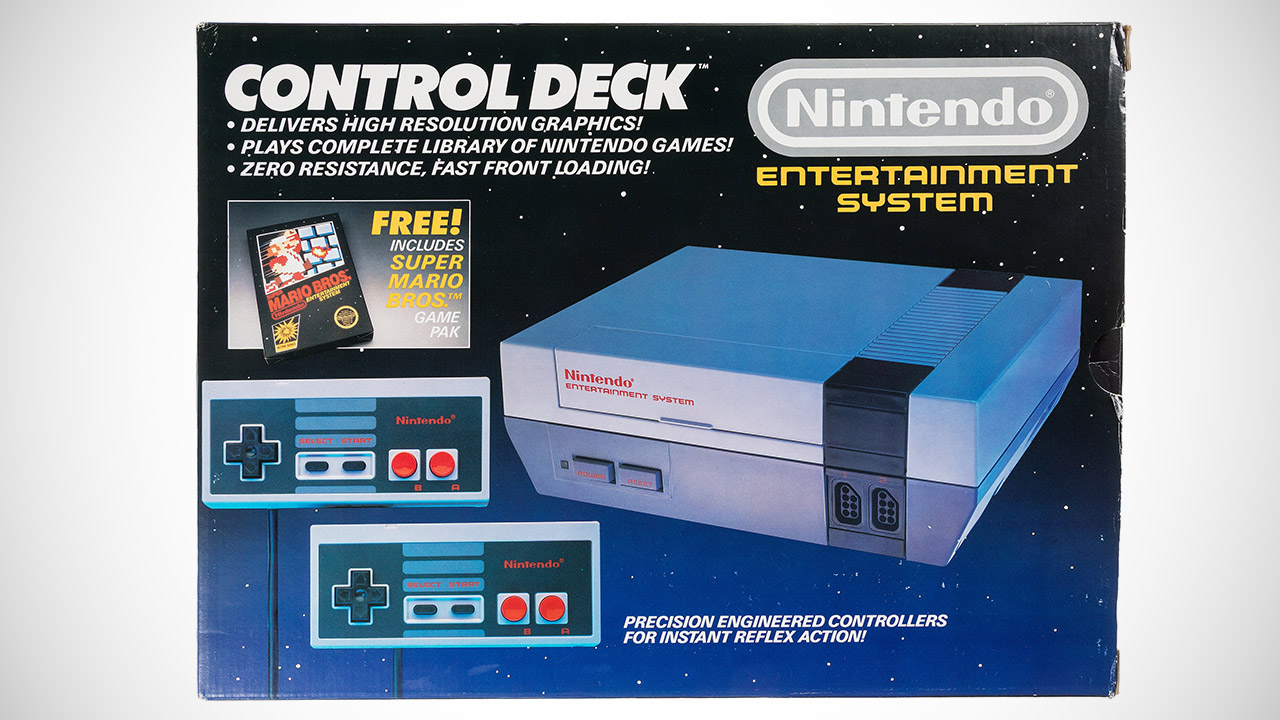
The previous record of $2 million was set by a separate sealed Super Mario Bros with hangtab packaging, was sold in 2021 via a fractional ownership agreement. Earlier this year, a sealed copy of Super Mario 64 sold for an incredible $1.56 million. And now comes this new record, which easily outperforms all past sales.
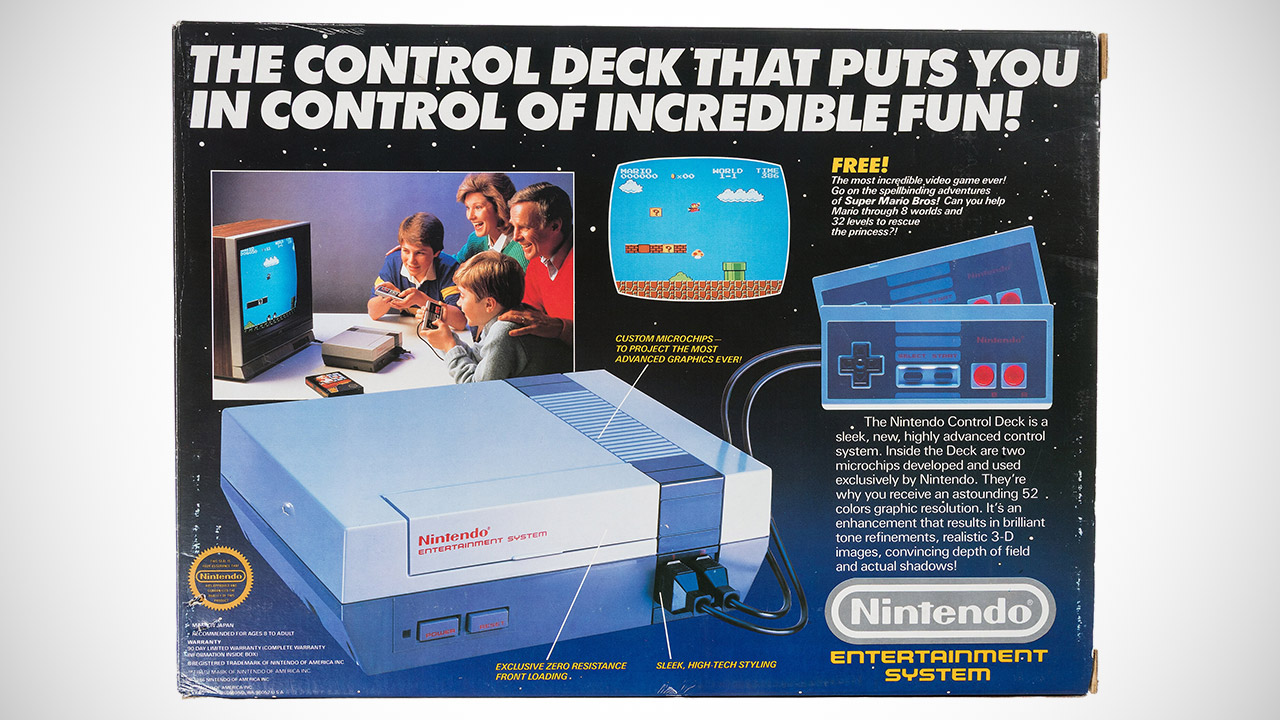
This sale was just one part of a much more comprehensive Heritage auction, which included a host of rare sealed NES titles from the original black box era, as well as hangtab versions of some of the all-time favorites. The overall sale has now garnered nearly $4.8 million, with another sealed Super Mario Bros earning $575,000, highlighting how prices can vary depending on production specifications and condition.
When it comes to exceptionally rare items, condition is paramount. The glossy sticker seal reveals the cardboard surface and black cover, thus minor dents, creases, or wear can eliminate a copy from consideration for a high grade. That’s not all; collectors have discovered that even little variations in seal type, box construction, and manufacturing run can make the difference between a fine sealed copy and an extremely valuable one. As long as Mario is popular, serious purchasers will continue to buy rare sealed copies, making them long-term investments.
[Source]
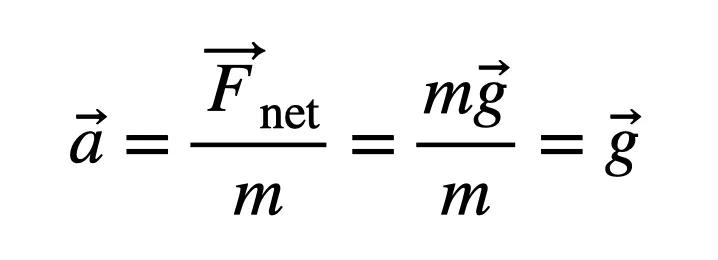
We need one more thing—how about Newton’s second law? This says the acceleration depends on the net force (Fnet) and the mass (m) of an object. It’s usually written as Fnet = m × a, but we can rearrange it like this: a = Fnet/m. Combining this with our gravitational force, we get something pretty interesting:
Courtesy of Rhett Allain

Since both gravity and acceleration depend on the mass of the ball, the mass cancels. We find that any object on Earth has a downward acceleration of 9.8 meters per second per second (m/s2). This means that if you drop a bowling ball and a marble at the same time, they’ll hit the ground at the same time—even though the gravitational force on the bowling ball is thousands of times higher. Weird, right?
Anyway, now, in the presence of gravity, if you kicked a ball at an upward angle, it’s vertical velocity would slow, halt, and reverse, with the speed increasing as it falls. In other words, it starts accelerating in the downward direction as soon as it’s kicked, even while it’s moving upward.
What about the horizontal motion? Ah, since there’s no horizontal force after the initial kick, the ball continues traveling forward at the same speed, just like in space. People tend to think a ball falls because its forward motion slows, but actually it’s the opposite. Without air drag it doesn’t slow down at all. It only stops because the ground gets in the way.
So what we get for a trajectory is that familiar upside-down parabola, often called a ballistic trajectory because it’s the path of any unpowered projectile, like a cannon ball, a bullet, or a basketball. Any flying object for which gravity is the only (significant) force acting on it will move this way.
Happily, the Earth does have air. But it drastically changes the game. Now there is a continuous force acting horizontally, which we call air resistance, or drag, and it pushes in the direction opposite to the ball’s motion.
Think of air molecules as a bunch of tiny ping-pong balls. As a soccer ball moves through the air it collides with gazillions of these little air balls, and each collision exerts a backward-pushing force; all combined, this creates the total air-resistance force. The bigger the object, the more collisions it has to fight through.
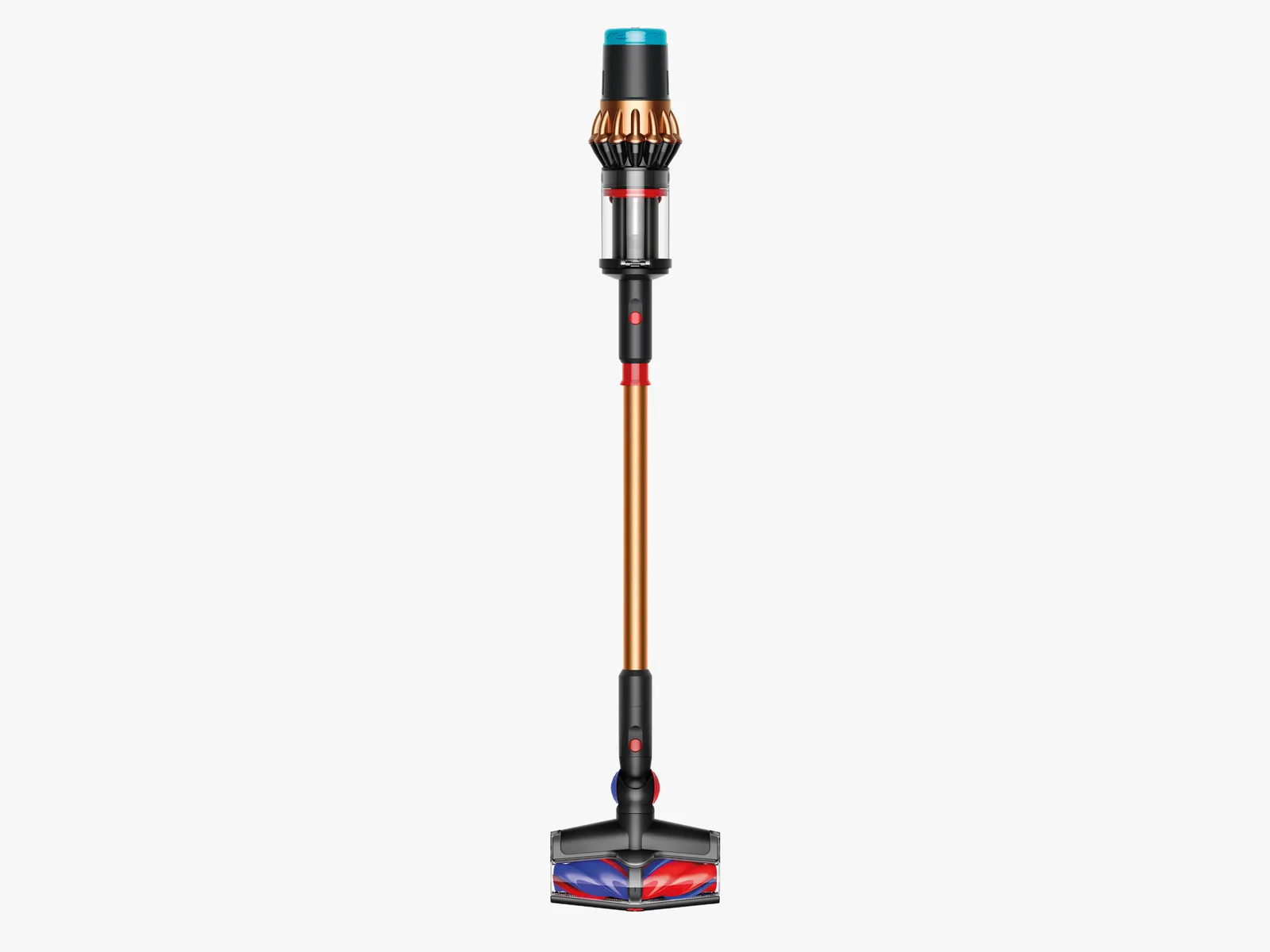
Dyson’s vacuum lineup had a new look planned for this year. Some of the vacuums have already arrived, like the Dyson PencilVac and Dyson Spot+Scrub robot vacuum, but others we’ve still been waiting to see. That wait is over as of this month, as Dyson has finally dropped the rest of its anticipated models.
Dyson now has three new cordless vacuums you can shop, plus one with a Submarine head variant: the Dyson V16 Piston Animal ($980) and Dyson V16 Piston Animal Submarine ($1,100), the Dyson V10 Konical ($500), and the Dyson V8 Cyclone ($400). On top of the other vacuums the brand has launched this year, Dyson’s lineup is bigger than ever.
Here’s what’s different about each of the new models, what’s still to come, and whether or not it’s time to start shopping for a new Dyson vacuum.
Table of Contents

Courtesy of Dyson
Dyson calls the V16 Piston Animal ($980) its most powerful cordless vacuum yet. It has 315 air-watts of suction power and a new Dyson Hyperdymium 900-watt motor. There’s a new cleaner head—the All Floor Cones Sense—with conical brush bars that look a bit like the PencilVac Fluffycones, with a similar design and color scheme. The All Floor Cones Sense head also promises to detect changes in floor type and respond automatically (hence the “Sense”). It also still comes with the Fluffy Optic cleaner head for hard floors, as seen on the V15 Detect and Gen5detect.
The V16 Piston Animal also has a debris bin that can compress dust and debris, allowing it to hold up to 30 days’ worth. It also has an emptying mechanism now that lets you push out the debris, making it easier to empty. Dyson has promised a self-emptying docking station for this model, but it’s not yet available; Dyson says it’ll be available to purchase in the future.
There’s also a Submarine variant that retails for $1,100. That version adds on a wet roller head similar to the V15 Detect Submarine, but Dyson says this version has new hydration control technology for more targeted water use while cleaning, and a boost mode when you’re dealing with stains.

Courtesy of Dyson
The Dyson V10 Konical ($500) is Dyson’s first self-emptying vacuum, but the massive docking station you’ll sometimes see it photographed with—the auto-empty Dok, which will retail for $150—won’t be available to purchase until August.

There is a particular kind of commute where the noise around you stops being background and starts being an active drain, the kind where you arrive at your destination already tired before the day has properly begun.
The fix most people reach for is a decent pair of earbuds with noise cancellation, but the gap between what sounds convincing in a shop demo and what actually holds up across a full working week has always been wide enough to make the decision feel like a gamble.
The Apple AirPods Pro 3 close that gap decisively, and at $179 down from $249 they are currently at their lowest price since launch, saving you 28% on earbuds that Apple claims deliver up to twice the noise cancellation of AirPods Pro 2.
Apple AirPods Pro 3 hit their lowest price to date, and they’re an absolute steal While Apple products are usually expensive, at this price the AirPods Pro 3 are the best budget option the company has offered in a while.

That figure is not a marginal improvement dressed up in marketing language — the new acoustic architecture is a genuine generational step, with a multiport design that widens the soundstage and delivers the kind of three-dimensional audio that makes familiar tracks feel newly recorded.
Battery life extends to eight hours with active noise cancellation running, which is enough to cover a full working day of commuting and desk time without reaching for the case, and IP57 dust and water resistance means the AirPods Pro 3 hold up through a workout without any particular care required.

Heart rate sensing is new to this generation and tracks calories burned across 50 workout types with iPhone, so the AirPods Pro 3 quietly double as a fitness companion without requiring a separate wearable on the wrist to log the same data.
The Hearing Aid feature, now with automatic Conversation Boost and active Hearing Protection, adds a layer of utility that goes well beyond what most earbuds in this category attempt, and Live Translation handles real-time language conversion for anyone who travels regularly for work.
Anyone already in the Apple ecosystem will find the automatic device switching between iPhone, iPad, and Mac works exactly as it should, which at this price makes the AirPods Pro 3 one of the more straightforward buying decisions Apple has offered in a while.
SQUIRREL_PLAYLIST_10148964
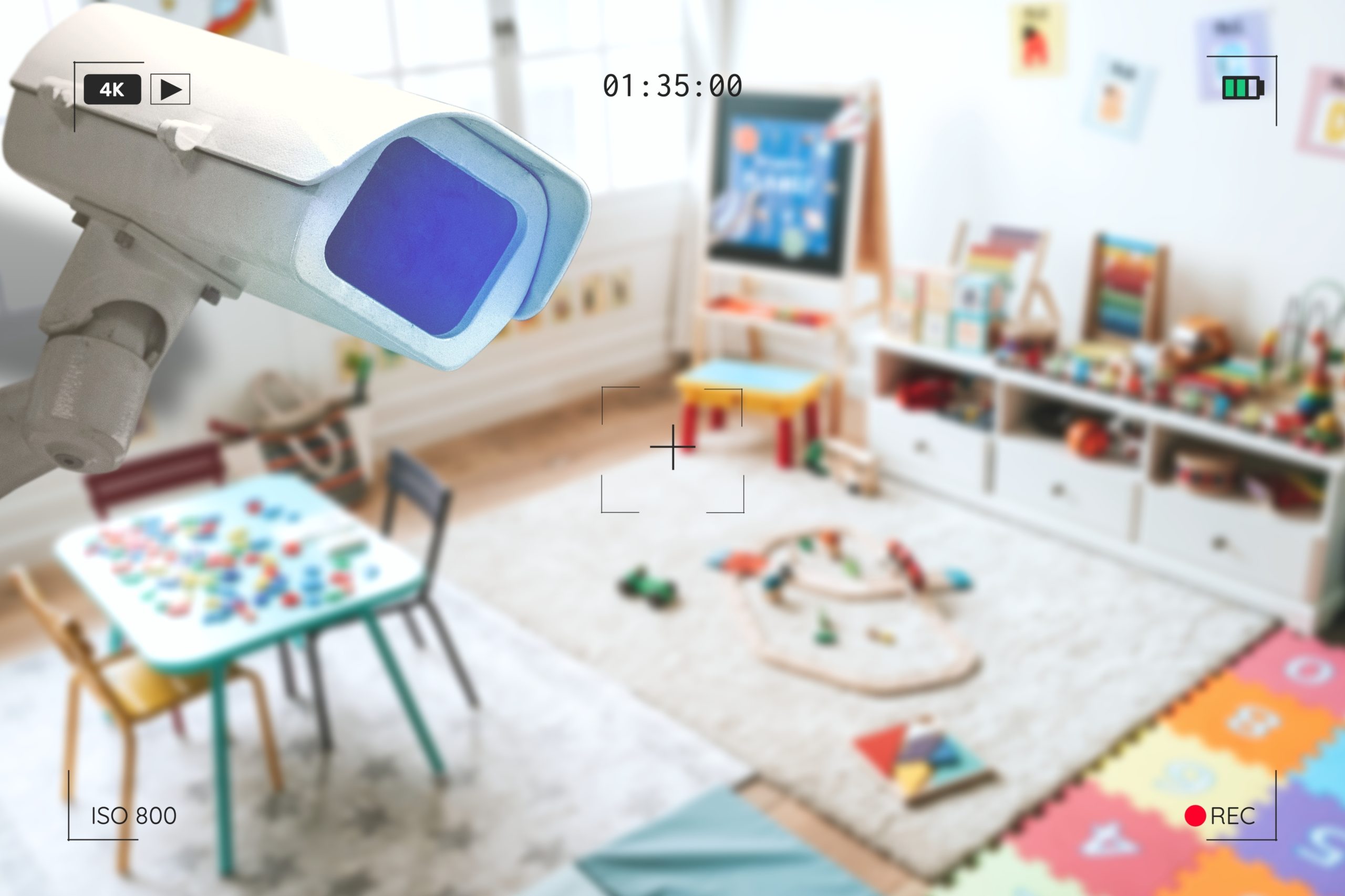
As federal and state legislation swirls over the usage of cellphones and personal devices in classrooms, there is a renewed push for another form of technology: surveillance cameras.
Legislators in Florida, Iowa, Maryland, South Carolina and Tennessee introduced video surveillance bills this year, proposing placing cameras into self-contained special education classrooms, which are rooms solely for students with special needs.
The move comes as a handful of states – Louisiana, West Virginia, Georgia and Alabama – adopted the legislation over the last decade in an attempt to curb harmful physical practices. That includes teachers using restraints on students with behavioral issues and, in some cases, placing them in seclusion rooms or resorting to physical violence.
“There’s usually an impetus for why these pieces of legislation are being introduced, and it’s often because something happened where an educator probably felt overwhelmed, or didn’t quite know what to do in a situation,” says Lindsay Kubatzky, director of policy and advocacy at the National Center for Learning Disabilities.
The latest surge of legislation comes amid a wave of technology crowding in — and getting pushed out — of the classroom. Districts are busy banning cellphones in classrooms as parents and experts debate the ethical use of education technology. Installing cameras, however, is something many parents of children in special education support.
“This protects everyone; this is your eyewitness in the room, that no one can say [someone] got it wrong,” says Jacqui Luscombe, who leads the Exceptional Student Education advisory board in Broward County School District.
But the move is controversial, even among disability advocates. Some believe it poses a privacy risk for both students and teachers, and further alienates an already “othered” population.
“What the big struggle seems to come down to is the tension of invading privacy versus the benefit of stronger accountability,” Denise Marshall, CEO of the Council of Parent Attorneys and Advocates, says.
The push for cameras in special education classrooms is not new. Texas was the first to pass legislation in 2015, and four other states (Louisiana, West Virginia, Georgia and Alabama) eventually followed.
NEWSLETTERS
Sign up for EdSurge newsletters for timely news, insights and analysis.
But as technology use of all kinds has grown in classrooms, there’s been a surge recently to include classroom cameras. “I do think we’re in the technology age where it’s not as cost-prohibitive as it used to be, and there’s all these apps that lend [themselves] to greater use,” Marshall says.
The Broward County School District in Florida had a three-year pilot program beginning in 2021. Under the pilot program, a parent could request a camera be placed in any classroom serving students solely with special needs. As the program neared its end in 2024, Luscombe urged the school board to make it permanent.
“The feedback I received was never anything other than, ‘Let’s have cameras,’” she says. “I’m sure there were plenty of parents saying, ‘We don’t need that,’ but for those who wanted it, it was empowering.”
The board approved a permanent version of the program, and the district has installed cameras in 80 of its more than 1,000 Exceptional Student Education classrooms.
Florida legislators attempted to make it a statewide move, but the measure failed to make it out of the Senate committee.
Tennessee, Maryland, South Carolina and Iowa are in the process of reviewing legislation. Tennessee is the only state of the bunch that would require a majority of parents to sign off on the cameras. The latter three propose placing cameras in all special education classrooms.
Louisiana recently expanded its existing law. Initially, it allowed cameras to be installed at a parent’s request. Now the law requires cameras in all self-contained special education classrooms – rooms dedicated to special education students.
West Virginia also requires all self-contained special education classrooms to have cameras, while Texas requires it only by parental request. Georgia allows schools to use their own discretion for placing cameras in self-contained special education classrooms, while Alabama requires cameras in classrooms where over half the students have special education needs.
Some of the legislation proposed, and Louisiana’s recently expanded law, explicitly ban restraints and seclusion rooms. Broward County’s does not, although the district requires teachers to learn de-escalation training. Luscombe acknowledges the district could do more training, particularly in under resourced schools.
“I personally have had conversations with the superintendent about more professional training, of, let’s not shove someone in a classroom, say ‘In you go,’ and then it becomes an exercise for survival,” Luscombe says.
Each state also has its own methods for reviewing footage, with some including footage leading up to and after a disputed incident. Others allow only administrators – not parents – to review footage.
It plays into the concern of student privacy. All states with current laws, except South Carolina, reference the federal Family Educational Rights and Privacy Act, better known as FERPA, in their legislation. That was passed in 1974 and serves as the standard for student privacy.
Most advocacy groups – including the Council of Parents Attorneys and Advocates and the National Center for Learning Disabilities – have not taken an official stance on the issue. “[In 2015] was the first time we’ve started to really debate even how we felt about it,” COPAA’s Marshall says, adding that opinions in the group are mixed. “I think it’s too early to tell with the research what the effects are, and I don’t think the states are collecting the data to help understand.”
TASH, a Nashville-based disability advocacy group, condemned the decision when it was first up for debate after Texas passed its law. The group declared in a statement at the time that the video surveillance has become “an easy substitute for and distraction from the ongoing hard work of cultivating schoolwide inclusion, communication, trust and community. What is needed instead is a systemic framework from which to approach a culture shift around issues of safety.”
There is no hard data, for Broward County or others, about whether the cameras have a direct impact on the number or intensity of incidents in classrooms.
There are also concerns mandatory cameras in classrooms could discourage people from entering the profession of special education – worsening an already depleted workforce. According to federal data from the 2024-25 school year, special education had the most reported teacher shortages, affecting 45 states.
But Jacquelie Rodriguez, CEO of the National Center for Learning Disabilities, says she believes that argument is a distraction.
“The fact that we have what is considered a leaky bucket pipeline, where we have more people coming into the field and yet, we still don’t have enough to fill the vacancies, that’s not a product of video cameras,” she says. “I think that when people say that, they’re addressing a symptom, not the root cause of the concern.”
Rodriguez says instead of focusing on recording incidents, districts should concentrate on training teachers better to handle high-stress situations.
“I don’t even think [cameras are] a Band-Aid; I think [they’re] a red herring,” Rodriguez says. “I think it’s the ability for someone to check a box and say they did something about it, when either they do know that they’re not doing anything about it, or they don’t realize that this is not going to solve the problem that they’re actually trying to address.”

Amazon has done a lot right with the top-end Scribe – the first with a colour display. This is the most refined Kindle hardware since the Oasis, and there’s no doubt that having a colour screen is more useful here than on a smaller reader. Yet, a few stumbles along the way stop this from being either the best Kindle or the best e-ink tablet.
The design is a real step forward
Good screen
Colour panel works better than on the smaller Colorsoft
Very expensive
Software is a bit sloppy
Merely ok for writing

Review Price:
£569
Colorsoft screen
The first Scribe with a colour display
Storage
Choose between 32 or 64GB storage
Pen
Pen included in the package for writing
After an extended rollout period that started in the latter part of 2025 in some regions, the Kindle Scribe Colorsoft is finally in my hands and widely available.
This is the most expensive Kindle you can buy, with prices starting at £569/$629 and rising even higher if you want to double the base 32GB storage.
Like previous Scribes, this isn’t purely a reading device. Instead, it ships with a pen and tweaked software to make it a notetaking companion too.
But is it a case of losing focus by trying to do too many things? After a month of testing, I have a pretty clear answer.
Amazon has really upped its industrial design game with the Kindle Scribe Colorsoft, and this signals a big shift in the right direction. I’ve found previous Scribes a little ugly, with an enlarged side giving the device an uneven feel. Yes, some might have liked this for added grip, but since this is such a light device, it is hardly necessary.
That whole design blueprint has been ditched for the Scribe Colorsoft, with a much more traditional tablet design taking its place. The bezels are now uniform and it looks very sleek. Amazon sent over the graphite hue, although if you’re after something a little more ‘fun’, the Fig colour is a lovely purple shade that really stands out.

Like all the best Kindles, the Scribe Colorsoft is designed with simplicity in mind. These are devices that need to blend in, rather than stand out, and Amazon has decided against adding too many needless flourishes.
There’s a simple ‘Kindle’ logo on the bottom right, another one on the back and four rubbery feet in each corner to keep it steady on a table. One small detail I really like is the positioning of the power button, which, unlike on the Kindle Colorsoft, is on the side rather than on the bottom. It’s much harder to accidentally press now.
The USB-C charging port is on the bottom, and there’s a slightly indented area on the side to show where the stylus should be docked when not in use.
This stylus, or Premium Pen, as Amazon calls it, is included in the package. If you get the Fig model, the stylus matches that colour, although my Graphite has a white pen – a slightly odd contrast. The pen itself has an eraser on the back, a button on the side and magnetically attaches to the side of the tablet with a satisfying click. It’s not the strongest magnet though, and it will likely fall off when placed in a bag.

When I first saw the Scribe Colorsoft had an 11-inch display, I was worried it might feel too big – but it really doesn’t. This is a remarkably slim and light tablet, measuring a mere 5.4mm thick and weighing 400g. It’s light enough to slip into a bag alongside a laptop without noticing the difference.
I haven’t been using the Scribe with a case, although considering the high price, I would recommend adding some sort of protection. After a few weeks of use, the device remains free of any dings or small scratches.
This is the first Scribe device with a colour display, and the screen is the star of the show. It’s the reason this package is so expensive, and it’s certainly eye-catching.
Anyone familiar with the Kindle Colorsoft, and even the Remarkable Paper Pro, will know what to expect, but it’s important to set expectations here. This is not an LCD or OLED, and the Colorsoft Kaleido 3 E Ink panel isn’t going to display the same sort of colours you’d find on an iPad. Hues are far more muted, with an almost watercolour or pastel look. There’s also far less colour variation.
When displaying colour, the screen displays 150ppi. That’s half of the resolution you’ll get with black and white content. This is simply a shortcoming of the tech, and hopefully something that gets improved in the next iteration. There’s no issue with the adjustable front light, though, which is even and does a great job.
I reviewed the Kindle Colorsoft upon release, and I still use one regularly. My biggest issue with the reader was that you could clearly see the colour covering of the screen, and it made everything slightly blurry. Next to the Paperwhite, the Colorsoft offers a worse reading experience, even though it’s a more expensive device. I have not found the panel so distracting here, and the colour layer is far less visible.

Still, the addition of colour here is far more useful, at least in my view, than on the smaller Colorsoft. The larger screen is great for comics, cookery books and travel guides, and all these are made far more enjoyable with even a small amount of colour. It’s great for notes too, especially highlighting PDFs and the like.
I’ve used a lot of the best e-ink tablets, and while the writing experience here is good, it’s not a patch on the Remarkable Paper Pure or the Paper Pro series. There is a slight texture to the display that adds some resistance, although no one is going to mistake it for the feeling of paper. It’s far more akin to writing on an iPad than one of the Remarkable’s excellent tablets. I don’t hate writing on the Scribe; I just wish there was a little more resistance to really improve the experience.
There’s a lot of interesting – good and bad – software features here, but I will touch upon performance first, as it’s pretty simple.

Like any other Kindle, or e-paper device for that matter, the Scribe Colorsoft can feel slow at times. The screen needs to refresh often, and for those used to the speed of phones and traditional tablets, it can be a bit jarring. In daily use though, it’s fine. Everything opens quickly while pages turn without lag. There’s 4GB RAM here, and it is faster to navigate than the previous Scribe models.
Amazon has the best bookstore for content, and all that is available here. Kindle Unlimited, Audible audiobooks (if you connect a Bluetooth speaker or headphones), everything you’ve previously purchased, daily deals and new releases.

Where the software experience falls down is the note-taking side of things. The way notebooks sit alongside your books on the rejigged homescreen is odd to me, especially as someone who uses the note elements for work and the reading parts for pleasure.
Having them hit up against each other is a constant annoyance. Of course, this is something that’ll vary depending on personal preferences – and if you take notes relating to books, or combine the notes with study books, then great. I just don’t think the layout is for everyone.
Another issue is Amazon’s persistence in pushing me to its store with rows and rows of recommended books. I use a Kindle every day, so I know this is how the company operates, but on a dedicated reading device that is fairly affordable, I can deal with it. On a device that can cost upwards of £600/$600 and is aimed at a more professional market, I think we can do without the rows of suggested books.

As a digital notebook, the Scribe Colorsoft is best described as good.
As mentioned before, it’s not in the same league as Remarkable and its devices. On the Remarkable Paper Pure, for example, you can share presentations from tablet to browser and access hundreds of bespoke notebook templates that often look stunning. I also just prefer the simple, clean layout of Remarkable’s homescreen and its focus on your content, rather than trying to sell you anything and everything.

But it’s fair to say that Amazon’s Scribe software has progressed since I reviewed the very first Scribe. You can sync documents with services like Google and Microsoft 365, or use the Send to Kindle feature to ping PDFs from a laptop and sign or annotate them. Getting them onto the Kindle is easy and quick, but getting them off is a real pain due to the way the system likes to create extra files.
Books can be annotated in the margins, and there are some AI features for summarising documents and making wayward handwriting easier to understand. You can also ask the AI questions about the content inside notebooks. Like all AI features, the results are hit and miss and not to be completely relied upon.
Battery life on tablets and e-readers is far harder to gauge than on smartphones that are used constantly throughout the day. The endurance of the Scribe will completely depend on how it’s used. Amazon claims weeks of charge based on around 30 minutes of reading every day, which is a mostly useless metric for a notetaking device.
I’ve been testing the Scribe Colorsoft for a month, and I have charged it twice. That’s after daily use, both taking notes and referring back to them throughout the day and probably an hour of reading (on average) per day. Use it just for reading, and it’ll last longer.
There’s a USB-C cable included in the box, and you’ll need to provide your own charger. Unlike some of the Signature Edition Kindles, there’s no wireless charging here.
If you’re after a single device that is both a way to read Kindle books and take notes – and you have deep pockets – this is for you.
I much prefer the writing experience on Remarkable’s tablet range, as they feel more natural and have a better backend setup.
The Kindle Scribe Colorosoft isn’t the best Kindle, nor is it the best e-ink tablet. And that’s an issue for something that costs £629/$679 for the 64GB model.
I’d plump for the Remarkable Paper Pro if you want the best, high-end experience or the Paper Pure if you’re on a tighter budget. The Kindle Paperwhite remains the best Kindle purely for reading, and unless you must have the big screen, this is hard to recommend purely for reading.
Amazon has done a lot right. The refined design is great, the colour display is good for the most part and, of course, the Kindle store is unmatched for choice. For me though, with the price taken into account, there are too many sacrifices here.
From the writing experience to the software to the reliance on hit-and-miss AI gimmicks, Amazon hasn’t quite released a product that ticks all the boxes.
We test every E Ink tablet we review thoroughly. We use industry-standard tests to compare features properly and we use the tablet as our main device over the review period. We’ll always tell you what we find and we never, ever, accept money to review a product.
Find out more about how we test in our ethics policy.
32GB is fine for most, if you’ll mainly be reading and annotating PDFs, taking notes. Of course, if you want to download a lot of audiobooks (which can be 1-10GB in size) and image-heavy PDFs, you’ll want 64GB to be safe.
| Amazon Kindle Scribe Colorsoft Review | |
|---|---|
| UK RRP | £569 |
| USA RRP | $629 |
| Manufacturer | Amazon |
| Screen Size | 11 inches |
| Storage Capacity | 32GB, 64GB |
| Rear Camera | N/A |
| Front Camera | N/A |
| IP rating | No |
| Size (Dimensions) | x x INCHES |
| Weight | 393 G |
| Operating System | Kindle OS |
| Release Date | 2026 |
| First Reviewed Date | 12/06/2026 |
| Resolution | x |
| Ports | USB-C |
| Chipset | Quad-core processor |
| RAM | 4GB |
| Colours | Graphite, Fig |
A 10-year-old authentication bypass vulnerability discovered in the phpBB forum software allows an attacker to log in as any user, including administrators.
The flaw does not have an identifier and is trivial to exploit with a single HTTP request. It impacts phpBB versions 4.0.0-a2 or 3.3.16 and below.
Researchers at application security company Aikido found the bug on June 2nd and reported it through the developer’s HackerOne Vulnerability Disclosure Program.

phpBB responded to the report immediately and addressed the problem on June 6 in version 3.3.17 of the software.
According to Aikido, the flaw was introduced to phpBB’s codebase 10 years ago, impacting all versions of the 3.x and 4.x release branches, up to 3.3.16 and 4.0.0-a2. For the 4.x release, there’s no fix available yet.
phpBB is a PHP-based free and open-source web forum platform that enjoyed peak popularity in the 2000s and early 2010s. Today, it is still powering thousands of forums worldwide.
Aikido says that exploiting the bug requires no special configuration, as it can be triggered on the default settings.
“The vulnerability is exploitable in the default configuration and requires no special knowledge,” reads Aikido’s report.
“If you are on version 4.0.0-a2 or 3.3.16 and below, upgrade immediately to master (no safe 4.x release yet) and 3.3.17, respectively, to avoid compromise.”
Administrator access could allow attackers to view all private messages stored on the forum, create, modify, or delete content and user accounts, impersonate staff, or deface the sites.
Picking targets is also straightforward, as the member list on phpBB forums is public by default.
Aikido notes that remote code execution (RCE) is not possible due to a separate password check that protects the Admin Control Panel.
The researchers withheld all technical details for now to allow forum administrators enough time to apply the security updates and even contacted administrators of large phpBB-based forums to alert them directly.
One thing to note is that the update may cause forums using OAuth authentication to break, because the OAuth redirect handler has moved to a new location, but this should be a simple fix in most cases.
Aikido promised to publish the full details of the flaw in a future report, but did not provide a specific timeline.

Security teams log 54% of successful attacks and alert on just 14%. The rest move through your environment unseen.
The Picus whitepaper shows how breach and attack simulation tests your SIEM and EDR rules so threats stop slipping by detection.

An anonymous reader quotes a report from NBC News: The first quarter of 2026 produced the most blocked and delayed data center projects on record, according to a new study shared with NBC News. The study — conducted by Data Center Watch, a project of the AI intelligence firm 10a Labs that tracks local data center activity — found that data center opponents blocked or delayed at least 75 projects nationwide worth about $130 billion from January through March, the most in a three-month period since the group began tracking in 2023.
“The quarter reflected a structural shift rather than a cyclical spike: communities have internalized an opposition playbook, legislative sessions introduced formal regulatory uncertainty, and the number of active opposition groups more than doubled to 833 across 49 states,” the authors wrote, noting that the total number and value of data centers blocked or delayed during the first three months of 2026 roughly matched the total for all of 2025.
[…] The report found that legislative pushes for moratoriums on constructing data centers ballooned during the first quarter of 2026, sponsored by lawmakers on both sides of the aisle. The report found such proposals introduced in 14 states from January through March, with Sen. Bernie Sanders, I-Vt., and Rep. Alexandria Ocasio-Cortez, D-N.Y., introducing a federal version. Though none of the proposals has been signed into law, one did reach the desk of Democratic Gov. Janet Mills in Maine. She vetoed it in April.
More than 300 bills were introduced in statehouses across the country just in the first six weeks of 2026, the authors found, saying it marked “a clear shift from incentive-focused policies toward regulatory oversight as the scale of energy demands became clearer.” What’s more, the study found that the number of active grassroots opposition groups across the country more than doubled from 396 at the end of 2025 to 833 by March. The authors found that the states with the most opposition groups through that month were Maryland, Ohio and Texas. “In some cases,” they wrote, “opposition mobilized before any project was officially filed, the mere rumor of a data center was enough to trigger organized resistance.”
“Anthropic said on Friday it will ‘abruptly disable’ its most advanced AI models for all users,”
reports Reuters, “after the U.S. government ordered it to suspend access to the models for foreign nationals, citing national security concerns. The company received the export control directive to suspend access to Fable 5 and Mythos 5 for all foreign nationals, without being given specific details of its national security concern, Anthropic said in a statement.”
Anthropic’s blog post writes that the directive applies to foreign nationals “whether inside or outside the United States, including foreign national Anthropic employees. The net effect of this order is that we must abruptly disable Fable 5 and Mythos 5 for all our customers to ensure compliance.”
“Access to all other Anthropic models will not be affected.”
We received the directive from the government today at 5:21pm (ET)… Our understanding is that the government believes it has become aware of a method of bypassing, or “jailbreaking” Fable 5… We have not even received a disclosure of a concerning non-universal potential jailbreak that led to a harmful result. The potential jailbreaks that have been disclosed to us are either entirely benign responses or are minor findings that provide no Mythos-specific uplift.
To date, the government has only given us verbal evidence of a potential narrow, non-universal jailbreak, which essentially consists of asking the model to read a specific codebase and fix any software flaws. Our understanding is that one potential jailbreak was shared with the government. We have reviewed a report that we believe is the basis of the government’s directive and validated that the level of capability displayed there is widely available from other models (including OpenAI’s GPT-5.5), and is used every day by the defenders who keep systems safe… We are complying with the government’s legal directive and are removing access to Fable 5 and Mythos 5 for all users. However, we disagree that the finding of a narrow potential jailbreak should be cause for recalling a commercial model deployed to hundreds of millions of people. If this standard was applied across the industry, we believe it would essentially halt all new model deployments for all frontier model providers.
As we have stated publicly, we believe the government should have the ability to block unsafe deployments, as part of a statutory process that is transparent, fair, clear, and grounded in technical facts. This action does not adhere to those principles. We apologize for this disruption to our customers. We believe this is a misunderstanding and are working to restore access as soon as possible.
Reuters notes that Amazon’s cloud unit AWS “said late on Friday that Anthropic has asked it to revoke access to the models for ‘all users in all regions.’”
Dean Ball, a former White House official who contributed to the AI Action Plan the administration issued in the summer of 2025, said in a post on X that the order suggests all “non-Americans” would be restricted from using Anthropic’s latest models, including those based in the U.S. “This means you should expect to have to prove your citizenship to use Anthropic models,” Ball said.
Several key Anthropic personnel, including co-founder Chris Olah, AI researcher Andrej Karpathy and philosopher Amanda Askell, were born outside the United States.

When does a 65-inch 4K QLED television with Dolby Vision, Dolby Atmos, and a full smart TV platform built in stop being a compromise purchase and start being one of the more straightforward deals of the summer?
The Insignia 65-inch QLED Fire TV is down from $499.99 to $299.99, a saving of $200 on a panel that brings Quantum Dot color technology to a screen size that would have cost significantly more to fill at this picture quality just a few years ago.
You can now pick up an Insignia 65‑inch QLED Fire TV for less than $300, making it a standout bargain for the soccer world cup
At just $299.99, the Insignia 65-inch QLED is a television that punches well above its weight in streaming, sport, and movies.

Quantum Dot sits behind every image here, pushing brightness and color saturation beyond what standard LED panels deliver at this price, and Dolby Vision support means HDR content arrives with the kind of contrast and fine detail that the format was designed to show off.
That picture quality carries naturally into sport, where the 4K resolution and direct LED backlight keep fast-moving sequences clean and evenly lit across the full width of the frame, which matters on a 65-inch panel where uneven brightness becomes more visible the larger the screen gets.
Fire TV is the operating system running underneath all of it, giving instant access to Netflix, Prime Video, Disney+, Hulu, Apple TV+, Sling TV, and YouTube alongside live sports and over 500,000 streaming titles without needing an external device plugged into the back.
Alexa is built into the remote, so searching across all of those services, checking scores during half-time, or switching inputs happens by voice rather than by navigating menus, which proves genuinely useful when the Insignia 65-inch QLED Fire TV is the centre of a room that more than one person is watching.
Apple AirPlay support adds flexibility for anyone outside the Amazon ecosystem, and up to six individual user profiles mean different members of the household can keep their own watchlists and recommendations without crossing over into each other’s viewing history.
With a 60Hz refresh rate rather than 120Hz, fast-paced gaming at high frame rates is the one area where the Insignia 65-inch QLED Fire TV asks for a little patience, but for movies, sport, and streaming it comfortably punches above what $299.99 usually buys.
If the question at the start of the summer is how to get the most screen for the least money before the World Cup kicks off, is there a more compelling answer than this right now?
SQUIRREL_PLAYLIST_10148964





Alexander Zverev wins the French Open to finally earn a 1st Grand Slam title

The Best Mystery Series of All Time Is Surging on Streaming 30 Years After It Ended


Anatomy of the June crypto crash: Fed, Iran, Saylor


Oppenheimer backs SpaceX as $70 billion retail frenzy builds


Markets Rally as SpaceX IPO Looms Amid Iran Tensions and Inflation Surge

Senator Cynthia Lummis Calls CLARITY Act the Most Consequential Financial Legislation of This Generation

Alexander Zverev conquers demons and outlasts Flavio Cobolli to win French Open for first major title


Microsoft unveils seven homegrown AI models in new bid for ‘long term self-sufficiency’


High Stakes for Wembanyama as New York Pushes for 3-0 Lead


Notion restores access to Anthropic after service disruption

The Pain Points Taking a Fragile Tech Rally Down a Notch

Eli Lilly (LLY) Stock Surges 4% Following Breakthrough Sleep Apnea Trial Results

The investment to transform historic St Helen’s ground in Swansea


Trump’s AI Ownership Plan Could Benefit Anthropic at OpenAI’s Expense

Bangladesh beat Australia after 20 years in ODIs, register only their second win over six-time world champions | Cricket News


NanoClaw integrates JFrog registries to secure AI agent downloads


Bitget enters Argentina’s regulated crypto market through PSAV registration


This Week In Security: Microsoft On Microsoft, Register Your Domains, Linux On ARM, And FreeBSD Joins The File Cache Club


Politics Home | Healey Resignation Is “Colossal Failure Of Government”, Says Former Labour Defence Secretary


First Time Since 1971: Australia Register Historic Low In ODI Cricket


You must be logged in to post a comment Login