Connect with us
DAPA Banner
DAPA Coin
DAPA
COIN PAYMENT ASSET
PRIVACY · BLOCKDAG · HOMOMORPHIC ENCRYPTION · RUST
ElGamal Encrypted MINE DAPA
🚫 GENESIS SOLD OUT
DAPAPAY COMING

Tech

No-Drill Sailing Kit For A Canoe

Published

on

The first known use of humans using wind to perform mechanical work with machines dates back to ninth-century Persian windmills. But if we count sailing vessels among those machines, the history goes back to sometime just before the invention of written language. Since then, humans have been sailing everything from the tiniest of Sunfish to the largest of shipping vessels, and even sailing boats like canoes that aren’t typically designed for efficient sailing. For those who already own a canoe, the conversions can be straightforward but often involve drilling into the hull. This homemade conversion kit, on the other hand, requires no drilling at all.

The first, and most obvious, part of the conversion is to add a mast and sail. [Tea]’s primary setup does involve drilling a mast thwart into the gunwales of the canoe, but he also built an alternative setup which clamps to the gunwales and the bow deck instead. The standing lug sail is then hoisted on an unstayed wooden mast. The next major component of the build are a pair of leeboards which also clamp to the gunwales and function like a centerboard, and can be adjusted for one’s preferred amount of weather helm. Rounding out the stern of the boat is a custom-built rudder with a pair of lines in lieu of a tiller which can be positioned anywhere along the length of the boat.

All of the wooden parts of this build were custom-built from common lumber with finishing touches from a router to soften all of the hard edges. Canoe sailing is fairly popular, although without the leeboards these common sailing kits are often meant for downwind sailing only. A complete setup like this turns it into a much more capable craft. Without a canoe as a base vessel to start with, though, a complete sailing vessel can be built from common lumber as well.

Advertisement

Source link

Advertisement
Continue Reading
Click to comment

You must be logged in to post a comment Login

Leave a Reply

Tech

Apple is reportedly planning new iPad Pro and MacBook Pro releases early next year

Published

on

Apple reportedly has plans to release several new iPad Pros and a new MacBook Pro in the first half of next year.

The company is currently working on four models of the new tablet with faster chips, Bloomberg reported. It is also developing a new “entry-level” MacBook Pro, which is internally referred to as K104, the outlet writes. The company is also targeting that same period for the release of its first M7 processor.

The last time Apple released an iPad Pro was in October of last year. In March, the company released a new high-end MacBook Pro and the budget laptop MacBook Neo, albeit the Neo uses the A18 chip, originally designed for the iPhone. This anticipated new MacBook is expected to be a full-fledged Pro.

The apparent product plans come amidst whisperings of other upcoming releases (including, perhaps, a foldable phone) as the company preps for its post-Tim Cook-as-CEO era while also battling supply chain issues that Cook says have forced it to raise its prices. Those price hikes have been substantial in some cases. The MacBook ​Pro with 1 terabyte of storage recently jumped from $1,699 to $1,999, for instance. So if the company is working on more budget-friendly laptops and tablets, this would be a good time to introduce them.

Advertisement

Apple did not immediately respond to our request for more information.

Source link

Continue Reading

Tech

Accio, Wizards: Harry Potter Audiobooks Arrive on Spotify

Published

on

Fans of the Harry Potter series have a new way to tune into the chronicles of the Boy Who Lived. Spotify on Wednesday added the complete Harry Potter audiobook series to its platform, including the narrations by Jim Dale and Stephen Fry. 

The audiobooks are available to Premium subscribers in the US, UK, Canada, Ireland, Australia, New Zealand and across Europe. Listeners in North America can tune into Jim Dale’s narration, while subscribers in all markets can access Stephen Fry’s version.

“We are delighted that these books are now available to an even wider audience on Spotify, as we continue to connect readers and fandoms with stories they love, and bring more books to more people,” Duncan Bruce, Spotify’s director of partnerships and licensing, said in a statement.

Advertisement

It’s not just the core Harry Potter books that are making their way to Spotify. Companion titles including The Tales of Beedle the Bard, Fantastic Beasts and Where to Find Them and Quidditch Through the Ages are also available in select markets. Listeners can also access these Harry Potter titles on Audible, which last year launched a new, full-cast audio edition of the series.   

Spotify added audiobooks for purchase in 2022. It now includes up to 15 hours of audiobook listening with a Premium subscription, which costs $13 a month. A separate Audiobooks Access subscription tier also lets subscribers listen to 15 hours of audiobooks for $10 a month, but it doesn’t include ad-free music.

Source link

Advertisement
Continue Reading

Tech

Before Valve’s Steam Machine, There was the Xi3 Piston, the Little Aluminum Cube That Almost Brought Steam to Every TV

Published

on

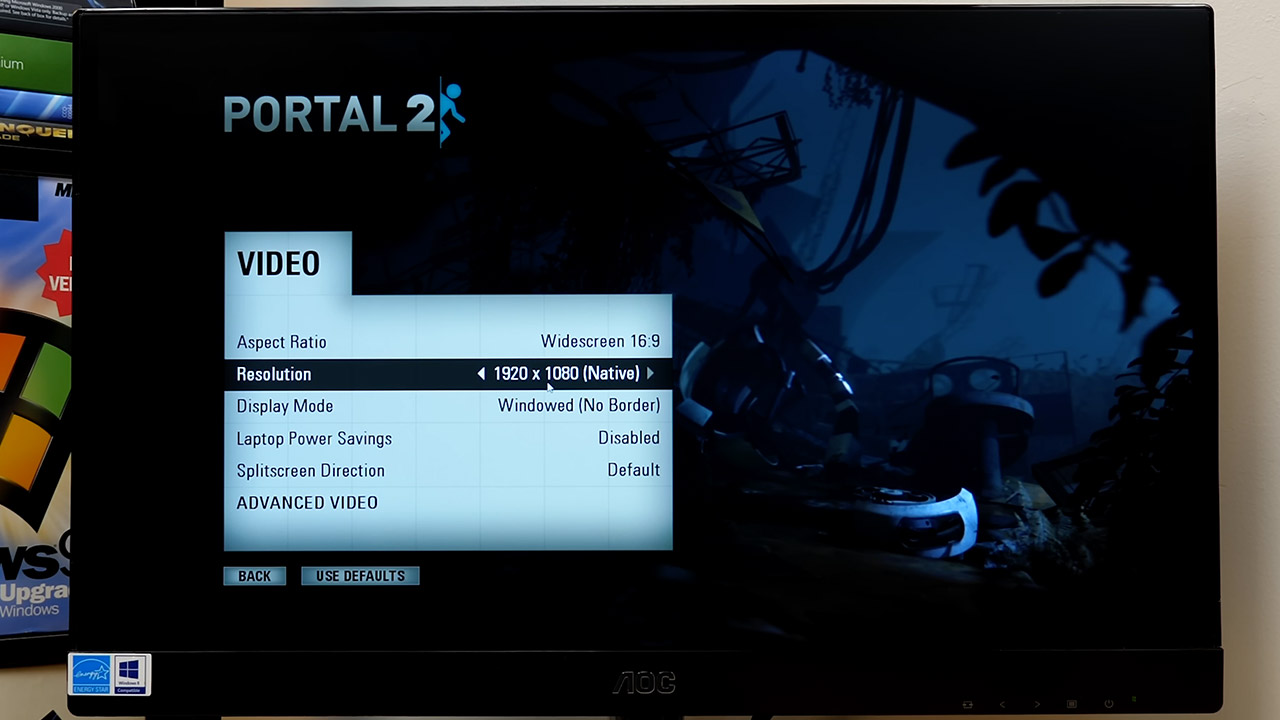
Valve Steam Machine 2013 Xi3 Piston
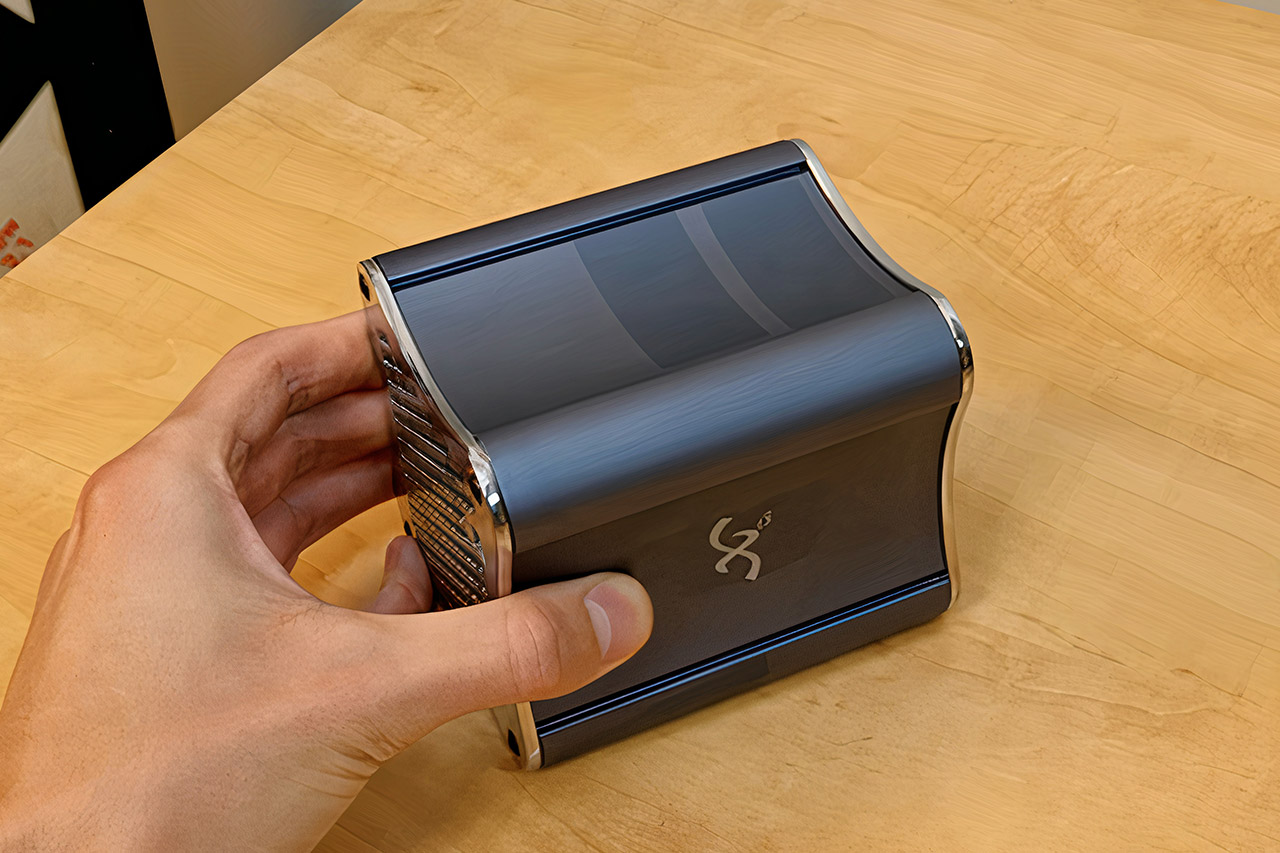
Early in 2013 a small Utah company walked into CES with something that looked more like abstract art than a gaming machine. The Xi3 Piston sat there as a compact metal cube, roughly four inches on each side, with indented sides and a front grille that gave it a distinctive industrial look. Valve had invested in the company and even displayed the device in its own booth. For a brief moment it seemed like this odd little box might become the foundation for a new kind of living-room gaming experience built around Steam.


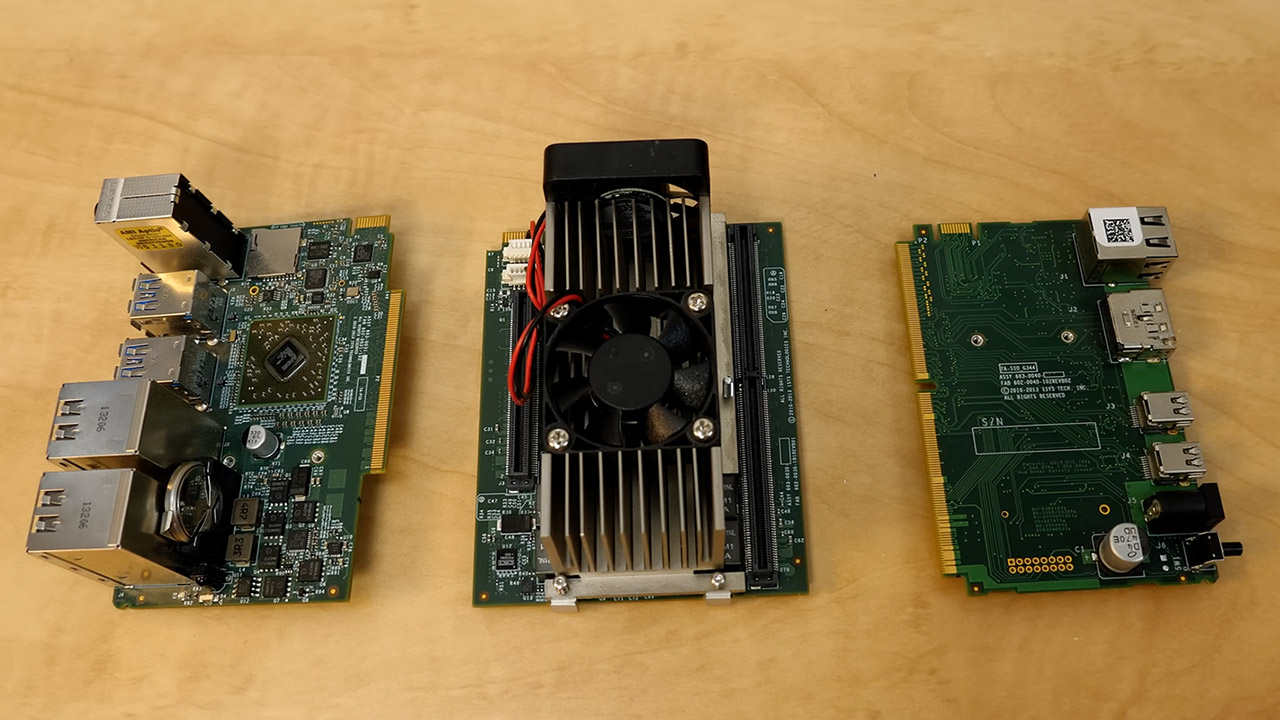
Xi3 had been manufacturing modular computers for years and shipping them to corporations and industrial clients. The Piston was their first foray into the consumer market, primarily those who wanted to play PC games on a huge screen but couldn’t (or wouldn’t) tolerate a desktop tower taking up half the space. So they took the same modular strategy and attempted to reimagine it for a living room-centric PC. Here’s the basic idea: instead of a single, large motherboard, three individual circuit boards are stacked inside the aluminum shell. One handles the processor and cooling, another handles the majority of the input and output connections, as well as a mSATA slot, while the third offers a few additional ports and some capacity for expansion. You can simply slide the panels off and remove the boards for maintenance or, in theory, upgrades later. There is even an optional external drive module that attaches to the bottom via rails.

Sale


ACEMAGIC K1 Mini PC AMD Ryzen R2544 8GB DDR4 256GB SSD Mini Computers (Turbo 3.7GHz), Win 11 Pro Radeon…
  • 【Mini Pc With Amd Ryzen R2544】ACEMAGIC mini computer is equipped with AMD Ryzen R2544 processor (4 cores/8 threads, base 3.35GHz, boost up to…
  • 【Radeon Graphics For Entertainment & Business Office】The integrated upgraded AMD Radeon Graphics in the Ryzen R2544 (max 1300Mhz, graphics cores…
  • 【Ample Storage & Flexible Upgrade Options】This mini computer comes with 8GB DDR4 memory, delivering smooth multitasking and efficient performance…

An AMD Trinity APU powers it all, notably the R-464L embedded version of the same technology found in the A10-4600M mobile processor. That’s a four-core processor clocked at up to 3.2 GHz with integrated Radeon HD 7660G graphics, which, as you might think, is less powerful than some of the stand-alone graphics cards available. That graphics unit, however, has 384 shaders and is combined with 8 GB of DDR3 RAM, a 128 GB solid-state drive, and space for a second mSATA drive or microSD card. Under average load, the system consumes a relatively low 40 watts, though it can grow warm if you play for an extended period of time.

Advertisement


As we’ve already mentioned, this is a small machine, so you might expect connectivity to be limited, but there are actually quite a number, including 12 USB ports (some 3.0 and 2.0), eSATAp, and likely a few more options. There are also HDMI, DisplayPort, and a mini DisplayPort visual outputs, gigabit Ethernet for wired communications, and audio ports to complete the package. It’s worth noting that wireless networking is not provided. The Piston would occasionally be coupled with a wireless controller that resembled the Xbox 360 controller, allowing gamers to play games from the couch.

Valve Steam Machine 2013 Xi3 Piston
Xi3 marketed the Piston as a Steam Box, essentially employing Steam’s Big Picture mode to create an interface that felt like a typical console experience. In some situations, the computer shipped without an operating system, while in others it came with a modified version of Windows. Early demos demonstrated how to browse the interface with a controller and gain access to the whole Steam library. Valve later moved back from that engagement, stating that the Piston was one conceivable approach for a Steam Box, but not the one they had in mind.

Valve Steam Machine 2013 Xi3 Piston
By the time Xi3 ultimately released the Piston Console in late November 2013 for $999, it was a standalone product with a price tag that received a lot of criticism. You could create a standard small-form-factor PC with better graphics and still save a few hundred dollars. The modular design was initially appealing, as was the small size, but the performance fell short of the buzz around the initial CES announcement. Production remained modest, and the device gradually disappeared from view as Valve collaborated with a number of other companies on the Steam Machines project, which employed full-size components and the Linux-based SteamOS.

Source link

Advertisement
Continue Reading

Tech

What Happens When A Torque Converter Goes Bad?

Published

on


Torque converters serve as the crucial link between traditional automatic transmissions and a car’s engine. If you’re not up to speed on how torque converters work, here are the basics: A torque converter resembles a big metal bagel placed within a transmission’s bellhousing. That bagel is cut in half — the top half is meshed with the transmission, and the bottom with the engine. As the engine spins, it rotates the torque converter’s components, which in turn rotate the transmission fluid inside, like a washing machine. That spinning fluid then spins the parts on the other half, thus spinning the gearbox. In short, a torque converter is a device that uses spinning fluid to transmit power from the engine to the transmission.

But what happens when one fails? There are actually quite a few signs of such a problem, but they all center around odd gearbox behavior. These include gear slippage, loss of throttle response, and inconsistent acceleration, among others. Complete failure will, of course, mean the car has no drive at all, given how the torque converter connects the engine and transmission.

Assuming it is a bad torque converter, expect a pricey repair. Not only are they complex parts that require specialist tools and knowledge to work on, but servicing one requires dropping the transmission — not a quick job. That leaves us with two questions, then: How do torque converters fail in the first place, and what are the warning signs that it’s on its way out?

Advertisement

Symptoms of a failing torque converter

There are a few common symptoms that can occur before a torque converter fails. These include gear slippage and poor throttle control; poor idle performance; an overheating transmission; and discolored automatic transmission fluid (ATF).

These symptoms occur because of how torque converters work. They rely on fluid to transmit power from Point A to B, so issues such as contaminated fluid or problems with the pump that keeps the whole system pressurized will lead to problems. Remember: one end of the torque converter is splined to the engine’s flex plate and the other to the transmission, so faults in any of the torque converter’s vital components can interfere with the operation of one or both. Meaning, if your fluid is bad, you’ll feel it in the power delivery, engine sounding unhappy at idle, and so on.

Advertisement

There are more specific telltale symptoms associated with torque converter failure as well. One major example is if you find your car revving much higher than usual to maintain the same speed, which makes sense if you think about it. With the fluid operating less efficiently (or there being the wrong amount), the engine has to work harder to spin the transmission as quickly, which means more revs. More revs means more heat, leading to an overheating torque converter and a whole host of additional problems.

Advertisement

How these failures occur in the first place, and how to prevent them

It’s a common myth that you shouldn’t change your transmission fluid, but that couldn’t be further from the truth. Automatic transmission fluid has a service life, and not changing it can lead to serious problems. ATF changes are a regular part of vehicle maintenance, albeit at much longer intervals than engine oil changes. It’s about 60,000 miles for normal cars, and half that (or even less) if you’re frequently abusing the transmission with heavy towing or driving hard.

Improper maintenance is one point of failure, as is simply having a higher-mileage vehicle. The fact is, nothing lasts forever; seals will go bad, internal components will wear out or otherwise get damaged, and so on. Contaminated fluid is another given, which is why you should replace it regularly and periodically check the transmission dipstick if your car has one. Then you have electronic failures, such as a solenoid or a fault with the signals being interpreted by your car’s ECU.

All that said, torque converters and automatic transmissions in general are generally robust components. Unlike a manual transmission with a flywheel and clutch, an automatic marries the torque converter to a flex plate, meaning there’s far less mechanical contact between engine and transmission. Typically, these units last well beyond 100,000 miles with good maintenance. That number will drop drastically if you put significant strain on the parts, but as long as you adjust your maintenance intervals accordingly and watch for those symptoms, you should be good to go.

Advertisement


Source link

Continue Reading

Tech

The OnePlus N6 has a battery double the size of the iPhone 17

Published

on

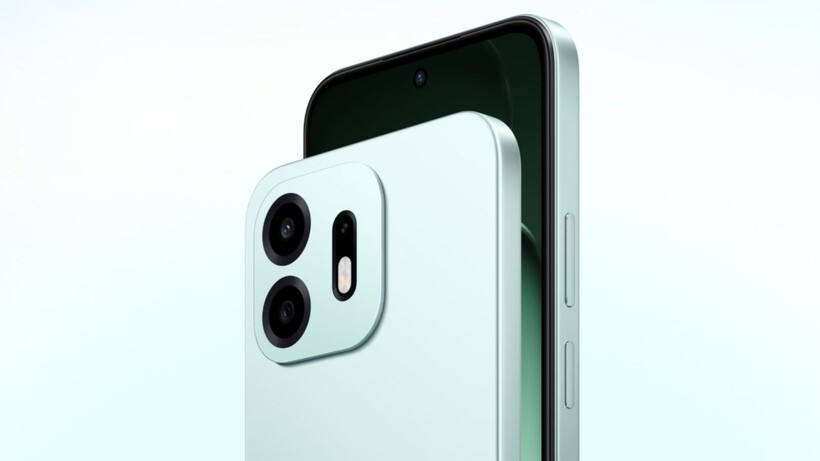
OnePlus has introduced the N6 in India, a new budget-tier handset with a huge 8000mAh battery.

That battery rating puts the N6 in a narrow group of cheap Android phones where endurance rather than processing power is the key selling point. The cell is also double that of the iPhone 17, which sits at 3692mAh.

Charging support runs to 45W via SuperVOOC wired, and the N6 also supports 5W reverse wired charging, a feature that lets the handset function as a power bank for other devices. This remains uncommon across budget Android hardware at this tier.

Beyond standard charging, the N6 incorporates bypass charging, a feature that routes incoming power directly to the processor and display during intensive tasks rather than cycling it through the battery. This reduces heat accumulation during extended gaming sessions and helps preserve long-term cell health.

Advertisement

Power comes from the MediaTek Dimensity 6360 Max, a chipset paired with either 4GB or 6GB of RAM plus 128GB of internal storage and a microSD card slot.

Advertisement

The display stretches to 6.8 inches with an IPS LCD panel running at 120Hz, an HD+ resolution, and a peak local brightness of 1200 nits.

oneplus n6oneplus n6

Camera hardware centres on a 50MP rear sensor with an f/1.8 aperture alongside an 8MP front-facing camera, and the N6 ships with OxygenOS 16.0 based on Android 16, backed by a commitment to two major OS updates and three years of security patches.

The N6 launches in India on 4 July through Amazon India and OnePlus India in Fresh Mint and Midnight Green, with the 4GB/128GB configuration priced at INR 22,999 (approximately £215) and the 6GB/128GB variant at INR 24,999 (around £234), while pricing and availability for the UK and other international markets have not been confirmed at this stage.

Advertisement

Source link

Continue Reading

Tech

Oracle outlines all the ways it could lose the farm it bet on AI

Published

on

Oracle is burning hundreds of billions to finance AI datacenters for the likes of OpenAI. Now, the company is admitting they may not pay off.

Amid the usual boilerplate, Big Red cited numerous risk factors related to its AI infrastructure investments in a regulatory filing published late last month.

“To grow our OCI business, which requires increased computing capacity, we must incur significant capital and operating expenditures to increase our existing data center capacity and to establish data centers in new geographic locations,” the filing reads, using the TLA for “Oracle Cloud Infrastructure.”

These investments, the company notes, are tied to long-term commitments for infrastructure and datacenter capacity. Unlike the big three cloud providers, Oracle prefers to lease datacenter capacity from partners like Crusoe, rather than build them itself.

Advertisement

While the filing doesn’t mention OpenAI explicitly, Oracle’s success as an AI infrastructure provider is inextricably tied to the model dev and its cult-of-personality leader, Sam Altman.

In early 2025, Oracle joined OpenAI, SoftBank, and MGX to put its name on the so-called Stargate initiative, an ambitious project to pave the planet with half a trillion dollars worth of bit barns.

As we later learned, Oracle had signed up to provide $300 billion of capacity over five years as part of a long term agreement with OpenAI, which would also see the database provider manage the model dev’s flagship facility in Abilene, Texas. In addition to the OpenAI deal, Oracle claims to still have about $155 billion in remaining performance obligations from other customers.

This puts Oracle in a tough spot. If it underestimates demand, it could lose customers to competing infrastructure providers. On the flip side, Oracle says if it overestimates demand, or any of its key customers can’t make rent, it could end up footing the bill for the datacenter capacity it leased on their behalf.

Advertisement

Oracle’s OpenAI deal will reportedly contribute up to $30 billion in revenues annually, with revenues expected as early as next year. But OpenAI still hasn’t managed to turn a profit, which means its ability to pay its bills depends entirely on its ability to continue raising capital.

“Our business is, and may continue to be, exposed to risks of customer non-payment and non-performance,” the company wrote. Well, yes.

And even if they pay up, there’s no guarantee its customers will renew their leases. “If customers do not renew their contracts, we may be unable to re-lease, repurpose or assign such capacity on acceptable terms, if at all,” the filing reads. 

Customers’ ability to pay their bills may not be the only risk factor facing Oracle’s AI gamble. As the company notes, it is already having trouble securing enough power at fair prices to fuel its datacenter buildout.

Advertisement

“We have faced, and may continue to face, challenges with securing reliable and cost-effective power sources for our data center energy demands, which are constrained globally due to the significant increase in demand for and limited availability of energy to power AI compute,” the company wrote. “In addition, power prices can be volatile, including due to extreme weather events and market structure in certain regions, and increases in energy costs can adversely affect our margins, particularly where customer pricing is fixed or committed.”

Oh, and then there’s the fact that building datacenters is not for the faint of heart in the first place. Anything that could go wrong … could go wrong. Let’s go to the tape:

“Our data center expansion depends on access to suitable, permitted build sites; reliable and predictable power sources; networking hardware; and server availability, including graphics processing units, memory devices and other critical components. Data centers in geographies that we rely on may be unavailable on commercially reasonable terms or at all. Government-imposed limits or moratoria on data center construction in a given market could hinder our ability to execute our expansion plans or prevent us from completing planned data center projects. Even where suitable sites and capacity are available, our data center expansion plans are complex and subject to execution risks, including, among others, delays or cost increases related to design, engineering, permitting, construction, utility interconnection, equipment delivery and contractor performance. Our ability to build and operate data centers also may be affected by existing and evolving laws, regulations and policies relating to land use and zoning, environmental permitting, energy usage, grid reliability, greenhouse gas emissions, water usage, building codes, health and safety, tax incentives and data localization.”

Whew.

Advertisement

But Oracle is in too deep to call it quits.

“We have made significant investments in AI initiatives, including investments in infrastructure and headcount, and we expect to continue to invest significant resources to build and support our AI products in support of our growth strategy,” the company warned investors. “If we do not continue to invest significant resources to develop and support our AI products, we may fall behind technological developments and evolving industry standards, which would likewise harm our ability to compete.”

In other words, damned if they do and damned if they don’t, so what’s left to do other than burn, baby, burn?

And that’s exactly what Ellison and crew plan to do. During its Q4 earnings call last month, the company said it planned to spend $70 billion on capital expenditures during the 2027 fiscal year, up from around $55 billion spent during its 2026 fiscal year.

Advertisement

To support this spending spree, Oracle will have to take on additional debt. In 2027, the company hopes to raise around $40 billion in debt and equity. That’s on top of the $18 billion in debt it raised back in September.

Stock market bettors aren’t sure they like these odds. The company’s stock is down more than 40 percent in the last month.®

Source link

Advertisement
Continue Reading

Tech

Podcast: Can an Algorithm Replace a Teacher’s Instinct?

Published

on

This week, two teachers take a hard look at what happens when you hand a problem to a tool and trust it to solve that problem. David Webb, a school teacher based in Jakarta, India, spent a year vibe coding an AI-powered library app called LibraryAid and discovered exactly where the algorithm ends and the educator begins. Then, California high school teacher Gabe Nitro makes a counterintuitive argument: the phone pouches sweeping his district may be swallowing the very instructional time they were designed to protect.

WHAT YOU’LL LEARN

  • David Webb built LibraryAid, a personalized book recommendation app, using vibe coding techniques with no prior computer science background, and the tool now tracks approximately 30 factors, including student interests, reading history, and classroom topics, to generate personalized reading recommendations.

  • One student reading two grade levels below placement made three times the average reading progress after the app matched him to a book series he loved, demonstrating both the power and the limits of algorithmic recommendation.

  • A study from the National Bureau of Economic Research found that Yondr pouches had no statistically significant impact on standardized test scores for high schoolers in English, a finding that surprised even teachers who had adopted the pouches.

  • Gabe Nitro argues that phone pouches consume up to 49 minutes of instructional time per school day in enforcement alone, and that the real distraction problem simply shifts to Chromebooks once phones are sealed away.

Listen to the episode:

This Week with EdSurge is produced by the EdSurge newsroom. Subscribe to the EdSurge newsletter for the latest in education news delivered straight to your inbox.

Advertisement

Source link

Continue Reading

Tech

AOL owner Bending spoons raises $1.68bn in IPO

Published

on

The IPO has valued Bending Spoons at roughly $18.4bn.

Bending Spoons, the Italian company that owns Vimeo and Eventbrite, is set to debut on the US Nasdaq market today (1 July), after raising $1.68bn in its public listing.

The company sold around 58m shares at $29, above its targeted range of between $26 and $28 per share.

The initial public offering (IPO) valued Bending Spoons at roughly $18.4bn – above the initial expectation of around $17.8bn.

Advertisement

Bending Spoons’ IPO comes at a time when investor attention is largely turned to AI, after SpaceX raised a record $75bn and Anthropic announced its intentions to go public.

OpenAI, which also intended to go public, is now reportedly mulling over delaying its plans, after SpaceX shares dropped sharply following its listing.

SpaceX shares, which were priced at nearly $202 apiece at their peak on 16 June had slumped to around $153 by 26 June. They have since risen to around $171 a share today (1 July).

Founded in 2013, Bending Spoons, led by Matteo Danieli, Luca Ferrari, Francesco Patarnello and Luca Querella, acquires and revamps existing digital businesses.

Advertisement

It’s 50-plus portfolio includes Evernote, WeTransfer, Eventbrite and AOL.

In 2024, the company acquired five businesses for a total of $876m. In 2025, that rose to about $1.9bn for six businesses, while it spent $2bn for just two businesses so far this year.

Bending Spoons said it has around 500m monthly active users across its portfolio of digital products, including more than 9m monthly paying customers.

It made a compound annual growth rate of 84pc between 2023 and 2025, while making more than $600m in the first quarter of 2026.

Advertisement

The Italian company has identified more than 1,000 businesses as potential acquisition targets for the future, it said in a government filing.

Don’t miss out on the knowledge you need to succeed. Sign up for the Daily Brief, Silicon Republic’s digest of need-to-know sci-tech news.

Source link

Advertisement
Continue Reading

Tech

German Court Says Google Is Liable For False Claims In Its AI Overviews Because They Are Its Own Words

Published

on

from the you-said-it dept

Legal systems have always struggled to keep up with rapid technological change, and things are no different in the world of generative AI. There are still relatively few rulings on the new issues that the roll-out of AI-based services is raising. That makes a ground-breaking judgment from a court in Germany particularly important. It concerns the AI Overview that sits at the top of the Google’s search results. The Decoder summarizes the court’s ruling:

The Regional Court of Munich hit Google with a temporary injunction barring the company from spreading false claims about two Munich-based publishers through its AI-generated search overviews (case no. 26 O 869/26). The court classified Google as a direct infringer because the “AI overview” is its own content, not just a list of search results.

Google’s AI overviews had falsely tied two publishing companies to scams, subscription traps, and shady business practices for certain search queries. According to the court, the AI mixed up information about other, genuinely sketchy companies with the plaintiffs and drew connections that didn’t appear in any of the linked sources. The publishers sent Google a cease-and-desist letter, but Google didn’t respond appropriately.

The legal innovation here is that the local German court held Google liable for the content of its AI Overview. Unlike traditional search results, which simply point to external sources of information, Google’s AI Overview made statements that were original, the court said:

Google’s AI overviews work nothing like traditional search results, the court argues. The AI rewrites and judges results “in its own words and according to its own structure,” the ruling says. In the case at hand, for example, it opened with confident claims like “Yes, [company] is known for dubious business practices,” then built its own structure with a summary, red flags for the alleged scam, and tips for users.

The court also found that the AI overview made claims “that are not even made in the search results.” None of the linked sources drew any connection between the plaintiffs and the shady companies the AI mentioned. The court called these “the defendant’s own statements.”

Advertisement

Google argued that people using its search engine could check the results, but the court dismissed the idea that this was the responsibility of the users. Leaving aside the fact that research from the Pew Research Center last year found that “Google users are less likely to click on links when an AI summary appears in the results,” there is also the difficulty of checking statements that have been made up (as in this case), which therefore come with no reference links. The court also dealt with the issue of free speech protection for AI-generated content:

An AI’s opinion is “not the expression of an acquired conviction of the persons expressing it, but the result of an algorithm,” the court wrote.

Offering AI-powered research is “above all an expression of Google’s business activities” and “at most a secondary expression of an interest in being able to freely express one’s opinion and beliefs.”

In a statement given to The Decoder, Google said “We invest deeply in the quality of AI Overviews to ensure that the overwhelming majority of responses provide accurate information, and they are designed to reflect the information that exists on the web.”

Since there is no way to ensure that AI responses are 100% correct, this judgment is a big problem for Google, not least because the company plans to place AI Overviews at the heart of its new AI-saturated search engine, as Techdirt reported recently. Not surprisingly, Google has announced that it will appeal against the ruling, which comes from a local German court. If a higher court upholds the judgment, one solution would be for Google to remove AI Overviews in Germany. That would be messy, but doable. But it’s not clear how other AI companies such as chatbots could do the same, since the AI-generated response generally forms the basis of the whole service. Some might choose to discontinue their operations completely in any jurisdiction that adopts a similar position to the Munich court. That would make the roll-out of international services more difficult.

Advertisement

In a post on his blog, the security guru Bruce Schneier points out that if the ruling stands and is adopted elsewhere, it could have important implications not just for things like Google’s AI Overviews and chatbots, but also for the increasingly popular AI agents:

More generally, liability concerns could mean that many current use cases for agents won’t be commercially viable. Companies may not be able to profitably operate AI lawyers, doctors and media influencers if they are held responsible for what they say and do.

Schneier says that he is “OK with this outcome”:

There’s nothing in the law that requires us to accommodate AI systems if they are fundamentally untrustworthy, just as we don’t need to accommodate untrustworthy human systems. Any company that won’t stand by the statements its agents make—whether human or AI—doesn’t deserve users’ time or money.

Clearly this question of AI and agentic liability requires urgent legal clarification. The German decision should at least help to concentrate people’s minds on the topic.

Follow me @glynmoody on Mastodon and on Bluesky.

Advertisement

Filed Under: ai agents, ai overview, algorithm, doctors, free speech, generative ai, germany, influencers, lawyers, liability, links, scams, search, trust

Companies: google, pew research center, the decoder

Source link

Advertisement
Continue Reading

Tech

No discs, more problems: What Sony’s all-digital PlayStation means for gamers and the industry

Published

on

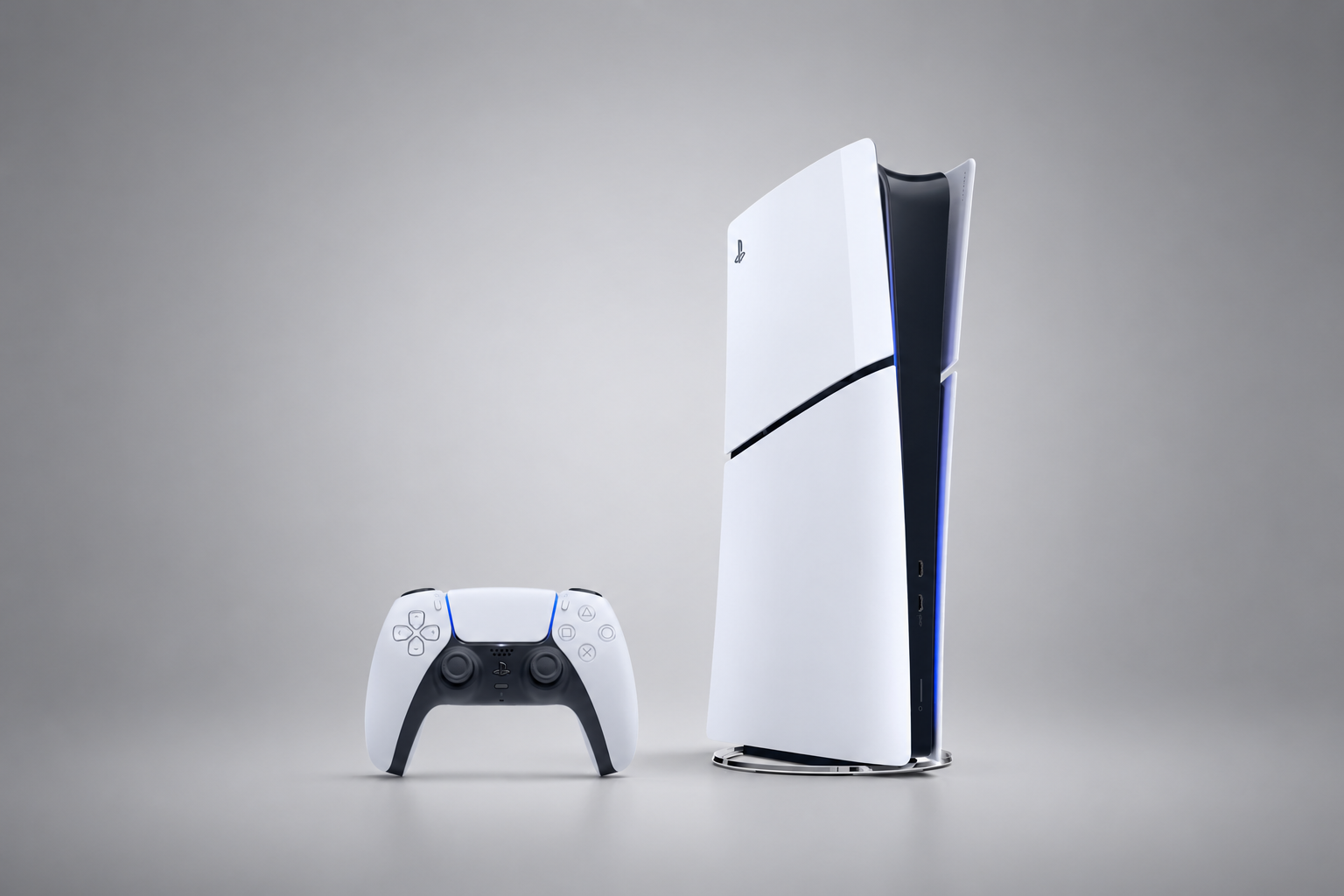
Sony’s PlayStation 5. (Sony press image)

Sony announced on Wednesday morning that it plans to phase out physical media for future PlayStation games, which is a massive market disruption for an already reeling games industry. It ends trade-ins and lending, raises the overall price of entry for the PlayStation ecosystem, and turns your shelf full of games into licenses that can potentially disappear.

The news came via a post on the official PlayStation blog by senior communications director Sid Shuman. As of January 2028, all games for PlayStation platforms will only be available in digital formats, such as direct downloads.

“This is a natural direction for Sony Interactive Entertainment to adapt to consumer trends as the general preference for digital media significantly outpaces physical discs,” Shuman writes. “This transition will enable us to align more closely with how most of our community prefers to access and play games today.”

Analysts have expected an announcement like this for some time. As per Circana senior director Mat Piscatella, physical media sales in gaming have been on a steady downward turn since their peak in 2009, hitting an all-time low in 2025. In fact, several companies have sprung up since then that treat physical games as an exclusive collectible, such as Limited Run, Lost in Cult, and Videogames New York.

US new physical video game software spending. 12 months ending May 2007-2026:

Mat Piscatella (@matpiscatella.bsky.social) 2026-06-25T11:30:56.827Z

Advertisement

It’s not hard to see why Sony would make this move. We’re approaching the point that would usually mark the end of the PlayStation 5’s life cycle. Were it not for the ongoing component shortage, we’d likely have heard more about the PlayStation 6 by now. An all-digital PS6 theoretically uses fewer parts and the games are cheaper to publish, which lowers the per-unit cost for Sony as it develops the new hardware.

However, Sony’s decision to sunset physical media in a year-and-a-half is faster than most analysts’ craziest predictions, most of whom figured it’d take at least another decade to fully phase discs out. Even at its lowest point, per Circana’s math, physical media in video games represents $1.9 billion in consumer sales. That’s not insignificant.

Sony’s competitors have yet to react in any significant way. Microsoft’s next-generation Xbox, currently known under the codename Project Helix, is rumored to be an all-digital system, and Microsoft has famously been trying to get out of the physical media business since at least 2013.

That year, Microsoft announced at E3 that the Xbox One would have significant measures in place to keep players from reselling their physical games, which led to widespread outcry online. The next day, Sony’s president went onstage and proclaimed the PS4 would do none of that — which gave it a big head of steam going into a console generation Sony went on to win.

Advertisement

Thirteen years later, Sony is making Microsoft’s old bet.

The irony is that Sony itself underscored one of the biggest issues with ditching physical media last Sunday. On June 26, Sony sent a number of users in the United Kingdom an email to notify them that due to the end of a license agreement, 551 shows and movies that were previously available on the PlayStation Network would be removed from the service. Consumers who’d previously thought they’d made a purchase were suddenly informed that it had actually been a multi-year rental.

That’s the central problem of the streaming era for end users: you only have anything in your digital library for as long as the library’s owner decides you do. An all-digital future means you own nothing. At best, you have limited viewership rights that can be revoked at short notice.

Most worryingly, however, the shift to an all-digital future effectively raises the cost of entry to the console market, at a point when the price of gaming is already rising. If there are no physical discs for the PlayStation 6, then you can’t swap discs with a buddy or defray a purchase by trading an old game back to a store.

Advertisement

This is a relatively sudden disruption to the console market, and through it, to the games industry as a whole. It’s likely to have a series of knock-on effects for the next few years, and sets an early tone for the upcoming 10th generation of console hardware.

While it’s still possible that consumer outcry could get Sony to reverse course here, or offer some intermediary solution like USB disc drives, the end of physical gaming media has analysts and players alike asking a lot of tough questions about costs, preservation, and consumer convenience. The games industry is changing faster than expected in 2026, and is likely to be nearly unrecognizable by this time next year.

Source link

Advertisement
Continue Reading

Trending

Copyright © 2025