The Oppo Find X9 Ultra is a massive achievement and an absolute powerhouse, combining an elite, versatile camera system with top-tier performance and exceptional battery life. While its size might not suit everyone, it is easily one of the most well-rounded and recommendable phones on the market right now.
Class-leading camera performance
Top-notch 6.8-inch screen
Highly customisable software
Some of the best battery life around
It’s on the thick and heavy side
No built-in magnetic charging
Squirrel Widget
Advertisement
Key Features
Review Price:
£1449
Advertisement
Advanced camera system
The X9 Ultra sports am advanced five-camera array on the rear, including massive sensors and a rare 10x zoom lens.
Advertisement
Huge battery and fast charging
The X9 Ultra keeps on going with a massive 7050mAh battery, and 100W charging delivers a full charge in under an hour.
Advertisement
Stylish camera-inspired design
The X9 Ultra stands out from the crowd with a design inspired by the Hasselblad X2D camera.
Introduction
The Oppo Find X9 Ultra isn’t just another option in a sea of camera-focused flagships; it’s Oppo at its most ambitious.
Advertisement
Sporting a bold camera-inspired design, one of the most capable and versatile camera setups on any smartphone right now and the kind of battery life that makes most rivals look underpowered, the X9 Ultra is a phone that’s built to impress.
But it’s not just a good camera phone – from its gorgeous AMOLED screen and top-tier performance to Oppo’s slickest software yet, the X9 Ultra feels every bit like a true Ultra phone.
Advertisement
I’ve been using the Oppo Find X9 Ultra as my daily smartphone for the past few weeks, and here’s what I’ve learnt.
Advertisement
Design
Hasselblad-inspired design
Relatively thin camera bump
Durable, but thick and weighty
While 2025’s Oppo Find X8 Ultra looked like a regular phone with a massive camera bump, the X9 Ultra is unapologetically camera-inspired – and it looks all the better for it.
Image Credit (Trusted Reviews)
The overarching design is based on that of the Hasselblad X2D camera, one of the best-looking cameras around in my personal opinion. That means the X9 Ultra features a similar two-tone metal-and-vegan-leather finish on the rear, with a dark brown aluminium frame and black leather cutouts.
Advertisement
These not only help match the X2D aesthetic, but also improve the grip without any annoying smudges or fingerprints. It’s a very different feel from the glass-backed flagships most of us are used to, but in the best way. It’s reassuringly solid, and as a bonus, you won’t need to worry about it shattering when you drop it – something I’ve already done a couple of times over the past few weeks.
Image Credit (Trusted Reviews)
However, if you can’t bear to be without the traditional glass-and-metal smartphone feel, it’s also available in a Canyon Orange finish. It’s not quite as vibrant as Apple’s iPhone 17 Pro hue, with a slightly more pastel look, with rippled canyon-like effects on the glass rear panel. It looks nice, and it’s notably thinner than the Tundra Umber finish, but the leather-clad finish is still my favourite.
The camera bump has also been redesigned, sporting a hexagonal shape inside the centrally-placed circular module that Oppo says is inspired by the aperture of professional lenses.
Image Credit (Trusted Reviews)
I’m not sure about the logic, but it certainly looks premium, and the housing is much slimmer than you might expect with the camera tech on offer. It’s a lot slimmer than Vivo’s X300 Ultra’s camera bump, and beats the Xiaomi 17 Ultra too – though not by as much. But more on the fantastic camera tech a little later.
Advertisement
Advertisement
Alongside the regular power and volume rockers on the right side of the phone, you’ll find Oppo’s camera-focused Quick Button – though the placement has been shifted so it’s actually comfortable to use, unlike options from Apple and Honor. It works in much the same way too, with touch sensitivity that lets you swipe to zoom, as well as a two-stop button to lock AE and AF before taking your snap.
Image Credit (Trusted Reviews)
The left side houses the returning Snap Key, primarily used for Oppo’s Mind Space tech, but it can be reprogrammed with a few taps – something I expect most people will do within the first few weeks.
As ever with Oppo’s flagships, the X9 Ultra is durable, featuring a combination of IP68 and IP69 dust and water resistance, along with Oppo’s crystal shield screen protection – though with a pre-applied screen protector out of the box, scratches aren’t something you’ll need to worry about for a while.
If there’s an elephant in the room, it’d be the phone’s overall size and weight. Measuring 9.1mm thick and 236g in its Tundra Umber finish, it’s not exactly the lightest phone on the market – but then again, camera-focused Ultra phones are usually pretty chonky.
Image Credit (Trusted Reviews)
Advertisement
The Xiaomi 17 Ultra is 8.3mm thick and 223g, while the Vivo X300 Ultra is a similar 8.2mm and 232g – but that doesn’t mean it’s not noticeable, even coming from the not-exactly-thin Samsung Galaxy S26 Ultra as I have. It’s not egregiously heavy to the point where you feel fatigued – I’ve got used to it over the past few weeks just fine – and the trade-off in areas like camera and battery life makes this a worthy sacrifice in my mind.
Advertisement
Some of you may disagree, and that’s fine; if weight and thickness are important to you, you’ve got the iPhone Air and Samsung Galaxy S25 Edge to consider.
Screen
Top-notch 6.8-inch AMOLED screen
LTPO-enabled 144Hz refresh rate
Bright, detailed and highly customisable
The Oppo Find X9 Ultra’s 6.8-inch AMOLED screen is an absolute treat for the eyes – but then again, if you’ve been keeping up with Oppo’s latest releases, that’s no real surprise.
Image Credit (Trusted Reviews)
In many ways it’s similar to the Find X9 Pro’s excellent panel, sporting the same QHD+ resolution and an LTPO-enabled 120Hz refresh rate, with the option to boost to 144Hz for extra frames per second when gaming.
Advertisement
It is a smidgen bigger than the 6.7-inch Pro model, however, and its corners are slightly more angular too. They’re still rounded, but the reduced width brings them closer to the Samsung Galaxy S26 Ultra’s screen than to the X9 Pro’s – and as a result, looks and feels that little bit cleaner and more premium. I’ve no idea why, really, but it does.
Image Credit (Trusted Reviews)
As always with Oppo, the bezels are both uniform and vanishingly thin, giving some of the best panels around from Samsung, Honor and co a run for their money, which further adds to that high-end look on offer.
Image Credit (Trusted Reviews)
There’s plenty of screen real estate on offer here as a result, which is great not only when acting as a viewfinder when taking snaps – the main reason you’ll buy this phone – but when scrolling through apps or watching an episode of The Boys on the go, and the vibrant AMOLED tech also lends itself well to colourful games like Archero 2. It’s bright, with a 3600nit peak brightness, vivid, and with that QHD+ resolution, it’s pixel-perfect.
There are plenty of eye-care features here that are pretty standard in high-end Oppo phones, including PWM dimming, viewing distance and eye comfort reminders, and plenty of screen customisation options if you like your screens more or less punchy.
Advertisement
Advertisement
All of this makes for a panel that, really, is almost impossible to fault. It’d be nice to see something like Samsung’s anti-reflective screen coating or even a take on the S26 Ultra’s privacy screen tech, but these are more wishes than something I expected.
Cameras
Advanced five-camera array on the rear
Leading performance across the board
10x periscope lens is a rare treat
Oppo’s Ultra phones have always been about camera tech, but with the X9 Ultra, it has really kicked things up a notch. While there are plenty of flagships with disappointing secondary cameras, it feels like Oppo has given every lens the TLC it needs, creating a camera system you can actually trust in most scenarios.
Image Credit (Trusted Reviews)
That means that, for once, you’re not forced to default to the main camera for the best quality snaps. There are four high-end shooters on the rear, along with a fifth ‘true colour’ camera that keeps the white balance and tones aligned across the lenses. In essence, it means that blue skies and skin tones don’t shift or jump when you zoom in across the various lenses, a level of consistency that’s still pretty rare.
The main camera remains the star, of course, sporting the Lytia 901 sensor boosted to a whopping 200MP. While the 1/1.12-inch sensor is a hair smaller than the 1-inch giants used by the X8 Ultra and competing Xiaomi 17 Ultra, the massive f/1.5 aperture drinks in an incredible amount of light.
Advertisement
Advertisement
That translates to images that feel, for lack of a better word, expensive. There’s a richness to the contrast and a level of detail that looks more natural than over-sharpened, while avoiding the neon-heavy saturation of Samsung devices. Oppo’s refined colour science produces vibrant yet realistic results that can also be tweaked with a range of Hasselblad-approved filters.
The 200MP 3x telephoto is the lens that you’ll be using more often than you first expect, mainly because it uses a massive 1/12.8-inch sensor that’s larger than the main camera in many rival flagships.
Because of that size and the wide f/2.2 aperture, the photo quality is really impressive. There’s a shallow depth of field that makes subjects pop with as creamy, professional bokeh rather than the cut-out look of software portrait modes – though that customisable bokeh is still available if you like. It’s also so pixel-dense that you can crop to 6x and still get a clean 50MP shot that looks optical, and you won’t find much in the way of obvious digital enhancements up until the 10x mark.
Then there’s the return of the 10x periscope. Many brands abandoned 10x because the quality usually wasn’t the best, but Oppo’s version uses an improved 50MP sensor and an f/3.5 aperture that pulls in 306% more light than the Galaxy S23 Ultra – the last phone with a proper 10x zoom.
Advertisement
Advertisement
The inclusion of a reliable 10x zoom lens has really changed the way that I shoot; whereas before I’d stick to around 5x magnification at most to keep images sharp, I no longer have that limitation. The images are crisp and tight, rather than the muddy, digital mess we’ve come to expect at high magnifications, holding on to textures like hair and fabric very well for the most part, even when you push it to 20x or 30x. It certainly makes for a very good concert or football camera.
Even the 50MP ultrawide manages to hold its own against these impressively high-end lenses. With a 1/1.95-inch sensor and an f/2.0 aperture, landscape shots maintain a high level of sharpness right up to the edges without the telltale stretching or distortion you see on many ultrawide lenses. It’s also one of the few ultrawides that doesn’t fall apart the second you step indoors or into a dimly lit restaurant.
When the light drops, the main sensor is still king, but the gap is smaller than ever. The 3x handles dark street scenes with more poise than most phones’ main cameras, and while the 10x snapper needs a light source to really sing, it’s remarkably capable at night, all things considered.
Advertisement
Advertisement
Video is equally polished, offering 4K@60fps Dolby Vision across all lenses, with the main and 3x lenses pushing to 4K@120fps. For pros, the O-Log2 support is great, but for everyone else, the real-time LUT previews and burn-in mean you get a cinematic, finished look the second you hit record.
Ultimately, the Oppo Find X9 Ultra offers a complete pro-level toolkit. It’s a phone where you no longer have to think, “which lens is the good one?” – because they all are. It easily challenges Apple and Google for the best camera phone crown, with only the most elite Chinese Ultra flagships offering any real debate.
Performance
Snapdragon 8 Elite Gen 5 power
Great for gamers and power users
Healthy RAM and storage allocation
Breaking the trend of Oppo’s flagship collection using the (less popular, but just as powerful) MediaTek Dimensity 9500, the X9 Ultra sports the full-fat Snapdragon 8 Elite Gen 5 along with a healthy helping of 12GB of RAM and 512GB of storage.
Image Credit (Trusted Reviews)
Realistically, you’re not going to notice much of a difference processor-wise compared to the MediaTek-powered X9 Pro, but the Snapdragon 8 Elite Gen 5 does take a healthy win in specific areas like ray-traced gaming performance – something it does very well, even with the full QHD+ resolution enabled.
Advertisement
Advertisement
I’ve had absolutely no complaints playing even demanding games like Call of Duty Mobile and the newly released The Division Resurgence with the highest textures enabled. The phone manages to keep relatively cool, even after close to an hour of constant gameplay, and though 3DMark’s stress test benchmark of 50.1% stability doesn’t exactly inspire confidence, that is a very demanding test that most phones struggle with.
Image Credit (Trusted Reviews)
Outside of gaming, the phone performs equally well. The Snapdragon’s power, combined with Oppo’s ColorOS and its rapid animations, means things feel buttery smooth, whether scrolling through TikTok or editing photos in Lightroom.
Everything feels slick and responsive – aside from the camera processing, which, oddly, takes a few seconds to ‘pop’ into its final form after you take a snap, much like you see on cheap phones. Still, that’s a relatively minor complaint, and could well be a bug – I am using pre-release software, after all.
That everyday experience pretty much aligns with benchmark tests, with the X9 Ultra’s Geekbench 6 multi-core CPU test results of 11.019 putting it above even phones like the Galaxy S26 Ultra and OnePlus 15 with the same chipset. The GPU is equally as strong, hitting 50.6fps in the ray-traced Solar Bay test, and with a Geekbench AI score of 25,132, it handles the variety of baked-in AI tools with ease.
Test Data
Oppo Find X9 Ultra
Samsung Galaxy S26 Ultra
Xiaomi 17 Ultra
Apple iPhone 17 Pro
3DMark Solar Bay
50.6
46.9
–
–
3D Mark – Wild Life
6984
7281
–
5400
3D Mark – Wild Life Stress Test
50.1 %
67.6 %
–
–
Geekbench 6 single core
3618
3519
3617
3870
Geekbench 6 multi core
11019
10713
10936
9994
Geekbench 6 GPU
25132
24611
24342
–
Advertisement
Advertisement
It’s safe to say that the Find X9 Ultra will deliver a top-end experience, regardless of whether you’re editing 4K HDR footage you’ve just shot or simply scrolling through apps, and that excess of power means it’ll stay rapid for some time to come.
Software
OxygenOS 16 is a treat to use
Highly customisable software
New AI tools to play with
I’ve already waxed lyrical about Oppo’s ColorOS 16 extensively in my Find X9 Pro review – and it’s safe to say that I’m a fan of what Oppo is doing here.
Image Credit (Trusted Reviews)
I think Oppo’s implementation of Android surpasses even Google’s in some respects, with a far more customisable interface and a stylish lock screen customisation system that closely resembles the iPhone 17 Pro’s. It just looks more visually appealing as a result, with even minor elements like the ability to expand app icons to include shortcuts to specific features, such as navigating home in Google Maps.
It’s a polished, well-designed, user-friendly interface with a minimal learning curve, especially compared to other customised Android skins like Honor’s MagicOS and Xiaomi’s HyperOS.
Advertisement
Image Credit (Trusted Reviews)
With that said, Oppo has introduced a few new features as part of its 16.1 update, not yet available on the rest of the X9 range, that further improve the experience. There are plenty of small elements, like being able to swipe down on your lock screen notifications to switch to a less intrusive capsule design, but the Camera app redesign is probably the most noticeable change.
It’s now, nicely put, very ‘inspired’ by Apple’s updated Camera UI in iOS 26, with fewer icons and buttons clogging up the viewfinder for a much cleaner look well-suited to the point-and-shooters out there. The more advanced options are still there, but they require a few more taps to access – in the default Photo mode, anyway. The Master mode still features a range of on-screen controls for pro-level tweaks on the fly.
Advertisement
Image Credit (Trusted Reviews)
And, it wouldn’t be a 2026 software update without new AI features. The AI Mind Space, where you can store screenshots, photos and voice clips for easy retrieval later, now supports automatic bill logging, allowing you to log expenses, and it also works with physical receipts.
There’s also what Opo is calling the AI Mind Pilot, a new app that uses multiple AI models (Gemini, DeepSeek, and Perplexity for now) to answer your queries simultaneously and can also use context from data stored in the AI Mind Space app. It should allow you to spot any errors between the responses, one of the big problems with AI chatbots right now, though the rollout is limited to the Asian market for now.
Advertisement
Oppo is also joining Samsung and Google in supporting Quick Share with Apple devices, though it isn’t available just yet – according to my testing at least.
Battery life
Massive 7050mAh battery
Easy all-day battery life, and then some
Rapid 100W wired and 50W wireless charging
As we’ve already seen from the likes of the regular Find X9 and the Find X9 Pro, Oppo is putting some seriously big batteries in its latest flagship collection – and that of course continues with the X9 Ultra.
Image Credit (Trusted Reviews)
Though it’s not quite as big as that of its cheaper brethren, at 7050mAh, it’s both 1000mAh bigger than the X8 Ultra and still frankly massive compared to much of the Ultra competition. For context, Samsung sticks with a 5000mAh cell in its big-screen Galaxy S26 Ultra, while the Xiaomi 17 Ultra has a 6000mAh cell and the Vivo X300 Ultra uses a 6,600mAh alternative.
That’s a roundabout way of saying that the Find X9 Ultra has pretty phenomenal battery life, regardless of what you’re up to. I really pushed the X9 Ultra to the limits with optional features like the always-on display, full QHD+ resolution, and all the screen-boosting tech active, and it hasn’t wavered once over the past three weeks of daily use.
Advertisement
Advertisement
It’s a phone that’ll easily get me through less demanding days (usually working from home, with a bit of scrolling in the evenings) with 60-70% battery left in the tank. Even on busier days when I’m taking advantage of the top-end camera system, playing demanding games like The Division Resurgence and chatting away on apps like WhatsApp, the phone rarely dipped beneath the 40% mark after around 18 hours off charge.
Image Credit (Trusted Reviews)
In essence, it’s a phone that’ll just keep on going, even if the battery isn’t quite as big as others in the X9 collection, and even the most demanding users will find it hard to fault. And, with both 100W wired and 50W wireless charging support, it’s pretty rapid on the refill side of things too.
I saw 36% charge in 15 minutes, 67% in half an hour and a full charge in 58 minutes when plugged in – though with the caveat that you’ll need SuperVOOC-branded wired and wireless chargers to hit those top speeds, and neither comes in the box. It is well worth investing in the wired charger at the very least.
There’s no MagSafe-esque magnet system here without the use of a magnetic case, but that’s still relatively new on the Android side of things.
Advertisement
Squirrel Widget
Advertisement
Should you buy it?
You want a great all-rounder with class-leading cameras
Advertisement
The Find X9 Ultra is a great camera phone and then some, sporting a stylish design, fantastic screen, top-notch power and all-day battery life.
Advertisement
You want a thin, lightweight phone
With the Tundra Umber variant measuring in at 9.1mm thick and the Canyon Orange at 8.6mm, it’s a pretty chunky phone.
Advertisement
Final Thoughts
The Oppo Find X9 Ultra is a massive achievement for Oppo, and it’s a phone that’s very hard to find fault with.
It is an absolutely fantastic camera-focused phone with a no-compromise set of lenses that deliver a consistent experience regardless of zoom, with accurate colours and plenty of detail. It’s a versatile setup that works well up to 30x and beyond, with pro-level video features rarely seen on Android.
But to be honest, it’s more than just a great camera phone – it’s a phenomenal phone full stop. That fantastic camera array is backed by a stylish design, a top-notch AMOLED screen, top-end performance, user-friendly and massively customisable hardware, one of the biggest batteries in any phone and rapid charging to boot.
Yes, it’s not as thin and light as some might like, but with so much else going on here, it’s easy to overlook. In fact, it’s one of the easiest phones to recommend right now if you’ve got the cash for it.
Advertisement
How We Test
We test every mobile phone we review thoroughly. We use industry-standard tests to compare features properly and we use the phone as our main device over the review period. We’ll always tell you what we find and we never, ever, accept money to review a product.
Used as a main phone for three weeks
Thorough camera testing in a variety of conditions
Tested and benchmarked using respected industry tests and real-world data
FAQs
Does the Oppo Find X9 Ultra come with a charger?
Despite offering 100W SuperVOOC charging, a charger isn’t supplied in the box.
Is the Oppo Find X9 Ultra water-resistant?
Advertisement
Yes, it offers IP66, IP68 and IP69 dust and water resistance for added peace of mind.
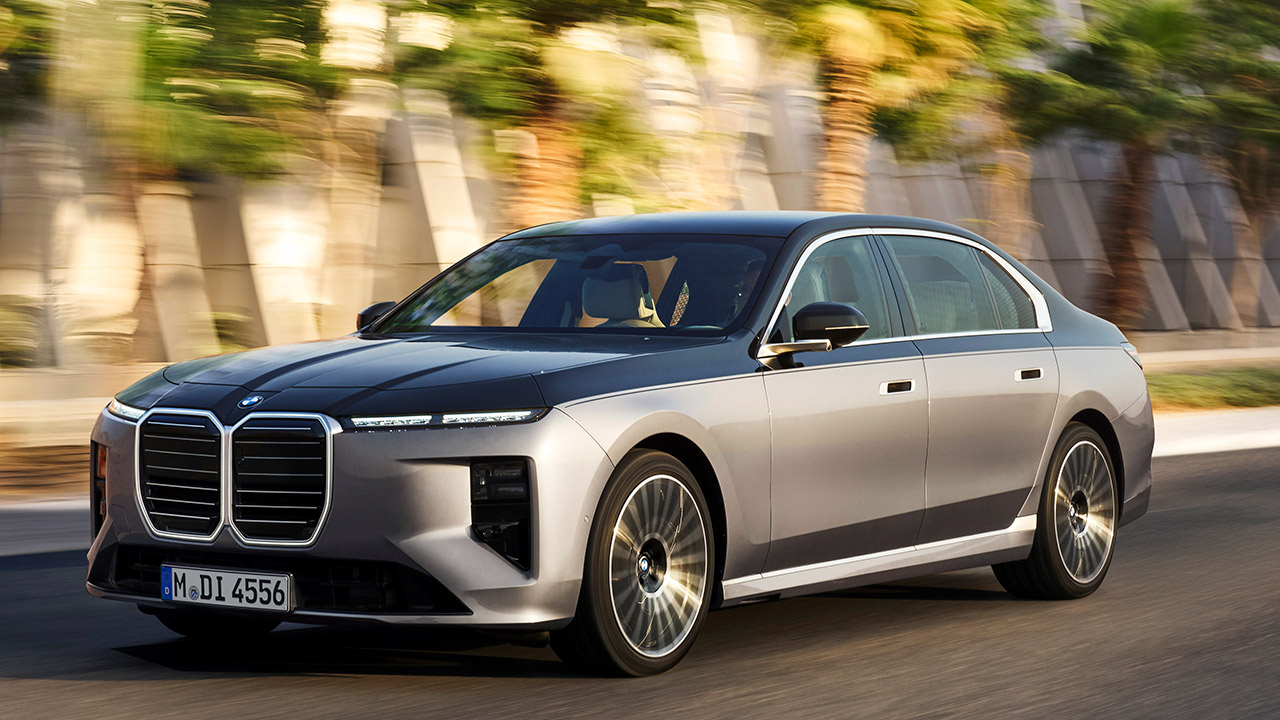
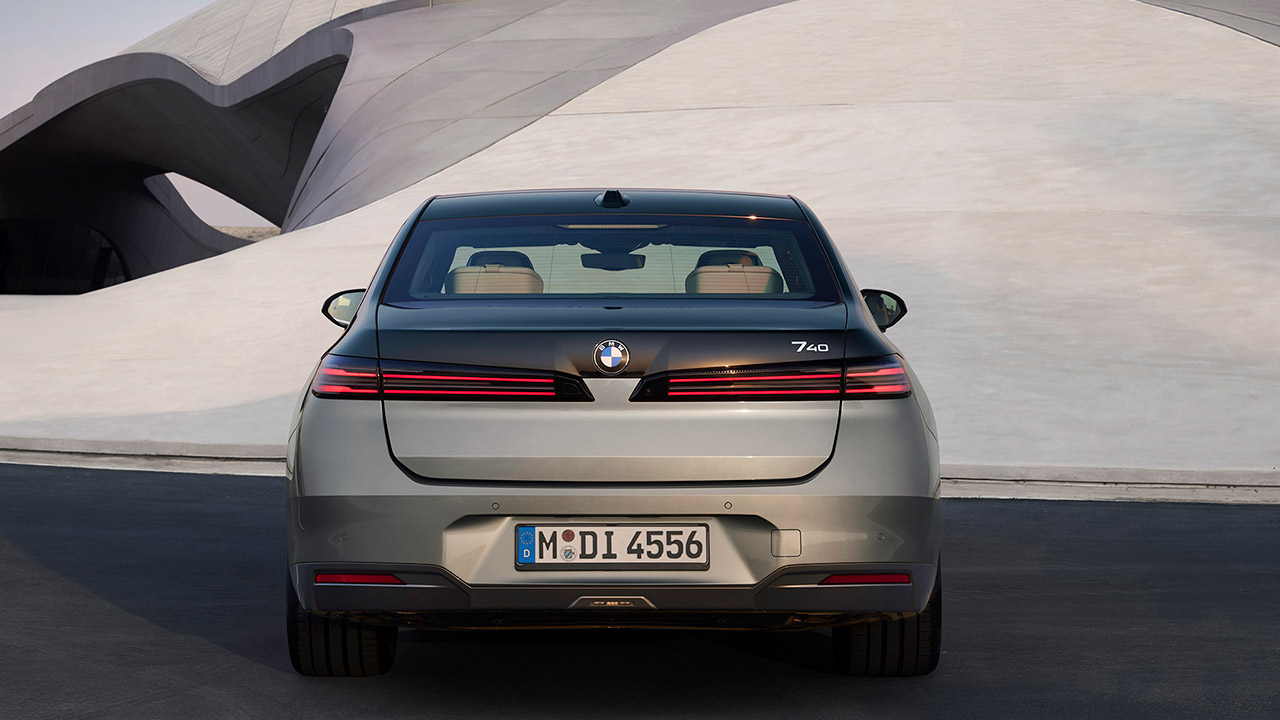
Engineers took the existing flagship and completely overhauled it to create the 2027 BMW i7, which uses the brains and brawn from BMW’s most recent electric vehicles. This resulted in two all-wheel drive versions that will roll into showrooms late next year, with production kicking off this July at the German factory in Dingolfing.
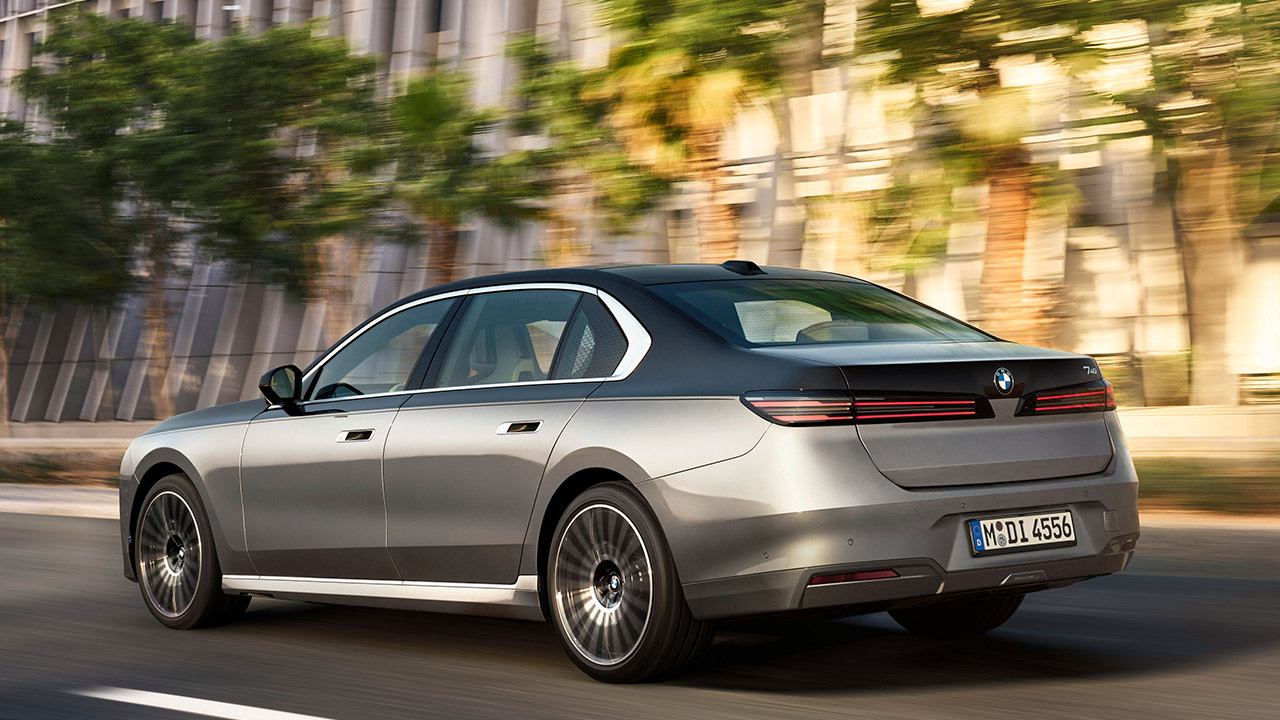
Designers gave the front end a nip and tuck, as the kidney grille is now thinner and illuminated with beautiful clean LED strips, while the headlights now form a single neat band across the front; the actual beams are now tucked away lower in the bumper to keep things appearing minimalist. You can still get the sleek crystal lenses if you want to add some sparkle when the lights come on. Meanwhile, at the back, the taillights are zipped in tighter towards the middle and have a smoked finish to sharpen the overall look, and just for fun, there’s a new light bar that projects animated patterns onto the ground beside the doors when you’re getting in or out, using a tidy 200K pixels and available in three moods.
BMW MODEL CAR KIT – Racing enthusiasts can fuel their imaginations with the LEGO Technic BMW M4 GT3 EVO Race Car (42226) building set for boys and…
AUTHENTIC DETAILS – This race car playset features iconic BMW detailing and is equipped with a working steering function, a detailed 6-cylinder…
BUILD, PLAY & DISPLAY – Kids can enjoy assembling their model car and racing it down an imaginary track, then display it on a shelf or table to…
All models now have dual motors, with the base i7 50 xDrive producing 449 horsepower and accelerating from 0 to 60 in 5.3 seconds while reaching 130 mph. If you want a little more power, the i7 60 xDrive is the way to go, with 536 horsepower under the hood and a 0-60 time of 4.6 seconds; it is also electronically limited to 149 mph. Both versions employ cutting-edge motor technology that eliminates the need for rare earth magnets and is combined with silicon-carbide inverters to provide the smoothest, quietest ride imaginable.
The battery size is approximately 113 kilowatt-hours, thanks to the new sixth-generation cylindrical cells, which pack 20% more energy into the same space as previously. The top model can now travel over 350 miles on a full charge, which is a significant improvement over the previous model. To make things even better, the engineers reduced the wiring weight by 30% and shortened the harness by 2,000 feet using the new zonal electrical setup, which feeds a central computer with twenty times the processing power. That extra brain aids with over-the-air upgrades and smarter route planning, which automatically includes charging stops and heats the battery in advance.
Advertisement
Charging can get you to 80% in 28 minutes if you plug into a compatible station, and every car has a North American Charging Standard (NACS) port built right in, so you don’t need a special adapter for that. The regenerative braking system is quite sophisticated, as it determines how much energy to take back in based on what you’re doing, traffic lights, and traffic circumstances, resulting in that pleasant one-pedal feel when you want to slow down.
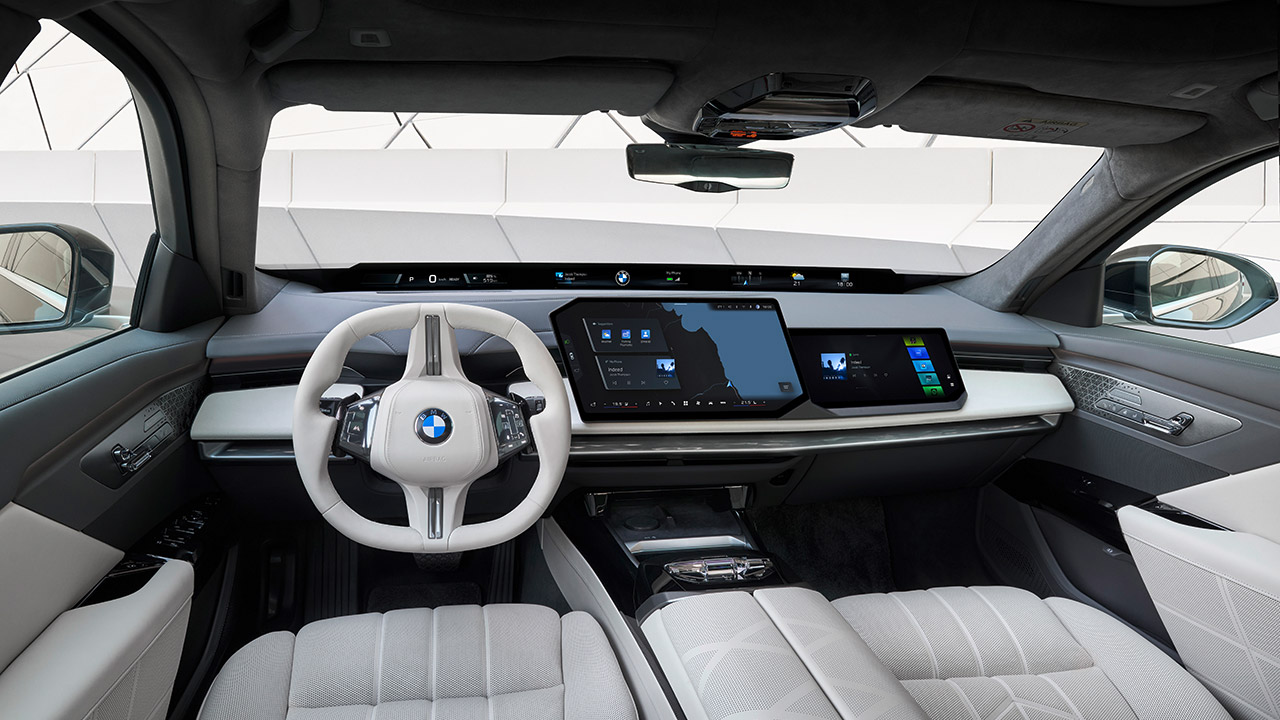
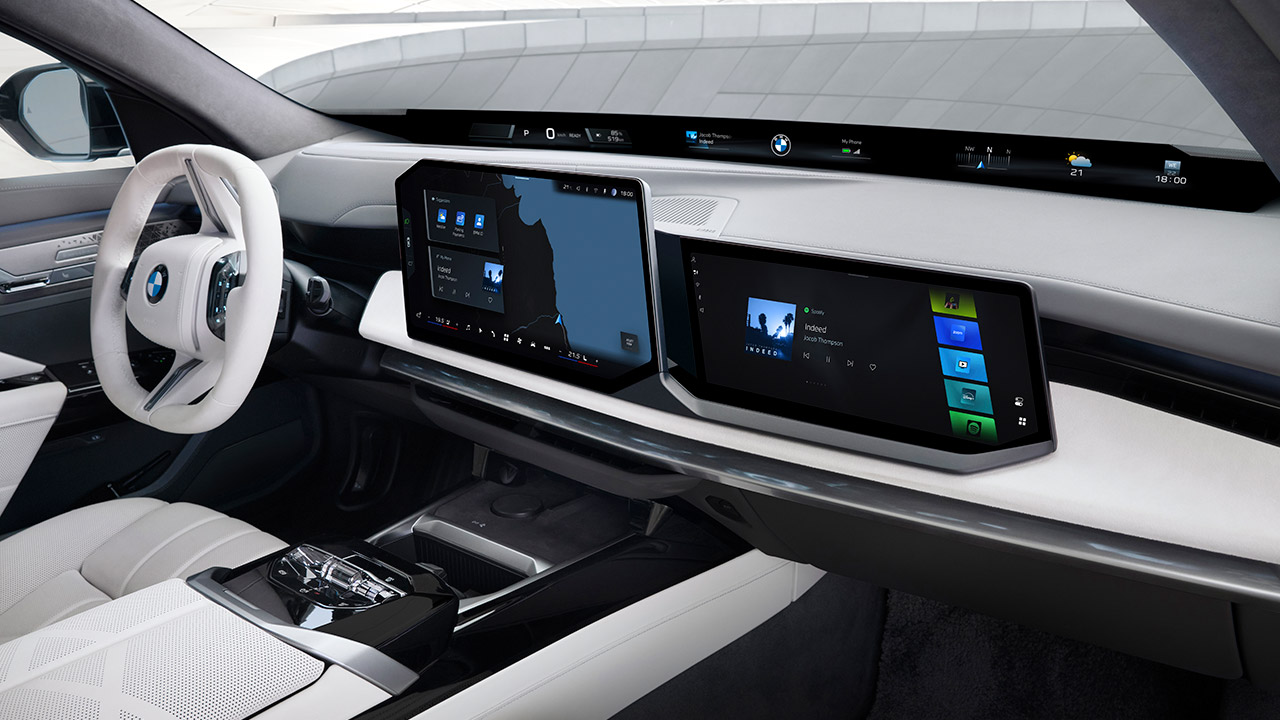
Step inside, and all of the information you need appears instantaneously on the long glass strip of screen that runs pillar to pillar at the base of the windshield. Speed, range, and navigation are right in front of you, in your natural sight line, while the media and AI’s avatar hang out above the new 17.9-inch touchscreen in the center. The front passenger has access to a 14.6-inch screen for personal enjoyment while driving. And in the back, those who want to go all out may purchase an optional 31.3-inch movie screen that descends down from the roof with 8K quality, as well as a built-in camera for video conversations, streaming, and games to play while parked. Music enthusiasts can select an audio system with up to thirty-six speakers that are fully calibrated for the immersive Dolby Atmos experience.
The seats are still extremely luxurious, and for those seeking even greater comfort, there are executive lounge chairs and footrests that can even slide out of the seat in front. Materials such as leather, wood, crystal, and metal combine to create a warm and inviting atmosphere. Four-zone climate control and a panoramic glass roof are standard features, and adaptive air suspension with electronic dampers ensures a smooth ride regardless of the road conditions. Furthermore, twenty-two inch wheels are available as an option, a fresh new dimension not before provided on this model.
Prices begin at roughly $106,200 for the i7 50 xDrive and $124,700 for the i7 60 xDrive before destination fees, and you know what? That’s not a bad deal, especially given the additional technology and range. With these changes, the already fantastic luxury electric vehicle just became even better, as you can now travel even longer on a single charge, charge up much faster when you need to stop, and with all of the screens and sound, every mile seems like a great treat.
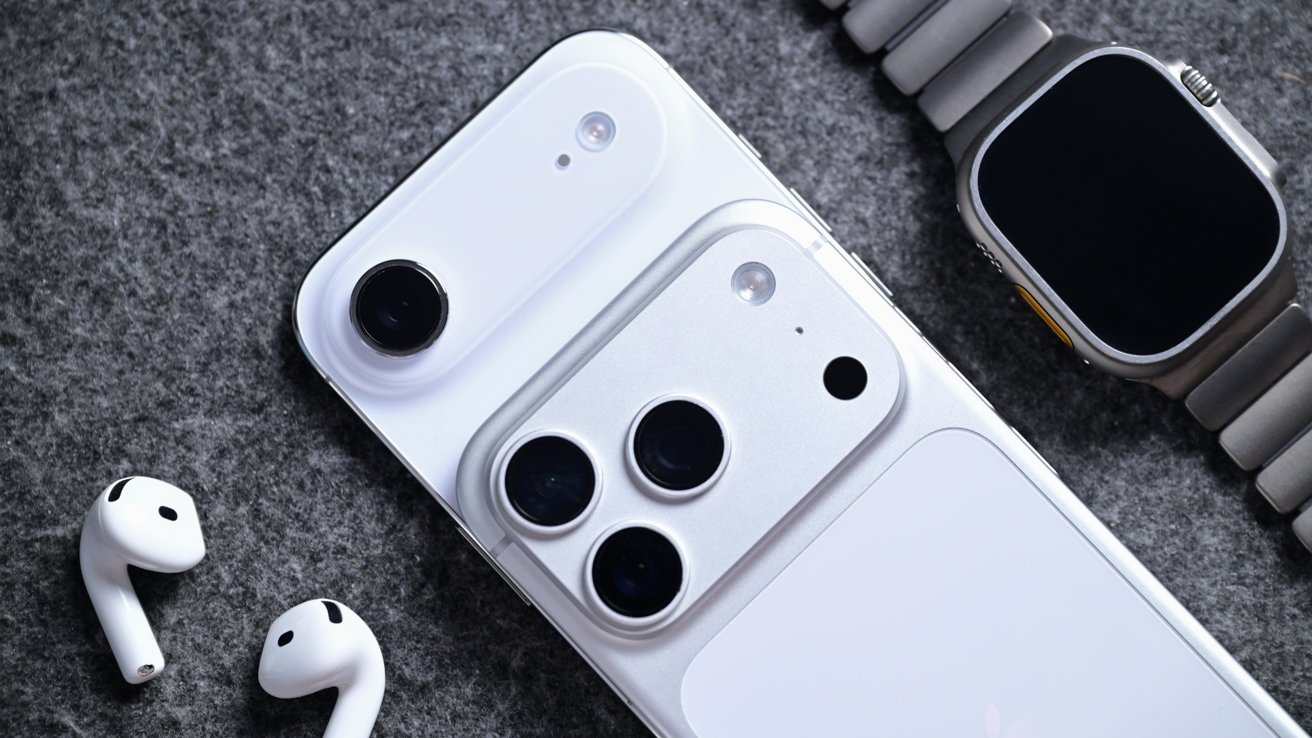
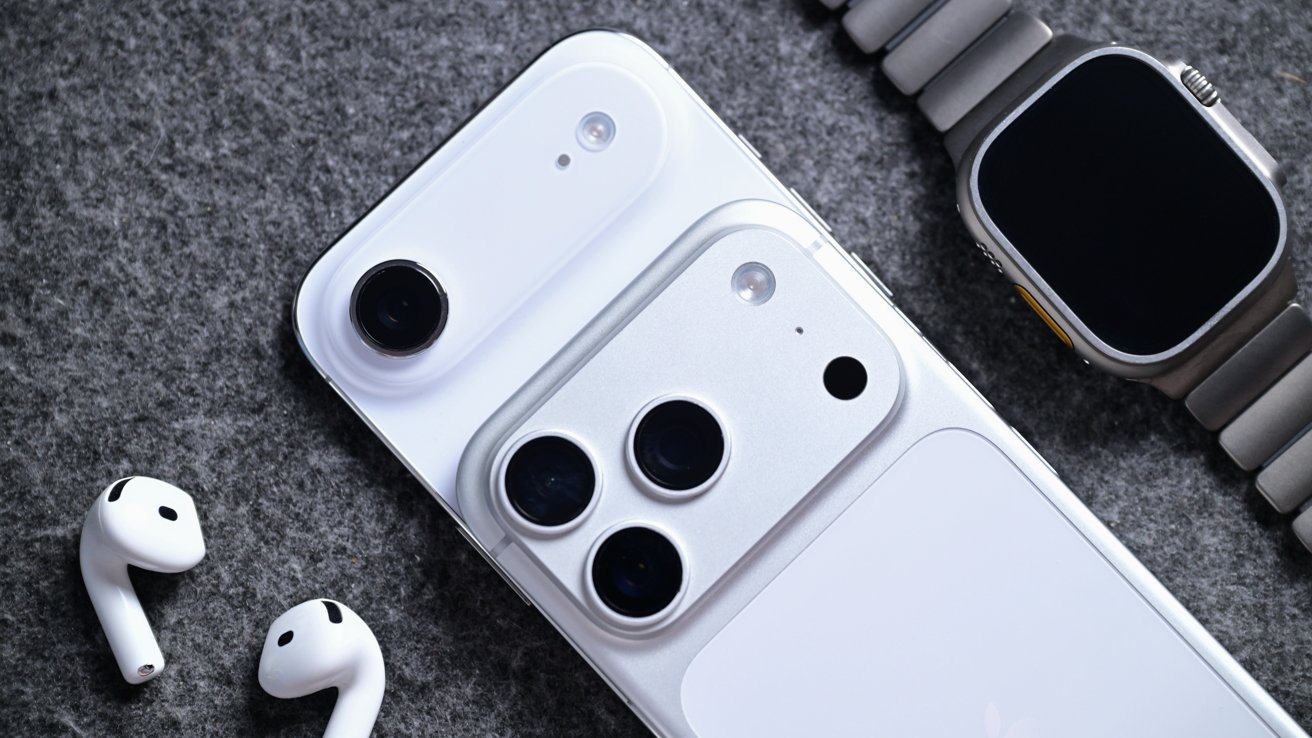
Apple has released updates for iOS 26.4.2 and iPadOS 26.4.2, as well as version 18.7.8 for older devices, providing bug fixes and security updates to all users.
Apple’s new update can be applied to all current-gen iPhones.
Incremental updates for Apple’s operating systems provide some much-needed bug fixes, security updates, and performance improvements between major updates. On Wednesday, Apple issued the second incremental update of version 26.4, bringing iOS and iPadOS up to 26.4.2. The previous incremental update, for iOS 26.4.1 and iPadOS 16.4.2, landed on April 8. Continue Reading on AppleInsider | Discuss on our Forums
Google announced two new tensor processing units (TPUs) for the “agentic era,” with separate processors dedicated to training and inference. “With the rise of AI agents, we determined the community would benefit from chips individually specialized to the needs of training and serving,” Amin Vahdat, a Google senior vice president and chief technologist for AI and infrastructure, said in a blog post. Both chips will become available later this year. CNBC reports: After years of producing chips that can both train artificial intelligence models and handle inference work, Google is separating those tasks into distinct processors, its latest effort to take on Nvidia in AI hardware. […] None of the tech giants are displacing Nvidia, and Google isn’t even comparing the performance of its new chips with those from the AI chip leader. Google did say the training chip enables 2.8 times the performance of the seventh-generation Ironwood TPU, announced in November, for the same price, while performance is 80% better for the inference processor.
Nvidia said its upcoming Groq 3 LPU hardware will draw on large quantities of static random-access memory, or SRAM, which is used by Cerebras, an AI chipmaker that filed to go public earlier this month. Google’s new inference chip, dubbed TPU 8i, also relies on SRAM. Each chip contains 384 megabytes of SRAM, triple the amount in Ironwood. The architecture is designed “to deliver the massive throughput and low latency needed to concurrently run millions of agents cost-effectively,” Sundar Pichai, CEO of Google parent Alphabet, wrote in a blog post.
Vampire Survivors developer Poncle has big plans for the future, according to an interview the company’s chief strategy officer Matteo Sapio. It’s opening two new studios in Japan and Italy and has over 15 games in active development. That’s a lot of action for a company primarily known for one franchise.
Sapio says the company is developing three basic types of games. There are spinoffs to Vampire Survivors, like this week’s . Poncle is also making original IPs and says there are two games set in new universes coming down the pike.
Finally, it’s working on some roguelites with similar mechanics to Vampire Survivors, but using other IPs. We already know about one of these, a roguelite set in the Warhammer 40K universe . It’s set to land on Steam sometime this year. To assist with these plans, Poncle has developed an engine that can turn pre-existing IPs into games that play like Vampire Survivors.
If you’re wondering if there are enough fans for multiple top-down roguelites with simple controls and bullet hell mechanics, let me point you to Halls of Torment, Deep Rock Galactic: Survivor and Soulstone Survivors, among many others. This has become a popular genre in recent years, likely due to the continued success of Vampire Survivors. To that end, the original game .
Advertisement
Poncle has, however, paused all of its third-party publishing plans after releasing a couple of games last year. “It was a learning experience,” Sapio said. “But we found that we weren’t able to give the right support.” The company could revisit third-party publishing in the future.
This is great news for Poncle and fans of the Vampire Survivors franchise, but there’s always risk when a company tries to grow like this. Remember Embracer Group? It went on a massive buying spree beginning in 2019, .
However, this isn’t a AAA game development studio. Poncle makes indie titles and the new studios will be lean operations, with “little teams of people.” Sapio said this organizational structure will help keep the company “agile and flexible.”
I personally have high hopes for this endeavor. This is because the just-released spinoff Vampire Crawlers is so very good, which proves to me that Poncle isn’t a one-trick pony. It plays like a mix of Slay the Spire with a first-person dungeon crawler like Etrian Odyssey, all while successfully capturing the vibe of Vampire Survivors. If Poncle can keep up this level of quality, gamers could be in for a long-term treat.
Figuring out ways to indulge a tech habit while being mindful of environmental impact is tricky, but looking for more energy-efficient options is a great place to start — and opting for a solar-powered device means you could avoid wasting any previous resources when recharging.
Sustainability Week 2026
This article is part of a series of sustainability-themed articles we’re running to observe Earth Day 2026 and promote more sustainable practices. Check out all of our Sustainability Week 2026 content.
For gadgets designed for outdoor use, solar power makes a lot of sense. That Ring doorbell that sits on your wall? You can get a solar-paneled surround that’ll keep it charged up using the energy of the sun, so you won’t need to worry about forgetting to replace the batteries. The same goes for external security cameras — we’re particular fans of the Baesus Security S2, which has a solar panel that rotates throughout the day to follow the sun on its journey across the sky.
Advertisement
One area where solar power has really been embraced is the world of smart adventure watches. Opt for the Solar version of the likes of the Garmin Fenix 8 or Instinct 3, and — provided you’re adventuring in sunny enough conditions— you’ll unlock unlimited battery life. That’s invaluable if you’re using your watch to keep you on the right track.
Of course, it isn’t practical or logical to integrate solar panels into every kind of gadget (and some ostensibly solar-powered gadgets have underwhelmed us in our tests). But there are plenty of excellent power stations with compatible solar panels, which will efficiently juice up whatever you care to plug into them. These can be a practical solution for campervan-travelers and festival-goers. Scroll down for our pick of some of the best solar-powered gadgets to get started with.
The allegation, first pushed by Iranian state media and later by foreign outlets and Chinese publications, centers on hardware failures said to have occurred even while Iran remained largely cut off from the global internet. Read Entire Article Source link
Meta has introduced a new “live chats” feature to Threads, enabling people on the platform to participate in real-time conversations about live events they’re interested in. Live chats can be hosted within Threads communities, the topic-specific social spaces that Meta last year.
The new feature sounds a bit like Threads’ take on Instagram’s broadcast channels, but the latter only allows for one-way messaging. Live chats can be hosted by select creators, including Community Champions — users highly engaged within specific communities — and media personalities. Once a chat is launched or scheduled, the host chooses who is invited to contribute and can then share the link publicly.
You can post photos, videos, links and emoji reactions as well as text-based messages. If you’re unable to send messages in a live chat that is at capacity, you can still watch it, react to others messages and vote in polls. Live chats remain open to view after they’ve ended, and you don’t need to be part of a community to join.
Meta is debuting its new social feature in the NBAThreads Community during the Playoffs, with Malika Andrews, Rachel Nichols, Trysta Krick, David Rushing and Lexis Mickens named as hosts. Live chats will appear at the top of the NBAThreads Community feed, and can also be shared in a post that might appear on your main feed in Threads. You’ll also see a red ring around a host’s profile photo when they’re live.
Advertisement
Meta says live chats will gradually be rolled out to more communities on Threads, with features like co-hosting, lock screen widgets and the ability to quote and share messages from a chat on your feed coming soon.
Meta has been steadily expanding its X rival’s features since it launched in 2023. It started small with (note: not hashtags) and , before rolling out communities last year. It also started long-form text posts and just gave Threads a long-overdue facelift on web. Back in October, the company that its text-based social media platform now has 150 million daily users.
New York has banned state employees from using insider information to trade on prediction markets. In an executive order signed today and viewed by WIRED, Governor Kathy Hochul forbade the state’s government workforce from using “any nonpublic information obtained in the course of their official duties” to participate on prediction market platforms, or to help others profit using those services.
“Getting rich by betting on inside information is corruption, plain and simple,” Hochul said in a statement provided to WIRED. “Our actions will ensure that public servants work for the people they represent, not their own personal enrichment. While Donald Trump and DC Republicans turn a blind eye to the ethical Wild West they’ve created, New York is stepping up to lead by example and stamp out insider trading.”
The order was not spurred by any specific insider trading incidents involving New York state employees. “There are no known instances of this behavior to date,” says New York State Executive Chamber deputy communications director Sean Butler.
This is the latest in a wave of initiatives meant to curb insider trading on prediction markets like Kalshi and Polymarket, the two most popular of these platforms in the United States. California Governor Gavin Newsom issued a similar executive order last month, banning Golden State employees from prediction market insider trading. Yesterday, Illinois Governor JB Pritzker followed suit.
Advertisement
In addition to these executive orders, Congress has also introduced several bills intended to curb market manipulation and corruption in the industry, including legislation barring elected officials from participating in prediction markets. Some individual politicians are discouraging or outright barring their staff from buying event contracts on those platforms. According to CNN, the White House recently warned executive branch staff not to trade on prediction markets. When WIRED asked the White House about its policies on these markets earlier this year, it pointed to existing regulations prohibiting gambling activity but did not respond to requests for clarification on whether it considered prediction market participation to be gambling.
The Commodity Exchange Act, which covers derivative markets, does already prohibit insider trading, which means that both public servants and people in the private sector are breaking the law if they enact insider trades on event contracts. Rather than establishing new rules, the New York executive order serves primarily to underline the state’s commitment to enforcing existing laws and to clarify how these laws and its Code of Ethics for employees apply to prediction markets.
However, with so many high-profile examples of suspected insider trading on Polymarket focused on geopolitical events, from the capture of former Venezuelan leader Nicolas Maduro to strikes in the ongoing Iran war, many onlookers—including prominent lawmakers—see this as such a combustible issue. They’re racing to write laws and orders restating and emphasizing existing rules.
“This makes sense, and we already do this. At Kalshi, insider trading violates our rules, and we enforce them when we catch insiders,” Kalshi spokesperson Elisabeth Diana says. “Government employees should be aware that trading on federally regulated markets using material nonpublic information violates the law.” (Polymarket did not immediately respond to a request for comment.)
Advertisement
Facing backlash, Polymarket and Kalshi have recently announced new initiatives to combat insider trading.
In February, Kalshi publicized its decision to suspend and fine two individuals for violating its market manipulation policies; the company also confirmed that it had flagged the cases to the Commodity Futures Trading Commission, the federal agency overseeing prediction markets. In March, it rolled out a beef up market surveillance arm, preemptively blocking political candidates from trading on markets related to their campaigns.
Some people might look at cars — and the automotive hobby itself — as an escape from the constant political debates and arguments that seem to be everywhere in modern life. However, the reality is that politics are often heavily tied to both the industry itself and cars as a hobby.
Mandates, laws, and regulations related to safety systems, fuel economy standards, fuel types, and even a vehicle’s country of origin have all been part of federal politics in the past, and will likely feature in the future, too. Likewise, hobbyists and classic car owners sometimes need to argue their cases to state governments to protect or expand their hobby. For example, Jay Leno has been leading an effort in California since 2025 to have the state amend some of the notoriously restrictive smog laws that make classic car ownership difficult and expensive.
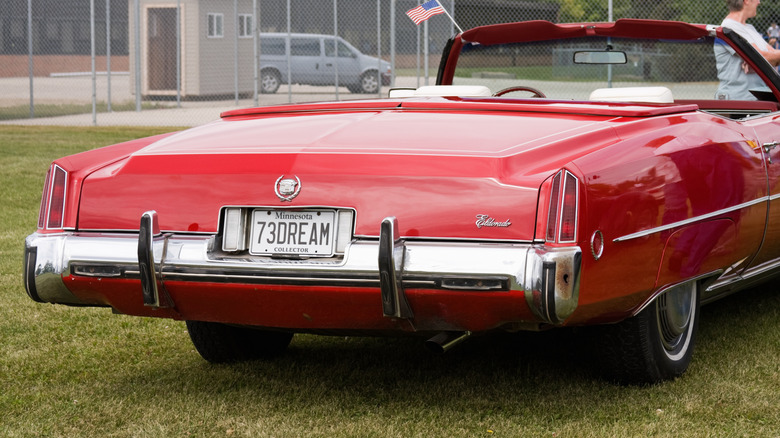
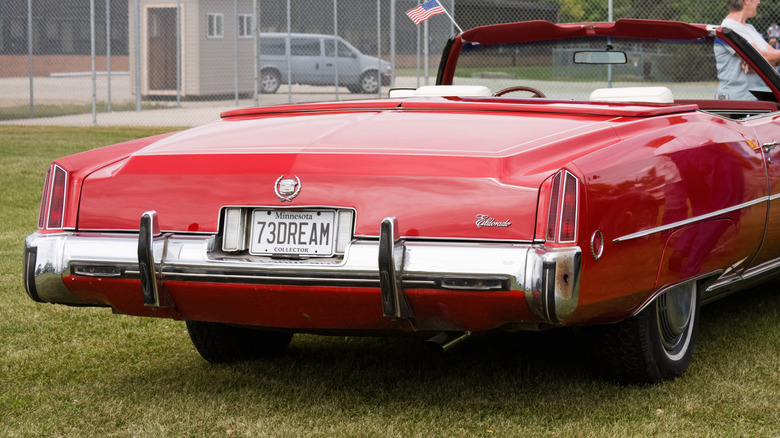
The Golden State, however, is not the only place where classic car owners face restrictions. In Minnesota, a new bill aimed to limit the use of classic cars registered with the state’s collector plates — including potentially prohibiting owners from driving them on weekdays or at night. Naturally, this has caught the attention not just of classic car owners in Minnesota, but of observers nationwide. Thankfully for Minnesotans, however, the bill looks to have stalled out before getting to a vote.
Advertisement
One state with many plates
Skhoward/Getty Images
While it’s entirely possible — and potentially very enjoyable — to have a classic car as a daily driver, there are lots of pros and cons of daily driving a vintage vehicle, not least the cost of ownership. Minnesota, however, offers drivers some help here, with a few different collector plate options available depending on a vehicle’s age, all of which exempt the owner from annual registration fees. At the very least, Minnesota collector plates require a car to be at least 20 years old and for the owner to have another vehicle with standard plates. As stated in the current law, owners are also not to use cars with collector plates for daily transportation.
The new bill, HF3865, wanted to tighten these restrictions so that collector-plated vehicles could only be operated during daylight hours on Saturdays and Sundays, or specifically during collector club activities or parades. Now, the amendment might be understandable on the surface if its purpose was to clarify what does or doesn’t constitute daily transportation. It could also be useful if there were concerns over vehicle owners abusing the privileges that come with the plates. But some classic car owners fear it represents a significant encroachment on the hobby and could be a gateway for additional laws in the future.
Advertisement
The worst likely won’t come to pass
The bill’s wording would mark a huge departure from Minnesota’s current law, theoretically making it illegal to take a collector-plated car out for a casual Friday evening cruise or a Tuesday afternoon test run after replacing a part. The issue, of course, is that both scenarios are pretty common for classic car owners, especially those who spend their weekdays wrenching. More broadly, though, the concern is also less about the specifics of this one bill. Instead, it’s the seeming trend of lawmakers scrutinizing and attempting to legislate classic car and auto enthusiast hobbies that has this bill in the headlines.
Advertisement
Fortunately for classic car owners in Minnesota, the bill may not become law, as it has been stuck in Committee since early March, 2026. Opponents of the bill are likely hoping that lawmakers get caught up with more pressing matters than limiting which days classic car owners can drive their vehicles, causing HF3865 to sputter out before a vote. There are already many things to consider before buying a classic car, and on top of all the other expenses that come with the hobby, having strict rules on use are something most vintage car owners would prefer not to deal with — regardless of which state they live in.
CATL recently unveiled its new battery technology, promising improvements in some of the most difficult tradeoffs in EV performance. Its third generation Shenxing battery can be recharged almost fully in around six minutes, while also maintaining stronger efficiency in low temperatures and harsh weather. Read Entire Article Source link































































You must be logged in to post a comment Login