Connect with us
DAPA Banner
DAPA Coin
DAPA
COIN PAYMENT ASSET
PRIVACY · BLOCKDAG · HOMOMORPHIC ENCRYPTION · RUST
ElGamal Encrypted MINE DAPA
🚫 GENESIS SOLD OUT
DAPAPAY COMING

Tech

Peacock: 15 of the Best Movies to Stream Right Now

Published

on

When you’re on the hunt for the next movie to watch via streaming, I suggest you give Peacock a shot. You can find everything here from big-budget blockbusters to arthouse indies. And I’d be remiss if I didn’t mention the array of Oscar nominees and winners you can find here as well. Plus Steven Spielberg films — three of his titles are featured below.

Whatever your mood, Peacock is the spot that’ll make your movie night pop.

The biggest challenge with any movie hunt on streaming is figuring out where to start and what to click to play first. I get it — things can get overwhelming. Who wants to scroll through all these libraries? Well, rest easy, as I did the work for you.

Advertisement

Below is a list I compiled of the best movies Peacock has to offer that’ll help you on your cinematic journey. Scroll through and check back often, as I’ll be updating this regularly. 

Watch this: Why ‘The Devil Wears Prada 2’ is the Perfect Sequel

Read more: 14 of the Best Peacock Shows to Watch Right Now

Advertisement
Screenshot by Aaron Pruner/CNET

Kill Bill: The Whole Bloody Affair

Advertisement

Kill Bill: The Whole Bloody Affair combines both Kill Bill movies into one long, well, affair. It’s how Quentin Tarantino originally envisioned the project and requires some patience, if I’m being honest. However, seeing volumes 1 and 2 presented together cohesively is a viewing “must” for martial arts fans, Tarantino fans or simply fans of exciting cinema. 

  • Director: Quentin Tarantino
  • Stars: Uma Thurman, Lucy Liu, David Carradine, Daryl Hannah, Michael Madsen, Vivica A. Fox, Sonny Chiba
  • Runtime: 253 min

Universal Pictures

Jurassic Park is a benchmark in sci-fi blockbuster moviemaking. I really don’t know what else to say about the movie, which was based on Michael Crichton’s book of the same name and directed by the Steven Spielberg. The film is packed with iconic moments, quotes and no matter how many times I watch it, the thing never feels old. 

Advertisement
  • Director: Steven Spielberg
  • Stars: Sam Neill, Laura Dern, Jeff Goldblum, Joseph Mazzello, Ariana Richards, Sir Richard Attenborough, BD Wong
  • Runtime: 122 min

Universal Pictures

Tiffany Haddish made her mark in Girls Trip, the raunchy comedy about four friends who take a trip to Essence Fest in New Orleans. She’s just one piece of the puzzle, though, as Queen Latifah, Regina Hall and Jada Pinkett Smith are all wonderful in the movie. It’s unfortunate we never got a sequel.

  • Director: Malcolm D. Lee
  • Stars: Regina Hall, Queen Latifah, Jada Pinkett Smith, Tiffany Haddish
  • Runtime: 122 min

Universal Pictures

Freaky takes a note from body swap films like Freaky Friday and Vice Versa and puts a horror spin on the genre. Happy Death Day director Christopher Landon brings his unique sensibilities to the story, which finds Vince Vaughn playing a serial killer who swaps bodies with a girl named Millie. The result is a movie that is campy, gory and surprisingly heartwarming. You’ve never seen Vaughn like this.

Advertisement
  • Director: Christopher Landon
  • Stars: Kathryn Newton, Vince Vaughn, Celeste O’Connor, Misha Osherovich, Emily Holder, Nicholas Stargel
  • Runtime: 102 min

StudioCanal

When someone mentions the movie Paddington to me, I’m immediately delighted, which is saying something because I rarely am. But there’s something simply joyful about the movie that follows the anthropomorphic bear as he moves from his rain forest home to the big city. After you’re done watching, just go ahead and click play on Paddington 2 — they’re both great.

  • Director: Paul King
  • Stars: Ben Whishaw, Hugh Bonneville, Sally Hawkins, Julie Walters, Tim Downie
  • Runtime: 95 min

Columbia Pictures

Advertisement

Close Encounters of the Third Kind

Steven Spielberg strikes again. It’s fitting there’s so much of his work on this list considering how synonymous his name is with must-watch blockbusters. Two years after he made his mark with Jaws, the director released Close Encounters — a grandiose film about the discovery of UFOs and the power of curiosity and humanity’s enduring need for connection. It’s the first film he made about alien contact, and I argue it’s still his best.

Advertisement
  • Director: Steven Spielberg
  • Stars: Richard Dreyfuss, François Truffaut, Teri Garr, Melinda Dillon, Bob Balaban, Lance Henrickson
  • Runtime: 138 min

NBCUniversal

This is the second half of the two-part movie adaptation of the Wizard of Oz-inspired Broadway musical hit Wicked. Ariana Grande and Cynthia Erivo return as former besties Glinda and Elphaba — now known as The Wicked Witch of the West. It’s been five years since the events of the first film, and their paths must cross again to expose the fraudulent ways of the Wizard of Oz.

  • Director: Jon M. Chu
  • Stars: Ariana Grande, Cynthia Erivo, Jonathan Bailey, Ethan Slater, Jeff Goldblum
  • Runtime: 137 min

Agata Grzybowska/Focus Features

Hamnet, which is adapted from the book of the same name, imagines the life and family trauma of William Shakespeare before he gains fame as a poet and playwright. It’s a beautifully acted tragedy that will sneak up on you in the final act. Have a box of tissues nearby.

Advertisement
  • Director: Chloé Zhao
  • Stars: Jessie Buckley, Paul Mescal, Noah Jupe, Jacobi Jupe, Emily Watson, Joe Alwyn
  • Runtime: 125 min

Focus Features

Song Sung Blue shares the name with the documentary it’s inspired by. The movie follows a couple who find love and inspiration through their Neil Diamond tribute band. It’s based on a true story, and Kate Hudson’s performance earned her an Oscar nomination — her first in 25 years.

  • Director: Craig Brewer
  • Stars: Hugh Jackman, Kate Hudson, Ella Anderson
  • Runtime: 132 min

Universal Pictures

Director Steven Spielberg drew on his own childhood to bring to life this semi-autobiographical film about a boy who falls in love with cinema. It’s a coming-of-age story about the power of movies and how his parents’ difficult divorce helped inform his art.

Advertisement
  • Director: Steven Spielberg
  • Stars: Michelle Williams, Gabriel LaBelle, Paul Dano
  • Runtime: 151 min

Beacon Pictures

The Commitments follows music promoter Jimmy Rabbitte, who takes it upon himself to create an R&B group to address a void in the Dublin music scene. He has one problem: The group he assembles consists entirely of Irish folks with no experience in that specific music genre. Well, they do it anyway. The result is a surprisingly energetic, heartfelt and uplifting movie.

  • Director: Alan Parker
  • Stars: Robert Arkins, Michael Aherne, Andrew Strong, Angeline Ball, Maria Doyle Kennedy
  • Runtime: 118 min

Cinema 5 Distribution

Advertisement

Monty Python and the Holy Grail

Monty Python and the Holy Grail is the first full-length feature starring the legendary comedy group. The movie takes place during the time of King Arthur and follows the group as they embark on a quest to find the Holy Grail. This is one of those movies that should be considered required viewing for comedy fans. 

Advertisement
  • Directors: Terry Gilliam, Terry Jones
  • Stars: Graham Chapman, John Cleese, Eric Idle, Michael Palin
  • Runtime: 91 min

20th Century Fox/Largo Entertainment

In Point Break, a gang of renegade surfers don the masks of ex-presidents and rob banks. And they’re pretty good at it, too. Enter FBI agent Johnny Utah (Keanu Reeves), a young and brash law enforcement officer who goes undercover and infiltrates the group and cozies up to its leader, Bodhi (Patrick Swayze), to take them down. Kathryn Bigelow directed this over-the-top action movie, which was a memorable role for Swayze and a star-making turn for Reeves.

  • Director: Kathryn Bigelow
  • Stars: Keanu Reeves, Patrick Swayze, Gary Busey, Lori Petty
  • Runtime: 122 min

DreamWorks

Shrek was the first movie to win the Academy Award for best animated feature. It’s sort of crazy to think that animated movies weren’t recognized by the Oscars until 2001, but Shrek deserved the win. The voice performances of Mike Myers, Cameron Diaz and Eddie Murphy are on point and deliver delightful comedy and memorable pop culture moments. The movie helped usher in a new era of CGI effects and put DreamWorks on the map. More than two decades later, it’s still a thoroughly enjoyable watch.

Advertisement
  • Director: Andrew Adamson, Vicky Jenson
  • Stars: Mike Myers, Eddie Murphy, Cameron Diaz
  • Runtime: 90 min

Warner Bros. Pictures

Look, I am not here to argue about the best Harry Potter movie in the franchise. The series is jam-packed with great stuff. However, the third installment, Harry Potter and the Prisoner of Azkaban, really showed the world how great a Harry Potter story could be. Not to mention, it introduced Gary Oldman’s rebellious wizard Sirius Black. And you really can’t go wrong with putting Oldman in anything.

  • Director: Alfonso Cuarón
  • Stars: Daniel Radcliffe, Emma Watson, Rupert Grint, Gary Oldman
  • Runtime: 142 min

Source link

Advertisement
Continue Reading
Click to comment

You must be logged in to post a comment Login

Leave a Reply

Tech

Downloadable Xbox Thumbstick Toppers Give Gamers Accessibility Options

Published

on

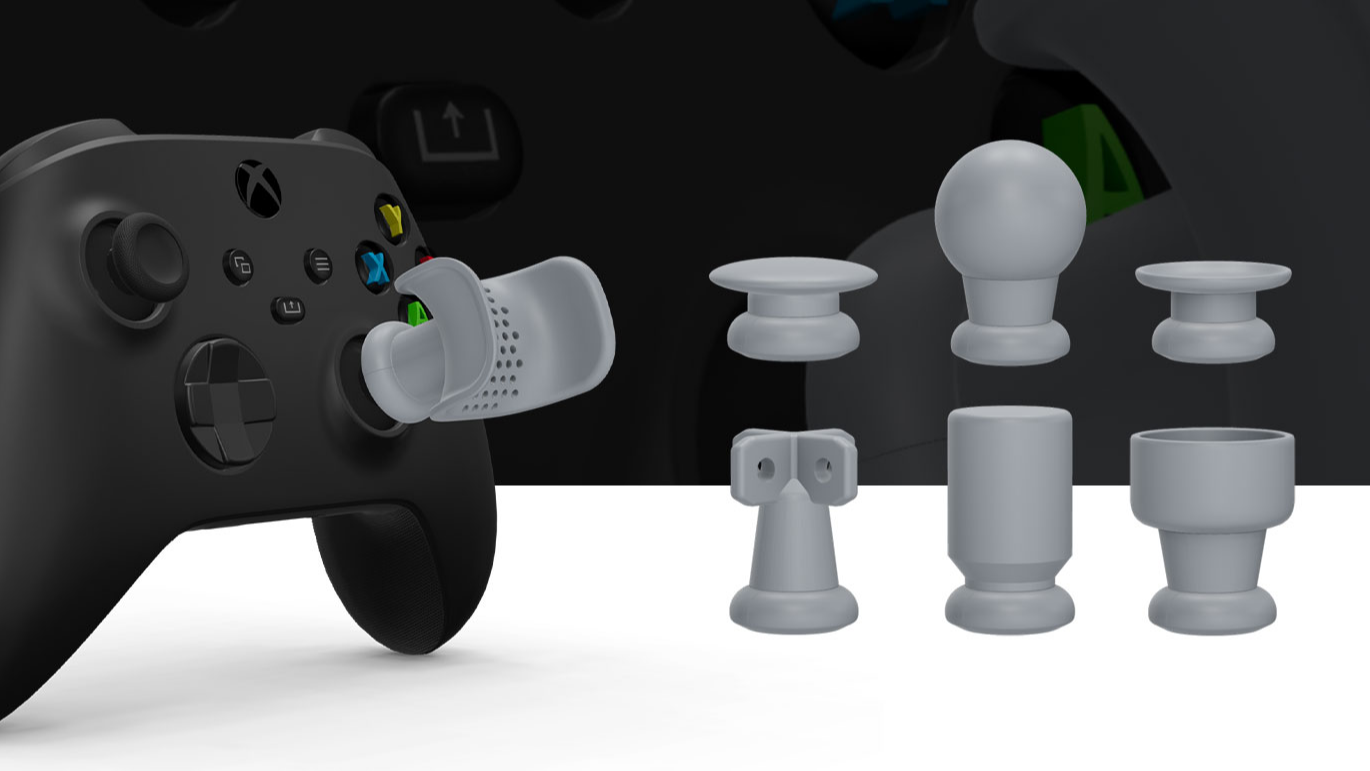
Microsoft has a history of taking accessibility options seriously for gaming controllers, and that trend continues with downloadable thumbstick toppers for Xbox controllers. Being straight from the source, the 3D models should fit as well as can be expected with a minimum of fiddling. Just make sure you select the right controller model, because they are each subtly different.

The toppers themselves come in different styles, and there’s a design to fit a variety of needs, from a thumb cradle to ones intended for more serious adaptations —  the perforated X-shaped topper, for instance, is meant to anchor a custom shape molded overtop it.

Microsoft does offer a remarkably hackable adaptive controller that is meant to make it easy to integrate with other hardware, and we’ve seen it used in some truly awesome ways. But it’s nice to see an easy way to extend and adapt normal thumbsticks on regular controllers, giving people even more options.

Advertisement

We love to see companies offer useful 3D models of their products, saving consumers from having to 3D scan or model things themselves. It’s a form of hacker-friendly hardware design, which we celebrate when we see it, while at the same time wishing it were more common.

Have you benefited from hacker-friendly design and made something useful that wouldn’t exist otherwise? Let us know on the tips line!

Advertisement

Source link

Continue Reading

Tech

Vibe coding can build your pipeline. It can’t explain it six months later

Published

on

AI coding agents are rapidly accelerating data engineering by generating transformations, pipelines, orchestration workflows, validation tests, and infrastructure configurations from prompts.

However, enterprise data platforms have long operated across fragmented systems owned by different teams and built on different technologies. As these systems evolve independently, organizations increasingly struggle with inconsistent business logic, duplicated implementations, difficult downstream impact analysis, and hidden dependencies across the platform.

The rise of vibe coding can further amplify these problems as more operational context, architectural decisions, and business knowledge become scattered across prompts, conversations, generated code, and disconnected workflows rather than becoming part of the system itself.

Spec-driven development (SDD) is emerging as one approach to address this challenge. In SDD, prompts, business rules, validation logic, orchestration behavior, and implementation workflows are converted into executable and versioned specifications that become part of the system itself. These specifications act as persistent operational memory for both humans and AI agents, allowing systems to evolve more consistently across releases, teams, and AI-assisted workflows.

Advertisement

Because enterprise data engineering already relies heavily on reusable patterns, metadata-driven pipelines, and standardized operational workflows, it is especially well-suited for SDD. By combining AI-assisted generation with deterministic and reusable system contracts, SDD may provide a new operational layer for reducing fragmentation and improving long-term coordination across increasingly AI-generated data platforms.

Vibe coding alone lacks persistent system memory

Vibe coding works remarkably well for generating isolated implementations quickly. But prompts are inherently temporary. They capture an engineer’s assumptions, business context, implementation logic, and system knowledge only for that specific conversation and moment in time.

In practice, making AI-generated systems work often requires far more than a simple prompt. Engineers continuously provide background information, architectural decisions, business rules, schema assumptions, downstream dependencies, operational constraints, debugging history, and implementation guidance throughout the development process.

These contexts become the real operational knowledge behind AI-assisted development.

Advertisement

However, in most vibe coding workflows, this information remains scattered across prompts, conversations, Jira tickets, documentation, chat history, generated code, and disconnected workflows rather than becoming part of the system itself.

This creates a major problem for enterprise data engineering because modern data platforms are naturally fragmented across many interconnected systems, including ingestion pipelines, warehouses, orchestration frameworks, semantic layers, APIs, dashboards, and machine learning (ML) systems. As more logic and context become embedded inside prompts and generated implementations, organizations gradually lose visibility into:

Over time, the system itself no longer contains the full reasoning behind how it was built. Critical business context, architectural assumptions, and operational knowledge still largely exist inside human judgement and scattered conversations rather than inside the platform itself.

Vibe coding makes implementation significantly faster, but from a system perspective, overall engineering efficiency does not improve proportionally because much of the development lifecycle still depends on human validation, domain knowledge, coordination, and decision-making.

Advertisement

More importantly, prompts are not naturally iterable engineering artifacts. Enterprise systems continuously evolve across releases, schema changes, business logic updates, and downstream dependencies. Teams repeatedly revisit and refine systems over time, but prompts are optimized for fast local generation rather than system long-term evolution.

They are difficult to:

Even the same prompt may not reliably generate the same implementation with different context in the future.

This is where SDD begins to move to the center of AI-assisted data engineering. Instead of leaving operational knowledge scattered across prompts and conversations, SDD integrates business context, validation logic, transformation behavior, orchestration requirements, and implementation workflows directly into executable specifications that become part of the system itself.

Advertisement

The system now has persistent memory about how it was designed, why certain decisions were made, and how different components are connected across the platform. This allows teams and AI agents to iterate systems more reliably over time while reducing fragmentation across increasingly distributed data environments.

Spec-driven development turns prompts into system memory

In SDD, systems are built around executable specifications rather than loosely coordinated prompts and implementations alone. Instead of treating specifications as passive documentation written after development, SDD treats them as operational contracts that directly drive code generation, validation, testing, orchestration, and deployment workflows.

In many ways, SDD extends ideas from Infrastructure-as-Code and GitOps into AI-assisted engineering. Specifications combine declarative system definitions with executable implementation workflows. The declarative layer provides system context, schemas, dependencies, constraints, and operational requirements, while workflow-oriented instructions guide AI agents on how to implement and evolve the system consistently.

Once these contexts, rules, and implementation patterns are converted into persistent and versioned contracts stored in repositories and integrated into CI/CD workflows, the system becomes significantly more iterable and governable over time. These specifications effectively become long-term system memory for both humans and AI agents, allowing systems to evolve consistently across releases, teams, and increasingly AI-assisted development workflows.

Advertisement

In practice, the structure of specifications largely depends on the type of systems and workflows being implemented. However, spec-driven systems often begin with a foundational “constitution” that defines project-wide principles and constraints that should remain consistent across the platform, such as technology standards, naming conventions, architectural rules, governance policies, and core system requirements. On top of this foundation, multiple layers of specifications serve different operational purposes across the development lifecycle:

  • schema specifications define structural compatibility

  • transformation specifications define business logic

  • validation specifications define quality rules

  • orchestration specifications define execution behavior

  • semantic specifications define shared business definitions

  • AI workflow specifications define reusable implementation instructions for coding agents

A simplified specification might look like this:

pipeline_spec:

  source:

Advertisement

    system: mysql

    table: order

  transformation:

    logic:

Advertisement

      – load_strategy: scd2

  target:

    platform: snowflake

    table: dim_order

Advertisement

  validation:

    primary_key: order_id

Additional workflow files can then provide reusable implementation instructions for coding agents:

  1. Generate Python ingestion code for Salesforce customer data.

  2. Generate DBT models implementing Type 2 SCD logic.

  3. Generate Airflow workflows for hourly execution.

  4. Generate validation tests for downstream compatibility.

These specification documents are often maintained as markdown-based operational artifacts generated and refined through AI-assisted workflows. Engineers can iteratively update the specifications, provide additional business context, and collaborate with coding agents to improve implementation logic, workflows, and prompt instructions over time. Compared to traditional documentation processes, AI-assisted specification generation is significantly faster and more adaptive.

Advertisement

The important shift is not simply better documentation. Specifications become reusable operational context that allows systems to evolve consistently across releases, teams, and AI-assisted workflows. Architectural intent, business assumptions, and implementation logic no longer disappear into temporary prompts and disconnected implementations, but instead become persistent system knowledge integrated directly into the development lifecycle.

Why spec-driven development specifically fits data engineering

SDD can theoretically be applied across many areas of software engineering, but data engineering is especially well-suited for this model because of the nature of modern data platforms.

Enterprise data systems naturally span many interconnected technologies and layers, including transactional systems, ingestion frameworks, streaming platforms, warehouses, orchestration systems, semantic layers, APIs, dashboards, and ML pipelines. Data engineers regularly work across long technology stacks and distributed systems where a single upstream change can impact many downstream consumers.

Enterprise data platforms also support many different teams and applications across fragmented environments. As systems evolve independently, understanding the full downstream impact of an upstream schema or business logic change becomes increasingly difficult. A seemingly small modification can silently break downstream pipelines, dashboards, APIs, semantic models, or machine learning workflows across the platform.

Advertisement

SDD can address this fragmentation by introducing shared and versioned operational contracts across systems. Because schemas, dependencies, validation rules, transformation logic, and orchestration behavior are explicitly defined within specifications, teams and AI agents gain much better visibility into how systems are connected and how changes propagate across the platform.

Additionally, the goal of data engineering is not simply delivering pipelines quickly. Teams must also optimize for system stability, scalability, consistency, maintainability, operational reliability, and infrastructure cost.

This requires significant system and solution design work from engineers. Teams must define tech stack, create schemas, transformation patterns, orchestration behavior, validation rules, storage strategies, and downstream compatibility requirements carefully across the platform.

However, once these architectural and operational patterns are established, much of the implementation work becomes highly repetitive and standardized.

Advertisement

For example, after defining a reusable ingestion and transformation pattern for Salesforce customer data, onboarding a new table may only require adding another table definition into the specification, while the remaining implementation can be generated automatically through existing specifications and workflows that follow the same operational pattern:

source:

  system: salesforce

  tables:

Advertisement

    – customer

    – order

    – product

From this specification alone, coding agents could generate new data pipelines following the same governed implementation pattern across the platform. This combination of human-driven architectural design and highly repeatable implementation workflows makes data engineering particularly suitable for SDD.

Advertisement

In many ways, data engineering has always been moving toward higher levels of automation, from ETL frameworks and metadata-driven pipelines to IaC and declarative orchestration systems. SDD represents another step in that evolution by combining prompt-based AI generation with deterministic and versioned operational contracts.

Instead of relying entirely on temporary conversational prompts or rigid template systems, SDD introduces a middle layer where reusable specifications provide structure, coordination, validation, and persistent system memory for AI-assisted development.

How SDD changes AI-assisted data engineering

SDD introduces a much higher level of automation into enterprise data engineering while also helping reduce the fragmentation problems that modern data platforms increasingly face.

Because schemas, business rules, transformation behavior, orchestration requirements, validation logic, and downstream dependencies are explicitly defined inside reusable specifications, coding agents can generate and evolve large portions of the implementation consistently across the platform. Instead of repeatedly rebuilding pipelines and workflows from temporary prompts and disconnected context, teams can iterate systems through shared operational contracts and reusable implementation patterns.

Advertisement

This significantly improves consistency, traceability, and coordination across distributed environments. Schema evolution becomes easier to manage, downstream impact becomes more visible, and systems can evolve incrementally instead of through disconnected generations of implementations.

At the same time, human engineers still remain essential in the development lifecycle. While AI agents can automate large portions of implementation work, human judgement is still critical for defining business logic, designing architectures, managing tradeoffs, validating correctness, and coordinating system evolution across organizations.

As more implementation work becomes AI-generated, the role of data engineering also begins shifting. Engineers spend less time writing repetitive pipelines and orchestration logic, and more time defining specifications, designing reusable operational patterns, managing validation rules, and coordinating business context across systems.

This may also gradually reduce some of the traditional boundaries between different data engineering teams. Because implementation becomes increasingly standardized and AI-assisted through shared specifications, organizations may rely less on highly siloed platform-specific implementation teams and more on shared operational contracts and reusable system patterns.

Advertisement

Ultimately, SDD shifts data engineering toward a more specification-oriented and system-oriented model where humans focus on intent, architecture, and business coordination, while AI agents increasingly handle implementation, testing, and operational generation at scale.

Shuhua Xu is a lead data engineer.

Welcome to the VentureBeat community!

Our guest posting program is where technical experts share insights and provide neutral, non-vested deep dives on AI, data infrastructure, cybersecurity and other cutting-edge technologies shaping the future of enterprise.

Advertisement

Read more from our guest post program — and check out our guidelines if you’re interested in contributing an article of your own!

Source link

Continue Reading

Tech

Creality Falcon T1 Combines Five Laser Engravers Into One Machine

Published

on

Laser engraving can be incredibly versatile. You can engrave designs on metal or wood and gift them to your loved ones or sell them as a business. But there has always been a catch. If you want to work with different materials like metal, wood, glass, acrylic, or crystal, you’ll often need multiple machines, each designed for a specific job. This can quickly multiply the costs and make engraving an expensive hobby. Well, that’s exactly the problem the Creality Falcon T1 plans to solve. It’s a 5-in-1 laser workstation that lets you swap between five different laser modules in a single desktop machine.

How Does This Work?

Falcon t1 laser engraver

The main selling point of the Falcon T1 is its modular design. Instead of buying separate machines for different materials, users can swap between five laser modules in about 15 seconds without tools.

Each module is designed for a specific type of work. The 20W Fiber Laser is intended for deep engraving on materials like stainless steel, aluminum, and hardwood. If you’re working primarily with metals and need things like color marking or deeper engravings, the 60W MOPA Laser is designed for materials such as titanium, gold, silver, brass, and copper.

For more traditional maker projects, the 20W and 40W Diode Lasers can cut and engrave wood, acrylic, MDF, leather, ceramics, and bamboo. Meanwhile, the 5W UV Laser focuses on transparent materials such as glass, crystal, and acrylic, opening up possibilities that standard diode lasers typically struggle with.

In practical terms, this means you could engrave a custom design on a metal nameplate and switch modules, then cut a wooden display stand for it with the same machine. According to Creality, building a similar setup using dedicated machines could easily cost over $20,000, whereas the Falcon T1 starts at $2,249.

Advertisement

Finally, to help you not blow your eyes out, the T1 has Class 1 laser safety certification and a fully enclosed design. Additional safeguards include automatic shutdown when the lid is opened, flame detection systems, airflow monitoring, an emergency stop button, and a laser key lock.

Source link

Continue Reading

Tech

CNET’s Shopping Experts Found the Best Deals of the Week So You Don’t Have To

Published

on

CNET’s deals team and I are always looking to bring you the best discounts from your favorite retailers, like Amazon and Walmart. With the Prime Day sale event creeping up on us, we’re seeing quite a few early discounts that are secretly dropping. It can be tricky trying to decide if it’s a real steal or just retailer fluff, especially during a sale event. We rounded up the standout discounts our CNET shopping experts actually recommend this week, including savings on tech, home essentials and everyday favorites.

Our CNET Deals text subscribers get these deals sent to them before anyone else does. I’ll send the best deals straight to your phone, so you can keep an eye on the hottest drops and jump on them before everyone else does. And it’s completely free. It’s never a bad time to save money, and finding affordable items in 2026 is more welcome than ever. Signing up for the CNET Deals text group is safe and trusted, plus you can opt out anytime.

Best deals of the week

The Amazon Smart Thermostat works with Alexa to create schedules, adjust temperatures automatically and let you control your home’s temp from anywhere through the app. It is Energy Star certified and compatible with select Alexa devices. Plus, DIY installation makes setup relatively easy.

Advertisement

The Houl Zallee portable speaker is built with dual tweeters, woofers and passive radiators to deliver punchy bass and room-filling audio. The IPX7 waterproof rating means it can handle sudden rain showers or splashes from the pool party. A battery life of up to 32 hours helps keep the music going all weekend long, and the integrated carry handle makes it easy to take from the backyard to the campsite. 

This lightweight camping hammock is 16 ounces and can pack down small enough to fit in most backpacks. It’s made from parachute nylon with triple-stitched seams so it can handle everything from campground overnights to evenings in the backyard. The included tree straps and carabiners makes for easy setup.

Advertisement

This handheld fan doubles as a desktop fan, thanks to an included USB-C charging dock. It features 100 adjustable speed settings, an oversized seven-blade design for smooth airflow and a built-in cooling plate. With up to 16 hours of battery life, a foldable design and a detachable lanyard, it’s perfect to take anywhere all summer.

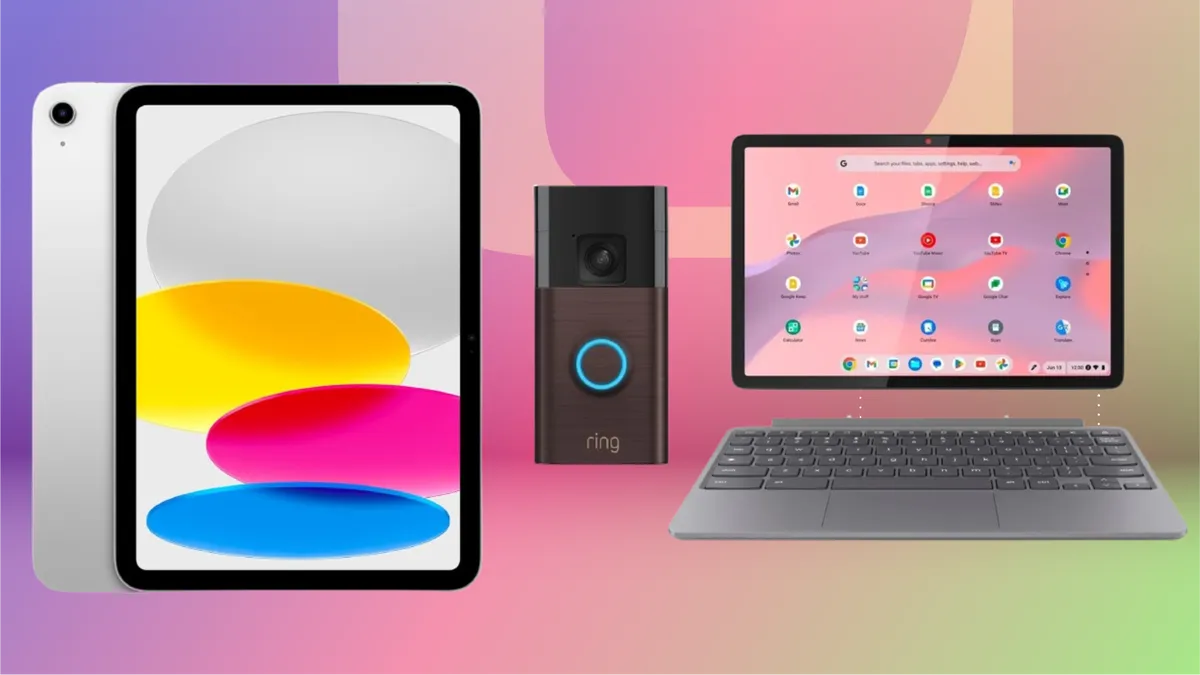
The A16 iPad is a solid tablet, even though it’s been overshadowed by newer, fancier models. It’s an excellent size and offers amazing graphical performance with the A16 Bionic chip. Best of all, you can pick one up now at a discounted price.

How we choose the deals at CNET

Many of us at CNET have covered shopping events for over five years, including Black Friday, Prime Day, Memorial Day and countless others. Not to mention covering, researching and hunting deals on the daily. We’ve gotten good at weeding out scams and superficial deals, so you see only the best offers from all over. 

When choosing deals to show you, we look for real discounts, quality reviews and remaining sale time. Our team of experts has tested countless products to ensure we’re only sharing the best deals.

Advertisement
  • Real discounts mean exactly that. We look at the price history for that product to make sure no brands are inflating prices to make the discount seem more substantial than it is.
  • Quality reviews and in-depth testing are important for any product. If you’re unhappy the first time you use it, the discount wasn’t a worthwhile one. 
  • Remaining sale time is a huge part of our vetting process. If a deal seems like it will only be around for a short while or will only be available for the remaining stock, we’ll let you know upfront so you don’t come back to the deal later only to be disappointed. 

Source link

Continue Reading

Tech

What Stoat And Element Actually Fix

Published

on

Hosting your own group chat could let you avoid a lot of drama.

Discord has become a go-to tool for friend groups, fan communities and online organizations of various sizes because of how simple it makes it to host text chats, voice calls and share your screen with other people. Over the last few years it’s also become a lot more annoying to use for those tasks for some of the same reasons. In an effort to pay for servers and keep members safe, Discord has adopted an approach to subscriptions, ads and age-verification that have rubbed a lot of users the wrong way.

Most social platforms of a certain size will deal with similar issues, so at least for now, the only real way to avoid Discord’s problems is to switch to smaller group chats or take the big step of hosting your own server. There’s a growing number of Discord alternatives out there, but open-source chat platforms where you have complete control over your data and don’t have to worry about features being locked behind a subscription will likely be your best option.

Advertisement

Why are people leaving Discord?

Complaints about Nitro, Discord’s subscription, and the venture capital-backed pressure to grow that guides the company’s product decisions have existed for years. While those might play a role, the current exodus from Discord seems like it can rest squarely at the feet of the company’s age-verification policies.

Discord announced a new collection of teen safety features in February 2026 to follow the United Kingdom’s Online Safety Act, and a growing number of laws that require platforms to use age verification to prevent children from accessing adult content. Discord’s so-called “Teen Default Experience” introduces new default settings for teenagers 13 years and older and an age verification system for any user Discord’s inference model suspects could be underage.

Under the new system, users are expected to provide a video selfie and submit identity documents to one of Discord’s partners to confirm their age. The company says that selfies never leave whatever device is running Discord, and its partners don’t keep a copy of any uploaded identity documents, but backlash to the somewhat invasive nature of the system was swift. Discord ultimately decided to postpone its rollout to the second half of 2026 so it could adjust its approach, including adding more age-verification options. Underlining the risks of collecting identifying information, one of Discord’s third-party service providers was later hacked in October 2025, possibly exposing up to 70,000 Discord users’ government IDs.

Advertisement

What open-source Discord alternatives are out there?

With an open-source chat platform, security is still an issue, but a mass age-verification system isn’t a concern when you’re just hosting a server for you and your friends. Not every option offers the same familiar interface as Discord, but you can get core features like text chat and voice and video calls from most open-source chat apps.

If you actually want to easily self-host a server, the options get more limited. Apps like Stoat, Element, Fluxxer and Cinny offer Discord or Slack-like experiences that you can run on your own hardware, either using a bespoke system or the open-source Matrix protocol. Matrix-based apps in particular benefit from being based on a transparent and open standard, and are usually interoperable with one another. In terms of matching Discord’s look and feel, however, Stoat and Element seem to get the closest.

Advertisement

Stoat

Stoat, the open-source chat app formerly known as Revolt, offers an app that looks like Discord with the numbers filed off. The app supports text, voice, and video calls, and, according to its GitHub, began rolling out a screen-sharing feature earlier this year that should make it a better tool for sharing games with friends. The app also supports things like theming, custom emoji and a roles-based moderation system that makes it relatively flexible for anyone porting their community over from Discord.

Stoat will happily host your server for you, but the chat platform can also be self-hosted with a bit of setup. Whether you opt for self-hosting or let Stoat handle the technical details for you, all servers work with the platform’s web, Linux, Windows, macOS, Android, iOS and iPadOS apps.

Advertisement

Element

Compared to Stoat, Element is a bit more buttoned up, offering a free, self-hosted option and a paid service for enterprise and government customers. Element is end-to-end encrypted, and supports text chats, voice and video calls, screen sharing, file sharing and even location sharing when you’re accessing the platform through a mobile app. Where the app differs is Discord’s more playful elements. Element doesn’t support custom emoji by default, but you can freely theme your Element app however you want.

Also, since Element is built on Matrix (and also run by its creators), the app benefits from the built-in qualities of the protocol. Element is decentralized and interoperable with other apps that run on the Matrix protocol by default. That doesn’t mean it supports the features of every other Matrix app, but you should be able to at least talk to all of them. Element is available for Linux, Windows, macOS, iOS and Android.

Advertisement

The best open-source Discord alternative

Both Stoat and Element have their strengths and weaknesses. Stoat should be more immediately familiar to anyone coming from Discord, but it’s missing the benefits of being built on Matrix. Element is less like Discord by default, but seems like it might receive more robust development support. The larger problem is getting your friends and colleagues off of Discord in the first place. Discord became as popular as it is because it’s free to use and there were already a lot of people using it. Getting anyone to move to a new app is a challenge. It doesn’t matter whether Stoat or Element are better if you can’t get people to switch to them.

Source link

Advertisement
Continue Reading

Tech

The Y2K bug is back! Danish dev digs up untimely flaw in old BSD build

Published

on

offbeat

26 years late and no threat unless you still run a PDP-11/70 and rely on short-wave timekeeping broadcasts

It’s been more than a quarter century since the Y2K bug threatened to disrupt the not-so-modern world, and while the patching efforts of global IT heroes prevented a millennial mess, the problem persists as a Dutch dev just found a new instance of the numeric nightmare.

While working on an emulator for the venerable Programmed Data Processor (PDP) series of “minicomputer” systems manufactured between the 1950s and 1990s, Folkert van Heusden spotted an unpatched Y2K bug in the Network Time Protocol daemon in BSD 2.11.

Advertisement

To be fair, it’s not like van Heusden stumbled onto a potentially devastating issue that’s simply waiting to cause chaos: Not only was the bug specific to the PDP-11/70, a system that entered service in 1975, but it also requires a Precision Standard Time, Inc.(PSTI) receiver manufactured by defunct hardware maker Traconex used to pick up time signals broadcast by short wave radio stations managed by the US National Institute of Standards and Technology. Even at that point, the bug won’t instantly break network time, as a would-be attacker must take several steps to configure the ancient mahicnes in a way that causes the error.

Van Heusden’s writeup explains how to trigger the flaw.

“I’m writing a PDP emulator,” van Heusden told The Register in an email. “I’m also very much interested in time keeping on computers. That combined, I dove into the NTP-implementation on the PDP. When adding emulation for the PSTI-device, I suddenly noticed 19126 for the year.”

Unsurprisingly, when the PSTI receiver actually produces the correct output, the system throws an error that the time offset between the PDP emulator and the emulated PSTI device is a bit “excessive.” Only by 17,000 years, give or take a couple centuries.

Advertisement

Luckily, van Heusden has coded a fix that’ll bring the times back in sync, eliminating what may be one of the few remaining Y2K bugs still floating around in the wild – after all, when’s the last time you heard of a forgotten (or, in this case, overlooked due to technological obsolescence) Y2K bug being patched?

If you want to tinker with a 50-year old emulated system running a 35-year old operating system, the good news is that the PDP and its 16-but CPU ran at 5MHz and needed just 4 MB main memory – a spec that van Heusden’s PDP-11/70 emulator can easily run on modest hardware like a Raspberry Pi Pico, and it’s available on GitHub.

Just be sure you patch that Y2K bug if you plan to tinker with time keeping. ®

Source link

Advertisement
Continue Reading

Tech

The 2026 Infiniti QX80 Is Big, Powerful And Tows Like A Beast, But It’s Not All Good News

Published

on


Despite all of the technology that can make cars smaller, more efficient, and better packaged, big SUVs will probably last until the heat death of the universe. There’s a reason why vehicles like the Chevy Suburban have been around for nearly a century: the automotive market, especially the market in America, loves giant SUVs. There are probably a litany of different psychological reasons why full-size SUVs are popular, unrelated to the actual purpose or utility of the vehicle, but perhaps one of the most evident reasons to parse out is that people seem to like getting more car for their money. More power, more seats, more luxury, more features.

The 2026 Infiniti QX80 is almost the fundamental ideal of an American luxury SUV (aside from the fact that Infiniti is a Japanese brand). Based on the current generation–and much improved–Nissan Armada, the present generation QX80 takes the already large and in charge Armada and makes it more plush and luxurious, all for the small price to pay of tens of thousands of dollars more. I quite like the Nissan Armada, and I thought it was already a luxury SUV wearing a Nissan badge. But I was definitely curious to see how the QX80 would amp up the luxury vibes.

Advertisement

A truck underneath

Underneath the massive exterior of the QX80 is the same powerplant as that of the Armada, too, albeit tuned a little. The engine is a 3.5-liter twin-turbo V6 that makes 450 horsepower and 516 pound-feet of torque. That’s 25 more horsepower than the Armada. Not a sizable power bump, especially with a vehicle this size, but it’s definitely worth taking note of. Not least since Infiniti hasn’t always made a practice of beefing up the engines of its cars compared to their Nissan cousins.

All of that power goes through a nine-speed automatic transmission to all four wheels. Compared to most modern SUVs and their unibody construction, the QX80 feels a little old-school in that it’s very much a truck, down to the 8,500 pound tow rating, body-on-frame construction, and 17 combined miles per gallon efficiency. With fuel prices as they are halfway through 2026, and the fact that the QX80 only takes premium gas, it was inordinate to keep the vehicle fueled, to say the least. 

Advertisement

Not lacking in anything

As far as actually driving the QX80 is concerned, it’s quite nice, although that’s a quality also shared with the Armada. Behind the wheel of the vessel, you glide around effortlessly and with the slightest perceptible growl of the engine. Despite the power on tap, you’ll be unsurprised to hear it’s not particularly sporty. Physics and the QX80s general mass get in the way of it being a canyon carver, but it isn’t slow or plodding along. It doesn’t need a lot of motivation from the gas pedal to get moving quickly.

As for why you would need a vehicle with a curb weight of 6,127 pounds to move all that quickly, that is is a not a question I can answer within the scope of this review. Either way, you aren’t lacking for power and expediency with the QX80. If you found yourself in a situation where you needed to rush to the marina and tow a boat for your rich uncle with a heart of gold, the QX80 might be the perfect SUV for the task.

Advertisement

Impressive, without making an impression

On the inside, it’s what you would expect from a six-figure SUV. Sitting in the driver’s seat–itself heated, ventilated, and massaging–and in command over all the known world (or at least the Wegmans parking lot), you’re surrounded by real ash wood trim and plenty of leather. This is going to sound odd, given all of the ways I’ve previously described this vehicle, but the interior is almost understated. 

It doesn’t try to make a confusing statement like the rolling art project that is a BMW; nor is it intimidating with gadgets in the manner of a private jet-like Cadillac Escalade. Perhaps that could be attributed to its more humble Nissan underpinnings, or it’s a show of restraint from Infiniti.

Either way, the interior of the QX80 is more akin to sitting in a nice boat than waiting in a high-tech doctor’s office. Veering into the philosophical, the QX80 is impressive without trying to impress you. It’s just a nice place to sit and drive. Jumping from the Nissan to the Infiniti, the designers got rid of the Armada’s physical buttons in favor of a big screen under the infotainment display to control HVAC and all the interior amenities. Perhaps it’s my inner caveman, but I like physical buttons.

Advertisement

A big SUV in context

Now for the grand question of price. The 2026 Infiniti QX80 is the most expensive Nissan-affiliated product for sale in North America, with its base price of $86,850. The QX80 I reviewed was the “Sport” trim, which is only behind the “Autograph” trim in the lineup. Benefits of the “Sport” are as follows: an air purification system, a 24-speaker sound system by Klipsch, and massaging seats. 22-inch wheels are also part of the package. It starts at a cool $102,645. 

The “Radiant White/Black Obsidian” two tone paint is $1,205. The “Sport Exterior Package” that gives you roof rail crossbars and some extra blackout options around the exterior is $1,060, and the privilege of illuminated kick plates and an illuminated headliner will set you back $1,060 as well. Throw in the destination charge of $2,190 and you luxuriously arrive at your final price of $108,160. Oh boy.

Advertisement

Over $100,000 is, to quote my mom, “too much money.”

Advertisement

Large and in charge, but still middle of the road

To modify a saying from an old mentor of mine, Reverend Bob, a vehicle without context is just a pretext for you to say whatever you want about it. And in context, the QX80 isn’t all that special. There are numerous six-figure, very powerful SUVs on the market today that displace roughly the same tonnage as a competitive modern navy. BMW, Mercedes, GMC, Cadillac, Lexus, Lincoln, and more can give you a giant SUV for $100,000. So where does the QX80 sit within the mix? 

Oddly enough, it’s best superlative is towing. 8,500 pounds puts it above the Cadillac Escalade’s maximum 8,100 pounds, and just under the Lincoln Navigator’s 8,700 pounds. Compared to the Lincoln, the QX80 has exactly 10 more horsepower, and slightly less cargo space. With all of the seats folded down, it has a maximum capacity of 97.1 cubic feet. The Navigator, with its aircraft carrier-like wheelbase, has a maximum capacity of 107 cubic feet. Is it worth 10 extra horsepower at the sacrifice of 10 cubic feet? You’re paying over $100,000 anyway. You might as well get the most out of it.

It wouldn’t be unfair to declare the 2026 Infiniti QX80 Sport an objectively ridiculous vehicle. It has bodywork that’s gives you Warhammer 40,000 vibes; he fuel economy will drain your bank account; and replacing 22-inch tires down the road will require taking out a second mortgage. In fact, everything about it is well outside the scope of what any normal person would even consider purchasing. Funny, then, that within the context of big SUVs it’s pretty middle of the road.

Advertisement


Source link

Continue Reading

Tech

The Kratom Civil War Is Heating Up, and MAHA Has Picked a Side

Published

on

A decade ago, kratom advocates fought a surprisingly successful campaign against a proposed Drug Enforcement Administration ban that claimed the obscure Southeast Asian plant posed “an imminent hazard to public safety.”

They won bipartisan allies from Bernie Sanders to Rand Paul, and helped create a billion-dollar industry out of kratom, which has pain-relieving effects they said could help fight the opioid epidemic as a far safer, natural alternative to pills.

Now, many of those same pro-kratom activists are calling for a ban on products containing concentrates of one of kratom’s active components: 7-hydroxymitragynine, or 7-OH, an ultra-potent extract with opioid-like effects. And it’s causing major friction amongst consumers, sellers, and advocates of both substances.

“This is a chemically manipulated, full-blown opioid that is now in the marketplace,” claims Mac Haddow, the senior public policy fellow at the American Kratom Association, a kratom industry lobby group. “They masquerade as kratom products.”

Advertisement

The proliferation of 7-OH in gummies, capsules, and shots with brand names like Magic 7OH, 7 O’Heaven, and Pure OHMS across thousands of gas stations and corner stores over the past few years has caused increasing consternation. Consumers of 7-OH have spoken of its excruciating withdrawal symptoms, and there have been reports of polydrug overdoses involving 7-OH and other substances. Some are now entering rehab to overcome their dependency, while others are self-detoxing based on advice from Redditors.

The kratom community fears that 7-OH’s bad reputation could drag the entire kratom industry into a regulatory quagmire. But the 7-OH industry has organized against the potential prohibition, claiming 7-OH is kratom, despite only appearing in trace amounts within the leaves of the kratom plant, and that its benefits as an analgesic outweigh its potential harms.

Anti-7-OH directives from the federal government have exacerbated tensions between the two sides.

Last July, US Health and Human Services secretary Robert F. Kennedy Jr. described the 7-OH industry as “sinister” at a press conference where FDA commissioner Marty Makary called for the DEA to categorize the drug as Schedule I—the most restrictive class of banned substances. Speaking from the Oval Office on May 11, President Donald Trump publicly endorsed “natural 7-OH,” in confusing remarks which appeared to refer to kratom. On top of all that, it appears that both RFK Jr. and Department of Homeland Security secretary Markwayne Mullin—who is also pushing for a 7-OH crackdown—have strong ties to a kratom lobbyist (and convicted criminal) behind a notorious kratom drinks company.

Advertisement

Proponents of 7-OH see the substance and the plant it’s derived from as inexorably linked. In April 2025 testimony to Colorado legislators debating how to regulate kratom and 7-OH, Michele Ross, the chief scientific adviser to the 7-OH advocacy group 7-HOPE Alliance, wrote, “To say 7-OH is not kratom is to say caffeine is not coffee or THC is not cannabis. It simply does not make sense.”

But as opposed to coffee, cannabis, and kratom—which have been consumed for centuries if not thousands of years—7-OH does not have a long history of human use. It’s only been on the market for a few years.

Many of the products that are labeled 7-OH contain little-understood compounds with unknown biological effects in animals or humans, says Chris McCurdy, a leading kratom researcher and director of the University of Florida’s translational drug development core. “So, these products, while represented as ‘clean’ are anything but.”

Meanwhile, a dozen states, from California to Vermont, according to reports, have already moved ahead of federal scheduling with their own 7-OH bans. Seven of those states have also banned kratom, although Rhode Island recently overturned its prohibition.

Advertisement

Source link

Continue Reading

Tech

Swiss Voters Reject Proposal To Cap Population At 10 Million

Published

on

An anonymous reader quotes a report from The Guardian: Voters in Switzerland have rejected an unprecedented far-right proposal to cap the country’s population at 10 million in a divisive referendum dubbed “the Swiss Brexit.” Some 54.79% of voters were against the proposal by the Swiss People’s party (SVP) and 45.21% were in favor. Turnout was 58.86%. A different outcome would have obliged the Swiss government to limit the population, currently 9.1 million, to 10 million by 2050, enacting tough restrictions on family reunification, residency permits and asylum if the number had reached 9.5 million before that date.

Under the proposals, if the threshold of 10 million people was exceeded before 2050, the Swiss government would have been obliged to withdraw from the country’s free movement agreement with the EU — ending its access to the bloc’s single market. The SVP, which has the most seats in parliament, has for years fueled anti-immigrant sentiment, especially concerning workers from neighboring EU countries. The party had insisted that a so-called “sustainability initiative” was needed to address the increase in population, which it argued was putting pressure on Swiss infrastructure, housing, social programs, natural resources and way of life. “Voters were worried about negative consequences for Switzerland’s relationship with the EU and for the labour market,” said Urs Bieri, from the polling firm GFS Bern. “People are also worried about things like having enough care and health workers. Also, there’s a feeling that in the current international environment it’s not sensible for a small country to do this.”

Source link

Continue Reading

Tech

iPhone 18 Pro buyers should watch out for a repeat color problem

Published

on

The fiasco of the color-changing iPhone 17 Pro is threatening the iPhone 18 Pro, with one leaker claiming that Apple has apparently not managed to defeat truths about chemistry, physics, and user behavior for the fall release.

Following the launch of the iPhone 17 Pro, consumers started to complain about the coating of the Cosmic Orange model. If a leaker is to be believed, history is about to repeat itself. And, AppleInsider can confirm that each individual Apple Store, worldwide sees “a few” every week.

Weibo leaker Fixed Focus Digital posted on June 12 a warning to consumers planning to buy the iPhone 18 Pro. The account says that people should be careful about the color fading issue with the upcoming models.

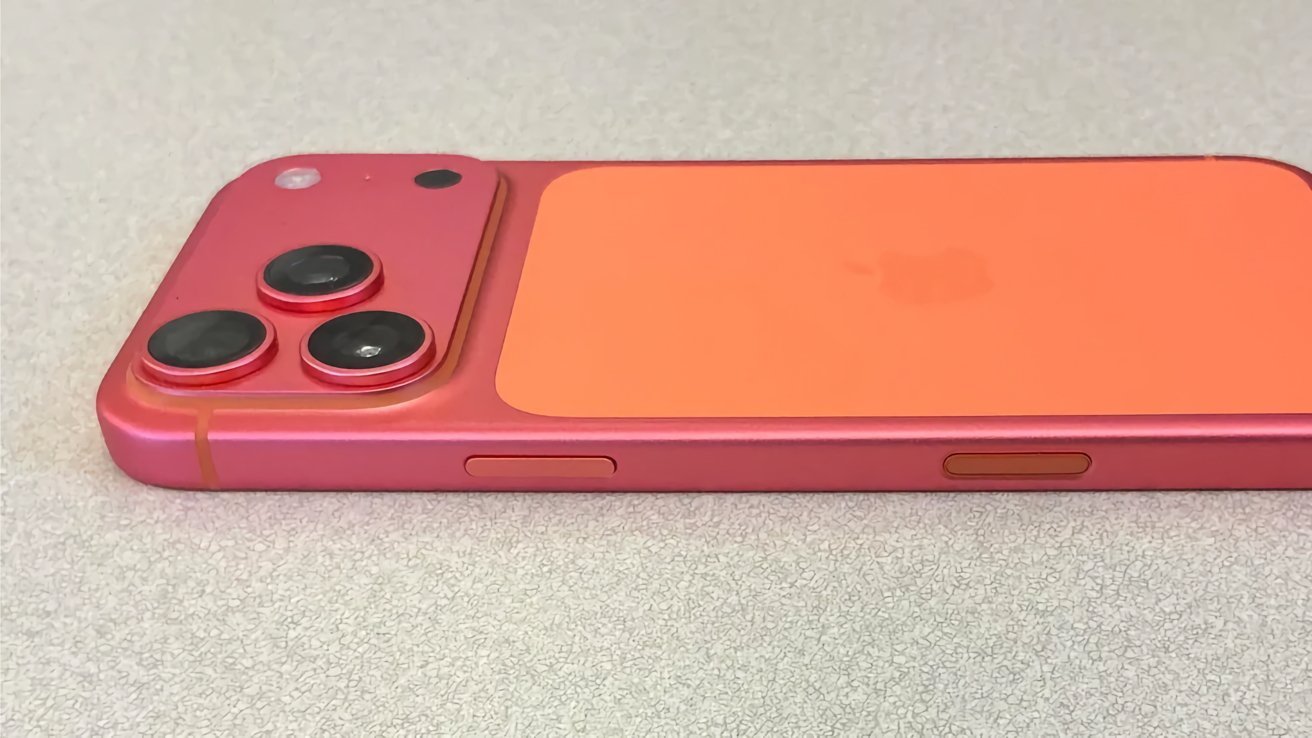
Pink smartphone lying flat on a table, showing side buttons and a bright orange magnetic wallet attached to the back near the dual rear cameras

An alleged discolored iPhone 17 Pro, shifting from Cosmic Orange to pink – Image Credit: DakAttack316/Reddit

Advertisement

The leaker refers to an issue with the Cosmic Orange version of the iPhone 17 Pro, which discolored to a pinkish hue within weeks of launch. It became a brief problem for Apple, causing concern for people wanting their iPhone to stick to just one color.

We may all like to believe that Apple does learn from its mistakes and course-corrects, especially with most of a year to fix the problem. But, if Fixed Focus Digital is right, the color will be a problem once again.

The Weibo post also reiterates a previous claim by Fixed Focus Digital that the iPhone 18 Pro will use an aluminum casing, not the titanium-based revival that other leakers believe will happen.

Weibo leakers don’t tend to have the greatest accuracy when it comes to rumors, due to accounts commonly reposting content they source from other leakers. Fixed Focus Digital is certainly prominent, but still has a middling level of accuracy.

Advertisement

Oil and water

While Apple hasn’t issued any explanation for the issue, the problem probably involves the aluminum anodization process.

The process requires cleaning the aluminum with a non-corrosive solution to remove any grease and fingerprints. Then, an etching process removes surface defects and the naturally forming oxide layer.

That is followed by anodization, which involves submersion in an electrolytic bath to form a porous aluminum oxide layer. That layer is used to absorb the coloring for the exterior of the iPhone.

Since the porous layer is like a sponge, a chemical and physical process is used to seal the layer. The idea is that it locks in the color, but also prevents other materials from getting into that oxide layer.

Advertisement

If the seal isn’t properly applied, liquids can be absorbed and affect the color of the oxide layer. This can be as simple as water or even finger oils from your hand.

While the initial complaint occurred over a few weeks after launch, it’s something that Apple still deals with to this day. It’s not a big problem, but it is still hanging around to this day.

Source link

Advertisement
Continue Reading

Trending

Copyright © 2025