Connect with us

Tech

Samsung could make Galaxy A batteries harder to replace with an Apple-style security chip

Published

on

Samsung is reportedly borrowing a page from Apple’s long-term playbook, and if you’re a DIY repair fan, you won’t like it. Korean outlet The Elec reports that upcoming Galaxy A series phones will ship with a dedicated security chip embedded in their batteries.

Apple has used a similar approach for years. The iPhone checks for a cryptographic chip inside the battery, and an unverified third-party battery can trigger warnings or disable features such as battery health. Samsung could be heading in a similar direction with its mid-range phones starting next year.

So what are the advantages of a verified battery?

Samsung is planning to add a security chip with a unique hardware “fingerprint” using Physical Unclonable Function (PUF) technology to its batteries, making them nearly impossible to fake. Samsung is producing the chips on its 28nm manufacturing line with partners ICTK and Analog Devices. The company also plans to equip around 50 million mid-range phones with them next year.

Now, let’s look at both sides of this coin. The upside is quite straightforward. Verified batteries will help catch unsafe copies before they cause overheating or fires. 

This way, both the repair store and the phone owner can confirm they’re paying for a genuine accessory, one that is compatible with a particular Samsung phone and ensures optimal power delivery and safety standards.

Advertisement

What could go wrong for everyday users?

Given that Samsung hasn’t officially announced how it wants to implement the process, the worry is mostly based on speculation about a particular approach: parts pairing or serialization.

Apple initially practiced the same thing. It tied each battery to the phone’s logic board. That made swapping original batteries between iPhones nearly impossible. With the iPhone 16 series, the company introduced an on-device Repair Assistant that allowed calibration of used genuine parts.

If Samsung goes down the harder path, it will make it harder for independent shops and DIYers to swap batteries without triggering error pop-ups or losing some battery-related features. As a result, official replacements could cost more than aftermarket options, something that often pushes buyers to replace the entire phone instead of buying a pricey battery.

That would not only result in more e-waste, but it would also shorten device lifespans. Samsung’s only comment is that it “cannot confirm the direction of technology development.” Whether that means open repair tools or an Apple-style lockdown should become clear once these phones actually ship.

Advertisement

Source link

Continue Reading
Click to comment

You must be logged in to post a comment Login

Leave a Reply

Tech

Anthropic releases Opus 5.5 with lower prices and Fable-level performance

Published

on

Anthropic’s newest model, Opus 5.5, was released on Tuesday, setting a new state-of-the-art in coding and knowledge work performance, according to the company. Notably, the company says, the release outpaces the larger Fable model in many benchmarks, and succeeded in a number of informal tasks that Fable failed to complete.

The new model is also significantly cheaper than its predecessor. Output tokens will be charged at $20 per million tokens for Opus 5.5, compared to $25 for the previous model. Other metrics have similar price drops. The model is also faster to run, reflecting an overall drop in the compute required to serve it.

The new version also makes significant changes to how Opus communicates, with the Opus 5.5 less likely to use jargon and more likely to put important information at the start of its messages.

The launch comes just two months after the release of Opus 5 on July 24th. According to the announcement, Sonnet 5.5 and Haiku 5.5 will be released “in the coming weeks,” with similar performance improvements.

Advertisement

Anthropic says that Opus 5.5 is comparable to Mythos in its biology and cybersecurity capabilities, so its release is subject to the same safeguards as the company’s Fable model. Those safeguards limit how much the models can be used to discover exploits in compiled programs or developing recognizable biological weapons, among other tasks.

Opus 5.5 is Anthropic’s first model release since CEO Dario Amodei embraced calls to pace the frontier, deliberately slowing down progress on AI capabilities to match the rate of progress on alignment.

“I have become convinced that fully addressing the risks requires even more prudence,” Amodei wrote in a post earlier this month, “not just investing in risk prevention, but pacing the rate of capabilities advancement so that risk prevention has time to keep up.”

Opus 5.5’s safety training was broadly similar to its predecessors, with alignment testing and pre-release evaluation by outside organizations like METR and Frontier Design. But Anthropic emphasized that more advanced training and evaluation systems were already being prepared for future models, including improved security and monitoring systems.

Advertisement

“As AI becomes more capable, public policy should play a larger role in making sure the systems people rely on are safe. That capacity takes time to build, and we’ve started to put the infrastructure in place to support it,” the blog post reads. “We expect to share more details on these efforts soon.”

When you purchase through links in our articles, we may earn a small commission. This doesn’t affect our editorial independence.

Source link

Advertisement
Continue Reading

Tech

How To Add Extra Ethernet Ports If Your Router Doesn’t Have Enough

Published

on

You don’t need a new router to get more Ethernet ports; the solution is much simpler.

With more and more devices offering internet connectivity, running out of Ethernet ports on your router is a common frustration. A few ports aren’t enough to connect your smart TV, game consoles, desktop computers, NAS drives, home office equipment and more. If you’re maxed out, you might assume you need a new router, but that’s not the case.

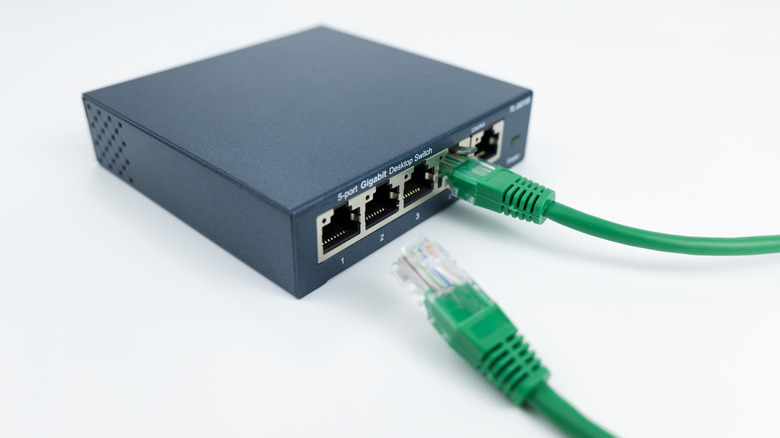
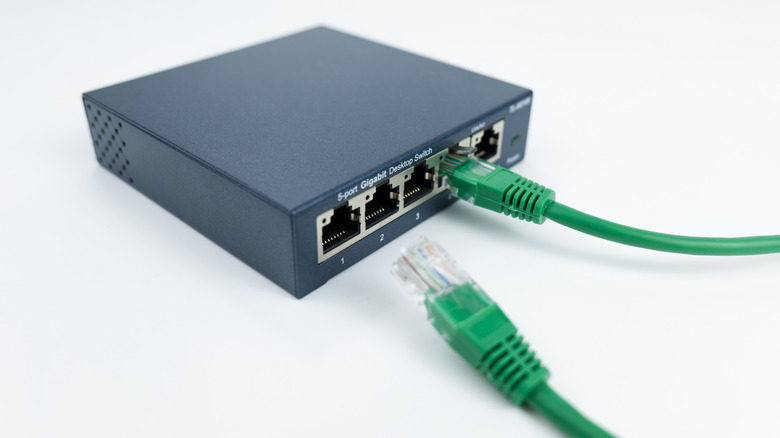
The real solution is simpler, more affordable and takes only minutes to set up: an Ethernet switch. This (often compact) plug-and-play device connects to one of your router’s LAN ports and immediately expands your wired network capacity. Depending on the model, a single switch can add four, seven, 15 or even more ports to your setup — all without replacing your router or reconfiguring your network.

This matters because while Wi-Fi has improved significantly over the years, a wired Ethernet connection still delivers a better, more consistent performance for activities like online gaming, 4K streaming and large file transfers. Let’s go over how Ethernet switches work and how they differ from routers, which port to use and what alternatives exist if running new cables isn’t an option.

Advertisement

An easy fix to your home’s network issues

Most home routers come with four LAN ports and one WAN port. The WAN port is for connecting to your modem (if you don’t have a combo unit), which leaves four for your use. Even if this was enough when you bought your router, needs can change. For instance, maybe smart TV starts buffering when you upgrade to a 4K streaming plan, so you don’t want it to use Wi-Fi anymore. 

If all ports are already in use, an Ethernet switch (not a splitter) will add more connections to your existing router. Then you can enjoy the full internet speed you’re paying for on more of your devices, while also enabling more direct connections between devices. The switch acts as an expansion to provide more LAN ports, much like an HDMI switch or USB hub. They’re most commonly sold with five, eight or 16 ports, but the usable number is one fewer since one slot connects the switch to your router.

Advertisement

For most people, an unmanaged switch is the way to go as they require zero setup and come at a lower cost. Managed switches have advanced features like monitoring and virtual networks, which aren’t necessary when all you want is more ports.

How a network switch works

A router’s job is to direct traffic between devices on your home network and the internet. When data comes in from the outside, your router sends it to your phone, laptop or other device as needed. A basic switch doesn’t do this; it simply provides more Ethernet ports for the router and makes sure data sent from devices connected to it goes to the right place. A switch doesn’t replace your router or affect Wi-Fi performance.

If running new cables through your walls isn’t realistic, there are a few alternatives to get a wired-style connection without the mess. You could use MoCA adapters to send broadband over your home’s coaxial wiring, or powerline adapters that do the same using your electrical outlets. Alternatively, surface-mounted fiber optic kits allow you to run super thin cables along baseboards for a high-speed performance without signal degradation. However, this is more expensive and requires careful installation to avoid damaging the cables.

Advertisement

How to know which Ethernet port to use

Not every port on your router serves the same purpose. Aside from the WAN and LAN distinction mentioned earlier, you also need to check the speeds that each port supports. Ethernet performance is affected by the standard of the ports on both your router and device, as well as the cable itself. 

If your computer and router both have a 2.5 gigabit Ethernet port and are connected by a cable that supports 2.5 Gbps, adding a switch that only supports 1 gigabit speeds will bottleneck performance for devices connected to it. Most unmanaged switches today offer at least gigabit speeds, so unless you have extremely fast internet, this shouldn’t be a huge concern. If your router’s ports don’t have any indication of their standards (like 1G or 2.5G), check the manual or online documentation. 

Generally, plugging your Ethernet switch into the router’s highest-speed port that it can take advantage of is wise. Keep in mind that your connection speed to the internet and back will be capped by your ISP plan, though this doesn’t affect direct connections on your network (like your PC communicating with a NAS).

Advertisement

Source link

Advertisement
Continue Reading

Tech

Mercedes-Benz is putting a British AI driver into its production cars

Published

on

Wayve has signed a definitive production agreement with Mercedes-Benz to put its AI Driver into future vehicles within the next two years, providing urban and motorway point-to-point driving assistance. Mercedes invested in Wayve’s $1.5B Series D in February, and the software has been integrated into its production architecture using MB.OS.

Wayve has signed a production agreement with Mercedes-Benz to put its AI Driver into future Mercedes cars within the next two years, the London company said. It will provide urban and motorway point-to-point driving assistance.

That is British software in a German car.

Wayve opened a hub near Stuttgart in March 2025, saying at the time that it wanted to partner with German manufacturers and tier one suppliers. It now has one. The teams integrated the software into Mercedes production architecture, using its hardware, its MB.OS operating system and its map interfaces.

Advertisement

The word doing the work is assistance.

Both companies describe point-to-point driving assistance rather than autonomy, which means the person in the seat remains responsible. Chief technology officer Jorg Burzer called it the world’s first integration of the Wayve AI Driver in the premium segment. Alex Kendall, Wayve’s co-founder and chief executive, said the work reflected a deep technical alignment between the two teams.

Mercedes already sells something stronger than that.

Drive Pilot holds the first internationally valid approval for conditionally automated driving, and Germany’s federal motor transport authority cleared it to 95 km/h in December 2024. The driver may turn their attention elsewhere, in the right-hand motorway lane, behind a lead vehicle, above 4 degrees Celsius.

Advertisement

So a buyer gets two different promises.

One lets you stop watching the road on a motorway. The other drives you across a city while you keep watching it. Mercedes put money into Wayve’s $1.5B Series D in February at an $8.6B valuation, alongside Nissan and Stellantis.

Wayve says the system travels.

Its AI Driver learns without HD maps and trains on Nvidia infrastructure hosted on Microsoft Azure, which the company says lets it generalise to new cities without geofences or local retraining. It demonstrated the Mercedes integration in Stuttgart, London and San Francisco. The same system is designed to run from assistance up to driverless products across a carmaker’s line-up.

Advertisement

London is where that claim meets a regulator.

Wayve and Uber run fewer than 20 Ford Mustang Mach-Es there, licensed as private hire vehicles with a paid driver legally responsible for every journey. That is because nobody has finished the permit scheme Britain opened in May. A production deal reaches customers first.

Source link

Advertisement
Continue Reading

Tech

Tyndall experts help create new chip for future 6G communication

Published

on

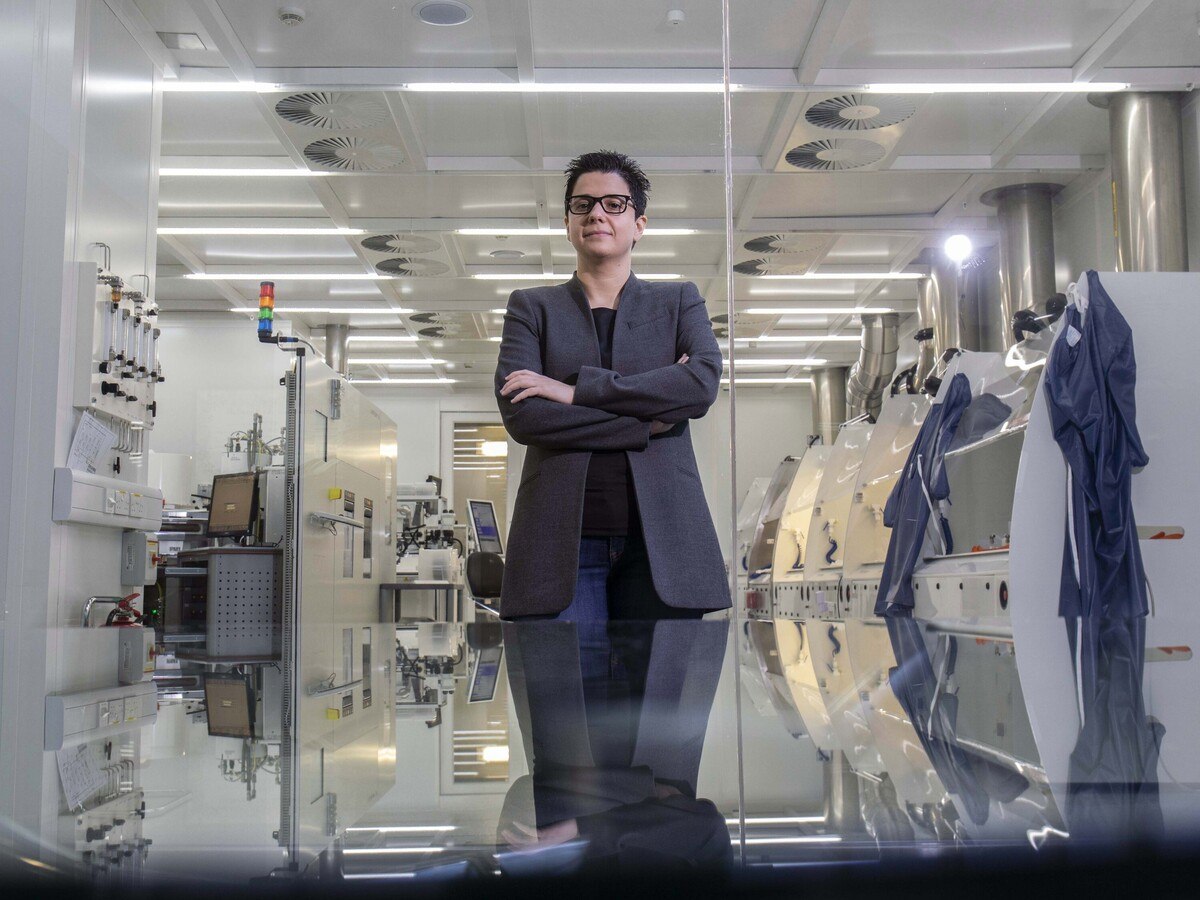
The study represents an important advancement in RF semiconductor tech, says Tyndall expert Andrés Fontana.

In a breakthrough that could help boost the journey towards next-generation 6G communication, researchers from Tyndall National Institute have helped develop a new microchip that can continuously adapt to changing network demands, while consuming minimal standby power.

6G networks are expected to handle significantly more data than today’s communication systems while operating with greater flexibility and lower energy consumption, while the overall radio-frequency tech market is expected to grow to nearly €70bn by 2030.

But achieving this will require new wireless hardware capable of delivering high performance, energy efficiency and real-time adaptability.

Advertisement

Earlier this year, Nvidia announced a new joint project with global telecommunication leaders including BT, Cisco and Deutsche Telekom to fast-track 6G infrastructure ready to handle AI workloads – something expected to be even more widespread in the coming years.

While in July, Dublin-based Pilot Photonics was approved for a recommended investment of up to €10.4m from the European Innovation Council to scale its photonic chip technology that uses laser light to generate extremely pure wireless signals, built for AI data centres, satellite communications, and 5G and 6G mobile networks.

Tyndall experts, adding this this, have developed a new type of programmable microchip, which integrates switches directly on to fully functional millimetre-wave communication circuits.

“This research represents an important advance in radio-frequency (RF) semiconductor technology,” explains Andrés Fontana, a senior postdoctoral researcher at the institute.

Advertisement

“By integrating novel two-dimensional materials with gallium nitride microchips, we have demonstrated a new class of programmable, ultra-low-power devices that could support the flexible, high-performance wireless systems needed for future 6G satellite and terrestrial communication networks.”

The research was conducted in conjunction with researchers from Tyndall, University College Cork, the National University of Singapore, Argentina’s Universidad Tecnológica Nacional and Saudi Arabia’s King Abdullah University of Science and Technology.

Their study, called ‘Reconfigurable mmWave microchips co-integrating hBN switches on GaN’, was recently published in Nature magazine. The microchip was successfully demonstrated in several key radio-frequency components used in wireless communication systems, confirming its suitability for real-world applications, the institute said.

“This publication in Nature highlights the strength of international collaboration in addressing some of the most important challenges facing future wireless communications,” said Prof Dimitra Psychogiou, the head of the advanced technologies group at Tyndall.

Advertisement

“This breakthrough demonstrates how innovative materials and device engineering can help shape the next generation of 6G and satellite communications.” The project was partially funded by Research Ireland.

Don’t miss out on the knowledge you need to succeed. Sign up for the Daily Brief, Silicon Republic’s digest of need-to-know sci-tech news.

Source link

Advertisement
Continue Reading

Tech

20th anniversary iPhone won’t get improved CoE OLED display

Published

on

New research claims that Apple will add a significantly improved OLED display to the iPhone, but some years later than previously expected.

The improved technology is called Color Filter on Encapsulation (CoE) OLED, and key to it is that it is OLED without a polarizing layer. That layer prevents blurring on screen, but there are significant benefits if it can be dispensed with.

Apple had previously been reported to be planning to use this screen technology in its 20th anniversary iPhone, due in September 2027. However, according to UBI Research, Apple will not use CoE until its Pro model iPhones in late 2029.

That’s despite the same research claiming that Samsung has been using a version of CoE in its Galaxy Z Fold3 in 2021. UBI Research does not question why Apple would choose to wait eight years to use the technology.

Advertisement

However, in its coverage of the delay, ET News presents reasons for why Apple continues not to use CoE. It argues that up to now, Apple has not regarded the technology as being mature enough to use at scale.

While it appears that Apple does now regard it as useful, and was planning to add it to the iPhone 20 Pro, there is now another reason to delay. Reportedly, Apple has concluded that it would further add to the cost of the iPhone at a time when prices have already had to rise.

UBI Research does claim that the iPhone Duo was at least expected to use CoE, but no teardowns have yet confirmed whether it has.

Benefits of CoE

It is practically certain that Apple will want to move to CoE OLED displays as soon as it is practical, because there are multiple benefits from quality to cost.

Advertisement

Removing any layer means that the screen display will be thinner and also easier to manufacture, for instance. Then if the polarizing layer is removed, the light from the OLED would take less power to produce a brighter display.

That’s clearly a significant improvement on everything from daily use to the demands on the battery. But it requires manufacturers Samsung and LG Display to produce ways of removing blur without a polarizing layer.

These reports follow a recent leak that re-affirmed most previous claims regarding the displays on the iPhone 20 Pro and iPhone 20 Pro Max. So far such reports have concerned the display size and resolution, though, with no reference to CoE.

Advertisement

Source link

Continue Reading

Tech

Learning Commons Launches Open Platform for K-12 Edtech

Published

on

Learning Commons, a nonprofit backed by the Chan Zuckerberg Initiative, launched an open platform for educators and edtech developers today, alongside six new partner organizations. 

The platform represents one of the most ambitious attempts by a single organization to solve a major edtech headache: easily accessing and incorporating state academic standards and proven teaching methods into edtech products and services. 

Developers and educators say incorporating evidence-based materials and data into edtech tools is time-consuming, costly and prone to error. By offering free datasets, curricula and evaluation tools from states and many respected industry providers, the initiative helps developers and K-12 schools create evidence-based materials and assessments aligned with state standards. The datasets include academic standards from all 50 states, breakdowns of concepts and foundational skills underlying specific standards, learning progressions mapping prerequisite and successor skills as well as curricula and course materials from prominent providers.

In addition to the open platform, Learning Commons announced integration partnerships with Canva Education, Level, MagicSchool, OKO Labs, Really Great Reading and TalkingPoints. 

Advertisement

“What I’m really excited about is the number of partners we’ve been able to collaborate with,” says Sandra Liu Huang, president of Learning Commons. “It’s not just our work — it really feels like the beginning, or maybe the beginning of the beginning.”

According to Huang, Learning Commons has more than 70 partners contributing datasets or integrating its tools, including OpenAI and Anthropic. Since its launch in 2025, Learning Commons’ datasets have been downloaded approximately 20,000 times. 

“That foundation didn’t exist before in an open way, and now it does,” Huang says. “I think it sparks people’s imagination: ‘Now I can connect this to curriculum and standards and map it to my context’ — to do things that weren’t quite so doable in the past.”

The platform arrives as lawmakers, educators and parents push to ensure edtech offers evidence and outcomes to support its claims. Educators and industry observers believe the platform could help scale evidence-based research and high-quality instructional materials. 

Advertisement

“Trying to make sense of messy, scattered state standards and academic research is exhausting,” says Tambra Clark, technology integration facilitator for Birmingham City Schools in Alabama. “Someone has to do the heavy lifting of turning all that data into clean, machine-readable formats. If a well-funded philanthropy steps up to build these foundational tools openly, it saves cash-strapped school districts and small developers from reinventing the wheel, ultimately making AI in the classroom safer and higher quality for everyone.”

Michael Hernandez, a consultant and former Los Angeles County teacher of the year who specializes in helping educators use AI, also likes the idea of surfacing and vetting high-quality resources and best practices in one place. “There are many respected institutions that offer similar services for science, medicine, and the arts, so I don’t see why this wouldn’t work for education,” he says.

Helen Crompton, executive director of the Research Institute of Digital Innovation in Learning at Old Dominion University, is “cautiously optimistic” about the platform. 

“One of the problems we have in education is that excellent research and evidence-based practices often do not make their way into the technologies educators actually use,” she says. “If Learning Commons can help bridge that gap, that could be very beneficial.”

Advertisement

Inside the Platform

The platform consists of two main components: the Knowledge Graph and Evaluators.

The Knowledge Graph offers K-12 education data published on GitHub under an open license, including state academic standards, learning progressions, curricula and durable skills that can integrate into AI tools. The Evaluators measure whether AI-generated content created by schools and vendors is accurate, grade-appropriate, evidence-based and adheres to state academic standards. A third component, Agent Skills, are designed to designed to support teacher planning. Four skills are already available, and additional skills will go live later this year.

Karl Rectanus, CEO of Really Great Reading, says the company used the Knowledge Graph as it developed its new Literacy Outcome System, incorporating documented learning science, evidence, existing standards and progressions, rather than stitching data together from a range of sources. He says it would have taken months for his organization to build its own infrastructure and devote resources to ongoing maintenance.

“We’ve tested [the Knowledge Graph] and integrated it,” he says. “It lets us move faster, together with like-minded organizations, in ways that reflect what educators already know is right — while helping the broader sector succeed, not just us.”

Advertisement

The platform could greatly help vendors as the trend toward outcomes-based contracts grows, says Lawrence Holt, co-founder of OKO Labs and an adviser to Learning Commons. 

“A developer can use Learning Commons and find out whether generated material is on grade level and on standard before a student sees it, rather than discovering the problem later, when 40% of the fee is riding on the result,” he says.

Eedi, an 11-year-old company that researches why students struggle to learn math, contributed its data to the platform. “Partnering with Learning Commons goes straight to Eedi’s mission, which is to reach a billion kids by 2030,” says George Mu, president and chief growth officer of Eedi. “We’re a company of about 40 people, so partnering makes sense for us.”

Mu explains that before ChatGPT arrived, it was hard for anyone to use something so structured, descriptive and granular as its math research. “Now, with these tools from Learning Commons, teachers, students and edtech organizations can actually use it,” he says. 

Advertisement

How One District Uses the Platform

Jason Markey, assistant superintendent of Lisle District 202 in Illinois, used the beta version of the platform to create a formative math assessment app that simulates questions students see on the Illinois Assessment of Readiness. 

“We just hadn’t found a provider that does math assessment that well,” Markey explains. “By connecting it to the Knowledge Graph, we can inform the reports on student progress with a lot more nuance than if we’d built it with AI alone.”

Vincent Slowiak, a teacher at Lisle Junior High School, says the Knowledge Graph included prerequisite state standards that can flag what a student may be lacking or need reteaching on to meet a given standard. “That gives teachers another layer of information about what needs to be covered again,” he says.

In addition to state standards, the Knowledge Graph includes learning materials that the Lisle district already uses. “One resource we use a lot at the elementary level, as we unpack our Common Core standards and look at instructional shifts, is Student Achievement Partners. Seeing that inside Learning Commons was reassuring,” says Meredith McCormick, assistant principal of curriculum and instruction at Lisle Elementary School. 

Advertisement

Advice from Educators

Markey and his team of educator-coders only got so far with the Knowledge Graph before they had to rely on outside help. “As [Slowiak] likes to say, ‘You can get to 97% pretty fast,’ but it’s hard to make something fully scalable when none of us have a computer science background,” Markey admits. “Getting it to a point where it’s launchable — single sign-on for students, a dashboard for each teacher — is a lot more complex.”

This past summer, Markey hired two interns — recent computer science college graduates — to finalize the in-house tool. One intern remains on staff. Most school districts lack internal tech teams or college interns to inspect or implement complex datasets safely.

“We’ve also engaged a third party, Upstart Education, to work with us on data analysis and hosting,” Markey says, adding that he and his team made sure to adhere to state and federal student data-privacy rules.

McCormick advises anyone interested in using the Knowledge Graph to make sure the resulting tool is age-appropriate. “Feedback has to be specific enough for, say, a third grader to understand where they are in the learning progression, and that looks very different than it would for a seventh or eighth grader,” she explains. 

Advertisement

Is Learning Commons Right for the Job?

Educators and outside observers agree that Learning Commons’ platform could help scale evidence-based instruction and assessment. Their concerns are whether a private organization — especially one based in Silicon Valley — should lead the way on something as important as AI infrastructure. 

“I’ve seen this happen so many times before in relation to state- or school-mandated assessments,” says Clark. “We already know how tricky it is when outside entities get to establish the standards for testing. But this time, we’re talking about tech. When a multibillionaire-backed organization starts laying down the ‘plumbing’ for the entire education system, it naturally raises a few eyebrows.” 

The optics of an organization based in Silicon Valley may give some people pause, but others want proof to back up concerns. To these observers, a tool that saves time and money and is open to all is cause for celebration. 

“A shared learning infrastructure, with shared experience and evidence of growth, is the next step in maturing our sector to the level other industries have already reached,” says Rectanus, a former teacher.

Advertisement

Holt says there are additional organizations trying to raise the bar for edtech by conducting independent reviews or gathering best practices: EdReports reviews K-12 curricula while Evidence for ESSA at Johns Hopkins University and the federal What Works Clearinghouse grade studies. 

Hernandez points out that educators already convey a great deal of trust in organizations, whether they are textbook companies or learning management systems. Still, he wishes edtech would not have to rely on one source for AI infrastructure. “If this is to truly work, it should be a coalition of respected organizations who curate and manage this program, not a single corporation,” he says. 

“If a nonprofit is willing to step up and do the work, I think it could be beneficial in the short term, but problematic in the long term,” Hernandez continues. “Do we want private industry playing a large role in policy, pedagogy and practice, or do we want our educators and civic institutions to manage this?”

Huang points out that Learning Commons is a nonprofit, private operating foundation. “We operate in the philanthropic interest, and we’re accountable to serving the public good as a result of that structure,” she says.

Advertisement

“I do think our structure and capabilities let us move fast,” she continues. “We can bring the cutting edge of technology to the education sector in a public-good way that I don’t think would otherwise be happening.”

Crompton is concerned about Learning Commons’ goal to be the AI infrastructure for edtech. “Infrastructure is different from simply providing another educational technology tool,” she says. “Once a platform becomes part of the underlying infrastructure upon which many other products are built, it can begin to shape what information is available, what is considered authoritative, what gets measured and ultimately what kinds of educational experiences are created.”

Clark notes, “Whoever controls those underlying knowledge graphs and evaluators holds a massive amount of sway over what the system considers a ‘valid’ approach.”

Huang says she doesn’t think Learning Commons is the only infrastructure. “There’s outcome-based contracting, for example — that’s an important piece of the ecosystem,” she notes. 

Advertisement

Crompton does give Learning Commons high marks for making its work open to the public. “It has also published principles around data governance, responsible AI and transparency,” she adds. “But we should not assume that being a nonprofit automatically removes concerns about power or influence.”

“I would also want transparency around how decisions are made about which curricula, research, standards and definitions of high-quality learning are included,” she adds. “Those decisions are pedagogical decisions. They can ultimately influence what millions of teachers and students encounter.”

“The opportunity here is significant, but so is the responsibility,” Crompton says. 

Editor’s note: Learning Commons is a financial supporter of EdSurge. This article was produced independently by our newsroom and Learning Commons had no editorial role or influence over its reporting, writing or editing.

Advertisement

Source link

Continue Reading

Tech

The Biological Computing Co. partners with AWS to sell its neuron-derived AI video model

Published

on

The Biological Computing Co. (TBC), a San Francisco startup that grows living neurons to improve AI models, has partnered with Amazon Web Services to bring its first commercial product, a neuron-derived AI video model, to paying customers. The text-to-video model is tuned with software based on how those cells process information.

TBC built the model on an open-source video generator it has not named. The company says it produces video five times faster and at 80% lower inference cost than the base model, with better output, though it has not published benchmarks and we couldn’t verify the figures.

The neurons themselves stay in the lab. TBC uses them during discovery, then turns what it learns into a lightweight software layer that adds less than 0.1% to the underlying model, unlike the neuron-powered server rack switched on in Singapore in August.

That design means customers need no biological hardware and no change to how they work. The optimized model runs on standard GPUs and cloud accelerators, at the same capacity a company would rent for any other generative model.

Advertisement

Under the partnership, TBC plans to run the model on Amazon’s Trainium chips, offer it for deployment in Amazon SageMaker AI, and list it on the AWS Marketplace, so customers can access it from within the AWS environments they already use.

“Our partnership with AWS takes neuron-derived AI optimization to commercial scale,” said Alex Ksendzovsky, TBC’s chief executive and co-founder.

He described biology as a fundamentally different engine for finding better optimization strategies as the company runs more experiments.

“Nature solved the computing efficiency problem billions of years ago. TBC’s insight is that we can learn from the original computer—the human brain—to make AI faster, more efficient, and more economical,” said Jason Bennett, Vice President and Global Head of Startups and Venture Capital at AWS.

TBC’s commercial case rests on unit economics. Cheaper outputs let a platform take on more users without adding servers, quicker generation shortens the creative loop, and fewer unusable clips mean less compute burned on work nobody keeps.

“Compute is becoming one of the biggest constraints on AI,” said Jon Pomeraniec, co-founder and COO of TBC. “We need more infrastructure, but we also need to make every unit of compute dramatically more productive. Lower inference costs mean more companies can afford to build, scale and put powerful AI to work.”

Each experiment on living cells feeds a growing library of neural-response data and candidate algorithms at TBC. After video, TBC wants to run other models and architectures through the same pipeline, followed by further AI workloads.

Advertisement

Businesses and creators can request early access now.

Source link

Advertisement
Continue Reading

Tech

Qualcomm and Google Launch Googlebook Laptops With Snapdragon X Elite and Gemini AI

Published

on

After dominating the student laptop market with Chromebooks, Qualcomm and Google have announced a new category of premium laptops called Googlebook, bringing the Snapdragon X Elite platform together with Google’s Gemini AI and native Android app support. Dell and HP will launch the first devices, with pre-orders now live ahead of the global rollout. Unlike traditional ChromeOS laptops, Googlebook is positioned as an Android-first premium computing platform that aims to create seamless continuity between Android phones, tablets, and laptops.

Native Android apps and tighter phone integration

Googlebook with Gemini intelligence

At the heart of every Googlebook is Qualcomm’s Snapdragon X Elite, the company’s flagship laptop chipset built for high-performance AI computing. Qualcomm says the platform delivers desktop-class performance while maintaining excellent power efficiency and all-day battery life.

Googlebook also integrates Gemini Intelligence directly into the experience. Rather than functioning as a standalone chatbot, Gemini works across emails, calendars, documents, and on-screen content to surface relevant information and help users complete tasks without breaking their workflow.

Gaming and productivity get an AI boost

Capcut running on the googlebook

One of Googlebook’s biggest differentiators is its focus on the broader Android ecosystem. Users can run native Android apps and games directly on the laptop while enjoying cross-device experiences with Snapdragon-powered Android phones and tablets. Google is introducing several continuity features alongside the new platform:

  • Cast my Apps for moving apps between Android devices and the laptop
  • Magic Pointer for more fluid cross-device interaction
  • Rambler, which surfaces contextual information from emails, calendars, and current on-screen activity

That said, Googlebook isn’t only targeting productivity users. Qualcomm has confirmed support for Snapdragon Elite Gaming features, bringing higher frame rates and enhanced graphics to compatible Android games running natively on the platform.

For creators and professionals, Gemini-powered productivity tools work alongside Android apps, allowing users to create, edit, communicate, and multitask within a connected ecosystem. The platform also includes advanced security features, making it suitable for enterprise and everyday users alike. Dell and HP are the first manufacturers launching Googlebook laptops powered by Snapdragon X Elite.

Source link

Advertisement
Continue Reading

Tech

AI Models Built From Rat Brains Just Got Closer to Reality

Published

on

A biological computing startup that uses neural patterns from rat brain cells to build artificial intelligence just got a major boost from Amazon.

Starting Tuesday, select Amazon Web Services customers will gain access to The Biological Computing Company’s “rat brain” AI model as part of a limited preview. The startup’s technology is specifically designed to improve AI for generating videos. Both Amazon and The Biological Computing Company, which goes by the acronym TBC, says they expect the tech to roll out to all AWS enterprise customers soon.

“We figured out a way to code information, like images for example, to the biological material,” says TBC cofounder Alexander Ksendzovsky. “We then observe how the biology processes that information, and then we build a tool that mimics that process.”

This is not the first biologically-derived computing platform that Amazon has made available in its marketplace, says Deap Ubhi, global director of technology for startups at Amazon Web Services. Ubhi says the cloud-computing giant also works with Cortical Labs, an Australia-based company that combines lab-grown neurons with silicon chips to help companies process data. (It calls its products WAAS, or “wetware as a service.”) Cortical Labs also sells a multi-thousand dollar “biological computer,” a low-power device designed for use in laboratories that can supposedly keep neurons alive for six months.

Advertisement

TBC takes a “pragmatic approach,” says Ubhi, which is part of why the company appealed to Amazon. Rather than taking big swings or trying to reinvent the transformer, the core architectural unit of large language models, “they’re working within existing standards of the generative AI space and saying, ‘How can we make the current visual models more efficient?’” he explains.

A microelectrode array  neuron chip.

A multi-electrode array, which TBC uses to record the activity of rat brain cells.Courtesy of The Biological Computing Co

As AI companies race to find ways to make their models more efficient, a once-fringe field known as biological computing has begun gaining traction. Researchers have long envisioned a world where computer software performs more like the neural networks inside human brains instead of relying solely on math-based algorithms.

But biological computing comes with unique challenges. The field requires running actual biology labs, not just computer labs, in which brain cells, stem cells, or synthetic biomaterials must be kept alive or preserved, carefully monitored, and somehow translated into meaningful digital information. While some startups have made progress in the field, bridging the divide between nature and code remains complicated.

The Biological Computing Company was founded in Baltimore, Maryland four years ago by two neuroscientists and neurosurgeons: Ksendzovsky, now the company’s CEO, and Jon Pomeraniec, who serves as president and COO. Earlier this year, TBC raised $25 million from a group of investors led by Primary Venture Partners, its first significant round of funding.

Advertisement

Source link

Continue Reading

Tech

EWOR names a San Francisco team as US applications surge 237%

Published

on

EWOR, a founder fellowship harder to get into than Y Combinator, has named a senior leadership team in San Francisco. The appointments follow a record year of US applications, up 237% in twelve months.

The team comprises Charles Ferguson, the Oscar-winning filmmaker who sold FrontPage to Microsoft. He invested early in Etched, Perplexity, CopilotKit, and Paradigm. Alongside him are former Emhance CEO and Adjust CPO Katie Madding, and 3x founder (Batelle, PreSeed Fertility, Upstream) Gigi Brett.

EWOR’s premise is that talent is spread evenly across the world but opportunity is not. Fellows receive up to $600K in capital and 1:1 weekly mentorship from unicorn builders (Adjust, ProGlove, SumUp). They get it wherever they are, rather than relocating.

Founders who joined EWOR this year raised $10M on average. 25% of recent joiners have raised at nine-figure valuations in the past 6 months. In addition, fellows hire early team members and secure first customers through EWOR’s talent and customer network.

Advertisement

Why US founders are applying

Its applicants increasingly come from the US, people who already sit inside the world’s densest startup market. That is the clearest sign that the model offers something US founders can’t easily get at home. It means well above-average funding rounds. It also means a full-time team of unicorn founders who have already built companies worth between $100M and $12B. They work beside fellows every week, from as early as the idea stage.

“Talent is spread evenly across the world. Opportunity is not,” said Daniel Dippold, EWOR’s founder and CEO. “Our job is to close that gap for the world’s best founders wherever they are. For a growing number of them, that now means San Francisco, so that’s where we are.”

From FrontPage to the frontier of AI

Charles Ferguson sold FrontPage to Microsoft in 1996. He holds a PhD in political science from MIT and published five books. He won an Academy Award for his documentary Inside Job, an account of the 2008 financial crisis. Today he’s one of the most sought-after early investors in AI. He has already invested in Etched, Perplexity, CopilotKit and Paradigm. His career runs across the Atlantic. It includes a Brookings fellowship, a board seat at the French-American Foundation and a life membership of the Council on Foreign Relations.

“Great founders need the same things: support from best-in-class mentors, access to the San Francisco startup ecosystem, and a superb global network,” said Ferguson. “EWOR is already the world’s most selective founder fellowship, now expanding with US applications up 237% this year, and with EWOR Fellows raising an average of $10M after Demo Day. So I’m honored to help lead EWOR’s US growth and its integration within San Francisco’s world-leading ecosystem.”

From leading startups to standing beside the founders who build them

Katie Madding was Chief Product Officer and the third US hire at Adjust. Palo Alto-based AppLovin bought the company for $1B in 2021. She then led Emhance as CEO, Google’s official partner for game playtesting. She took it from an idea to recurring revenue, with customers including Microsoft-owned Activision Blizzard King.

“What led me to EWOR were my lonely nights as a pre-seed CEO, when I sat alone with decisions, turning to AI for answers when what I really needed was a founder who’d been where I was,” said Madding. “That’s what we’re building: the world’s best product for founders, so they can pour their energy into the work only they can do, basically the support I had dreamt of when I was CEO.”

From optimising the conditions for life to those for billion-dollar companies

Gigi Brett joins EWOR as Chief Investment Officer, relocating from Cape Town to San Francisco. A three-time founder in health and education, she built Batelle with a unicorn founder and a team of 60. She then launched Upstream, the first preconception product designed for men. It ran a pilot with US Navy SEALs. Her most recent company, PreSeed Fertility, has built a database of exceptional sperm donors. It now covers around 10% of all registered donors in the US.

Advertisement

“My whole career has been about beginnings, from conception to early childhood health, and the lesson never changes: the further upstream you go, the higher the impact,” said Brett. “Joining EWOR, I get to work at the most upstream point there is, supporting founders from as early as the idea stage, when the right help changes everything that follows.”

A snapshot of this year’s accepted founders

EWOR has accepted a handful of founders into the Fellowship recently, among them:

  • Martin Varsavsky, a 5x unicorn founder now building Certuma, the first AI doctor seeking FDA approval.
  • Lars Hinrichs, Xing founder now building Simsalasim, the first truly global, AI-native mobile carrier, offering unlimited data across 100 countries via eSIM.
  • Maya Polackal, a Harvard Medical School and Boston University researcher now building EOMIND, a frontier AI lab.
  • Carter Laren, a serial founder ($300M in previous exits) and angel investor now building Sprite, AI agents directed by their own thoughts rather than a human’s.
  • Thiri Shwesin Aung, a Harvard-trained environmental scientist turned founder now building Nyxium, an AI platform for deployable energy and industrial infrastructure decisions.

Previous fellows include

  • Ricky Knox, an ex-unicorn founder with two 9-figure exits with Azimo and Tandem Bank
  • Alfons Huber, a physicist who raised $23.6M on a $322M post-money valuation to turn roads into power plants with REPS GmbH
  • Jörgen Tveit, founder of energy storage startup Thaleron, which raised Europe’s largest ever pre-seed ($15M) by a first-time founder at the time
  • Leonard T. Dorlöchter, who achieved a $3.5B valuation for peaq within 2 years of joining EWOR

About EWOR

EWOR is a fellowship for outlier founders building transformative tech. They are convinced that entrepreneurs shape the future, yet only a few create generational impact. Therefore, EWOR supports the top 0.1% with up to $600,000 in funding. It adds weekly 1:1 mentorship from unicorn founders (Adjust, ProGlove, SumUp) who now work full-time for EWOR. No standardised playbooks or rigid programming. EWOR tailors its virtual-first approach to each founder’s non-linear journey.

Building alongside proven peers, EWOR Fellows break records. One raised a $15M pre-seed round as a first-time founder. Another achieved a $3.5B valuation within 2 years of joining the fellowship.

Source link

Advertisement
Continue Reading

Trending

Copyright © 2025