A billboard for Bellevue, Wash., startup Summation, visible from SR 520 in Bellevue. (Photo courtesy of Summation)
A Bellevue, Wash.-based startup that came out of stealth last fall is really trying to get noticed now, taking a page out of a playbook that’s more prevalent in Silicon Valley.
Summation is an AI platform that helps enterprise leaders draw insights from large volumes of internal data. A bright orange billboard visible from SR 520 doesn’t say that, but it does put the company’s name in sight of drivers — many of whom potentially work in tech — heading east along the highway.
“We’re building Summation here in Bellevue, and wanted to do something a little bold and a little playful — for recruiting, for awareness, and because startup energy should be more visible around here,” CEO Ian Wong told GeekWire.
Wong is the former CTO of real estate giant Opendoor and Square’s first data scientist. He co-founded Summation in 2024 with Ramachandran “RC” Ramarathinam, who led Opendoor’s core transaction platform.
Summation raised $35 million in funding from Benchmark and Kleiner Perkins in October.
Advertisement
Tech company billboards are a big part of the landscape in the San Francisco Bay Area. Signs advertise a whole new era of AI-focused startup names and products. Last summer, The New York Times published a fun quiz challenging readers to decode what some of the billboards were even selling around Silicon Valley.
Wong said capturing a slice of that energy was part of the point with his company’s billboard in Bellevue, which went up about two weeks ago near the Burgermaster restaurant along Northup Way.
“In SF, startup ambition is just visible — on 101, on the sides of buildings, in every coffee shop,” he said. “The Seattle/Bellevue area has world-class technical talent, but the scene here has always been understated. We wanted to put up a small signal that ambitious things are being built on this side of the lake, too — and if you want to work on one of them, come find us.”
Bellevue-based startup Stasig used a reverse tactic back in 2024 when it launched an aggressive campaign to spread its name across the Bay Area with more than 200 billboards and posters at transit shelters and stations.
Advertisement
Summation employs about 35 people right now and is hiring across engineering, product, and go-to-market.
Summation’s platform sits on top of data systems and runs massive calculations automatically, testing different scenarios and using AI agents to explore different questions in parallel. The software also automates financial reconciliations, variance analysis, and management reporting.
The advertising lines up with what Wong called “a big product release” coming next week.
The National Guard soldiers in desert camo piled out of unmarked vans in East Los Angeles last June, cordoning off East Sixth Street, a residential street lined with single family houses, and blocking a nearby road leading to an elementary school.
A squad of federal agents moved in flinging flash-bang grenades — explosives designed to disorient — into a small home before storming inside. They’d come for Alejandro Orellana, a Marine Corps veteran and UPS employee accused of being a central figure in a secret confederacy of insurrectionists. A news video had shown the 30-year-old distributing water, food and face shields to people protesting the Trump administration’s immigration roundups in Los Angeles.
Advertisement
Bill Essayli, a former state legislator who leads the federal prosecutor’s office in Los Angeles, joined the raid along with a Fox News crew.
With cameras rolling, Orellana, his parents and brothers were led out in handcuffs as agents searched their home.
On Fox News, Essayli, sporting a blue FBI windbreaker, hyped the arrest of Orellana, a quiet, wiry man with a long mane of coal-black hair. “It appears they’re well-orchestrated and coordinated, and well-funded,” he said. “And today was one of the first arrests — first key arrests — that we did.”
Essayli would charge Orellana with conspiracy — under a federal statute typically used to build cases against drug traffickers and organized crime — and with aiding and abetting civil disorder.
Advertisement
Within weeks, the prosecutor’s marquee case would quietly fall apart. Agents who searched Orellana’s house found little that could be considered incriminating, and prosecutors never charged anyone else as part of the supposed conspiracy. By late July, they moved to have the charges dismissed.
It wouldn’t be the only such case.
Over the past 10 months, President Donald Trump’s administration has made much of its success in sweeping through U.S. cities, capturing unauthorized immigrants and arresting people who publicly oppose the operations, routinely accusing dissenters of being domestic terrorists or extremists. Federal agents have arrested hundreds of U.S. citizens like Orellana — including protesters, activists observing the immigration enforcement operations, bystanders and, in some cases, the family members of people targeted for deportation.
Less clear to the public is what has happened to those charged.
Advertisement
To find out, ProPublica and FRONTLINE combed through social media, court records and news stories. Reporters identified more than 300 protesters and bystanders who were arrested by federal agents during immigration sweeps and were accused of crimes such as assaulting or interfering with law enforcement.
But over and over those accusations fell apart under scrutiny. Our reviews of court files found that statements made by the arresting officers were repeatedly debunked by video footage. In more than a third of the cases, prosecutors quickly dismissed charges that couldn’t be substantiated, refused to file charges at all, or lost at trial. The tally of cases that end this way will likely climb as many of the arrests remain unresolved.
“What’s happening now is not comparable to anything that’s happened in the past,” said
Cuauhtémoc Ortega, the chief federal defender for the Central District of California, who personally represented Orellana and other protesters. “We’ve never had a situation where it seems like you arrest first and then try to justify the reasons for the arrests later.”
Advertisement
The Department of Homeland Security, which includes Border Patrol and Immigration and Customs Enforcement, did not respond to repeated requests for comment on the arrests and declined to answer detailed questions from ProPublica and FRONTLINE.
But in a statement in response to an earlier story, DHS said, “The First Amendment protects speech and peaceful assembly — not rioting. DHS is taking reasonable and constitutional measures to uphold the rule of law and protect our officers.”
Watch FRONTLINE and ProPublica’s Documentary: “Caught in the Crackdown”
Advertisement
Given the unprecedented nature of the urban sweeps, it is difficult to compare the rate of failed cases to another time period or context. But current and former federal prosecutors and other legal experts said having that number of arrests come to nothing is particularly striking in the federal system, where U.S. attorneys usually secure convictions or guilty pleas in more than 90% of the cases they bring; only 8.2% of federal criminal cases were dismissed in 2022, according to data compiled by that court system.
The failures highlight the challenges of sending large numbers of federal agents into major cities to conduct roving immigration sweeps: They aren’t accustomed to dealing with crowds of angry protesters
Border Patrol agents are typically stationed at the border where their day-to-day work entails scooping up people who have crossed illegally. ICE agents, who often work in urban settings, had little prior experience handling hostile crowds. And FBI agents, who have aided in the immigration sweeps, would normally spend months or years painstakingly amassing evidence before making arrests.
That lack of experience in street policing and crowd control, coupled with the Trump administration’s demand for huge numbers of deportations, led agents to make a wave of unjustified arrests, legal experts say.
Advertisement
To be sure, protesters have often engaged in hostile behavior, hurling expletives, getting in agents’ faces and occasionally becoming violent. A woman in Minnesota is accused of biting off part of an agent’s finger during a scuffle after the killing of Alex Pretti in late January; in Los Angeles, an officer outside an immigration detention facility suffered a dislocated finger after a protester allegedly grabbed his bulletproof vest and shook him.
“The agents, they don’t know how to operate in these situations,” said Christy Lopez, a former Justice Department attorney who spent years investigating misconduct by law enforcement. Their behavior, she said, “is on par with the worst protest policing and just law enforcement that I’ve seen from any department, even in their worst days.
In its earlier statement, DHS said that “rioters and terrorists” have repeatedly attacked immigration agents, but ICE and Customs and Border Protection personnel “are trained to use the minimum amount of force necessary to resolve dangerous situations to prioritize the safety of the public and themselves.”
Advertisement
The arrests are not without consequence. Even unsuccessful prosecutions can be costly and emotionally taxing for defendants, said Jared Fishman, a former career prosecutor in the Department of Justice’s Civil Rights Division. The aggressive tactics of the agents and the gleeful social media posts by DHS accusing protesters of serious crimes, Fishman said, affect people’s willingness to publicly challenge the mass deportation policies.
“If the goal of the Trump administration is to keep people out of the streets, then it doesn’t matter if the people are getting convicted,” said Fishman, now the executive director of the Justice Innovation Lab, a nonprofit focused on creating a more equitable and effective justice system. “I’m sure it’s having a chilling effect.”
After reviewing data and some court records for ProPublica and FRONTLINE, Fishman said, “The numbers seem to indicate a pattern and practice of illegal arrests.”
“We Must Identify Him”
The crackdown on protesters began in June of 2025, when the Department of Homeland Security launched its wave of major immigration sweeps in Southern California. The campaign was led by Gregory Bovino, a veteran Border Patrol chief who normally presided over a remote stretch of sand and scrub deep in the state’s Imperial Valley.
Advertisement
Bovino from the start encouraged his agents to shut down or arrest protesters.
“Arrest as many people that touch you as you want to. Those are the general orders, all the way to the top,” Bovino told his officers, footage from an agent’s body-worn camera shows. “Everybody fucking gets it if they touch you.”
He went on to remind them that their actions should be “legal, ethical, moral” while encouraging them to use so-called less lethal weapons on protesters.
“We’re gonna look at shipping tractor trailers full of that shit in here,” he said.
Bovino’s aggressive tactics sparked intense opposition from Angelenos, including those gathered in the streets in front of the sprawling federal office complex in downtown Los Angeles on June 9.
That day Orellana drove his Ford F-150 pickup truck loaded with bottled water, snacks and cardboard boxes containing Uvex brand face shields — clear plastic masks designed to protect industrial workers from flying debris and chemical splashes — to the protest.
When he arrived in front of the federal building, another person hopped into the bed and began handing out the supplies to protesters gathered outside the entrance.
Advertisement
Orellana told FRONTLINE and ProPublica that he decided to help distribute the supplies after watching federal agents fire tear gas and rubber bullets into crowds at an earlier demonstration.
“A bunch of us took it upon ourselves to, you know, go downtown and give out these resources — the food, water and of course the PPE,” he said, referring to personal protective equipment.
Video and photos quickly made their way onto social media. An X user with more than 30,000 followers posted a photo of Orellana. “A photograph of the man delivering boxes of gas masks to the rioters has emerged,” wrote the poster. “We must identify him, so we can track down who is funding this coordinated attack.”
From there the thread was picked up by the conspiracy theorist Alex Jones, who has a vast audience on the platform. Jones, who repeatedly claimed that financier and philanthropist George Soros was funding the protests, eventually named Orellana as the driver of the pickup. More than two million people saw the post.
Advertisement
Within 48 hours, the soldiers and federal agents arrived to arrest Orellana.
Over the next five months, they arrested more than one hundred U.S. citizens in Los Angeles and other cities in Southern California — most of them demonstrators — charging them with assaulting federal law enforcement personnel or interfering with agents’ activities. Others were accused of damaging government property. At least 16, like Orellana, were charged with conspiracy, which can carry a sentence of up to six years in prison.
ProPublica and FRONTLINE found that more than a third of those cases crumbled. In eight instances, juries acquitted defendants at trial. But more frequently, prosecutors dropped charges when the claims made by immigration officers and agents didn’t match video evidence or other inconsistencies emerged. In several cases, prosecutors declined to file charges at all.
There have been some successful prosecutions: 32 of the 116 people whose arrests in California we reviewed have been convicted, many pleading guilty to misdemeanor charges. And in late February, jurors convicted two activists on stalking charges after they livestreamed themselves following an immigration agent to his home; the pair were acquitted of conspiracy.
Advertisement
Today 38 cases are still pending.
Essayli has stated on social media that his office brought more than 100 cases and secured convictions in more than half of them. When asked about the discrepancy between his claims and the data compiled by ProPublica and FRONTLINE, he declined to comment.
“The U.S. attorney’s office does not lose cases because they’re bad lawyers,” said Carley Palmer, who spent eight years as a federal prosecutor in the office Essayli now runs. “They are excellent trial attorneys. So if they’re losing a case, it may mean that the evidence isn’t there, or it may mean that the community doesn’t believe it should be a federal crime.”
Palmer, who is now in private practice, said the glut of protest and low-level criminal immigration cases have shifted resources away from the complex prosecutions the DOJ is uniquely equipped to handle: environmental crimes, public corruption, financial fraud, cyberscams, civil rights violations.
Advertisement
Essayli declined to be interviewed for this story or an accompanying FRONTLINE documentary set to air Tuesday. He was appointed by the Trump administration in early 2025, but he has never been confirmed by the Senate, raising ongoing questions about the legality of his role as top prosecutor for the region. His office did not respond to detailed questions sent by email.
Like Orellana, Julian Pecora Cardenas, 31, was charged with conspiracy last summer after following a convoy of federal agents in his car.
On the morning of July 5, Pecora Cardenas followed vans full of Border Patrol agents after they left a Coast Guard station in San Pedro, south of Los Angeles, livestreaming their movements on Instagram. “It’s every citizen’s duty to conduct oversight of their government,” he said. “I was within my First Amendment rights.”
After roughly 30 minutes, the agents stopped, pulled Pecora Cardenas from his Hyundai and slammed him to the pavement. “I honestly thought it was going to be like a George Floyd moment,” Pecora Cardenas recalled in an interview, alleging that multiple agents pinned him to the asphalt with their knees. He suffered a concussion, needed stitches over his left eye and wore an orthopedic collar to stabilize his injured neck.
Advertisement
Federal prosecutors charged Pecora Cardenas and another activist with conspiracy to impede the federal agents, saying that they “were illegally maneuvering their vehicles through traffic, stop lights, and stop signs to stay behind the agent’s vehicles,” that they tried to block the Border Patrol vehicles, and that they created “hazardous conditions on the road.”
Pecora Cardenas’ own video of the day’s events told a different story. The footage, which ProPublica and FRONTLINE have reviewed, contradicts the claims that the men had interfered with the agents. Within days of seeing the images, Essayli’s office jettisoned the charges “in the interest of justice.”
Pecora Cardenas hasn’t tried to observe federal agents or participate in a protest since his arrest. “I don’t want to be assaulted again. I don’t want to wind up back in federal prison for something that I didn’t do.”
“They Were Just Randomly Grabbing People”
When Bovino, the Border Patrol chief, left California and took his forces to Illinois last fall, their focus on protesters intensified.
Advertisement
In roughly one month, federal agents arrested more than a hundred American citizens, many of them activists participating in demonstrations or documenting the movements of immigration agents as their convoys of rented SUVs rolled through the streets of Chicago and surrounding communities.
On the morning of Oct. 3, 2025, about two hundred demonstrators gathered near the ICE facility in Broadview, a small town in the western suburbs of Chicago. Tucked away in a quiet industrial park, the nondescript building had become the locus of ongoing protests since Bovino and his forces had arrived in Illinois.
Then-Homeland Security Secretary Kristi Noem, accompanied by a DHS video team, was on site that day wearing a baseball cap and a black ballistic vest.
Advertisement
Also present was Benny Johnson, a prominent podcaster and online influencer who is close to the Trump administration. Johnson, who had brought his own camera crew to shoot video for his YouTube channel and other social media accounts, was effectively embedded with Noem, Bovino and the immigration agents.
At about 9 a.m., Bovino and a phalanx of heavily armed agents in combat gear began striding down Harvard Street toward the protesters. “Walk slowly,” Bovino told his men.
Without a bullhorn or any sort of amplification, Bovino informed the crowd that they were being dispersed. Then he and his colleagues began shoving people to the ground and arresting them.
In a matter of minutes, a dozen protesters had been handcuffed. Three arrestees interviewed by ProPublica and FRONTLINE told us they were confused because they’d been standing in a “free speech zone” set up by state officials.
Advertisement
“I felt somebody grab my shoulder and pull me to the ground,” said Juan Muñoz, a business owner and elected leader in nearby Oak Park Township. “And once I fell onto my back, that’s when I saw it was Greg Bovino.”
Kyle Frankovich, a Harvard data scientist and Chicago resident, was also arrested. “They were just randomly grabbing people,” he recalled. “There was nowhere to go, people were falling all over the place, and several of the people they arrested simply had the misfortune of tripping over all of the other protesters” as federal agents surged into the crowd.
Frankovich said FBI agents who questioned him asked who had paid for him to participate in the demonstration and who “covered the transportation cost for you to be here today.”
Johnson’s video team and a DHS camera crew filmed the arrested protesters as they were lined up outside the ICE building, while Noem looked on. DHS posted photos of Frankovich in handcuffs on X and Facebook with the message, “We will NOT allow violent activist to lay hands on our law enforcement.”
Advertisement
Johnson, who has more than more than 4 million followers on X and more than 6 million subscribers on YouTube, posted a video on X panning across the arrested protesters and wrote: “I saw dozens of Democrat domestic terrorists arrested today for VIOLENT ASSAULT on federal law enforcement. Every activist here attacked ICE agents in broad daylight just for enforcing American law.” He made the same claim in a nearly 13-minute-long YouTube video.
Such social media content had become a central feature of the Trump administration’s deportation campaign. DHS, Border Patrol and a raft of allied social media influencers regularly produced slick videos showing agents in action: riding in helicopters, striding through city streets clutching rifles, breaking down doors, and apprehending immigrants and activists.
But on that day in Chicago, DHS had strayed far from the facts. And so had Johnson, a 38-year-old former journalist who turned to social media after being embroiled in plagiarism scandals at BuzzFeed and the Independent Journal Review.
After about eight hours in custody, Frankovich, Muñoz and nearly all the others were released without charges. In the end, only one person would be prosecuted.
Advertisement
Neither DHS nor Johnson have taken the posts down. Johnson did not respond to emailed requests for comment.
The lone person charged with a crime that day was Cole Sheridan, who was accused of attacking Bovino and sending him to the hospital with an injured groin muscle.
Sheridan spent three and a half days in jail — “probably the most unpleasant thing I’ve ever had to experience,” he said in an interview with FRONTLINE and ProPublica — before being released.
In court, a prosecutor said that Sheridan had thrown a punch at Bovino and pushed him, transcripts show.
Advertisement
The evidence presented by the Justice Department, though, was slim. Bovino didn’t wear a body camera, so prosecutors relied on video from the body camera of Border Patrol agent Jason Epperson. But it didn’t show Sheridan assaulting anyone — though he did call Bovino “a fucking idiot.” In statements to investigators, Bovino and Epperson had offered conflicting accounts of the encounter.
About a month after Sheridan was arrested, prosecutors moved to dismiss the case after a bystander video surfaced showing clearly that Sheridan hadn’t assaulted Bovino.
“I don’t know if I’ve ever experienced something truly that bizarre and absurd as, like, seeing a law enforcement agent concoct a narrative to arrest me, to press charges against me,” said Sheridan, who describes himself as intensely private and was initially reluctant to talk publicly about his arrest. “That was extremely unnerving.”
He remains worried that he’ll be harassed or even physically attacked because of the inflammatory social media posts about him. “What a farce. Every element of it felt staged,” he said.
Advertisement
In a statement to ProPublica and FRONTLINE, Chicago U.S. Attorney Andrew Boutros said, “Our willingness to be open-minded and dismiss cases — or not file charges in the first place — reflects our commitment to do the right thing even in those cases where a crime was committed and the conduct in question clearly falls outside any protected First Amendment activity.” He declined to comment directly on Sheridan’s case.
FRONTLINE and ProPublica showed video of Sheridan’s arrest to Lopez, the former Justice Department attorney. “It’s just a gross abuse of power,” she said. “And we’ve almost normalized that this is how federal law enforcement behaves now. They just arrest people.”
Of the 109 arrests that ProPublica and FRONTLINE documented in the Chicago area, federal prosecutors dropped charges in at least 75 cases.
Felony Charges Downgraded
When Bovino and his forces arrived in North Carolina last November, they were greeted by protesters opposed to the deportation sweeps, as they had been in previous cities.
Advertisement
Heather Morrow was one of them. She had joined a small group of demonstrators, chanting and banging on metal dishes outside an immigration facility in Charlotte when ICE officers confronted the group.
They handcuffed Morrow, 45, and another activist, stuffed them in the back of a federal vehicle and, according to Morrow, kept them there for hours before finally taking her to jail.
“I was so traumatized,” Morrow, a school bus driver and dog boarder, said in an interview. “I didn’t expect them to be so overly aggressive. I really showed up there expecting conversation, making them come to their senses.”
After a full day and night in custody, she was released to face federal felony assault charges. A Department of Justice press release accused her of attacking an ICE officer just as he showed up for his work shift, grabbing his shoulders and trying to jump on his back.
Advertisement
But a shaky phone video circulating on social media showed what appeared to be a very different scene. In it, an officer comes from behind and abruptly tackles Morrow to the pavement. The video doesn’t show her assaulting anyone.
When prosecutors saw the video, they dumped the felony charges. But they promptly filed a new misdemeanor case against Morrow and the other activist, alleging the pair impeded ICE officers and failed to follow their orders. It took a month for Morrow to get her phone back from federal custody, while her other confiscated possessions, including her keys, have been lost, Morrow’s attorney said. Because she’s on pretrial probation, the federal government has seized her passport. Morrow has pleaded not guilty, and her case is ongoing.
In Handcuffs and Intimidated
In early January, Bovino arrived in Minneapolis with his social media team. Within weeks, two activists — Renee Good and Alex Pretti — were shot and killed by immigration agents. The Trump administration immediately portrayed Good as an extremist; Bovino claimed that Pretti was planning to kill federal personnel when he was shot to death.
The killings, which sparked national outcry, would prompt the administration to recalibrate. By Jan. 26, Bovino had been demoted and sent back to his home station in the California desert.
Advertisement
But immigration agents continued to roam the Twin Cities, and activists continued to get arrested.
Civil rights attorneys from around the country gathered in a Minneapolis conference room on Jan. 30 to discuss those arrests.
During a break for lunch, Jon Feinberg, president of the National Police Accountability Project, stepped out of the room and spoke to reporters. “To be charged with a federal crime is something that is life-altering,” said Feinberg, who is based in Philadelphia. “The consequences of being accused and possibly convicted of a federal offense are devastating, especially when people have not engaged in criminal conduct from any reasonable person’s perspective.”
ProPublica and FRONTLINE have identified nearly 80 arrests stemming from the Minnesota immigration sweeps. Most of the cases are still ongoing, though a handful have been dismissed.
Advertisement
Daniel Rosen, the U.S. attorney for Minnesota, did not respond to requests for comment.
One of those arrested was Rebecca Ringstrom, who lives in Blaine, a quiet suburb north of Minneapolis.
Ringstrom, 42, is a member of an activist group that tracks immigration agents as they move around Blaine. “There was a vehicle with four agents inside that I could see. All four were in tactical gear,” she said in an interview with ProPublica and FRONTLINE. “I was able to look at the plate and see that it was a confirmed ICE vehicle.”
Behind the wheel of her Kia, she began following them; Ringstrom insists her driving was safe and lawful. But in a matter of minutes, she’d been arrested and accused of interfering with federal law enforcement.
Advertisement
Ringstrom said an agent at the Bishop Henry Whipple Federal Building, where she was briefly held after her arrest, said he wished he’d arrested her — because he would’ve made the experience more unpleasant and violent. “There was no reason to say that. I’m already here. I’m in handcuffs. It’s just a way to intimidate,” she recalled.
She was charged with interfering with a federal agent and issued a notice of violation — essentially a ticket — for the misdemeanor offense. Since then, Ringstrom has lined up a pro bono lawyer, but she has also lost her job, “likely due to the ongoing coverage” of her arrest.
She is scheduled to make her first court appearance later this month.
Amazon officially announced Fastnet last November, though reports had surfaced earlier that year.
Amazon has received the go-ahead from Cork County Council to build a cable landing station for its transatlantic fibre optic cable system called Fastnet. The system is expected to be operational from 2028.
The landing station will be built at Tullyneasky West, around 6km from Owenahincha, which will be the connecting point between Ireland and Maryland, US.
Two existing buildings on the site will be demolished for this project, which is estimated to take around a year. Work is expected to begin later this year.
Advertisement
Amazon officially announced Fastnet last November, though reports of the project had surfaced earlier in that year. The company said it chose Cork to provide for an alternative pathway for critical internet traffic in case of outages or other issues.
According to the company, Fastnet’s design capacity exceeds 320 terabits per second to provide Amazon Web Services users with scalable capacity for use in AI, cloud, research and business.
The company requested a three-year licence starting in 2025 to conduct geophysical survey and site investigations in an area spanning nearly 17,000 sq ft.
It also announced plans for a ‘community benefits fund’ for Cork and Maryland, with plans to support local initiatives such as sustainability and environmental programmes, health and wellbeing services, and educational and workforce development programmes.
Advertisement
Planning approval for the cable station is subject to environmental conditions set by the council. The Irish Independent reported that the community fund will cost the $2.6trn company around €150,000.
Speaking to the publication, West Cork Councillor Deirdre Kelly said that the development would bring “improved digital infrastructure, increased connectivity and potential economic benefits, including local employment during construction and maintenance phases”.
Taoiseach Micheál Martin, TD praised the project last year, calling it a “vote of confidence in Ireland’s digital future, helping to enable the next wave of innovation in cloud computing and artificial intelligence”.
Don’t miss out on the knowledge you need to succeed. Sign up for the Daily Brief, Silicon Republic’s digest of need-to-know sci-tech news.
Hidden virtual machines allow attackers to bypass endpoint security and remain undetected
Attackers used trusted virtualization tools and built-in software to disguise malicious activity
Sophos links campaigns using QEMU to ransomware deployment and long-term network access
Attackers are increasingly hiding malicious tools inside virtual machines to slip past security controls.
Sophos analysts say the approach relies on virtualization software that security systems often treat as legitimate activity.
In recent incidents, attackers used QEMU, an open-source machine emulator and virtualizer, to run hidden environments where malicious activity remained largely invisible to endpoint defenses and left minimal evidence on the host system.
Article continues below
Advertisement
A growing evasion trend
Sophos notes that while the method is not new, it has gained traction again, with two active campaigns, tracked as STAC4713 and STAC3725, identified since the end of last year.
In the STAC4713 campaign, attackers created a scheduled task named TPMProfiler to launch a hidden QEMU virtual machine under system-level privileges.
Advertisement
The virtual machine used disguised disk images, first appearing as database files and later masquerading as dynamic link libraries.
Once launched, the virtual machine established reverse SSH tunnels that created covert remote access channels, allowingattackers to run tools and collect domain credentials without exposing activity to traditional security tools.
Sign up to the TechRadar Pro newsletter to get all the top news, opinion, features and guidance your business needs to succeed!
Sophos investigators also observed attackers using built-in Windows utilities such as Microsoft Paint, Notepad, and Edge for file access and network discovery. This relied heavily on trusted software to blend malicious actions into routine system behavior.
Advertisement
Older intrusions tied to the campaign used exposed VPN systems without multi-factor authentication, while later incidents exploited a SolarWinds Web Help Desk vulnerability tracked as CVE-2025-26399. These varied entry points show attackers adjusting their tactics depending on available weaknesses.
Sophos links the STAC4713 campaign to PayoutsKing ransomware, which focuses on encrypting virtualized environments.
The group behind the ransomware appears to target hypervisors and deploy tools that can operate across VMware and ESXi systems.
Advertisement
The second campaign, STAC3725, relied on exploiting the CitrixBleed2 vulnerability to gain initial access before installing remote access software.
Attackers then launched a QEMU virtual machine to manually assemble attack tools for credential theft and network reconnaissance.
Rather than delivering ready-made payloads, attackers compiled their toolsets inside the virtual machine after gaining access. That approach allowed them to customize attacks and reduce the chance of detection by signature-based defenses.
Sophos warns that hiding activity inside virtual machines represents a growing evasion trend. Strong endpoint protection, network monitoring, and timely patching of exposed systems critical to reducing risk.
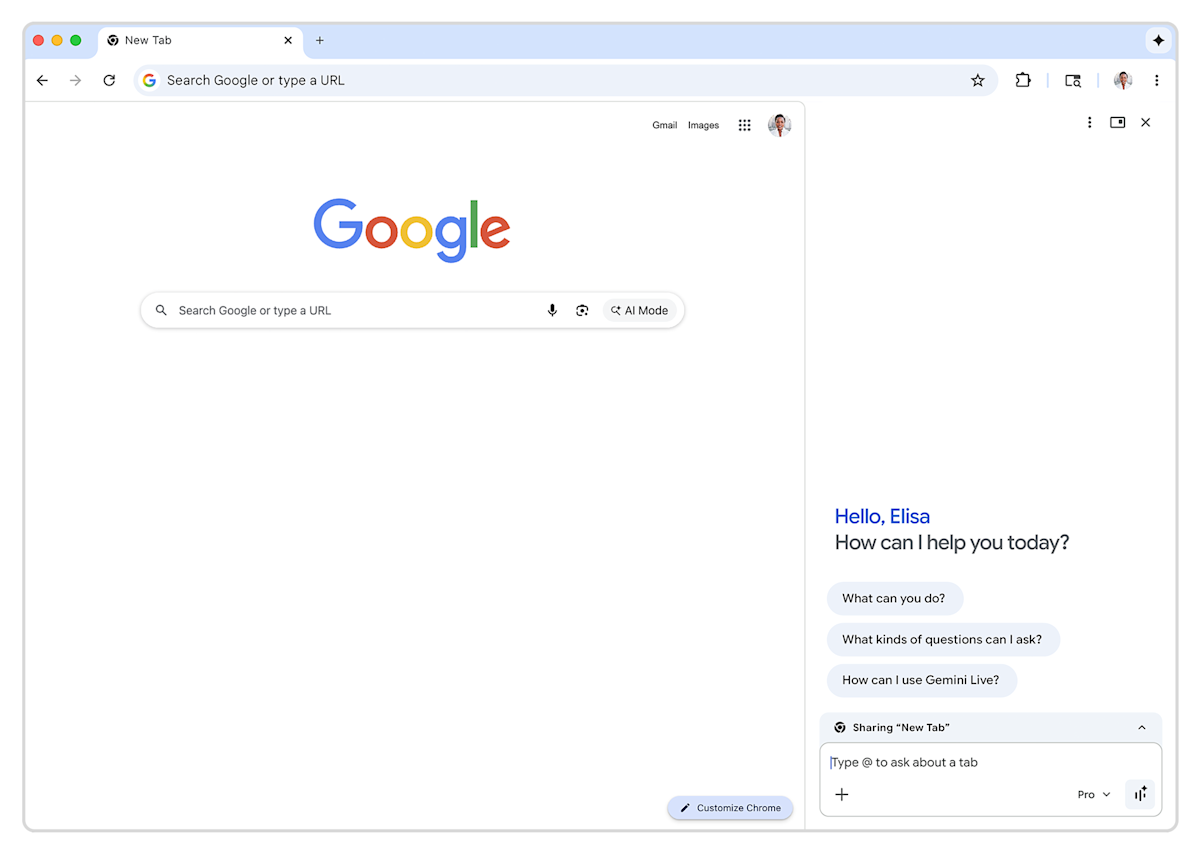
Google announced Monday that it’s making its Gemini in Chrome feature available in seven new markets, including Australia, Indonesia, Japan, the Philippines, Singapore, South Korea, and Vietnam. The company is rolling this feature out to both desktop and iOS in all of these countries except Japan.
The company has been integrating AI and Gemini in more ways into Chrome since last year through a floating window.
Earlier this year, the company introduced a sidebar-based assistant that would help users answer questions across tabs, and also utilize the Personal Intelligence feature of Gemini, which lets users connect to services like Gmail and Google Photos, for personalized answers. Users can also schedule meetings with Calendar, check location details with Maps, and draft and send emails with Gmail through this feature in Chrome.
Users can also transform images on the web. using Nano Banana 2 in the sidebar.
With this launch, Gemini in Chrome is available in more countries. However, the company’s agentic feature, which can control your browser window to complete tasks on your behalf, is in testing and only available to users of AI Pro and AI Ultra paid plans in the U.S.
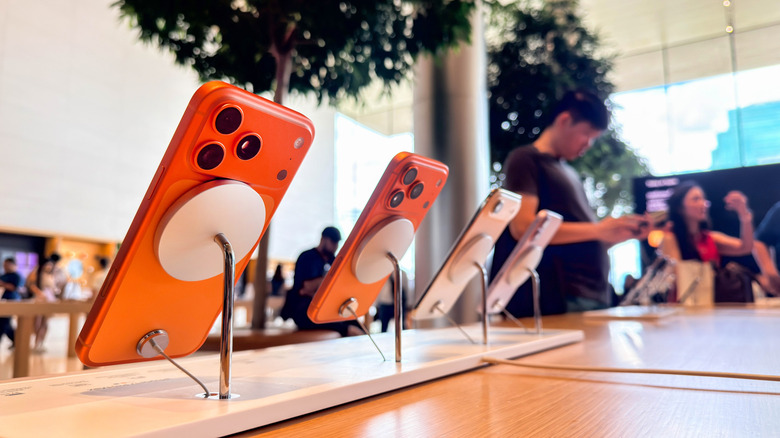
The MacBook Neo has done something Apple almost never does: it surprised the industry. When Asus co-CEO described Apple’s $599 laptop as a genuine “shock” to the Windows PC market, he wasn’t being dramatic. PC makers had spent years safely assuming Apple would never touch the sub-$700 segment. That assumption… Read Entire Article Source link
After debuting in the US, Gemini in Chrome is making its way to more markets. Starting today, Google is rolling out Chrome’s built-in chatbot to users in countries in East Asia and the Pacific, including Australia, Indonesia, Japan, the Philippines, Singapore, South Korea and Vietnam. The expansion comes after Google earlier this year made Gemini in Chrome available to people in Canada, India and New Zealand.
With the exception of Japan, where Google isn’t making the new suite available on iOS just yet, everyone else in the countries mentioned above can access Gemini in Chrome through Chrome’s desktop browser, and the app on their iPhone or iPad. To get started, just tap the “Ask Gemini” icon at the top right of the screen. It will open a new sidebar Google introduced at the start of the year where you can chat with Gemini across every open tab. From there, you can also access Google’s in-house image generator, Nano Banana 2. As you would expect, the suite offers integrations with Google’s other apps, allowing you, for instance, to add events to Calendar without leaving the interface.
If you don’t want to use Gemini, you can right click on the shortcut to unpin it from the top of the interface.
Amazon and Anthropic announced an expanded partnership Monday that includes up to $25 billion in new investment and more than $100 billion in cloud commitments over 10 years. (GeekWire File Photo / Todd Bishop)
Amazon is now running the same playbook with both of the world’s top AI labs.
Two months after investing $50 billion in OpenAI and striking a $100 billion cloud deal, Amazon announced a similar arrangement Monday with its original AI partner, Anthropic: up to $25 billion in new investment and a $100 billion-plus commitment to AWS over 10 years.
The deal also secures Anthropic up to 5 gigawatts of capacity on Amazon’s custom Trainium chips, a direct rebuttal to OpenAI’s claim last week that Anthropic made a “strategic misstep to not acquire enough compute” and was “operating on a meaningfully smaller curve.”
In a blog post announcing the expanded Amazon deal, Anthropic acknowledged that surging consumer demand has strained its infrastructure, impacting reliability during peak hours — a pressure the expanded AWS deal is designed to relieve.
For perspective, a large nuclear power plant produces about 1 gigawatt, so Anthropic is securing the computing equivalent of up to five nuclear plants’ worth of capacity.
Advertisement
As part of the deal, the full Claude Platform will be available directly within AWS, letting customers access Anthropic’s tools through their existing AWS account, billing, and security controls — a deeper integration than offering Claude through Amazon’s Bedrock marketplace.
Amazon is investing $5 billion in Anthropic now, with up to $20 billion more tied to commercial milestones, on top of the $8 billion it previously invested, dating back to 2023, when Amazon first backed Anthropic.
The initial investment is at Anthropic’s latest valuation of $380 billion.
It comes as both Anthropic and OpenAI prepare for potential IPOs, with each company seeking to demonstrate the long-term capacity commitments that public market investors will expect.
Advertisement
“Our users tell us Claude is increasingly essential to how they work, and we need to build the infrastructure to keep pace with rapidly growing demand,” said Anthropic CEO Dario Amodei in a statement, noting that more than 100,000 customers are building on Claude through AWS.
Microsoft has also invested in both labs — putting more than $13 billion into OpenAI and up to $5 billion into Anthropic. The two Seattle-area tech giants are now placing parallel bets on the same two AI companies, each jockeying for position as AI reshapes the cloud market.
“Anthropic’s commitment to run its large language models on AWS Trainium for the next decade reflects the progress we’ve made together on custom silicon,” said Amazon CEO Andy Jassy in a statement.
Anthropic’s cloud commitment spans Amazon’s Trainium2 through Trainium4, with the option to purchase future generations of Amazon’s custom silicon as they become available. The companies said nearly 1 gigawatt of Trainium2 and Trainium3 capacity will come online by the end of this year, and that Anthropic currently uses more than 1 million Trainium2 chips to train and serve Claude.
Mastodon seems to be recovering after a Distributed Denial of Service (DDoS) attack that took down its primary mastodon.social instance. As TechCrunch notes, the platform began reporting issues early Monday morning as much of the Mastodon-operated server became inaccessible.
It’s not clear who might be behind the attack, but Mastodon’s head of communications Andy Piper described it as a “major” incident. A couple hours later, Mastodon shared on a status page that it had implemented countermeasures and that users should be able to access mastodon.social once again. Piper said that “some ongoing instability is a possibility” as the site recovered. It’s unclear if any other instances of the service were also targeted; mastodon.social is run directly by the nonprofit and is the largest server on the federated platform.
Mastodon is the second decentralized platform to be targeted with a DDoS in recent days. Last week, Bluesky also dealt with a significant DDoS incident that took parts of the service offline for several hours. The company posted what it said was its final update Monday morning, saying that its service had “remained stable” and that there was “no evidence of unauthorized access to private user data.” A few hours later, however, it seemed Bluesky was once again experiencing some issues, though the cause was unclear. Its official status page was down, and a post from its server status account indicated that there were “elevated errors and timeouts on some Bluesky-hosted services.” Bluesky said it was investigating.
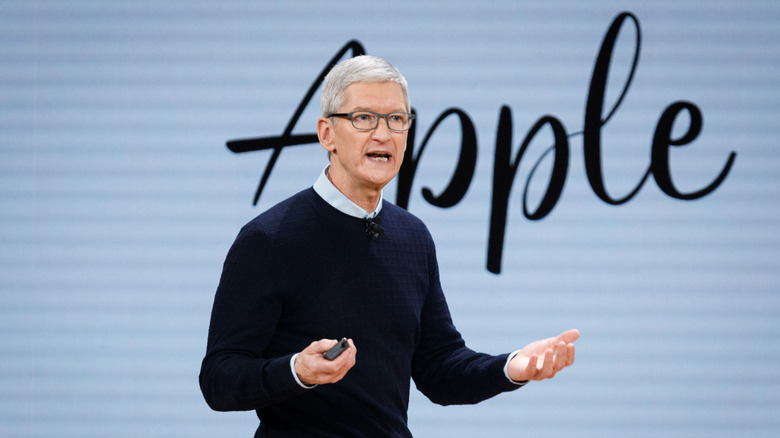
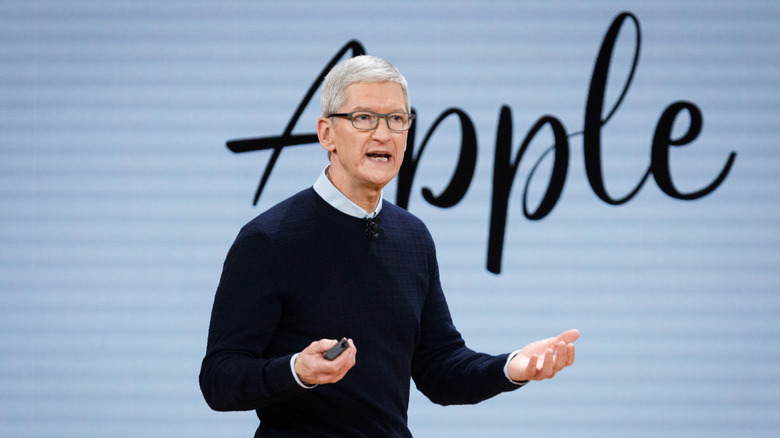
Apple’s Tim Cook is stepping down as chief executive officer, and will be replaced by John Ternus, currently senior vice president of Hardware Engineering, the Cupertino company announced today. Cook will step into a new role as executive chairman of Apple’s board of directors on September 1st, 2026. It’ll bring to an end fifteen years of Cook as Apple CEO, a position he took after Steve Jobs’ resignation.
It proved to be a controversial — though lucrative — period. Apple’s massive growth, during similar boom periods across the technology industry, saw the iPhone-maker double revenue and profit.
Cook also became known for a less intense management style than Jobs, though the products Apple released while he has been at the helm have not been universally successful. Although the Apple Watch and AirPods have undoubtedly helped shape the company’s fortunes, other — more ambitious — projects like Apple Vision Pro are yet to pay off in the same way.
Advertisement
A hardware guy at the helm
i viewfinder/Shutterstock
Cook will be replaced in September by John Ternus, who has spent more than 25 years with Apple. Currently senior vice president of Hardware Engineering, Ternus will work with Cook over the summer before taking over full CEO responsibilities.
“As executive chairman,” Apple said today, “Cook will assist with certain aspects of the company, including engaging with policymakers around the world.” That policy involvement has proved divisive in recent years, not least as Apple and the rest of the tech industry has attempted to navigate the whims of the Trump Administration in the U.S.
Advertisement
In August 2025, Cook visited the White House to deliver a statue — made of 24 karat gold and the same Corning toughened glass that protects the iPhone and other Apple products — with the meeting taking place shortly after Trump threatened tariffs on imported electronics like microchips.
John Ternus, meanwhile, will be replaced by Johny Srouji, currently senior vice president of Hardware Technologies. Srouji is credited with helping Apple’s wildly successful push into developing its own silicon, chips that have come to power not only the iPhone and iPad, but Mac products such as the most recent MacBook Neo.
And when it comes to which is the very best, CNET’s pick for the best fiber internet service provider in the country is AT&T Fiber. That’s thanks to its consistency, high customer satisfaction ratings and fast symmetrical speeds. AT&T Fiber is a crowd-pleaser and consistently gets top marks in customer satisfaction surveys, likely due to its variety of plans, competitive pricing and customer-friendly service terms. There’s a lot to like — but only if you can get it at your address.
It’s important to note that fiber internet isn’t the most broadly available internet connection type. According to the latest Federal Communications Commission data, approximately 52% of the US population has access to a fiber connection. Still, CNET considers fiber the gold standard of home internet connections and a sure way to future-proof your home. Let’s take a closer look at what the top fiber ISPs in the country have to offer.
Best fiber internet providers
Speed range
300 – 5,000 Mbps
Price range
$55 – $250 per month
Advertisement
Our take – AT&T has the greatest availability of any fiber provider, extending service to more than 16 million potential customers across 22 states. Compared to other big-name providers, AT&T is among the cheapest when considering cost per Mbps and there are no hidden fees. However, if all you can get is AT&T’s fixed wireless plans, you’re better off looking into Frontier Fiber and Verizon Fios.
Or call to learn more:
(833) 579-0031
Speed range
300 – 5,000 Mbps
Advertisement
Price range
$55 – $250 per month
Speed range
500 – 5,000 Mbps
Advertisement
Price range
$50 – $155 per month
Our take – Frontier Communications recently expanded its fiber internet coverage to 19 states and then rolled out a new multi-gig service to the entire footprint simultaneously, becoming the first major ISP to do so on such a wide scale.
Or call to learn more:
(877) 870-0633
Advertisement
Speed range
500 – 5,000 Mbps
Price range
$50 – $155 per month
Advertisement
Speed range
300 – 2,000 Mbps
Price range
$50 – $120 per month
Advertisement
Our take – Verizon Fios is up there with AT&T Fiber and Frontier Fiber in terms of speed, pricing and service terms. The cheapest tier, which starts at just $50 a month, comes with download and upload speeds of up to 300Mbps. The next speed level — 500Mbps for $75 monthly — also carries decent value, but the gigabit service at $90 is priced the same or a touch higher than you’ll find with other fiber providers.
Or call to learn more:
(888) 461-3204
Speed range
300 – 2,000 Mbps
Advertisement
Price range
$50 – $120 per month
Speed range
200 – 8,000 Mbps
Advertisement
Price range
$45 – $165 per month
Our take – If you thought Verizon Fios’s price lock guarantee was great, Quantum Fiber offers a price-for-life guarantee for all plans. You can choose from two main plans: 500Mbps for $50 monthly or 940Mbps for $70 monthly. Select locations may have the choice of faster speeds, including the 3,000Mbps and 8,000Mbps tiers.
Or call to learn more:
(866) 671-3650
Advertisement
Speed range
200 – 8,000 Mbps
Price range
$45 – $165 per month
Advertisement
Speed range
1,000 – 8,000 Mbps
Price range
$70 – $150 per month
Advertisement
Our take – If you’re eyeing gig or multi-gig speeds, GFiber is the provider for you. Plans start at gig speed and only go up from there. With these starting speeds, the starting monthly rate of $70 is understandably higher than many internet providers.
Or call to learn more:
(855) 500-4211
Speed range
1,000 – 8,000 Mbps
Advertisement
Price range
$70 – $150 per month
Speed range
500 – 2,000 Mbps
Advertisement
Price range
$65 – $95 per month
Our take – T-Mobile has been dominating the 5G home internet market for the past few years. Now it’s offering fiber internet in more than 175 cities after its April 2025 acquisition of Lumos Fiber. When it comes to pricing, T-Mobile Fiber is almost in line with other fiber providers on our list: $65 a month for 500Mbps, $75 a month for 1-gig and $95 a month for the 2-gig plan.
Or call to learn more:
(877) 519-7610
Advertisement
Speed range
500 – 2,000 Mbps
Price range
$65 – $95 per month
Advertisement
Speed range
100 – 2,000 Mbps
Price range
$25 – $90 per month
Advertisement
Our take – Formely known as Windstream, Kinetic is one of our top rural internet providers, bringing high-speed connections to underserved places. Targeting North Carolina and Texas, Kinetic has announced plans to expand its fiber network from nearly 2 million homes to 3.5 million by 2029.
Or call to learn more:
(866) 671-3650
Speed range
100 – 2,000 Mbps
Advertisement
Price range
$25 – $90 per month
Speed range
100 – 50,000 Mbps
Advertisement
Price range
$20 – $900 per month
Our take – Ziply Fiber rolled out a ridiculously fast 50-gig plan across its entire Northwest footprint in Idaho, Montana, Oregon and Washington, making it the fastest internet provider nationwide.
Or call to learn more:
(866) 671-3650
Advertisement
Speed range
100 – 50,000 Mbps
Price range
$20 – $900 per month
Advertisement
Fiber internet honorable mentions
Brightspeed: A relatively new DSL and fiber internet provider, Brightspeed operates networks in many markets in the eastern half of the US that were previously owned by Lumen Technologies (CenturyLink, Quantum Fiber). Fiber service starts at just $30 per month for speeds up to 200Mbps. Your equipment is also free with the fiber plans.
Metronet: As one of the largest independently owned fiber internet companies, Metronet has a smaller footprint than other fiber providers. But it still offers fast speeds for decent prices. Based in Evansville, Indiana, Metronet is available primarily to cities in the Midwest. Service starts at $30 monthly for 100Mbps. Select areas can see speeds as fast as 2,000 or 5,000Mbps for $80 and $110 per month, respectively. Last year, T-Mobile announced plans to purchase Metronet; the FCC has yet to approve the sale.
Optimum: Optimum is primarily a cable internet provider, but it has a growing fiber network, particularly in the Greater NYC area. Approximately 2.8 million households are available for fiber service there. Optimum offers six plans for houses eligible for fiber, 300-,500-,1-gig, 2-gig, 5-gig, and 8-gig plans, which range in cost from $40 to $280 a month. It’s important to note that only select households may have access to the multi-gig plans.
What is fiber internet?
Fiber-optic internet sends data as light signals via thin glass wires either straight to the home, known as FTTH, or to an access point just outside the home, commonly referred to as fiber to the node or fiber to the curb. The technology allows for higher bandwidth and faster data transmission than any other connection type and has the unique capability of delivering symmetrical or near-symmetrical download and upload speeds.
Andrew Brookes/Getty Images
Fiber internet uses a different type of modem than DSL or the DOCSIS equipment used for cable. In fact, fiber technically doesn’t use a modem at all but an optical network terminal that performs the same function. To learn more, read our fiber internet explainer.
Advertisement
How many members of your household use the internet?
Advertisement
Why choose fiber internet?
Your internet speeds, reliability and overall experience don’t depend solely on your internet provider. The technology your ISP uses to run service to your home makes a big difference in what speeds you get. Here’s why fiber internet stands out as the leading connection type:
Speed, upload and download. Fiber internet is the fastest internet connection type with speeds up to 1,000Mbps and higher available from nearly every fiber ISP. The technology also has the added benefit of delivering symmetrical (or nearly symmetrical) upload speeds. Upload speeds are more important than you think, so fast speeds are nice to have when gaming online, uploading posts to social media, or taking a video call.
Reliability. Many fiber ISPs (AT&T Fiber, Frontier Fiber, Quantum Fiber, Verizon Fios included) claim over 99% reliability. A fiber-to-the-home connection also ensures speed consistency and reliability during peak usage times.
Value. Fiber internet providers have some of the highest-priced plans, but the slower, cheaper plans are often comparable to service from cable or 5G providers. Considering cost per Mbps and the added advantages of a fiber-optic connection, fiber plans often present the best overall value.
How you can shop for fiber internet like a pro
Fiber internet is the best type of service for most homes, but there’s more to choosing a provider and plan than the connection type. Here are some tips to keep in mind when shopping for fiber internet service.
Availability. Fiber internet is not available in nearly as many homes as cable, DSL, satellite or even 5G internet. Only around 48% of US households are wired for fiber-optic internet. In most cities, availability can vary from one neighborhood to the next and is even harder to come by in suburban and rural areas.
Speeds. Fiber internet has the fastest upload and download speed potential of any type of internet. Many of the top providers offer speed tiers up to 2,000Mbps (2Gbps), 5Gbps and higher. While the blazing-fast speeds are tempting, they’re likely to be faster than your home needs. Check out our guide to finding the right internet speed for help selecting a fiber plan that best meets your needs.
Price. If you’re looking for cheap internet, fiber may not be your best option. It’s true that fiber internet plans are often the best value, but you may find cheaper options from cable or 5G providers.
Advertisement
A few fiber providers offer plans with starting prices as low as $30 per month, but you’re more likely to pay at least $50 per month for fiber internet. Cable internet providers including Cox, Mediacom, Xfinity and others have lower-priced plans in many areas. If you are a T-Mobile Magenta Max or Verizon wireless customer, you could get 5G home internet for the discounted price of $25 to $35 per month.
Bundles.Should you bundle your internet service? Few fiber providers offer a TV service, meaning you may not be able to bundle internet and TV together with the same provider if you choose a fiber internet service. In the days of streaming and cord-cutting, that may not be a deal-breaker for you, but it’s something to keep in mind if you’re shopping for both services.
How we evaluate fiber internet providers
Testing an internet provider the same way CNET tests other products and services is, at best, impractical. Instead, we rely on extensive research of each provider to develop our reviews and recommendations.
When comparing fiber internet providers, availability, speeds and overall value are at the center of our evaluations. We also examine added fees, data caps, contract requirements, customer satisfaction reports and other factors that could affect your quality of service or customer experience.
Advertisement
We refer to the Federal Communications Commission at FCC.gov for availability data and the type of network a provider uses. We then research a provider’s speeds, pricing and service terms through various channels, such as the provider’s website and our historical data. When possible, we contact the provider directly to confirm pricing and speed details.
Finally, to develop a more well-rounded perspective of the provider, we consider customer satisfaction reports from the American Customer Satisfaction Index and J.D. Power, as well as customer reviews and complaints from sources such as the Better Business Bureau, Downdetector.com and even Reddit. (Downdetector is owned by the same parent company as CNET, Ziff Davis.)
Before writing our reviews and compiling best lists, we research anything and everything the typical shopper would want to know prior to signing up for home internet service. Read our piece on how we review internet providers to learn more about our review process.
Best fiber internet providers recap
If fiber internet service is available in your area, it’s probably worth getting, especially if any of the providers listed above is an option. AT&T is easiest to recommend thanks to its high availability, low costs and favorable service terms, but Verizon Fios is a close second with low pricing, high customer satisfaction and lots of perks for signing up. GFiber, Frontier Fiber, Kinetic, Quantum Fiber and Ziply Fiber round out the list of ideal options, while providers like Metronet, Optimum and others are worth a look, too, if available in your area.
Advertisement
Ziply Fiber has the fastest speed tier of any major fiber internet provider, with max speeds of 50,000Mbps, or 50Gbps. Many other fiber providers top out at 5Gbps, 2Gbps or 1Gbps.
Fiber internet is not cheap. The faster the speeds, the more costly your monthly bill will likely be. Starting plans with fiber internet typically range from $30 to $50 a month, with gigabit service ranging from $60 to $90 a month. While there are cheaper plans available with cable or 5G internet service in select areas, fiber service is likely to come with better speed and connection quality for the price.
Not likely. While the potential of 5G home internet is promising, it doesn’t currently offer the speed or reliability that comes with a fiber-optic connection. That said, the wireless delivery method is rapidly expanding in availability and becoming a popular option among home internet users. Cellular internet and 5G are a viable alternative in areas where fiber connections are not yet available.
Advertisement
If fiber hasn’t reached your address yet, I’m sorry to say you’ll just have to be patient, as providers are actively expanding their fiber networks across the US. You’re more likely to see fiber come to your neighborhood if you live in a city or densely populated area, but providers like Windstream and Quantum Fiber show that fiber access in suburban and rural areas is also obtainable. Check out if fiber internet is available in your area.
When it comes to internet speeds, fiber internet has every other type of connection beat. However, there is a downside to fiber connections: They pose a logistical challenge to implement. This means availability is a common issue.
Unlike fixed wireless and satellite internet connections, fiber lines run directly to your home, so they aren’t usually susceptible to adverse weather. It means you can expect your network to keep chugging along at its maximum capacity unless there’s severe damage to the network infrastructure or a power outage in your neighborhood.






























































You must be logged in to post a comment Login