
Tech
Shade lands $14M to let creative teams search their video libraries in plain English


For creative and marketing teams, a simple cloud storage solution often falls short. These teams need to sift through large numbers of files to find what they’re looking for. The problem is getting worse: AI is accelerating content generation, meaning more media files than ever, which makes the task even trickier.
A New York-based startup called Shade is building a cloud storage platform designed for agencies, sports media teams, consumer brands, real estate companies, and podcasters to store and search their media files easily.
The company announced Wednesday that it closed $14 million in a funding round led by Khosla Ventures, Construct Capital, and Bling Capital in March. The nearly four-year-old startup has raised $20 million in total, with General Catalyst, SignalFire, and Contrary also on its cap table.
Shade was founded by CEO Brandon Fan and CTO Emerson Dove in 2024. The two had been friends since high school. They decided to build something together after growing frustrated with existing tools like Dropbox when it came to searching for files.
“We built it out of our frustration as creatives – [where we were contending with] stacks and stacks of hard drives and issues where we were using Dropbox drive frame and all of the tools under the sun…it was time to build one single source of truth,” Fan said.

He sees Shade as occupying an interesting niche as a creative file storage system around which companies can build workflows.
“As you make more content, you need to be thinking more about the workflows around the content. I like to say it’s similar to CRMs 20 years ago, when we were thinking about how to organize all the information that we had around our contacts and in all of our companies,” he said.
Techcrunch event
San Francisco, CA
|
October 13-15, 2026
Shade points to two distinguishing features. First, it offers natural language search powered by auto-tagging. The startup said that this search doesn’t just surface a particular video — it identifies the exact moment in the video where a scene matching the search query occurs. For instance, users can search for “a person holding a laptop in snow,” and the system will surface all matching clips with timestamps.

The tool also automatically transcribes videos for easier search. Users can search based on meaning, transcripts, and facial recognition for labeled individuals.
Second, Shade uses a “streamable” file system that lets you mount your cloud storage to your local filesystem and start working with a file almost immediately, without waiting for it to fully download first. Users can also pin files to access them even in low-bandwidth conditions. Typically, with a storage system like Google Drive or Dropbox, you have to wait for a large file to download before editing it. Shade’s streamable system lets you get started right away.
Beyond storage and search, Shade makes it easy for teams to collaborate — with the ability to leave feedback tied to a video at a specific timestamp. They can also attach files in comments to give direction. Shade lets teams create multiple links for the same assets with varying permissions, and teams can set access-based roles.
For final deliveries to clients, teams can create branded file collections with password protection and expiry dates.

For small teams, Shade offers a $20 per seat, per month plan that includes unlimited drives, unlimited AI indexing, and 500GB of active storage per seat. The plan supports up to 15 seats per workspace and up to 150 guests for collaboration.
Shade isn’t alone in this space. Startups like Poly and Memories.ai are also working on AI-powered file storage and search for large numbers of files.
Keith Rabois, managing director at Khosla Ventures, said that while AI has accelerated content creation, managing those creations remains messy.
“Most companies are layering search on top of existing storage. Shade rebuilt the stack from first principles, spanning streaming, indexing, and collaboration in one system. That architectural approach is harder, but it is why the product actually works, not just as a bolt-on feature,” Rabois said over email.
He added that while search is the starting point, Shade could become a key tool for automating sharing and versioning.
In the coming months, Shade plans to improve its search across different file types, including images, videos, and documents. The startup is also building a no-code platform — meaning one that requires no programming knowledge — to let creative teams create automated workflows based on files in the system.
“We’re essentially building the Lego blocks that allow you to [operate] any type of business, you have that ability to apply shade to your workflow, whether that is, today, just creative teams, [or] in the future, research and investment teams,” Fan said.
When you purchase through links in our articles, we may earn a small commission. This doesn’t affect our editorial independence.


Not sure which camera-focused flagship Android to go for? You’ve come to the right place.
We’ve compared the five-star Oppo Find X9 Ultra to the 4.5-star Xiaomi 17 Ultra so you can decide which camera-focused Android will likely suit you best.
Otherwise, our best camera phones and best Android phones should have you covered too.
Price and Availability
The Xiaomi 17 Ultra is available to buy now, with a starting price of £1299 for the 16+256GB model.
Design
- Oppo Find X9 Ultra is thicker and heavier than the Xiaomi 17 Ultra
- Xiaomi 17 Ultra comes with a wider variety of finishes
- Oppo Find X9 Ultra includes the Quick Button and Snap Key, while the Xiaomi 17 Ultra doesn’t have any additional buttons
Put the Oppo Find X9 Ultra and Xiaomi 17 Ultra side-by-side and the differences are immediate. At 9.1mm, the Find X9 Ultra is thicker compared to the 8.3mm Xiaomi 17 Ultra. The latter is lighter too, at 223g compared to 236g.
Flip the handsets onto their fronts and you’ll notice a difference between their respective camera bumps too. The X9 Ultra has a hexagonal shape inside the centrally-placed circular module, while the 17 Ultra just sports a large circular hob.
Oppo Find X9 Ultra
Xiaomi 17 Ultra
Unlike the Find X9 Ultra, the 17 Ultra doesn’t include any additional buttons other than the volume and power controls. Instead, the Find X9 Ultra is equipped with a Quick Button for accessing the camera and the customisable shortcut Snap Key.

The Find X9 Ultra is available in two finishes. There’s the Canyon Orange that’s less vibrant than the iPhone 17 Pro’s own, and has a traditional glass-and-metal smartphone feel, alongside Tundra Umber which has a metal-and-vegan-leather finish instead.
Finally, the 17 Ultra is available in a variety of finishes: Black, White or Green, with the latter sporting a flecked finish. Alternatively you can opt for the Leica edition which comes in either black or white and has a vegan leather rear panel too.
Choosing a winner here is difficult, as they both are striking handsets that feel comfortable in hand. However, as it’s lighter and thinner, we’ll give the win here to the Xiaomi 17 Ultra.
Winner: Xiaomi 17 Ultra
Screen
- Xiaomi 17 Ultra has a larger display at 6.9-inches
- Oppo Find X9 Ultra has a slightly higher peak brightness
- Oppo Find X9 Ultra has the option to boost the 120Hz refresh rate up to 144Hz when gaming, while the Xiaomi 17 Ultra maxed out at 120Hz
We should note that we were impressed with both the Oppo Find X9 Ultra and Xiaomi 17 Ultra’s respective displays. The former is slightly smaller, at 6.8-inches, and sports the same QHD+ resolution and LTPO-enabled 120Hz refresh rate as the cheaper Oppo Find X9 Pro. Speaking of which, the Find X9 Ultra has the option to boost up to 144Hz when gaming too.
Oppo Find X9 Ultra
Xiaomi 17 Ultra
While the Xiaomi 17 Ultra only reaches a 120Hz refresh rate, it still offers a high peak brightness of 3500 nits and, unlike its predecessor, now has a flat display.
Winner: Oppo Find X9 Ultra
Camera
- Oppo Find X9 Ultra has a total of five rear lenses
- Find X9 Ultra’s True Color camera keeps the white balance aligned with tones
- Xiaomi 17 Ultra struggles with macro shooting
While sometimes on smartphones, there’s a lens or two that you largely ignore, or use in hyper-niche circumstances, all of the Find X9 Ultra’s rear sensors are largely brilliant. Of course, the main 200MP is the star here as, despite being a slightly smaller sensor compared to the Xiaomi 17 Ultra’s own, is able to take in a huge amount of light. Essentially, images look rich and detailed, without looking overly-saturated (we’re looking at you, Samsung.)

This is supported by a 200MP 3x lens that we bet you’ll end up using more than you might expect, as the quality is seriously impressive. Then there’s a 50MP, 10x periscope which does an excellent job at holding onto textures from far away. Finally, the 50MP ultrawide manages to hold its own too, even when you head into difficult lighting conditions.
These sensors are flanked by the fifth true colour camera that keeps the white balance and tones aligned across the lot.
On the other hand, the Xiaomi 17 Ultra is fitted with three rear sensors, with a single 200MP telephoto lens that can optically zoom between 3.2x and 4.3x. This is impressive technology, however we were disappointed with its telemacro capabilities as a result, as the telephoto can’t quite focus as close as we’d like.

However, the star of the show is undoubtedly the 50MP main which produces fantastic results in all lighting conditions without ever seeming overexposed.
Winner: Oppo Find X9 Ultra
Performance
- Both run on Snapdragon 8 Elite Gen 5
- The Oppo Find X9 Pro scored slightly higher in our benchmark tests
- Both handsets can handle gaming and other intensive tasks brilliantly
Unsurprisingly as flagship Androids, both the Oppo Find X9 Pro and Xiaomi 17 Ultra run on Qualcomm’s top-end Snapdragon 8 Elite Gen 5 chip. With this in mind, you can guarantee everything from scrolling and even gaming to feel speedy and responsive too.

Having said that, it’s worth noting that the Oppo Find X9 Pro did best the Xiaomi 17 Ultra in our benchmark tests, as seen in the table below.
Even so, generally we think you’re seriously unlikely to notice the difference between the chips in real-world use.
Winner: Oppo Find X9 Pro
Software
- Oppo’s OxygenOS is a pleasure to use
- Xiaomi’s HyperOS needs a bit more time to get used to
- Both are littered with AI features
We really like Oppo’s OxygenOS software, as it’s customisable, polished and easy-to-use. There is, of course, a sprinkling of AI features including AI Mind Space for storing screenshots and the like for easy retrieval, and access to Google’s Gemini too.
In comparison, Xiaomi’s HyperOS needs more time to learn and get used to. It’s not overtly complicated by any means, but it’s not quite as polished as the likes of OxygenOS or iOS – despite HyperOS very clearly resembling the latter.
Find X9 Ultra
Xiaomi 17 Ultra
There’s also plenty of AI features too, including the ability to add AI-generated subtitles to anything you’re watching on your phone.
Winner: Oppo Find X9 Pro
Battery
- Oppo Find X9 Ultra has a larger battery than the Xiaomi 17 Ultra’s
- Oppo Find X9 Ultra is easily a two-day device
- Both support 50W wireless charging, but the Oppo Find X9 Ultra supports faster 100W wired speeds
At 7050mAh, the Oppo Find X9 Ultra may not have as big a battery as the Find X9 Pro, but it’s still easily a two-day device. We found on less demanding days we’d end days with up to a whopping 70% battery left in the tank – though of course this will vary depending on your own use.
When it does come time to recharge, the 100W wired and 50W wireless support should help you see a healthy boost quickly. Just remember you’ll need to buy compatible chargers separately.

Otherwise, the Xiaomi 17 Ultra has a 6000mAh cell which we found would comfortably see us through one day without worry. However, we’d usually end the day with around 30% which means it’s not quite a two-day device.
While it also supports 50W wireless charging speeds, it’s slightly slower than the Find X9 Ultra’s wired speeds at 100W.
Winner: Oppo Find X9 Ultra
Verdict
With Snapdragon 8 Elite Gen 5 under its belt, a brilliant camera set-up and a seriously mighty battery, there’s so much to love about the Oppo Find X9 Ultra. If you want one of the best camera phones but don’t want to compromise on more general smartphone uses, then the Oppo Find X9 Ultra is a brilliant choice.
Having said that, the Xiaomi 17 Ultra is still a solid alternative. However, it lets itself down with macro photography, while its HyperOS software just isn’t as polished as Oppo’s alternative.
Once upon a time in Europe, television remote controls had a magic teletext button. Years before the internet stole into homes, pressing that button brought up teletext digital information services with hundreds of constantly updated pages. Living in Ireland in the 1980s and ’90s, my family accessed the national teletext service—Aertel—multiple times a day for weather and news bulletins, as well as things like TV program guides and updates on airport flight arrivals.
It was an elegant system: fast, low bandwidth, unaffected by user load, and delivering readable text even on analog television screens. So when I recently saw it was the 40th anniversary of Aertel’s test transmissions, it reactivated a thought that had been rolling around in my head for years. Could I make a ham-radio version of teletext?
What is Teletext?
First developed in the United Kingdom and rolled out to the public by the BBC under the name Ceefax, teletext exploited a quirk of analog television signals. These signals transmitted video frames as lines of luminosity and color, plus some additional blank lines that weren’t displayed. Teletext piggybacked a digital signal onto these spares, transmitting a carousel of pages over time. Using their remotes, viewers typed in the three-digit code of the page they wanted. Generally within a few seconds, the carousel would cycle around and display the desired page.
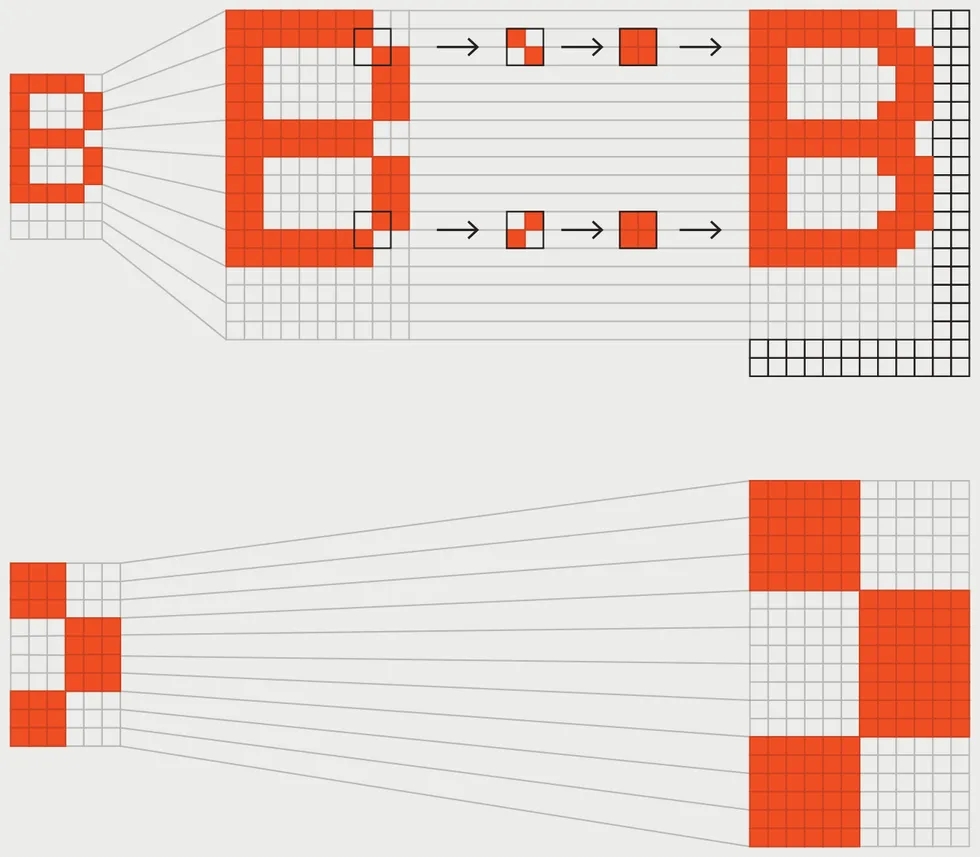
 Teletext created unusually legible text in the 8-bit era by enlarging alphanumeric characters and interpolating new pixels by looking for existing pixels touching diagonally, and adding whitespace between characters. Graphic characters were not interpolated, and featured blocky chunks known as sixels for their 2-by-3 arrangement. My modern recreation uses the open-source font Bedstead, which replicates the look of teletext, including the graphics characters. James Provost
Teletext is composed of characters that can be one of eight colors. Control codes in the character stream select colors and can also produce effects like flashing text and double-height characters. The text’s legibility was better than most computers could manage at the time, thanks to the SAA5050 character-generator chip at the heart of teletext. Although characters are internally stored on this chip in 6-by-10-pixel cells—fewer pixels than the typical 8-by-8-pixel cell used in 1980s home computers—the SAA5050 interpolates additional pixels for alphanumeric characters on the fly, making the effective resolution 10 by 18 pixels. The trade-off is very low-resolution graphics, comprising characters that use a 2-by-3 set of blocky pixels.
Teletext screens use a 40-by-24-character grid. This means that a kilobyte of memory can store a full page of multicolor text, half the memory required for a similar amount of text on, for example, the Commodore 64. The BBC Microcomputer took advantage of this by putting an SAA5050 on its motherboard, which could be accessed in one of the computer’s graphics modes. Despite the crude graphics, some educational games used this mode, most notably Granny’s Garden, which filled the same cultural niche among British schoolchildren that The Oregon Trail did for their U.S. counterparts.
By the 2010s, most teletext services had ceased broadcasting. But teletext is still remembered fondly by many, and enthusiasts are keeping it alive, recovering and archiving old content, running internet-based services with current newsfeeds, and developing systems that make it possible to create and display teletext with modern TVs.
Putting Teletext Back on the Air
I wanted to do something a little different. Inspired by how the BBC Micro co-opted teletext for its own purposes, I thought it might make a great radio protocol. In particular I thought it could be a digital counterpart to slow-scan television (SSTV).
SSTV is an analog method of transmitting pictures, typically including banners with ham-radio call signs and other messages. SSTV is fun, but, true to its name, it’s slow—the most popular protocols take a little under 2 minutes to send an image—and it can be tricky to get a complete picture with legible text. For that reason, SSTV images are often broadcast multiple times.
Teletext is still remembered fondly by many.
I decided to send the teletext using the AX.25 protocol, which encodes ones and zeros as audible tones. For VHF and UHF transmissions at a rate of 1,200 baud, it would take 11 seconds to send one teletext screen. Over HF bands, AX.25 data is normally sent at 300 baud, which would result in a still-acceptable 44 seconds per screen. When a teletext page is sent repeatedly, any missed or corrupted rows are filled in with new ones. So in a little over 2 minutes, I could send a screen three times over HF, and the receiver would automatically combine the data. I also wanted to build the system in Python for portability, with an editor for creating pages, an AX.25 encoder and decoder, and a monitor for displaying received images.
The reason why I hadn’t done this before was because it requires digesting the details of the AX.25 standard and teletext’s official spec, and then translating them into a suite of software, which I never seemed to have the time to do. So I tried an experiment within an experiment, and turned to vibe coding.
Despite the popularity of vibe coding with developers, I have reservations. Even if concerns about AI slop, the environment, and memory hoarding were not on the table, I would still worry about the reliance on centralized systems that vibe coding brings. The whole point of a DIY project is to, well, do it yourself. A DIY project lets you craft things for your own purposes, not just operate within someone else’s profit margins and policies.
Still, criticizing a technology from afar isn’t ideal, so I directed Anthropic’s Claude toward the AX.25 and teletext specs and told it what I wanted. After about 250,000 to 300,000 tokens and several nights of back and forth about bugs and features, I had the complete system running without writing a single line of code. Being honest with myself, I doubt this system—which I’m calling Spectel—would ever have come about without vibe coding.
But I didn’t learn anything new about how teletext works, and only a little bit more about AX.25. Updates are contingent on my paying Anthropic’s fees. So I remain deeply ambivalent about vibe coding. And one final test remains in any case: trying Spectel out on HF bands. Of course, that means I’ll need willing partners out in the ether. So if you’re a ham who’d like to help out, let me know in the comments below!
From Your Site Articles
Related Articles Around the Web


The shift is tied closely to Google’s internal deployment of its Gemini models, which engineers are using to generate, refactor, and migrate code. The company has also pushed broader use of AI tools beyond engineering, tying their use in some cases to performance reviews.
Read Entire Article
Source link

.jpg)
Digital technology now underpins almost every aspect of business operations. Whether it’s managing finances, storing customer data, running online services, or coordinating teams remotely, organisations are more connected—and more exposed—than ever before.
With this increased connectivity comes heightened cyber risk. Cyber insurance has become a vital tool for businesses looking to protect themselves against the financial and operational fallout of cyber incidents. It’s no longer just a precaution—it’s a key part of a resilient business strategy.
Why Businesses Need Cyber Insurance
Cybercriminals don’t just target large corporations. Small and medium-sized businesses are often seen as easier entry points due to fewer resources dedicated to cyber security. Any organisation that handles data or relies on digital systems can be at risk.
Cyber insurance is designed to support businesses when things go wrong. It provides a combination of financial protection and hands-on assistance, helping organisations respond quickly and effectively to minimise damage.
The Cyber Threat Landscape
Modern cyber threats are varied and constantly evolving. Some of the most common risks businesses face include:
- Ransomware that locks systems and demands payment to restore access
- Data breaches exposing confidential customer or company information
- Phishing attacks that trick employees into revealing sensitive details
- Third-party vulnerabilities within supply chains or service providers
- IT disruptions that interrupt normal operations
These incidents can lead to lost revenue, reputational harm, and legal complications—often all at once.
What Cyber Insurance Typically Covers
Cyber insurance policies are built to respond to a wide range of scenarios, offering support across key areas such as:
- Incident response – Immediate access to cyber specialists to investigate and contain the issue
- Business interruption – Compensation for income lost during downtime
- Data recovery – Costs associated with restoring systems and information
- Legal expenses – Cover for defence costs, claims, and regulatory action
- Reputation management – Help with communications and protecting brand image
- Cyber extortion – Support in handling ransomware demands
This comprehensive approach ensures businesses are not left to manage complex incidents alone.
The Value Beyond Financial Cover
Cyber insurance goes beyond reimbursing losses—it plays an active role in strengthening a business’s overall resilience.
Expert Guidance When It Matters Most
Policies often include access to experienced professionals who can step in immediately following an incident, helping to control the situation and reduce long-term impact.
Stronger Risk Awareness
Many insurers provide insights and recommendations to improve cyber security practices, helping businesses identify vulnerabilities before they are exploited.
Faster Recovery
With structured support and clear response plans, businesses can get back up and running more quickly after a disruption.
Meeting Regulatory Responsibilities
Data protection is a legal requirement for many organisations, particularly under frameworks such as the General Data Protection Regulation. A cyber incident involving personal data can trigger investigations, fines, and mandatory reporting obligations.
Cyber insurance can help manage these responsibilities by covering associated costs and providing access to legal and compliance expertise.
Insurance For Cyber Risk
Cyber risk is an unavoidable part of doing business in a digital world. While preventative measures are essential, they can’t eliminate risk entirely.
Cyber insurance policies offer a practical safety net—helping businesses handle the unexpected, limit disruption, and recover with confidence. When combined with strong cyber security practices, it forms a powerful defence against the growing threat of cybercrime.
The world’s largest sovereign wealth fund lost NOK636 billion ($68 billion) in investment returns in the first quarter, driven by the equity slide among large US technology companies. The S&P 500 posted its deepest quarterly decline since 2022. The fund marginally outperformed its benchmark.
Norges Bank Investment Management (NBIM), which manages Norway’s Government Pension Fund Global, the world’s largest sovereign wealth fund at approximately $2.2 trillion, reported a negative return of 1.9% for the first quarter of 2026 on Thursday, its first quarterly loss in four quarters.
The fund lost NOK636 billion (approximately $68 billion) in investment returns during the January–March period. It beat its benchmark index by 0.01 percentage point.
The total reported decline in fund value was NOK1.27 trillion ($137 billion), a larger figure that includes the effect of currency movements: as the Norwegian krone strengthened against major currencies during the quarter, the value of the fund’s predominantly foreign-currency holdings declined further in krone terms when translated back.
“The result reflects a quarter with challenging market conditions,” deputy CEO Trond Grande said in a statement. “We saw limited impact on fixed income and real estate, but it was the decline in equities, especially among large US technology companies, that determined the outcome.”

The 💜 of EU tech
The latest rumblings from the EU tech scene, a story from our wise ol’ founder Boris, and some questionable AI art. It’s free, every week, in your inbox. Sign up now!
The fund holds approximately half its assets in US markets and has major positions in technology companies including Apple, Microsoft, Alphabet, Amazon, Nvidia, Meta, and Tesla.
US tech megacaps sold off sharply during Q1 2026, leaving the S&P 500 with its deepest quarterly decline since 2022, a move driven primarily by the geopolitical shock of the Iran war.
The US and Israel launched coordinated strikes against Iran in late February 2026, triggering a sustained market selloff that hit high-multiple growth stocks hardest.
Technology companies, which trade at elevated price-to-earnings multiples and are sensitive to risk-off sentiment, rising rates, and uncertainty about the economic outlook — bore the brunt.
Although markets have since partially recovered, the Q1 close locked in losses for the period. The Norwegian Ministry of Finance, in its 2026 white paper to the Storting, noted that the Iran war had pushed oil prices up while simultaneously pushing the value of the fund down, an unusual combination for Norway, which is both a major oil producer and a major equity investor.
Norway’s oil revenues have historically supported the fund’s growth, but the fund is now so large that its performance is more sensitive to global equity markets than to the oil price.
The quarter marks the second time in consecutive years that large US technology companies have been the primary driver of a quarterly loss for the fund. In Q1 2025, the fund also posted a loss driven by the tech sector, that time triggered by the emergence of DeepSeek, which wiped $2.7 trillion from US tech megacaps in a matter of weeks.
The pattern underscores the structural concentration risk inherent in the fund’s equity portfolio: as the largest single shareholder in many of the world’s most valuable technology companies, NBIM’s quarterly performance is increasingly correlated with the performance of a small number of US tech stocks.
The fund itself holds approximately 1.5% of all listed equities globally, making diversification within equity markets a genuine constraint rather than a simple choice.
Fixed income and real estate provided some buffer. NBIM’s fixed income portfolio and unlisted real estate holdings saw limited negative impact, consistent with the Q1 pattern in which the selloff was equity-specific and did not trigger a broader risk-off across credit markets.
The fund ended Q1 with a value of approximately $2.1–2.2 trillion depending on the dollar/krone exchange rate applied; the dollar-denominated headline of “$2.2 trillion” reflects the fund’s size at some recent prior date rather than its Q1 closing value after the loss.

At AXPONA 2026, where $7,000 speakers often felt like the starting point, Kanto Audio took a different path. The company introduced a redesigned generation of powered and passive speakers led by the new TUK Grand flagship, along with updated YU6 and YU4 models that focus on real gains in acoustic performance and a more refined industrial design. In a show filled with statement systems, Kanto leaned into practicality with products aimed at listeners who want strong performance without stretching into four figure territory.

First introduced in 2014, the YU series helped establish Kanto Audio as a serious player in affordable, well-executed audio. The TUK followed in 2019 and pushed the company further into hi-fi territory with a more ambitious design and feature set.
One detail worth noting: TUK, YU6, and YU4 models are available in both powered and passive configurations, which are clearly outlined in the comparison charts included in this article.
Kanto TUK Grand Flagship Speaker
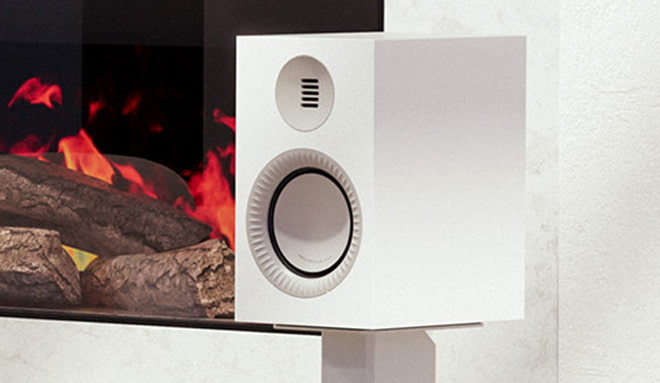
Kanto Audio positions the TUK Grand as its most ambitious speaker to date. It builds on the foundation of the original TUK with a larger cabinet, increased internal volume, and updated driver integration aimed at delivering greater scale and a stronger sense of presence.
The added cabinet volume and amplification headroom support a wider soundstage and deeper low-frequency extension, with up to 320 watts of total output. The AMT tweeter, a defining element of the TUK line, has been refined in both the TUK Grand and the updated TUK to maintain detail while improving overall balance.
The cabinet design has also been reworked with sharper lines and a more structured form that feels more deliberate than the previous generation without drifting into excess.
Connectivity is in line with expectations for a modern powered speaker system: Bluetooth 5.4, USB-C with support up to 24-bit/96kHz, optical input at the same resolution, RCA, and a dedicated subwoofer output.
Resdesigned Tuk
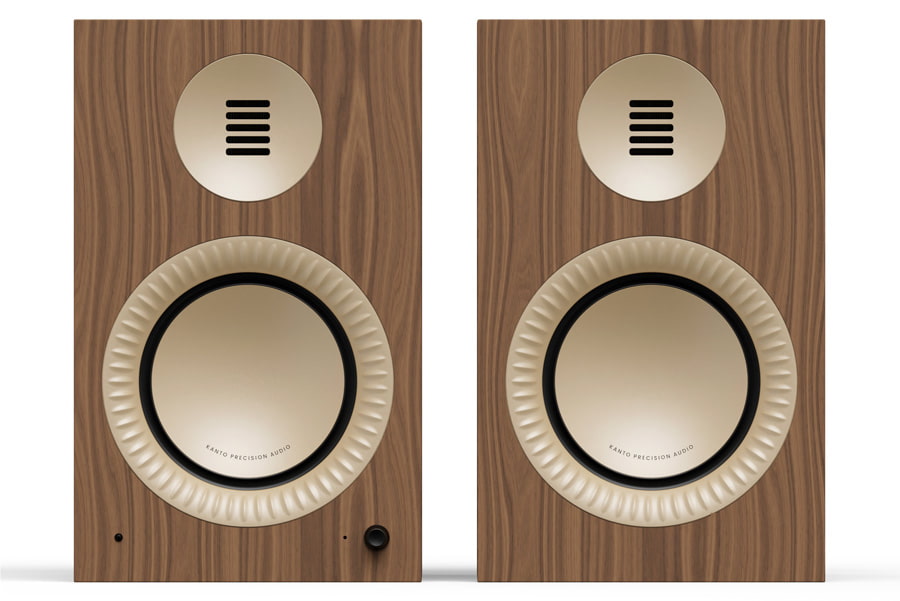
A step down from the TUK Grand, the updated TUK follows the same design direction without trying to reinvent the formula.
The cabinet moves away from the rounded edges of the original to a more squared profile. It’s a cleaner look, but it’s not just cosmetic. The sharper geometry helps reduce edge diffraction, which contributes to a more focused and stable soundstage.
Cabinet volume has also been increased, giving the drivers a more solid acoustic foundation. The revised AMT tweeter now incorporates updated waveguide geometry aimed at smoothing out the high-frequency response and maintaining more consistent performance across a wider listening area.
The proportions feel more deliberate this time. There’s a better sense of balance, and the speaker looks like it belongs in a modern space without trying too hard to make a statement.
Under the hood, the TUK remains a powered design with onboard DSP, an AMT tweeter, and a 5.25-inch aluminum woofer. The active crossover includes a high-pass filter that engages when a subwoofer is connected, reducing low-frequency load below 80Hz to improve clarity and control.
Connectivity covers the bases without overreaching. There’s a dedicated phono input, RCA, optical TOSLINK, USB DAC functionality, and a built-in headphone amplifier. Wireless support is handled via Bluetooth 4.2 with aptX HD and AAC.
Tuk Comparison
| Kanto Audio Model | Tuk Grand Powered | Tuk Grand Passive | Tuk Powered | Tuk Passive |
| Product Type | Powered Wireless Speaker Set | Passive Speaker Set | Powered Wireless Speaker Set | Passive Speaker Set |
| Price (Pair) | $999.99 | $799.99 | $899.99 | $699.99 |
| Tweeter | 1 x 28 mm × 35 mm Air Motion Transformer (AMT) | 1 x 28 mm × 35 mm Air Motion Transformer (AMT) | 1 x 28 mm × 35 mm Air Motion Transformer (AMT) | 1 x 28 mm × 35 mm Air Motion Transformer (AMT) |
| Woofer | 1 x 6″ aluminum concave cone with air-combing waveguide | 1 x 6″ aluminum concave cone with air-combing waveguide | 1 x 5.25″ aluminum concave cone with air-combing waveguide | 1 x 5.25″ aluminum concave cone with air-combing waveguide |
| Amplifier Type | Class-D with DSP, precision tuned using Klippel NFS | N/A | Class-D with DSP, precision-tuned using Klippel NFS | N/A |
| Power Output | 320 W peak power (160 W RMS) | N/A | 260 W peak power (130 W total RMS) | N/A |
| Frequency Response | 50 Hz – 20 kHz | 50 Hz – 20 kHz | 40 Hz – 20 kHz | 40 Hz – 20 kHz |
| High / Low-Pass Filter | 80 Hz (selectable) | N/A | 80 Hz (selectable) | N/A |
| Input | 2 × RCA line-level
1 × Optical (TOSLINK) (24-bit / 96 kHz) 1 × USB (24-bit / 96 kHz) 1 × Bluetooth 5.4 (aptX HD, aptX Adaptive, SBC, AAC) |
N/A | 2 × RCA line-level
1 × Optical (TOSLINK) (24-bit / 96 kHz) 1 × USB (24-bit / 96 kHz) 1 × Bluetooth 5.4 (aptX HD, aptX Adaptive, SBC, AAC) |
N/A |
| Output | 1 × Subwoofer Out | N/A | 1 × Subwoofer Out | N/A |
| Speaker Terminals | Active-to-passive knurled five-way binding post | Passive knurled five-way binding post | Active-to-passive knurled five-way binding post | Passive knurled five-way binding post |
| Bottom Mounting Hole | 1/4″-20 | 1/4″-20 | 1/4″-20 | 1/4″-20 |
| Input Voltage / Frequency | AC 100–240 V, 50/60 Hz | N/A | AC 100–240 V, 50/60 Hz | N/A |
| Auto Power Down | Yes (can be disabled) | N/A | Yes (can be disabled) | N/A |
| Auto Power Up | Yes (can be disabled) | N/A | Yes (can be disabled) | N/A |
| Standby Power Consumption | < 0.5 W | N/A | < 0.5 W | N/A |
| USB Charging | Not Indicated | N/A | USB charge 5 V 2 A | N/A |
| Remote | Included | N/A | Included | N/A |
| Speaker Grille | Included | Included | Included | Included |
| Dimensions (each speaker) | 7.3″ W × 10″ D × 12″ H | 7.3″ W × 10″ D × 12″ H | 8.6″ W × 11.6″ D × 13.8″ H | 8.6″ W × 11.6″ D × 13.8″ H |
| Finish | Black, White, Walnut, Burled Engineered Wood, and Butter. | Black, White, Walnut, Burled Engineered Wood, and Butter. | Black, White, Walnut, Burled Engineered Wood, and Butter. | Black, White, Walnut, Burled Engineered Wood, and Butter. |
Kanto YU6 and YU4 Series
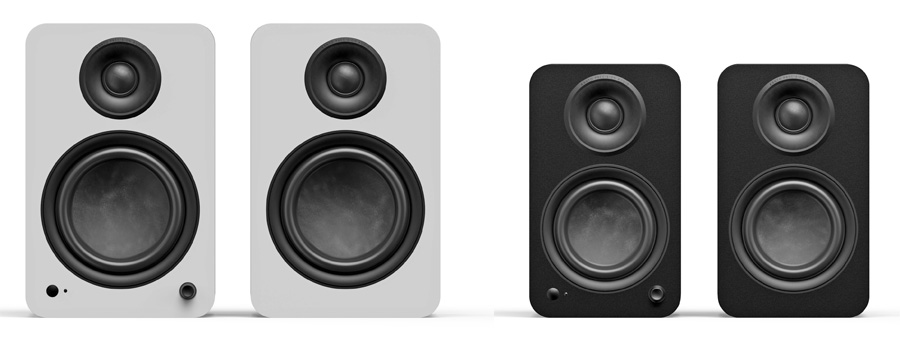
In addition to the TUK Grand and updated TUK, Kanto Audio has introduced next-generation YU6 and YU4 models that stay close to the company’s core playbook but clean up the execution.
Driver integration has been revised, supported by updated DSP tuning and electronics, which together aim to deliver a wider and more stable soundstage than the outgoing versions. These aren’t radical departures, but they are meaningful refinements where it counts.
The cabinets and front baffles have been fully reworked. The new design looks more controlled and modern, but the bigger story is improved driver alignment and dispersion. That translates into more consistent performance across the listening area rather than a narrow sweet spot.
Powered YU6 and YU4 models continue to focus on simplicity. Amplification and connectivity are built in, including Bluetooth 5.3, phono, USB-C, RCA, and a subwoofer output. They’re clearly aimed at real-world setups where space and flexibility matter, whether that’s a living room, desktop, or small studio.
Passive versions carry over the same cabinet and acoustic updates for those who prefer to bring their own amplification into the equation.
Across the lineup, the design changes are doing double duty. Subtle shaping of the front baffle and tweeter waveguides helps manage high-frequency dispersion, which keeps stereo imaging more stable even off-axis. The result is a presentation that holds together better in actual rooms, not just in the ideal listening position.
YU6: The YU6 incorporates a Class D amplifier rated at up to 200 watts peak power. Its 5.25-inch Kevlar woofers and 1-inch silk dome tweeters are designed to support detailed, controlled sound reproduction without overreaching.
YU4: The YU4 uses a 4-inch Kevlar woofer paired with a 1-inch silk dome tweeter, a straightforward configuration that prioritizes balance over scale. It includes a built-in phono preamp for direct turntable connection, and wireless support is handled via Bluetooth 4.0 with Qualcomm aptX.
Yu Comparison
| Kanto Audio Model | Yu6 Powered | Yu6 Passive | Yu4 Powered | Yu4 Passive |
| Product Type | Powered Wireless Speaker Set | Passive Speaker Set | Powered Wireless Speaker Set | Passive Speaker Set |
| Price (Pair) | $549.99 | $349.99 | $449.99 | $249.99 |
| Tweeter | 1 x Silk dome tweeter | 1 x Silk dome tweeter | 1 x Silk dome tweeter | 1 x Silk dome tweeter |
| Woofer | 1 x 5.25″ Abaca-reinforced paper | 1 x 5.25″ Abaca-reinforced paper | 1 x 4″ Abaca-reinforced paper | 1 x 4″ Abaca-reinforced paper |
| Amplifier Type | Class-D with DSP for precise tuning | N/A | Class-D with DSP for precise tuning | N/A |
| Power Output | 200 W peak power (130 W RMS) | N/A | 160 W peak power (110 W RMS) | N/A |
| Frequency Response | 55 Hz – 20 kHz (±3 dB) | 55 Hz – 20 kHz (±3 dB) | 60 Hz – 20 kHz (±3 dB) | 60 Hz – 20 kHz (±3 dB) |
| High / Low-Pass Filter | 80 Hz | N/A | 80 Hz | N/A |
| Input | 1 × RCA with selectable phono pre-amp | N/A | 1 × RCA with selectable phono pre-amp | N/A |
| Output | 1 × Subwoofer Out | N/A | 1 × Subwoofer Out | N/A |
| Speaker Terminals | 4-way knurled binding posts | 4-way knurled binding posts | 4-way knurled binding posts | 4-way knurled binding posts |
| Bottom Mounting Hole | 1/4″-20 | 1/4″-20 | 1/4″-20 | 1/4″-20 |
| Input Voltage / Frequency | 100–250 V, 50–60 Hz | N/A | 100–250 V, 50–60 Hz | N/A |
| Auto Power Down | Yes, selectable | N/A | Yes, selectable | N/A |
| Auto Power Up | Yes, selectable | N/A | Yes, selectable | N/A |
| Standby Power Consumption | < 0.5 W | N/A | < 0.5 W | N/A |
| USB Charging | Not Indicated | N/A | Not Indicated | N/A |
| Remote | Included | N/A | Included | N/A |
| Speaker Grille | Not Indicated | Not Indicated | Not Indicated | Not Indicated |
| Dimensions (each speaker) | 6.9″ W × 8.4″ D × 10.7″ H | 6.9″ W × 8.4″ D × 10.7″ H | 5.5″ W × 8.1″ D × 9.2″ H | 5.5″ W × 8.1″ D × 9.2″ H |
| Finish | White, Black, Walnut, Ice Blue, and Green. | White, Black, Walnut, Ice Blue, and Green. | White, Black, Walnut, Ice Blue, and Green. | White, Black, Walnut, Ice Blue, and Green. |
The Bottom Line
Kanto Audio is taking a practical, modular approach that makes sense in the real world. Offering the same core speakers in both powered and passive versions gives buyers flexibility that a lot of competitors still gloss over. You can keep it simple with an all-in-one powered setup or build around the passive versions with your own amplification. Same drivers, same cabinet design, different paths.
What’s missing is just as important. The wireless models do not support higher-end codecs like aptX Lossless or LDAC, and there’s no HDMI input, which limits integration with TVs compared to some rivals. On the plus side, the inclusion of a dedicated subwoofer output across the powered lineup is a smart move and adds real system scalability.
Competition is not light. Brands like KEF, ELAC, Cambridge Audio, Audioengine, and Fluance all offer strong alternatives in both powered and passive compact speaker categories, many with deeper feature sets or more established hi-fi credibility.
Who is this for? Listeners who want flexibility without complication. Desktop users, small room setups, and anyone building a secondary system will find a lot to like here. It’s also a good entry point for buyers who want better sound than typical lifestyle speakers without diving headfirst into separates.
Pricing & Availability
Tuk Grand and Tuk will launch with the following colors: Black, White, Walnut, Burled Engineered Wood, and Butter.
- Tuk Grand (Powered): $999.99
- Tuk (Passive): $699.99
- Tuk Grand (Passive): $799.99
- Tuk (Powered): $899.99
Yu4 and Yu6 will launch with the following colors: White, Black, Walnut, Ice Blue, and Green.
- Yu6 (Powered): $549.99
- Yu6 (Passive): $349.99
- Yu4 (Powered): $449.99
- Yu4 (Passive): $249.99
Both lines are expected to be available by summer 2026.
Related Reading:

“He was grinding. He was posting every day, playing every day, he was trying his hardest to get somewhere,” says a 21-year-old New York–based gamer who goes by the username Sacred WTF. “Bro, I would just wake up sometimes and it would just be multiple posts from him. He was just trying to pop off, just get one good video.”
By 2021, D4vd was 16 and already building a brand as a socially awkward outcast who spent nearly all of his time online. (It helped that he was homeschooled.) Sometimes, it paid off: When he started catering to the YouTube algorithm by adding popular songs to his Fortnite videos, they racked up hundreds of thousands of views and generated “a lot of money” in ad revenue, he’d later tell musician Benny Blanco in an interview. But those massive views also brought copyright strikes—warnings from YouTube, prompted by record labels, to remove the songs or risk getting booted from the platform. That’s when, according to the now mythic origin story that D4vd has relayed in the press, his mom had a life-altering suggestion: Why didn’t her son make his own damn music?
Using his iPhone, a pair of earbuds, and a mobile app called Bandlab, D4vd—he adopted the moniker around this time, in part for search engine optimization—huddled in his sister’s closet and recorded himself freestyling over a royalty-free piano beat he found on YouTube. He uploaded the track, called “Run Away,” to Soundcloud in December 2021 and tagged it with keywords that helped it go viral: #emo #chill #lowfi #slowedandreverb #blowthisup #foryoupage.
But it wasn’t until July 2022, when he self-released the brooding ballad “Romantic Homicide,” that the then-17-year-old really blew up. Two months later, D4vd signed a deal with Interscope Records’ Darkroom imprint. The comparisons to Billie Eilish, who also scored a deal with Darkroom as a teenager after uploading tracks to Soundcloud, were immediate. In magazine profiles, D4vd was heralded as a new kind of wunderkind: a sheltered gamer who accidentally became a pop star, seemingly overnight. GQ dubbed him a “mouthpiece for Gen-Z heartache.” NME declared he was a “multi-genre visionary.” And Billboard christened D4vd “one of alternative music’s most promising new artists.”
“When I found him, it was like, ‘Wow, he made this in his closet on headphones, on Bandlab. That’s so cool. I could do that, too,’” says Ykare, a popular TikTokker who used to dream about collaborating with D4vd. “That was his whole thing. That was his claim to fame. I think that’s really what brought in a lot of younger audiences.”
Before Ykare found his niche—dressing as a Teletubby and singing in the shower—he was inspired by D4vd’s humble beginnings. “People looked up to him,” Ykare says, because of D4vd’s explosive breakout from a “homemade, ‘I made this in my bedroom’ niche. That’s where D4vd lived, and he kind of was the most successful to do that.”
D4vd communicated with his super-young fans through his Discord. His server was created by a fan named Moji around the time he signed his record deal. Though not officially affiliated with Darkroom, the Discord had a clear benefit to the label: It was a way to promote releases, tour dates, and merchandise directly to superfans. Moderators, which were mostly other fans but also included at least one member of D4vd’s management team, Mogul Vision, and occasionally D4vd himself, shared links to new content and encouraged members to subscribe to D4vd’s email list for presale ticket codes. (Neither Mogul Vision, Darkroom, Interscope Geffen A&M Records, nor its parent company, Universal Music Group, responded to a request for comment.) The tactics also cemented D4vd’s perceived authenticity as a chronically online teenager without much media training.

An anonymous reader quotes a report from Reuters: The Gates Foundation opened an external review earlier this year into its engagement with the late financier and convicted sex offender Jeffrey Epstein, the philanthropic group said on Tuesday. The foundation has been mired in controversy due to Chairman Bill Gates’ association with Epstein. A release of emails in January by the U.S. Justice Department also showed communication between Epstein and the Gates Foundation’s staff.
“Early this year, Gates Foundation CEO Mark Suzman commissioned an external review to assess past foundation engagement with Epstein, and our current policies for vetting and developing new philanthropic partnerships,” the foundation said in a statement. “That review is underway, and we expect the board and management will receive an update this summer,” it added. The Wall Street Journal, which first reported the news earlier on Tuesday, said Suzman told staff in a memo, “this is a challenging time for our organization in many ways, but it also highlights the critical importance of taking the tough actions now.” The WSJ also reports that the Gates Foundation will eliminate up to 500 jobs, or about 20% of its staff, by 2030. It said the foundation has a 2026 budget of about $9 billion, but plans to cap operating expenses at $1.25 billion.
Further reading: The Bill Gates-Epstein Bombshell – and What Most People Get Wrong

Self-driving cars promised a future where you sit back, relax, and glide past the gridlock while the car handles everything. A new study from the University of Texas at Arlington has some bad news for that fantasy. According to research, widespread adoption of autonomous vehicles could actually make traffic significantly worse.
Professors Stephen Mattingly and Farah Naz conducted a meta-analysis on how self-driving cars could affect vehicle miles traveled (VMT). Their findings showed an average 5.95% increase in vehicle miles traveled. Non-shared autonomous vehicles pushed that figure even higher, to nearly 7%.
“The rise of AVs could make commuting more convenient, but it may also lead to more pick-up and drop-off activity, more empty vehicle trips, and new costs.”
The logic is simple. When your car can drop you off and drive itself home, or cruise around looking for rides, roads get busier. As Dr. Mattingly put it, “Where will commuters send their car when they don’t need it?” Will it be sent to a parking lot, sent to try to find other riders, or sent home?”
Are robot taxis already causing chaos on the streets?
To put it succinctly, the research shows that robotaxis are already causing an increase in vehicle miles traveled, and once their adoption becomes universal, it will put extreme pressure on existing infrastructure. But that’s in the future; if current news reports are anything to go by, the robotaxis are already causing havoc on roads.

For example, Waymo launched in Nashville on April 7, 2026, and within five days, people were posting viral videos of its robotaxis freezing at intersections and driving into restricted zones. In December 2025, a San Francisco power outage left dozens of Waymo vehicles frozen at intersections city-wide.
It’s not only a US-specific issue. Just a few weeks back, dozens of Baidu robotaxis simultaneously stopped on elevated highways in Wuhan, China, stranding passengers mid-traffic for over an hour.
These are just a few examples. Dozens of similar incidents have occurred over the past few months, where robotaxis have gotten stuck for various reasons and caused traffic jams.
This is happening while robotaxis are still largely in trial mode. Multiply this by a factor of a hundred or even a thousand, and it’s easy to imagine how much worse traffic could become in the future.
So what happens next?
Dr. Naz summed it up well: “AVs are not inherently good or bad. Their impacts will depend heavily on how they are deployed and governed.” Without smart policy ahead of mass adoption, the self-driving dream risks handing us a shinier, more expensive traffic jam.
If we are to pay that price, autonomous vehicles must clearly demonstrate that they are safer and more reliable than human drivers, which they have failed to do till now.


Hyundai is recalling 294,128 Hyundai and Genesis vehicles in the U.S. over a front seatbelt problem that could become dangerous in a crash, even if the belt appears to work normally in day-to-day driving. The recall is listed by the National Highway Traffic Safety Administration (NHTSA) as 26V218, and Hyundai’s internal campaign numbers are 298-032G. This is yet another major Hyundai seatbelt-related recall in less than a year, which involved over half a million Palisade SUVs. This time, the problem seems to be with the snap-on clip at the base of the front seatbelts, which prevents the seatbelts from being fully secured to the seat frame.
Hyundai estimates that only 1% of the recalled population may actually have the defect. However, the concerning part is that this is not necessarily a problem a driver would notice before a crash. The seatbelt may still buckle, retract, and feel normal, but if the lower anchor is not secured correctly, it may not restrain the driver or front passenger as intended during impact.
So far, the Korean automaker claims it is aware of six U.S. reports connected to the condition, with no known crashes, injuries, or fatalities. That last part is good news, but not assuring enough to ignore the recall; a seatbelt only has to fail once for the consequences to become severe.
Which Hyundai vehicles are affected and what Hyundai will do to fix them
The largest population affected by this recall involves Hyundai’s latest Santa Fe lineup. Hyundai says 158,001 gas-powered Santa Fe SUVs from the 2024-2026 model years are included, along with 95,268 Santa Fe Hybrid SUVs from 2024-2026 model years. The recall also includes 35,149 Hyundai Ioniq 6 sedans from 2023-2025 and 5,710 Genesis G90 sedans from 2023-2026.
Owners will need to bring their vehicles to a Hyundai dealer or a Genesis retailer for inspection, where technicians will inspect the front seat belt anchors and add a reinforcement insert on the snap-on lower anchor. If the anchor or seatbelt assembly cannot be repaired with the new insert, the dealers will replace the entire seatbelt assembly itself.
The work will be performed free of charge, even if the vehicle is no longer covered by Hyundai’s new vehicle limited warranty, and Hyundai says it will reimburse owners who already paid out of pocket for repairs related to this recall condition. The official filing does not include a “do not drive” or “park outside” warning, but owners should still check their VINs as soon as possible. To find out if your particular Hyundai is a part of this recall, look up your vehicle’s VIN against Hyundai’s official recall lookup page, or use NHTSA’s VIN search.

Abandoned burnt out car removed from Guisborough Forest

Airbus: Orders Explode, But Delivery Crisis Deepens

Volo Exploit Raises Security Concerns Across Sui DeFi Ecosystem

Manchester United reach agreement with Casemiro over contract clause amid transfer speculation

Steven Gerrard disagrees with Gary Neville over ‘shock’ Chelsea and Arsenal claim | Football

US brings back mandatory military draft registration


-

 Sports6 days ago
NWFL Suspends Two Players Over Post-Match Clash in Ado-Ekiti
-

 Fashion6 days ago
Weekend Open Thread: Theodora Dress
-

 Politics6 days ago
Palestine barred from entering Canada for FIFA Congress
-
Entertainment4 days ago
NBA Analyst Charles Barkley Chimes in on Ice Spice McDonald’s Fiasco
-

 Business4 days ago
Powerball Result April 18, 2026: No Jackpot Winner in Powerball Draw: $75 Million Rolls Over
-

 Tech4 days ago
Auto Enthusiast Scores Running Tesla Model 3 for Two Grand and Turns It Into Bare-Bones Go-Kart
-

 Politics4 days ago
Zack Polanski demands ‘council homes not luxury flats for foreign investors’
-

 Crypto World6 days ago
Russia Pushes Bill to Criminalize Unregistered Crypto Services
-

 Politics3 days ago
Gary Stevenson delivers timely reminder to register to vote as deadline TODAY
-

 Business1 day ago
Rolls-Royce Voted UK’s Most Iconic Trade Mark as IPO Register Hits 150
-

 Politics17 hours ago
Disabled people challenge government SEND proposals over segregation concerns
-

 Politics17 hours ago
Making troops accountable for war crimes threatens US alliance, ex-SAS colonel warns
-
 Business7 days ago
Creo Medical agree sale of its manufacturing operation
-

 Crypto World6 days ago
Russia Introduces Bill To Criminalize Unregistered Crypto Services
-

 Politics18 hours ago
Starmer handler McSweeney to be dragged from shadows by Foreign Affairs Committee
-

 Politics18 hours ago
Zack Polanski responds to home secretary’s taser threat
-
Politics19 hours ago
Wings Over Scotland | How To Get Away With Crimes
-
 Crypto World4 days ago
Kelp DAO rsETH Bridge Hack Drains $292M as DeFi Losses Top $600M in Two Weeks
-

 Politics16 hours ago
‘Iran is still a nuclear threat’
-

 Business7 days ago
Cheaper Doritos and Lays helps PepsiCo win back struggling snackers
You must be logged in to post a comment Login