We have entered the age of biohacking now. And no, I am not talking about the extreme cases like Bryan Johnson, who is spending millions of dollars on ambitious health and de-aging goals. The average audience for wearables is now asking for more. They are feeding the sensing data collected by smartwatches, bands, and rings to AI agents, and pulling in more insights about their bodies. I created one such dashboard for myself using Claude in less than 10 minutes to make sense of the data collected by my smart ring.
But there is only so much you can do with these wearables. And that’s owing to the limitations of the underlying light-based sensor. These sensors started with measuring heart rate, and in a decade, they made impressive advancements and can now measure ECG, blood pressure changes, temperature fluctuations, and blood oxygen saturation levels. They can’t, however, dig into the biochemical side of things, the kind of stuff that requires a hospital visit or sophisticated medical gear.
When it comes to health and wellness, light-based analysis of the human blood is not the holy grail. Far from it, actually. There are a bunch of other fluids that are a treasure trove of health data. Saliva, urine, tears, and cerebrospinal fluid are among them. But in the realm of wearables, sweat has long been seen as the next big avenue for biosensing, especially for mass-market wearables. The challenge? It’s an entirely different kind of engineering challenge.
But why sweat?
UC San Diego
We are dealing with fluids here, and to perform a chemical analysis, one needs nothing short of a mini lab. Microfluidics is the field that has been trying to create these mini labs. Caltech researchers recently made a skin patch that can measure cholesterol levels using a sweat sample. The folks over at Pennsylvania State University also developed a similar patch back in 2023. But cramming all that sensing kit into something as small as a ring that enables continuous monitoring (and that too, for multiple chemicals at the same time) has been a daydream, so far.
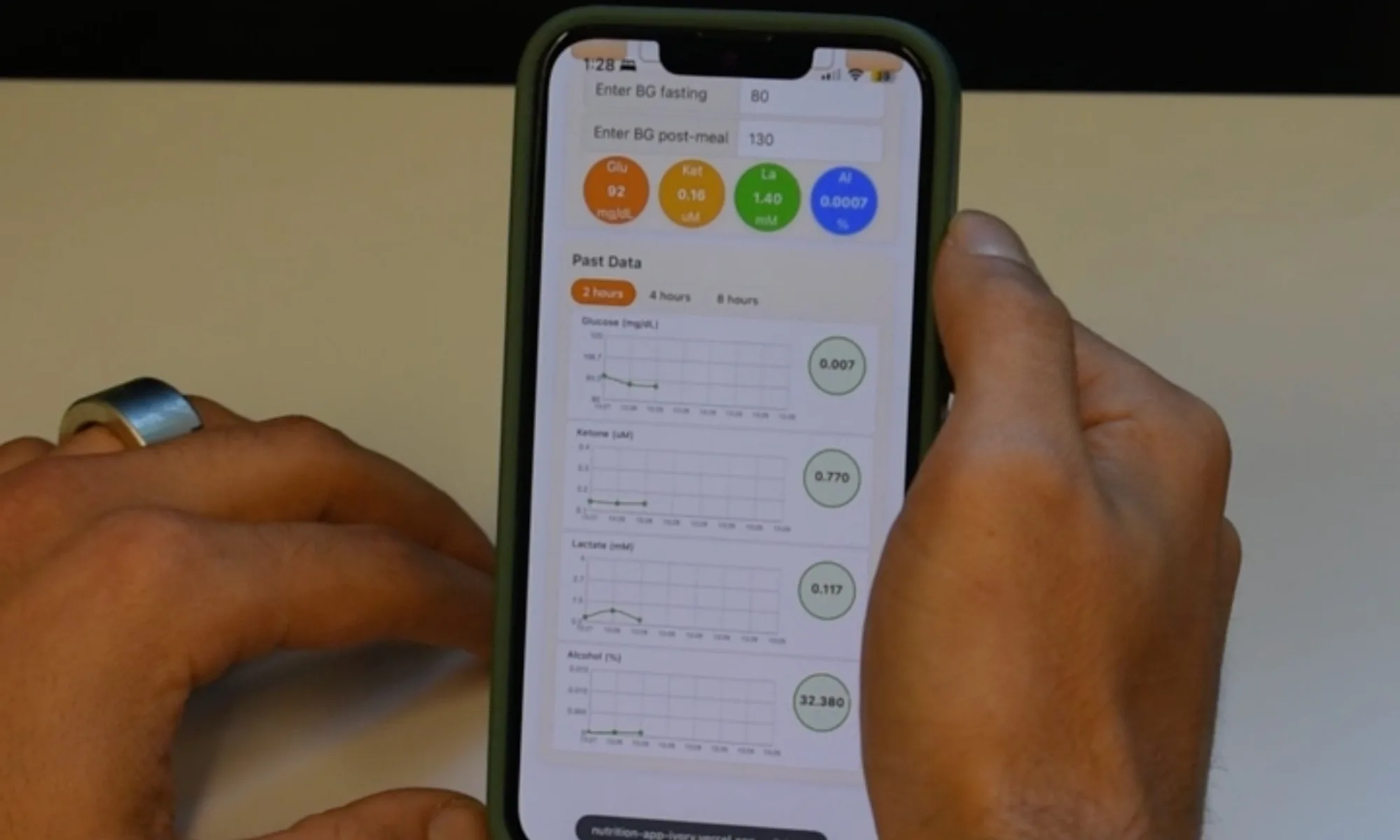
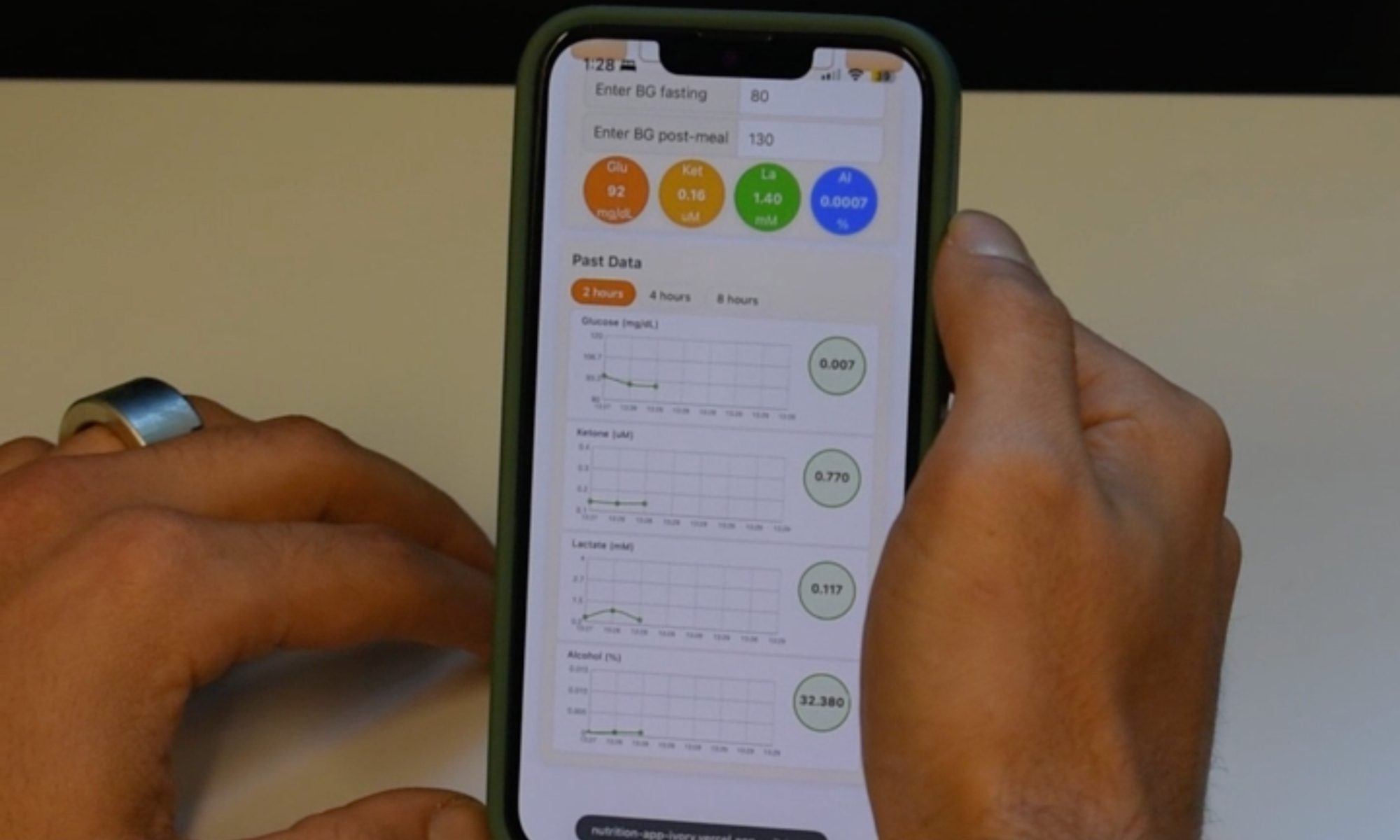
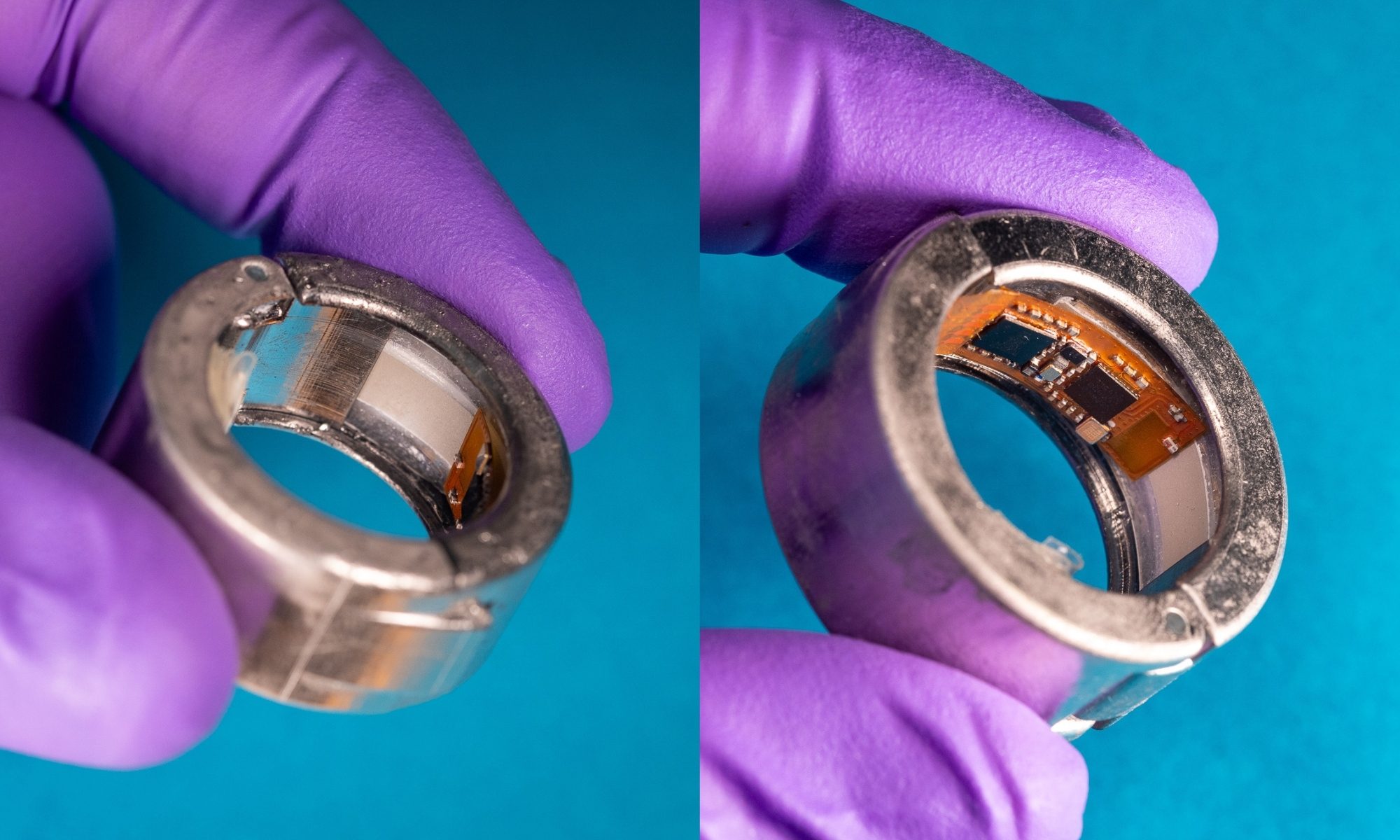
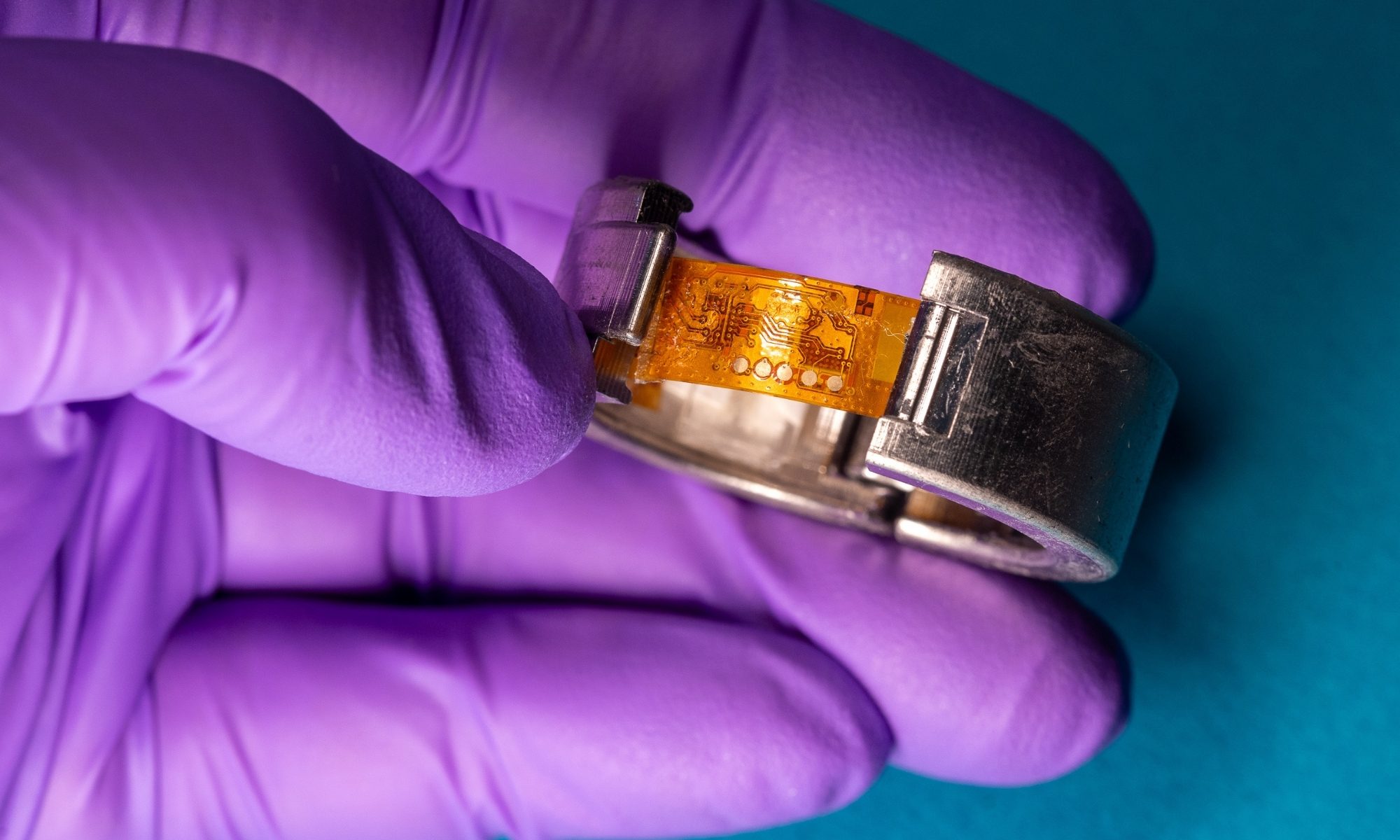
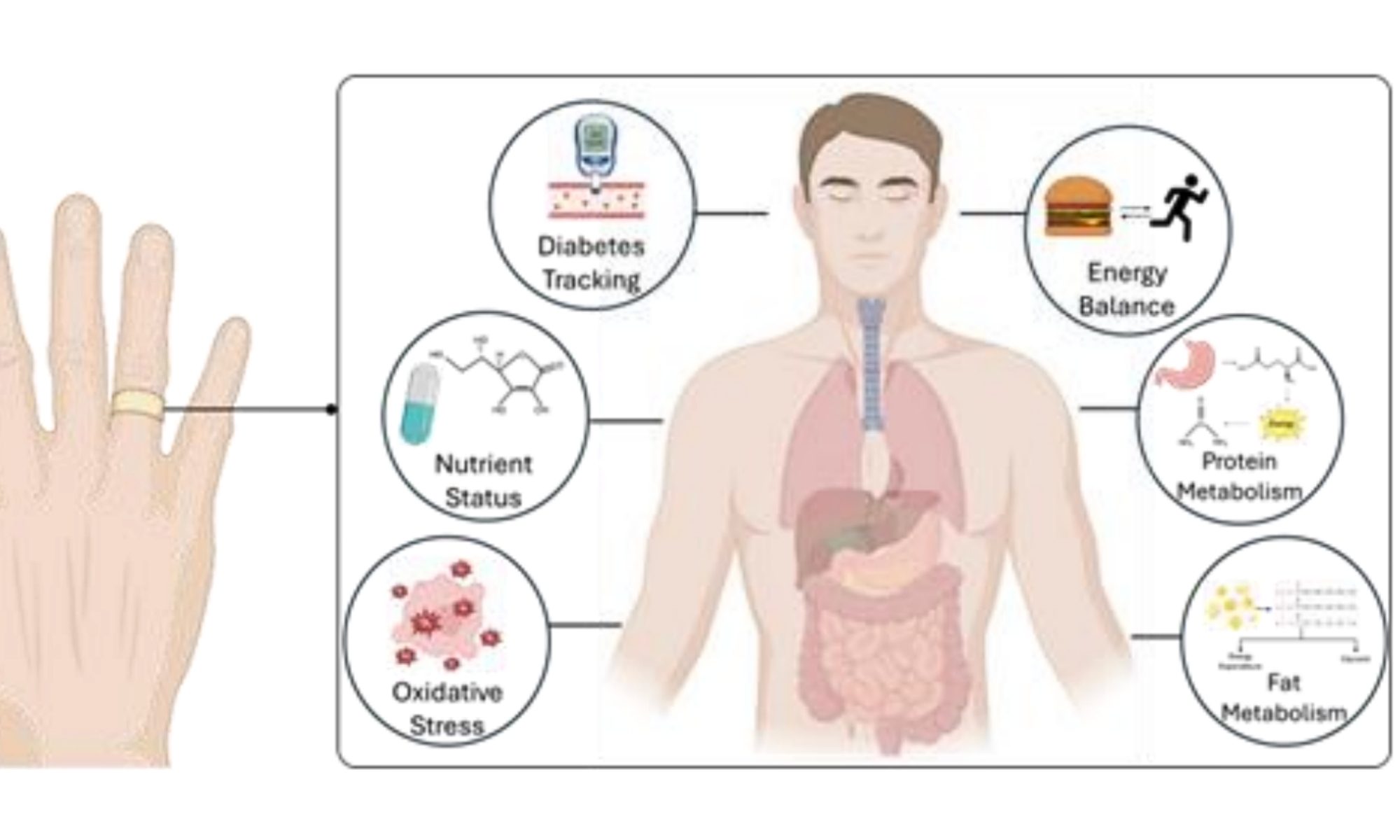
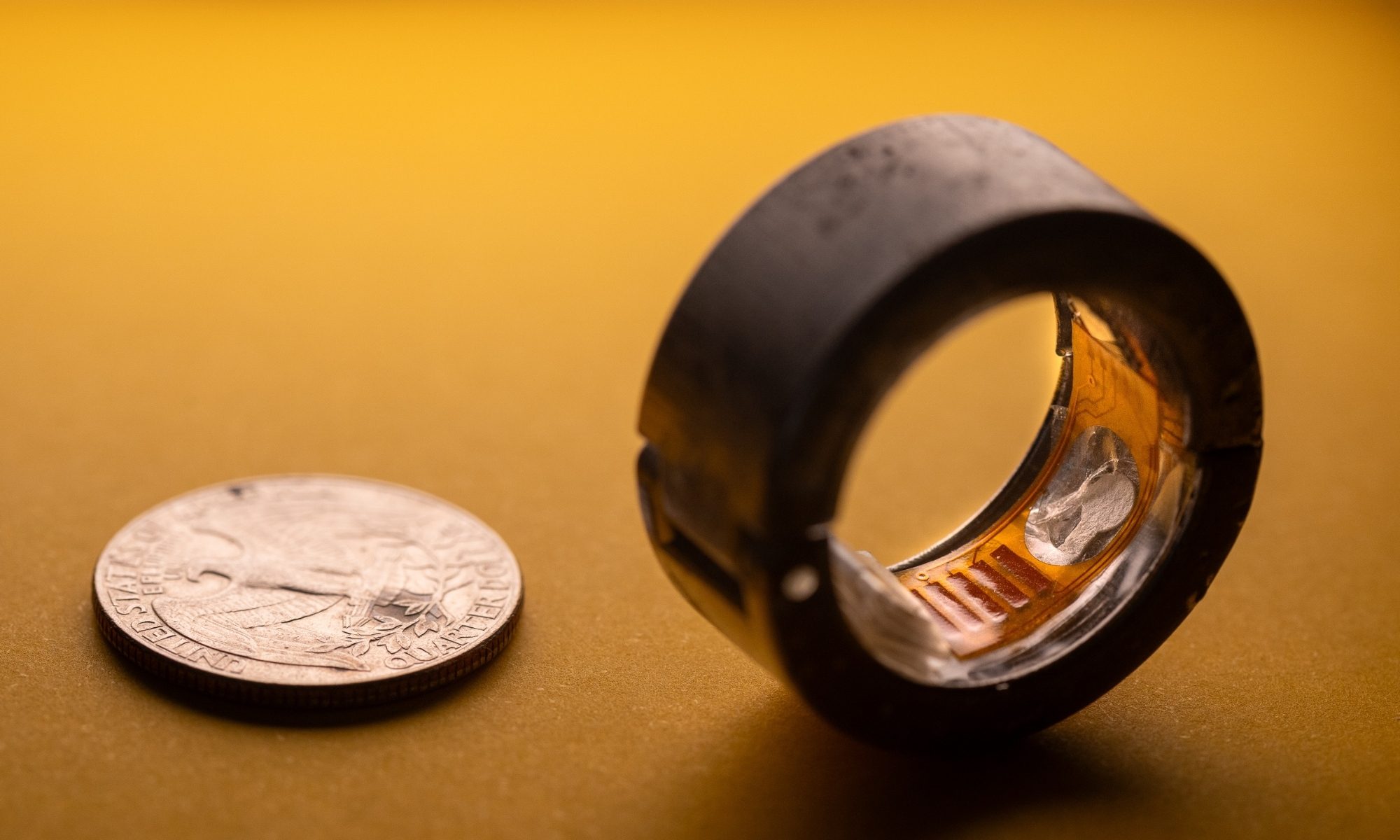
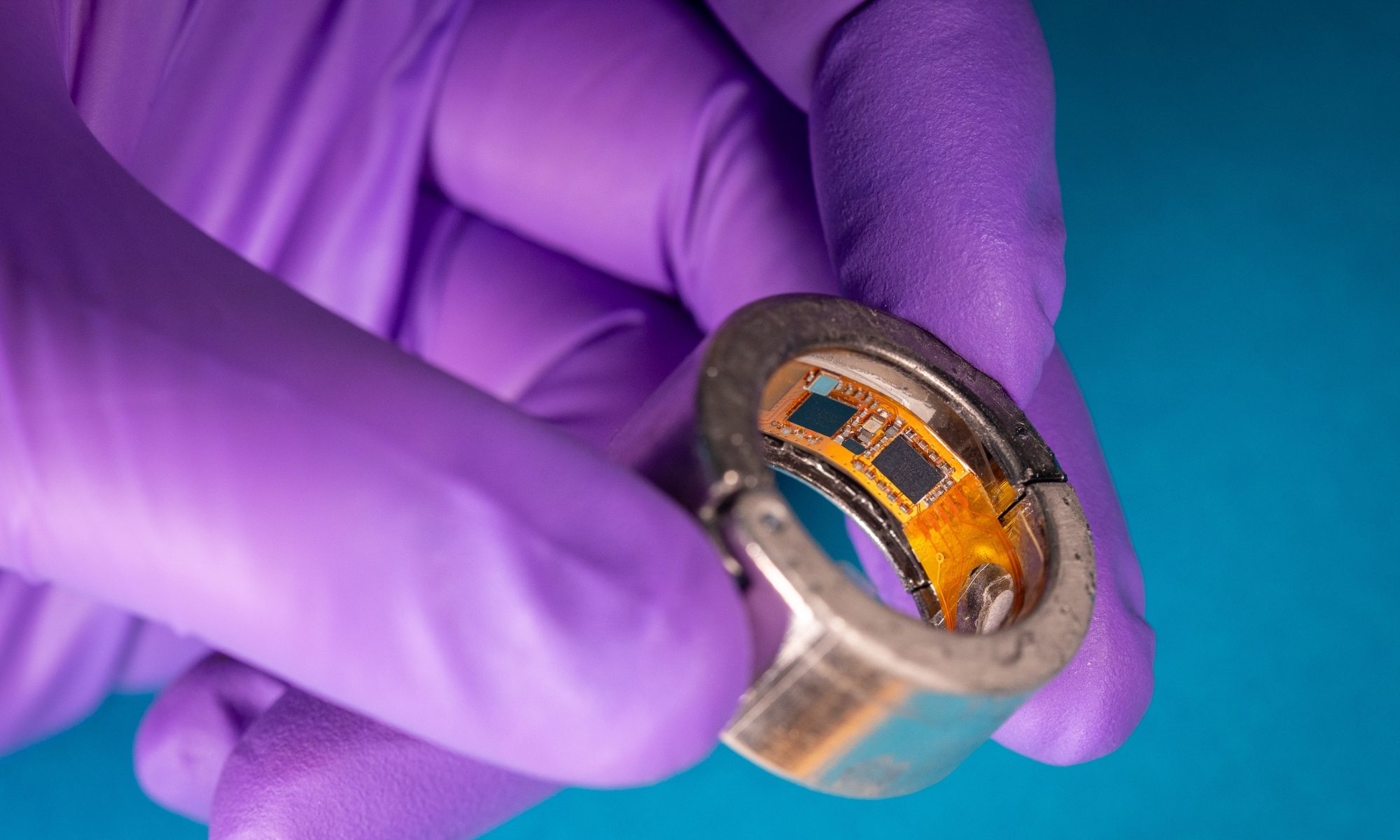
Enter Tamoghana Saha, whose team at the University of California San Diego has developed a smart ring that can keep an eye on glucose, ketones, vitamin C, uric acid, lactate, and even alcohol levels by reading a sample of your sweat. And it’s not a one-off analysis. The ring, which the team calls the Continuous Health Analyzing Ring Module (CHARM), can perform continuous sweat analysis for a spell of 12 hours per charge, and maintain its calibration for a spell of two months.
Advertisement
It’s a huge milestone that just needs some time and polish.
The ring is bulky. It’s not waterproof. It has not been validated in clinical settings on human subjects. It can’t do multi-day monitoring. But it’s still a ring, with upgradability and repairability as a key design principle. But above all, it’s living proof that chemical analysis of your sweat is now possible right on your index finger. And it’s going to be far more versatile than a typical smart ring that can only perform a proxy light-based analysis of the blood flowing in the vessels under your skin.
UC San Diego
Digital Trends sat down for an interview with Saha to discuss the CHARM ring, the challenges, and what it says about the future of smart rings. Let’s start with the basics. The CHARM smart ring is capable of measuring glucose, ketones, vitamin C, uric acid, lactate, and alcohol levels from your sweat. That’s a sizeable selection of biomarkers, and what they can reveal about your health and fitness levels is even more diverse.
Check out this brief overview of what an analysis of these chemicals can reveal about body health and recovery in response to medication, diet changes, and workouts in general:
Glucose
• Type 1 & Type 2 Diabetes: Linked to glycemic excursions (postprandial hyperglycemia, hypoglycemia).
• Metabolic Syndrome & Insulin Resistance: Flags impaired fasting glucose and early metabolic dysfunction.
Advertisement
Ketones
• Diabetic Ketoacidosis (DKA): Linked with dangerous acid accumulation in insulin-deficient states.
• Nutritional Ketosis: Helps track fat oxidation during ketogenic diets, fasting, or endurance exercise.
• Liver & Behavioral Health: Aids alcohol-related liver disease risk assessment and addiction recovery.
Here’s the most encouraging bit. What you see in the table above is just surface-level analysis. Once you combine it with data collected from other wearables — let’s say a smartwatch or fitness band — the potential is nearly endless. Interestingly, that’s also a long-shot goal for the team at UC San Diego.
It’s a whole new lab
But why not just focus on the current crop of light-based sensors you get on the likes of the Apple Watch Series 11 or Oura Ring? Why explore sweat instead of taking an optical peek at the blood vessels?
Advertisement
UC San Diego
“We wanted to target nutrition and diabetes in general, because if you take the individual biomarkers, their sensing mechanisms are quite well established,” Saha tells Digital Trends. “This project was mostly about showing that if you miniaturize everything, you can integrate the necessary sensors, and you can shove everything into a small form factor like that of a ring.”
It wasn’t just the technical feasibility that was a crucial victory here. The team also demonstrated that a small portion of our finger was enough for sweat analysis, and that you don’t necessarily have to stick a sensor patch on a wider area like your biceps, thighs, or back.
“I think, through this paper, we conveyed that, first of all, your ring location area, which is called the proximal phalanx, is a viable location to do sweat sensing, which people hadn’t done. I think this was a major, major message that we wanted to send out to everyone who works in these fields.”
UC San Diego
And finally, it’s the convenience of having a non-invasive, low-effort system to analyze sweat without you even noticing it. “Unlike other existing sweat-based wearables, which mostly function with exercise, or use chemical stimulation (they inject a drug that makes you sweat), we work with passive sweat.”
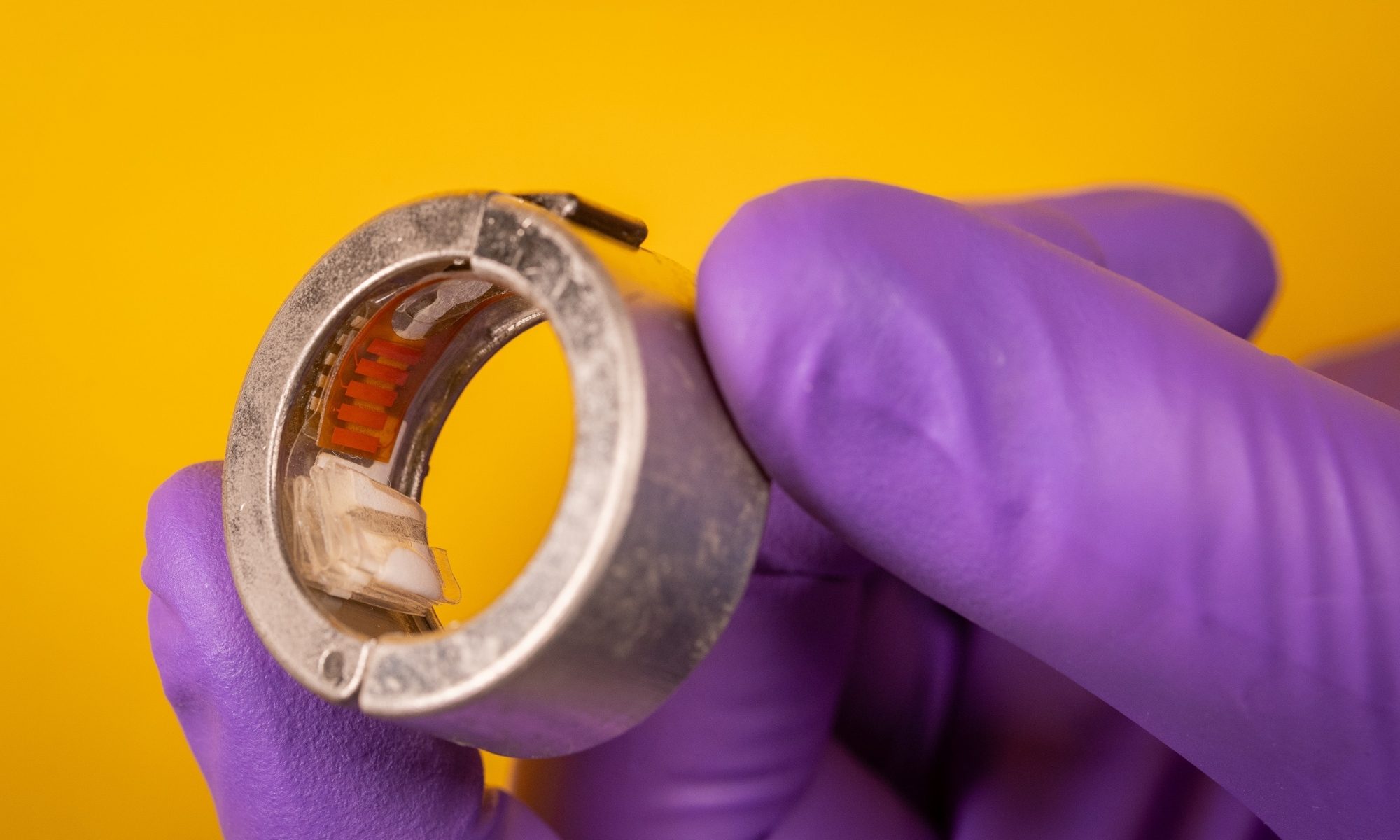
That means you won’t have to exercise to generate sweat, or worry about a chemical acting in your body to pull sweat on your skin. Instead, the team relied on a compact circular slot on the ring that contains hydrogel, which uses osmotic pressure difference to draw out sweat from the skin.
“So that’s the unique part, and the thing is completely passive. The hydrogel is acting like a pump. There is no power consumption in sweat extraction,” Saha tells me. Talking about power consumption, the team created its own rechargeable battery that lasts up to 12 hours per charge.
Advertisement
Trust and versatility
UC San Diego
The biggest victory is the versatility. The CHARM ring can measure four biomarkers simultaneously. Additionally, the sensing system, which is based on a sensor–microfluidic assembly, can maintain its stability for two months, which means you won’t have to frequently calibrate it based on the readings you get from a traditional blood-based test.
But what about the accuracy? Saha says the team measured the ring’s accuracy against commercially available blood meters and continuous glucose monitors (CGMs), and the accuracy was analyzed across multiple metrics. Readings were taken in different scenarios, such as after alcoholic drink consumption, having a candy, and post-dinner, in order to measure the rise and fall in biomarker levels such as glucose, lactate, and alcohol.
When compared against devices that are used in clinical settings, the CHARM ring impressed with a low error range and high reliability in measuring the spikes and drops in biomarker levels. Additionally, all the data points collected by the ring fell in the A and B Zones (as per the Clinical Error Grid accuracy metric used by the US FDA), which means the results are either accurate or they are safely within a range where they won’t cause any harm if the readings are slightly off.
UC San Diego
The team also went with paper-based microfluidics instead of the traditional microfluidic channel architecture. Saha tells me that conventional microfluidics is susceptible to fouling, with one of the core issues being salt accumulation. Using paper also proved to be the more cost-effective choice, while the hydrogel acts like a passive pump to draw out sweat without using any energy.
It’s still a work in progress. Beyond the engineering challenges, there’s the long process of clinical validation, which can easily take years, before the underlying tech makes it to the market. Why not just put it out there with a disclaimer? The likes of Google, Apple, and Samsung make it clear that their watches and rings can measure heart rate and sense blood pressure, but they are not meant as a replacement for medical-grade devices for measuring biomarkers, even though these mass-market wearables offer a high degree of accuracy.
For now, Saha’s team has no such plans, but there are a few bright prospects. When asked where he envisions the device to be a better fit — at home or in a hospital setting — he tells me it could be suitable for both.
Advertisement
UC San Diego
“I would say that such a form factor, to be honest, is applicable everywhere, even in a hospital setting. For example, if a person is septic. Now, lactate is a key biomarker for septic patients, and sepsis is a slow process where your blood lactate levels are very high, and then they become extremely high over a period of time,” he explains. “So, I think if a patient comes to the clinic, instead of hooking up wires or bulky devices, a smart ring like CHARM can give information about their well-being by continuously recording their blood lactate levels and warning them about any worrisome spikes.”
Fixing historical flaws
I also asked about the repairability and upgradability aspects, because these happen to be the biggest weak spots of modern-age smart rings, and even smart watches with a fused sensor assembly. They can handle splashes, but if anything goes awry, the only option left is an expensive replacement. Repairs are simply out of the question. For the CHARM team, it is “a key consideration,” Saha tells me.
The team is currently focused on fixing a few underlying problems. Making the ring waterproof is one of the key areas of improvement. The ring currently has an open hinge-lock design, but the team hopes to achieve a fully enclosed architecture, like the current crop of smart rings. Replaceable modular components are a key objective, alongside a rechargeable battery format and sustained multi-day biosensing.
UC San Diego
The team also aims to conduct clinical tests among a wider pool of patients with different tiers of diabetic ailments, and hopes to add more biomarkers to the support pool. How about merging a light-based sensor with a microfluidic-based sensing module on the same ring?
“That is possible,” Saha tells me, adding that we might see such an all-in-one model in a year or two. The CHARM team refers to that vision as a multimodal chemo-physical hybrid ring. The ultimate goal is to develop a “practical, user-friendly multi-biomarker wearable monitoring platform” that looks like a ring.
It’s an extremely ambitious idea, but Saha is also extremely cautious about giving a definitive roadmap. Biosensing is a field that has been built atop decades of work, and measuring biomarkers is not a straightforward lab-to-body journey. The painstakingly monitored clinical analyses and external validation are the real litmus test. It takes years, if not decades, before one can confidently push an entirely new kind of multi-biomarker wearable device.
Thankfully, CHARM is in the hands of an academic institution, and not a corporate entity hell-bent on maximizing profits riding atop zealous claims. Saha notes that the CHARM ring is a proof-of-concept with promising results. It would, however, take some time before we see a ring with the underlying tech appear in a retail shop. The future of wearable sensing, nonetheless, is full of possibilities.
Compliant Technologies probably would have preferred to keep flying under the radar. But a gaudy new no-bid contract with ICE (worth up to $20 million!) made it impossible.
Prior to ICE’s big purchase, it may as well have never existed. It only had a few clients, and those few clients purchased a few pairs for prison guards and jail staffers. That’s the sort of thing that kind of makes sense. Controlling inmates in enclosed spaces requires a bit more finesse than just beating them with batons.
Given the increased chance of losing control of a “compliance” option, turning gloves into quasi-stun guns made it easier to deploy force while simultaneously reducing the probability of losing a baton/Taser/OC canister to an inmate who’s stronger and faster than the average prison guard (i.e., most of them).
But ICE decided it wanted even more force to deploy, even though deploying force (a lot of it “excessive”) is basicallyall ICE does. Under-trained officers tend to underperform in the field, especially when they’re asked to do something more than seize the occasional website or find illegal substances hidden in cargo containers.
Advertisement
Here comes the shocker. Not only did a cop shop give officers some stun G.L.O.V.E.s (Generated Low Output Voltage Emitters), but it allowed them to deploy them in Omaha, Nebraska schools. With the G.L.O.V.E. backlash now fully engaged due to ICE’s interest in inflicting further unnecessary pain, an Omaha school district is “asking” cops not to use these gloves.
Omaha police agreed this week to stop carrying gloves that can deliver electric shocks to students in the halls of Nebraska’s largest public school district.
The Omaha mayor and police chief said in a joint statement Monday that the gloves were used twice in the last school year, including in a program for students with learning deficits.
Reread that last sentence a few more times. That’s extremely disturbing. While officers claim to have only used them “twice,” it did deploy them at least once to stun “students with learning deficits.”
Advertisement
And I only said there was a minimum of bitching by the cops. There was still some bitching, which arrived in the form of belated justification for stun-tech I can almost guarantee no parent was aware school resource officers (a fancy phrase for “school cop”) had access to, much less using on students.
“We believe it is the safest use-of-force option in the rare times when it is used,” the statement said.
“Safest?” As compared to what?!?! At what point do you decide a school discipline issue necessitates an ambush with literal shock tactics? Is this safer than NOT FUCKING DOING THIS AT ALL? I’m not an expert in “low voltage emissions” but I would like to believe any option that is less violent than stunning a student into submission is actually safer than any option that involves incapacitating someone with an electric shock.
What’s wild is that the school district actually had to make this request and then hope the cops would comply. And they had to hold onto this hope despite there being significant pushback from the community these cops are supposed to be serving. That it took the cops an entire day to simply agree to use the multiple violent force options they already have available to them doesn’t inspire a lot of confidence.
Destroying this minimal amount of confidence is the fact that this “agreement” (which hasn’t been made official) only extends to the Omaha PD. For some fucking reason, a bunch of Omaha-area cops “serving” Omaha schools apparently also have these gloves and aren’t promising to change a damn thing about how they handle policing schools.
Advertisement
However, the suburban Bellevue police department that patrols two Omaha schools and the large Bellevue district said its officers will continue carrying the gloves. Three other large school districts in the metro area that have Omaha school resource officers assigned to their buildings have not taken action to stop police from using the devices.
This agency saw the backlash and the semi-capitulation of the city’s largest law enforcement agency and then… did absolutely nothing. As far as the Bellevue PD is concerned, it’s still open season on students when it comes to SROs (school resource officers) and their stun gloves.
The schools in that district appear to be led by people who will never take issue with anything cops might do. Nothing to see here, says the district spokesperson, whose statement sounds like something delivered by someone who developed Stockholm Syndrome while undergoing a lobotomy:
Bellevue schools spokeswoman Amanda Oliver said the district has a great relationship with Bellevue police and doesn’t see a need to alter anything.
Oh, I’m sure the district has a “great relationship” with the cops. But we’re not worried about the administrators. We’re worried about the kids, who are the ones who will be subjected to violent force, including these novel stun gloves the kids at ICE keep talking about. And the Bellevue PD has used them just as often on students as the Omaha PD. And even though it was only “two” instances, the Omaha PD was at least willing to swear off using this tech in schools.
Meanwhile, in Bellevue, it’s apparently business as usual, even though no one (other than the PD and this weirdly cheery PR person) wants cops to have this option when patrolling schools.
Advertisement
At last week’s school board meeting, about 30 people spoke out against police using the gloves. Residents and board members alike said they were appalled at the practice. No one spoke in favor of it.
No one except the people who will never be subjected to the stun gloves, which the company helpfully points out won’t leave evidence “burn or contact marks” on the minors subjected to them. Bellevue schools — via its PR flack — said everything is fine. The chief of the Bellevue PD, Ken Clary, similarly claims to have a healthy relationship with the G.L.O.V.E.
“I am not comfortable having our officers give up a tool that has repeatedly proven to be safe, effective, and less harmful than the alternatives,” Clary said in a statement.
Again: as compared to what? You can’t just say this option is better than others without providing any evidence to support this statement. I mean, you can, but you shouldn’t expect anyone to believe you. This just sounds like a top cop claiming each new force option is more “effective” and “safer” than whatever the department is already using. Adding yet another option is never viewed as adding to the excess. It’s just folded in with everything else and glossed over in public statements until the public’s attention is focused elsewhere.
There’s no reason for ICE to have these gloves. Officers already have tons of force options, as well as the full permission/judicial immunity to use whatever option they feel will inflict the most pain at any given point. The G.L.O.V.E. may have started out as a prison option, but now it’s clear cops want this option whenever they’re dealing with… shall we say… captive audiences. And the defenders of this tech are making it clear they think inmates and students are interchangeable, at least when it comes to deploying force.
An anonymous reader quotes a report from The Guardian: A common sweetener used in products such as chewing gum, toothpaste, jam, yoghurts and ice-cream has been linked to an increased risk of strokes, heart attacks and death. Xylitol is a sugar alcohol present in some natural foods in very low amounts. It is also added — often in amounts 1,000 times higher — to artificially sweeten foods, beverages and oral care products. Despite its growing use, the long-term health impacts of xylitol have never been widely studied.
In the largest study of its kind, researchers found high blood levels of xylitol were associated with an increased risk of major adverse cardiovascular events. The findings were presented in Munich at the European Society of Cardiology (ESC) annual congress, the world’s largest heart conference. Researchers looked at 17,710 people and compared the 25% with the highest levels of xylitol in their blood against the 25% with the lowest. Those who had the highest amount were 57% more likely to die or suffer a heart attack or stroke, than those with the least, within six years. Even after 30 years, they were still 18% more likely to have suffered one of these cardiac events.
Taken with data from the middle quartiles, the results from both cohorts suggested a dose-dependent relationship: the higher the xylitol blood levels, the higher the cardiovascular event rate. Furthermore, the researchers showed that there was consistent increase in cardiovascular events with xylitol irrespective of baseline characteristics, such as age and sex. The researchers also highlighted that the association was independent of underlying factors such as body mass index, hypertension, diabetes and lipid levels, which might predispose people to low-calorie products.
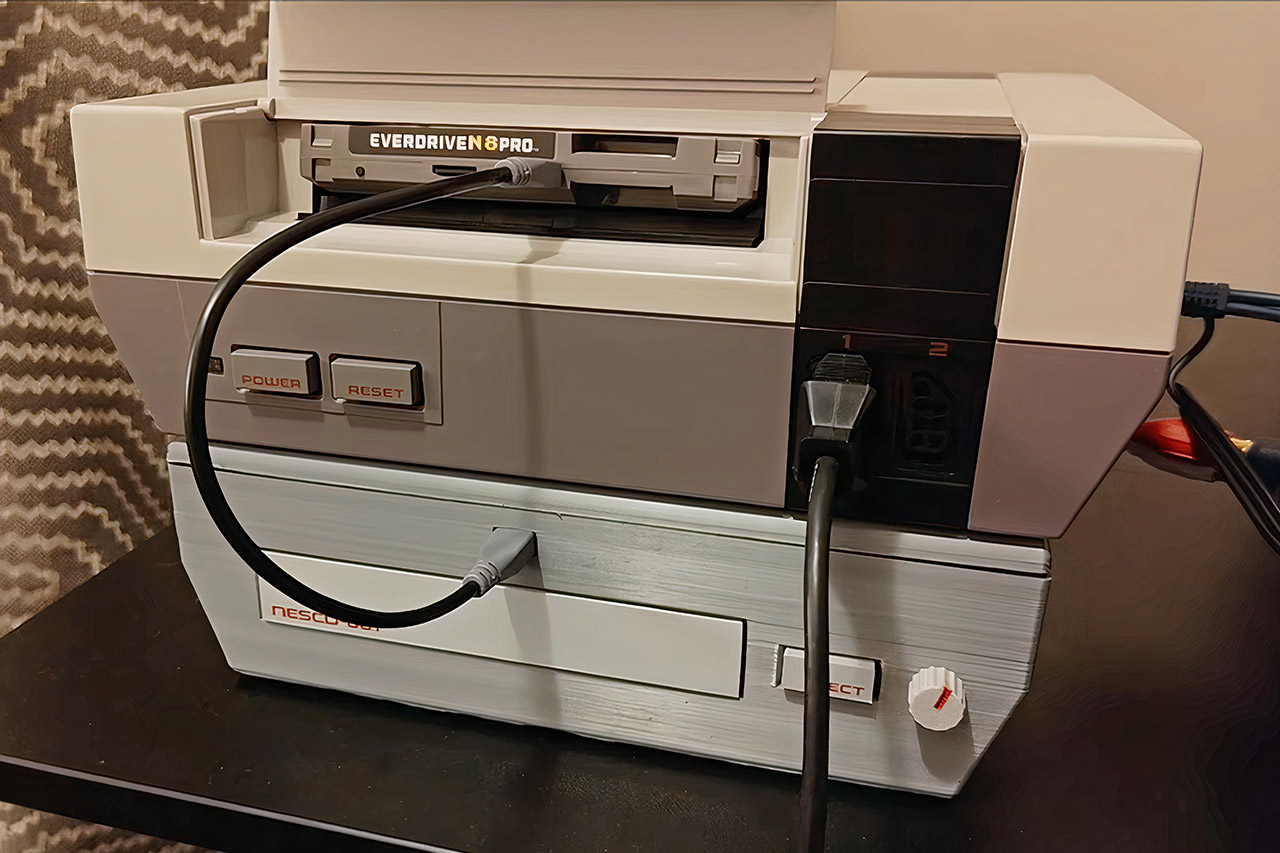
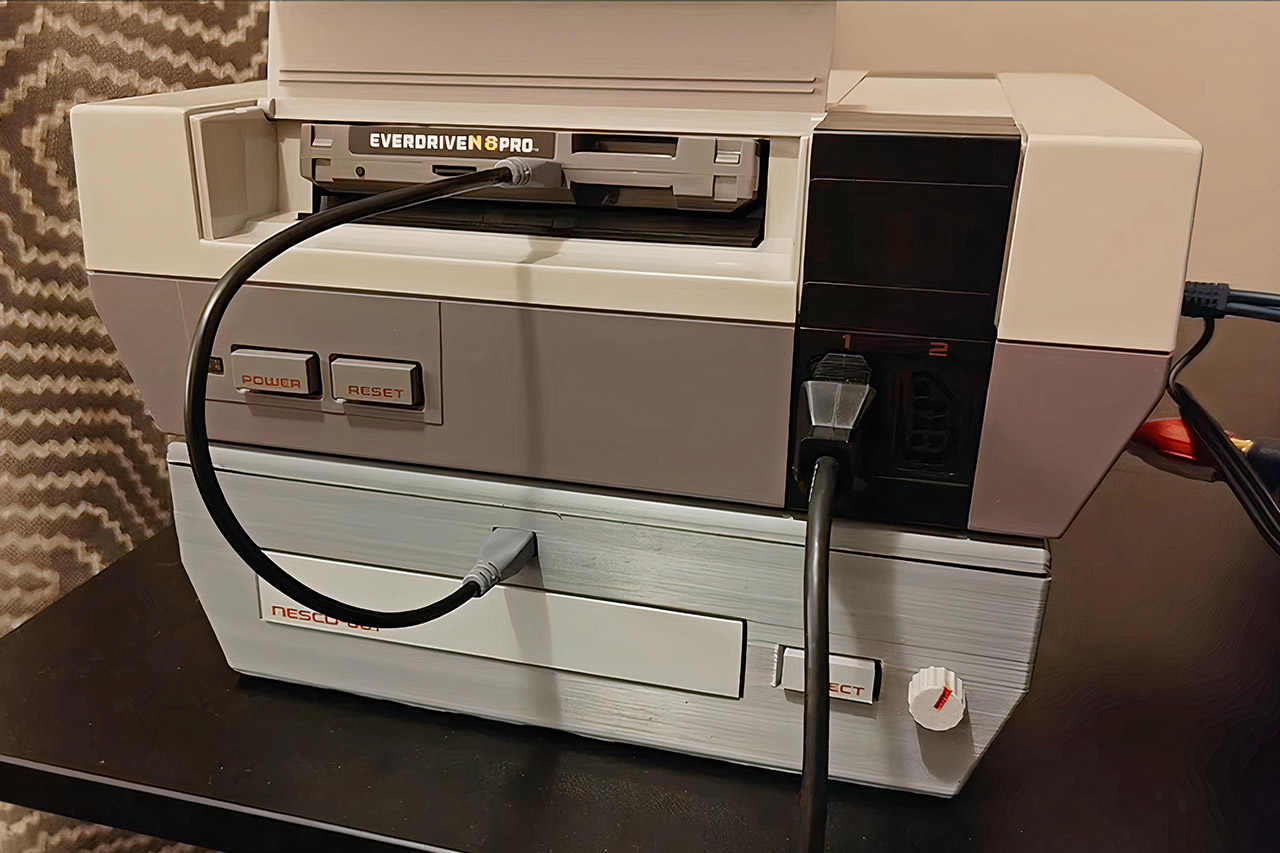
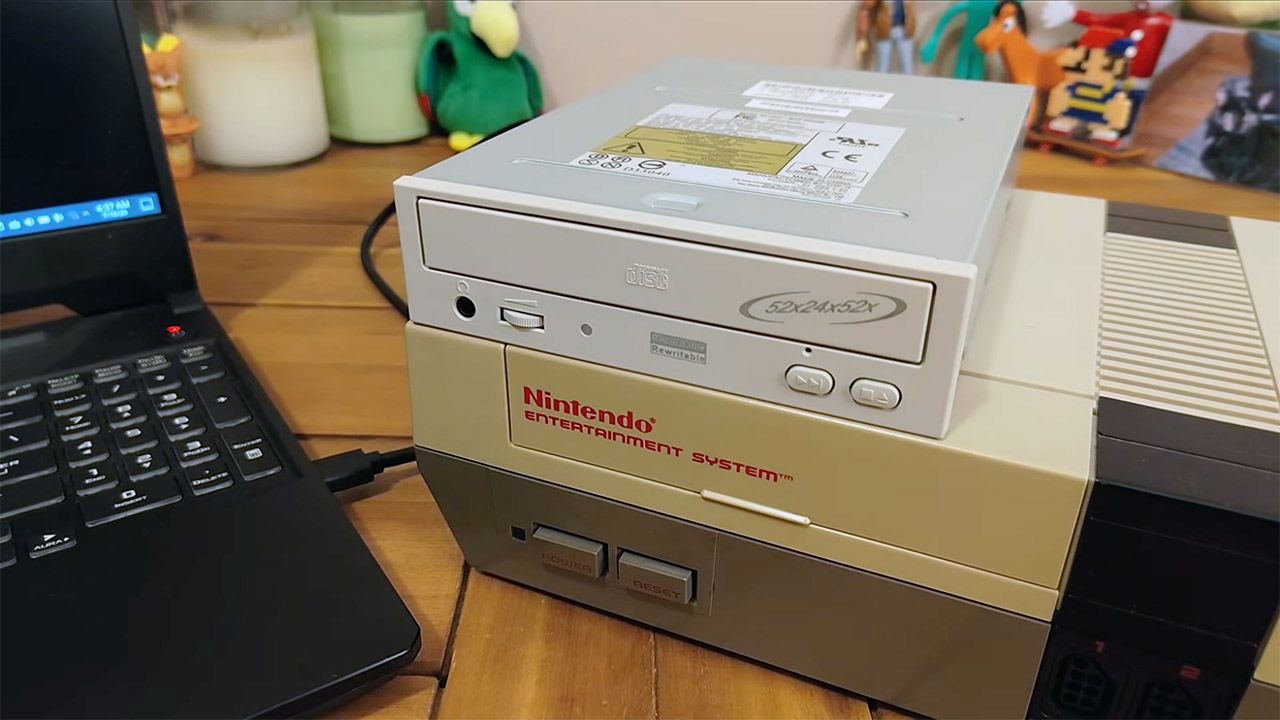
Nintendo and Sony spent the early nineties arguing over a Super NES compact disc attachment that never reached store shelves. Throaty Mumbo read that history and aimed lower, at the original front-loading NES, a console with no disc hardware and an expansion port that sat unused on the bottom of millions of gray boxes. His project page calls the result NESCD-001, an unofficial homemade compact disc add-on built for fun and documented in a build video plus a public GitHub repo.
His finished unit is a gray 3D printed slab that fits under the console in the same way as the old Famicom Disk System did. A white disk tray with glossy red lettering faces forward, accompanied by an eject button and volume knob. Inside, there’s a conventional 40-pin IDE compact disk drive (the Pacific Digital Mach 52, as seen in the movie), a custom circuit board, a PCM5102 converter, and an RP2350B microcontroller that communicates with both the drive and an Everdrive N8 Pro flash cartridge. The printable shell files and sticker art for that board layout are available in the same source as the board layout itself.
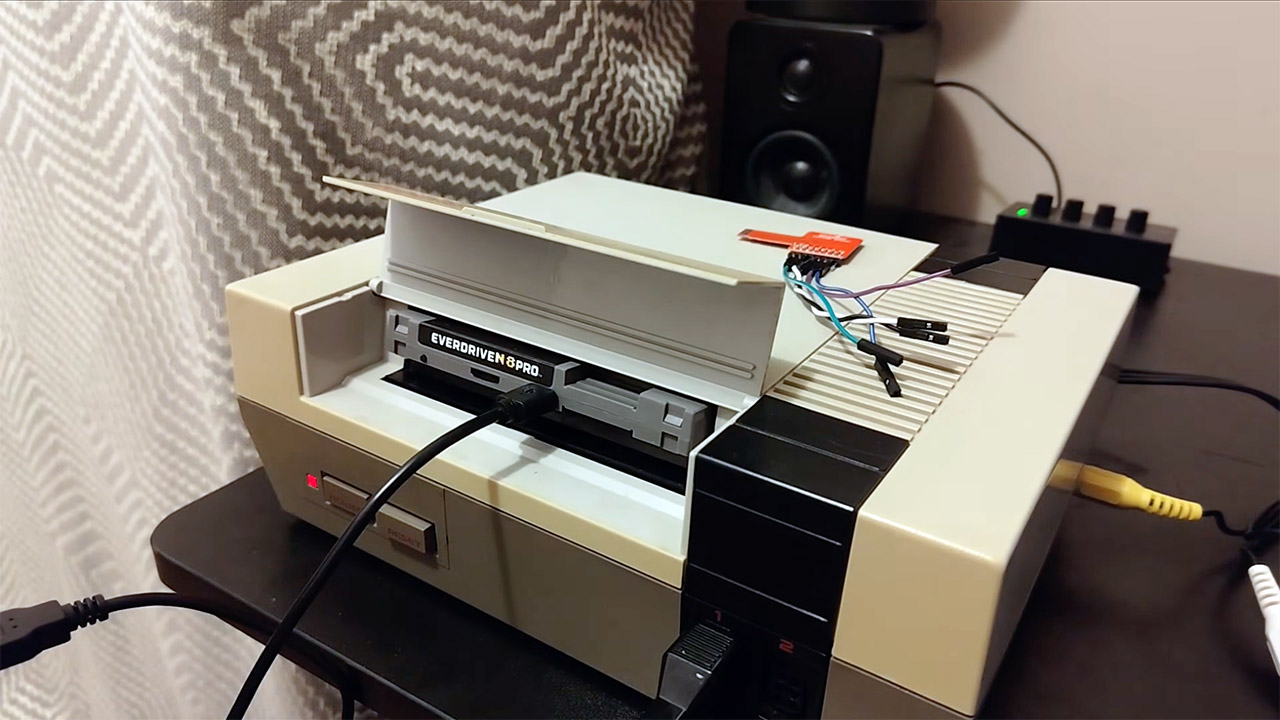
Games do not run directly from the disc in the same way as later CD consoles do. What happens is that the RP2350B reads the ROM from the disk, transfers it to the Everdrive over USB, and runs it. After things are up and running, the microcontroller monitors a CHR mailbox at memory address 0x21FF8 for any requests from the running game, which could be for additional audio or a chunk of full motion video. Frames of video are delivered over the same USB link and written into NES video memory using proprietary bitstream code from the Cyclone IV FPGA already installed on the Everdrive N8 Pro.
Then there’s the audio side, which has gone its own way on purpose. Compact disk sound exits the PCM5102 and enters the NES via the expansion port mixer pin, an input pin that Nintendo slipped onto American hardware but never seemed to use. That method prevents any additional sound from clogging the already congested USB link, while simultaneously allowing the front knob to do something. One Molex cable from a wall adapter supplies 5 and 12 volts to the drive and board. A buck converter then reduces the 12V to around 9.5V, allowing you to utilize a spare NES power plug to power the console from the top of the box, using only one outlet to power the entire stack. Of course, you can still use the original brick to power the NES.
Proof of concept can be found on a homemade disc labeled “Super Mario Bros. CD edition”. Yes, it’s still the 1985 platformer, but now the music comes from compact disc recordings and small cutscenes pop in. Mario and Luigi are talking about a picnic, while Bowser is checking into a local hotel. When you take the disk out, the extra layer stops working. Early tests also ran standard cartridge games through the Everdrive while the drive and board were being wired, including a sanity check to ensure Contra was still operational when some flash carts decided to cause problems.
The full motion video functionality is still very much in beta. Something Nerdy Studios already showed that an Everdrive N8 Pro can push Bad Apple across the full NES screen from an SD card by stuffing tiles into CHR RAM as fast as the machine will take them. Throaty Mumbo leaned on that work for a disc-fed version, then held the firmware back because parts of it were reverse engineered from that demo.
We may receive a commission on purchases made from links.
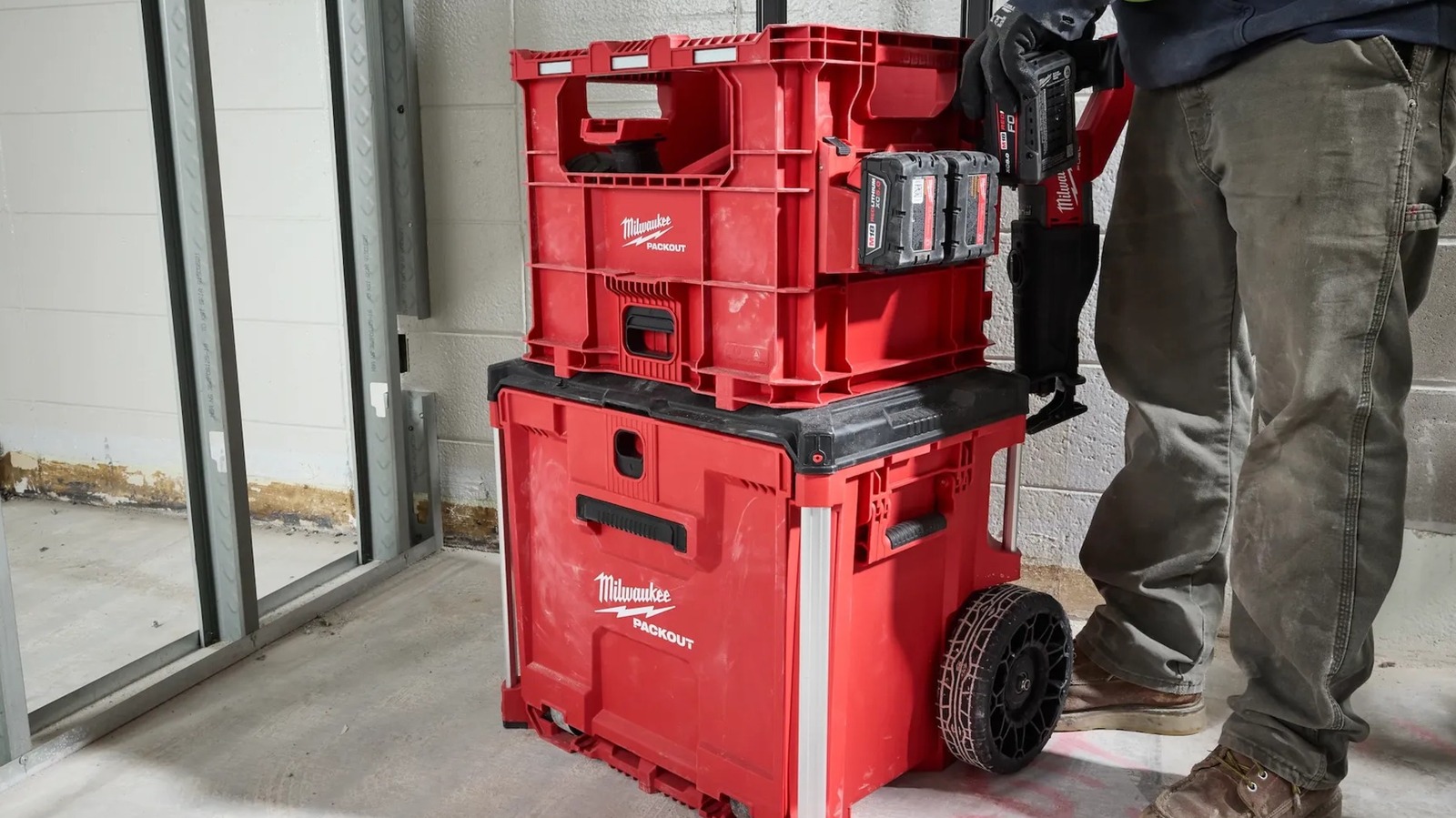
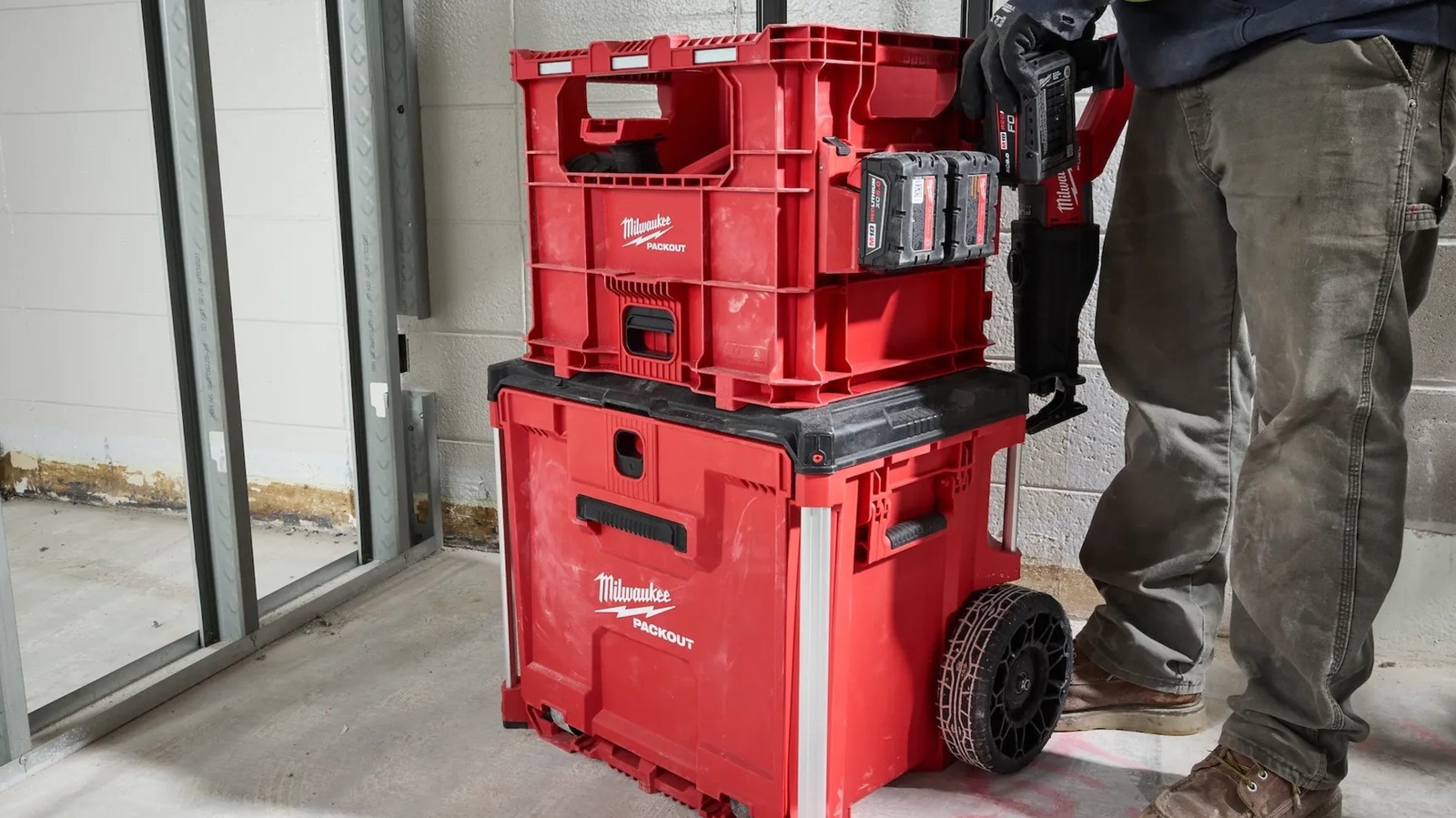
One of the Milwaukee hardware brand’s claims to fame is its Packout series of stackable storage options. These feature various types of storage crates and drawers, as well as add-ons like lights and lunch coolers to liven up your workspace, all of which can be stacked and locked into a mobile tool tower. Given that Packout is one of Milwaukee’s standby systems, the brand is always working on new additions, including both large and small storage boxes and crates to fit assorted use cases.
Advertisement
For the month of August 2026, most of Packout’s new developments are focused around various types of simple, quick-access crates. These include crates you can quickly pull tools from and place back, as well as relatively simple tool boxes with locking drawers for safety and security. All of these new products are available at participating retailers like Home Depot, Ace Hardware, and Acme Tools. If you’re a fan of the Packout system, consider perusing the latest offerings for new and interesting additions to your existing Packout stack.
Advertisement
Milwaukee Packout XL Crate
As good as Packout is at keeping your tool collection organized, sometimes you just want a reliable spot where you can quickly dump whatever you’re using and pull out something else without fussing with drawers and latches. To add such a spot to your Packout stack, that’d be a use case for the Milwaukee Packout XL Crate, available at Home Depot for $69.97.
The Packout XL Crate is exactly what it sounds like: An extra-large crate with the necessary latches to snap onto a Packout stack, though it can also clip onto the side of a stack to hang freely. It has a 75-pound carry capacity for hauling assorted tools and accessories, as well as mounting spots for hanging tools like power drills or battery chargers. While you can reach right into the top of this crate to grab a tool, if there’s something else stacked on top of it, you can also reach into the large opening at the front, which still provides enough clearance for deposit and retrieval.
Advertisement
Milwaukee Packout Wire Pulling XL Crate
Depending on your line of work or crafting interest, you may need different types of modular storage to best suit your purposes. For example, if you’re an electrician regularly working with different types and lengths of wire, a regular storage crate may not be the optimal choice for storing your large wire spools. In this specific use case, Milwaukee offers the Packout Wire Pulling XL Crate, available at Home Depot for $119.00.
At a glance, this crate is very similar to the regular Packout XL Crate. It has several of the same features, including a 75-pound carrying capacity, an easy-retrieval front opening, and the ability to both stack and hang on a Packout stack. Where it differentiates itself is in the interior mounts specifically designed to hold up to six spools of 500 feet, 12-gauge THHN wire. The mounts allow the spools to spin when their wire is pulled, so you can grab all the wire you need without having to move the spools around. As an extra perk, the front opening has wire retention slots, which hold pulled wire in place and help keep everything organized.
Advertisement
Milwaukee Packout Low-Profile Crate
If you’ve already got a very tall Packout stack, adding more full-sized crates and drawers on top isn’t the best idea. At a certain point, it’s going to become too high to comfortably reach into, not to mention potentially at risk of toppling over. Rather than stacking another full-sized crate on top of everything, it may be better to add something a little smaller, such as the Milwaukee Packout Low-Profile Crate. It’s available at Home Depot for $44.97.
This Packout crate is best-suited for the top of your Packout stack, with an open top that you can reach into to grab whatever you need, as well as a body that’s about half the size of a regular Packout crate. It has a slightly reduced carrying capacity — 50 pounds versus the usual 75 pounds — but it still has all of the necessary latches to clip onto a stack, plus integrated side handles for easier carrying. It also comes bundled with a set of quick-adjust dividers, including eight short dividers, two long dividers, and one middle divider, which you can use to set up the interior of the crate to your liking.
Advertisement
Milwaukee Packout Compact Crate
The Packout Low-Profile Crate is designed to give you some extra storage space while reducing your Packout stack’s vertical profile. However, that’s not the only way you can reduce your stack, as you can also opt for a crate that slices down vertically instead of horizontally. Such is the design of the Milwaukee Packout Compact Crate, available at Home Depot for $39.97.
Advertisement
This crate is the inverse of the Low-Profile Crate, being approximately as tall as a regular crate while being half as wide. This means you can stack two of them at once on top of a regular crate if you want to keep two sets of tools or accessories separate from each other. Like the Low-Profile Crate, it comes with two customizable dividers, as well as a large front opening you can reach into to grab something. One noteworthy difference between this crate and others is that it has an integrated folding metal handle, which you can use to haul a handful of tools when you need to take a quick jaunt away from your main stack.
Advertisement
Milwaukee Packout Single Drawer Tool Box
While the majority of Milwaukee’s new Packout offerings for August 2026 are various forms of crates, there are some outliers. For example, if you want storage with a little bit of extra security in the form of a locking drawer, an open crate may not be the best choice. Rather, that may be a job for the Milwaukee Packout Single Drawer Tool Box, available at Home Depot for $164.00.
As opposed to the crates being primarily accessible from the top, the Single Drawer Tool Box conceals a sliding drawer that you can pop open and access from the front, even when it’s in the middle of a tall Packout stack. The box comes bundled with one large divider and two regular dividers for organizing the inside, and it has mounting points on the side for hanging tools and chargers, with a total carrying capacity of 50 pounds. That said, the most important feature is the locking metal security bar, which keeps the drawer firmly closed when not in use and in transit.
The numbers stamped on your chainsaw chain are the shorthand that tells you exactly which replacement chain will fit your saw safely. But there’s no single universal code across all brands. Stihl, Husqvarna, Oregon, and all the other major chainsaw brands each use their own marking systems, and the placement of those numbers can vary from the chain’s drive links to the bar’s heel or even the packaging.
What almost every system conveys are three core specs: pitch, gauge, and drive-link count. Pitch is the chain’s “size,” defined as half the distance between any three consecutive rivets; common values are ¼”, .325″, ⅜”, and .404″. Gauge is the thickness of the drive links, typically .043″, .050″, .058″, or .063″. Drive-link count is simply how many drive links form the full loop; it determines overall chain length and must match the bar’s specified length.
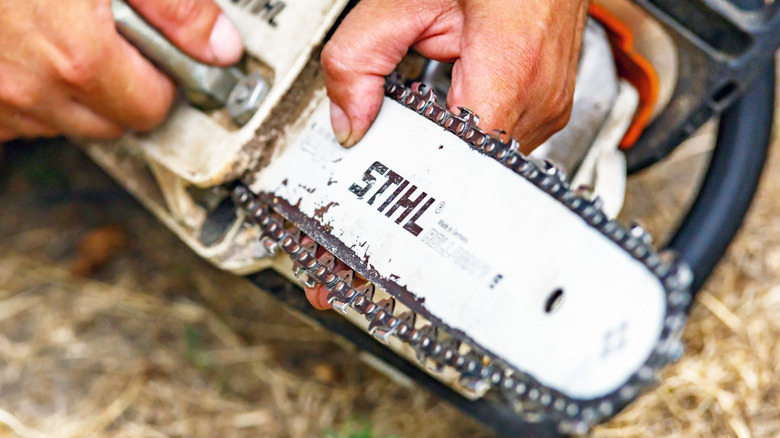
On many of the best chainsaws, pitch and gauge are stamped directly on the side of each drive link on the chain. Guide bars often carry stamps near the powerhead end, listing bar length, pitch, and gauge; some also include the required drive-link count. For example, Husqvarna’s X-CUT chains show pitch and gauge as single digits on the drive link (e.g., “8” and “5” for ⅜” pitch and .050″ gauge), while Stihl encodes gauge as a final digit (1 = .043″, 3 = .050″, 5 = .058″, 6 = .063″). Oregon, by contrast, uses a two-digit “series” code on the drive link that maps to a specific pitch-and-gauge pair.
Advertisement
Reading the stamps without guesswork
Bukhta Yurii/Shutterstock
Start by locating the markings. On the chain, look at the flat side of the drive links for small stamped numbers or codes. On the guide bar, check near the base where it meets the powerhead; you’ll often see a string like “16 3/8 .050 57DL” or a brand-specific code. The first number is usually bar length in inches, followed by pitch and gauge, and sometimes the drive-link count.
Decode pitch first: if you see “⅜” or “.375,” that’s ⅜” pitch; “.325” and “.404” are also common. Gauge will appear as a decimal like .050 or .063, or as a single digit in certain brand codes. Drive-link count may be shown as “57DL,” “57,” or embedded in a longer part number; it must match exactly, or the chain won’t fit the bar and sprocket properly. You can also measure manually. For pitch, measure across any three consecutive rivets and divide by two. For gauge, use calipers on the thickness of a drive link where it engages the bar groove. Then count the drive links around the full loop.
Advertisement
Finally, remember that matching all three specs — pitch, gauge, and drive-link count — is non-negotiable, and it critical for chainsaw maintenance. A chain with the right pitch but the wrong gauge can wobble or bind; the wrong drive-link count won’t wrap the bar correctly. When in doubt, use your saw’s model number and the bar’s stamps to look up the exact chain in the manufacturer’s chart rather than guessing from generic numbers.
SpaceX is significantly reducing Falcon 9 launches from Florida this year, ending the Space Coast’s decade-long run as the world’s busiest spaceport as more missions shift to Vandenberg Space Force Base in California. The slowdown is expected to continue until Starship begins flying regularly from Florida. Longtime Slashdot reader schwit1 shares a report from Ars Technica: A Falcon 9 launch early Tuesday was the last planned Starlink mission from Cape Canaveral until SpaceX begins flying Starship missions from Florida, according to Kiko Dontchev, the company’s vice president of launch. For at least the rest of the year, and maybe longer, this means the launch rate at the Florida spaceport will drop from eight or nine per month to perhaps two per month.
It wasn’t long ago when two launches per month was the norm, an indication of just how quickly SpaceX’s launch cadence has grown. Cape Canaveral and Kennedy Space Center sit on adjoining property and share the same range on Florida’s east coast, so it is worth considering them a single spaceport. The last time the Florida spaceport did not lead the world in space launches was in 2015.
“From here on, Starlink missions out of Florida will fly on Starship,” Dontchev wrote on X. “The West Coast team will continue regularly launching Starlink from Vandenberg.” “Yep, that’ll be louder — but everybody knows the real action will be in Louisiana, starting in 2029 or so,” writes schwit1. SpaceX on Tuesday announced plans to spend up to $100 billion building a new Starship launch facility in Vermilion Parish, Louisiana, which the state says could eventually “support thousands of launches annually.”
Further reading: Musk’s other unstated reasons for shutting down Falcon 9 in Florida (Behind The Black)
AI can help us find vulnerabilities faster than ever. But what happens when the rest of the vulnerability management ecosystem can’t keep up?
When Vulnerability Volume Outpaces the System
In April, NIST released a statement regarding updates to NVD operations that reflects a necessary response to scale. CVE volume has grown beyond what the current enrichment model was designed to handle. As part of the change, roughly 30,000 vulnerabilities published before March 1, 2026, were reclassified as “Not Scheduled.”
Prioritization, automation, and selective processing are reasonable adjustments in principle. In practice, however, the shift introduces a set of risks that may not be fully understood, particularly for those responsible for defending enterprise environments.
Advertisement
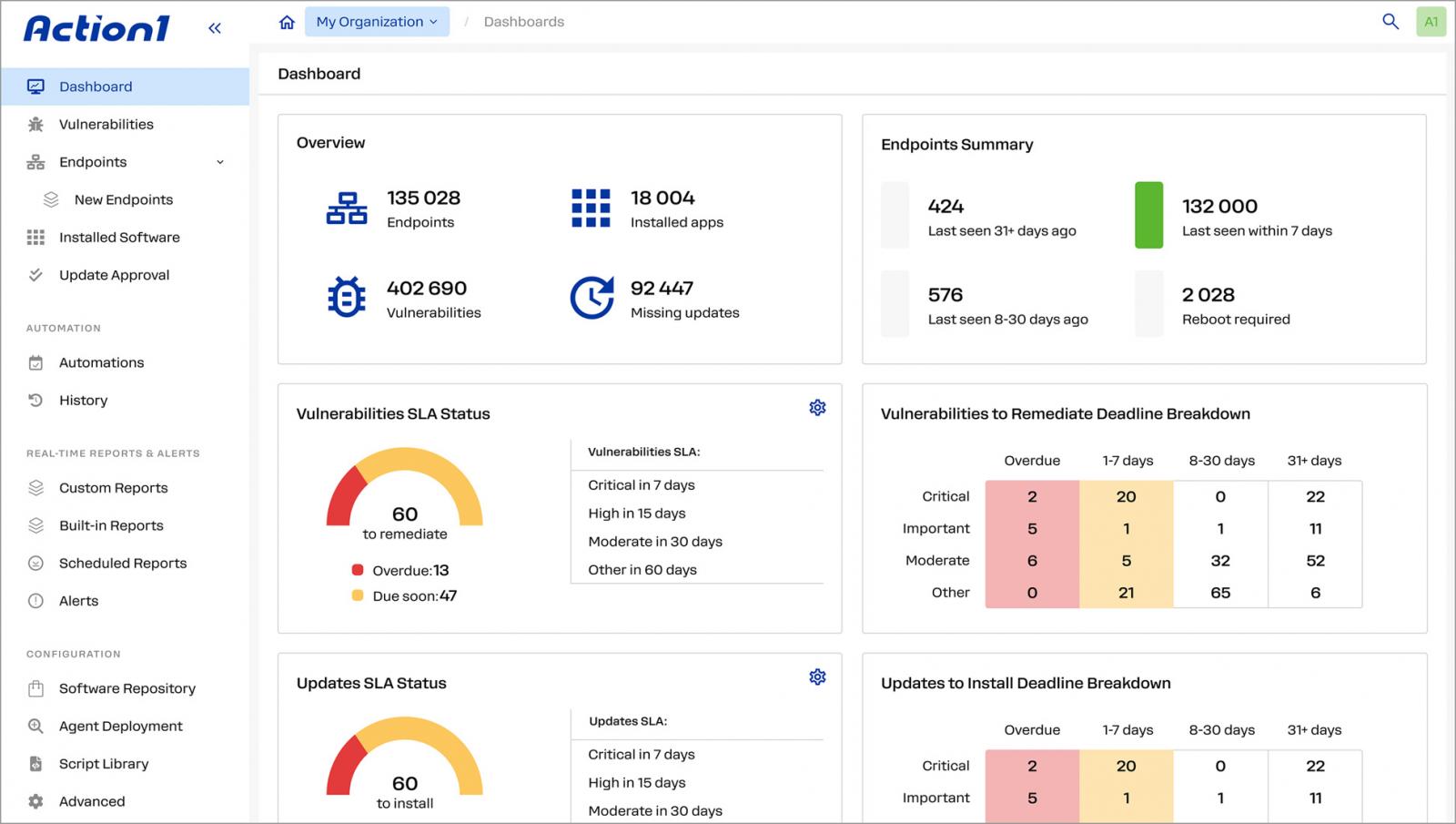
The pressure is not theoretical. Action1’s 2026 Software Vulnerability Ratings Report found that disclosed vulnerabilities across the enterprise software categories analyzed increased 92% in 2025 compared with 2024. Critical and high-severity vulnerabilities increased 103% each, while vulnerabilities enabling remote code execution increased 128%.
Today, the volume of disclosures that must be validated, enriched, prioritized, and ultimately remediated is likely to place even greater pressure on systems designed for a slower era of vulnerability discovery.
The core issue is therefore not simply the existence of a backlog. Backlogs are an expected outcome in any system operating under rapid growth. The concern is how that backlog is managed and, more importantly, what signals are created by the decision to prioritize newer vulnerabilities over older, unprocessed ones.
What Happens When Enrichment Falls Behind
By focusing enrichment efforts only on recent CVEs, the system implicitly deprioritizes vulnerabilities that may already be known, confirmed, and, in some cases, actively discussed by vendors or researchers but lack full NVD context.
Advertisement
This creates an information asymmetry of a particularly difficult kind: partial intelligence without the second half that makes it readily actionable. Security teams that rely heavily on NVD as a normalized source of vulnerability information may see incomplete or delayed data.
Attackers, meanwhile, do not need to wait for standardized enrichment before correlating vendor advisories, security research, patch releases, exploit information, and public disclosures.
That gap matters because enrichment is not cosmetic. Structured metadata, affected-platform information, severity scoring, configuration details, and other contextual information allow defenders to determine whether a vulnerability actually applies to their environment and how urgently it should be addressed.
When that information is missing or delayed, organizations are often forced to either wait for additional context or make decisions using fragmented information. Neither outcome is ideal in a threat landscape where exploitation can move faster than internal validation and remediation processes.
Advertisement
But That’s Not All
There is also a second-order effect that is harder to quantify but equally important. A rolling backlog that is continuously fed while being selectively drained creates uncertainty about coverage. Without a clear commitment to processing older entries within a defined timeframe, the backlog becomes a semi-permanent condition.
Some vulnerabilities will be enriched quickly, others will remain in limbo, and there will be limited visibility into which category any given CVE falls into at a given moment.
For practitioners, this overly complicates prioritization. If affected-product information such as CPE data is incomplete or overly broad, organizations face a greater risk of false positives. Teams may spend time investigating vulnerabilities that do not apply to their environment while potentially overlooking risks that do.
Over time, this will certainly erode confidence in the dataset and push organizations to build alternative intelligence pipelines. That will lead to additional cost, tooling, and operational complexity. As well, as one may predict, increasing failure rates.
Advertisement
Action1’s 2026 Software Vulnerability Ratings Report found enterprise application exploitation surged 800% in the last year.
Explore which software categories saw the biggest shifts in vulnerabilities, severity, and attacker activity.
None of this suggests that NIST is acting irresponsibly. The scale problem is real, and the existing model was not designed for the volume of vulnerability information now entering the ecosystem.But the introduced trade-off pushes more responsibility downstream.
Organizations will need to rely less on a single authoritative source and more on correlation across multiple sources, including NVD, vendor advisories, independent vulnerability-intelligence providers, threat intelligence platforms, and internal asset inventories.
Advertisement
Zoom out, and the view is that vulnerability management is becoming less about consuming a curated list and more about synthesizing accurate intel from incomplete data in near real time. That requires maturity, tooling, and process discipline that not all organizations currently possess.
If this direction continues, the NVD will remain a critical component of the vulnerability-management ecosystem, but it will no longer function as a comprehensive baseline on its own. Instead, it becomes one input among many, and one that may lag significantly behind the realities of exploitation in the field.
The more important question then becomes not simply, “What vulnerabilities exist?” but “Which of them affect us, which represent the greatest risk, and how quickly can we act?”
How Defenders Should Adapt
The first lesson is that vulnerability management can no longer depend on any single source of enrichment. NVD remains enormously valuable, but security teams increasingly need to subscribe to cumulative works of vendors and organizations that aggregate the available data into usable intelligence
Advertisement
More importantly, collecting additional feeds is only part of the answer. More information can simply create another prioritization problem. The real objective is to turn fragmented vulnerability intelligence into a decision: Does this vulnerability affect us, how urgent is it, and what can we do about it now?
This is the model Action1 has adopted for vulnerability management. Rather than relying exclusively on NVD enrichment, Action1 combines intelligence from sources including VulnCheckNVD++, NIST NVD, CISA’s KEV Catalog, Microsoft’s own MSRC data, and vendor release notes, then scores each vulnerability based on CVE data, CVSS severity, CISA KEV status, and known usage in ransomware campaigns, providing initial prioritization in minutes.
That intelligence is correlated with real-time endpoint data so teams can determine which vulnerabilities actually affect software deployed in their environment and prioritize remediation accordingly.
Once an affected endpoint has been identified, remediation should not require another export, manual correlation exercise, or lengthy handoff before patching begins.
Advertisement
Action1 brings vulnerability assessment and remediation into the same workflow, allowingorganizations to move from learning that a vulnerability exists to reducing actual exposure much faster, all from a single console.
The AI vulnerability era will not be defined by how fast IT and security teams can find flaws, but by how quickly they can understand, prioritize, and patch them. Discovery is accelerating, soremediation must accelerate with it.
See how Action1 connects real-time OS and third-party vulnerability intelligence with automated remediation to help your team reduce exposure faster.
The Tottenham vs Newcastle live stream involves two teams looking for their first wins of the new season. Tottenham were humbled by Brentford on matchday one, while Newcastle were denied all three points by a last-gasp Liverpool equaliser.
There were few positives for Roberto De Zerbi to take from this side’s display against Brentford. Spurs finished 17th last season, and their performance at the Gtech Community Stadium was worse than most of their showings in 2025/26. The only saving grace is that Tottenham’s starting XI will be significantly different going forward, starting with the visit of Newcastle.
The Magpies were much more impressive in their first outing of the campaign. They played with energy and intensity under new boss Matthias Jaissle, and were just seconds away from beating Liverpool 2-1. The German will be looking for more of the same against Tottenham.
Advertisement
Spurs were dismal at home last term, while Newcastle struggled to pick up points on the road. This clash is therefore a chance for us to see if either team has improved on one of their weak points. Given what happened last weekend, Tottenham cannot afford another lacklustre display.
Here’s how to watch Tottenham vs Newcastle in the 2026/27 Premier League from anywhere in the world.
How to watch Tottenham vs Newcastle from anywhere
A VPN is handy piece of software that can make your device appear as if it’s back in your home country, so you can unlock your usual service. The best VPN right now? We recommend NordVPN – it does everything and comes with up to 75% off.
Advertisement
How to watch Tottenham vs Newcastle live streams in the US
Tottenham vs Newcastle is being televised on Peacock in the US. Peacock plans start from $12.99 a month, or $129.99 a year.
The game is being shown on NBC, while other EPL matches will be available on USA Network and NBCSN this season.
Sling TV carries NBC on its Blue plan in select locations, as well as USA Network, ABC and Fox, plus FS1, FX and more. Prices start at $45.99.
Advertisement
Alternatively, USA Network, NBC and NBCSN are all carried by YouTube TV and Fubo, which both offer free trials.
Outside the US for the game? Use NordVPN to access your usual coverage.
Advertisement
How to watch Tottenham vs Newcastle live streams in the UK
In the UK, Tottenham vs Newcastle is being shown on Sky Sports Main Event and Sky Sports Premier League.
Sky Sports packages start at £22/month for existing Sky subscribers, rising to £35/month for new customers. Now is a great time to sign up, with the start of the football season, England’s Test series against Pakistan and the US Open tennis upon us.
You can also tune in via a NOW Sports membership that carries the Sky Sports channels.
If you’re out of the UK but still want to watch Tottenham vs Newcastle, explore the VPN route set out above, which will help you access your subscriptions from anywhere.
Advertisement
How to watch Tottenham vs Newcastle live streams in Canada
Tottenham vs Newcastle is available to watch on Fubo in Canada.
Prices start at CA$31.49/month for Fubo’s Sports Monthly package.
You can also access Fubo’s Premier League coverage through an eligible DAZN subscription.
Advertisement
Not in Canada? Use NordVPN if you’re away from home, in order to tap into your preferred Tottenham vs Newcastle coverage from anywhere.
How to watch Tottenham vs Newcastle live streams in Australia
Stan Sport is showing the Tottenham vs Newcastle game in Australia.
Not in Australia right now? You can simply use a VPN like NordVPN to watch all the action as if you were back home.
What is the Tottenham vs Newcastle start time?
The scheduled Tottenham vs Newcastle kick-off time on Saturday, August 28 is 5.30pm BST local time in London, which is 9.30am PT / 12.30pm ET.
That’s 2.30am AEST on Sunday, August 30 in Australia.
What is the Tottenham vs Newcastle head-to-head?
Tottenham and Newcastle have played each other 175 times. Tottenham have won 74 of them, and Newcastle have triumphed 66 times. Thirty-five have been drawn.
Advertisement
Can I watch Tottenham vs Newcastle on my mobile?
Of course, most broadcasters have streaming services that you can access through mobile apps or via your phone’s browser.
You can also stay up-to-date with all the key Premier League 2026/27 moments on the official social media channels on Instagram (@PremierLeague), TikTok (@PremierLeague) and YouTube (@PremierLeague).
We test and review VPN services in the context of legal recreational uses. For example: 1. Accessing a service from another country (subject to the terms and conditions of that service). 2. Protecting your online security and strengthening your online privacy when abroad. We do not support or condone the illegal or malicious use of VPN services. Consuming pirated content that is paid-for is neither endorsed nor approved by Future Publishing.
Apple’s next big iPhone event is almost here, with the iPhone 18 Pro, iPhone 18 Pro Max and the company’s first foldable, the iPhone Ultra, all expected to make their debut.
The event will also mark the first major Apple product launch since John Ternus takes over as CEO on September 1. As with recent launches, Apple will combine an in-person gathering at Apple Park with a prerecorded presentation.
When is the iPhone 18 Pro/Ultra event?
The event will take place on Wednesday, September 9, starting at 10am PDT (1pm EDT). For other regions, the event starts at 6pm BST in the UK, 7pm CEST in Central Europe and 10:30pm IST in India. Viewers in China can tune in at 1am CST on September 10, followed by 2am JST in Japan and 3am AEST in Sydney.
Apple’s official event page also includes an Add to Calendar option, which automatically adjusts the event time for your location. It’s worth opening the stream a few minutes early, particularly if you want to catch the opening announcements.
Advertisement
How can I watch the event?
The simplest option is to watch through Apple’s official event website using Safari or another web browser. The stream is free, and you don’t need an Apple TV+ subscription to watch it. You can also use the Apple TV app on supported Apple devices.
Advertisement
If you have an Apple TV 4K, open the TV app and look for the event on the Home screen. If it doesn’t appear immediately, you can search for the event or open Apple’s website using another device. There’s also the option of watching on a larger screen with AirPlay. To do this, start the stream on an iPhone, iPad or Mac and send it to an Apple TV 4K or compatible smart TV. The devices must be connected to the same Wi-Fi network.
Windows PC and Android users aren’t left out. You can watch the presentation directly through Apple’s website or use the official YouTube livestream. The YouTube listing is already available, and selecting Set Reminder will send you a notification when the event begins.
Advertisement
If you miss the live presentation, Apple will make a replay available through its event website and Apple TV app. The YouTube stream will remain available too, so you can catch up later.
What will be announced?
The headline products should be the iPhone 18 Pro, iPhone 18 Pro Max and iPhone Ultra, with the latter potentially being Apple’s biggest iPhone change in years. The iPhone Ultra is expected to be Apple’s first foldable iPhone. Therefore, it puts the device directly into competition with foldable phones that Samsung, Google and other manufacturers have been producing for years.
Apple isn’t expected to unveil the entire iPhone 18 range at this event. The standard iPhone 18 is reportedly part of Apple’s new split launch strategy and should arrive later. This leaves September’s event focused on the company’s premium models.
Advertisement
Advertisement
The Apple Watch Series 12 and Apple Watch Ultra 4 are also expected to join the new iPhones. Together, these will round out Apple’s usual autumn hardware refresh.
The Toyota Corolla is one of the Japanese automaker’s best-selling vehicles, coveted for its reliability and cost effective maintenance. The Corolla has been around since 1966, and it has taken a lot of shapes and forms to get where it is today? The 1980 Corolla is part of the fourth generation, costing just $5,208 for the base model, according to J.D. Power. That’s $22,352.76 in today’s money, which is surprisingly around the cost of buying a new 2026 Corolla.
However, you can now buy a 1980 Toyota Corolla for as low as $1,600 — although the average price of sold Corolla from that year is around $10,500, per Classic.com at time of writing, as it becomes a more desirable collector car, especially for those with nostalgia for the ’80s.
Advertisement
Despite being over 40 years old, the 1980 Corolla is, well, still a Corolla. Owners say it’s still reliable after all these years, even with high mileage. It’s low-maintenance, economical, and fuel efficient. “If you were going to buy a new car and keep it 41 years — or forever — it’s simply the best choice, whether that was in 1980 or 2021,” Curbside Classics‘ Paul Niedermeyer said while reporting on a man’s 40-plus years of ownership and 261,000 miles. During that time, the owner had done general maintenance himself, and paid a relatively low $500 for cheap replacement parts, including a radiator, water pump, and air filter kit.
Advertisement
What engine did the 1980 Toyota Corolla have?
Farukh siyab/Shutterstock
The 1980 Toyota Corolla is the second year of the fourth generation model, unchanged from 1979. The fourth generation model had an extended wheelbase and a sharper body design. There were also seven variations, including two- and four-door sedans, a hardtop, a coupe, a liftback, and a two- and four-door van. Every body type had a water-cooled, inline four-cylinder engine.
The 1980 Corolla made 75 horsepower — not bad for a commuter vehicle weighing just 2,090 pounds. This allowed for top speed of 98 mph, and a 0-60 time of 12.4 seconds. Still, its engine wasn’t considered impressive in the 1980s, when horsepower was on the rise again and quarter mile icons like the 300 hp Buick GNX were coming back in style. With no performance versions to speak of, the fourth generation Toyota Corolla has been sort of forgotten compared to more popular generations.

































































You must be logged in to post a comment Login