Connect with us
DAPA Banner
DAPA Coin
DAPA
COIN PAYMENT ASSET
PRIVACY · BLOCKDAG · HOMOMORPHIC ENCRYPTION · RUST
ElGamal Encrypted MINE DAPA
🚫 GENESIS SOLD OUT
DAPAPAY COMING

Tech

South Korea Floats ‘Citizen Dividend’ Using AI Profits

Published

on

South Korea’s presidential policy chief is calling for a “citizen dividend” that would return some AI-driven profits and tax revenue to the public. The Straits Times. From the report: Presidential policy chief Kim Yong-beom said in a Facebook post that a portion of the profits and tax revenue derived from the artificial intelligence boom “should be structurally returned to all citizens.” That is because, Mr Kim argued, the economic gains from AI are based at least partly on industrial infrastructure built by the country over five decades. Mr Kim’s comments come after tens of thousands of people gathered outside Samsung’s main chip hub in April to demand employees get a greater share of AI profits. The company’s labour union wants 15 per cent of operating profit handed to chip-division employees.

The union has threatened an 18-day strike starting May 21. Workers have pointed to rising payouts at SK Hynix, which in 2025 agreed to allocate 10 per cent of its annual operating profit to a performance bonus pool, as evidence they deserve more pay. “Excess profits in the AI era are, by nature, concentrated,” Mr Kim wrote. Memory companies, core engineers and asset holders are highly likely to receive substantial benefits, while much of the middle class may experience only indirect effects.

Source link

Continue Reading
Click to comment

You must be logged in to post a comment Login

Leave a Reply

Tech

Think EV battery swap tech is a gimmick? Chinese EV company Nio says it swapped a million batteries in a week

Published

on


  • Nio says it has performed more than 100 million battery swaps since 2018
  • The technology is hailed for its ease and speed
  • Slower on-site charging also reduces the strain on the grid

The history of EV battery swap technology is as long and as complicated as the electric vehicle itself, with numerous manufacturers attempting to create networks that would allow owners to drive in and have a fresh battery inserted in minutes.

Renault worked alongside the Better Place network with its early Fluence Z.E. model back in 2011 to push battery swap technology, and even Tesla had a stab at it, finally scrapping the idea due to a lack of interest.

Source link

Continue Reading

Tech

Britain is paying billions to waste wind power, while households now get free electricity for weekend washing instead

Published

on


  • Britain spent nearly £1.5 billion shutting down renewable electricity generation last year
  • Smart meter households can now receive free electricity during surplus renewable generation periods
  • Octopus customers have already saved millions through experimental free electricity flexibility sessions

The UK is generating more renewable electricity than ever, but its grid often cannot use it all – as when the wind blows hard, or the sun shines bright, and demand is low, demand can fall below what is being produced.

Instead of putting that surplus power to wider use, the system has routinely paid wind farms to turn turbines off while paying gas plants to stand by, a payout practice which has cost the country almost £1.5 billion in a single year – with early 2026 figures suggest the bill is still piling up rapidly.

Source link

Advertisement
Continue Reading

Tech

Today’s NYT Mini Crossword Answers for May 13

Published

on

Looking for the most recent Mini Crossword answer? Click here for today’s Mini Crossword hints, as well as our daily answers and hints for The New York Times Wordle, Strands, Connections and Connections: Sports Edition puzzles.


Need some help with today’s Mini Crossword? Read on. And if you could use some hints and guidance for daily solving, check out our Mini Crossword tips.

If you’re looking for today’s Wordle, Connections, Connections: Sports Edition and Strands answers, you can visit CNET’s NYT puzzle hints page.

Advertisement

Read more: Tips and Tricks for Solving The New York Times Mini Crossword

Let’s get to those Mini Crossword clues and answers.

completed-nyt-mini-crossword-puzzle-for-may-13-2026.png

The completed NYT Mini Crossword puzzle for May 13, 2026.

Advertisement

NYT/Screenshot by CNET

Mini across clues and answers

1A clue: Sprinter’s race
Answer: DASH

5A clue: Statuette awarded at Hollywood’s Dolby Theatre
Answer: OSCAR

7A clue: À la ___
Answer: CARTE

Advertisement

8A clue: Word meaning “details” or “glasses”
Answer: SPECS

9A clue: “What’s the reason?”
Answer: WHY

Mini down clues and answers

1D clue: Google ___
Answer: DOCS

2D clue: Immediately
Answer: ASAP

Advertisement

3D clue: Twistable piece of hardware
Answer: SCREW

4D clue: Devise, as a plan
Answer: HATCH

6D clue: Booking service that competes with OpenTable
Answer: RESY

Advertisement

Source link

Continue Reading

Tech

Techdirt Podcast Episode 451: Preserving The Web In The Age Of AI

Published

on

from the to-protect-and-preserve dept

Recently, Mike joined Dave Hansen, Mark Graham and Kendra Albert on a panel for the Future Knowledge podcast, a joint production of the Internet Archive and the Authors Alliance. The discussion covers a wide variety of questions related to keeping the web (and especially the historical record of the web) alive amidst the upheaval caused by AI technology, and you can listen to the whole thing here on this week’s episode.

You can also download this episode directly in MP3 format.

Follow the Techdirt Podcast on Soundcloud, subscribe via Apple Podcasts or Spotify, or grab the RSS feed. You can also keep up with all the latest episodes right here on Techdirt.

Advertisement

Filed Under: ai, artificial intelligence, authors alliance, internet archive, podcast

Source link

Advertisement
Continue Reading

Tech

Apple Fan Builds Mac Studio Clone from Scratch, Computing Ensues

Published

on

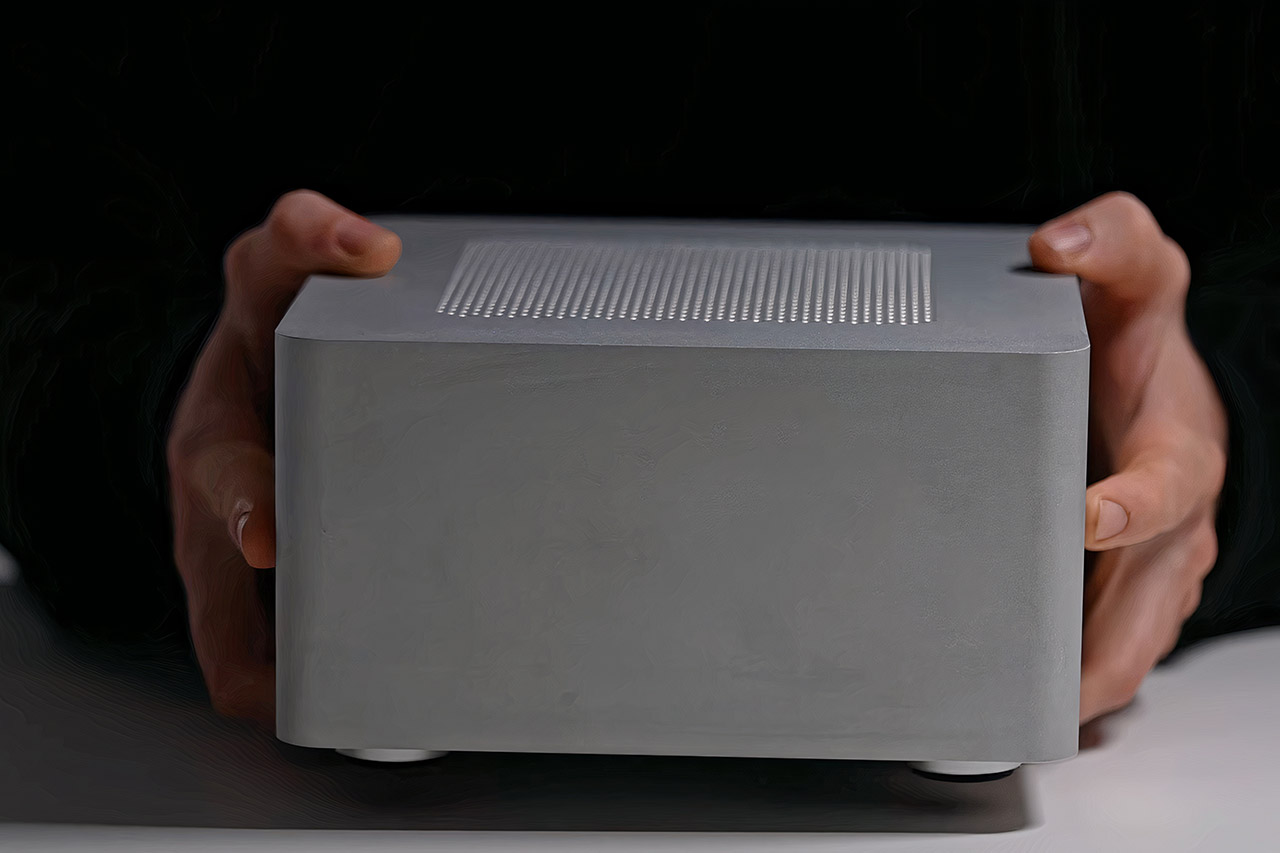
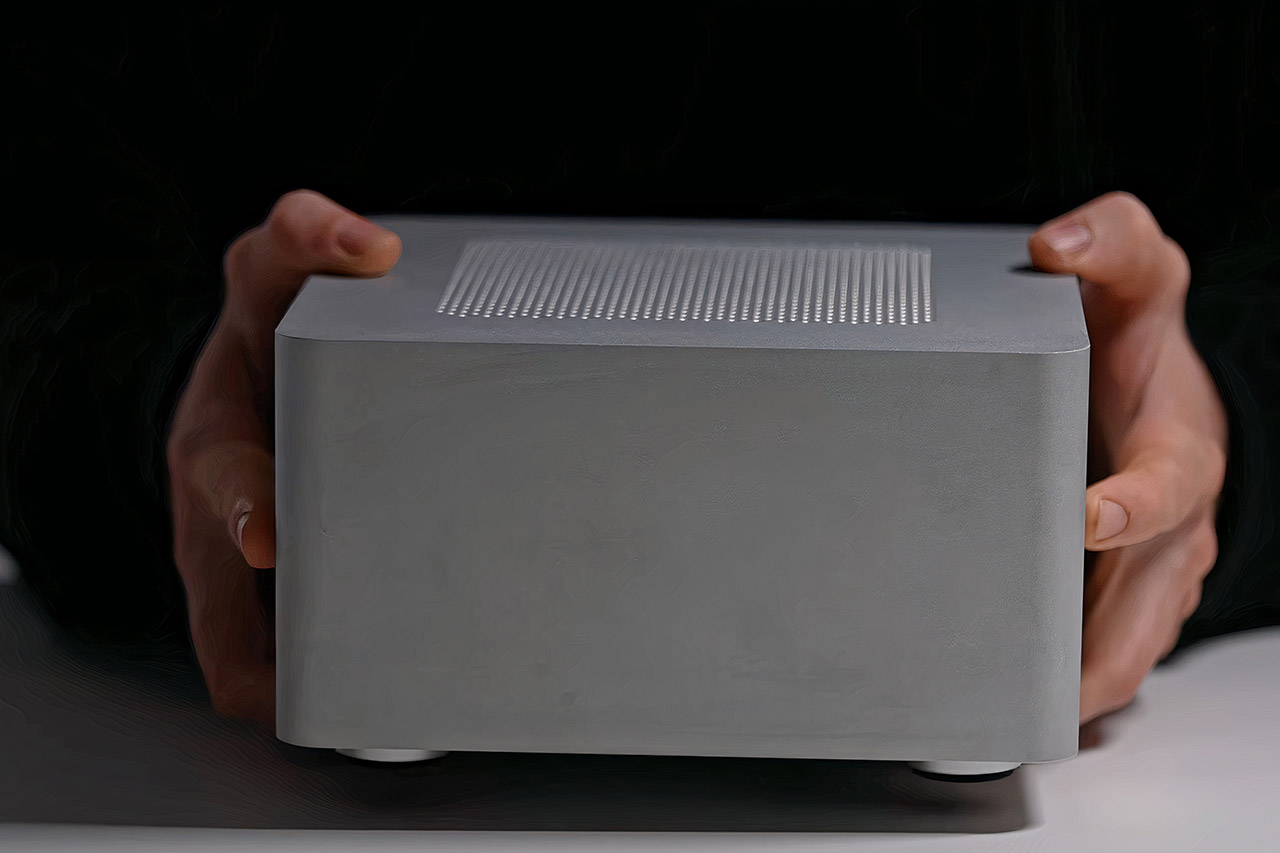
Mac Studio Clone Replica Build
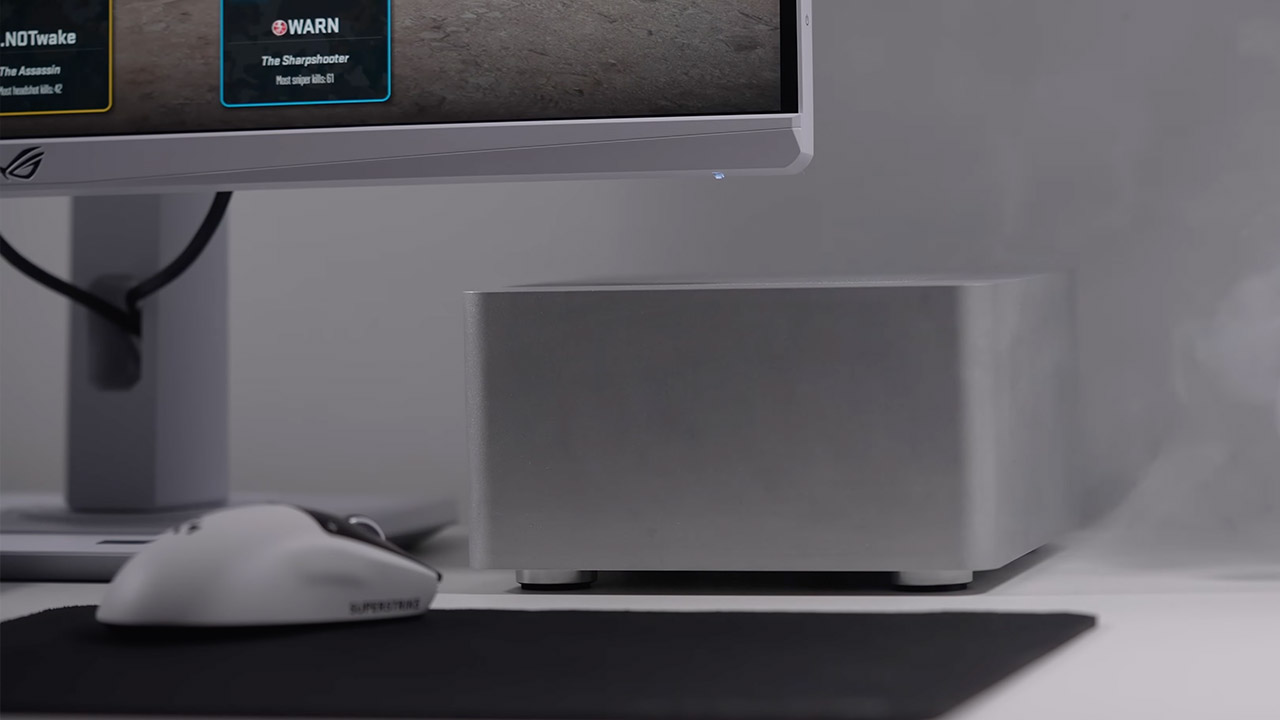
PhasedTech, a talented Apple enthusiast, had had enough of yearning for a Mac Studio. The compact beast of a computer had sleek lines, but let’s face it, the machine is pricey to say the least. So, rather than accepting a bad compromise and calling it a day, he loaded up all of his tools: a CNC machine and a 3D printer, and set out to make his own Mac Studio clone from the bottom up.


After weeks of scribbling ideas on paper, he ended up with a good overhaul. He began with a teeny tiny mini ITX motherboard measuring only 17 by 17 cm and painstakingly positioned all of the components on it so that when assembled, it is nearly as slim as the original Mac. Before experimenting with aluminum, he created a 3D printed prototype and tested it thoroughly to ensure that all of the elements fit together properly. Every corner and screw hole was meticulously measured, ensuring that everything fits together seamlessly and seems clean from the outside. Only when he was completely satisfied did he send the files to a company that could make the entire chassis out of solid aluminum stock and make it seem as polished and high-end as the original.

Sale


GMKtec Mini PC Computers Intel N95 Processor (Turbo 3.4GHz) 8GB DDR4 256GB SSD Desktop Computer 4K Dual…
  • 12th INTEL ALDER LAKE N95 PROCESSOR – The G3S mini pc uses the 12th Intel N95 CPU 4 Core 4 Threads 6MB cache, burst speed up to 3.4GHz. Compared with…
  • 8GB RAM MEMORY & 256GB SSD STORAGE – GMKtec Nucbox G3S mini pc is prebuilt with 8GB DDR4 RAM, you will enjoy a speedier experience with Built-in 256GB…
  • RICH INTERFACE – Nucbox G3 Plus mini computer is equipped with USB 3.2, up to 10Gbps/S, HDMI(4K@60Hz)×2, 3.5mm Audio Jack. Supports WiFi 5, and…

Mac Studio Clone Replica Build
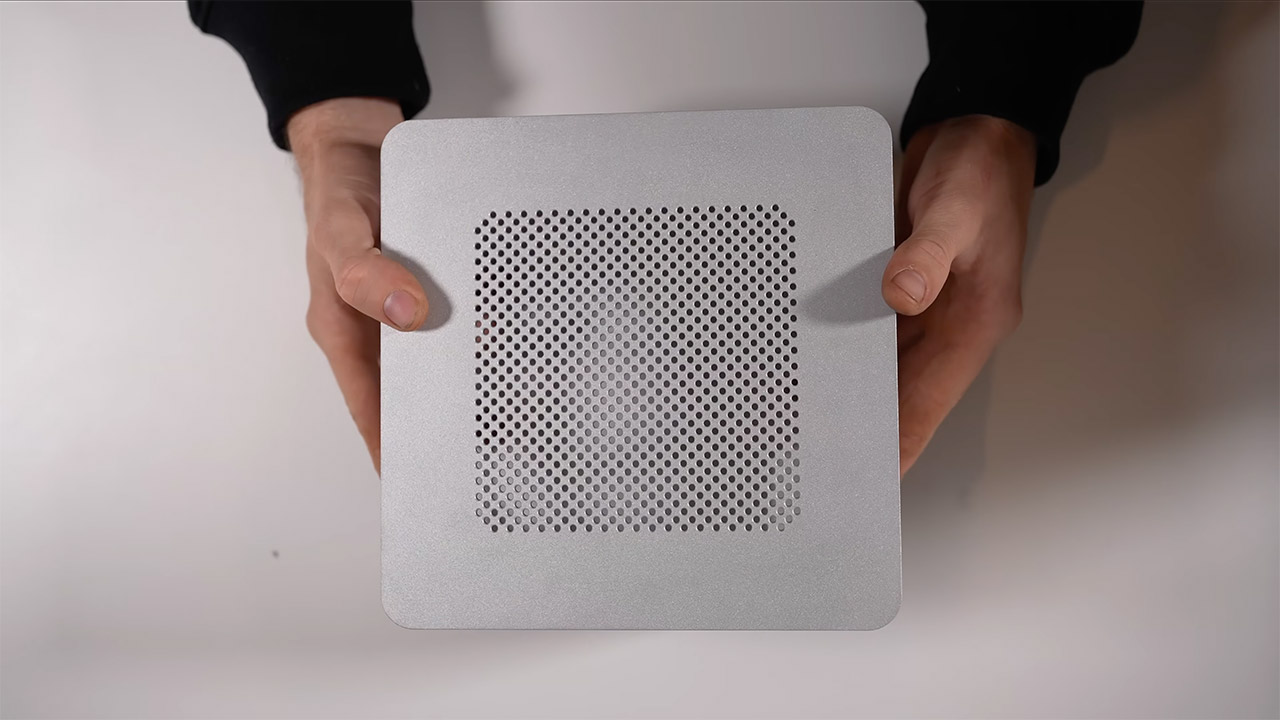
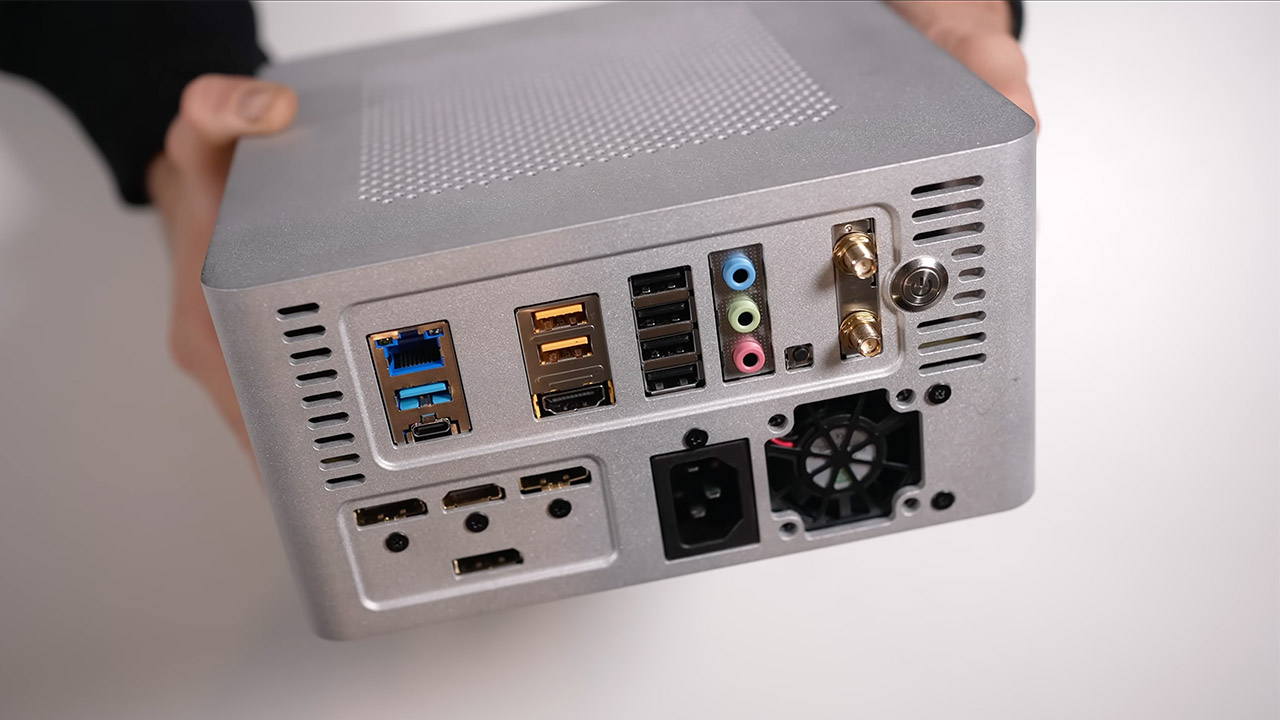
The dimensions are quite self-explanatory: the base is 196 millimeters on each side, somewhat smaller than the original, and he added 5 millimetres to the height, giving you a total volume of 3.8 liters. When you look at the top panel, it is sleek and ver similar to the Apple design. To make the front and sides as simple as possible, he used four small feet to elevate everything off the surface and discreetly placed the power button on the back.

Mac Studio Clone Replica Build
Inside, the magic happens without becoming too heated, just as it should. It is outfitted with a Ryzen 5 9600X processor, 16GB of DDR5 RAM, and a 1TB NVme SSD for storage. A low profile RTX 5060 card handles the graphics, and it fits perfectly beneath the motherboard. Then there’s the ultra-low profile Noctua CPU cooler, which stands only 37 mm tall, and a 600W Flex ATX power supply in the lower portion. He even went so far as to insert foam padding between all of the components to prevent shaking when it was packed or moved.

Mac Studio Clone Replica Build
Putting it all together required patience, as he had to remove the motherboard’s rear I/O shield to save a few millimeters before securing everything with four screws. The bottom plate glides into position and fastens with countersunk bolts, leaving no visible hardware. There are three apertures in the top for the graphics card’s fans to draw air from below and push heat out; there are no goofy vents on the sides, just good old-fashioned aluminum walls that absorb and radiate heat quite efficiently.

Mac Studio Clone Replica Build
Real-world tests reveal that PhasedTech’s cautious engineering paid off, as Counter-Strike 2 runs at a brisk 300 frames per second at 1440p on medium settings, while Valorant remains silky smooth. During an extended session, the graphics card reaches its maximum temperature of roughly 65 degrees, while the processor remains cool in the low 70s. The metal enclosure becomes somewhat warm to the touch, which is really a positive thing, or proof that the casing is assisting in the removal of excess heat, and the fans are quiet enough to hum away in the background, making them ideal for ordinary office work.

Advertisement

Source link

Continue Reading

Tech

SAP unveils Autonomous Enterprise with 200+ AI agents and Anthropic partnership at Sapphire 2026

Published

on

TL;DR

SAP unveiled the Autonomous Enterprise at Sapphire 2026, embedding 200+ AI agents into its core business applications and partnering with Anthropic to make Claude its primary reasoning engine, betting that owning business process logic matters more than owning the AI model as its stock falls 41 per cent.

Christian Klein opened the SAP Sapphire keynote on Monday with a question that no chief executive of Europe’s most valuable technology company should need to ask. “Will SAP be a software company in the future?” The answer, delivered by SAP’s own AI assistant Joule at the end of the presentation, was that SAP is becoming a business AI company. The question was rhetorical. The 41 per cent decline in SAP’s share price over the past six months was not.

Advertisement

SAP unveiled what it calls the Autonomous Enterprise, a unified platform comprising more than 50 domain-specific AI assistants orchestrating over 200 specialised agents across finance, supply chain, procurement, human resources, and customer experience. The company announced a partnership with Anthropic to embed Claude as a primary reasoning engine across its AI-enabled portfolio. It launched a 100 million euro partner fund to accelerate deployment. It introduced seven vertical Industry AI solutions. It revealed agent-led migration tooling that it claims can reduce ERP transformation efforts by more than 35 per cent.

The announcement is the largest AI product launch in SAP’s 53-year history. It is also, unmistakably, a survival strategy.

The context

The 💜 of EU tech

The latest rumblings from the EU tech scene, a story from our wise ol’ founder Boris, and some questionable AI art. It’s free, every week, in your inbox. Sign up now!

Advertisement

SAP’s stock has lost more than a third of its value since peaking at 306.60 euros in July 2025. The January 2026 earnings call triggered a 15 per cent single-day decline, the steepest since 2020, after cloud revenue guidance fell short of expectations. The Q1 2026 results in April showed cloud revenue growing 27 per cent at constant currencies to 5.96 billion euros, but total revenue of 9.56 billion missed analyst forecasts, sending the stock down another six per cent in after-hours trading.

The problem is not SAP’s cloud business. Cloud ERP Suite revenue grew 30 per cent at constant currencies. Current cloud backlog reached 21.9 billion euros. The problem is the market’s judgement of what cloud revenue will be worth when AI agents start replacing the human users who generate per-seat licence fees.

In February, Workday’s chief technology officer traded his C-suite title for a technical staff role at Anthropic, a defection that crystallised the talent drain from legacy enterprise software to the AI companies building tools to displace it. The same month, a wave of agentic AI product launches from Anthropic, Salesforce, and Google erased roughly 285 billion dollars from SaaS company valuations in 48 hours, an event the financial press now calls the SaaSpocalypse.

SAP’s market capitalisation has fallen from more than 300 billion dollars to roughly 200 billion. The company that runs the back office of the global economy is being repriced as though it might not run the back office of the future.

Advertisement

The bet

The Autonomous Enterprise is SAP’s answer. The architecture has three layers. The SAP Business AI Platform provides the infrastructure for building, contextualising, and governing AI agents. The Autonomous Suite embeds those agents into core business applications. And Joule Work, a new interface, replaces the traditional screen-by-screen navigation with a conversational layer in which users describe a desired business outcome and Joule orchestrates the workflows, data, and agents to deliver it.

The most concrete demonstration is the Autonomous Close Assistant, which SAP says can compress a financial close process from weeks to days by automating journal entries, reconciliation, and error resolution across the entire cycle. The assistant does not replace the finance team. It orchestrates the agents that execute the tasks the finance team currently performs manually, while the humans approve, override, and govern.

This distinction matters. SAP is not selling AI that eliminates enterprise software. It is selling AI that makes enterprise software do more of the work that humans currently do inside enterprise software. The agents run within the same approval workflows, compliance frameworks, and governance controls that already govern human decisions in SAP systems. The lock-in does not weaken. It deepens.

The partnership

The Anthropic deal makes Claude a primary reasoning and agentic capability embedded across SAP’s solution portfolio. The integration goes beyond a standard API arrangement. Anthropic and SAP will collaborate to build custom agents and agentic workflows optimised for industries including public sector, healthcare, education, life sciences, and utilities.

Advertisement

SAP also announced expanded partnerships with Microsoft, bringing RISE with SAP onto Azure with deeper integration; Amazon Web Services, enabling zero-copy data sharing between SAP Business Data Cloud and Amazon Athena; Google Cloud, for bidirectional agent-to-agent interoperability; and Palantir, whose AIP platform will handle data migration scenarios alongside SAP’s agent-led transformation toolchain.

Anthropic is already embedding Claude into accounting software through its partnership with Xero, bringing AI-powered financial intelligence to millions of small businesses. The SAP deal extends that logic to the enterprise. Claude will power agents that take action for hundreds of thousands of SAP customers across finance, HR, procurement, and supply chain. A treasury manager can ask Joule to prepare a CFO briefing for a bank meeting and receive a completed presentation populated with live data, flagged risks, and analysis within minutes.

The question is whether the AI partner is also the AI competitor. Anthropic’s enterprise revenue has grown to the point where more than 1,000 businesses spend over a million dollars a year on its services. Its marketplace sells Claude-powered tools that perform functions SAP’s own applications handle. SAP is embedding the technology of a company whose long-term trajectory is to make SAP’s traditional product unnecessary.

The migration

SAP holds one card that no AI startup can match. Roughly 17,000 companies are still running SAP ECC, the legacy ERP system whose mainstream maintenance ends in December 2027. Extended support runs to 2030, but at higher cost and with diminishing returns. Every one of those companies must migrate to S/4HANA Cloud or find an alternative. Most will migrate.

Advertisement

The Autonomous Enterprise announcement converts that forced migration into an AI upsell. RISE with SAP customers will receive three Joule Assistants activated within their first year. SAP GROW customers get access to the full assistant portfolio at onboarding. The agent-led transformation tooling, built with Palantir, automates system analysis, code remediation, configuration, and testing at scale, reducing the effort, cost, and risk that have kept thousands of companies on the legacy platform.

SAP is using the deadline it created to sell the AI platform it just built. The 17,000 holdouts are not just a migration challenge. They are a captive market for the most expensive AI product launch in enterprise software history.

The market

The five largest technology companies are collectively spending more than 650 billion dollars on AI infrastructure in 2026, and the enterprise software companies that sit on top of that infrastructure are racing to prove that AI agents generate revenue rather than destroy it. Salesforce’s Agentforce has reached 540 million dollars in annual recurring revenue across 18,500 enterprise customers. ServiceNow is positioning itself as the AI control tower for IT and HR workflows.

Oracle has assembled more than 16 billion dollars in data centre financing to pivot toward AI infrastructure, a bet that the future of enterprise technology is measured in compute capacity rather than software licences. SAP’s approach is different. It is not building data centres. It is embedding agents into the business processes that the data centres ultimately serve.

Advertisement

The strategic logic is that AI will commoditise software interfaces but not business process logic. Anyone can build a chatbot. Not anyone can build a chatbot that understands the intercompany elimination rules in a multinational financial close, or the procurement compliance requirements of a German automotive manufacturer, or the lot-tracing regulations in pharmaceutical supply chains. SAP’s 53 years of accumulated process knowledge is the moat. The AI agents are the means of monetising it.

The question

Anthropic has reached a one trillion dollar implied valuation on secondary markets, roughly five times SAP’s current market capitalisation. The company that SAP just made its primary AI partner is worth more than SAP. The company that builds the reasoning engine is valued higher than the company that owns the business processes the engine reasons about.

That valuation gap is the market’s current answer to Klein’s question. The market believes that AI companies will capture more value than the enterprise software companies AI is embedded into. SAP is betting that the market is wrong, that the value accrues to whoever owns the process, the data, and the governance layer, not whoever builds the model.

The Autonomous Enterprise will take years to validate. The 200 agents and 50 assistants are launching in phases through 2026 and into 2027. The Industry AI solutions roll out quarterly. The Anthropic integration is in its early stages. The migration deadline will force millions of decisions over the next 18 months about whether to adopt SAP’s AI stack or look elsewhere.

Advertisement

Klein asked whether SAP will be a software company in the future. The honest answer is that SAP does not know. What it knows is that 300,000 customers run their most critical business operations on SAP systems, and that the only way to keep them is to make those systems do things that used to require the people who operate them. The Autonomous Enterprise is not a product launch. It is a wager that the company which automates the work will remain more valuable than the companies whose workers it automates away.

Source link

Advertisement
Continue Reading

Tech

Yamaha YHT-4970U Home Theater in a Box System Offers a Budget Friendly Soundbar Alternative

Published

on

Yamaha’s new YHT-4970U Home Theater in a Box makes a pretty direct argument against spending $700 on another soundbar. The system bundles Yamaha’s new RX300A AV receiver with a matched 5.1-channel speaker package, speaker wire, and a subwoofer cable, giving first-time home theater buyers a real AVR-based surround system in one box.

No, it will not be as clean or idiot-proof as a soundbar. You will have to run wires. You will have to place speakers. Civilization may survive. The payoff is discrete surround channels, a real receiver at the center of the system, and an upgrade path that most soundbars simply do not offer at this price point.

The RX300A AVR

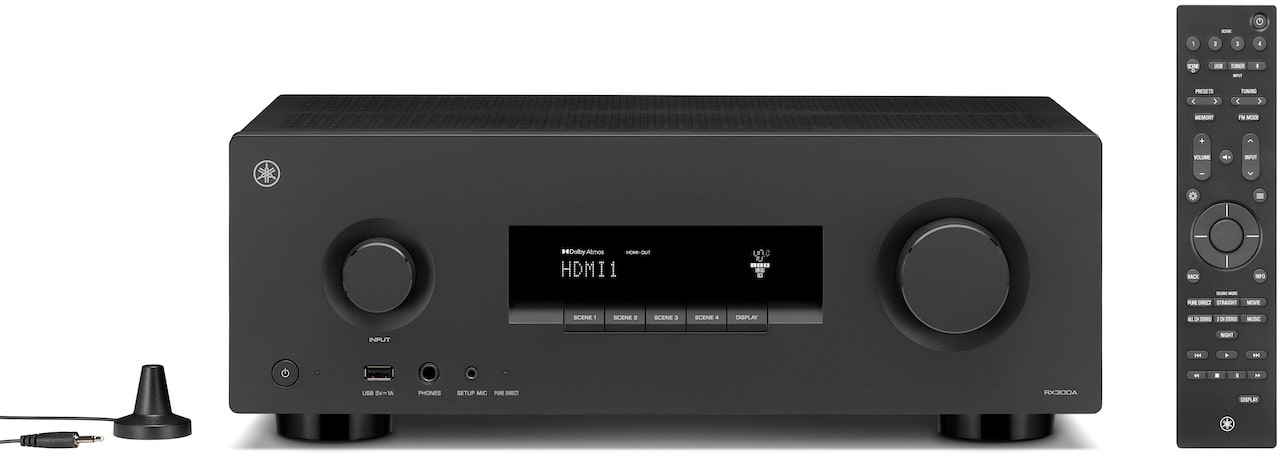
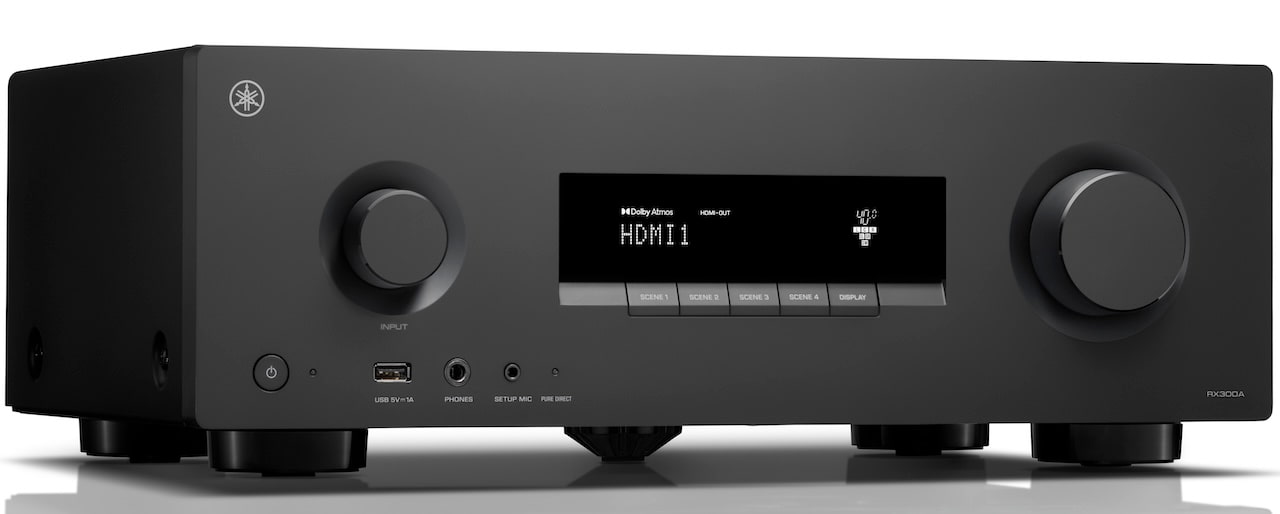
yamaha-rx300a-front-mic-remote

The RX300A AV receiver included with the YHT-4970U updates the look of Yamaha’s previous entry-level design, moving away from the older RX-V385, which originally arrived in 2018. The new front panel is cleaner and less crowded, with fewer visible buttons and simpler labeling, while still keeping the core controls easy to find. It is not a radical redesign, but it does make the receiver look more current and easier to understand for buyers who may be setting up an AVR-based system for the first time.

The RX300A includes an Anti‑Resonance Technology (A.R.T.) Wedge. This is a center-mounted “fifth foot” from Yamaha’s flagship AVENTAGE series that helps reduce vibration and improve stability, supporting cleaner, more accurate sound reproduction.

The incorporation of HDMI 2.1 supports high‑performance video sources, including 4K/120Hz and 8K/60Hz pass-through, along with Dolby Vision and HDR10+ for improved contrast, color accuracy, and detail. Gaming‑focused features, such as Variable Refresh Rate (VRR) and Auto Low Latency Mode (ALLM), help ensure smooth, responsive gameplay when paired with modern consoles.

Advertisement
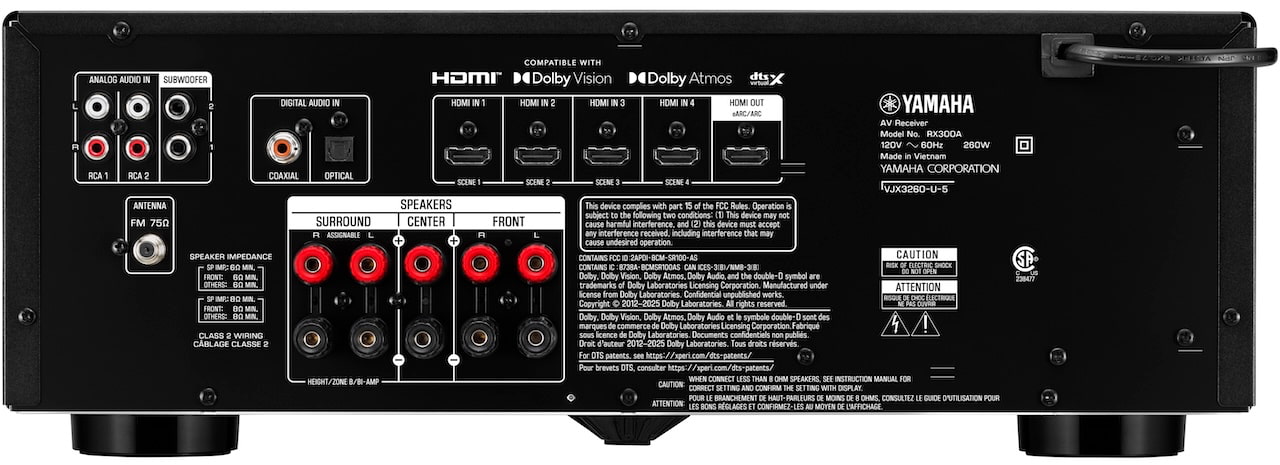
yamaha-rx300a-back

Room Correction

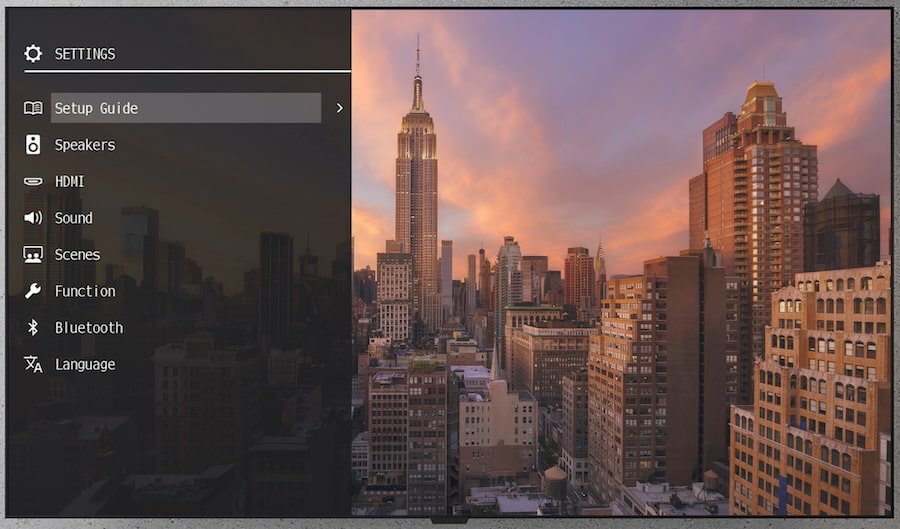
The RX300A  provides a setup microphone that enables automatic room correction for the YHT-4970U system by measuring room acoustics and speaker behavior. This allows the receiver to optimize sound performance for the listening environment. An on-screen setup guide further simplifies installation by walking users through connections and configuration step by step.

yamaha-rx300a-rx500a-on-screen-display

Sound Setting Simplicity

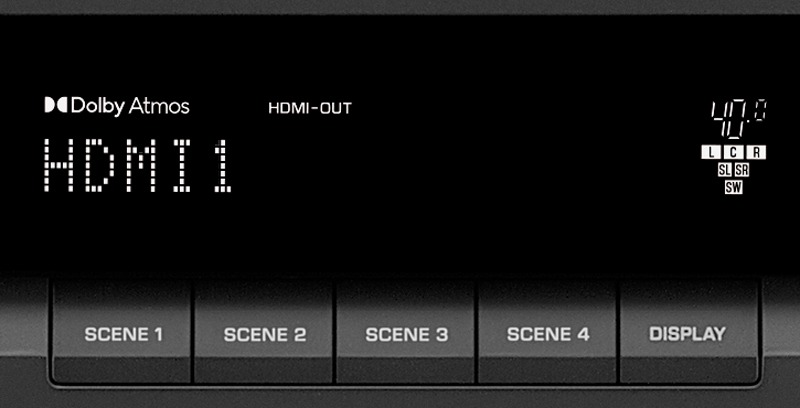
The RX300A also includes Yamaha’s Scene buttons, which let users store and recall common settings with a single press. Each Scene can be assigned to an input, sound program, and related playback settings, making it easier to jump between TV, movies, music, and gaming without digging through menus every time. It is a practical feature for an entry-level home theater system because it reduces setup friction and keeps the receiver from feeling like homework with speaker terminals.

yamaha-rx300a-scene-buttons

The RX300A supports Dolby Atmos in two ways. If you run speaker wires to the rear of your room and place speakers there for 5.1 channels, the receiver can add virtual height effects to simulate sound coming from above you. If instead, you want real height channels or you don’t want to run wires to the back of the room, you can configure the receiver for height channels and mount those extra speakers on the ceiling or high on the front or side wall for discrete height effects. This would be a real 3.1.2-channel Dolby Atmos system, with the receiver creating virtual rear channel effects. Note that Yamaha calls this a “3.2.2-channel” configuration, because there is a second subwoofer output on the receiver that could can use if you have a second sub.

And while the RX300A does not natively decode DTS:X, it does support DTS Virtual:X, which is designed to create a more spacious height effect from DTS soundtracks without requiring physical height speakers. That distinction matters. Real height channel decoding and real height speakers will deliver the more convincing immersive sound experience, while virtual processing is the compromise for rooms where adding more speakers is not practical. Useful? Yes. Ideal? Nope. But keep in mind, people, this is an entry level receiver so it can’t do everything.

For wireless connectivity, Bluetooth Multipoint allows two devices (such as a smartphone and tablet) to remain paired simultaneously, making it easy to switch between sources without reconnecting. The RX300A can also be used with Bluetooth headphones or speakers. 

The Speakers and Subwoofer

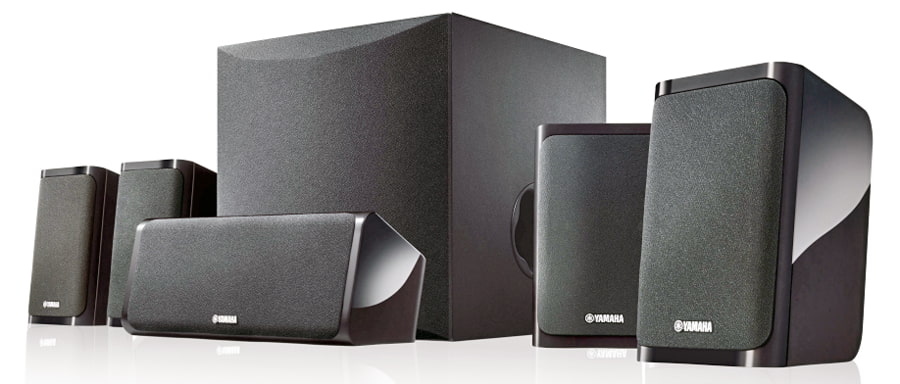
yamaha-yht-4970-speakers

The RX300A is the control center of the YHT-4970U, but Yamaha also includes the rest of the basic 5.1-channel speaker package in the box. The system comes with two compact front speakers, two compact surround speakers, a compact center channel speaker, and an 8-inch, 50-watt powered subwoofer, with the speakers and subwoofer connecting to the receiver using standard speaker wire and audio cable connections.

Advertisement. Scroll to continue reading.
Advertisement

Pro Tip #1: The package includes one powered subwoofer, but the RX300A provides two subwoofer outputs, so a second subwoofer can be added later if the room or your bass addiction demands backup.

Pro Tip #2: Because the RX300A uses standard passive speaker connections and powered subwoofer outputs, the included speakers are not a dead end. Owners can upgrade the front, center, surround speakers, or subwoofer later without replacing the entire system. That is one of the biggest advantages over most soundbar packages: the YHT-4970U starts as a complete system, but it does not have to stay frozen that way forever.

Comparison

Yamaha Model YHT-4970U (2026) YHT-4950U (2019)
Product Type Home Theater-in-a-Box Home Theater-in-a-Box
Price $699.99 $559.99
Included AVR RX300A RX-V385
Channels 5.2  5.1
Decodable Channels  5.1  5.1
Amplified Channels 5
Output Power  70 W (8 ohms, 20 Hz – 20 kHz, 0.09% THD, 2-ch driven)
145 W (6 ohms, 1 kHz, 10% THD, 1-ch driven) 
70 W (8 ohms, 20 Hz – 20 kHz, 0.09% THD, 2-ch driven)
145 W (6 ohms, 1 kHz, 10% THD, 1-ch driven) (JEITA)
Bi-amp Capable  Yes Yes
Surround Sound Decoding Formats  Dolby Atmos
Dolby True HD
Dolby Digital Plus
Dolby Digital
DTS 
Dolby True HD
Dolby Digital Plus
Dolby Digital
DTS-HD Master Audio
DTS- HD High Resolution
DTS
DTS 96/24
DTS Neo:6
Surround Sound Post Decoding Formats  Dolby Surround 
DTS Virtual:X
Not Indicated
Network Decoding Formats  No No 
USB Decoding Formats  MP3
MPEG4-AAC
WM
WAV 
MP3
MPEG4-AAC
WMA
WAV 
HDMI Decoding Formats  PCM (8ch max) PCM (8ch max)
Sound Modes  Pure Direct
Straight
Movie
All Channel Stereo
2 Channel Stereo
Music
Night 
Direct 
Straight
Enhancer 
Bass program
BD/DVD
TV 
CD
Radio
Zone B  Yes  Not Indicated
Room Calibration  Room Correction  YPAO
Other Features  Dialogue Level
Subwoofer Trim
Extra Bass
Lip Sync 
Dialogue Level
Subwoofer Trim
Extra Bass
Lip Sync
HDMI Connections 4 Inputs / 1 Output  4 Inputs / 1 Output 
HDMI Features  HDMI 2.1 
8K60Hz/4K120Hz
eARC, ARC
VRR
ALLM
QMS
HDCP 2.3
CEC
Auto Lip Sync
Deep Color
x.v. Color
HD audio playback
HDMI Version 2.0b
Video Upscaling To 4K
eARC, ARC
HDCP 2.2
CEC
Auto Lip Sync
Deep Color
x.v. Color
HD audio playback
High Dynamic Range (HDR) Support  HDR10+
HDR10
Dolby Vision
Hybrid Log-Gamma 
HDR10
Dolby Vision
Hybrid Log-Gamma
Headphone Output  1
Subwoofer Pre-outs  1
HDMI  4 Inputs / 1 Output  4 Inputs / 1 Output 
Analog RCA Inputs  2
Analog Aux Input No 1 x 1/8″ / 3.5 mm Aux (Front)
Optical Input 
Coaxial Input  2
USB  1 (Audio File Playback from a Mass Storage Device, Firmware Updates) 
FM/AM Tuner  Yes / No  Yes/Yes
Bluetooth  Yes (Ver. 5.3, Multipoint)  Yes (Version 2.)1
Streaming  No (Streaming through Bluetooth only) No (Streaming through Bluetooth only)
Wi-Fi / Ethernet Por No No
Speaker Output  5 (binding post terminals)  5 (binding post terminals) 
Speaker Design 2 x Front, Bass Reflex
2 x Surround: Bass Reflex
1 x Center: Acoustic Suspension
2 x Front, Bass Reflex
2 x Surround: Bass Reflex
1 x Center: Acoustic Suspension
Speaker System Frequency Response Not Indicated 28 Hz to 25 kHz
Speaker System Power Handling Nominal Input Power 30 W per Channel

Max Input Power 100 W per Channel

Advertisement
Nominal Input Power 30 W per Channel

Max Input Power 100 W per Channel

Speakers Impedance 6 Ohms 6 Ohms
Speakers Sensitivity Front, Surround: 83 dB, 2.83 V/m

Center: 84 dB, 2.83V/m

Advertisement
Front, Surround: 83 dB, 2.83 V/m

Center: 84 dB, 2.83V/m

Speaker Drivers 1x 2.75″ / 69.85 mm Full-Range Cone per Speaker 1x 2.75″ / 69.85 mm Full-Range Cone per Speaker
Subwoofer Powered, Bass Reflex (twisted flare port)

Power Output RMS: 50 W (5 Ohms, 100 Hz, 10% THD)

Advertisement

Dynamic: 100 W (5 Ohms)

Frequency Response: 28 to 200 Hz

Driver: 1x 8″ / 203.2 mm Cone

Powered, Bass Reflex
Power Output RMS: 50 W (5 Ohms, 100 Hz, 10% THD)
Advertisement

Dynamic: 100 W (5 Ohms)

Frequency Response: 28 to 200 Hz

Driver: 1x 8″ / 203.2 mm Cone

Power Consumption  260W  AVR: 400W
Subwoofer: 40W
Standby Power Consumption  ≤0.3W  ≤ 0.2 W 
Auto Power Standby  Yes  Yes 
App  Not Indicated Not Indicated
Dimensions (AVR) 434W x 157H x 319D mm
Advertisement

17-1/8”W x 6-1/8”H x 12-1/2”D 

17.13″W x 6.31″H x 12.56″D
Dimensions (Speakers) Not Indicated Front and Surrounds: 4.38 x 6.88 x 4.63″ / 111.13 x 174.63 x 117.48 mm

Center: 10.88 x 4.38 x 4.63″ / 276.23 x 111.13 x 117.48 mm

Dimensions (Woofer) 11” W x 11” H x 13” D 
Included Accessories  Remote Control
Batteries
FM Antenna
Setup Mic
Microphone Stand
Quick Guide
Safety Guide 
Remote Control
Batteries
AM/FM Antenna
Setup Mic
Microphone Stand
Quick Guide
Safety Guide 

The Bottom Line 

The Yamaha YHT-4970U makes sense for buyers who want a real 5.1-channel AVR-based home theater system without buying every piece separately. It also offers a flexible configuration option to use front height speakers instead of surround speakers for Dolby Atmos, in case running wires to the back of your room is problematic. For $700, it delivers discrete speakers, a powered subwoofer, Bluetooth, HDMI connectivity, and a genuine upgrade path.


The limitations are clear. There is no discrete 5.1.2-channel option for Dolby Atmos. That would take 7 amplifier channels, where this only has 5. And the RX-300A receiver doesn’t support DTS:X decoding. But in today’s Dolby Atmos-heavy streaming and physical media ecosystems, this may not be that big a deal to most buyers. Also, the included speakers are likely the starting point, not the finish line. The good news is that the RX300A uses standard speaker and subwoofer connections, so owners can upgrade the speakers or add a second subwoofer later as budget and available space allow.

Advertisement

Who is it for? First-time home theater buyers, secondary rooms, and anyone who wants actual surround sound instead of another soundbar trying to do architectural drawings with DSP.

Pricing & Availability

  • Yamaha YHT-4970U 5.1-Channel Home Theater in a Box – $699.95 (July 2026)
  • Yamaha RX300A 5.2-Channel AVR – $399.95 (June 2026)

Source link

Continue Reading

Tech

Today’s NYT Connections: Sports Edition Hints, Answers for May 13 #597

Published

on

Looking for the most recent regular Connections answers? Click here for today’s Connections hints, as well as our daily answers and hints for The New York Times Mini Crossword, Wordle and Strands puzzles.


Today’s Connections: Sports Edition isn’t terribly tough, especially if you know the team names of one certain state. The purple category is tricky, but what else is new? If you’re struggling with the puzzle but still want to solve it, read on for hints and the answers.

Connections: Sports Edition is published by The Athletic, the subscription-based sports journalism site owned by The Times. It doesn’t appear in the NYT Games app, but it does in The Athletic’s own app. Or you can play it for free online.

Advertisement

Read more: NYT Connections: Sports Edition Puzzle Comes Out of Beta

Hints for today’s Connections: Sports Edition groups

Here are four hints for the groupings in today’s Connections: Sports Edition puzzle, ranked from the easiest yellow group to the tough (and sometimes bizarre) purple group.

Yellow group hint: Get better at something.

Advertisement

Green group hint: Beehive State.

Blue group hint: They led the team.

Purple group hint: Fore!

Answers for today’s Connections: Sports Edition groups

Yellow group: Hone one’s skills.

Advertisement

Green group: Utah teams.

Blue group: Hall of Fame baseball managers.

Purple group: Starts with a golf scoring term.

Read more: Wordle Cheat Sheet: Here Are the Most Popular Letters Used in English Words

Advertisement

What are today’s Connections: Sports Edition answers?

completed NYT Connections: Sports Edition puzzle for May 13, 2026

The completed NYT Connections: Sports Edition puzzle for May 13, 2026.

NYT/Screenshot by CNET

The yellow words in today’s Connections

The theme is hone one’s skills. The four answers are exercise, practice, train and work out.

The green words in today’s Connections

The theme is Utah teams.  The four answers are Jazz, Mammoth, Royals and Utes.

Advertisement

The blue words in today’s Connections

The theme is Hall of Fame baseball managers. The four answers are  Leyland, Mack, Stengel and Weaver.

The purple words in today’s Connections

The theme is starts with a golf scoring term. The four answers are Acela (ace), bogeyman (bogey), eagle-eyed (eagle) and paradise (par).

Source link

Advertisement
Continue Reading

Tech

Canadian ‘Pickle Fest’ Rebranded Under Bullshit Trademark Threat

Published

on

from the quite-a-pickle dept

I’ll let you all in on a little secret: I love pickles. Yes, let that statement spawn a million jokes in the comments; I don’t care. Pickles are great and the fresher the better. I began gardening specifically so that I could grow cucumbers, garlic, onion, and dill, just so I could make my own at home. And, because I investigate pickle brines the way a sommelier inspects a glass of red zinfandel from a freshly tapped cask, I’ve been to my share of pickle festivals.

So perhaps I’m in a slightly protective posture having come across an article about how one pickle festival in Canada, the Downtown Brandon International Pickle Fest, had to rebrand under threat from Picklefest Canada, which somehow has a trademark on the term “Pickle Fest”.

Aly Wowchuk, who is one of the organizers, said the trademark issue forced a name change — but not a change in spirit.

“It’s the same event, we have the same heart and soul, it just has a different name,” she told the Sun. “We were not sued … we received an email on behalf of Picklefest Canada’s lawyer about the use of ‘Pickle Fest.’ There was a lot of back and forth between lawyers about the use of the name, but ultimately, it was easier for us to move forward and change the name of the Brandon Pickle Fest event.”

This is the outcome of a point we’ve made for years and years: Trademark bullying happens because it generally works. And this is trademark bullying. As in the States, Canadian trademark law does include prohibitions on trademarking descriptive marks. Picklefest Canada is an organization with a trademark on its name and logo and it primarily, you guessed it, puts on pickle festivals. To that end, its trademark rights ought to be extremely limited. Limited, I would say, to its use of the term in overall branding and marketing iconography, as that can be described as original and creative.

Advertisement

But the idea that such a trademark could be wielded to prevent other people, groups, or municipalities from putting on their own pickle fests is plainly at odds with how trademarks are supposed to work. But when a small entity is bullied by a larger one, they often feel they have no choice but to rebrand.

Wowchuk said the new name, Brandon Brine Bash, was chosen in part to stand out in an increasingly crowded field of pickle-themed events.

“With the popularity of pickle festivals across Canada and internationally, almost every variation of ‘pickle party’ or ‘pickle palooza’ has been used,” she said. “We wanted something unique that included Brandon and was easy to find.”

The rebrand also required updates to the festival’s logo, created by local artist Alexander Matheson. While the iconic pickle design has been retained and modernized, references to “Pickle Fest” have been removed.

It’s too bad that a simple festival to celebrate one of man’s greatest inventions has to devolve in overly protective intellectual property bullshit. And it’s equally too bad that nobody has yet stood up to Big Pickle to get this nonsense trademark cancelled.

Advertisement

Filed Under: canada, picklefest, pickles, trademark

Companies: brandon brine bash, pickle fest, picklefest, picklefest canada

Source link

Advertisement
Continue Reading

Tech

iRacing zooms onto the Apple Vision Pro via iRacing Connect

Published

on

Racing fanatics who own Apple Vision Pro headsets can now enjoy a high-quality, mixed reality racing simulation experience, thanks to iRacing Connect, available starting Tuesday, provided that they own all other required hardware.

Of course, we already iRacing was coming to Apple Vision Pro, as Eddy Cue, Apple’s Services chief, already said as much in April. However, starting Tuesday, May 12, iRacing Connect is available for free in the App Store.

The experience blends a user’s racing rig with a virtual cockpit and aligns the physical steering wheel with the in-game one. It does this via technical integration of CloudXR.

According to an iRacing press release, physics calculations and high-fidelity graphic rendering are performed on PCs equipped with NVIDIA’s RTX GPU. Frames are encoded and shared wirelessly over Wi-Fi to iRacing Connect on visionOS.

Advertisement

“We’re thrilled to have worked with Apple and NVIDIA to bring iRacing to Apple Vision Pro,” said iRacing president Tony Gardner.

“With the ultra-high-resolution capabilities of Apple Vision Pro and the power of NVIDIA’s RTX GPU, this new spatial experience puts our users in the driver’s seat with a level of immersion and fidelity never before seen in sim racing.”

Those who wish to try out iRacing will need an Apple Vision Pro running visionOS 26.4, a PC with an Nvidia graphics card model 4070Ti+ or 5070Ti+ running driver version 580+, and a Wi-Fi 6+ enabled router capable of over 1000Mbps on the 5Ghz band.

Advertisement

Source link

Continue Reading

Trending

Copyright © 2025