An exercise bike is a great tool if you’re looking to get cardio in at home or at the gym. However, if you don’t properly set it up or do too much too soon, it can ruin progress. Even if you’ve been cycling for years, it helps to get a refresher on the best cycling practices.
To make sure you’re using an exercise bike properly and doing the right workouts, I spoke with several cycling experts. They break down the common mistakes you’re likely making on an exercise bike and how to fix it.
1. Your seat is too low
One of the first lessons I learned when I started taking group cycling classes was that you need to properly adjust the seat height. Aviron coach and certified indoor cycling instructor John Steventon says the right seat height is key.
Advertisement
“[If the seat is] too low, they won’t be able to get full extension of the legs, often needing to cycle with their knees splayed outward to make room for them,” Steventon explains. This leads to a loss of potential power and a compressed and uncomfortable pedal stroke. “If the seat is too high, the rider will risk bouncing from side to side as they lean off the side of the saddle, trying to get the right extension of the legs.”
According to Matt Wilpers, the saddle should be positioned high enough that your knee is slightly bent and not locked.
Erik Isakson/Getty Images
Peloton instructor Matt Wilpers offers a couple of tips to keep in mind when setting up your seat. “When riding, bring your one foot to the bottom of the pedal stroke (6 o’clock),” he says. “The saddle should be positioned high enough that there is a slight bend in the knee so that the knee is soft and not locked.” This will prevent you from feeling cramped or having to reach for the bottom of the pedal stroke.
Advertisement
Steventon points out that how the foot sits on the pedal is important, too. “The center spindle that the pedal rotates around should be underneath the ball of the foot because I’ve seen people who ride on their toes, and people who ride on their heels — both reduce power and efficiency of the stroke.”
Wilpers advises trying the “heel test,” which is when you unclip the foot at 6 o’clock to see if your heel can touch the pedal when your leg is straight.
You don’t want the seat too far or too close to the handlebars.
Advertisement
Andrii Borodai/Getty Images
2. The saddle isn’t the right distance from the handlebars
Another factor to consider when setting up your exercise bike’s saddle is its distance from the handlebars. Wilpers says the goal here is to get the knee stacked over the pedal, especially when the pedal is at 3 o’clock. “I usually start with the saddle pushed toward the handlebars and then adjust accordingly when I ride,” he recommends. The problem is that when your seat is too far forward, your knees take on the pressure, and if it’s too far back, the stress lands on the heels.
3. The handlebars are too high
Besides the seat, make sure the handlebars are at the right height. “In general, it’s recommended to keep the handlebars at the level of your saddle or just above,” says Wilpers. “Many competitive cyclists like their handlebars at or slightly below saddle height because it better optimizes both performance and aerodynamics when cycling outdoors.”
Make sure the handlebars are aligned with the saddle on your bike.
Advertisement
Konstantin Ushakov/Getty Images
However, Wilpers says that in some cases, such as if you have back problems, raising your handlebars even further is advised.
4. You skip the warm-up or cool-down
If you’re eager to jump on your bike and get a quick workout in, chances are you’re skipping a warm-up or cool-down. Steventon says that if you want to get your body ready for your workout, spending 10 minutes increasing resistance and cadence before a longer or more intense ride will prime the muscles.
“Rather than slowly working up from 60 revolutions per minute to 110 rpm during the warmup, 30-second bursts at gradually higher reps in between 30 seconds of easy pedalling will allow the warmup to be effective without draining energy before the main workout,” he explains.
Some warm-up exercises Wilpers recommends include:
Advertisement
Hip openers like 90/90s (a stretch that uses internal and external hip mobility), pigeon pose and lateral lunges
Quadruped thoracic rotations (this exercise stretches out your spine)
World’s Greatest Stretch (a full body mobility exercise that targets hips, hamstrings, and spine)
Exercises to wake up the ankles and feet, such as ankle-controlled articular rotations (slow rotational movement of the ankle to improve ankle mobility) and performing the downward dog stretch while pedaling out the calves
If you skip a warm-up or cool-down, you’re missing out on some important steps.
Wera Rodsawang/Getty Images
The cool-down shouldn’t be neglected either. “In some cases, after a particularly hard workout, stopping suddenly can cause the blood to pool in the legs, and the cyclist may get dizzy,” warns Steventon. He recommends spending 5 minutes slowing your cadence to help the muscles keep pumping blood and oxygen as you ease out of the strain of the main workout.
You should also stretch the muscles used during a ride, such as your hamstrings, quads, hip flexors and calves. “Triceps, shoulders and wrists shouldn’t be ignored either,” Steventon says. “These muscles are soaking up the mass of the upper body, bouncing up and down, left and right on the handlebars.”
If you’re riding a bike with a screen, the screen’s position can sometimes lead to neck pain. In those circumstances, Steventon recommends gentle neck stretches to ease off the tension after a workout.
Advertisement
5. Your bike workouts aren’t planned out
If you don’t have a general workout program or structure, you may be using your bike inefficiently. It’s important to make sure that you’re riding with intention if you want to get the most out of it. “Everyone has the same three training variables to manipulate in order to get what they want out of their training: frequency, duration and intensity,” Wilpers says.
Frequency relates to how often you work out, since it’s important to have a consistent riding schedule. “Cycling is great because it’s low impact, meaning it’s easier to recover from it and therefore you can ride more often without much fear of injury,” Wilpers says.
If you’re a newbie, it’s best to focus on easy rides. Steventon recommends new riders aim for two to three rides per week and take a rest day between each cycling workout to let their bodies recover from the workout the day before. “Not only for the muscles, but depending on the length of the ride, there’s an element of saddle discomfort that rest will help,” Steventon explains.
Once you have a riding schedule established, you can focus on duration. This is when you start increasing the length of your sessions.
Advertisement
Finally, once you’ve become comfortable with your bike, you can increase the intensity to improve your fitness. Steventon says more experienced riders are capable of putting in four to five workouts a week.
“The importance of foundation building zone 2 heart rate [exercise performed at 60% to 70% of your maximum heart rate] during longer rides is the same for all riders, but with three more workouts to play with,” Steventon explains. “They can add in some tempo and sprint interval workouts too, pushing the cardio harder, and working at a mix of cadence and resistance through these workouts.”
Below are different ways you can structure your workout depending on your goals:
Advertisement
You should have a plan, whether cycling is your main form of cardio or your choice of cross-training.
Westend61/Getty Images
As the main form of cardio
If cycling is your main focus, Wilpers recommends riding three to five days per week, with one to two intense days, one long day and the remainder as easier rides. Aim to ride for 30 minutes to 2 hours or longer.
As part of a strength-training program
If you’re prioritizing strength training but want to include cycling as your preferred form of cardio, Steventon and Wilpers advise aiming for two to three sessions at a zone 2 heart rate for 20 to 45 minutes.
As part of a cross-training plan
You can also use an exercise bike for cross-training. This could be ideal for runners or other athletes who want a hybrid workout schedule during the week. Steventon says, “Cross-training utilization of cycling can be a very effective way to keep cardio topped up without the impact problems of constantly running.” Wilpers recommends cross-training once or twice per week for 20 to 45 minutes, as long as you’re healthy.
Advertisement
If you have injuries or certain aches from running, you can shift your training to cycling two to four times per week for 20- to 45-minute sessions. Steventon recommends that runners cycle whenever their bodies need to recover from running. “Long, slow rides will keep your fitness foundation strong, with harder sprint intervals tapping into VO2 max improvements,” Steventon says. VO2 max is the maximum rate at which your body consumes oxygen during exercise.
Riding distracted is just as bad as doing too much during a ride.
DaniGonzalez/Getty Images
6. Doing too much or too little on the bike
One of the biggest mistakes people make when riding an exercise bike is either doing too much too soon or coasting while distracted. “Many people seem to think that unless they wake up sore, nothing was accomplished, and on the other end of the spectrum, I see people just pedaling and texting,” says Wilpers.
Advertisement
When riding, remember to focus on the workout at hand. Distractions like texting or answering emails can get in the way of making progress. “Have a purpose and plan before getting on the bike so that your time is structured,” Wilpers suggests. “This will help you stay focused and get the most out of your time.”
Steventon notes that the best way to use a bike or any fitness machine is to mix up the intensities to avoid hitting a plateau. “Long, slow rides, short sprint intervals and tempo rides (moderately hard ride) including hard, long intervals will improve the mitochondria-building, zone 2, foundation end of fitness, while the shorter sprints will help improve the VO2 max end, and the tempo rides are where mental resilience is built,” he says.
7. Wearing the wrong cycling shoes
Wearing the right cycling shoes can improve your riding experience. Depending on the bike, you may need specific cycling shoes, like carbon-fiber cleats, road bike shoes, clip-in shoes, mountain bike shoes or even everyday shoes.
When choosing a cycling shoe, you want to make sure it’s comfortable because they don’t come cheap. Steventon recommends mountain bike shoes if you aren’t sure what to pick. “These are a little bit more flexible and have recessed cleats, making it a lot easier to move around, providing stability in situations where ‘off bike’ moves like squats or weights are included in a cycling class.”
Advertisement
The right shoes can improve your cycling experience.
Getty Images
Wilpers favors clip-in cycling shoes because they’re stiff and lead to better energy transfer from the body to the bike. However, the shoe you pick will depend on the type of bike you’re using, and most importantly, you want the shoe to fit well.
Steventon says everyday gym sneakers are acceptable, but that they may not be the best option. “The pedal efficiency may be compromised even with toe clips that hold these shoes in place on the pedal,” he explains, pointing out that because these shoes tend to be soft-soled, it can be uncomfortable to use for long periods of time.
Advertisement
Wilpers notes that some cycling shoe brands are much narrower than others, so it depends on your needs and comfort. “Lastly, I think it’s worth noting that a good set of road cycling shoes can cost hundreds of dollars, but these shoes typically last up to five years,” he says.
8. You’re not braking correctly
Usually, when you stop an exercise bike, you’re either pressing down the emergency brake or using the resistance knob to slow it down. “Trying to suddenly stop the flywheel or unclip feet while the heavy flywheel still wants to turn has great potential for injury,” warns Steventon. “Always use the resistance knob or emergency brake to slow things down properly, and wait until the flywheel has stopped before unclipping.”
If you aren’t properly braking, you risk injuring yourself.
Advertisement
D_Zheleva/Getty Images
9. You don’t maintain or clean your bike
It’s easy to forget that you need to do maintenance and clean your bike every so often. Wilpers reminds us that all bikes need to be cleaned and maintained. “Cyclists are known for constantly cleaning and occasionally replacing parts on their bikes because this is what it takes to keep your bike working great for many years,” he explains.
Keeping your bike in good condition is important if you want it to last a long time.
Getty Images
One thing people often overlook is adjusting their bike settings annually. “Think about how much your body can change in a year,” explains Wilpers. “You may get stronger, weaker, heavier, lighter, tighter, more flexible and so on.” By adhering to bike settings, you’ll not only have a more comfortable ride but also one that’s customized to your changing needs.
Looking for the most recent Wordle answer? Click here for today’s Wordle hints, as well as our daily answers and hints for The New York Times Mini Crossword, Connections, Connections: Sports Edition and Strands puzzles.
Government’s ‘rushed’ plans damaged public confidence before ministers had even explained how the system would work
Britain’s digital ID push has been mauled by MPs after the government unveiled plans that appeared to arrive several steps ahead of actual policy.
A report from Parliament’s Home Affairs Committee this week concluded the government’s handling of mandatory digital ID plans was “rushed, poorly thought out and failed to make a convincing case.” It warned that ministers had already undermined public confidence with what MPs described as a rushed and inadequate announcement.
Advertisement
According to the committee, there was “no rigorous policy development and no public consultation ahead of the announcement,” which left ministers struggling to answer basic questions about privacy, implementation, safeguards, and how the system would actually operate in practice.
The report said the proposal “came out of the blue, causing alarm and uncertainty” and warned that the government’s “incoherent approach to policy development cannot be repeated if public trust is to be rebuilt.”
The committee stopped short of opposing digital identity outright. Instead, MPs argued that digital ID could still improve access to public services, but only if ministers stop treating national identity infrastructure like a last-minute product launch and start acting as though the public might reasonably want to know what they are signing up for.
Opposition to the wider scheme has been building for months. Greater Manchester mayor Andy Burnham previously warned that tying digital ID to employment checks risked creating a “backdoor national ID system,” while privacy campaigners and civil liberties groups have repeatedly raised concerns about surveillance, data sharing, and function creep since the plans were first unveiled last year.
Advertisement
The government’s approach to consultation has also come under fire. Last month, it barred journalists from joining a digital identity advisory panel event, which did little to quell accusations that ministers were trying to build critical pieces of national identity infrastructure behind closed doors.
Chair of the committee Dame Karen Bradley described the government’s early efforts as “nothing short of a fiasco,” adding: “To the public this announcement came out of the blue and made little sense.”
The report also highlighted growing concern around digital right-to-work checks, which ministers still intend to make mandatory even after backing away from compulsory government-issued ID cards earlier this year. MPs warned this could effectively mean UK citizens would need either a passport or a digital ID simply in order to work legally.
“It is vital that this change is not just treated as an afterthought to digital ID,” the committee wrote, warning that the implications for people without passports had barely been addressed in consultation documents.
Advertisement
The committee also warned that rebuilding confidence may prove difficult given what it diplomatically called the government’s “poor track record of digital transformation.”
In other words, MPs aren’t entirely convinced the same government that brought Britain some of its more memorable public sector IT disasters should be trusted to build national identity infrastructure. ®
A so-called software supply chain attack, in which hackers corrupt a legitimate piece of software to hide their own malicious code, was once a relatively rare event but one that haunted the cybersecurity world with its insidious threat of turning any innocent application into a dangerous foothold in a victim’s network. Now one group of cybercriminals has turned that occasional nightmare into a near-weekly episode, corrupting hundreds of open source tools, extorting victims for profit, and sowing a new level of distrust in an entire ecosystem used to create the world’s software.
On Tuesday night, open source code platform GitHub announced that it had been breached by hackers in one such software supply chain attack: A GitHub developer had installed a “poisoned” extension for VSCode, a plug-in for a commonly used code editor that, like GitHub itself, is owned by Microsoft. As a result, the hackers behind the breach, an increasingly notorious group called TeamPCP, claim to have accessed around 4,000 of GitHub’s code repositories. GitHub’s statement confirmed that it had found at least 3,800 compromised repositories while noting that, based on its findings so far, they all contained GitHub’s own code, not that of customers.
“We are here today to advertise GitHub’s source code and internal orgs for sale,” TeamPCP wrote on BreachForums, a forum and marketplace for cybercriminals. “Everything for the main platform is there and I very am happy to send samples to interested buyers to verify absolute authenticity.”
The GitHub breach is just the latest incident in what has become the longest-running spree of software supply chain attacks ever, with no end in sight. According to cybersecurity firm Socket, which focuses on software supply chains, TeamPCP has, in just the last few months, carried out 20 “waves” of supply chain attacks that have hidden malware in more than 500 distinct pieces of software, or well over a thousand counting all of the various versions of the code that TeamPCP has hijacked.
NASA plans to open competition for the contract to operate JPL for the first time in nearly a century, meaning Caltech’s historic role managing the iconic deep-space lab could come to an end when its current agreement expires in 2028. According to JPL, Caltech has managed the lab since the its inception in the 1930s, and has done so for NASA since the agency was established in 1958. Space.com reports: According to the JPL statement, Caltech has been preparing for this possible transition since last summer, so the news “comes as no surprise.” But the potential change is part of a larger shakeup for the agency. Earlier this morning, NASA announced a major reorganization, which is separate from the JPL news. “To support the agency’s ambitious short- and long-term goals, NASA is taking action to increase specialization at centers and integrate mission directorates, elevating delivery of technically excellent work,” the agency said in a statement today.
JPL is NASA’s lead center for the robotic exploration of Mars and other deep-space locales. The agency has worked with JPL through Caltech as a manager for nearly 70 years. Though JPL still counts as one of NASA’s field centers, it’s run as a contracted FFRDC (federally funded research and development center). This status has allowed the lab to function slightly differently than other NASA centers; it has a unique sort of independence, though NASA has always had significant oversight of the lab. “As an FFRDC, JPL operates under a special contractual and governance framework designed to ensure that its work is performed in the public interest and aligned with national priorities,” NASA has stated. “The FFRDC model enables NASA to retain access to this depth of capability while maintaining a clear separation between government decision-making authority and contractor execution responsibilities.”
Opening up the competition for institutions beyond Caltech to operate JPL could mean significant changes for everything from day-to-day mission management to big NASA science programs. Until now, JPL and Caltech have been heavily intertwined, with mission personnel, scientists, leadership, and others working closely “across the pond” between JPL and Caltech. JPL mission and program meetings often include Caltech employees and sometimes even take place on its Pasadena campus.
One of Berlin’s rising-star, early stage startups, Peec AI, just crossed $10 million in annualized revenue, according to internal dashboard data seen and verified by TechCrunch.
Peec AI raised its $21 million Series A six months ago. While CEO Marius Meiners wouldn’t disclose its valuation to me at that time (only revealing that it was above $100 million), he did say the startup had grown its revenue to more than $4 million in the 10 months since its launch.
So, it has more than doubled its revenue trajectory, and at a faster pace.
Peec helps brands track and improve their visibility in AI searches. While based in Berlin, it recently opened an office in New York.
Advertisement
It’s also serving as proof of one of the key market shifts happening in Europe’s tech scene.
“Founders these days track revenue much more closely,” Antler partner Christoph Klink was telling me just a couple of days ago. Sitting in a hotel lobby bar during an event-laden week for the tech ecosystem, the Berlin-based VC had offhand mentioned Peec AI as one of the most successful companies in his portfolio, alongside Lovable and others.
My next question was how he defined success, which led to a discussion of recent market cycles. Compared to six years ago, he said, the big change is that success is now defined by growth, not valuation.
Having learned lessons from 2021’s frothiness and subsequent painful return to reality, investors now know that revenue can’t be an afterthought. The corollary is that it isn’t something you can just check on every couple of weeks, Klink told me.
Advertisement
Startups now tend to keep running dashboards on revenue progress, sometimes — as is the case at Peec — visible to all employees.
For some founders, this has required some adjusting; but others were born just for this new cycle.
Peec AI’s product takes the same approach as SEO dashboards, except it helps brands track generative engine optimization (GEO) — visualizing whether they show up when users type a certain set of prompts into ChatGPT and the like.
But as Meiners then told me, he is also a former esports athlete who once ranked among the top 100 League of Legends players. This explains why he would share a revenue tracker with his whole company: his background gave him a unique take on what makes a winning team.
Advertisement
Talent is the first ingredient, and Peec AI took an innovative approach to hiring in Berlin’s competitive market.
Like many startups in the Bay Area, but very few in Europe, it invested in billboards to pitch itself not only to prospective clients, but also to applicants. In our conversation, Klink had recalled with a smile that these billboards were more often than not strategically placed in front of other tech companies across the city.
What those billboards say may differ, but they are part of a narrative that attempts to position Peec AI as a company worth jumping ship for. According to Klink, this signaling is particularly important in the current AI cycle, where companies and investors are piggybacking on trends that are only just emerging — such as AI search.
This bet on undercurrents applies to many startups Klink has invested in, which is why he understands why portfolio companies like Peec AI — and Lovable — not only closely track ARR, but also sometimes publicly disclose revenue milestones despite having absolutely no obligation to do so.
Advertisement
“That’s a way to show it’s working,” Klink said. “It also shows a focus on growth that sets the culture.”
When you purchase through links in our articles, we may earn a small commission. This doesn’t affect our editorial independence.
— Microsoft’s Xbox promoted Scott Van Vliet to the role of chief technology officer. Van Vliet, based in the Los Angeles area, has been with the company across two stints totaling more than seven years, with work on Teams and Azure Communication Services.
“I’ve been a gamer my whole life and an Xbox fan since day one, so this is a rare opportunity to bring together two things I care deeply about: building platforms and gaming,” Van Vliet said on LinkedIn.
The leadership change comes three months after Asha Sharma took over as Xbox CEO — a move that surprised some given her limited video game industry background. Van Vliet’s appointment adds gaming experience to Xbox’s top ranks.
Since Sharma took the helm, Microsoft has canceled its AI-powered Copilot assistant for Xbox and added four executives from CoreAI, the company’s engineering group where she previously worked.
Drew Garner. (LinkedIn Photo)
— Drew Garner was promoted to a newly created chief AI officer role at Smartsheet, the Bellevue, Wash., enterprise software company best known for helping businesses organize and track work. The announcement is just the latest C-suite change for the company.
Garner said on LinkedIn that his mission stays the same, using “AI that earns its keep with the people doing real work.”
Advertisement
Garner became Smartsheet’s VP of engineering in November, just after Rajeev “Raj” Singh took the helm as CEO. The two have significant overlaps in their resumes, with Garner rising to the role of CTO at Accolade during Singh’s tenure as leader of the healthcare platform. And Garner was a senior director at Concur, the Bellevue-based travel expense giant that Singh co-founded.
Tim Castree. (LinkedIn Photo)
— After nearly five years at Amazon, Tim Castreehas left to become chief marketing officer at DoorDash. While the food and retail delivery platform is already a large-scale operation, “there’s still a real entrepreneurial energy that fuels the company, and I loved the idea of joining a business where so much of the growth journey is still in front of us,” he said on LinkedIn.
Castree, based in Ohio, was most recently VP of EU Prime and Marketing at Amazon, overseeing brand, performance and growth marketing across more than 15 European markets.
— Stephan Betz is also leaving Amazon after more than 18 years with the company across two stints. He served as director of software engineering and product for Last Mile Tech, most recently focused on driver assistance and safety technologies, including software powering Amazon’s Rivian EVs. Betz is based in Santa Cruz, Calif.
“What’s next? I am going to take a very long, maybe permanent, break and look for ways to give back in these unprecedented times of change,” he said on LinkedIn.
Advertisement
Betz has also held roles at Microsoft, Google, Groupon and Netflix.
— Bryan Sherman is joining Amazon director of Global Partner Development, focusing on Amazon Ads. Sherman works out of Amazon’s New York office and was previously with Monks, the London-based advertising company.
Katerie Chapman. (LinkedIn Photo)
— Seattle Children’s has appointed Katerie Chapman as senior VP and chief operating officer. Chapman spent 23 years at Virginia Mason Medical Center, rising from administrative intern to president of the Seattle health organization, before joining Kaufman Hall as managing director. She comes to Seattle Children’s from that role.
“(Chapman’s) deep roots in the healthcare community and her proven track record in leading high-performing teams make her the ideal person to lead our operations as we continue to grow and innovate for the patients and families we serve,” said Dr. Christopher Longhurst, CEO of Seattle Children’s.
— Three University of Washington professors have been elected to the American Academy of Arts and Sciences in recognition for their leadership in work that supports research, public policy and the common good.
Advertisement
Magdalena Balazinska, director of the Paul G. Allen School of Computer Science & Engineering, was elected for her work in data management and data science and for her leadership in the field.
Shwetak Patelof the Allen School and the Department of Electrical & Computer Engineering was elected for his work in ubiquitous computing, human-computer interaction and sensor-enabled systems.
Daniel Schindler of the School of Aquatic and Fishery Sciences was elected for his research on the impacts of climate change, urbanization and land use on freshwater ecosystems.
— Pacific Northwest National Laboratory announced two promotions to its senior research leadership team:
Douglas Mans is now associate laboratory director for PNNL’s science mission areas, spanning the physical, computational, Earth and biological sciences.
Daniel Stephens has been named associate laboratory director for PNNL’s National Security Directorate.
— Dr. Toshio Tsukiyama, professor and associate director of Fred Hutch’s Basic Sciences Division, has received the inaugural David and Deborah Lycette Endowed Chair for Cancer Research. Tsukiyama, who has been with Fred Hutch for nearly three decades, studies cell function in pursuit of new strategies for targeting cancer cells with novel therapies.
— Michael Waggoner, founder and former CEO of Corumat, a sustainable packaging startup based in Yakima, Wash., has a new role following the company’s recent closure. Waggoner has joined Simplexity Product Development, a robotics engineering firm, as a senior design engineer.
As OpenAI prepares an IPO, information suggests it is bleeding money. Apple, on the other hand, continues to benefit from AI without all of the spend.
If you didn’t predict it already, you could sense that AI was past its sell-by date when you watched the 2026 Google I/O conference. Half the hyped new technologies seemed worthless or at best old hat, and half were yet again preposterous exaggerations about saving the human race from something or other.
What never changes is that AI is both said to be this staggering technology right now and, if you press a little, to well, no, it isn’t, but it’s going to be someday. You just have to believe, and to spend money.
And this is where we are now. Companies keep spending incredible sums of money, but according to The Information, OpenAI itself has lost $1.22 for every $1 it made in revenue.
Advertisement
The firm does predict that it will hit $30 billion in revenue for the whole of 2026. But according to the Wall Street Journal, it’s going to spend around $600 billion on servers and datacenters in the next few years.
This includes around $100 billion just on datacenter capacity. Between now and around 2033, it has committed to $1.4 trillion in deals with processor manufacturers and cloud providers.
That money is not going to come out of CEO Sam Altman’s pocket. Instead, OpenAI hopes to get help from the federal government. It wants the government to guarantee financing for the processors it needs.
“This is where we’re looking for an ecosystem of banks, private equity, maybe even governmental, the ways governments can come to bear,” said OpenAI CFO Sarah Friar. “[That] can really drop the cost of the financing but also increase the loan-to-value, so the amount of debt you can take on top of an equity portion.”
Advertisement
Friar said that in November 2025, and at the same time denied that the company was planning an Initial Public Offering (IPO) to raise money. Now CNBCreports that the firm will be filing for an IPO in the next few weeks, although it continues to deny this.
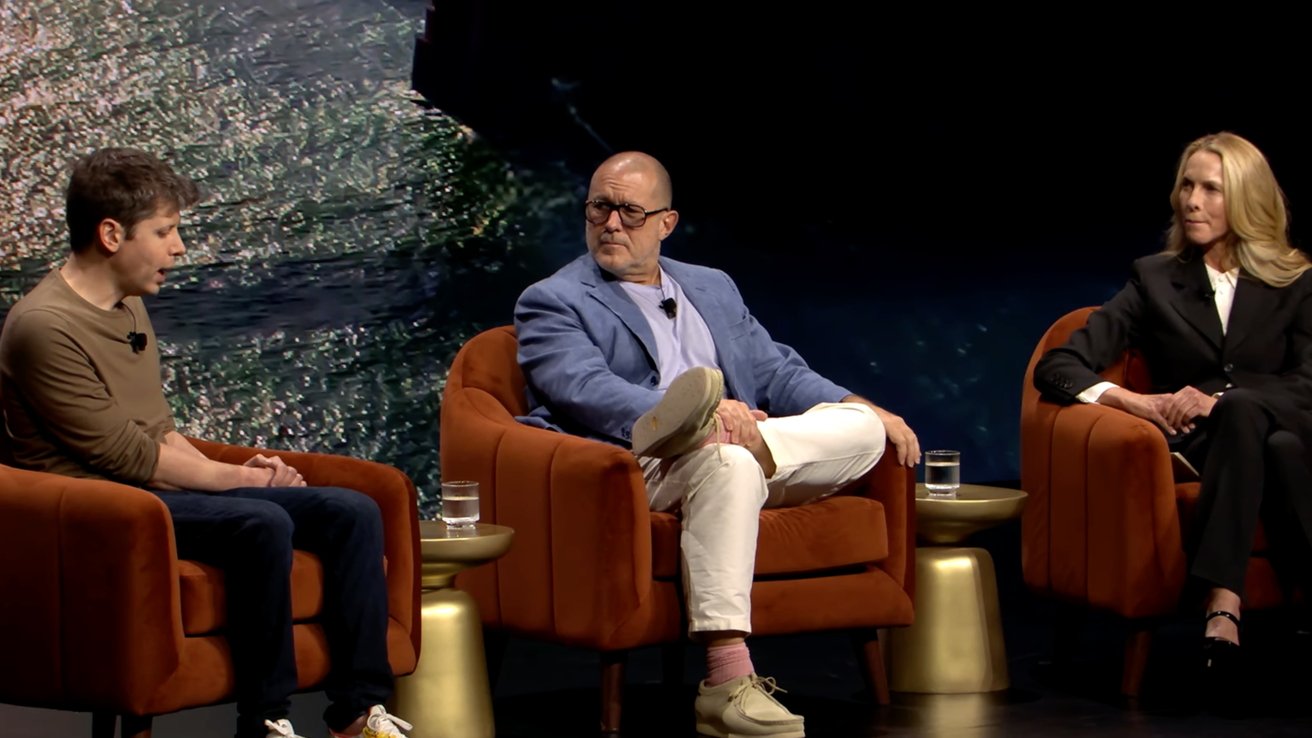
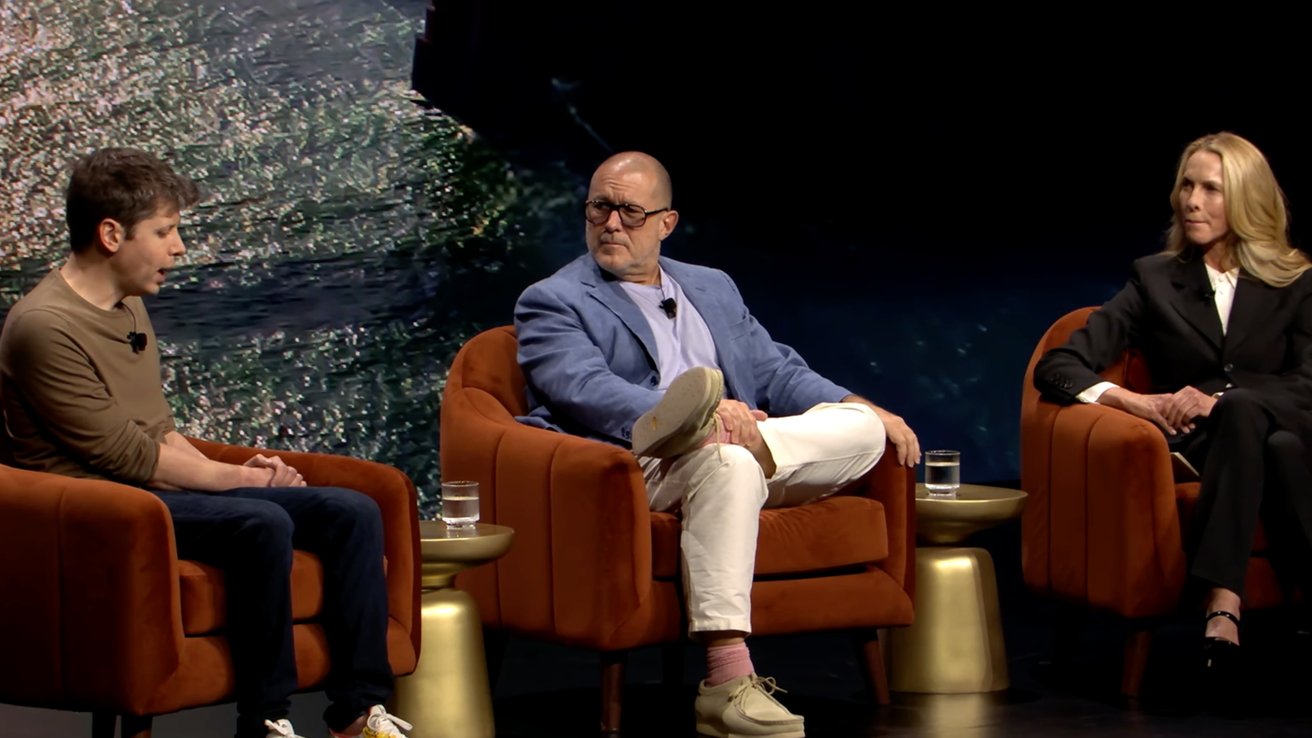
Sam Altman [left] and Jony Ive [center] speaking to Laurene Powell Jobs – Image Credit: Emerson Collective/YouTube
OpenAI also continues to seek out funding, most recently securing $122 billion in March 2026 to keep things going. It claimed previously that it would have gigantic losses every year until 2030.
But it’s okay, it’s fine, because in 2030 we will all apparently see that OpenAI was right. Through advertising in ChatGPT, OpenAI says it will create around $100 billion that year.
Advertisement
No more worlds to copy
AI stole the entire world’s published knowledge to create its Large Language Models, and it’s been allowed to do it. AI firms repeatedly say that if they had been forced to pay for what they did, they would not exist.
Throughout all of this, the only answer to that has been yes, you wouldn’t exist. Then there are stronger answers to how AI firms have subsequently protested that their own work is being stolen.
Your heart bleeds for them, but then you are an AI user. You have found out firsthand that AI is actually brilliant at certain really specific things. You’ve also found out how pointlessly wrong it is about the simplest things.
AI is so useful that you probably have certain tools you rely on already, such as AI transcription of recordings. But AI hasn’t written the next great novel — though it may have written a prize-winning short story — and the only life-changing impact it has had is on those people who’ve lost their jobs.
Advertisement
Companies are shedding workers on the belief that AI can replace them. Some are finding out that this belief was premature, if not idiotic. Just ask the Pizza Hut franchisee who says they’ve lost $100 million because of a botched AI kitchen management system.
There are signs that firms are hiring people back. But they’re hiring them back at lower salaries than before.
Companies are not learning that this gets them staff who can’t do the job either.
But then companies are still spending similar sums to OpenAI in this dream of AI wonderment. Or at least this nightmare of being overtaken by rivals.
Advertisement
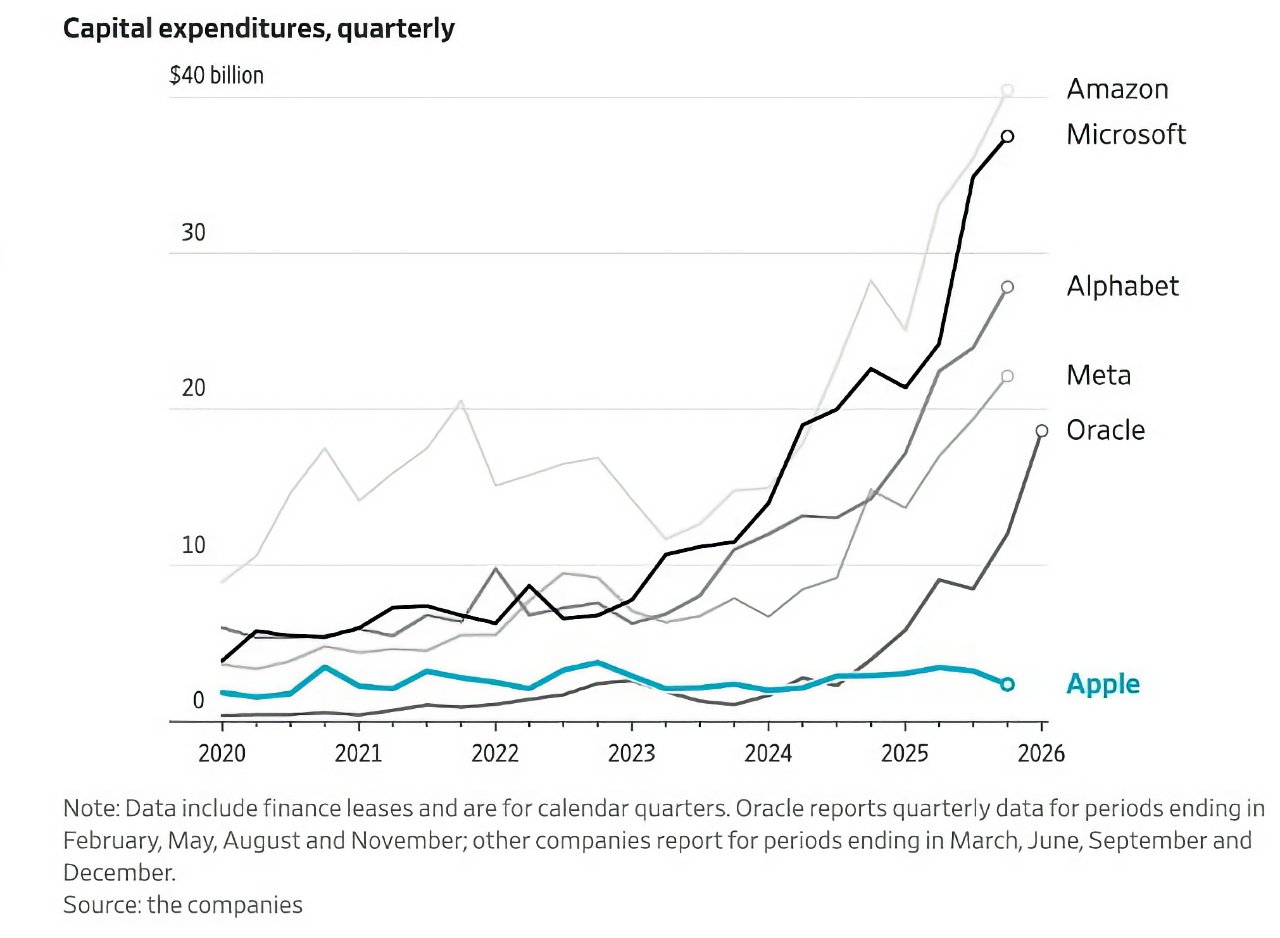
According to FastCompany, AI spending for 2026 amongst the biggest technology firms is:
Amazon: $200 billion
Microsoft: $190 billion
Google/Alphabet: $180 billion to $190 billion
Meta: $125 billion to $145 billion
Spot the missing company
That same list of technology firms’ spending on AI included one more company. The figure has to be estimated, but it is Apple at around $13 billion for the year.
This is the company that for years has been practically mocked for being behind in AI. It’s also, though, the firm that is predicted to make a cool $1 billion for doing practically nothing.
That’s the sum Apple is expected to earn from the App Store and its share of the sales of apps such as OpenAI’s ChatGPT.
Speaking of ChatGPT, OpenAI is reportedly considering suing Apple because its integration into Apple Intelligence has not earned it enough money. But this deal is the one that sees Apple Intelligence send anonymized data to ChatGPT and demands that none of it be retained for training.
If it can’t profit from a user’s personal details, and it can’t even train on what they ask for, it’s hard to conceive how OpenAI thought this would be a cash cow.
Advertisement
OpenAI may have hoped that its deal with Apple would expand out in some way. If so, it too fell foul of the nonsense it peddles about some far-off brilliant future.
There’d be irony in that, but it’s hard to be amused when the prospect of AI has created as much damage to employment as if it really could do what it’s promised.
But then, it may be equally presumptive to say we’ve got as far with AI as we’re going to get. After all, OpenAI has this Jony Ive AI device that will be coming out.
Very powerful when needed, extremely flexible and cheap to run for regular cycles, the LG LDNTH862 24 Inch Smart Top Control Dishwasher is a brilliant dishwasher with plenty of options.
FlushFit design
Very flexible and large interior
Cleans brilliantly
Key Features
Introduction
Using a dishwasher is often a balancing act, with a choice between placing tall items at the top or the bottom. The LG LDNTH862 counters that, with a neat sliding cutlery rack that makes for more space at the top.
Combined with its smart app and powerful performance, this dishwasher is great for everyday use and for heavily soiled dishes.
Advertisement
Advertisement
Design and features
Lots of internal space
Clever sliding cutlery rack
Works with LG ThinQ
The LG LDNTH862 is one of LG’s FlushFit dishwashers. That means that it will sit flush with your kitchen cabinets, giving a smoother, neater finish. This doesn’t mean that you lose flexibility inside. Far from it.
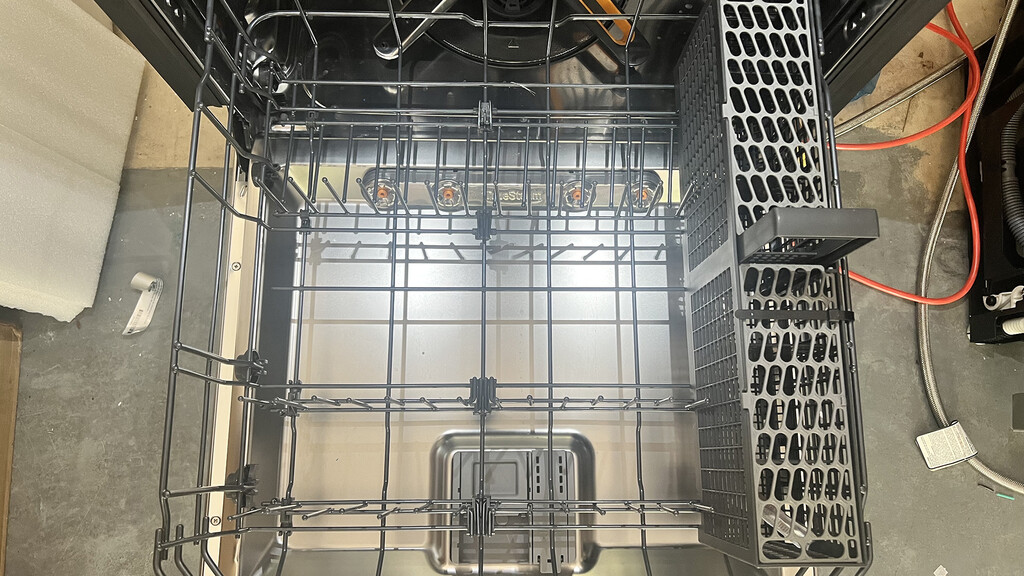
At the bottom is the main rack, with evenly spaced tines that can hold everything from small plates to big dishes. And, the tines can be folded to fit in larger bits of cookware or pans.
Image Credit (Trusted Reviews)
Running the full depth of the dishwasher is a silverware holder. This is useful for extra bits of cutlery, but you can remove it if you don’t need it (there’s a cutlery rack at the top, so on a daily basis, you may prefer to have extra room in the bottom).
Image Credit (Trusted Reviews)
Advertisement
The middle rack is similarly flexible and offers three height-adjustment positions, wine glass holders (which fold out of the way when not needed), and additional folding tines.
Image Credit (Trusted Reviews)
Even so, this kind of rack can often create a dilemma: do you want space for tall glasses but not enough for large plates below, or the opposite? Here, you don’t have to make that choice thanks to the clever design of the cutlery rack above.
The right-hand side of this rack has a clever height-adjustment slider, so you can lower this section to fit taller implements and even small dishes. In addition, this part of the rack can be dropped and slid out of the way, giving extra height below for tall glasses.
Advertisement
Image Credit (Trusted Reviews)
It’s nice to be able to load all kinds of glasses and dishes at the same time, and few dishwashers are as flexible as this.
Advertisement
The main controls are on the top of the door, with the main wash cycles covered: Auto, Normal, Heavy and 1Hour. There’s also a Downloaded option that gives you an extra cycle that you can add from the LG ThinQ app – it’s well worth connecting this dishwasher, as the app also lets you know when the dishwasher is done.
Cycle options are available with extras, including Steam (which loosens food at the start and helps avoid water stains at the end); Dry Boost (two settings), which uses heated air to help dry dishes; and High Temp, which boosts the washing temperature for a deeper clean.
There’s also LG’s QuadWash Pro system, using high-pressure jets of water to give a deeper clean.
Advertisement
Image Credit (Trusted Reviews)
Performance
Good running costs
Heavy cycle deals well with heavily soiled dishes
I used the main wash cycles on the LG LDNTH862, recording water and electricity use, and testing cleaning performance with a variety of soiled dishes. With the Normal wash cycle, the running cost was an excellent 14c.
Advertisement
On this cycle, most regular dishes cleaned up well, such as my tea and coffee mugs.
My mac and cheese bowl also came up well.
The Normal cycle did struggle to deal with my bowl that had been used to make microwaved scrambled eggs.
Advertisement
Moving to Auto, the cycle cost increased to 27c, although the cleaning was slightly better. However, my egg bowl still had quite a bit of residue in it.
Advertisement
I then tried the Heavy wash cycle out, which increased the cycle cost to 48c. That’s quite a bit more, due to steam use, but the overall results were brilliant, with everything cleaning up well, including the egg bowl.
I then finished off with the 1Hour cycle, which cost 21c. That’s more expensive than the Normal cycle, but handy if you do need regularly soiled dishes to be turned around quickly. This cycle dealt with used tea and coffee mugs well, but you’ll need a longer cycle for more heavily soiled items.
Advertisement
Should you buy it?
You want flexibility and performance
Highly flexible inside with very adjustable racks, and the ability to clean brilliantly, this is a brilliant dishwasher that excels for heavy use.
Advertisement
You want something cheaper
If you have simpler needs, you can buy a standard dishwasher for less.
Advertisement
Advertisement
Final Thoughts
A little more expensive than some, the LG LDNTH862 balances the price out with a huge amount of internal flexibility, and excellent wash options taking in everything from low-cost cycles for daily use to high-performance cycles that can deal with tougher stains.
Advertisement
How We Test
We test every dishwasher we review thoroughly over an extended period of time. We use industry-standard tests to compare features properly. We’ll always tell you what we find. We never, ever, accept money to review a product.
Find out more about how we test in our ethics policy.
We measure water and energy usage for each dishwasher to see how efficient they are.
We use real-world mess to test a dishwasher’s ability to clean.
FAQs
Does the LG LDNTH862 have adjustable racks?
Yes. The LG LDNTH862 offers a highly flexible interior with folding tines, a middle rack with three height positions, and a clever top cutlery rack with a sliding, height-adjustable section. This makes it easier to fit tall glasses, large plates and awkward cookware at the same time.
Advertisement
Which wash cycle is best on the LG LDNTH862?
It depends on what you’re washing. The Normal cycle is the cheapest to run and works well for everyday items, while the Heavy cycle is the best choice for tougher, heavily soiled dishes. The 1Hour cycle is useful when you need a quicker turnaround for lighter loads.
Advertisement
Full Specs
LG LDNTH862 24 Inch Smart Top Control Dishwasher Review
Thursday abruptly became a big news day for fans of Bellevue, Wash.-based video game developer Bungie, which announced that it plans to cease development on its popular online shooter Destiny 2.
Eight hours after Bungie’s announcement, Bloomberg’s Jason Schreier released a piece that alleges Bungie plans “a significant number of layoffs” once Destiny 2 is brought to a close.
Bungie posted on its official blog Thursday morning that it will release its final content update for Destiny 2 on June 9, with plans by Bungie to “ensure that Destiny 2 remains playable” afterward.
In the blog post, Bungie said it had become clear that the Destiny franchise needs to move beyond Destiny 2, particularly after the 2024 expansion The Final Shape. It further noted that Bungie plans to turn towards “a new beginning.”
According to Schreier’s piece, however, Bungie allegedly has no firm plans in place to move on to its next major project, besides shifting more resources to support its recent release Marathon. While Marathon received a warmer reception than anticipated upon its release in March, Schreier’s piece states that Marathon still has not met sales expectations at Sony.
Advertisement
All this has happened in the wake of recent cost-cutting measures by Bungie’s parent company Sony, such as shutting down its subsidiary Bluepoint Games in March. As a result, there’s heavy speculation online that Bungie itself may be at risk of closure, or at least significant reorganization.
Bungie, founded in 1991, was originally known as the creator of the Halo franchise, which it developed for Microsoft before splitting off in 2007 to go independent. The studio launched the original Destiny in 2014.
Destiny 2, first released in 2017, is a massively-multiplayer online shooter set in the 28th century. Players take on the role of Guardians, empowered fighters who seek to defend what’s left of humanity from the hostile alien forces that have moved into Earth’s solar system. Further, the Guardians make up one side, and the aliens the other, of a cosmic proxy war between the forces of Light and Darkness. (Note: I am dramatically simplifying the storyline of a decade-long sci-fi epic.)
On June 9, 2026, we will be releasing our final live service content update for Destiny 2, Monument of Triumph, available to all players.📰 For full details: bung.ie/d2_may_21_2026
At its height, millions of people played Destiny 2 on a daily basis. The elevator pitch for Destiny as a series has traditionally been its unique blend of MMO mechanics with a team-based first-person shooter. Players could team up or go solo to fight computer-controlled aliens or compete with one another, all in search of improved weapons and armor so they could take on greater challenges.
It was one part Diablo, one part Halo, in a genre model that gaming fans often refer to as a “looter shooter.” Destiny didn’t invent the format, but it’s often credited with popularizing it, alongside other high-profile games like Borderlands.
When Destiny 2 was originally released, it was published by Activision Blizzard. Bungie subsequently broke ties with Activision Blizzard in early 2019 and opted to publish Destiny 2 by itself under a free-to-play model, which was an unprecedented move for a game the size of D2.
Off the back of Destiny 2’s subsequent success, Bungie remained independent until 2022, when it was purchased by Sony for $3.6 billion. This was the first of several moves made by Sony to adjust its creative output from award-winning single-player games (i.e. The Last of Us, God of War) to constantly-updated “games as a service,” a business plan that also saw the acquisition of Bellevue, Wash.-based Firewalk Studio and subsequent abrupt cancellation of its game Concord.
Advertisement
In 2024, Bungie released The Final Shape, the eighth full expansion for Destiny 2 and the ending of the series’s overall story arc. However, The Final Shape also seems to have inadvertently served as Destiny 2’s swan song.
While Bungie tried to continue D2’s story with further expansions such as 2025’s The Edge of Fate, independent population trackers such as SteamDB suggest that D2’s overall player numbers have dwindled since Final Shape’s launch.
D2 is still comfortably one of the top 20 online games in the current market, at least as far as can be determined from outside Bungie itself, but fans have complained since Final Shape about glitches, an emphasis on repetitive “grinding,” and newly aggressive monetization policies.
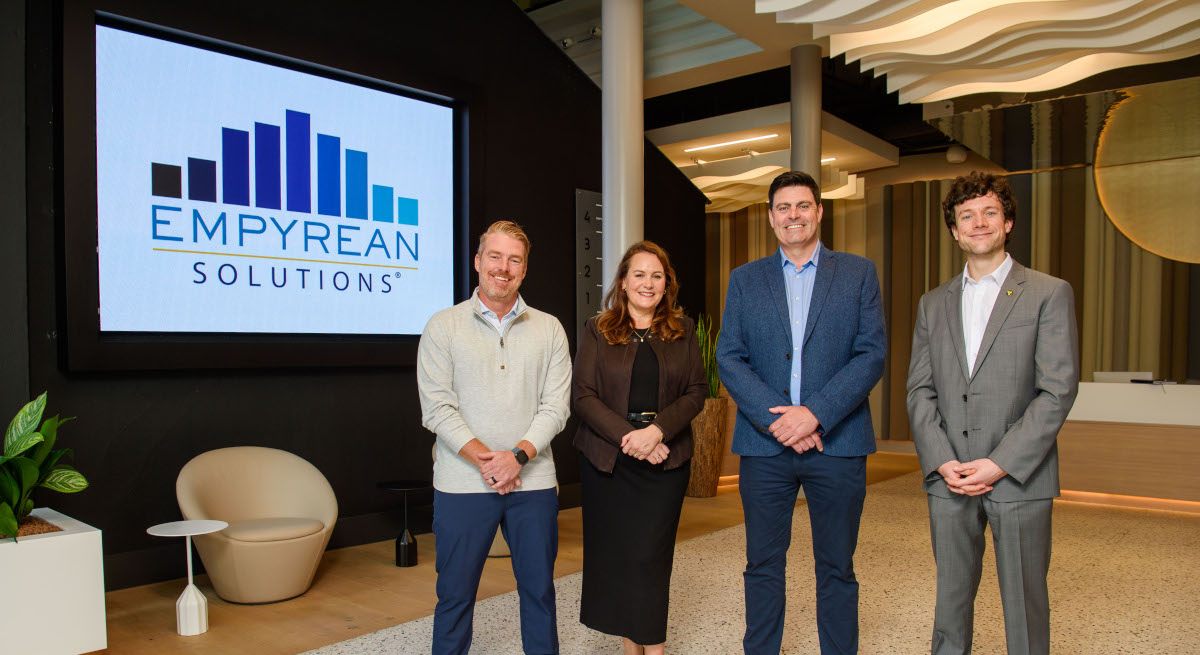
Empyrean will take up a new office space in the Half Moon Building at Lavitt’s Quay in Cork city.
Financial risk and performance management solutions provider to the banking industry Empyrean Solutions is to launch a new R&D project in Cork and create 40 new job opportunities.
Located at a new site at Lavitt’s Quay in Cork city and supported by the Government through IDA Ireland, the project will leverage advanced AI and machine learning techniques to deliver solutions that measure financial risk and provide insight into financial performance across several risk disciplines, including financial planning, credit loss estimation, loan behaviour analysis and finance persona-based insights, the company said.
Having launched in Ireland in 2018, Empyrean DC operates as the core R&D hub for Empyrean Solutions, leading multiple R&D projects and focusing on strategically scaling both team size and the number of software development projects running. The new office space is located in Cork’s Half Moon Building.
Advertisement
Commenting on the announcement, the CEO of IDA Ireland, Michael Lohan, said, “IDA Ireland is pleased to support Empyrean Solutions as it develops next-generation AI and machine learning capabilities in Cork. Projects like this strengthen Ireland’s position as a leading location for data-driven product development and financial services innovation.”
Paul Leahy, the managing director of Empyrean Ireland, said, “Empyrean is thrilled to embark on this R&D initiative with IDA Ireland. This project represents a significant step in our mission to empower the dynamic CFO.
“By combining advanced AI and machine learning with our financial risk and performance platform, we’re equipping finance leaders with the tools they need to operate with greater insight and confidence in an increasingly complex regulatory environment. We’re grateful for the support of IDA Ireland and the Irish Government as we build solutions that will make an impact for banks and credit unions.”
Earlier this month, Cork Airport Business Park announced plans to host the European headquarters of Evumed, a biopharmaceutical company that has committed to a multimillion-euro investment.
Advertisement
The move will see the creation of 30 new jobs at Evumed throughout 2026, in areas such as quality, regulatory, supply chain, finance and support functions.
Don’t miss out on the knowledge you need to succeed. Sign up for the Daily Brief, Silicon Republic’s digest of need-to-know sci-tech news.






















































You must be logged in to post a comment Login