
Tech
The crash that vanished the moment anyone looked at it

SOFTWARE
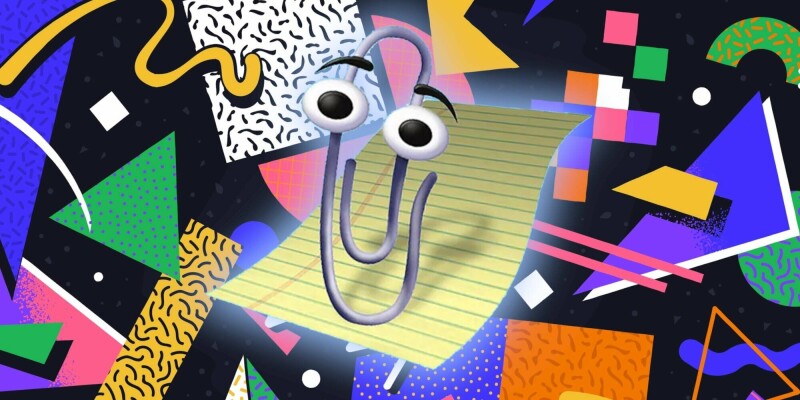
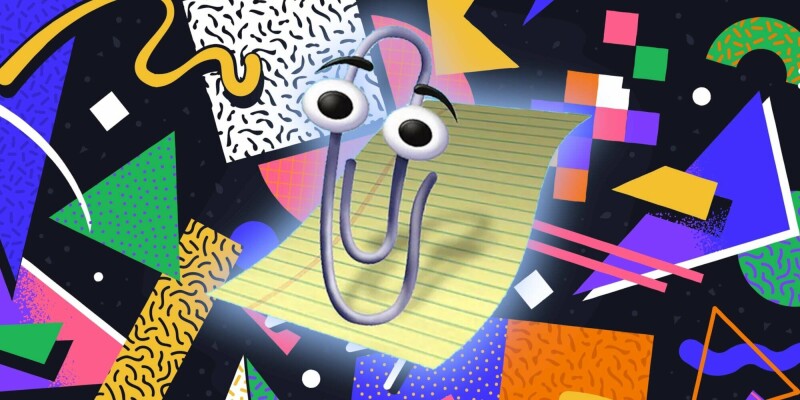
Microsoft veteran recalls how a CPU errata, a mythical ICE, and a single sneaky NOP saved Clippy’s big debut
Veteran Microsoft engineer Raymond Chen shared another fireside tale – one to strike fear into the hearts of engineers everywhere: the bug that can’t be replicated in the debugger.
The story begins near the end of the Word 97 release cycle, when a defect surfaced in the test labs but vanished the moment engineers reached for a debugger.
It was maddening. A script could trigger the crash fairly reliably, yet the instant anyone tried to hunt it down, the bug ducked out of sight.
Chen recalled: “The development team was very anxious, because a bug that appears only sporadically in the lab is going to occur regularly in the wild. But how do you debug a problem that resists debugging?”
It is every developer’s nightmare, even for those smug types who lean back in their chairs and tell testers “works alright here, mate.” There is a special place reserved in the afterlife for these developers.
With the bug refusing to cooperate, talk turned to an ICE (an In-Circuit Emulator, not the immigration agency), which could stand in for the CPU and allow breakpoints inside the emulated chip itself.
“To most software developers,” said Chen, “in-circuit emulators existed only in myth, and the possibility of acquiring one and using it was met with the excitement of a five-year-old boy who learns that he might get to ride on a fire truck.”
Eventually the team traced the problem to a specific manufacturer, and from there to a CPU erratum. The compiler in use at the time had been updated to dodge the problematic code sequence. However, by then the toolset had already been locked. Swapping in a new compiler risked introducing fresh, unknown bugs, so that was off the table.
The solution? Scour the binaries to find instances of the code that might upset CPUs. One was found. “To avoid introducing any new problems as a side effect of the fix, the team opted to do a binary patch to the binary to insert a nop into the offending code sequence.”
Word 97 introduced plenty of headline features. There was the arrival of Clippit (aka Clippy) and Visual Basic for Applications (VBA). And then there was a binary patch produced by determined engineers, which received far less attention. But without it, Word 97 could have been distinctly wobbly. ®

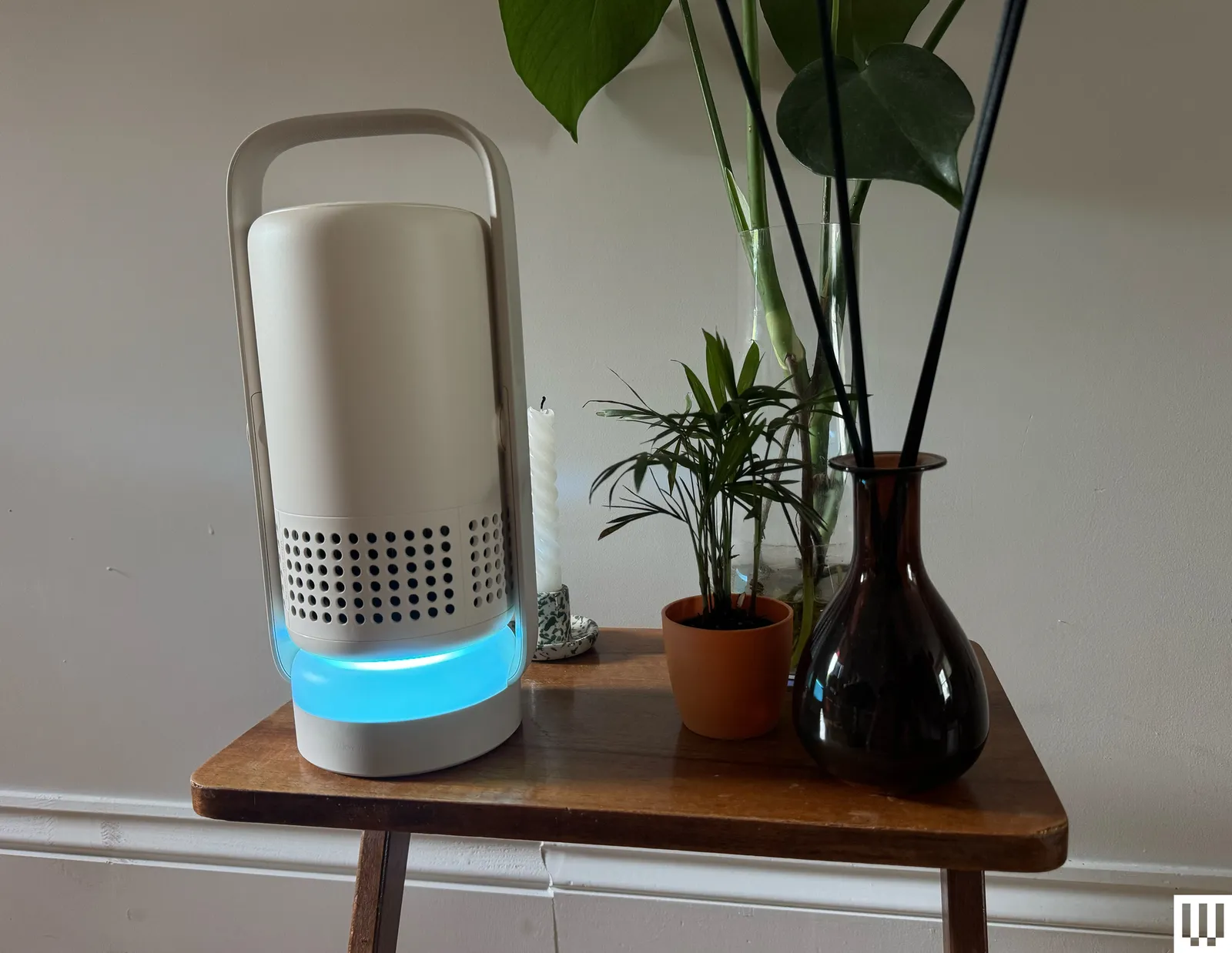
The pair of built-in, three Watt JBL speakers are adequate here, but as you can imagine, there’s very little in the way of bass frequencies. Dialogue can also get lost if there’s a lot going on in a scene, and it all sounds very localized. As a Bluetooth speaker, it’s perfectly fine, but it can’t compete with our top picks.
Battery Woes
With the average movie now running to 114 minutes, the Vibe One’s maximum 1.2 hours of battery life is, well, terrible. To even achieve that figure you’ll need to set it to Eco mode, which limits brightness considerably. Otherwise you’ll need to plug it in to watch anything over an hour long.
It’s the biggest flaw in an otherwise great little projector, and sadly limits its practicality. You’re better off considering the Vibe One’s portability a bonus feature rather than a reason to buy. You’d need to spend at least $100 more to punch through the 2-hour battery ceiling, or invest in a projector like the Soundcore Nebula Mars 3 ($1,149), which has a 5-hour battery life and 1,000 ANSI lumens of brightness.
Should You Buy One?
Despite its technological limits, the XGIMI Vibe One is extremely easy to enjoy. No, it isn’t bright enough for daytime viewing, the speakers are only adequate, and the battery won’t get you through most films. But for $250, you’re still getting a Full HD projector with Google TV, autofocus, keystone correction, and plenty of customization, all squeezed into a stylish, practical design that doubles as a speaker and lamp.

Photograph: Chris Haslam
It’s not the best portable projector, and it’s no TV replacement, but it is a great extra screen for spare-room cinema nights, kids’ sleepovers, and garden-wall projectors well after dark. Just treat the battery as backup rather than the main event, and keep the curtains closed.
The takeaway: Private conversations with AI chatbots are increasingly being used in court cases, creating a new source of evidence for police, prosecutors, and civil litigants. These records can expose a user’s intentions, private thoughts, and sensitive disclosures, yet they generally receive none of the legal confidentiality protections afforded to conversations with lawyers, doctors, or therapists.
ChatGPT and similar tools are often used for personal questions, legal worries, health concerns, and emotional support. Those conversations can feel private, but they may be accessible through a phone search, a subpoena, discovery in a lawsuit, or a report by the AI company itself.
A review by The Washington Post found chatbot conversations cited in 12 public court cases over the past two years. The number is likely higher because much of the evidence collected during investigations and lawsuits never becomes public.
One case involved a teenager identified in court records as R.K.C., who sued Meta, Snap, TikTok, and YouTube in 2023. He alleged that their platforms contributed to social media addiction and mental health problems.
Defense lawyers obtained his ChatGPT history during the case. In one October 2024 conversation, R.K.C. asked the chatbot to explain a statement from his father about a possible settlement.
“My dad Said that I’m will get a settlement worth of 1million dollar,” he wrote. “He said that If that doesn’t make me happy what does. What does he mean.”
R.K.C.’s lawyers settled with Snap, TikTok, and YouTube by late July. They also dropped the case against Meta, saying they were concerned about putting the teenager through a long trial. The companies denied his claims. Mike Morgan, a partner at Morgan & Morgan, said the ChatGPT messages did not affect the outcome of the case.
Morgan said young people may share more with a chatbot than they would with family members, friends, or therapists. “A fifteen-year-old may type things into a chatbot that he may not say to a therapist, a parent, or a friend, and he does it without realizing that it could end up in a defense expert’s report,” he said in a statement.
Chatbot records have also become part of criminal cases.
In Palm Beach County, Florida, OpenAI contacted the FBI after a ChatGPT user repeatedly described plans to harm an ex-girlfriend, according to a police affidavit. The FBI passed the information to local police, who identified the woman and found that the user, Darren Zhou, had sent her anonymous messages after their relationship ended.
Police said the ChatGPT conversations supported the credibility of the threats. Zhou was arrested in May and charged with stalking and making electronic threats. He pleaded guilty this month and was sentenced to eight years of probation.
OpenAI has said it uses software to detect conversations that may involve dangerous behavior. Those conversations can be reviewed by staff. If reviewers determine there is “an imminent and credible risk of harm to others,” the company may contact law enforcement.
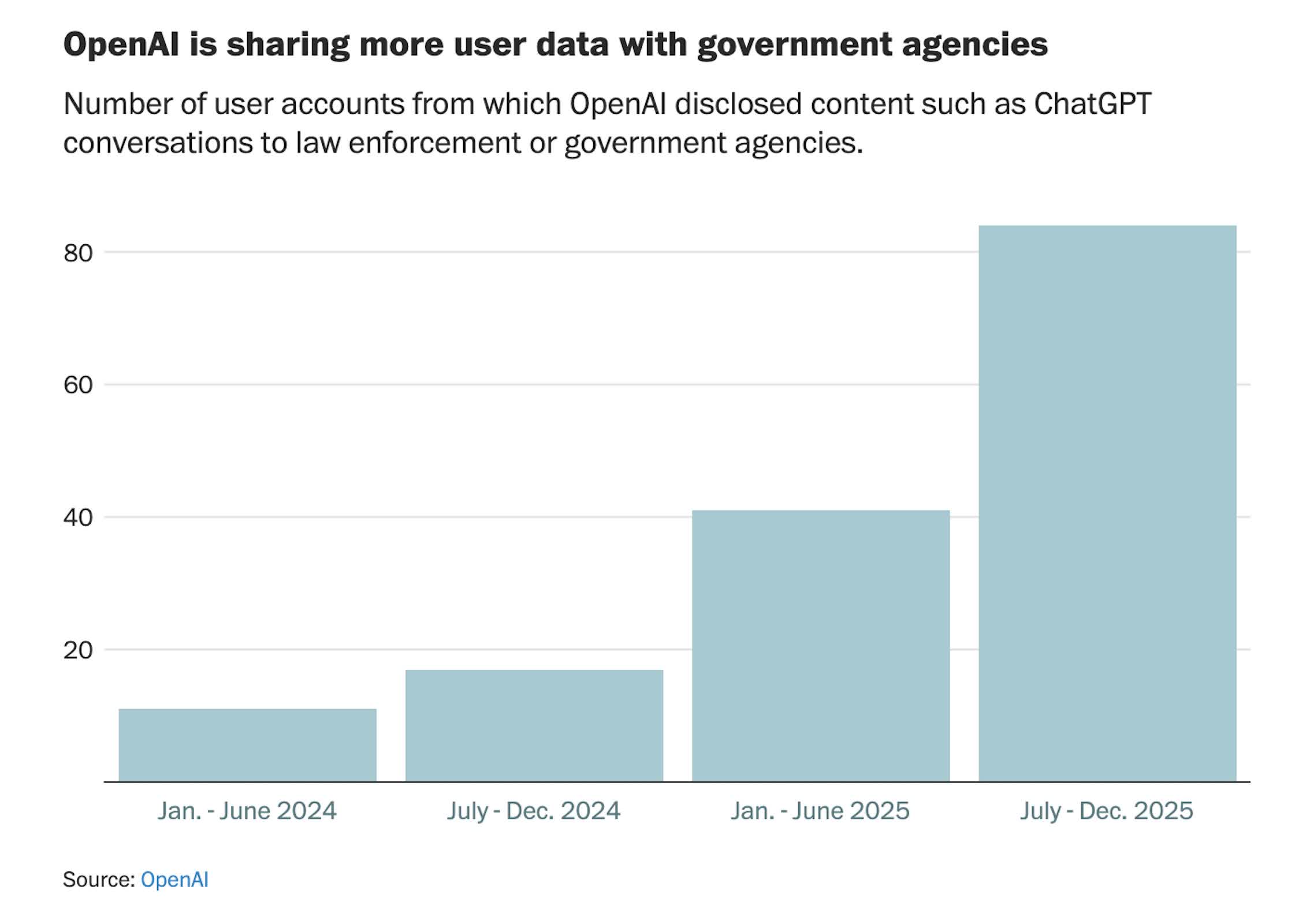
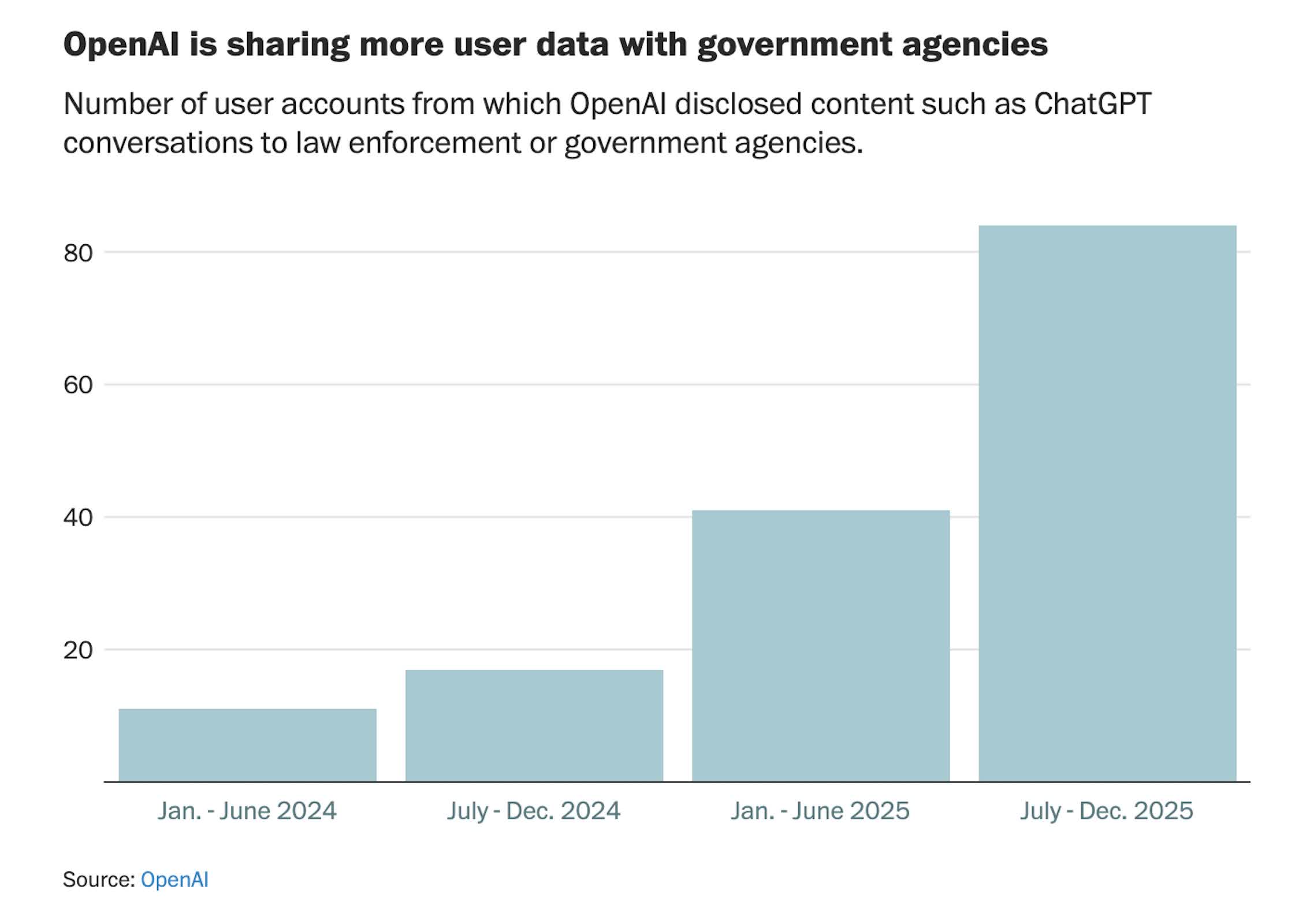
The company has not said how often it makes such reports. Its transparency data, however, shows a sharp increase in government and law-enforcement requests for user information. OpenAI disclosed data from more than 80 accounts during the second half of 2025, more than four times the total from the same period a year earlier.
In many cases, police do not need to obtain records from an AI company. They find the conversations on a person’s phone.
Michael Price, litigation director of the Fourth Amendment Center at the National Association of Criminal Defense Lawyers, said people often agree to let officers search their phones. In most situations, people have the right to refuse a search unless police have a warrant.
“The short answer is that most people consent,” Price told The Washington Post. “They shouldn’t, but they do.”
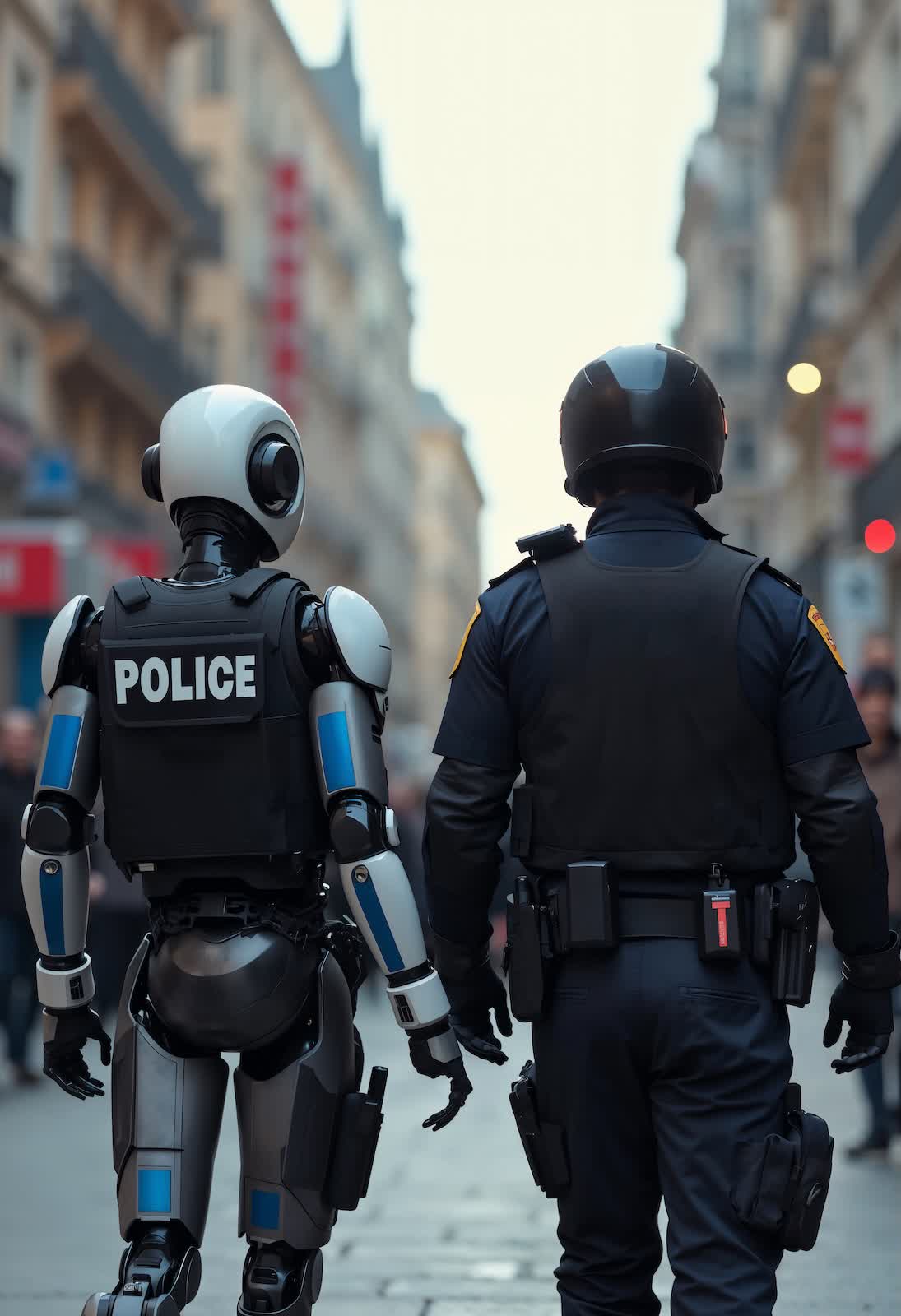
That happened in the case of Ryan Schaefer, a Missouri State University student accused of damaging 17 cars in a campus parking lot. According to police records, Schaefer agreed to let officers search his phone. They found ChatGPT messages he sent shortly after the alleged vandalism.
“How f—-d am i bro,” Schaefer wrote. “What if i smahsed the s— oitta mutlipls cars.”
He later wrote: “Is there any way they could know it was me.”
Schaefer later pleaded guilty to felony property damage and was sentenced in July to five years of probation.
AI chats can also be pulled into civil lawsuits through the discovery process. In a Michigan employment case, a tire salesman’s former employer alleged that he had taken customers after joining a rival company. The salesman had asked ChatGPT whether deleted Yahoo emails could still be retrieved, including through a court subpoena.
The employer argued that the messages showed he had tried to hide evidence. A judge later ordered him to pay an undetermined amount in attorneys’ fees and allowed the lawsuit to continue.
Chatbot exchanges do not have the legal protections that apply to conversations with lawyers, doctors, or therapists. OpenAI CEO Sam Altman has said AI conversations should have stronger privacy protections because people increasingly use chatbots for sensitive matters. Courts have not recognized that type of privilege.
A federal judge in New York made that clear in a case involving financial executive Bradley Heppner. Heppner argued that prosecutors should not be allowed to review his conversations with Anthropic’s Claude about potential fraud defenses. The judge ruled that the chats were not protected because Claude is not a lawyer and Heppner’s attorneys had not told him to consult the chatbot.
Heppner was convicted in May of securities fraud, wire fraud, and other charges.
The issue may grow as AI tools take on more tasks for users and gain access to more personal data. Andrew Ferguson, a law professor at George Washington University who studies digital surveillance, said chatbot records may be only the beginning.
“Your entire world is going to now be available for police,” Ferguson said.
Apple has a busy fall schedule ahead of it for 2026, beyond the usual iPhone launches. Here’s what to expect in September and October.
Historically, the fall is Apple’s biggest quarter when it comes to launches. Regular as clockwork, September is known as the time Apple brings out a new generation of iPhones and a bunch of other major products.
From Apple’s perspective, it’s perfect timing. It all happens a short time ahead of the lucrative holiday shopping season, with the sales reflected in its quarterly results.
The period is a therefore a very busy one, anchored around iPhones. However, it’s never just Apple’s latest smartphone models, as it usually involves the launch of other products and accessories to go with them.
With launch season already well underway, here’s all of the products you can expect to see come out of Apple in September and October.
Why September and October?
We are all well aware of the September events, but Apple has held more than just one event in the fall. In 2020, it held three events, with one each in September, October, and November.
The October event is very much a possibility for Apple. In the last decade, five years saw an October event, which acted as a Mac-centric overflow to the September one.
That said, Apple’s last October event was in 2023, with 2024 and 2025 just having the September one.
There is no guarantee of an October event, but it’s very much a possibility.
iPhone 18 Pro Max: September
The September event has been the iPhone event for many years, and there’s no reason not to expect that to happen this time either.
There will be a difference though, in that it will just be the Pro models. Due to Apple’s decision to split the launches so the standard models arrive in early 2028, that leaves just the iPhone 18 Pro and iPhone 18 Pro Max.

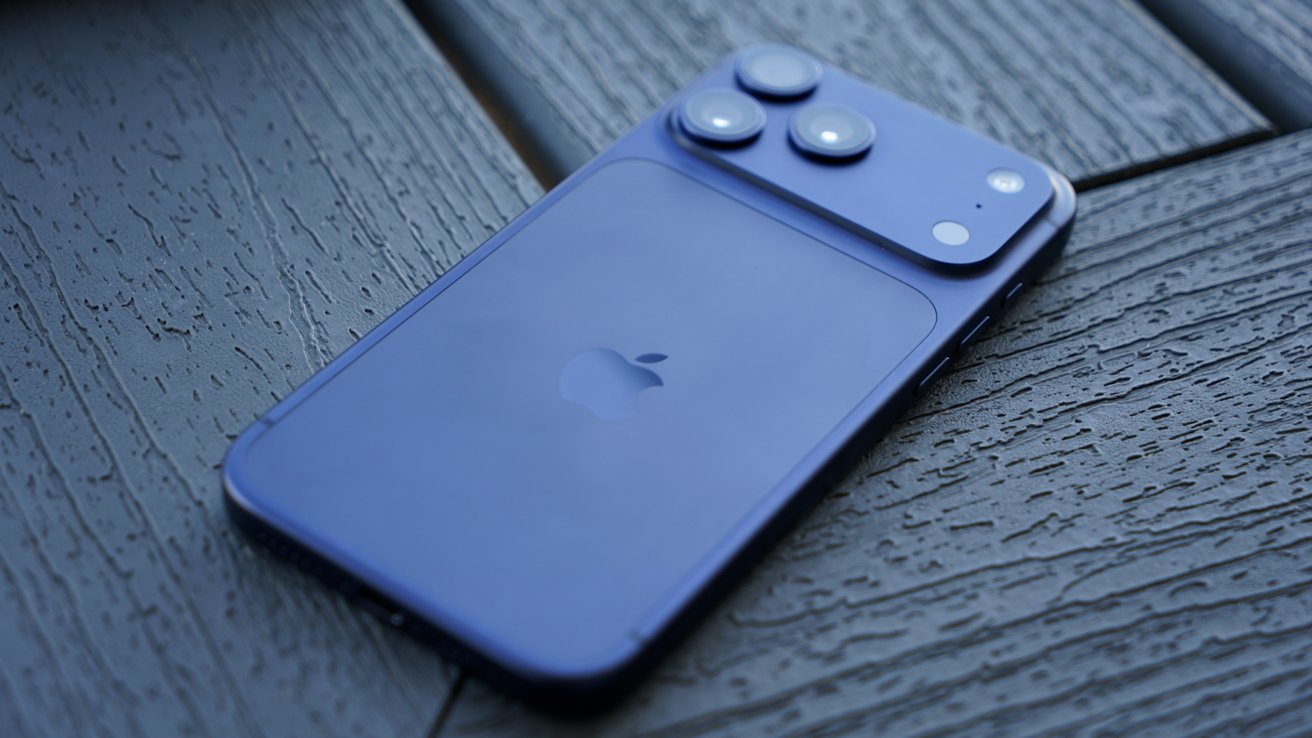
An iPhone 17 Pro Max. The iPhone 18 Pro Max should look quite similar.
Describable as a spec-bump update, the iPhone 18 Pro and Pro Max will move to the 2-nanometer A20 Pro chip. Thanks to some packaging changes, it should run cooler for longer, and therefore provide more performance.
You can also expect Apple to bring out the C2 modem, and there are hints of an under-display Face ID this time around.
The rear cameras on the Pro Max model is expected to benefit from a change for one sensor. The inclusion of a variable-aperture camera can help users create a real “bokeh” effect for their shots by controlling the focal range.
There are two other changes you can count on, thanks to the rumor mill. There has been talk of a dark cherry colorway, as well as price rises.
That could result in an increase of $300 over the iPhone 17 Pro models.
Folding iPhone: September
While the Pro models won’t have their lower-tier counterparts accompanying them in September, they won’t be alone. Apple’s folding iPhone, referred to frequently as the iPhone Fold or iPhone Ultra, will also take to the digital stage.
It’s a device with two screens, including a folding 7.8-inch internal version with a possible under-display camera.

A render of what the iPhone Fold or iPhone Ultra could look like – Image Credit: AppleInsider
A second 5.3-inch display will be on the outside, complete with a punch-hole camera. Two other 48MP rear cameras are expected.
Inside, it should include things like the A20 Pro and 12GB of memory running the show, to match its premium external appearance.
As with everything in tech, you can also expect a high price for the model. Previously, it was rumored to cost between $2,000 and $2,500, but the ongoing memory crisis can push that even higher.
Apple Watch Series 12 and Apple Watch Ultra 4: September
A typical accompaniment to the iPhone, the Apple Watch Series 12 won’t necessarily make waves. It isn’t expected to have a major overhaul this year.
That said, it should still come with some changes. There’s talk of a new health sensor inside a band, which could change how it monitors your heart through the day.
That band may also be accompanied by a new attachment method.

Apple Watch Series 11
There has also been a lot of talk about the return of premium ceramic models. If we’re lucky, we may even see two colors of ceramics being put on sale.
Other than that, there’s not much to really expect in terms of change for the standard Apple Watch.
The Apple Watch Ultra is also expected to get an update in 2026. However, it is entirely unclear what that update will entail.
AirPods 5: September
A periodic update to Apple’s personal audio accessories is usually a good bet for a September event. The rumor mill also agrees.
The AirPods 5 will reportedly arrive in standard and ANC versions in September, with the usual assurances of improved features.
One feature that has been heavily rumored and won’t make an appearance are AirPods Pro with cameras. As of one August 30 report, that model won’t be launching anytime soon, making them more likely to appear in 2027.
Operating Systems: September
Apple has long been testing the 27-generation operating systems. To go with Apple’s new hardware, you can also expect iOS 27, iPadOS 27, macOS 27 Golden Gate, watchOS 27, tvOS 27, and visionOS 27 to arrive at the same time.
The exact timings of their arrival will depend a lot on the supporting hardware. Usually, Apple releases its operating systems simultaneously as they ship, or in the days beforehand.
iPad mini 8: October
The iPad mini is long overdue an update, and it is rumored to get one in 2026. The eighth-generation is anticipated to turn up this fall, though on August 30, it was said to be coming in October, not September.

iPad mini 7 on an arm stand. No OLED yet.
When it does arrive, you can expect a big glow-up for the model. The usual spec-bump update to a new chip will occur, possibly to the A20.
The bigger change will be OLED, consisting of an 8.4-inch LTPS rear panel with a hybrid OLED treatment. It won’t have ProMotion with a refresh rate capped at 60Hz, but it will have a brighter and more vivid display.
Smart Home update: September/October
Apple has a lot to talk about for its smart home changes in 2026. So much so that it may not be easily squeezed into the iPhone event, and could be pushed into October.
The more obvious changes are the HomePod mini and Apple TV updates.
For the HomePod mini, think a spec-bump update to add Siri AI support and a price of around $129. Similarly, the Apple TV should get a chip update for Siri AI, though a new Siri Remote is also a possibility.

HomePod mini should get smarter this fall
The real thing to watch for is what we refer to as the Home Hub, an all-new device to act as the center of the smart home. Bearing a seven-inch display on a half-dome base, it will manage your smart home devices, and deal with notifications and calendar schedules.
An included camera will also let it work as an in-home intercom and for FaceTime calls.
It may not be the only version. A second model is expected, complete with a magnetic attachment system.
MacBook Pro: October
We would usually expect Apple to use the October event to handle Mac and MacBook updates. With the unexpected early updates to the Mac mini and Mac Studio, that reduces the number of Macs that Apple can potentially update.
There are rumors that Apple will be making a load of changes to its lineup in the coming six months, but whether that will be in late 2026 or early 2027 remains to be seen.
With MacBook Air updates anticipated to be in 2027, that leaves the MacBook Pro as the prime candidate for a fall update. Specifically, the 14-inch MacBook Pro with the M6 chip.
Don’t expect much here, aside from the chip change. The same miniLED screen with ProMotion support will be in play, as will the rest of the specifications.
While the fantasy of an OLED MacBook Pro is a good one, it’s also a very slim possibility. Even with rumors of it arriving in late 2026 or early 2027.
What works against it is how Apple likes to release the base MacBook Pro model of a chip generation, then wait a bit before bringing out the upper-tier versions. OLED would be a very premium feature, making it more likely to arrive later.

In an Amazon News blog post, their HR leader describes using AI to write 100,000 lines of code — 25 years after she last coded. “Do you know how empowering it is to realize that after 25 years away from coding, you can actually build again?” First she built a calendar app for her family, but then used Amazon’s AI-powered coding tool Kiro to write an app for Amazon’s internal “Everyone Can Build” event.
We opened the competition to every employee on our team, and within just a few weeks, more than 1,500 people were building. I couldn’t believe what they built. One employee built an app that turned a nearly four-hour manual process into a one-second automated check, saving tens of thousands of hours annually. Another made a desktop pet named Momo that keeps your tasks, reminders, and shortcuts a click away.
Since then, I’ve written over 100,000 lines of code with AI. What I’ve found is that the more you work with these tools, the more natural the process becomes, and the more you realize they’re expanding what you’re capable of, not replacing it. You don’t need perfection to start. You just need to dive in. When I decided to build the submission app for our team competition, I didn’t know how to begin, so I asked our internal AI workplace assistant, called Aza. It pointed me to the right tools and helped me take the first step. From there, I opened Kiro and started building. When you give employees the ability and tools to solve problems themselves, they will surprise you with what they create…
At Amazon, every employee has access to AI tools. Whether someone needs a quick answer, wants to move faster in their day-to-day, or is ready to try building something new, the resources are there. The more people use these tools, the more capable they become with them, and that experience carries forward in their careers… We also want to make it easy for people to build credentials that are recognized across industries. That’s why AI training is free for every Amazon employee. Amazon covers the full cost of one AWS AI certification exam per year, with options ranging from foundational AI concepts to professional-level generative AI. Employees can choose the path that fits where they are in their learning journey.
Long-time Slashdot reader theodp notes that 7 months ago Galetti also took to Amazon News to announce the elimination of 16,000 corporate jobs, a move which CNBC noted coincided “with a push to invest heavily in artificial intelligence.”
The job reductions come just a few months after October’s layoffs, when 14,000 employees were let go across Amazon’s corporate workforce. At the time, the company indicated the cuts would continue in 2026 as it found “additional places we can remove layers.”


Read more of this story at Slashdot.
After months of leaks and rumors, Apple is set to reveal its fall hardware lineup on Wednesday, Sept. 9, at its Surprise and Shine event. And from everything we know so far, the event will be unlike most others.
For one, this year’s event is a bit sentimental for the Cupertino company. Tim Cook announced in April that he is stepping down from his role as CEO, a job he has held for nearly 15 years after legendary Apple co-founder Steve Jobs stepped down in 2011. John Ternus, the company’s hardware engineering chief, will be stepping into the top role just days before the event.
Apple is also heavily rumored to break with its usual routine by holding off on releasing a base iPhone 18 until next year, meaning only the more expensive Pro models will be revealed in September. That would give another highly anticipated release center stage: the foldable device expected to be called the iPhone Ultra.
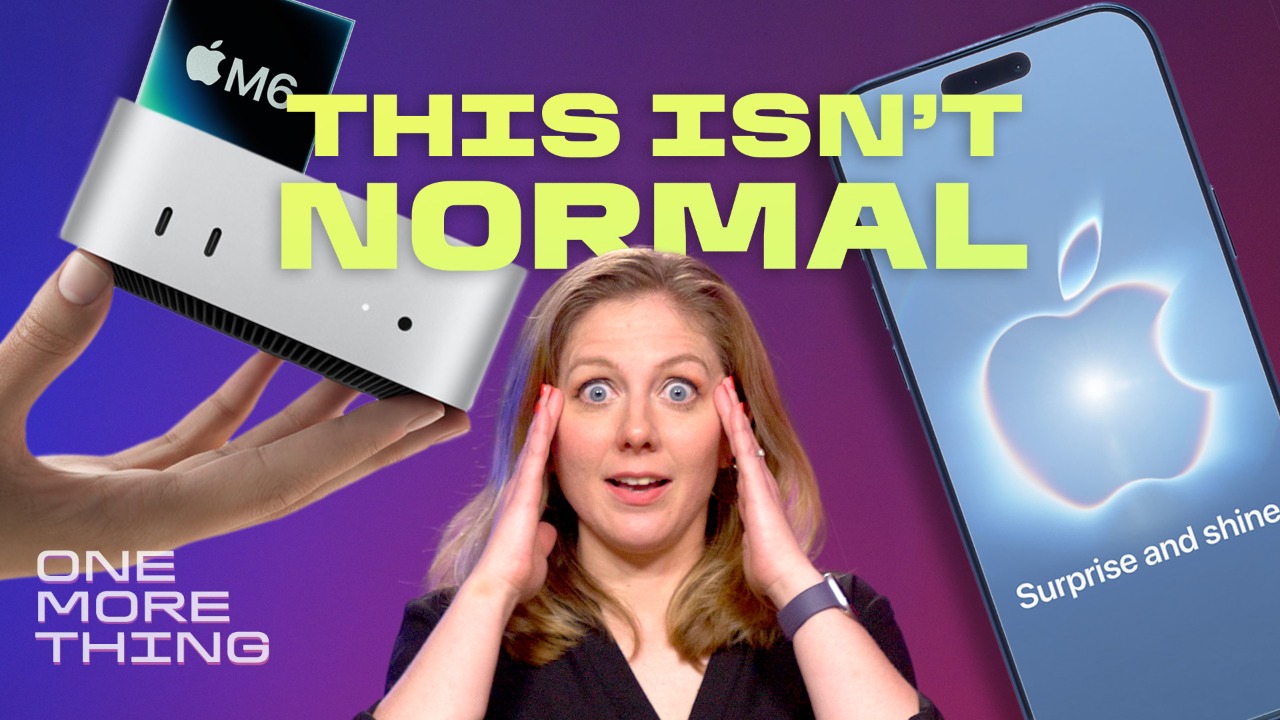
We’ll be keeping a close eye on the price tags. Apple raised prices across its computer and home devices this summer, attributing the cost increases to memory chip supply chain issues, largely driven by the AI race. Additional price hikes on Apple Music and Apple TV subscriptions aren’t helping cash-strapped consumers, either.
Read more: Win a New Apple Watch as CNET Guessing Game: Apple Edition Returns for Round 3
New iPhone 18 models, joining the foldable fun
Apple’s iPhone 18 lineup is likely going to look a little different this year. One of the biggest rumors is that Apple is going to do an extended rollout. This September, we expect to see the foldable iPhone Ultra, the 18 Pro and 18 Pro Max, but we likely won’t get the base iPhone 18, iPhone 18E and a possible iPhone Air 2 until spring 2027.
The iPhone Ultra, as Apple’s much-rumored first foldable phone is tentatively named, has a book-style design, according to analyst leaks. Think more Samsung Galaxy Z Fold 8, which opens like a book into a mini tablet — not like an OG 90s flip phone.
But the possible $2,000 price tag means the Ultra likely won’t be a replacement for the base iPhone 18. More likely, it will be more of a luxury option. That may be one reason why a majority of US adults (75%) don’t care about foldable phones, a recent CNET survey found.
We had CNET’s creative director show us what we could expect from the new potential iPhone 18 colors.
Jeffrey Hazelwood/CNET
The iPhone 18 Pro and 18 Pro Max models are rumored to have bigger batteries, variable-aperture cameras and run on the new Apple A20 processor. More satellite connectivity, a smaller Dynamic Island and tweaked back camera islands are also possibilities. And these new phones could come in colors such as light blue, dark cherry and dark gray.
Running on all these devices is the already announced new family of operating systems. iOS 27, with the anticipated Siri AI revamp, is likely to be released this fall, along with MacOS Golden Gate, Apple TVOS 27 and more. Since we learned about these at WWDC in June, we’ve been playing around with the public betas to see what’s inside.
Apple Watch Series 12: Apple Health and Touch ID?
A Series 12 Watch is “all but guaranteed,” CNET wearables expert Vanessa Hand Orellana says. Less likely are a new Apple Watch SE and Ultra model since they were refreshed in 2025. But any new watches, the Series 12 and Ultra 4, are likely to come with a new processor, which should extend their life and usefulness for you.
The biggest design change expected is largely mechanical, not aesthetic. A more energy-efficient screen technology could be included to extend the watches’ battery life without sacrificing screen brightness. A new processor — probably named the S12 to match the line-up’s naming, despite “S11” being next in line — would also help with this.
The next Apple Watch Series 12 may bring back TouchID.
Jeffrey Hazelwood/CNET
Another potential addition could be biometric authentication — in other words, a Touch ID for Apple Watch. Some internal code leaks suggest Apple is working on integrating this tech into its wearables, but it’s unclear when it will be publicly available. Health features, like blood pressure monitoring, are also rumored to be in progress, but again, no guarantees. The Apple Health App’s AI overhaul has also reportedly run into issues.
Our early testing shows WatchOS 27 with Siri AI will bring a big boost to devices — at least, for the ones it’s compatible with, which isn’t all of them. Watches were excluded from Apple’s summer price hike, but similar raises from watches by Google and Samsung mean a higher starting price isn’t out of the realm of possibility.
AirPods with or without cameras
Possibly the biggest Apple rumor has been that the next generation of Apple AirPods will be equipped with a new, tiny infrared camera — not to take photos, but to scan its physical environment to power its visual intelligence, or AI, answers.

These rumored “AirPods Ultra” sparked a lot of concern and outrage from tech enthusiasts, who have spent most of the summer criticizing other AI-and-camera-enabled wearables, like Meta’s smart glasses. Apple is known to tout its focus on privacy, so it will be interesting to see if Apple ultimately comes out with these earbuds and, if so, how it defends them.
AirPods are generally on a two-year refresh cycle, so we may get the AirPods 5 and AirPods 5 Pro this year. The previous model, the AirPods 4 with active noise canceling, is “something of a technological marvel,” CNET headphones expert David Carnoy said. Effective noise canceling is hard to achieve with an open-earbud design, but Apple’s previous success sets the foundation for even more progress here. The Apple-owned Beats 360 headphones could also get refreshed this fall.
For more, check out the best iPhones and best MacBooks for 2026.

Whisper it quietly, but certain bricks in Apple’s walled garden might be getting taken away.
Thanks to some recent upgrades added to Android by Google, it’s now easier than ever to share files between an iPhone and an Android phone, without installing any new apps (though that’s still an option too).
So if you need to send a photo, contact card, web link, or anything else, these are the options you have available. As is often the case with Android, they may vary depending on the make and model of your handset, though you should find at least one of these methods works for you.
Share Files via AirDrop
This is the big one: Google recently figured out a way to add support for AirDrop—Apple’s previously closed-off, device-to-device sharing protocol—to newer Pixel phones. It doesn’t appear that Apple was involved in the process, but the company hasn’t gotten in Google’s way since, and the functionality has been rolled out to other phones (including the recent Pixel and Galaxy handsets).
Some prep work may be required. On Samsung phones, you need to open Settings, then choose Connected devices > Quick Share and enable Share with Apple devices—though there’s no such toggle switch on Pixel phones—it’ll just work right away. It needs enabling on iOS too: From Settings, tap General > AirDrop, and Everyone for 10 Minutes.
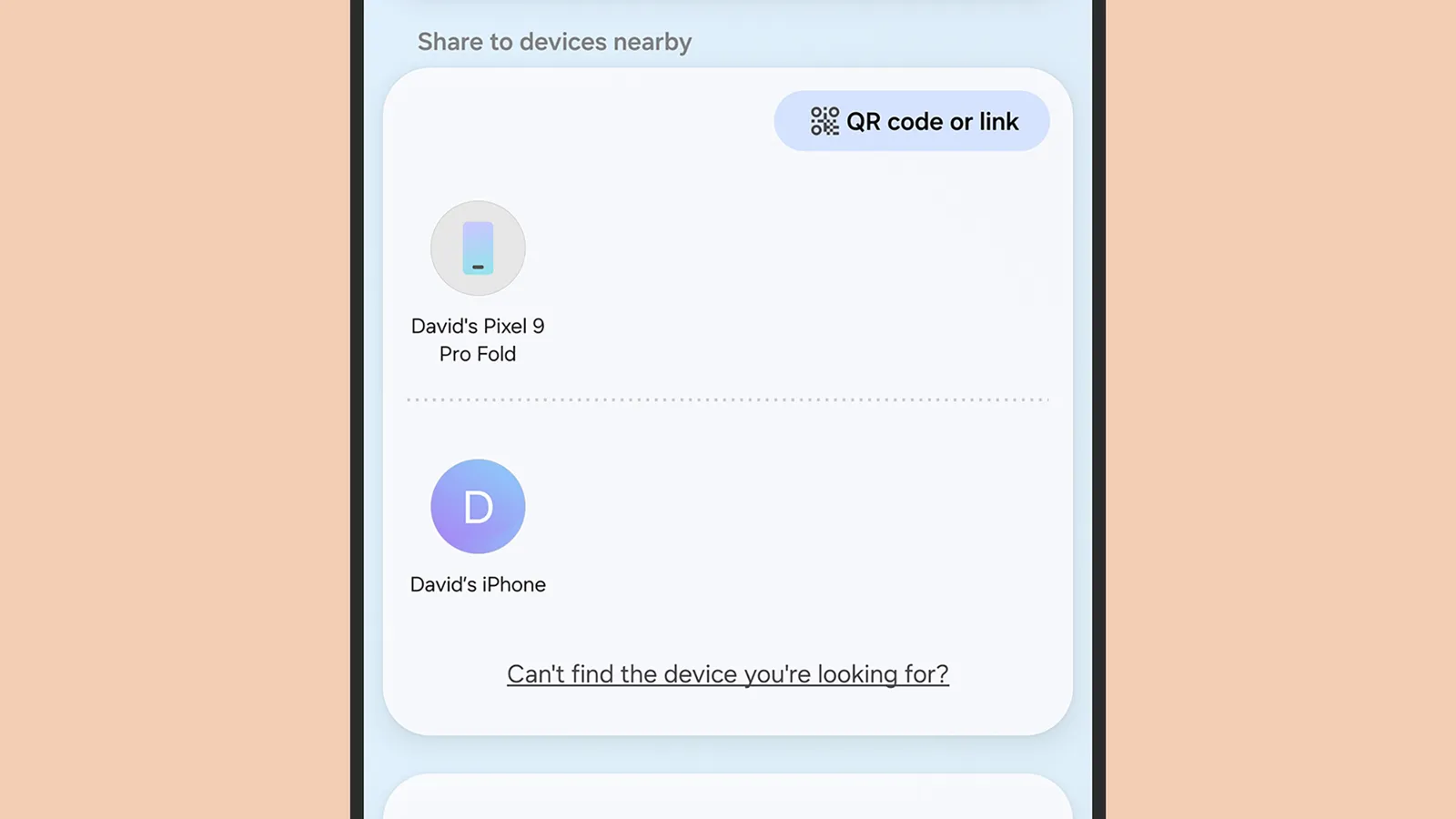
An iPhone appearing as a sharing option on a Samsung Galaxy device.Photograph: David Nield

With that done, whenever you tap the share button anywhere in any Android app, you can choose Quick Share from the resulting pop-up panel to communicate with a nearby iPhone. The iPhone should show up in the available devices, so select it to start the transfer—which will still need to be accepted on the iPhone.
It will work the other way too, starting from AirDrop on an iPhone, as long as the Android device is set up to receive from any other device. From Settings, tap either Connection preferences (Google Pixel phones) or Connected devices (Samsung Galaxy phones), then select Quick Share > Who can share with you.
Share Files via QR code
Google hasn’t stopped with AirDrop on Android. It has also recently pushed out a QR-code-based option for sharing from Android to iOS. It’s a bit more clunky than AirDrop, but it’ll work no matter what kind of Android phone you’ve got.
Again, you need to go through Quick Share, which pops up as an option whenever you try to share something in Android—no matter what the app or item you want to share. You won’t see an iPhone appear if you don’t have the AirDrop functionality, but you should see a Use QR code option on the right, under Share with iPhone and other devices, which after a few moments shrinks down to just a QR code symbol.
The Dodge Challenger SRT Hellcat has solidified itself in automotive history as the fastest muscle car ever made. However, since it was discontinued in 2023, Chevy has been pushing the Corvette’s performance and design to the limit. The 2027 Corvette Stingray has become the first sports car under $100,000 to reach over 200 miles per hour, and that’s just the base model.
The 2023 Dodge Challenger SRT Hellcat has an iconic supercharged 6.2-liter V-8 engine that makes 717 horsepower and 650 lb-ft. of torque. This base model Hellcat can reach 60 mph in 3.8 seconds and hit a quarter mile in 11.9 seconds at 124 mph. The top speed is 203 mph. The 2027 Corvette Z06 has a 5.5L V8 LT6 engine considered the most powerful naturally aspirated V8 at 670 hp and 460 lb.-ft. of torque. This allows the Z06 to hit 60 mph in 2.6 seconds, then complete the quarter mile at 10.6 seconds at around 131 mph. Its top speed is 195 mph.
Comparing these two track-oriented beasts, the Hellcat has slower acceleration but a higher top speed. Even the Redeye variation with an enhanced Hellcat engine can’t hit 60 mph as fast as the Z06. This is likely due to the Z06’s lighter weight — it is 3,500 pounds compared to the Hellcat’s 4,654 pounds with a widebody design. This is also why the Hellcat requires more horsepower to launch itself. While the Hellcat is an incredible machine with an unmistakable whine and intense aura, there are faster cars out there.
Which cars are called the Corvette Killer?
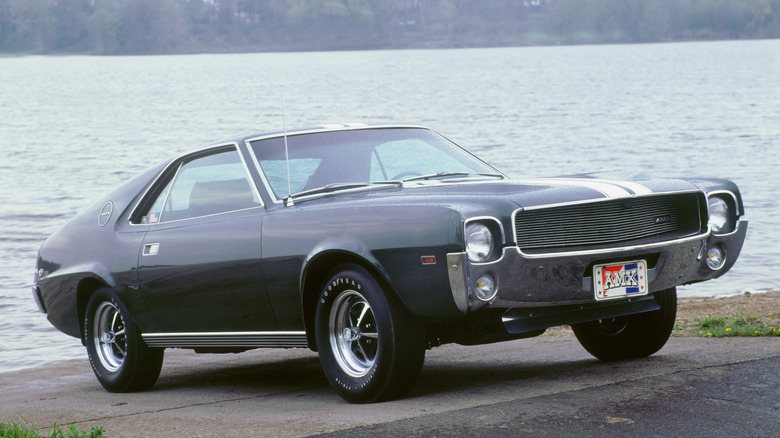
The Corvette has come a long way since it was debuted in 1953. Chevy has been attempting to boost its performance every year, and automakers have continued to take it upon themselves to bring the Corvette down. The 1968 AMC AMX was a shorter two-seater that arrived with only V8 options. The 390ci V8 was its most popular option, with 315 hp and the ability to reach a top speed of 125 mph. Its 0-60 mph spring was 6.6 seconds and the quarter mile was 14.8 seconds. It set plenty of speed records during its time, but it wasn’t enough to compete, with only a quarter of the Corvette’s production that year.
In 1979, the Guanci SJJ attempted to take down the Corvette once more. Meant to take the Corvette’s place, the SJJ had a 5.7-liter V8 that produced 250 hp and allowed it to hit 60 mph in 10.9 seconds. It wanted to take that American performance and pair it with European design elements, but the SJJ never made it to production, with many skeptical about its high price point.
The next decade saw Buick attempt to take down the Corvette with the 1987 Buick GNX, an “evolved” version of the Grand National. It was called the Corvette killer because it was the fastest car made that year, but only 547 saw the light of day. Meant to blend flashy looks with aggressive performance, it had a turbocharged 12-valve V6 that produced 300 hp and reached a top speed of 124 mph. Car and Driver called it “axe-wielding barbarian laying waste to everything in its path” back in 1987, but it still wasn’t enough to stop the Corvette’s momentum. Now, the Corvette is often referred to as a “supercar killer ” instead.
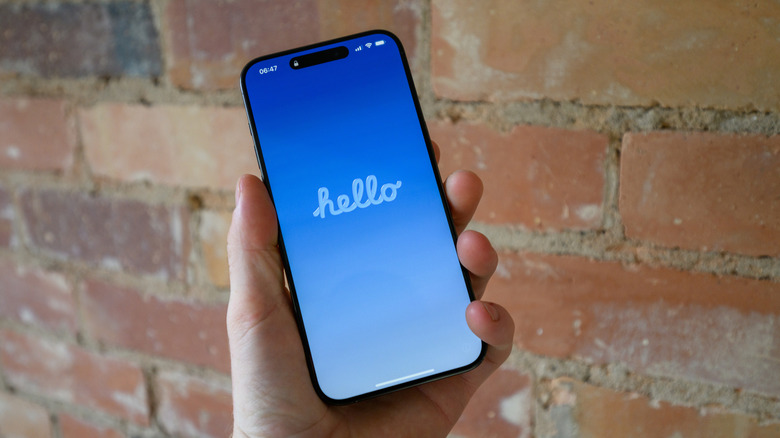
If your phone’s acting up or you’re transferring it to someone else, you’ll need to reset it.
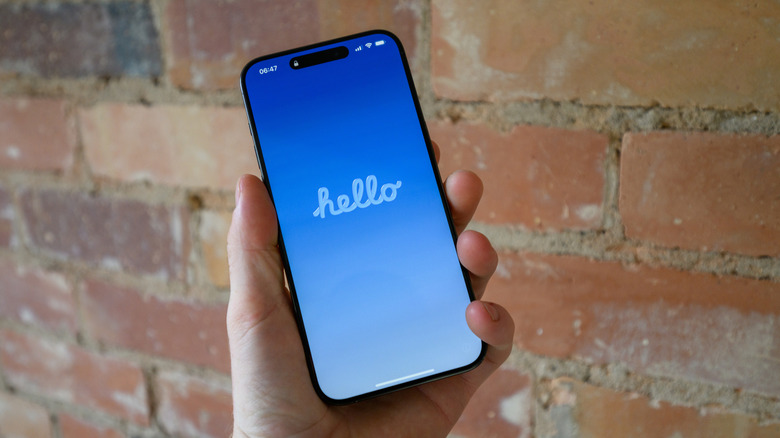
When trying to troubleshoot iPhone issues, there are several escalating steps that can be taken as potential fixes, including both soft and hard resets. Before you resort to taking your phone in for repairs, consider some basic troubleshooting at home.
The tech community at large has long been split about the specific definitions of soft and hard resetting. To some, a soft reset means restarting a device, while a hard reset is a complete factory reset that erases all data. To others, a factory reset is a completely separate concept, and instead the difference between a soft and hard reset is whether a restart was done through a device’s menus or by cutting the power manually. To add even more confusion, where does clearing your settings, but not erasing all of your data, land on this scale?
It can all get very convoluted, and there’s no definitive answer. However, for the sake of this article, we’ll be looking at three types of useful resets under the following definitions:
-
Restarting: Rebooting your phone without losing any data
-
Soft Reset: Clearing all settings without wiping out data
-
Hard Reset: A complete reset of the phone, erasing all data
How to force restart your iPhone
Restarting your phone can be beneficial for myriad reasons, and it’s often the best first step to iPhone troubleshooting — the old recommendation of turning something off and on again is always a good place to start. It acts as a quick refresh, clearing your RAM and closing any problematic programs. If the usual dual press of the side button and volume up button doesn’t prompt the power slider on your phone to appear, you can force your iPhone to restart with the following steps:
-
Press and quickly release the volume up button, then do the same with the volume down button
-
Press and hold the side button until the Apple logo appears; this can sometimes take more than 10 seconds, so be patient
How to soft reset your iPhone
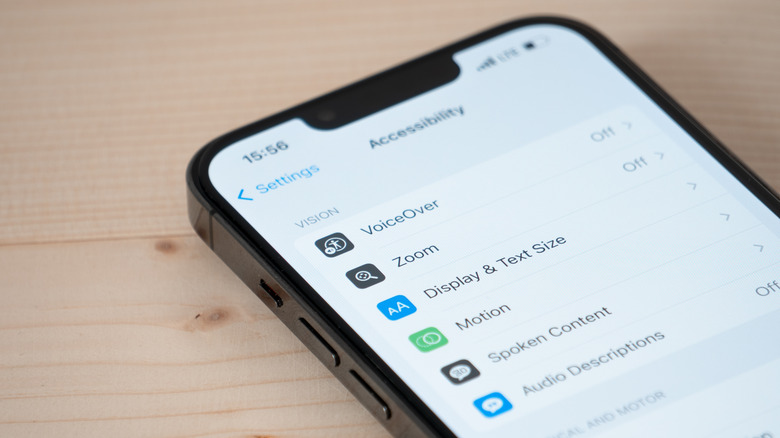
A soft reset of all your iPhone’s settings is a good next step in trying to flush out a problem. It’s a middle ground between a simple restart and losing all of your data, though you should be aware of what settings you’ll need to redo after the reset. Network settings (i.e., Wi-Fi and Bluetooth), any Apple Pay cards, location and privacy permissions you’ve given to apps and websites, display and sound settings (like your wallpaper, alarms, ringtones and Liquid Glass settings), and any words your keyboard has learned over time will all be reset.
To clear all of these settings in your phone, follow these steps:
-
Go to Settings
-
Select General
-
Select Transfer or Reset iPhone
-
Select Reset
-
Choose which settings to delete; for a complete settings wipe, select Reset All Settings. Or more finely tune your selection based on why you’re resetting (if you’re resetting because of network issues, for example, you could select Reset Network Settings).
How to hard reset your iPhone
As a last resort when troubleshooting, or if you’re getting rid of your iPhone, you can give the device a hard reset, which will completely erase all data on the device. For iPhone problems that seem unsolvable, sometimes starting with a blank slate is the answer. It’s recommended that, before you do this, you create an iCloud backup of your device as a safety precaution. To initiate a factory reset, you’ll need to make sure you know your Apple Account password and phone passcode, then follow these steps:
-
Go to Settings
-
Select General
-
Select Transfer or Reset iPhone
-
Select Erase All Content and Settings, then hit Continue
-
Choose to either keep or delete your eSIM; if you delete it, you’ll need to reactivate your plan with your cellular carrier
-
Enter your iPhone passcode and Apple password, then watch as all your data is erased.

Since early 2023, photographer Jingna Zhang and a small crew of volunteers have worked tirelessly to maintain an image-sharing social media and portfolio app called Cara. So far, it has attracted about 1.5 million artists. What drew them to the platform? A shared opposition to the unauthorized use of their work to train AI models and a desire to publicize their art while avoiding exploitation by Big Tech.
But while Cara filters out AI images and offers some minimal protective features, preventing scrapes themselves is nearly impossible. And just this month, beginning on August 13, Cara was subjected to three major scrapes, which spiked its server fees and alarmed creators who had migrated there from platforms like Instagram, where all content is explicitly available to Meta as training data.
The first of these incidents came to light when the individual responsible took to the subreddit r/DefendingAIArt to announce he had obtained a 12-terabyte archive of 12 million works from Cara—more or less its entire library of publicly available images. “It was a fun project,” he wrote under the handle MandarinDawnPoppy994 in his since-deleted post, saying the process cost him less than $10.
“We actually found out about it through our users tagging us,” Zhang tells WIRED, since the scraper was “gloating and looking for other people to join him to do something with the dataset on Reddit,” sparking a fierce debate across AI-related forums about the ethics of what he had done. “I just feel it’s targeted and very hurtful,” she adds, noting that “laws are not caught up on” protections against such data harvests, meaning that scrapers can often justify it as technically legal. (Zhang is separately part of two ongoing class actions brought by visual artists, one against Stability AI, Midjourney, and others and the second against Google, alleging that the companies’ image generator tools were trained on their copyrighted work.)
In a surprising turn of events, however, the person who grabbed all the art off Cara would turn out to regret his stunt and agree to collaborate with Zhang on a new open-source tool to protect artists.
In the meantime, unfortunately, other scrapers continued to take advantage of Cara’s vulnerabilities and minimal resources. While a number of AI proponents objected to going after Cara, a few were apparently emboldened by MandarinDawnPoppy994 to carry out what Zhang sees as “copycat” attacks.
A second scraper pulled about 8.5 million links from Cara, as well as metadata like usernames, titles, and tags, and uploaded these to Hugging Face, the AI developer platform. After Hugging Face was bombarded with takedown requests, it responded in a statement that while it would issue a notice to the user, “CaptiveDreamer,” to remove the personal metadata, it could not do the same for the URLs, since “no copies of the artworks are hosted here,” and the links “point to the copies the artists published on Cara.” The company concluded that “further copyright reports on the same basis will not change this outcome.”
Finally, on August 22, a third scraper obtained 123,000 images from Cara, along with text posts and user bios that included personal information, sharing it all on a site called Academic Torrents. Zhang then launched a GoFundMe for legal fees, setting a goal of $120,000, explaining that the money would go toward exploring any and all strategies of defending Cara through cyber and copyright laws. As of Thursday, she has raised more than $100,000, and she says Cara is actively looking for any additional legal assistance.
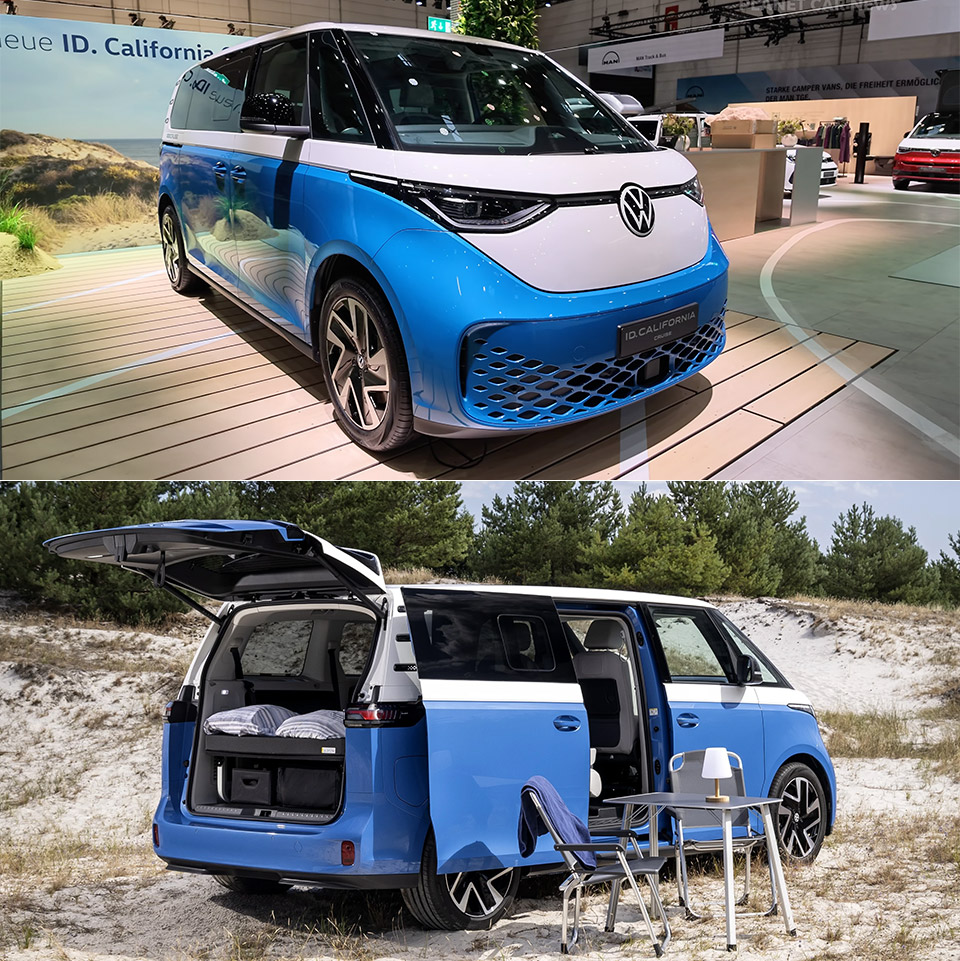
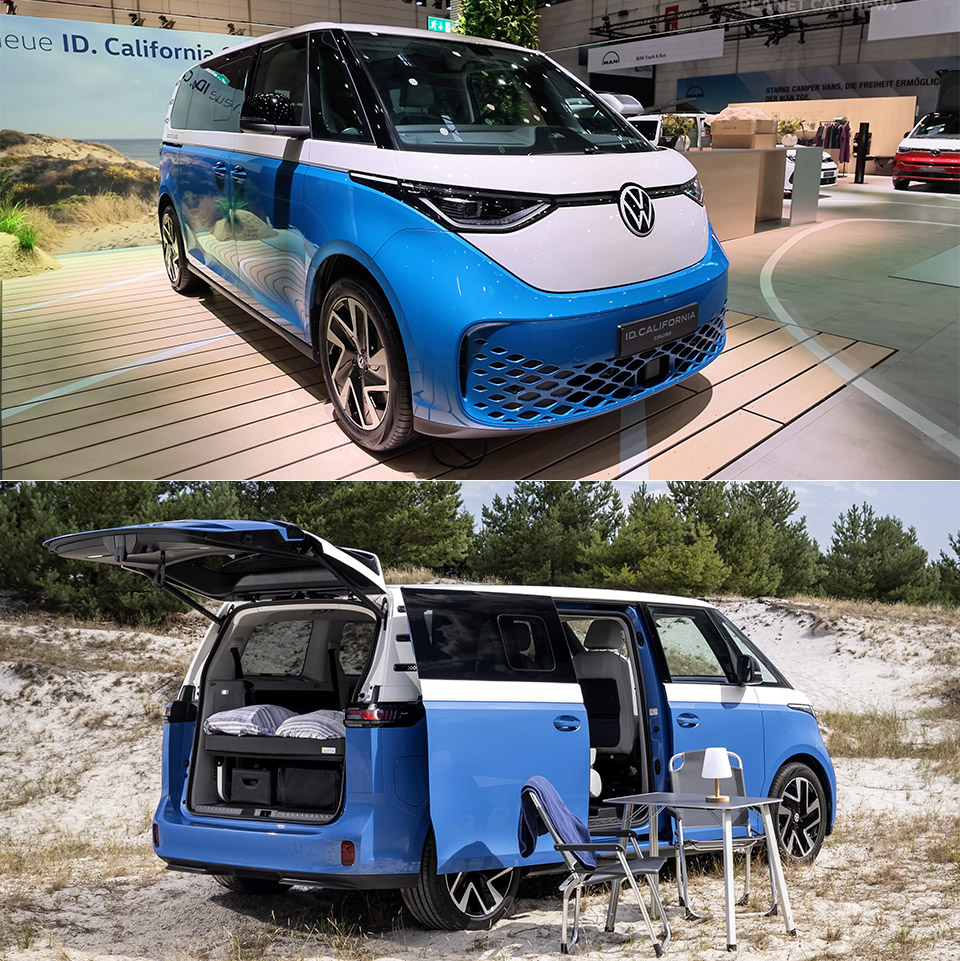
Volkswagen Commercial Vehicles put the ID. California Cruise on the floor at Düsseldorf’s Caravan Salon as the first battery-powered member of a name that has lived on diesel since 1988. Built on the ID. Buzz Pro, the van arrives in short and long wheelbases and keeps the familiar two-tone shape, adding only California lettering on the tailgate and Cruise graphics along the flanks. German pricing starts at €60,761, about $70,500, which undercuts the midsize diesel California Beach by a few thousand euros. First customer vans are due in early 2027, with more electric California variants promised by 2028.
Short wheelbase variants feature a 79 kWh useable pack and a WLTP range of around 286 miles. The extended wheelbase variants offer a little more, with an 86 kWh battery pack and a range of around 302 miles. Unlike what you may anticipate, they both employ the same rear motor: 210 kW, 286 horsepower, and 560 Nm of torque. Official 0 to 62 mph times range from 7.6 to 7.9 seconds, with DC charging reaching 185 kw on the short van and 200 kw on the long one. This will take you from 10 to 80 percent in approximately 26 to 30 minutes. Just bear in mind that adding camping gear will likely reduce your range significantly, thus trip planning must now be done in the California app, which maps out charging stations along your route and even allows Plug & Charge at compatible stations.
Sale

LEGO City Holiday Adventure Camper Van Building Toy Set – Vacation Toy for Kids, Boys and Girls, Ages…
- CAMPER VAN BUILDING SET – Kids can enjoy vacations every day with this LEGO City Holiday Adventure Camper Van building set
- TOY FIGURES & CAMPER PLAYSET – This vehicle set includes everything kids need to build a camper van with a detailed living space, plus a campfire…
- FUN FEATURES – The camper van opens up for full access to an interior living space with a kitchen, toilet, 2 bunk beds, a crib and a removable…
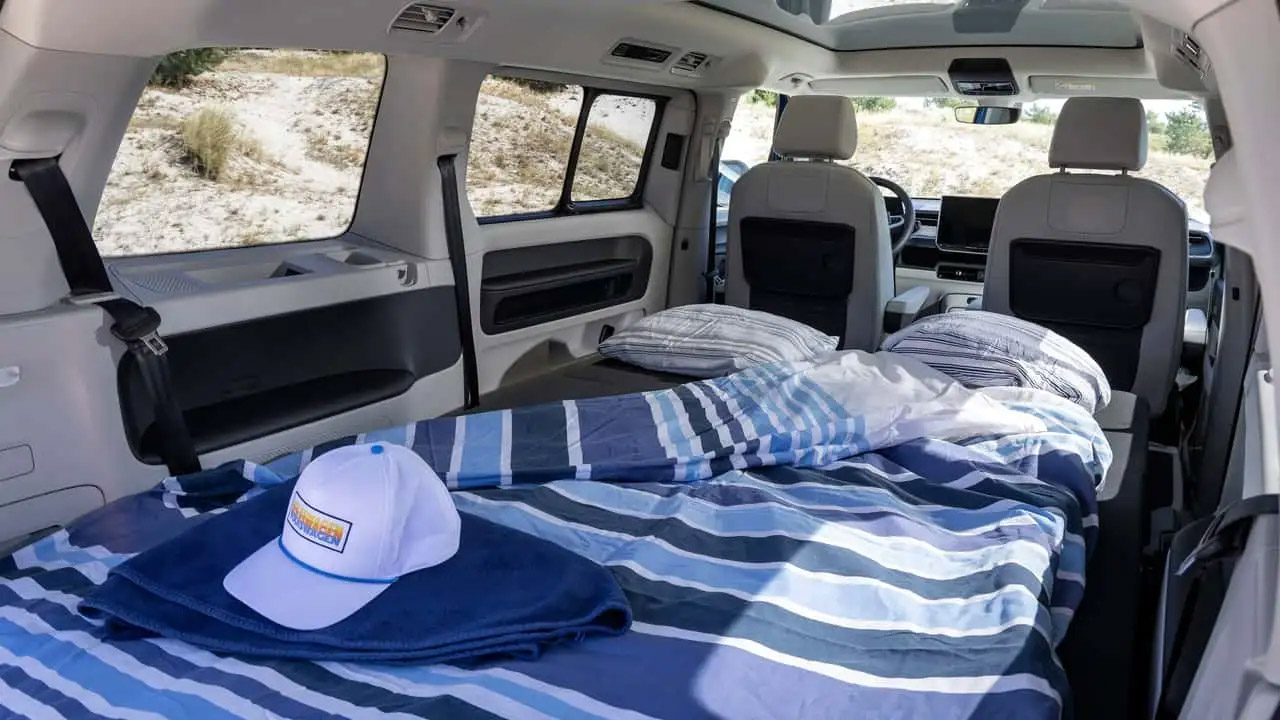
The back seats fold flat, and a 9cm mattress pops out over them to provide a comfortable 80 by 47 inch sleeping platform for two persons. Blackout blinds cover the windows, including the optional panoramic roof, and ventilation grills are put in up front to allow the cabin to catch some fresh air without having to open the doors. A folding table and a set of chairs are stored in dedicated areas under the bed platform and slide out when needed, right next to the open hatch. You won’t receive a pop top or a built-in kitchen, so you’ll need to bring your own induction cooktop or portable fridge to charge your gadgets.

California mode is the piece of software that makes it all work, as it keeps the lights, USB ports, and climate control running while the van is parked overnight, with VW claiming a reasonable 48 hours of heating or cooling depending on the battery charge and outside conditions. However, if the charge level dips below 20%, it will turn off that mode, ensuring that you have somewhere to charge in the morning. If you need to charge some toys while camping, VW has a solution: a PowerSocket adapter on the charge port that offers 2Kw continuous and 3.6Kw peak, which is enough to power a coffee machine, an induction plate, or even an e-bike charger. So, the same battery that powers the car may now power your campground without the use of a generator.
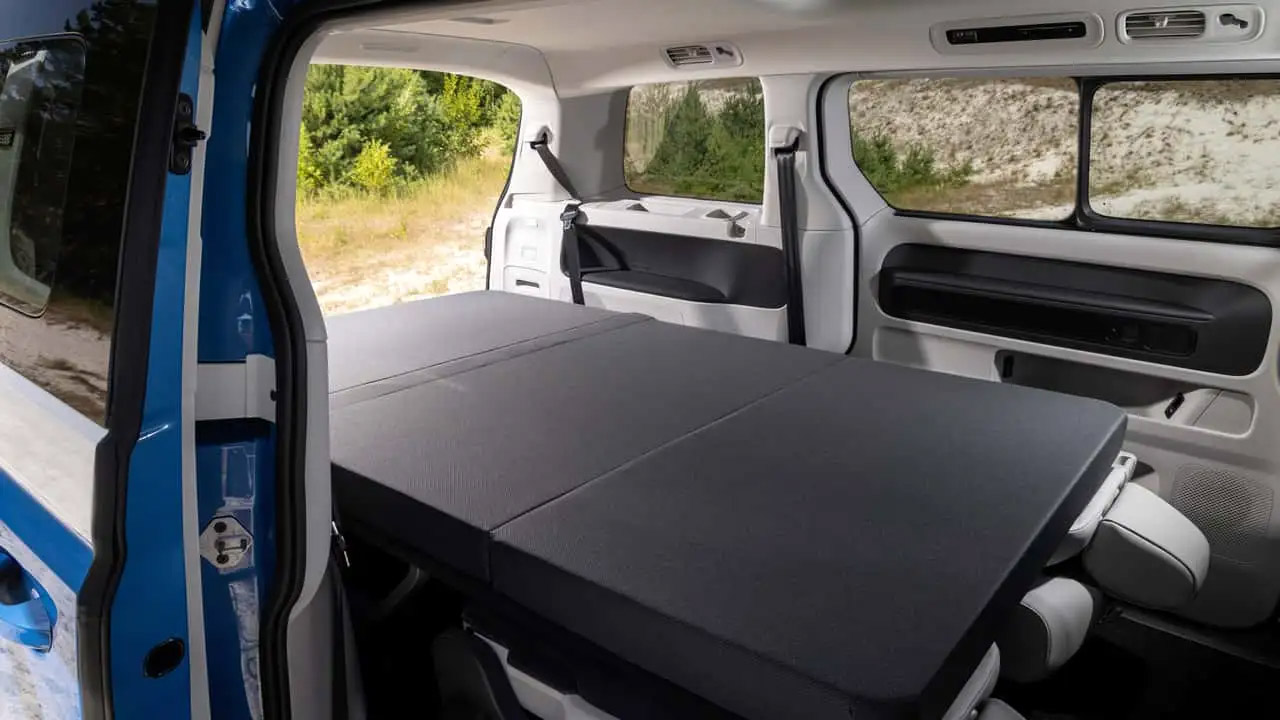
Exclusive Miwo seat covers feature high-quality California woodwork and typography. This van is all about interior style and comfort, which come as standard, along with a handy discharge adapter. Storage is straightforward and simple: simply fold the mattress in the tailgate area when you’re on the go, and there’s room underneath for chairs and a table. Any extra room is just used for luggage. Getting set up takes minutes, not hours, as with other aftermarket boxes. This factory-built sleeper is ideal for brief weekend vacations or short tours while driving normally during the week.
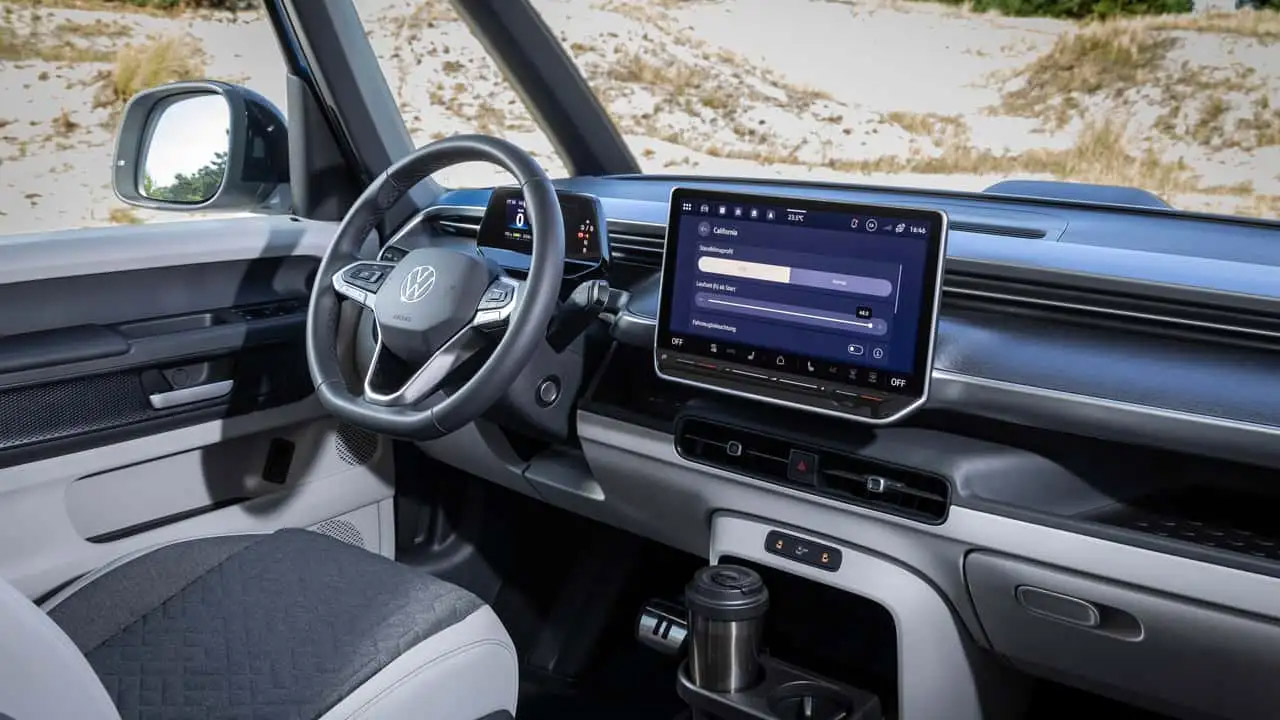
However, the Americans will not be receiving this same variant of the badged van. VW stopped ID. Buzz sales in the United States for 2026, and they’re bringing it back for 2027 with a new Trim called Tourer, which is just a direct copy of the same idea, a fold-out mattress and platform, some window shutters, front panels for ventilation, a table and chairs outside, and their Overnight Mode software. Captain’s seats and an electric canopy that darkens are optional features on the US version. In Europe, the ID. California Cruise remains the first real electric California, a little two-person campervan that costs less than the diesel it replaces and makes room for a larger electric family van later.
[Source]

Mariano Navone ousts Novak Djokovic in 1st-round shocker at U.S. Open

XGIMI Vibe One Battery-Powered Projector Review (2026)

Dubai Property, Hawala & Hidden Wealth: Why India’s Elite Trust Dubai Over India | FWS 121





-

 Crypto World5 days ago
SpaceX stock could rise 75% to $240, JPMorgan says
-

 Fashion3 days ago
Weekend Open Thread: Maeve – Corporette.com
-

 Crypto World3 days ago
Bitcoin’s 22% rally now needs real demand to outlast Treasury liquidity boost
-

 Crypto World5 days ago
Warsh Jackson Hole keynote puts financial innovation first
-

 Crypto World6 days ago
A $30 Billion AI Fund Implodes, Now the SEC Is Investigating Wall Street’s Role
-

 Business3 days ago
Salesforce Stock Soars 19% as Blowout Earnings and Agentforce AI Growth Silence Software Skeptics
-

 Crypto World5 days ago
Did Trump Just Move SpaceX Stock With One Truth Social Post?
-

 Crypto World4 days ago
Elon Musk Grok Bot Promise: We Will Make You Whole if AI Loses Your Money
-

 Business5 days ago
Walmart takes aim at younger shoppers with new fashion brand
-

 Business3 days ago
Apple Confirms September 9 Keynote and Reveals Its Full Pre-Order Schedule
-
 NewsBeat4 days ago
Lindsay Clancy jury braces for closing arguments as judge tells court: ‘You’ve heard all the evidence’ – Live updates
-

 Crypto World2 days ago
Bitcoin price tests $82K resistance as Brandt stays long
-

 Business5 days ago
Thailand’s Eastern Economic Corridor Capital City (EECiti): Key Developments and Investment Opportunities
-

 Crypto World4 days ago
NVIDIA revenue hits $96.2B as AI demand doubles
-

 Business2 days ago
Onto Innovation Stock: AI’s Next Bottleneck Is Yield (NYSE:ONTO)
-

 Business7 days ago
Moderna CEO warns China is pouring state money into mRNA technology
-

 Business6 days ago
NVIDIA Stock Drops Nearly 2 Percent to $210 on Seventh Losing Day Ahead of Critical AI Earnings
-

 Business3 days ago
iPhone 18 Pro Pre-Orders Could Shift to Saturday as Apple Reportedly Avoids September 11 Anniversary
-

 NewsBeat5 days ago
Trump’s trade truce with China faces test with Iran effort
-

 Crypto World4 days ago
Nvidia Q2 Earnings Reveal $96.2 Billion Beat, So Why Is NVDA Falling?
You must be logged in to post a comment Login