Meta’s price increase for their Quest headsets was announced just yesterday, and begin on April 19th, providing users only a little window of time to buy now and avoid a larger bill for the same hardware. The Quest 3S with 128GB of storage is currently priced at $299.99, but will increase to $349.99 on Sunday, representing a $50 difference.
The extra cash is important, though, because these headsets already give a lot without any additional hardware. Simply slip one on and you’ll be able to play games ranging from small puzzle sessions to full-on adventures. You may watch movies on a screen that feels larger than the one in your living room. You can connect with pals in shared spaces, even if one of you is on the opposite side of the nation, and everything operates directly from the device, so no cables or a powerful computer are required.
One reason users prefer to stick with their units for longer than planned is that the library of material continues to grow. New titles are released all the time, and existing games and applications receive free upgrades that add new levels or features. You may use your Quest to transform your living room into a tiny gym or to get some work done in a distraction-free environment. There is something worthwhile in there, regardless of how you spend your time.
Now, both the Quest 3S and the Quest 3 work admirably, but they serve distinct purposes. The Quest 3S provides a decent starting point, with clear video and comfortable wear for regular usage, making it ideal for informal sessions. The good news is that the accessories will remain where they are, so you can upgrade to a nicer strap, supplementary battery pack, or carrying bag without breaking the budget or encountering any unpleasant surprises later.
Meta said the price increases are due to growing memory chip costs, which are hurting the whole electronics industry. Other industries are essentially consuming all of the memory chips available, raising prices and increasing production costs. As far as they can tell, there is no immediate resolution for this problem, so the current prices feel more like a temporary gift than the new normal.
Helion CEO David Kirtley, left, with then Washington Gov. Jay Inslee at Helion’s Everett facility in July 2024. (GeekWire Photo / Lisa Stiffler)
David Kirtley always wanted to harness the power of the sun. But first he had to fuel some rockets.
As a University of Michigan engineering student, Kirtley was captivated by fusion power — the atom-smashing reactions that fuel the sun and stars and generate most of the energy in the universe. Trouble was, the academia-related fusion technologies he studied in the early-to-mid 2000s were decades from commercial applications. His fusion dreams went on hold.
“I actually pivoted away from fusion towards space propulsion,” Kirtley said. He began working on rockets, thrusters and spacecraft — and, eventually, began producing plasma, the extremely hot, electrically charged gas that fusion requires.
That space-focused research, conducted at a Seattle-area company called MSNW, pointed toward a potentially viable commercial path to fusion using innovative new strategies. In 2013, Kirtley and three MSNW colleagues took the leap, and founded Helion Energy.
Now the Everett, Wash., company is racing to build what could become the first fusion plant to deliver electricity to the grid, with a target date of 2028. Helion’s approach uses powerful magnets to contain and compress two rings of plasma that are slammed together to produce bursts of energy captured as electricity.
Advertisement
“We literally took the circuits and the topologies and the technologies for space, applied it to fusion, bringing it decades into the future,” Kirtley said.
Helion has raised more than $1 billion from investors and assembled a team of more than 500 to develop its fusion system. The company is simultaneously operating Polaris, its seventh prototype device, while building the commercial facility — a 50 megawatt plant dubbed Orion.
Despite the optimism and big ambitions, significant technological challenges remain. Skeptics doubt Helion will deliver on its promise to generate electricity as planned and some worry that could undermine nascent confidence in the sector.
Keep reading to learn more about Kirtley’s journey to harness fusion energy. His quotes have been edited for clarity and length.
Advertisement
Kirtley at the Malaga, Wash., site where Helion broke ground in 2025 on its planned commercial fusion plant. (LinkedIn Photo)
On how to lead in the face of skepticism: I get hands on, running Polaris, running our fusion machines, helping build. When we have test bays and test facilities that are struggling, I’ll get in there with the operators and start actually testing with them — understand the systems, know where the problems are, help solve those problems actively and be a really hands-on, in-the-weeds leader….
You’re going to have to keep building, and so building a team that is excited to solve problems, excited to solve the unknown, and wants to get in there together with each other, is what’s fun. That’s the passion. That has been, at Helion, the recipe for success.
Envisioning a future with fusion: You do have to keep a vision of where you’re going to end up. If we’re the first fusion company to get to 100 million degrees, and that’s all we do, it’ll be a great achievement, but it won’t be enough. If we’re the first to build the world’s first fusion power plant, and that’s all we do, the company will have failed in my mind. Our goal is deploying fusion at global scale — all over — and solving the real problem: solving climate change, solving the energy crisis.
How that influences decision making: When you’re deciding what material to use, you ask the question “What does the supply chain of that material look like in the world, and can it rise to meet the challenge?” If it’s some unique material that can never scale to a global scale, well, let’s not use that. Let’s go figure out a different material. Let’s figure out a different kind of semiconductor. Let’s figure out a different type of circuit that can actually meet that global deployment — even if it’s a little harder.
On whether fusion is an energy “silver bullet” that replaces the need for more solar, wind and other renewables: We’re still on track to burn not only the most coal we ever have, but also the most natural gas we ever have. And so the need for all-of-the-above solutions — not zero-sum thinking, but can we do more — is really the key. And that’s what I think about a lot. Those stats are pretty powerful.
Advertisement
On the impact of data centers supercharging energy demand and investment: It’s not just us saying, “Hey, we’ve got to solve climate change. Here’s a technology to do it.” But the market is saying, “Man, we need every source of electricity that can come online and be low cost and reliable, and fusion should be a part of that, too. Let’s go invest in that.”
It’s enabled us to ramp up our timelines, go faster than we had originally planned, invest in manufacturing so that we’re not just going to build Orion. We’re investing in the manufacturing for the power plants that come after Orion, too.
Generally when a game console with an optical drive stops reading discs the first thing that people do is crank on the potentiometer that controls the power to the laser diode to ramp up its output. While this can be a necessary solution to eke out a bit more life out of a clearly dying laser diode, this can actually massively shorten the lifespan of a good diode that’s just held back by bad capacitors. This is demonstrated by [Skawo] with a fix on a GameCube that stopped reading discs.
While it’s absolutely true that laser diodes have a limited lifespan, so do the capacitors and other components in the system. Thus, after tearing down this Japanese GameCube, [Skawo] accesses the optical PCB for some delicate plier-based capacitor surgery. One can absolutely question such violence, as well as the replacement mix of MLCC ceramics and a stray THT electrolytic capacitor, but the results after reassembly are obvious.
Without having to adjust the laser diode’s potentiometer, the game console now happily reads the game disc while the laser diode breathes a sigh of relief. Although all GameCube consoles will face the inevitable demise of their optical drives – barring a replacement optical pickup solution appearing – with this capacitor replacement solution it’s at least possible to stave off that undesirable time for a bit longer.
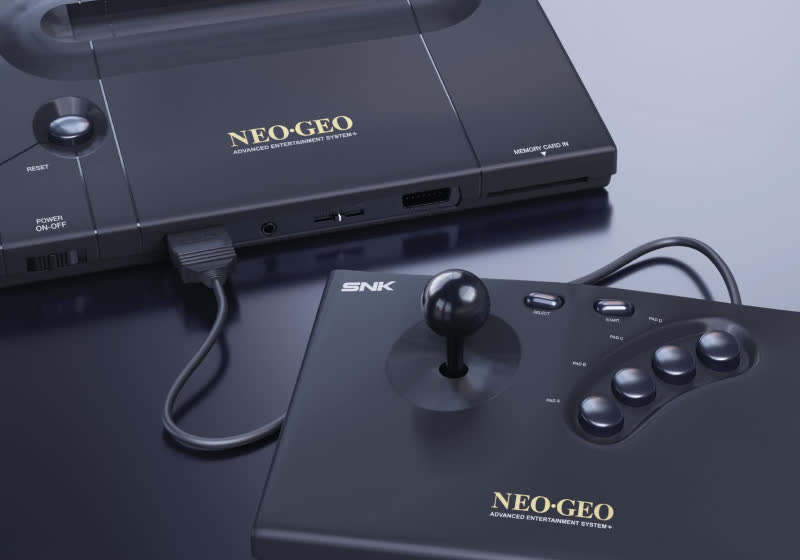
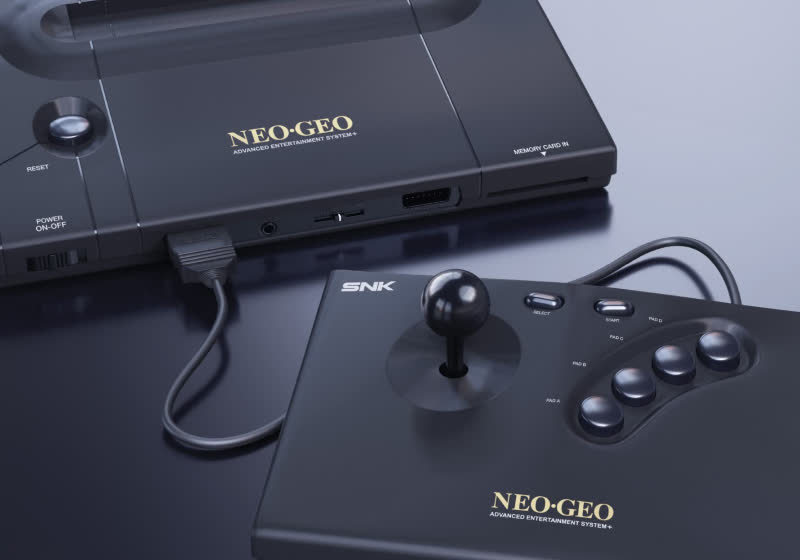
Set to launch on November 12, the NeoGeo AES+ will be available in Standard and 35th Anniversary editions priced at $249.99 / £179.99 / €199.99, with an Ultimate Edition bundle already listed through Plaion’s storefront. The exterior closely mirrors the 1990 model, but the internal changes are aimed at aligning… Read Entire Article Source link
A new NYT Strands puzzle appears at midnight each day for your time zone – which means that some people are always playing ‘today’s game’ while others are playing ‘yesterday’s’. If you’re looking for Friday’s puzzle instead then click here: NYT Strands hints and answers for Friday, April 17 (game #775).
Strands is the NYT’s latest word game after the likes of Wordle, Spelling Bee and Connections – and it’s great fun. It can be difficult, though, so read on for my Strands hints.
Want more word-based fun? Then check out my NYT Connections today and Quordle today pages for hints and answers for those games, and Marc’s Wordle today page for the original viral word game.
Advertisement
SPOILER WARNING: Information about NYT Strands today is below, so don’t read on if you don’t want to know the answers.
Article continues below
NYT Strands today (game #776) – hint #1 – today’s theme
What is the theme of today’s NYT Strands?
• Today’s NYT Strands theme is… Not too much
NYT Strands today (game #776) – hint #2 – clue words
Play any of these words to unlock the in-game hints system.
Advertisement
CHIVES
BARN
STEAL
BUNG
CHEER
RAVEN
DOES
NYT Strands today (game #776) – hint #3 – spangram letters
How many letters are in today’s spangram?
• Spangram has 10 letters
NYT Strands today (game #776) – hint #4 – spangram position
What are two sides of the board that today’s spangram touches?
First side: top, 3rd column
Last side: bottom, 3rd column
Advertisement
Right, the answers are below, so DO NOT SCROLL ANY FURTHER IF YOU DON’T WANT TO SEE THEM.
Advertisement
NYT Strands today (game #776) – the answers
(Image credit: New York Times)
The answers to today’s Strands, game #776, are…
BUDGET
BARGAIN
INEXPENSIVE
AFFORDABLE
SALE
SPANGRAM: ONTHECHEAP
My rating: Easy
My score: Perfect
I know it’s becoming something of a Strands trend but I’m always a little thrown when the spangram isn’t the longest word in the game.
Sign up for breaking news, reviews, opinion, top tech deals, and more.
Thankfully, both INEXPENSIVE and AFFORDABLE were easy enough to spot and connect. As for the spangram, I’m sure I wasn’t alone in spotting “cheap” and being puzzled when it failed to turn blue.
Beyond these very minor quibbles this was a straightforward game with some easy corner spots.
Advertisement
Yesterday’s NYT Strands answers (Friday, April 17, game #775)
OYSTER
CLAM
CONCH
ABALONE
LIMPET
MUSSEL
SCALLOP
SPANGRAM: MOLLUSK
What is NYT Strands?
Strands is the NYT’s not-so-new-any-more word game, following Wordle and Connections. It’s now a fully fledged member of the NYT’s games stable that has been running for a year and which can be played on the NYT Games site on desktop or mobile.
I’ve got a full guide to how to play NYT Strands, complete with tips for solving it, so check that out if you’re struggling to beat it each day.
A new Ipsos poll finds Americans are increasingly getting news from online personalities and comedians instead of traditional TV or newspapers. The survey says nearly 70% get news online in a given week, versus 55% from TV and 25% from newspapers, with figures like Joe Rogan, Greg Gutfeld, Sean Hannity, and late-night hosts ranking prominently depending on political leanings. From the Hollywood Reporter: The poll, which was conducted in March, actually found the conservative politicians and cabinet members, including President Trump, were the top news influencers. When politicos were excluded, Joe Rogan led the list, followed by Fox News personalities Greg Gutfeld and Sean Hannity, and then TuckerCarlson and Ben Shapiro. The only three influencers to crack 10 percent were Trump, Rogan, and JD Vance. Among people who voted for Kamala Harris, the top news personalities were late night hosts, led by ABC’s Jimmy Kimmel, followed by CBS Late Show host Stephen Colbert, and Daily Show host Jon Stewart.
Just under 70 percent of respondents said they get their news online in a given week, compared to 55 percent for TV, and 25 percent for newspapers. […] Of traditional media outlets, TV dominated, with Fox News, the broadcast networks, and CNN topping the list of sources. Facebook, YouTube and Instagram were the most popular online news sources. “On these platforms opinionated personalities and comedians appear to drown out anyone who would fit in the traditional journalist category,” said assistant professor of practice and Jordan Center Executive Director Steven L Herman. “Even in the late 19th century and early 20th centuries, sensationalist and polarizing voices in print and later on air were among the most influential in the political landscape — such as political satirist Mark Twain and populist Father Charles Coughlin.”
NASA of the European Space Agency’s (ESA) Rosalind Franklin rover, which is being sent to Mars. The current plan is to launch via a SpaceX Falcon Heavy rocket from Kennedy Space Center. The timing is still being worked out, but the space agency says this won’t happen until at least 2028.
This is a partnership between NASA and the ESA, with the European agency providing the rover, the spacecraft and the lander. The US will provide braking engines for the lander, heater units for the rover’s internal systems and, of course, assistance with the actual launch.
The rover will be outfitted with scientific instruments to look for signs of ancient life on the red planet. These include a state-of-the-art mass spectrometer and an organic molecule analyzer, which will come in handy as the vehicle collects samples at the Oxia Planum landing site.
This is a mission that has suffered years of delays for all kinds of wild reasons. It was actually first conceived . The rover mission was originally scheduled for 2009, after NASA came on board. Budget constraints forced NASA to drop out in 2012, so Russia signed on as the ESA’s launch partner.
Advertisement
During this period, the mission which . The ESA in 2022 after the country invaded Ukraine. This left the mission in doubt until 2024, when NASA .
However, the setbacks didn’t even end there. The Trump administration has repeatedly tried to end NASA’s involvement with the project, and many others, . The current proposal was made while the around the Moon, . Here’s hoping the launch actually happens in 2028.
Uber has launched a service that sends a gig worker to your door to collect items you want to return to a retailer, for $5 a pickup. The feature, called Return a Package, is available in the Uber Eats app across nearly 5,000 US cities and works with nine retail partners including Target, Best Buy, and Dick’s Sporting Goods. A courier arrives, takes the item, and delivers it back to the store. Uber One members pay $3.
The service is limited in ways that matter. Items must have been purchased through Uber Eats, must be worth more than $20, cannot exceed $100 in value or 30 pounds in weight, and must comply with the individual retailer’s return policy. Customers can send up to five packages per request. These constraints mean Return a Package is not a replacement for driving to a UPS Store or printing a shipping label. It is a convenience layer for a specific subset of purchases made through Uber’s own marketplace.
The returns problem
US retail returns totalled $850 billion in 2025, according to the National Retail Federation, with online purchases returned at roughly twice the rate of items bought in physical stores. Processing a single return costs retailers between $10 and $65 when accounting for shipping, labour, inspection, and restocking. Return fraud added another $103 billion in losses. For retailers, reverse logistics is an operational burden that scales with e-commerce growth and shows no sign of shrinking.
Uber’s pitch is that its existing courier network, the same fleet that delivers takeaway food and groceries, can handle returns as a natural extension of its logistics infrastructure. The marginal cost of adding a return pickup to a courier’s route is low if the courier is already in the area. The $5 fee covers Uber’s cut and the driver’s compensation for what is typically a short trip. For the customer, it eliminates the friction of packaging an item, finding a label, and visiting a drop-off point during business hours.
Advertisement
The 💜 of EU tech
The latest rumblings from the EU tech scene, a story from our wise ol’ founder Boris, and some questionable AI art. It’s free, every week, in your inbox. Sign up now!
The competitive landscape is crowded. UPS acquired Happy Returns from PayPal and is transitioning the service from FedEx Office locations to The UPS Store network, offering box-free, label-free returns at thousands of physical locations. Amazon handles its own returns through Whole Foods, Kohl’s partnerships, and its own locker network. FedEx and USPS maintain their own drop-off infrastructure. What Uber adds is the on-demand pickup element: no driving, no queuing, no leaving the house.
Uber’s logistics expansion
Return a Package builds on Uber Connect, a peer-to-peer package delivery service launched in 2023 that already lets customers send items to USPS, UPS, or FedEx locations via a courier. The new service adds the reverse direction: instead of dropping off a pre-labelled parcel, the courier collects an item and returns it directly to the retailer on the customer’s behalf.
The financial case for expansion is strong. Uber’s delivery revenue hit $4.9 billion in Q4 2025, a 30% year-over-year increase, within total annual revenue of $52 billion and gross bookings of $193 billion. The company generated $10 billion in free cash flow for the full year. Uber does not need returns to be a major revenue line; it needs them to increase the frequency with which customers open the app and the number of tasks its courier fleet can fulfil per hour. Both metrics drive the unit economics that make its delivery business profitable.
The limits of convenience
The restriction to Uber Eats purchases is the most significant constraint. It means Return a Package does not help with the vast majority of online returns, those from Amazon, direct-to-consumer brands, or any retailer outside Uber’s marketplace. A customer who buys a blender from Target through Uber Eats can have it picked up; the same customer who buys the same blender from Target.com cannot. This limits the service’s utility and reinforces its role as a retention tool for Uber Eats rather than a standalone logistics product.
The $100 value cap and 30-pound weight limit further narrow the use case. High-value electronics, furniture, and appliances, categories with significant return rates, are excluded. The nine launch retailers cover a reasonable range of categories, from home goods to sporting equipment to pet supplies, but the absence of clothing retailers is notable given that apparel has the highest return rate of any e-commerce category.
Advertisement
Uber could expand both the retailer list and the eligibility criteria over time. The company’s track record with Uber Eats suggests it will. The grocery delivery service started with a handful of partners and now operates with tens of thousands of merchants. But for now, Return a Package is a feature, not a platform. It solves a real irritation for a narrow set of transactions and signals where Uber wants to go without yet delivering thebroad platform capabilitythat would make it a genuine threat to established reverse logistics providers.
The $5 price point is the most interesting element. It is low enough to be an impulse decision for most consumers, cheaper than the fuel and parking costs of driving to a store, and comparable to the cost of printing a label and scheduling a carrier pickup. If Uber can expand the service beyond its own marketplace and remove the value cap, it would have a legitimate consumer proposition in a market worth hundreds of billions of dollars that no one has made convenient yet. The infrastructure is already there. The question is whether the restrictions come off before a competitor, most likely Amazon, gets there first.
Sam Altman’s cryptocurrency turned identity verification startup Tools for Humanity is offering a new set of perks to people who scan their eyes at one of the company’s orbs. Among them, is a new tool called Concert Kit that could help bands and artists fight back against ticket scalping bots.
The new feature relies on the revamped World ID, the orb-based verification system that scans users eyeballs and faces to create a “proof of human” signature that lives on users’ mobile devices. “It’s basically like a little human passport for the internet that lets you prove on apps and websites that you are a real and unique human without revealing anything about yourself,” Tools for Humanity Chief Product Officer Tiago Sada tells Engadget.
Now, as more apps and services are starting to support World ID, that “human passport” can unlock some new abilities. Coupled with Concert Kit, it allows artists to designate a specific pool of tickets for “verified” humans only. The concept is a bit like how pre-sales currently work, with artists (or their teams) setting aside a specific number of tickets for people who have set up a World ID. Those folks can then use their World ID to get ticket codes for Ticketmaster, Eventbrite, AXS or other major ticketing platforms.
Because World ID is limited to actual, “verified,” humans the system won’t be susceptible to the same tactics that have enabled bots to ruin the ticket-buying process for so many, Tools for Humanity says. Artists are also in control of what level of verification they want to require from their fans. (The new World ID app will also allow people to set up an account with a selfie check if they don’t have ready access to an orb.)
Advertisement
Just how much of a dent Concert Kit will be able to make in the massive scalping bot problem that plagues the concert industry is less clear. So far, Bruno Mars is slated to use the solution on his upcoming world tour — no word on just how many of his tickets will be reserved for World ID-verified humans, though — and Concert Kit is available to other artists starting today.
Concert Kit is one of several new integrations and updates to World ID that Tools for Humanity announced at an event in San Francisco Friday. Tinder, which earlier this year started testing World ID as an age verification solution in Japan, will be rolling out support worldwide. In the US, Tinder’s integration won’t be for age verification, though. Instead, it will indicate whether there is an actual “verified” human behind a given profile.
Tinder profiles that verify with World ID will get a badge as an extra signal of authenticity. (Tools for Humanity)
On the enterprise side, Zoom and DocuSign are also adding support for World ID to help businesses verify that there is an actual person (and not a deepfake or bot) joining their video calls or signing important documents. Tools for Humanity is also introducing a standalone app for World ID that separates its identity verification tools from its existing crypto wallet app.
The updates are Tools for Humanity’s latest attempt to make their orb-based verification system, which has been widely mocked, more mainstream and perhaps a little less dystopian. (Elsewhere, orbs have begun appearing in some new places like a San Francisco Gap.)
Advertisement
On their part, Tools for Humanity seems aware that a lot of people aren’t ready to scan their faces at a bunch of orbs controlled by Altman just to “prove” they are humans. I asked Sada, Tools for Humanity’s Chief Product Officer, what he would say to people who think that the company is solving for the wrong problem: that really it should be up to ticketing platforms and dating apps and other services to strengthen their security and bot-fighting tools, rather than rely on their users to “prove” their humanness.
He said it was a “completely understandable question” and compared it to some people’s initial discomfort with things like Apple’s TouchID or FaceID. “Not everyone has to do it upfront, and that’s important,” he said. “It’s optional. If you want to have a World ID, you get access to that enhanced experience.”
More rumors of the iPhone Fold, speculation about a Mac Neo, and why you shouldn’t be concerned at claims people can steal money from your iPhone, on the AppleInsider Podcast.
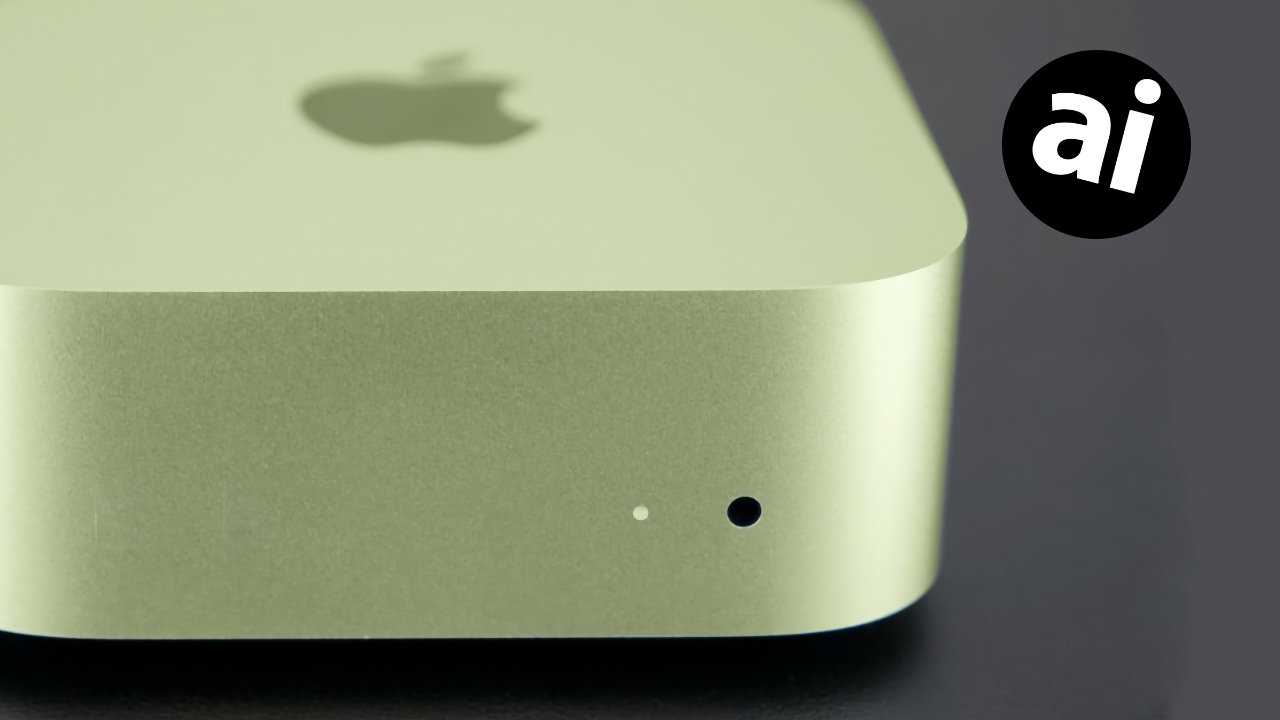
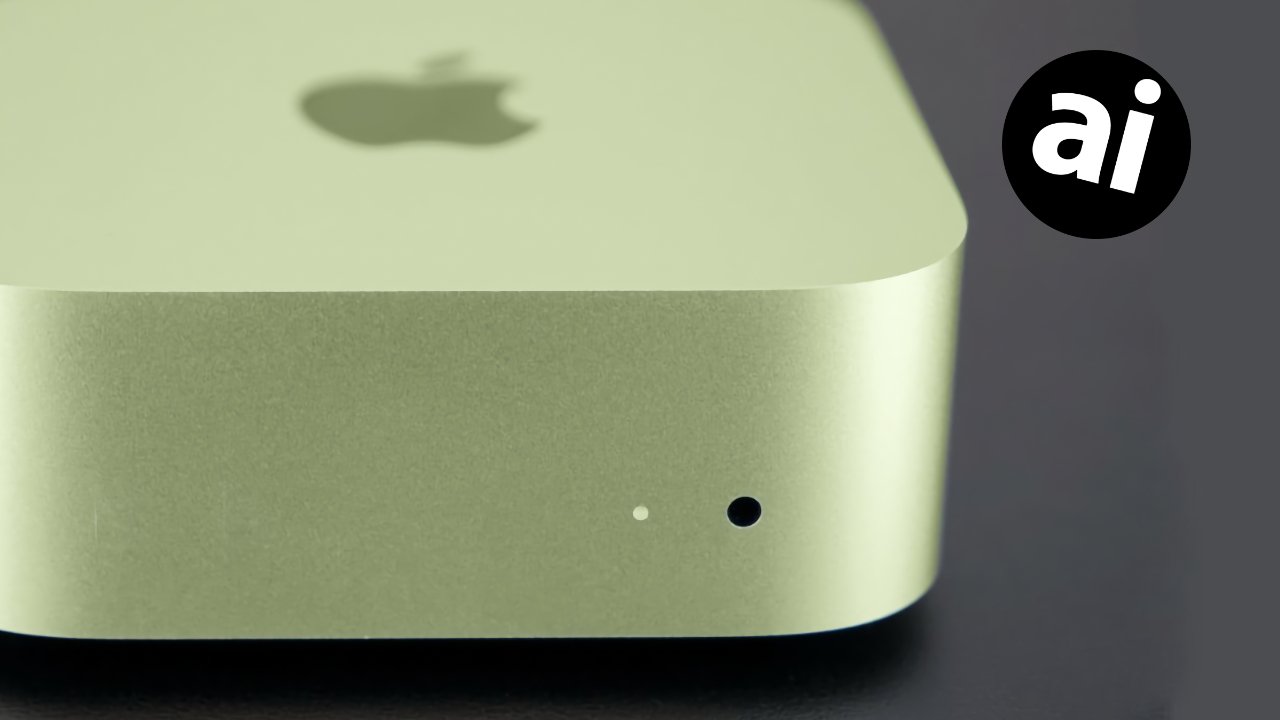
There’s no Mac Neo yet, but there should be.
Maybe Apple will never make a tiny desktop Mac Neo, but it should and it has everything it needs to do it, from processors to the massive success of the MacBook Neo. True, the company does seem to be a little busy with the iPhone Fold, though. Speaking of which, the on again, off again rumors about when the iPhone Fold will be released continue. Sorting out the new leaks from the rest of the echo chamber-like reports is becoming a full-time job. Continue Reading on AppleInsider | Discuss on our Forums
The Navy ship CVN-65, known as the USS Enterprise — not to be confused with other U.S. Navy ships that have been given the Enterprise name – is set to be dismantled. Serving from 1958 to 2012, CVN-65 was the Navy’s first nuclear-powered ship and is also the first ship of its kind to be prepared for full disassembly and disposal. Of course, it hasn’t fully earned the second accolade just yet, as there’s an issue with actually getting the process underway. Thanks to an apparent computer glitch at an inopportune time, the procedure and the bureaucracy behind it have gone to the courtroom.
The issue stems from the Navy’s alleged mishandling of the dismantlement contract in April 2025. The Procurement Integrated Enterprise Environment website, where companies bid for the rights to dismantle the ship, reportedly had issues on deadline day, leading to individuals getting locked out and enduring long loading times. This allegedly caused the likes of HII Shipcycle LLC. to fail to submit their bids before the deadline. HII requested leniency due to the issues, but was denied. As a result, the Navy awarded the $537 million contract to NorthStar Marine Dismantlement Services LLC., partnered with Modern American Recycling and Radiological Services, in May.
However, in August, EnergySolutions Federal Support LLC. and HII Shipcycle filed an appeal, claiming that they were wrongfully disqualified from bidding on the contract due to the Navy website’s glitches. Come February 2026, Judge Philip S. Hadji ordered that the Navy halt the NorthStar contract and reopen the bidding. Unsurprisingly, those at NorthStar weren’t so quick to let this ruling stand.
Advertisement
NorthStar is pushing back against the ruling
Mehaniq/Shutterstock
In the wake of Judge Philip S. Hadji’s ruling, the United States Navy released a statement to AL.com, explaining that it intends to fully comply with the decision and offer interested parties a chance to resubmit their contract bids. “The Navy is re-opening the solicitation via an Amendment that allows all Offerors in the competitive range to resubmit [final proposal revisions] to inform a new source selection decision,” the statement said. It added that the Navy expects a new contract to be delivered in June 2026.
Not long after the court decision on the dismantling contract, NorthStar predictably launched an appeal. The company legally challenged the ruling in March 2026, arguing that it unjustly halts its and the Navy’s efforts to dismantle the USS Enterprise. NorthStar was planning to move the ship’s hull to Mobile, Alabama, for deconstruction — despite previous opposition from the Mobile Chamber of Commerce – though this move is currently up in the air given the state of the contract.
Advertisement
Several things can happen to a U.S. Navy ship once it’s decommissioned, with dismantlement being quite a time-consuming and costly endeavor. In the case of the USS Enterprise, the already lengthy timetable — the project was scheduled to wrap up in November 2029 – likely extended much further. Time will tell who will ultimately land the contract and how long it will take to see this tenured ship completely torn down.








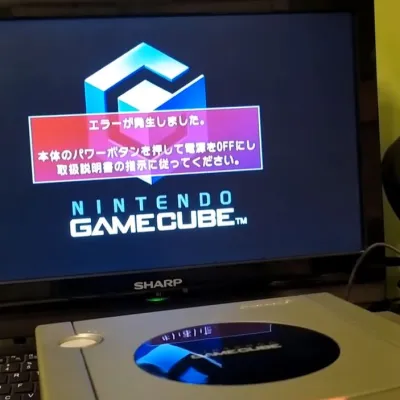
 Generally when a game console with an optical drive stops reading discs the first thing that people do is crank on the potentiometer that controls the power to the laser diode to ramp up its output. While this can be a necessary solution to eke out a bit more life out of a clearly dying laser diode, this can actually massively shorten the lifespan of a good diode that’s just held back by bad capacitors. This is demonstrated by [Skawo] with a fix on a GameCube that stopped reading discs.










































You must be logged in to post a comment Login