Connect with us
DAPA Banner
DAPA Coin
DAPA
COIN PAYMENT ASSET
PRIVACY · BLOCKDAG · HOMOMORPHIC ENCRYPTION · RUST
ElGamal Encrypted MINE DAPA
🚫 GENESIS SOLD OUT
DAPAPAY COMING

Tech

Top Sony sets from LCD to OLED

Published

on

From LG to TCL and even Amazon, there is no shortage of manufacturers putting out great TVs in 2026, but there’s one brand that’s been in the game for what feels like an age, and that’s Sony. Time and time again, Sony has proven itself to be a formidable force in the world of audiovisual tech, and the culmination of that talent and expertise can be seen in the best Sony Bravia TVs that money can buy.

Although Sony is probably best known in the TV space for putting out the type of sets that really push the bar with high-end OLED panels, luscious colours and incredible attention to sound, the brand still produces a good amount of budget-friendly TVs each year so if you aren’t looking to spend too much then there are options available to you.

Still, if you are looking to shop exclusively at the cheaper end of the market then you may find that your money goes a bit further with the likes of TCL and Toshiba. We have a separate guide to the best cheap TVs for those shopping on a budget. Sony on the other hand is best appreciated at the higher-end, where you can really see what all the fuss is about.

Not only are Sony TVs incredible for experiencing the feeling of true cinema at home, but because of the company’s gaming chops via its PlayStation division, it also has an acute understanding of what makes for a great gaming experience. All of this goes into a range of TVs that tick pretty much every box you could possibly want.

Advertisement

For anyone who’s still on the fence or pondering what type of TV they should get, you can dive into our helpful explainers on OLED vs LED, and what Mini-LED is all about. Once you’ve gotten all the details out of the way, you can shop with confidence that all of the Sony TVs here have passed our rigorous testing process with flying colours.

Best Sony Bravia TV at a glance

Advertisement

SQUIRREL_ANCHOR_LIST

How we test TVs

Every TV we review is put through the same set of tests to gauge its picture performance, usability, and smart features.

Advertisement

Tests are carried out over several days and are done by eye but supported with technical measurements. Testing by eye involves an expert watching a wide range of material to understand and determine a TV’s performance in fields such as brightness, contrast, motion processing, colour handling and screen uniformity.

We’ll consider the design of the TV in terms of build quality, study the spec sheets and see if the TV’s connections are up to spec, as well as playing video and audio content to ensure that the set handles playback as it claims. We also take note whether a product’s compatible formats and features are in line with industry trends or not to gauge whether it’s relevant for you.

Comparison to other related and similarly priced products is also important, to see if it’s missing any vital features and whether it impresses as a whole. After all this, we’ll come to a judgement on how the TV performs as a whole.

If you want to learn more, please visit our detailed page about how we test televisions.

Advertisement
  • Film-like, colourful, dazzling image

  • Energetic and dynamic sound

  • Google TV is easy to like

  • Slick motion processing

  • The feet design aggravates

  • Black levels look grey in a dark room

  • Limited game features compared to rivals

  • A tad more expensive and not quite as much value as rivals

With the Bravia 8 II, Sony has delivered a TV that lives up to the hype. It arguably offers the finest picture quality of any TV current on the market.

Colours look impressively pure to our eyes, as well as excellent levels of sharpness and detail.

Advertisement

It’s brighter than the A95L but not as bright as other OLED models on the market. Regardless Sony uses the extra brightness the QD-OLED panel offers to deliver a range of colours that’s wider than any we’ve seen on other OLEDs. The accuracy of this set is impressive compared to other premium OLED TVs.

Sony’s Acoustic Surface Audio+ system delivers a big performance and places effects and dialogue accurately on screen. It’s an energetic, dynamic performance that makes the Bravia 8 II one of the best sounding flatscreen TVs.

In terms of its bass response, it gives the low frequencies more oomph that rival TVs are capable of. While a sound system can improve on it, we’re not in a rush to add one.

It comes with two HDMI 2.1 inputs that support eARC, VRR, ALLM, and 4K/120Hz high frame rates.

Advertisement

For gamers, PS5 fans get the most attention with the Auto Tone Mapping feature that optimises the HDR performance. Input lag is solid at 16.4ms but there are Sony TVs on this list that offer a quicker performance. For PC gamers, there’s no certified support for AMD FreeSync or Nvidia G-Sync.

This isn’t as much of a gaming TV. In fact, all of the Sony TVs on this list don’t offer a wide range of features for gamers, which is a surprise given Sony’s PlayStation pedigree.

Smarts are provided by Google TV, and along with the major streaming apps such as Disney+ and Netflix, all the UK catch up services are available as separate apps.

Google TV is easy to use and offers plenty of entertainment apps. It’s content recommendations aren’t the best.

Advertisement

If you want to spare no expense and want the best picture and sound of any Sony TV, the Bravia 8 II is the TV to pour your savings into.

SQUIRREL_PLAYLIST_10207577

Advertisement
  • Spectacularly bright, colourful pictures

  • Groundbreaking backlight controls

  • Powerful multi-channel sound

  • Blooming becomes more noticeable when viewing off axis

  • No HDR10+ playback

  • Only two fully features HDMI 2.1 ports

Sony’s Bravia 9 means business in the Mini LED TV market, and it offers  sensational picture quality.

The impact of the Bravia 9’s brightness is noticeable from the off. Our reviewer found the colours to be spectacularly punchy, delivering bright and intense highlights along with deep black levels that rival that of the best OLED TVs.

Advertisement

The Mini LED backlight also helps reveal subtle colour shades, unlocking a high level of detail and sharpness

It upscales HD content to 4K resolution brilliantly, and converts SDR into HDR very impressively as well. There is still some noticeable backlight blooming but the Bravia 9’s backlight is one of the best we’ve tested.

Google TV provides all the main streaming apps, while the TV ships with two remotes, which includes a smart one that offers a more simpler means of control.

Input lag is nippy at 10.1ms, while there’s support for ALLM and VRR through Sony’s Perfect for PS5 features. There’s not much for PC gamers though, and like the rest of the TVs on this list, there are only two HDMI inputs that support HDMI 2.1 features such as VRR and eARC (for high quality audio).

Advertisement

The sound is impressively wide with a well-balanced sound with sharp but not harsh treble and bass that’s punchy and controlled for most of the time.

SQUIRREL_PLAYLIST_10207335

Advertisement
  • Natural, immersive picture quality

  • Good value for what’s on offer

  • Clean, detailed sound

  • One or two colour quirks

  • No HDR10+ support

  • rt Only two game-friendly HDMI inputs

The Bravia 5 is (for Sony at least) one of its more affordable Mini LED TVs at £1399. That does sound more expensive when compared against the likes of Hisense and TCL, but what you get with the Bravia 5 is a quality picture from top to bottom.

It’s a brilliantly watchable image with black levels that are consistently deep for an LCD backlight, with blooming reduced (halos around objects). For an LCD TV, it offers strong contrast, even though it’s not as bright as others, Sony’s processing works wonders.

Advertisement

The colour performance is superlative, vivid and expressive, though we find that using the TV’s Vivid mode causes some colours to ‘glow’ a little too much.

Its upscaling skills are good, avoiding any smearing and suppressing noise well. For gaming, it’s similar to other Sony TVs in its support for PlayStation 5 and 4K/120Hz, and respectable input lag of 13.3ms.

The Bravia 5 is positioned as more of a home cinema TV, collecting movie modes in IMAX Enhanced, Netflix Calibrated, Prime Video Calibrated and of course, Dolby Vision. On the audio side it supports Dolby Atmos and DTS:X.

While the Bravia 9 is Sony’s most spectactular Mini LED TV to date, the Bravia 5 is best suited for most people. At a more affordable price while still offering a fantastic image quality, movie nights on this TV will look fantastic.

Advertisement

SQUIRREL_PLAYLIST_10208386

  • Expressive and natural picture quality

  • Engaging Google TV smarts

  • Convenient design

  • Dolby and DTS support

Advertisement
  • Less bright than the competition

  • Sounds tamer than previous models

The Sony Bravia 8 replaced the Sony A80L, but you could more or less say it’s the same TV.

There are a few differences in terms of picture quality, with the Bravia 8 OLED reaching higher levels of peak brightness in some modes (Professional, Vivid) but less so in others (Cinema Standard).

There are slight improvements over the A80L with the Bravia 8 offering a richer, bolder HDR performance that looks lovely when paired with colourful films and TV series.

Advertisement

Motion processing is again excellent with very few issues noted, while contrast is strong for an OLED TV although we did notice some crushing (loss) of detail in its black levels.

We’d love for Sony to push the brightness out more for this OLED, but for those who want a brighter HDR performance, the Bravia 8 II offers a better picture.

If, however, the premium price the Bravia 8 II goes for isn’t within your budget, the Bravia 8 is a fine mid-range TV, and it offers up the same level of gaming performance too.

It includes Auto Genre Picture mode that automatically switches the TV in and out of its game-ready state, along with Auto HDR Tone Mapping enhances the HDR performance for best brightness and contrast.

Advertisement

Dolby Vision Gaming is supported and the TV does includes 4K/120Hz and variable refresh rates (VRR) across two HDMI 2.1 inputs (one of which is shared with the eARC port). We measured input lag at 12.7ms, which is just behind the Bravia 9 in terms of speediness.

The sound quality is fine though not as dynamic or as loud as we’ve heard on previous OLED TVs, such as the A80L.

We’d recommend you consider adding a soundbar or sound system, and Sony has plenty including its Bravia Theatre Bar 8 and the Theatre Sound System 6 to choose from.

SQUIRREL_PLAYLIST_10208387

Advertisement
  • Colourful, expressive picture

  • Excellent processing

  • Competitive smarts and features for the money

  • Dolby and DTS audio

  • Suffers with dark scenes

  • Tepid bass performance

  • Some clipping with HDR content

Advertisement

The Sony X85L first launched in 2023 but it has stuck around in 2026, and can still be bought for around £999.

That’s not exactly cheap, especially for three year-old tech, but this is Sony (who charge a bit more than others), and this is a TV that for budding home cinema fans, we rate very highly.

It has a Full Array Local Dimming backlight that offers more precise black levels and brightness than a standard LCD TV, although like many a Sony TV, we noticed it’s not the brightest out of the box.

Our measurements clocked it at 738 nits in Standard HDR mode but for a TV that’s less than £1000, it is bright for a HDR TV.

Advertisement

What really appeals is its colour performance. It describes colours with terrific variety, producing a vibrant but still natural-looking image.

Upscaling with HD and SD content is solid, and although there is some noise the X85L manages it well. Its motion processing is very good to the point where we didn’t even notice that it was on.

Sound quality is ok. It produces a crisp tone with voices but lacks bass. We’d suggest getting a soundbar to go with the X85L.

Gamers looking for a premium experience can count on ALLM, VRR, and HFR, while input lag is a solid 14.5ms. This TV plays nicely with a PS5 with its custom features that includes optimising the HDR performance for the best image quality.

Advertisement

For smarts, Google TV delivers all the streaming apps you’ll need, and we found the interface to be quick and responsive to use. The design is customisable, as the stand can be put together in two ways to allow for a soundbar or if you want to place it on a small surface.

Test Data

  Sony Bravia 8 II Sony Bravia 9 Sony Bravia 5 Sony Bravia 8 Sony KD-55X85L
Input lag (ms) 16.4 ms 10.1 ms 13.2 ms 12.7 ms 14.5 ms
Peak brightness (nits) 5% 962 nits 463 nits 742 nits
Peak brightness (nits) 2% 977 nits 2500 nits 710 nits 462 nits 738 nits
Peak brightness (nits) 10% 868 nits 2700 nits 800 nits 430 nits 743 nits
Peak brightness (nits) 100% 263 nits 880 nits 592 nits 121 nits 614 nits
Set up TV (timed) 98 Seconds 350 Seconds 720 Seconds 69 Seconds

Full Specs

  Sony Bravia 8 II Review Sony Bravia 9 Review Sony Bravia 5 Review Sony Bravia 8 Review Sony KD-55X85L Review
Manufacturer Sony Sony Sony Sony Sony
Screen Size 64.5 inches 64.5 inches 64.5 inches 54.6 inches 54.6 inches
Size (Dimensions) 1443 x 339 x 905 MM 1443 x 349 x 908 MM 1447 x 345 x 862 MM 1223 x 248 x 786 MM 1228 x 56 x 709 MM
Size (Dimensions without stand) 830 x 1443 x 34 MM 835 x 1443 x 48 MM 832 x 1447 x 58 MM 706 x 1223 x 37 MM 784 x 1228 x 336 MM
Weight 24.2 KG 34.8 KG 24.9 KG 18 KG 17.4 KG
ASIN B0DYK7Y2YB B0DJDDR25R B0F29KYPN4 B0CZTZTQXJ B0BX6N4BYP
Operating System Google TV Google TV Google TV Google TV Google TV
Release Date 2025 2024 2025 2024 2023
Model Number K-65XR90 K55XR80 KD-55X95L
Model Variants Bravia 7, Bravia 8
Resolution 3840 x 2160 3840 x 2160 3840 x 2160 3840 x 2160 3840 x 2160
HDR Yes Yes Yes Yes Yes
Types of HDR Dolby Vision, HDR10, HLG HDR10, HLG, Dolby Vision HDR10, HLG, Dolby Vision HDR10, HLG, Dolby Vision HDR10, HLG, Dolby Vision
Refresh Rate TVs 48 – 120 Hz 40 – 120 Hz 48 – 120 Hz 40 – 120 Hz 40 – 120 Hz
Ports Four HDMI, Ethernet, two USB, digital audio out, RF terrestrial, two RF satellite Four HDMI, digital audio out, two USB ports, Ethernet, two satellite, RF terrestrial Four HDMI (two with full HDMI 2.1 features), 2 x USB, Ethernet, RF input, optical digital audio output Four HDMI, digital audio out, two USB ports, Ethernet, two satellite, RF terrestrial Two HDMI 2.0, two HDMI 2.1, Ethernet, two USB, composite video input, digital audio output, terrestrial/satellite inputs
HDMI (2.1) 4K/120, eARC, ALLM, VRR eARC, ALLM, VRR, HFR, SBTM eARC, VRR, ALLM, 4K/120Hz eARC, ALLM, VRR, HFR, SBTM ALLM, eARC, VRR, 4K/120Hz
Audio (Power output) 50 W 70 W 40 W 50 W 20 W
Connectivity Wi-Fi, Bluetooth 5.3, Google Cast, AirPlay 2 Wi-Fi, Bluetooth 5.3, AirPlay 2, Google Cast Wi-Fi, Bluetooth 5.3, Apple Airplay 2, Google Cast Wi-Fi, AirPlay 2, Google Cast, Bluetooth 5.3 Bluetooth 4.2, Wi-Fi, AirPlay 2, Chromecast
Colours Black
Display Technology OLED, QLED LCD, Mini LED, QLED Mini LED, VA OLED LCD, Direct-LED (Full Array Local Dimming)
UK RRP £2499 £2999 £1399 £2199 £1399
USA RRP $3000 $1499
CA RRP CA$2099
AUD RRP AU$1999

Advertisement

Advertisement

Source link

Continue Reading
Click to comment

You must be logged in to post a comment Login

Leave a Reply

Tech

Spotify’s new conversational AI can play tracks you request and answer your music questions

Published

on

Spotify is rolling out a new AI-powered conversational feature that lets Premium users talk directly to the app about what they want to hear. Users can type or speak a request and refine the results through follow-up questions instead of manually searching for a song, podcast, or audiobook.

The feature is available from Spotify’s Home and Now Playing screens and works much like a personal audio assistant. It can choose what plays, answer questions about the current track or album, recommend something new, and look through your listening history to provide more personalized responses.

Now you can talk to Spotify:
🎧 It plays what you want
🎧 It adds what you want
🎧 It even answers what you’re curious about

What’s the first thing you’d say? pic.twitter.com/uKajUFpA1G

— Spotify (@Spotify) July 14, 2026

Advertisement

What can you ask Spotify to do?

You can ask Spotify to play artists you have not heard before. Follow-up requests can add a particular artist, narrow the selection to recent releases, or make the music more upbeat. The assistant can also save a song, add it to your queue, or follow an artist. It can provide more information about whatever is currently playing. Users can ask when an album was released, what genre a song belongs to, or what inspired a particular record.

The feature also works across podcasts and audiobooks. You can ask Spotify to find more books by an author or pull up other podcast episodes featuring the same guest. It can also look back through your listening history. Spotify says you will be able to ask when you first played a particular song or which genres you have been listening to most recently.

This is not Spotify’s first AI-powered feature

Spotify has been experimenting with AI for a while now, and each feature has brought the technology into a different part of the service. AI DJ is one such feature that creates a personalized stream of music and uses an AI-generated voice to introduce songs and explain recommendations. AI Playlist lets users build playlists from written prompts based on a mood, activity, or genre.

Studio by Spotify Labs can generate personal podcasts and daily briefings shaped around a user’s listening history. Spotify has also announced a separate generative AI tool that will let Premium subscribers create licensed covers and remixes from songs by participating artists and songwriters.

The new conversational feature is now rolling out in beta to Premium users aged 18 and older in the US, Ireland, and Sweden. It is available in English through Spotify’s iOS and Android apps. Spotify says responses may not always be perfect while testing continues.

Advertisement

Source link

Continue Reading

Tech

As General Fusion makes historic Nasdaq debut, report shows global funding surged to $4.5B

Published

on

The control room for General Fusion’s Lawson Machine 26. (General Fusion Photo)

General Fusion’s stock is trading up after it became the first fusion energy company to go public on a major exchange, debuting Monday on Nasdaq.

The launch of GFUZ stock coincided with the release of the Fusion Industry Association’s annual report, which reflected that same investor enthusiasm: private funding for fusion companies totaled $4.5 billion over the past 12 months. One of the biggest rounds went to Helion Energy, a Seattle-area company that raised $465 million last month, bringing its total investment to $1.5 billion.

Soaring energy demand from AI data centers has helped drive interest in the sector as an ambitious slate of companies is building devices that create and contain plasma — a super-hot, fourth state of matter required for atom-smashing fusion to occur.

For decades, researchers have chased this clean energy source, aiming to replicate the reactions that power the sun, a churning ball of plasma. While significant progress has been made, big technical hurdles remain, and it’s uncertain when the goal will be reached.

But the promise of fusion is so enticing that the risks appear worth it for many investors.

Advertisement

“A commercial fusion industry is a world-changing industry, and the returns on investment will be massive,” said Andrew Holland, CEO of the Fusion Industry Association, in the foreword to the report.

The sector has landed more than $13.3 billion from venture capitalists over the past five years, according to the annual survey. After decades of government support via national labs and R&D grants, the private sector is now picking up the majority of the tab for fusion’s progress.

One of the important milestones in the pursuit of fusion is “scientific breakeven” — the point at which the output of a fusion reaction matches the energy input to a device’s plasma, without including the rest of the system’s power needs. Scientific breakeven was first hit by Lawrence Livermore National Laboratory in 2022, but has not been reached by a private venture.

To be financially viable, the fusion companies need to go further, capturing more energy from fusion than required to operate their whole system.

Advertisement

The new report includes profiles of 56 companies worldwide that are pursuing fusion, including four based in the Pacific Northwest: General Fusion, Helion, Zap Energy and Avalanche Energy, as well as Kyoto Fusioneering, which has an office in Seattle.

Here’s a closer look at the four companies based in this region:

Avalanche Energy, Seattle

  • Notable fact: Avalanche is unusual for its small-scale approach to fusion, and its plan to launch a pilot plant by 2030 is among the earlier targets in the race.
  • Year founded: 2018
  • Target uses: Electricity, space propulsion, marine propulsion, off-grid energy
  • Publicly shared total funding: $104.2 million
  • Target for scientific break even: 2029
  • Target for first pilot plant: 2030

General Fusion, Vancouver, B.C.

  • Notable fact: General Fusion has made multiple pivots in recent years in its path to commercialization and was the first to go public.
  • Year founded: 2002
  • Target uses: Electricity generation
  • Publicly shared total funding: about $500 million
  • Target for scientific break even: Not disclosed; aiming to produce fusion conditions by 2028
  • Target for first pilot plant: Approximately 2035

Helion, Everett, Wash.

  • Notable fact: Helion was the first to sign up a fusion customer when it inked a deal with Microsoft in 2023, and aims to be the first to reach commercialization.
  • Year founded: 2013
  • Target uses: Electricity generation
  • Publicly shared total funding: $1.5 billion
  • Target for scientific break even: Not disclosed
  • Target for first pilot plant: 2028

Zap Energy, Everett, Wash.

  • Notable fact: Zap recently announced it will also pursue nuclear fission energy, building small-scale reactors alongside its fusion work.
  • Year founded: 2017
  • Target uses: Electricity generation, off-grid energy, industrial heat
  • Publicly shared total funding: $338 million
  • Target for scientific break even: Not disclosed
  • Target for first pilot plant: Late 2030s

Source link

Continue Reading

Tech

Bridgestone Is Doing A Lot More Than Just Making Tires

Published

on


When Bridgestone was first founded in the city of Kurume, Japan, in 1931, its sole purpose was to manufacture vehicle tires. Fast forward almost a century, and most people still know Bridgestone primarily as a tire maker today. It’s one of the best-known major car tire brands on the planet, and it also produces tires for motorcycles, semi-trucks, aircraft, and even mining equipment.

What many people don’t realize is that Bridgestone isn’t just a maker of vehicle tires. Over the decades, it has launched many other ventures, some of which are more unexpected than others. Most of these ventures center around its expertise in rubber manufacturing: for example, the company’s construction solutions division manufactures seismic isolation rubbers that help protect buildings in earthquake-prone areas. They’re designed for use in high-rises, public buildings, and apartment complexes, and can help reduce the damage caused by Japan’s frequent major earthquakes.

Not everything is related to rubber, though. The same division of the company also developed the Smart Siphon drainage system, which allows water to drain through residential plumbing using horizontal pipes, rather than the sloping pipes that are needed in a conventional system.

Advertisement

Agriculture is another key market for Bridgestone, and it has been ever since the company first developed rubber tracks for a rice-harvesting machine in 1968. It still makes tracks for harvesters today, as well as offering tracks for everything from asphalt pavers to excavators. The company’s range of hydraulic hoses is also used in various agricultural machines, as well as in mining and construction machines.

Advertisement

Bridgestone is also a golf brand

Most of the aforementioned Bridgestone products won’t be known to anyone outside of the specific industries they’re designed for, but there are a few other things that Bridgestone makes that you might be more familiar with. One of its most notable ventures outside of tire making is its golf division, which designs and manufactures a variety of equipment and apparel for the sport.

The brand makes several distinct ranges of golf balls, with its Tour B range in particular being highly regarded among players from the amateur to elite levels. Various players on the PGA Tour use Bridgestone equipment, including none other than Tiger Woods, who has his own signature Tour B golf ball model. Bridgestone isn’t the only tire brand that makes golf balls, either. Dunlop also produces them under its Srixon and XXIO brands.

In addition to making golf balls, Bridgestone also manufactures the clubs golfers use to hit them, and a range of caps and gloves they can wear while they’re doing so. In between holes, players can also carry their clubs and balls around in one of Bridgestone’s golf bags, while sheltering from the elements under a Bridgestone umbrella.

While its golf equipment division is its best-known sports-related division to players around the world, some cycling enthusiasts might also know the brand as a maker of bicycles. It still sells a range of commuter-friendly bikes in Japan today, including an e-bike, although its range hasn’t been available in America since 1994.

Advertisement

Bridgestone’s latest venture is robotics

Even though it already has a diverse array of existing side ventures outside its core tire-making business, Bridgestone continues to launch new divisions to broaden its ambitions. One of its latest ventures is into the world of robotics, with the company designing and manufacturing “softrobotics” that use its rubber manufacturing know-how to create products like artificial muscles. It’s still a new division for now, having only been formed in 2023. But, in the long run, it envisions its products being used in a variety of industries.

The development team’s artificial muscles are made from rubber tubes surrounded by high-strength fiber, and they can be grouped together to form the fingers of a flexible robot hand. They’re designed to be tough, with Bridgestone demonstrating their durability by running them over with a car. But they’re still soft enough to carefully grab fragile components in a factory. Among other things, the company says they could be used in electric vehicle manufacturing, handling breakable products in distribution centers, and assembling electrical components.

Advertisement

Of course, none of these additional ventures detracts from Bridgestone’s main tire-making operation, which continues to churn out vast quantities of tires at factories around the world. Whether they’re marketed under the Bridgestone branding or under one of the multiple other brands the company owns, you’re still more likely to encounter the Bridgestone logo on the side of a car tire than anywhere else.


Advertisement

Source link

Continue Reading

Tech

California’s MyFirstEV Provides A $3,500 Instant Rebate To First-Time Buyers

Published

on

The federal government dropped the ball on the transition to electric cars when it killed the EV tax rebate last year. However, Governor Gavin Newsom has come up with an alternate solution for those in California in the form of up to $3,500 in instant rebates for first-time EV buyers.

Dubbed the MyFirstEV program, Newsom’s bill — which will go into effect sometime later this summer — is part of a larger $600 million investment by California to improve the state’s clean transportation economy. As for the rebates specifically, half of the program’s $270 million fund comes directly from California’s 2026-2027 state budget, while the other half is sourced from participating automakers.

That said, for Californians hoping to take advantage of the new incentive, there are some important restrictions. First, eligible vehicles are all zero emission, which means full battery electric cars, no hybrids. Second, in order to get the full $3,500 rebate on a new vehicle, the car’s MSRP must be under $50,000. For those planning to buy a used EV, a $1,750 rebate only applies to cars that cost less than $25,000. Finally, as the name of the program implies, the rebate is only available to first-time EV buyers.

Even with these restrictions, there’s still plenty of room in people’s budgets for a range of popular makes and models including the Nissan Leaf, Tesla Model 3 and Model Y, Hyundai Ioniq 5, Ford Mustang Mach-E and more. California-based Rivian’s latest EVs are a bit too expensive, but pricing for the R2 starts at $45,000 when the base model goes on sale sometime next year. Furthermore, the rebate is available as an instant discount through dealerships, which means you can effectively knock off up to $3,500 at the time of purchase. There’s no need to jump through additional hoops later on.

Advertisement

Going forward, the rest of California’s $600 million investment into zero emission transportation includes $150 million for the state’s Community Air Protection Program, $135.5 million for the Clean Truck and Bus Voucher Incentive Project and $130 million earmarked to replace vehicles with polluting heavy-duty engines. And for those in more rural areas, the state has also pledged to install more charging stations to help make refueling EVs easier.

Source link

Advertisement
Continue Reading

Tech

Fibrous Muscles For Humanoid Robotics

Published

on

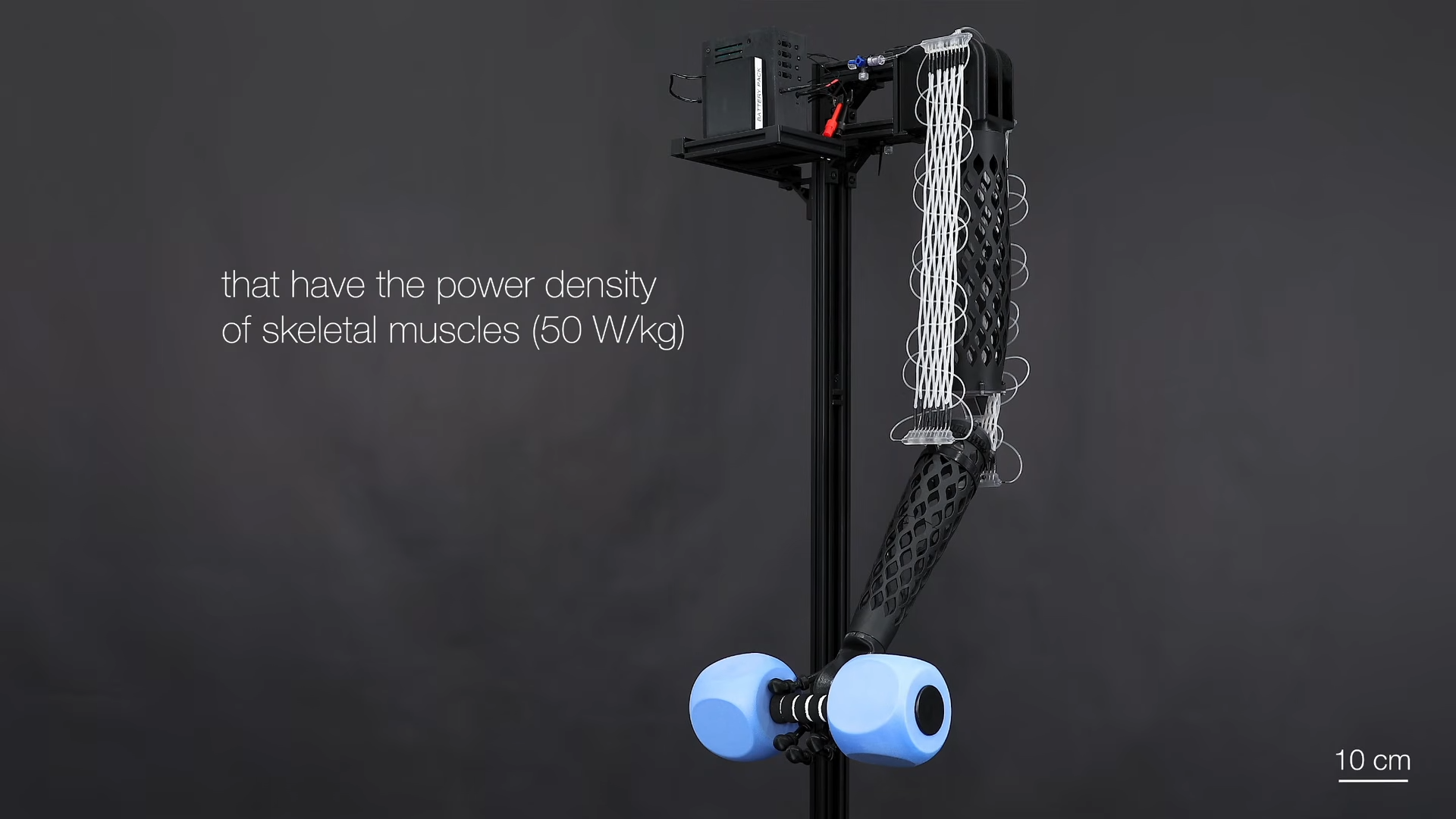
At the current rate of robotics development, you might assume that we’re close to Skynet taking over. However, while we  likely wouldn’t do well in a physical fight against a robot, we can at least keep the bragging rights of having the cooler actuators. Or at least, that was the case before a new actuator came into town — introducing “Electrofluidic Fiber Muscles”.

Traditional robotic actuators use motors of some kind with a variety of gearboxes or linkages to turn rotational movement into usable movement. This isn’t always the most effective way to run some robotics movements, especially when modeling humans. This is why many have turned to pressurized modes of actuation. Though most don’t show quite the promise of the new player.

Electrofluidic Fiber Muscles use pressure to shorten muscle strands, similar to past actuators. However, these are a tad different, taking advantage of electrofluidic pressure. A small current under high voltage is able to drive a pressure gradient in a long tube. This tube can then be connected to both an extensor and flexor portion of an actuating circuit, similar to a biological mechanical system. Better yet, this driving pressure pump can be spun around the fibers themselves, making a tight package.

Advertisement

Unfortunately, it will probably be a bit till we see this inside a hobbyist robot. Until then, make sure to check out some other actuator feats!

Advertisement

Source link

Continue Reading

Tech

Satechis’s color-matched MacBook Neo accessories are just too pretty to ignore

Published

on

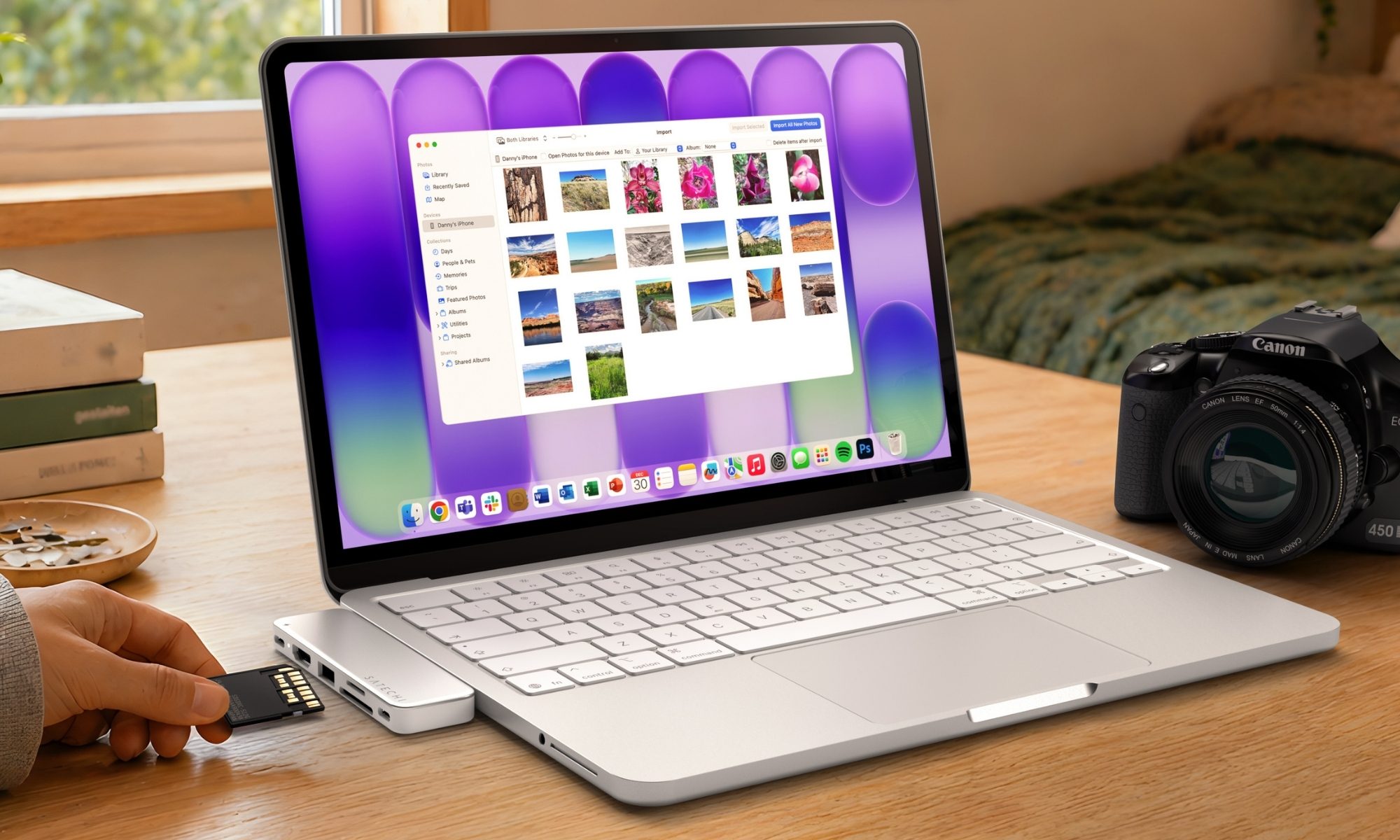
Satechi, which makes some fantastic charging and PC peripherals, has just launched a whole bunch of accessories targeted at the MacBook Neo. But instead of making them boring and drab, the company has actually color-matched them to the exact shade that you get on Apple’s budget-centric laptop. The offerings on the table include a multi-port adapter, a USB-C snap hub, and a wireless mouse, and all of them are now available to buy starting at $29.99 from Satechi’s website and Amazon. Color options that are up for grabs include Citrus, Blush, Indigo, and Silver

Satechi OntheGo 5-in-1 Multiport Adapter ($44.99)

The round multi-port adapter by Satechi is arguably the most eye-catching device in the lineup. It’s a puck-shaped adapter that can also attach magnetically to the lid of your MacBook Neo. The Satechi OntheGo 5-in-1 Multiport Adapter comes with a color-matched nylon braided cable and features a USB-C as well as a USB-A port, both of which allow 5 Gbps data transfer.

The USB-C port also opens the door for 60-watt pass-through charging, and there is also an HDMI port that can handle monitors at up to 4K resolution and a 60 Hz refresh rate. It also features an SD card reader, which means you can also use it as an external storage and recording device, while attached magnetically to the back of your iPhone.

Satechi USB-C Snap Hub ($44.99)

If you don’t want a device that dangles through a wire from your laptop, the Satechi USB-C Snap Hub is the ideal solution. It can link up with the USB-C ports on your MacBook Neo and sits flush with the chassis, as if it were a natural extension of the body. It just misses out on the active cooling perk that the brand is offering with its SSD enclosure.

It flaunts an anodized aluminum build that feels right at home with Apple’s laptop, and offers a decent selection of six ports. You get an HDMI port that can handle 4K 60Hz output to an external monitor, a USB-A port, a USB-C inlet, an SD card reader, as well as a micro SD card slot, and a 45-watt pass-through charging port.

And finally, we have the Satechi Slim EX Wireless Mouse, which costs $29.99 and supports wireless connectivity over Bluetooth and the 2.4 GHz link. Rocking an aluminum build, Satechi says that its latest mouse offers “quiet click switches and a precision-machined scroll wheel.” It also features a user-replaceable battery and works just fine across macOS, Windows, Android, and iPadOS platforms.

Advertisement

Source link

Continue Reading

Tech

Anthropic Introduces Claude for Teachers

Published

on

Artificial intelligence giant Anthropic today upped the ante in its quest to win the increasingly competitive market for AI in education by debuting Claude for Teachers, a free large language model designed for U.S. K-12 educators.

Claude for Teachers includes a library of teaching skills and a “direct connection to evidence-based curricula, mapped to academic standards in all 50 states,” the company said in a statement.

The move by Anthropic is the latest in a series of initiatives by tech giants including OpenAI’s ChatGPT for Teachers, Microsoft Elevate for Educators, and Google AI Educator Series to earn market share in an increasingly competitive AI and edtech space.

“We built Claude for Teachers to close the distance between what the evidence recommends and what a teacher’s week allows,” the Anthropic statement continued.

Advertisement

Although some educators are skeptical of AI usage in the classroom, particularly in early childhood education, Anthropic cited Stanford research suggesting that AI tools, when designed and used correctly, can aid teachers and improve student learning.

Privacy and Security Measures

Claude for Teachers has access to academic standards in all 50 states, so it can create lessons that are “scaffolded and aligned to teaching standards.” The tool’s library of skills, co-developed with Learning Commons, was piloted with teachers in Prospect Schools in Brooklyn, New York, and other sites. Anthropic said it plans to evaluate Claude for Teachers in the Detroit Public Schools Community District, “working closely with teachers to study the impact on educator well-being and practice.”

Claude for Teachers includes Claude Code and Cowork, allowing teachers to vibe-code and use the technology to securely analyze class data. “We never train our models on your conversations. Training is off for verified teacher accounts,” Anthropic said.

Advertisement

Anthropic is collaborating with the American Federation of Teachers to ensure student information is protected. “We’ve been working with Anthropic on a Gold Standard that sets out industry best practices for safety and privacy in K-12 education,” said Randi Weingarten, president of American Federation of Teachers, in the Anthropic statement.

Source link

Continue Reading

Tech

Revolut, SumUp and Stripe to take part in digital euro pilot

Published

on

Revolut, Stripe, UniCredit, Deutsche Bank and SumUp are just some of the companies selected for the pilot, which is set to commence in the second half of 2027.

The European Central Bank (ECB) has chosen 36 payment service providers (PSP) to participate in a 12-month digital euro pilot, according to an announcement released today (14 July).

The financial organisations, which include Revolut, UniCredit, Deutsche Bank, SumUp and Stripe Technology Europe, were selected from a pool of 50 PSP applicants, ranging from traditional banks to transaction platforms. The companies come from 16 euro member countries, including France, Germany, Italy, Ireland and Austria.

Interestingly, three of the selected companies – Deutsche, DZ Bank and BPCE – were among a group of 14 European lenders that previously voiced reservations about the digital euro, citing concerns such as cost and potentially undermining existing private-sector payments initiatives in the continent.

Advertisement

The digital euro is a proposed central bank digital currency (CBDC) – basically a digital version of an official currency – that was first suggested in 2023. To date, only three countries worldwide have officially launched a CBDC: Jamaica, the Bahamas and Nigeria.

The digital euro pilot is due to commence in the second half of 2027, and will be “crucial” for testing the digital euro’s technical functionality and operational processes, as well as for refining user experience, according to the ECB.

The pilot will take place at the ECB and 19 national central banks across the euro area, specifically in Belgium, Germany, Estonia, Ireland, Greece, Spain, France, Croatia, Italy, Cyprus, Latvia, Lithuania, Luxembourg, the Netherlands, Austria, Portugal, Slovenia, Slovakia and Finland.

The programme will use a beta version of the digital euro, which will be “functionally and technically close” to the digital euro as foreseen in the draft legislation – though it will not have legal tender status.

Advertisement

The pilot will involve staff at the ECB and the participating national central banks – as well as e-commerce merchants and vendors operating on their premises, such as cafeterias and restaurants – who will be able to make beta digital euro payments from person to person (both online and offline) and from person to business.

According to the ECB, some of the 36 selected financial organisations will act as ‘distributing PSPs’, which will provide Eurosystem staff with access to beta digital euro services such as account set-up and payments, while others will act as ‘acquiring PSPs’, which will serve selected merchants and enable them to receive beta digital euro payments.

Some PSPs will have a dual role providing both distributing and acquiring services.

“The strong market interest in the pilot shows the private sector’s readiness to engage actively and quickly advance with the digital euro project to strengthen the European payments landscape,” said ECB executive board member Piero Cipollone, who chairs the Digital Euro High-Level Task Force.

Advertisement

“We look forward to deeper engagement as we work with and learn alongside European payment service providers in developing a secure, efficient and inclusive digital euro.”

The digital euro pilot announcement comes after the European Parliament recently officially backed the digital euro. Meanwhile, talks began yesterday (13 July) between the European Parliament, European governments and the European Commission on establishing rules for the digital currency.

The negotiations intend to produce a final law by the end of the year, which would pave the way for formal approval of the digital euro at the start of 2027 – with an official launch intended for 2029.

One of the main arguments put forward by the ECB in support of the digital euro is its potential to reduce European reliance on non-European payment providers. The ECB has also stated that cash would not be replaced by the CBDC – a common concern associated with the project.

Advertisement

Meanwhile, other common doubts about the initiative include concerns about infrastructure reliability and fears of negative impacts on traditional banks.

Last year, BearingPoint’s Martin Deere spoke to SiliconRepublic.com about how Ireland can prepare for the digital euro.

Don’t miss out on the knowledge you need to succeed. Sign up for the Daily Brief, Silicon Republic’s digest of need-to-know sci-tech news.

Advertisement

Source link

Continue Reading

Tech

A Dozen States Sue To Block Paramount’s Shitty, Unpopular Merger

Published

on

from the do-not-pass-go,-do-not-collect-$200 dept

A dozen states have filed an antitrust lawsuit to block Paramount/CBS’ $111 billion merger with Warner Brothers. The states argue the deal will undermine market competition, cause untold layoffs, result in higher prices and lower quality for consumers, and significantly harm a Hollywood entertainment industry that still hasn’t fully recovered from Covid, the streaming revolution, or previous shitty mergers.

The state lawsuit, led by California AG Rob Bonta and filed in the U.S. District for the Northern District of California, alleges that the merger violates Section 7 of the Clayton Act, which holds that mergers that lessen competition or endeavor to ultimately create monopoly are illegal.

Larry Ellison’s efforts to gift his nepobaby son with two Hollywood studios in a year might be fun for David and other aspiring if unqualified moguls, but it’s likely to result in more problems than ever given the deal’s significant debt load and the steady hints of incompetence among Ellisons’ chosen leadership.

From the California AG’s announcement:

Advertisement

“Consolidation here not only leads to higher prices — it also leads to fewer opportunities for important stories to come to life, and fewer ways for audiences to encounter stories, ideas, and perspectives beyond their own experiences. In this country, no one is above the law. With this lawsuit, California and our sister states are fighting for free and fair markets, not rigged markets. America has no kings in government or our economy.”

California’s AG notes the deal combines two of the nation’s five major film distributors, leaving four major film distributors controlling over 85 percent of all wide-release theatrical films in the United States. The deal also combines two of the five major owners of basic cable channels (three of which are technically Disney), leaving just two companies in control of 59 percent of all basic cable in the United States.

Other states that signed off on the lawsuit include Arizona, Colorado, Connecticut, Massachusetts, Minnesota, Nevada, New Jersey, New Mexico, New York, Oregon, and Washington. You’ll notice a broad lack of Republican AGs, despite a lot of pretense last election season that the GOP really cared a lot about antitrust now. Apparently a top Trump donor clumsily trying to dominate American media (with Saudi, Qatari and Chinese help) doesn’t qualify.

We’ve discussed at great length how these sorts of major media deals almost uniformly result in mass layoffs and price hikes in order to pay off the massive new debt load. Every deal involving Warner Brothers in particular, which now goes back a quarter century to AOL, have always resulted in mass layoffs, higher prices, lower-quality, corner cutting, and a lot of shuttered creative projects.

Such deals generally only benefit the extraction class, who, every time they’re out of fresh ideas, look to mindless consolidation to shuffle the deck, obtain tax breaks, and nab a brief stock boost. Execs then inevitably cannibalize brand quality, cash out (see: AT&T), then float off to the next effort with “savvy dealmaker” emblazoned across their resumes, outsized executive compensation in hand.

Advertisement

The state lawsuit doesn’t really touch on the foreign influence peddling concerns created by the deal’s Saudi and Chinese funding. That would normally be a job for the FCC, were we to have one that functioned in the public interest. The state also lacks any authority to challenge Larry Ellison’s efforts to dominate what’s left of U.S. corporate media, supplanting already shaky journalism with lazy right wing agitprop.

Paramount issued a statement insisting that antitrust law somehow doesn’t apply to it, while arguing any delay in the deal would harm consumers:

“The lawsuit filed by the state attorneys general, in the most generous light, reflects a fundamentally flawed application of the antitrust laws and is wrong on both the facts and the law. Delaying this transaction will only harm entertainment workers who have already suffered over recent years as technology has disrupted their livelihood and cost California tens of thousands of entertainment jobs.”

As hints of a looming state lawsuit loomed, Paramount executives seemed to get more and more desperate, jumping between falsely claiming opposition to the deal was “antisemitic,” to empty threats leaked to news outlets this week that the company could leave California if state regulators interfered.

A delay caused by the new state lawsuit isn’t likely to hurt consumers or workers. It is, however, potentially harmful for a very debt-heavy acquisition backed by Ellison, who is extremely over-leveraged on the AI hype bubble. Should the AI bubble pop during regulatory review, Ellison could be looking at a far less forgiving financial reality that makes his aggressive media ambitions less tenable.

Advertisement

Filed Under: antitrust, competition, consolidation, consumers, larry ellison, layoffs, media, rob bonta

Companies: paramount, warner bros., warner bros. discovery

Source link

Advertisement
Continue Reading

Tech

ICE Camera Crews Are Labeling Themselves ‘Media,’ Filming Anti-ICE Protesters

Published

on

from the more-officers,-more-masks,-more-intimidation dept

This is pointless escalation, but pointless escalation is this administration’s brand.

We already know ICE officers have gone out of their way to aim their phones at protesters and others who try to derail their masked kidnapping squads. And we know — thanks to public records and leaked documents — ICE has access to facial recognition tech that makes it much easier for officers to identify protesters and harass/intimidate them for engaging in their First Amendment rights.

So, it’s hardly a surprise that ICE has upped the intimidation ante. What’s surprising about this is that ICE has mobilized its own propaganda/intimidation force that (just barely) attempts to disguise itself as something else. This has been noticed elsewhere — at least in terms of ICE officers wielding professional-grade video cameras to document arrests, etc. — but this is apparently the first time ICE has decided to pretend its masked camera people are members of the “media.”

This is happening in Danbury, Connecticut, where ICE has recently intensified its evil for exactly the reasons you’d expect: Kamala Harris carried the state in the last election, the state has sued the administration multiple times, and state legislators have been pushing Yale to fight back against Trump’s politically-motivated extortion attempts.

Advertisement

Here are the broader details on this insult to American ideals, as reported by the Connecticut Mirror:

ICE has had camera crews accompany them on enforcement operations in other states, promoting its deportation efforts on social media. Some of the videos are similar in style to footage from the reality TV show “COPS,” and some include embedded far-right media outlets and influencers. But according to The Washington Post, ICE has used misleading footage, “muddying the reality of events in viral clips.”

The Danbury cameraman was recorded by members of Greater Danbury Area Unites for Immigrants, standing near a crowd by a state courthouse. A person is crying off camera, mentioning to ICE agents the person they apprehended had a heart condition. The agents soon get into their cars and leave, the cameraman pointing the camera at the crowd as the agents drive away.

That might seem about as innocuous as this version of ICE gets, but the devils are in the details. Here’s more from Dan Haar, reporting for the Connecticut Insider.

The woman from Ridgefield, part of a group observing and documenting ICE operations, rushed to Danbury on a June day, like so many times before in the 18 months of the second Trump administration.

This time, on June 4, she saw a different scene. ICE had more vehicles along Moss Avenue near the courthouse and a more open, less furtive presence. “Brazen,” she called it.  

Advertisement

“There is a gentleman running furiously up the road towards my vehicle and there was about four or five agents chasing him,” the woman, a U.S. citizen who requested anonymity for fear of retribution by the government. “He had a look of fear, or like terror on his face.”

And she saw something else. Arriving in vehicles with the ICE agents, then working alongside the agents on the streets, a couple of men with professional video equipment wore black vests marked “MEDIA” in large, white, capital letters. 

This isn’t just something saw and told others about. This was captured on video (albeit without sound).

Advertisement

This is a dude dressed like lots of ICE officers — kevlar vest, face mask, and something that could be charitably called “tactical pants.” Except this vest says “MEDIA,” rather than ICE or ERO or DHS or nothing at all.

This might give people the impression that actual press members are embedded with ICE. But only for a moment. First, as is pointed out in Haar’s column, journalists never identify themselves as “media,” because that term is entirely incorrect:

Technically, anyone wielding the tools of communication is using media, as both Yousman and Crawford pointed out. Media is technology such as video or pen and paper, not a job. 

That, to Crawford, is a hint that these are ICE employees or contractors, not independent news professionals. 

“In war zones, journalists don’t wear jackets that say media. They wear jackets that say press,” she said, arguing that the distinction matters. Using the wrong word shows that these vest signs are not there to do the normal job of protecting members of the working press in dangerous situations. 

Advertisement

Further distancing themselves from real members of any press entity are the actions of the people labeled “media” who trailed behind ICE officers. First, they were masked. Press members might wear masks occasionally, but only if they expect to encounter things like tear gas or pepper spray.

Second — and perhaps most importantly — embedded press members don’t pull this kind of shit:

A video shows him wheeling around to record observers at very close range, who were themselves making videos. In another video shot, he is shown quickly pulling up his mask as he rounds a corner and sees an observer’s camera.

All of this happened in the context of ICE’s general horrificness. What was captured here were the actions of ICE officers staking out a courthouse to make easy arrests of people just trying to adhere to the conditions of their parole, immigration-related or otherwise.

Dan Haar says what needs to be said: this isn’t America. This is something we’ve always considered ourselves to be above, right up until Trump decided to drag us all down with him.

Advertisement

Clearly, government agents, employees or contractors masquerading as members of the working press create confusion and erode the legitimacy of the independent media, while lending credence to government misinformation and propaganda. These are all hallmarks of President Donald Trump as we all know, but it’s still disturbing to see it paraded on the streets so flagrantly.

It’s just not what free countries do, certainly not ones with a constitution that assures freedom of the press. 

Trump is degrading an entire nation. Unfortunately, he has a sizable fan base willing to jack off into the nearest flag while cheering on his authoritarian efforts. This is just ICE being extra fucking shitty because it knows everyone in the administration is similarly supportive of their hostile behavior.

Filed Under: 1st amendment, connecticut, dhs, free speech, ice, journalism, mass deportation, media, trump administration

Advertisement

Source link

Continue Reading

Trending

Copyright © 2025