Connect with us
DAPA Banner
DAPA Coin
DAPA
COIN PAYMENT ASSET
PRIVACY · BLOCKDAG · HOMOMORPHIC ENCRYPTION · RUST
ElGamal Encrypted MINE DAPA
🚫 GENESIS SOLD OUT
DAPAPAY COMING

Tech

visionOS 26 one year later review: nothing to see here

Published

on

Apple Vision Pro isn’t a priority product for Apple’s teams, and it shows in the development of visionOS 26. Bug fixes, minor adjustments, and nearly zero feature additions define the year.

When visionOS 26 was revealed, it was clear that new hardware would be crucial for the platform. Then the M5 model arrived, and it was better, but nothing else changed in the time since.

I’m sitting here typing this on the Apple Vision Pro connected to a Bluetooth mechanical keyboard and Apple Magic Trackpad. It’s been over two years since I used the original model, and yet, it still feels magical.

I understand some people are already trying to wash their hands of the product and call it dead. Those that own it may even treat it as old news or some kind of forgotten party trick.

Advertisement

For me, Apple Vision Pro stands as a preview of what could come later, and at the foundation of that preview is visionOS.

The problem is that visionOS foundation is just shaky right now, and not really that well maintained.

visionOS 26 review: frozen in time

The problem is one that’s been there since the product’s inception. Apple loves to show off this beautifully crafted piece of hardware that is capable of high-resolution software interactions in mixed reality.
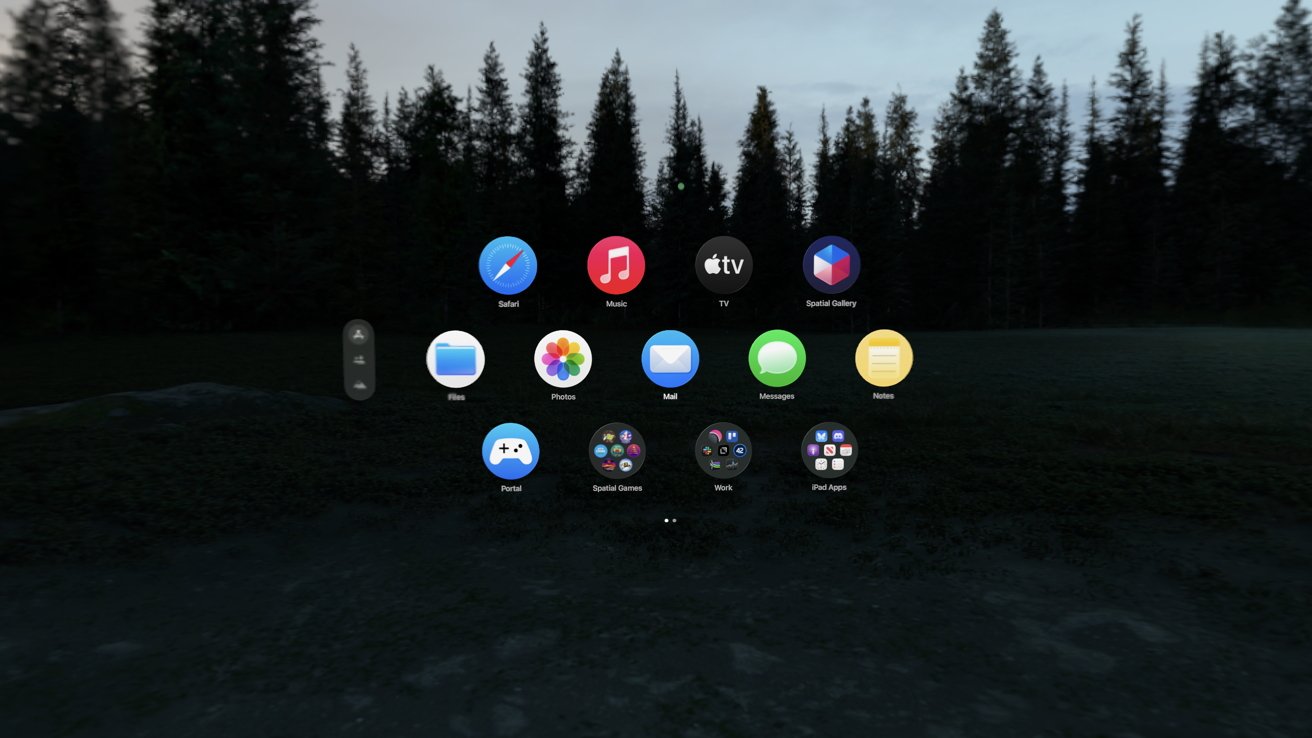
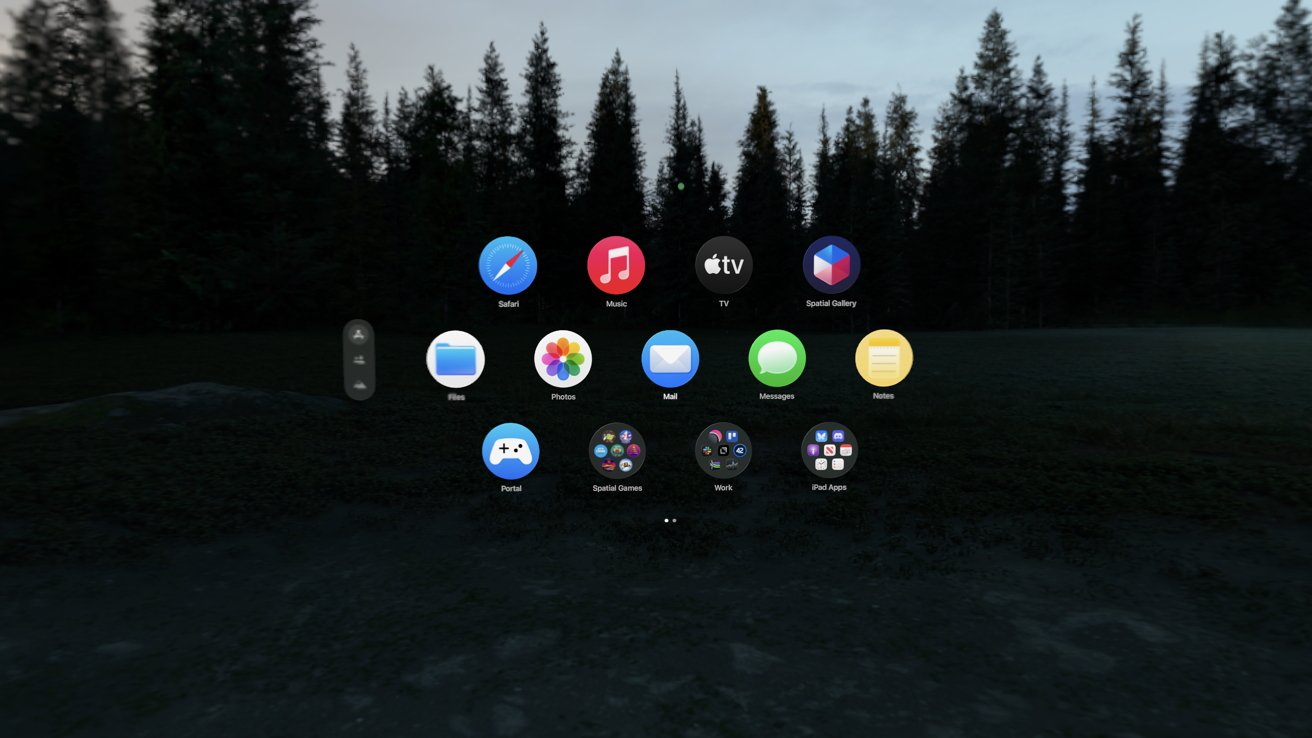
visionOS Home View with circular app icons arranged in a grid, floating over a dark outdoor forest landscape at dusk with trees silhouetted against a dim sky

visionOS 26 review: Organizing the Home View with folders is a welcome addition

Advertisement

However, that’s where the enthusiasm ends. Updates to visionOS primarily arrive during WWDC each year, and very little is added after that.

First-party apps that got the visionOS native treatment have basically stalled in development. The list of Apple-compatible apps brought from iPad to Apple Vision Pro hasn’t changed since the product was revealed in 2023.

It’s not that I expect Apple Vision Pro to get the same treatment as iPhone, but the near radio silence is deafening. Immersive Content seemingly falls out of the sky with little fanfare, gaming continues to be virtually nonexistent, and developers have little interest in developing for the platform.

Almost all of these issues arise from one central issue: Apple isn’t evangelizing the device the way it should. The company should have a team dedicated to going to developers and asking what it would take to get their apps natively on the platform.

Advertisement

If it’s money, and the app is popular elsewhere, offer an incentive package. Make it happen.
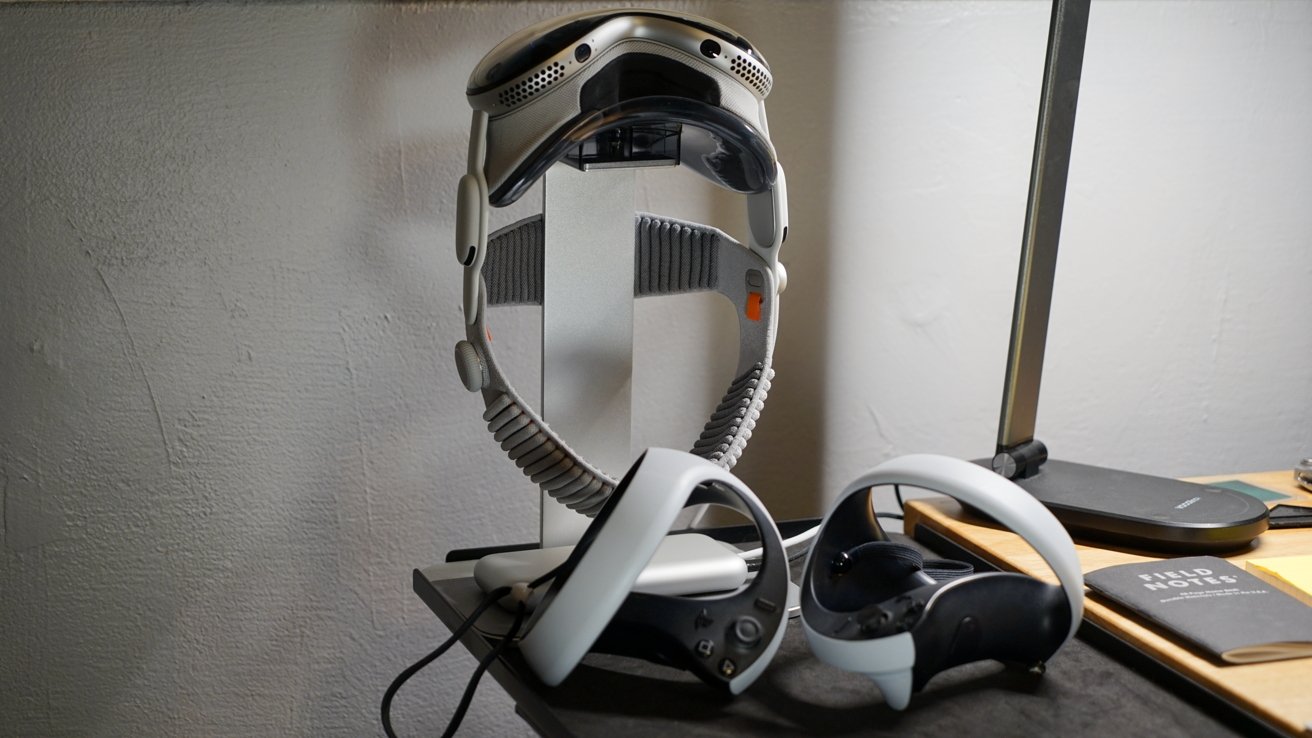
Apple Vision Pro hanging on a vertical stand with two PSVR2 controllers resting below, on a cluttered desk beside a lamp, smartphone, and closed notebook against a plain wall

visionOS 26 review: features like PSVR2 controller support mean little if developers don’t adopt them

Instead, we see developers increasingly shrug at Apple Vision Pro because targeting the platform will never be financially viable. Building a native application for Apple Vision Pro would struggle to even pay for the $3,500 headset, let alone subsidize future updates.

So, as we enter WWDC 2026, that’s what is on my mind. The hardware is excellent, the native software that is available is stunning, but that isn’t enough on its own.

Advertisement

Apple needs to convince developers, and what better place than a worldwide developer conference. I know AI will be the focus of the event, but Apple needs to use at least some of the time to push Apple Vision Pro forward.

Otherwise, we’ll be frozen in time until the next hardware iteration, which will be late 2028 at the earliest.

visionOS 26 review: M5 only helps so much

The good news is that Apple Vision Pro doesn’t need a hardware iteration at the moment. Sure, thinner and lighter would be great, but the M5 is more than enough to drive visionOS, apps, and games today.
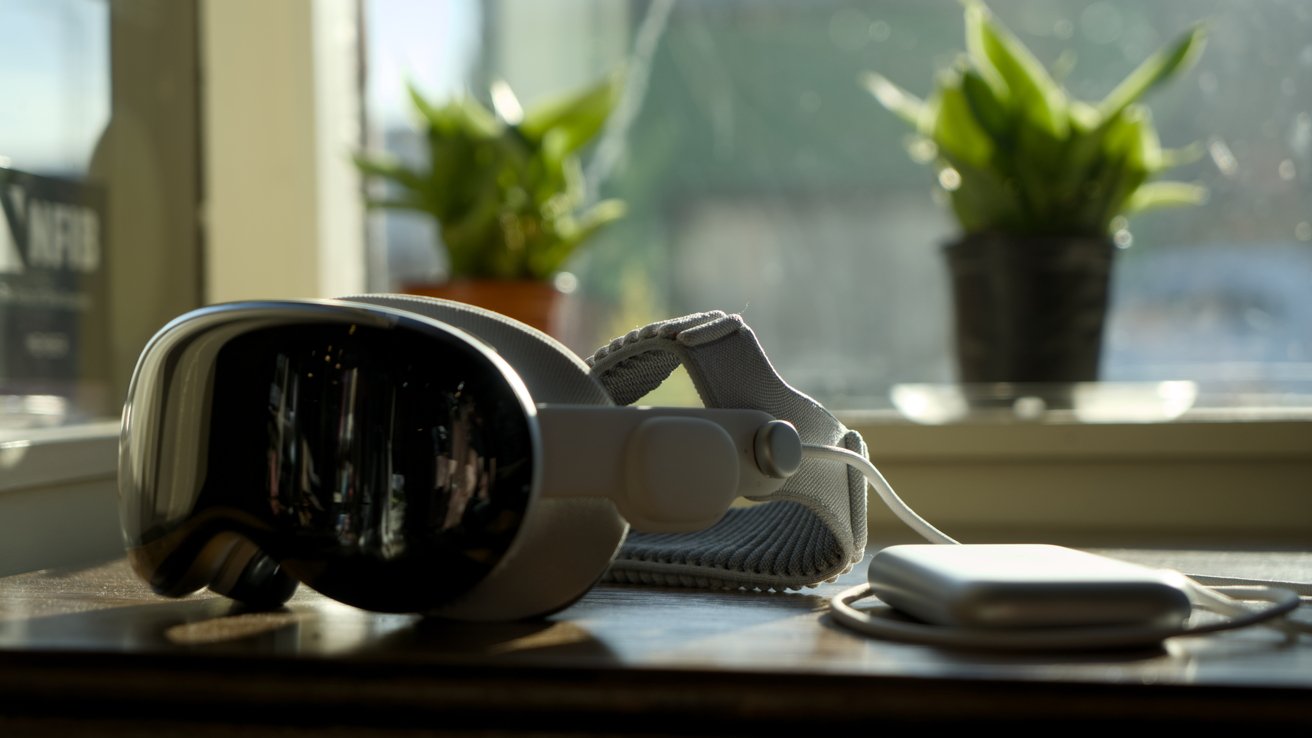
Apple Vision Pro and connected battery pack resting on a wooden table near a sunny window, with two potted green plants softly blurred in the background

visionOS 26 review: Apple Vision Pro with M5 is a needed improvement for visionOS 26 features

Advertisement

I currently have six apps, seven widgets, and a partial immersive view of Jupiter open. Everything is still responsive and easy to navigate, and there’s room to add more if I wanted.

One of the issues I encountered with visionOS 26 on an M2 version of Apple Vision Pro was buffering widgets. If a photo frame or weather widget was slightly out of frame, it would have to load in as I turned my head to look at it.

Now, with M5, I almost never see a widget loading. I don’t walk around my home and wait for physical photos to load, so it breaks immersion to wait for the virtual ones. I do wish Apple would match texture and brightness of virtual objects to the environment more.
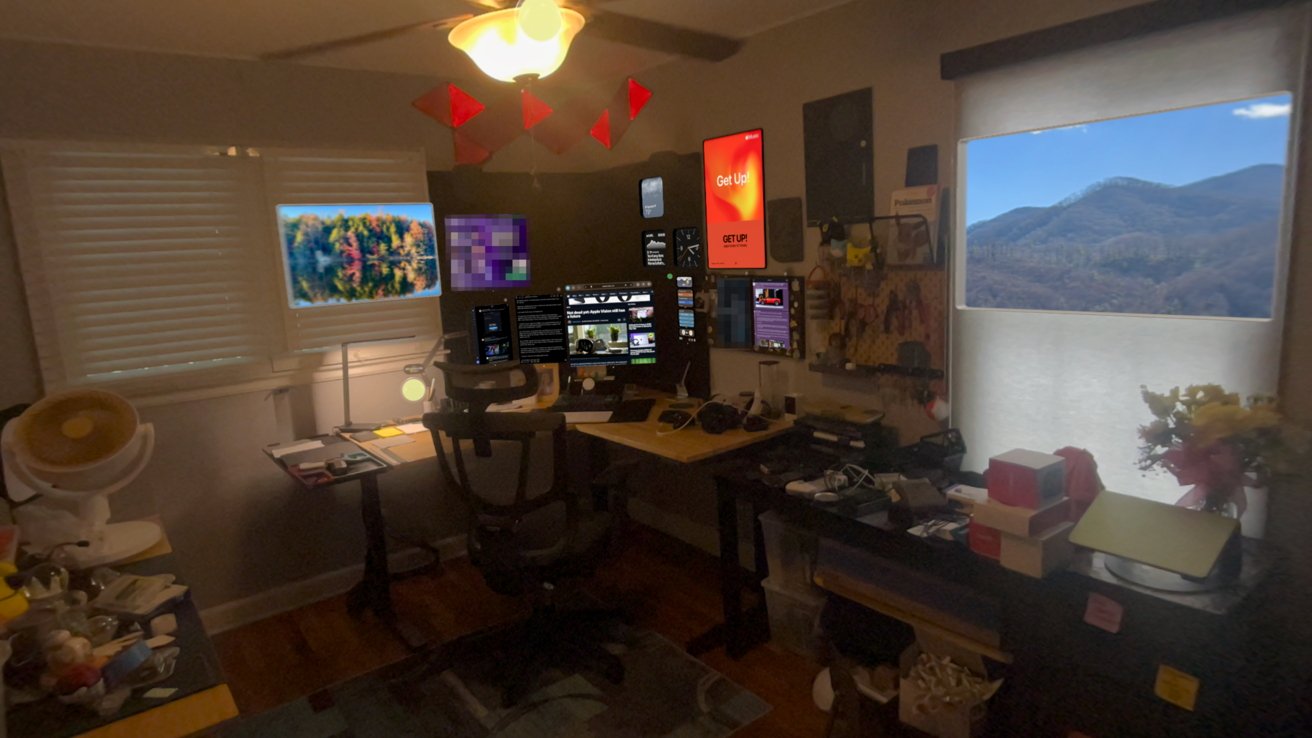
A home office filled with virtual windows and widgets shown from an Apple Vision Pro

visionOS 26 review: widgets galore

Advertisement

The ability to lock windows to surfaces also means I’m keeping more open at any given time. These windows and widgets persist, even after a restart, so it’s like they’re truly part of my space.

However, a look into the widget gallery is yet another reminder of how little developer support exists on the platform. The list of apps I have downloaded that support widgets is small, and apps that are built to be widget-based apps aren’t in the widget picker.

Then the App Store shows how few developers have bothered with widgets. Apple’s own promotional link only has a few apps that amount to sticky notes and clocks.

visionOS 26 review: low hanging fruit for OS 27

There are other oddities in the visionOS platform, and they have nothing to do with the M5 or performance.
Advertisement
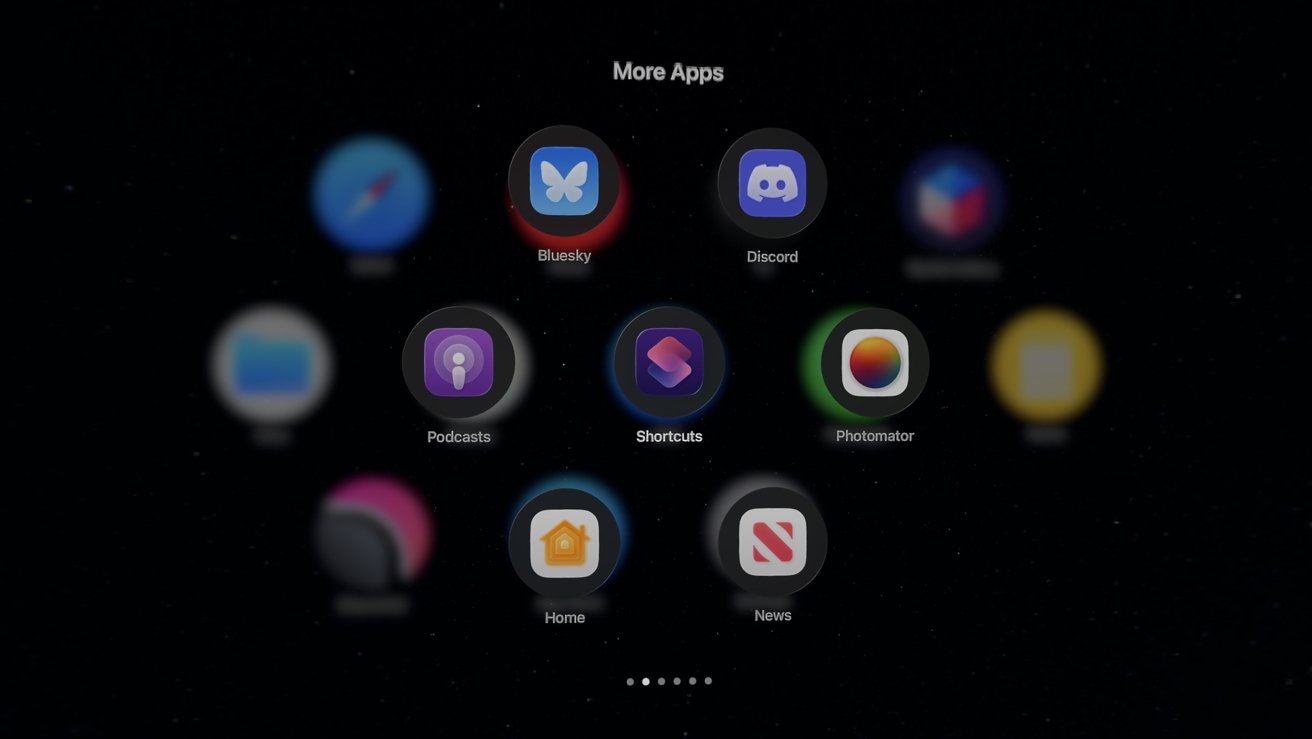
visionOS Home View iPad app folder on a dark background, showing circular icons for apps like Discord, Podcasts, Shortcuts, Home, News, Photomator, and others arranged in three rows

visionOS 26 review: iPad compatible apps need to go native, at least those from Apple

Find My still isn’t available in any form on Apple Vision Pro. My primary use case for it on the device would be to see my family and friends’ locations in the Messages app.

I can AirPlay my view to an Apple TV or other device, but I can’t control the music currently playing on a HomePod. The entire concept of whole-home audio doesn’t exist on Apple Vision Pro.

Even if I navigate to a HomePod in the Apple Home app, I can’t view or control playback. If I command Siri to play music in my office, it replies that it can’t manage that here.

Advertisement

Spatial computing is meant to offer less friction between the user and their environment. What I’d like to see is the Apple Music poster widget show what’s now playing in the room it is placed in.
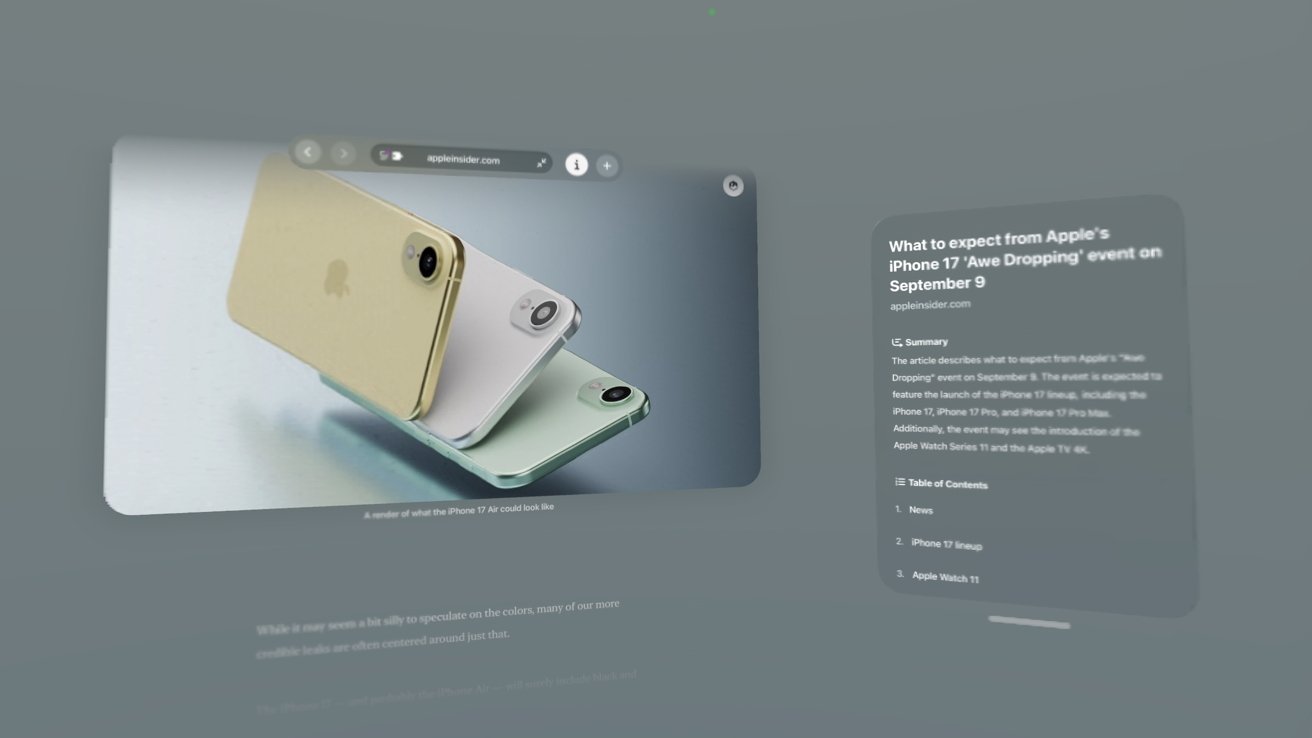
A spatial browsing view in Safari with large images and text in a gray empty background

visionOS 26 review: spatial browsing is an interesting concept but needs more work

Heck, show me the now playing music and controls when I look at a HomePod. Given all the technology at play, it theoretically is possible.

The Apple Creator Studio is also missing on Apple Vision Pro. If I want to use Pixelmator Pro, I have to use Mac Virtual Display to launch it on my less powerful Mac mini with M4.

Advertisement

I hope some of these issues are addressed during WWDC 2026.

visionOS 26 review: Finding a killer app

One of the repeated complaints I’ve heard about Apple Vision Pro and the visionOS platform is its lack of a “killer app.” I find the concept a bit silly considering that none of Apple’s platforms have a single central feature that attracts users.
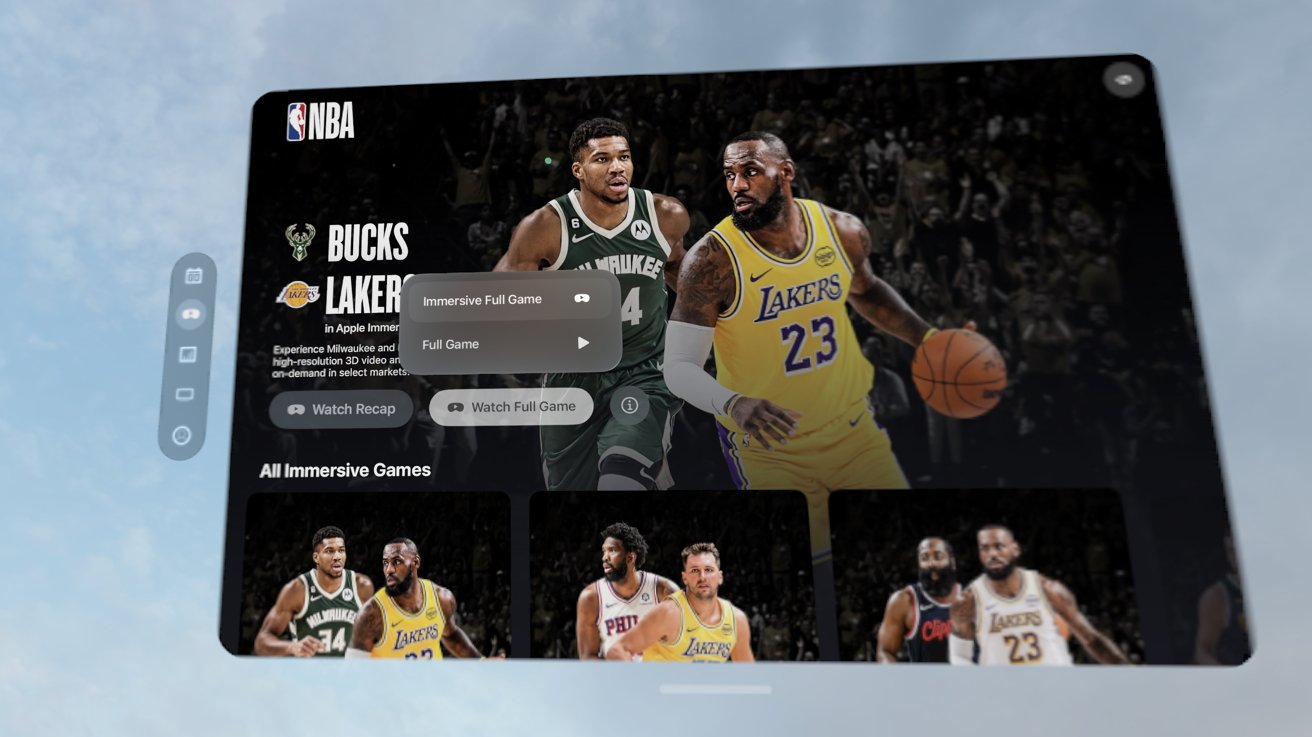
Virtual NBA viewing interface showing Bucks vs Lakers, with LeBron James dribbling, on-screen controls for immersive full game, and thumbnails of additional basketball matchups below.

visionOS 26 review: immersive video, especially sports streams, may be the closest thing to a killer app on Apple Vision Pro

Defining a killer app for each platform is actually quite a difficult exercise, as it changes depending on who you ask. Some might say social media is a killer function of iPhone, while others might say games or photography.

Advertisement

Apple Watch is a fitness device for some and a notification engine for others. iPad can be a book, a sketchpad, a laptop, or gaming console.

The idea that Apple Vision Pro needs a killer app is strange. Like Apple’s other platforms, it’s great at a lot of things and how it is used will depend on the individual.

Gaming

For other headset devices like the Oculus from Meta, gaming has been the driving force for sales. While productive tools exist on those platforms, they’re more afterthoughts than anything.
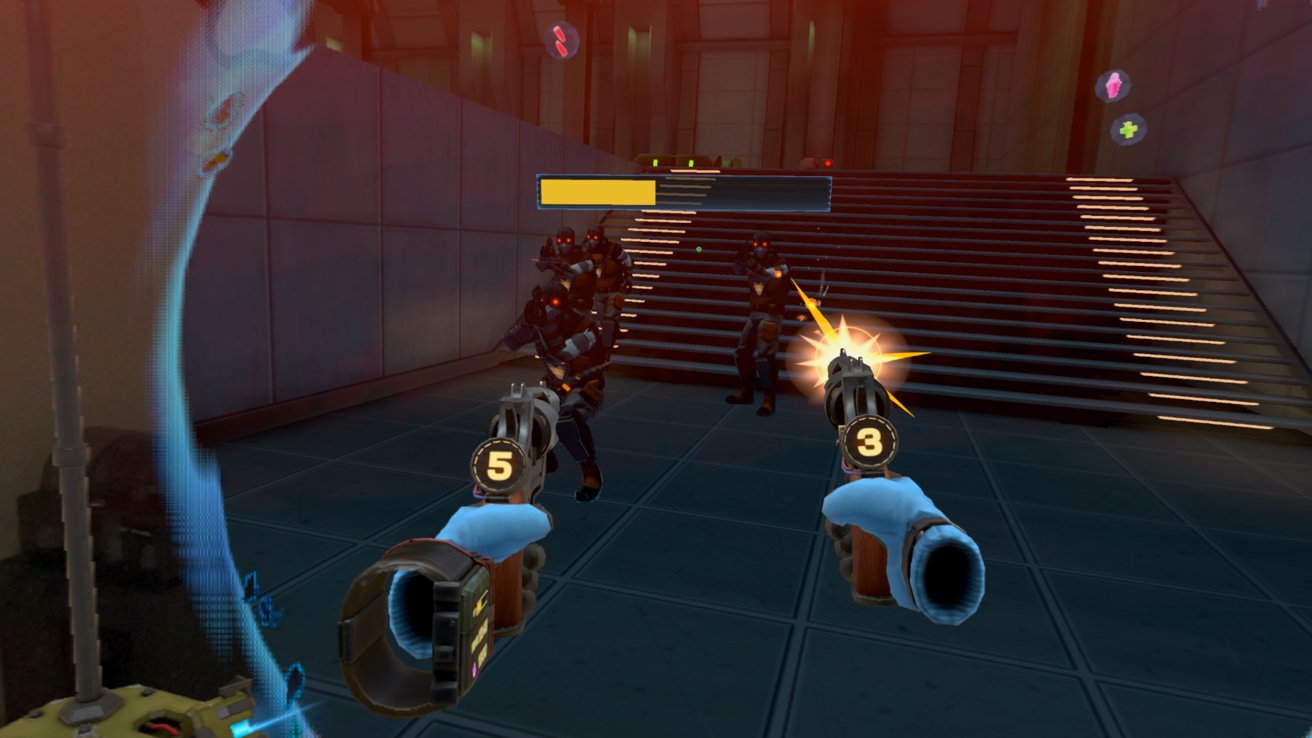
First-person shooter game scene with two futuristic pistols aiming at armored enemies near stairs, muzzle flash visible, health bar above foe, glowing orbs floating around in a dim corridor

visionOS 26 review: gaming is alive and well on Apple Vision Pro, but the selection is limited

Advertisement

Given the size of the native App Store in visionOS, gaming is proportionally sized, so far. I have seventeen spatial games installed on Apple Vision Pro. Most are from Apple Arcade, but a couple are purchased directly from the App Store.

None of the games would win awards, but they’re entertaining and take great advantage of Apple Vision Pro as a platform. From hand gestures for driving in a kart game to using PSVR2 controllers in a first-person shooter, there is quite the variety of games.

Though, of course, it is a paltry collection compared to what is available on the wider market. It isn’t that gaming isn’t possible and fun on Apple Vision Pro, it’s that the devs aren’t there.
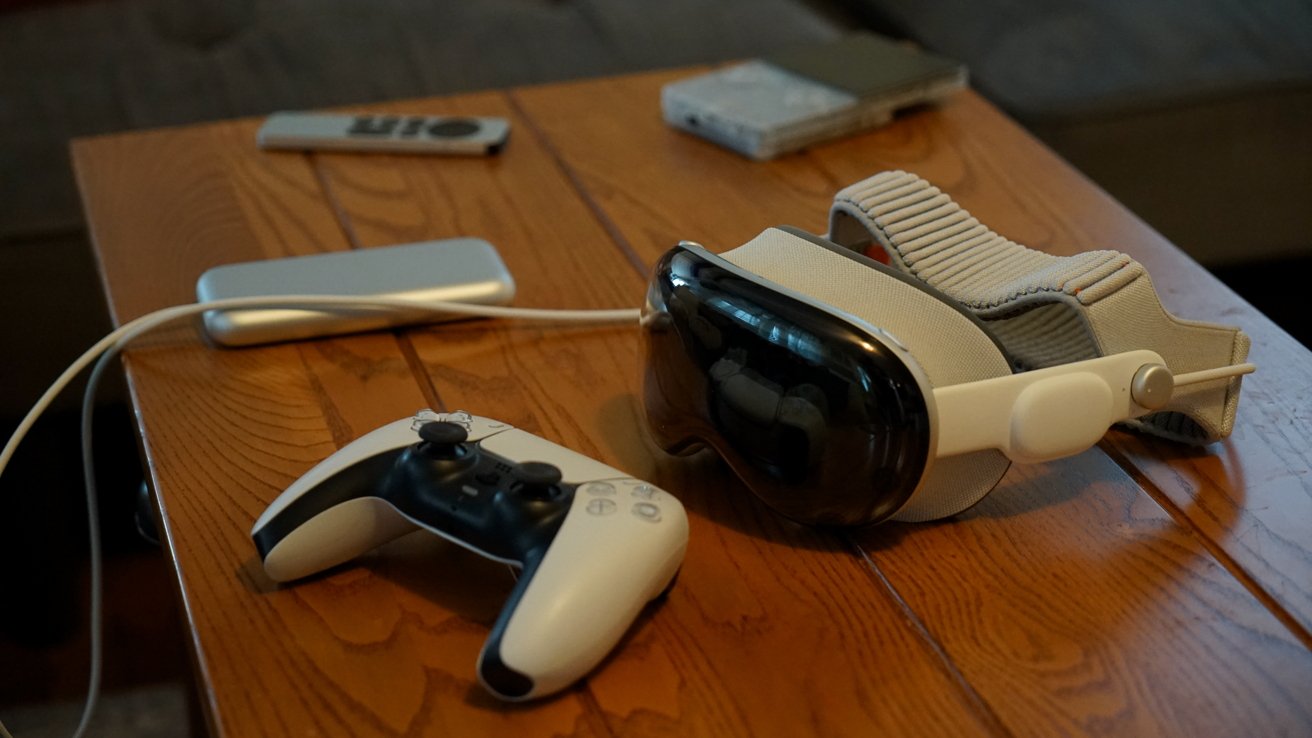
Apple Vision Pro and PlayStation controller resting on a wooden table, with a connected power bank and a couple of small electronic devices in the background

visionOS 26 review: some iPad games work great on Apple Vision Pro with a controller

Advertisement

I’d love to see Capcom in the WWDC keynote showcasing Resident Evil 7 built for Apple Vision Pro. The real get would be Beat Saber, but it seems neither Meta nor Apple are interested in getting the game to the platform.

The games that do exist face other issues. We got Job Simulator but it hasn’t been updated in over a year and thus doesn’t support PSVR 2 controllers.

Crossy Castle is a fun game from the Crossy Road developers, but it also isn’t being updated. The iPhone/iPad version of the game has a Bluey expansion that isn’t available in the Apple Vision Pro version.

Gaming, thankfully, isn’t limited to what can run on the device. There are many options to get games to Apple Vision Pro like streaming via GeForce Now, playing from a local PC, or remote play from a console.
Advertisement
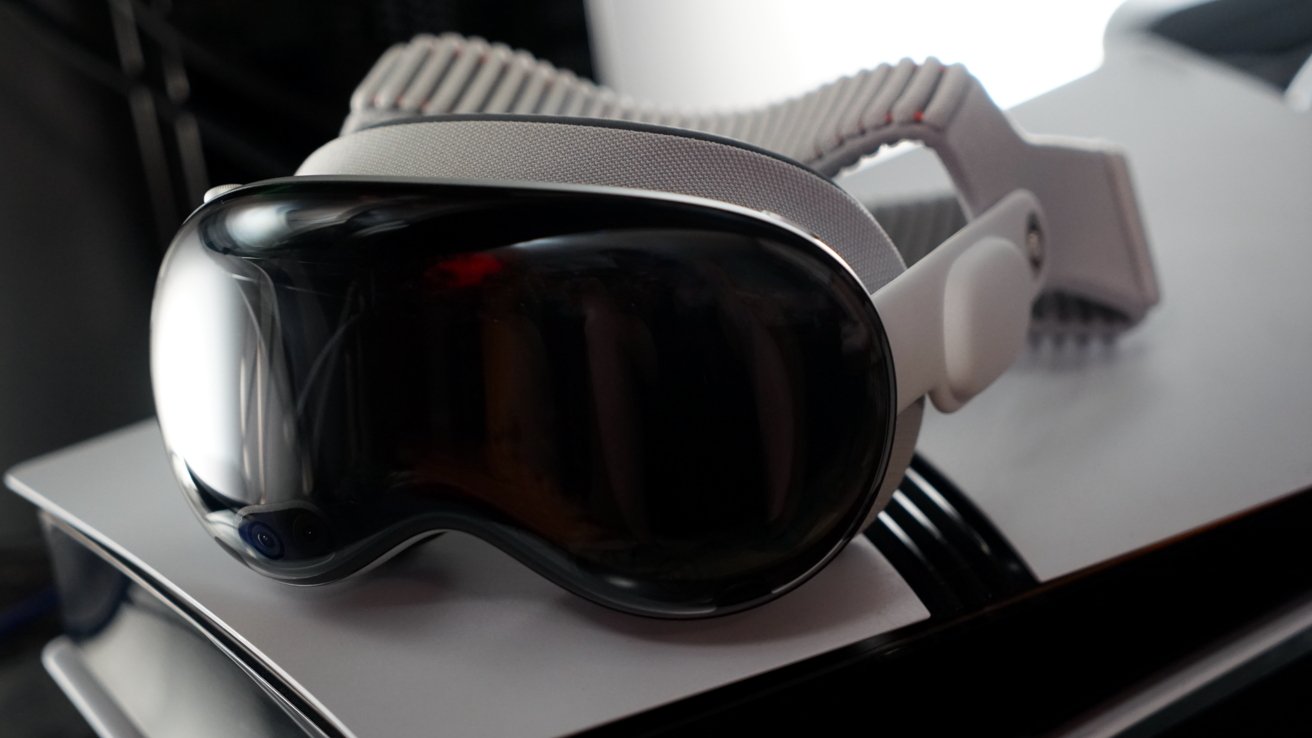
Apple Vision Pro on top of a PlayStation 5 Pro in an entertainment stand

visionOS 26 review: Apple Vision Pro and PlayStation 5 Pro make a good combination

I’ve been using Portal to stream to the Apple Vision Pro, and since it is native software, it has some really interesting abilities. It’s how I’ve been playing Minecraft on the headset, but with stereoscopic 3D generated live by the app, upscaled to 4K.

I’d love to see Minecraft native on the platform, or even as an iPad-compatible app, but Microsoft has no interest in that.

Apple did introduce PSVR2 controller support with visionOS 26. While the games that support it are few and far between, I’m glad the option is there. Let’s hope for more support in the coming year.

Advertisement

Media playback

Because of the high-resolution displays, Apple Vision Pro is uniquely positioned to be an entertainment headset. Sure, you can watch video on Oculus or PSVR2, but the resolution is low enough to encounter motion sickness and the “screen door” effect.
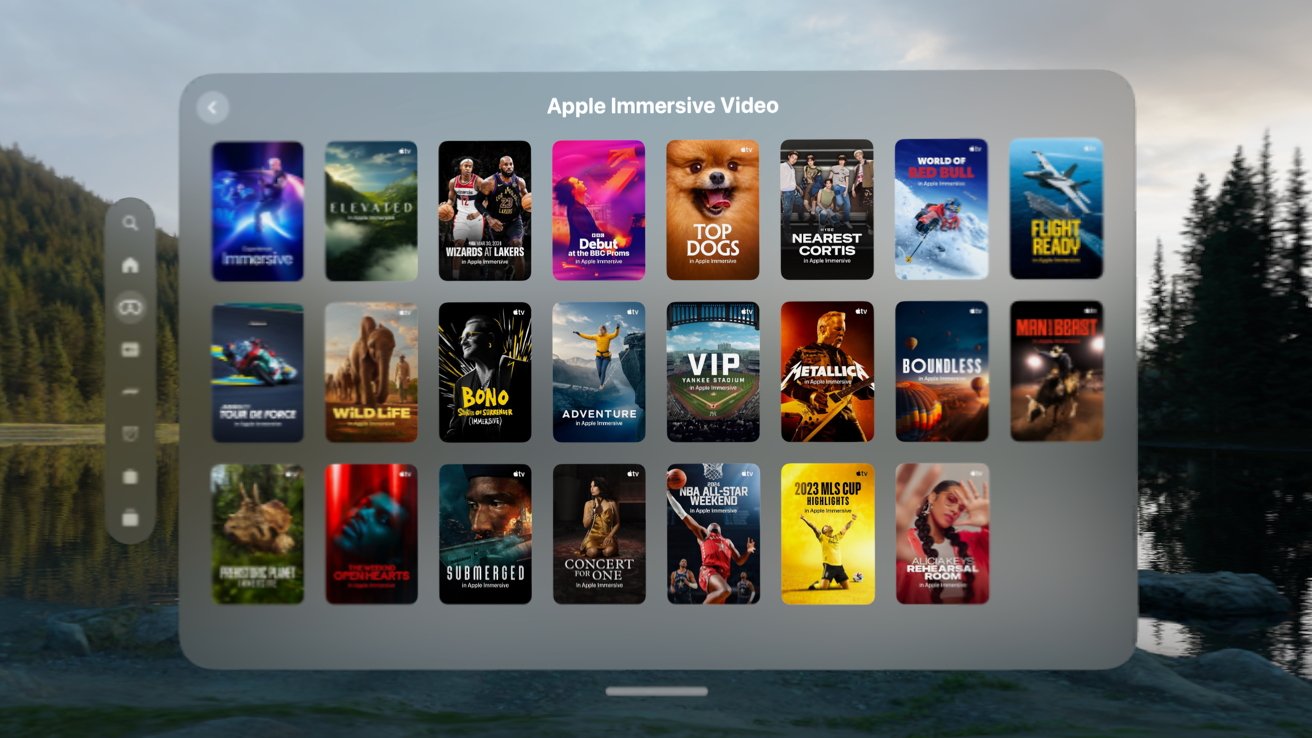
Apple Immersive Video interface displaying a grid of colorful movie and show posters over a blurred lakeside forest background, with side navigation icons and a subtle gray panel frame

visionOS 26 review: the list of Immersive Video grows each month

As someone that owned several kinds of 4K 3D TVs back in the day, I can honestly say Apple Vision Pro is the best way to watch 3D content. Period.

I remember when I was in the Navy, I researched portable media viewing products, and one was the Sony Personal 3D Viewer. It played 3D movies natively because you’d get one side of the 3D in each eye.

Advertisement

I never bought one, but it was a wearable 3D display that connected via cable to an external HDMI box where you’d connect a PS3 for 3D Blu-ray and games . Apple Vision Pro turns that entire product into a series of apps.

Sure, 3D movies are great on the platform, but Immersive Video is the true winner here. Even though Apple’s rollout of such content is glacial, each one is a peek into a different universe from a whole new perspective.

Productivity tools

Finally, there’s the productivity aspect of Apple Vision Pro. I can put the headset on and see my virtual workstation in seconds.
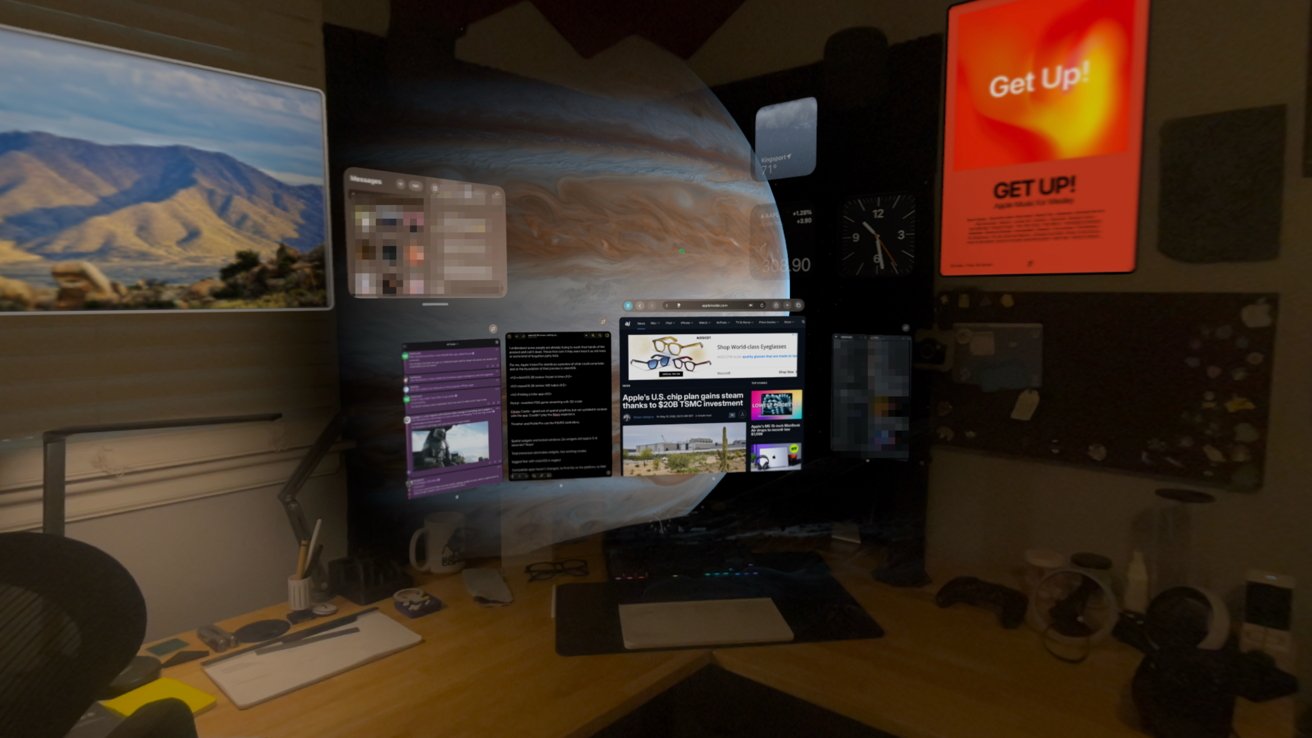
Dark desk setup with multiple monitors, floating virtual screens showing websites and apps, a large planet backdrop, scattered gadgets, coffee mugs, and bright posters on the wall

visionOS 26 review: being productive on Apple Vision Pro is possible, as long as the apps you need are available

Advertisement

I’m writing this review from inside the headset via an iPad-compatible app called Drafts. There aren’t any good writing tools native to Apple Vision Pro yet that I’m aware of, and besides, it would be tough to give up Drafts.

I can write, edit, upload, and publish from Apple Vision Pro. As I’ve mentioned, the biggest limitation in my workflow today is the inability to edit and create images.

Pixelmator Pro is either on my iPad Pro or Mac mini, but not on Apple Vision Pro. I can jump into the Mac mini via Mac Virtual Display, but it isn’t an ideal solution.
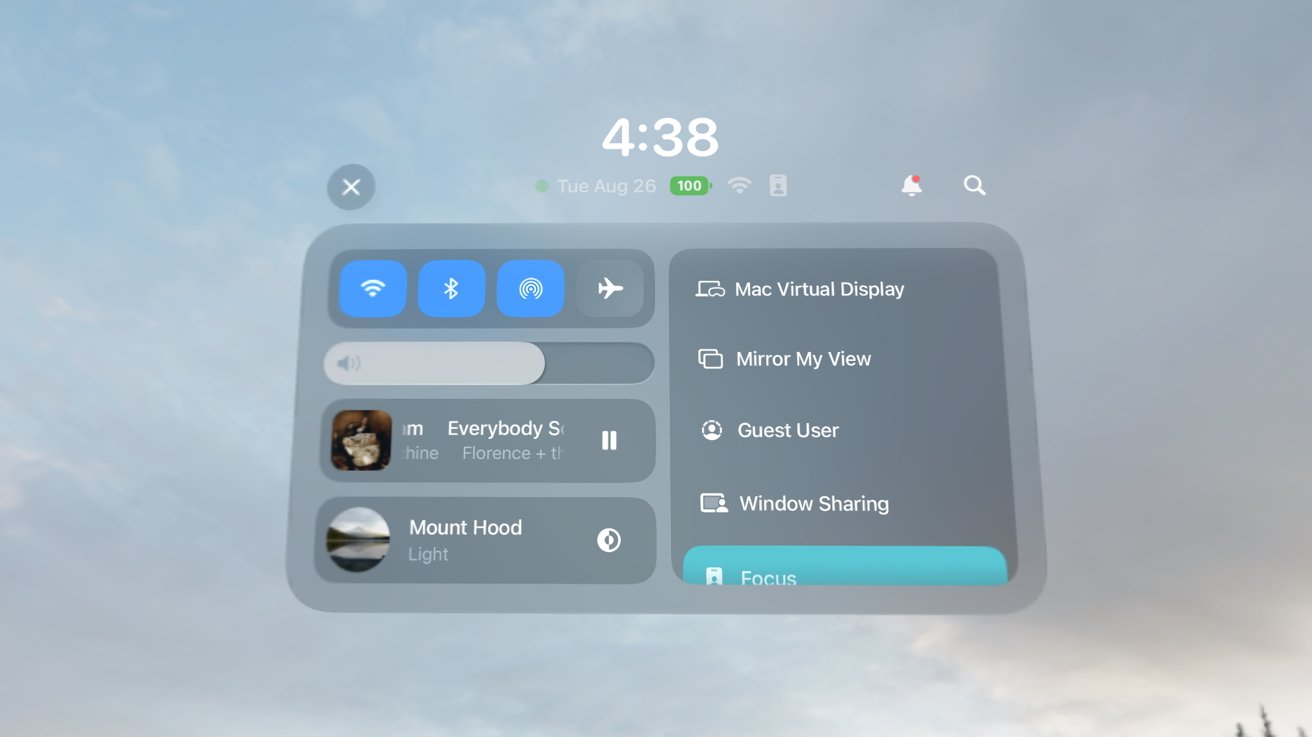
Floating virtual control panel with time 4:38, WiFi and volume toggles, music playback controls, user icons, and options for Mac virtual display, mirroring, guest user, window sharing, and focus mode.

visionOS 26 review: I have to swap over to Mac Virtual Display to use Pixelmator Pro

Advertisement

If I need an image and I’m working in Apple Vision Pro, I often take it off and make the image on iPad. That doesn’t happen often though, since I generally work in Apple Vision Pro on long-form writing.

Outside of my little professional use case, there are many more. Apple Vision Pro has appeared in engineering environments, surgical rooms, and in movie studios.

There is no doubt that Apple Vision Pro is a capable production platform.

Multi-faceted

Of the three elements I’ve mentioned here, it is difficult to pick what Apple Vision Pro’s “killer app” is or should be. It’s great at gaming, media playback, and productivity tasks just like any other Apple platform.
Advertisement
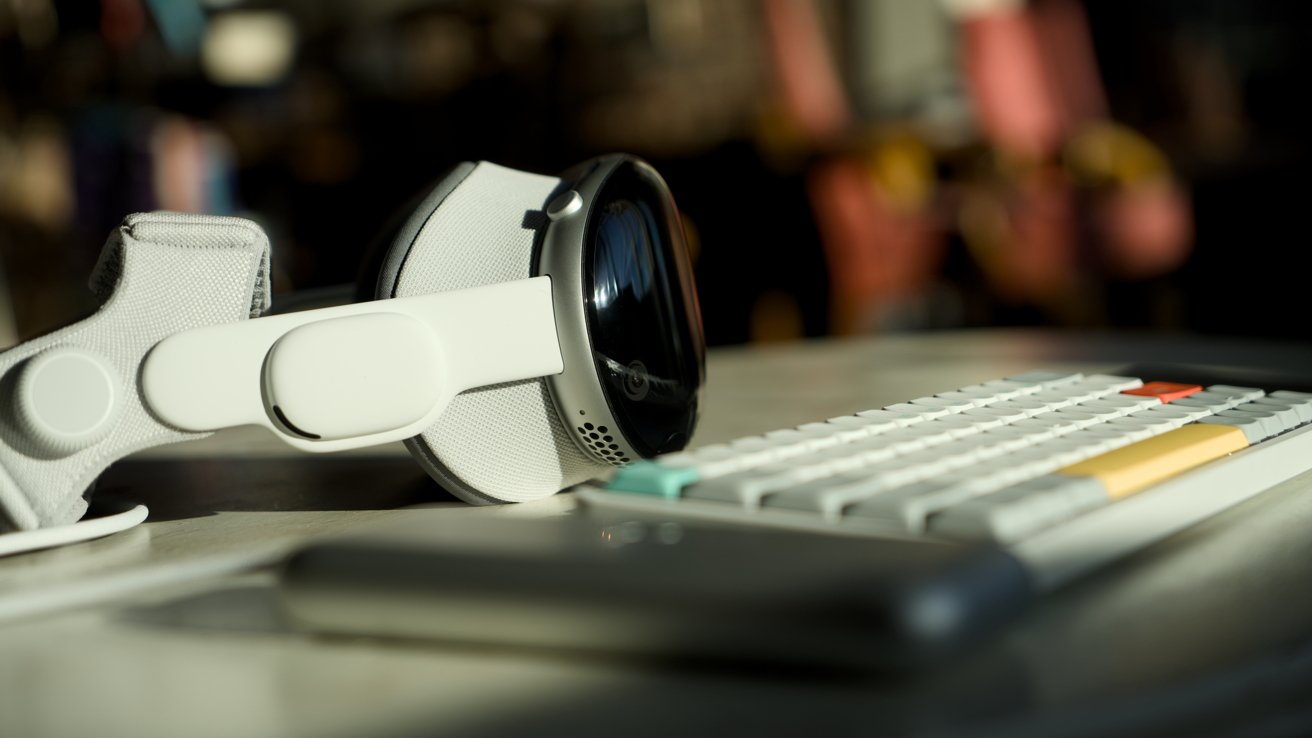
Apple Vision Pro resting beside a colorful computer keyboard on a desk, softly lit by warm sunlight with a blurred background suggesting a cozy, modern workspace

visionOS 26 review: Apple Vision Pro doesn’t need a killer app, it needs developers

I say let the device speak for itself. The problem isn’t so much what it can or can’t do, but developers willing to build for the platform.

visionOS 26 helped expand all three of these elements with things like PSVR2 controller support, expanded media format support, and shared spatial environments for productivity tools.

Apple Vision Pro is still expensive and relatively heavy, and a killer app isn’t going to change that. I do hope visionOS 27 can continue to expand on these three pillars of the platform.

Advertisement

visionOS 26 review: other new features

Let’s end this review with a list of features that did arrive with visionOS 26. I didn’t spend much time on each individual feature here because I already did so in my original review.

Here’s what else was new when visionOS 26 launched that I haven’t directly covered so far:

  • Spatial Scenes in Photos
  • Spatial browsing in Safari
  • Shared Spatial Environments
  • New Persona
  • Native 360, 180, and wide field-of-view video support
  • Jupiter environment
  • Save eye and hand setup to your iPhone
  • Apps in folders
  • Unlock iPhone while wearing Apple Vision Pro
  • Look to scroll
  • New Control Center
  • Game controllers remain visible even when immersed

Spatial was the name of the game for visionOS 26. I’ve barely tapped into the Spatial Browsing feature, but it sure does remind you it exists on every compatible website.

I never used my new Persona nor did I use a Shared Spatial Environment. The remaining updates are excellent quality-of-life updates, but don’t need to be addressed directly here in this one-year-later review.

I hope that visionOS 27 can offer a similar length list of new changes and updates, though I have a feeling Apple Intelligence will own the show this time around.

Advertisement

visionOS 26 was exemplary of a good annual update

I may have my complaints, but visionOS 26 is an excellent upgrade overall. visionOS 2 was a half-step as the first OS update that arrived only months after launch.
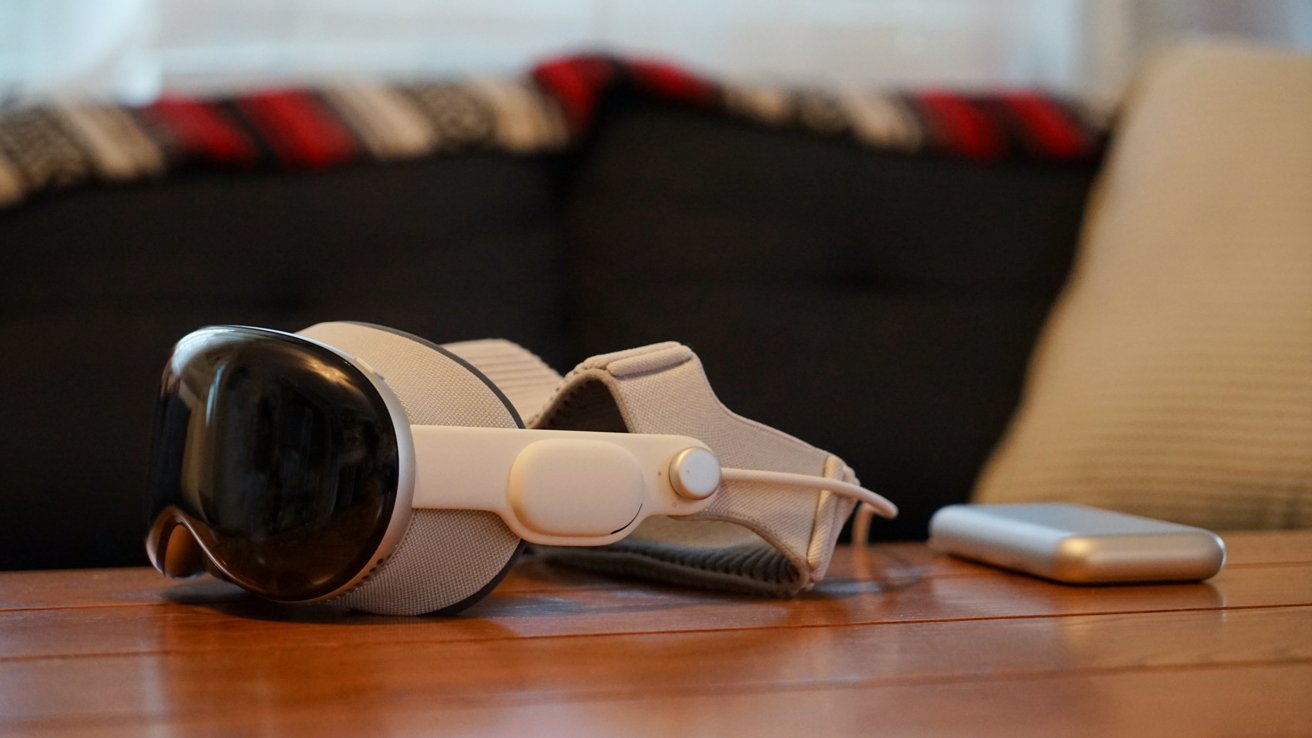
Apple Vision Pro resting on a wooden table beside its battery pack, with a dark couch and patterned blanket softly blurred in the background

visionOS 26 review: it’s time for another big update cycle

visionOS 26 was the first update with a full year of development behind it, and it delivered. Clearly needed quality-of-life updates were added while enhancements prepped the platform for M5.

What I hope for visionOS 27 is more of the same, but with more attention throughout the year. We should be able to get excited about a major upgrade in visionOS 27.2 instead of having to wait for visionOS 28 for anything new.

Advertisement

I believe spatial computing and Apple’s work on artificial intelligence go hand in hand. Both platforms had their starts in the Apple Car, and each feeds into the other in obvious ways.

The more a computer can “understand” the world around the user, the user’s voice, and how a device is used, the better spatial computing can be. Apple Intelligence is going to focus on proactive interactions with the user, which could greatly benefit Apple Vision Pro users.
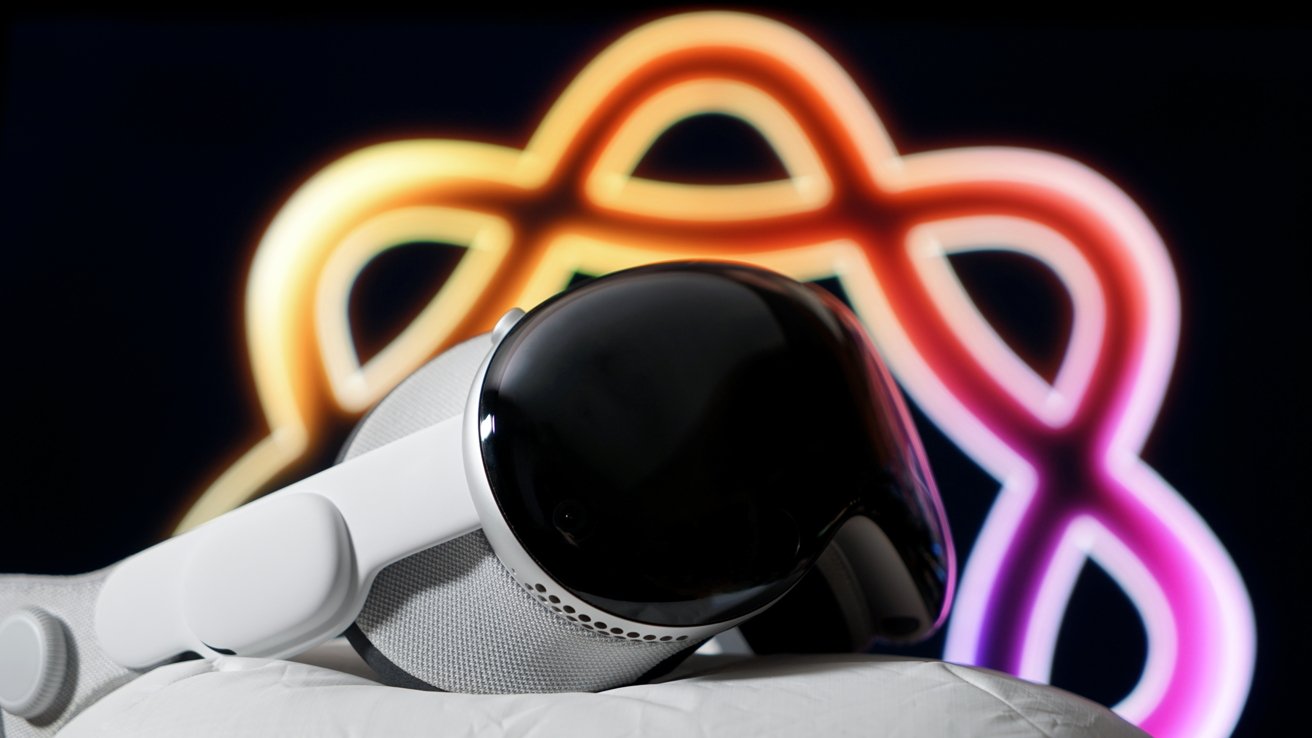
Apple Vision Pro with glossy black front resting on a cushion, set against a dark background featuring a glowing multicolored abstract looped pattern

visionOS 26 review: Apple Vision Pro will benefit from Apple Intelligence advancements

Since developers can’t really make money on Apple Vision Pro and aren’t bothering with implementing much, I have a radical suggestion. Perhaps, if it can be done ethically, Apple should borrow a page from Google’s upcoming features.

Advertisement

Imagine being able to generate a spatial widget with a voice command. Built-in vibe coding with clear limits on what can be built powered by on-device Apple Foundation Models.

If it’s possible, I’d be interested in seeing something like that in visionOS 27. At the least, I hope Apple Vision Pro isn’t a forgotten platform during the WWDC keynote.

My biggest fear for the platform is neglect.

visionOS 26 review – Pros

  • Spatial widgets are great, especially with M5
  • PSVR2 controller support is awesome when devs support it
  • Organizing Home View is a big finally
  • Gaming continues to expand, if slowly, on the platform

visionOS 26 review – Cons

  • Compatible iPad app list still hasn’t changed
  • No Find My, Contacts app, categories in Mail, etc.
  • Developer support still the biggest issue with visionOS

Rating: 2.5 out of 5

The visionOS 26 release brought some must-needed changes to the platform, but Apple stopped doing that after the very first release. A year later, nearly nothing has changed.

Apple needs to show the platform some love with visionOS 27.

Advertisement

Source link

Continue Reading
Click to comment

You must be logged in to post a comment Login

Leave a Reply

Tech

Nutanix’s Tech Day London 2026 offers infrastructure insights

Published

on

SPONSORED POST: Come join this working afternoon for infrastructure teams

Your hybrid estate has grown more complicated since the last refresh cycle. Some workloads run in the public cloud, others never left the rack, and a few sit stuck in transition because nobody wants to be the person who broke the database. Add AI to the pile and the platform questions only get harder.

Nutanix Tech Day is a half-day event designed to help the people who have to deal with increasingly complex infrastructure.

Date: Wednesday, June 24, 2026

Advertisement

Time: 12pm to 6pm BST

Place: Prospero House, Southbank, London

Registration is free and includes lunch, refreshments, and time set aside for networking.

What you’ll learn

The agenda runs through the headline announcements and key takeaways from Nutanix .NEXT Chicago 2026. Then you’ll get technical sessions on disaster recovery, data sovereignty, hybrid multicloud management, operational automation, and enterprise AI use cases that have shifted from slideware into production budgets.

Advertisement

The tracks split so you can pick the sessions aligned to your priorities and skip the rest. If you have ever sat through a vendor day waiting for the one talk relevant to your stack, try this instead.

Customer sessions are especially worth turning up for. The Bunker and London Gatwick Airport will walk attendees through what they have done with Nutanix in production, and talking to people who run the platform day to day is the cheapest form of due diligence you will find.

Who it’s for

This event is for infrastructure engineers, technical architects, systems administrators, and cloud professionals. Security and compliance leads have reason to attend too, given the disaster recovery and data sovereignty material on the agenda.

Why attend in person?

The event puts you in a room with peers tackling the same problems and with the engineers who have run these platforms in production, the kind of conversation that rarely transfers to a video call. You can put questions directly to Nutanix specialists in an interactive setting, which tends to be the part of these days that justifies the train fare.

Advertisement

The 12pm start gives you half a day out of the office to meet some interesting people, lunch included, and a working list of things to try when you get back. The tote bag is optional.

Join Nutanix Tech Day London 2026

Discover practical insights from Nutanix experts and industry leaders on AI infrastructure, hybrid multicloud, modernisation, and operational resilience. Register now.

Sponsored by Nutanix.

Source link

Advertisement
Continue Reading

Tech

RENPHO Smart Scales are at their lowest price for Prime Day

Published

on

When did you last step off the scales feeling like you actually understood what the number meant, rather than just hoping it was moving in the right direction?

RENPHO Smart ScalesRENPHO Smart Scales

RENPHO Smart Scales are at their lowest price for Prime Day

RENPHO Smart Scales are at their lowest price for Prime Day

View Deal

Advertisement

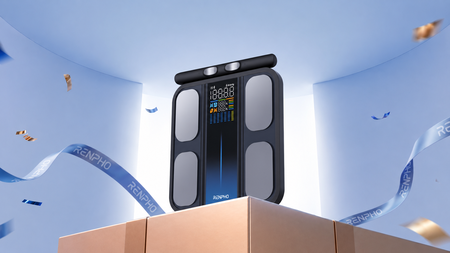
The RENPHO MorphoScan Smart Body Scale is built to answer that question, using Bioelectrical Impedance Analysis to track over 13 metrics including muscle mass, visceral fat, body water percentage, and metabolic age alongside your weight.

It’s down to £89.99 from £109.99 during Prime Day, saving you £20 at its lowest price ever on Amazon, which makes this the most accessible the MorphoScan has been since it launched.

Advertisement

Those metrics sync automatically over Bluetooth and Wi-Fi to the RENPHO app, which converts your readings into visual trend charts so you can see week on week whether your training is shifting body composition or just fluctuating water weight.

The app connects natively with Apple Health, Fitbit, and Google Fit, so the MorphoScan slots into whatever health ecosystem you’re already using without asking you to abandon anything you’ve built up.

Advertisement

It also supports unlimited user profiles and recognises each family member automatically when they step on, meaning one device handles an entire household without anyone needing to manually switch accounts or scroll through a settings menu.

Advertisement

The platform itself is built around high-precision sensors housed in a design that sits cleanly in a modern bathroom, so it doesn’t feel like a compromise between function and the way the room looks.

The fact that over 700 verified Amazon buyers have settled on a 4.2-star average for the MorphoScan is the kind of signal that matters more than a spec sheet when you’re choosing something you’ll step on every morning.

If you’ve been tracking progress the hard way and want something that finally gives you a full picture, the £16.50 saving makes the RENPHO MorphoScan a genuinely strong buy before the Prime Day window closes on 26 June.

Advertisement

Advertisement

Source link

Continue Reading

Tech

Use of HMRC’s taxing IR35 status tool drops 71% in two years

Published

on

PUBLIC SECTOR

Data suggests firms are turning away from CEST as critics say it fails to reflect recent court rulings

Use of HMRC’s own tool for checking compliance with the UK’s controversial IR35 freelancer tax rules has fallen sharply, according to Freedom of Information data obtained by tax adviser IR35 Shield.

The Check Employment Status for Tax tool, better known as CEST, was created to help firms decide whether contractors should be taxed like employees. But usage fell 43 percent during the 2025-26 tax year, and dropped 71 percent between 2023-24 and 2024-25, from 458,894 determinations to 135,178.

Advertisement

What is IR35?

IR35 is a reform unveiled in 1999 by the UK tax authorities. The latest regulation change – which came into force in April 2021 – forces medium and large businesses in the UK to set the tax status of their contractors and freelancers. Previously this was set by the contractors themselves.

Contractors found to be within the scope of the legislation – i.e. inside IR35 – will have to pay more tax than they might expect.

The reforms are part of the government’s crackdown on so-called disguised employment, where workers behave as employees but avoid paying regular income tax and national income contributions by billing for their services through PSCs, which are taxed at lower corporate rates.

The measures first came into effect in the UK public sector in 2017. The British government hoped the reforms would recoup £440m by bringing 20,000 contractors in line.

Advertisement

HMRC reckons that only one in 10 contractors in the private sector who should be paying tax under the current rules are doing so correctly. It estimates the reforms will recoup £1.2bn a year by 2023.

The findings suggest that firms continue to abandon CEST in favor of alternative status assessment solutions and more comprehensive compliance processes, IR35 Shield said.

CEO Dave Chaplin said: “The majority of firms we speak to for the first time are either lifting blanket bans or seeking to move away from using CEST, having realized it is not compulsory to use, nor does it give them the level of certainty they need.”

The decline is not the result of changes to the tool or legislation, according to IR35 Shield.

Advertisement

“The underlying CEST logic has not been updated since November 2019 and was based on HMRC’s view of the law at that time. Despite the courts dismissing HMRC’s position in key areas, upon which the tool was based, the tool has not been updated,” Chaplin said.

IR35 Shield pointed out that HMRC lost a recent employment status case with Professional Game Match Officials Limited (PGMOL). Entering the facts of the case into CEST would have produced an indeterminate result, it said.

In 2022, the Public Accounts Committee Committee (PAC) found that central government was spending hundreds of millions of pounds to cover tax owed for individuals wrongly assessed as self-employed. “Government departments and agencies owed, or expected to owe, HMRC £263 million in 2020-21 due to incorrect administration of the rules,” the House of Commons spending watchdog said.

Part of the compliance problem was down to HMRC’s guidance and the CEST tool. “Some questions within CEST were difficult to interpret correctly, and the guidance was long, too general in scope and not integrated into CEST itself,” the PAC said.

Advertisement

In a statement sent to The Register, a spokesperson at HMRC, said: 

“We always expected use of the tool to reduce as employers familiarised themselves with the 2021 off-payroll working reforms, and the majority of those who use the tool are satisfied with the service they receive.

“The tool is rigorously tested against case law and we’ll stand by the tool’s results, so long as the information provided is correct in accordance with our guidance.” ®


Advertisement

Source link

Continue Reading

Tech

Is Tesla Planning To Sell Modular AI Data Center Hardware?

Published

on

Electrek reports:

Tesla wants to sell modular AI data center hardware, according to a new trademark application for a product called “Megapod.” The filing describes a complete, self-contained computing system for AI workloads…

Tesla filed the “Megapod” trademark (serial number 99893717) with the U.S. Patent and Trademark Office this month, through its longtime IP counsel. It’s an intent-to-use application, meaning Tesla is claiming the name for a product it hasn’t launched yet. The goods-and-services description is unusually specific for a trademark. Megapod covers “modular data center hardware systems for artificial intelligence computing, comprised of computer servers, computer hardware for artificial intelligence data processing, networking equipment, power distribution units, and cooling systems.” It also covers “self-contained modular computing hardware systems for artificial intelligence workloads,” integrated platforms sold as a single unit — an enclosure bundling compute, power distribution, and cooling — and downloadable software to monitor, manage, and optimize those systems.

In plain terms: Tesla wants to sell a turnkey AI data center building block. Not a battery, not a chip on its own, but the full rack-and-room of servers, networking, power, and cooling that AI training and inference run on.

Tesla’s offering would have to compete with Nvidia’s liquid-cooled, rack-scale systems that simulates a giant GPU, the article points out. But “The bigger issue is that Tesla has no merchant compute-hardware business to build on.”

Advertisement


Tesla’s own AI training cluster, Cortex at Gigafactory Texas, runs on roughly 67,000 Nvidia H100-equivalent GPUs. In other words, Tesla is one of Nvidia’s customers, not a competitor selling alternative hardware… Where Tesla does have a real AI-data-center business is power, not compute. Its Megapack and new Megablock energy storage products are selling into AI data centers as grid buffers — Musk’s own xAI has bought roughly $1 billion of Megapacks to keep its training runs powered. That energy-storage strength is the one credible thread here. A Megapod that bundles Tesla’s power electronics, thermal management, and the enclosure — the “shell” around the chips rather than the chips themselves — would at least sit adjacent to a business Tesla actually runs.

Source link

Continue Reading

Tech

Polymarket reportedly paid creators to post deceptive videos about fake bets

Published

on

Polymarket has been paying online creators to post deceptive videos that show them making lucrative bets on the prediction market, according to a new investigation in the Wall Street Journal.

The WSJ said that it analyzed 1,100 videos about Polymarket and also viewed instructional materials that the company provided to creators. Many of those videos were reportedly filmed on “near-perfect copies” of the Polymarket website, while featuring trades and winnings that were not real. The creator videos were then amplified by a “social-media army” deployed by a marketing contractor.

The WSJ said the company also told those creators not to specify that they’d been paid by Polymarket, although the creators started adding “@polymarket partner” to their bios after journalists began asking questions.

Razeen Khan, a college student and creator who worked with Polymarket until March, compared the practice to commercials that make fast food look more appealing than it is in real life: “We’re depicting what actually happens.”

Advertisement

Polymarket said it is “committed to maintaining accurate, fair, and transparent markets” and plans to conduct an audit of its promotional content.

Source link

Continue Reading

Tech

Today’s NYT Strands Hints, Answer and Help for June 22 #841- CNET

Published

on

Looking for the most recent Strands answer? Click here for our daily Strands hints, as well as our daily answers and hints for The New York Times Mini Crossword, Wordle, Connections and Connections: Sports Edition puzzles.


Today’s NYT Strands puzzle has a fun topic, though it might be better suited for October. Some of the answers are difficult to unscramble, so if you need hints and answers, read on.

I go into depth about the rules for Strands in this story

Advertisement

If you’re looking for today’s Wordle, Connections and Mini Crossword answers, you can visit CNET’s NYT puzzle hints page.

Read more: NYT Connections Turns 1: These Are the 5 Toughest Puzzles So Far

Hint for today’s Strands puzzle

Today’s Strands theme is: Heebie-jeebies

Advertisement

If that doesn’t help you, here’s a clue: Boo!

Clue words to unlock in-game hints

Your goal is to find hidden words that fit the puzzle’s theme. If you’re stuck, find any words you can. Every time you find three words of four letters or more, Strands will reveal one of the theme words. These are the words I used to get those hints but any words of four or more letters that you find will work:

  • WILES, WILL, WILLS, SOOT, SOGS, SEEM, BUST, BUTS, HIVE, HIVES, JUMP

Answers for today’s Strands puzzle

These are the answers that tie into the theme. The goal of the puzzle is to find them all, including the spangram, a theme word that reaches from one side of the puzzle to the other. When you have all of them (I originally thought there were always eight but learned that the number can vary), every letter on the board will be used. Here are the nonspangram answers:

  • CREEPS, SHIVERS, JITTERS, WILLIES, BUTTERFLIES

Today’s Strands spangram

completed NYT Strands puzzle for June 22, 2026

The completed NYT Strands puzzle for June 22, 2026.

NYT/Screenshot by CNET

Today’s Strands spangram is GOOSEBUMPS. To find it, start with the G that’s five letters down on the far-left row, and wind up and around.

Advertisement

Source link

Continue Reading

Tech

Self-powering shaking capsule shows the future of safe drinking water in the palm of our hands

Published

on

Access to safe drinking water remains a challenge for billions of people worldwide, but a new invention from researchers in South Korea could make the process much simpler. A self-powered floating capsule that fits in the palm of a hand can reportedly test water quality and disinfect unsafe water without relying on batteries, external power, or chemical treatments.

A simple shake is all this water purification capsule needs

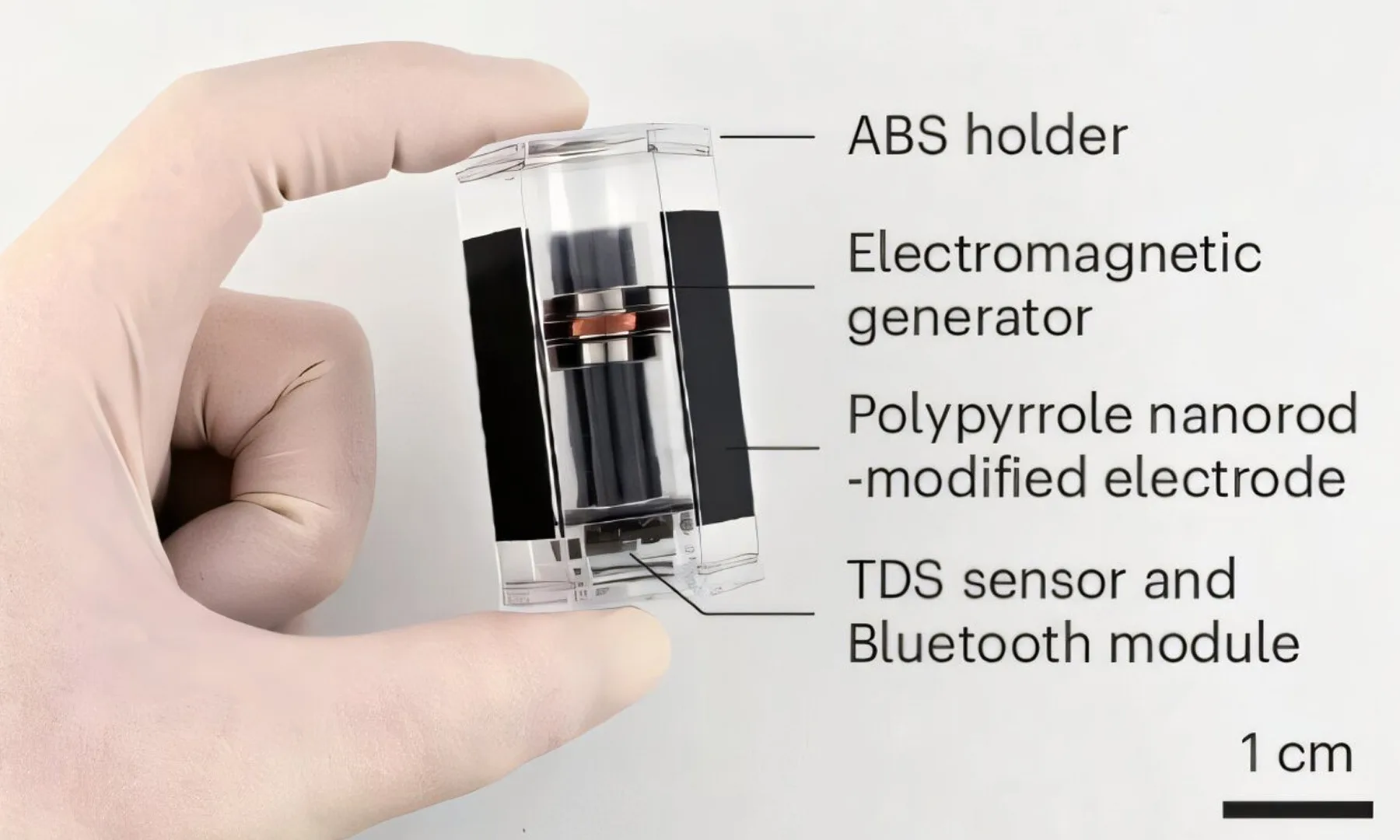
According to a recent paper published in Nature Water, the device, called the Floating-induced Detection-Guided Disinfection (FDGD) capsule, generates electricity when shaken. An internal magnet moves through a coil to produce enough power to activate a built-in sensor that measures the water’s electrical conductivity, giving users an indication of its quality through a connected smartphone or smartwatch.

If the water passes the initial safety check, the capsule can simply be left floating inside it. Gentle movement from waves or even walking while carrying the container generates static electricity, powering microscopic nanorods on the capsule’s surface. These create strong electrostatic forces that damage the membranes of nearby bacteria and viruses through a process known as electroporation, effectively neutralizing them without adding chemicals.

In laboratory testing involving containers holding up to four liters of water, researchers reported that the device successfully inactivated 99.9999% of bacteria and viruses, including E. coli, across multiple water samples. The technology was detailed in the journal Nature Water, with researchers describing it as an affordable, decentralized solution for regions where conventional water treatment infrastructure is unavailable.

The clever part isn’t the disinfection, it’s the lack of dependencies

Interestingly, plenty of portable water purifiers already exist, but most depend on disposable filters, chemicals, UV lamps, or rechargeable batteries. This capsule sidesteps all of those requirements by harvesting energy from simple physical movement, making it particularly attractive for disaster relief, camping, remote communities, or humanitarian deployments where electricity isn’t guaranteed.

Of course, the FDGD capsule is still a research prototype and has yet to prove itself outside controlled testing. But if it can be commercialized at the low cost envisioned by its creators, it could put a reliable water testing and purification tool into millions of hands. Sometimes, the biggest breakthroughs aren’t massive treatment plants or billion-dollar infrastructure projects. Sometimes, they’re small enough to fit in your pocket.

Advertisement

Source link

Continue Reading

Tech

Quantum computers are coming, and this new device wants to protect the secrets hidden inside tomorrow’s digital world

Published

on


  • Fraunhofer introduces quantum random generator targeting future cryptographic security challenges
  • Q-Dice uses vacuum fluctuations instead of software algorithms for randomness
  • New system delivers over 4 Gbit/s quantum-generated random number output

As concerns grow about the security implications of future quantum computers, researchers continue searching for stronger sources of cryptographic protection.

One critical requirement involves generating truly unpredictable random numbers that can withstand increasingly sophisticated attacks against modern digital systems.

Source link

Continue Reading

Tech

I’m so conflicted about Snap’s new high-tech Specs

Published

on

It’s no secret that Snap has been working on a pair of AR-powered smart glasses for quite some time now – the dev kits for the hardware have been available for the past few years, and CEO Evan Spiegel always claimed that they’d be available by the end of 2026.

Well, we’ve just had our first official look at the super high-tech Specs – specs that Snap spent literally billions of dollars on over years of R&D – ahead of release later this year and, let’s just say, reactions are… mixed. 

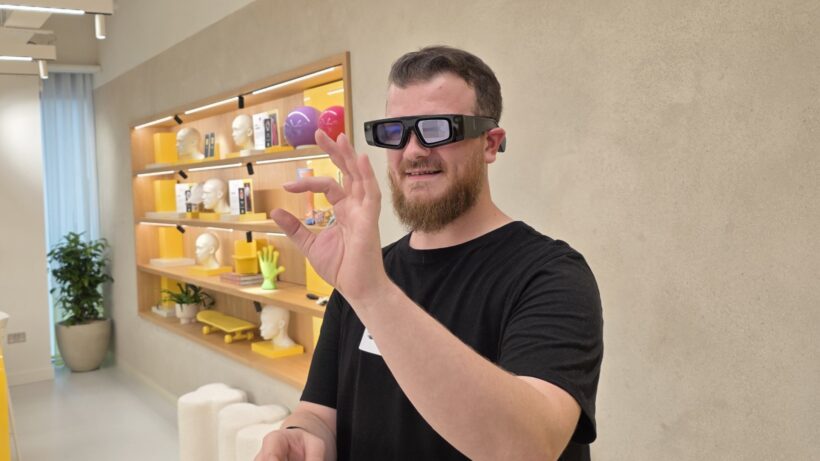
There’s no getting around it; the glasses don’t look as sleek or as stylish as many were expecting, especially with companies like Meta and Ray-Ban coming out with some pretty slick-looking (albeit comparatively basic) smart specs. It’s actually the opposite; the glasses are massive, chunky and look overly large on the head – even when modelled by Spiegel on stage at the announcement.

As you’d expect, the reaction memes are strong, and opinions are divided online. Even Snap’s stock dropped by 5% after the announcement, suggesting that Snap might’ve been drinking its own kool-aid for a little too long, focusing too much on the smarts and not the fact that, y’know, these actually need to be worn, in public, where people can actually see them on your face. 

Advertisement

The problem is that I know the software experience on the Specs is fantastic, unlike anything else I’ve ever seen or used – but will people actually give it a go when they look like that? I think we all know the answer to that question. 

Advertisement

Snap’s software is leagues ahead of the competition

Back in September 2025, I got to try the Spects dev kit at Snap’s London HQ, and Snap OS 2.0 feels closer to the sci-fi AR we were promised a decade ago than anything I’ve used since. While most rivals are serving up green, single‑colour overlays and static notification panels, Snap is running a full operating system that understands the world around you.

Snap AR Specs dev kit hands on Snap AR Specs dev kit hands on
Image Credit (Trusted Reviews)

Full‑colour graphics aren’t just floating in your periphery; they’re anchored to real objects and surfaces. Pin a window next to your desk or drop a widget onto a coffee table and it stays there, even as you look or walk away. It sounds like a small thing, but that persistence makes the specs feel like genuine mixed‑reality interfaces rather than glorified heads‑up displays.

Snap Specs overlaySnap Specs overlay
Image Credit (Snap)

Then there’s the built-in AI, which, believe it or not, is actually quite good. Much like Google Gemini’s Live Mode on mobile, Snap’s Spatial Tips feature doesn’t just answer questions in a floating chat box; it understands what you’re looking at and overlays help directly onto it. 

Snap Spectacles AI helpSnap Spectacles AI help
Image Credit (Trusted Reviews)

Advertisement

When I asked how to do an ollie on a skateboard, it didn’t spit out a wall of text – it drew the steps onto the board itself, showing where my feet should go at each stage. The same approach applies to things like flat‑pack furniture, car engines or household repairs: you look at the thing you’re stuck on, and the instructions appear right where you need them.

Advertisement
Snap Specs AI overlaySnap Specs AI overlay
Image Credit (Snap)

On top of that, real‑time translation features can caption conversations and translate signs or menus with real-world overlays, with text that sticks to people and objects as they move. Compared to the mostly static, widget‑driven software on Even Realities’ G2 or Rokid’s AR specs, Snap OS 2.0 feels way more polished, mature and genuinely useful.

So when I say Snap’s software is leagues ahead of the competition, I really do mean it.

Comparing the Snap Specs to existing smart glasses like the Meta Display specs and Even Realities G2 is like comparing an iPhone 17 Pro to a Nokia 3410; they’re in totally different leagues. 

Samsung Galaxy XR on a tableSamsung Galaxy XR on a table
Samsung Galaxy XR. Image Credit (Trusted Reviews)

Advertisement

In fact, in terms of the tech and mixed-reality experience on offer, they’re closer to the likes of the Apple Vision Pro and Samsung Galaxy XR – relatively large VR-style headsets that you certainly couldn’t wear on a night out or a trip – than existing smart glasses.

Like the proper headsets, Snap’s specs have high-end full-colour screens rather than the single-colour panels used by most existing manufacturers, and like those headsets, it can run a plethora of first- and third-party apps – there’s a reason why Snap got those dev kits out so early, after all. 

Advertisement
Snap Specs side-onSnap Specs side-on
Image Credit (Snap)

It actually goes a step further with its semi-transparent lenses, rather than using passthrough camera feeds and regular screens like the existing ultra-premium headsets. With electrochromic dimming on the lenses, it’s not hard to imagine they could offer a more immersive mode for watching movies and the like. 

Snap Specs in caseSnap Specs in case
Image Credit (Snap)

When you look at the Specs through that lens (pun intended), they look more like a phenomenal feat of engineering than a bulky pair of smart glasses. 

Advertisement

… but there’s no argument, they’re ugly and expensive

Snap has tried its best to frame these as fashionable, collaborating with the likes of Kaia Gerber, Jimmy Butler, Imogen Heap, Jack Harlow, and Hoyeon to model the Specs in marketing images – but, let’s be honest, they’re still some pretty ugly. 

Snap Specs being worn by CEOSnap Specs being worn by CEO
Image Credit (CNBC)

Compared to regular glasses that most people currently wear, these are much thicker – not just in the frame housing the screens but also in the arms of the glasses. The arms also look way longer than they should – on Spiegel’s head at the reveal, anyway – with very little in terms of a hook at the end to wrap around your ear for extra stability.

The slightly rounded, curved shape of the specs is quite nice in my eyes, but they’re just too big, chunky and obviously-smart to be worn by the average Joe. And with an eye-watering price tag of £1,995/$2,195, they’re not attainable for the average consumer either.

Jack Harlow wearing the Snap SpecsJack Harlow wearing the Snap Specs
Image Credit (Snap)

Advertisement

Of course, these are first-gen specs, and if Snap does power through and keep iterating on the design and hardware, this is the worst the Specs will ever be. 

Advertisement

Just think about how much better the Apple Watch Series 11 is compared to the Apple Watch – it’s the same here. The core concept is there, and Snap’s software is a shining beacon in a sea of lazy AR concepts; it just needs the time to properly cook. 

Snap SpecsSnap Specs
Image Credit (Snap)

That said, I reckon the Snap Specs will be a big hit with die-hard techies with money to burn, and I imagine I’ll be seeing execs from companies sporting the Specs at events like MWC in 2027 – but will I see anyone actually wearing them in day-to-day life? I doubt it, and that’s a shame. 

Source link

Advertisement
Continue Reading

Tech

Forget RTX filters. BenQ’s gaming monitor does the pretty stuff itself

Published

on

I’ve spent years messing with in-game brightness sliders, GPU filters, HDR modes, and monitor presets to tinker with my experience on my favorite games. Of course, I’d always go with the original artists’ intent first, but replaying these titles with new filters does freshen up the atmosphere.

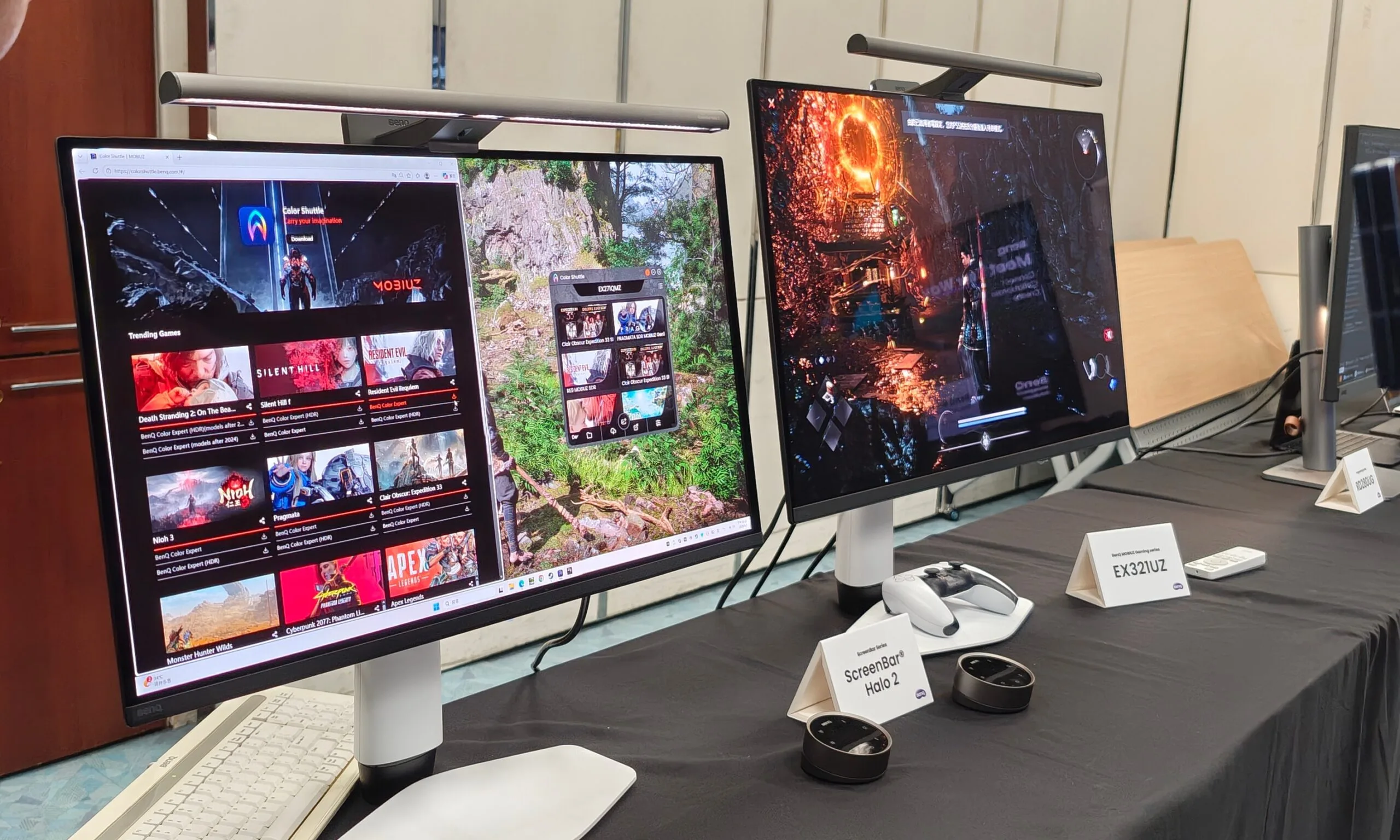
This is why I was particularly impressed by BenQ’s new MOBIUZ gaming monitors. During a recent visit to BenQ’s Taiwan HQ, I got a hands-on look at the company’s latest AI-powered game filter tech, and it immediately made more sense than I expected. The company isn’t just slapping on the “AI” sticker onto a gaming display. What you are getting here is custom touches to change up your experience by pulling from BenQ’s game art database that automatically tunes brightness, contrast, and color balance to match the game’s visual style. The fun part is that your performance doesn’t take a hit.

The filter lives in the monitor

When you use GPU-side filters, such as Nvidia’s Game Filters, your graphics card is still involved in the post-processing pipeline. Those tools can make a game look sharper, moodier, or more vivid, but they can also come with a performance cost depending on the setup. BenQ takes a different route by moving this job to the display itself. Its Smart Color system works through the Color Shuttle software and uses an AI chipset with BenQ’s MOBIUZ Game Color Database.

So rather than applying a GPU-level filter to the rendered frame, it adjusts the monitor’s own output using game-specific visual profiles. In practice, you can make a game look richer or more balanced without worrying that the filter itself is quietly eating into your frame rate. Considering how precious those extra fps can be for a lot of PC gamers, the visual filter makes sure you don’t lose any of it.

More than just a bunch of presets

The part I liked during the demo was that BenQ is not treating this like an old-school FPS/RPG/Racing preset menu. Those have existed forever, and most of them are either too aggressive or too generic. Color Shuttle is built around a game art database with more than 120 profiles. BenQ says it uses deep learning to understand color grading, lighting, and artistic direction across different game styles. Once Smart Color is enabled, it can detect what you are playing and switch to a suitable profile automatically.

You can also tweak those settings yourself, including familiar BenQ tools like Color Vibrance and Light Tuner that let you shift the image toward your preference. Again, “better colors” has always been a subjective thing. One player may want a horror game to look darker and moodier, while another may prefer better shadow visibility. Someone else may want open-world games to look more cinematic. BenQ’s system gives you a starting point, then lets you tune from there.

Advertisement

Backed by a community

One of the best parts of Color Shuttle is cloud sharing. You can save custom presets, upload them, and share them with other players. Other users can then download those setups for their own compatible monitors. This gives the feature a social side. Imagine downloading a profile for a specific game because another player has already found a better balance for night scenes or other scenes.

But that also explains why the internet connection is part of the story. Color Shuttle connects to BenQ’s Game Color Database, and the cloud side is used for saving and sharing profiles. The AI tuning is not the same thing as cloud gaming or streaming, but the ecosystem still depends on BenQ’s online database and community layer.

Still, there are some limitations. Color Shuttle is currently a Windows 10/11 app, and console users need to save presets to the monitor’s Gamer modes through a PC before using them elsewhere. Regardless, I like where BenQ is going here. A lot of AI gaming features feel too heavy or too tied to expensive GPU upgrades. Smart Color is smaller, but also more practical.

Source link

Advertisement
Continue Reading

Trending

Copyright © 2025