
TL;DR
China wants a global AI cooperation org and offers cheap/free models. The G7 is discussing “trusted partner” access to US AI. Two systems are forming.



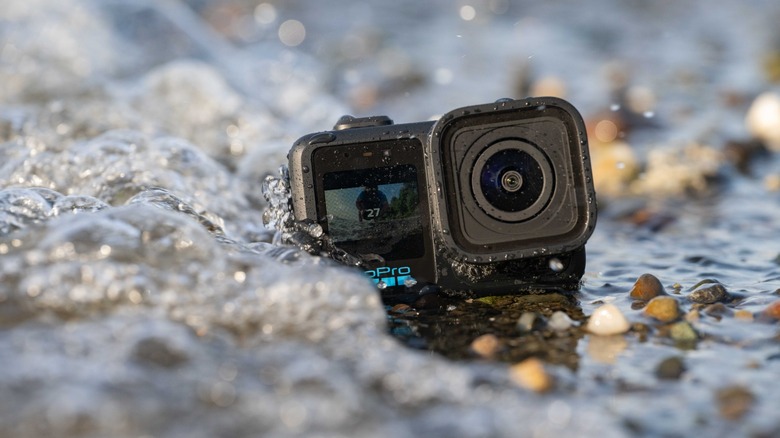
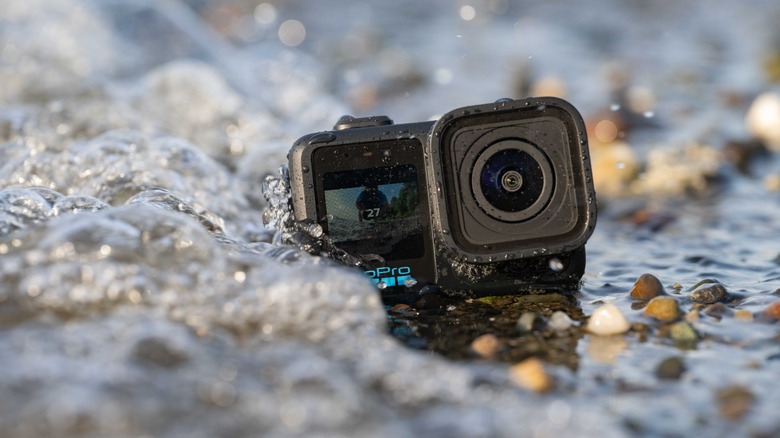
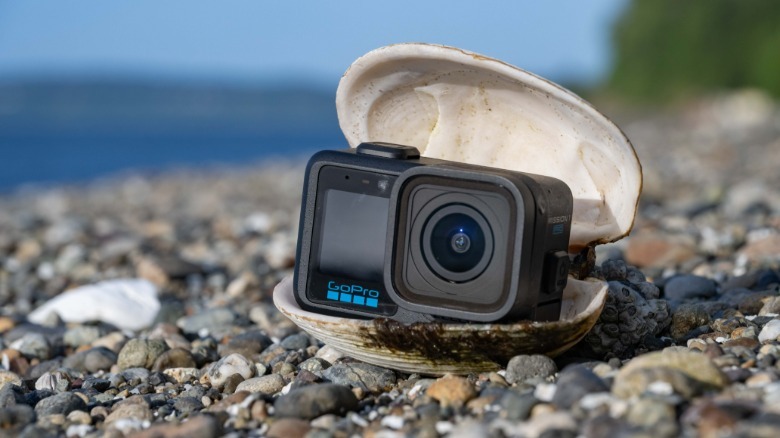
When GoPro didn’t launch their annual Hero camera last year, it was clear they were cooking up something special — now we finally get to see what they’ve been working on all this time, and whether or not all that R&D has paid off. On paper, everything about the GoPro Mission 1 Pro represents a massive leap over every GoPro that’s come before it, and that’s exactly what GoPro needed to do right now.
The 1-inch size sensor alone is enough to get me excited, but it’s important to note that it’s paired with a new processor that greatly expands what the camera is capable of. While the Mission 1 Pro is superficially very similar in appearance and form factor to the Hero line of cameras, they have supercharged everything under the hood. This is actually pretty important, as it means the Mission 1 Pro can potentially fill the same role as a standard action camera while delivering what should be a much higher level of quality. However, it was necessary to thoroughly test the Mission 1 Pro (provided by GoPro for this review) to see if it lives up to all the hype.
With a new 1-inch sensor and an upgraded processor, the Mission 1 Pro is absolutely the generational leap that GoPro needed in terms of imaging capability. Put simply, the video that comes out of this thing looks great, and so do the photos. It can shoot at up to 8K at 60fps, as well as 50MP still images. You can definitely still tell that this is action camera footage, but that GoPro look is still part of the appeal of a GoPro camera.
The camera has enough dynamic range that I never encountered a scenario where it suffered from serious overexposure, and this is the first GoPro camera I’ve used that delivers decent results after sunset. It is particularly well suited to capturing starlapses, being able to last on a single battery throughout most of the night, though at the time I was testing it the short nights and bright moon were not conducive to impressive imaging of the stars.
 Andy Zahn/SlashGear
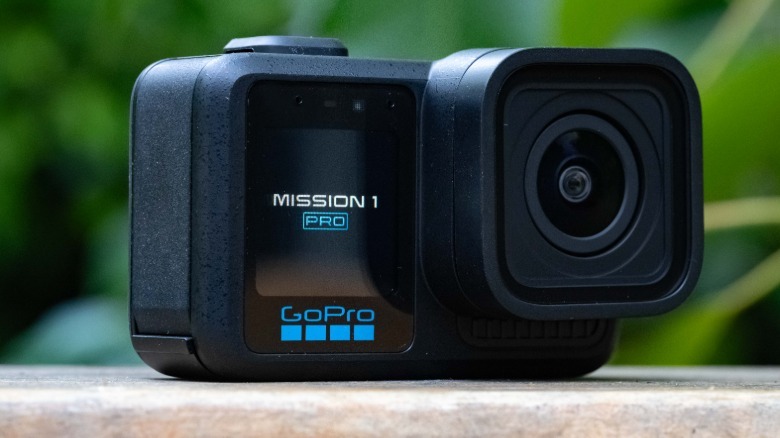
The downside here is that the fixed focal length of the Mission 1 Pro is not as close as the Hero 13, which took some adjustment to get used to. Also, the f2.8 aperture of the lens is a bit on the dark side, and I wish it featured a variable aperture as well. These caveats are likely a result of design restrictions, and while I think GoPro should implement closer focus, a variable aperture, and brighter aperture in the next generation of the Mission 1 series, it is worth noting that the optical design of the lens is of comparatively superior quality.
 Andy Zahn/SlashGear
After weeks of in-depth testing, extensive comparison to other cameras, and a lot of pixel-peeping, I believe the GoPro Mission 1 Pro features the best image quality of any camera in this genre.
One of the real highlights of my time with the Mission 1 Pro was filming using the extreme slow motion features of the camera. Going into testing the camera, I was excited for the 4K 240fps capability, but was skeptical of the 1080p 960fps recording. Often, lower resolution ultra-high framerate recording is too low quality to be much more than a novelty. However, with the Mission 1 Pro, I was surprised to find that the 960fps looks amazing, even on my large desktop monitor. It’s obviously still kind of mushy, compared to the 4K output, but it is by far the best ultra-high framerate recording I’ve personally used in a camera. You can only record 10 second clips at 960fps, but when you slow them down to 30fps, those 10 second clips extend to over 5 minutes long!
The 4K 240fps is great if you want to prioritize image quality, but still get really impressive slow motion, while recording without a time limit. The camera even does 2X slow motion in 8K at 60fps, though if I’m recording 8K at 60fps, it is for the high level of realism that such high framerate, high resolution footage yields.
It would be nice if GoPro could add some extra features here, perhaps through GoPro Labs, such as the ability to do pre-capture in ultra slow motion, and capture higher bitrate 960fps footage, even if that means only being able to shoot a couple seconds at a time. Being able to shoot high bitrate 960fps video with pre-recording could potentially deliver incredible results.

Normally, I rarely use an action camera to capture still images. It’s typically a nice capability to have, but between the ultra wide angle and what is usually less than amazing image quality, it’s not a function I often take advantage of. However, as I’m wrapping up this review, I’m surprised by how much I’ve enjoyed taking photos with the Mission 1 Pro due to how great those photos look.
 Andy Zahn/SlashGear
 Andy Zahn/SlashGear
 Andy Zahn/SlashGear
With the ability to capture 50MP RAW images, the Mission 1 Pro is able to deliver the sort of detail I expect from cameras these days, and I appreciate that it doesn’t aggressively sharpen or saturate the images, even in the case of JPEGs. Of course, it’s still an ultra-wide angle view, but often that’s exactly what you want. There’s a reason most phones these days feature an ultra-wide angle lens in their camera array. In my case, I am often shooting with longer lenses; super telephoto wildlife lenses, macro lenses, fast primes lenses, or even just standard range zooms. Having the Mission 1 Pro in my pocket gives me an ultra wide option that doesn’t mean swapping lenses and carrying heavy/bulky extra gear.
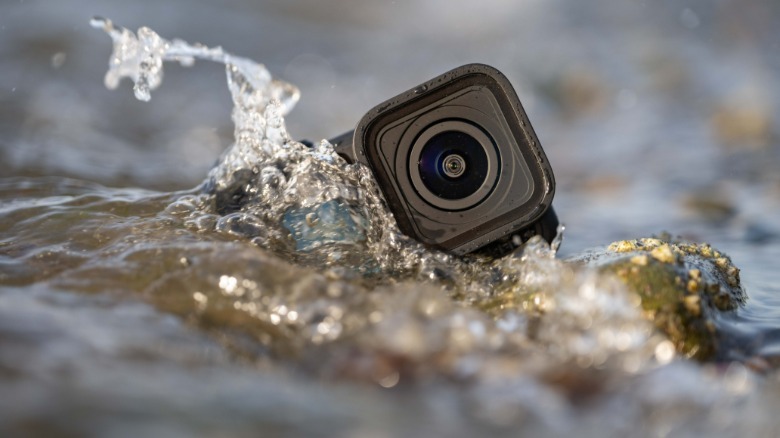
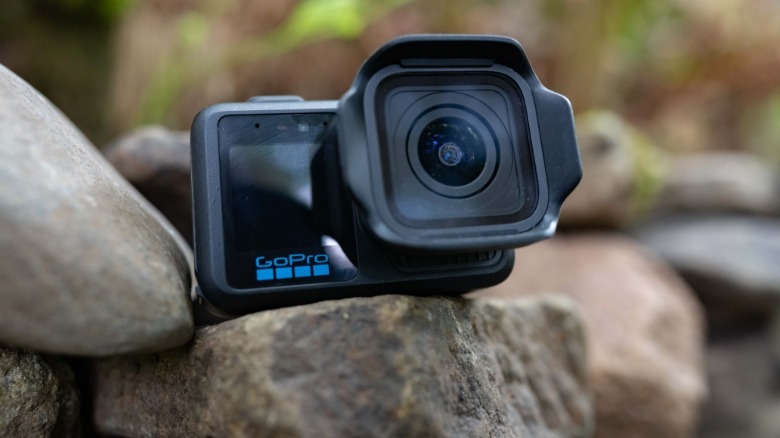
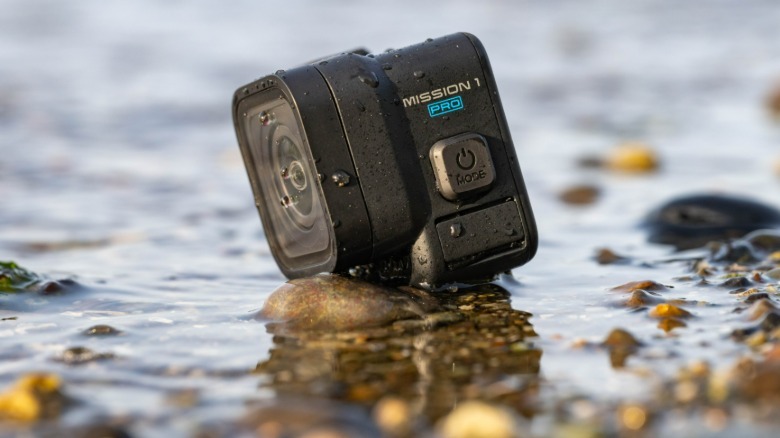
I had expected the Mission 1 Pro to be much larger than it is. The lens protrudes more than the Hero 13, but other than that it is about the same size. This is excellent, as it meant I was able to use the Mission 1 Pro as I would any other GoPro. One key upgrade is the buttons, which have been redesigned to be easier to press when wearing gloves, and to enable the camera to dive farther underwater (up to 20 meters). I love the tactility of these new buttons, and they are very clearly superior to anything that’s come before.
 Andy Zahn/SlashGear
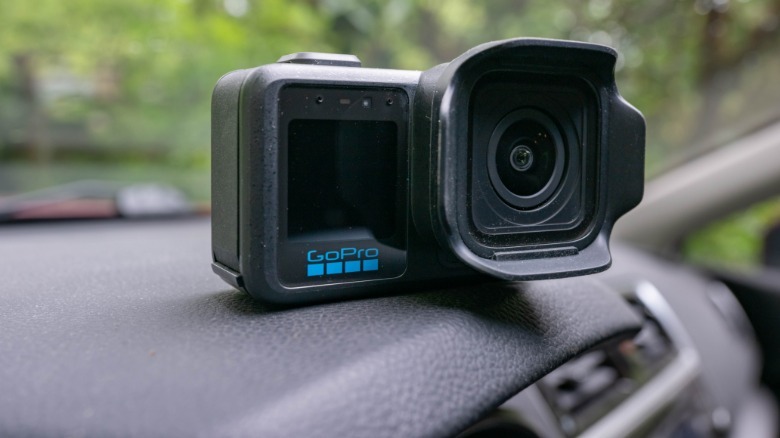
The Mission 1 Pro also comes with a rubber lens hood, which I recommend using whenever possible. Without it, the lens is prone to flaring in the presence of bright night sources, but with the lens hood this is solved entirely, and as a result, if you’re using a lens hood, the Mission 1 Pro exhibits less flaring than any other action camera. It fits on securely too, and won’t fall off easily.
 Andy Zahn/SlashGear
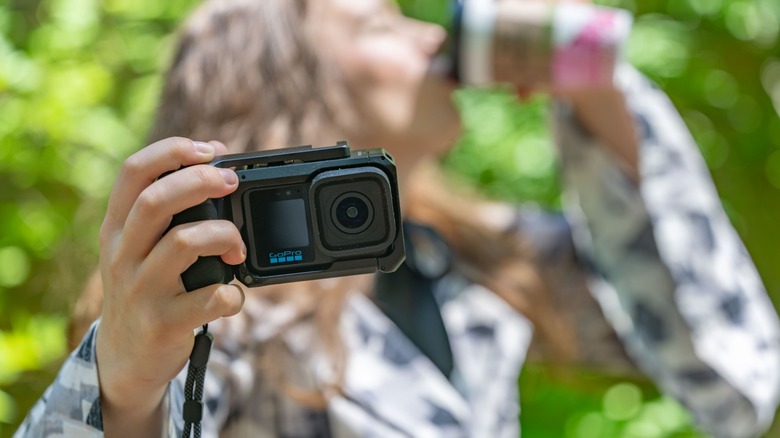
I also had the opportunity to try out GoPro’s new grip cage for the Mission 1 Pro, which essentially transforms it into a point-and-shoot, making it much easier to shoot handheld. I very much enjoyed using this while hiking or out walking, grabbing B-roll or taking photos.
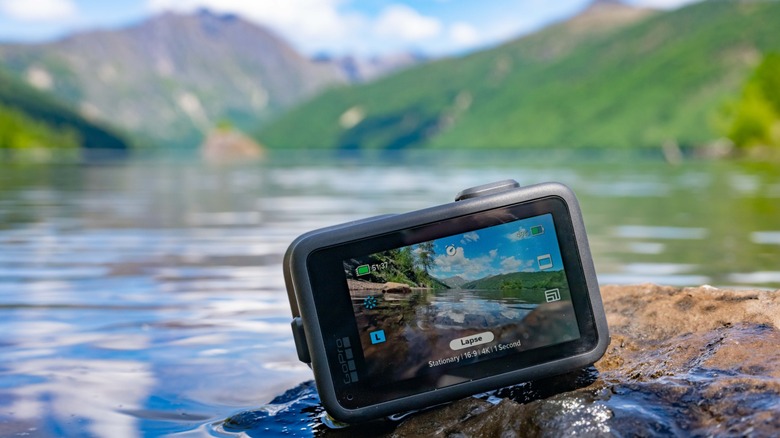
The new menu system of the Mission 1 Pro is really user friendly, yet it still retains all the customization options which I’ve always appreciated in GoPro cameras. You also have the ability to expand the camera’s capabilities through GoPro Labs, including crazy high bitrate options.
The GoPro companion app, Quik, is excellent, though a bunch of key features are locked behind a subscription paywall. At $59.99 per year, it gains you access to such features as unlimited and automatic cloud backups of your GoPro footage, so it’s actually a good value, but the integration of the subscription into aspects of the app is frustrating if you decide not to purchase that subscription.
 Andy Zahn/SlashGear
My biggest gripe here is that a firmware update is required before first using the camera. Fortunately, there isn’t any requirement to register the camera or bind it to an account, but it is disappointing to not be able to use the camera straight out of the box without first going through the firmware update. This was an aspect of GoPro cameras for which I have frequently praised them in the past. I hope that they will ship the camera with more current updates later on in its production, and allow users to bypass the firmware update requirement.
Over the years, one frequent complaint leveled against GoPro cameras was a tendency to overheat in warm conditions without airflow. I personally never really experience overheating with GoPros, but then I live in a region that’s generally pretty cool, and I mostly test GoPros outdoors in fast moving environments, or doing timelapse photography. However, with the Mission 1 Pro I decided to really put its battery life and heat management capabilities to the test.
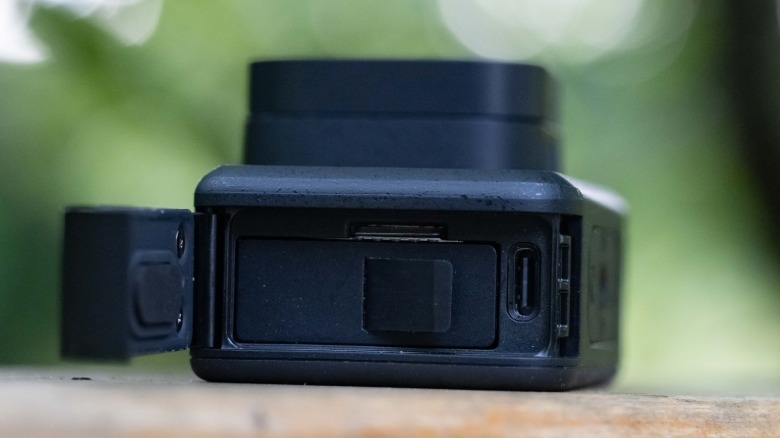 Andy Zahn/SlashGear
I took the camera along to multiple live music recording sessions, where I set it down to record the whole show. For one of these shows, I recorded over an hour of 4K 30fps 10-bit footage shot at a high bitrate, yet the camera was only mildly warm afterwards. What’s more, it still had 22% of its battery left. That is very impressive indeed, and I am fairly confident that GoPro has finally escaped such criticisms.
Regarding those recordings, I was blown away by the audio quality of the microphone array in the Mission 1 Pro. Since I reviewed the Nikon Zr, its internal microphones have been my primary tool for recording live music. I was shocked to find that the Mission 1 Pro is very nearly as good in this regard as the Nikon Zr, and even has some characteristics to its microphones that I prefer. GoPro has finally integrated 32-bit float recording here too, so you can easily adjust volume in post and not worry about the volume of what you’re recording.
The Mission 1 Pro is going up against some formidable cameras. The DJI Osmo Action 6 and Insta360 Ace Pro 2 are both very good, and have their own unique features which make them appealing options.
The Osmo Action 6 has a brighter aperture at F2, so does deliver a small improvement in low light conditions. It also features a variable aperture, which helps with controlling light transmission, as well as delivering cool sunstars.
The Insta360 Ace Pro 2 benefits from a particularly well developed modular accessory system. It’s also the only action camera with a flip-up rear display, which is great for filming at an angle or for vlogging.
However, the GoPro Mission 1 Pro is miles better for slow motion video capture. Another big advantage is the mounting system, which is superior to the others due to its integrated ¼-20 screw mount and action camera fingers. The DJI and Insta360 cameras are both fully reliant upon magnetic quick release systems, which just aren’t as convenient and dependable.
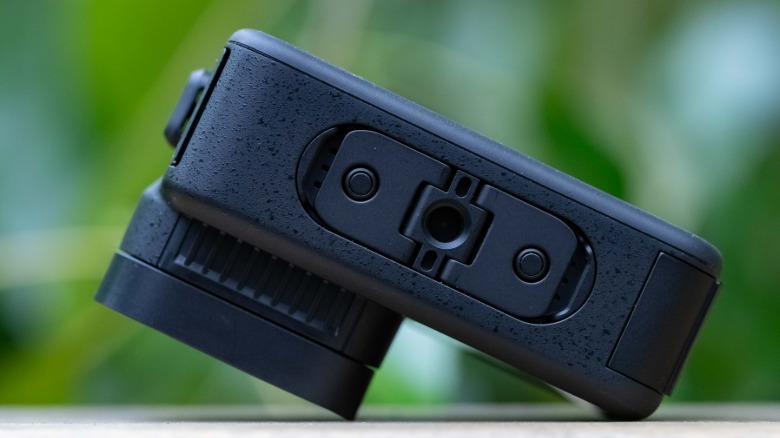
Additionally, after closely analyzing a mountain of comparison footage I filmed between these cameras, I came to the conclusion that GoPro wins overall in terms of image quality. The Mission 1 Pro delivers more natural looking and detailed imagery than the Ace Pro 2 and Osmo Action 6. While DJI and Insta360 may look superficially more appealing in some scenarios, this appears to be largely a result of more aggressive processing algorithms.
The Mission 1 Pro starts at $699, and there’s no getting around the fact that this is a very high price point. While I believe it is in fact worth the money, it’s still a lot of money for many people to spend. However, there are some factors which may help alleviate that cost. For a start, existing GoPro subscribers get $100 off the price of the camera, which brings it down to a significantly less painful $599.
It’s also worth noting now that there is a less expensive model of the camera called the GoPro Mission 1 (no “pro” on the end), which starts at $599, and with a GoPro subscription discount is just $499. This non-pro camera scales back on the slow motion capabilities (8K 30fps, 4K 120fps, 1080p 240fps), but is very nearly as good as the “pro” model, and at a price that’s much closer to other action cameras on the market.
It’s worth noting that it is likely these cameras are more expensive now than they might have been due to the shortage of components, which is a consequence of the generative AI data center boom. Existing products which were launched before component prices shot up still have large stockpiles available, which helps to account for the price disparity between a new camera like the Mission 1 Pro and older action cameras. If shortages continue and component prices remain high, then we can unfortunately expect camera prices to go up across the industry. This is all to say that while the Mission 1 Pro may seem expensive now, in another 6 months to a year it may be closer to the “new normal”.
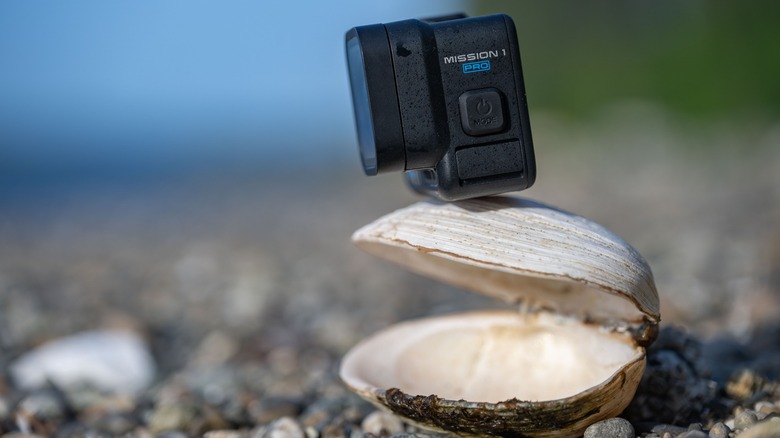
It is really good to see GoPro make such a triumphant comeback with the GoPro Mission 1 Pro. It’s clear that the company listened to its customers, and acted decisively to respond to what GoPro users need. I can now say without hesitation that the Mission 1 Pro is the best action camera currently available. This is not to say it’s perfect, because there are clearly some areas where it could be improved, and other brands do still offer some things GoPro doesn’t. It is also very expensive, which erodes its advantage over less expensive cameras. However, when considered as a whole, the Mission 1 Pro is the overall best in its genre, and if price isn’t an object, this is the action to choose.
 Andy Zahn/SlashGear
It also has to be said that GoPro still retains the color science for which they are known. The way these cameras render things is special, and that’s still baked into the DNA of the Mission 1 Pro. It’s a massive upgrade over everything GoPro has ever made, and at the same time it retains what people love about these cameras. Perhaps most importantly, the Mission 1 Pro delivers the best quality imaging capability of any action camera on the market today.
The GoPro Mission 1 Pro is available starting at $699 from GoPro’s online store.

China wants a global AI cooperation org and offers cheap/free models. The G7 is discussing “trusted partner” access to US AI. Two systems are forming.
China’s top diplomat Wang Yi announced on Wednesday that Beijing is “accelerating the establishment of a global AI cooperation organization” and invited all countries to join. The comments came as the G7 summit in France wrapped up with discussions about giving “trusted partners” access to leading US AI models, according to Reuters. Two competing visions of AI governance are now diverging in public.
Wang was speaking at the release of China’s global governance whitepaper, which criticised trade wars and emphasised support for the Global South. Vice chair Zhao Haibing of China’s top economic agency pushed back on “closed, exclusive and monopolistic approaches to tech development.” The language was aimed directly at Washington.
The timing is deliberate. The US Commerce Department ordered Anthropic to shut down Fable 5 and Mythos 5 last week, cutting off every foreign user. Anthropic and Google DeepMind used the G7 to call for a US-led AI coalition that would set international rules. Canada agreed. China was not invited.

The 💜 of EU tech
The latest rumblings from the EU tech scene, a story from our wise ol’ founder Boris, and some questionable AI art. It’s free, every week, in your inbox. Sign up now!
The contrast in approaches is stark. US AI models are subscription-only and increasingly subject to export controls. China’s efforts have focused on cheap or free models that can be downloaded in their entirety. DeepSeek, Qwen, and other Chinese open-weight models are available to anyone with an internet connection. The Global South, which cannot afford enterprise AI subscriptions and was not consulted on the G7’s “trusted partner” framework, has a clear choice between the two.
China is routing its AI diplomacy through existing multilateral bodies. Wang pointed to cooperation through BRICs and the Shanghai Cooperation Organisation. Zhao cited China’s “AI Capacity Building for All” initiative, support for the UN in leading global AI governance, and programmes to help developing countries with technology and talent.
The US and China said last month they would work on AI guardrails together, but few details have emerged. President Xi Jinping proposed a “Global Governance Initiative” at the SCO last summer. Premier Li Qiang announced the global AI cooperation organisation at a Shanghai conference in July 2025, just days after the Trump administration released its own AI action plan supporting US tech development overseas.
The structural split is now visible. The US is building an alliance of wealthy democracies with controlled access to its most powerful models. China is building data exchanges, exporting governance via the Digital Silk Road, and treating AI distribution as a geopolitical tool. For the 6 billion people who live outside the G7, the question is not which system is better. It is which system shows up first.

wiredmikey shares a report from SecurityWeek: Microsoft on Wednesday published an advisory acknowledging the public disclosure of a vulnerability in Defender that could lead to privilege escalation. The security defect, tracked as CVE-2026-50656 (CVSS score of 7.8), was dropped last week by security researcher Nightmare Eclipse (also known as Chaotic Eclipse). “We are working to provide a high-quality security update that addresses this vulnerability. We will provide information in this CVE when the update is available,” Microsoft adds.
RoguePlanet, Nightmare Eclipse explained last week, targets a race condition in Microsoft Defender and allows attackers to gain System privileges. The researcher released a proof-of-concept (PoC) exploit that demonstrates local privilege escalation (LPE) on Windows 11 and Windows 10 systems with the June 2026 patches installed. […] On Wednesday, Nightmare Eclipse pointed out that the PoC works regardless of whether Defender’s real-time protection is enabled or disabled. It may even work in passive mode, the researcher said.

Tesco is also dealing with migration challenges related to data security because its new, unnamed virtualization software is incompatible with the Veeam and Zerto products it uses.
Tesco initially requested at least 100 million pounds (about $133.6 million) in damages each from Broadcom, VMware, and reseller Computacenter, plus interest.
In its recent filings, Tesco said it turned down at least four offers from Broadcom to continue using VMware and Broadcom’s mainframe tech. One offer charged $23.5 million (about 17.6 million pounds) for VMware Cloud Foundation 9.0 and mainframe software and support services for a year, The Register reported. Tesco said that was “around 175 percent” more expensive than what it believes it should have had to pay for VMware and a 350 percent price hike for the mainframe offerings. The prices were “manifestly unfair and excessive,” one of Tesco’s filings said, according to The Register.
In an amended defense, Broadcom denied that the price hike was unfair, The Register reported. Additionally, Broadcom argued that it shouldn’t have to pay damages in relation to Tesco struggling to find VMware and Broadcom alternatives before Tesco’s support expired, as the retail firm has since found replacement products.
The case is expected to go to court between November 1, 2027, and February 25, 2028, The Register reported. Afterward, it could go to trial.
Although the companies will continue their dispute in UK courts, the disagreement mirrors frustrations that VMware customers and partners around the world have expressed since Broadcom bought VMware. With users often being heavily dependent on VMware products, many have delayed or avoided migration or are only moving some workloads, due to complications around cost, time, support, and compatibility.
Still, virtualization rivals, like Hewlett Packard Enterprise and Nutanix, have been making aggressive pushes to attract disgruntled VMware users.
Simultaneously, Broadcom has stuck to its VMware strategy and has reported financial success, especially among its target of large enterprises. It has also dealt with other public legal disputes with large customers, including AT&T, with which it reached an undisclosed settlement, and Siemens, which Broadcom accused of software pirating in an ongoing case in the US District Court for the District of Delaware.
Audiophiles all know everything sounds better fed through vacuum tubes, but did you know visualizers look better with them, too? That’s what we’re forced to conclude looking at the Tachyscope Laser, a 360-degree oscilloscope display that is [Daniel Ross]’s entry into the ongoing Frikkin Lasers contest.
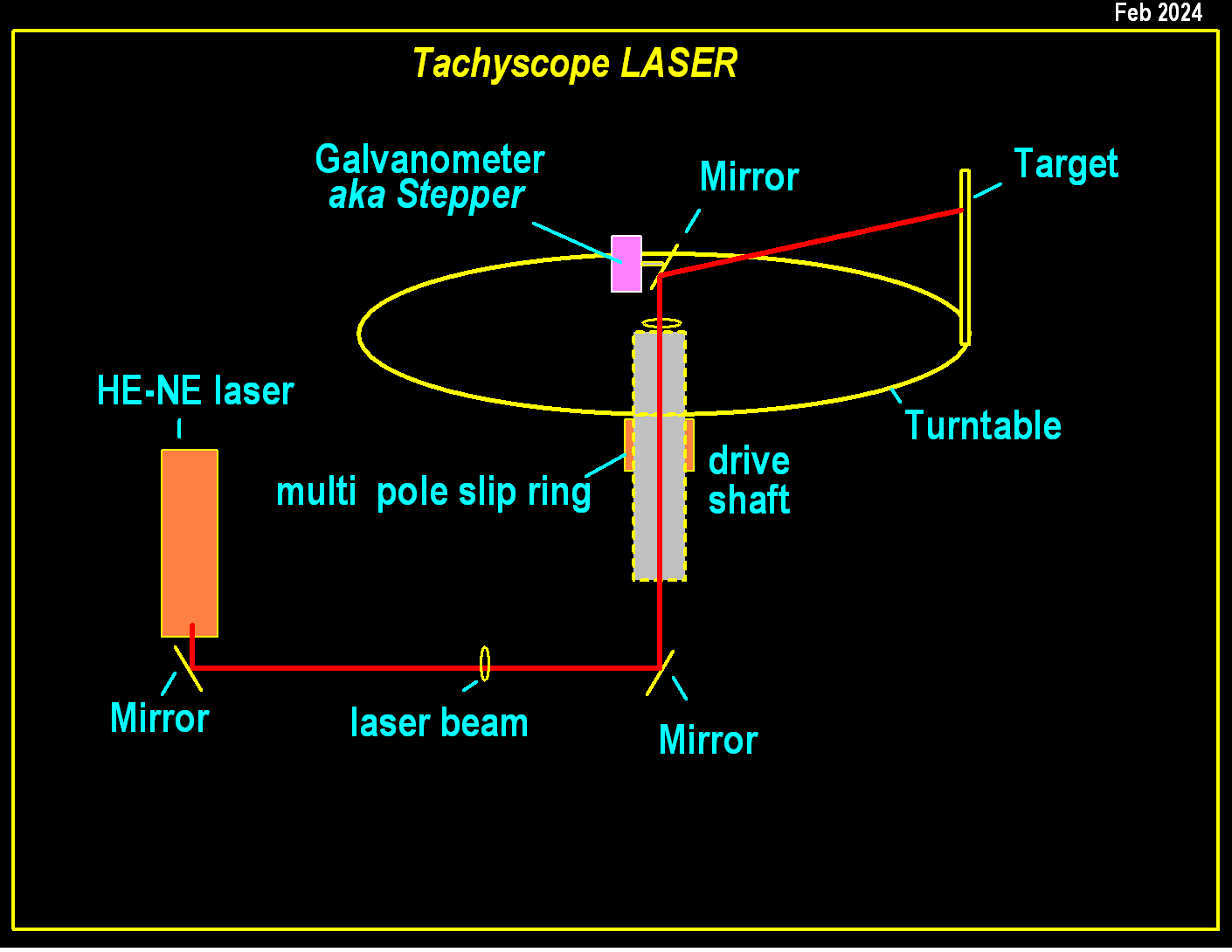
The laser is a good old-fashioned helium–neon tube — something we see less and less of in this era of solid state lasers — and the wavelength gives the waveform display a retro charm. The actual display is unique in our experience, with the beam shining up through a hollow shaft to bounce off a galvanometer mirror on a spinning platform. Galvo sweeps the laser across a translucent target, which creates the waveform by persistence of vision as it spins at 100 RPM or so.
Does the fact that the audio signal feeds through a tube amp to drive the single galvanometer actually improve the visuals? Only in the sense that those tubes make the steampunk-style enclosure look really, really cool, as does the exposed laser tube. That all of the steampunk elements obviously have a point to them rather than just being a another “glue some gears on it” project is icing on the laser-flavored cake.
The contest runs until July 23rd, so there’s lots of time to get laserin’ — and remember that there are categories for DIY lasers and anything that isn’t a display, just in case you think this project puts the bar too high for a light show. We’ve actually featured one of [Daniel]’s tachyscope waveform visualizers before, but that one, madly enough, spun an actual CRT.

CCS Insight expects global smartphone shipments to fall 15% this year as AI-driven demand pushes memory manufacturers toward higher-margin server chips. “[S]ome entry-level devices have already seen their sticker prices go up by more than 50 percent since last year,” reports The Register. From the report: The firm found that the primary smartphone market (meaning new devices) contracted 4.4 percent in the first quarter of this year, despite sales channels front-loading (meaning stockpiling) product inventory, as device prices begin to rise sharply. As CCS notes, this casts an ominous shadow on the outlook for the rest of the year, and it seems things have worsened since The Register first started reporting on the smartphone memory woes.
Back in January, the forecast was for handset price rises of 6-8 percent, while the most pessimistic outlook was that the global market might contract as much as 5.2 percent. By February, analysts were expecting to see a decline in shipments of around 8 percent across the global market, and for prices to increase by about 14 percent.
The root cause of all this is the AI craze, which has seen huge demand for high-performance GPU-filled servers to process it all. Chipmakers have moved to capitalize on this by prioritizing production of high-margin memory components for those servers, rather than making the plain old DRAM and NAND needed for PCs and phones. “The memory chip crisis shows no sign of slowing down in the near future, ramping up the pressure on manufacturers and consumers. Memory components now account for more than 30 percent of a manufacturer’s bill of materials in some smartphones.” said CCS research analyst Ben Hatton. “The full impact has yet to be felt in many regions, but it’s clear that device prices will accelerate over the rest of the year.”


As students, teachers and employers wrestle with the demands of an increasingly AI-powered world, the University of Washington has a new proposition: an interdisciplinary AI minor, with an anthropologist and a computer scientist at the helm.
Set for launch in Spring 2027 at the Seattle campus, the program is the latest of several moves the university has made to push itself toward global leadership in AI education and research — including new graduate programs, a partnership with Microsoft and a $10 million AI initiative.
“Students will be able to come to the University of Washington, study a field they are passionate about, and also understand AI and how it relates to that field of study,” said Magda Balazinska, director of the Paul G. Allen School of Computer Science & Engineering and co-chair of the group designing the new curriculum.
Nationwide, universities are racing to build AI literacy into their curricula. Cornell launched an AI minor in Fall 2024, open to students across all majors. Michigan, Columbia, Carnegie Mellon and Georgia Tech have similar programs underway, and Northeastern Illinois University recently announced a standalone undergraduate AI degree.
In February 2024, Provost Tricia Serio announced a university-wide AI task force, saying an institutional AI strategy was “no longer a choice.” With 80 members across five groups, the task force spent months developing a comprehensive plan.

Among several recommendations, the task force proposed creating an AI minor to engage the “societal aspects of AI” beyond technical training. Balazinska and anthropology professor Ben Marwick are co-leading the development of the new minor, alongside representatives from 18 academic units spanning Architecture to the School of Nursing.
“All units will be welcome to propose and teach courses in the minor,” Balazinska told GeekWire, “because there are many perspectives to AI.”
In a recent survey, about 53% of employers said they struggle to find graduates with the right AI skills, and most said universities are not keeping up, according to a Pearson and Amazon Web Services report. Meanwhile, a review of AI literacy studies found that most efforts skew toward technical literacy over the critical and ethical literacy that UW is looking to provide.
The proposed curriculum has four key pillars:
Balazinska’s team is revising the proposal after circulating it across campus for feedback. With the academic year now wrapped up, further review is set for the fall.
The minor is part of an expanding array of AI-focused programs at UW. In 2025, the Allen School launched a stackable Graduate Certificate in Modern AI Methods, a part-time evening program for those in various industries who want to develop AI and machine learning expertise.
In October, UW was named one of nine universities to benefit from Amazon’s AI PhD Fellowship program, allotted $2.2 million over two years for doctoral research in AI. This February, the university and Microsoft announced an expanded partnership to provide students with AI computing resources and internship opportunities, launch an AI course for working Washingtonians, and, starting this fall, pair students with Microsoft employees on the Redmond campus.
The university also launched a campus-wide AI initiative, thanks to a $10 million gift from Microsoft pioneer Charles Simonyi. The initiative, AI@UW, coordinates AI investments across student success, research, teaching and resources — including grants for developing AI-integrated teaching projects across disciplines.
Surrounding an AI@UW launch event earlier this year, some faculty pushed back on AI use and questioned the technology’s role in education. A survey of UW Arts & Sciences students also found mixed reviews, including concerns about losing academic skills to AI and inconsistent faculty guidance across departments.
“There’s no getting away from AI now,” one international studies major said in the survey report. “But it’s important that we understand what we stand to lose when we use these services more and more.”
The minor may be a first step toward an interdisciplinary AI Institute at UW, one of several suggestions from the task force. Recommendations ranged from hiring 100 new AI-focused faculty to upgrading the university’s supercomputing infrastructure.
“Within five years, more than 10% of our faculty would have expertise in AI resulting in national and international leadership in AI across the full campus,” read the report, published in late 2024.
Other suggestions included rollouts of advanced AI tools across the administrative backend as well as in teaching environments, such as using ChatGPT to answer questions on course message boards. They recommended every first-year student complete a basic AI literacy module, similar to Title IX requirements.
“As AI systems become embedded in the tools, workflows and decisions that shape daily life,” Balazinska said, “students in every discipline need more than passing familiarity with these technologies.”
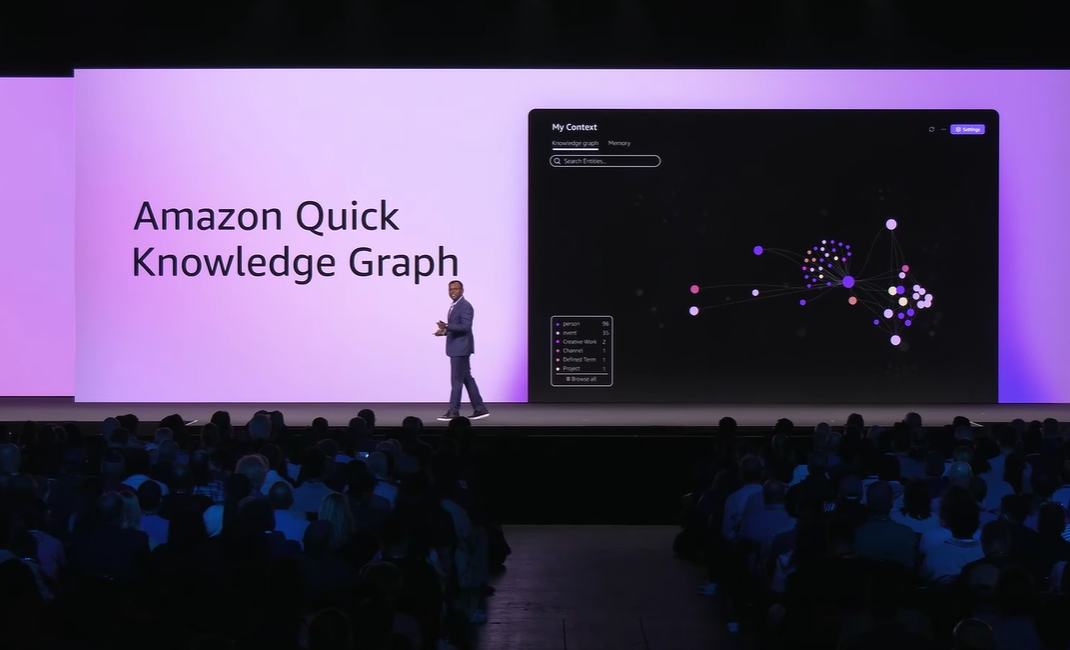

Amazon Web Services is announcing a new set of AI agents for businesses, developers, and individual users, capable of everything from fixing security vulnerabilities to triaging email.
The agents, unveiled at the AWS Summit in New York, reflect an attempt to maximize autonomy while ultimately keeping humans in control of how much the AI does on its own.
It’s part of a broader industry push into agents, with Google, Microsoft, Anthropic, OpenAI and others developing AI that can do more work and increasingly complete tasks on their own.
A new security agent, dubbed AWS Continuum, starts in a supervised “learn mode” and earns the right to act alone only as customers grant it permission, category by category.
The Amazon Quick AI assistant will now let users build their own background agents in plain language to handle tasks like following up on stalled business deals or flagging regulatory changes.
Amazon gave Quick a redesigned activity feed that triages email, messages, and calendar items into one prioritized view; new links to services including Adobe, Figma, Snowflake, and WhatsApp; and the ability to tap multiple connected services to answer a single question.
On the developer side, AWS is also pushing its coding agents to take on more of the grunt work, checking and testing new code before it ships and cleaning up old code, while leaving the final decision to merge or deploy in the hands of humans. A new iPhone app for Kiro, the company’s AI coding assistant, will let developers start and monitor that work from their phones.
@media (max-width: 600px) {
aside.callout { float:none !important; max-width:100% !important; margin-left:0 !important; margin-right:0 !important; }
aside.callout .callout-img { display:none !important; }
}
Deepak Singh, the AWS VP who leads the Kiro team, said the overarching idea is to take the background work AI has piled onto people — reviewing code, triaging security findings, keeping software current — and let agents handle it with minimal human intervention.
The faster AI writes code and surfaces problems, he said, the more there is for humans to review, test, and maintain: “Those are all good problems to have, but they are real problems.”
AWS also expanded AgentCore, its platform for building agents, and introduced AWS Context, a service that organizes a company’s data so agents can reason over it.
Announcing the new Continuum security agent, AWS cited the rise of powerful AI models — most notably Anthropic’s Claude Mythos — that can now find software flaws and chain them into serious attacks faster than any human team can respond.
Amazon made headlines for raising concerns about those same models, reportedly warning Trump administration officials about security risks in Anthropic’s most advanced AI, before a government order forced the lab to take its two newest models offline.
Continuum is starting with code vulnerabilities, and AWS says it will expand to other aspects of security in the future. It works through issues the way a human team would, if given the time: triaging the findings, testing whether a vulnerability is exploitable, and then proposing a fix, with an estimate of what else the change might break.
In categories where the customer has granted the agent autonomy, Continuum can apply the fix itself, feeding the change into an existing deployment pipeline.
Neha Rungta, AWS director of applied science, said in an interview that this kind of speed is necessary given the acceleration of the threats. AI can now chain minor flaws together, she said, combining two medium-severity findings and a low one into something critical.
“That was something that would have taken a lot of effort, expertise, and determination for an attacker to get through — so the floor has been lowered,” said Rungta, who led the work on Continuum. “The goal is to raise that floor up again.”


AI AND ML
Researchers urge developers to see that less is more when it comes to instructions
If you’re exposing your agent to a strong odor, it’s time to clean up your instructions.
Risky or poorly structured code patterns are known as “code smells,” and it turns out coding agent directives can be similarly redolent, leading to wasted tokens and worse output.
Coding agents rely on configuration files that summarize expected agent behavior. These context-enhancing files are commonly written in Markdown and named either CLAUDE.md for those using Anthropic models or AGENTS.md for pretty much everyone else.
They include various text instructions that advise the coding agent about desired behavior and tool use. And they can get rather wordy. Anthropic advises no more than 200 lines of text because longer files consume model context and may hinder model coherence.
Researchers affiliated with the computer science department of the Federal Institute of Minas Gerais in Brazil recently scoured some 532,000 files to build and analyze a dataset of 100 popular open-source projects containing either an AGENTS.md or a CLAUDE.md file.
“Our results show that configuration smells are widespread,” the authors state. “Lint Leakage was the most common smell, affecting 62 percent of the files, followed by Context Bloat (42 percent) and Skill Leakage (35 percent).”
Linting is the process of running automated tools to check code for programming and style errors. Lint Leakage refers to agent instructions that repeat rules already enforced by linters, format checkers, and static analysis tools. Duplicative rules waste tokens by burdening the underlying model with guidance for a task already handled reliably by programmatic tools.
Context Bloat, as its name suggests, describes the tendency of developers to overspecify code agent behavior. “Bloated configuration files increase token consumption, raise costs, and reduce the visibility of important instructions,” the authors observe, pointing to Anthropic’s recommendation of no more than 200 lines of text.
Skill Leakage, another common configuration smell, occurs when rarely used tools or practices get added to the AGENTS.md file, which gets loaded in every agent session. The agent instructions would be better in a separate skills file (e.g. SKILLs.md) that gets loaded only when needed. Skill leakage also expands the agent’s context unnecessarily and potentially distracts agents from other things.
Other agentic odors include: Blind References, which happens when configuration files reference external documents (e.g. via URLs) without explaining when that resource becomes relevant; Init Fossilization, configuration details set up upon a project’s initialization that are no longer relevant; and Conflicting Instructions, which occur when agent directives contradict each other.
The study authors say that they found at least one of these six smells in 91 of the 100 AGENTS.md files tested.
“These results suggest that developers could benefit from catalogs and tools designed to spot configuration issues in agent configuration files,” they conclude in the preprint paper, entitled “Configuration Smells in AGENTS.md Files: Common Mistakes in Configuring Coding Agents.” The authors are Helio Victor F. dos Santos, Vitor Costa, Joao Eduardo Montandon, Luciana Lourdes Silva, and Marco Tulio Valente.
The message here is that less is more when it comes to code agent configuration files, perhaps even to the point that anything is worse than nothing.
Similarly, when ETH Zurich boffins examined the impact of context files for agents a few months ago, they found [PDF] that developer-generated instructions raised costs and only improved code performance about 4 percent, while LLM-generated instructions had a small (3 percent) negative impact on agent-generated code.
They concluded “unnecessary requirements from context files make tasks harder, and human-written context files should describe only minimal requirements.” ®
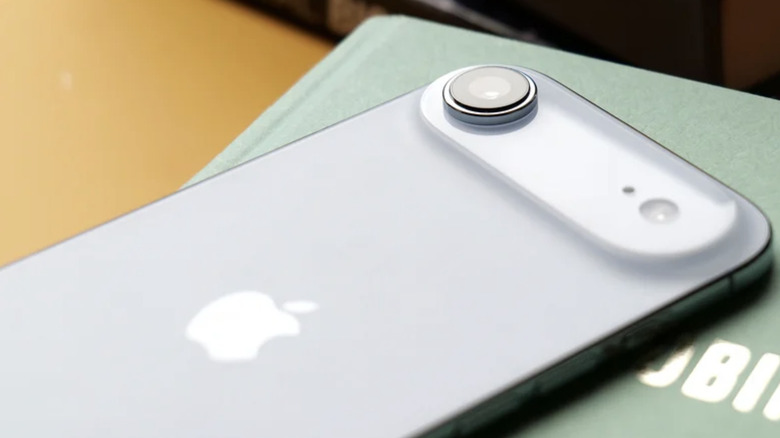
The ultralight may become a permanent fixture in Apple’s smartphone lineup.
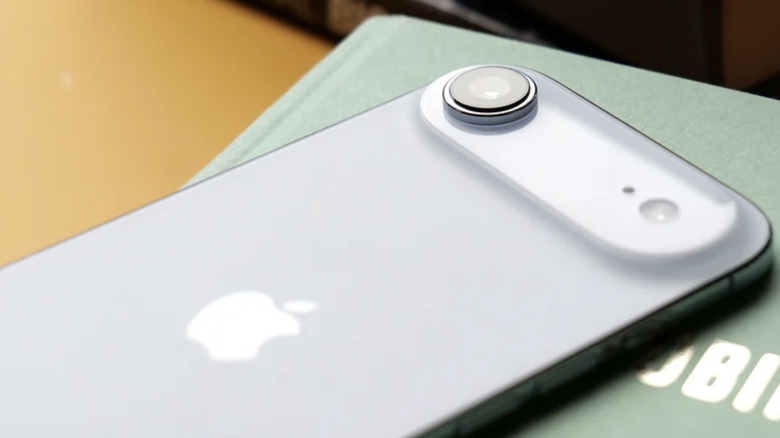
Apple could be making a follow-up to the iPhone Air, the ultralight smartphone introduced last fall. According to Mark Gurman at Bloomberg, plans may be in motion for the company to launch a second version of the device for spring 2027. Sources said the potential new product might add a second rear camera, improved battery life and a version of the A20 Pro processor.
Apple rarely offers specifics around sales figures for individual models, but our impression has been that the iPhone Air was not a big mover among buyers. The device has largely been viewed as a precursor for Apple’s eventual foldable smartphone, and many of us who watch the company closely didn’t expect it to have much staying power.
This rumor suggests that Apple may have higher aspirations for this ultralight form factor as a more permanent part of its mobile lineup. We did find the solitary rear camera to be a downside in our review of the iPhone Air, so alleviating some of the tradeoffs needed for such a slim chassis might increase the appeal.
The idea of a spring release for an iPhone Air 2 confirms how Apple has been rethinking its product calendar. Previously, all of its smartphone announcements came in the fall. Within the past 12 months, however, the company focused on its pricier models in September and pushed the announcement of its budget iPhone 17e to the spring. Since several of Apple’s efforts to have smaller smartphones have been abandoned (iPhone mini and iPhone SE, we hardly knew ye), maybe the new strategy is to try providing petiteness from a different perspective.
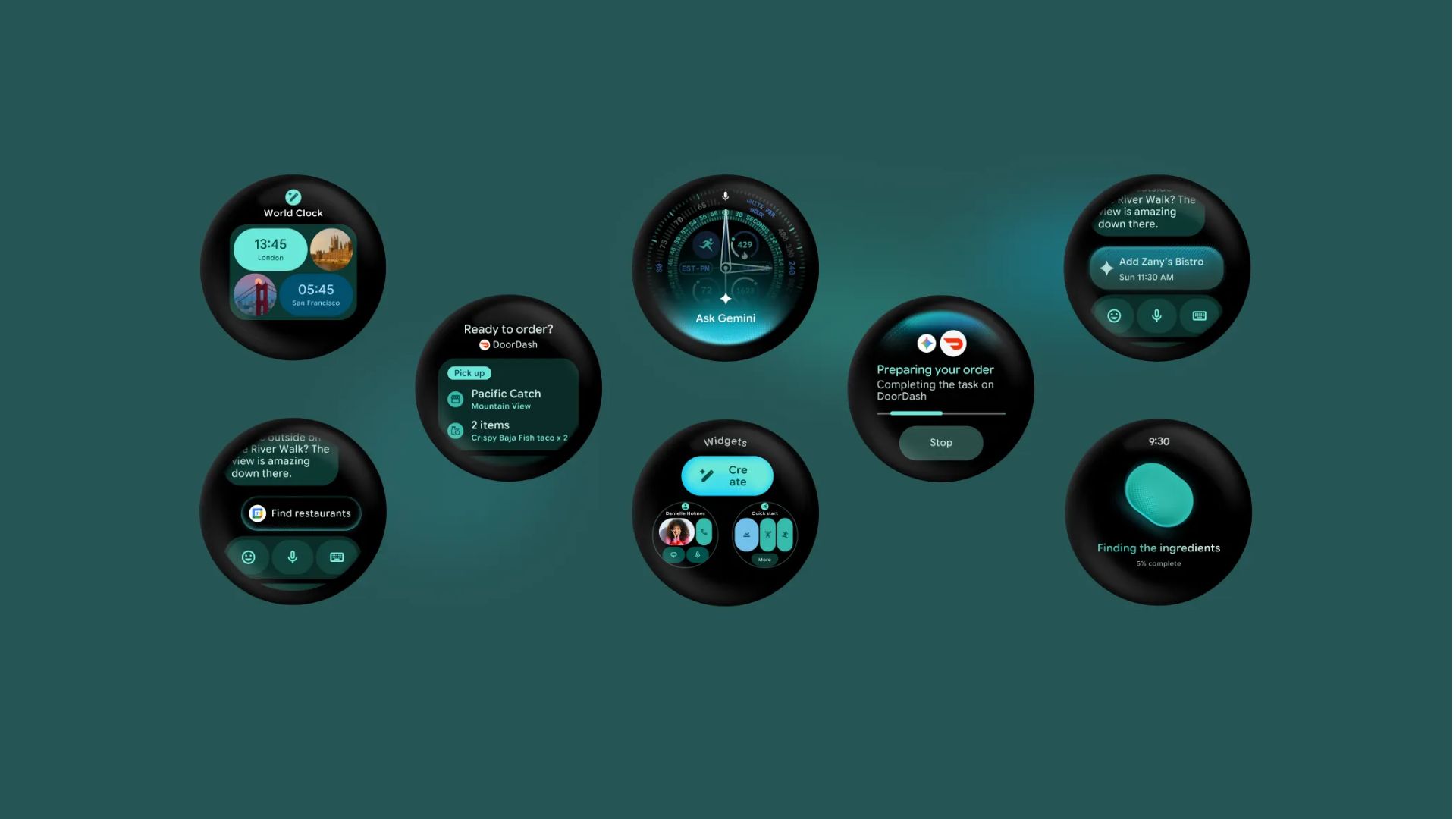
Google has started rolling out Wear OS 7 to Pixel Watch users. This brings what is arguably the biggest software update of the year to the company’s smartwatch lineup.
The update introduces new Gemini-powered features, redesigned widgets, and battery life improvements. However, it won’t be coming to the original Pixel Watch.
According to Google, the rollout is now underway for the Pixel Watch 2, Pixel Watch 3, and Pixel Watch 4. Availability is expected to expand gradually over the coming days. Alongside a refreshed interface, Wear OS 7 is designed to improve efficiency. Google claims battery life could increase by up to 10%. This depends on how the watch is used.
One of the most noticeable changes is the shift from full-screen tiles to a new widget system. This system looks much closer to Android’s smartphone widgets. The update also adds live notifications. This allows users to see real-time updates directly on their watch. It works in a similar way to Android’s Live Updates feature.
Google has also focused on improving how the Pixel Watch works with other devices. After updating, users will be able to interact more seamlessly with compatible accessories. For example, photos captured with supported AR glasses can be viewed directly on the watch. Meanwhile, a redesigned audio panel makes it easier to switch playback between speakers and headphones.
The biggest additions, however, come from Gemini Intelligence. A new feature called Create My Widget lets users generate personalised dashboards using voice commands. In addition, Gemini-powered automations can trigger actions across multiple apps from a single request.
Google is also giving its voice assistant deeper access to personal data, including Gmail and previous conversations. This allows it to provide more contextual responses and complete tasks more intelligently.
While many smartwatch updates focus on a handful of new features, Wear OS 7 appears to be a broader overhaul. There are battery gains, Gemini integrations and a redesigned interface. As a result, it could end up being one of the most significant Pixel Watch updates Google has delivered so far.




No Jackpot Winner as $257 Million Prize Rolls Over to $269 Million Monday Draw


Weekend Open Thread: Tuckernuck – Corporette.com


Oppenheimer backs SpaceX as $70 billion retail frenzy builds


Markets Rally as SpaceX IPO Looms Amid Iran Tensions and Inflation Surge

Zimbabwe Requires Crypto Businesses to Register Annually Under New FIU Regulations


NanoClaw integrates JFrog registries to secure AI agent downloads


Bitget enters Argentina’s regulated crypto market through PSAV registration


This Week In Security: Microsoft On Microsoft, Register Your Domains, Linux On ARM, And FreeBSD Joins The File Cache Club


El Nino has formed in the Pacific and could set records, forecasters say

Dutton Ranch star claims they ‘didn’t see any disruption’ on set following Chad Feehan’s exit from Yellowstone spinoff fueled by Taylor Sheridan clash rumors


Politics Home | Healey Resignation Is “Colossal Failure Of Government”, Says Former Labour Defence Secretary

Donnie Wahlberg & More Heat Up Las Vegas at Circa’s Barry’s Downtown Prime

Opendoor Ends India Operations, Fueling a Bigger Conversation About AI and Outsourcing


Belfast burns, while Met chief points finger at Iran and Russia


First Time Since 1971: Australia Register Historic Low In ODI Cricket


FBI searches office of Ohio voter registration group


AT&T: Verizon's 27% Outperformance Sets Up A Solid Entry Point

Anthropic is spending $150M to embed 1,000 AI fellows inside nonprofits. No degree required.


Modi thanks Trump for wishes as US attacks Indian seafarers

‘The Pitt’s Fan-Favorite Doctor Confirms Noah Wyle Gave His Blessing to Return [Exclusive]


You must be logged in to post a comment Login