

In a sense, Anthropic CEO Dario Amodei is getting what he wanted.
Tech
Why Trump really banned Anthropic’s Fable AI model


Amodei has long argued that AI is becoming dangerously powerful — and thus, that regulatory restrictions on the technology are urgently needed. In an essay published last week, Amodei wrote that the release of cutting-edge AI models “should be blocked or reversed as a threat to public safety” if they fail to meet strict security standards.
Alas, asking the current US government to assume sweeping new regulatory authorities is a bit like wishing on a monkey’s paw (or, for the zoomers in the audience, a “One Wish Willow”): Days after Amodei’s manifesto went live, Anthropic’s latest AI model went dark, on orders from Uncle Sam.
That model — known as “Mythos” in its unrestricted form and “Fable” in its heavily bounded, publicly accessible one — represents a major technical achievement. On conventional benchmarks of AI performance, it greatly outscored all of its predecessors. And during its brief public tenure, countless users marveled at its abilities. In my own tests of its journalistic skills, Fable proved 30 percent more effective than past models at inducing feelings of obsolescence and existential dread.
Anthropic initially shared Mythos exclusively with vetted public and private organizations, so that they could steel their cyber-defenses against its capabilities. Before releasing its new model to the general public, Anthropic lined it with strict safety guardrails: Fable will refuse to answer virtually any query about cybersecurity or biology (to prevent its use for hacking and bioterrorism).
The White House deemed this insufficient. On Friday, after learning that Fable contained a potential security vulnerability, the administration imposed export controls on the model — making it unlawful for Anthropic to provide Fable to any foreign national, including its own immigrant employees. In practice, this meant that Anthropic needed to take Fable offline completely (AI models still can’t scan their users’ brains and confirm their nationalities).
In other words: Our government has claimed the power to block or take down AI models that threaten public safety.
But Amodei isn’t celebrating. And other proponents of AI safety probably shouldn’t either.
True, the White House’s initial, laissez-faire approach to AI governance now lies in ruins. Emerging from the rubble, however, is the worst kind of regulatory regime: one governed by the executive branch’s whims (rather than clear and binding rules), the apparent technical misunderstandings of lay officials (rather than the knowledge of domain experts), and a corrupt president’s political biases (rather than the impartial dictates of law or cost-benefit analysis).
America needs a regulatory system that mitigates AI’s risks, while facilitating its benefits — not one that enables the president to kneecap his least-favorite companies on dubious grounds. And the White House appears to be building the latter.
The case for banning Fable
At first glance, the administration’s actions might look reasonable. After all, Anthropic itself was unnerved by Mythos’s gifts for cybercrime. And even with guardrails, Fable is exceptionally powerful. On its face, it’s not implausible that the model could pose unique security challenges.
What’s more, one of Anthropic’s own investors warned the White House that Fable was vulnerable to a potential “jailbreak” — meaning, a method for circumventing the model’s safety controls.
Last Thursday, Amazon — which has a $13 billion stake in Anthropic — shared research documenting such a jailbreak with administration officials. The White House responded by reaching out to Anthropic and asking it to fix the issue. The AI firm insisted that its model was safe and that the administration was misunderstanding Amazon’s research.
The administration therefore concluded that Anthropic was unable or unwilling to fix the problem. It then decided that imposing export controls on the model was the only way to ensure that it did not degrade America’s cybersecurity.
Fable’s security liabilities might be roughly the same as ChatGPT’s
Yet this version of events is incomplete. And upon closer scrutiny, the administration’s behavior looks less defensible.
Specifically, there appear to be (at least) three problems with its crackdown on Fable.
First, it is plausibly rooted in a technical misunderstanding. No existing AI model is 100 percent jailbreak-proof. And the specific capabilities that Amazon identified are not unique to Fable, according to some experts. Katie Moussouris, head of the cyber security group Luta Security, reviewed a copy of Amazon’s findings and told the Financial Times that they raised no novel risks: According to Moussouris, Amazon showed that, when prompted in a certain way, Fable would identify software vulnerabilities, ostensibly to help the user shore up their defenses. But many frontier models, including OpenAI’s GPT 5.5, will provide the same service.
For its part, Anthropic says it subjected Fable to thousands of hours of testing — by independent organizations and the US government — to ensure that it contains no universal jailbreak, which is to say, “a method that can very broadly bypass the model’s safeguards, unblocking a wide range of cyber capabilities.” But it insists that the kind of narrow jailbreaks identified by Amazon are impossible to fully preempt.
If this is right, then the administration’s targeting of Fable would be selective and capricious.
The Fable crackdown may be politically motivated
Second, there is good reason to believe that the administration’s heavy-handed actions were informed by Anthropic’s refusal to curry its favor.
Earlier this year, Anthropic and President Donald Trump’s Defense Department got into a conflict after the AI firm refused to approve the use of its models for mass surveillance and fully autonomous weapons systems. The Pentagon responded by declaring Anthropic a “supply chain risk” — a designation that would restrict the capacity of government contractors to do business with it.
This measure was legally dubious and transparently disingenuous; essentially, the administration was asserting that Anthropic’s AI was structurally unsafe for government work, even as it continued using that very AI for government work. The policy’s plain intention was to punish a company that had insisted on contractual terms that the administration did not like.
This precedent alone offers grounds for doubting the White House’s impartiality in imposing export controls on Fable. And the fact that the administration is cozy with two of Anthropic’s top competitors — OpenAI and Elon Musk’s xAI — adds further cause for skepticism.
But the best evidence for the administration’s bad faith comes from its own explanations of its actions. In an interview with Axios, a “source familiar with the administration’s thinking” said that Anthropic’s difficulties partly reflected its inability to “communicate effectively” with the White House or “appreciate the ideological differences.”
Suffice to say, if this dispute is solely about a security vulnerability, it is unclear how the “ideological differences” between the Trump administration and Anthropic’s liberal leadership would matter. Nevertheless, Axios goes on to report that Anthropic compounded its own difficulties by soliciting a review of Amazon’s research from Luta Security’s Moussouris, whom the administration views as a “radical Democrat.”
Again, if the export controls are motivated exclusively by cybersecurity concerns, then Moussouris’s ideological leanings would seem irrelevant.
In context, it is hard not to read the administration’s complaints about Anthropic’s failure to “communicate” as demands for the company to genuflect before Trump.
All this said, Amazon’s research is not currently available for public scrutiny. We do not know exactly what Fable’s vulnerabilities are, nor precisely what administration officials were thinking when they effectively banned the model.
What’s certain, however, is that the process behind the Fable ban was grievously flawed. The administration has not formulated any objective and binding standards for AI model safety — much less, gotten Congress to ratify such requirements.
Nor did it conduct any thorough or transparent cost-benefit analysis before unilaterally removing Fable from the market, as regulatory agencies typically must before enacting sweeping policy change. And the potential costs of the Fable crackdown aren’t negligible: For example, if foreign businesses know that the US president can (and will) revoke their access to American AI models on a whim, then they will have an incentive to replace Claude and ChatGPT with non-American alternatives.
Perhaps Amazon identified a liability serious enough to override such concerns. But the administration has made little effort to establish as much.
We need a better alternative to the robot apocalypse
AI models are growing rapidly more powerful — and thus, more dangerous. It is possible that AI progress will have positive or neutral implications for cybersecurity: Advanced models could end up doing as much or more to shore up defenses as to undermine them.
But that is not guaranteed.
To mitigate the risks that frontier AI systems present, the government may be justified in establishing licensing processes that condition a new model’s release on its compliance with safety standards.
There is a difference, however, between Congress establishing an impartial, rule-bound regulatory process and the executive branch banning AI systems at will. If tech CEOs shouldn’t have full discretion over which models get released, presidents must not have unchecked authority over which get blocked. The alternative to reckless, AI accelerationism should not be capricious cronyism — but, for now, it appears to be.

Continue Reading

In a nutshell: Noctua has introduced its first ever all-in-one, closed-loop liquid CPU cooling solution. The NL-LC1 is based on Asetek’s Emma V2 platform and features a custom-engineered pump noise absorber to keep sound to a minimum without sacrificing performance.
Noctua has built a three-layer acoustic soundproofing structure into its pump, which it claims reduces both air-borne noise and structure-borne vibrations. There’s also a switch to toggle between three different pump speed profiles. The unit ships with the pump in quiet mode; balance mode is said to provide additional performance headroom, and manual mode gives enthusiasts complete control over the pump’s full RPM range for maximum cooling performance.
An optional auxiliary cooling fan can be attached to the pump should you need extra airflow around near-socket components like VRMs, memory modules, or M.2 SSDs. Otherwise, a magnetic faceplate attaches to the pump.

The AIO kit is offered in three radiator sizes: 240mm, 360mm, and 420mm. The 240mm unit (model NL-LC1-24) includes a pair of NF-A12x25 G2 cooling while the 360mm variant (model NL-LC1-36) comes with three. The bigger 420mm version (model NL-LC1-42) trades in the 120mm fans for a trio of NF-A14x25 G2 fans.
The kit utilizes Noctua’s SecuFirm2+ mounting system for easy installation and broad socket support. Aesthetics stay true to Noctua’s signature love-it-or-hate-it brown color scheme.
Noctua CEO Roland Mossig said the performance headroom of liquid cooling has always been tempting, but they had to first ensure that acoustics and reliability met the strict standards that customers have come to expect from them. With this kit, they’ve achieved those goals, Mossig said.
Noctua’s AIO cooler is available from today over on Amazon and as you might have guessed, it doesn’t come cheap. Pricing starts at $219.90 for the 240mm kit, scaling up to $249.90 for the 360mm variant and $279.90 for the 420mm model. The optional NL-ACF1 auxiliary fan for the pump will set you back an additional $19.90. All kits come backed by a six-year warranty and include Noctua’s NT-H2 thermal paste.
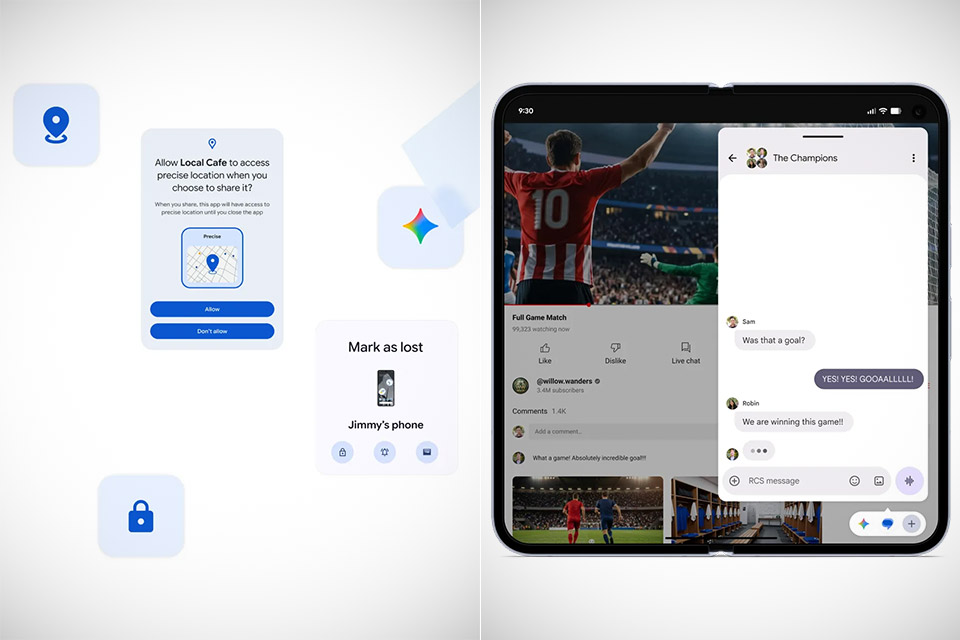
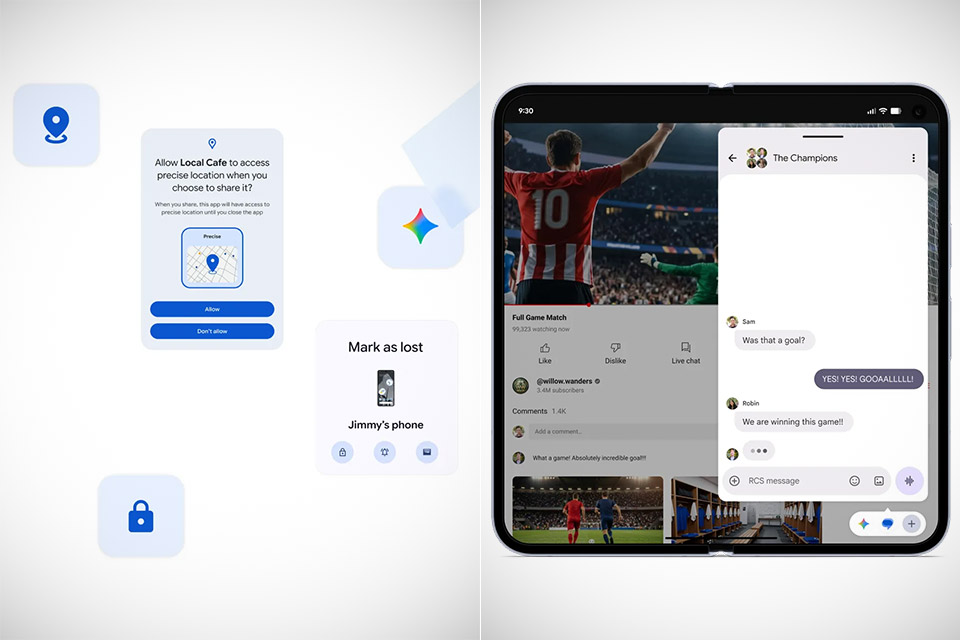
Google Pixel phones and watches start receiving Android 17 today through the regular system update process. The release focuses on several practical additions that address everyday friction rather than delivering a complete visual overhaul. Owners of Pixel 6 series devices and newer can install it now through the settings menu, while phones from other manufacturers will follow over the coming months.
Long-pressing any app icon on the home screen now displays an option in the upper corner to turn the app into a floating bubble. Once everything is open, the bubble may be dragged about or enlarged while remaining on top of everything else. You can close it by simply sliding it to the bottom edge. Larger screens, such as the Pixel Fold or tablets, get a tiny bubble bar down the bottom that allows you to keep an eye on multiple floating windows at the same time. This makes it quite useful to keep your notes or a web browser open right next to whatever you’re viewing, allowing you to check a live score or a message thread without leaving the primary screen.
Sale

Google Pixel 10 Pro Fold – Unlocked Android Smartphone – Gemini AI Assistant – Advanced Triple Rear…
- Unfold extraordinary with Google Pixel 10 Pro Fold; with Pixel’s largest screen and Gemini, Google’s most advanced AI, it’s made for…
- Unlocked Android phone gives you the flexibility to change carriers and choose your own data plan[2]; it works with Google Fi, Verizon, T-Mobile…
- The gearless, high-strength hinge makes it durable enough to handle about 10 years of folding[3]; plus, Pixel 10 Pro Fold is built with Corning…
Screen recording now uses a revised flow that begins in the quick settings panel and allows you to control the recording with a little floating pill. Once you’ve started recording, you may flick a switch to record your own short video at the same time, and when it’s finished, you’ll be taken to a preview screen where you can clip, delete, review, or share it without using any additional editing software. Background apps cannot consume excessive memory under the new rules, and any app that becomes overly greedy will be automatically terminated by the system. This improves the performance of your phone while also reducing battery consumption.
If you register your smartphone as missing on Find My Device, you must now use your biometric data to authenticate it, in addition to providing your password. This makes it far more difficult for anyone who has your passcode to disable tracking or gain access. App requests for location permission now provide explicit alternatives for granting permission to use your location exactly or approximately, as well as a one-time precise option for apps that want it for a fast job. Also, when you share your contacts, the app just receives the ones you select, not your whole address book.
Pixel phones also gain expanded Quick Share support on more models in the current lineup. Voice translation during phone calls is now available on even more devices. Photo editing in Google Photos allows you to discuss which modifications to make, and this feature is now available in a number of new countries. Generative capabilities in the Gemini app, such as converting text into a short film or creating music from a prompt, are now available on Pixels running Android 17. A few more AIy features, which were previously mentioned, will be available to qualified devices later this summer.
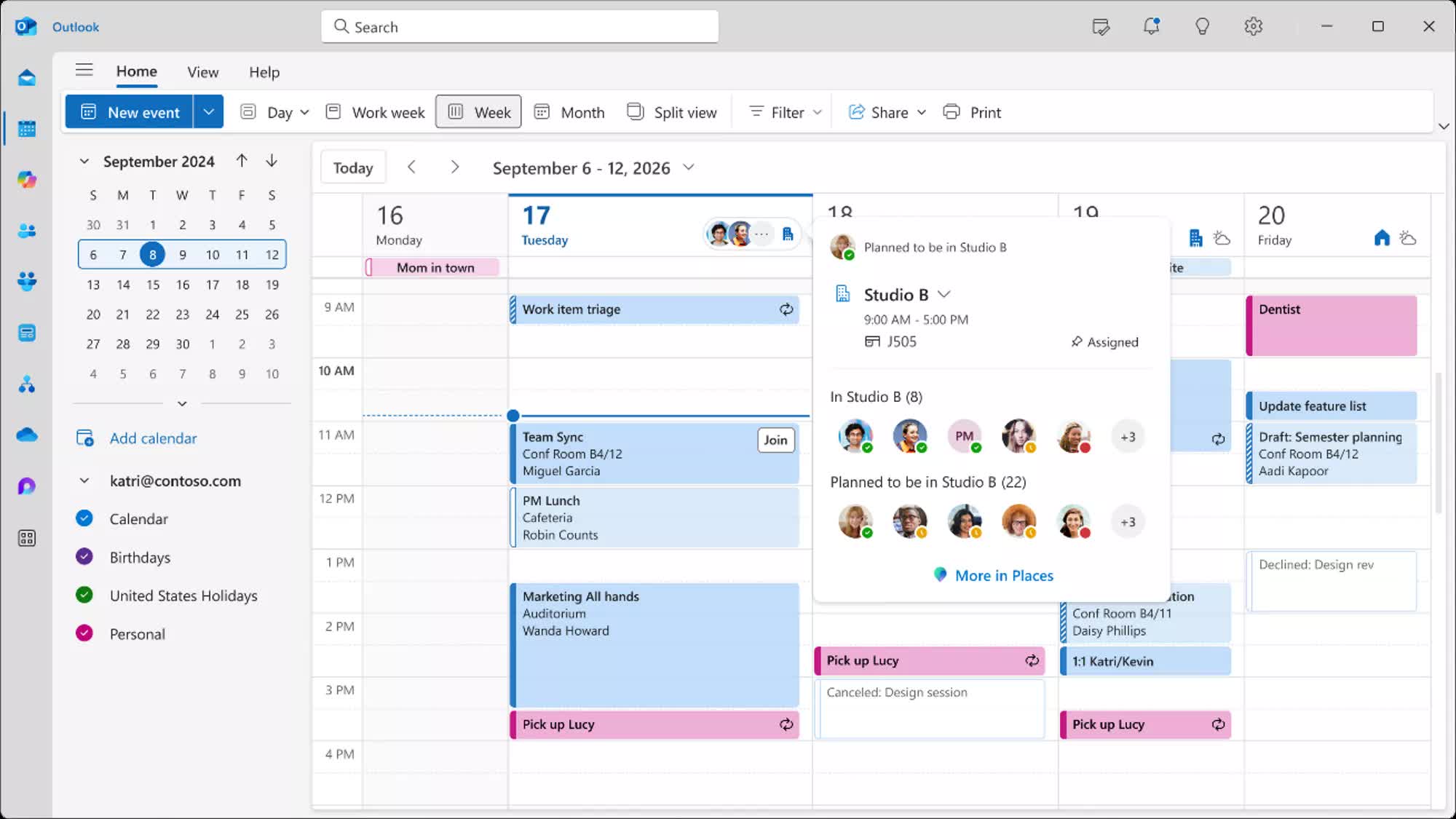
TL;DR: Microsoft is working on a new “location check-in” feature for its AI-powered collaboration platform. Organizations will be able to gain clearer visibility into what their employees are doing, while tenants can better organize team collaboration. The privacy concerns? Largely overblown.
Microsoft first introduced its location detection feature in December 2025. Now, the company has detailed how the capability will actually work and how users can control it. Employees concerned about a new “surveillance” layer in the corporate world can take a step back: in most cases, organizations already know a great deal about what their workers are doing during office hours and beyond.
The location detection feature is officially known as workplace check-in via Wi-Fi. Microsoft says the option will become part of the Teams collaboration platform, further enhancing AI-powered capabilities in Microsoft Places. Workplace check-in is designed to improve employee coordination, Microsoft said, by providing a more accurate way to keep a worker’s location “current” when they are in the office.
Location check-in uses several presence signals from Microsoft 365, including calendar availability and Teams status. The feature can automatically update an employee’s location based on their wireless connection, but only when the device is connected to a properly configured, company-managed network.
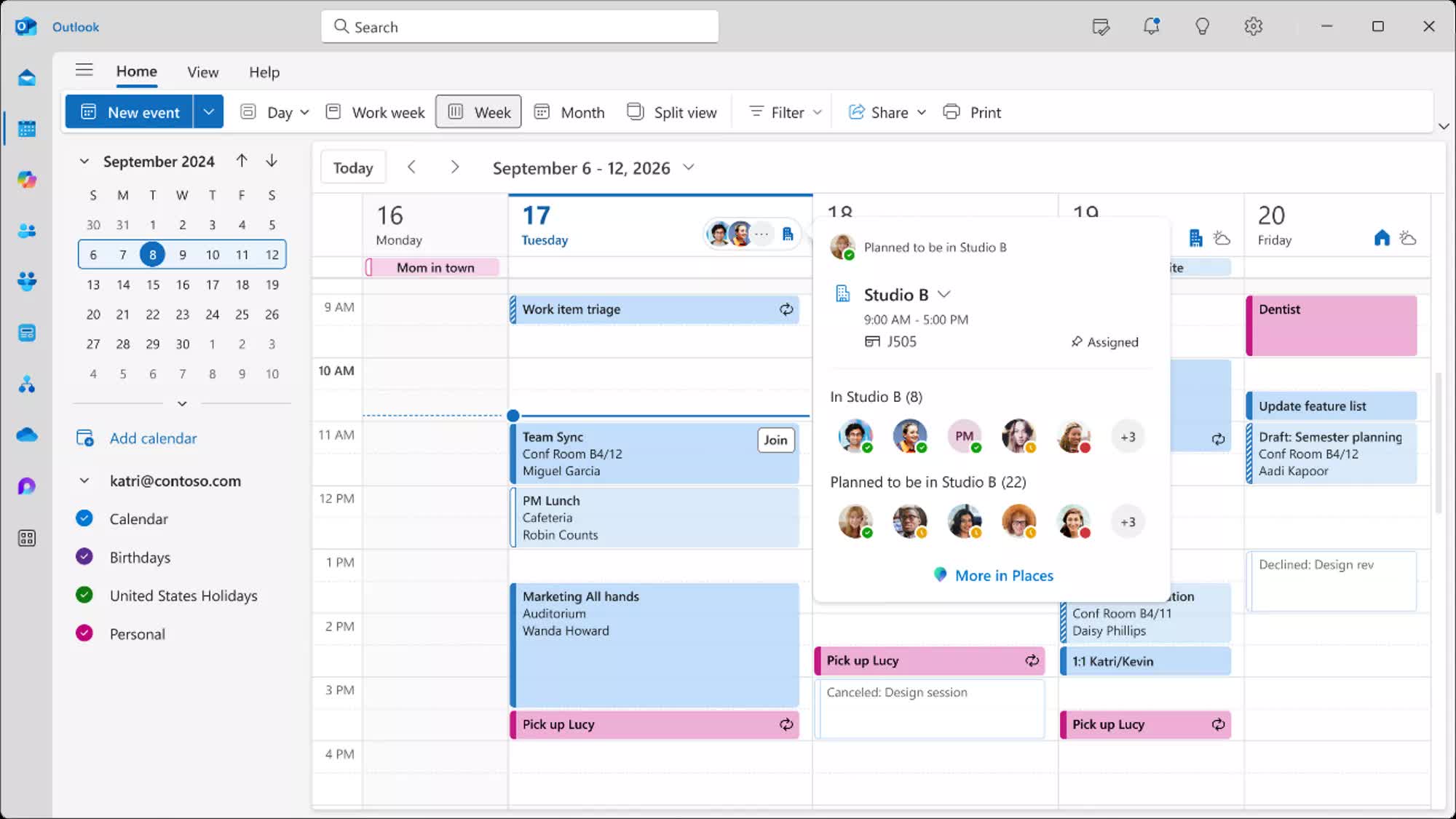
Microsoft highlights how location check-in eliminates the need to manually change status in Teams. The new “experience” essentially expands existing workplace check-in options – from physical peripherals or desk terminals to wireless connectivity. Workers can get a clearer picture of where their colleagues are and what they are doing, helping them organize meetings and streamline collaboration.
The company also notes that the new location feature is built on the principle that employees remain in control. While it must be properly configured by an organization’s IT team, location check-in must also be enabled on the end user’s device. The feature does not retain location information over time, cannot store historical data, and does not function outside the corporate network infrastructure.
“Sharing workplace presence and using workplace check-in are separate decisions, so employees can choose whether their workplace presence is visible to others when working from the office,” Microsoft explained.
When it was first introduced, location check-in raised concerns among some users about its potential privacy implications. Now, many more users are arguing that privacy is largely a non-issue here. Enterprise organizations already have access to a wide range of tools and methods to monitor employee activity during office hours. The location check-in feature simply integrates this type of existing functionality into Teams and Places and is expected to arrive later this year.
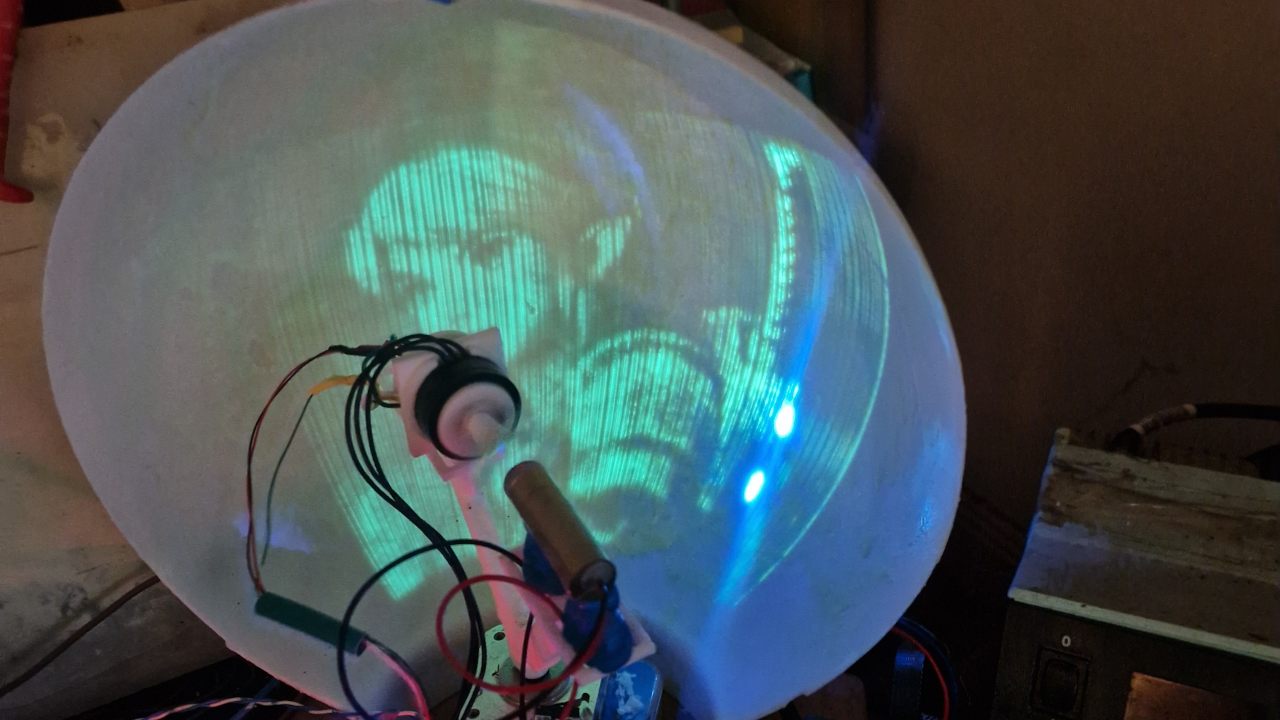
Slow-scan CRTs were never exactly common compared to their faster cousins, but given the popularity of Slow Scan TV (SSTV) amongst hams and NASA broadcasts, many of you are probably familiar with them. The slow scan rate of SSTV meant it required much less bandwidth, but in the early days you needed a CRT with a long-persistence phosphor to hold onto the image. [AJRussell]’s Glow Engine works much the same, with one key difference — instead of cathode rays, he’s using a frikkin laser beam.
In this case, the phosphor is Strontium Aluminate, the same stuff that gives most glow-in-the-dark toys and filament its kick. Energized by a 405 nm laser of questionable wattage, the phosphor will glow for several seconds, allowing the creation of an image. So while this is a laser projector, it works more like a CRT than most galvo projectors, which rely on Persistence of Vision to create an image. Here it’s persistence of fluorescence.
Because the phosphor is so slow, you don’t need the rapid scan rate you would with a laser projector, so [AJRussel] can skip the mirror drum and just mount the mirror on a gimbal motor. Field Oriented Control makes the precise sweeping of the gimbal possible, via a hall-effect sensor and the SimpleFOC library that we featured last year. The other axis just moves the laser and gimbal assembly on a big stepper. The whole thing is driven via an ESP32. The biggest downside is that the short focus range of the repurposed engraving laser means it’s smack dab in front of the screen.
This is a work in progress and still changing, so it’s not clear which — if any — of the various SSTV modes the Glow Engine can handle. Given the number of scanlines in the photos it looks like a good use case, and without trying it the timing might work, too: [AJ] reports scanning left-to-right to generate a frame takes about eight seconds, depending on the resolution, and depending on the PWM power setting on the laser the image can last up to a minute.
Given the one-minute decay time with this particular phosphor, perhaps he can make a clock. If you have a longer-lasting glow powder, we’ve seen uses for such a persistent display as well.
Tech
Qualcomm wants to be the chip inside whatever replaces your smartphone, and it just announced two products toward that end

Qualcomm CEO Cristiano Amon said Tuesday that the company is working on over 40 different AI wearable devices — including jewelry, earbuds with cameras, pins, and watches — a sign of how aggressively the chipmaker is betting that the next major computing platform won’t be a phone.
To power that vision, Qualcomm is announcing two new offerings: a platform called Snapdragon Reality Elite for mixed-reality glasses, designed to run more powerful on-device AI, and the Scalable Turnkey AI-Ready Toolkit (START), a combination of hardware modules and a software stack for AI devices, starting with smart glasses.
Compared to its previous XR platform, the new Snapdragon Reality Elite delivers improvements of up to 60% in GPU performance, up to 30% in CPU performance, and up to 160% in NPU performance, according to the company. Percentage gains in chip specs can be hard to contextualize, but Qualcomm offers one concrete data point, saying the platform can run a 3-billion-parameter language model at 45 tokens per second — fast enough for quick, responsive AI interactions. Qualcomm says the chip will also enable better head and hand tracking, along with improved see-through capabilities.
The Snapdragon Reality Elite supports 4.4K per-eye resolution at 90 fps, a modest bump from the XR2+ Gen 2’s 4.3K per-eye resolution. (The higher the per-eye resolution and frame rate, the sharper and smoother the visual experience, which matters most for reducing the motion sickness and eye strain that’ve historically made extended headset use uncomfortable.)
Qualcomm says the platform is designed to power two types of devices: stand-alone video-see-through (VST) headsets, which layer digital content over a camera feed of the real world, and lightweight, tethered optical-see-through (OST) glasses, which blend digital imagery directly into your field of view. Among the first devices to use it: XREAL Project Aura, shown at Google I/O earlier this year, and an upcoming device from Play for Dream.
START, meanwhile, consists of an AR chip, a software platform, companion apps, and a white-label program aimed at helping hardware makers get to market faster. Through the white label program, the company is offering three reference designs: an audio + camera setup similar to Meta’s Ray-Ban smart glasses, a monocular display, and a binocular display.
Eyewear manufacturers Inspecs and O’Neill — owned by TitanFlex — will be among the first partners in the white label program. Qualcomm said START will expand beyond smart glasses to support other form factors in the future.
Amon’s comments, made to CNBC, flesh out the strategic logic behind both announcements. He argued that as companies seek to gather more real-world data from users to power their AI agents, a new wave of hardware startups building novel form factors will emerge, with major implications for established smartphone players like Apple and Samsung.
“I think there’s going to be a lot of experimentation with different form factors,” Amon said. “Right now, we have over 40 designs of those devices, and I’m telling you, the types of form factors are very, very broad.” He added, “The principle is something that you wear, something [that] is with you all the time, something that can see the world around you, so you have context and have the ability for you to access an agent and talk to the agent.”
To that end, Qualcomm is explicitly positioning itself as the foundational silicon layer for whatever comes after the smartphone. START’s white-label program, in particular, is designed to lower the barrier for new entrants.
When you purchase through links in our articles, we may earn a small commission. This doesn’t affect our editorial independence.
Verdict
The T8 isn’t going to be something that absolutely everyone needs but what it does is turn any digital input into a peerless streamer with just enough EQ adjustment to help things on their way. For many people, that will be enough
-
Excellent and utterly stable performance
-
Excellent, user friendly control app
-
Beautifully made and finished
-
No digital inputs
-
No Google Cast
-
Not cheap
Key Features
-
Outputs
Optical, coaxial, AES, USB and i2S
-
Storage
Up to 16TB via internal bay
-
Audio formats
Up to 32-bit/768kHz and DSD512
Introduction
Some products have descriptions that need little in the way of further explanation. If you see an integrated amp here, it won’t take too much deductive reasoning to find out what it does. Some other products are a little more challenging in this regard though.
The Eversolo T8 is a network streaming transport. Effectively, it is the front half of a network streamer but, where you would expect to find analogue outputs for connection to an amplifier, the T8 is exclusively equipped with digital outputs.
This might seem a bit odd at first glance. Why would you only want the front end of a network streamer when you can spend (a lot) less and get one that has decoding built in? The answer is twofold and comes down to practicality and performance.
In practical terms, a great many devices we look at here have digital inputs and decoding built in. Buying a streamer means doubling up on digital boards whereas something like the T8 simply makes use of the decoding you have. Alternatively, you might already own a DAC that has superb performance and the T8 is going to be the means of unlocking that. Then, there’s a more intangible benefit.
Eversolo says that the engineering that has gone into the T8 offers higher performance than would be achieved by simply using a streamer or a PC you happen to have lying around. Certainly, some of the engineering on offer suggests the Eversolo should be able to do some impressive things so we should crack on and see if it does or not
Price
In the UK, the Eversolo T8 costs £1,290. It is available from a usefully broad dealer network and can be purchased online if you don’t feel you are in a position to visit a physical store. In the USA, the T8 is available for $1,380 while in Australia, it costs $2,399 AUD.
It’s worth noting that the more conventional Eversolo streamers are not exactly shabby at being used as transports either. They have a selection of digital outputs that allow them to perform the same role so, if you already own one of those and unless you need the specific outputs that the T8 offers, you might at least want to start there.
Design
- Slightly less than full width design
- Superb control interface
- Looks and feels worth the asking price
Eversolo has elected to use casework that is 365mm wide for the T8 which means it’s about 10 centimetres shorter than the accepted full width size. Oddly, it’s also not a perfect match for the Z10 DAC already reviewed here so if you’re the sort of person who wants a neat stack of things the same size as each other, this might not be the product for you. The T8’s styling is usefully neutral though so it won’t look at odds with most other components.
Something that is carried over wholesale from other Eversolo devices is the control interface and this is emphatically A Good Thing. The main app is an absolute pleasure to use. The screen mirror function that Eversolo includes as part of it is still one of the cleverest and most underrated ideas doing the rounds in streamers (it makes adjusting the many setup menus a huge amount easier).

It looks and feels like software designed by people who have been using it day in, day out for years and who know exactly what matters. Eversolo also understands that you don’t want to have to whip your phone out every single time you want to do something which is why there are both front panel controls and a smart remote handset.
One key feature of how you perceive it is that the app assembles and caches a library on the device itself which means that moving around a large volume of stored content feels effortlessly slick (and means that browsing a library on a local drive feels exactly the same as using a NAS). If you have a large collection of your own music as opposed to mainly using streaming services, the Eversolo is pretty much as good as it gets.

Of course, if you do use streaming services, the Eversolo holds up pretty well there too. Streaming service provision is excellent and features like the Listen at Will feature that can shuffle from your library and subscribed streaming service as a single stream are really well implemented.
Connect functionality is present on the services that support it and it’s fully up to speed with Spotify Lossless as well. You also get AirPlay but no Google Cast or Bluetooth. This is also one of a tiny number of devices that can access Apple Music natively which puts it in pretty select company.
This is complemented by a standard of build and finish that justifies the term ‘immaculate.’ This isn’t a cheap bit of kit but the build and finish is pretty much flawless.
We place different values on this aspect of product design but having access to a large and easy to read display and a chassis that feels as confidence inspiring as this one does has some worth for me at least. If you are looking at a T8 as a front end for an expensive integrated amp with a DAC board or similar, it’s going to hold its own sat on the rack nearby.

Features
- Selection of digital outputs…
- …but no inputs
- Unique networking hardware
- Carefully designed internal circuitry
- Internal storage option
- Customisable EQ
The focus of the T8 is to provide a digital signal to an external DAC and to ensure that you have the most options available to do this, Eversolo has fitted it with a useful spread of connections.
As well as optical, coaxial and USB outputs (all of which are fitted to the one box streamers too), the T8 also has an AES balanced output and an i2S output which uses an HDMI socket. The USB and i2S connections support up to 768kHz PCM and DSD512 while the other three connections are 24/192kHz capable and can send DSD64 as DoP over these outputs if the connected device supports it.

I2S is an interesting connection and something that is becoming more common in the market. A high proportion of the top spec models from a number of Far East manufacturers include it (notably the Topping D900 reviewed here recently) because it offers a very high bandwidth clocked signal.
The catch is that ‘i2S’ covers off a wide selection of possible wiring patterns. It’s not a given your i2S equipped source will play nice with your i2S DAC. The T8 can be adjusted through no less than 8 different wiring profiles, with the different pin wirings being noted in the on screen menus. Under test, I have had the T8 work happily with i2S devices from completely different manufacturers which suggests that Eversolo’s diligence has paid off.
What you don’t get though are any digital inputs. There is a reasonable argument for removing them because some signals (HDMI being one of them) simply won’t be passed to a USB output rather negating their worth and it is reasonably likely that the device the T8 is outputting to will also have additional inputs.

Another feature that is unique to the T8 is an SFP fibre optic network connection which sits alongside the standard gigabit LAN port. Some of the claims being made for this connection (not really by Eversolo I hasten to add) are… probably optimistic… but it might be better to see its inclusion as a potentially handy bit of future proofing.
If there is a move to SFP equipped network hardware in the future, the T8 will converse with it without needing any form of conversion. The good news is that if this all sounds a bit much you can ignore it and there is an excellent Wi-Fi 6 implementation too.
Internally, the T8 differs from its one box streaming relatives. It has been designed from the outset with a view to keeping electrical and mechanical noise to an absolute minimum. A custom 4N oxygen-free copper toroidal transformer is partnered with internal wiring shielded with Teflon insulation.
Eversolo claims noise levels as low as 30μV with suppression of high-frequency interference and ground noise through precision voltage regulation and high-grade filtering components. The T8 proceeds to add an ultra-high precision femtosecond clock to the circuit for good measure; so when you do use a connection like i2S, this should ensure performance is as good as it can be.

Something else you’ll find in the casework is a hard drive bay on the underside. This can handle up to 16 terabytes of storage which should be enough for most needs. This means you have the scope to operate the T8 with little to no additional network hardware and no unsightly drives hanging off the back off of it.
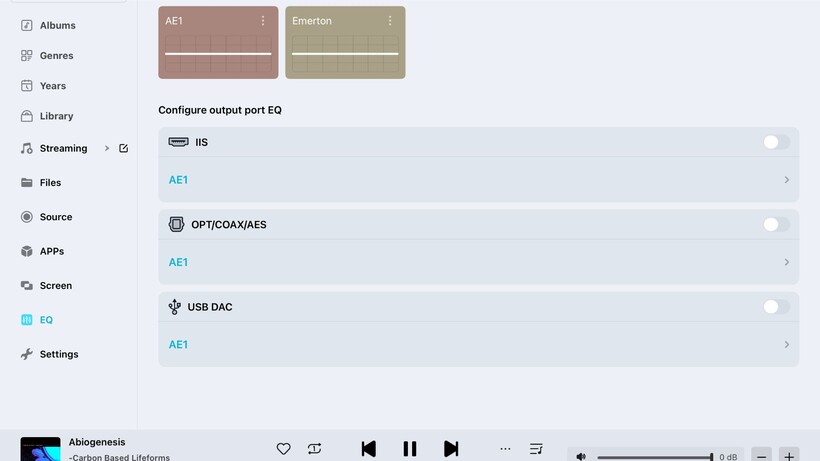
The last feature the T8 offers is an interesting one. Eversolo has updated their EQ system to include a feature they call Evotune. This can use your phone’s microphone to take readings that can be fed back into a 10 band EQ which supports frequency, gain, and Q values to adjust output to compensate for the room.
It also supports FIR filter import, loudness control, and dynamic compression. This is an interesting place to implement EQ because it shouldn’t technically affect the ‘character’ of your decoding and amplification. There are more sophisticated rival systems but this is a useful extra function to have.
Performance
- Will be governed by the performance of the decoding it is connected to
- …but superb performance is possible with upsampling and the i2S connection
- Operationally bulletproof
Compared to the marathon length sections I’ve had up to this point, this one will be briefer because, even allowing for the care and attention that Eversolo has lavished on the T8, the performance of the digital input it is connected to is going to have more of an effect on your overall sound quality.
Modern DAC chips are better at rejecting errors in the incoming signal than was the case previously so the benefits of scrupulously removing them are less than they might once have been.

This isn’t to say that the T8 can’t prove its worth. If you have a DAC with an i2S input, the performance I’ve obtained using this connection on both DACs I’ve tested with it has been superior to any other option available. It’s not a night and day difference but Agnes Obel’s lovely Philharmonics has been slightly better defined and tonally believable played back in this way. The nature of this connection being ‘clocked’ between the two devices does seem to help with the overall performance.
If you choose a different path to using the T8, it has other virtues too. When you switch to Roon as a control point (for which the Eversolo is fully certified), the upsampling facilities become available and this works to the. Using the T8 connected to a Cambridge Audio Edge A via USB with DSD conversion enabled (so that all signals are converted before they reach the Eversolo) is something that benefits the ESS based digital board of the Cambridge Audio considerably and gives a richness and immediacy to Air’s Love 2 that is hugely engaging to listen to.

There is one other aspect of performance too and it’s arguably more important than detailed aspects of sound quality. The T8 is operationally bulletproof. This sample has been here a while now and at no stage during intensive and heavy handed use has the T8 so much as hinted at needing attention.
I’ve hotplugged it, moved between the dedicated app, Connect functions, Spotify and Roon at will and across multiple control points and generally behaved in a wholly unsympathetic way and it hasn’t missed a beat. Google Cast aside, it will receive content pretty much any way you choose to send it and it ensures that it never feels highly strung or demanding to use.
Ultimately, streamers have to give you a user experience that makes you want to keep using them and the T8 delivers on this superbly well.
Should you buy it?
Superb streaming interface
If you have a high quality digital input going spare, the T8 allows you to bolt on a superbly implemented streaming interface that is an absolute joy to use. If you have the option to use i2S, it’s pretty much a no brainer.
The engineering in the T8 is peerless but the amount of sonic difference it can make over less ornate solutions will always be relatively limited. It’s a pleasure to use… but so is Eversolo’s DMP A6 Gen2 at over £400 less.
Final Thoughts
You will need to take streaming pretty seriously to consider the Eversolo but the flexibility and reliability that it brings to its performance is every bit as important as its sonic attributes and this sheer user friendliness is likely to win it many friends.
How We Test
We test every streaming transport we review thoroughly over an extended period of time. We use industry standard tests to compare features properly. We’ll always tell you what we find.
We never, ever, accept money to review a product.
Find out more about how we test in our ethics policy.
- Tested for several days
- Tested with real world use
Full Specs
| Eversolo T8 Review | |
|---|---|
| UK RRP | £1290 |
| USA RRP | $1399 |
| AUD RRP | AU$2399 |
| Manufacturer | – |
| Size (Dimensions) | 230 x 315 x 88 MM |
| Weight | 4.5 KG |
| Release Date | 2026 |
| Resolution | x |
| Connectivity | Wi-Fi 6 |
| Colours | Black |
| Audio Formats | DSD (DSF,DFF,SACD ISO Support DST up to DSD512), MP3, APE, WAV, FLAC, AIF, AIFF, AAC, NRG, CUE |
| Apps | TIDAL, Qobuz, HIGHRESAUDIO, Amazon Music, Roon Ready, Spotify Connect, TIDAL Connect, Qobuz connect |
| Outputs | Optical, Coaxial, two USB, AES balanced, i2S |
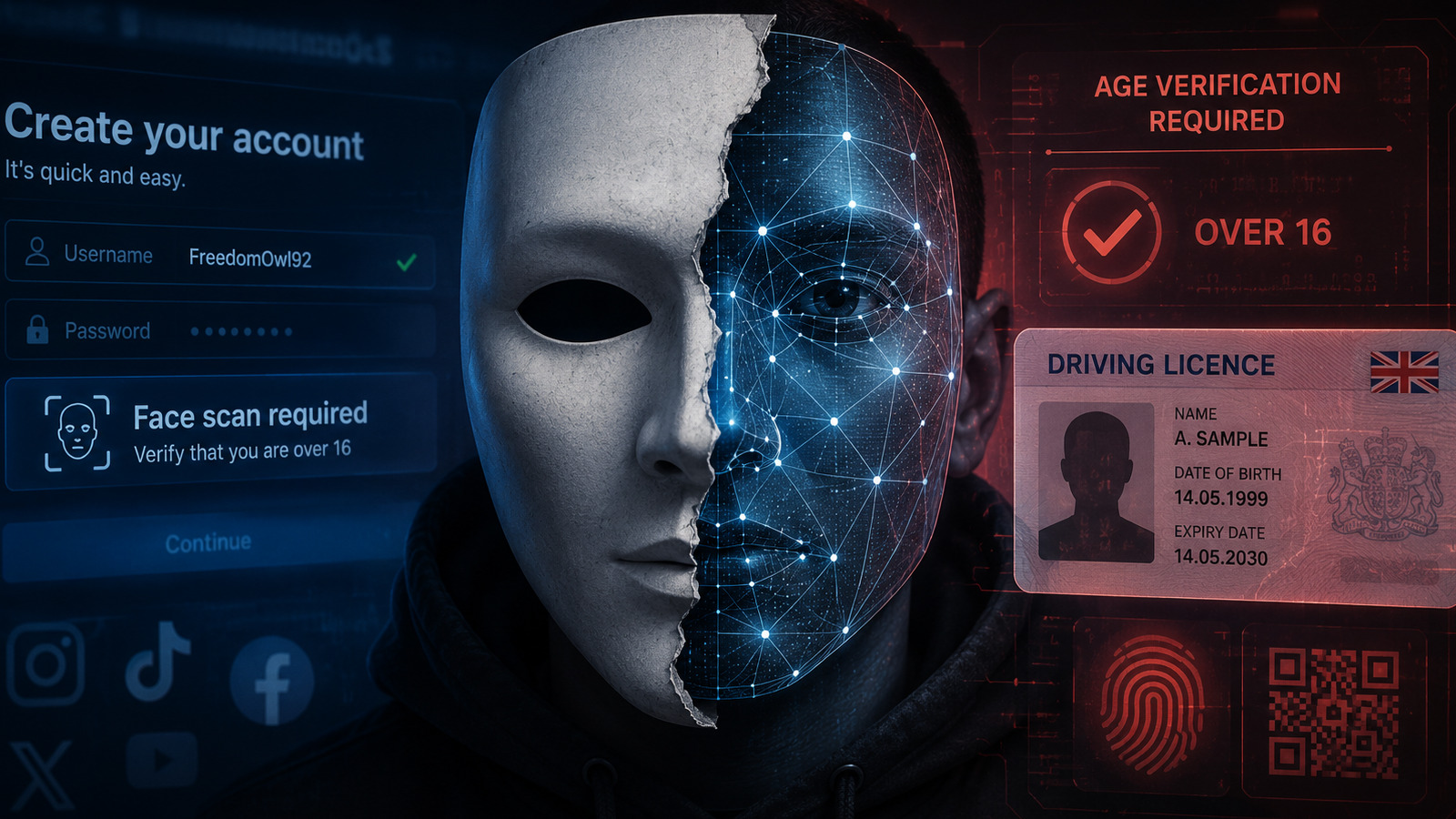
The UK government will ban under-16s from social media, with regulations due before Christmas and the rules taking effect in spring 2027.
To enforce it, platforms must age-check their users. In practice that means anyone opening a new account will likely have to prove they’re over 16 by uploading an ID or passing a facial age scan, the same checks that adult sites serving UK visitors have implemented since July 2025 under the Online Safety Act.
Long-standing accounts are largely exempt, but signing up fresh now triggers verification, effectively ending anonymous account creation in the UK.

Security and privacy experts warn the checks are easy to circumvent, put everyone’s ID and biometric data at risk of breaches, and were rushed in with little political scrutiny.
The announcement
Prime Minister Keir Starmer set out the plan on June 15, following a national consultation that drew more than 116,000 responses from parents, children and experts.
The government says nine in ten parents backed an under-16 ban, and two-thirds of young people agreed that under-16s should be kept off at least some platforms.
“That’s why we’re going further than any country in the world by banning social media for under-16s and putting wider protections in place to give kids their childhood back,” Starmer said.
“This is a line in the sand. Tech giants had their chance and failed.”
Technology Secretary Liz Kendall framed it as a fight with the platforms: “Tech companies have had countless opportunities to keep children safe, yet they have failed to act. That is why we are taking power away from the tech giants and putting it back in parents’ hands.”
What’s covered
The ban is modelled on Australia’s, which took effect in December 2025 and was the first of its kind.
It will cover user-to-user platforms “whose purpose is to enable social interaction” and that run algorithmic feeds. The government names Instagram, YouTube, TikTok, Snapchat, Facebook and X. Messaging services such as WhatsApp and Signal are explicitly excluded, as is YouTube Kids.
There will be a narrowly defined exemption list for educational services, e-commerce and music streaming.
The UK says it will go further than Australia.
High-risk features, such as livestreaming and strangers being able to contact children, will be restricted across a wider range of services, including gaming sites like Roblox (the platform stays, but features such as chat get locked down).
To avoid a “cliff-edge at 16,” those stranger-contact and livestreaming restrictions will be on by default for 16- and 17-year-olds too.
Separately, AI “romantic companion” chatbots that simulate sexual or roleplay relationships will have to enforce an 18+ minimum, with intimate functions restricted for under-18s on AI chatbots more broadly.
The government is also consulting on overnight curfews and breaks in infinite scrolling for under-18s, with detail promised in July.
The catch for adults: it’s the new accounts
The government’s reassurance is that most adults won’t face a fresh check.
According to a fact sheet, an account is treated as low-risk if it has been open for more than 16 years, has a credit card attached, or is linked to an email already age-verified elsewhere. Anyone who’s already verified under the existing Online Safety Act wouldn’t need to do it again.
But that carve-out is essentially a grandfather clause, and it does nothing for new accounts.
If you create a social media account from scratch after the rules land—say you want a fresh, pseudonymous handle, or you’re simply a new user—none of those passive signals apply, and the fallback is exactly what the fact sheet describes: a facial recognition check, or an ID upload.
In practice the regime quietly converts what’s billed as child protection into a rule that no adult can open a new account without proving their age.
It’s a lighter touch than the adult-content regime, for now.
Since July 25, 2025, the Online Safety Act has required adult and other sensitive sites to run “highly effective” age checks (typically an ID upload or a facial-age selfie) for every user, with no grandfathering.
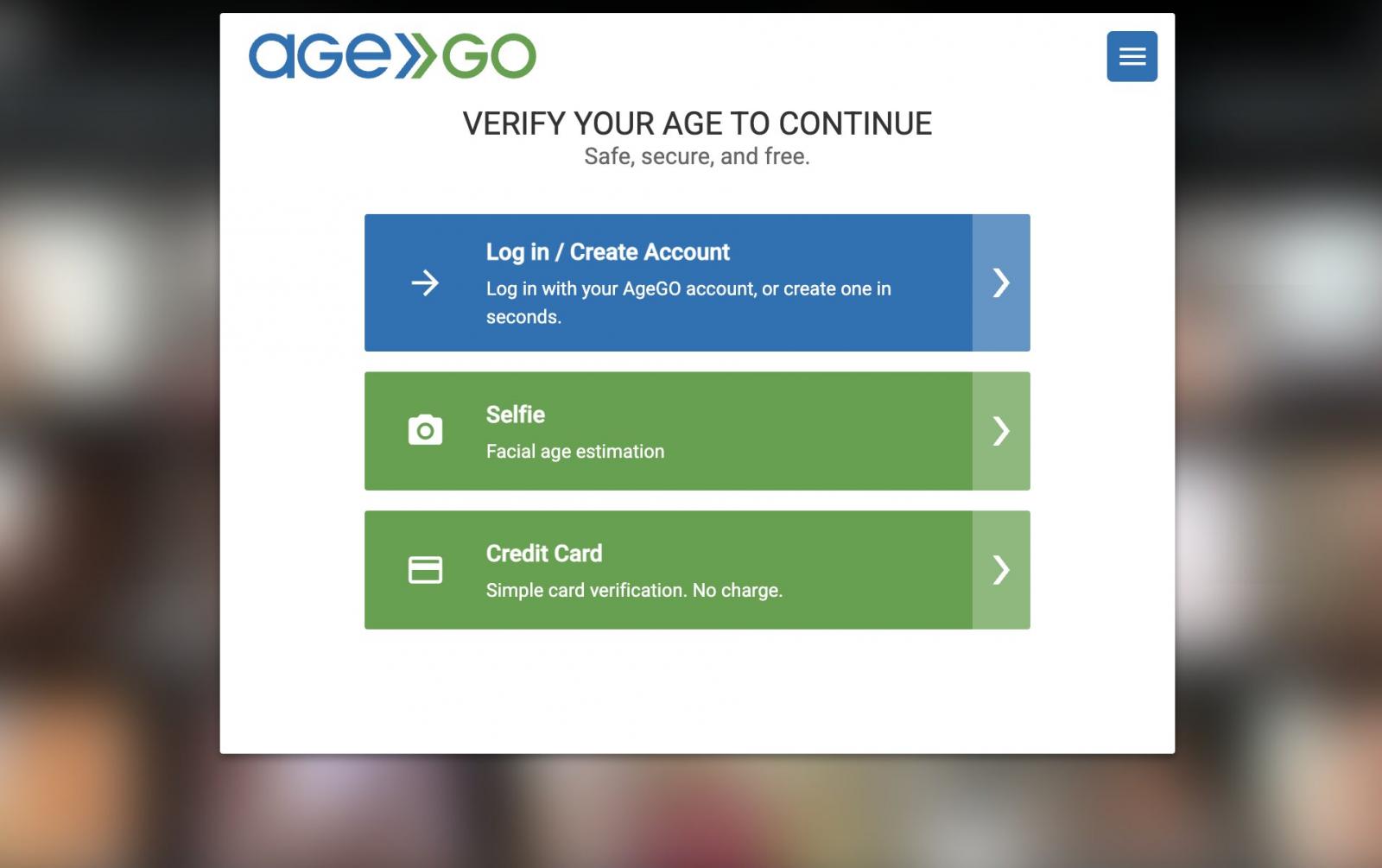
(BleepingComputer)
Enforcement has also been aggressive. By February 2026, Ofcom had opened investigations into more than 90 platforms and issued six fines, and its remit had stretched to Reddit, X, Discord, Bluesky and AI services.
The social media age-gate doesn’t go that far yet, but it normalises the same plumbing.
Ofcom has been asked to run a rapid study on how to verify whether someone is over 16. The aforementioned fact sheet also notes proving you’re over 18 “could be as simple as a facial recognition check.”
The VPN loophole
The well-documented weakness is that a VPN defeats all of it. The Online Safety Act targets sites, not users, so connecting through a server outside the UK sidesteps the check.
Some VPN providers reported signup spikes of up to 1,800% when adult-site enforcement began.
Any social media age-gate inherits the same gap, and Australia’s experience bears it out. Research there found more than 60% of children were still using social media months after that country’s ban.
The UK government has limited room to close the loophole. A blanket VPN ban for the whole population has been ruled out.
In October 2025 a tech minister, Baroness Lloyd, told the Lords there were “no current plans to ban the use of VPNs,” citing their legitimate uses.
A children-specific clampdown is a different story. In February 2026 the government said its wellbeing consultation would examine “options to age restrict or limit children’s VPN use,” and in January 2026 the House of Lords inflicted a government defeat, voting 207 to 159 for an amendment to the then Children’s Wellbeing and Schools Bill that would require ministers to prohibit VPN providers from serving UK children.
To sort children from adults, that measure would in practice force providers to age-check every user. The amendment drew public petitions against it.
The Commons rejected it across several rounds of parliamentary ‘ping-pong,’ and the Act that received Royal Assent (became law) in April instead handed ministers a broad power to restrict children’s online access by regulation.
For now, nothing stops a determined adult, or a determined 15-year-old, from getting around it.
What security and privacy researchers are saying
The cybersecurity objection isn’t to the goal, but that the enforcement mechanism creates new risks while the controls themselves don’t hold up.
Dr. Siamak Shahandashti, a senior lecturer in cyber security and privacy at the University of York, pointed to fresh empirical work from Politecnico di Milano testing age-verification methods deployed on adult sites.
The researchers found low-to-medium robustness for nearly every method except credit-card checks. Most could be bypassed with tools and know-how within reach of “motivated minors.”
Their blunt conclusion, which Shahandashti quoted: mandated age verification currently functions as “compliance theatre.” He added that checks linked to real, physical ID could be made robust enough if clear standards were set.
Dr. Richard Gomer, a lecturer in computer science at the University of Southampton, zeroed in on the second-order risk. Enforcing an under-16 ban means age-gating everyone, and that process is itself dangerous.
Handing a passport or driving licence to platforms, he warned, exposes people to identity theft or blackmail when those records inevitably leak, something already seen under the Online Safety Act rollout.
He also flagged the quieter cost of the regulation pushing the web further from its original ideals of anonymous, open communication.
That data-breach risk is not hypothetical either.
Responding to the ban, the Open Rights Group (ORG) warned that over-16s will now have to surrender identity documents or biometric data to unregulated age-verification companies, pointing to Discord as a platform that already suffered a major data leak after introducing age checks.
James Baker, who runs ORG’s Platform Power and Freedom of Expression programme, argues the measures chase symptoms rather than the cause, namely the engagement-driven business models that reward harmful content, and has previously warned that the underlying powers were “rushed through without proper time for political scrutiny.”
Platforms aren’t on side either.
Meta and YouTube both argue that bans push teenagers toward less-regulated spaces rather than making them safer, with Meta making the case that age checks should sit on the device so users aren’t handing ID to every service separately.
The wider direction of travel
It’s worth noting where this sits. Since January 2025 the government has been building a GOV.UK Wallet and a digital driving licence, pitched partly as a way to prove your age online and in person using the facial-recognition features built into modern phones.
That’s separate from this announcement and predates it. But together they sketch a direction of travel, where proving your age is increasingly a precondition for being online in the UK.

Security teams log 54% of successful attacks and alert on just 14%. The rest move through your environment unseen.
The Picus whitepaper shows how breach and attack simulation tests your SIEM and EDR rules so threats stop slipping by detection.


Threat actors are abusing Steam Workshop, Valve’s community hub for downloading game-related content, to push various malware hidden in wallpaper packages.
Infected wallpapers can lead to hijacking Steam accounts, compromising the system with a backdoor, or running cryptomining processes.
Steam Workshop is a built-in content-sharing platform on Valve’s Steam gaming service where users can upload and download community-created content for games and applications.

The content includes mods, maps, skins, save files, tools, and other user-generated content such as wallpapers.
Malware in the wallpaper
In a report today, researchers at cybersecurity company Kaspersky say that the attacks abuse the Wallpaper Engine desktop customization application available on Steam, which has nearly a million reviews.
Wallpaper Engine supports four wallpaper types that render videos, interactive scenes, web pages that can play audio and video, and applications, which are active windows from software that Wallpaper Engine sets as the desktop background.
Application wallpapers are executable Windows applications that can include games, desktop widgets, and system monitoring tools. Kaspersky warns that the feature represents a built-in security risk and has been abused to deliver malware to Steam users.
According to the researchers, attackers took advantage of this security gap since at least late 2025, uploading malicious wallpaper files to the Steam Workshop and tricking users into installing them through Wallpaper Engine.
“We discovered dozens of these malicious application wallpapers floating around Steam Workshop, and each one had already been downloaded thousands – or even tens of thousands – of times,” Kaspersky notes.

Source: Kaspersky
Analysis of compromised wallpapers revealed that the malware is bundled either directly in the package or inside password-protected archives that the user is tricked into opening.
The payloads execute automatically the moment the user installs the wallpaper, the researchers say.
Source: Kaspersky
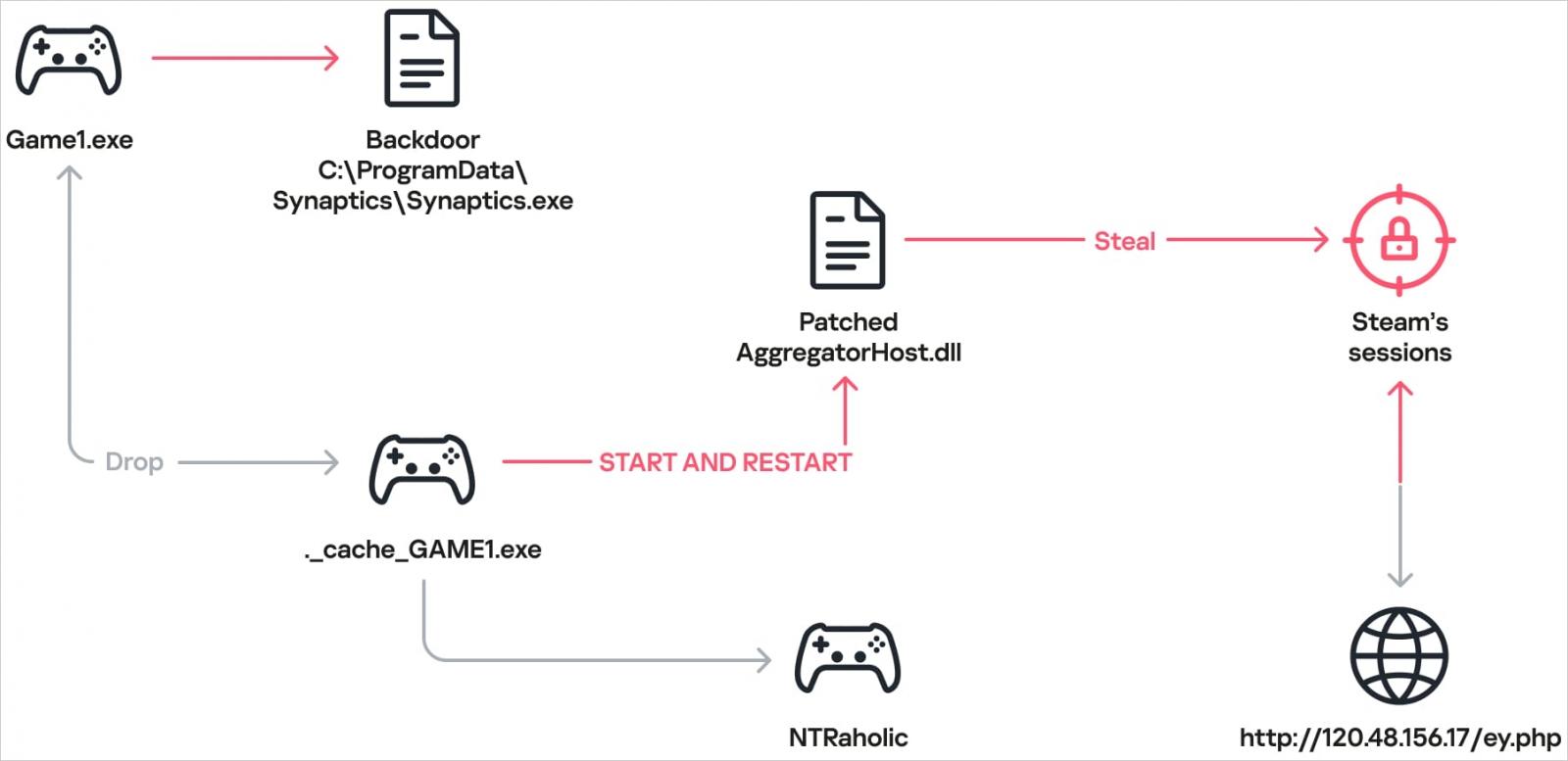
Kaspersky tested one of these wallpapers posing as a game called NTRaholic, which launched as expected upon execution to reduce suspicion. However, a backdoor file part of the DarkKomet malware family was installed in the background.
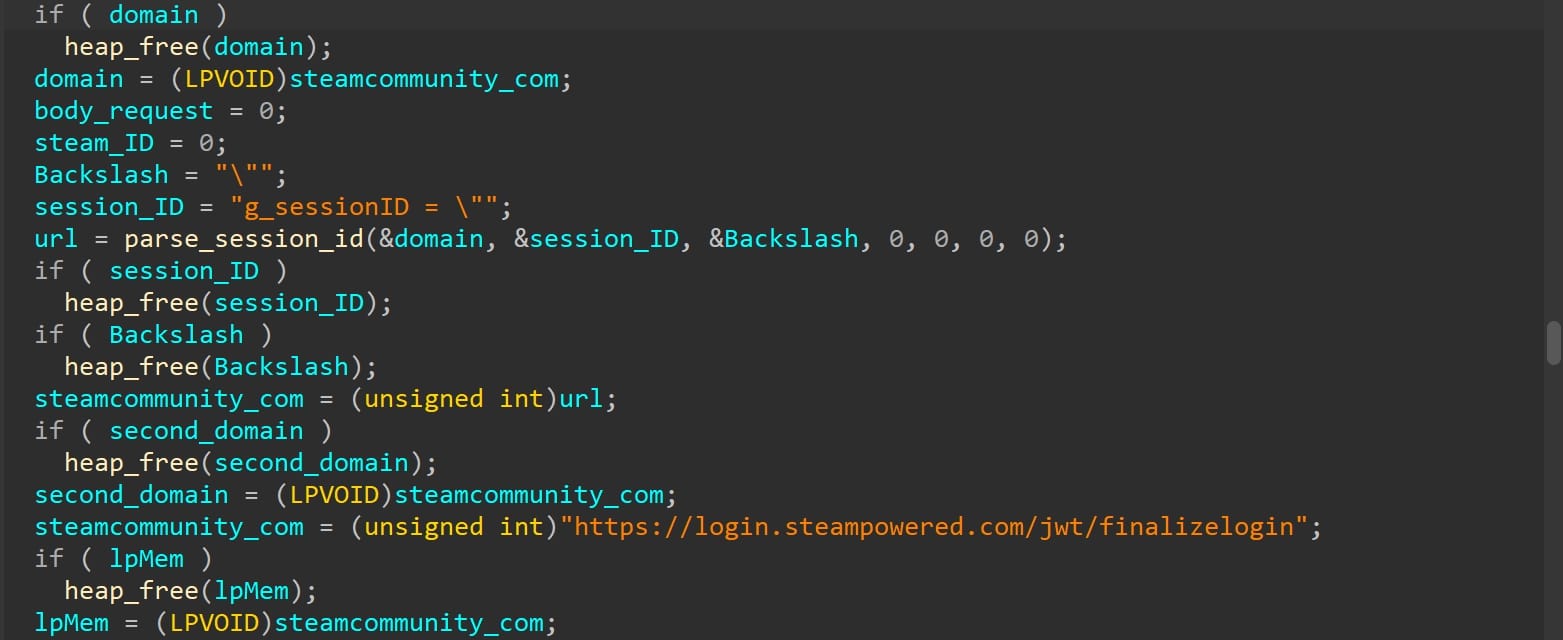
A custom version of a system library called ‘AggregatorHost.dll’ was also installed to search for Steam accounts on the computer and steal account credentials.
Source: Kaspersky
The researchers found multiple cases involving other malware families, such as the Lumma and Vidar infostealers, cryptocurrency miners, botnet loaders, RanEngine, and even ransomware strains, showing that Wallpaper Engine was abused by multiple threat actors.
While Steam has identified and removed all the malicious wallpaper applications that Kaspersky identified, but researchers are warning that threat actors are likely to submit new ones.
Apart from downloading content from trusted sources, Kaspersky recommends users to scan anything fetched from Steam Workshop using an up-to-date antivirus product.
Security teams log 54% of successful attacks and alert on just 14%. The rest move through your environment unseen.
The Picus whitepaper shows how breach and attack simulation tests your SIEM and EDR rules so threats stop slipping by detection.

SpaceX has agreed to acquire Cursor for $60 billion in stock, adding the popular AI coding assistant to Elon Musk’s newly public aerospace-and-AI conglomerate. CNBC reports: Cursor built a popular AI coding tool that helps software developers generate, edit and review code, and the company has experienced explosive growth since its founding in 2022. In November, Cursor said it crossed $1 billion in annualized revenue, according to a release at the time. Cursor was also ranked at No. 37 on the annual CNBC Disruptor 50 list in 2026.
[…] Musk merged SpaceX with his AI startup, xAI, earlier this year, and the Cursor deal looks set to help revitalize the company’s efforts to compete with rivals like Anthropic and OpenAI, which also offer popular coding tools. SpaceX expects the merger to close during the third quarter of this year, according to a filing with the Securities and Exchange Commission. The transaction is subject to “requisite regulatory approvals,” the filing said.
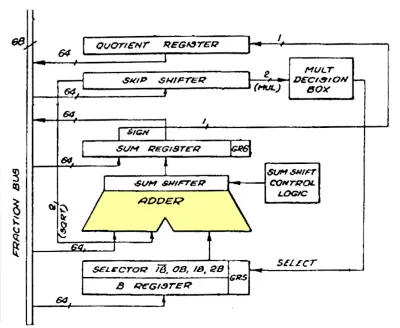
As simple as the concept of adding two numbers appears at first glance, doing it in the 1970s in Intel’s 8087 FPU with its 69-bit adder was still a tall order. This is namely the core feature that many features like tangents, cosines and exponentiation rely on, so it had to be basically perfect. In a recent die-level analysis of the 8087 [Ken Shirrif] dives into the structure, layout and functioning of this ‘beating heart’ of this piece of semiconductor history.
Although anyone can build a simple binary adder out of off-the-shelf parts including 74-series logic ICs, the problem is to make it fast so that the 69th bit doesn’t have to wait for e.g. a carry to trickle all the way through the preceding bits. The main way that this is solved is by breaking addition into 4-bit blocks, reducing the problem by a factor of four, along with an optimized Manchester carry-chain carry-lookahead implementation.
The main advantage of this variation of a carry-lookahead is that it reduces the number of required transistors, without sacrificing too much performance. Later on Intel would switch to the faster, but more transistor-intensive Kogge-Stone adder.
Implementing this entire adder with NMOS technology and wiring it all up to the rest of the die required a lot of ingenuity on the side of the Intel engineers, as as previously noted this adder is effectively always used in any operation at some stage. This necessitates many surrounding registers and in turn circuitry to manage these, with part of the complexity handled in microcode and part in silicon.

NewsBeat2 minutes ago
Sunderland AFC’s Luke O’Nien to receive honorary doctorate

Business3 minutes ago
Sebi eases winding-up norms for AIFs, introduces ‘inoperative fund’ framework

Crypto World4 minutes ago
Crypto PAC Stakes $12M in Alabama Senate Runoff Ahead of Voting


-

 Business2 days ago
No Jackpot Winner as $257 Million Prize Rolls Over to $269 Million Monday Draw
-

 Crypto World5 days ago
Oppenheimer backs SpaceX as $70 billion retail frenzy builds
-

 Fashion4 days ago
Weekend Open Thread: Tuckernuck – Corporette.com
-

 Crypto World5 days ago
Markets Rally as SpaceX IPO Looms Amid Iran Tensions and Inflation Surge
-
 Crypto World2 days ago
Zimbabwe Requires Crypto Businesses to Register Annually Under New FIU Regulations
-

 Tech4 days ago
NanoClaw integrates JFrog registries to secure AI agent downloads
-

 Business7 days ago
Thailand Ranks Second Worldwide for AI Adoption Growth, Microsoft Reports
-

 Tech4 days ago
This Week In Security: Microsoft On Microsoft, Register Your Domains, Linux On ARM, And FreeBSD Joins The File Cache Club
-

 Crypto World4 days ago
Bitget enters Argentina’s regulated crypto market through PSAV registration
-
 Tech5 days ago
Dutton Ranch star claims they ‘didn’t see any disruption’ on set following Chad Feehan’s exit from Yellowstone spinoff fueled by Taylor Sheridan clash rumors
-

 NewsBeat5 days ago
El Nino has formed in the Pacific and could set records, forecasters say
-

 Politics5 days ago
Politics Home | Healey Resignation Is “Colossal Failure Of Government”, Says Former Labour Defence Secretary
-

 Tech6 days ago
‘This is Seattle’s position on AI’: City Council votes unanimously to pause big new data centers
-
 Entertainment5 days ago
Donnie Wahlberg & More Heat Up Las Vegas at Circa’s Barry’s Downtown Prime
-
 Tech5 days ago
Opendoor Ends India Operations, Fueling a Bigger Conversation About AI and Outsourcing
-

 Sports5 days ago
First Time Since 1971: Australia Register Historic Low In ODI Cricket
-

 Politics5 days ago
Belfast burns, while Met chief points finger at Iran and Russia
-

 NewsBeat4 days ago
FBI searches office of Ohio voter registration group
-

 Business5 days ago
AT&T: Verizon's 27% Outperformance Sets Up A Solid Entry Point
-

 Politics5 days ago
Modi thanks Trump for wishes as US attacks Indian seafarers
You must be logged in to post a comment Login