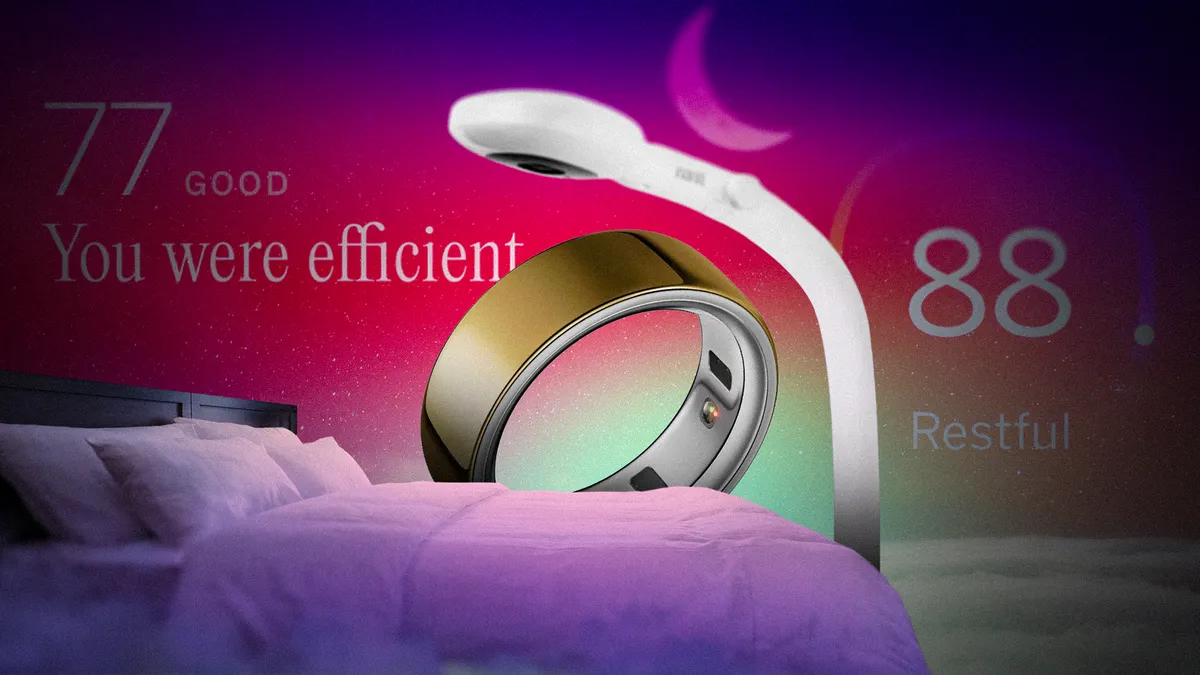
Earlier last month, I noticed my son’s baby monitor, the Nanit Pro, started showing a sleep score every morning. This number tells you how well your child slept the night before on a scale from zero to 100. Sleep scores track how long it takes to fall asleep, sleep cycles, heart rate throughout the night and any disruptions that may have happened. This is also one of our expert-recommended baby monitors, so it seemed appropriate that it would provide this information. As many parents know, infant and toddler sleep habits can be unpredictable.
I previously tested the Oura Ring, one of CNET’s favorite smart rings, which tracks your health and sleep data. It also provides a sleep score based on data collected by its sensors on your finger (movement, temperature, heart rate and more). I started using the Oura Ring to hold myself more accountable for going to sleep on time.
Seeing that my son has his own sleep score made me think, “I bet he has a better sleep score than I do.” I decided to conduct an experiment to see if I could prove my point by comparing our sleep scores.
Advertisement
To preface this, my 2.5-year-old has been going through a rough patch of sleep, which I’m blaming on a sleep regression (a temporary phase when babies and toddlers struggle with sleeping). Despite the disrupted sleep, he still seems better rested than I am on most days.
I started consistently wearing my Oura Ring to put my theory to the test. For the sake of this experiment, I tracked our data over a couple of weeks to prove (or disprove) my point.
How the Nanit baby monitor tracks sleep
As previously mentioned, I use the Nanit Pro Baby Monitor to keep an eye on my son while he sleeps. According to Nanit, it first introduced the sleep score in December 2025, and this is the first AI-driven, science-backed sleep score designed to grow with your child and automatically adjust as they age. Nanit collects the sleep score using the same advanced computer vision technology sensors it has used for years to analyze sleep.
To come up with a sleep score, Nanit looks at four aspects of sleep: sleep duration (how long your child slept), sleep timing (your child’s bedtime and wake-up time), sleep continuity (how smoothly your child sleeps) and parent visits (how often a guardian tends to the child).
Advertisement
How our sleep scores compared
After a week of reviewing his data, my son’s sleep scores were higher than mine overall, as I predicted. He was hitting scores over 80, with the lowest being a 74. His highest was a 95, which I vividly remember was one of the times he slept through the night without getting up once. I also slept peacefully because I wasn’t being awoken by cries at 3 a.m.
For context, below is the week’s worth of data I collected from the Nanit Pro and the Oura Ring.
Friday, Feb. 20
The first day shows that my son had a better sleep score than me.
Advertisement
CNET/Giselle Castro-Sloboda
Our sleep scores were close, but I didn’t feel well-rested, even though Oura said I got a good amount of sleep. It’s not common for my son to sleep under 10 hours, so that’s how you know he didn’t have the most restful night. Plus, he woke up before 6 a.m. on this day.
Saturday, Feb. 21
Somehow, I scored a higher sleep score than my toddler on this day, but by a small margin.
CNET/Giselle Castro-Sloboda
I found it ironic that I scored slightly higher than my son, even though he slept longer than I did and we both had a poor night’s sleep. He also got up earlier than normal. A normal wake time for him is between 6:30 a.m. and 7 a.m.
Advertisement
Sunday, Feb. 22
My son had a higher sleep score, and mine was efficient on this day.
CNET/ Giselle Castro-Sloboda
As you can see, he had a higher sleep score than I did and slept over 11 hours. He also woke up at 7 a.m., which I consider sleeping in for both of us. My sleep score was considered efficient, even though I remember feeling tired this day.
Monday, Feb. 23
Advertisement
My son had a higher sleep score than me on this day and even slept about 10 hours.
CNET/Giselle Castro-Sloboda
Monday night was another night when my son had a higher sleep score than me. He slept about 10 hours, but this was one of those days when he woke up slightly earlier than his usual wake time.
Tuesday, Feb. 24
This was one of my worst sleep scores during the experiment. However, my son fared pretty well.
Advertisement
CNET/Giselle Castro-Sloboda
It’s evident I had a terrible night of sleep on Tuesday. My son had a significantly higher sleep score than me, which doesn’t surprise me. I slept in his bed and couldn’t get comfortable, which affected my ability to get quality sleep.
Wednesday, Feb. 25
This was one of the couple of nights where we both had a restful night of sleep.
CNET/Giselle Castro-Sloboda
This was the one day out of the week when we both slept well, and I felt the most refreshed. You can see by our sleep scores that his is nearly perfect and still higher than mine. I could tell by his mood that day that he was well rested, and he had fewer tantrums.
Advertisement
Thursday, Feb. 26
The Nanit didn’t collect a sleep score for my son this night. I only have the Oura sleep score, which showed I had an OK night of sleep.
CNET/Giselle Castro-Sloboda
I’m not sure why the Nanit didn’t collect enough data for a sleep score this night. I’m assuming it must’ve disconnected from the Wi-Fi at some point. This was one of my issues with the monitor when I first reviewed it. Since it only functions on Wi-Fi, the monitor can’t be used without it.
The Oura Ring noticed I had another so-so night of sleep and pointed out how sleep trends can fluctuate. I’ve included one extra day to this experiment to even things out.
Advertisement
Friday, Feb. 27
My son had a decent night of sleep, but Oura pointed out that I’ve been having a bad period of sleep.
CNET/ Giselle Castro-Sloboda
My son had better sleep than I did again on Friday, sleeping for about 10 hours. He slept well overall through the night, except for a couple of visits, but you can tell it affected my sleep. Even Oura notes that my sleep hasn’t been the best and says that this can happen some weeks.
Saturday, Feb. 28
Advertisement
This day had my worst sleep score during the experiment, and I felt it.
CNET/Giselle Castro-Sloboda
I clearly was depleted on Saturday morning. This was my lowest sleep score yet. My son had a really bad night of sleep, continuously getting up because of nightmares. Coincidentally, this was the night before I signed up for a bootcamp class in the morning. It’s a miracle I made it to the class, let alone completed it.
Sunday, March 1
My sleep wasn’t the worst this night because my son had a more restful slumber.
Advertisement
CNET/Giselle Castro-Sloboda
This night wasn’t so bad for either of us, but my son’s sleep score was still higher than mine. He slept the majority of the night, and I think that can be attributed to getting energy out by running around with other kids during a family party the evening prior.
Monday, March 2
This was a better day of sleep for me, but not as good for my son.
Giselle Castro-Sloboda
Sunday was a successful night, and I even got an extra hour of sleep. My rating was higher than my son’s, surprisingly, and I did feel more rested.
Advertisement
Toddler sleep explained
Brittany Sheehan, a certified pediatric sleep therapist, tells CNET that sleep needs for toddlers vary by age. “Total sleep needs do diverge as kids get older, but for a 2-year-old, for example, we ideally want at least 11 hours overnight in bed, if not 12, along with a nap that is at least two hours, up to three hours,” said Sheehan. If it’s a true sleep regression, Sheehan notes that it can last anywhere from a day or two to up to six weeks in the most extreme cases.
Under normal circumstances, my son is a good sleeper (with the occasional wake-up), so when he started having frequent night wakings, I suspected it was a sleep regression. Dr. Alisa Niksch, senior director of medical affairs at Owlet, a baby monitor company, points out that disordered sleep during early childhood doesn’t occur for the same developmental reasons as those earlier in infancy.
“What parents are usually seeing is a disruption that stems from developmental and environmental factors,” Niksch said. She elaborates that for toddlers, the most common driver is developmental, driven by a growing imagination and increased cognitive function.
“Night wakings where a child cries but resettles quickly is a sign of this growth, as the developing brain is actively processing new experiences and emotions during sleep, which can surface as nightmares,” she said. Nightmares are common during this age, and although they’re normal, they also shouldn’t be ignored.
Advertisement
Natalie Barnett, who holds a doctoral degree and is vice president of clinical research at Nanit, said, “If [nightmares are] occurring once in a while and your child is calmed by a quick hug and then [goes] back to sleep, you probably don’t need to do anything about it necessarily.” However, if the nightmares are occurring repeatedly or are interfering with daytime function, she recommends speaking with your child’s pediatrician.
How to improve your toddler’s sleep
Sleep is important for toddlers and can affect everything from their mood to eating behaviors. Niksch points out that overtired toddlers often become hyperactive and emotionally dysregulated. Additionally, poor sleep affects their immune function, growth hormone release and early memory and learning. This also applies to naps, which they outgrow over time but shouldn’t be eliminated right away.
Generally, children under three should still be napping, but as they reach ages three to four, total sleep needs decrease slightly to 10 to 13 hours, and naps become shorter and less frequent before disappearing altogether. If you’re at this stage, Barnett recommends cutting the nap back first before removing it altogether.
“If your toddler is resisting bedtime, it’s often a sign that they’re not tired enough, so you may want to think about cutting back or cutting out the nap,” Barnett said. “In those first couple of weeks after dropping a nap, it can be hard for your toddler to stay awake in the late afternoon.” She advises against placing them in the stroller or car, where they’re more likely to fall asleep, in the late afternoon, since even a short nap can mess with bedtime.
Advertisement
Sheehan says that parents often drop a toddler’s nap too early in an attempt to fix sleep problems, but this can have a negative, compounding effect. “Often nap struggles are behavioral, regression-related or simply the timing is off,” she said.
Another mistake Sheehan sees parents make with 2-to-3-year-olds is putting their child down for a nap too early. This impacts their sleep because they don’t have enough sleep pressure built up to take a good nap. If you’re seeing constant bedtime and nap-time resistance or early-morning wake-ups, this could mean your toddler’s sleep timing needs adjustment.
Even with sleep disruptions, you want to make sure that their bedroom is set up for sleep success. “To support better sleep, the fundamentals remain the same: a consistent sleep and wake schedule, a predictable bedtime routine and a dark and quiet sleep environment,” Niksch said.
What parents can do to feel less sleep-deprived
Parents often take the brunt of these sleep disruptions and also struggle to function at full capacity daily. Sheehan advises that parents figure out a process or arrangement with another caregiver that allows them to rest during these phases. “If you can’t make these changes, give yourself some grace and realize it’s OK to choose a nap over a run, or to tag team with a partner who is on duty for night wake-ups,” Sheehan said.
Advertisement
Niksch agrees and recommends that parents apply the same sleep principles for their toddlers to themselves: “Consistency matters most, whether that is committing to a regular sleep and wake schedule or building a simple bedtime routine that signals to the body that rest is coming.” She points out that some parents try to sleep when their toddler does, but for some, it can be challenging if they’re not tired enough.
“If sleep doesn’t come within 15 minutes of lying down, it’s better to get up and do something that calms the mind, like reading, until tiredness sets back in,” Niksch advised.
What I took away from this experiment
Eventually, I’m sure my son’s and my sleep scores will even out again, but for now, it’s important to support him as he transitions to the next stages of toddlerhood. The sleep scores feature of the Nanit baby monitor is helpful for better understanding my son’s sleep habits and is something I wish I had when he was an infant. It also gives me some insight into his mood on some days compared to others, since sleep affects so many aspects of a child’s life.
Even restarting my tracking helped — my sleep score showed me my blind spots, ways to improve my sleep and when to take it easy. As someone who likes staying busy, it’s easy for me to have a hard time resting. The Oura Ring tracking my sleep and stress levels reminds me to take a beat.
Advertisement
While I’ve only been a parent for two years, I’ve learned that children go through many phases. This sleep experiment was a necessary reminder that you can’t bypass the tough times; you just have to get through them as best as you can.
Samsung has spent the better part of the last decade dominating the TV market and building a soundbar empire, but dedicated two-channel speakers and a whole home music ecosystem have never really been part of the conversation, until now. With the $499 Music Studio 7 (LS70H) and $299 Music Studio 5 (LS50H), Samsung is making a direct move into wireless whole home audio for 2026, and it’s not doing it quietly.
Following its latest OLED, Neo QLED, MiniLED, and Frame TV launches, these new Wi-Fi speakers, first previewed at CES 2026 and now fully detailed—pair a more refined, room-friendly sound with a distinctive “dot” design from Erwan Bouroullec that actually gives them an identity in a sea of forgettable boxes. Samsung isn’t chasing louder or flashier. It’s aiming for flexible multi-room and true two-channel performance wrapped in something people might actually want to look at for more than five minutes.
What sets Samsung’s Music Studio speakers apart from most competitors is that they can be used both for whole home audio (up to 10 speakers in the home) and also used as part of a multi-speaker home theater audio system (up to 5 speakers).
Music Studio 7 and 5 Shared Features
Here are some key features that the Music Studio 7 and 5 have in common:
Advertisement
Style: The Music Studio 7 and 5 feature a distinctive “dot” design concept created by renowned designer Erwan Bouroullec. The idea draws from a universal symbol found throughout music and visual art, while remaining rooted in Samsung’s current industrial design language. The result is a speaker that blends into a room naturally—doing its job without screaming for attention, which is how most people actually want their speakers to behave.
Wireless Streaming: Music Studio speakers support both Bluetooth and Wi-Fi streaming, with compatibility for Google Cast, AirPlay, and Roon Ready systems. That gives users real flexibility across platforms without being locked into a single ecosystem.
Voice Assistants and Control: Users can control the Music Studio 7 and 5 via voice commands using Alexa, Google Assistant, and Bixby. Non-voice control is available through onboard controls and the Samsung Sound App (coming soon). There is also a dedicated Spotify Connect button for direct playback. A traditional remote control is not included.
Audio Lab Pattern Control: This technology manages how sound is distributed across channels, reducing overlap and congestion so effects, music, and dialogue remain clearly defined.
Advertisement
AI Dynamic Bass Control: Designed to deliver deeper, more controlled low frequencies with minimal distortion, this system dynamically adjusts bass output in real time while supporting high-resolution audio up to 24-bit/96kHz.
Active Voice Amplifier Pro: Samsung’s AVA analyzes ambient noise in real time so voice audio remains clear and intelligible. Enabling this feature boosts dialogue from the Music Studio 7 and 5, making it easier to hear over background noise without cranking the overall volume. This is particularly handy for listening to podcasts, audiobooks, weather and news reports in a busy home.
Wireless Dolby Atmos: The Music Studio 7 includes a Dolby Atmos-compatible HDMI eARC connection with up-firing driver for height effects, while the Music Studio 5 offers neither of these things. Both speakers can reproduce Dolby Atmos music over a wireless connection from compatible streaming services, however, the Music Studio 5 virtualizes the height effects while the Music Studio 7 offers a discrete up-firing driver for the height channel. Both speakers can be a part of a Wireless Dolby Atmos system over Wi-Fi when used with compatible Samsung TVs and select streaming sources.
Advertisement. Scroll to continue reading.
Advertisement
Pro Tip: Samsung’s Wireless Dolby Atmos implementation is not the same thing as Dolby Atmos FlexConnect. Although the two systems share some features and functionality, they are entirely different implementations.
Eclipsa Audio: Samsung’s Music Studio wireless speakers incorporate Eclipsa Audio, an open immersive surround sound format developed by Samsung in partnership with Google and other companies. Similar to Dolby Atmos, Eclipsa Audio expands on traditional surround sound with the addition of height information. With Eclipsa Audio-encoded content, sound can come from all around and above the listener. This enables a more enveloping and immersive listening experience with sound emanating from all three dimensions, just like in real life. Eclipsa Audio is currently the only immersive surround sound format supported on YouTube.
Q-Symphony: This feature allows the Music Studio speakers to work in tandem with compatible Samsung TVs, soundbars, and Wi-Fi speakers to create a more immersive home theater system. Q-Symphony supports pairing up to five Samsung audio devices and can automatically optimize sound based on speaker placement within the room.
SpaceFit Sound Pro: Samsung’s room calibration technology is built into both Music Studio models via onboard microphones. SpaceFit analyzes your listening environment and adjusts output accordingly. It can recalibrate automatically on a daily basis or whenever the speaker is moved.
Advertisement
Waveguide: This design technology helps direct and disperse sound more evenly throughout the room, improving coverage so audio remains consistent regardless of where you’re sitting.
Music Studio 7 (LS70H)
The Music Studio 7 (LS70H) is the flagship of Samsung’s 2026 Wi-Fi speaker lineup, designed to deliver a more immersive listening experience from a single enclosure.
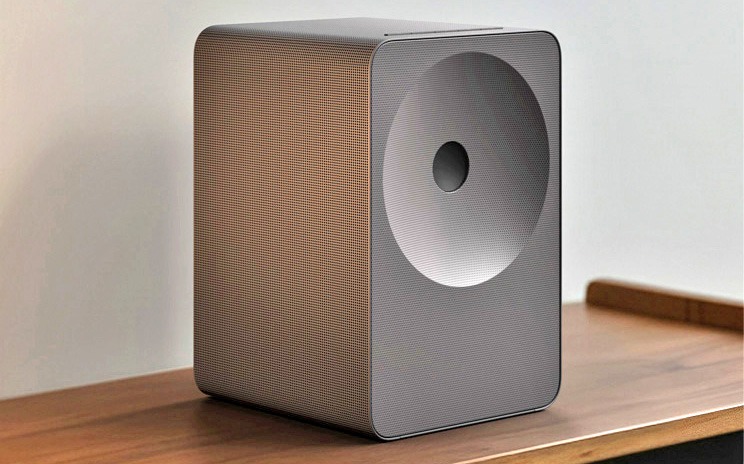
On the outside, it features a curved rectangular form that aligns with the series’ distinctive design language. Inside, Samsung has implemented a 3.1.1 channel configuration, including a built in subwoofer, with left, center, right, and top firing drivers working together to create a convincing sense of height and spatial depth without the need for a full surround system.
The LS70H measures 7.28 x 10.59 x 7.50 inches and weighs 12.35 pounds.
Music Studio 5 (LS50H)
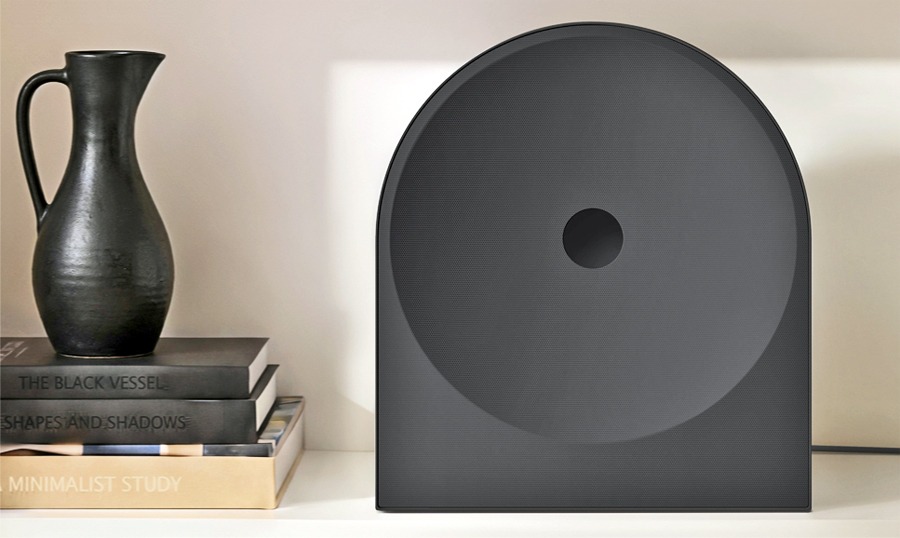
The Music Studio 5 (LS50H) sits below the Music Studio 7 in Samsung’s 2026 Wi Fi speaker lineup and takes a different design approach, with a rounded top half and rectangular base that feels more decor friendly than most wireless speakers. It can reproduce stereo sound on its own or be paired with a second unit for a wider more enveloping soundstage. Though it has no built-in height speaker, it can reproduce virtualized Dolby Atmos immersive sound.
While it looks different from the Music Studio 7, the LS50H is still engineered to deliver controlled bass with minimal distortion and supports modern connectivity options, including Wi Fi casting, streaming services, voice control, and Bluetooth for seamless everyday use.
Advertisement
Inside, the Music Studio 5 uses a 2-channel configuration with a 4-inch woofer and dual tweeters, balancing clarity, low end presence, and a form factor that fits more easily into real living spaces.
The LS50H measures 9.88 x 11.18 x 5.39 inches and weighs 5.29 pounds.
The Music Studio 7 and Music Studio 5 mark Samsung’s most credible push yet into wireless whole home audio and two-channel audio. What makes them stand out isn’t just the feature list, it’s the combination of design, flexibility, and ecosystem integration. The Bouroullec “dot” design gives them a visual identity most wireless speakers lack, while support for Wi-Fi streaming, Roon, AirPlay, Google Cast, and Q Symphony makes them far more adaptable than the average plug and play box.
Samsung appears to be intentionally blurring categories here. The Music Studio speakers aren’t just lifestyle speakers. They can run in stereo mode, pair with each other for wider stereo separation, handle Dolby Atmos music, slot into a multi room system, or integrate into a home theater setup with Samsung TVs. That kind of versatility is where Samsung is clearly aiming to separate itself.
But there are tradeoffs. No analog input, no USB playback, and no phono stage means traditional sources are completely off the table without workarounds. If your system still revolves around physical media or external components, these aren’t built for you.
Advertisement
Competition is stiff. Sonos, Bluesound, Denon HEOS, Apple HomePod, and even higher end lifestyle brands like Naim all play in this space, and many offer deeper ecosystems or better support for wired sources. Samsung is betting that its design, TV integration, and Harman backed tuning will be enough to pull people in.
Who are these for? Not the purist with racks of gear and a Thorens spinning in the corner. These are for people building a modern system around streaming, multi room audio, and a Samsung TV who want something that looks good, sounds better than a soundbar on its own, and doesn’t require a weekend to set up.
Samsung isn’t just filling a gap here. It’s trying to create a new lane between soundbars and traditional stereo. Whether that lane gets crowded depends on how good they actually sound – and our initial listening sessions have us optimistic – but for the first time, it feels like Samsung is at least asking the right questions.
The mantra of the modern tech industry was arguably coined by Facebook (before it became Meta): “move fast and break things.”
But as enterprise infrastructure has shifted into a dizzying maze of hybrid clouds, microservices, and ephemeral compute clusters, the “breaking” part has become a structural tax that many organizations can no longer afford to pay. Today, two-year-old startup NeuBird AI is launching a full-scale offensive against this “chaos tax,” announcing a $19.3 million funding round alongside the release of its Falcon autonomous production operations agent.
The launch isn’t just a product update; it is a philosophical pivot. For years, the industry has focused on “Incident Response”—making the fire trucks faster and the hoses bigger. NeuBird AI is arguing that the only sustainable path forward is “Incident Avoidance”.
As Venkat Ramakrishnan, President and COO of NeuBird AI, put it in a recent interview: “Incident management is so old school. Incident resolution is so old school. Incident avoidance is what is going to be enabled by AI”.
Advertisement
By grounding AI in real-time enterprise context rather than just large language model reasoning, the company aims to move site reliability engineering and devops teams from a reactive posture to a predictive one.
The AI divide: a reality check on automation
Accompanying the launch is NeuBird AI’s 2026 State of Production Reliability and AI Adoption Report, a survey of over 1,000 professionals that reveals a massive disconnect between the boardroom and the server room.
While 74% of C-suite executives believe their organizations are actively using AI to manage incidents, only 39% of the practitioners—the engineers actually on-call at 2:00 AM—agree.
Advertisement
This 35-point “AI Divide” suggests that while leadership is writing checks for AI platforms, the technology is often failing to reach the frontline.
For engineers, the reality remains manual and grueling: the study found that engineering teams spend an average of 40% of their time on incident management rather than building new products.
Gou Rao, co-founder CEO of NeuBird AI, told VentureBeat that this is a persistent operational reality: “Over the past 18 months that we have been in production, this is not a marketing slide. We have concretely been able to demonstrate a massive reduction in time to incident response and resolution”.
The consequences of this “toil” are more than just lost productivity. Alert fatigue has transitioned from a morale issue to a direct reliability risk.
Advertisement
According to the report, 83% of organizations have teams that ignore or dismiss alerts occasionally, and 44% of companies experienced an outage in the past year tied directly to a suppressed or ignored alert. In many cases, the systems are so noisy that customers discover failures before the monitoring tools do.
Introducing NeuBird AI Falcon
NeuBird AI’s answer to this systemic failure is the Falcon engine. While the company’s previous iteration, Hawkeye, focused on autonomous resolution, Falcon extends that capability into predictive intelligence. “When we launched NeuBird AI in 2023, our first version of the agent was called Hawkeye,” Rao explains. “What we’re announcing next week at HumanX is our next-generation version of the agent, codenamed Falcon. Falcon is easily three times faster than Hawkeye and is averaging around 92% in confidence scores”.
This level of accuracy allows engineers to trust the agent’s output at face value. Falcon represents a significant leap over previous generative AI applications in the space, particularly in its ability to forecast failure. “Falcon is really good at preventive prediction, so it can tell you what can go wrong,” Rao says. “It’s pretty accurate on a 72-hour window, even better at 48 hours, and by 24 hours it gets really, really accurate”.
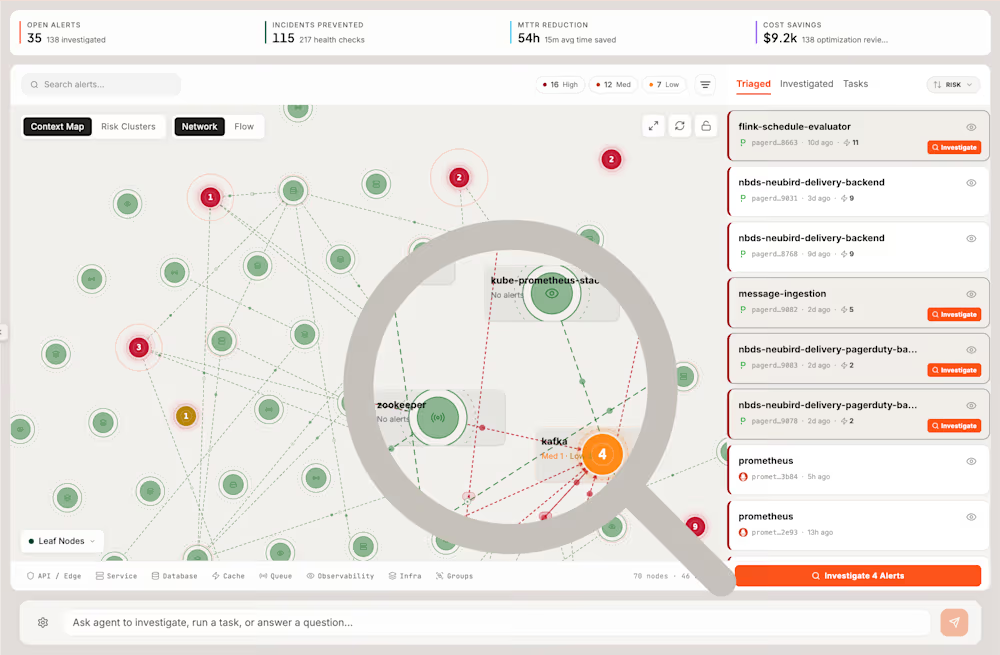
One of the standout features of the new release is the Advanced Context Map. Unlike static dashboards, this is a real-time view of infrastructure dependencies and service health. It allows teams to visualize the “blast radius” of an issue as it propagates across an environment, helping engineers understand not just what is broken, but why it is failing in the context of its neighbors.
Advertisement
NeuBird AI Advanced Context Map- with Zoom In. Credit: NeuBird AI
‘Minority Report’ for incident management
While many AI tools favor flashy web interfaces, NeuBird AI is leaning into the developer’s native habitat with NeuBird AI Desktop. This allows engineers to invoke the production ops agent directly from a command-line interface to explore root causes and system dependencies.
“Falcon has a desktop mode which allows it to interact with a developer’s local tools,” Rao noted. “We’re getting a lot more traction from a hands-on developer audience, especially as people go to Claude Desktop and Cursor. They’re completing the loop by using production agents talking to their coding agents”.
NeuBird Desktop CLI view. Credit: NeuBird AI
Advertisement
This integration enables a “multi-agent” workflow where an engineer can use NeuBird AI’s agent to diagnose a root cause in production and then hand off that diagnosis to a coding agent like Claude Code to implement the fix.
During a live demo, Rao showcased how the agent could be set to “Sentinel Mode,” constantly sweeping a cluster for risks. If it detects an anomaly—such as a projected 5% spike in AWS costs or a misconfigured Kubernetes pod—it can flag the specific engineer on-call who has the domain expertise to fix it.
“This is like ‘Minority Report for Incident Management’,” one financial services executive reportedly told the team after a demo.
Context engineering: a gateway for security
A primary concern for enterprises deploying AI is security—ensuring large language models don’t go “crazy” or exfiltrate sensitive data. NeuBird AI addresses this through a proprietary approach to “context engineering”.
Advertisement
“The way we implemented our agent is that the large language models themselves are never actually touching the data directly,” Rao explains. “We become the gateway for how the context can be accessed”. This means the model is the reasoning engine, but NeuBird AI is the middleman that wraps the data.
Furthermore, the company has implemented strict guardrails on what the agent can actually execute. “We’ve created a language that confines and restricts the agent from what it can do,” says Rao. “If it comes up with something anomalous, or something we don’t know, it won’t run. We won’t do it”.
This architectural choice allows NeuBird AI to remain model-agnostic. If a newer model from Anthropic or Google outperforms the current reasoning engine, NeuBird AI can simply switch it out without requiring the customer to change their platform. “Customers don’t want to be tied to a specific way of reasoning,” Rao asserts. “They want to be tied to a platform from which they can get the value of an agentic system”.
Displacing the “army”: displacing expensive observability
One of the most radical claims NeuBird AI makes is that agentic systems can actually reduce the amount of data enterprises need to store in the first place. Currently, teams rely on massive storage platforms with complex query languages.
Advertisement
“People use very complex observability tools like Datadog, Dynatrace, and Sysdig,” Rao says. “This is the norm today, which is why it takes an army of people to solve a problem. What we’ve been able to demonstrate with agentic systems is that you don’t need to store all that data in the first place”. Because the agent can reason across raw data sources, it can identify which signals are junk and which are critical. This shift, Rao argues, “reduces human toil and effort while simultaneously reducing your reliance on these insanely expensive observability tools”.
The practical impact of this “incident avoidance” was recently demonstrated at Deep Health. Rao recounts how their agent detected a systemic issue that was invisible to traditional tools: “Our agent was able to go in and prevent an issue from happening which would have caused this company, Deep Health, a major production outage. The customer is completely beside themselves and happy about what it could do”.
FalconClaw: operationalizing ‘tribal knowledge’
One of the most persistent problems in IT operations is the loss of “tribal knowledge”—the hard-won expertise of senior engineers that exists only in their heads. NeuBird AI is attempting to solve this with FalconClaw, a curated, enterprise-grade skills hub compatible with the OpenClaw ecosystem.
FalconClaw allows teams to capture best practices and resolution steps as “validated and compliant skills”. The tech preview launched today with 15 initial skills that work natively with NeuBird AI’s toolchain.
Advertisement
NeuBird FalconClaw Skills view. Credit: NeuBird AI
According to Francois Martel, Field CTO at NeuBird AI, this turns hard-won expertise into a reusable asset that the AI can use automatically.
It’s an attempt to standardize how agents interact with infrastructure, moving away from proprietary “black box” systems toward a multi-agent world where different AI tools can share a common set of operational abilities.
Scaling the moat: funding and leadership
The $19.3 million round was led by Xora Innovation, a Temasek-backed firm, with participation from Mayfield, M12, StepStone Group, and Prosperity7 Ventures. This brings NeuBird AI’s total funding to approximately $64 million.
Advertisement
The investor interest is fueled largely by the pedigree of the founding team. Gou Rao and Vinod Jayaraman previously co-founded Portworx, which was acquired by Pure Storage, and Ocarina Networks, acquired by Dell. They have recently bolstered their leadership with Venkat Ramakrishnan, another Pure Storage veteran, as President and COO.
For investors like Phil Inagaki of Xora, the value lies in NeuBird AI’s “best-in-class results across accuracy, speed and token consumption”. As cloud costs continue to spiral, the ability of an AI agent to not only fix bugs but also optimize infrastructure capacity is becoming a “must-have” rather than a “nice-to-have”. NeuBird AI claims its agent can save enterprise teams more than 200 engineering hours per month.
The path to ‘self-healing’ infrastructure
As the State of Production Reliability report notes, current incident management practices are “no longer sustainable”. With 61% of organizations estimating that a single hour of downtime costs $50,000 or more, the financial stakes of staying in a reactive loop are enormous.
NeuBird AI’s launch of Falcon and FalconClaw marks a definitive attempt to break that loop. By focusing on prevention and the “context engineering” required to make AI trustworthy for enterprise production, the company is positioning itself as the critical intelligence layer for the modern stack.
Advertisement
While the “AI Divide” between executives and practitioners remains a significant hurdle for the industry, NeuBird AI is betting that as engineers see the value of a cli-driven, 92%-accurate agent that can “see around corners,” the skepticism will fade. For the site reliability engineers currently drowning in a flood of non-actionable alerts, the arrival of a reliable ai teammate couldn’t come soon enough.
NeuBird AI Falcon is available starting today, with organizations able to sign up for a free trial at neubird.ai.
Halter, a New Zealand agtech startup now valued at $2 billion, has raised $220 million to expand its AI-powered cattle management system. “Halter is now valued at $2 billion following the Series E, which was led by Peter Thiel’s Founders Fund with participation from Blackbird, DCVC, Bond, Bessemer, and several others,” reports Inc. From the report: alter plans to use the funding to expand its existing footprint in the U.S., Australia, and New Zealand, as well as to grow into new markets such as Ireland, the U.K., and parts of North and South America. The round is one of the biggest to-date in the industry, and comes amid growing adoption of the technology among U.S. ranchers. According to Halter, U.S. ranchers have erected some 60,000 miles of virtual fencing since the company’s launch in 2024.
Halter’s technology works through a system of solar-powered collars and in-pasture towers that collect data — some 6,000 data points per collar per minute — from grazing cattle and feed it into a cloud-based platform and app for farmers. The collars are ergonomically designed to be comfortable for the cattle wearing them, and leverage AI to play audio cues or vibrate when it is time to move to a different grazing location or if they step outside of a predetermined zone. The collars can also deliver an electric pulse if an animal does not respond.
Halter’s app also creates a digital twin of a ranch, which essentially means a digital replica that leverages real-time data to accurately reflect conditions. Farmers can consult the app to check on their herd, or fence, and move cattle with just a few clicks. Halter also has a proprietary algorithm that it calls a “Cowgorithm” trained on seven billion hours of animal behavior. Altogether, this technology is meant to make ranchers’ lives easier when herding cattle, help them save money on building physical fencing, and provide insights about pasture management to improve soil health and pasture productivity. Halter says some 2,000 farmers and ranchers currently use its tech worldwide.
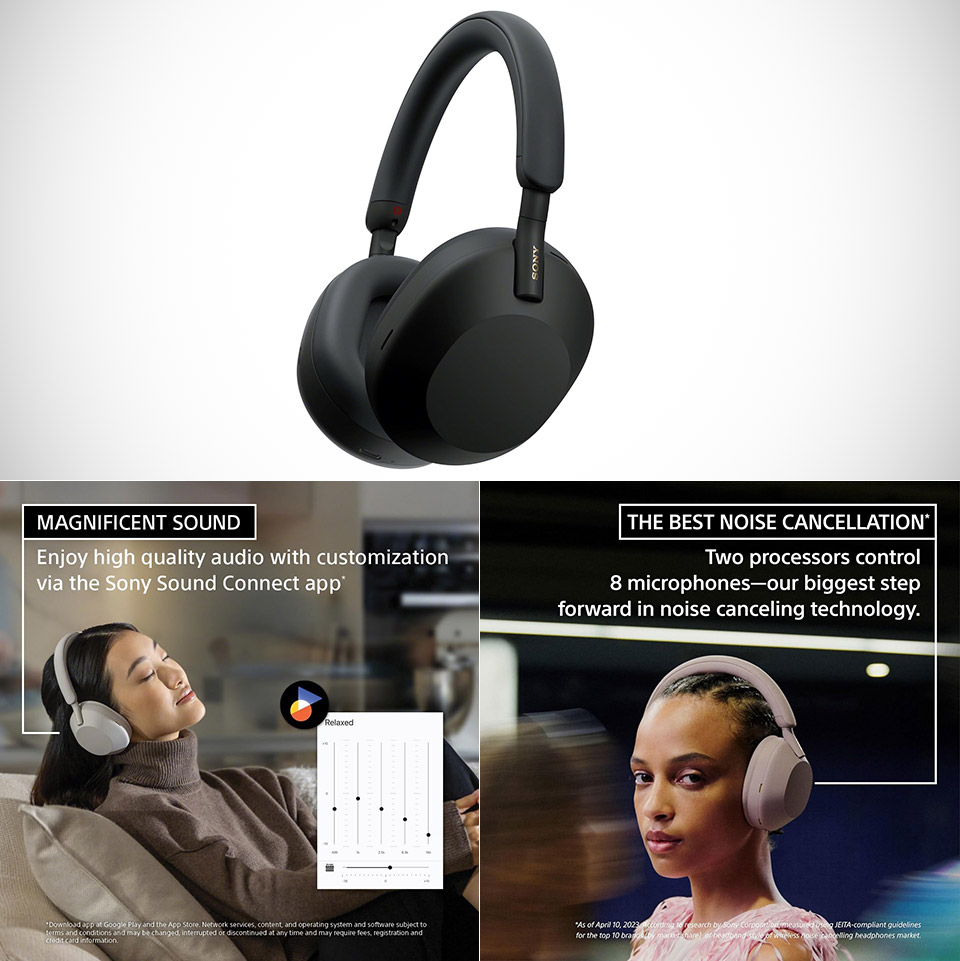
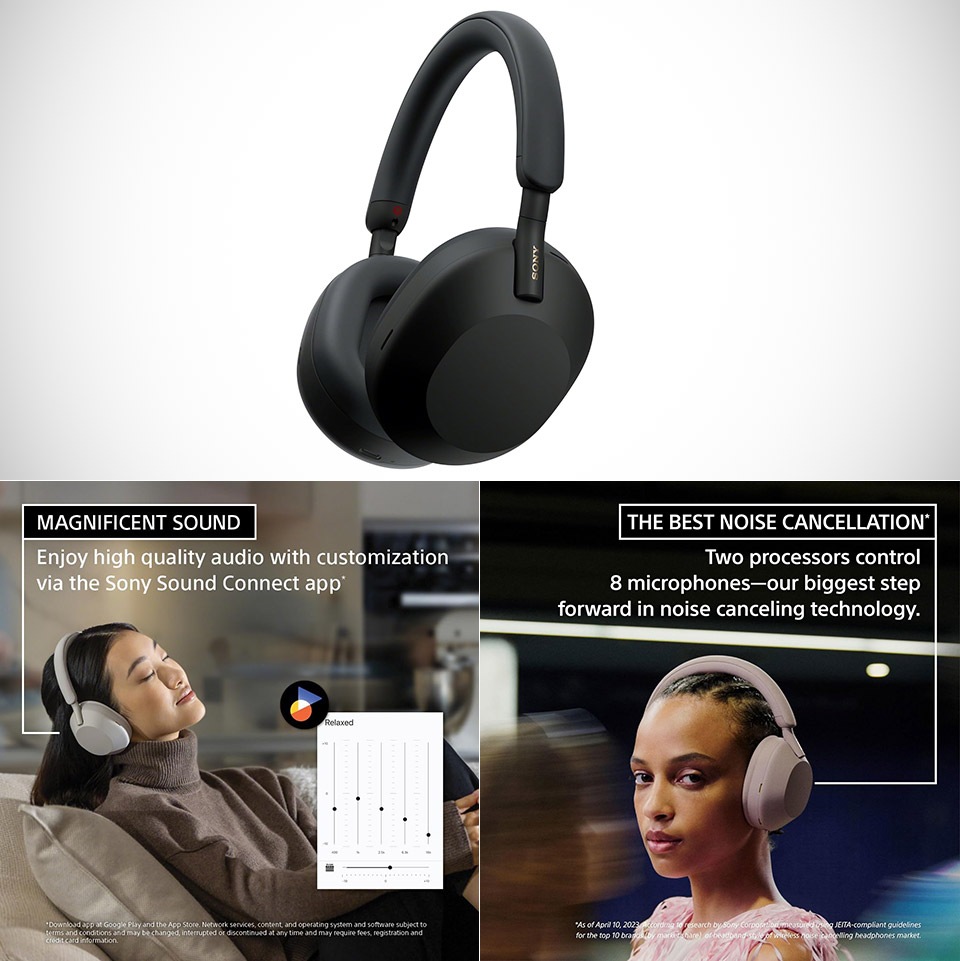
Sony’s WH-1000XM5 noise-canceling wireless headphones, priced at $250 (was $400), feature 8 microphones and two processors to read the environment and instantaneously adjust to whatever noise is there. When you lift off, say from an airplane, distracting background noise disappears, while office banter or city traffic fades into a distant hum that no longer draws your attention.
Regular travelers notice a significant difference on flights, trains, and even the daily commute. Those persistent background noises simply vanish, allowing you to focus on the music or podcast in your headphones without distraction. The optimiser conducts all of the work for you, so there is no need for fiddling or following instructions. Simply plan your day, and the noise is taken care of behind the scenes.
NOISE CANCELLATION: Immerse yourself in the world of music with these noise cancelling headphones, the Sony WH-1000XM5. They come equipped with an…
HANDS-FREE CALLING: Step into the future of communication with the Sony WH-1000XM5, a pair of over-ear headphones that make crystal clear hands-free…
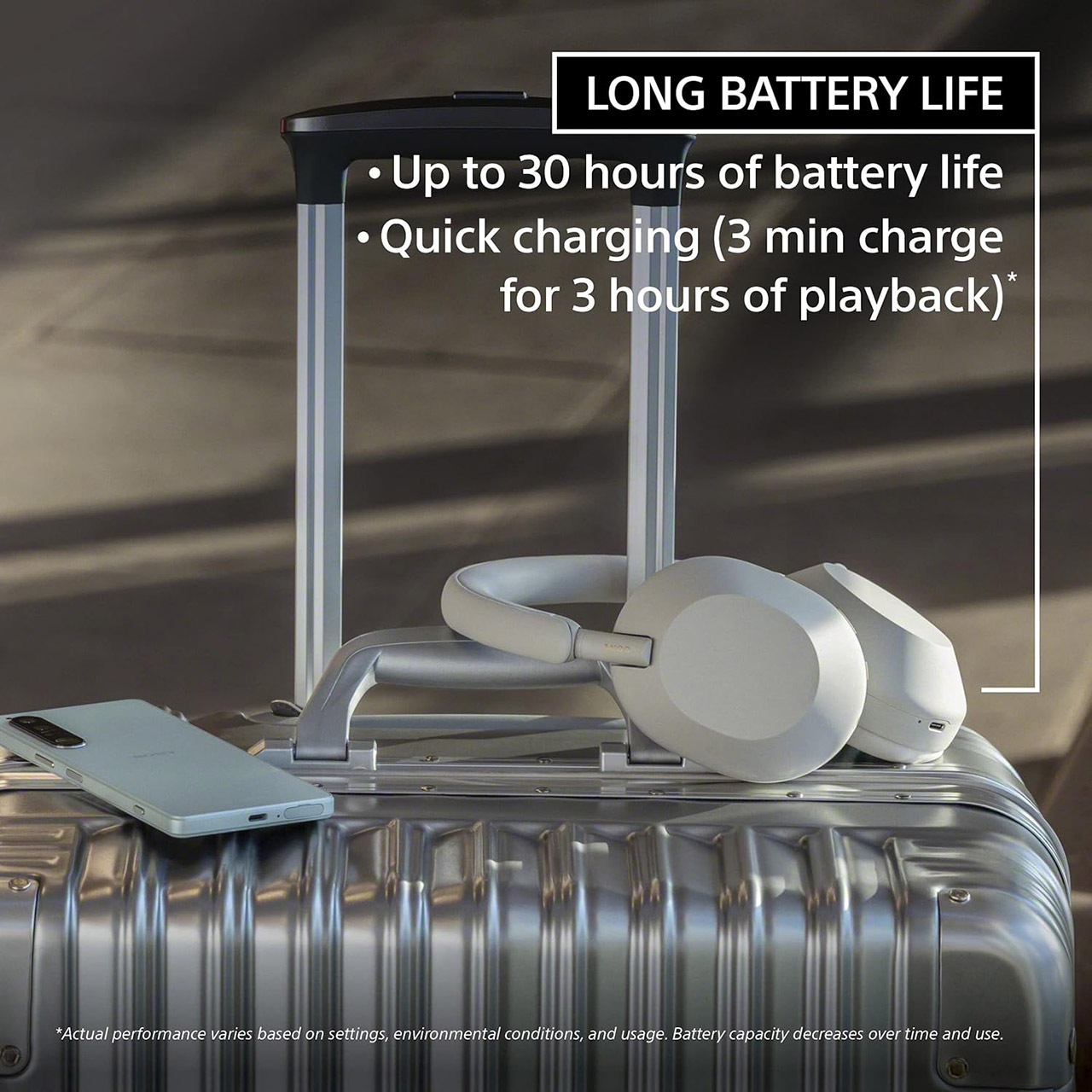
LONG BATTERY LIFE: Say goodbye to battery anxiety with the Sony WH-1000XM5, a wireless headset that offers up to 30 hours of playback time on a single…
It’s also clear that they spent a lot of effort into making these extremely comfortable. The lightweight frame and super-soft cushions sit comfortably on your ears, ensuring that no pressure points bother you even after hours of wear. Yes, some people wear them for an entire working day without ever taking them off. The battery life is also outstanding, lasting up to 30 hours with noise canceling turned on. If you get to the end of that and still need some power, plugging in for 3 minutes will give you another 3 hours of sound time, which comes in handy on unexpected detours.
The sound quality is great and balanced, regardless of what you’re listening to. The bass is tight but not muddy, and the vocals and instruments are crystal clear. If you want to change things up a little, the program allows you to change parameters to make jazz tunes sound smoother and richer or electronic beats seem more energetic. Phone calls sound as clear as day because the beamforming mics pick up your speech while filtering out any background noise, allowing the person on the other end to hear how you sound in real life. It’s especially useful for meetings in noisy environments since it prevents you from feeling like you’re shouting into the wind.
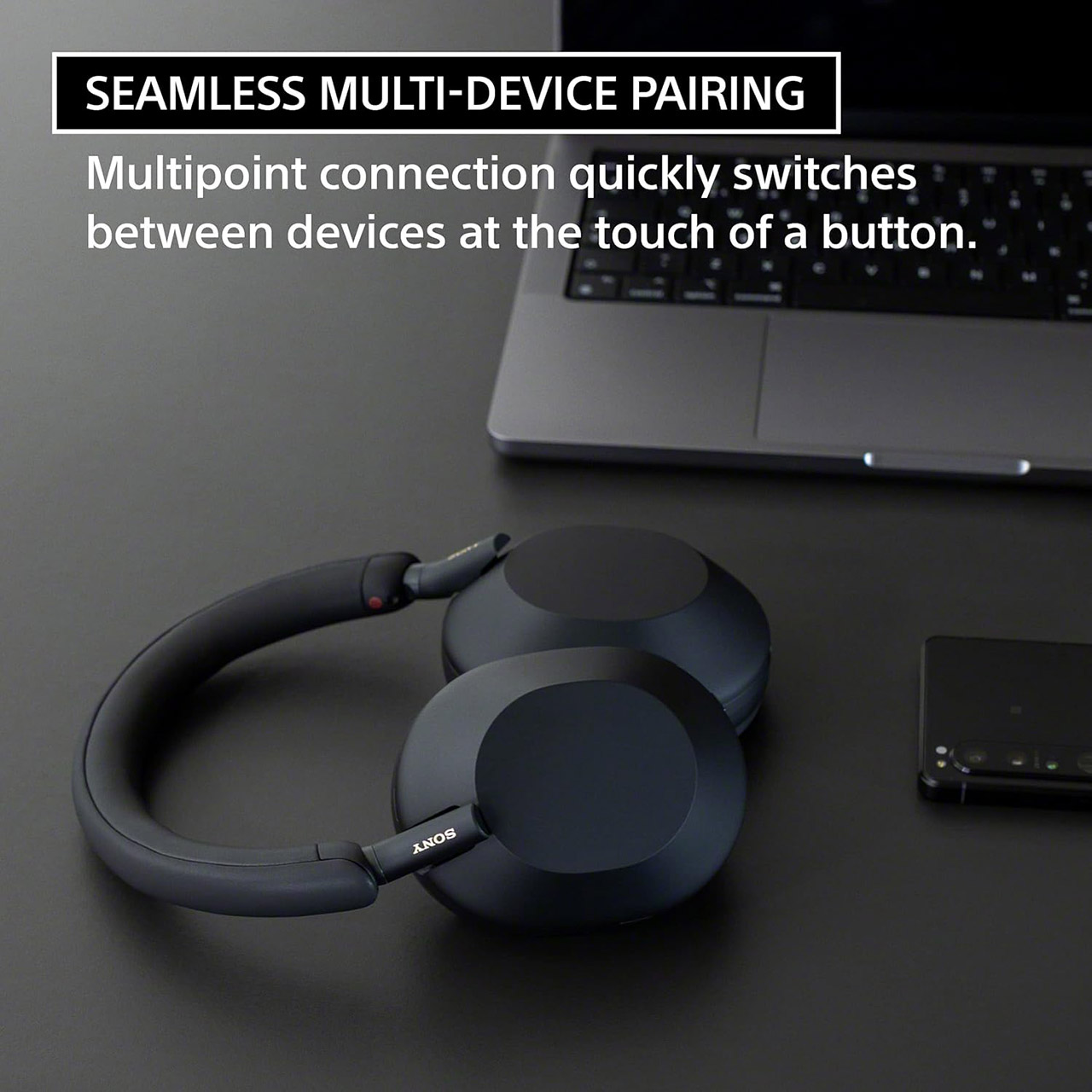
The touch controls are simple to use; simply tap or swipe the earcup to instruct the headphones what to do, such as alter the volume. A single finger covering the right cup pauses the music; another lift resumes it, and a fast double touch allows you to communicate with your voice assistant. After some practice, all of the gestures work consistently, and you’ll find yourself doing them without even thinking about it. Another thing to note is that they have considered travel and storage options. The included durable case protects your headphones, while the charging and audio cords are all neatly stored within.
Samsung is apparently not keeping all of the best new Galaxy AI tricks locked to the Galaxy S26 series. The company has confirmed that it is working on a software update that will bring over newer AI features that were first introduced on the latest flagship lineup.
How Samsung’s community backlash worked
After the Galaxy S26 announcement, reports hinted that new software features may not trickle down to the Galaxy S25 series, which led to backlash from the community. But a Samsung Community moderator shared a post that thanked users for their feedback and confirmed that certain features are arriving on older flagships.
Breaking 🔥
Galaxy S25 Series users 👋
A moderator confirms a new update is coming, bringing Galaxy S26 AI features:
The biggest confirmed addition so far is AI-powered call screening. Samsung specifically mentioned this feature in the moderator message. To recall, this feature debuted with One UI 8.5 on the Galaxy S26 series, and is now planned for the Galaxy S25, Galaxy S25+, and Galaxy S25 Ultra via a future update. So, the brand may have changed its decision following backlash from Galaxy S26 owners who were unhappy about the possibility of missing out on some of Samsung’s latest AI tools.
Advertisement
Samsung Galaxy S25 (left), Galaxy S25 Plus, and Galaxy S25 UltraAndy Boxall / Digital Trends
Finer details of the big update are still at large, and Samsung hasn’t published a final list of every Galaxy S26 AI feature that is coming to the S25 series yet. The company has promised “additional features and usability improvements” for the Galaxy S25 series, suggesting call screening may not be the only upgrade in the pipeline.
The One UI 8.5 update is expected to arrive as the next major stable update, though Samsung hasn’t announced a rollout date. But at least part of the Galaxy S26’s AI packaging is heading to the Galaxy S25 models.
Satellites on Fire, founded in 2020 as a school project by three Argentine teenagers, has closed a seed round led by Dalus Capital. Its software-only platform integrates satellite data from multiple agencies and detects fires faster than NASA’s FIRMS system by avoiding the gaps between satellite passes.
Argentine climate-tech startup Satellites on Fire has closed a $2.7 million seed round led by Dalus Capital, with participation from Draper Associates, Draper Cygnus, VitaminC, Savia Ventures, Avesta Fund, Reciprocal, Zenani Capital, Innventure, Air Capital, Gain VC, Antom VC, and Embarca Tech.
The company builds an AI-powered wildfire detection platform that integrates satellite imagery, tower cameras, fire propagation modelling, and real-time alerts, and says its system detects fires on average 35 minutes ahead of NASA’s FIRMS service.
The company was founded in 2020 by Franco Rodriguez Viau, Ulises López Pacholczak, and Joaquín Chamo, then secondary school students at ORT Buenos Aires, after family friends of Rodriguez Viau lost their homes to wildfires in Córdoba.
Advertisement
What began as a school project was rebuilt from scratch after the founders interviewed more than 80 firefighters and emergency responders and concluded their first version was not operationally useful. Rodriguez Viau is now 22 and serves as CEO.
MIT Technology Review’s Spanish edition named him among its 35 Innovators Under 35 for Latin America in 2025.
The platform’s edge over existing systems lies in satellite coverage density. NASA’s FIRMS service draws on a smaller number of satellites with revisit intervals that can leave multi-hour gaps over Latin American territories.
Satellites on Fire aggregates imagery from more than eight satellites across NASA, NOAA, and the European Space Agency, updated as frequently as every five minutes, and applies its own AI models to detect heat signatures and generate spread simulations.
Advertisement
The result, the company says, is detection that consistently precedes NASA alerts by around 35 minutes, which it describes as the critical window for effective early containment. Newsweek reported in November 2025 a documented case in Argentina where the system detected a fire at 1:40 a.m., seven hours ahead of NASA’s alert.
The commercial model is software-as-a-service, with pricing ranging from $0.02 to $10 per hectare annually depending on service tier. The platform currently monitors territory across 21 countries on four continents, with more than 55,000 users and a training dataset built from over 20,000 field-validated fire reports, which the company describes as the largest such database in Latin America.
In 2025, the system was involved in the response to more than 600 wildfires, according to the company. Clients include forestry companies, agricultural enterprises, energy utilities, carbon credit projects, insurers, and government agencies. Aon has integrated the platform into all of its forestry insurance policies across Latin America for risk calculation and premium pricing.
The new capital will fund expansion into the United States market, where the company is already running pilots and has a partnership with Watch Duty, the non-profit wildfire tracking platform.
Advertisement
It will also be used to optimise AI models, launch a parametric wildfire insurance product in partnership with Aon, and build an intelligence dashboard for client protection planning.
Rodriguez Viau has previously said the company intends to eventually move into suppression technology using drones. The US is the primary new target: wildfires are estimated to cost the country hundreds of billions of dollars annually, and the 2025 Los Angeles fires sharpened political and commercial attention on detection gaps.
John Mills, CEO of Watch Duty and an advisor to Satellites on Fire, said the platform’s results with existing satellite data had ‘genuinely astounded’ his team. Diego Serebrisky, co-founder and managing partner at lead investor Dalus Capital, framed the round as evidence that Latin American founders are producing globally competitive AI solutions in climate.
The company previously received $250,000 from Tim Draper and Adam Draper after appearing on Meet the Drapers Season 9, and has also received recognition from the UN and support from MIT and Cornell University at earlier stages.
Pre-Series A founders and anyone who knows a startup worth funding, this is your reminder. Nominations for Startup Battlefield 200 are open, and the strongest contenders are already stepping forward. If your startup was nominated, don’t stop there. Submit your application today.
This is not just another pitch opportunity. You are stepping onto the main stage in front of 10,000+ attendees, top-tier VCs, and the global TechCrunch audience at TechCrunch Disrupt 2026. You are competing, getting live feedback from top VCs, and proving your company belongs.
If you have been thinking about applying or nominating a startup, waiting is the fastest way to miss out. Founders who move early gain the edge with more time to prepare, more visibility, and a stronger shot at standing out to the TechCrunch editorial team. Make your nomination and finish the submission by applying.Image Credits:TechCrunch
Which startups should apply?
We’re looking for early-stage startups building ambitious, innovative, and potentially category-defining products. We accept applications globally, across all industries. Most selected companies are pre-Series A, with some Series A considered on a case-by-case basis. A functional minimum viable product (MVP) and a clear product demo are required. Above all, we back strong founders and ideas with real impact.
Each year, thousands apply. 200 are selected to participate. 20 reach the final round to pitch live on the Disrupt Stage. Only one champion wins. Learn more and apply here.Image Credits:Kimberly White / Getty Images
What selected startups get
Global exposure across TechCrunch’s audience
Free exhibit table for all 3 days
4 all-access Disrupt passes
Featured startup profile in the event app
Press list access and lead generation opportunities
Exclusive founder masterclasses
A chance to pitch live on the Disrupt Stage
Direct feedback from top VCs
A shot at $100,000 in equity-free funding
Apply for Startup Battlefield 200 today
Applications close May 27, but the founders who win do not wait. They move early and take their shot before the competition catches up.
Techcrunch event
San Francisco, CA | October 13-15, 2026
Advertisement
If you are building something that could define a category, or know a founder who is, this is your moment. Nominate your startup or one that belongs in the arena. If nominated, submit your application. Don’t sit on the sidelines and miss your shot.
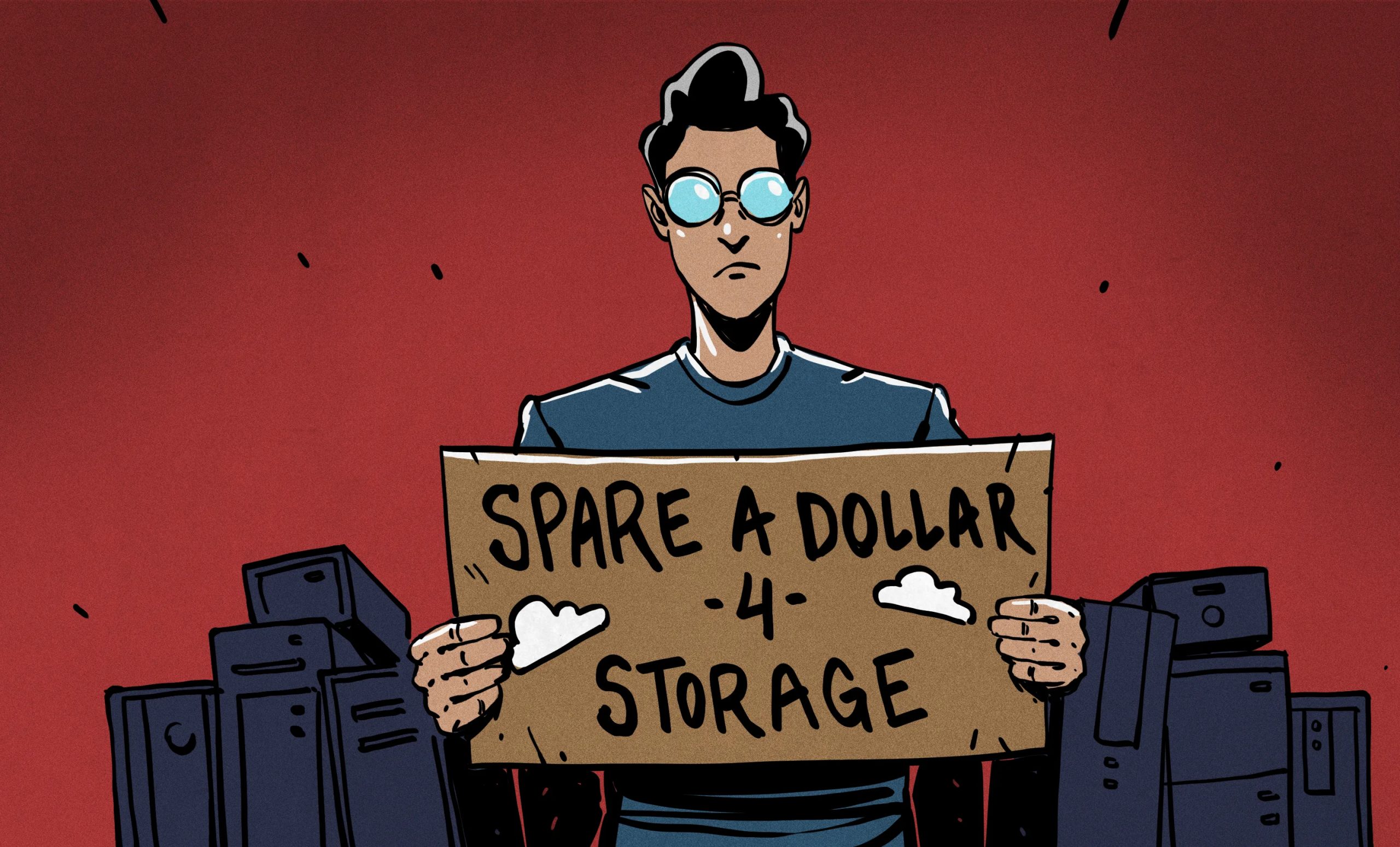
These days our appetite for more data storage is larger than ever, with video files larger, photo resolutions higher, and project files easily zipping past a few hundred MB. At the same time our options for data storage are becoming more and more limited. For the longest time we could count on there always being a newer, roomier, faster, and cheaper form of storage to come along, but those days would seem to be over.
We can look back and laugh at low capacity USB Flash drives of the early 2000s, yet the first storage drive to hit 1 TB capacity did so in 2007, with a Hitachi Deskstar 7k100, only for that level of capacity in PCs to not really be exceeded nineteen years later.
We also had Blu-ray discs (BD) promise to cram the equivalent of dozens of DVDs onto a single BD, with two- and even four-layer BDs storing up to a one-hundred-and-twenty-eight GB. Yet today optical media is dying a slow death as the sole remaining cheap storage option. NAND Flash storage has only increased in price, and the options for those of us who have large cold storage requirements would seem to be decreasing every day.
So what is the economical solution here? Invest in LTO tapes using commercial left-overs, or give up and sign up for Cloud Storage™ for the low-low price of a monthly recurring fee?
Advertisement
It’s Not Hoarding, I Swear
Although there are many people today who use just a lightweight laptop with something like 256 GB of storage in it without any complaints, the problem would seem to lie mostly with those who are really into having local and offline data. This can include things like multimedia content, but also project files and resources, which especially in the case of video editing and game development can quickly balloon into pretty serious size requirements.
Over the decades of memory storage, there’s been a near-constant flurry of new innovations and technologies, always with the knowledge that in a decade there would be massively larger forms of storage or at least big price drops to look forward to. This is how my first late 90s PC didn’t have just a zippy Celeron 400 CPU, but also a massive 4 GB HDD.
Compared to the 30 MB HDD in the 386-based system that I had before this was massive, but with multimedia content flooding in courtesy of the filesharing revolution, I quickly had to pop in a 10 GB HDD. By the time that I upgraded to a new PC that was considered small, and I found myself well above 20 GB, before soon joining the 1 TB and later the 5+ TB club. By 2012 HDDs were using 2 TB platters, so this was basically becoming unavoidable.
Meanwhile a lot of files were offloaded or backed up onto optical media, both CDs and DVDs. Although ZIP disks also briefly made an appearance in my PCs, optical discs were simply far cheaper and more universally usable.
The Problem
Sony was the only manufacturer of 128GB writable Blu-Ray discs. Other manufacturers topped out at 100GB.
Even before the current ‘AI’ datacenter-induced tripling of Flash storage costs that’s also affecting USB Flash drives and HDDs, optical media had been slowly phased out for a while. Even without checking sales numbers, you don’t have to be a genius to consider it a bad sign that manufacturers like Pioneer are exiting the optical storage market and big names like Sony ceased the production of recordable Blu-ray discs along with MiniDisc and MiniDV formats.
If you have recently shopped around for internal 5.25″ optical disc drives (ODDs) in particular, you may have noticed that these are becoming increasingly more rare and expensive. Even stand-alone BD player options are becoming more limited, with that distinct ‘final gasp’ vibe that comes with a dying format, as with VHS and kin in the past.
Advertisement
Part of the problem can probably be attributed to the move away by content distributors – including multimedia, games and software – from physical media to online distribution methods. This takes the form of streaming services, Software-as-a-Service (SaaS), and online game stores. At this point you do not even need a BD player in your home game console, never mind PC, to install games. Neither do you need a BD player connected to your smart TV as you can just join the new brave world of terminal-based subscriptions.
So with demand for optical media massively reduced by this shift, what’s left for those of us who just want to back up our data in peace and without shelling out too much hard-earned cash?
The Future
With the prospect of cheap DVD and BD blanks becoming a thing of the past, or unusable due to a lack of new optical drives to use them with, what options remain? We can look at metrics like cost per GB to see what might conceivably make sense.
The most recent 50-disc spindle of DVD+Rs that I purchased came in at just under €15 for 235 GB, so that’s about 6 cents/GB, and I could have gotten it much cheaper by going for larger spindles and shopping around some. For comparison, SSD storage was more than triple that even before the recent price surge, and HDDs are coming in around that same price tag as well.
A quick look at LTO tapes and drives for sale shows that while tapes for the older LTO-8 standard from 2017 are pretty reasonable, the drives cost an absolute fortune, so you’d have to be pretty lucky to score one without having to pawn off a kidney.
Advertisement
Add to this that LTO tapes are only really guaranteed for a lifespan of 15-30 years and are incomparably slower due to being a linear format. This makes tape storage only really suitable for the coldest of cold storage, and not for keeping some videos around, or for game development resources that you would like to pop in and quickly query without dying from old age while a tape seeks to the appropriate position.
The Solution?
Even assuming that the current insane surge in pricing for RAM, NAND Flash, and even HDD storage is just a temporary blip, and that by the time 2027 rolls around the RAMpocalypse will just be a bad dream to meme about, the basic economics of cost per storage would still not have changed in any measurable way.
The advantage of optical media, especially DVDs, is that they’re a very simple technology, relatively speaking. While there is some impressive technology in the optical pick-up component of an ODD, over the decades they have become highly affordable commodity devices. Meanwhile the discs are very cheap to produce, being at their core just some plastic with a coating on which the bits are written, while being very durable if kept away from physical harm.
It’s also essentially guaranteed that a DVD+R or BD-R will not have its data altered, something which cannot be guaranteed with a USB Flash drive. Filesystem corruption and electrical issues may damage or even destroy the Flash drive.
Advertisement
Although it’s easy to say that one should just ‘stop hoarding data’ or subscribe to some cloud storage solution for potentially infinite money per GB, high latency and the possibility of data loss due to a datacenter issue, there are many arguments to be made in favor of keeping local, offline copies, and that this should be done on highly durable media. We just cannot be sure that optical media will remain an option in the future.
What is your take on this conundrum? How do you manage your storage needs in this modern era, and what are your plans for the future? Please feel free to sound off in the comments.
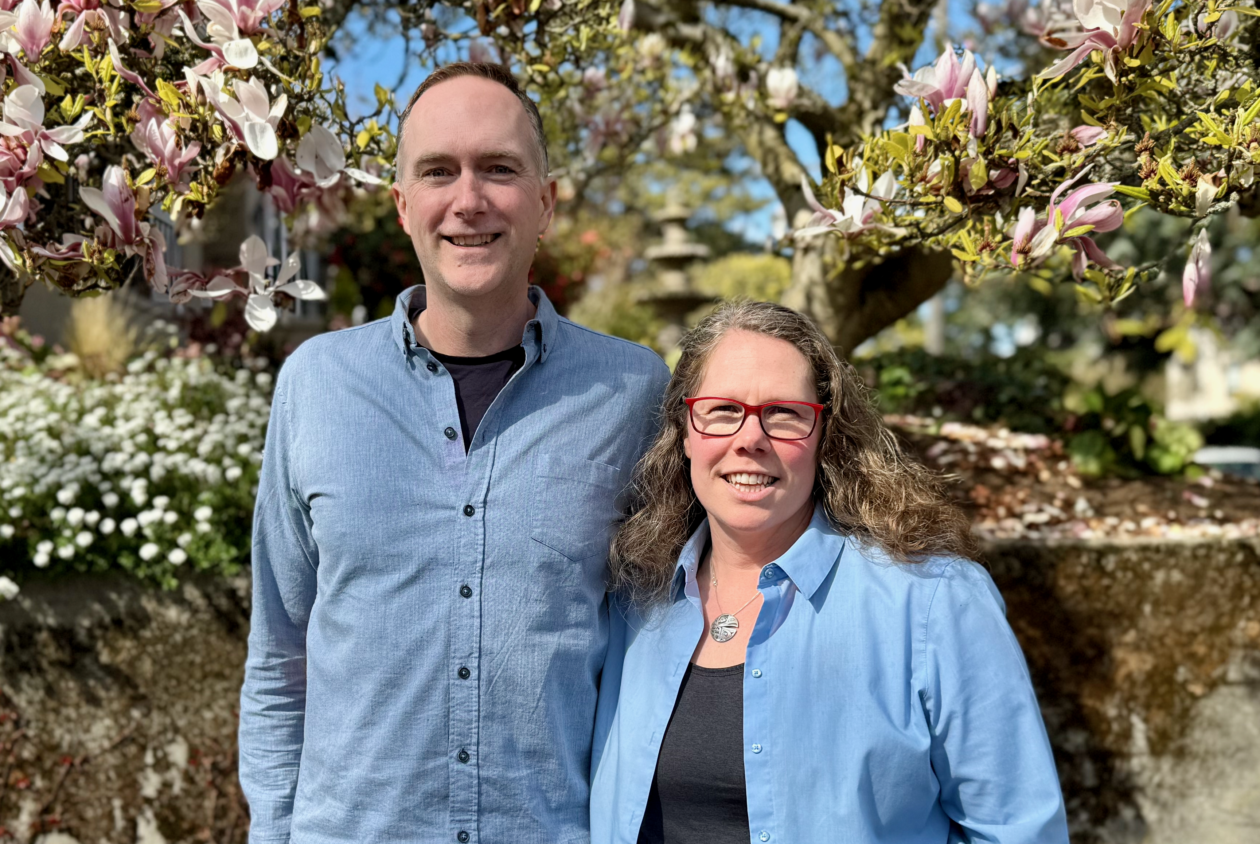
Ridge AI co-founders Jeffrey Heer and Ellie Fields. (Ridge AI Photo)
Ellie Fields and Jeffrey Heer know data visualization from the inside: Fields spent more than 12 years as a product and marketing leader at Tableau, and Heer is the University of Washington professor whose open-source tools are widely used for web-based visualization.
But even as they and their colleagues pushed the field forward, they couldn’t escape a similar conclusion: presenting and analyzing data on the web is basically still broken.
Their solution: Ridge AI, a Seattle-based startup that uses AI and browser-based technology to help software companies build and deploy interactive dashboards and data agents in hours instead of days or months, embedding them directly in their products for use by their customers.
The company calls its core product a “ridge” — a dashboard and a data agent that share a common data set, letting users get visual context from the dashboard and ask follow-up questions through the agent.
A sample ridge showing Washington state EV registration data alongside an AI data agent for follow-up questions. (Ridge AI Image)
Funding: Ridge AI is emerging from stealth Monday with $2.6 million in pre-seed funding led by Madrona. The Seattle venture capital firm’s investment was spearheaded by Managing Director Tim Porter and Venture Partner Mark Nelson, the former CEO of Tableau.
Advertisement
Joining in the funding is a roster of angel investors that reads like a who’s who of analytics, AI and data: Chris Stolte, Tableau co-founder and former CTO; Carlos Guestrin, co-founder of Turi and director of Stanford’s AI Lab; Adrien Treuille, founder of Streamlit; Elissa Fink, former Tableau CMO; and Jeff Hammerbacher, Cloudera founder, among others.
Target market: Although their technology could be applied broadly, Ridge AI is focusing specifically at the outset on serving software as a service (SaaS) companies, giving them a way to present rich, interactive analytics to the people and businesses that use their products.
In an interview, Fields said the need is especially acute when a SaaS company is trying to renew a customer’s contract. The product might be delivering real results, but if the people making the buying decision can’t see that in the data, the deal can be at risk.
“The CFO is going to be asking, is anyone even using this?” Fields said, calling it one of the use cases where Ridge AI’s technology could be of significant value to SaaS firms.
Advertisement
The pressure to prove this value has intensified amid the “SaaS-pocalypse,” as it’s known — as companies consolidate their software spending and the rise of custom AI-coded apps makes many of them question whether existing tools are worth keeping.
What they’re solving: Madrona’s Nelson said he experienced the larger problem during his time as CTO of Concur, where the company built an analytics product on top of IBM Cognos, giving customers the ability to glean insights into employee travel and spending.
It was important to the business, he said, but it was a pain to maintain, and it wasn’t in Concur’s core skillset. The problem persists for many SaaS companies to this day.
SaaS companies have historically had to choose between heavyweight business intelligence platforms like Tableau and Power BI, specialty embedded analytics tools, or building their own. Fields said none of those options was purpose-built for the problem Ridge is solving.
Advertisement
Founders: Ridge AI was co-founded by Fields, who serves as CEO, and Heer, chief scientist, who will continue as a UW professor in addition to working on the company.
Also on the team: Andy Caley, a founding engineer who previously worked at Tableau, and Fritz Lekschas, a founding research engineer with a Ph.D. from Harvard and more than 20 publications in data visualization.
From left, Madrona’s Tim Porter, Ridge AI CEO Ellie Fields, and Madrona’s Mark Nelson. (Madrona Photo)
Fields and Heer were introduced by Madrona’s Nelson and Porter. Nelson had known Fields since she worked for him at Tableau and he had separately kept in touch with Heer through his UW work. Porter, meanwhile, had gone to Stanford Business School with Fields.
“I can’t think of two people I like more, and would bet on more, than Jeff and Ellie,” Nelson said, describing the pairing as an example of what’s possible in Seattle’s tight-knit tech community.
Heer previously co-founded Trifacta, a data transformation company acquired by Alteryx in 2022. He and his academic collaborators have produced some of the most widely used open-source tools in data visualization, including Vega(-Lite), D3.js, and the Mosaic framework that serves as Ridge AI’s technical foundation.
Advertisement
Fields joined Tableau as its first product marketer and rose to senior vice president of product development over more than 12 years, spanning the company’s IPO and its acquisition by Salesforce. She went on to serve as chief product and engineering officer at SalesLoft, where she experienced firsthand the problem Ridge is now trying to solve.
Technology: Ridge runs in the user’s web browser rather than on a remote server, using Heer’s open-source Mosaic framework and an in-browser database called DuckDB. That architecture delivers near-instant interactivity and means the software company that embeds it doesn’t pay for cloud computing costs with every dashboard interaction.
On the creation side, AI agents handle the visualization design, so product managers can describe what they want in business terms rather than learning a specialized tool.
What’s next: Fields said Ridge AI plans to focus on its SaaS wedge for at least a couple of years before expanding, noting that the market has historically been under-served.
Advertisement
The company has been working with a small number of pilot customers, and is now inviting additional companies into a closed beta, accepting applications at ridgedata.ai.
Indoor wireless is hitting limits as more devices crowd the same spectrum. Streaming, video calls, and smart home gear are pushing networks harder while power use rises. A new class of laser chips offers a different path by moving data onto light.
Researchers built a chip-scale optical link that delivers ultra-fast indoor connections with lower energy use. Instead of broadcasting signals widely, it sends data through controlled infrared beams, opening more usable capacity while avoiding interference in dense spaces.
At the core is a chip with 25 microscopic lasers, each carrying its own stream. Working in parallel, they push throughput far beyond a single source. In testing, the setup reached more than 360 gigabits per second across a short indoor link.
The gains are not just speed. Power use drops significantly, offering a more efficient way to handle rising demand.
Advertisement
Laser array proves the speed
Performance comes from a 5 by 5 array of vertical-cavity surface-emitting lasers, each acting as its own high-speed channel.
Ono Kosuki / Pexels
In tests over two meters, individual lasers delivered about 13 to 19 gigabits per second. With 21 active channels, total throughput reached 362.7 gigabits per second, among the fastest chip-scale optical results so far.
The limit came from the receiver hardware, not the transmitter, suggesting higher speeds are possible with better components.
A custom optical setup also shapes each beam into a defined square, limiting overlap so multiple links can run side by side without interference.
Why light changes the equation
Radio networks struggle in crowded spaces where signals interfere and capacity gets stretched. Light avoids those limits by offering more bandwidth and precise control over where signals go.
Advertisement
Instead of blanketing a room, the system creates a grid of targeted beams with minimal spillover. Measurements show uniform coverage across the target area, helping maintain stable performance for multiple devices.
Getty Images
The setup runs at about 1.4 nanojoules per bit, roughly half that of comparable Wi-Fi systems. The tradeoff is range, as the current setup works over short distances and depends on line of sight.
Where this goes next
This approach is meant to complement existing networks by offloading heavy traffic in high-demand indoor spaces.
The hardware fits on a sub-millimeter chip built with standard processes, making integration into fixtures or access points plausible, though no commercial timeline is given.
As demand rises, combining radio and light-based links could become standard, with laser systems handling the heaviest traffic.






















































You must be logged in to post a comment Login