Health and wellness brand focuses on customers using GLP-1 treatments after surge in demand
Henry Saker-Clark Press Association Deputy Business Editor
07:45, 07 Apr 2026Updated 07:47, 07 Apr 2026
Thomas Ryder, left, and Steven Granite from Applied Nutrition
Applied Nutrition says it is expanding its portfolio of products for customers using weight loss medications following a spike in demand over the past year.
Advertisement
The health and wellness brand said the dramatic rise in Britons using GLP-1 treatments, such as Mounjaro and Wegovy, has created an opportunity to launch products specifically tailored for these consumers. Those new products will launch later this year.
The Merseyside firm has already entered the sector, offering GLP-1-compatible high-protein ready meals from the end of last year. Thomas Ryder, founder and chief executive of the company, stated the business believes it can benefit long-term from serving customers using weight-loss treatments.
He told the Press Association news agency: “The GLP-1 user is a growing customer.
“We see this as a consumer at the start of their weight loss journey who is now looking at how the medication can help them.
Advertisement
“There is an opportunity, as those customers often need supplements and need smaller portions.
“I think this is a catalyst for the health and wellness space if we have that consumer in mind.
“We do have a number of products we will bring to market in this area because we do see that area growing.”
Mr Ryder said the company has seen growth after pursuing new customer opportunities and channel diversification, which has witnessed the business expand in UK retail outlets. Last month, the business reported stronger sales and profits for the previous year.
Advertisement
The London-listed firm said pre-tax profits surged by 77.1% to £20.9 million for the six months to 31 January, compared with the prior year. Applied Nutrition said this followed a 56.5% rise in sales to £74.5 million for the half-year period.
However, it also warned that sales volumes in the Middle East are expected to be affected by the ongoing conflict in the region.
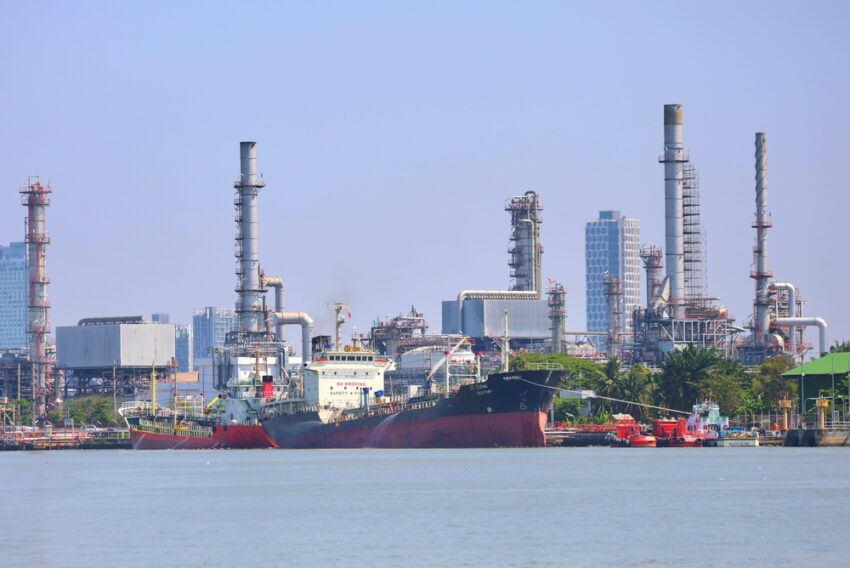
The price of oil climbed above $111 a barrel on Tuesday as mounting anxiety over stalled diplomatic efforts in the Gulf pushed energy markets higher and left equities treading water.
Brent crude gained 1.6 per cent to $111.57 in early Asian trading, extending a rally that has seen the benchmark surge more than 50 per cent since Iran’s effective blockade of the Strait of Hormuz, the chokepoint through which roughly a fifth of the world’s oil and liquefied natural gas once flowed freely.
The immediate catalyst was Tehran’s rejection of a US peace proposal on Monday. Iran instead issued its own ten-point counter-plan, relayed through Pakistan, according to state media. Washington’s deadline for agreement expires at 1am UK time on Wednesday, and President Trump has made no secret of the consequences, warning that failure to reach a deal would see Iranian infrastructure reduced to rubble.
For businesses already grappling with elevated input costs, the prospect of a further escalation is deeply unwelcome. The International Energy Agency has described the strait’s closure as the most severe supply disruption in the history of the global oil market, with Brent futures touching nearly $120 a barrel last month when regional energy assets came under attack.
Some commodity analysts have gone further still, warning that a prolonged conflict could drive prices as high as $200 a barrel, a scenario that would dwarf the energy shocks of the 1970s and inflict serious damage on margins across transport, manufacturing and retail.
Advertisement
Stock markets reflected the uncertainty. The FTSE 100, reopening after the Easter break, was effectively flat at 10,425, whilst bourses in Frankfurt and Paris managed only modest gains. In Tokyo, the Nikkei closed barely changed.
Vasu Menon, managing director of investment strategy at OCBC in Singapore, captured the prevailing mood, noting that any US strikes on Iranian power infrastructure would represent a marked escalation, raising the spectre of retaliatory action against Gulf energy facilities.
For UK firms with exposure to global supply chains, the next 24 hours could prove decisive. A deal would offer some relief to energy markets; a breakdown in talks would almost certainly send oil prices sharply higher and deepen the squeeze on an already stretched global economy.
Amy Ingham
Amy is a newly qualified journalist specialising in business journalism at Business Matters with responsibility for news content for what is now the UK’s largest print and online source of current business news.
LONDON — The FTSE 100 index edged higher Tuesday, reaching 10,461.88 points by mid-morning trading on April 7, 2026, as gains in energy and defensive stocks offset broader caution stemming from escalating geopolitical risks in the Middle East.
FTSE 100 Surges 0.8% Today as Oil Eases and Markets Rebound (Stock Market)
The blue-chip benchmark rose 25.59 points, or 0.25%, from the previous close of 10,436.29 set on April 2. It traded within a range of 10,399.45 to 10,487.67 during the session, according to data reported at 09:57:33 BST. All figures were delayed by at least 15 minutes as markets remained active.
The modest advance came as investors weighed fresh developments around U.S. President Donald Trump’s deadline for Iran to reopen the Strait of Hormuz, with oil prices fluctuating amid fears of supply disruptions. Energy giants such as Shell and BP provided support, benefiting from elevated crude benchmarks even as some analysts warned of potential demand destruction if conflict intensifies.
Banking and mining shares showed mixed performance, reflecting ongoing sensitivity to interest rate expectations from the Bank of England and global growth concerns. Defensive sectors including pharmaceuticals and consumer staples offered stability, helping limit downside on a day when European peers traded in a narrow band.
The FTSE 100 has displayed resilience in early April after a volatile first quarter marked by sharp swings tied to Middle East tensions. The index had recovered some ground following a period in March when it briefly erased all 2026 gains amid oil price spikes above $110 per barrel. Tuesday’s small uptick extended a pattern of cautious optimism as traders awaited clearer signals on monetary policy and diplomatic outcomes.
Advertisement
Analysts noted that the UK market’s heavy weighting toward energy, financials and materials leaves it particularly exposed to commodity cycles and geopolitical headlines. With Brent crude hovering near elevated levels, oil majors contributed positively to the index, counterbalancing any weakness in export-oriented or rate-sensitive names.
Broader market sentiment remained guarded. Investors continued monitoring Trump’s repeated warnings of potential strikes on Iranian infrastructure, including power plants and bridges, should Tehran fail to comply with the latest deadline. Such developments have kept volatility elevated across global equities, with the FTSE 100 oscillating around the psychologically important 10,400-10,500 zone in recent sessions.
Year-to-date performance for the FTSE 100 in 2026 has been uneven. The index enjoyed strong gains earlier in the year, briefly pushing toward record territory above 10,900 points in February before retreating sharply on conflict-related fears. By early April, it had clawed back some losses but remained below its 2026 peak.
Tuesday’s trading volume appeared moderate for a midweek session, consistent with lighter activity often seen when major U.S. markets are closed or when headlines dominate over corporate earnings. No major UK earnings releases dominated the calendar, shifting focus to macroeconomic and geopolitical factors.
Advertisement
Sector leaders on the day included energy firms riding the oil wave, while utilities and healthcare names provided a buffer. Conversely, some technology and consumer discretionary stocks lagged as risk appetite stayed restrained.
The pound sterling traded softer against the dollar, reflecting mixed UK economic data and global safe-haven flows. A weaker currency can support multinational earnings within the FTSE 100 when translated back to sterling, offering another tailwind for the index on export-heavy days.
Looking ahead, market participants await the next Bank of England policy decision and inflation readings. Expectations for gradual rate cuts have been tempered by persistent inflationary pressures linked to energy costs. Any dovish signals could further support equities, particularly rate-sensitive sectors like real estate and banking.
The FTSE 100’s composition — dominated by established multinational corporations — has historically provided a degree of insulation during periods of global uncertainty compared with more growth-oriented indices. However, its underperformance relative to U.S. benchmarks in recent years has prompted ongoing debate about UK market valuations and attractiveness to international investors.
Advertisement
Some strategists argue the index offers compelling dividend yields and undervalued cyclical stocks, particularly in banking and resources, should geopolitical risks ease. Others caution that prolonged Middle East instability could weigh on global growth and commodity demand, capping upside.
As of mid-morning Tuesday, the intraday high of 10,487.67 suggested buyers were testing resistance near recent swing levels, while the low of 10,399.45 indicated underlying caution. The 0.25% gain represented a measured step rather than a decisive breakout, aligning with choppy conditions seen across European bourses.
Broader European indices showed similar modest moves, with the STOXX 600 and CAC 40 trading in narrow ranges. Wall Street futures pointed to a potentially quiet open later in the day, pending any fresh headlines from Washington or Tehran.
For UK investors, the FTSE 100 remains a core benchmark for pension funds and passive strategies. Its performance carries significant implications for retirement portfolios given the index’s prominence in domestic savings products.
Advertisement
Tuesday’s data underscored the market’s ability to absorb geopolitical noise without sharp sell-offs, a resilience tested repeatedly since late February when tensions first escalated. Oil prices, while elevated, had not yet triggered the kind of sustained demand destruction feared by some economists.
Analysts will continue watching for signs of rotation between defensive and cyclical stocks as the week progresses. Corporate earnings seasons in the coming months could provide fresh catalysts, particularly from banking heavyweights and energy majors reporting on first-quarter results.
In the longer term, structural questions persist about the FTSE 100’s growth prospects amid slower UK economic expansion compared with the United States. Initiatives to boost domestic investment and listings have gained attention, though tangible shifts remain gradual.
As trading continued into the London afternoon, the index hovered near the 10,460 level. Investors appeared content with small gains while monitoring developments that could rapidly alter risk sentiment.
Advertisement
The session served as a reminder of the delicate balance global markets navigate between corporate fundamentals and headline-driven volatility. With the FTSE 100 closing the previous session at 10,436.29 after a 0.69% advance on April 2, Tuesday’s continuation suggested steady but unspectacular momentum.
Whether the index can sustain gains and push toward the upper end of its recent range will depend largely on de-escalation signals from the Middle East and domestic policy clarity. For now, the modest 0.25% rise offered a steady start to the trading week for UK equities.
Kate Alessi, Google’s managing director for the UK and Ireland, has pushed back firmly against warnings that artificial intelligence will trigger widespread unemployment, insisting that the greater risk lies in failing to equip workers with the skills to thrive alongside the technology.
Speaking as Google unveiled a new national upskilling programme backed by £2 million in grant funding from Google.org, Alessi argued that history offered a reassuring precedent. Every previous wave of technological disruption, she noted, had prompted the same anxieties about disappearing jobs – and every time, the fears had proved overblown as new roles emerged to replace the old.
Her intervention comes at a pointed moment. In January, the Mayor of London, Sadiq Khan, cautioned that AI could bring about a new era of mass unemployment without proper oversight, while Bank of England governor Andrew Bailey drew comparisons with the Industrial Revolution, stressing the need for retraining and education on a significant scale.
Alessi does not deny that change is coming, but she frames it rather differently. Citing research from the policy consultancy Public First, she pointed out that roughly six in ten UK jobs are expected to be enhanced rather than eliminated by AI. The challenge, she maintained, is ensuring that people are prepared to step into the roles the technology creates, not simply bracing for the ones it displaces.
The figures suggest there is considerable ground to make up. According to new research commissioned by Google, although nearly two thirds of the UK population have tried AI tools, just one in ten consider themselves advanced users. Only a quarter felt they were deploying AI in ways that saved them meaningful time or gave them genuinely new capabilities.
Advertisement
“Most people are really only scratching the surface,” Alessi said.
To address that gap, Google is rolling out a series of practical initiatives. Alongside the grant funding, the company plans to run Gemini tours across universities, aimed at ensuring graduates enter the workplace with a working knowledge of AI. It will also stage a series of pop-up events branded as “squeeze the juice” bars in towns and cities around the country, designed to show ordinary users how to move beyond basic prompting to tackle more complex tasks – from automating routine admin to conducting in-depth research.
Jamie Young
Jamie is Senior Reporter at Business Matters, bringing over a decade of experience in UK SME business reporting.
Jamie holds a degree in Business Administration and regularly participates in industry conferences and workshops.
When not reporting on the latest business developments, Jamie is passionate about mentoring up-and-coming journalists and entrepreneurs to inspire the next generation of business leaders.
FILE PHOTO: A for sale sign is shown for a residential home in Encinitas, California, U.S. July 25, 2025.
Mike Blake | Reuters
A version of this article first appeared in the CNBC Property Play newsletter with Diana Olick. Property Play covers new and evolving opportunities for the real estate investor, from individuals to venture capitalists, private equity funds, family offices, institutional investors and large public companies. Sign up to receive future editions, straight to your inbox.
Advertisement
The all-important spring housing market is well underway, but expectations are falling short due to the war in Iran and its impact on both the U.S. economy and consumer sentiment.
Mortgage rates, which were previously forecast to be far lower this spring than last, are now much higher, and concerns over employment and inflation are throwing cold water on pent-up homebuyer demand.
Buyers in the first quarter of this year were more concerned about the economy and mortgage rates than they were about home prices, according to real estate agents who participated in the quarterly CNBC Housing Market Survey.
“They’re fearful of the war, they’re fearful of gas prices, [for] their job security,” said Faith Harmer, an agent in the Las Vegas metropolitan area.
Advertisement
The CNBC Housing Market Survey is a national inquiry of real estate agents selected randomly across the United States. Responses for the first-quarter survey were collected between March 24 and March 30. This quarter, 70 agents shared their insights.
When asked about their buyers’ primary concern, about one-third of agents said the economy, while another third said mortgage rates. The latter marked a big jump from just 26% in the fourth quarter.
Only 9% of agents in the first-quarter survey said prices were their buyers’ biggest concern, down from 18% in the previous period.
This should come as no surprise, as the average rate on the 30-year fixed mortgage hit a low of 5.99% the day before the Iran war started and then began to climb. It’s now hovering around 6.5%.
Advertisement
Still, while most agents said prices were either flat or falling, nearly twice as many agents, 29%, reported home prices rising during the first quarter than did in the previous quarter. Price dynamics can vary widely depending on the market and region of the country.
But affordability is not improving as much as most experts had forecast. When asked how affordability was hitting buyers, 19% of agents said it was causing them to get out of the market. That was up from just 11% at the end of last year.
More than half of agents reported at least one contract cancellation.
“Buyers that were on the fence and deciding to buy are now on the fence and going the other direction, saying, ‘I’m not going to buy,’” said Eric Bramlett, an agent in Austin, Texas.
Advertisement
As buyer demand drops, homes are sitting on the market longer. In the first quarter, 31% of agents reported that their listings were on the market for more than six weeks, compared with 26% in the fourth quarter.
“We just had one recently where they wanted what they wanted, and they wouldn’t come down to a price that the market could bear,” Harmer, the agent in Las Vegas, said. “So, in the end, they just pulled it off the market.”
Sellers are now more worried about that wait time. Fully 37% of responding agents said time on the market was their sellers’ top concern, compared with 30% at the end of last year.
That took share from price as sellers’ top concern, falling from nearly half of agents ranking it first to 39%.
Advertisement
Still, fewer agents reported price cuts than the previous quarter, but that may be the result of seasonal dynamics and the impact of lower mortgage rates in the middle of the first quarter, which gave buyers more purchasing power.
That may also be why fewer agents said they had to delist homes compared with the fourth quarter, when agents reported a slower-than-usual fall market with more frustrated sellers.
Even as concerns over the economy and interest rates rise, agents in the first quarter still said the market was either in the buyer’s favor or balanced. The share that called it a buyer’s market did drop quarter to quarter, from 42% to 36%, likely due to those new buyer headwinds – higher mortgage rates, the war and a weaker job market. And sellers are taking note.
“We’ve had two sellers who were planning on listing in May already decide, ‘Let’s hold, let’s search later in the summer for our next home to buy, and then we’ll try and list in the fall,’” said Dana Bull, an agent in the Boston area. “So they originally thought that the spring would be perfect for them, because it just felt like it was going to be the best time, and now they don’t feel as confident, and they want to wait and see.”
Advertisement
Just over half of agents surveyed said they expect the market to improve as the spring goes on, but that share is way down from the end of last year, when there was no war in the picture.
A higher share of agents said they expect the market to stay the same as last quarter, which is significant, given that the market is going from the historically slowest season for housing to the usually busiest.
Get Property Play directly to your inbox
CNBC’s Property Play with Diana Olick covers new and evolving opportunities for the real estate investor, delivered weekly to your inbox.


















































You must be logged in to post a comment Login