
Editor’s note, April 7, 2026, 5:10 pm ET: The Artemis II mission is conducting experiments that may radically advance our understanding of space medicine. The findings of A Virtual Astronaut Tissue Analog Response (AVATAR) experiment could help us create personalized medical kits for astronauts, and the Artemis Research for Crew Health & Readiness (ARCHeR) study will monitor the astronauts’ health as they go further into space than any human beings have gone before. As we await the findings of those experiments, Vox is republishing this article, which originally launched September 24, 2025.
Tech
What is space medicine? The science behind getting humans to Mars, the moon, and beyond

Vox Members got to read this story first. Support independent journalism and get exclusive access to stories like this by becoming a Vox Member today.
One day, Mars might become a home to humans. But first, there’s the cinematic, sci-fi challenge of making the Red Planet suitable for life. There’s a problem, though: The typical person can’t get to space safely. That throws a wrench into the whole “let’s move to Mars” plan in the face of extreme climate change and other existential risks on Earth.
Today, the path to becoming an astronaut is “littered with the hopes and dreams of medically disqualified candidates,” said Shawna Pandya, a research astronaut with the International Institute for Astronautical Sciences (IIAS) and the director of its Space Medicine Group. “Once upon a time, kids being diagnosed with Type 1 diabetes in the doctor’s office would be told, ‘Well, you could still be anything, except an astronaut.’”
Here are some of the common reasons why you might be medically disqualified from becoming an astronaut:
- Tobacco use
- Autoimmune disorders
- Temporomandibular joint (TMJ) disorders
- Sleep apnea
- Asthma
- Hypertension
- Migraines
- Anxiety and depression
Astronauts inherently aren’t representative of the broader population — they’re selected for being in very good health. The stress of existing in essentially weightless microgravity conditions, like those on the International Space Station (ISS), can be incredibly tough on the human body. Astronauts face heightened risks of early-onset osteoporosis, insulin resistance, and significant muscle mass loss. Naturally, government space agencies want people whose bodies are more resilient to such pressures, and who can perform necessary duties without a ton of medical intervention.
According to Haig Aintablian, director of the UCLA Space Medicine Program, “just as pregnancy causes the body to undergo complex and unique changes, spaceflight also produces distinct and significant physiological changes.” It also requires its own medical specialty to manage (aptly called space medicine).
There’s a lot scientists don’t know, from the physical to the psychological. That’s a problem — for the future of science, space travel, and maybe even human existence at large.
NASA wants to go to Mars for research, and aims to send humans there as early as the 2030s. As the most similar planet to Earth in our solar system, Mars may have once harbored life, or may even currently. And in the future, we may even need it to support us.
Decades ago, seriously engaging with the idea of moving to Mars was extremely fringe for a multitude of reasons, ranging from a lack of technical feasibility to the desire to put scientific resources toward solving problems on Earth. Elon Musk — founder of the spaceflight company SpaceX — became a famed advocate for colonizing Mars in the early 2000s. He still is. Musk, who is currently worth around $410 billion, claims that he is only accumulating assets for the purpose of Martian space settlement. Last year, he said that he wants 1 million human settlers on the Red Planet in a self-sustaining city by 2050.
Now Musk isn’t alone. NASA experts, biologists, academics, futurists, disaster resilience researchers, and physicians are seriously considering the possibility of making humanity an interplanetary species.
“The biggest problem for humanity to solve is the guaranteed survival of our species — which the logical answer is to become multiplanetary,” Aintablian said. “I don’t think there’s a better solution than Mars.”
While we know some of the health effects of being on the ISS, we can’t really replicate the effects of Martian radiation exposure. Kelly Weinersmith — a biologist and co-author of A City on Mars: Can We Settle Space, Should We Settle Space, and Have We Really Thought This Through? — thinks that settling Mars on Musk’s timescale will be catastrophic. She argues that we shouldn’t rush to set up shop before understanding — and mitigating — the risks, even if this takes centuries rather than decades.
But many advocates for settling Mars are much more impatient. The only way to get there safely would be to unlock significant advances in space medicine, a nascent field that has just barely scratched the surface in its approximately 75-year history.
“Nothing that humanity has done that has been worthwhile has been easy,” Aintablian told me. “So much in our development as a civilization has been difficult, and the reason why we’re able to live such comfortable lives now is because of the extremely difficult challenges that humans have had to solve in the past.”
What we know — and don’t — about human health on Mars
Since extremely few people end up in space right now, the researchers trying to understand how to improve human health there have a limited sample size to work with. Yuri Gagarin became the first human in space in 1961, and more than 600 astronauts have followed him. Only about a sixth of them are women.
NASA researchers have identified some key ways that time in space can impact human health — radiation exposures, isolation, distance from Earth, altered gravity, and environmental consequences like an altered immune system. But we’re still lacking many specific examples of how these different dynamics play out in real life.

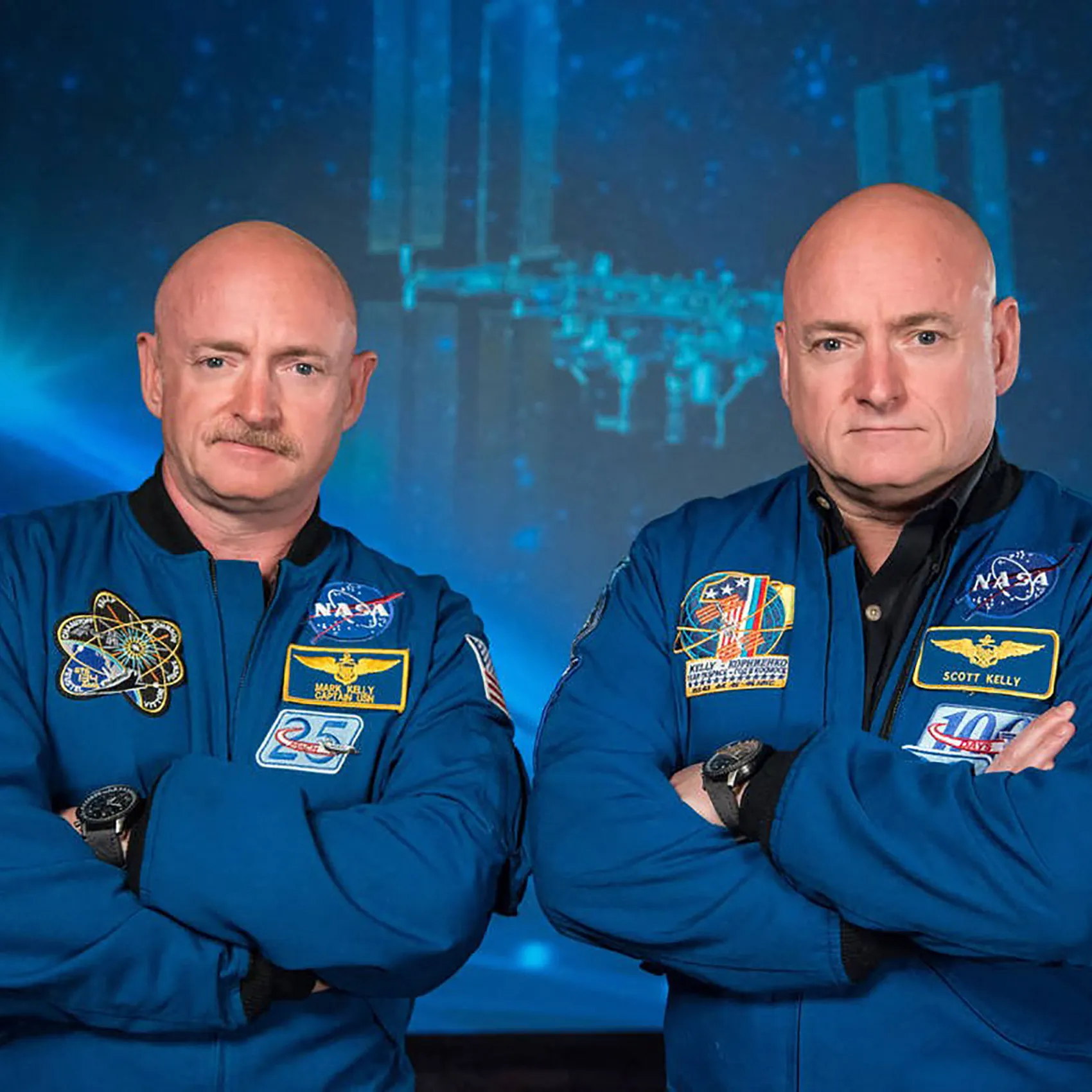
One of the best studies we have is NASA’s famous 2019 twins study. Twin studies allow researchers to separate the effects of genetic predispositions from environmental influences on health outcomes. NASA compared the health of identical twin brothers Scott and Mark Kelly over the course of a year. Scott went into orbit on the ISS while Mark remained on Earth. Both underwent the same battery of physiological tests, and the results indicated some surprising new differences between the two men.
Scott’s telomeres — the bits of DNA at the end of our chromosomes — lengthened while he was in space and (mostly) reverted to normal once he returned to Earth, possibly indicating radiation-induced DNA damage and potential increased cancer risk. Scott also lost body mass, developed signs of cardiovascular damage that were not present in Mark, and experienced some short-term cognitive changes after returning to Earth.
While survivable with the right training, equipment, and precautions, the twin study demonstrated how space’s unique environment can have significant consequences for gene expression and overall health while in orbit.
If the best of the best struggle, what about the rest of us? We’re getting some insights here now, too.
Since space tourism has literally taken off, astronauts aren’t the only ones going to space now: Wealthy non-astronauts, like Jeff Bezos, Gayle King, and Katy Perry, have recently taken short, recreational jaunts into outer space through Bezos’s space tech company, Blue Origin.

Aintablian is very excited about the prospect of civilian access to space increasing, which will inherently mean people with medical issues are also flying. This represents a huge opportunity for scientists to study the medical management of a much wider range of conditions.
That said, 10 or 15 minutes in space is hardly comparable to the conditions on the ISS. And Mars poses even worse consequences in terms of hostile environments and time spent away from Earth. Mars has toxic dust, lacks plant life and a breathable atmosphere, and only has about 40 percent of Earth’s gravity. Earth’s global magnetic field protects our planet from harmful radiation, and the Martian counterparts are localized, not planet-wide.
The longest time someone has been in space consecutively is 438 days aboard a space station. But crewed missions to Mars would probably take at least nine months just to get there, let alone stay or travel back (which could take up to three years). Mars is usually around 140 million miles from Earth based on its orbital path around the sun, with up to a 20-minute communication delay one way. If they experienced a medical emergency, astronauts likely wouldn’t be able to access telemedicine instructions in time, and they couldn’t turn back around for treatment.
A crewed mission to Mars would have to take all of their supplies with them before they left our planet. And when the first people heading to Mars set foot on the planet, they won’t have access to the intense support astronauts receive when landing back on Earth.
Getting to Mars is only part of the challenge. We’ve been to space, but so far, humans have only ever sent robots to the Red Planet. We are making educated guesses at what Mars is like for living things. Earth analogues aren’t able to truly replicate the closed, hostile conditions of the space environment, which can wreak havoc on astronauts’ mental health. Desert research stations have an atmosphere, while the moon barely has one — and setting up that modest base was a huge mission in its own right. Weinersmith told me that scientists at polar research stations are isolated in remote, inhospitable environments, but they can “still open the door, take a deep breath, and not die.”
Medicine’s new frontier
We’re still pretty far from being able to breathe in Mars’ atmosphere — but it would be nice to get there one day and simply not die.
Programs dedicated to figuring out how to get humans safely into space for long periods of time are popping up, and non-physician health care providers are getting in on the action too. UCLA is planning to launch a space nursing program and possibly space paramedic training. SpaceMed is a European master’s program focused on human health in spaceflight and other extreme conditions.
Today, astronauts receive most of their care from Earth-based aerospace medicine physicians called flight surgeons through telemedicine. Aintablian envisions a future where health care providers directly accompany astronauts on their expedition-class missions, like to the moon or Mars. Artificial intelligence can act as a resource for the on-board flight surgeon, he predicted, and aid in the development of other technologies that will bring us closer to Mars.
Such technology is already in the works. Google recently collaborated with NASA to develop an AI system that could guide astronauts in diagnosing and treating medical conditions that arise in-flight when they lack access to telemedicine.
But the devil is in the details, Pandya told me. AI can help with just-in-time training for medical emergencies and diagnostics, but the data requirements would be massive. Since extremely few people end up in space — and the ones who do are overwhelmingly male — models might be trained on an unrepresentative dataset that could lead to inaccurate predictions of physiological changes in space. These kinks need to be worked out first.
Right now, there’s a gendered gap in the research — so much so that Weinersmith told me there’s never a line to the women’s restroom at space settlement conferences. Human reproduction and development in space, as a result, is wildly understudied.
As far as we know, no human being has ever been to space while pregnant, and we don’t know of any humans who have been conceived in space. We’re going to learn a lot about reproduction on Earth from the first human space pregnancy and space birth, a prerequisite for a self-sustaining settlement on Mars. (Plus, space tourism companies are talking about hotels in space, and we know what people do in hotels.) Ideally, you want to have an idea of what will happen to someone giving birth in space before they actually go through it.
“What we’re arguing is that we should do the research to understand those risks before we go out there because if there are massive risks, there usually are technological solutions for some of these,” Weinersmith said.
NASA will begin its second Crew Health and Performance Exploration Analog this October, a year-long “mission” to Mars in a 3D-printed habitat at Johnson Space Center in Houston, where it will collect behavioral health data on the effects of isolation and confinement. Scientists are conducting bed rest studies, which simulate the physiological effects of altered gravity and weightlessness. And as funding cuts transform the future of scientific research on Earth and beyond, space medicine researchers are among those advocating for continued investment in space and biomedical science.
Maedeh Mozneb, a biomedical engineer and project scientist in the Sharma Lab at Cedars-Sinai Medical Center, told me that the ultimate goal is to send “avatars” of astronauts to space by taking their stem cells and creating 3D tissue cultures called organoids that represent different parts of their body — yes, miniature hearts, kidneys, and even brains made from Earth-dwelling humans. From there, scientists can determine personalized countermeasures such as workout plans or supplements tailored to each astronaut’s needs, before they actually end up in space.
The hope, for those space medicine physicians like Pandya, is that in a spacefaring future, all medical disciplines — from neurology to radiology — will be represented in space medicine.
Space medicine research and practice isn’t cheap. “I often get asked,” said Pandya, “‘Why are you spending money on space health when we have all of these problems on Earth?’” But that’s the wrong way to think about it, she said.
Research conducted in space has already improved health on this planet. Advances in digital imaging for moon photography during the 1972 Apollo 17 mission later played a crucial role in CT scans and MRIs. Remote health monitoring tools designed for astronauts in space are now widely used in hospitals.
One of the next big things in space medicine “is probably going to be the development of radiation protection mechanisms,” Aintablian told me.
Space medicine research will also allow more people to go to space. In 2023, Pandya’s team demonstrated the safety and functionality of a continuous glucose monitor in the spaceflight environment. This could eventually allow diabetics to check their blood sugar in space. It has implications for current astronauts, who can develop insulin resistance and pre-diabetes symptoms in longer-duration spaceflights. The child diagnosed with Type 1 diabetes who wants to be an astronaut may actually have the chance to live out their dream now, and studying how the body metabolizes glucose in space helps us better understand health on Earth.
Then there are the diseases that take decades to unfold. Muscle loss in space can help scientists better understand how to treat conditions like Duchenne’s muscular dystrophy. On Earth, neurodegenerative diseases like Alzheimer’s often aren’t apparent until a person is in their late 60s.
In microgravity, said Shelby Giza, the director of business development at Space Tango, a company that facilitates automated research and development in microgravity conditions, “you can see that kind of disease output in a matter of weeks.” Research on these conditions can be conducted much faster — and hopefully accelerate the pace of medical breakthroughs.
The same can be said for cancer. Not all radiation exposures are made equal, and susceptibility to the harmful effects of radiation varies between individuals. Since the ISS is within the protection of Earth’s magnetosphere, it’s not the best comparison to the elevated radiation levels astronauts would face on Mars.
According to former NASA astronaut and biologist Kate Rubins, most astronauts are healthy people in their 30s and 40s, an age when cancer typically doesn’t develop. Scientists must track astronauts for decades after their last spaceflight to see if cancer or other adverse health conditions occur. NASA’s Lifetime Surveillance of Astronaut Health program, which is voluntary for former astronauts and not specific to cancer alone, monitors the health status of people like Kelly and Rubins for the rest of their lives.
Exposure to space radiation is linked to developing cancer and degenerative diseases. To mitigate the risk of developing fatal cancers, NASA currently limits astronauts’ spaceflight radiation exposure to 600 millisieverts (mSv) — roughly the equivalent of 60 CT scans of the torso and pelvis — over the course of their entire career. A 2023 NASA white paper estimates that a healthy astronaut will have a 33 percent increased risk of dying from cancer in their lifetime after a 1,000-day mission to Mars.
One of the next big things in space medicine “is probably going to be the development of radiation protection mechanisms,” Aintablian told me. “I do believe that with the amount of emphasis being placed on radiation protection, we’re going to figure out ways to actually protect against significant amounts of radiation for the general public for multiple uses.”
While it’s still relatively early days for the space pharma industry, life science companies are taking note, seeing microgravity as a platform for better drug discovery.
Like fiber optic cables used for telecommunications, some pharmaceuticals are better synthesized in microgravity conditions. Scientists can produce more uniform protein crystals in microgravity, which can improve drug injectability and reduce the need for refrigeration.
Raphael Roettgen, an entrepreneur and the co-founder of space biotech startup Prometheus Life Technologies, told me that organoids — those 3D cell models replicating human organs — grow more cleanly in space without Earth’s gravity weighing them down. Derived from non-embryonic stem cells, these miniature organ models have tremendous potential for personalized medicine.
Roettgen hopes that human space organoids could reduce the need for animal testing in the near term. Eventually, he hopes that new organs could be regenerated for patients needing transplants. Since the new tissue would be derived from the patient’s own stem cells, there would not be a risk of immune rejection, saving transplant patients astronomical costs and immense suffering. He estimates that liver regeneration and transplants from these organoids could become a reality in patients within the next 20 years.
Microgravity is an “expensive tool,” but an important one nonetheless, said Mozneb, who studies the effects of low earth orbit on stem cell differentiation. She hopes increasing commercialization and new technologies will significantly decrease the cost of launching experiments into orbit over the next 10 years.
What we already know about space medicine is a drop in the ocean of what we will discover as more people — astronauts and otherwise — venture into space.
“It’s like if you were studying genetics back in the ’90s,” Mozneb said. “Everything is a discovery.”

Continue Reading


When it rains, it pours.
That phrase defined retail cybersecurity in 2025. What began as isolated incidents quickly became prolonged, intense disruptions, exposing just how interconnected — and fragile — modern retail operations really are.
CTO and Co-Founder at Armis.
Over the year, high-profile retailers around the world were hit. Luxury global brands like Gucci and Balenciaga suffered data breaches; Victoria’s Secret was forced to temporarily shut down parts of its digital operations. While Marks & Spencer, Co-Op and Harrods in the UK all faced incidents, with disruption for M&S lasting for 15 weeks.
Article continues below
Different triggers, same outcome: major disruption and financial loss.
But when disruption spreads this quickly and lingers this long, it stops being about individual attacks and starts raising a more uncomfortable question: why was retail such fertile ground for them in the first place?
Why disruption spread so easily
While the volume of retailers hit in 2025 might have felt anomalous, it makes sense when viewed through this lens: retail is one of the most effective sectors for causing maximum disruption at scale. The cyberattack on United Natural Foods, a key supplier to tens of thousands of grocery stores across North America, showed how a single compromise can ripple outward – emptying shelves, disrupting lives, and triggering wider economic impact.
But it wasn’t simply a lack of security investment that caught out countless retailers last year, it was the sheer scale of cyber exposure retailers are now dealing with. The most disruptive incidents of the year weren’t driven by sophisticated zero-day exploits, but by attackers exploiting complexity and that lack of contextual understanding around how systems, assets and users interact.
Retailers operate sprawling digital ecosystems that combine ecommerce platforms, cloud infrastructure, in-store operational technology, identity systems, and third-party services. Each connection improves efficiency and scale — but also introduces new exposure and risk. A weakness in one area, whether a supplier, a trusted integration or an unmanaged asset, can quickly cascade into widespread disruption.
Attackers are increasingly adept at exploiting these conditions, too. Rather than targeting a single critical vulnerability, they chain together lower-risk weaknesses, move laterally across environments or providers and take advantage of fragmented visibility between IT, cloud storage and operational systems. The Adidas breach is a clear example: attackers gained access via a third-party supplier, stole customer data and demonstrated how interconnected environments can amplify impact.
And every incident that occurred last year was enabled by the realities of modern retail operations. New systems are deployed quickly, integrations are prioritized over security hygiene, and legacy infrastructure often sits alongside modern cloud services.
This creates blind spots that attackers can exploit long before an incident becomes visible. Security teams are left defending environments that are constantly changing, often without the visibility or intelligence needed to anticipate where risk is building. Many are under-resourced, fighting the growing threat of generative AI, all while trying to embed a culture of collaborative risk management.
After a tumultuous year, one thing is clear; this wasn’t a brief surge in activity or a single bad quarter. It was a sustained pattern of exposure playing out across the retail ecosystem. And as long as that exposure remains fragmented and poorly understood, disruption will continue to outpace response.
Cyber exposure becomes the foundation for resilience
What the past year made clear is that resilience in retail can no longer be built by reacting faster to incidents after they occur. With AI, as well as other emerging technologies becoming more mainstream, the problem is only going to get worse. The scale and persistence of disruption showed that retailers need to rethink how they understand risk in the first place.
That starts with recognizing that many of the most damaging weaknesses don’t sit in a single system or vulnerability, but in the relationships between software assets, platforms, and partners that underpin modern retail operations. This is where cyber exposure management becomes key. Rather than treating risk as a series of isolated alerts or vulnerabilities to be patched, exposure management focuses on understanding how risk originates and accumulates across an organization’s entire digital footprint.
For retailers, that footprint is uniquely complex: ecommerce platforms connect directly to inventory systems, in-store operational technology links back to central networks, identity management systems span employees, and third-party suppliers or contractors are embedded into day-to-day operations. Without a clear understanding of how these elements interact, it becomes impossible to anticipate how a seemingly minor weakness can escalate into widespread disruption.
Cyber exposure management offers a strategic approach to identifying, assessing, prioritizing and reducing cyber risk across an organization’s entire digital footprint. It’s about developing a living, contextual understanding of what assets exist, what role they play within retail operations, how critical they are during peak trading periods, and what other systems or partners they depend on – whether assets are managed or unmanaged, IT or OT, cloud-based or on-premises. This context is what separates manageable risk from systemic failure.
With attackers consistently exploiting gaps, exposure management allows organizations to assess risk in terms of real-world impact – not just technical severity – helping retailers prioritize the exposures most likely to affect operations, customer trust and revenue continuity.
This shift is ultimately about resilience, not just security maturity. By grounding risk decisions in how retail operations actually function, exposure-led approaches help teams anticipate where disruption is most likely to emerge, rather than responding after it has already taken hold. The result is more informed decision-making across IT, security and the wider business, with risk reduction aligned to operational continuity, customer experience and revenue protection.
Resilience starts before the next incident
There’s little room left for complacency. Retailers have learned the hard way that disruption doesn’t arrive in isolation, but through complex, interconnected environments – and once it begins, the impact can escalate quickly and spread far beyond the initial point of failure.
Last year was a wake-up call for the entire retail sector, not just for those that made the headlines. The challenge now is to ask harder questions about how environments are designed, how risk accumulates across systems, and whether businesses truly understand where their most critical points of exposure lie.
Because after all, when it rains, it pours. And the cost of inaction could now very well mean the difference between profit and sustained financial damage.
MOM’s Labour Market Report outlines the latest retrenchment figures and wider employment trends in Singapore
Singapore recorded a notable rise in retrenchments in 2025, with overall job cuts climbing to 14,490 for the year—an increase from 12,930 retrenchments in 2024.
On Mar 20, the Ministry of Manpower (MOM) released its latest quarterly Labour Market Report, revealing updated figures on retrenchments and broader employment trends.
The data showed that the incidence of retrenchment rose to 6.3 per 1,000 employees, up from 5.9 per 1,000 the year before.
And within this broader trend, white-collar workers have experienced disproportionate pressure.
PMETs are increasingly on the chopping block
Professional, managerial, executive, and technician (PMET) retrenchments have shown a steeper incline compared to the overall workforce.
In 2025, the incidence of retrenchment for this group rose to 10.1 per 1,000 resident PMETs—above the pre-recessionary average—from 8.6 per 1,000 in 2024.
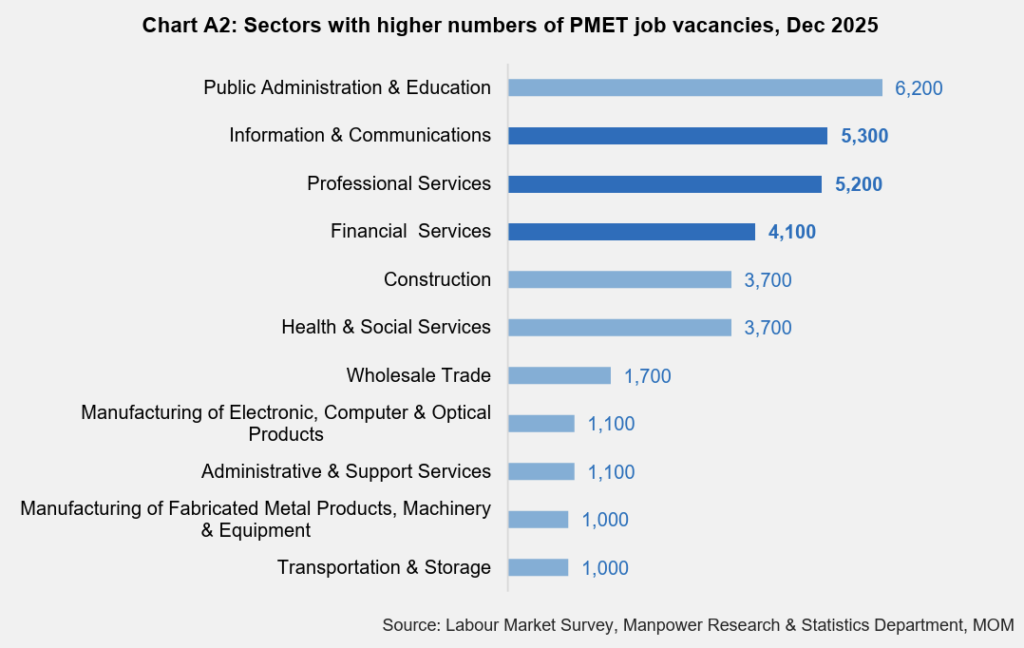
The layoffs have been largely concentrated in three sectors:
- Financial Services: Banking and insurance firms have cut headcount as market conditions tighten
- Information and Communications: Tech and telecom companies are restructuring in response to changing demands
- Professional Services: Consulting, legal, and accounting firms have undergone notable workforce adjustments
For this specific labour market report, MOM examined trends in PMET roles to assess concerns around AI-driven job disruptions.
While the evidence does not point conclusively to broad-based displacement, there are signs of restructuring that warrant continued monitoring.
Total employment continued to grow
If you’re working in a PMET role, these trends may naturally raise concerns. However, the broader data suggest that this is not necessarily a contraction in demand for these jobs.
The same sectors that saw the highest PMET layoffs also had relatively high PMET job vacancies in Dec 2025, with a combined total of 14,600, up from 13,900 in the year-ago period.

According to MOM, the overlap between higher retrenchments and higher PMET vacancies in these sectors suggests ongoing restructuring and skills transition, where some jobs are being displaced as firms restructure, while hiring continues for others.
For the full year of 2025, total employment grew by 55,500, up from 44,500 in 2024. Of this, resident employment grew by 11,600, driven largely by financial services as well as health and social services.
In 2026, resident employment is expected to grow at a similar or slightly slower pace, said MOM.
- Read more articles we’ve written on Singapore’s job trends here.
Featured Image Credit: Shadow_of_light/ depositphotos


A critical vulnerability in the wolfSSL SSL/TLS library can weaken security via improper verification of the hash algorithm or its size when checking Elliptic Curve Digital Signature Algorithm (ECDSA) signatures.
Researchers warn that an attacker could exploit the issue to force a target device or application to accept forged certificates for malicious servers or connections.
wolfSSL is a lightweight TLS/SSL implementation written in C, designed for embedded systems, IoT devices, industrial control systems, routers, appliances, sensors, automotive systems, and even aerospace or military equipment.

According to the project’s website, wolfSSL is used in more than 5 billion applications and devices worldwide.
The vulnerability, discovered by Nicholas Carlini of Anthropic and tracked as CVE-2026-5194, is a cryptographic validation flaw that affects multiple signature algorithms in wolfSSL, allowing improperly weak digests to be accepted during certificate verification.
The issue impacts multiple algorithms, including ECDSA/ECC, DSA, ML-DSA, Ed25519, and Ed448. For builds that have both ECC and EdDSA or ML-DSA active, it is recommended to upgrade to the latest wolfSSL release.
CVE-2026-5194 was addressed in wolfSSL version 5.9.1, released on April 8.
“Missing hash/digest size and OID checks allow digests smaller than allowed when verifying ECDSA certificates, or smaller than is appropriate for the relevant key type, to be accepted by signature verification functions,” reads the security advisory.
“This could lead to reduced security of ECDSA certificate-based authentication if the public CA [certificate authority] key used is also known.”
According to Lukasz Olejnik, independent security researcher and consultant, exploiting CVE-2026-5194 could trick applications or devices using a vulnerable wolfSSL version to “accept a forged digital identity as genuine, trusting a malicious server, file, or connection it should have rejected.”
An attacker can exploit this weakness by supplying a forged certificate with a smaller digest than cryptographically appropriate, so the system accepts a signature that is easier to falsify or reproduce.
While the vulnerability impacts the core signature verification routine, there may be prerequisites and deployment-specific conditions that might limit exploitation.
System administrators managing environments that do not use upstream wolfSSL releases but instead rely on Linux distribution packages, vendor firmware, and embedded SDKs should seek downstream vendor advisories for better clarity.
For example, Red Hat’s advisory, which assigns the flaw a maximum severity rating, states that MariaDB is not affected because it uses OpenSSL rather than wolfSSL for cryptographic operations.
Organizations using wolfSSL are advised to review their deployments and apply the security updates promptly to ensure certificate validation remains secure.

Automated pentesting proves the path exists. BAS proves whether your controls stop it. Most teams run one without the other.
This whitepaper maps six validation surfaces, shows where coverage ends, and provides practitioners with three diagnostic questions for any tool evaluation.

Microsoft is shutting down Outlook Lite on May 26, the company confirmed to TechCrunch on Monday. Launched in 2022, Outlook Lite is a lightweight version of the regular Outlook app, designed for Android phones with limited storage and regions with slower internet connections.
The app had already been scheduled for retirement — Microsoft announced last year that the app would be removed from the Google Play Store in October 2025. Now the company has confirmed that the app will lose functionality for existing users next month.
The news was first reported by Neowin.
“To continue enjoying a secure and feature-rich email experience, we recommend switching to Outlook Mobile,” Microsoft says in an Outlook Lite support page.
Outlook Lite users will be able to access their existing email, calendar items, and attachments by signing into Outlook Mobile. Users will also be directed to the Google Play Store to download the standard Outlook app.
If you talk to sports car fans and enthusiasts, you’ll probably hear differing opinions about which is better: front-engined or mid-engined sports cars. Both have their own pros and cons and unique driving characteristics, and the layouts will also impart a certain look, most evident in the radical exterior change the Chevrolet Corvette underwent after its switch from a front-engine to a mid-engine platform.
With their engines mounted behind the cabin, mid-engined sports have a distinct profile that often brings to mind high-end, exotic European supercars. It’s a look that survives even when scaled down to less expensive, more mainstream-oriented cars, resulting in some beautiful vehicles. So with that in mind, we’ve rounded up five of what we think are the best-looking, most handsomely designed mid-engined sports cars of the modern era.
Now, there are countless beautiful (and incredibly expensive) mid-engined exotics that we could include on a list like this, but we’ve left some of the obvious choices out to keep things interesting. Thus, no exotic Ferraris and Lamborghinis here. Even so, we have a diverse mix of machinery that includes mid-engined offerings from Japan, the United States, and Europe, with engines ranging from modest, low-power four-cylinders to fire-breathing V8s.
Toyota MR2 (second generation)
Along with the front-engined Mazda MX-5 Miata, the Toyota MR2 is one of the most popular lightweight sports cars to come out of Japan. The MR2 debuted in the early 1980s and was built over three distinct generations before being discontinued in the mid-2000s. Each generation of the MR2 has its own personality and following, but from a design and performance standpoint, it’s the second generation that represents the MR2 at its peak.
The second-generation MR2 debuted in Japan in 1989 and was on sale around the world shortly after. With its wider profile, its flip-up headlights, and distinct side vents, the second-generation car had a more aggressive look that, to some eyes, looks a lot like a scaled-down version of the Ferrari 348. The second-gen MR2 also had the performance to back up its look. Thanks to the 3S-GTE engine under the hood, Car and Driver got the MR2 Turbo to 60 mph in just under six seconds — very impressive by early ’90s standards.
To do all this at a relatively affordable price — $20,000 or so for the Turbo in 1990 — shows just how powerful Toyota was during this time. Today, along with the Supra it shared showrooms with, the second-gen MR2 is considered one of the most desirable Toyotas of its time, and especially in turbocharged form, one of the most desirable Japanese sports cars of the ’90s.
2004-2006 Ford GT
When Ford designers started working on the automaker’s mid-2000s Ford GT revival, they had a pretty big head start in creating a beautiful car. That’s because the design of the Ford GT was heavily inspired by the attractive and legendary Ford GT40 race car of the 1960s. Still, retro design isn’t always as easy as it looks, and it doesn’t take much for retro cars to veer into the tacky, but the GT’s designers absolutely aced their mission.
The modern road-going Ford GT is a much larger car than the GT40 it’s based on, but the lines are so good that you don’t realize that until you actually see the two cars side by side. The GT’s attractiveness carries over to the interior as well, with a wonderfully executed modern interpretation of 1960s design. Of course, it also doesn’t hurt that it’s got a mid-mounted supercharged 5.4-liter V8 mated to a manual transmission.
Because the initial design was executed so well, the 2000s Ford GT has never felt dated in the way other cars from its era might. Design-wise, it almost feels like a remastered car from the ’60s rather than a product of the 2000s. All of these are reasons why, despite only being a little over 20 years old, the value of the mid-2000s Ford GT has climbed tremendously, with the car now becoming a highly desirable modern classic in its own right.
Lotus Elise
A sports car’s appealing design need not be tied to its physical size or amount of horsepower. Case in point: the Lotus Elise. The Elise is considered one of the purest sports cars of the modern era, with a platform and design that stretches back to the mid-1990s. While some could argue that the Elise isn’t a traditionally beautiful sports car, much of the Elise’s beauty comes from its focus on simplicity. The Elise evolved significantly between its mid-’90s debut and the end of its production run in 2021, but the car never strayed from its mission of delivering lightness and response over all else.
The later variants of the Elise sold in North America use modestly powered Toyota four-cylinder engines, with the Elise’s light weight meaning it didn’t need massive amounts of horsepower to offer a fast and highly enjoyable sports car experience — part of why drivers love this car. Design-wise, the Elise is all about compact minimalism, and its svelte body lines and distinct round tail lights helped give the Elise its signature look.
Its attractive looks and go-kart-like handling are just a couple of the reasons why both the Elise and its closely-related counterpart, the Lotus Exige, have emerged as genuine modern classics. With its focus only on the essentials, the Elise is the antidote to the high-horsepower, overweight, and often overstyled modern performance car.
Alpine A110
Like the reto-styled Ford GT, the modern Alpine A110 is a modern, mid-engined sports car that might technically be cheating with its good looks. That’s because, like the Ford, the A110 is a modern reinterpretation of an iconic 1960s design — and one that happens to be done very well.
The modern Alpine A110 (which is built by Renault) debuted in the late 2010s to wide acclaim as a rival to the Porsche Cayman. Boasting a mid-mounted turbocharged four-cylinder engine and a low curb weight, the A110 took its design inspiration from the original, rear-engined Alpine A110 of the ’60s and ’70s. Among the styling traits that carried over to the new A110 are the original’s quad front headlights and wrap-around rear window.
To this point, the biggest problem with the A110 is that, like other French models, it’s not offered in North America. In fact, it might just be the coolest modern performance car that’s not currently sold here. There have been rumors and serious speculation that the A110 will eventually make its way to the United States, although we don’t yet know whether it will be as a gasoline model or as a next-generation electric Alpine sports car.
Honda/Acura NSX
Sometimes a sports car is a hit from the moment it debuts; other times, it ages nicely and becomes a favorite for a new generation of enthusiasts. In the case of the highly unique Honda (or Acura) NSX, it’s both. When the NSX first debuted in 1989, the car was a game-changer. It wasn’t just an impressive Japanese sports car; instead, it was a bona fide, homegrown Japanese exotic laced with Honda’s racing DNA.
Thanks to design choices like an all-aluminum construction and a mid-mounted, naturally aspirated VTEC V6 engine, the NSX had the performance and feel of a Ferrari — but in a more affordable and more reliable package that could be serviced at your local Honda or Acura dealer. In comparison tests, it edged out its more established performance car competitors. Design-wise, the original NSX was somewhat restrained, but its clean lines have aged extremely well, making it a favorite even among those born too late to experience its original run.
When new, the NSX had a relatively affordable price tag for what it delivered, but values have climbed substantially in recent years, with certain examples crossing the $300,000 mark at auction. While many subsequent Japanese sports cars have eclipsed the original NSX’s performance benchmarks, its aura is still unmatched.


The photorealistic digital character is trained on Zuckerberg’s mannerisms, tone, and his own thinking on company strategy. He is personally involved in testing it. The effort, described by four people familiar with the matter, is separate from a ‘CEO agent’ that handles tasks for Zuckerberg directly.
Meta is building a photorealistic, AI-powered version of Mark Zuckerberg that can interact with employees in his place, the Financial Times reported on Monday, citing four people familiar with the matter.
The character is being developed by Meta’s Superintelligence Labs and is trained on Zuckerberg’s mannerisms, tone, and publicly available statements, as well as his own thinking on company strategy, so that employees, in the words of one person familiar with the project, ‘might feel more connected to the founder through interactions with it.’ Z
uckerberg is personally involved in training and testing the animated version of himself.
The effort is at an early stage and is separate from a different project, first reported by the Wall Street Journal, in which Meta is building a ‘CEO agent’ designed to help Zuckerberg himself retrieve information faster, a tool that assists him rather than stands in for him.
The AI character project is part of a broader push within Meta’s Superintelligence Labs to develop lifelike, AI-driven digital figures capable of real-time conversation. The technical challenge is substantial: achieving realism and preventing perceptible delays in conversation requires enormous computing power.
The project reflects a significant escalation of Zuckerberg’s own involvement in Meta’s AI work. According to people familiar with the matter, he has been spending five to ten hours a week writing code on various AI projects and attending technical engineering review sessions, an unusual level of hands-on engagement for a CEO running a $1.6 trillion company.
He has committed publicly to developing what he calls ‘personal superintelligence’ as Meta works to close the gap with OpenAI and Google. On a January earnings call, he said Meta was ‘elevating individual contributors and flattening teams’ through AI-native tooling.
Meta has a history with AI characters. In September 2023 it launched a range of celebrity-based chatbots, among them personas modelled on Snoop Dogg, Tom Brady, Kendall Jenner, and Naomi Osaka, all of whom licensed their likenesses, but these were discontinued in the summer of 2024 after failing to gain meaningful traction.
Meta then opened an AI Studio allowing users and creators to build their own AI characters, but ran into controversy when users began generating sexually explicit personas. Since January, Meta has restricted teenager access to AI characters. Zuckerberg’s interest in the format was reportedly sharpened by the success of AI companion startup Character.AI, particularly with younger users.
Meta is not the only company exploring AI versions of its leadership. Uber CEO Dara Khosrowshahi said during a podcast interview earlier this year that his employees had built an AI clone of him.
But the Zuckerberg project has a different scale and institutional purpose: it is being designed as a mechanism for a $1.6 trillion company’s 79,000 employees to feel a sense of connection to a founder who is, by any measure, difficult to reach.

A multifaceted decahedral black ceramic bezel and sandwich-style three-piece case—a reworking of Bremont’s signature Trip-Tick construction—house a chronometer-rated automatic chronograph movement made by Sellita, with a 62-hour power reserve.
The watch will be a passenger aboard the FLIP rover, due to launch as part of Astrobotic’s Griffin Mission One (Griffin-1), expected to land at the lunar south pole at some point in the second half of this year.
It’s a one-way mission: The rover will remain permanently on the lunar surface, with the watch ticking away as it roams the landscape. FLIP’s objectives include reaching elevated positions on the lunar terrain, gathering data on lunar dust accumulation, testing dust-mitigation coatings, and surviving a two-week lunar night in hibernation (which would be a first for a US rover).
In terms of serious timekeeping data for Bremont, the mission is frankly symbolic. The watch will be positioned vertically in a specially designed housing within the FLIP’s chassis, between its front wheels. Only the watch head, weighing 107 grams, is included, glued in place using a specialist composite, its face visible to FLIP’s HD cameras. But the hibernatory periods will mean the watch (whose mechanical movement is driven in normal circumstances by the motion of the wearer’s arm) will stop running once its 62-hour power reserve runs down.
When the FLIP is on the move again, its motion should—in theory—jolt the mechanism into action once more. Despite the gravitational pull that’s a sixth of the Earth’s, the acceleration, pitches, and tilts of the rover should swing the winding rotor, if with less torque and efficiency than on Earth.
“My guess is that the watch will function from time to time, but for short periods,” Cerrato says. “We will learn along the way. But that’s what is exciting—it projects us into a thinking process that is absolutely out of the box. Just the fact of having it there is inspiring.” However, there is little doubt that Bremont will, just like other brands with any ties to the cosmos, mine its new space connection for all it is worth.
FLIP itself, which weighs just 1,058 pounds and carries a mix of commercial and government payloads, four HD cameras, and a deployable solar array, is fundamentally a technology demonstrator for Flexible Logistics and Exploration (FLEX), Astrolab’s much larger SUV-sized rover destined to support NASA’s Artemis program. The firm developed the FLIP from scratch after NASA’s equivalent vehicle for which the Griffin-1 mission was contracted, the VIPER, was put on pause in 2024. This left Astrobotic seeking a stand-in in short order. Astrolab, which signed the contract within a month of hearing about the opportunity in the fall of 2024, took the FLIP from blank sheet to finished rover in roughly a year.
Its standout feature is its hyper-deformable wheels, minutely structured from silicone, composite, and stainless steel, which create a soft, enlarged contact surface with the terrain. “It’s like if you’re off-roading in a Jeep or Land Rover where you let some air out of the tires to go softer and spread the load over a larger area,” explains Astrolab’s founder, Jaret Matthews. While the moon’s nighttime temperatures of around -200 degrees Celsius (around -328 Fahrenheit) would cause conventional rubber tires to become glass-like and shatter, Astrolab’s solution is intended to keep the rover from sinking into the unconsolidated lunar dust—or regolith—that covers the environment.

The case is white zirconium oxide ceramic with a Ceratanium bezel and back, rated to handle temperature swings from 100 to -100 degrees Celsius (212 to -238 Fahrenheit). Indeed, the whole piece has been shaken to 10 g’s at Vast’s Long Beach facility, exceeding forces astronauts experience during ascent, and came out the other side running just fine. Price is still up in the air.

TAG Heuer Monaco Evergraph (From $25,000)
Watch brands love finding ever more recherché areas to reinvent, and the precise “snick” of a chronograph’s stop/start/reset buttons is the latest micro-battlefield in which R&D teams are duking it out. Last year, Audemars Piguet took the feel of an iPhone button as the inspiration for its Royal Oak RD#5; now TAG Heuer has its own take on push-button ergonomics.
Normally, chronograph buttons involve a cluster of levers, springs, and cams that click into place with varying degrees of precision. TAG Heuer has thrown most of that out with the Calibre TH80-00, five years in development between its TAG Heuer LAB innovation department and movement maker Vaucher Manufacture Fleurier. It replaces the traditional architecture with two flexible bistable components—essentially shape-shifting parts that snap between positions—produced via high-precision LIGA fabrication, a micro-manufacturing technique that includes lithography, electroforming, and molding.
The result? Crisper actuation that, crucially, doesn’t degrade. According to TAG, the 10,000th press feels identical to the first. Paired with TAG’s incredibly high-tech TH-Carbonspring oscillator (magnetism-resistant, 5-Hz, 70-hour reserve, COSC-certified), it’s housed in a reworked 40-mm titanium Monaco with the crown back on the left where Steve McQueen’s 1969 original had it. You get two versions: brushed titanium with blue accents or black Diamond-Like Carbon (DLC) with red. The dial is transparent acrylic, so you can watch the compliant mechanism do its thing.
.jpg)
Vacheron Constantin Overseas Dual Time Cardinal Points (Price on Request)
Vacheron Constantin’s Overseas line, among the most celebrated examples of Switzerland’s dominant “sports-luxe” genre, leans heavily into the sports side with a full-titanium, GMT-treatment across four references. Each dial is color-mapped to a compass point: white for north, brown for south, green for west, blue for east, contrasting with a bright orange, Rolex-style GMT hand for the time zone at home.
The lineage traces to a 2019 prototype built for explorer Cory Richards to wear up Everest—probably the most luxurious timepiece that has been to such places. The 41-mm case, integrated bracelet, and folding clasp are all in titanium with a matte anthracite finish on the bezel and crown. Inside is the in-house Calibre 5110 DT/3, a self-winding GMT with home-time am/pm indicator, local-time date pusher, and 60-hour reserve. Classic sports watch attributes, but here certified with the Geneva Hallmark, the highest official benchmark of fine watchmaking and hand-finishing.

American Airlines has now become the latest company to take advantage of the revamped boarding pass system in the iOS 26 update.

American Airlines now supports the revamped iOS 26 boarding pass system.
At WWDC 2025, Apple revealed that upgraded boarding passes, with support for Live Activities and real-time flight information, would make their way to the Apple Wallet app with iOS 26. Improved support for tracking luggage with AirTags and Find My, along with maps data for airports, was touted as well.
Since then, United Airlines and Southwest Airlines have rolled out support for the iOS 26 boarding pass system, and now American Airlines has followed suit. The American Airlines iOS app was recently updated, and its release notes detail the upgraded boarding pass experience.
Continue Reading on AppleInsider | Discuss on our Forums

from the can’t-pretend-rights-just-don’t-exist dept
More of the same for the Trump administration — one that seems incapable of achieving its goals without breaking the law or disregarding the Constitution.
Hundreds of judges handling thousands of cases have already told the administration it can’t do the things it thinks it can when it comes to satisfying its anti-migrant bloodlust/Stephen Miller’s 3,000-arrests-per-day quota (they’re the same thing!). And, outside of the Fifth Circuit, where the majority seems to believe Trump should get whatever he wants, this steady stream of judicial rejections continues.
Yet another class-action suit alleging the wholesale violation of Constitutional rights has resulted in a ruling siding with the Constitution. This case is one of several being handled by the ACLU. This particular one originates in Nevada, which at least keeps it out of the hands of the Fifth Circuit. (Unfortunately, the administration knows who’s buttering its bread, which is why detainees are often shipped immediately to detention centers in Texas and Louisiana.)
The administration has only a single argument to present in its defense of its unconstitutional mandatory detention activities. It involves selectively quoting two related (yet distinct!) immigration statutes and pretending that 1+1=whatever the fuck we say it does.
One of the most concise explanations of the administration’s deliberate misreading of these statutes was delivered by Judge Dale Ho of the Southern District of New York last year. The government wants to pretend people who encounter immigration agents while crossing the border are indistinct from migrants who have already been in this country for weeks, months, or years. They’re not the same thing, but the administration insists they are, despite having only convinced the Fifth Circuit that the laws don’t actually say the things they say.
Given that detention under § 1225(b)(2) is essentially mandatory and that detention under § 1226(a) is largely discretionary, it follows that whichever statute Mr. Lopez Benitez is subject to is potentially dispositive here. That is, if Mr. Lopez Benitez was detained as a noncitizen “seeking admission” to the country under § 1225(b)(2) (as Respondents argue), his detention would be mandatory. If, instead, he was detained as a noncitizen “already in the country” under § 1226(a), then his detention is discretionary and he would be, at a minimum, entitled to an appeal before an immigration judge.
To be sure, the line between when a person is “seeking admission” as opposed to being “already in the country” is not necessarily obvious. For instance, someone who has just crossed the border may technically be “in” the country but is still treated as “an alien seeking initial entry.” Thuraissigiam, 591 U.S. at 114, 139 (holding that a noncitizen detained “within 25 yards of the border” is treated as if stopped at the border). But there is no dispute that the provisions at issue here are mutually exclusive—a noncitizen cannot be subject to both mandatory detention under 1225 and discretionary detention under § 1226, a point that Respondents conceded.
These are not the same thing. Section 1226 deals with people already in the country, who are given Constitutional protections. Section 1225 deals with people crossing the border who are met immediately by immigration agents, who don’t have access to the same due process rights.
As the court points out in this case, the language of the statutes makes it clear Section 1225 is “temporally and geographically limited to the border” by other language contained in the Immigration and Nationality Act (INA). The government, however, wants to pretend it’s indistinct from Section 1226, which deals with people who are already in the country and have been there for a significant amount of time.
The only way the government can present its defense of indefinite detention of migrants without bond hearings is to twist the wording of both statutes. The Nevada court [PDF] isn’t going to let that happen. It calls out Trump’s DOJ for its cut-and-paste antics.
The government contends that the plain language of § 1225(b)(2) requires DHS to detain all noncitizens like Plaintiffs, who are present in the U.S. without admission or parole and subject to removal proceedings, regardless of how long they have been in the country or how far from the border they are apprehended. But this Court finds that the government reads § 1225(b)(2 (A) as a fragment of statutory text in isolation.
Context matters. The government knows this, which is why its arguments remove the parts of the law it wants to use from the context that indicates its actions are illegal.
The Court finds the government’s reading of the statutory text inapposite for severalreasons. First, the government distorts the statutory text, including terms of art specially defined by Congress. Second, the government isolates and abstracts the phrases it favors in § 1225(b)(2)(A) from their context within § 1225 and the statutory scheme, while rendering language it finds inconvenient within § 1225(b)(2)(A) both contrary to ordinary meaning and needless surplusage. Finally, the government’s interpretation unnecessarily renders provisions of § 1226(c) superfluous in all but the rarest cases, unjustifiably construes Congress’ addition of § 1226(c)(1)(E) through the 2025 Laken Riley Act to be utterly ineffectual, and creates unnecessary tension between the relevant provisions, §§ 1225 and 1226.
This is what it looks like when you know you can’t win on the merits. This is the government pretending the law says what it wants it to say and hoping to slip it past a judge and under the skirts of Lady Liberty.
Courts aren’t as dumb as the Trump administration hopes. Let’s look at the statutes, the court says, but the whole thing rather than just the things the government thinks might be usable.
The Court cannot accept such a fraught interpretation when a reading devoid of such conflict, which gives each statutory phrase and section independent meaning and force, is far more plausible.
What follows is a few dozen pages making everything summarized above granular and specific. And if Trump doesn’t like it, he can always ask the legislators he treats as extraneous to rewrite the law in his favor. Take it up with Congress if you don’t like the way the law is actually written, the court says without actually saying it:
[E]ven with regards to removal proceedings as opposed to custody determinations, Congress explicitly reflected its understanding of longstanding due process precedent that recognizes the more substantial due process rights of noncitizens already present and residing in the U.S. compared to the minimal rights of noncitizens seeking to enter.
Even a Congress loaded with MAGA bitchboys isn’t going to be able to erase Constitutional protections for migrants no one really seemed to have a problem with until white Christian nationalists took over the West Wing (on two non-consecutive occasions). The current Congress is merely an afterthought in service to Federalist Society theories of unitary executive power — something that surely won’t come back to haunt them when America decides it’s time to hand the reins to the opposition party.
And that’s not all of the bad news for Trump and his enablers. The due process thing is already a known issue and one that has resulted in hundreds of losses for the administration’s lawyers. This court also points out the Fourth Amendment implications of its actions. While this doesn’t necessarily create the sort of precedent that would shut down the DHS’s extremely creative interpretation of the Constitution, it will provide plenty of citation pull-quotes for litigants challenging ICE’s warrantless arrests and home entries.
[N]o administrative warrant requirements exist in the text of § 1225(b)(2)(A) or its implementing regulations. The government’s interpretation of that provision as geographically unlimited is thus in tension with the application of the Fourth Amendment within the country’s interior, which “requires that immigration stops must be based on reasonable suspicion of illegal presence, stops must be brief, arrests must be based on probable cause, and officers must not employ excessive force.”
I’m sure this quotation of Justice Kavanaugh’s concurrence in Trump v. Illinois is deliberate. The guy behind “Kavanaugh stops” (TL;DR: looking foreign is probable cause when it comes to immigration enforcement) is being directly quoted to reject the government’s reliance on administrative warrants to bypass the Constitution. [Chef’s kiss gesture.]
Great stuff. But, as always, tempered by the realization that this administration will not stop doing illegal things just because a court has directly told them these actions are illegal. The old equation — asking forgiveness > asking permission — doesn’t really apply. This administration will do neither. It will simply DO until it becomes impossible to continue.
Don’t let that discourage you, though. Even if the co-equal branches don’t seem to be living up to the “checks and balances” hype, we’re a nation of millions spread across a considerable number of square miles. They can’t take us all at once.
Filed Under: 14th amendment, bigotry, dhs, due process, ice, mass deportation, nevada, trump administration
Companies: aclu
Entertainment51 seconds ago
Martha Stewart’s Striped Sweater Style Screams ‘Yacht Wife’

NewsBeat4 minutes ago
Two dead after US strikes another alleged drug boat in Pacific Ocean

Business5 minutes ago
Thailand’s Draft Comprehesive Climate Change Act

Politics2 months ago
Why Israel is blocking foreign journalists from entering

News Videos2 months ago
Bitcoin: We’re Entering The Most Dangerous Phase

Politics1 month ago
Alan Cumming Brands Baftas Ceremony A ‘Triggering S**tshow’

News Videos60 minutes ago
XRP- DTCC = $100T Flip Of The Switch? – The Clarity Act & Crypto Tax? – AI XRP Price Target?

News Videos1 hour ago
Hima Bindhu : Anantha Money Mantra 2.O – 762 |How to Attract Money |Money Affirmations |SumanTV USHA

News Videos1 hour ago
“Bitcoin Will Bottom When This Happens” | Ben Cowen
-

 Politics4 days ago
US brings back mandatory military draft registration
-
 Sports4 days ago
Man United discover Nico Schlotterbeck transfer fee as defender reaches Dortmund agreement
-

 Fashion4 days ago
Weekend Open Thread: Veronica Beard
-

 Tech6 days ago
How Long Can You Drive With Expired Registration? What Florida Law Says
-

 Politics4 days ago
Malcolm In The Middle OG Turned Down ‘Buckets Of Money’ To Appear In Reboot
-

 Politics2 days ago
World Cup exit makes Italy enter crisis mode
-

 Crypto World5 days ago
Canary Capital Files SEC Registration for PEPE ETF
-

 Business4 days ago
Tesla Model Y Tops China Auto Sales in March 2026 With 39,827 Registrations, Beating Cheaper EVs and Gas Cars
-

 Fashion7 days ago
Let’s Discuss: DEI in 2026
-

 Crypto World6 days ago
Bitcoin recovers as US and Iran Agree a Ceasefire Deal
-

 Crypto World15 hours ago
The SEC Conditionalises DeFi Platforms to Be Avoided for Broker Registration
-
 NewsBeat1 day ago
Pep Guardiola and Gary Neville agree over Arsenal title problem that benefits Man City
-

 Crypto World11 hours ago
SEC Signals Exemption for Crypto Interfaces From Broker Registration
-

 Business4 days ago
OpenAI Halts Stargate UK Data Centre Project Over Energy Costs and Copyright Row
-

 Business3 days ago
Ireland Fuel Protests Enter Day 5 as Blockades Spark Shortages and Government Prepares Support Package
-

 Politics4 days ago
LBC Presenter Mocks Trump Over Iran War Failures
-

 Crypto World3 days ago
Federal judge blocks Arizona from bringing criminal charges against Kalshi
-

 Tech4 days ago
A version of Windows 10 released a decade ago is now eligible for additional security patches
-
 NewsBeat2 days ago
JD Vance announces ‘no agreement’ with Iran over nuclear weapons fear
-

 Business3 days ago
IMF retains floor for precautionary balances at SDR 20 billion
You must be logged in to post a comment Login