
Tech
2027 Porsche 911 GT3 S/C Roadster Delivers Manual Control and Open-Air Freedom



Porsche engineers have combined the ultra-focused machinery of the 911 GT3 with the lightweight convertible body of a roadster to produce this two-seater. The end result is the 911 GT3 S/C that weighs a slim 3,322 pounds while managing to fit in the components for a full automated fabric top that folds up in a mere twelve seconds. When you get into the driver’s seat, you immediately feel connected to the road, due to the six-speed manual transmission and a chassis that has been fine-tuned for quick reactions on winding roads.
Power comes from a 4.0-liter flat six that has been let to breathe freely without the use of a turbocharger. The end result is a whopping 502 horsepower and 331 pound-feet of torque, which can reach 9,000 rpm without missing a beat. To top it off, the short intake runners and redesigned cylinder heads let the engine sing in the high rev range, propelling the car ahead with each gear change. Porsche claims it will reach sixty in 3.7 seconds and peak out at 194 mph, with the engine note rising in a magnificent arc as you work your way through the gears. Of course, the engine note is even more lovely once the roof is down, and the only transmission option is a six-speed manual, which seems so natural with this engine. Short ratios and a super-light shift action complement the powerplant’s eager temperament well. A constant axle ratio, shared with the 911 S/T, ensures that the revs remain in the optimal range for maximum pull.
Sale

LEGO Speed Champions Porsche 911 GT3 RS Super Car Toy – Model Kit & Pretend Play Toy for Boys & Girls…
- BUILD A RACING LEGEND – Boys and girls ages 9 years old and up can construct the LEGO Speed Champions Porsche 911 GT3 RS Super Car (77239) building…
- AUTHENTIC PORSCHE DETAILS – Young builders can recreate the real-life vehicle’s signature elements including the famous rear wing, air intake…
- 1 PORSCHE DRIVER MINIFIGURE – Kids can place the driver minifigure with helmet and red Porsche Track Day Experience outfit behind the wheel to stage…
The hood, front fenders, and doors are made of lightweight carbon fiber panels to save weight, while magnesium wheels and a magnesium roof structure aid to reduce unsprung weight to a minimum. Standard ceramic composite brakes save forty-four pounds over iron rotors, and the front axle now has a double suspension layout, a first in any open-top 911. The rear suspension links and anti-roll bar have also been replaced with carbon fiber. You get 255/35ZR20s tires up front and 315/30ZR21s in the back for grip when you’re pushing hard in the corners. Check out the roof, which curves perfectly like a coupe when it’s up, owing to some cleverly disguised magnesium supports. There are no visible bows or seams that disrupt the line from the windshield to the back deck, either. In addition, an electric wind deflector springs up in two seconds to reduce cabin turbulence at high speeds, and the lower body sides are protected by some nifty stone chip screen. Matrix LED headlights simply provide brightness without cluttering up the front end of the vehicle.
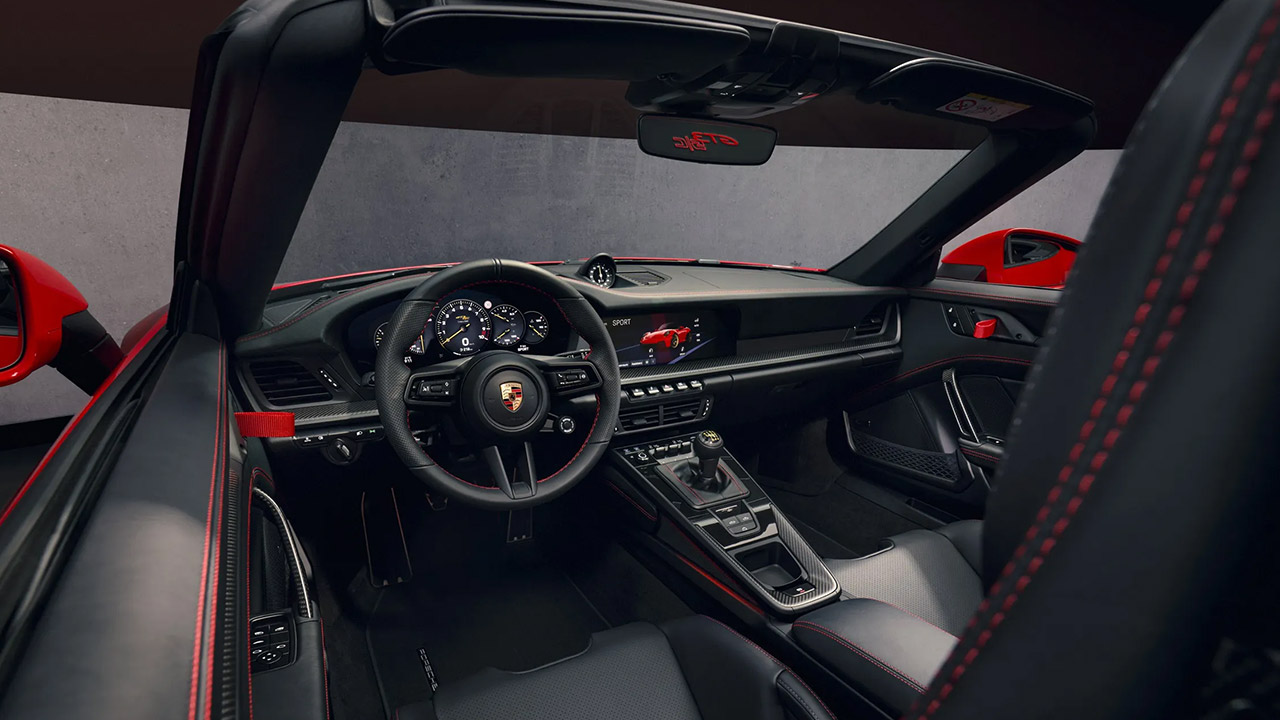

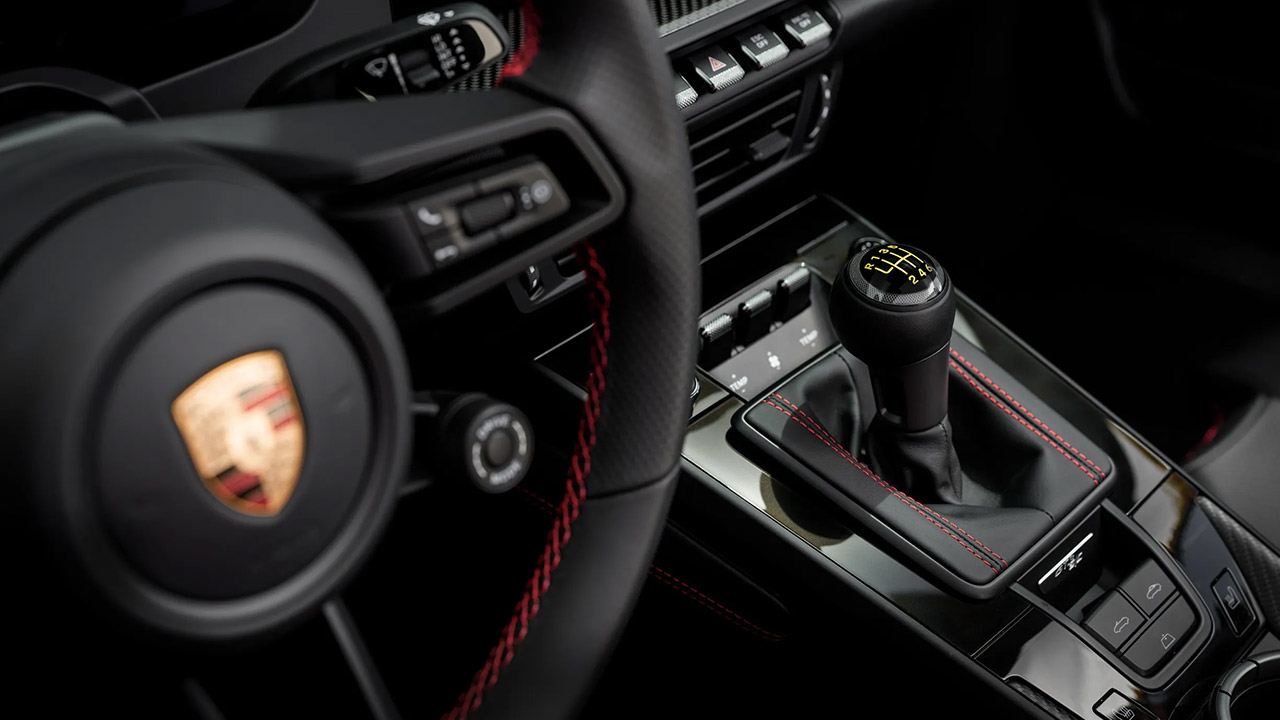
Inside, everything is relatively plain and focused, which is what this car is all about. The base four-way sport seats are rather useful, but if you want to go all out, you can upgrade to some super-lightweight carbon fibre buckets that still provide heating and height adjustment. Thin carpets and carbon fiber door pulls further reduce weight. The dash has a gorgeous digital cluster that displays a track mode with by-the-numbers visuals for your tire pressures, fluid temperatures, and an upshift indicator. With the original 911 ignition key to the left of the steering wheel, you’ll be in the zone in no time. To top it all off, the steering wheel and seat centers are finished in perforated leather, while the A pillars and sunvisors have a stylish black accent.


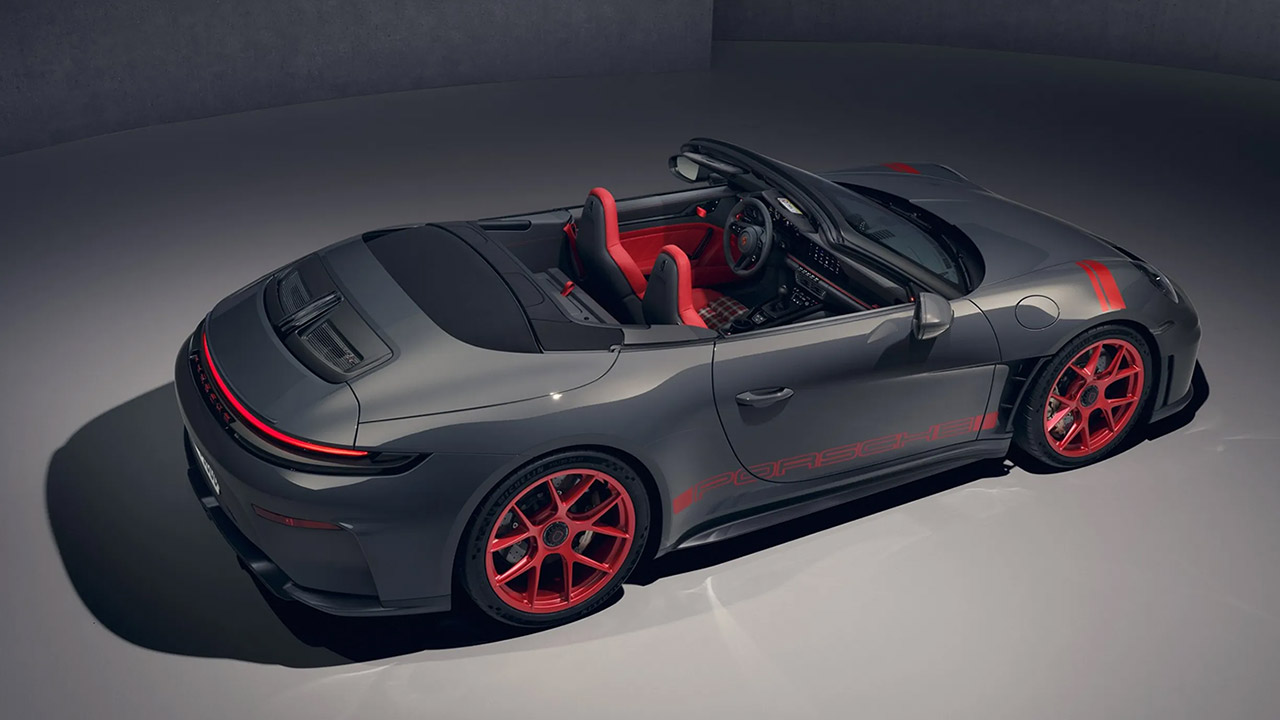
Buyers can customize their vehicle’s appearance by adding the Street Style Package. It’s all about the Pyro Red accents on the fenders and wheel centers, the eye-catching gold brake calipers, and the darkened headlamps, which give it a sinister air. Inside, the seat inserts are replaced with tartan, the shifter is refinished in open-pore wood, and the dash and doors are trimmed with additional leather. Just because it’s a two-seater doesn’t mean you can’t pack some weekend goods; a small cargo box fits nicely behind the seats.

Expect to pay at least $275,350, including destination. That’s actually quite a good value, given that it includes magnesium wheels, ceramic brakes, and all of the carbon body parts that would ordinarily cost thousands more on an ordinary GT3 coupe. Now we understand what you’re thinking: “limited run”? There is no production cap, thus more 911 GT3 S/Cs than Speedsters will end up in customers’ hands, with deliveries beginning in late 2026.
[Source]



Microsoft has released the Windows 10 KB5082200 extended security update to fix the April 2026 Patch Tuesday vulnerabilities, including 2 zero-days.
This update brings some interesting changes, including new Remote Desktop Protocol file phishing protections and new Windows Security indicators that provide the status of the rollout of new Secure Boot certificates.
If you are running Windows 10 Enterprise LTSC or are enrolled in the ESU program, you can install this update like normal by going into Settings, clicking on Windows Update, and manually performing a ‘Check for Updates.’

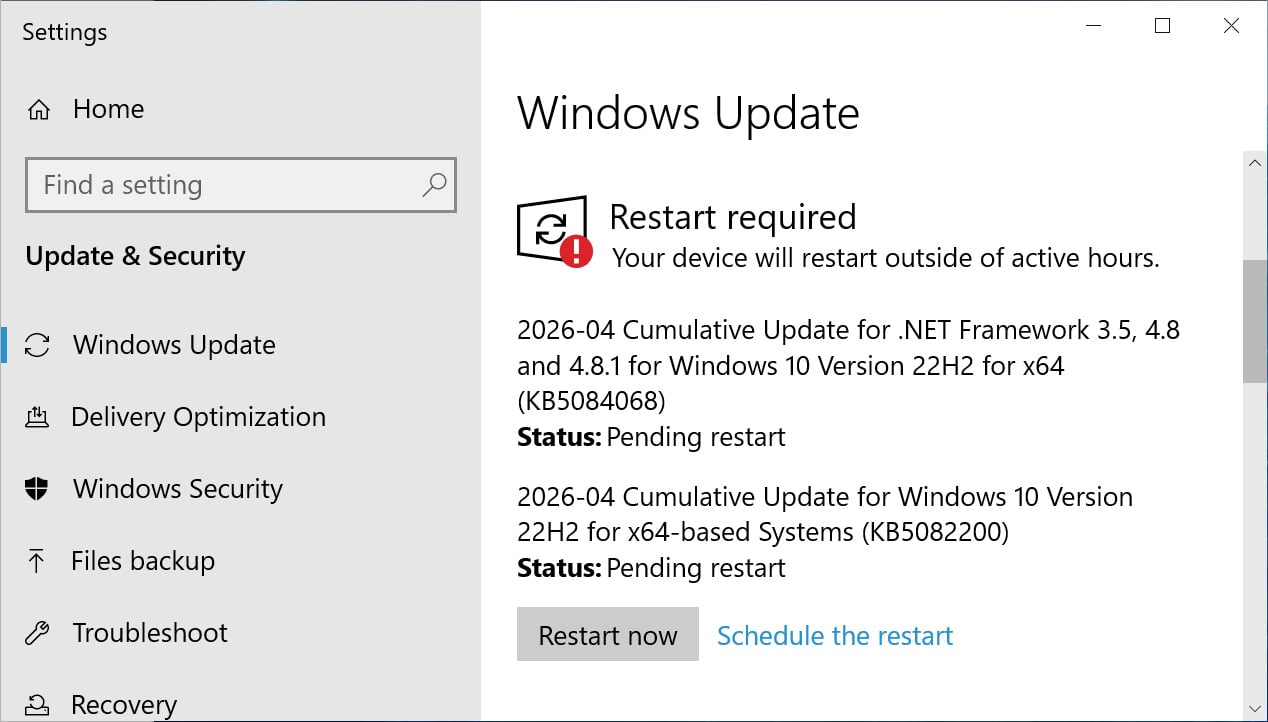
Source: BleepingComputer
After installing this update, Windows 10 will be updated to build 19045.7184, and Windows 10 Enterprise LTSC 2021 will be updated to build 19044.7184.
What’s new in Windows 10 KB5082200
Microsoft is no longer releasing new features for Windows 10, and the KB5082200 update primarily contains security updates and bug fixes.
With today’s April 2026 Patch Tuesday, Microsoft has fixed 167 vulnerabilities, including two zero-day flaws.
The complete list of fixes is below:
- [Sign-In] Fixed: After you install the Windows update released on or after March 10, 2026, some users might experience an issue signing in to apps with a Microsoft account. Even when the device has a working Internet connection, a “no Internet” error appears during sign in and prevents access to Microsoft services and apps such as Microsoft Teams.
- [Remote Desktop] This update improves protection against phishing attacks that use Remote Desktop (.rdp) files. When you open an .rdp file, Remote Desktop shows all requested connection settings before it connects, with each setting turned off by default. A one-time security warning also appears the first time you open an .rdp file on a device. For more information, see Understanding security warnings when opening Remote Desktop (RDP) files.
- [Secure Boot]
- This update enables dynamic status reporting for Secure Boot states in the Windows Security App (Settings > Update & Security > Windows Security). Learn more about the status alerts via badges and notifications. Note that these enhancements are disabled by default on commercial devices and servers.
- This update fixes an issue that could cause a device to enter BitLocker Recovery after Secure Boot updates.
- With this update, Windows quality updates include additional high confidence device targeting data, increasing coverage of devices eligible to automatically receive new Secure Boot certificates. Devices receive the new certificates only after demonstrating sufficient successful update signals, maintaining a controlled and phased rollout.
As explained in the changelog above, this update fixes a longstanding issue that causes some Intel-based devices that support Connected Standby to enter the BitLocker recovery screen when restarted.
Microsoft is also continuing to roll out new Secure Boot certificates to replace older 2011 certificates that expire in June 2026. With this update, Windows users can go into Windows Security to check the status of this rollout.
Microsoft states that there are no known issues with this update.

Automated pentesting proves the path exists. BAS proves whether your controls stop it. Most teams run one without the other.
This whitepaper maps six validation surfaces, shows where coverage ends, and provides practitioners with three diagnostic questions for any tool evaluation.

Like any foolishly hopeful gamer, I sat in the darkness of my home, booting up a game I prayed would shine bright enough to live up to its promise. A black-and-white shooter set in a city full of mice? A classic cartoon animation style? A gumshoe noir plot? The idiosyncrasies stacked like Jenga blocks, and one faulty element could send the whole tower tumbling. But isn’t that always the way in Gamer Town, where promising pitches are a dime a dozen, and few successfully pull off their daring dreams.
Mouse: P.I. For Hire, the long-awaited indie first-person shooter spawned from a post on X, is finally coming out on Thursday after years of trailers and teasers, and at a modest $30 price to boot. Though its creators from Polish studio Fumi Games insist that the game’s look is more broadly inspired by the 1930s “rubber hose” style of animation popularized by Betty Boop and Fleischer cartoons, it’s not hard to see visual similarities with Steamboat Willie, the black-and-white character that preceded Mickey Mouse. A lot of Mouse: P.I. For Hire’s appeal lies in the vintage cartoony style contrasting with violent gunfire — and after playing half a dozen hours of the game, that does make up a lot of its charm.
But it’s a pleasure to discover all the visual style overlays a fairly involved narrative riddled with classic noir elements. Players control Jack Pepper, a war hero turned hard-boiled detective whose pursuit of a missing persons case leads him from the bright lights of Mouseburg’s fine society to its seedy back alleys and dangerous criminal underbelly, uncovering a vast conspiracy in the process.
Mouse: P.I. For Hire is packed to the gills with noir staples like a gumshoe protagonist, a femme fatale love interest, political corruption, social inequality, dirty cops and a bulletin board where our detective fills in the case clue by clue. Despite the cartoon animation and rubber hose violence, the noir is played straight; it’s clear that this is a love letter to the genre of detective fiction made famous by American fiction writers.
In conversation with Fumi Games lead producer Maciej Krzemień last June at Summer Game Fest, the team working on the game took inspiration from stories by famed noir writer Raymond Chandler, and the narrative leads did plenty of historical research to get the period right.
“Obviously, we are not Americans ourselves. We wanted to get a good grasp on this entire style of detective noir stories, but with some light-hearted elements to it,” Krzemień told me.
A good chunk of the success of Pepper’s character belongs to his voice actor, Troy Baker, who delivers one-liners and exposition in gravelly tones that fit a hard-boiled detective narrating the case throughout the game. The rest of the voice cast is suitably pleasant — Florian Clare as journalist Wanda Fuller, Frank Todaro as politician and Pepper’s war buddy Cornelius Stilton, among others — giving a range of period-appropriate performances ranging from Mid-Atlantic faux-sophistication to a streetwise accent hailing from whatever New Jersey analogue they have near Mouseburg.
The dialogue is fittingly noir, and the writing in the game is a mix of 1930s-era dark humor and groan-worthy puns (which is a good thing, I swear). Mice end the day with a long pull of stinky cheese to take the edge off, bootleggers are “cheeseleggers,” a gun modeled after the German Mauser pistol is named the Micer, and so on.
Though the game’s soundtrack is an appropriate mix of big band and jazzy tunes, Mouse: P.I. For Hire’s commitment to evoking the 1930s extends further. An optional filters layer in film grain and gauzy blur to the visuals, as well as degrading the audio quality of the music to sound like it’s coming out of vinyl or wax cylinders. Looking and sounding more old-timey is a fun addition to the immersion.
But Mouse: P.I. For Hire is a shooting game first and foremost, and while its combat has more pros than cons, there are enough challenges in adapting its luscious animation style to 3D shooting to make it feel like a mixed bag.
Mouse: P.I. For Hire is more of a joyfully immersive jaunt than a masterpiece shooter
Mouse: P.I. For Hire feels a lot like a modern version of the initial wave of first-person shooters, like Doom and Duke Nukem: Enemies enter a room the player is in, shoot from a distance or close in for melee. Like some so-called “Boomer shooters” released in recent years that evoke old-school shooter vibes with updated controls, enemies don’t have a lot of dynamic movement, leading players to trade gunfire and swap to the right weapon for the moment.
Players get an expanding arsenal of BioShock-like weapons, leaning on a pistol, shotgun and Thompson submachine gun for the grunt work alongside a delightfully novel Devarnisher gun that shoots globs of turpentine (the chemical that old school animators used to wipe away ink) to melt foes. There’s more in later parts of the game, and upgrades to boot, that make guns more useful throughout the game.
The Devarnisher melts enemies with turpentine.
Mouse: P.I. For Hire isn’t trying to be a cutting-edge shooter, so it’s mostly fine to get into firefights with static foes. The trouble lies in combining the game’s visual style with shooting action: Enemies look like they’ve walked straight out of a cartoon, but their gorgeously animated 2D bodies can be tough to hit in 3D space. Often, as I strafe around, I’ll struggle to hit smaller foes, and their hitbox can get a little confusing, leading me to miss some shots I thought I should hit.
This isn’t too big a deal on the easy and standard difficulties, which are pretty forgiving, but when I cranked it up to hard mode (which you can do on the fly), the punishing damage made my unsure aim more of an issue. I stumbled here or there trying to keep my bullets landing on enemies — especially distant ones.
While a little perplexing, it’s ultimately a minor drawback to a well-crafted experience. Mouse: P.I. For Hire is a period piece joyride, and so long as I treat the rooms full of enemies and bosses as flavor in a story, I’m far from disappointed. Not every shooter needs to be the next Portal or Titanfall 2, reinventing the genre, especially games priced at $30 that will likely last players over a dozen hours before they hit credits.
What the game gets right is its dual commitments to its animation style and its intricate world. I’ll never get tired of watching the rubber hose-style animations of reloading guns or popping enemy heads with a close-range shotgun blast in a comically visceral burst of violence. It’s a delightful counterpart to Mouseburg, a gritty but believable city with all the characters and locales, power struggles and plot twists you’d find in any other noir.
Early in the game, I tracked down a lead at an opera house where I foiled an assassination attempt on a politician — though it was made with an on-stage cannon that started burning the place down, and I had to fight a burly Brunhilda-clad singer miniboss to get out. The blend of gumshoe staples with cartoon logic makes Mouse: P.I. For Hire truly unique, and its Steamboat Willie look obscures that the game is deeper than it initially appears in its dedication to telling a detective story, with all of that genre’s murky twists and turns.
“Without spoiling anything, there is a bigger conspiracy behind it all, and it’s all pretty serious in terms of social topics, social themes of the game, and it actually reflects the political climate of the world back in the 1930s — and not only in America,” Krzemień told me last June.
So yes, it is a game where non-Mickey Mouse gets a gun, but all in the service of uncovering a mystery, fighting a rising fascist threat and hopefully getting enough cheddar to pay his debts.
Mouse: P.I. For Hire comes out April 16 for PC, Xbox One X/S, PS5 and Nintendo Switch 2.
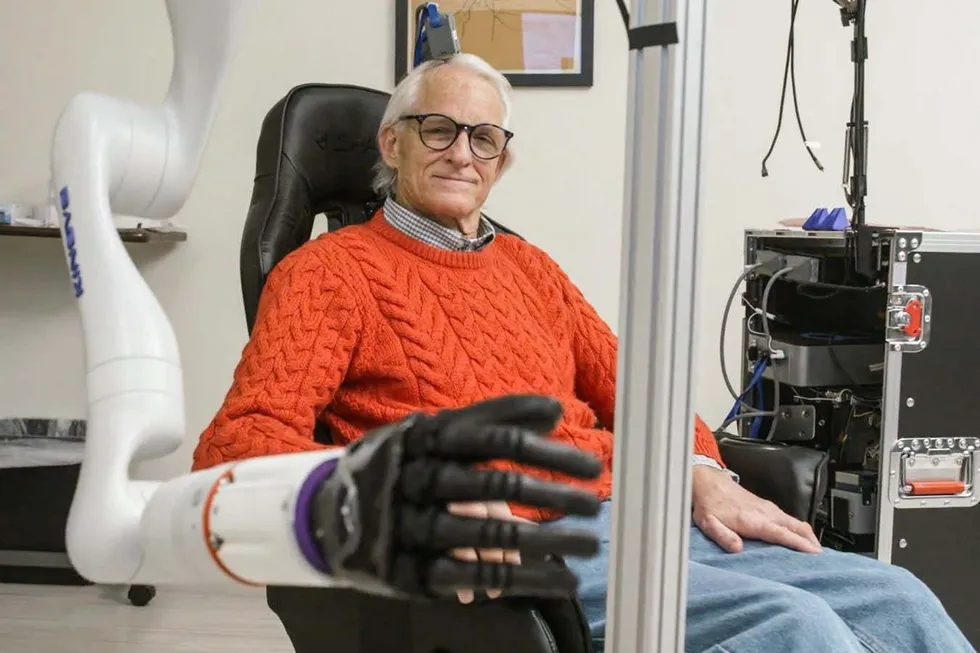
Scott Imbrie vividly remembers the first time he used a robotic arm to shake someone’s hand and felt the robotic limb as if it were his own. “I still get goosebumps when I think about that initial contact,” he says. “It’s just unexplainable.” The moment came courtesy of a brain implant: an array of electrodes that let him control a robotic arm and receive tactile sensations back to the brain.
Getting there took decades. In 1985, Imbrie had woken up in the hospital after a car accident with a broken neck and a doctor telling him he’d never use his hands or legs again. His response was an expletive, he says—and a decision. “I’m not going to allow someone to tell me what I can and can’t do.” With the determination of a head-strong 22-year-old, Imbrie gradually regained the ability to walk and some limited arm movement. Aware of how unusual his recovery was, the Illinois-native wanted to help others in similar situations and began looking for research projects related to spinal cord injuries. For decades, though, he wasn’t the right fit, until in 2020 he was finally accepted into a University of Chicago trial.

 Scott Imbrie has shaken hands with a robotic arm controlled by a brain implant. The electrodes record neural signals that enable him to move the device and receive tactile feedback. Top: 60 Minutes/CBS News; Bottom: University of Chicago
Imbrie is part of a rarefied group: More people have gone to space than have received advanced brain-computer interfaces (BCI) like his. But a growing number of companies are now attempting to move the devices out of neuroscience labs and into mainstream medical care, where they could help millions of people with paralysis and other neurological conditions. Some companies even hope that BCIs will eventually become a consumer technology.
None of that will be possible without people like Imbrie. He’s a member of the BCI Pioneers Coalition, an advocacy group founded in 2018 by Ian Burkhart, the first quadriplegic to regain hand movement using a brain implant.
That life-changing experience convinced Burkhart that BCIs will make the leap from lab to real world only if users help shape the technology by sharing their perspectives on what works, what doesn’t, and how the devices fit into daily life. The coalition aims to ensure that companies, clinicians, and regulators hear directly from trial participants.
 Ian Burkhart founded the BCI Pioneers Coalition to ensure that companies developing brain implants hear directly from the people using them. Left: Andrew Spear/Redux; Right: Ian Burkhart
The group also serves as a peer-support network for trial participants. That’s crucial, because despite the steady drumbeat of miraculous results from BCI trials, receiving a brain implant comes with significant risks. Surgical complications, such as bleeding or infection in the brain, are possible. Even more concerning is the potential psychological toll if the implant fails to work as expected or if life-changing improvements are eventually withdrawn.
Researchers spell this out upfront, and many are put off, says John Downey, an assistant professor of neurological surgery at the University of Chicago and the lead on Imbrie’s clinical trial. “I would say, the number of people I talk to about doing it is probably 10 to 20 times the number of people that actually end up doing it,” he says.
What Happens in a BCI Trial?
BCI pioneers arrive at their unique status via a number of paths, including spinal cord injuries, stroke-induced paralysis, and amyotrophic lateral sclerosis (ALS). The implants they receive come from Blackrock Neurotech, Neuralink, Synchron, and other companies, and are being tested for restoring limb function, controlling computers and robotic arms, and even restoring speech.
Many of the implants record signals from the motor cortex—the part of the brain that controls voluntary movements—to move external devices. Some others target the somatosensory cortex, which processes sensory signals from the body, including touch, pain, temperature, and limb position, to re-create tactile sensation.
Ease of use depends heavily on the application. Restoring function to a user’s own limbs or controlling robotic arms involves the most difficult learning curve. In early sessions, participants watch a virtual arm reach for objects while they imagine or attempt the same movement. Researchers record related brain signals and use them to train “decoder” software, which translates neural activity into control signals for a robotic arm or stimulation patterns for the user’s nerves or muscles.
Paralyzed in a 2010 swimming accident, Burkhart took part in a trial conducted by Battelle Memorial Institute and Ohio State University from 2014 to 2021. His implant recorded signals from his motor cortex as he attempted to move his hand, and the system relayed those commands to electrodes in his arm that stimulated the muscles controlling his fingers.
 Ian Burkhart, who is paralyzed from the chest down, received a brain implant that routed neural signals through a computer to his paralyzed muscles, enabling him to play a video game. Battelle
Getting the system to work seamlessly took time, says Burkhart, and initially required intense concentration. Eventually, he could shift his focus from each individual finger movement to the overall task, allowing him to swipe a credit card, pour from a bottle, and even play Guitar Hero.
Training a decoder is also not a one-and-done process. Systems must be regularly recalibrated to account for “neural drift”—the gradual shift in a person’s neural activity patterns over time. For complex tasks like robotic arm control, researchers may have to essentially train an entirely new decoder before each session, which can take up to an hour.
 Austin Beggin says that testing a BCI is hard work, but he adds that moments like petting his dog make it all worth it. Daniel Lozada/The New York Times/Redux
Even after the system is ready, using the device can be taxing, says Austin Beggin, who was paralyzed in a swimming accident in 2015 and now participates in a Case Western Reserve University trial aimed at restoring hand movement. “The mental work of just trying to do something like shaking hands or feeding yourself is 100-fold versus you guys that don’t even think about it,” he says.
It’s also a serious time commitment. Beggin travels more than 2 hours from his home in Lima, Ohio, to Cleveland for two weeks every month to take part in experiments. All the equipment is set up in the house he stays in, and he typically works with the researchers for 3 to 4 hours a day. The majority of the experiments are not actually task-focused, he says, and instead are aimed at adjusting the control software or better understanding his neural responses to different stimuli.
But the BCI users say the hard work is worth it. Beyond the hope of restoring lost function, many feel a strong moral obligation to advance a technology that could help others. Beggin compares the pioneers to the early astronauts who laid the groundwork for the lunar landings. “We’re some of the first astronauts just to get shot up for a couple of hours and come back down to earth,” he says.
The Emotional Impact of BCIs
Speak to BCI early adopters and a pattern emerges: The biggest benefits are often more emotional than practical. Using a robotic arm to feed oneself or control a computer is clearly useful, but many pioneers say the most meaningful moments are the ones the experiment wasn’t even trying to produce. Beggin counts shaking his parents’ hands for the first time since his injury and stroking his pet dachshund as among his favorite moments. “That stuff is absolutely incredible,” he says.
Neuralink participant Alex Conley, who broke his neck in a car accident in 2021, uses his implant to control both a robotic arm and computers, enabling him to open doors, feed himself, and handle a smartphone. But he says the biggest boost has come from using computer-aided design software.
A former mechanic, Conley began using the software within days of receiving his implant to design parts that could be fabricated on a 3D printer. He has designed everything from replacement parts for his uncle’s power tools to bumpers for his brother-in-law’s truck. “I was a very big problem solver before my accident, I was able to fix people’s things,” he says. “This gives me that same little burst of joy.”
 BCI user Nathan Copeland used a robotic arm to get a fist bump from then-President Barack Obama in 2016. Jim Watson/AFP/Getty Images
The outside world often underestimates those little wins, says Nathan Copeland, who holds the record for the longest functional brain implant. After breaking his neck in a car accident in 2004, he joined a University of Pittsburgh BCI trial in 2015 and has since used the device to control both computers and a robotic arm.
After he uploaded a video to Reddit of himself playing Final Fantasy XIV, one commenter criticized him for not using his device for more practical tasks. Copeland says people don’t understand that those lighthearted activities also matter. “A lot of tasks that people think are mundane or frivolous are probably the tasks that have the most impact on someone that can’t do them,” he says. “Agency and freedom of expression, I think, are the things that impact a person’s life the most.”
Nathan Copeland plays Final Fantasy XIV using his brain implant to control the game character.
When Brain Implants Become Life-Changing
This perspective resonates with Neuralink’s first user, Noland Arbaugh—paralyzed from the neck down after a swimming accident in 2016. After receiving his implant in January 2024, he was able to control a cursor within minutes of the device being switched on. A few days later, the engineers let him play the video game Civilisation VI, and the technology’s potential suddenly felt real. “I played it for 8 hours or 12 hours straight,” he says. “It made me feel so independent and so free.”
 Before receiving his Neuralink implant, Noland Arbaugh used mouth-operated devices to control a computer. He says the BCI is more reliable and enables him to do many more things on his own. Rebecca Noble/The New York Times/Redux
But the technology is also providing more practical benefits. Before his implant, Arbaugh relied on a mouth-held typing stick and a mouth-controlled joystick called a quadstick, which uses sip-or-puff sensors to issue commands. But the fiddliness of this equipment required constant caregiver support. The Neuralink implant has dramatically increased the number of things he can do independently. He says he finds great value in not needing his family “to come in and help me 100 times a day.”
For Casey Harrell, the technology has been even more transformative. Diagnosed with ALS in 2020, the climate activist had just welcomed a baby daughter and was in the midst of a major campaign, pressuring a financial firm to divest from companies that had poor environmental records.


 Casey Harrell was able to communicate again within 30 minutes of his BCI being switched on. The device translates his neural signals quickly enough for him to hold conversations. Ian Bates/The New York Times/Redux
“Every morning we’d wake up and there’d be a new thing he couldn’t do, a new part of his body that didn’t work,” says his wife, Levana Saxon. Most alarming was his rapid loss of speech, which, among other things, left him unable to indicate when he was in pain. Then a relative alerted him to a clinical trial at the University of California, Davis, using BCIs to restore speech. He immediately signed up.
The device, implanted in July 2023, records from the brain region that controls muscles involved in talking and translates these signals into instructions for a voice synthesizer. Within 30 minutes of it being switched on, Harrell could communicate again. “I was absolutely overwhelmed with the thought of how this would impact my life and allow me to talk to my family and friends and better interact with my daughter,” he says. “It just was so overwhelming that I began to cry.”
While earlier assistive technology limited him to short, direct commands, Harrell says the BCI is fast enough that he can hold a proper conversation, and he’s been able to resume work part-time.
What’s Holding BCI Technology Back?
BCI technology still has limits. Most trial participants using Blackrock Neurotech implants can operate their devices only in the lab because the systems rely on wired connections and racks of computer hardware. Some users, including Copeland and Harrell, have had the equipment installed at home, but they still can’t leave the house with it. “That would be a big unlock if I was able to do so,” says Harrell.
The academic nature of many trials creates additional constraints. Pressure to publish and secure funding pushes researchers to demonstrate peak performance on narrow tasks rather than build more versatile and reliable systems, says Mariska Vansteensel, who runs BCI studies at the University Medical Center Utrecht in the Netherlands. She says that investigating the technology’s limits or repeating an experiment in new patients is “less rewarded in terms of funding.”
In a clinical trial, Scott Imbrie uses a BCI to control a robotic arm, using signals from his motor cortex to make it move a block. University of Chicago
One of Imbrie’s biggest frustrations is the rapid turnover in experiments. Just as he begins to get proficient at one task, he’s asked to switch to the next task. Study designs also mean that much of the users’ time is spent on mundane tasks required to fine-tune the system.
Perhaps the biggest issue is that trials are often time-limited. That’s partly because scar tissue from the body’s immune response to the implant can gradually degrade signal quality. But constraints on funding and researcher availability can also make it impossible for users to keep using their BCIs after their trials end, even when the technology is still functional.
Ian Burkhart’s BCI enables him to grasp objects, pour from a bottle, and swipe a credit card.
Burkhart has firsthand experience. His trial was extended, but the implant was eventually removed after he got an infection. He always knew the trial would end, but it was nonetheless challenging. “It was a little bit of a tease where I got to see the capability of the restoration of function,” he says. “Now I’m just back to where I was.”
The Push to Commercialize BCIs
Progress is being made in transitioning the technology from experimental research devices to fully-fledged medical products that could help users in their everyday lives. Most academic BCI research has relied on Blackrock Neurotech’s Utah Arrays, which typically feature 96 needlelike electrodes that penetrate the brain’s surface. The implant is connected to a skull-mounted pedestal that’s wired to external hardware. But some of the newer devices are sleeker and less invasive.
Neuralink’s implant houses its electronics and rechargeable battery in a coin-size unit connected to flexible electrode threads inserted into the brain by a robotic “sewing machine.” The implant, which is roughly the size of a quarter or a euro, is mounted in a hole cut into the skull and charges and transfers data wirelessly. Synchron takes a different approach, threading a stent-like implant through blood vessels into the motor cortex. This “stentrode” connects by wire to a unit in the chest that powers the implant and transmits data wirelessly.

 Rodney Gorham can use his Synchron implant to control not just a computer, but also smart devices in his home like an air conditioner, fan, and smart speaker. Rodney Decker
Neuralink’s decoder runs on a laptop, while Synchron deploys a smartphone-size signal processing unit as a wireless bridge to the user’s devices, which allows them to use their implants at home and on the move. The companies have also developed adaptive decoders that use machine learning to adjust to neural drift on the fly, reducing the need for recalibration.
Making these devices truly user-friendly will require technology that can interpret user context, says Kurt Haggstrom, Synchron’s chief commercial officer—including mood, attention levels, and environmental factors like background noise and location. This approach will require AI that analyzes neural signals alongside other data streams such as audio and visual input.
Last year, Synchron took a first step by pairing its implant with an Apple Vision Pro headset. When trial participant Rodney Gorham looked at devices such as a fan, a smart speaker, and an air conditioner, the headset overlaid a menu that enabled him to adjust the device’s settings using his implant.
Rodney Gorham uses his Synchron implant to turn on music, feed his dog, and more. Synchron BCI
Another way to reduce cognitive load is to detect high-order signals of intent in neural data rather than low-level motor commands, says Florian Solzbacher, cofounder and chief scientific officer of Blackrock Neurotech. For instance, rather than manually navigating to an email app and typing, the user could simply think about sending an email and the system would then open it with content already prepopulated, he says.
Durability may prove a thornier problem to solve, UChicago’s Downey says. Current implants last around a decade—well short of a lifelong solution. And with limited real estate in the brain, replacement is only possible once or twice, he says.
Rapid technological progress also raises difficult decisions about whether to get a BCI implant now or wait for a more advanced device. This was a major concern for Gorham’s wife, Caroline. “I was hesitant. I didn’t want him to go on the trial but maybe a future one,” she says. “It was my fear of missing out on future upgrades.”
Will Brain Implants Ever Become Consumer Tech?
Some executives have raised the prospect of BCIs eventually becoming consumer devices. Neuralink founder Elon Musk has been particularly vocal, suggesting that the company’s implants could replace smartphones, let people save and replay memories, or even achieve “symbiosis” with AI.
This kind of talk inspires mixed feelings in users. The hype brings visibility and funding, says Beggin, but could divert attention from medical users’ needs. Copeland worries that consumer branding could strip the devices of insurance coverage and that rising demand may make it harder to access qualified surgeons.
 Noland Arbaugh, the first recipient of Neuralink’s BCI, says that using the implant to control a computer made him feel independent and free. Steve Craft/Guardian/eyevine/Redux
There are also concerns about how data collected by BCI companies will be handled if the devices go mainstream. As a trial participant, Arbaugh says he’s comfortable signing away his data rights to advance the technology, but he thinks stronger legal protections will be needed in the future. “Does that data still belong to Neuralink? Does it belong to each person? And can that data be sold?” he asks.
Blackrock’s Solzbacher says the company remains focused on the medical applications of the technology. But he also believes it is building a “universal interface to any kind of a computerized system” that may have broader applications in the future. And he says the company owes it to users not to limit them to a bare-bones assistive technology. “Why would somebody who’s got a medical condition want to get less than something that somebody who’s able-bodied would possibly also take?” says Solzbacher.
The ever-optimistic Imbrie heartily agrees. Medical devices are invariably expensive, he says, but targeting consumer applications could push companies to keep devices simple and affordable while continuing to add features. “I truly believe that making it a consumer-available product will just enhance the product’s capabilities for the medical field,” he says.
Imbrie is on a mission to refocus the conversation around BCIs on the positives. While concerns about risks are valid, he worries that the alarming language often used to describe brain implants discourages people from volunteering for trials that could help them.
“I remember laying there in the bed and not being able to move,” he says, “and it was really dehumanizing having to ask someone to do everything for you. As humans, we want to be independent.”
From Your Site Articles
Related Articles Around the Web
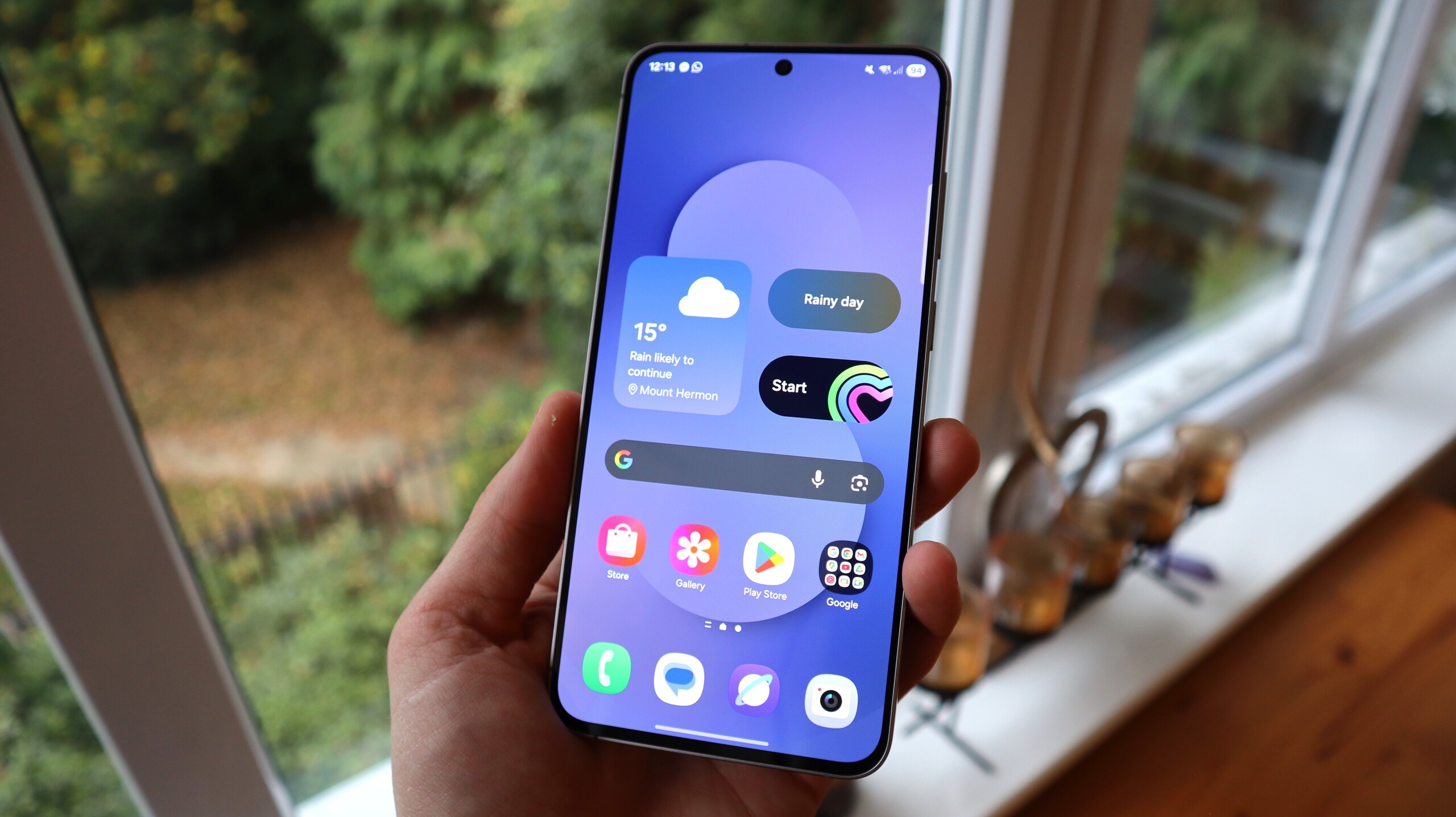
Samsung might’ve accidentally given away when One UI 8.5 is landing on older Galaxy phones. However, it’s worth taking this one with a bit of caution.
According to a screenshot shared by tipster @MatthewReiter05 (via @theonecid), a Samsung support agent suggested that the stable One UI 8.5 rollout could begin April 30 in Korea.
There could be a global and US release around May 4. If accurate, that puts the update just a few weeks away for devices like the Samsung Galaxy S25 series.
It lines up, at least loosely, with earlier claims from leaker Tarun Vats, who suggested a similar rollout window. But that’s about as far as the certainty goes.
Support chats aren’t exactly known for breaking reliable launch news, and Samsung hasn’t officially confirmed any dates. These timelines can shift quickly depending on last-minute bugs or regional testing delays, and support agents don’t always have access to final rollout schedules. In other words, this could be informed guesswork rather than a genuine early reveal.
Still, the timing isn’t entirely out of place. Samsung already shipped One UI 8.5 with the newer Galaxy S26 series, and it’s been gradually expanding beta access to older devices, including mid-range phones like the Galaxy A35 and A55, as well as foldables in the Z5 line. That wider testing phase usually signals a stable release isn’t too far off.
For Galaxy S25 users, the update is expected to bring a mix of refinements rather than a full overhaul – building on the existing One UI experience with performance tweaks, UI polish, and incremental feature updates.
So while early May is shaping up as a possible window, it’s not locked in just yet. Until Samsung makes it official, it’s best to treat this as a likely-but-unconfirmed timeline rather than a guaranteed release date.

Dozens of plug-ins for the widely used open source web blogging software WordPress are now offline after a backdoor was discovered in them, used to push malicious code to any website that relied on the plug-ins. The backdoor was discovered after a new corporate owner bought these plug-ins.
Anchor Hosting founder Austin Ginder sounded the alarm in a blog post last week describing a supply chain attack on a WordPress plug-in maker called Essential Plugin. Ginder said someone last year bought Essential Plugin and the backdoor was soon added to the plug-ins’ source code. The backdoor sat dormant until earlier this month when it activated and began distributing malicious code to any website with the plug-ins installed.
Essential Plugin says on its website that it has over 400,000 plug-in installs and more than 15,000 customers. WordPress’ plug-in install page says the affected plug-ins are in over 20,000 active WordPress installations.
Plug-ins allow owners of WordPress-based websites to extend the site’s functionality, but in doing so grant the plug-ins access to their installations, which can open these websites to malicious extensions and potential compromise. But Ginder warned that WordPress users are not notified of any plug-ins’ change in ownership, exposing users to potential takeover attacks by their new owners.
According to Ginder, this is the second hijack of a WordPress plug-in discovered in as many weeks. Security researchers have long warned of the risks of malicious actors buying software and changing its code in order to compromise a large number of computers around the world.
While the plug-ins have been removed from WordPress’ directory and now list their closure as “permanent,” Ginder warned that WordPress owners should check if they still have one of the malicious plug-ins installed and remove it. Ginder has a list of the affected plug-ins in the blog post.
Representatives for Essential Plugin did not respond to a request for comment.

Expanding its powered speaker range for the first time in several years, Kanto Audio has introduced the Tuk Grand alongside refreshed versions of the Tuk, Yu4, and Yu6, with the full lineup making its public debut at AXPONA 2026.
The Tuk Grand sits at the top of the range and steps up from the original Tuk with a larger cabinet, a 6-inch aluminium concave woofer, and a peak power output of 320W, a significant increase over the standard Tuk’s 260W that reflects the new model’s focus on scale and low-frequency extension.
Both Tuk models now feature the brand’s Air Motion Transformer tweeter in a refined configuration, with Kanto noting improvements to the waveguide geometry that deliver smoother high-frequency response and more consistent sound across a wider listening area than the previous generation.
The updated Tuk also moves away from the rounded cabinet profile of the original, adopting sharper square-corner geometry that reduces edge diffraction and contributes to a more focused stereo image, with cabinet volume increased to give the drivers a more stable acoustic foundation.
Connectivity on the Tuk range includes Bluetooth 5.4 with aptX HD and aptX Adaptive, a TOSLINK optical input, USB-C, and two RCA line-in options, giving the speakers flexibility across both modern and legacy source equipment.

Passive versions of both the Tuk and Tuk Grand are also available for listeners who prefer to run their own amplification, with the Tuk Grand Passive priced at £599.99 and the standard Tuk Passive at £499.99, extending the range’s appeal beyond the all-in-one powered audience.
The Yu4 and Yu6 receive a complete redesign of the cabinet and front baffle alongside updated drivers and DSP tuning, and both powered versions retain the all-in-one connectivity the series has always offered, including Bluetooth 5.3, phono input, USB-C, RCA, and a subwoofer output.
The full lineup launches in summer 2026, with UK pricing starting at £199.99 for the passive Yu4, rising to £799.99 for the powered Tuk Grand, and colour options across the range including Black, White, Walnut, and several finish-specific choices.
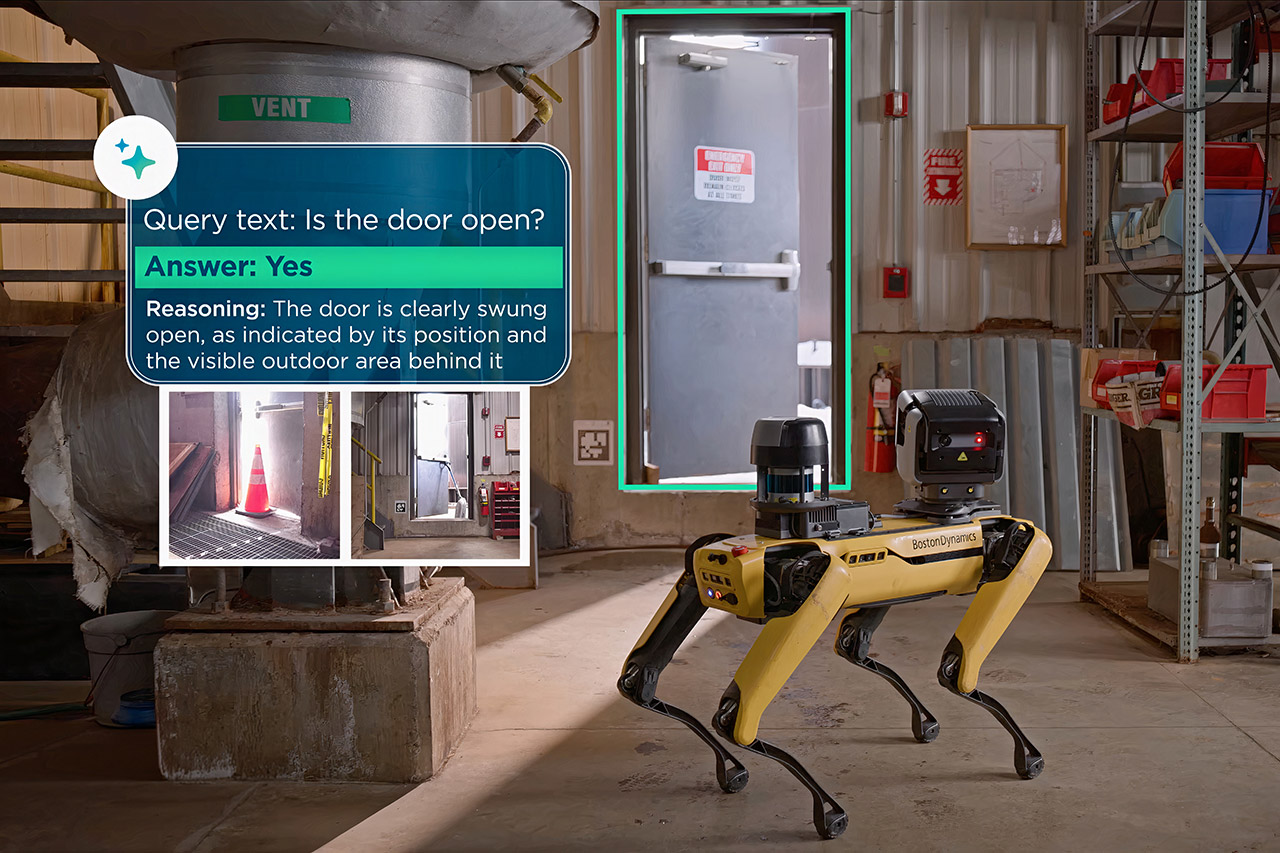
Boston Dynamics’ Spot, a four-legged machine that has been making its way through factories, warehouses, and power plants on its own for years, can now connect to the Orbit platform and the AIVI-Learning tool. This Google Gemini-powered program uses the photos to provide reports on safety, equipment health, and cleanliness. The system has done well with easy tasks, but when scenarios become cluttered, things become a little hazy.
That all changed with Google Gemini Robotics ER 1.6. This new model brings some high-level thinking to the party, allowing Spot to assess its surroundings, plan its next step, and determine whether or not it has completed the task. It captures photographs from numerous viewpoints at simultaneously, even if the illumination changes or anything obscures the view. It can point to anything on the screen and precisely count them, and it can even avoid producing results that do not exist.

Unitree Go2 Robot Dog Quadruped Robotics for Adults Embodied AI (Go2 X) Built for Developers
- 【Next-Generation Robotic Companion: Meet the Unitree Go2 Robotic Dog】 The Unitree Go2 X is a powerful and intelligent quadruped robot designed for…
- 【Intelligent Navigation with 3D LiDAR & Obstacle Avoidance】 Featuring ultra-wide 3D LiDAR with 360°x96° perception, the Go2 X detects obstacles…
- 【High-Definition Vision & Seamless App Integration】 A front HD camera streams 1280×720 video to the app. Control the robot, view real-time data…
Pressure gauges are an excellent example of how all of this new technology adds up. Spot moves up to a dial, zooms in if necessary, and then reports the exact reading. It can even manage camera angle distortions and check numerous needles at once if there are more than one to deal with. Sight glasses operate similarly, allowing the robot to estimate liquid levels from empty to full in plain old percentage terms, and those digital displays that used to give it a headache due to glare or bad typefaces. They now work much more consistently.
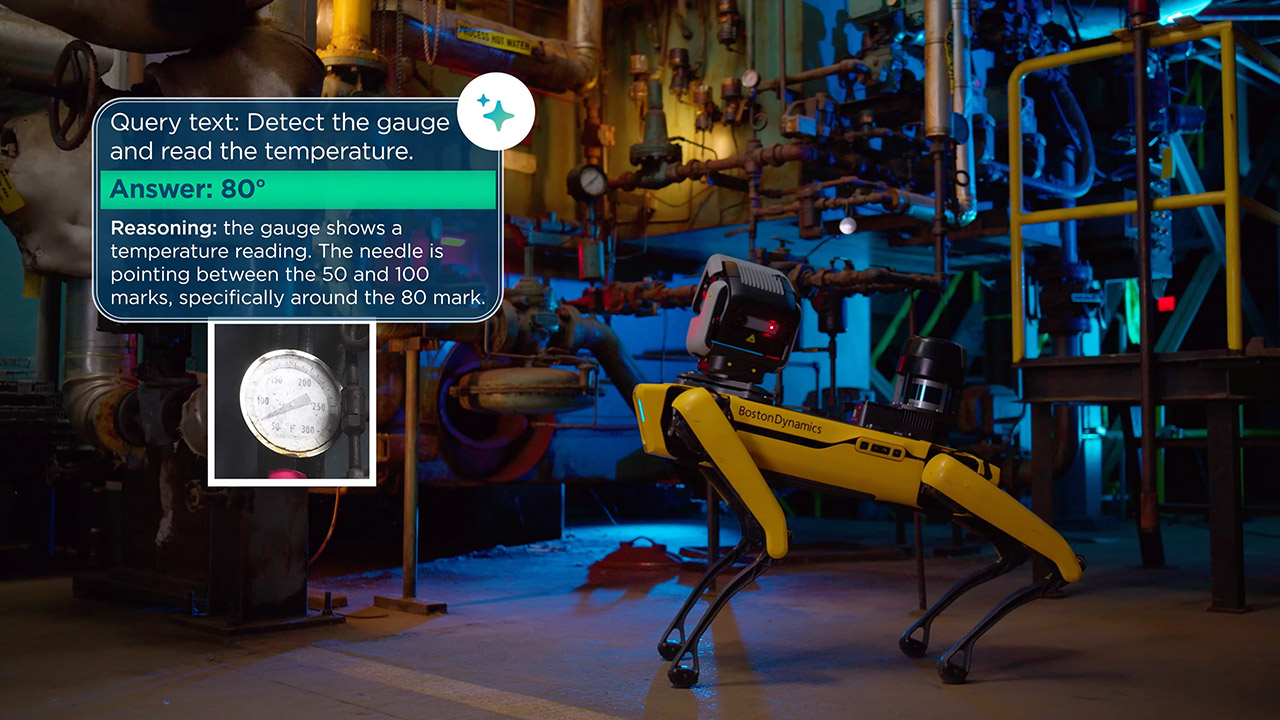
Spot can also address the bigger picture, as it performs 5S compliance audits without issue, detecting misplaced tools or clutter that violates housekeeping guidelines. If it sees a puddle of liquid, it’s now clever enough to recognize it as a hazard rather than a harmless reflection. Conveyor belts, valves, and other equipment are all thoroughly inspected to detect any minor damage or leaks before they cause major problems.
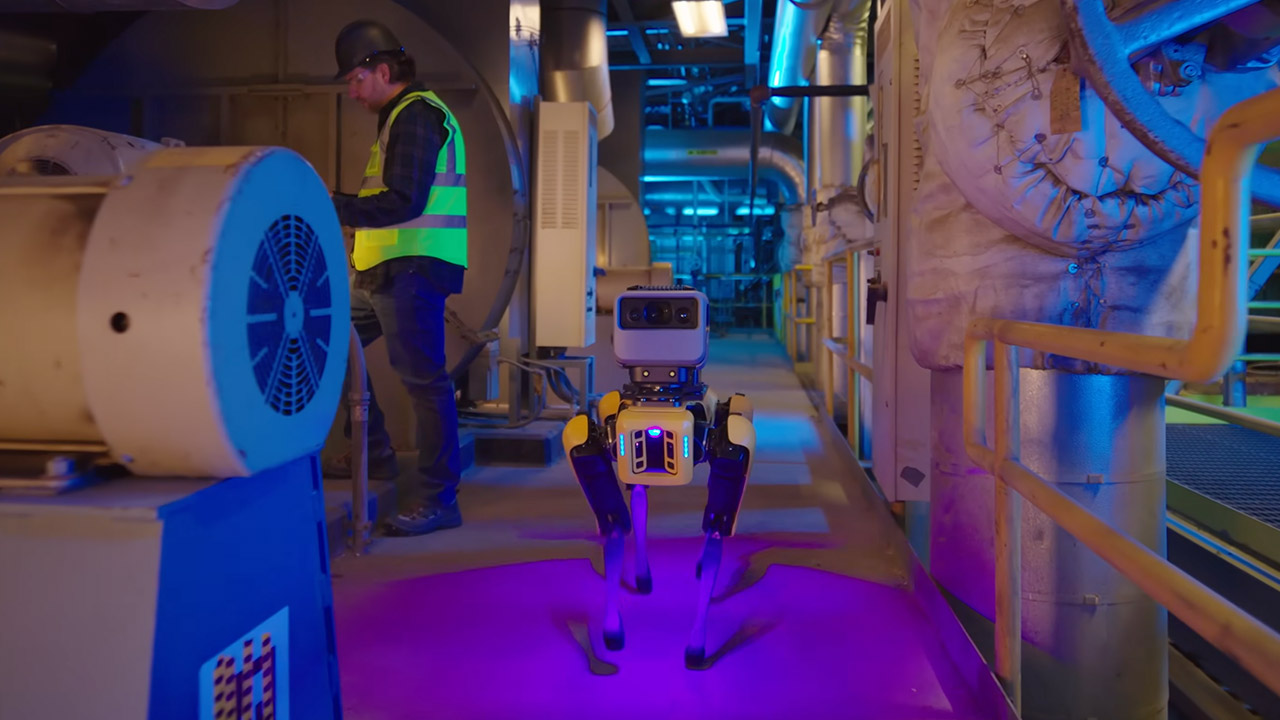
Every inspection includes a step-by-step analysis of how the robot reached its decision, allowing customers to understand exactly what steps the AI performed rather than receiving a black box response. When the stakes are high and someone will be penalized or the business will be shut down due to unanticipated downtime, that transparency truly creates confidence. The good news is that all of these changes take place completely behind the scenes, with Boston Dynamics and Google handling everything in the cloud, so your robot continues to function normally. As Spot conducts regular patrols, new photographs are fed back into the system, and the models gradually gain a sense of the unique layout, lighting, and equipment of that location.
[Source]

An anonymous reader quotes a report from Cord Cutters News: Sony has notified owners of its recent BRAVIA television models that significant changes to the built-in TV Guide for its OTA TV antenna users and related menu features will take effect starting in late May 2026. The update affects a range of premium sets released between 2023 and 2025, marking another instance of feature adjustments for older smart TV hardware as manufacturers shift focus toward newer product lines. The changes primarily target the program guide functionality for over-the-air antenna TV channels received via the ATSC tuner. After the cutoff date, program information may fail to display on certain channels, limiting the guide’s usefulness for planning viewing schedules. Users will often see listings only for channels they have recently watched, rather than a comprehensive overview of available broadcasts. Additionally, channel logos that previously appeared in the guide will disappear, and any thumbnail images accompanying program descriptions will no longer load or show.
Further modifications will appear in the television’s menu system. For users relying on connected set-top boxes, the dedicated Set Top Box menu option will be removed entirely. In its place, a simpler Control menu will surface, streamlining access but eliminating some specialized navigation previously available. Program thumbnails, which provided visual previews in various menu sections, will also cease to appear across affected interfaces. These adjustments stem from Sony’s ongoing efforts to manage backend services and data feeds that support enhanced guide features on its Google TV-powered BRAVIA lineup. As television ecosystems evolve rapidly with advancements in processing power, artificial intelligence integration, and cloud-based content delivery, companies periodically retire select capabilities on prior-generation hardware to optimize resources. The 2023 through 2025 models, while still offering excellent picture quality through advanced OLED and LCD panels with features like XR processing, now fall into the category of devices receiving scaled-back support. These are the models impacted:
2025 models: Bravia 8 II (XR80M2), Bravia 5 (XR50)
2024 models: Bravia 9 (XR90), Bravia 8 (XR80), Bravia 7 (XR70)
2023 models: Bravia A95L series
Microsoft recently released a new preview build of Windows 11 for the Windows Insider channels. Users enrolled in the Insider program can now test a somewhat historic change: a new “hard” size limit for disk volumes formatted with the FAT32 file system. This long-anticipated update may improve compatibility and flexibility…
Read Entire Article
Source link

Japanese entertainment company Toho has released a teaser video for Godzilla Minus Zero, the upcoming sequel to the award-winning film Godzilla Minus One. The teaser shows the famous monster next to the Statue of Liberty as it rampages across New York. Godzilla Minus Zero is set in 1949, two years after the events of the first film, and will be a direct sequel. You’ll see familiar faces from Minus One in the short trailer, as well, namely Koichi Shikishima and Noriko Oishi, two of the first movie’s main characters.
The kaiju flick was filmed specifically for IMAX with high-definition digital cameras. Even its audio was optimized for the massive screen’s immersive cinema experience. Minus One won an Oscar for Best Visual Effects, so expectations are high for this sequel. The good news is that this movie is also helmed by Takashi Yamazaki, who wrote, directed and oversaw the visual effects for Minus One. Godzilla Minus Zero is heading to cinemas in Japan on November 3 and in the United States on November 6 this year.

Politics Home Article | Why The Iran War Is Making Food In The UK More Expensive

North Carolina A&T football player dies in Greensboro motorcycle crash

Microsoft releases Windows 10 KB5082200 extended security update


-

 Politics5 days ago
US brings back mandatory military draft registration
-
 Sports5 days ago
Man United discover Nico Schlotterbeck transfer fee as defender reaches Dortmund agreement
-

 Fashion5 days ago
Weekend Open Thread: Veronica Beard
-

 Politics5 days ago
Malcolm In The Middle OG Turned Down ‘Buckets Of Money’ To Appear In Reboot
-

 Politics3 days ago
World Cup exit makes Italy enter crisis mode
-

 Crypto World6 days ago
Canary Capital Files SEC Registration for PEPE ETF
-

 Business4 days ago
Tesla Model Y Tops China Auto Sales in March 2026 With 39,827 Registrations, Beating Cheaper EVs and Gas Cars
-

 Crypto World2 days ago
The SEC Conditionalises DeFi Platforms to Be Avoided for Broker Registration
-

 Crypto World1 day ago
SEC Signals Exemption for Crypto Interfaces From Broker Registration
-

 Crypto World7 days ago
Bitcoin recovers as US and Iran Agree a Ceasefire Deal
-
 NewsBeat2 days ago
Pep Guardiola and Gary Neville agree over Arsenal title problem that benefits Man City
-

 Business5 days ago
OpenAI Halts Stargate UK Data Centre Project Over Energy Costs and Copyright Row
-

 Business4 days ago
Ireland Fuel Protests Enter Day 5 as Blockades Spark Shortages and Government Prepares Support Package
-

 Politics5 days ago
LBC Presenter Mocks Trump Over Iran War Failures
-

 Crypto World4 days ago
Federal judge blocks Arizona from bringing criminal charges against Kalshi
-
 NewsBeat3 days ago
JD Vance announces ‘no agreement’ with Iran over nuclear weapons fear
-

 Tech5 days ago
A version of Windows 10 released a decade ago is now eligible for additional security patches
-

 Crypto World1 day ago
SEC Proposes Certain Crypto Interfaces Don’t Need to Register as Brokers
-

 NewsBeat23 hours ago
Trump and Pope Leo: Behind their disagreement over Iran war
-

 Business4 days ago
IMF retains floor for precautionary balances at SDR 20 billion
You must be logged in to post a comment Login