







Connect with us
DAPA Banner

Business

Five Things a Good Small Business Accountant in London Saves You

Published

on

Five Things a Good Small Business Accountant in London Saves You

Running a business in London is expensive enough. Most owners watch their overheads carefully — yet they consistently undervalue the one professional who could reduce their tax bill, protect their cash flow, and keep them out of trouble with HMRC.

The problem is not that accountants are unhelpful. The problem is that most small business owners do not know what a good one should actually be doing. If your accountant only contacts you around year-end, you are not getting full value.

Here is what a strong small business accountant in London genuinely saves you and why it matters more than the invoice suggests.

1. Tax You Would Have Paid Unnecessarily

This is the most obvious saving, but it is consistently underestimated. The UK tax system is not simple. Between allowable expenses, capital allowances, pension contributions, salary-dividend splits for limited company directors, R&D credits, and the Employment Allowance, there is a significant amount of legitimate relief available that goes unclaimed every year.

HMRC’s own data suggests small businesses in the UK collectively fail to claim hundreds of millions in allowances annually. Most of that shortfall is not fraud or avoidance — it is missed opportunities caused by advisers who do not ask the right questions.

Advertisement

An accountant who understands your specific industry and business model will identify these reliefs proactively. They do not wait for you to ask.

2. Late-Filing Penalties

HMRC’s penalty regime is not forgiving. A single day’s late filing of your Corporation Tax return costs £100. Extend that to three months, and HMRC adds another £100 and may begin charging 10% of your outstanding tax as a further penalty. For Self Assessment, similar rules apply — and interest accrues on unpaid tax from the due date.

For businesses handling VAT, late submissions carry additional surcharges. Under the penalty points system introduced in 2023, repeated late filings escalate quickly.

A competent accountant keeps a compliance calendar, chases the documents they need well in advance, and files on time. This is basic, but it matters far more than most owners realise until they receive their first penalty notice.

Advertisement

3. The Time You Spend Doing Their Job

This one is less tangible but arguably more valuable. A business owner spending six to eight hours per month on bookkeeping, chasing receipts, and reconciling bank statements is not spending those hours generating revenue or building the business.

If your time as a director is worth £75 an hour — and for most London SME owners it is significantly higher — eight hours of accounting administration represents £600 of value per month that the business never recaptures.

Cloud accounting tools like Xero and QuickBooks, when set up correctly by a good accountant for small businesses in London, largely eliminate this manual workload. Bank feeds reconcile automatically. Expenses are categorised. VAT returns take minutes rather than an afternoon.

4. Bad Decisions Made Without Good Financial Data

Most small businesses make major decisions — hiring, pricing, investment, premises — based on a rough sense of where the money is rather than actual data. That sense is often wrong.

Advertisement

An accountant who produces clean monthly management accounts gives you the visibility to make better decisions faster. You can see exactly which revenue streams are growing, which clients are unprofitable, and whether your margins are holding up. Without that data, you are guessing.

The distinction here is between compliance accounting (producing annual accounts and filing returns) and advisory accounting (helping you understand and use your numbers). Many small business owners are only receiving the former. They should be receiving both.

5. Stress and Exposure You Do Not Know You Are Carrying

HMRC inquiry risk does not often come up in conversations about accountant value, but it should. A business with well-maintained records, properly categorised expenses, and a clean paper trail is significantly less likely to trigger a compliance check — and significantly easier to defend if one occurs anyway.

Beyond compliance, the psychological load of unclear financial records is real. Business owners who do not know their current tax position carry low-level financial anxiety that affects decision-making. Knowing exactly where you stand — what you owe, what is due, what is coming — is worth something in itself.

Advertisement

What to Look for in London Specifically

London’s business environment has specific considerations. Commercial rents, the Apprenticeship Levy, industry concentration by borough, and SDLT on commercial property all affect how your accounts should be structured. An accountant working primarily with London-based SMEs will understand these nuances in a way that a national generalist firm often will not.

If you are considering switching or hiring for the first time, look for fixed-fee pricing, cloud accounting proficiency, and demonstrable sector experience. A free initial consultation is standard — use it to test their knowledge of your specific situation, not just their service offering.

A good London accounting firm will demonstrate its value within the first few months through proactive advice, not just year-end paperwork. If yours is only reactive, it may be time to reassess.

Advertisement

Continue Reading
Click to comment

You must be logged in to post a comment Login

Leave a Reply

Business

Meta Installs Software to Track US Employees’ Mouse Movements and Keystrokes for AI Training

Published

on

Stock Market

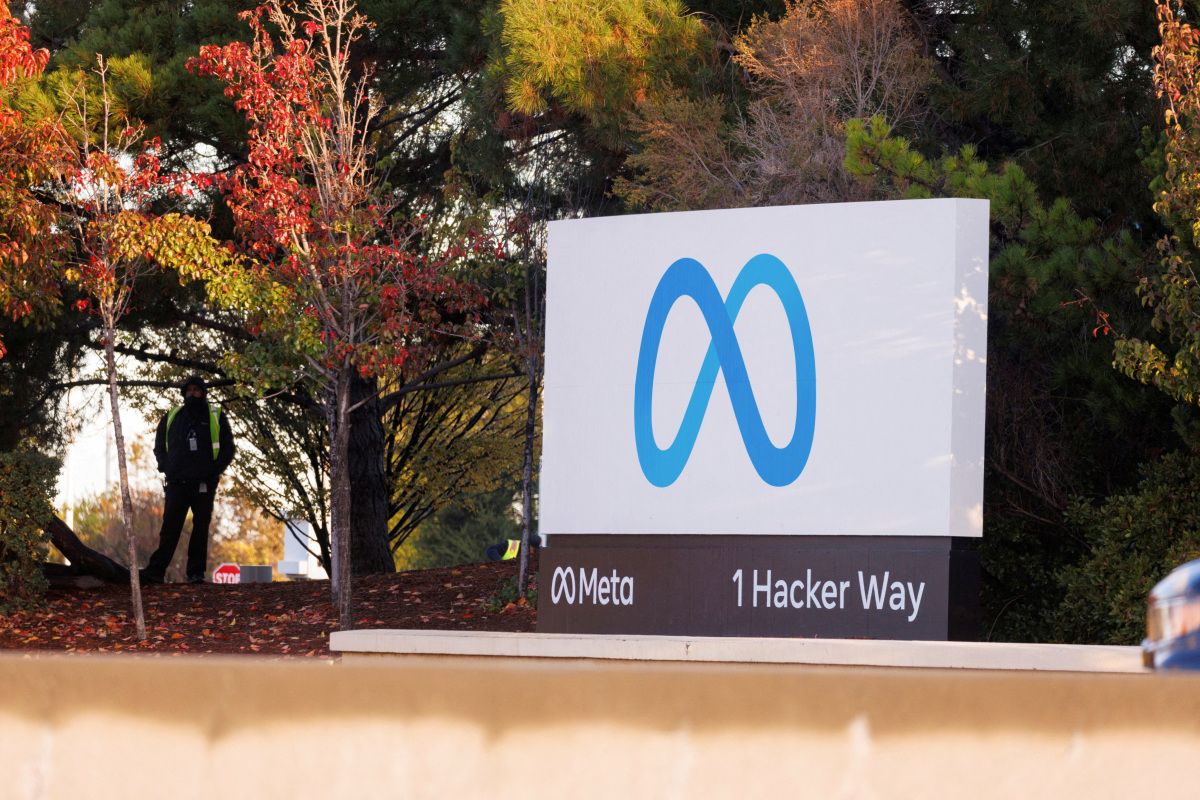
NEW YORK — Meta Platforms Inc. is rolling out new tracking software on the computers of its U.S.-based employees to capture mouse movements, clicks and keystrokes, using the data to train artificial intelligence models aimed at building autonomous AI agents capable of performing everyday work tasks, according to internal memos obtained by Reuters.

Headquarters of Facebook parent company Meta Platforms Inc in Mountain View

The tool, known as the Model Capability Initiative or MCI, will operate on a curated list of work-related applications and websites. It will also take occasional snapshots of screen content to provide context for the interactions, a staff AI research scientist posted Tuesday in an internal channel for the company’s Meta SuperIntelligence Labs team.

Meta’s push reflects the intensifying race among tech giants to develop more capable AI agents that can navigate computer interfaces like humans — selecting dropdown menus, using keyboard shortcuts and handling multi-step digital workflows. Current models often struggle with these practical interactions despite advances in language understanding.

“If we’re building agents to help people complete everyday tasks using computers, our models need real examples of how people actually use them — things like mouse movements, clicking buttons, and navigating dropdown menus,” Meta spokesperson Andy Stone said in a statement. “To help, we’re launching an internal tool that will capture these kinds of inputs on certain applications to help us train our models.”

The initiative forms part of a broader effort rebranded as the Agent Transformation Accelerator, according to a separate memo from Meta CTO Andrew Bosworth. Bosworth told staff the company aims for a future where AI agents primarily handle routine work while humans direct, review and refine their performance. The data collected will help agents learn to identify when human intervention occurs and improve autonomously in subsequent attempts.

Advertisement

Meta emphasized that the tracking data will not be used for employee performance evaluations or any purpose beyond AI model training. The company said safeguards are in place to protect sensitive content, though specifics were not detailed in the memos.

The announcement quickly sparked internal debate and external backlash. Employees expressed concerns about privacy, surveillance and the long-term implications for job security in discussions on internal forums. Some viewed the program as turning workers into unwitting trainers for systems that could eventually automate their roles. Online reactions ranged from accusations of dystopian workplace monitoring to pragmatic acceptance that high-quality interaction data remains scarce for training reliable agents.

Privacy advocates and labor groups raised questions about consent, data minimization and potential misuse. While Meta limits the tool to U.S.-based full-time employees and contingent workers on work devices and approved applications, critics worry about the precedent for broader workplace surveillance in the AI era. Similar tracking tools have drawn scrutiny at other companies, though Meta’s explicit link to training replacement-level agents has amplified the reaction.

The move comes as Meta ramps up its massive AI investments. The company plans to spend roughly $140 billion on AI infrastructure and related efforts in 2026, nearly double the previous year’s outlay. CEO Mark Zuckerberg has repeatedly positioned AI as central to the company’s future, from improving content recommendations on Facebook and Instagram to developing advanced agents that could transform productivity tools.

Advertisement

Building effective computer-using agents requires vast amounts of real-world demonstration data showing not just what actions to take but the precise sequences of mouse clicks, keystrokes and navigation decisions humans make. Public web data or synthetic examples often fall short in replicating the nuances of enterprise software, internal tools and dynamic interfaces. By harvesting anonymized interaction data from its own workforce, Meta aims to close that gap without relying solely on expensive human annotation or simulated environments.

Industry experts note that Meta is not alone in pursuing this approach. Several tech firms and AI startups are exploring ways to capture human-computer interaction data, either through voluntary contributions, synthetic generation or controlled monitoring. However, Meta’s scale — with tens of thousands of U.S. employees using diverse internal systems — offers a rich, varied dataset that could accelerate progress.

The timing coincides with Meta’s aggressive hiring in AI research while simultaneously managing efficiency initiatives across other parts of the business. Reports have circulated about potential layoffs in non-AI divisions, adding to employee anxiety that the tracking program could contribute to workforce reductions as agents mature.

Meta has a history of heavy internal data collection for product improvement, from user behavior on its social platforms to developer interactions with its tools. The company maintains strict policies on data handling and has faced past regulatory scrutiny over privacy practices, leading to billions in fines and settlements. Officials insist the new tool includes protections against capturing or retaining personal or highly sensitive information.

Advertisement

Still, the rollout highlights tensions in the AI development race. On one side, the need for high-fidelity training data to create genuinely useful agents; on the other, growing societal and employee discomfort with pervasive monitoring. European privacy regulations such as GDPR impose stricter limits on workplace surveillance, potentially complicating similar initiatives for Meta’s international staff.

As AI agents evolve, their ability to autonomously handle tasks like scheduling, data entry, report generation or customer support workflows could reshape white-collar work. Meta’s internal memos frame the effort positively as empowering employees to focus on higher-value work by offloading routine activities. Critics counter that it risks accelerating job displacement without adequate transition support.

The program’s effectiveness will depend on the quality and diversity of the captured data. Mouse trajectories, click patterns and keystroke dynamics provide rich signals about intent, hesitation and workflow efficiency that text-based logs alone cannot convey. Occasional screen snapshots add crucial context, such as the layout of specific applications or the content being manipulated.

Meta has not disclosed technical details about data storage, anonymization techniques or deletion policies. Employees were informed of the rollout but it remains unclear whether participation is mandatory or if opt-out options exist for certain roles.

Advertisement

The development underscores how Big Tech companies are increasingly turning inward for AI training resources as external data sources face legal challenges, quality issues or saturation. Similar efforts have included using customer service transcripts, code repositories and internal documents, but granular interaction data represents a newer frontier.

For now, the Model Capability Initiative is limited to U.S. employees and specific applications. Its success could influence whether Meta expands the approach or inspires competitors to follow suit. As the technology industry grapples with the dual challenges of advancing AI capabilities and addressing ethical concerns around labor and privacy, Meta’s experiment will be closely watched.

Company leaders have signaled confidence that transparent communication and strict boundaries will alleviate concerns. Whether the initiative ultimately boosts AI performance enough to justify the surveillance tradeoff remains an open question that will likely be tested in the coming months as agents trained on the new data enter internal testing.

In the broader context of 2026’s AI boom, Meta’s decision reflects a pragmatic — if controversial — step toward solving one of the field’s persistent bottlenecks: teaching machines not just what to do, but exactly how humans do it in the messy reality of daily digital work.

Advertisement
Continue Reading

Business

UK Inflation Rises to 3.3% in March 2026 as Middle East War Hits Fuel and Energy Costs

Published

on

UK Inflation Rises to 3.3% in March 2026 as Middle East War Hits Fuel and Energy Costs

British small and medium-sized enterprises are facing a fresh squeeze on margins after official figures revealed inflation jumped to 3.3 per cent in March, the first hard evidence of how the Middle East conflict is feeding through to the real economy.

Data released by the Office for National Statistics on Wednesday showed the Consumer Prices Index accelerated from 3 per cent in February, in line with City forecasts and marking the first uptick in the headline rate since December. It is also the first inflation reading to capture the surge in global oil and gas prices since hostilities erupted two months ago, with Brent crude up roughly 30 per cent and trading around the $100-a-barrel mark for several weeks.

The pain at the pump was unmistakable. Petrol rose by 8.6 pence per litre to an average of 140.2p, its highest since August 2024, while diesel, the lifeblood of the haulage and trades sector, leapt by 17.6p to 158.7p, a level not seen since November 2023. For the nation’s 5.5 million SMEs, many of whom rely on vans, lorries and company cars to service customers, it amounts to a significant and largely unhedgeable operating cost.

Air fares added further heat, climbing 10 per cent month-on-month against a 0.3 per cent fall over the same period a year earlier. That is the steepest February-to-March rise since 2016, although the ONS noted that prices were collected before the outbreak of war and were inflated by the timing of long-haul flights immediately after Easter.

Grant Fitzner, chief economist at the ONS, said: “Inflation climbed in March, largely due to increased fuel prices, which saw their largest increase for over three years. Airfares were another upward driver this month, alongside rising food prices. The only significant offset came from clothing costs, where prices rose by less than this time last year.”

Advertisement

Economists at the International Monetary Fund and elsewhere have warned that the headline rate could climb through the summer and potentially peak above 5 per cent, more than double the Bank of England’s 2 per cent target. Core inflation, which strips out volatile food and energy components, edged down to 3.1 per cent from 3.2 per cent, but services inflation, the measure most closely watched by Threadneedle Street, ticked up to 4.5 per cent from 4.3 per cent. Food prices were 3.7 per cent higher year-on-year, a number that will ripple through hospitality margins.

The Bank of England’s monetary policy committee is expected to leave Bank Rate on hold at 3.75 per cent when it meets next Thursday, though rate-setters are facing an uncomfortable dilemma. Martin Beck, chief economist at WPI Strategy, said: “With inflation likely to remain above target for longer, the Bank of England is unlikely to cut rates any time soon. But equally, the case for further tightening remains weak. A prolonged period of policy on hold looks the most likely outcome, leaving the economy exposed to the trajectory of the conflict and its impact on energy markets.”

Peter Dixon, senior economist at the National Institute of Economic and Social Research, went further, arguing that the Bank “cannot risk appearing complacent, and we therefore expect one precautionary [quarter point] rate increase over the coming months”. A move of that kind would raise the cost of variable-rate borrowing for millions of homeowners and small business owners, and set back those attempting to step onto the property ladder.

There are, however, glimmers of resilience. GDP grew by a stronger-than-expected 0.5 per cent in February and unemployment fell unexpectedly to 4.9 per cent in the three months to February, down from 5.2 per cent, suggesting that, for now at least, the labour market is holding up despite the external shock.

Advertisement

Rachel Reeves, the chancellor, struck a sympathetic note: “This is not our war, but it is pushing up bills for families and businesses. That’s why it’s my number one priority to keep costs down.” The Treasury has so far extended support to a limited number of rural households dependent on heating oil and has widened an existing scheme aimed at cutting energy bills for businesses, though SME lobby groups are already pressing for more targeted relief for firms whose fuel and logistics costs cannot easily be passed on to customers.

For British SMEs, the immediate message from March’s data is stark: energy-driven cost inflation is back, interest rate relief is further away than many had hoped, and the next phase of the Middle East conflict will do as much to shape the outlook for cash flow and investment as anything decided in Westminster.


Amy Ingham

Amy is a newly qualified journalist specialising in business journalism at Business Matters with responsibility for news content for what is now the UK’s largest print and online source of current business news.

Advertisement

Continue Reading

Business

Wiluna seeks New Dawn, pots latest Creasy bid

Published

on

Wiluna seeks New Dawn, pots latest Creasy bid

The battle for Wiluna Mining Corporation and its lucrative gold portfolio is heating up again, with management seeking to dodge a Creasy-led control attempt and change its name ahead of a relisting.

Continue Reading

Business

Earnings call transcript: Nordea Bank Q1 2026 sees robust growth amid challenges

Published

on


Earnings call transcript: Nordea Bank Q1 2026 sees robust growth amid challenges

Continue Reading

Business

Houlihan Lokey: Restructuring Countercyclical, But Efficient Alternatives Exist

Published

on

Credo: I Am Not Doing The Same Mistake Again (Upgrade)

Houlihan Lokey: Restructuring Countercyclical, But Efficient Alternatives Exist

Continue Reading

Business

Car finance compensation scheme faces challenge and delay

Published

on

Car finance compensation scheme faces challenge and delay

The move could further delay payouts to millions of drivers who were mis-sold motor finance.

Continue Reading

Business

European shares steady after Trump extends Iran ceasefire; corporate earnings on tap

Published

on

European shares steady after Trump extends Iran ceasefire; corporate earnings on tap


European shares steady after Trump extends Iran ceasefire; corporate earnings on tap

Continue Reading

Business

Swindon’s roads, potholes and transport: What could be done to fix them

Published

on

Business Live

Ahead of the May 2025 local elections in Swindon, the five main parties have set out their plans

Fixing A Pothole In Shaftesbury Avenue

A pothole being fixed(Image: Local Democracy Reporting Service)

The five main parties fielding candidates in Swindon’s May local elections have set out, in 200 words, their plans for tackling the borough’s roads, traffic and transport challenges.

Advertisement

The responses are presented below in alphabetical order.

The Conservative Party

“Swindon’s roads are not good enough. You shouldn’t have to dodge potholes on your way to work or the school run. While others offer empty promises, we choose efficiency.

“The government has provided more money; this is positive, but it is being wasted on poor-quality repairs. We all see it, a pothole is reported, it can be weeks until it’s first patched, then within months it fails, and another repair is needed.

“Our manifesto is simple. Action over excuses. We are committed to a “Repair First” approach.

Advertisement

“This means replacing the reactive, sluggish bureaucracy with a data-driven, rapid-response model. We will deploy local teams to fix critical damage within 48 hours, not weeks. Every repair will be tracked, ensuring your council tax translates into tangible, permanent improvements.

“We will prioritise the busiest main routes to keep Swindon moving, while ensuring residential streets receive the long-term resurfacing they have been denied for too long, fine utility companies if roadworks are not finished on time and we will clean road drains to protect homes and businesses from flooding – something no-one is talking about.

“The Conservatives are running a positive campaign setting out what we will do – specific and tangible.”

The Green Party

The Green Party has not responded to the Local Democracy request, but it has supplied its manifesto which includes:

Advertisement

“Owning a car is becoming increasingly expensive, and in some wards of Swindon, 40 per cent of households do not have access to a private vehicle. Cars are important, but there are real alternatives for those that can’t access them, or who want to make a change.

“We aim to deliver the cycling and walking infrastructure and the street-side electric car charging points that SBC already has the money for.

“We want to connect overlooked communities with improved bus links to the surrounding areas of Swindon and the long overdue cycle links, like the missing link from Highworth to Swindon.

“And we want to work smarter, by enhancing existing infrastructure, such as bus and cycle lanes, make legal routes for electric scooters and use existing enforcement powers to keep pavements clear.

Advertisement

“Ultimately, we’d like a bus service owned by the council; run for your benefit, not private profit

“Until then, we will work with the bus companies to make bus travel cleaner, easier, and more reliable by creating new routes and protecting the routes that people rely on.

“This year, we persuaded the council to agree to look at how we could make bus travel free for young people. We will stand by that commitment.”

The Labour Party

“Keeping Swindon moving and accessible is a Labour priority, because residents and local businesses rely on safe roads and fair parking every day. After years of underinvestment, the council is taking practical action to deliver visible improvements. With nearly £6m committed to highways in 2025/26, work is focused on what matters most to people: smoother journeys, safer streets, and quicker repairs when problems arise.

Advertisement

“Over the past year, thousands of potholes have been fixed and key routes across the borough have been resurfaced or patched, improving reliability for drivers, cyclists and pedestrians alike.

“By using more durable methods like thermal patching and repairing full streets, such as County Road and Westcott Place, repairs are lasting longer, reducing disruption and saving money over time. Crucially, a longer-term plan has been developed to tackle the wider backlog, so improvements continue year after year rather than being short-term fixes.

“Parking is also being reshaped to better support everyday needs. Proposed changes aim to make costs cheaper for those staying longer, helping workers, and boost local shops by encouraging more visitors into town centres. By focusing on practical delivery and real outcomes, these steps are designed to make a noticeable difference to daily life travelling across all parts of Swindon.”

Liberal Democrats

“Improving public transport is vital to any town the size of Swindon and important to the rural towns and villages surrounding it.

Advertisement

“If we increase bus usage, we will reduce the number of cars on the roads and reduce pollution. A better bus service also ensures that youngsters can get to school or college without the need for a lift in a car, and for those who don’t or can’t drive to access vital services such as the hospital and shops.

“Lib Dems understand the importance of being effective on fixing potholes, the Lib Dem-run Wiltshire Council has been rated green in the Department of Transport’s new traffic-light ratings.

“We will hold the council to account for every penny and ensure no areas is left at the back of the queue.

“We are worried about the wastage of resources as exemplified by the Southern Connector Road, which still has not been resolved. We will seek to understand what has led to this debacle and what should be put in place to prevent any future occurrences.

Advertisement

“Council tax should deliver results you can see and roads you can drive on. It’s time to stop patching over the problem and fix our roads properly first time”

Reform UK

“Reform UK will review and improve the reporting and repair of potholes, including evaluating commercially available equipment and services, comparing outsourcing with in-house provision, and improving communication with the public.

“Each simple pothole repair currently costs around £48; our proposal would reduce this to £29.28 while delivering longer-lasting fixes.

“This approach mirrors the success of Reform UK-run Derbyshire Council, which eliminated its pothole backlog and achieved a 75 per cent reduction in related complaints.

Advertisement

“We will review the effectiveness of all bus lanes to improve traffic flow, including the removal or relocation of bus lanes and bus gates where feasible. Prime examples are the Outlet Village and Park & Ride bus lanes on Cricklade Road.

“The current parking plan will be scrutinised to ensure better value from this significant income stream. This includes competitive tendering of outsourced services, improved controls over street parking, and proper consultation with small businesses to create a payment system that works for the town and its car parks.

“We do not support blanket 20 mph speed limits.

“Our long-term transport vision will support future growth, including securing Mayoral Strategic Authority funding for the A419 and A420, and investing in improved rail and bus links with Oxford and Reading.”

Advertisement

Five candidates from the Trade Union and Socialist Coalition are also contesting the 7 May local elections.

Continue Reading

Business

Paladin raises FY26 production guidance

Published

on

Paladin raises FY26 production guidance

Paul Hemburrow-led Paladin Energy has raised the FY26 production guidance at its flagship Langer Heinrich mine in Namibia, following stronger sustained performance.

Continue Reading

Business

Barclays downgrades Prudential Financial stock rating on Japan risks

Published

on


Barclays downgrades Prudential Financial stock rating on Japan risks

Continue Reading

Trending

Copyright © 2025