
Crypto World
The $292 million Kelp DAO exploit shows why crypto bridges are still one of the industry’s weakest links



The $292 million exploit tied to KelpDAO is the latest in a long line of crypto bridge hacks, underscoring how the systems designed to connect blockchains have become some of the easiest ways to break them.
The incident involved KelpDAO’s use of LayerZero’s cross-chain messaging system, a type of infrastructure widely used to move data and assets between blockchains.
Bridges are meant to let users move assets from one blockchain to another, like from Ethereum to a different network. But instead of acting as seamless connectors, they have repeatedly turned into weak points, draining billions of dollars over the past few years.
So why does this keep happening?
Crypto ecosystem leaders say the answer is not just bad code or careless mistakes. The problem is more fundamental; it is in how bridges are built in the first place.
The core problem: trusting the middleman
To understand the issue, it helps to look at what a bridge actually does.
If you move tokens from one blockchain to another, the second chain needs proof that your tokens existed and were locked on the first one. In an ideal world, it would verify that itself. In reality, that is too expensive and complex.
“Most bridges don’t fully verify what happened on another chain,” said Ben Fisch, CEO of Espresso Systems. “Instead, they rely on a smaller system to report it. That [second] system becomes the thing you trust.”
So instead of independently checking the truth, bridges outsource it, often to small validator groups or external networks like LayerZero or Axelar. That shortcut creates risk. In the Kelp DAO-related exploit, attackers targeted the data feeding into the bridge.
“Attackers compromised nodes and fed the system a false version of reality,” Fisch said. “The bridge worked as designed. It just believed the wrong information.”
Bridge hacks often look different on the surface. Some involve stolen keys, others faulty smart contracts. But experts say those are symptoms of a deeper issue. The real problem lies in how the systems are designed.
“Anything that can go wrong will go wrong, and bridge hacks are a perfect example,” said Sergej Kunz, co-founder of 1inch. “You see code vulnerabilities, centralization issues, social engineering, even economic attacks. Usually it’s a mix.”
How bridges work
For users, bridges look simple. You click a button and move assets from one blockchain to another. Behind the scenes, the process is more complicated.
First, your tokens are locked on the original blockchain. Then a separate system confirms that the tokens are locked. This system usually consists of a small group of operators or validators. Those operators then send a message to the second blockchain saying the tokens were locked so new ones can be issued. If that message is accepted, the second chain creates a new version of your tokens. These are wrapped tokens, like rsETH or WBTC.
The problem is that this process depends on trusting whoever sends that message. If attackers compromise that system, they can send a false message and create tokens that were never backed on the original chain.
“The worst case is when the system isn’t really checking anything,” Fisch said. “It’s just trusting someone else’s version of events.”
When one failure spreads
Given how often bridges fail, why has the industry not fixed them?
Part of the answer comes down to incentives. “Security is often not the top priority,” Kunz said. “Teams focus on launching quickly, growing users and increasing total value locked.”
Building secure systems takes time and money. Many DeFi projects operate with limited resources, making it difficult to invest heavily in audits, monitoring and infrastructure.
At the same time, projects are racing to support more blockchains. Each new integration adds complexity. “Every new connection adds more assumptions,” Fisch said.
Bridge hacks rarely stay contained. Bridged assets are used across lending protocols, liquidity pools and yield strategies. If those assets are compromised, the damage spreads.
“Other platforms may treat a hacked asset as legitimate,” Kunz said. “That’s how contagion happens.” Users are rarely told how a bridge actually works or what could go wrong.
There are ways to make bridges safer. Fisch says one key step is removing single points of failure by relying on independent data sources rather than shared infrastructure.
In practice, these “data sources” are computers that watch blockchains and report what happened. They might be run by the bridge itself, by outside networks like LayerZero, or by infrastructure providers. But many rely on the same underlying services, meaning a single compromised source can feed bad data across multiple systems.
“If everyone is relying on the same source, you haven’t reduced risk,” he said. “You’ve just copied it.”
Other approaches include hardware protections and better monitoring to catch misconfigurations early. Some developers are also working on designs that verify data directly using cryptography instead of intermediaries.
Kunz believes a more fundamental shift is needed. “As long as we rely on validator-based bridges, these problems will continue,” he said.
Read more: North Korea’s crypto heist playbook is expanding and DeFi keeps getting hit


Former FTX chief Sam Bankman-Fried has formally withdrawn a Rule 33 motion seeking a new trial in his criminal case, a development that sits alongside the ongoing direct appeal of his conviction and sentence. The procedural maneuver underscores the complexity of post-trial relief in a high-profile crypto-firm collapse and highlights how federal courts manage pro se filings in tandem with formal appeals. Bankman-Fried was convicted of fraud and related charges tied to the misuse of customer funds and was subsequently sentenced to 25 years in prison. He is currently incarcerated at the Federal Correctional Institution in Lompoc, California.
In a Wednesday filing with the U.S. District Court for the Southern District of New York, Bankman-Fried responded to a March 23 order from Judge Lewis Kaplan that asked whether he had received any assistance from lawyers for a pro se motion. The order followed prosecutors’ questions about whether he had filed for an extension of his Rule 33 motion on his own, and after his mother, Barbara Fried, submitted a letter on his behalf—though she lacked standing. Bankman-Fried stated that he authored the letter but consulted with his parents because the matter concerns both of them. According to Cointelegraph, the letter was publicly posted on the docket on Wednesday.
“I am the author of this letter, but did consult with my parents about it, since it concerns both of them,” he wrote, adding: “As I have had to focus on responding to these questions rather than drafting a response to the prosecution’s opposition, and because I do not believe I will get a fair hearing on this topic in front of you, I am now requesting to withdraw the Rule 33 motion, without prejudice to renewing it after my direct appeal and the related request for reassignment have been ruled upon.”
The filing also notes that Bankman-Fried had previously requested that a different judge decide whether to grant a new-trial relief, arguing that Kaplan demonstrated “extreme prejudice.” He remains subject to an appellate review of his conviction and sentence by the United States Court of Appeals for the Second Circuit. Neither the withdrawal of the Rule 33 motion nor the public letter appears to have altered the status of the ongoing appeal or the scheduled considerations in the Second Circuit.
Bankman-Fried’s case—once at the helm of a major crypto platform before his 2023 conviction—continues to draw attention for the procedural intricacies of post-conviction relief in financial-crime prosecutions tied to the crypto sector. The defense strategy around pro se motions, potential reassignment, and the timing of any renewed Rule 33 filing all carry implications for how similarly situated defendants may approach post-conviction relief in high-stakes crypto litigation.
Key takeaways
- The Rule 33 motion seeking a new trial has been withdrawn without prejudice to renewal after the direct appeal and potential reassignment rulings.
- The withdrawal follows a court order requiring Bankman-Fried to address whether he received legal assistance for a pro se filing and after prosecutors questioned whether he filed for an extension independently.
- The public nature of the pro se motion and related filings continues to shape the procedural landscape of Bankman-Fried’s post-conviction efforts, including potential reassignment to a different judge for future proceedings.
- Bankman-Fried remains imprisoned while the Second Circuit reviews his conviction and sentence, with no immediate change to the appellate trajectory indicated by the filings.
- Separately, Bankman-Fried has signaled a desire to seek a presidential pardon, a line of inquiry that intersects with political considerations surrounding crypto enforcement and regulatory policy.
Procedural developments in the SDNY case
The core of the latest filings centers on Rule 33 of the Federal Rules of Criminal Procedure, which governs motions for a new trial. By withdrawing the pro se motion, Bankman-Fried preserves his right to pursue post-trial relief at a later stage, provided the direct appeal and any requested reassignment advance. The court’s March order—prompted by questions from prosecutors about self-representation in the motion—highlights the careful scrutiny federal judges apply to pro se requests in high-profile cases where the government has raised concerns about the basis and timing of relief efforts.
Bankman-Fried’s legal strategy has frequently referenced the possibility of procedural remedies beyond the direct appellate route. The defendant had previously urged that a different judge oversee the motion, alleging that Kaplan’s conduct could prejudice the proceedings. The record indicates that, while the defendant and his representatives have sought to challenge procedural aspects, the substantive grounds of his conviction remain the central issue on appeal. The public docket release of the letter underscores the transparency expectations in cases of such notoriety, and it frames the ongoing dialogue between defense, prosecution, and the court on how to handle post-conviction requests.
Appeals trajectory and potential case reassignment
The Second Circuit remains the focal point for Bankman-Fried’s efforts to overturn his conviction and sentence. The appellate review assesses the sufficiency of the evidence, the conduct of the trial, and the integrity of the proceedings, among other considerations. The current withdrawal of the Rule 33 motion does not conclude the post-trial relief discussion, as a renewed motion could be pursued after the appellate process and any reconsideration of judicial assignments. The fact pattern here illustrates how a defendant may compartmentalize different post-trial avenues—an immediate appeal, a potential new-trial motion, and a potential reassignment—without all being resolved simultaneously.
The procedural arc also reflects broader regulatory and enforcement themes in crypto-related cases. Courts have increasingly grappled with how to manage complex financial-law claims connected to digital assets, with outcomes bearing implications for how firms structure governance, risk controls, and executive accountability within the sector. The SBF case, in particular, continues to inform debates about the boundaries of post-conviction relief in tech-enabled financial markets and the extent to which procedural vehicles can be used to challenge or refine prosecutions in crypto-adjacent offenses.
Public pardon discourse and broader political context
Beyond the courtroom, Bankman-Fried has publicly signaled interest in seeking a presidential pardon, a possibility he has discussed in interviews and on social platforms. Such actions intersect with political narratives around crypto regulation and enforcement. Bankman-Fried has claimed that statements by individuals associated with the federal government affected witnesses, a line that aligns with his broader public posture regarding the trial process. He has also posted public remarks praising former President Donald Trump’s cryptocurrency policies and expressing support for Trump’s broader policies in certain geopolitical areas.
High-profile political stances in relation to crypto enforcement can influence regulatory expectations and political risk for crypto firms and investors, even though they do not determine the outcomes of criminal proceedings. Trump, for his part, has publicly indicated that he would not pardon Bankman-Fried, a stance reported in major outlets and part of the public discourse surrounding post-conviction possibilities. The interplay between executive clemency discussions, ongoing legal challenges, and regulatory oversight underscores how political developments may intersect with legal processes in crypto markets.
In sum, Bankman-Fried’s latest filings reveal a cautious approach to post-trial relief, while maintaining a broader strategy that includes appellate review and potential reconsideration of procedural avenues. The case continues to serve as a touchstone for regulatory policy, enforcement actions, and the evolving framework governing crypto entities and their leadership in an era of intensified oversight.
Looking ahead, observers will monitor the Second Circuit’s handling of the direct appeal and any renewed Rule 33 motion, as well as any developments related to reassignment procedures. The unfolding sequence will contribute to the jurisprudence shaping post-conviction relief in crypto-related prosecutions and will inform institutional compliance practices as regulators adapt to a rapidly evolving market structure.
Key points:
-
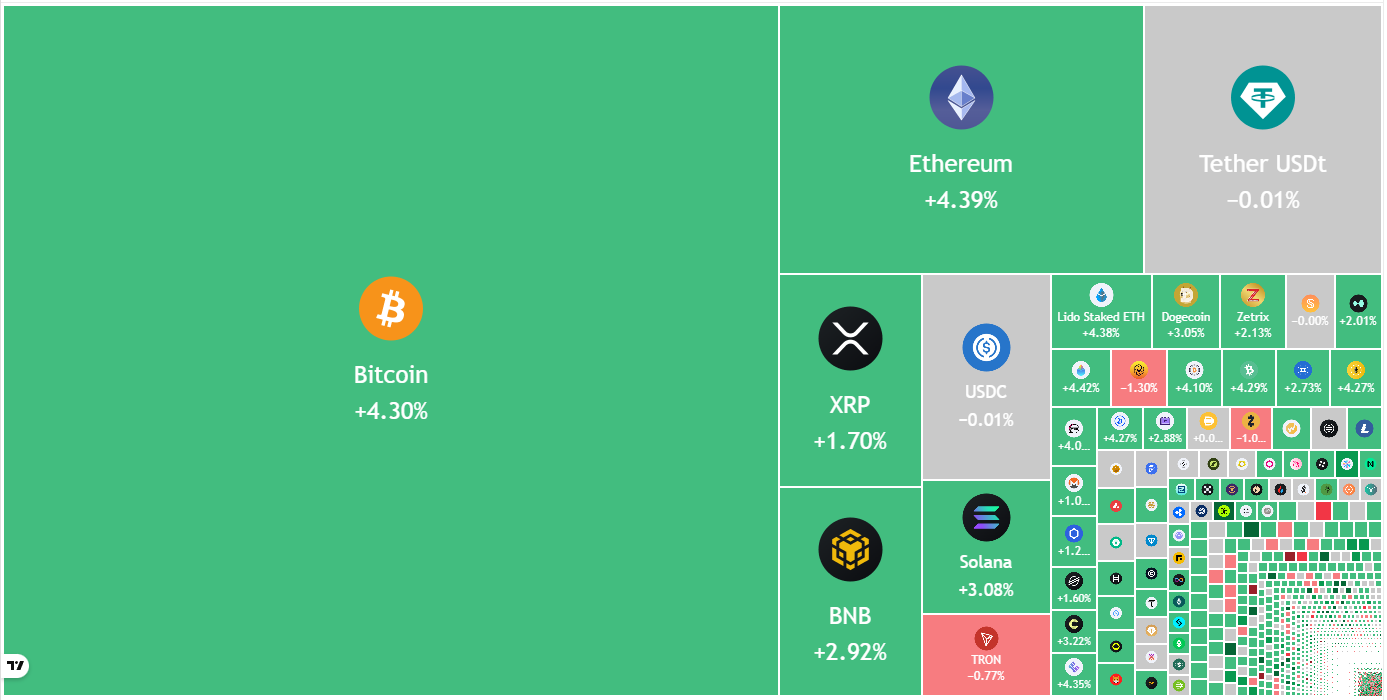
Bitcoin’s rise above the $78,333 resistance opens the door for a rally to $84,000.
-
Several major altcoins are attempting to rise above their resistance levels, signaling aggressive buying at lower levels.
Bitcoin (BTC) rallied above $79,000, indicating that the bulls are back in the game. Crypto market intelligence platform Decode said in a post on X that BTC was ready for a short squeeze, waiting for the bulls to light a fuse in a loaded cannon.
Select analysts expect the current relief rally to pick up strength. CryptoQuant analyst CW8900 said in a post on X that BTC’s adjusted Net Unrealized Profit/Loss (NUPL), the difference between total profits and losses currently held by investors, has turned positive. That suggests BTC’s downtrend has ended and the “real rally of this cycle has begun.”

The sharp recovery off the $60,000 level has pushed the Bitcoin Bull Score Index (BSI) into neutral territory for the first time since the bear market began. However, there was a word of caution from CryptoQuant contributor Julio Moreno, who said in a post on X that the BSI had entered neutral territory for a week during March 2022 but had resumed its decline later.
Could BTC and select major altcoins extend their recovery? Let’s analyze the charts of the top 10 cryptocurrencies to find out.
Bitcoin price prediction
BTC turned up from the 20-day exponential moving average ($73,758) on Monday and rose above the $78,333 level on Wednesday, indicating an advantage to the bulls.

If the BTC price remains above the $78,333 level, the likelihood of a rally to $84,000 increases. Such a move suggests that the BTC/USDT pair may have bottomed out at $60,000.
The 20-day EMA is the critical level to watch out for on the downside. Sellers will have to pull the price below the 20-day EMA to invalidate the bullish setup. The pair may then collapse to the 50-day simple moving average ($70,934).
Ether price prediction
Ether (ETH) rebounded off the 20-day EMA ($2,273) on Monday, indicating a change in sentiment from selling on rallies to buying on dips.

The upsloping moving averages and the RSI in the positive zone signal that the path of least resistance is to the upside. If buyers clear the $2,465 hurdle, the ETH/USDT pair may surge toward the resistance level and then toward $2,800.
The first sign of weakness will be a break and close below the 20-day EMA. That signals the bulls are booking profits. The ETH price may then slump to the 50-day SMA ($2,157) and later to the support line.
XRP price prediction
XRP (XRP) turned up from the moving averages on Monday, indicating that the bulls are viewing the dips as a buying opportunity.

Buyers will attempt to push the XRP price to the downtrend line of the descending channel pattern, where the bears are expected to sell aggressively. If the price turns sharply down from the downtrend line, it suggests that the XRP/USDT pair may spend more time inside the channel.
Buyers will get back into the driver’s seat if they propel and sustain the price above the downtrend line. The pair may then climb to the $2 level, signaling a short-term trend change.
BNB price prediction
BNB (BNB) turned up from the 20-day EMA ($623) on Monday and rose above the $649 resistance on Wednesday.

If buyers sustain the price above $649, the BNB/USDT pair may surge toward $687. Sellers are expected to mount a strong defense at $687, but if the bulls pierce the resistance, the recovery may extend to $790.
On the other hand, if the BNB price turns sharply lower from the overhead resistance and breaks below the moving averages, it suggests the pair may remain within the $687 to $570 range for a while longer.
Solana price prediction
Solana (SOL) continues to trade near the moving averages, indicating a balance between supply and demand.

If the price rises above $91, the SOL/USDT pair may climb to the overhead resistance at $98. Sellers are expected to fiercely defend the $98 level, but if the bulls prevail, the uptrend may reach $117.
Alternatively, if the SOL price turns down from the overhead resistance and breaks below the moving averages, it suggests that the range-bound action may extend for a few more days.
Dogecoin price prediction
Dogecoin (DOGE) turned up from the moving averages on Monday, indicating that the bulls are attempting a comeback.

The DOGE price may rise to the psychological level of $0.10, where the bears are expected to step in. However, if buyers do not give up much ground to the bears, the prospects of a rally to the $0.12 overhead resistance increase.
Time is running out for the bears. They will have to swiftly pull the price back below the $0.09 level to retain the advantage. If they do that, the DOGE/USDT pair may slump to the Feb. 6 low of $0.08.
Hyperliquid price prediction
Hyperliquid (HYPE) bounced off the 50-day SMA ($38.41) on Tuesday, indicating that the bulls are buying the dips.

The 20-day EMA ($40.90) is flattening, and the RSI is near the midpoint, indicating weakening bullish momentum. That increases the likelihood of a range formation in the near term.
The 50-day SMA is the crucial support to watch out for on the downside, as a close below it may deepen the pullback to $34.45. On the upside, bulls will need to push the HYPE/USDT pair above $45.77 to signal a resumption of the uptrend.
Related: ‘Powerful move’ looms for Bitcoin price, says Bollinger Bands indicator
Cardano price prediction
Cardano (ADA) has risen to the stiff resistance zone between the 50-day SMA ($0.26) and the downtrend line.

If buyers push and sustain the ADA price above the downtrend line, it signals a potential short-term trend change. The ADA/USDT pair may then rally to $0.32, then to $0.37.
On the other hand, if the price turns sharply down from the downtrend line and breaks below the $0.22 level, it suggests the pair may remain within the descending channel for some time.
Bitcoin Cash price prediction
Bitcoin Cash (BCH) has broken above the 50-day SMA ($454), indicating solid demand at lower levels.

The moving averages are on the verge of a bullish crossover, indicating that the bulls have the upper hand. Buyers will attempt to strengthen their position by pushing the BCH price above the $486 resistance. If they succeed, the BCH/USDT pair may rally to $520.
Contrary to this assumption, if the price turns down from the current level or the overhead resistance and breaks below the moving averages, it suggests that the pair may form a range for some time.
Monero price prediction
Monero (XMR) surged and closed above $382 on Tuesday, but bulls are struggling to sustain the gains.

If the price remains above the $382 level, the XMR/USDT pair may initiate a new uptrend toward the pattern’s target of $462.
Contrary to this assumption, if the XMR price closes below $382, it suggests that the bears are selling on rallies. The pair may then pull back to the moving averages, which are likely to act as strong support. If the price rebounds off the moving averages, the bulls will again attempt to initiate the uptrend.
This article does not contain investment advice or recommendations. Every investment and trading move involves risk, and readers should conduct their own research when making a decision. While we strive to provide accurate and timely information, Cointelegraph does not guarantee the accuracy, completeness, or reliability of any information in this article. This article may contain forward-looking statements that are subject to risks and uncertainties. Cointelegraph will not be liable for any loss or damage arising from your reliance on this information.
Crypto World
Trump-linked American Bitcoin’s shares rise by over 12% after deploying nearly 11,300 more rigs


American Bitcoin (ABTC), a mining and treasury firm tied to the family of U.S. President Donald Trump announced on Wednesday it had added nearly 11,300 bitcoin mining rigs at its Drumheller site. The news caused its share price to rise by about 12% to $1.38.
The firm said the miners were fully deployed at its facility in Alberta, Canada, increasing its fleet of ASICs (application-specific integrated circuits) to roughly 89,242. It also said that the new bitcoin mining rigs contribute an incremental 3.05 exahash per second (EH/s) at an efficiency of 13.5 joules per terahash (J/TH) to its current operational fleet.
This high efficiency rating (13.5 J/TH) is critical because it lowers the company’s electricity cost per coin, allowing ABTC to remain profitable even as rising network difficulty makes Bitcoin harder to mine, the firm explained in its statement. “Scaling hashrate is one of the ways we strengthen our position in Bitcoin,” the firm said.
“Bringing these miners online at Drumheller reflects exactly how we intend to lead: moving quickly, allocating capital with discipline, and growing our Bitcoin exposure efficiently at institutional scale,” said Eric Trump, co-founder and chief strategy officer at American Bitcoin, in a statement.
The American Bitcoin statement added that the new units at Drumheller represent the operational completion of a fleet expansion first announced on March 3, 2026, a sign that the company has decided to double down on bitcoin mining operations even as several other miners pivot capital and infrastructure to artificial intelligence and AI data centers.
On March 18, American Bitcoin raised its BTC holdings to 6,899, becoming the 16th-largest bitcoin holder, overtaking Mike Novogratz’s Galaxy Digital. By March 30, the Trump-backed firm raised its BTC treasury to 7,000.

W dzisiejszym świecie, gdzie technologia jest coraz bardziej wewnętrzna, a internet jest dostępny dla każdego, wiele osób szuka sposobów, aby zwiększyć swoją rozrywkę i wygodę. Jednym z najpopularniejszych sposobów, aby to zrobić, jest kasyno online. GGBET to jeden z najbardziej popularnych bukmacherów online, oferujących szeroki wybór gier kasynowych, a także sportowych.
Wśród wielu możliwości, które GGBET oferuje, jest możliwość logowania się do konta użytkownika. GGBET logowanie pozwala na łatwe dostęp do swojego konta, a także do swoich danych i transakcji. W ten sposób, użytkownicy mogą kontrolować swoje konto i zarządzać swoimi danymi.
GGBET to także znany z swoich atrakcyjnych ofert, takich jak GG Casino, GG Bet Bonus, a także GG Bet. Te oferty są idealne dla tych, którzy szukają sposobów, aby zwiększyć swoją rozrywkę i wygodę. GGBET Bonus bez depozytu jest także jednym z najpopularniejszych ofert, które GGBET oferuje.
GGBET to także znany z swojego kasyna online, które oferuje szeroki wybór gier kasynowych. GGBET Kasyno jest idealne dla tych, którzy szukają sposobów, aby zwiększyć swoją rozrywkę i wygodę. GGBET Casino jest także jednym z najpopularniejszych kasyn online, które oferuje szeroki wybór gier kasynowych.
GGBET to także znany z swojego bonusu bez depozytu, który jest idealny dla tych, którzy szukają sposobów, aby zwiększyć swoją rozrywkę i wygodę. GGBET Bonus bez depozytu jest także jednym z najpopularniejszych ofert, które GGBET oferuje.
GGBET to także znany z swojego kasyna online, które oferuje szeroki wybór gier kasynowych. GGBET Kasyno jest idealne dla tych, którzy szukają sposobów, aby zwiększyć swoją rozrywkę i wygodę. GGBET Casino jest także jednym z najpopularniejszych kasyn online, które oferuje szeroki wybór gier kasynowych.
GGBET to także znany z swojego bonusu bez depozytu, który jest idealny dla tych, którzy szukają sposobów, aby zwiększyć swoją rozrywkę i wygodę. GGBET Bonus bez depozytu jest także jednym z najpopularniejszych ofert, które GGBET oferuje.
GGBET to także znany z swojego kasyna online, które oferuje szeroki wybór gier kasynowych. GGBET Kasyno jest idealne dla tych, którzy szukają sposobów, aby zwiększyć swoją rozrywkę i wygodę. GGBET Casino jest także jednym z najpopularniejszych kasyn online, które oferuje szeroki wybór gier kasynowych.
GGBET to także znany z swojego bonusu bez depozytu, który jest idealny dla tych, którzy szukają sposobów, aby zwiększyć swoją rozrywkę i wygodę. GGBET Bonus bez depozytu jest także jednym z najpopularniejszych ofert, które GGBET oferuje.
GGBET to także znany z swojego kasyna online, które oferuje szeroki wybór gier kasynowych. GGBET Kasyno jest idealne dla tych, którzy szukają sposobów, aby zwiększyć swoją rozrywkę i wygodę. GGBET Casino jest także jednym z najpopularniejszych kasyn online, które oferuje szeroki wybór gier kasynowych.
GGBET to także znany z swojego bonusu bez depozytu, który jest idealny dla tych, którzy szukają sposobów, aby zwiększyć swoją rozrywkę i wygodę. GGBET Bonus bez depozytu jest także jednym z najpopularniejszych ofert, które GGBET oferuje.
GGBET to także znany z swojego kasyna online, które oferuje szeroki wybór gier kasynowych. GGBET Kasyno jest idealne dla tych, którzy szukają sposobów, aby zwiększyć swoją rozrywkę i wygodę. GGBET Casino jest także jednym z najpopularniejszych kasyn online, które oferuje szeroki wybór gier kasynowych.
GGBET to także znany z swojego bonusu bez depozytu, który jest idealny dla tych, którzy szukają sposobów, aby zwiększyć swoją rozrywkę i wygodę. GGBET Bonus bez depozytu jest także jednym z najpopularniejszych ofert, które GGBET oferuje.
GGBET to także znany z swojego kasyna online, które oferuje szeroki wybór gier kasynowych. GGBET Kasyno jest idealne dla tych, którzy szukają sposobów, aby zwiększyć swoją rozrywkę i wygodę. GGBET Casino jest także jednym z najpopularniejszych kasyn online, które oferuje szeroki wybór gier kasynowych.
GGBET to także znany z swojego bonusu bez depozytu, który jest idealny dla tych, którzy szukają sposobów, aby zwiększyć swoją rozrywkę i wygodę. GGBET Bonus bez depozytu jest także jednym z najpopularniejszych ofert, które GGBET oferuje.
GGBET to także znany z swojego kasyna online, które oferuje szeroki wybór gier kasynowych. GGBET Kasyno jest idealne dla tych, którzy szukają sposobów, aby zwiększyć swoją rozrywkę i wygodę. GGBET Casino jest także jednym z najpopularniejszych kasyn online, które oferuje szeroki wybór gier kasynowych.
GGBET to także znany z swojego bonusu bez depozytu, który jest idealny dla tych, którzy szukają sposobów, aby zwiększyć swoją rozrywkę i wygodę. GGBET Bonus bez depozytu jest także jednym z najpopularniejszych ofert, które GGBET oferuje.
GGBET to także znany z swojego kasyna online, które oferuje szeroki wybór gier kasynowych. GGBET Kasyno jest idealne dla tych, którzy szukają sposobów, aby zwiększyć swoją rozrywkę i wygodę. GGBET Casino jest także jednym z najpopularniejszych kasyn online, które oferuje szeroki wybór gier kasynowych.
GGBET to także znany z swojego bonusu bez depozytu, który jest idealny dla tych, którzy szukają sposobów, aby zwiększyć swoją rozrywkę i wygodę. GGBET Bonus bez depozytu jest także jednym z najpopularniejszych ofert, które GGBET oferuje.
GGBET to także znany z swojego kasyna online, które oferuje szeroki wybór gier kasynowych. GGBET Kasyno jest idealne dla tych, którzy szukają sposobów, aby zwiększyć swoją rozrywkę i wygodę. GGBET Casino jest także jednym z najpopularniejszych kasyn online, które oferuje szeroki wybór gier kasynowych.
GGBET to także znany z swojego bonusu bez depozytu, który jest idealny dla tych, którzy szukają sposobów, aby zwiększyć swoją rozrywkę i wygodę. GGBET Bonus bez depozytu jest także jednym z najpopularniejszych ofert, które GGBET oferuje.
GGBET to także znany z swojego kasyna online, które oferuje szeroki wybór gier kasynowych. GGBET Kasyno jest idealne dla tych, którzy
Bezpieczeństwo i autentyczność
GGBET – legalny bukmacher online i kasyno, który ceni sobie bezpieczeństwo i autentyczność. W naszym kasynie online, GGBET Casino, zapewniamy swoim klientom bezpieczne i poufne doświadczenie gry. Nasze kasyno online jest licencjonowane i regulowane przez odpowiednie organy, co gwarantuje, że wszystkie transakcje są bezpieczne i poufne.
W naszym kasynie online, GGBET Casino, oferujemy szeroki wybór gier kasynowych, w tym ruletka, blackjacka, video poker i wiele innych. Nasze gry są wyprodukowane przez renomowane firmy, takie jak NetEnt, Microgaming i Evolution Gaming, co gwarantuje, że są one autentyczne i niezawodne.
Aby zapewnić bezpieczeństwo swoim klientom, GGBET Casino stosuje najwyższe standardy bezpieczeństwa, w tym:
Wielopoziomowe szyfrowanie danych
Zabezpieczenia przed nieautoryzowanym dostępem
Regularne testy bezpieczeństwa
GGBET Casino oferuje również bonus bez depozytu, który pozwoli na bezpłatne rozpoczęcie gry. Aby zarejestrować się i zacząć gry, proszę o wypełnienie formularza rejestracyjnego i wypełnienie formularza logowania. Po zarejestrowaniu się, możesz zacząć gry i korzystać z naszych gier kasynowych.
Autentyczność naszych gier
Nasze gry są wyprodukowane przez renomowane firmy, takie jak NetEnt, Microgaming i Evolution Gaming, co gwarantuje, że są one autentyczne i niezawodne. Nasze gry są również regularnie testowane, aby zapewnić, że są one bezbłędne i niezawodne.
Bezpieczeństwo naszych danych
GGBET Casino stosuje najwyższe standardy bezpieczeństwa, w tym wielopoziomowe szyfrowanie danych, zabezpieczenia przed nieautoryzowanym dostępem i regularne testy bezpieczeństwa. Nasze dane są również przechowywane w bezpiecznych serwerach, co gwarantuje, że są one bezpieczne i poufne.
Wielkość i różnorodność zakładów sportowych
W GGBET, możesz zrobić zakład na wiele różnych dyscyplin sportowych, w tym piłkę nożną, koszykówkę, hokej, rugby, tenis, golf, boks, MMA, kolarstwo, wyścigi konne, a także wiele innych. To sprawia, że oferta zakładów jest naprawdę różnorodna i może spełniać oczekiwania każdego gracza.
GGBET oferuje również wiele różnych typów zakładów, w tym:
- Zakłady na wynik meczu
- Zakłady na liczbę goli
- Zakłady na autor pierwszego gola
- Zakłady na autor ostatniego gola
- Zakłady na kartki czerwone
- Zakłady na kartki żółte
- Zakłady na liczbę rzutów karnych
- Zakłady na autor rzutu karnego
GGBET jest również znany z swoich atrakcyjnych bonusów, w tym ggbet bonus bez depozytu, który pozwala nowym graczom na testowanie platformy bez konieczności wpłaty pieniędzy. GGBET również oferuje ggbet logowanie, które pozwala graczom na łatwe logowanie się na swoje konto.
Jeśli szukasz kasyna online, GGBET również oferuje ggbet kasyno, w którym możesz grać w wiele różnych gier, w tym ruletka, blackjack, video poker, a także wiele innych. GGBET kasyno jest dostępne 24/7, co sprawia, że możesz grać w dowolnym czasie.
GGBET jest również dostępne w Polsce, co sprawia, że możesz korzystać z jego usług w swoim języku. GGBET pl jest dostępne w wielu językach, w tym polskim, angielskim, niemieckim, francuskim, hiszpańskim, italskim, a także wielu innych.
GGBET jest również znany z swojej wysokiej jakości obsługi klienta, która jest dostępna 24/7. GGBET oferuje również wiele różnych metod płatności, w tym kartą kredytową, e-walletami, a także wiele innych.
W sumie, GGBET ggbet polska jest naprawdę dobrym wyborem dla każdego, kto szuka legalnego bukmachera online i kasyna. GGBET oferuje wiele różnych zakładów sportowych, atrakcyjne bonusy, ggbet kasyno, a także wiele innych atrakcyjnych funkcji.
Witryna kasyna online z licznymi grami
GGBET to jeden z najpopularniejszych bukmacherów online, który oferuje szeroki wybór gier kasynowych. Wśród nich znajdują się klasyki, takie jak ruletka, blackjack, a także nowe, innowacyjne rozwiązania, takie jak video poker, karcianki i wiele innych.
Witryna kasyna GGBET to idealne rozwiązanie dla osób, które szukają emocjonującego doświadczenia hazardu online. GGBET oferuje wiele bonusów, w tym ggbet bonus bez depozytu, co pozwala na rozpoczęcie gry bez konieczności wpłaty pieniędzy.
GGBET Casino to także doskonałe rozwiązanie dla osób, które szukają bardziej tradycyjnego doświadczenia hazardu. GGBET Casino oferuje szeroki wybór gier kasynowych, w tym ruletka, blackjack, a także wiele innych.
GGBET Kasyno to także doskonałe rozwiązanie dla osób, które szukają bardziej emocjonującego doświadczenia hazardu. GGBET Kasyno oferuje wiele bonusów, w tym ggbet bonus, co pozwala na rozpoczęcie gry bez konieczności wpłaty pieniędzy.
GGBET to także popularne rozwiązanie dla osób, które szukają hazardu online w Polsce. GGBET oferuje wiele bonusów, w tym ggbet bonus bez depozytu, co pozwala na rozpoczęcie gry bez konieczności wpłaty pieniędzy.
Aby zalogować się na witrynie GGBET, należy wpisać swoje dane logowania, a następnie wybrać swoją ulubioną grę.
GGBET to także doskonałe rozwiązanie dla osób, które szukają hazardu online w Polsce. GGBET oferuje wiele bonusów, w tym ggbet bonus, co pozwala na rozpoczęcie gry bez konieczności wpłaty pieniędzy.
US Labor Secretary Lori Chavez-DeRemer has resigned from the Trump administration amid an active inspector general investigation into misconduct allegations, making her the third cabinet member to depart during the president’s second term.
Summary
- Labor Secretary Lori Chavez-DeRemer resigned on April 21 amid an inspector general investigation into alleged travel fraud, an inappropriate relationship with a security staffer, and other misconduct.
- Deputy Labor Secretary Keith Sonderling has been named acting secretary while Trump’s team determines a permanent replacement.
- Her departure is the third cabinet exit of Trump’s second term, following former Homeland Secretary Kristi Noem and former Attorney General Pam Bondi.
Lori Chavez-DeRemer stepped down as US Secretary of Labor on April 21, with the White House announcing she would be moving to the private sector. NBC News reported that Chavez-DeRemer had been facing a probe from the Labor Department’s inspector general over allegations including travel fraud, an alleged affair with a member of her security team, and other conduct concerns. Her attorney said the resignation “is not the result of legal wrongdoings” and described it as a personal decision.
Labor Secretary Resignation Adds to Trump’s Cabinet Instability
The inspector general investigation had already claimed multiple senior Labor Department staffers, with Chavez-DeRemer’s chief of staff and deputy chief of staff both leaving in March after being placed on administrative leave. A formal interview between Chavez-DeRemer and the inspector general’s office had been scheduled for the week of her resignation, according to NBC News. Chavez-DeRemer pushed back against the circumstances of her departure in an X post on Monday, writing that the allegations against her “have been peddled by high-ranked deep state actors” coordinating with media to undermine Trump’s agenda. White House communications director Steven Cheung said she “has done a phenomenal job in her role by protecting American workers.”
Sonderling Steps In as Acting Secretary
Deputy Labor Secretary Keith Sonderling, who had already been running much of the department’s day-to-day operations, has been named acting secretary. Sonderling has been a central figure in the administration’s push to open 401k retirement plans to alternative assets including digital assets. The White House had previously cleared a Labor Department rule proposal that could expand crypto access in retirement plans, a process Sonderling is expected to continue overseeing. The Trump administration’s executive order directing the Labor Department to reassess restrictions on alternative assets in defined-contribution plans remains active, and the department had already withdrawn the Biden-era guidance that urged fiduciaries to exercise extreme caution around crypto in 401k portfolios.
The Broader Pattern of Cabinet Departures
Chavez-DeRemer’s exit follows those of former Homeland Secretary Kristi Noem, who was fired in March after criticism over immigration enforcement, and former Attorney General Pam Bondi, who left the following month amid frustration over her handling of the Jeffrey Epstein files. All three departing secretaries were women. The pace of senior departures adds pressure on the administration heading into the 2026 midterm cycle, and raises questions about stability within departments managing significant regulatory agendas. The Labor Department’s role in shaping crypto-accessible retirement investment rules means Sonderling’s leadership there carries direct implications for the digital asset industry, as the 401k rule heads toward its public comment period.
Trump has not yet indicated who he intends to nominate as a permanent replacement for Chavez-DeRemer at the Labor Department.
Crypto World
Kalshi flags more insider trading cases, including politician who appeared on FBoy Island


Kalshi, one of the leading prediction market firms, has issued another set of insider-trading disciplinary actions against users accused of making improper trades based on their inside knowledge of their own political situations, including an ex-reality TV star in Virginia who said he did it intentionally.
“Cases like these demonstrate Kalshi’s commitment to policing all types of unfair or improper trading on our platform,” the company said in a statement posted on its website on Wednesday. “Regardless of the size of a trade, political candidates who can influence a market based on whether they stay in or out of a race violate our rules.”
Two of the cases were said to admit they were in the wrong, and Kalshi — a trading platform regulated by the Commodities Futures Trading Commission — said they received a more modest response than the Virginia politician who defied the process. These are the three:
- Mark Moran, a former investment banker and participant on HBO’s Fboy Island, said in a Wednesday post on social media site X that he placed the Kalshi bet on his own candidacy in the Virginia U.S. Senate race to expose the company for “destroying young men” and pretending to care about enforcement. “As senator, I will go after Kalshi and impose significant penalties on them — 25% — a vice tax — to pay down our national debt.”Kalshi imposed a five-year suspension, $6,229 fine and disgorgement of any profits, noting: “As a candidate, Moran qualified as a direct decision maker for this contract and had direct influence on the outcome of the underlying event.”
- Matt Klein, a state lawmaker who is running as a Democrat for a U.S. House seat in Minnesota, also made a bet on his own candidacy, but he settled with Kalshi, accepting a 5-year suspension and a $540 penalty.Kalshi concluded that “Klein cooperated with the inquiry into this trading activity and agreed to finally resolve this matter by accepting the Compliance Department’s conclusions, paying a financial penalty, and accepting a restriction from trading on the exchange.”
- Ezekiel Enriquez, like Klein a candidate for a U.S. House seat, was accused of betting on the details of his own election in Texas. The conservative Republican and supporter of President Donald Trump was said to cooperate similarly with Kalshi and was given a 5-year suspension and $784 fine.
Kalshi’s rules are set out in its website’s compliance section. While it’s not detailed in the firm’s member agreement, fines and suspensions like those given in these latest cases are detailed within Kalshi’s corporate “rule book,” and the determination of penalties lets the company fine a member at a level “sufficient to deter recidivism” — meaning enough to keep people from doing it again.
The company had begun publicly announcing insider-trading matters with the February exposure of cases that included a producer of the popular online entertainer, Mr. Beast. The CFTC has praised the platform for being a front-line enforcer, though the agency has noted that such cases could also trigger federal enforcement.
The events-contract industry has been under tight scrutiny during its explosive rise in popularity. The businesses are still wrestling with doubts from prominent critics that they can manage contracts without insider abuse.
Kalshi, in particular, has also been at the forefront of legal clashes with state regulators and law enforcement officials over whether its activity is legally permissible in their states. CFTC Chairman Mike Selig has come to the industry’s aid by insisting that the activity belong solely under the federal regulator’s jurisdiction, and he’s begun fighting that point in court.
Read More: MrBeast editor nabbed by prediction market firm Kalshi for alleged insider trading

Robinhood Ventures Fund I (RVI), a publicly traded closed-end fund that offers retail investors exposure to private equity investments, has taken a notable step into tokenized wealth access by investing $75 million in OpenAI. The move, announced by RVI on Wednesday, pairs a traditional equity holding with Robinhood’s experiment in tokenized private equity, using the stock as the underlying asset for venture tokens designed to give Robinhood clients price exposure to OpenAI.
According to RVI president Sarah Pinto, the investment ranks among the fund’s largest to date and underscores a broader strategy to democratize access to private markets through tokenized vehicles. The tokens are intended to provide retail investors with a pathway to track and participate in the upside of private equity-style bets, even if they do not hold direct ownership in the underlying companies.
Market reaction to the news reflected investor enthusiasm for RVI’s positioning, with shares trading more than 14% higher on Wednesday, around $27.85 per share, according to Yahoo Finance data.
Key takeaways
- RVI allocates $75 million to OpenAI, using the stock as the asset underlying Robinhood’s private equity tokens intended for retail buyers.
- The investment marks one of RVI’s largest to date and signals growing interest in tokenized access to private markets.
- OpenAI tokens distributed by Robinhood do not represent OpenAI equity; OpenAI states it did not partner with Robinhood on this and did not approve any equity transfer.
- Industry voices warn that tokenized private equity instruments differ from actual shares, with token holders lacking direct ownership rights or claims on assets.
- Regulatory questions persist about the rights of token holders and how price exposure via tokens should be interpreted relative to traditional private equity investments.
RVI’s tokenized private equity bet and what it means for retail investors
The core idea behind the arrangement is to enable Robinhood clients to gain price exposure to OpenAI through venture tokens tied to the company’s common stock. In essence, the fund uses the stock as a reference asset to back a blockchain-based instrument that behaves like a publicly traded derivative of private equity access, rather than directly granting equity itself. Pinto framed the launch as a step toward broader accessibility, suggesting that tokens can help unlock participation in otherwise illiquid markets for everyday investors.
Robinhood’s broader program has included tokenized versions of private equity assets as part of its ongoing exploration of tokenized financial products. The OpenAI purchase through RVI adds a new layer: a publicly traded fund committing capital to a private asset class while offering retail clients a tokenized exposure vehicle that is not equity in the company itself. For investors, this creates a potential price link to OpenAI’s prospects without the voting rights, governance participation, or direct asset claims associated with actual stock ownership.
Regulatory and legal questions surrounding tokenized private equity
The arrangement has reignited questions about what token holders actually own when they hold private equity-backed tokens. Financial technology practitioners have stressed that such tokens, while linked to the performance of private companies, do not confer traditional ownership rights or access to corporate assets or internal information. John Murillo, chief business officer of fintech services company B2BROKER, told Cointelegraph that investors should understand they do not hold “actual shares” in the represented companies. He noted that, while payouts may be possible if underlying shares appreciate, the tokens are financial instruments created by a third party and do not constitute equity.
This distinction matters in practice: token holders typically have no direct claim on company assets, no voting rights, and no guaranteed visibility into private company finances. The regulatory gray zone around tokenized private equity—particularly for retail investors—has already drawn scrutiny in various jurisdictions, and the OpenAI-token situation is likely to amplify calls for clearer disclosure standards and investor protections.
The source material notes that Robinhood’s tokenized stock rollout in the European Union occurred as part of a broader move to bring tokenized trading to more markets, with OpenAI and SpaceX tokens among the initial offerings. OpenAI subsequently clarified that the tokens linked to the OpenAI name do not represent equity in OpenAI and that the company was not involved in the tokenization effort. A post from OpenAI’s communications channel stated that any transfer of OpenAI equity would require their approval, which they did not grant.
OpenAI’s stance and the evolving tokenized-equity landscape
OpenAI has been explicit in its position that the OpenAI tokens distributed through Robinhood do not correspond to equity and that the company did not partner with Robinhood on these tokens. The company’s public note emphasizes that it did not approve any transfer of OpenAI equity and urged caution around instruments that claim to represent private ownership in its stock. This stance mirrors earlier commentary in the market about the potential pitfalls of tokenized equity that does not involve formal equity transfers or recognized corporate governance rights.
From a market perspective, the episode underscores a broader tension in the crypto and tokenization space: the appetite among investors for instrumenting exposure to private assets, balanced against the need for robust protections and clear legal interpretation of what token holders actually own. Market participants, including venture token platforms and intermediary firms, continue to map out the line between price exposure and true ownership, a distinction that will shape how regulators approach tokenized private equity in the near term.
What comes next for tokenized private equity exposure
The rollout raises several questions that readers should monitor. First, how will regulators respond to retail access to tokenized private equity, and what disclosures will be required to clarify rights and remedies for token holders? Second, how will platforms reconcile the difference between token-based exposure and actual equity, particularly in terms of liquidity, payouts, and potential conflicts with existing securities laws?
Investors should also watch for further clarity from OpenAI and other token issuers about the governance and transferability provisions of tokenized exposure instruments. As tokenized access to private markets expands, the market will increasingly demand explicit consent, clear rights, and standardized disclosure to prevent misinterpretation of what token holders own or control.
In the near term, Robinhood’s ongoing dialogue with regulators and market participants will likely shape how such products are structured, priced, and marketed. The $75 million OpenAI investment through RVI marks a noteworthy milestone in this evolving space, highlighting both the potential for broader retail participation in private markets and the critical need for transparent, well-defined investor protections as tokenized instruments mature.
Readers should stay tuned for updates on regulatory guidance, product disclosures, and any subsequent moves by Robinhood, RVI, OpenAI, or other issuers as the tokenization experiment continues to unfold.

Thailand’s primary securities regulator has opened a public consultation on proposed rule changes that would let licensed digital asset businesses apply directly for derivatives licenses, eliminating the need to set up stand-alone entities. The move would extend the reach of Thailand’s derivatives market by enabling crypto firms to operate within existing corporate structures, while introducing tighter governance measures to manage conflicts of interest and strengthen supervisory oversight. According to Cointelegraph, the proposal signals a deliberate shift toward integrating digital asset activities more fully into the established financial-regulatory framework.
The proposed revisions would build on prior steps that recognize digital assets as eligible underlying assets for futures contracts. If enacted, the changes aim to streamline licensing processes for crypto businesses, reduce entry barriers for participants, and align Thailand’s derivatives market with international standards for transparency, risk management, and market integrity. The regulator emphasizes that this is not a deregulatory move; rather, it couples easier access with enhanced controls to ensure that derivative activities are conducted within a robust regulatory perimeter. The Thai SEC notes that the modifications would apply to exchanges and clearing houses operating within the licensed digital asset ecosystem and would be accompanied by explicit requirements to manage conflicts of interest and ensure appropriate supervision.
The consultation period runs through May 20, and industry participants are expected to provide feedback that will shape the final framework. The Thai SEC’s intention is to broaden hedging and portfolio-management tools available to investors while harmonizing local standards with international best practices. For context, the regulator has previously signaled a reform path aimed at increasing institutional participation in Thailand’s crypto markets while maintaining stringent oversight over product design, trading venues, and clearing operations. According to Cointelegraph, the public-comment phase will be a key input for calibrating licensing thresholds, governance requirements, and the scope of eligible derivatives products.
Key takeaways
- Direct derivatives-licensing pathway: Licensed digital asset firms could apply for derivatives licenses within existing corporate structures, reducing the need for standalone entities.
- Strengthened governance: Provisions would address conflicts of interest and reinforce oversight of exchanges and clearing houses handling crypto derivatives.
- Market expansion with guardrails: The framework aims to broaden hedging and risk-management tools while maintaining international-standard supervision.
- Public input window: Industry feedback is invited through May 20 to shape the final rule set and implementation timeline.
Thailand’s regulatory reform and its practical implications
At the heart of the Thai proposal is a measured effort to balance market access with robust regulatory governance. By allowing crypto firms to operate derivatives activities under existing entities, the framework could lower setup costs, shorten time to market, and reduce operational friction for participants seeking to offer futures and other standardized derivatives backed by digital assets. However, these gains come with reinforced requirements designed to address potential conflicts of interest, ensure fair dealing, and support supervisory capabilities across the trading lifecycle—trading, clearing, and settlement.
From a compliance perspective, the overhaul would necessitate stronger alignment with anti-money laundering (AML) and know-your-customer (KYC) standards, as well as more rigorous arrangements for risk controls, governance disclosures, and supervisory reporting. The Thai SEC’s stance indicates an intent to bring crypto-derivatives activities into a regulated framework that mirrors conventional futures marketplaces, including governance norms for exchanges and clearing houses. For market participants, the changes could translate into clearer licensing paths, standardized product approvals, and more predictable supervisory outcomes—key factors for institutions evaluating risk, capital requirements, and operational due diligence.
As Thailand progresses toward finalizing the rules, observers will watch how the inclusion of digital asset derivatives into the formal regulatory perimeter interacts with cross-border activity. The proposed model underscores the country’s broader objective of integrating crypto-based finance with established financial infrastructure, a trend echoed in regional regulatory dialogues that seek to harmonize standards with international practice while accommodating local market needs. The public comment period will be pivotal in testing these ideas against practical implementation challenges, such as governance disclosures, conflict-management mechanisms, and the calibration of licensing thresholds for diverse market participants. The Thai SEC has linked the reform to a wider goal of delivering reliable hedging tools to investors while preserving market integrity and supervisory control.
Global derivatives expansion and cross-border regulatory dynamics
Thailand’s initiative arrives amid a global wave of crypto-derivatives expansion, alongside heightened regulatory scrutiny in other jurisdictions. In the United States, momentum is building toward regulatory approval of crypto perpetual futures, with officials signaling potential action in the near term. As reported, the Commodity Futures Trading Commission (CFTC) has indicated progress toward enabling crypto perpetual futures, a development that could reshape access to sophisticated derivatives for domestic investors and institutions. The trajectory in the U.S. stands in contrast to, yet complements, Thailand’s efforts to broaden non-US markets’ access to regulated crypto-derivatives products.
Industry participants are positioning for potential regulatory clarity. For example, the recent move by Kraken’s parent company to acquire Bitnomial—an established US-regulated derivatives venue—illustrates strategic intent to broaden access to perpetual futures and other crypto-derivative offerings for U.S. clients, should approvals materialize. Similarly, perpetual futures traded in self-custody or semi-regulated environments elsewhere signal a trend toward more flexible, around-the-clock, multi-asset trading. While many of these products remain inaccessible to U.S. retail investors today, the regulatory landscape abroad continues to mature, potentially informing harmonization efforts and cross-border product design. The industry’s broader narrative emphasizes the need for clear licensing regimes, robust risk-management standards, and enforceable disclosure requirements to support institutional participation and investor protection.
From a policy standpoint, the Thai proposal aligns with ongoing discussions about licensing, supervisory oversight, and the integration of digital-asset activities within traditional financial-market structures. It highlights questions central to MiCA (Markets in Crypto-Assets Regulation) and other cross-border regulatory frameworks: how to classify and regulate crypto-derivatives, how to ensure consistent AML/KYC controls, and how to manage systemic risk as more participants access sophisticated hedging instruments. In this context, the Thai framework could serve as a practical case study for regulators weighing similar moves—balancing market access with the imperative to mitigate conflicts of interest and maintain robust market-surveillance capabilities. As regulators increasingly emphasize licensing clarity and supervisory rigor, Thailand’s approach may influence other jurisdictions considering analogous consolidation of digital-asset activities within existing financial-market license regimes.
According to Cointelegraph, the convergence of licensing reforms, governance safeguards, and international-practice alignment marks a notable point in the global policy landscape for crypto derivatives. The evolving regulatory regime invites jurisdictions to articulate clear product definitions, standardized risk controls, and interoperable reporting frameworks that support both hedging efficiency and investor protection—core considerations for institutions, exchanges, banks, and asset managers navigating cross-border operations and compliance obligations.
Closing perspective
Thailand’s proposed licensing reforms for derivatives involving digital assets signal a deliberate move toward integrating crypto markets with conventional financial infrastructure while emphasizing governance and oversight. As the public consultation unfolds, observers will assess how the final policy balances market access with protection against conflicts of interest and systemic risk, and how it interacts with emerging global norms on crypto-derivatives, licensing, and cross-border supervision.


Crypto protocols have lost more than $606 million to hacks and exploits in just the first 18 days of April 2026, making it the single worst month for theft in the industry since the $1.4 billion Bybit breach in February 2025, according to data from DefiLlama.
Summary
- Over $606 million was stolen from crypto protocols across 12 incidents in the first 18 days of April 2026, according to DefiLlama data.
- Two attacks, the $285 million Drift Protocol exploit and the $292 million KelpDAO breach, account for approximately 95% of April’s losses.
- April’s total is already 3.7 times larger than the entire first quarter’s combined losses of $165.5 million, with the month not yet over.
Crypto protocols have lost more than $606 million to hackers across 12 separate incidents in just 18 days of April 2026, according to data tracked by DefiLlama. Yahoo Finance reported the figure from BeInCrypto’s analysis, confirming that April has already become the worst month for crypto theft since February 2025, when the Bybit breach alone accounted for $1.4 billion.
April 2026 Crypto Hacks Dwarf the Entire First Quarter
The scale of April’s damage is stark in context. The entire first quarter of 2026 saw $165.5 million in losses across a relatively quiet stretch. April’s $606 million total arrived in under three weeks, making the month 3.7 times larger than Q1 combined and pushing 2026’s year-to-date theft total to approximately $771.8 million across 47 separate incidents. Two exploits account for nearly all of it. The $285 million Drift Protocol attack on April 1, later attributed to North Korea’s Lazarus Group, and the $292 million KelpDAO breach on April 18, also linked to Lazarus, together represent roughly 95% of the month’s losses and approximately 75% of everything stolen in crypto in 2026 so far. As crypto.news reported, the KelpDAO exploit alone triggered over $10 billion in Aave outflows and sent shockwaves across more than 20 connected protocols.
The Attack Frequency Problem Is Getting Worse
Beyond the dollar totals, the pace of attacks is accelerating in a way that concerns security researchers as much as the individual incident sizes. DeFi recorded 47 separate incidents in the first four and a half months of 2026, compared with 28 over the same period in 2025, a 68% year-over-year increase in attack frequency. The shift in attack methods is equally significant. As crypto.news documented, April’s exploits cut across smart contract vulnerabilities, infrastructure attacks, and social engineering campaigns, including AI-driven attacks on wallets like Zerion. The diversification of attack vectors means that technical audits and code reviews alone are no longer sufficient protection for protocols with significant TVL. “None of these accounts for the collateral damage seen across TVL, user trust, valuations, and the space’s morale. DeFi remains a niche market until risk can be properly priced,” an analyst wrote in BeInCrypto’s coverage.
What the April Hack Surge Means for Crypto Markets
Markets have already begun pricing in what analysts are calling a “security risk premium” on DeFi assets. As crypto.news tracked, crypto’s cumulative hack losses have now crossed $17 billion over the past decade, with attackers increasingly pivoting away from smart contract bugs toward private keys, signing infrastructure, and human-layer social engineering. Institutional players are responding with emergency rate limits and frozen bridge flows, while Jefferies has warned the string of marquee hacks could temporarily slow Wall Street’s appetite for DeFi tokenization projects. If even one more mid-size exploit occurs before April 30, the month’s total could approach $700 million, according to DefiLlama data cited by BeInCrypto.
DefiLlama’s hacks tracker shows the attack frequency running at approximately one incident every 2.9 days in 2026, a pace researchers say reflects a growing attack surface driven by DeFi TVL exceeding $120 billion and the proliferation of cross-chain bridge infrastructure.
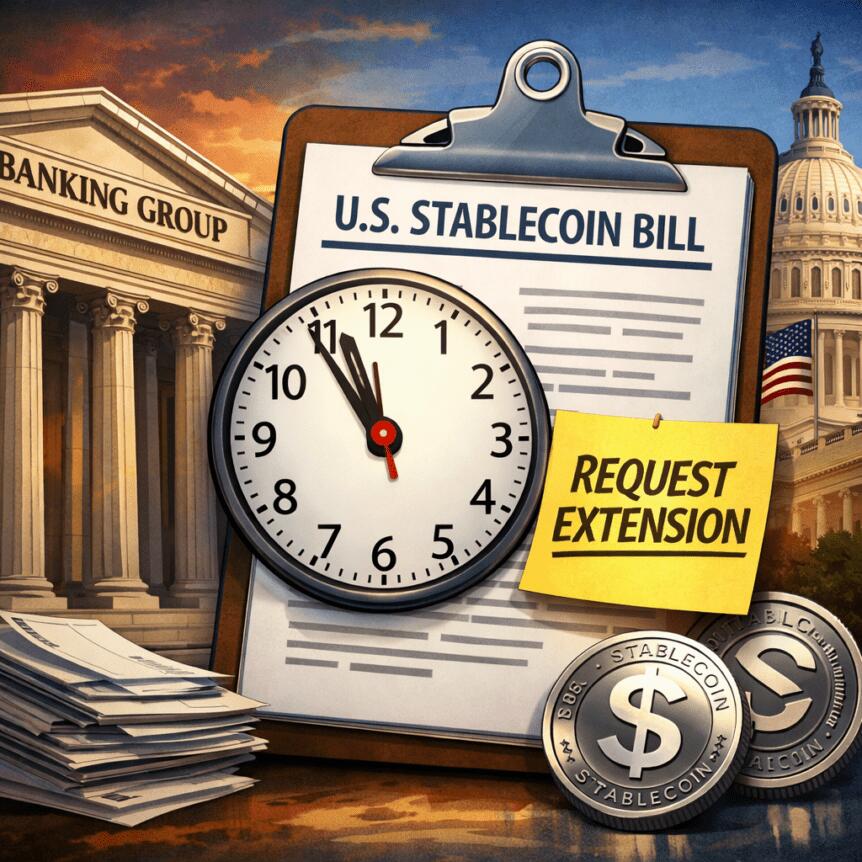
The American Bankers Association is pushing for more time to weigh in on the regulatory framework for stablecoins, signaling patience from the banking sector as U.S. agencies shape rules under the GENIUS Act. In a Tuesday letter to the U.S. Treasury, the Federal Deposit Insurance Corporation, FinCEN, and the Office of Foreign Assets Control, the ABA requested a 60-day extension for public comment. The move could push the earliest possible implementation of the GENIUS Act by up to two months, depending on how the rulemaking unfolds.
The ABA argues that the agencies’ final rules will be substantially driven by the content of the Office of the Comptroller of the Currency’s final rule, making timely and meaningful public input challenging without that context. The FDIC’s own notice has emphasized alignment with the OCC where relevant, the ABA notes, and invites comment on whether the primary federal regulators should further harmonize their final rules to promote consistency for all payment stablecoin issuers subject to the GENIUS Act. That alignment, the ABA says, hinges on knowing the OCC rule first.
Key takeaways
- The American Bankers Association asks for a 60-day extension on GENIUS Act rulemaking comments, potentially delaying implementation by up to two months.
- The request centers on the final OCC rule, which the FDIC and other agencies say they aim to align with to ensure regulatory consistency for stablecoin issuers.
- GENIUS Act implementation timeline: 120 days after final regulations are issued or 18 months after enactment, whichever comes first.
- Beyond GENIUS, banks are weighing in on broader crypto policy, including a market-structure bill that could affect stablecoin yield once Congress acts.
- Senate progress on related legislation, including the CLARITY Act, remains unsettled, with leadership signaling possible adjustments and scheduling debates in the coming weeks.
Regulatory alignment and the path to GENIUS Act rules
The ABA’s statutory inquiry centers on how the GENIUS Act will be implemented across multiple federal agencies. The letter frames a central dependency: because the FDIC has indicated it intends to align its proposed rule with the OCC’s final framework “to the extent relevant,” the ABA contends that substantial, meaningful public input cannot be fully informed until that OCC rule is public.
In practical terms, the GENIUS Act delegates the crux of stablecoin regulation to federal supervisors, including the OCC, FDIC, and Treasury’s broader rulemaking apparatus. The ABA’s push for more time underscores a broader industry interest in clarity and coherence across PPSI (payments, stablecoins, and related entities) regulations before stakeholders submit detailed feedback. The group also remains an active voice in policy debates on crypto market structure, including critiques of public-sphere analyses that might influence the treatment of stablecoin yield within a regulated framework.
Timeline, structure, and what it means for issuers
The GENIUS Act, signed into law in July of the previous year, sets a two-path trigger for when the new regime takes effect. Implementation can occur 120 days after the final regulations are issued, or 18 months after enactment, whichever comes first. That sequencing means any extension to the public-comment window could compress or delay a timeline that is already contingent on regulators finalizing and harmonizing rules across multiple agencies.
Proponents of rapid, predictable rules argue that a clear path would help stablecoin issuers, banks, and payments networks plan capital, compliance programs, and product launches. Critics caution that incomplete or transitional rules could increase compliance risk and create uneven regulatory treatment among PPSIs. The ABA’s request for more time is therefore a signal that the industry would like more certainty before formal rules become binding, a posture that may influence agency timing and the scope of comment submissions.
Broader policy tensions: market structure and stablecoin yields
Beyond GENIUS, the banking sector remains engaged in broader crypto policy conversations. The ABA is a party to policy debates around a crypto market-structure package that could reshape the legal status of stablecoin yields. In recent coverage, banks publicly challenged a White House report that suggested restricting or banning stablecoin yields would have limited impact on banks, highlighting tensions between policy aims and the market realities of yield-bearing crypto products.
Meanwhile, the Senate has yet to reach a deal on advancing a separate market-structure bill—referred to in House parlance as the CLARITY Act when it passed the House earlier this year. North Carolina Senator Thom Tillis has signaled that a markup could be scheduled in May, potentially setting up a Senate floor vote later in the session. The timing remains fluid, with leadership weighing how best to integrate the GENIUS Act, the CLARITY Act, and related proposals into a coherent regulatory package.
What to watch next
Stakeholders should monitor three crossroads in short order: whether the OCC publishes its final rule and how the other agencies align with it in their own final rules; whether the public-comment period for GENIUS is extended again or remains on a firm schedule; and whether Senate leadership secures a timeline for markup and votes on the CLARITY Act and related market-structure legislation. The coming weeks will reveal how agencies balance the need for regulatory consistency with the desire for timely rules that provide clear guidance to issuers, banks, and users navigating the evolving stablecoin landscape.

‘One-in-a-million’ quintuplet lambs born on farm near Cambridgeshire border

(VIDEO) Stunning Lyrid Meteor Shower 2026 Captured in Breathtaking Views From Earth and Space

SBF Withdraws New-Trial Motion, Seeks New Judge in Crypto Case

Manchester United reach agreement with Casemiro over contract clause amid transfer speculation

Steven Gerrard disagrees with Gary Neville over ‘shock’ Chelsea and Arsenal claim | Football

US brings back mandatory military draft registration


-

 Sports6 days ago
NWFL Suspends Two Players Over Post-Match Clash in Ado-Ekiti
-

 Fashion5 days ago
Weekend Open Thread: Theodora Dress
-

 Politics5 days ago
Palestine barred from entering Canada for FIFA Congress
-
Entertainment3 days ago
NBA Analyst Charles Barkley Chimes in on Ice Spice McDonald’s Fiasco
-

 Business3 days ago
Powerball Result April 18, 2026: No Jackpot Winner in Powerball Draw: $75 Million Rolls Over
-

 Tech4 days ago
Auto Enthusiast Scores Running Tesla Model 3 for Two Grand and Turns It Into Bare-Bones Go-Kart
-

 Politics4 days ago
Zack Polanski demands ‘council homes not luxury flats for foreign investors’
-

 Crypto World5 days ago
Russia Pushes Bill to Criminalize Unregistered Crypto Services
-

 Politics2 days ago
Gary Stevenson delivers timely reminder to register to vote as deadline TODAY
-

 Tech7 days ago
‘Avatar: Aang, The Last Airbender’ Leaked Online. Some Fans Say Paramount Deserves the Fallout
-
 Business6 days ago
Creo Medical agree sale of its manufacturing operation
-

 Business13 hours ago
Rolls-Royce Voted UK’s Most Iconic Trade Mark as IPO Register Hits 150
-

 Politics5 hours ago
Disabled people challenge government SEND proposals over segregation concerns
-

 Politics4 hours ago
Making troops accountable for war crimes threatens US alliance, ex-SAS colonel warns
-

 Crypto World5 days ago
Russia Introduces Bill To Criminalize Unregistered Crypto Services
-

 Politics6 hours ago
Starmer handler McSweeney to be dragged from shadows by Foreign Affairs Committee
-

 Politics5 hours ago
Zack Polanski responds to home secretary’s taser threat
-
Politics6 hours ago
Wings Over Scotland | How To Get Away With Crimes
-
 Crypto World4 days ago
Kelp DAO rsETH Bridge Hack Drains $292M as DeFi Losses Top $600M in Two Weeks
-

 Tech7 days ago
Ford EV and tech chief leaving automaker
You must be logged in to post a comment Login