Monaleo and Stunna 4 Vegas have been publicly loving on one another since their boo’ed up pop-out in 2021. From heartfelt paragraphs to couple photos, the rappers became a symbol of Black love across the internet. Their relationship continued to grow after welcoming their baby boy in 2023, before they tied the knot in 2025. Despite sharing moments publicly, the couple has also managed to keep private matters out of the public eye. However, Monaleo recently came to the internet to address cheating rumors that have gone viral!
Monaleo Addresses Fans Questioning The Status Of Her Relationship
This week, rumors began circulating across social media about Monaleo and Stunna 4 Vegas’ relationship. Multiple people speculated that Stunna had cheated on Leo. One person on Facebook wrote, “Stunna did all that damn CRYING AT THE WEDDING & CHEATED.” While the circulating posts didn’t include any proof, people still began running with the claims and spreading them. Some even headed to Monaleo’s comment section on X to get answers directly from the source. One person wrote, “Did Stunna cheat yes or no? Btw I love you sista.” Wednesday morning, the rapper took to her account to clear the air. Monaleo reassured fans that she and Stunna are good, writing:
“Guys relax me and stunna are fine.. he literally between my a*** as we speak.”
One supporter reacted, “Can’t take these TikTok detectives seriously at all! First it was your pockets, now it’s your marriage.” The rapper responded, “I’m broke and divorced smh just pray for me atp.” Another user wrote, “legit saw TikTok make that sh*t up in the comments in real time,” where Monaleo replied, “Literally and once my family start asking me abt crazy st…. know it’s gone too far.”
One supporter even stepped into The Shade Room Teens’ comments, defending Monaleo and Stunna 4 Vegas from the rumors. The user wrote, “I seen somewhere on Facebook where a girl said ‘I’m glad Stunna cheated on Leo she was too happy.’ I said that to say ppl will lie and make sh*t up because they hate seeing the next mf happy.” Monaleo later replied, “wow … thats sad.”
Advertisement
Social Media Reacts
Folks continued to gather under The Shade Room Teens to react to Monaleo’s tweets. Many of her supporters were ready to step for both her and Stunna 4 Vegas, making it clear that people need to stop being so quick to believe negative things online. While many defended the couple, others still questioned whether there was any truth to the circulating rumors.
Instagram user @daeja_vu_ wrote, “Yessss I knew that sh*t was a lie 🫶🏾❤️ so happy cause I’m rooting for them!!
Instagram user @crissy_b wrote, “”He literally between my a*s as we speak” 😂😂 as he should be because why y’all starting these negative rumors”
While Instagram user @officiallyroyaltayy wrote, “Jus cuz he between yo ahh don’t mean he cheated boo?”
Advertisement
Instagram user @msprettyce wrote, “She ain’t deny she just said they’re fine. SMH.”
Instagram user @chantel_sierra added. “Rumors like this don’t get started and pushed without some sort of proof this is disappointing, but I’m praying for them”
While Instagram user @privatelifeofalaya__ wrote, “Yall gone piss him off yall know how he get bout her”
Instagram user @yesmadammonae wrote, “Lord PROTECT THEIR MARRIAGE! Weirdos never seen liven want them to break up or go through trials. NOPE! We cover them in love and strength from the enemy!”
Advertisement
Instagram user @itscece2u_ added, “He bet tf NOT cause baby we ride at dawn bout MONA pink 💞🗣️”
While Instagram user @_shantel wrote, “The way people so quick to believe something negative is crazy it’s like some of yall just be waiting, hoping… then believing something from Facebook is crazy asl”
The Caldwells Are Protecting Their Peace
Prior to the rumors circulating on Facebook, Monaleo was on Instagram showing love to her husband while celebrating her accomplishments. The rapper shared a collage post reflecting on the blessings surrounding her life and relationship. She captioned the post, “Rich in support rich in community rich in family rich in lineage rich in friendships rich monetarily rich in spirit rich in character rich spiritually rich in general they can’t take all this winning.”
In another post, Monaleo shared photos of herself and her husband standing in front of their plaques. Alongside the pictures, she wrote, “more plaques more awards no weapons formed against the caldwells shall prosper.”
Quentin Tarantino has had one of the most legendary careers of any director in the history of Hollywood. He’s directed so many iconic classics that it’s almost impossible for fans to agree on what truly is his best picture, but there are a few that stand out among the rest. One of the most popular movies of Tarantino’s career that has stood the test of time is Pulp Fiction, the 1992 crime classic starring John Travolta and Samuel L. Jackson. The film found success by every metric which a movie can be measured: it won an Oscar for Best Screenplay and was nominated for six more, it grossed over $200 million at the box office on an $8 million budget, and it holds scores of 92% from critics and 96% from audiences on Rotten Tomatoes.
Another movie that would earn a spot near the top of the list of Tarantino’s most iconic features is Once Upon a Time… in Hollywood, the 2019 showbiz epic that is still the most recent movie Tarantino has directed to this day. The story first laid out in Once Upon a Time… in Hollywood will continue later this year, though, with The Adventures of Cliff Booth, the new Netflix movie centering around Brad Pitt’s character from the original film. After a shadow trailer dropped at the Super Bowl earlier and first images from the film back in March, Netflix confirmed this afternoon that The Adventures of Cliff Booth will begin streaming on Netflix around the world on December 23. Better yet, the film will have a two-week exclusive run in IMAX almost a month earlier, where it will play in the premium format starting on November 25.
Advertisement
Advertisement
Collider Exclusive · Oscar Best Picture Quiz Which Oscar Best Picture Is Your Perfect Movie? Parasite · Everything Everywhere · Oppenheimer · Birdman · No Country
Five Oscar Best Picture winners. Five completely different visions of what cinema can be — and what it can do to you. One of them is the film that was made for the way your mind works. Ten questions will figure out which one.
🪜Parasite
🌀Everything Everywhere
☢️Oppenheimer
Advertisement
🐦Birdman
🪙No Country for Old Men
Advertisement
01
What kind of film experience do you actually want? The best movies don’t just entertain — they leave something behind.
Advertisement
02
Which idea grabs you most in a film? Great films are driven by a central obsession. What’s yours?
Advertisement
03
How do you like your story told? Form is content. The way a story is shaped changes what it means.
Advertisement
04
What makes a truly great antagonist? The opposition defines the protagonist. What kind of opposition fascinates you?
Advertisement
05
What do you want from a film’s ending? The final note is the one that lingers. What do you want it to sound like?
Advertisement
06
Which setting pulls you in most? Where a film takes place shapes everything — mood, stakes, what’s even possible.
Advertisement
07
What cinematic craft impresses you most? Every great film has a signature — a technical or artistic element that makes it unmistakable.
Advertisement
08
What kind of main character do you root for? The protagonist is the lens. Who you choose to follow says something about you.
Advertisement
09
How do you feel about a film that takes its time? Pace is a choice. Some films sprint; others let tension accumulate slowly, deliberately.
Advertisement
10
What do you want to feel walking out of the cinema? The best films leave a mark. What kind of mark do you want?
Advertisement
The Academy Has Decided Your Perfect Film Is…
Your answers have pointed to one Oscar Best Picture winner above all others. This is the film that was made for the way your mind works.
Advertisement
Parasite
You are drawn to films that operate on multiple levels simultaneously — that begin in one genre and quietly, brilliantly migrate into another. Bong Joon-ho’s Parasite is a film about class, desire, and the architecture of inequality that manages to be darkly funny, deeply suspenseful, and genuinely shocking across a single extraordinary running time. Your instinct is for cinema that hides its true intentions until the moment it’s ready to reveal them. Parasite is exactly that — a film that rewards close attention and punishes assumptions, right up to its devastating final image.
Advertisement
Everything Everywhere All at Once
You want it all — and this film gives you all of it. The Daniels’ Everything Everywhere All at Once is one of the most maximalist films ever made: action comedy, multiverse sci-fi, family drama, existential crisis, and a genuinely earned emotional core that sneaks up on you amid the chaos. You are someone who responds to ambition, who doesn’t want cinema to choose between being entertaining and being meaningful. This film refuses that choice entirely. It is overwhelming by design, and its overwhelming nature is precisely the point — because the feeling of being crushed by infinite possibility is exactly what it’s about.
Advertisement
Oppenheimer
You are drawn to cinema on a grand scale — films that understand history not as a backdrop but as a force, and that place their characters inside that force and watch what happens. Christopher Nolan’s Oppenheimer is a film about the terrifying gap between what we can do and what we should do, told with the full weight of one of the most consequential moments in human history behind it. You want your films to feel important without feeling self-important — to earn their ambition through sheer craft and the gravity of their subject. Oppenheimer does exactly that. It is enormous, complicated, and refuses easy comfort.
Advertisement
Birdman
You are drawn to films that foreground their own construction — that make the how of the filmmaking part of the what it’s about. Alejandro González Iñárritu’s Birdman, shot to appear as a single continuous take, is cinema examining itself through the cracked mirror of a fading actor’s ego. You respond to formal daring, to the feeling that a film is doing something that probably shouldn’t be possible. Michael Keaton’s performance and Emmanuel Lubezki’s restless camera create something genuinely unlike anything else — a film that is simultaneously about creativity, relevance, self-destruction, and the impossibility of ever truly knowing if your work means anything at all.
Advertisement
No Country for Old Men
You are drawn to cinema that trusts silence, that refuses to explain itself, and that treats dread as a form of meaning. The Coen Brothers’ No Country for Old Men is a film about the arrival of a new kind of evil — implacable, arbitrary, and utterly indifferent to the moral frameworks we use to make sense of the world. It is one of the most formally controlled films ever made, and its controlled restraint is what makes it so terrifying. You want your films to haunt you, not comfort you. You are not interested in resolution if resolution would be dishonest. No Country for Old Men is honest in a way that most cinema never dares to be.
Advertisement
Advertisement
Is Quentin Tarantino Directing ‘The Adventures of Cliff Booth’?
Quentin Tarantino is not directing The Adventures of Cliff Booth, but he did write the script for the film. David Fincher, famed for his work on thrillers such as Zodiac and The Social Network, has been tapped to direct The Adventures of Cliff Booth, which also stars Yahya Abdul-Mateen II, Peter Weller, Elizabeth Debicki, Carla Gugino, and Scott Caan. Plot specifics regarding The Adventures of Cliff Booth are still being kept under wraps, but it is confirmed to be set in a much different version of Hollywood in 1977, eight years after the first film, which took place in the summer of 1969. Leonardo DiCaprio will not return as Rick Dalton in the film.
Check out Once Upon a Time… in Hollywood on Hulu and stay tuned to Collider for more updates and coverage of The Adventures of Cliff Booth, which is coming to IMAX and Netflix later this year.
If you’ve spent any time hunched in front of a cable television in the last twenty years or so, you’ve probably seen a few odd episodes of The Big Bang Theory. The show, which centers on a quartet of insufferable nerds and their cute blonde neighbor, spent 12 seasons on the air before spawning a never-ending series of spinoff programs. While The Big Bang Theory was still on the air, we got Young Sheldon, which delivered some crucial backstory to the most unapologetically annoying character on the show. Then, as soon as Young Sheldon wrapped its final season, we received Georgie & Mandy’s First Marriage, which features none of the original Big Bang Theory characters.
Now, after years of behind-the-scenes reports, we finally have a trailer for the latest spinoff series in the ever-expanding Big Bang Theory cinematic universe, titled Stuart Fails to Save the Universe. From the first look, it seems that this series will take things completely off the rails, into overt science fiction territory, complete with interdimensional time and space-hopping. This is obviously a massive divergence from anything we’ve seen from the franchise thus far, which might actually be a good thing.
From Sitcom To Singularity
In the trailer, Stuart is thrown into a completely off-the-walls situation, after accidentally triggering a doomsday device rigged by the original Big Bang Theory crew. The singularity sends Stuart tripping through space, time, and alternate realities, with a quirky series of side characters to aid him in his journey. These characters include his girlfriend Denise (Lauren Lapkus), an awkward geologist named Bert (Brian Posehn), and arrogant university physicist turned power-hungry warlord, Barry Kripke (John Ross Bowie). Hardcore fans of The Big Bang Theory will recognize these characters from the final season of the show, though most casual fans will probably glance at this cast and wonder where any of these people came from.
Advertisement
It looks like the alternate realities Stuart finds in the inaugural season will include a zombie apocalypse, a futuristic no-man’s land complete with drone warfare, and any number of comic book-inspired locales. Think of the show as Marvel’s What If series, if you swap Spider-Man for a proto Stan Lee with poor people skills. Invigorating stuff.
Shark Jumper, Or Secretly Genius?
Where some might view Stuart Fails to Save the Universe as a shark-jumping moment, I think the show has the potential to eclipse The Big Bang Theory in quality and fan fare. I say this not as a Big Bang Theory hater, but as a huge fan of Georgie & Mandy, and, to a lesser extent, certain plot-lines in Young Sheldon. It seems like the further the franchise departs from the original Pasadena physicists, the better it gets. In fact, I’m willing to bet that there’s potential for another barely-related spinoff buried within the first season of Stuart Fails to Save the Universe, which could grow to become the best thing Chuck Lorre has ever made.
In case you’re out of the loop, Stuart Fails to Save the Universe will center on Kevin Sussman’s Stuart Bloom. Stuart is the owner of the comic book store that Sheldon and company frequent throughout the original sitcom, and often the butt of jokes due to his anxiety, awkwardness, and lack of financial stability. In The Big Bang Theory, Stuart frequently struggles to get a date, can’t seem to connect with the guys on a deep level, and often finds himself mired in an amount of self loathing that is downright out of place for such an upbeat show.
Stuart Fails to Save the Universe will probably be a hard sell for many audiences, but I must admit I’m highly intrigued. Though the Big Bang Theory franchise has grown to include numerous projects at this point, the entire cinematic universe has remained relatively grounded. If this new show can stick the landing, it might be exactly what we need to shake things up and make them bold, interesting, and completely free of Sheldon Cooper.
Stuart Fails to Save the Universe premieres July 23 on HBO Max.
Ever wonder who the most influential villain in Star Wars really is? To this day, that honor goes to Boba Fett. This coldhearted bounty hunter was only in the Original Trilogy for about six and a half minutes, but he left an insane impression on the fandom that spawned various standalone books and comics. He was so popular that he was brought back to life, twice. First in the Expanded Universe through the Dark Empire comic, and again in the Disney era in The Mandalorian. Fett is so cool and mysterious that fans have spent decades wondering what inspired his creation.
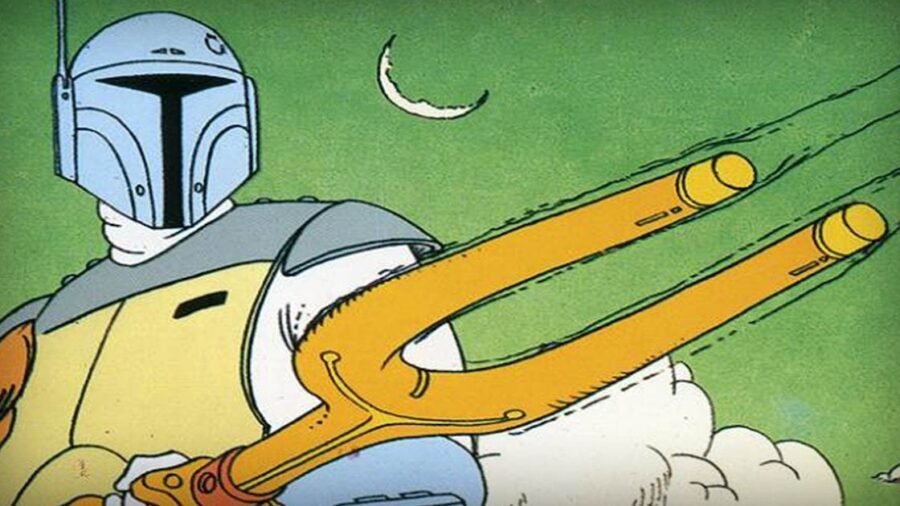
As it turns out, the answer to that question is far simpler and far more badass than you might think. Years before he popped up on the big screen in The Empire Strikes Back, Boba Fett made his first appearance in the universally hated Star Wars Holiday Special. That special included a cartoon segment that introduced Fett as a villain and was animated by John Celestri. Many years later, he confirmed that, from his clothing to his mannerisms, Fett was inspired by another legendary bounty hunter: Clint Eastwood’s Man With No Name in the iconic western, A Fistful of Dollars!
The Man With No Shame
If you’ve never seen the Star Wars Holiday Special, consider yourself lucky. It’s genuinely one of the worst things ever put on film, which is why it has never been rebroadcast or released on home media. But it’s a notable part of franchise history for several reasons, including the fact that it introduces Boba Fett to this famous galaxy far, far away. He appears in a cartoon segment where Luke Skywalker, Han Solo, Chewbacca, and C-3PO crash on an ocean planet while hunting a talisman. Fett presents himself as an unlikely ally before the droid discovers the truth: the bounty hunter is secretly hunting the talisman on behalf of his employer, Darth Vader.
This segment was animated by John Celestri, who gave an interview to the Boba Fett Fan Club in 2019. There, he revealed that he “approached playing Boba Fett as a Clint Eastwood-style character in a spaghetti western, with mannerisms expressing a sense of extreme self-confidence. I used macho posing, tossed his rifle across his body from one hand to another, and—in one particular scene—adjusted the fingers of his glove before gesturing with his hand.”
Logging Onto Fett Finder
Since the audience couldn’t see Fett’s face, Celestri tried to convey emotions in other ways. “I timed tilting Boba’s helmeted head to go up and down, side-to-side to change the arc of the helmet’s rigid eye-opening to reflect the tone of his dialog delivery … for example: quizzical, surprised, judgmental, etc.” Even Fett’s animated wardrobe was inspired by Eastwood’s character (the Man With No Name) in A Fistful of Dollars, and this Star Wars villain is similarly presented as a morally gray bounty hunter with his own sense of justice.
At any rate, Celestri wasn’t the only one to instantly make a connection between Boba Fett and Eastwood’s most famous character. Jeremy Bulloch, who played Fett in the Original Trilogy, has previously stated that the Man With No Name inspired his performance in The Empire Strikes Back and Return of the Jedi. Additionally, in Star Wars: The Empire Strikes Back 40th Anniversary Special, George Lucas directly stated, “The Boba Fett character … is also very much like the Man With No Name from the Sergio Leone Westerns.”
Advertisement
Unfortunately, this character arguably lost much of his mystique when he was brought back into canon by Disney. The Book of Boba Fett reduced the feared bounty hunter to just another rando with a blaster; one who bumbles from quest to quest like a man trapped in a video game. Maybe one day, he will regain his Clint Eastwood-like swagger in our favorite galaxy far, far away. Until he gets his own Fistful of Credits-style movie, though, we’ll just have to relive the glory days of when Boba Fett was the coolest and most mysterious villain in all of Star Wars.
Did you know there are five Nemesis movies? If that sounds overwhelming, I have some good news for you: you only need to watch the first one, and it rules. If you combine the audience approval ratings of the four sequels on Rotten Tomatoes, we’re talking about a miserable 38 percent total score between them (18 percent, 10 percent, 10 percent, and no rating, respectively). They’re that bad, and they’re not even worth talking about after this sentence. The original 1992 Nemesis, however, has no right being as fun as it is. It received a much warmer reception, landing a 71 percent critical score, and honestly, that feels about right.
Nemesis is, at times, a sloppy cyberpunk adventure, but it’s never not fun to look at. The action scenes are visually impressive, and we’re talking about that strange early ‘90s blend of practical effects, cool lasers, and robot prosthetics. There’s a clear good guy/bad guy dynamic, and our reluctant hero gets to blow lots of stuff up while uncovering a shadow government conspiracy along the way.
86.5 Percent Human
When Nemesis first introduces us to Alex Rain (Oliver Gruner), he’s an LAPD bounty hunter who’s mostly human. 86.5 percent human, to be precise. He’s enhanced with cybernetic parts, but at the end of the day, he’s still himself. While fighting the Red Army Hammerheads, a rogue militia made up of cybernetically enhanced soldiers, he’s nearly killed by their leader, Rosaria (Jennifer Gatti). Fortunately, his cohorts manage to save him by replacing even more of his damaged human parts with robotic ones.
Months later, after laying low, recovering, and eventually getting revenge on Rosaria, Alex is contacted by his old boss, Commissioner Sam Farnsworth (Tim Thomerson), for one last job. He’s given your typical zero-hour arrangement in which he has to track down his ex-lover, Jared (Marjorie Monaghan), who is believed to possess highly classified data that she plans to leak to the Hammerheads. Alex has three days to stop her before the explosive device implanted near his heart during his last round of repairs detonates.
From this point forward, Nemesis leans fully into action spectacle, giving us an all-out war between humans, cyborgs, cybernetically enhanced mercenaries like Alex, and a new generation of advanced robots with synthetic bodies and implanted human memories. They look human, but underneath it all, they’re soulless clankers disguised as people.
Along the way, Alex begrudgingly teams up with Max Impact (Merle Kennedy), who has a serious chip on her shoulder because Rosaria was her sister, and Alex killed her during the film’s opening act. Despite their differences, they share a common goal: tracking down Farnsworth, who appears to be orchestrating an all-out war between humans and machines while using Alex as a pawn to navigate the chaos. But there are also hints that the version of Farnsworth they’re dealing with may not actually be the real Farnsworth at all.
Advertisement
Strap In And Enjoy The Ride
On its face, Nemesis is your typical low-budget cyberpunk sci-fi action flick. It earned around $2 million at the box office during its original run, which most sources seem to classify as roughly break-even territory, though the exact financials remain murky online. If reports about the film’s $2 million production budget are accurate, then director Albert Pyun absolutely stretched every dollar because this movie looks fantastic for its era. Watching it in 2026, I was genuinely blown away by some of the practical effects, especially the shots involving cybernetic humans getting their faces blown off and exposing the robotic circuitry underneath their fleshy outer coating.
Countless rounds are fired, explosions erupt constantly, and Nemesis delivers enough chaos to keep even the most ravenous action fans entertained from start to finish. The violence and stunt coordination are top notch, and whatever Nemesis lacks from a storytelling perspective is more than compensated for by the sheer volume of all-consuming action sequences packed into the runtime. Even then, it’s not like the story is terrible or anything. It simply mirrors familiar ideas we’ve seen before involving the half-human, half-machine concept popularized by films like The Terminator and Cyborg, the latter also directed by Albert Pyun.
Still, Nemesis stands on its own despite leaning into familiar genre trappings, and it’s ridiculously fun to watch unfold. At the end of the day, it’s a beyond-solid B movie that any sci-fi fan with a love for grimy cyberpunk aesthetics can appreciate. Just stay away from the sequels because this franchise falls off hard right when it thinks it’s getting started.
As of this writing, you can stream Nemesis for free on Tubi.
Since its epic conclusion, a lot has been said about how Andor elevates Rogue One: A Star Wars Story and even Star Wars: Episode IV – A New Hope, but with The Mandalorian and Grogu bringing Star Warsback to theaters this week, it’s also the perfect time to revisit how the Disney+ series has improved another beloved chapter in the franchise. That’s largely thanks to Karis Nemik’s (Alex Lawther) manifesto, which goes viral across the galaxy in the series finale and urges listeners to “Remember this: try.” The line creates a surprising dialogue with Yoda’s (Frank Oz) iconic quote from Star Wars: Episode V – The Empire Strikes Back: “Do or do not, there is no try.” At first, the two ideas seem opposed, but Nemik’s manifesto actually recontextualizes Yoda’s lesson, revealing them as complementary rather than contradictory.
Nemik’s Manifesto Is About “Trying” as an Act of Rebellion
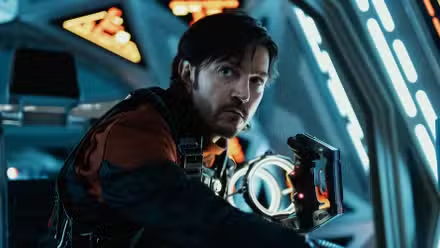
It may seem confusing when first thinking about what Nemik and Yoda mean. One is telling you to try, while the other says “there is no try,” so who is correct? As it turns out, both of them are; we just have to look at the context. Nemik and Yoda are living in completely different moments of history when they each say their lines, and that matters. Nemik’s manifesto is one of the most brilliant pieces of writing in all of Star Wars, and we first hear it in the Season 1 finale of Andor, set five years before the Original Trilogy, when Cassian (Diego Luna) decides to save his friends during Maarva’s (Fiona Shaw) funeral on Ferrix. The odds are overwhelmingly against him, and he knows he can’t save everyone, but it’s Nemik’s words that push him to try and eventually succeed.
Advertisement
Advertisement
Collider Exclusive · Star Wars Quiz Which Force User Are You? Light Side · Dark Side · Or Somewhere Between
The Force is not a binary. It is a spectrum — from the serene halls of the Jedi Temple to the shadowed corridors of Sith space. Ten questions will reveal where you truly fall. The Force has always known. Now you will too.
🔵Jedi Master
🟡Padawan
🔴Sith Lord
Advertisement
⚫Inquisitor
⚪Grey Jedi
Advertisement
01
What is the Force to you? Your relationship with the Force defines everything else.
Advertisement
02
When you feel strong emotions — anger, grief, love — what do you do? The Jedi suppress. The Sith feed. Others choose differently.
Advertisement
03
The Jedi Council gives you an order you disagree with. You: How you handle authority reveals your alignment.
Advertisement
04
You are offered forbidden knowledge that could give you enormous power. The cost is crossing a moral line. You: The dark side’s pull is never more than a choice away.
Advertisement
05
Your approach to training and learning is: A student’s habits become a master’s character.
Advertisement
06
In a duel, your lightsaber fighting style reflects: Combat is the purest expression of a Force user’s philosophy.
Advertisement
07
A defeated enemy lies at your feet, powerless. You: Mercy — or its absence — is the truest test of alignment.
Advertisement
08
The Jedi Code forbids attachment. Your honest view on love and bonds: The source of the greatest falls in the galaxy.
Advertisement
09
Why do you use the Force at all? What’s the point? Purpose is the difference between a knight and a weapon.
Advertisement
10
At the final moment — light side or dark side pulling at you — what wins? In the end, every Force user faces this moment. What does yours look like?
Advertisement
Your Alignment Has Been Determined Your Place in the Force
The scores below reveal how the Force sees you. Your highest number is your true alignment. Read on to understand what that means — and what it will cost you.
Advertisement
🔵 Jedi Master
🟡 Padawan
🔴 Sith Lord
⚫ Inquisitor
Advertisement
⚪ Grey Jedi
Disciplined, compassionate, and deeply attuned to the living Force, you have walked the path long enough to understand its demands — and accept them. You lead not through authority alone, but through example. You have felt the pull of the dark side and chosen otherwise, every time. That is not certainty. That is courage.
Advertisement
You are earnest, powerful, and brimming with potential — and you know it, which is both your greatest asset and your most dangerous flaw. You act before you think, trust your gut over your training, and sometimes confuse impatience for bravery. The Masters see something in you, though. The question isn’t whether you have what it takes — it’s whether you’ll be patient enough to find out.
You are not simply dangerous — you are certain, and that is worse. You have decided what the galaxy needs, and you have decided you are the one to deliver it. Your power is genuine and formidable, earned through sacrifice that would have broken lesser beings. But examine your victories carefully. Every Sith believed their cause was righteous. The dark side’s cruelest trick is that it agrees with you.
Advertisement
You were forged in fire and reshaped by those who found you at your lowest. You serve, because service gave you structure when you had none. Your allegiance is not to an ideology — it is to survival and to the master who gave you purpose. But there is something buried beneath the conditioning. The Jedi you hunt? You recognize them. Because you remember what it felt like before the choice was taken from you.
You have looked at the Jedi Code and the Sith Code and found both of them incomplete. You walk the line not out of indecision but out of conviction — you genuinely believe both extremes miss something essential. The Jedi don’t fully trust you. The Sith think you’re wasting your potential. They’re both partially right. But so are you.
Advertisement
It’s important to note that, at that time, the galaxy thought that the Empire was invincible and unstoppable, and that’s the purpose of Nemik’s manifesto — to show people that the Empire can be defeated, despite the overwhelming odds. At that moment in Star Wars history, the Empire is so strong, it doesn’t even conceive that anyone could try to challenge its authority, so even the smallest attempt is already an act of rebellion. “Even the smallest act of insurrection pushes our lines forward,” as Nemik says, because it shows everyone that the Empire isn’t invincible, and that’s all it takes for revolution to spread; once other people see that, they too will feel emboldened and try. That’s what the Aldhani heist was for (besides the money, of course), and that’s what the rebellion on Ferrix becomes, too.
Advertisement
When we next hear Nemik’s manifesto in the Andor series finale, it’s in a completely different context. It has gone viral, beyond the Empire’s ability to contain its spread, and people now see that there is a way to fight for freedom. It’s now an open call to rebellion beyond the Rebel Alliance, too, a promise that, if everyone takes action, they will succeed in taking down the oppressor, because “then there will be one too many,” he says. There’s no telling who has heard the manifesto, but a few weeks after it goes viral, a farm boy from a backwater planet decides to join the Rebellion after losing everything to the Empire, and manages to blow up their ultimate weapon. One single thing, an X-wing, broke the siege, like Nemik promised, because, before that farm boy, many other people tried.
Yoda’s Lesson in ‘The Empire Strikes Back’ Is the Culmination of Nemik’s Manifesto in ‘Andor’
There’s no way of knowing whether Luke Skywalker (Mark Hamill) and Yoda have ever listened to Nemik’s manifesto, but the former’s actions and the latter’s lessons sure feel like the continuation of the ideas it preaches. There are only a few days between the manifesto going viral and the destruction of the Death Star, and then three years until Luke joins Yoda on Dagobah in The Empire Strikes Back, so the galaxy is already a completely different place. Thanks to all the trying, the Rebellion has grown into more than just a military movement, but into an idea, a promise of freedom. It’s now at a point at which it can actually do what it set out to do from the start, so the time has come to stop trying and do it.
When Yoda tells Luke to “try not; do or do not, there is no try,” Luke is trying and failing to pull his X-wing from the Dagobah swamp. He doesn’t believe that he has the power to do it, and most Force powers are about one’s ability to envision what they have to do and make it a reality. From a teaching and personal standpoint, Yoda is telling Luke to believe in his own abilities because he can do it. But, at that historical moment, there’s also a lot more hanging in the balance than just Luke’s X-wing. The Rebellion has just suffered a major defeat by the Empire on Hoth and must now find the strength to reassemble and continue fighting, because, if they falter again, they will be destroyed. The Empire has literally struck back and exposed how fragile everything is for the rebels, so if they don’t carry out their mission, all the attempts and sacrifices that came before will have been for nothing. Both Luke and the rebels are at a crossroads: now, either you do what you have to, or fail.
Of course, Yoda’s lesson to Luke doesn’t go viral like Nemik’s manifesto, but it does represent a change in the overall attitude of the rebels. Luke completely changes his attitude after losing to Darth Vader (James Earl Jones) on Bespin, and sets out with his friends to save Han Solo (Harrison Ford) from Jabba the Hutt and rejoin the Rebellion; he even has the confidence to call himself a Jedi Knight. The same thing is happening with the Rebellion. After their defeat at the battle of Hoth, only one year passes until the discovery of the second Death Star and the decision to go all-or-nothing against the Empire — to “do or do not.” So Yoda’s lesson isn’t about denying Nemik’s idea of trying, but rather about taking it one step further, because once something is proven to be possible, it’s not about trying anymore, but about doing it.
Nemik’s Manifesto and Yoda’s Lesson Are Actually Two Parts of the Same Advice
It’s easy to dismiss or forget how important a role the passing of time plays in Star Wars. Andor Season 2 takes place over four years, starting one year after Season 1, and ends mere weeks before the events of A New Hope. Then, there are three more years until The Empire Strikes Back, and finally one year until Star Wars: Episode VI – Return of the Jedi, when the Rebel Alliance finally topples the Empire. There are nine years between Nemik writing his manifesto and the battle of Endor, and that’s more than enough time for people to grow a political consciousness, as Nemik envisioned. That’s also enough time for political theory to evolve and either gain or lose relevance. In this case, Nemik’s manifesto evolves because it becomes a reality.
Advertisement
Again, there’s no way of knowing in canon whether Luke or Yoda ever listened to the manifesto, but it’s now brilliantly set up as a precursor to Yoda’s lesson to “do or do not, there is no try.” These two ideas aren’t opposed, and aren’t even two sides of a coin; they are, instead, two stages of developing consciousness. The Rebellion needed people to stand up against the Empire, and trying to do something showed them that it was possible. It’s what effectively set up the Rebellion as a galaxy-wide movement beyond the Alliance, so to speak. It’s important to start, and trying is a big part of it, but there comes a time when we grow beyond attempts, and it becomes about actually doing the things we have to, because we’ve already learned how and know why. When it comes to freedom against tyranny, this is even more important because either you do the right thing, or you don’t.
That’s where the galaxy is at when Yoda tells Luke to “do or do not.” Things have already grown beyond Nemik’s point of trying as an act of rebellion in itself. Everything has escalated by then: the Rebellion is now an organized military movement that has proven its ability to destroy the Empire, while the Empire has tightened its grip around the whole galaxy so as not to lose the war. At that moment, the Rebellion has already outgrown “attempts,” and needs to properly do what it set out to do and defeat the Empire. And it’s only able to because many people sacrificed everything while trying before.
Andor and Star Wars: Episode V – The Empire Strikes Back are available to stream on Disney+.
The Off Campus cast has, similar to their fictional counterparts, have found success in their personal dating lives.
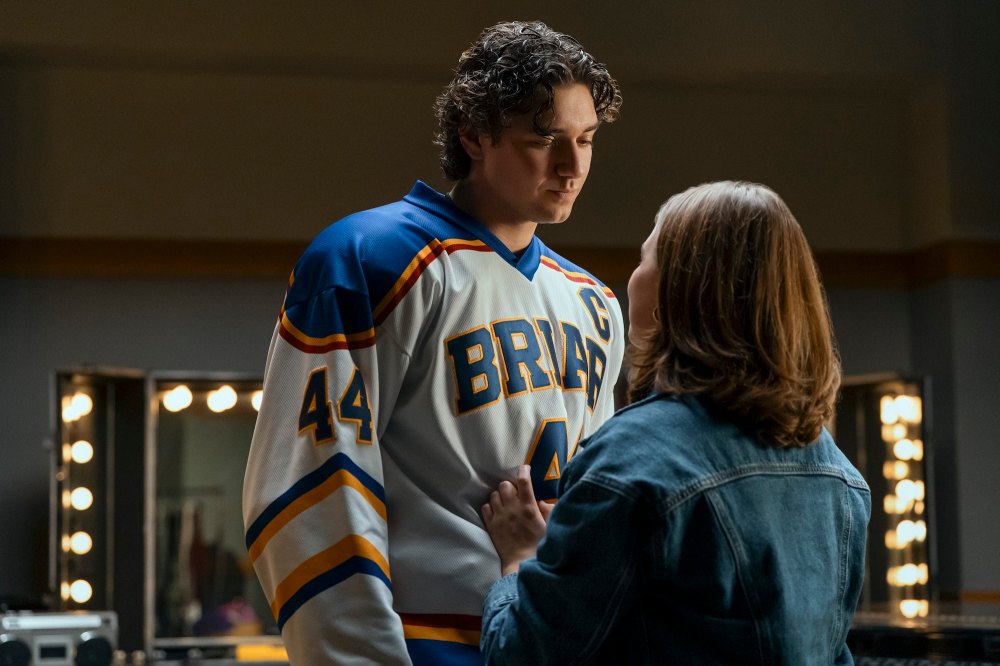
Based on the Off Campus book series by Elle Kennedy, the show, which premiered in May 2026, follows an elite ice hockey team — and the women in their lives — as they “grapple with love, heartbreak and self-discovery — forging deep friendships and enduring bonds while navigating the complexities that come with transitioning into adulthood,” read the official synopsis.
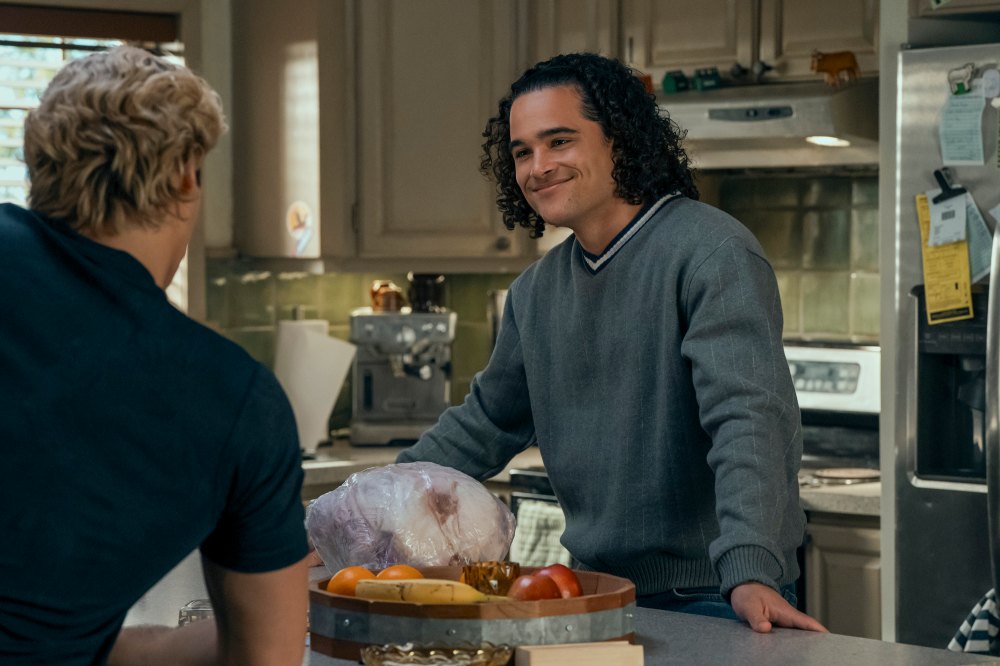
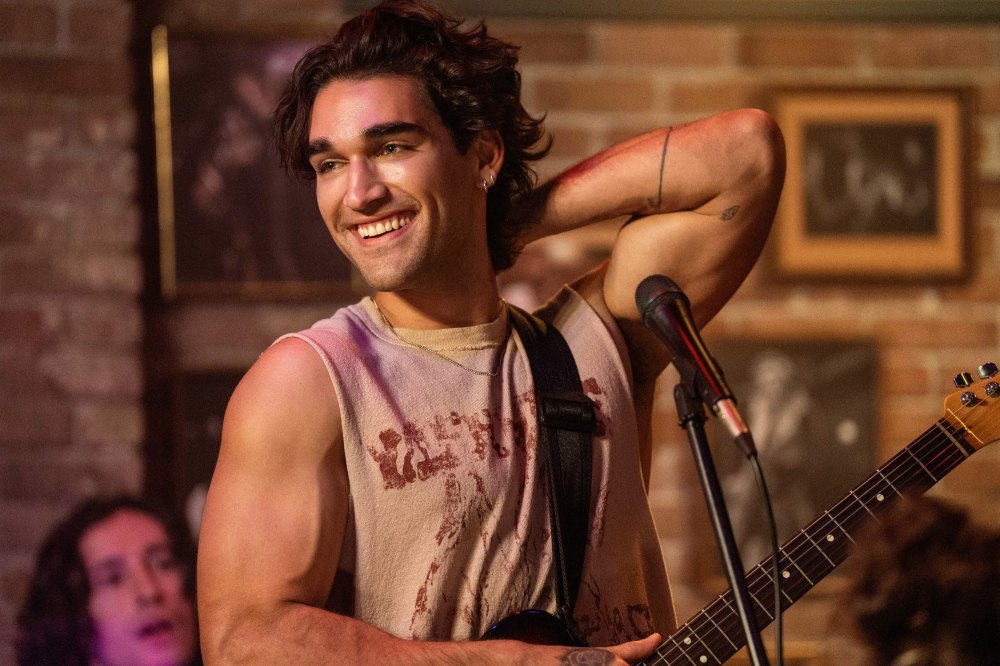
Season 1 centered around the “sexy and fun ‘opposites attract’ romance between quiet songwriter, Hannah and Briar University’s all-star hockey athlete, Garrett.” Going off Kennedy’s book order, Logan’s (Antonio Cipriano) story was expected to be next, then Dean’s (Stephen Kalyn) before Tucker’s (Jalen Thomas Brooks) turn.
Off screen, some cast members — like Belmont Cameli, Stephen Kalyn and Mika Abdalla — have offered glimpses into their personal relationships. Others, however, have preferred to keep their love lives out of the spotlight.
Advertisement
Keep scrolling to learn more about the Off Campus cast and their respective love lives:
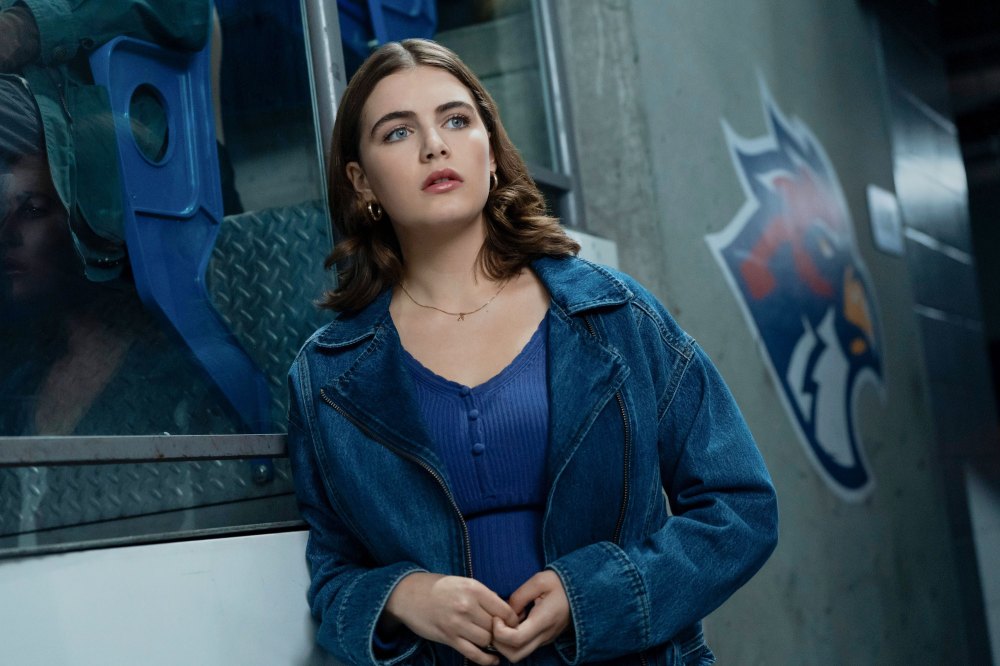
Ella Bright
Amazon/MGM Studios / Courtesy Everett Collection
Bright, who was the season 1 lead on the show, has kept the details of her private life out of the spotlight.
Prime Video’s Off Campus follows different love stories at Briar U — but which couples end up together in the books? Based on the Off Campus book series by Elle Kennedy, the show follows an elite ice hockey team — and the women in their lives — as they “grapple with love, heartbreak, and self-discovery […]
Advertisement
Jalen Thomas Brooks
Liane Hentscher / Prime
Brooks has not publicly posted a partner so his relationship status has remained unclear.
Thank You!
You have successfully subscribed.
Antonio Cipriano
Liane Hentscher / Prime
According to social media, Cipriano and Justine Verheul have been dating for at least four years.
Josh Heuston
Amazon/MGM Studios / Courtesy Everett Collection
The season 1 cast member is seemingly single based on his social media.
Steve Howey
Howey got married to Sarah Shahi in 2009. They welcomed two kids before filing for divorce in 2020.
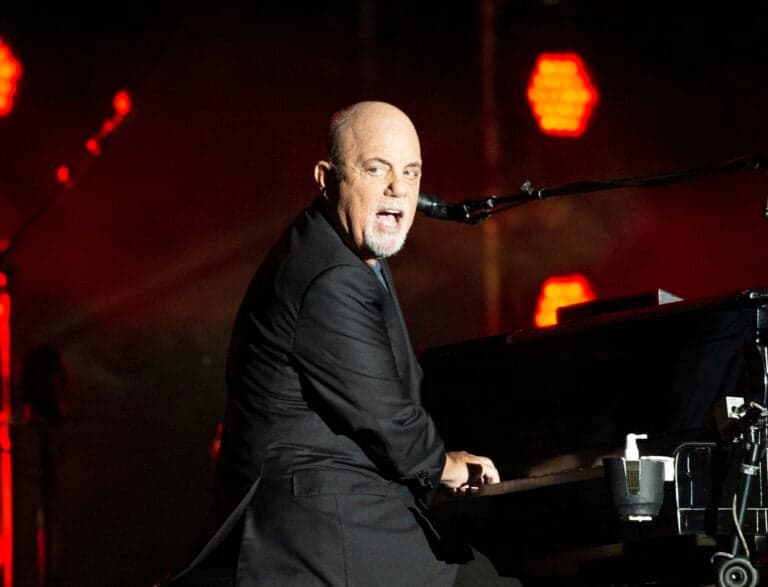
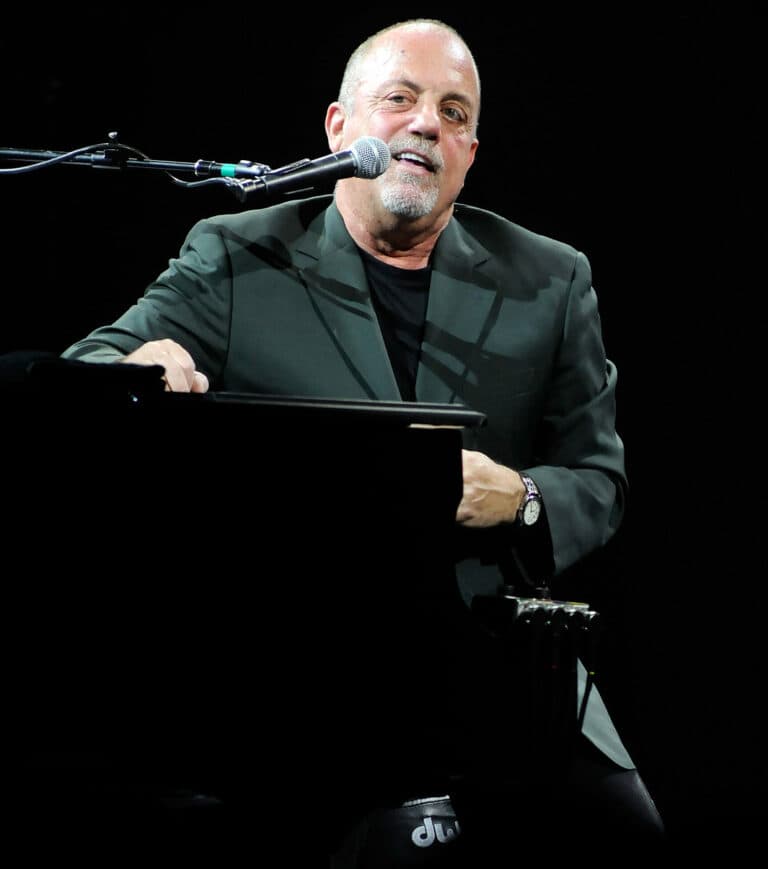
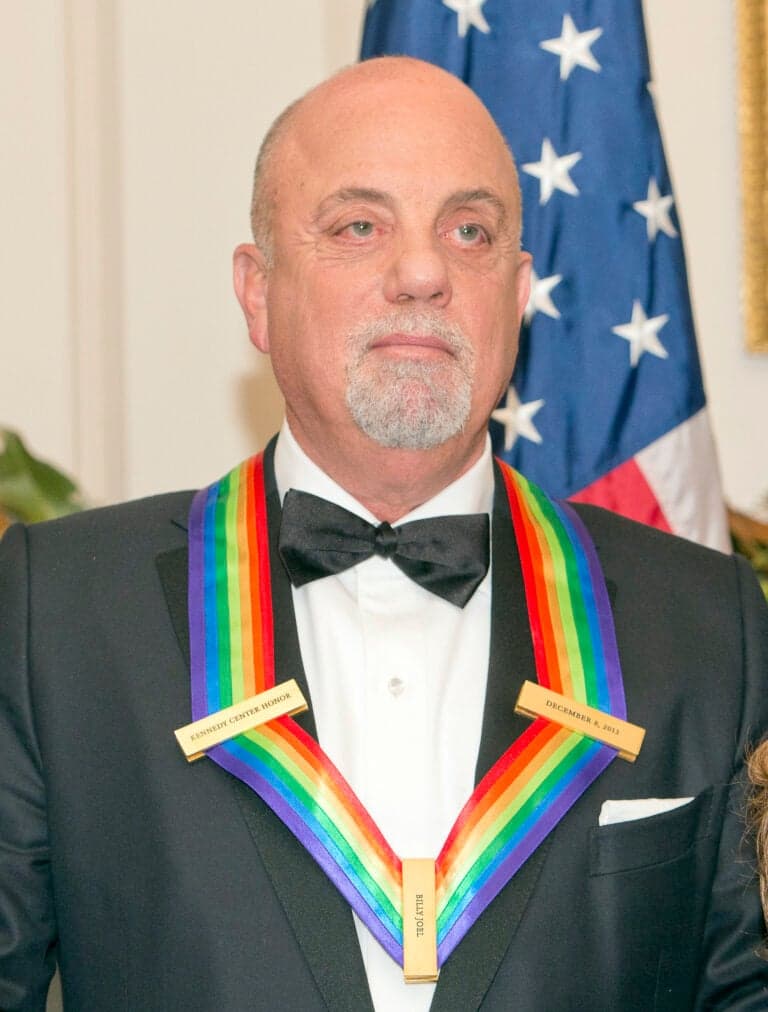
Billy Joel is facing backlash from critics who claim he is attempting to dictate his own history following his harsh dismissal of an upcoming feature film.
The iconic musician publicly rebuked the independent cinematic project about his youth, labeling the endeavor as an improper attempt to capture his early career.
Notably, award-winning editor and director John Ottman is attached to helm the production, which is scheduled to begin filming this autumn across Winnipeg and New York.
Advertisement
MEGA
A new cinematic project tracking the early life of Joel is officially moving forward, though it faces heavy opposition from the legendary musician himself.
Titled “Billy & Me,” the upcoming feature film is set to focus entirely on the singer-pianist’s formative years, capturing his journey long before achieving mainstream fame and releasing his defining 1973 record, “Piano Man.”
The movie arrives on the heels of a two-part 2025 HBO documentary centered on the artist, titled “And So It Goes.”
However, the production lacks Joel’s personal endorsement, music catalog access, or life rights. In an official statement to Variety, a representative for the artist emphasized, “Billy Joel has not authorized or supported this project in any capacity, and any attempt to move it forward would be both legally and professionally misguided.”
How Fans Reacted To The Upcoming Biopic
MEGA
The singer’s legal disapproval has done little to deter the public, with many music fans actively turning against his attempts to block the project.
Following the representative’s sharp statement, online commentators quickly accused the superstar of trying to control his own history, noting that he had already successfully established his preferred version of events through his recently authorized HBO documentary.
Advertisement
“This is what happens when an artist can’t control the narrative– which he accomplished with the recent HBO documentary,” one user wrote.
“Unfortunately, him not wanting it to happen makes me actually want it now,” another commented.
Furthermore, while observers acknowledged that the singer can easily withhold his music catalog, they noted that public figures cannot easily control general life rights.
“Billy and all of his reps know controlling life rights are pretty hard for public figures… But he definitely will have a stronger hand controlling the music,” a user noted.
Advertisement
The ‘Billy and Me’ Biopic Is Officially In The Works
MEGA
The growing support from fans for an unapproved project has highlighted the deep history behind this newly revealed biopic. The upcoming movie, “Billy and Me,” is officially moving forward with Oscar-winning editor Ottman set to direct the features of the legendary 77-year-old musician’s younger days.
Screenwriter Adam Ripp is collaborating with Ottman on the script, which is scheduled to begin filming this upcoming autumn.
The cinematic narrative will heavily feature these early dynamics, potentially exploring the complicated real-life history where the musician fell in love with Small’s wife, Elizabeth Weber. The tense situation initially fractured their friendship and preceded a period of severe personal struggle for the singer before they ultimately reconciled.
Billy Joel Openly Discussed His Ongoing Battle with A Brain Disorder
MEGA
The extensive media coverage of his musical history stands in sharp contrast to the very real physical challenges the musician has faced behind the scenes.
Last year, Joel opened up about a serious brain disorder that forced him to halt his touring schedule completely, wrapping up his final live performance at the Mohegan Sun Arena in Connecticut in February 2025.
The Blast confirmed that the legendary 77-year-old singer was diagnosed with normal pressure hydrocephalus, a neurological condition characterized by an abnormal buildup of spinal fluid inside the brain’s ventricles.
Advertisement
Speaking candidly, Joel admitted that maintaining his equilibrium has become his single greatest everyday struggle, joking that his “balance sucks.” He went on to describe the constant physical sensation as feeling “like being on a boat,” though he reassured fans that he otherwise feels good.
Michael Jackson’s Recently Released Biopic Was Also Controversial
The controversial handling of celebrity narratives is not unique to Joel, as major Hollywood biopics frequently alter real-life events due to financial and legal pressures behind the scenes.
This reality is especially apparent in the production of the highly anticipated Michael Jackson biographical film.
The production of the movie, titled “Michael,” allegedly required a massive combined payout of $25 million for director Antoine Fuqua and producer Graham King to oversee significant changes to the script, as reported by The Blast.
These major financial adjustments were explicitly triggered by the unexpected need to cut out and completely reshoot various scenes that referenced the 1993 child sex abuse allegations made against the late pop icon.




:max_bytes(150000):strip_icc():format(jpeg)/andrew-mccarthy-ted-danson-cheers-052026-f3cf417e65af45b997405ad38d5bbfee.jpg)
:max_bytes(150000):strip_icc():format(jpeg)/Brooke-Shields-Rowan-Henchy-052026-9a52c4b4a449423da9a215ec38cc43ef.jpg)





















:max_bytes(150000):strip_icc():format(jpeg)/stephen-colbert-donald-trump-052026-ebc4b20bc3254fa98b06ecea5df241db.jpg)










































You must be logged in to post a comment Login