

Politics
Basque police brutally beat Palestine activists after they return from Israeli prison

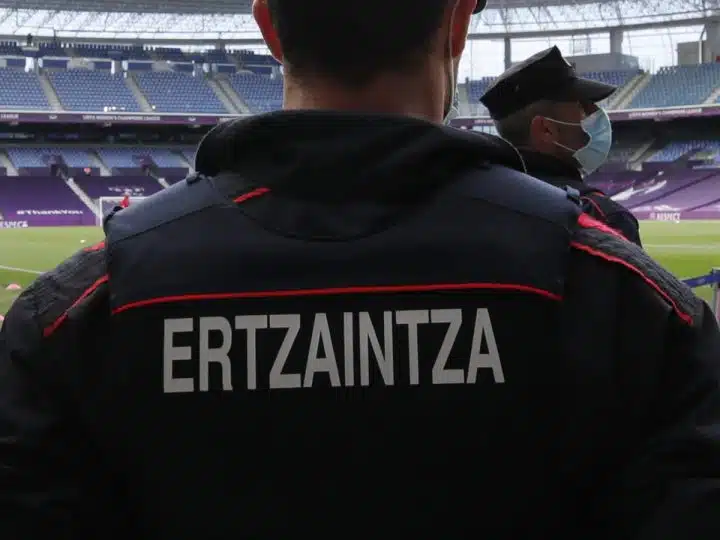

It might have looked like a scene from a prison in so-called ‘Israel’, but the appalling scenes actually unfolded at Bilbao airport. It wasn’t Israeli Occupation Forces (IOF) beating peaceful Basque activists, but rather their own police force, the Ertzaintza, who smashed them with batons as they lay helpless on the ground.
More shockingly still, the activists had only just returned from captivity in ‘Israeli’ dungeons. They were participants in the heroic Global Sumud Flotilla (GSF), which sought to bring aid to Palestinians starved by Zionists’ grotesque restriction of aid to Gaza. As GSF explain:
When a family member, waiting anxiously in the arrivals terminal, attempted to cross a barrier to embrace their loved ones, the Ertzaintza suddenly and shockingly responded with violence. What should have been a moment of relief and familial comfort after such a harrowing experience was interrupted by even more brutality.
Among those attacked and beaten by the Basque police were individuals who had just recently been discharged from medical facilities to fly home, bearing severe, agonising injuries from their time in israel’s captivity, after being illegally abducted in European international waters. The Ertzaintza’s deployment of force against citizens in acute medical agony represents an unconscionable failure of basic humanity and continued display of systemic and colonial violence.
At least four people, including three flotilla participants, were subsequently arrested by Spanish state paramilitary police and are currently being held at Deusto police station in Bilbao.
Basque police’s deep ties with ‘Israel’
The GSF went on to describe the attack as a “chilling demonstration of interconnected global repression”. They cite the Ertzaintza’s:
deep, historical procurement pipelines, commercial contracts, and tactical training ties with israeli private security firms…
The Basque region is itself still colonised by Spain, and clearly its police force continues to operate with colonial tendencies. In a Substack post, Ahmed Eldin elaborated on the Ertzaintza’s links with the Zionist entity, pointing out:
The Ertzaintza has purchased Israeli technology and equipment for years. Its phone-tapping system comes from Verint Systems, an Israeli company with deep ties to Israeli military intelligence. An Israeli firm, ICTS, has managed security at some of their facilities. They’ve used Israeli body armor, surveillance cameras, and listening devices.
Eldin said:
The Ertzaintza presents itself as a different kind of police force. Created in 1982 as part of Basque autonomy, it’s supposed to be more responsive to local communities, and less like the centralised Spanish national police.
The truth is, the Ertzaintza has a long-standing, multifaceted relationship with Israel that goes far beyond the Spanish government’s official positions on Palestine.
This is similar to the Police Service of Northern Ireland (PSNI). Another police force supposedly reconfigured to be more accountable to the population they ‘serve’, the PSNI have purchased software and body armour from so-called ‘Israel’.
The Palestine Laboratory
The Zionist entity operates a pipeline of violence and repression that begins with The Palestine Laboratory. Tools used to brutalise and surveil Palestinians are tested on them like human guinea pigs, then imported by repressive powers around the world for use on their own populations.
This is why the line “nobody is free until we’re all free” isn’t merely a slogan – it is a truism. As long as someone is being mistreated anywhere in the world, the methods used to subjugate them represent a danger to everyone else.
The flotilla activists represent a threat not only to so-called ‘Israel’, but to reactionary political ideals across the world. It’s harder to ram into people’s heads the idea of foreigners being unworthy of our help when people are risking their lives travelling thousands of miles to help those they’ve never met. Left-wing activists lionised for their heroism inherently represent a threat to the interests of capital in their home countries.
As Eldin points out:
When Israeli forces sexually assault, torture, and brutalise international activists bringing aid to Gaza, those actions send a clear message to every police force they’ve trained: “This is how you handle people who challenge us. And you should be doing the same.”
The Spanish government, like the Irish government, is not as pro-Palestine as an at-a-glance reading may suggest. In reality, the Irish government voted against sanctioning the Zionist settler-colony, even when its own citizens were being tortured there.
As Eldin points out, the Spanish state also continues to maintain economic ties with the Zionist entity. True solidarity with Palestine means following true Boycott, Divestment and Sanctions (BDS) policy – severing all ties with so-called ‘Israel’ while it maintains its apartheid, genocidal policies against the Palestinian people.
Featured image via Clive Brunskill/Getty Images

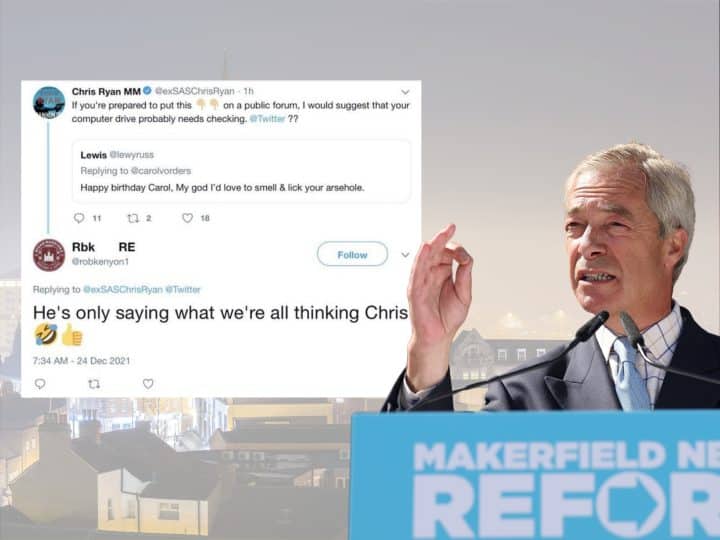
Reform UK’s candidate in the Makerfield by-election is one Robert Kenyon. As we’ve reported, Kenyon has been criticised for a series of lewd, sexist, and weird comments. But rather than apologising, Robert and party figures have repeatedly doubled down.
The latest example is this:
Farage brushes off his Pervy Plumbers Social media posts with the usual lies and deflection. — The Rev. Anton Mittens
These comments were posted a decade ago – no they were not. The Carol Vorderman post was just 5 years ago.
They have been taken out of context – no they include self‑contained assertions,… pic.twitter.com/dU7kZ53Wd7


 (@MittensOff) June 10, 2026
Kenyon is not sorry
Here’s what Farage said on Kenyon’s past comments:
These comments were posted a decade ago. They’ve been taken wildly out of context, but they’re the sort of comments that you won’t necessarily get if you’re an Oxford-educated career politician living in a nice postcode in London,” he adds.
But I tell you what, they are the kind of comments you’ll hear in every pub in the country every evening, and we should be unapologetic that Rob is an ordinary bloke who’s carved quite a career for himself, had the guts to set up a business, served as an army reservist, is a patriot, likes his rugby, likes the odd pint, and said a few laddish things on social media 10 years ago.
Do you know what I’d say to that? I’d say, so what?
If Farage or Kenyon had simply apologised, we’d have moved past this by now. Because they keep angrily refusing to do so, we have to keep reminding people precisely what Kenyon isn’t sorry for.
First up, there was this absolute war crime of a tweet, in which the Reformer said:
“It was a crude attempt at a joke to probably about 50 followers… if you go into any building site, I think you’d hear a hundred times worse said” pic.twitter.com/vHA33K0ez5
— Politics UK (@PolitlcsUK) May 28, 2026
 NEW: Reform UK Makerfield candidate Robert Kenyon has refused to apologise for his comment about Carol Vorderman
You will hear this kind of talk in every pub in the country, according to Farage, and you will hear it every evening. Personally, we think that will only be true if you’re the one making the comments.
Kenyon also said this when Russia invaded the Crimea region of Ukraine:
I agree totally, Russia are well within their rights to do what they have done, as we did with the Falklands.
Notoriously, the boozers of Britain are all big Russophiles. Every night they sing songs celebrating Putin’s latest conquests. Many of them are calling for the UK to adopt the ruble.
Hilariously, Kenyon was also a Remainer, according to himself:
"Anyone who thinks I love Trump, voted Brexit… is wrong… I woke up the day after Brexit shitting myself to what was voted for"
— Politics UK (@PolitlcsUK) May 26, 2026
NEW: Reform UK's Makerfield candidate Robert Kenyon said in 2019 that he did not vote for Brexit
We dunno, Nigel, this seems like the sort of comment you would hear if you’re an “Oxford-educated career politician living in a nice postcode in London”.
Reform felt a need to deny that Kenyon actually voted Brexit. At the same time, it’s felt no need to deny or apologise for the many sexist comments Kenyon has made.
Make of that what you will.
Take it from us
We don’t normally give Reform advice, but we are now urging them to apologise for these comments and move on.
It’s time.
And while we’re more than happy to keep reminding everyone of what a little freak Kenyon is, the good people of Makerfield have suffered enough:
Voters who had noticed Kenyon’s online comments (almost everyone was aware) were slightly baffled he hadn’t apologised. Feel a difference here between “never back down” attitude of online debate versus what people expect in real life.
— Jessica Elgot (@jessicaelgot) June 9, 2026
Featured image via Ryan Jenkinson / Getty Images
By Willem Moore
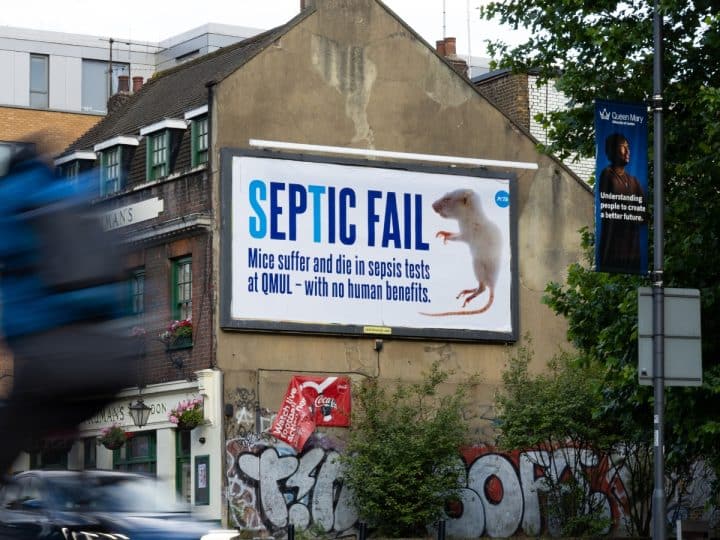
Ahead of undergraduate open days at Queen Mary University of London (QMUL) on 12 and 13 June, PETA has placed a new ad just a stone’s throw from the campus.
It warns prospective students that researchers at the university are tormenting mice in cruel and useless sepsis experiments that consistently fail to lead to effective treatments for humans.
The appeal depicts a dead mouse alongside the message:
Septic Fail. Mice Suffer and Die in Sepsis Tests at QMUL – With No Human Benefits.
PETA senior campaigns manager Kate Werner says:
What QMUL’s tours fail to divulge to students is that on campus, terrified mice are being cut open while they’re still alive and subjected to the agonising experience of sepsis, all for worthless experiments that benefit no one.
PETA is urging the university to stop wasting time, resources, and animals’ lives on these cruel and ineffective experiments and adopt human-relevant research methods.
More than 150 drugs have successfully treated sepsis in mice, yet none have been effective in treating humans. Despite the well-documented failure in using mice to model human sepsis, QMUL experimenters are cutting open terrified mice and puncturing their intestines to leak faecal matter into their bodies.
During experiments, some mice experience severe sepsis, which can include major organ failure and difficulty breathing. All animals are killed at the end of these experiments.
Some data from these experiments have been published in papers that were later retracted by the publisher because the animal data and conclusions were deemed ‘unreliable’.
Mice are intelligent, complex, and social individuals who experience a wide range of emotions. They become attached to each other, love their families, and easily bond with their human guardians, returning as much affection as they receive.
PETA encourages everyone to urge QMUL to heed the scientific evidence and join other institutions, including the University of Kent, that have committed to non-animal methods in sepsis research.
Featured image via PETA / Lucy Watson
By The Canary
Politics
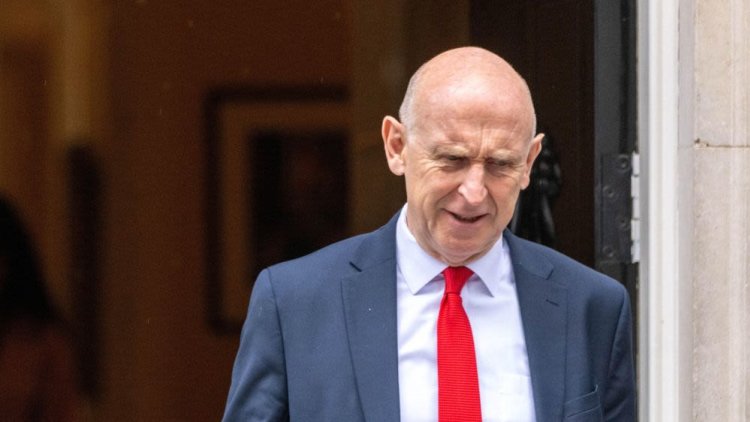
Politics Home Article | John Healey Resigns As Defence Secretary Over Military Spending Plans
(Alamy)
2 min read
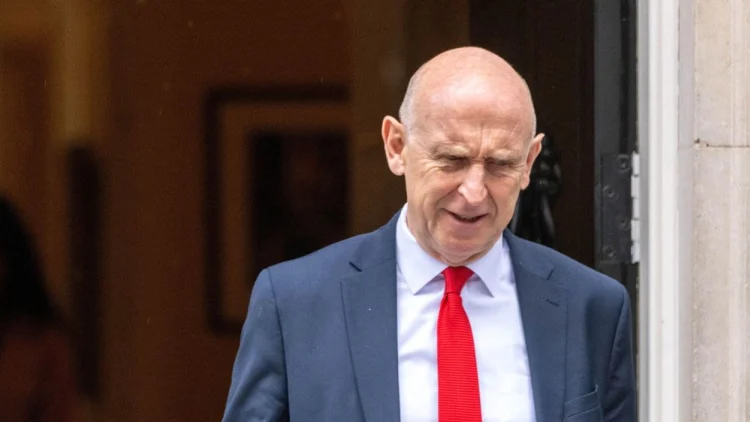
John Healey has resigned as defence secretary warning that Keir Starmer’s military spending plans fall way short.
Healey announced his resignation on Thursday, saying he had been “left with no other option” but to quit having been presented with details of how much additional money the government was planning to spend on defence.
He singled out the Treasury for criticism, saying it was “unwilling” to “commit the resources that the nation needs to defend the country at this time of rising threats”.
Healey is considered a Starmer loyalist and his resignation represents a major blow to the Prime Minister.
The government is expected to publish its long-awaited Defence Investment Plan (DIP) in the coming days after months of delay.
The PM and Chancellor Rachel Reeves are under pressure to significantly increase defence spending in response to global threats to the UK. Last year, the Prime Minister pledged to raise military spending to 2.5 per cent of GDP by 2027, with the ambition of increasing that figure to 3 per cent in the next parliament.
However, Nato allies have also pledged a new baseline for military spending to reach 3.5 per cent of GDP. Starmer has promised to achieve this goal by 2035.
At the Munich Security Conference in February, which Healey references in his resignation letter, Starmer said: “To meet the wider threat, it’s clear that we are going to have to spend more, faster.”
In his letter of resignation to Starmer, Healey said the DIP financial settlement, which he was first given in full on Monday afternoon, “falls well short of what is required for defence and the country at this dangerous time”.
“The extra support is backloaded when the pressure of operations and imperative to speed up readiness to fight is in the first two years and it rises to just 2.58 per cent of GDP in 2030, when we will reach 2.6 per cent next year with the investment we are already making.”
He added: “Without a DIP that meets the moment in this way, I am being forced to make decisions that would reduce the readiness of our Forces and increase the risk to personnel on operations, and could make the country less safe.
“After explaining to you that I would not be able to accept a DIP settlement that does not give our Forces the resources they need, I am now left with no other option than to submit my resignation as your Defence Secretary.”
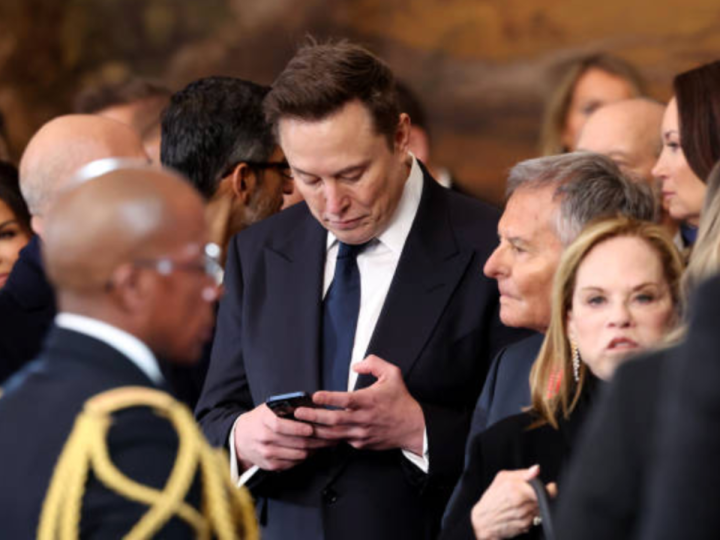
West Belfast MLA Gerry Carroll has suggested that the world’s wealthiest man, Elon Musk, should pay for the massive damage caused in Belfast by racist mobs. This is after the billionaire used his X social media to encourage the carnage.

Musk is a white supremacist vomited up by apartheid-era South Africa 54 years ago. He is currently using his wealth and X reach to ensure the continuation of that vile regime’s politics, only now on a global scale.
Carroll shared the following message:
How about he reaches into his very deep pockets to pay for the damages? For the lost pay, damaged public transport, burnt homes and displaced families. To say nothing of the widespread trauma.He can afford it. But he won’t. Last night’s pogrom was carried out on the streets of Belfast, but it was encouraged and greenlit by the rich and powerful and stoked by well-known figures on the far right.As they have many times in the past, capitalists are energetically trying to divide people here for their own ends. We live in one of the most unequal societies in Europe—with a failing NHS, a low wage economy, crumbling public services and a manufactured housing crisis. Trump, Farage and Musk laugh all the way to the bank, while the despair eating away at working class areas is directed against vulnerable migrants.
A second night of racist rioting
As previously reported by the Canary, Musk promoted the protests to his 240 million followers on the social media hell-site. People Before Profit man Carroll was speaking before a second night of rioting by hooligans in the north of Ireland.
The disorder was less severe than on Tuesday June 9, with the main flashpoint being in Glengormley, a suburban area to the north of Belfast. There, masked thugs attempted to conduct a further pogrom at the Chimney Corner Hotel. However, racists have frequently protested at the site in the past. This is due to it housing asylum seekers.
On this occasion, a heavy police presence prevented rioters from accessing the hotel. The Police Service of Northern Ireland (PSNI) deployed a water cannon to push back would-be ethnic cleansers. This granted them their first shower of the year.
In Portadown, incompetent hoods might have wished for said hosing down. This is because they set themselves on fire while attempting to petrol bomb police. Pogrom enthusiasts Official Protestant Coalition provided footage of the mess their incitement helped produce. It showed a town centre strewn with broken glass and burning barricades.
The real state failure isn’t immigration
Musk has continued a relentless stream of messages fear mongering about immigration. This includes a thread from failed parliamentary candidate Matt Goodwin. In it, Goodwin got perilously close to forming a coherent thought. He seemingly didn’t need machine doping to help him this time.
The walking charisma vacuum lamented that:
We’ve entered a new phase of ‘anarcho-tyranny’ where the state is now failing to perform its basic duties like controlling the borders while oppressing its own people.
Veering close to one of his twice-daily broken clock moments, Goodwin was correct to identify that the British state — to which the north of Ireland is still sadly tied – no longer functions properly. However, this isn’t the fault of immigrants. It’s the result of now almost two decades of austerity, kicked off in 2010 by the Conservatives. These policies have seen the lives of those within Westminster’s influence grow progressively worse. They have to put up daily with the very things Carroll cited:
…a failing NHS, a low wage economy, crumbling public services and a manufactured housing crisis.
While there has been deranged fury about a single act of violence from a single Sudanese man, the reality is you’re much more likely to be killed by a billionaire than a migrant. Structural violence is a far greater threat to the people of Belfast than any refugee or asylum seeker. That’s when harm is done to you by systemic failures, those created from political decisions shaped by the ultra-wealthy who buy off our politicians.
When those politicians underfund the NHS, you get fewer ambulances. You get fewer doctors, and nurses, and less up-to-date diagnostic systems. That means, when someone suffering a medical emergency needs an ambulance that never arrives, they die. When someone needs cancer treatment but their under-resourced hospital can’t provide it, they die. In both cases, the harm can be traced to a billionaire. This is just as surely as the wounds of the victim in Belfast can be traced to his attacker’s blade.
Musk aims to distract with race panic
Hadi Alodid, alleged to have been the assailant in question, almost killed one man. Austerity is estimated to have killed at least 330,000. Elon Musk is set to become the world’s first trillionaire. With a fraction of that wealth, and a similar amount taken from all other capitalist robber barons, virtually all those deaths could have been averted.
In a fairer economy, where wealth is collectively owned rather than hoovered up by the worst people imaginable, we could heal and house the entire native population of these islands, and generously welcome those who arrive from abroad.
Musk and his ilk want to continue hoarding wealth, beyond the dreams of avarice, rather than allow that reality to emerge.
In the meantime, the working class of Belfast and beyond, of all colours, will pay in myriad ways while the ultra-rich get off scot-free.
Featured image via Kevin Lamarque / Getty Images

Iran is warning that it will suspend its team’s matches at the 2026 World Cup if “unofficial” flags or political slogans are seen or heard at stadiums. Moreover, the team is referring to the Lion and Sun flag. The flag in question is recognised as an anti-government symbol. It is popular among some — though not all — dissidents and supporters of the Pahlavi monarchy.
Reuters quoted Iranian media as saying Sports Minister Ahmad Donyamali confirmed that Iran had informed FIFA of the need to prevent such incidents. In addition, he said:
We have informed FIFA that if unofficial flags are raised or slogans against the national team are chanted in the stadiums where Iran is playing, the team manager will bear responsibility for halting the match.
Donyamali added that authorities have received assurances that such incidents would not take place on 26 June during Iran’s match against Egypt in Seattle.
Rising US-Iran tensions
These latest snags appear against a high tide of US-Iran tensions. Additionally, FIFA is the governing body responsible for maintaining a clear separation of football and politics. It has stood by Iran and protected its right to participate in the 2026 World Cup tournament. However, how FIFA will now tackle crowd control remains unclear.
Reuters reported that protesters gathered outside the FIFA Congress in Vancouver in April. They called for the exclusion of the Iranian national team. The protesters argued that it represents the proscribed Iranian Revolutionary Guard Corps. Moreover, they claim that it doesn’t represent Iranian people.
The agency also noted that the Iranian and Egyptian football federations had asked FIFA to ban LGBTQ+ related activities during their match in Seattle, which local organisers have included as part of Pride Week events.
Iran begin their Group G campaign against New Zealand in Los Angeles on 15 June, before facing Belgium on 21 June, and Egypt on 26 June.
Featured image via Lintao Zhang / Getty Images
By Alaa Shamali

(Alamy)

Dr Michael Spence, President and Provost
4 min read
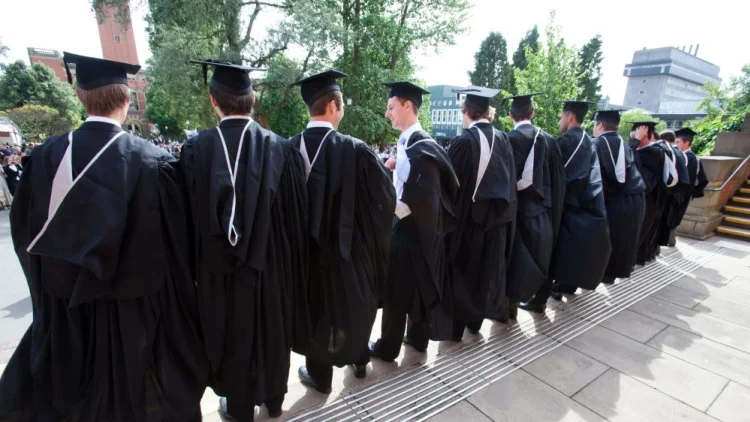
It is time to consider what a graduate is actually for.
On Monday, a new Policy Exchange report added to the ever-growing pile of literature and comment about whether too many young people are going to university. It is a question that deserves serious consideration and practical answers. If graduates are struggling to find good jobs, as the recent Milburn review concluded, universities cannot dismiss those concerns. If employers say they cannot find the skills they need, we must listen.
Before concluding that Britain needs fewer graduates, however, it is worth considering the world that today’s students are preparing to enter. We must consider seriously what a graduate is for.
The world they will inherit is likely to need more highly skilled people than the one we inhabit now. A QS report in March identified that among the 1,436 occupations essential to the delivery of the Industrial Strategy, 80 per cent require level six skills or above. In common parlance, that’s a bachelor’s degree or higher. From healthcare and education to science, engineering and professional services, we require more high-skilled workers, not fewer. Advances in artificial intelligence are also increasing the value of capabilities that remain distinctly human: judgement, creativity, communication and the ability to work effectively with others.
That picture feels familiar to me. UCL educates future clinicians, engineers, teachers, architects, data scientists, entrepreneurs and public servants. When I speak to employers, I rarely hear them asking for graduates who know less. More often, I hear them asking for graduates who are better able to apply what they know. They want people who can work effectively in teams, communicate clearly, manage projects and adapt when circumstances change.
None of this means concerns about graduate outcomes should be waved away. Quite the opposite. An economy can need more graduate-level skills and still leave some graduates struggling to make the transition into good work.
Universities are asking themselves what more they can do to close that gap. For many years, employability was often treated as something that happened alongside a degree rather than through it. Students would study their subject, then visit the careers service towards the end of their course and think about what came next. That model became outdated some time ago.
Universities cannot become strictly vocational training providers. A university education ought to expand horizons, cultivate intellectual confidence and encourage students to think critically about the world around them. The graduates Britain needs are those who are prepared not only for the workplace as it currently stands, but also for the workplaces of the future. That is where an education from a university like UCL has a distinct value add. Students benefit from learning alongside people who are helping to shape the future of their disciplines, whether that means developing new technologies, advancing medical treatments or exploring solutions to complex social problems.
Yet there is plenty of room to be more ambitious about helping students connect those qualities and experiences to life beyond the campus. Students should encounter more opportunities to work on real-world problems before they graduate. Increasingly, at UCL, we are experimenting with ways of doing that. For example, through our ExtendEd programme, every student is now given the opportunity to take part in industry challenges, community projects and collaborative problem-solving activities alongside their academic studies.
I am proud that our graduates enjoy some of the strongest outcomes in the country. Yet spending time with students and employers leaves me convinced that this conversation cannot stop at employment statistics. The economy is changing too quickly for that. Many of today’s students will move between organisations, sectors and technologies that do not yet exist. Preparing them for that future involves more than helping them secure a first job after graduation. It means equipping them with the knowledge, judgement and adaptability to navigate a lifetime of change.
Britain faces genuine skills shortages. Employers need talent. Young people need opportunities. Universities have a responsibility to work with both of these groups to be part of the solution.
Britain’s economy will continue to need graduate-level skills in the years ahead. The task for universities is to ensure that more graduates are equipped to make use of their knowledge, contribute in meaningful ways and adapt as the world changes around them.
Dr Michael Spence is president and provost of UCL
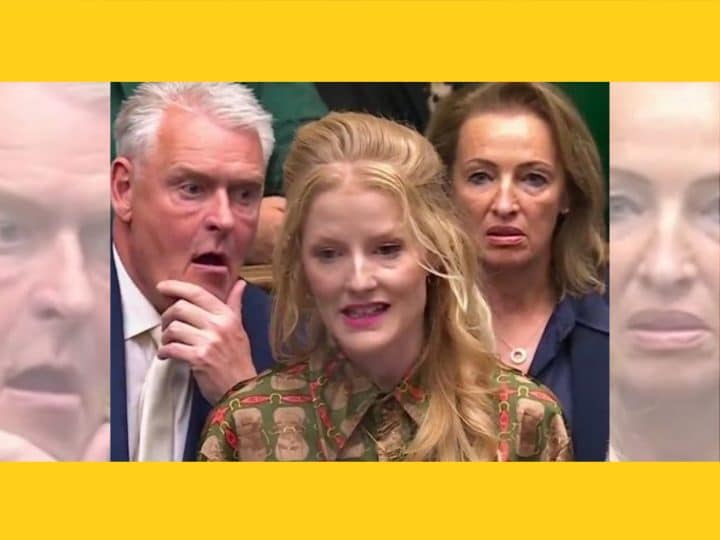
On 11 June, Hannah Spencer caused quite the commotion in parliament for vocalising a popular-held sentiment about Reform UK. Here’s what went down:
"There's plenty of dirty grubbiness behind me." Look at their faces. — Oliver (@OWS1892) June 10, 2026
 Well said Hannah. #PMQs pic.twitter.com/9oD2OrP4KR
Presumably, that’s ‘dirty’ to the left of her and ‘grubby’ to the right.
But what did Spencer say exactly?
It’s a filthy job
The offending comment in full was:
Running a business as a plumber, I was well used to dealing with dirty grubbiness, and there is still plenty of that dirty grubbiness behind me.
Given that Spencer sits directly in front of the Reform mob, the assumption is she was accusing them of being ‘dirty’ and ‘grubby’. We’re not quite sure why she’d say that, but it could have something to do with stories like the following:
- Farage bought £1.4m house after undeclared £5m ‘gift’.
- Former Reform leader Gill sentenced to 10.5 years for taking bribes.
- Reform councillor fined £40,000 for hiring ‘illegal’ workers.
- Reform candidate Goodwin took fat salary from Hungarian far-right.
- Former Tory donors flock to Reform, including a massive donation from Thai-based billionaire.
- Reform candidate became councillor despite antisemitism exposé.
Spencer’s comments went down well online:
She shoots, she scores!@SarahForRuncorn’s face *chef’s kiss*
Well done, Hannah Spencer! @McrGreenParty pic.twitter.com/wV0QhJ8VIa
— James Foster (@JamesEFoster) June 10, 2026

Well, the comments mostly went down well. Brain genius Lee Anderson hit back at the insinuation with the following:
Dirty Grubbiness.
Today one of the Green MPs spoke of the dirty grubbiness sat behind her. She must've been talking about the Lib Dems sat behind us.
Vote @reformparty_uk pic.twitter.com/4aMtK4pbdM
— Lee Anderson MP (@LeeAndersonMP_) June 10, 2026
They’re calling it the comeback of the century.
‘Dirty grubbiness, is it? Yeah? Well, actually, she probably meant someone else.‘
Another retort was that Spencer appeared to be “draped in exquisite Gucci”:
At PMQs, Green MP Hannah Spencer, draped in exquisite Gucci, accused Lee Anderson and Sarah Pochin of being “dirty and grubby.” But Starmer landed the line, calling out Zack Polanski’s absence and asking if he’d swapped his houseboat for a submarine. pic.twitter.com/EliuXmu6ID
— Crewkerne Man (@CrewkerneMan) June 10, 2026
You’ll notice that the right are so riled by what Spencer said that they’re defending Starmer to get at her. Unprecedented stuff.
We’ve contacted Spencer to get to the bottom of the Gucci accusation, and will let you know if she updates us. Regardless of whether it’s Gucci or not, it’s probably not smart to respond to the ‘dirty and grubby’ accusations by saying ‘yeah, well you’re stylish and well dressed!‘
Yellow-bellied submarine
What’s been under-reported is that Spencer was actually asking a question of Keir Starmer. That question in full was:
Running a business is tough, so will the Prime Minister join me in backing the “VAT’s the Problem” campaign to cut VAT rates in hospitality? He did not answer the question last week, so will he tell us today: yes or no?
Would you believe Starmer answered by not answering?
Specifically, he said:
I am very glad that we are cutting VAT over the summer with our summer savings programme, which I hope the hon. Lady will support. I note that we have not heard much from the Green party leader after he admitted he had not paid his council tax. Perhaps he has traded his houseboat for a submarine.
In our opinion, the joke didn’t land as well as Crewkerne Man suggested. We say this because Starmer’s anxiety and awkwardness have reached record highs. We can’t confirm this, but that could be because his party has unofficially given him the sack. And honestly, we’d feel awkward too if we had to stand before several hundred people and pretend to be the prime minister.
As Spencer noted, our temporary PM faced a similar question last week, which came from Rosie Duffield:
This week, Tom Kerridge and UKHospitality launched their “VAT’s the Problem” campaign, and yesterday my neighbour the right hon. Member for Herne Bay and Sandwich (Sir Roger Gale) and I hosted industry bodies, chefs Matt Tebbutt and Thomasina Myers and hospitality leaders from Manchester, Liverpool, London and Kent, including Andy Burnham’s night-time economy adviser Sacha Lord. They all agree with campaigners such as Andy Lennox that the UK’s rate of 20% VAT on hospitality is killing businesses daily. Does the Prime Minister agree that VAT’s the problem? Will he match the pledge of his candidate in Makerfield to slash VAT in line with the rest of Europe?
Ah, okay, so now we see why Starmer was nervous. The proposal is being promoted by his replacement, Andy Burnham, so obviously it must be a sore point.
Tinkering
For clarity, this was how Starmer responded to Duffield:
I thank the hon. Member for the question. I recognise the challenges that she identifies. That is why we are permanently lowering business rates for retail, hospitality and leisure businesses. Every pub will get 15% off its new business rates bill, and bills will be frozen in real terms for a further two years. In relation to VAT, she will see that we are offering support by cutting VAT on children’s meals in restaurants—particularly over the summer period—with those savings set out two weeks ago by the Chancellor.
What he’s saying is ‘no‘, he doesn’t have any plans to permanently reduce VAT. As a British politician, however, he can’t just give a straight answer. And as such, he’s going to keep facing the same question.
Featured image via X/Twitter
By Willem Moore
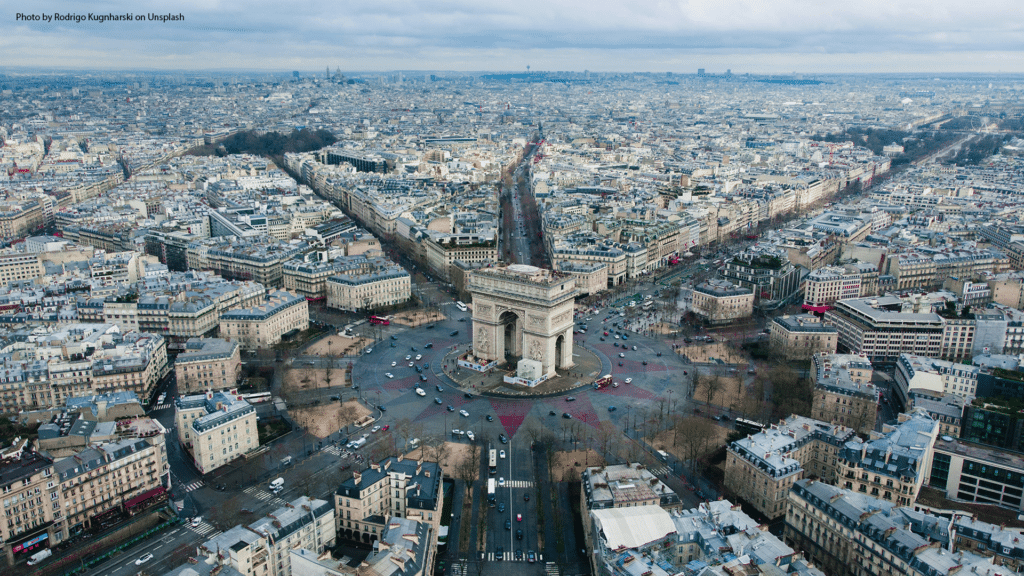
Philippe Marlière looks at the prospective candidates for the French presidential elections in 2027 for both the left and the right, as well as the key challenges they will have to overcome should they run.
As in 2017, the upcoming French presidential election will be a transitional one that could trigger further political upheaval. Emmanuel Macron, the incumbent President, is no longer eligible to run. His departure opens a wide range of contenders. Jordan Bardella (National Rally, RN) is leading in the polls and considered the frontrunner. But his election is far from certain. The campaign that has already unofficially begun could therefore hold a few surprises.
A disunited and historically weak left
What are the chances of the left? Very slim. It could be eliminated from the second round for the third consecutive time. It will be Jean-Luc Mélenchon’s fourth attempt since 2012. A powerful speaker, comfortable in the media, able to use the registers of radicalism and a unifying discourse, he is more than anyone else at ease in an election where personal capital and communication skills are key.
Mélenchon enters the fray with a disciplined movement. He could, as in 2017 and 2022, benefit from tactical voting from those who do not like him but desperately want the left to reach the second round. Will he succeed? It should not be ruled out in the context of a fragmented and evolving political landscape. However, his personal image is deeply tarnished. He is criticised for his ethnic factional rhetoric, authoritarianism, anti-European Union stance, conciliatory remarks towards Putin, al-Assad, and China; and numerous accusations of anti-Semitism are leveled against him. He is currently more “demonised” in the media and political class than the RN, which, for its part, has largely “de-demonised” itself. In a runoff between Mélenchon and Bardella, polls predict an emphatic victory for the RN leader.
The rest of the left claims to be organising a “unity primary”, intended to select a single left-wing candidate (outside of LFI). Negotiations between party leaders are stalled, the Socialist Party is divided on the issue, and the Communist Party refuses to participate. This primary will probably not happen, opening the door to multiple left-wing candidacies, including that of Raphaël Glucksmann, leader of the small Place Publique party, who is fiercely opposed to Mélenchon. If no non-LFI candidate gains traction in the polls by the end of 2026, the possibility of François Hollande, the former President, running as the saviour of the moderate left should not be ruled out.
Macronism rejected and the Republicans in decline
Who will embody the Macronist centre right? Two former Prime Ministers of Macron stand out: Édouard Philippe, president of the micro-party Horizons, and Gabriel Attal, president of Renaissance. A recent poll shows that the Macronist block is deeply fragmented: the “heirs” (35%) remain loyal to the centre right and will support either Philippe or Attal. Those “tempted by the right” (27%) could vote for Les Républicains (LR), or even the RN. Those “tempted by the left” (23%) are considering a return to the moderate left. Finally, the “disillusioned” (15%) appear disappointed by Macronism and politics in general and could abstain. Philippe is currently in second place in the polls behind Bardella, but he is being closely followed by Mélenchon. His stilted style is struggling to win people over, and he will find it difficult to distinguish himself from Macronism, which is now very unpopular.
The situation is hardly better within LR. Three main candidates are currently in the running: Bruno Retailleau, former Minister of the Interior and president of LR, was chosen by the party members in April 2026. David Lisnard, mayor of Cannes and a proponent of a broad right-wing coalition, is also a candidate. Xavier Bertrand, an elected Republican who opposes any alliance with the RN, could also run. None of them have the slightest chance of making it to the second round. In the event of a RN victory, will LR support the new far-right government? This is now a conceivable prospect for the (distant) heirs of Gaullism.
On the far right, there will be a new candidacy from Éric Zemmour, who has been convicted several times for racist comments and has popularised the themes of “great replacement” and “remigration” in the public debate.
Is the RN truly “de-demonised”?
We will have to wait until 7 July to find out if Marine Le Pen will be able to run, when the Paris Court of Appeal will issue a ruling concerning Le Pen’s conviction for illegal financing. If the appeal is upheld, she will be ineligible, and Bardella will be the candidate. Both are projected to win the election according to current polls, though Bardella appears slightly more popular. But Le Pen is experienced, while the young Bardella (31 years old) is not. Furthermore, she has a more “social” approach than Bardella, who has a neoliberal economic profile which could alienate part of the RN’s working-class electorate. He has already announced that the RN will backtrack on its proposal to return the retirement age to 62, a proposal which Le Pen still supports.
This is above all an historic election that could bring the far right to power in France for the first time since 1945. A RN presidency would have a significant impact on France’s domestic and foreign policy and would reinforce the nativist and nationalist camp in Europe.
The RN seems certain to qualify for the second round. Which other candidate will make it to the second round to challenge Bardella or Le Pen? A centre-left, pro-European candidate like Glucksmann or Hollande? That seems highly unlikely at present. A centre-right candidate like Édouard Philippe? It is a possibility, but he will have to overcome the widespread rejection of Macronism. A Bardella-Mélenchon showdown? That is a plausible scenario because Mélenchon excels in personalised elections and should still benefit from tactical voting on the left.
In this scenario, would we witness the return of the “Republican Front”, the alliance of all against the far right, in a great anti-fascist surge? This is indeed the great unknown of this election: has the RN definitively been “de-demonised”, like in other European countries, such as Italy? Or does a visceral aversion to it persist, leading “democrats of all stripes” to prefer, at the last minute, to support a candidate they dislike? This is Mélenchon’s hope. Is it realistic? Polls indicate that LFI is currently considered by voters to be “more dangerous for democracy than the RN”. It is therefore a slim hope.
By Philippe Marlière, Professor of French and European Politics at University College London.
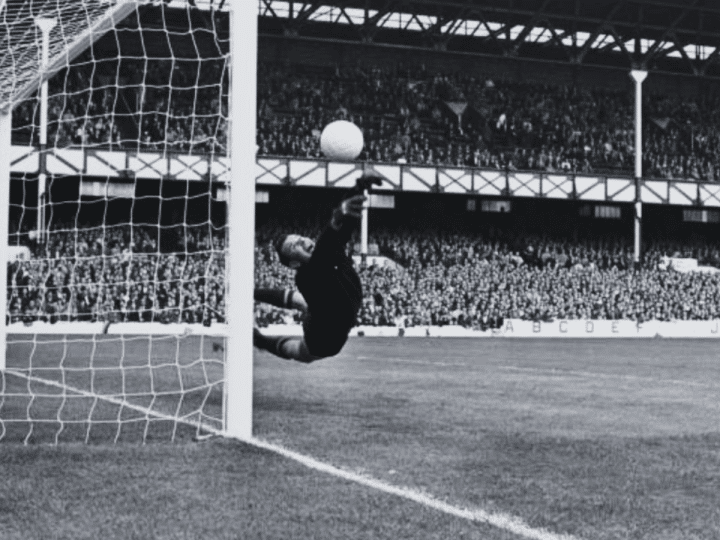
The year was 1930 and in Montevideo, Uruguay, the rain showed no signs of abating. Then, in an instant, the dreariness waned when young Frenchman Lucien Laurent scored the first goal in World Cup history . It was the start of a tournament, a ritual, and a sporting mania spanning continents and oceans.
When Mexico and South Africa walk out at the Azteca Stadium today, they won’t simply be kicking off another World Cup. Instead, they will be writing the latest chapter in a 100-year-old story. Since the opening France–Mexico match at the inaugural 1930 World Cup, audiences have learned that in those 90 minutes, part of the magic is that anything can happen. Across the 22 opening matches played in World Cup history, 60 goals have been scored. This is an average of 2.7 goals per match. Often, these games feature attacking moments and palpable pressure. It’s clear the world cup always brings anticipation and drama.
Opening the tournament
For decades, the privilege of opening the tournament went to the defending champions. Argentina stepped onto the pitch first in 1982, Germany in 1994, Brazil in 1998, and France in 2002. But in 2006, FIFA changed the rules — from then on, the host nation would take centre stage. Germany, South Africa, Brazil, Russia, Qatar, and now Mexico have carried the torch, welcoming the world to the first match.
Upsets and iconic moments
Opening matches have often defied expectations. In 1990, reigning champions Argentina were stunned 1–0 by Cameroon. Twelve years later, France, fresh off their 1998 triumph, fell 1–0 to Senegal in the first game of 2002. Even hosts have stumbled. In 2022, World Cup Host Qatar became the first host nation to lose an opening match. They fell 2–0 to Ecuador. Some matches, like South Africa’s 1–1 draw with Mexico in 2010, remain memorable for sheer energy and hope rather than shock. In the world cup, every opener has its surprises.
Goals that last
Lucien Laurent’s strike in 1930 may have been the first, but it set the tone. Decades later, in 2010, Siphiwe Tshabalala’s thunderous goal against Mexico became one of the most iconic opening goals in World Cup history, a reminder that the tournament’s first moments echo far beyond the scoreline.
Azteca Stadium makes history
Today, the Azteca Stadium becomes the first venue to host a World Cup opener for a third time, having done so in 1970 and 1986. And as Mexico and South Africa prepare to take the field, the pattern feels familiar: new players, new teams, new stories—but the same truth remains. The first whistle always carries promise, and the opening match always has the power to shape a tournament. The stadium’s connection to world cup tradition is truly remarkable.
From Uruguay to Mexico, across 96 years of history, World Cup openers have never been simple introductions. They are statements—sometimes shocking, sometimes symbolic, always unforgettable. Indeed, the world cup has become woven into the fabric of sports worldwide.
Featured image via Hulton Archive / Getty Images
By Alaa Shamali
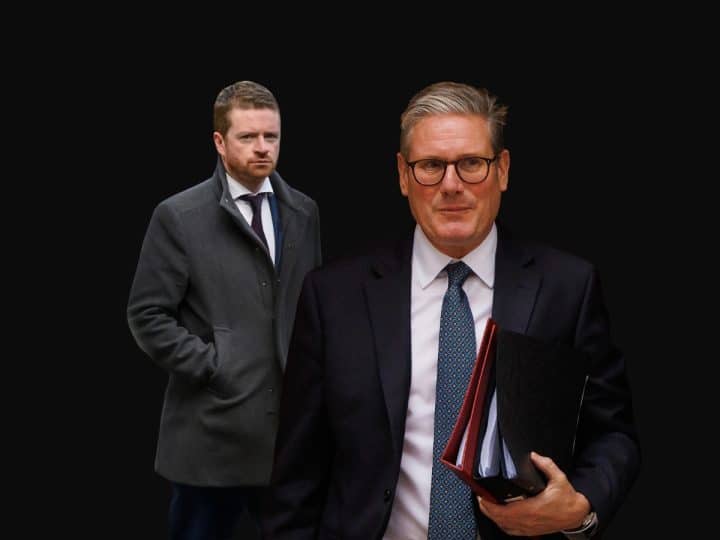
The following is a call for evidence from The Fraud author Paul Holden into how Labour Together shaped the current crop of Labour MPs.
Call for Evidence: The Labour Together Parliament
Shadow World Investigations and Paul Holden – author of The Fraud: Keir Starmer, Morgan McSweeney and the Crisis of British Democracy – are today announcing a new investigative project
about the transformation of the Parliamentary Labour Party (PLP) under the Labour Together Project.
This long-germinating project is soliciting evidence about how Labour Party processes were used (and abused) to manipulate the selection of Labour MP candidates who now make up the majority of the PLP.
Keir Starmer was the frontman for a rotten political project that spent the best part of a decade remaking the Labour Party along rigidly factional and exclusionary lines.
The most consequential transformation was of the Parliamentary Labour Party.
Two thirds of the Labour MPs currently sitting in the House of Commons were selected through a process tightly controlled by Morgan McSweeney, reportedly with direct (albeit informal) input from Peter Mandelson.
Labour Together, and its key donors, then spent over £2m on getting this intake of MPs elected. The selection process that McSweeney oversaw was beset by allegations of misconduct and irregulates so widespread that veteran journalist Michael Crick described it as ‘corruption’.
One MP selection resulted in criminal charges being filed against Labour officials with close connections to key Labour Together figures.
These are the MPs that not just determine the future of the country but will play a key role in either making or breaking the political fortunes of whoever next succeeds Starmer.
In a follow up to The Fraud, my colleague Jessica Murray and I will be embarking upon ‘The Labour Together Parliament’ project to examine the legitimacy of the process that resulted in the current
Parliament, upon which any Labour government will rest.
What we need as a first step is information
We would like evidence of any wrongdoing or stitch-ups during the selection process. We would like to build a collection of evidence about the ways in which bureaucrats forced through or manipulated the selection process, including in the finalisation of longlists and shortlists, and, where it happened, the decision being removed from local democratic decision making altogether.
We’re particularly interested in the vote tallies from every Labour candidate selection between 2022 and 2024. These have not been routinely published. We are particularly interested in tallies
that distinguish between postal/online/and in-person votes.
These different vote tallies would have been provided to losing candidates. Sometimes they were only read out in selection meetings. We are not only looking for results that seem ‘dodgy’ – but all vote tallies, including those that are not in the least suspicious. This will allow us to build a holistic database and rigorously test different hypotheses.
We would also like tallies from candidate selections in seats that weren’t Labour targets and didn’t result in any MP. Ideally, it would be great if we could be provided with contemporaneous evidence of these vote tallies – such as a screenshot of a message or email relaying the result. We would also be interested in narrowing down which Constituency Labour Parties used Anonyvoter for MP selection, even if the vote tallies are not available.
We have set up an email account research@shadowworldinvestigations.org for any information to be submitted to. It would be much appreciated if this call for information could be shared widely.
Featured image via the Canary / Leon Neal – Getty Images / Dan Kitwood – Getty Images
By Paul Holden

Explained: How SpaceX’s $75 billion IPO could create opportunity for Inox India shareholders

‘So what?’ Farage says about Kenyon’s lewd comments

Dolphins vs Sydney Roosters Tips, Odds, Teams & Predictions – NRL Round 15 2026



-

 Fashion6 days ago
Weekend Open Thread: Evereve – Corporette.com
-
 Crypto World6 days ago
Jensen Huang Approves Samsung, SK Hynix, and Micron for NVIDIA (NVDA) HBM4 Memory Supply
-
 Entertainment4 days ago
The Best Mystery Series of All Time Is Surging on Streaming 30 Years After It Ended
-

 Crypto World3 days ago
Anatomy of the June crypto crash: Fed, Iran, Saylor
-

 NewsBeat3 days ago
Alexander Zverev wins the French Open to finally earn a 1st Grand Slam title
-

 Tech5 days ago
Suspicious Polyfill login prompts pop up on Toshiba, Muji websites
-
 Crypto World5 days ago
Senator Cynthia Lummis Calls CLARITY Act the Most Consequential Financial Legislation of This Generation
-

 Tech4 days ago
Microsoft unveils seven homegrown AI models in new bid for ‘long term self-sufficiency’
-

 Tech6 days ago
Microsoft launches MXC, an OS-level sandbox for AI agents, with OpenAI and Nvidia already on board
-

 Business6 days ago
(VIDEO) Justin Bieber Delivers Surprise Happy Birthday Serenade to Diners at Los Angeles Mexican Restaurant
-
 Business4 days ago
The Pain Points Taking a Fragile Tech Rally Down a Notch
-

 Business3 days ago
High Stakes for Wembanyama as New York Pushes for 3-0 Lead
-
 Crypto World3 days ago
Eli Lilly (LLY) Stock Surges 4% Following Breakthrough Sleep Apnea Trial Results
-

 Tech5 days ago
Von der Leyen’s AI envoy pick draws conflict-of-interest fire
-
Crypto World6 days ago
LBank Surpasses 25 Million Users Worldwide as AFA Partnership Continues to Drive Global Growth
-

 Tech6 days ago
Meta steals a tactic from Tesla and builds data centers in tents
-

 Tech5 days ago
Hackers now exploit SolarWinds Serv-U flaw to crash servers
-

 Crypto World4 days ago
Trump’s AI Ownership Plan Could Benefit Anthropic at OpenAI’s Expense
-
 NewsBeat4 days ago
Alexander Zverev conquers demons and outlasts Flavio Cobolli to win French Open for first major title
-
 Sports2 days ago
Bangladesh beat Australia after 20 years in ODIs, register only their second win over six-time world champions | Cricket News
You must be logged in to post a comment Login