Connect with us
DAPA Banner
DAPA Coin
DAPA
COIN PAYMENT ASSET
PRIVACY · BLOCKDAG · HOMOMORPHIC ENCRYPTION · RUST
ElGamal Encrypted MINE DAPA
🚫 GENESIS SOLD OUT
DAPAPAY COMING

Business

Waterdrop: A Mix Of Positives And Negatives

Published

on

Waterdrop: A Mix Of Positives And Negatives
Continue Reading
Click to comment

You must be logged in to post a comment Login

Leave a Reply

Business

Ferrari Luce marks company’s first all-electric vehicle

Published

on

Ferrari Luce marks company's first all-electric vehicle

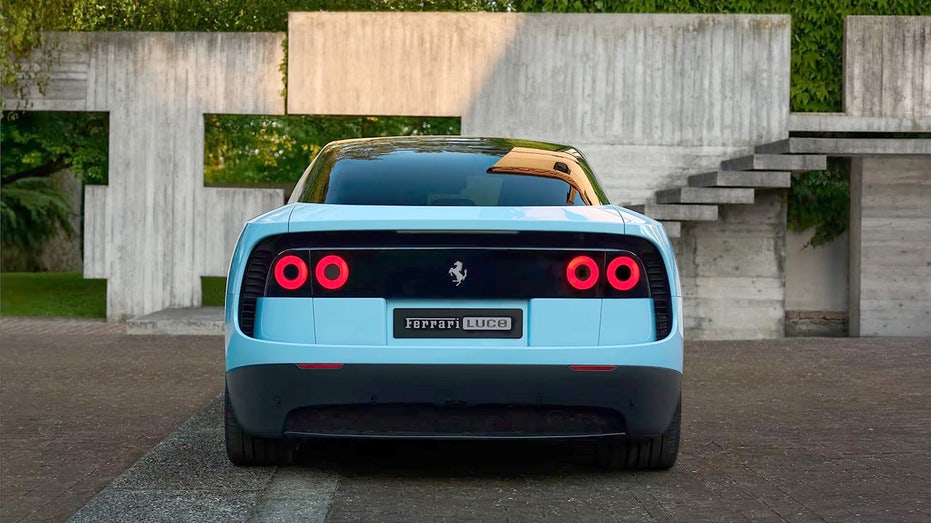
Ferrari, the iconic Italian sports car brand, has unveiled its first fully electric vehicle, but the car is going to be out of most people’s price range.

The Wall Street Journal reported that the starting price would be 550,000 euros in Italy, which amounts to around $640,000.

Advertisement

Fox News Digital reached out to the auto company on Tuesday.

FERRARI BRINGS BACK LEGENDARY TESTAROSSA NAME WITH 1,050-HORSEPOWER PLUG-IN HYBRID BEAST

Ferrari Luce

The Luce is Ferrari’s first all-electric vehicle. (Ferrari)

“The Ferrari Luce is the first electric Ferrari from the Maranello marque,” a press release declares.

The vehicle can go from 0-100 kilometers per hour, which is about 62 miles per hour, in just 2.5 seconds, and from 0-200 kilometers per hour, which is about 124 miles per hour, in 6.8 seconds, according to the car company.

Advertisement

AMERICANS DITCH EVS FOR BIGGER VEHICLES AS AUTO TRENDS REVERSE

Ferrari Luce

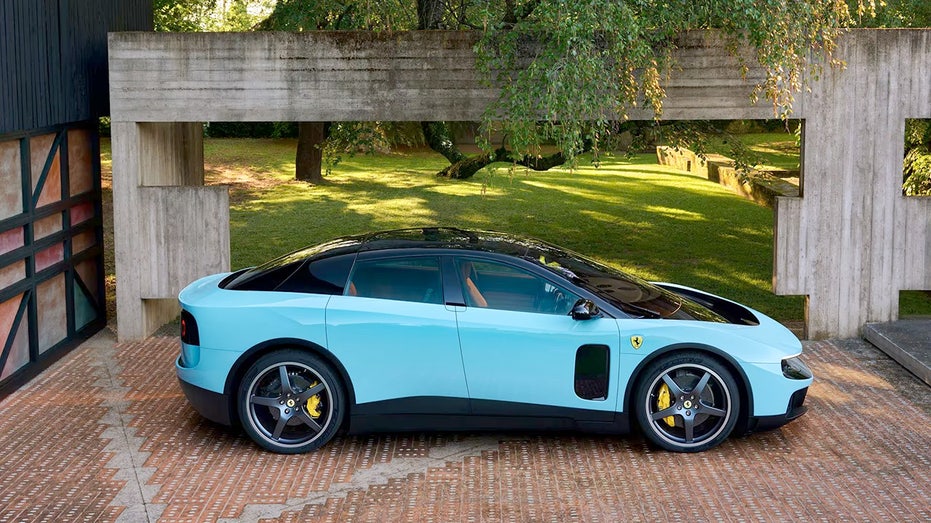
Ferrari’s Luce electric vehicle reportedly has a hefty price tag. (Ferrari)

Ferrari places the estimated range at 530 kilometers, with the release saying “in excess of 530 km,” which equates to around 329 miles.

“The electric power source enables a radically new architecture that generously accommodates four doors and five seats. This is the second four-door Ferrari, and the first with five seats,” the company noted.

HYUNDAI RECALLS OVER 421,000 VEHICLES TO FIX SOFTWARE BUG CAUSING UNEXPECTED BRAKING

Advertisement
Ferrari Luce

The Ferrari Luce has a 2.5 second 0-100 km/h time, according to the company. (Ferrari)

GET FOX BUSINESS ON THE GO BY CLICKING HERE

“With Ferrari Luce, we are once again redefining the limits of what is possible. Today, we are not simply unveiling a new car, we are inaugurating a chapter that turns our vision into reality, strengthening Ferrari’s tradition of anticipating and shaping the future,” Ferrari President John Elkann said, according to the May 25 release.

Continue Reading

Business

Flowers Foods to focus on lowering costs

Published

on

Flowers Foods to focus on lowering costs

Weak first quarter contributes to decision to lower dividend.

Continue Reading

Business

B&Q owner says sales slow as ‘late start’ to spring holds back shoppers

Published

on

Business Live

London-listed Kingfisher said it was ‘mindful’ of the consumer environment

B&Q and Screwfix dragged up Kingfisher's sales (Stu Forster/Getty Images)

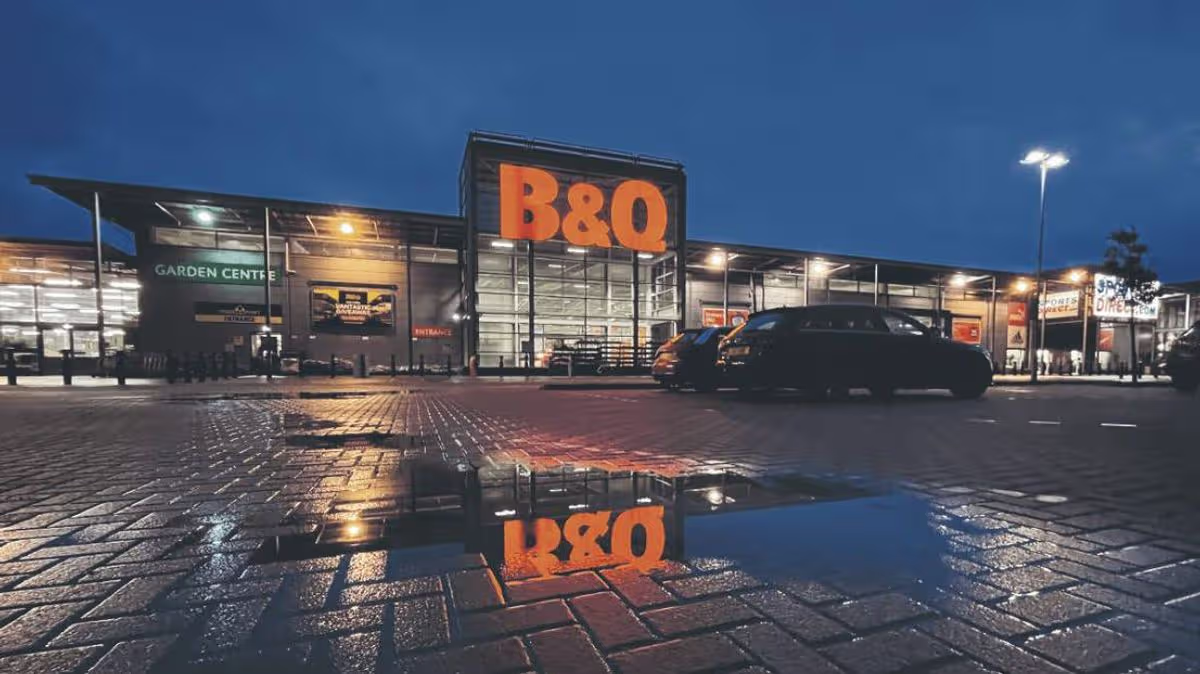
A B&Q store(Image: Stu Forster/Getty Images)

B&Q owner Kingfisher has reported a slowdown in sales in recent months as the DIY giant blamed a late start to spring for fewer visitors and people still holding back on bigger buys.

Advertisement

The London-listed business, which also owns Somerset-based Screwfix, said it was “mindful” of the consumer environment but hailed a “resilient” start to the year.

Total sales for the group declined by 0.9% to £3.3bn between February and April, compared like-for-like with the same period last year.

In the UK and Ireland, sales at B&Q fell by 4.1%, which the company said reflected a late start to spring, resulting in fewer people coming into shops and affecting spending on its seasonal and some core items.

“Big-ticket” spending – meaning more costly home purchases – was dragged down by fewer bathroom sales, but the firm said this was partly offset by strengthening new kitchen ranges.

Advertisement

Nevertheless, the Screwfix brand continued to strengthen with sales jumping by 4.1% year on year. The brand has been taking a bigger share of the market and has been buoyed by online and trade initiatives.

The retail group is expecting earnings to grow this year, saying it is on track to make adjusted profits of between £565m and £625m for the current financial year.

Thierry Garnier, Kingfisher’s chief executive, said it was a “resilient” start to 2026, “even as a late start to spring impacted footfall and seasonal demand”.

“E-commerce and trade sales both delivered double-digit growth, underlining the momentum in our key growth drivers,” he said.

Advertisement

“While mindful of the consumer environment, we remain absolutely focused on delivering our strategy, disciplined gross margin and cost management, and consistent shareholder returns.”

Continue Reading

Business

Rayner Urges Starmer to Ban Social Media for Under-16s

Published

on

Rayner Urges Starmer to Ban Social Media for Under-16s

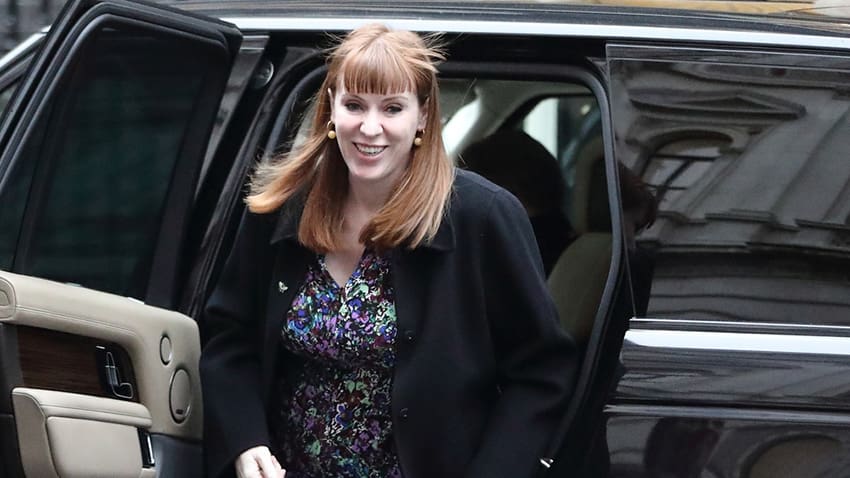
Angela Rayner has broken cover to urge Sir Keir Starmer to push ahead with a blanket ban on social media for children under the age of 16, intensifying pressure on a prime minister already wrestling with one of the most politically charged decisions of his premiership.

The former deputy prime minister told Sir Keir to “just make a decision and do it”, arguing that the case for prohibiting under-16s from accessing platforms such as Instagram, TikTok, Snapchat and X had become “so clear” that further delay was indefensible. Her intervention, made on Alastair Campbell’s The Rest Is Politics podcast, lands as Whitehall closes a government consultation on Tuesday that has been weighing an Australian-style ban on under-age social media use.

For Britain’s small and medium-sized businesses — particularly the legions of owner-managers who have come to depend on social platforms as their shop window, sales channel and marketing department rolled into one — the stakes could scarcely be higher. Any move to restrict access for under-16s would force a wholesale rethink of age-assurance technology, advertising targeting and content moderation, with costs that will land disproportionately on smaller operators.

A cabinet split, an open consultation and a prime minister in two minds

Although Westminster speculation is mounting that Sir Keir will eventually back a full ban as a piece of “low-hanging political fruit”, Labour is visibly divided over the proposal. Andy Burnham, the Greater Manchester mayor, and Wes Streeting, the health secretary, are both said to have cooled on a blanket prohibition, favouring tougher functional regulation over a hard age cut-off.

The doubts are being fed by early evidence from the southern hemisphere. Five separate studies have suggested that at least 60 per cent of Australian children aged under 16 are either ignoring the ban outright or have already found ways around it. Data published by the Australian regulator confirms that between 60 and 64 per cent of children still using the major platforms reported no action being taken against their accounts, a figure detailed in the official eSafety Commissioner’s social media age restrictions update.

Advertisement

Mr Campbell, Tony Blair’s former director of communications, told the podcast he could not understand the government’s hesitation. “I don’t understand why the government isn’t just doing it in relation to stopping social media till you’re 16,” he said. “I think the country’s kind of decided on this, and yet we’ve just got this bloody, seemingly never-ending process going on.”

Ms Rayner agreed, framing the delay as symptomatic of a wider drift. “It just makes people feel ‘just make a decision and do it’,” she said. “Why can you not just make a decision when it seems so clear that that’s what you need to do? It’s this active state that is exactly what we need to be.”

Bereaved families urge caution before any announcement

On Tuesday, Sir Keir is scheduled to meet parents who have lost children as a result of their experiences online. But campaigners have warned the prime minister against a politically expedient announcement that runs ahead of the evidence.

Ian Russell, whose daughter Molly took her own life aged 14 after being inundated with online content depicting self-harm and suicide, said: “Any government announcement now would make a mockery of the consultation. They need to see the results before making up their mind. They also need to follow the evidence and go beyond a ban if they wish to be effective rather than performative.”

Advertisement

The alternative model gaining ground inside Whitehall is a ban on so-called “functionalities” — a more surgical approach that would oblige social media firms to switch off features such as endless scrolls, recommender algorithms aimed at children, autoplay, livestreaming and “streaks” that reward daily logins. That approach would chime with the direction already set out in Ofcom’s tougher rules on harmful algorithms aimed at young users under the Online Safety Act. The regulator’s own protection of children codes of practice already require platforms to deploy more than 40 practical safety measures during 2026, including age assurance and content controls covering suicide, self-harm and eating disorders.

What the policy means for british business

Polling suggests parental and backbench appetite for an Australian-style ban remains strong, and at least one Whitehall source briefed The Sun on Sunday that the policy was “free and popular”, the kind of legacy announcement Sir Keir could realistically push past restive Labour MPs.

For SMEs, the implications cut well beyond Westminster theatre. Compliance costs flowing from the Online Safety Act are already reshaping how UK businesses operate online, with fines of up to 10 per cent of global turnover concentrating minds in boardrooms. A statutory ban would extend that compliance perimeter sharply, potentially curtailing advertising inventory aimed at family audiences and forcing smaller direct-to-consumer brands to redraw acquisition strategies built around teen-skewed platforms.

Sir Keir has consistently maintained an “open mind” on the question, pointing to the genuine benefits children derive from access to the internet and stressing his preference for stripping out addictive design features rather than banning access outright. Crucially, the government has already legislated for the flexibility to introduce any agreed change, up to and including a full ban, without bringing fresh primary legislation before Parliament.

Advertisement

“We’ll go through the consultation, but I think I’ll be absolutely clear: things will not stay as they are,” the prime minister said. “This is going to change. I don’t think the next generation would forgive us if we didn’t act now.”

Whether that change arrives as a hard age cap or a more nuanced architectural fix, business owners would be wise to start war-gaming both scenarios now. The political pressure from within Sir Keir’s own cabinet suggests a decision is no longer a matter of if, but when — and how broadly the net will be cast.


Amy Ingham

Amy is a newly qualified journalist specialising in business journalism at Business Matters with responsibility for news content for what is now the UK’s largest print and online source of current business news.

Advertisement

Continue Reading

Business

Ferry frustrations and housing concerns in Gorey

Published

on

Ferry frustrations and housing concerns in Gorey

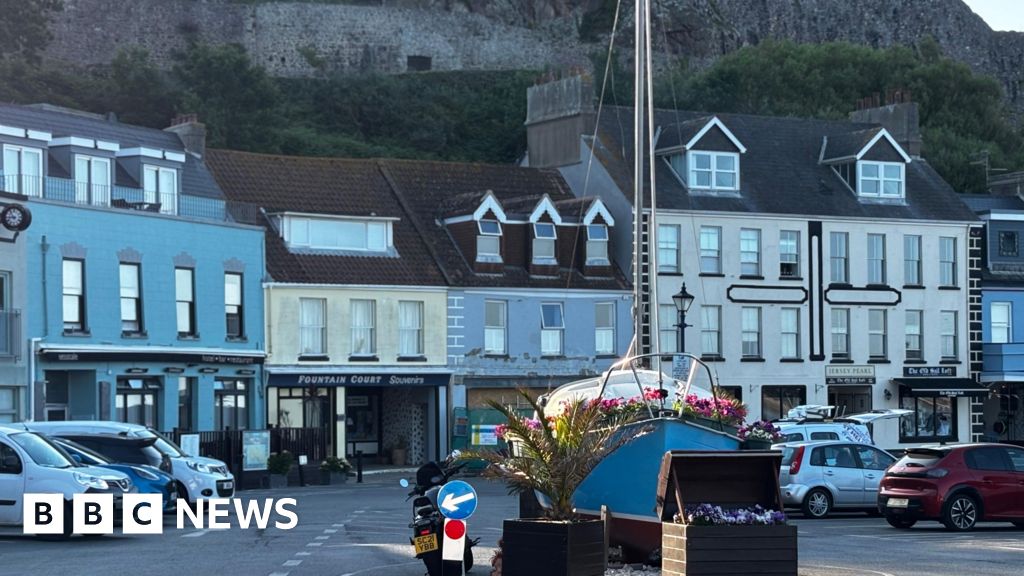
Café owners and others in Gorey tell the BBC a new freight pricing model is driving up costs.

Continue Reading

Business

Long-Term Unemployment Hits 10-Year High as Reeves’s Tax Rises Bite

Published

on

Unemployment fell to pre-pandemic levels at the start of the year, with record job vacancies leading to warnings of potential staff shortages.

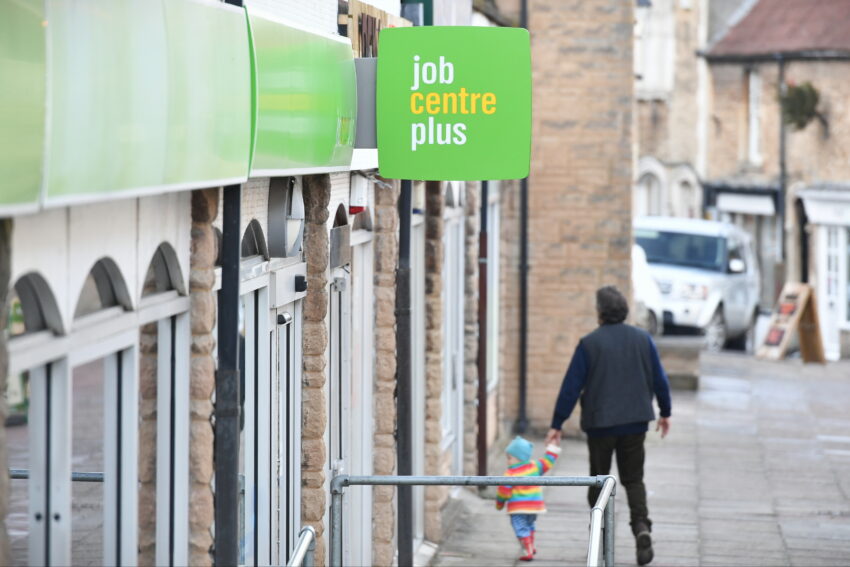
The number of Britons stuck out of work for more than a year has surged to its highest level since 2016, with small employers warning that successive tax rises and the looming Employment Rights Act are quietly choking off the next generation of hires.

Fresh figures from the Office for National Statistics show that 474,000 people are now classified as long-term unemployed — meaning they have spent more than twelve months out of work. It is the highest tally since January 2016 and an unwelcome milestone for a labour market that, until recently, had been a rare bright spot in Britain’s stuttering recovery.

The deterioration has been sharp. Since Labour swept to power in July 2024, an additional 129,000 people have tipped into long-term joblessness, a sobering measure of how Chancellor Rachel Reeves’s £26bn raid on employer National Insurance has rippled through payrolls, particularly in the SME-heavy retail and hospitality sectors that are the backbone of high streets up and down the country.

A cooling labour market with a long tail

For owner-managers, the headline statistic is alarming because of what economists call “scarring”. The longer a candidate is out of work, the steeper the climb back becomes — skills atrophy, networks fray and confidence drains. That, in turn, blunts productivity, erodes the tax base and dulls consumer spending, the very engine many small firms rely on.

Stephen Evans, chief executive of the Learning and Work Institute, did not mince his words. “Even if some of the rise is cyclical because of the weak economy, the risk is that should the economy pick up they’ll find it more difficult to get back to work,” he said. “Nipping long-term unemployment in the bud really is massively important for the prospects of the economy, as well as for those individuals.”

Advertisement

Evans was particularly exercised about the under-25s, where, he argued, even brief spells of unemployment can leave a lasting dent on lifetime earnings and career prospects, a concern echoed in our earlier reporting on how Reeves’s tax rise has stalled hiring across the SME economy.

Young workers bear the brunt

The figures bear him out. The unemployment rate for 16-to-24-year-olds has climbed to 16.2 per cent, its highest level since January 2015, and the number of 18-to-24-year-olds in long-term unemployment has more than doubled since 2016. The Institute for Fiscal Studies estimates that almost 640,000 people in that age band are now claiming out-of-work benefits, up from 556,000 at the end of 2022.

Fergus Jimenez-England, an economist at the National Institute of Economic and Social Research, said young people were bearing the brunt of the chill. “There is a risk that labour market entrants become discouraged should they fail to find work quickly enough,” he warned, raising the spectre of a fresh wave of economic inactivity as discouraged jobseekers retreat to the benefits system.

The warning chimes with mounting evidence that Britain’s youth jobless crisis is deepening as AI and higher taxes hit hiring, with entry-level roles among the first to be axed when employers tighten the purse strings.

Advertisement

SME hiring budgets squeezed from every angle

For small businesses, the maths has rarely been more punishing. Employer National Insurance contributions have been ratcheted up, the National Living Wage has climbed again, and the Employment Rights Act has piled fresh compliance costs onto firms that often lack a dedicated HR function.

Andrew Wishart, an economist at Berenberg, summed up the corporate mood with characteristic bluntness. “By making companies more cautious about hiring, higher employer National Insurance, minimum wage and the strengthening of worker protections in the Employment Rights Act have probably raised the structural rate of unemployment.”

The result is plain to see in the official data: vacancies recently slumped to a five-year low and UK unemployment hit a 12-month high as job vacancies declined. Retail and hospitality — sectors that traditionally absorb school-leavers and second-jobbers — have shed more than 150,000 roles in the year to April 2026, according to ONS payroll data.

A political headache and a policy puzzle

The figures landed awkwardly in Westminster. Helen Whately, the shadow work and pensions secretary, accused ministers of allowing welfare to become “a long-term alternative to work”, arguing that prolonged spells out of employment exact a toll “not just on the unemployed and their families, but also on the taxpayer”.

Advertisement

Pat McFadden, the Work and Pensions Secretary, pointed to the ongoing fallout from the Iran conflict as “casting a shadow on the labour market”, while insisting that 416,000 more people are now in work compared with a year ago. “Boosting opportunity and tackling youth unemployment in every area remains our priority,” he said.

For Britain’s 5.5 million small and medium-sized businesses, however, the political back-and-forth offers cold comfort. With margins compressed by higher wage and tax costs, and with the structural rate of unemployment apparently drifting upwards, the prospect of a meaningful rebound in hiring before the next Budget looks slim.

The danger, as Evans put it, is that today’s cyclical squeeze hardens into tomorrow’s structural problem — and that a generation of young workers ends up paying the price long after the current economic chill has lifted.


Jamie Young

Jamie Young

Jamie is Senior Reporter at Business Matters, bringing over a decade of experience in UK SME business reporting.
Jamie holds a degree in Business Administration and regularly participates in industry conferences and workshops.

When not reporting on the latest business developments, Jamie is passionate about mentoring up-and-coming journalists and entrepreneurs to inspire the next generation of business leaders.

Advertisement

Continue Reading

Business

Heartland adds to sweetener portfolio with acquisition

Published

on

Heartland adds to sweetener portfolio with acquisition

Purchase will unite Equal and Splenda brands.

Continue Reading

Business

Porthleven Harbour planning to introduce parking charges

Published

on

Business Live

It has been free to park there for years

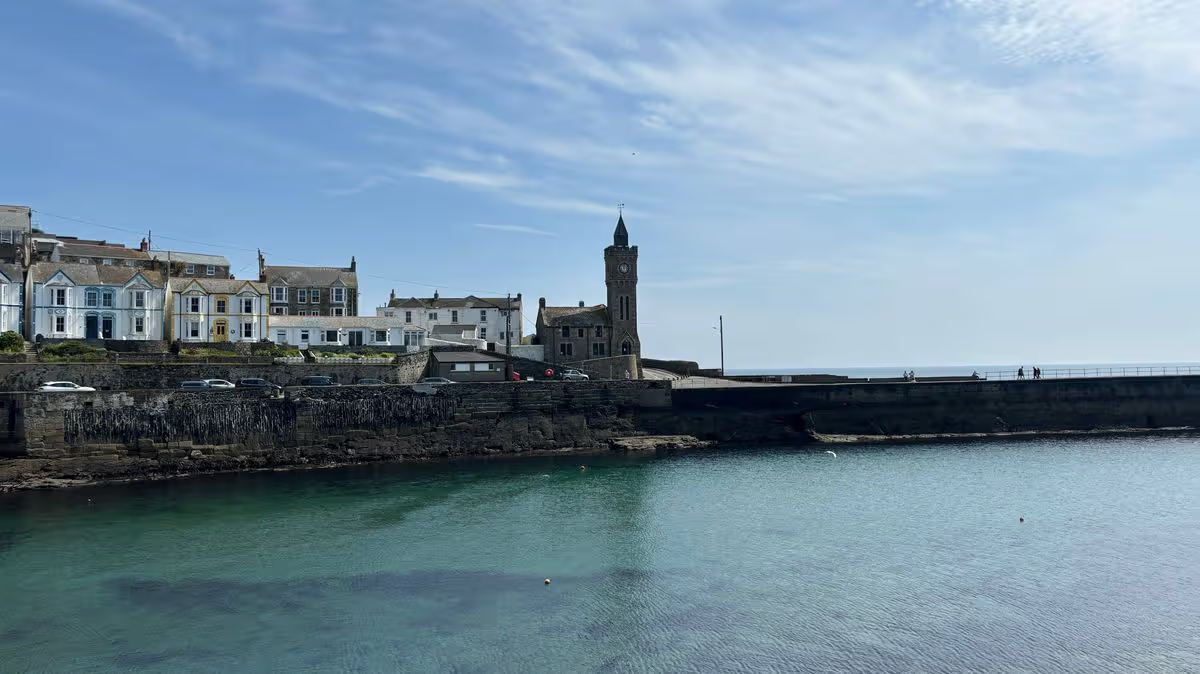
Porthleven in Cornwall (Pic: Lee Trewhela / LDRS)

Porthleven in Cornwall(Image: Local Democracy Reporting Service / Lee Trewhela)

The firm that owns and operates Porthleven harbour is planning to introduce parking charges for vehicles along the popular waterfront destination.

Advertisement

Previously free to park on the road at the much-visited tourist spot, Porthleven Harbour & Dock Company says it must now install a pay and display parking machine on Commercial Road alongside the harbour.

The company has submitted a pre-application seeking Cornwall Council guidance ahead of a full planning application.

In a supporting statement, Porthleven Harbour & Dock Company said: “In a move to enhance the upkeep and development of the area and continue to maintain the harbour, Porthleven Harbour & Dock Company needs to implement parking charges along Commercial Road in Porthleven.

“This will generate necessary revenue for the maintenance and improvement of the harbour and surrounding public areas benefiting both locals and visitors.

Advertisement

“There will be no change to the parking which has been in place since cars were first in Porthleven. The only change is a requirement to pay a reasonable fee to park on the road, something every other village and town in across the UK have implemented in some form or another.

“For years, the harbour vicinity has enjoyed free parking accessibility, contributing to its appeal. However the activities of the harbour have changed significantly and there is no longer any commercial fishing and the village relies heavily on tourism to support its local economy.

“Tourism has flourished, increasing activities and visitation which requires new measures to sustain its growth and charm.”

The company says the introduction of parking fees is primarily designed to:

Advertisement

Boost local economy: “Managing parking more effectively will support local businesses by improving accessibility and turnover of parking spaces.”

Ensure upkeep and maintenance: “Funds raised will be directly allocated to maintaining and enhancing the harbour’s infrastructure, guaranteeing that it remains a vibrant and attractive space for all.”

Upgrade facilities: “Improved amenities facilitated by the additional revenue will provide an enriched experience for everyone who visits the harbour area.”

The company added: “This initiative aligns with our custodianship of Porthleven harbour and our commitment to preserving the beauty and functionality of the harbour area ensuring it continues to thrive and remain a popular visitor destination.”

Advertisement
Continue Reading

Business

Next boss Lord Wolfson slams Labour’s zero-hour contracts crackdown

Published

on

Business Live

CEO says Employment Rights Act will make it ‘much harder’ to offer flexible hours to staff

Simon Wolfson, the Tory peer and chief executive of Next, is calling on the Government to admit more foreign workers

Simon Wolfson, the Conservative peer and chief executive of Next (Image: Leicester Mercury)

The chief executive of Next has launched a stinging attack on the government’s clampdown on zero-hour contracts, urging Labour to reverse its “employment taxes”.

Lord Simon Wolfson, who leads the FTSE 100 retailer, warned that government plans to compel employers to offer guaranteed hours to those on flexible contracts will make it “much harder” for Next to provide additional hours to its workforce.

Advertisement

The proposed legislation would oblige employers to offer a fixed contract with guaranteed hours to eligible workers, but Wolfson argued these demands are problematic because “the risk is you then have to contract for those hours forever”.

“You can’t afford to […] have the same number of people in your shop in February as you have in and around Christmas,” Lord Wolfson told the BBC, as reported by City AM.

“That’s going to be bad news for our colleagues who want extra hours, particularly students who, in holiday time, need extra hours, and of course bad news for customers because service won’t be as good.”

Several trade bodies have cautioned the government in recent weeks that the new regulations could drive up unemployment and shut young people out of the jobs market.

Advertisement

More than 946,000 young people are currently outside education, employment and training, and an imminent review is expected to conclude this week that social media and the welfare state are responsible for this “economic catastrophe”.

Lord Wolfson, a Conservative peer, warned that the forthcoming restrictions on flexible working mean “the problem is going to be made worse”. He added: “We will offer fewer hours.”

The Next chief also urged the government to reverse its increases to national insurance contributions and the minimum wage, which he argued had pushed up the cost of entry-level employment by 14 per cent.

“What [the] government should be focussing on is not micromanaging youth unemployment but getting the whole economy moving, and that means reforming planning, energy policy, transport policy,” he said.

Advertisement

Government hits out at Wolfson comments

A government spokesperson said: “Lord Wolfson’s comments are neither new nor surprising.

“The Budget allowed us to stabilise the economy and deliver support for families and businesses, and the UK is the fastest growing economy in the G7 in the first quarter of this year.

“The Employment Rights Act gives people the security they need in their working lives. Lord Wolfson, who earned more than £7m last year, will understand just how important our measures to make work pay are for the financial and job security of working people.”

Lord Wolfson also tackled questions surrounding Next’s own employment practices, with certain shareholders pressing the retailer to adopt the “real” living wage for its workforce.

Advertisement

Next employs 49,181 people – according to its latest accounts – a reduction from 50,945 people the previous year. The retail chief dismissed claims that he is putting the company’s shareholders ahead of its workforce.

He said: “When people talk about a company making a billion pounds, they assume that that’s somehow a person with a billion pounds in their pocket and they must be very, very rich.

“But the nature of public companies is that we are owned by hundreds of thousands of savers whose savings are often very modest.”

Advertisement
Continue Reading

Business

BP chair removed over 'serious' conduct concerns

Published

on

BP chair removed over 'serious' conduct concerns

Senior independent director Amanda Blanc says the board has been “surprised and disappointed” to learn of the issues.

Continue Reading

Trending

Copyright © 2025