

Politics
Fox News Anchor Highlights Trump’s Recent Threat

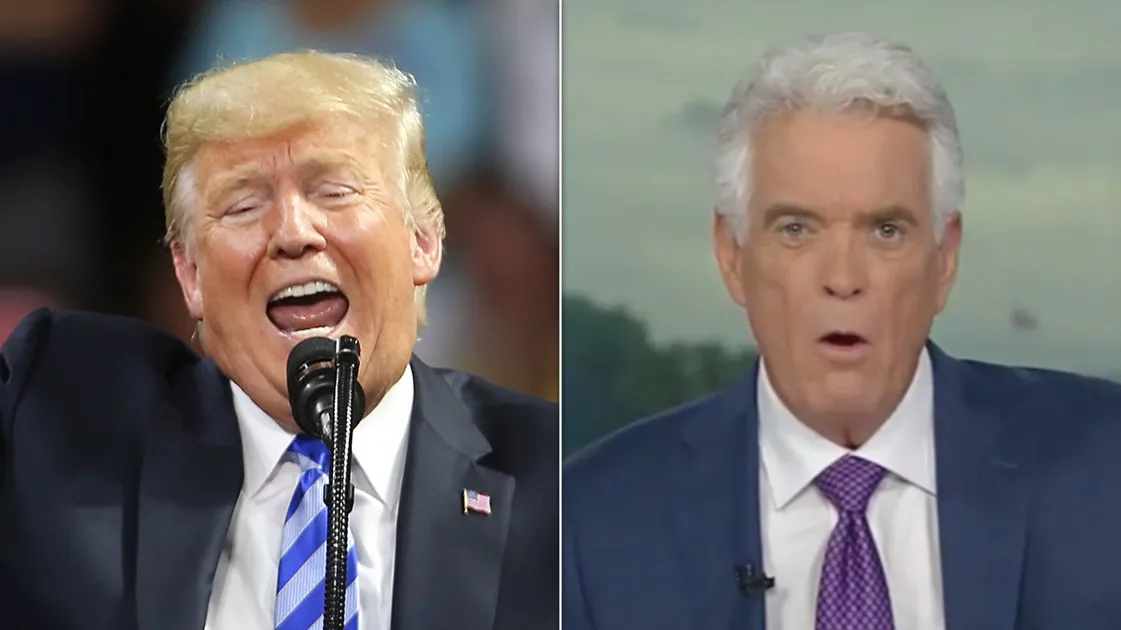
Fox News is … sounding the alarm?
Shortly after the conclusion of a Cabinet meeting Q&A at the White House on Tuesday, Fox News anchor John Roberts decided to zero in on one very disturbing thing President Donald Trump did: casually threaten to blow up Oman.
During the Q&A, Trump rejected a plan to have Oman and Iran jointly control the Strait of Hormuz.
“The Strait is going to be open to everybody. It’s international waters,” Trump said. “We’ll watch over it, but nobody’s going to control it. Oman will behave like everybody else or we’ll have to blow them up. They understand that. They’ll be fine.”
“In the middle of all that — and it really kind of went unnoticed by the reporters,” the visibly flummoxed anchor said. “President Trump became the first American president that I know of to ever threaten to take military action against Oman, saying that they have to behave like everyone else or we’re going to blow them up. I’m not quite sure what that was all about.”
“Let’s go to our senior White House correspondent, Peter Doocy, at the White House. Peter, what were your takeaways from this, other than that not-so-veiled threat against the country of Oman, with which the United States has had a traditionally peaceful relationship?”
Doocy went on to highlight other moments from the meeting, but Roberts seemed to still be reeling.
“Well, there’s no question there is something going on in this town. For sure,” Roberts said.
The State Department seemed to double down on Trump’s remarks about Oman — a Middle Eastern country the US has shared a friendly relationship with for two centuries — by publishing a clip of his remarks on X Tuesday (below). You know, just so the threat doesn’t slip through the cracks.
Subscribe to Commons People, the podcast that makes politics easy. Every week, Kevin Schofield and Kate Nicholson unpack the week’s biggest stories to keep you informed. Join us for straightforward analysis of what’s going on at Westminster.

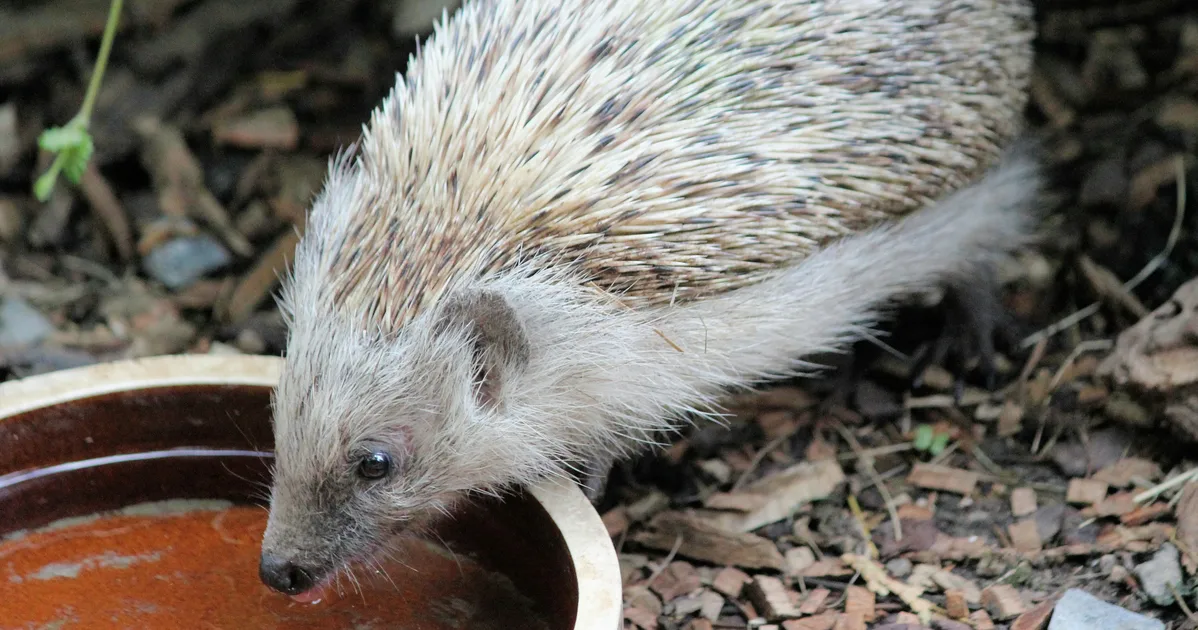
The UK has provisionally broken May temperature records multiple days in a row now, the Met Office said.
On Monday, 25 May, we saw a then-record-breaking 34.8°C in Kew Gardens. By Tuesday, we got an even hotter 35.1°C in the same spot; the previous record was 32.8°C, last recorded in 1944.
These temperatures can be tough on our sleep, our lawns, and, as charity federation The Wildlife Trusts told us, the creatures in our backyards.
That’s why they told us gardeners should offer an “extra hand” this week, as temperatures are expected to stay high
Place water out for birds, bees, butterflies, and more
Speaking to HuffPost UK, Becca Smith from The Wildlife Trusts said water is crucial in these unseasonably hot times.
“With rising temperatures being seen across the UK this week and climate change set to bring more heat extremes in the future, every drop of water counts,” she said.
“Giving wildlife an extra hand in your garden, allotment or balcony through small actions can make a big difference.”
You might want to add multiple water sources in your backyard for various animals, too. For instance, bees might fare better in a pebble-filled water saucer that’s not deep enough for them to fall into, while birds might want a full-body splash.
How can I help birds in the heat?
“Whether in a bird bath or small dish, providing regularly refreshed water for birds can help them to keep cool and bathe, but make sure to regularly clean it to prevent the spread of disease,” Smith said.
How can I help bees, butterflies, and insects in the heat?
“Meanwhile, bees and other invertebrates will also benefit from a shallow dish with a few stones in, giving them a safe place to land and drink,” the expert continued.
We’ve written about how to make your own “bee bath” before.
How can I help other animals, like hedgehogs, frogs, and more?
The Wildfowl and Wetlands Trust (WWF) said that ponds “support two-thirds of all freshwater species,” adding that some of these, like frogs, can only exist in these environments.
The Royal Society for the Protection of Birds (RSPB) previously told us that you can make your own wildlife pond using an old washing-up bowl if you don’t have much space.
“If you have a pond, make sure it has an easy entry and exit route so that more wildlife – from hedgehogs to toads – can safely access the water as temperatures rise, too,” Smith told us.
“Elsewhere in the garden, leaving your lawn long and creating shady spots, like a simple log pile, provides vital cool shelters for struggling species. These easy steps can go a long way for wildlife.”
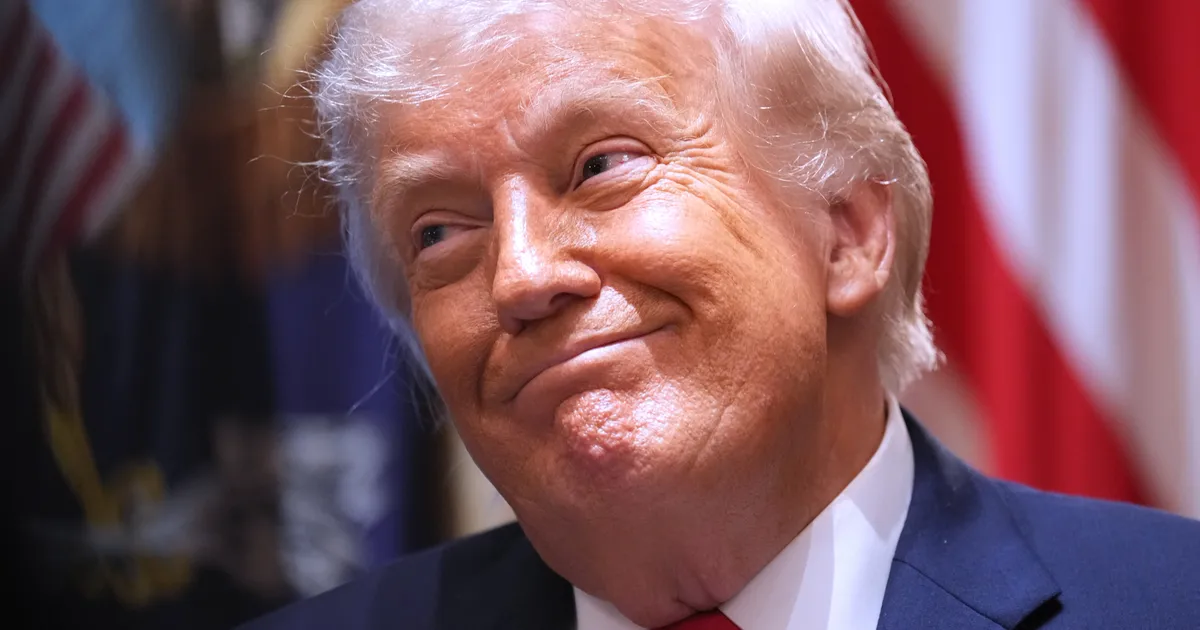
Donald Trump is trying to play it cool with the Iran war by insisting he does not feel any political pressure to hurry up the peace process, experts have said.
The US carried out strikes on Iran overnight, targeting a military site in Bandar Abbas.
Iran claims to have responded by striking a US air base.
The fresh attacks threaten to undermine the fragile ceasefire between the warring countries.
It’s the second time in three days that the US has launched such strikes.
But the US has insisted this is self-defence, while Iran called it a “grave violation of the ceasefire” and vowed not to leave “any act of hostility unanswered”.
The war began when Trump worked with his Israeli allies to bomb Iran at the end of February.
Iran responded by effectively closing the major shipping lane, the Strait of Hormuz, causing oil prices to spike around the world.
This economic impact means Trump has faced intense pressure from international and domestic allies to find an off-ramp for the war.
But he is bizarrely pretending he is not under kind of strain and that it is Iran who needs to make a deal.
As the BBC’s North America editor Sarah Smith told Radio 4′s Today programme: “He wanted to stress that he doesn’t feel under political pressure to hurry this up.”
During a cabinet meeting on Wednesday, the president insisted Iran is “negotiating on fumes”.
He insisted the November midterms would not impact his negotiations, adding: “Maybe we have to go back and finish it, may be we don’t.”
Smith said: “He obviously thinks that Iran thinks they can run out the clock here, that Donald Trump has less time than they do to get to a position where the Strait of Hormuz can be reopened, because they think it’s putting so much political pressure on the president.
“He was keen to say that’s not the case, and he will take as long as he needs to to get the deal he wants.
“And the US is making it clear they’re not held back from striking Iranian facilities if they think they pose some kind of threat.”
Kirsten Fontenrose, senior director for the Gulf at the National Security Council during Trump’s first administration, also told Today: “Both sides are trying to stay to lines they think will prevent super-escalation.”
She said this was effectively “sabre-rattling with a little bit of active fire”.
Fontenrose said she thinks the negotiations are “stuck” right now.
“There seems to be as many differences about how this war should end within Iran and the US as there are between Iran and the US,” Fontenrose said.
“You’ve got a regime in Tehran which is divided into multiple factions, you’ve got the IRGC opposing any concessions or something even talks with the US.
“You have the diplomats, president, vice-president in Iran arguing in some cases that making concessions could save the regime.
“And in Washington you’ve got the US administration divided into several factions, some saying there should be no deal with Iran, and that military strikes should resume, and others saying the blockade should be allowed to do its job with a slow, sustained squeeze that strangles the regime.”
“The debates that are going on on either side of the negotiating table are just as intense as the talks that are going on between the two sides,” she said.
“It does not look like a deal is close,” she added, despite both countries trying to push their opponent to a negotiation.
Subscribe to Commons People, the podcast that makes politics easy. Every week, Kevin Schofield and Kate Nicholson unpack the week’s biggest stories to keep you informed. Join us for straightforward analysis of what’s going on at Westminster.

Susan Boyle has really captured people’s attention with an intriguing new social media post.
After wiping her entire Instagram feed, she shared some fabulous new pictures of herself in a full-length fur coat (not the ideal attire for a heatwave, let’s be honest), expensive-looking sunnies and a blunt blonde bob, walking down the street, sitting in the back of a car and, crucially, recording at London’s Metropolis Studios.
She also teased that a “new era starts tomorrow” (adding a cryptic “#ad” in the comments too).
The Grammy nominee’s glamorous new look and tease about her “new era” have already got people’s imaginations running wild, not to mention sparking plenty of chat over on social media.
As long-time Susan devotees, we’ll be keeping a close eye on this one…
Susan, of course, first shot to fame as a contestant on Britain’s Got Talent, with her original audition inadvertently sparking an international viral sensation.
Eventually, Susan finished in second place in the contest behind dance troupe, but still went on to sign with Simon Cowell’s record label, releasing seven studio albums (including four UK number ones), landing two Grammy nominations and setting a new record for first-week sales for a debut album.
“I’m so excited for the year ahead and everything that’s to come. I can’t wait to share it all with you,” she said last month after celebrating her 65th birthday.
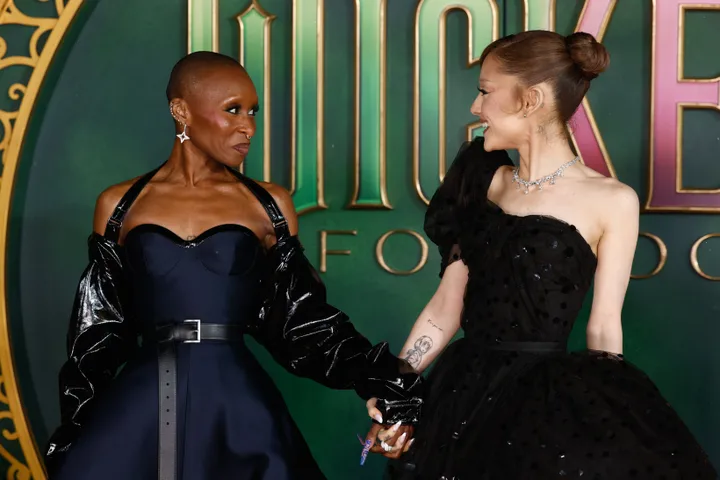
Cynthia Erivo is reflecting on the infamous press tour she and her Wicked co-star Ariana Grande took part in to promote the hit film.
Back in 2024, Wicked’s two lead stars went into full-blown promo mode to help plug the movie musical, which led to a string of viral moments and, indeed, a number of tearful interviews.
Reflecting on the last four years, Cynthia told Variety as part of a new interview: “We were holding on by threads, and we were really trying to take care of each other.”
The British performer noted that she and Ariana made a “really conscious decision” early on in the process of making Wicked to have one another’s backs, but during the promotion of the film, the sincerity of their friendship was called into question once or twice.
“It’s very interesting, watching what people’s perception is versus what the reality actually is,” she recalled of the period she and Ariana were being dissected on social media.
“[There were] lots of psychologists seated at home deciding who we were, what we were going through, what we were doing and why.”

“I think that people didn’t really believe that we were actually friends, but that’s also because people don’t know me very well,” Cynthia added, noting that she and Ariana still text one another most days, even with Wicked behind them.
She added: “ I think sometimes, if I’m honest, people thought I was being myself, even though I was green.”
Towards the end of the interview, Cynthia was also asked if she’d ever consider going back to play Elphaba in a third Wicked movie, admitting that she probably didn’t have enough distance from the first two to really offer an answer.
She did, however, claim that it would “take a lot” for her to return to Oz, and that the project would have to “make sense”.
Back in 2024, Cynthia defended the emotional interviews she and Ariana had given while promoting Wicked.
Pointing out that, at that point, the films had taken up “almost three years of our lives”, she told BuzzFeed UK: “We’re still processing everything – and this tour has been a wonderful opportunity to talk about the experience of making it, and the experiences we had together, and the experience of coming out of it.”
“So, yeah, we’ve definitely been emotional, because we’re still deeply connected to it. And I think we’ll always be connected to these roles, these women that we got to play, who I don’t think have completely left, or will ever leave, because they were such a large part of our lives.”
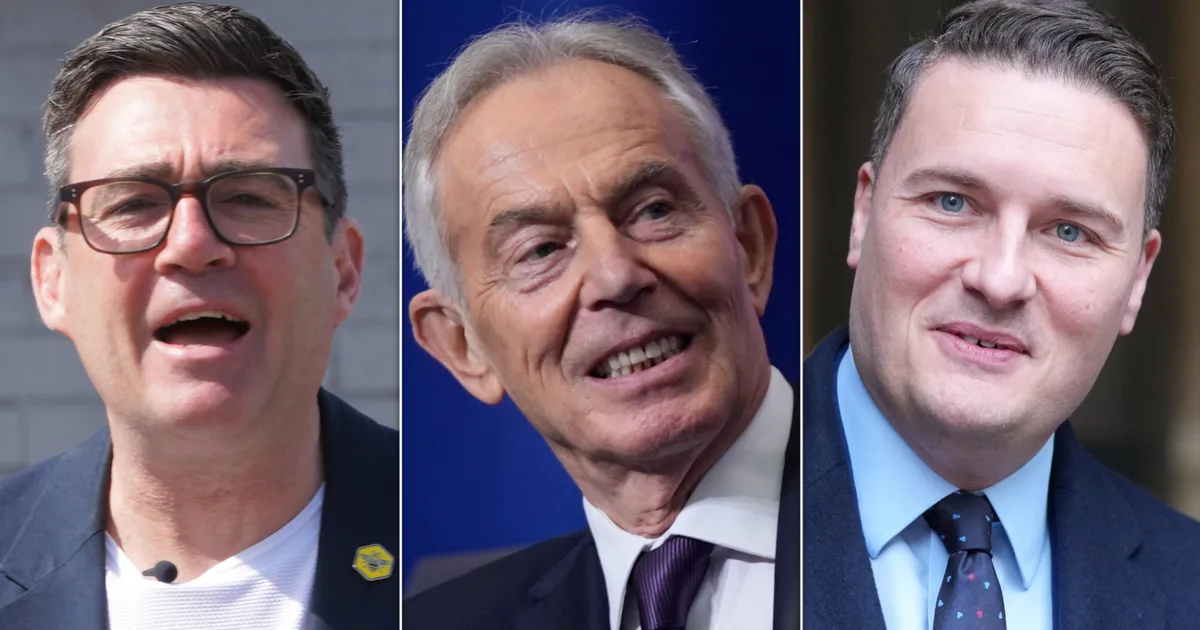
Wes Streeting has joined Andy Burnham in accusing Tony Blair of not acknowledging the inequality in the UK.
The ex-prime minister tore into Labour in a 5,600 word essay this week, saying the current shadow leadership contest is futile until the party reassesses its policies.
His warning came as Greater Manchester mayor Burnham is contesting the Makerfield by-election in the hope he can get a seat in parliament, where he is expected to challenge Keir Starmer’s premiership.
Streeting, who quit as health secretary earlier this month, has made it clear he intends to join any leadership challenge.
But Blair urged the party to resist drifting further leftward, and called out both politicians. He wrote: “Wes Streeting is a huge political talent and Andy Burnham was an outstanding member of my government.
“But this leadership debate has an extraordinarily retro 20th-century feel to it. Like most politicians, they’re anxious to distance themselves from the ‘Westminster bubble’.”
Speaking after Labour’s thrashing in the May elections, Blair said Labour’s declining popularity stems from a lack of “worked-out, coherent plan”, and urged the party to govern from the “radical centre”.
Streeting, often described as a Blairite though he rejects the term, wrote in the Guardian that there was a “striking weakness at the heart of Tony Blair’s intervention”.
He said: “Across thousands of words about technology, geopolitics and political strategy, the defining issue of our age is barely confronted at all.
“Inequality – the economic, social and democratic fracture running through modern Britain – is treated as peripheral rather than fundamental.
“But inequality, rather than being incidental to the crises reshaping western democracies, is actually their cause.”
Streeting also pushed back on Blair’s call for the UK to retain close ties with the US, despite the conflict with the Trump administration.
“When US presidents flirt with authoritarian leaders, undermine international law or pursue reckless military adventurism, Britain must have the confidence to act independently.
“We learned at terrible cost in Iraq what happens when loyalty replaces judgement. Britain’s long-term future lies in Europe,” the Labour MP for Ilford North wrote.
He also rejected the suggestion that Labour’s answer comes in longing for the 70s or the 90s.
Meanwhile Burnham told the Observer on Wednesday: “The last 40 years has given us wide inequality – that’s what’s responsible for the abandonment of the centre.
“People don’t think the centre has delivered for them in terms of their lives, therefore they’ve gone further to the extremes.”
Burnham, known for being on the soft left of the party, tore into Blair’s vision of what the UK should look like.
“He doesn’t mention inequality once,” he said. “If you don’t get how that’s driving politics now, if you are not rooting your analysis in the fact that people are unable to live and that things that were taken for granted are no longer affordable, then you are not understanding what’s going on.”
Subscribe to Commons People, the podcast that makes politics easy. Every week, Kevin Schofield and Kate Nicholson unpack the week’s biggest stories to keep you informed. Join us for straightforward analysis of what’s going on at Westminster.

WASHINGTON — Three months into his “four to five week” war, President Donald Trump appears no closer to solving his purported goal of forcing Iran to give up its highly enriched uranium, a problem he himself created when he withdrew from the nuclear agreement negotiated by predecessor Barack Obama.
“They want very much to make a deal,” Trump said again at a White House Cabinet meeting photo opportunity on Wednesday. “But their navy is gone, as I’ve said a thousand times, their navy is gone, their air force is gone, everything’s gone, and they’re negotiating on fumes. But we’ll see what happens. Maybe we have to go back and finish it.”
Wednesday’s remarks came just four days after Trump claimed an agreement had been “largely negotiated” and that “final aspects and details of the deal are currently being discussed, and will be announced shortly.” While Trump and Iranian leadership both are unreliable narrators, reporting indicated Iran would only agree to “talks” about handing over its uranium.
Trump has repeatedly declared that the goal of the now 88-day-old war, which he began without consulting Congress or America’s traditional allies, is to stop Iran from getting a nuclear weapon, and there’s little indication Iran plans on giving ground on its HEU stockpile. What he neglects to mention is that Iran created every ounce of that material only after Trump tore up Obama’s Iran agreement.

Ever since the Joint Comprehensive Plan of Action, as the agreement was known, was signed in 2015 after two years of negotiations, Trump has falsely claimed that it actually gave Iran the permission and means to build nuclear weapons. He repeated that lie Wednesday: “It was the path for Iran to have a nuclear weapon very quickly. Years ago, they would have had a nuclear weapon.”
In fact, Obama’s agreement strictly limited Iran’s ability to enrich uranium and introduced an intrusive system of outside inspectors to monitor.
Iran’s leaders, who were eager for sanctions relief provided in return, were honoring the enrichment prohibition, something Trump’s first-term administration freely admitted. Trump, nonetheless, scrapped the agreement in 2018.
“The State Department and intelligence community had repeatedly confirmed that Iran was complying with the terms of the JCPOA when Trump unilaterally withdrew from it,” said Ned Price, a former CIA officer and a State Department official under former President Joe Biden.
Trump has claimed ever since he pulled out of the JCPOA that Iran wanted to make a “deal” with him. As he ran for reelection in 2020, he said repeatedly that Iran wanted one badly but was waiting for the start of his second term.
Then, as he ran to regain the White House after his Jan. 6, 2021, coup attempt failed, he claimed that he would strike a deal with Iran quickly after returning to office.
Instead, Trump attacked Iran twice, first in June 2025, and then on Feb. 28 — both times as productive negotiations were supposedly underway.
Now, almost three months into a war that has damaged the global and US economies, has spiked oil and gas prices, has increased inflation, and has left 13 Americans and at least 1,500 Iranians dead, Trump continues to claim that Iran badly wants “a deal,” even as its leaders appear to stall and drag things out.
“There’s a tendency, especially when it comes to the Middle East, to be dismissive of American diplomacy and to assume that most problems require the use of military force. Many critics of the JCPOA were under the misimpression that the Iranian nuclear challenge would melt away once we struck its nuclear sites,” Price said. “Trump’s decision to test that proposition has proven that this was always pure folly and, ironically, underlined the enduring advantage of a diplomatic resolution.”
Robert Kagan, a top State Department official in Ronald Reagan’s administration and now a foreign policy analyst at the Brookings Institution, said Trump’s repeated false claims that a deal was close only serve to hide the truth of the war, noting Iran engaged US forces on Monday.
“The fact that the Iranians felt emboldened to target American ships shows they are not afraid of a resumption of war because they know Trump has no good military options and that he wants out,” he said. “The war was over in March. The US lost. Everything since then has been aimed at covering this up.”
He said the worst outcome of the war will be Iran’s newfound control over the Strait of Hormuz and one-fifth of the world’s oil traffic.
“Iran was deterred from closing the strait by fear it would invite this kind of attack which could pose a threat to the regime’s very existence,” he said. “Now they have proven they can survive an extended bombing campaign and still do unacceptable damage to the region, including control of the strait. Having driven Iran to prove this, we are now living in that world and there can be no return to the status quo ante.”
As for the enriched uranium, Iran can win on that point, as well, said John Bolton, one of Trump’s first-term national security advisers and a longtime advocate for attacking Iran to change its regime.
“Iran is playing for time. Trump is still desperate for a way to claim victory. Most importantly, there’s no real deal, just an extension of the cease fire and opening the strait,” he said. “Iran wins by kicking the nuclear issue down the road.”
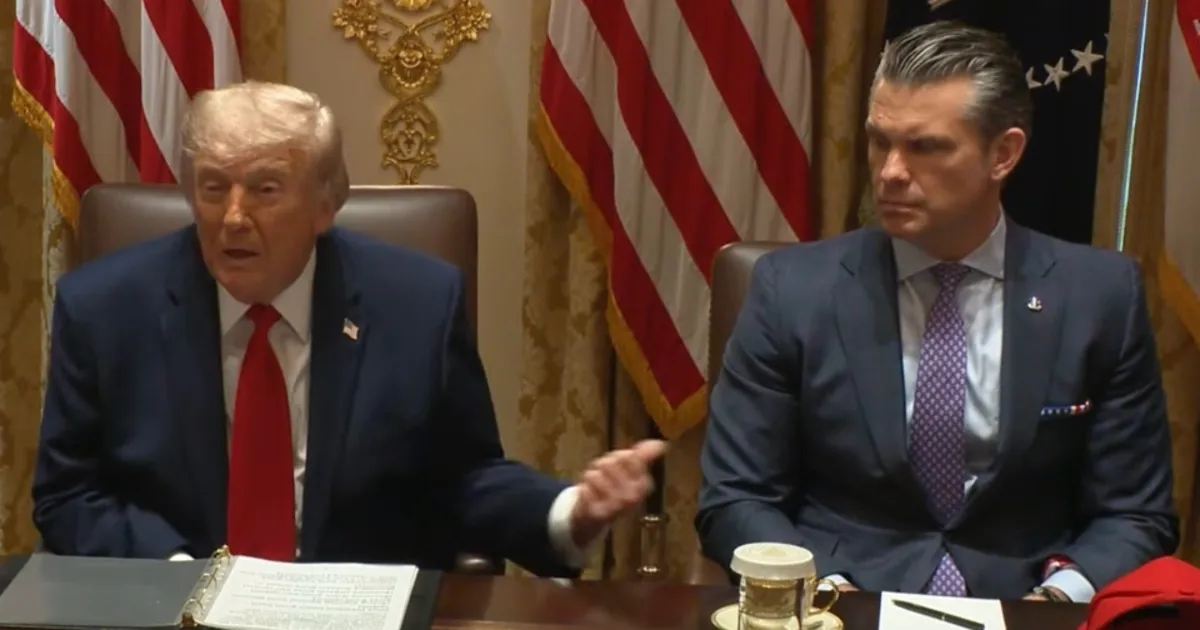
President Donald Trump bragged that if Iran doesn’t give the US what it wants amid negotiations for a potential agreement to end hostilities — then Secretary of Defense Pete Hegseth is going to “finish ’em off.”
Trump made the remark during a Cabinet meeting at the White House on Wednesday after a reporter asked him to describe where the talks with Iran are at in football terms, asking him, “What yard line would you be on?”
Opting to skip the football analogies, the president responded, “They are starting to give us the things that they have to give us, and if they do, that’s great. And if they won’t, then the man on my left is gonna finish ’em off.”
Trump was referring to Hegseth, who was seated on his left.
“Is there a time frame in your mind?” the reporter followed up.
Noting that it “happens quickly,” Trump said, “The problem is, every time I mention a time frame — for instance … we’ve been doing this for a few months. Vietnam lasted 19 years. Korea lasted eight years. Afghanistan lasted many years. They were all many, many years. And we’re into it for a few months.”
Trump then referenced the American troops who were killed during Operation Epic Fury in Iran and across the broader Middle East.
“We lost 13 souls, 13 great people. [I] met the parents, great people. It’s a terrible thing, but 13. If you look at the war casualties and the deaths and wars for Vietnam and all that, they lost hundreds of thousands of people in numerous of these wars.”
Trump added, “We’re very cognizant of that. We want to lose very few, we want very few to be injured. We’re very careful, but war is war. War is dangerous.”
Elsewhere in the meeting, the president said that he is “not satisfied” yet with the terms of the deal being negotiated with Iran. Claiming that Tehran is “very much intent” on reaching an agreement to end the conflict, he added, “So far, they haven’t gotten there.”
Listen to Trump’s remarks from the Cabinet meeting below (skip to the 1:08:57 mark.)
Subscribe to Commons People, the podcast that makes politics easy. Every week, Kevin Schofield and Kate Nicholson unpack the week’s biggest stories to keep you informed. Join us for straightforward analysis of what’s going on at Westminster.
In January 2025, I signed with Swift Press, a great independent publishing house, to write a book called The Rise of Reform. It would be an examination of Nigel Farage’s upstart party and how it might grow from where it was already into an organisation capable of governing Britain. I was excited to take it on. However, there were several immediate issues I faced after signing the agreement: for a start, I didn’t have a single contact within Reform UK.
The other dilemma was that I am a very liberal sort of person who lives in London and would ideally like it if the United Kingdom rejoined the European Union. In other words, I am not someone who you would have pegged as a possible Reform convert. Yet I was determined not only to get under the skin of the party, but also to report back on it in the most objective way possible. I vowed to simply write about whatever I found out there, beyond the M25, in the most honest way I could.
I got lucky and landed some interviews with high-ranking Reform people, right off the bat. Richard Tice agreed to speak to me; I thought I would get 20 minutes tops with him, and then he gave me an hour and a half of his time. It was a fantastic interview as well, with some great anecdotes sprinkled in.
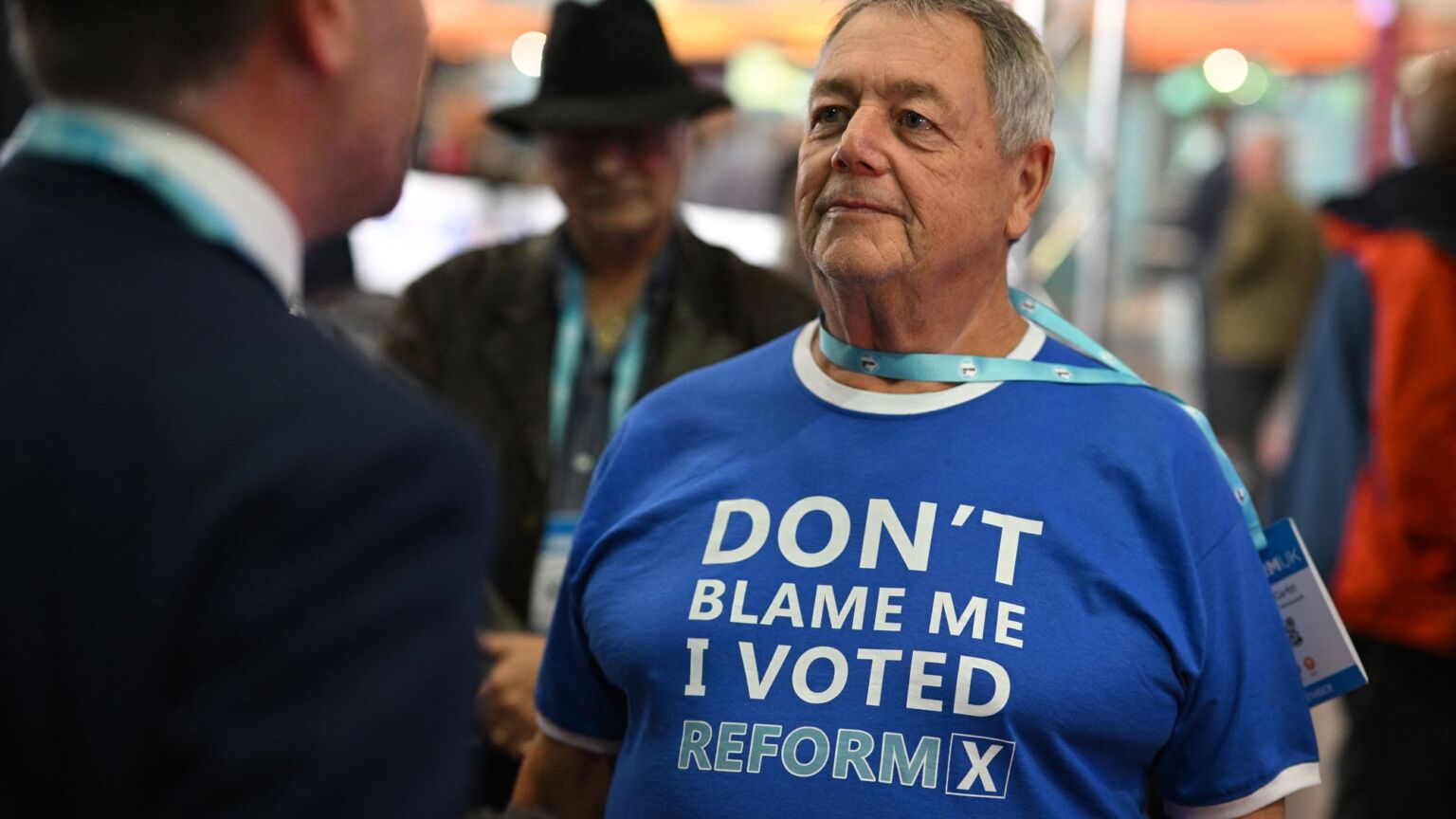
Yet the real eye-opener in my research was speaking to the party’s footsoldiers, the Reform activists on the ground in places like Hartlepool, Lincoln and Runcorn. Those who were standing locally for the party, or if not, giving up their weekends to knock on doors or deliver Reform leaflets. And these people were nothing like what I expected. Nothing at all.
I will admit that my liberal, metropolitan assumptions made me feel certain that I would meet a lot of racists (closeted or otherwise), conspiracy-theory nuts and just general far-right yobs when seeking out the Reform Party in the wild. Yet I found none of those things while meeting and chatting with Reform activists in places like Bootle or Spalding. What I found, every time, were groups of very normal, down-to-earth, mostly working-class British people who felt let down by a system that frankly, it was easy to see why they felt let down by. I heard nothing racist or homophobic or fascistic in all my travels around the country, speaking with hundreds of Reform candidates and activists. In one sense, they were all disappointingly well-behaved and lovely.
I even met some ethnic-minority Reform candidates, some of whom were immigrants. One who sticks out for me was Ahmed Ibrahim, a man who had come to Britain from Egypt 17 years ago. He was standing for Reform in Tower Hamlets. I asked Ahmed what attracted him to the party. He told me:
‘For me, in my mind at the time, there was no way to be with Nigel Farage. But then I said, okay, why don’t I listen to the guy? I was just rejecting him because of assumptions. Then, I listen, and Nigel makes sense… I attended a couple of branch meetings here in Tower Hamlets. And I didn’t see any racism at all. Like normal people, yes, some of them, they have a stronger view. But I’m telling you, I have stronger views than them, even on immigration!’
The best anecdotes from my travels in Reform-land came via the great British public, those people I encountered while watching Reform activists knocking on constituents’ doors. That experience gave me a whole new insight into the country on its own.
The folks who answered their doors to Reform activists broadly fell into one of three categories. The first were those who were either enthusiastically going to vote Reform or were at the very least heavily leaning towards Farage’s crew. Some of you reading this may be sad to note that I encountered a hell of a lot of people who fit into this group out there.
The second bunch were those who would rather drink sulphuric acid than even consider voting Reform.
The final category involved those I found most depressing – the people who said they weren’t voting at all. They had decided they weren’t going to take part in any elections, not in a resigned or embarrassed way – no, these people were not going to be voting for anyone as a statement of intent. They were proud to be non-voters. Their non-voting was a political statement, ironically enough.
‘They are all crap, all the parties, total crap’, a man told the Reform activists I was with on his doorstep one afternoon. I stepped in and asked him, ‘Okay, but if you had to pick one party that you thought was the most crap of them all, which one would it be?’. He looked intrigued by the question and took a moment to think before answering. ‘Wouldn’t choose between them, they are all the same.’
A lot of people said things so negative (and possibly libellous) about Keir Starmer, I couldn’t possibly reprint any of them here. ‘Starmer should be in prison for what he’s done to this country already!’, which I heard from a man in north Wales, was probably the most vanilla. There was also a lot of anger directed at the Labour Party more generally. ‘I was a proud trade-union member before I retired’, said one man in an impoverished part of north-west England to the Reform canvassers who had knocked on his door. ‘I have voted Labour all my life. But couldn’t do it again. They aren’t the same party now.’
Almost no one, in any of the places I visited, mentioned the Conservatives – at all. It was like they didn’t exist, even in places where they had been dominant for decades.
Of course, the people who hated Reform really, really hated Reform, often expressed with a viciousness that was shocking. The way that Reform activists dealt with these outbursts made me like them even more. ‘Thank you for time, have a good rest of the day’, they would say to someone who had just called them a fascist and told them to ‘fuck off and die’ for good measure. The way Reform activists behaved in these situations was always reassuringly British to me.
Whether you agree with Reform UK on policy or not (and I still have many reservations in this department myself), you shouldn’t confuse that with your feelings about the party’s activists. Calling them fascists and racists simply doesn’t work for liberals, as May’s election results clearly demonstrate. This assertion about them just isn’t true either, as I found out for myself.
Now that I have finished writing The Rise of Reform – due for release in September – it makes me feel a little sad that I have no more cause to spend time with groups of Reform activists, in a pub after a day of canvassing, somewhere in the north of England or the Midlands. I will miss them.
That’s why I am hoping Restore does not spoil things for Reform in the upcoming Makerfield by-election. Here is a chance for a true working-class movement to bring down the Labour Party, an organisation established to represent the working class in Britain that has clearly lost its way. A lot depends upon Reform winning this by-election. I wish them the best of luck.
Nick Tyrone is the author of The Rise of Reform, published by Swift in September 2026.

This article features expert advice from Dr Bisola Laguda, a paediatric dermatologist and spokesperson for the Skin Health Alliance.
With kids now getting extra protection against chickenpox as part of their routine childhood immunisations, it’s hoped fewer kids will end up struggling with the worst effects of the illness.
That said, kids might still catch it – albeit a milder version – and those who aren’t vaccinated against it (either because they’re too young or their parents opted out) will also be at risk.
But spotting chickenpox can be tricky, especially as the telltale sign is a rash – and other childhood illnesses like impetigo and hand, foot and mouth can look pretty similar.
To try and get some clarity on how to tell it apart from other illnesses, which is important so you know how to treat it (and how long they’ll need off school or childcare), we spoke to Dr Bisola Laguda, a paediatric dermatologist and spokesperson for the Skin Health Alliance.
What are the signs of chickenpox parents need to know?
Chickenpox is a very contagious infection caused by the varicella zoster virus. Data indicates that half of children will contract chickenpox by the age of four, and 90% by the age of 10.
Kids might initially experience flu-like symptoms, such as a high temperature and feeling sick and/or achy, said Dr Laguda.
“When the rash does manifest, it’ll be in the form of small red spots that blister and can become very itchy,” she said.
“These spots can appear in clusters anywhere on the body, but are commonly found on the arms, legs, chest and stomach, as well as the face, scalp and ears.”
It’s worth bearing in mind that new spots can appear around three to five days after the initial rash begins, too.
After a day or two, the blisters begin to burst and dry out, “with the crusting skin naturally falling off within two weeks”.
The dermatologist noted that whilst chickenpox can cause a lot of frustration and upset, children’s symptoms will often resolve themselves naturally.
But if the skin around the blisters becomes hot, red or painful; the blisters themselves get infected; or your child develops other symptoms such as dehydration, chest pain, or difficulty breathing, she said it’s best to contact your GP.
Never give ibuprofen to kids with chickenpox (unless told to by a doctor). Pharmacists can provide antihistamine medicine to try and ease any itching, while paracetamol can help with pain or discomfort.
How does chickenpox differ to hand, foot and mouth disease?
Hand, foot and mouth disease (HFMD) is another unpleasant illness kids tend to pick up in the early years.
The first stage of symptoms typically involves a sore throat, high temperature and not wanting to eat. A few days later, kids develop a raised rash of spots and/or mouth ulcers.
There are some key distinctions that can help parents tell the two viral infections apart, said Dr Laguda.
“Both manifest in rashes, but appear on different areas of the body and have visual discrepancies,” she explained.
“Where chickenpox can appear anywhere, HFMD rash patterns are most commonly found on the palms of the hands, soles of the feet and inside the mouth – though it is true that we are seeing more cases of HFMD around the face and genitalia, so worth keeping an eye on these areas too.
“Also, chickenpox rashes appear as small, itchy blisters, whereas HFMD is usually characterised by flat, red spots.”
The illness usually gets better on its own. If symptoms don’t go after seven to 10 days, speak to your GP.
And how does it differ from impetigo?
Impetigo is another contagious illness you probably won’t have heard of until your kids get it (I certainly hadn’t).
The skin infection starts off as red sores or blisters, which can then burst leaving crusty, almost cornflake-like golden brown patches. These can be itchy and/or painful.
Dr Laguda said it’s “important to be able to distinguish chickenpox from impetigo”.
“While impetigo is a bacterial infection and chickenpox is viral, both can cause itchy, blistery rashes. However, where chickenpox rashes are fluid-filled blisters potentially found across the entire body, impetigo appears as yellow-ish, crusty patches around the nose, mouth and limbs.
“It’s worth noting impetigo can develop secondary to chickenpox if blisters become infected after being scratched.”
Treatment typically involves hydrogen peroxide cream or antibiotic cream/tablets, so a trip to the pharmacist or your GP is warranted.
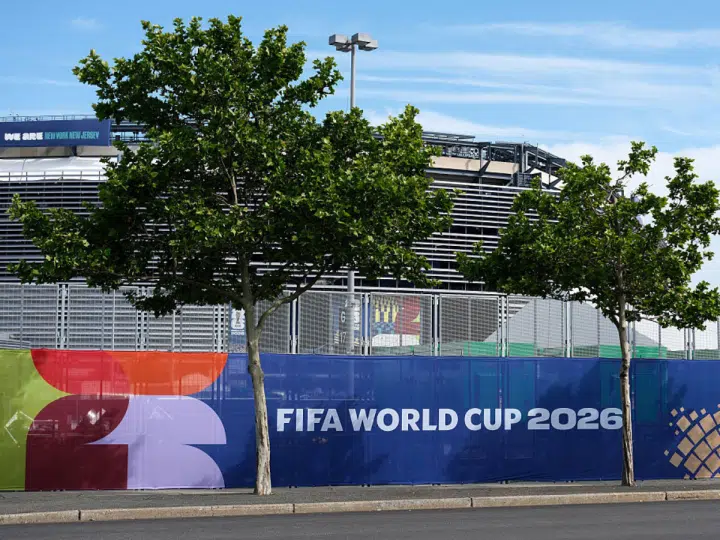

England’s World Cup training camp will be subject to unprecedented security measures in the US amid growing fears of drone spying operations or sabotage attempts aimed at players and fans.
The US authorities and the FA have decided to turn the squad’s camp in Kansas City into something resembling a fortified base, the Sun reported.
The daily newspaper revealed that specialised “hunter-catcher” aircraft, which are anti-drone aircraft capable of shooting down any unlicensed aircraft through special nets, in addition to electronic jamming devices and advanced monitoring systems, will be deployed.
England players protected by systems able to disable drones
It’s alleged that police will establish ‘no-fly zones’ over the England team’s headquarters at the Swap Soccer Village base. They will also provide security units with systems capable of disabling drone control signals or forcing them to land in specific locations, in anticipation of any attempts to breach the airspace during training or matches.
Security experts believe that drones have become one of the most prominent threats associated with major sporting events, given their low cost and the difficulty of detecting them compared to traditional threat methods.
The Sun quoted former FBI drone countermeasures expert, Tom Adams, as saying that the biggest challenge is not just detecting drones but quickly determining their intentions, whether for sabotage, political, or even sports espionage purposes.
Adams stressed that the security system adopted to protect the England team will be similar to the technologies used during the American Super Bowl.
British concern over potential espionage
This month, the Guardian revealed that German coach, Thomas Tuchel, had expressed concerns about the possibility of “football espionage”.
The newspaper also confirmed that the FA is working to enhance the privacy of England’s World Cup training camp to prevent rival teams, the media, or any external parties from monitoring training sessions or picking up tactical information that could give England’s opponents an advantage.
Warnings about security concerns during the 2026 World Cup highlighted the potential targeting of transportation networks, disrupting infrastructure, or using drones near fan zones and stadiums.
$14 million to enhance World Cup security systems
As part of the extensive preparations for the 2026 World Cup, US authorities have allocated huge security funding to Kansas City to develop anti-drone systems and secure the airspace during the tournament.
Missouri has received more than $14 million to enhance protection systems related to the World Cup.
These moves reflect the seriousness of the security threat surrounding the upcoming football tournament, which will be held for the first time in three countries: the US, Canada and Mexico.
Organisers expect record crowd attendance and the largest security monitoring in the tournament’s history.
Featured image via Rob Carr/ Getty Images
By Alaa Shamali

Why growing businesses need a better understanding of KYC and KYB
2 Reasons Bitcoin Price Crashed Below $73,000 Today

2026 College Football Schedule for Teams in the West


-

 Crypto World7 days ago
Blockchain.com files with SEC for U.S. IPO
-

 Fashion6 days ago
Holiday Weekend Open Thread – Corporette.com
-

 Crypto World6 days ago
Bitcoin Accumulation Weakens as BTC Realized Losses Hit $600M
-

 Tech3 days ago
Microsoft’s quiet Claude Code retreat and the real cost of enterprise AI
-

 Business6 days ago
Dell Technologies DELL Stock Surges 15% on AI Server Momentum and Analyst Upgrades in 2026
-

 Crypto World5 days ago
Robinhood crypto COO Tanya Denisova exits
-

 Business4 days ago
NYT Strands Answers May 24 2026 Revealed for Puzzle No. 812 Theme Summer Essentials
-

 Politics3 days ago
Bridgerton Season 5: Cast, Release Date And Everything We Know So Far
-

 Politics6 days ago
Makerfield: a tale of two social-media histories
-

 Business6 days ago
Trump Invests $1M-$5M in Kura Sushi USA Chain With 27 California Locations
-

 Crypto World6 days ago
Space X IPO Is ‘Bad News’ for Tech Stocks: But What About Bitcoin?
-

 Crypto World6 days ago
MicroStrategy’s Saylor Says Miners No Longer Set Bitcoin Price, Another Force Has Taken Over
-

 Tech6 days ago
WhatsApp ads could make Irish debut after discussions with DPC
-
Tech21 hours ago
The Samsung pay deal is the moment Korean unions changed register
-
 NewsBeat7 days ago
Charity run by Reform leader Malcolm Offord accused of ‘law breaking’ over Scottish registration
-
 Tech6 days ago
A 0.12% parameter add-on gives AI agents the working memory RAG can’t
-

 Crypto World6 days ago
AI infrastructure race heats up as IREN pitches full-stack strategy, WhiteFiber lands $160M deal
-

 Business3 days ago
BTS Sells Out Four Las Vegas Shows at Allegiant Stadium for ARIRANG World Tour
-
 Crypto World3 days ago
Nvidia (NVDA) CEO Calls on Super Micro to Strengthen Export Controls Amid Smuggling Probe
-

 Tech3 days ago
Westone Audio and Etymotic Acquired by Fidelity Collective in Major IEM Market Move
You must be logged in to post a comment Login