

Politics
‘White guilt’ is vanity posing as virtue

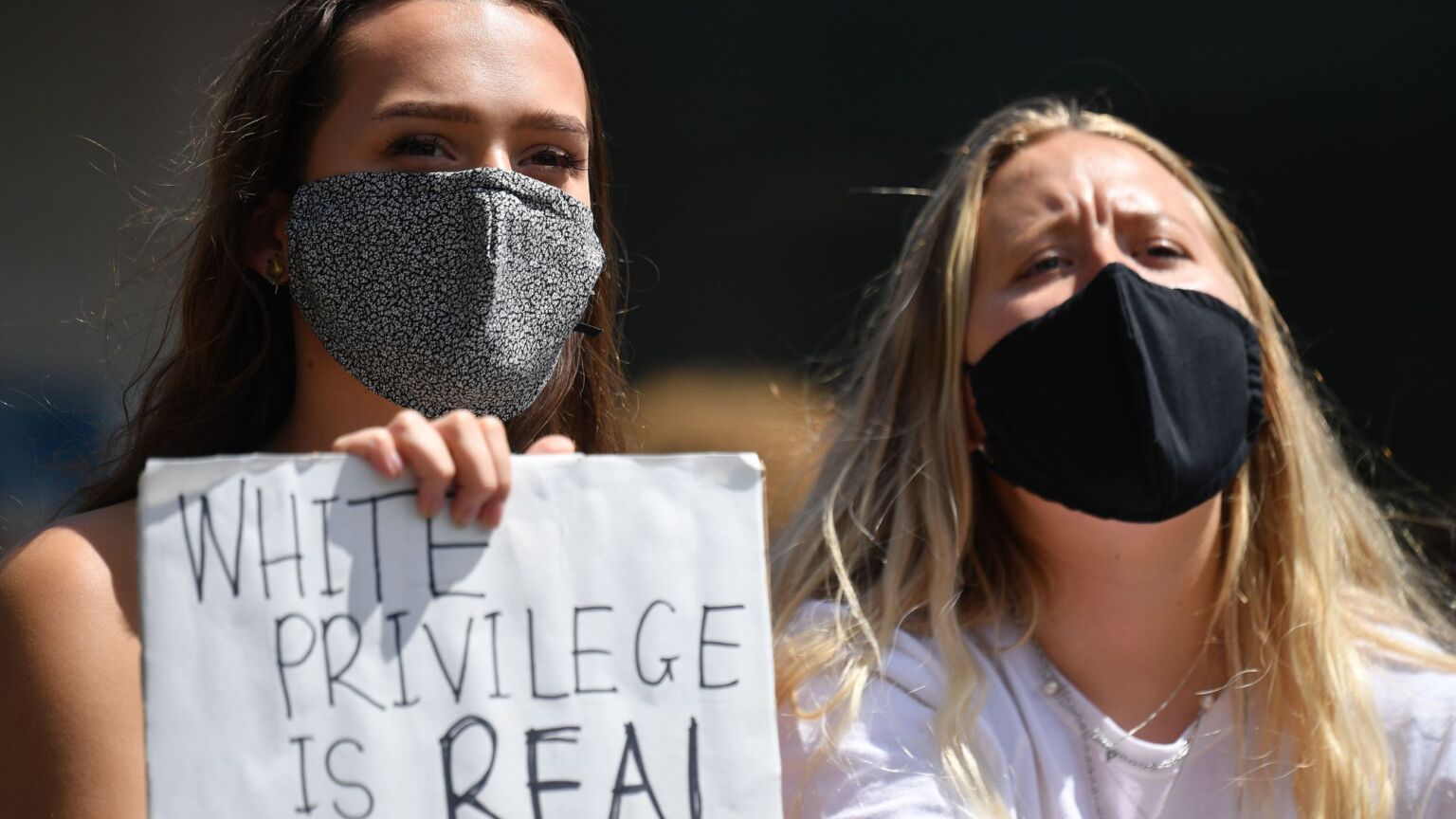
The post ‘White guilt’ is vanity posing as virtue appeared first on spiked.


We hope you love the products we recommend! All of them were independently selected by our editors. Just so you know, HuffPost UK may collect a share of sales or other compensation from the links on this page if you decide to shop from them. Oh, and FYI — prices are accurate and items in stock as of time of publication.
It might still be term time, but school uniforms for the next school year have already landed in shops.
Or more specifically, M&S has launched its school uniform line at 20% off for a limited time only.
Prioritising practicality for the kid and the parent, the line is made of a combination of stain, crease, and rip-proof technology for added convenience amid the school rush.
Whether you want to get ahead of the back to school madness and have a care-free summer (like, as care-free as it can be) or simply take advantage of grabbing affordable school uniform deals, it’s go time.
Here are our top picks of the M&S school uniform sale to grab now.
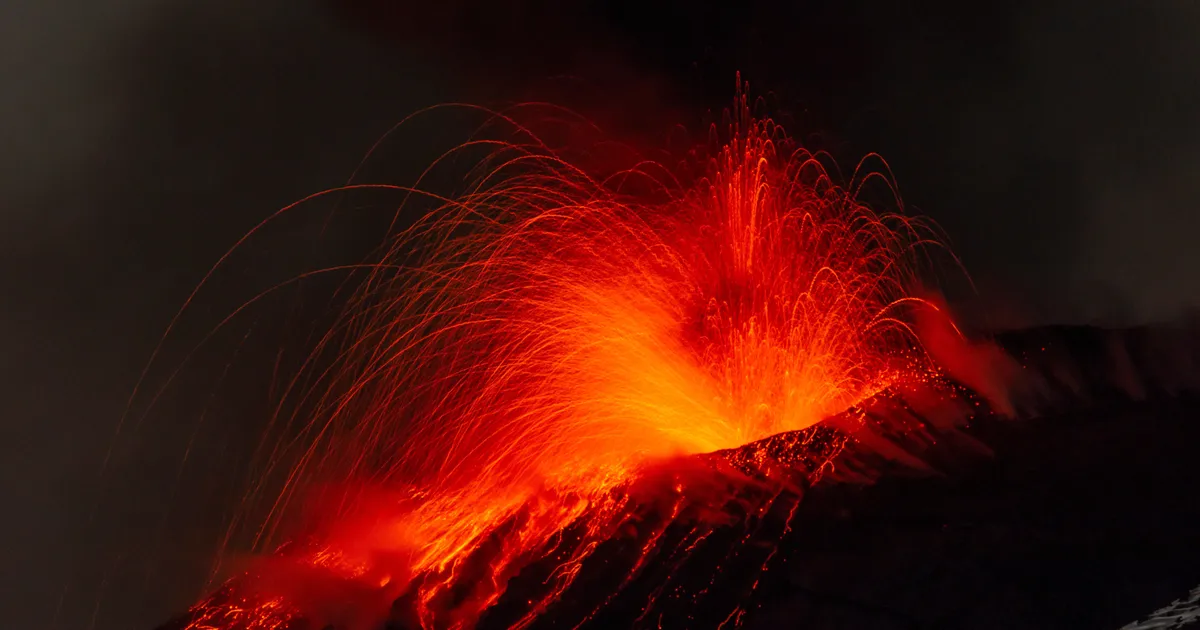
Recently, Mount Etna – Europe’s most active volcano – saw a spectacular burst of lava, which the BBC reported could be seen from “miles away”.
It followed reports of lava flowing down the volcano days before and raised the alert level in the area.
Mount Etna’s eruptions are pretty frequent, with 11 reported bursts in three weeks taking place in 2021. These can sometimes lead to ash plumes.
So what might that mean for those travelling to the area?
Ash clouds may not disrupt airlines as much as they used to
While the ash clouds typical of Mt Etna’s eruptions can affect flights, the Civil Aviation Authority (CAA) told HuffPost UK that these disruptions are less severe than they used to be.
Spokesperson Jonathan Nicholson said: “Following the 2010 volcanic eruption in Iceland and the lessons learned since, volcanic eruptions now cause less disruption to aviation.
“The whole sector learned a lot about the impact that volcanic ash can have, while new technology and understanding means the impact can be better handled to minimise any disruption to passengers.”
Still, Italy’s Civil Protection Department said on its site that ash clouds can affect the Catania Fontanarossa, Sigonella, and Reggio Calabria airports and may “cause significant disruption to the transport sector”.
Keep an eye on your airline and airports’ updates if you’re travelling to the area.
Though Mt Etna’s eruptions are frequent, they don’t usually affect locals
“The lava flows of Etna, due to their viscosity and consequent low… speed, [usually don’t] constitute a danger to the safety of people.
“In [cases where] leakage occurs from [areas of] high altitude, the flows would rarely reach the towns,” Italy’s Civil Protection Department shared on their site.
In the rare case that an eruption might threaten a town, they added, it “is usually possible to implement measures aimed at altering their path”.
The most dangerous type of eruption, they continued, comes from “vents placed at low altitude: in such case the time to carry out any cooling flows would clearly be reduced, and most probably it would be useful to resort to the evacuation of the population from threatened areas”.
In 1983, 1992, 2001 and 2002, some canals were excavated, others had their banks reinforced, and barriers were laid down to change the direction of the lava flow.
“It should be noted that in the last two cases, interventions were designed to protect tourist infrastructures located at high altitudes,” the government body added.
Multiple monitoring systems, including thermal cameras, constantly track the mountain’s status.
You can check on the volcano’s status via INGV.
It’s crucially important to keep up-to-date with the volcano’s status if you’re visiting. Follow all local weather advice.
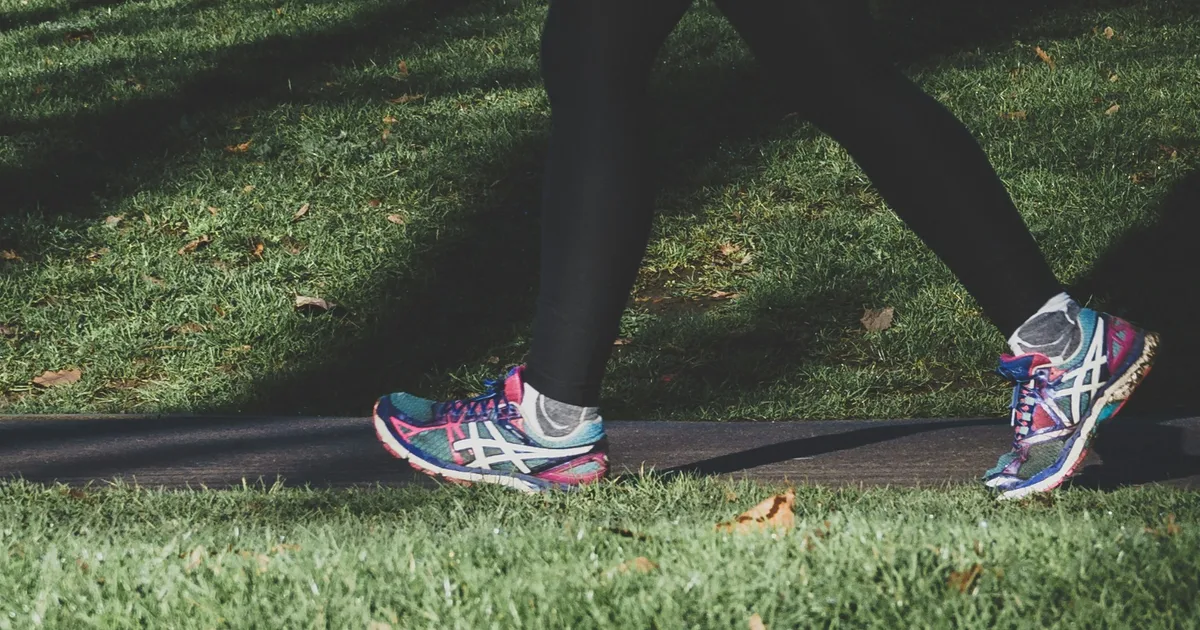
You probably already know that walking is really, really good for us, but you might not be aware just how little you have to stroll to see some benefits.
As few as 2,337 steps a day can lower your risk of dying from heart-related health conditions, including heart attack and stroke. Even a quarter of an hour’s stroll a day works wonders for our health.
No wonder the NHS previously called the activity “overlooked”.
And starting in 2027, NHS England will begin offering rewards for those who manage to go for a roughly half-hour-long stroll once a day for a month.
The program, called “marathon a month” or Movement 26.2, will give those who log 42.195 km a month incentives.
Why is this happening?
It’s the result of the government’s 10-year health plan for England.
The marathon a month scheme has been developed with Sir Brendan Foster, a former Olympic medallist.
Sir Foster said: “I’m known for running, but the ambition here is far simpler. We just want people to walk. Simple,” the BBC reported.
He also stated, “The WHO recommends 150 minutes of moderate activity a week. We realised that adds up to roughly the distance of a marathon every month.”
The 10-year health plan claims physical inactivity costs the NHS £10.5 billion a year.
It’s hoped that the walking scheme will attract 100,000 users in a single month in 2027.
When will it kick in?
It’s expected to begin early next year.
How will it work?
So far, it looks like Movement 26.2 is about your overall monthly walking distance. You likely won’t have to keep up a streak every single day, though Sir Forster said the program will tap into the mentality behind e.g. Snapchat streaks.
“If someone walks 30 minutes five times a week, they could gain up to four extra years of healthy life,” he said.
You will need to log your miles via a smartphone or smartwatch. It’ll be officiated by the NHS Points Scheme.
What will you get?
Sir Foster said that the rewards will start off digital, but will eventually become more material.
“Initially there’ll be digital rewards, like keeping a streak going for three months. Over time, there’ll be other kinds of rewards – medals, T-shirts, but also discounts and rewards,” he claimed.
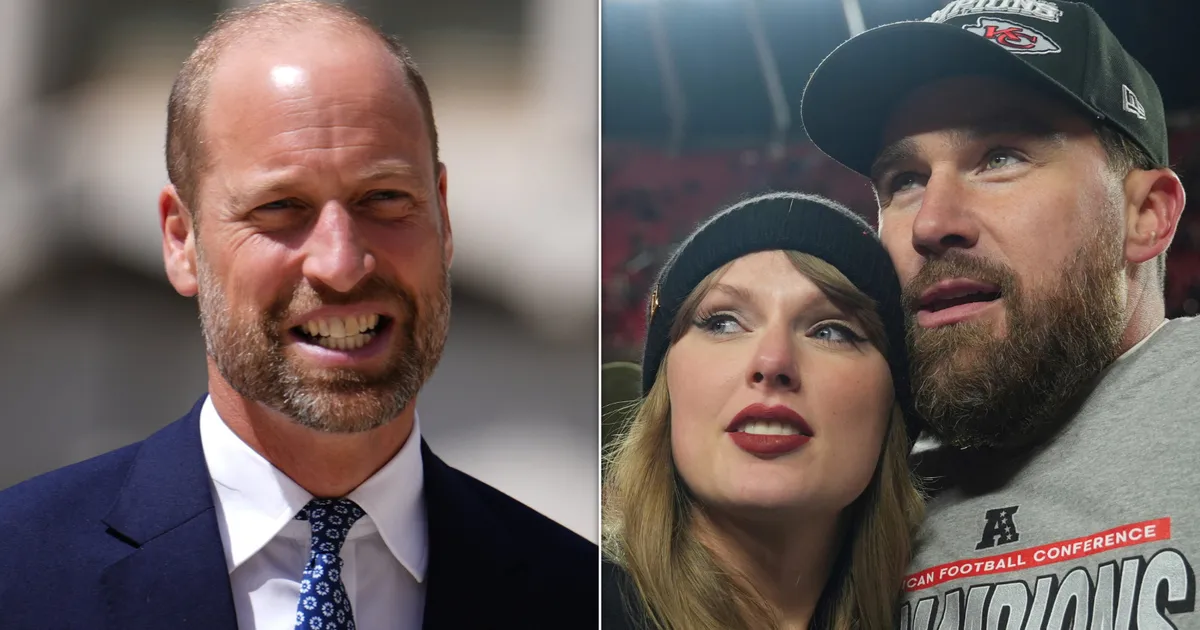
But just as the speculation is reaching its fever pitch, a surprise guest – Prince William – has been announced for Travis and brother Jason Kelce’s podcast, due out tonight at 5pm BST (12pm ET).
“Our guest today is the six foot three Prince from London, England,” Jason began the clip.
“That’s right – the president of the English Football Association, the Vice Royal Patron of the Welsh Rugby Union, the Duke of Cambridge, the Duke of Cornwall, the Lord of the Isles, Prince and Great Steward of Scotland, Earl of Chester, and the Prince of Wales.
“92 percenters, please welcome His Royal Highness, Prince William!”
Though the appearance will fall just as Taylor and Travis’ wedding is speculated to be taking place, the BBC says that the Prince likely won’t be in attendance.
Nor will Kate, they added.
This comes despite William’s previous comment about the much-anticipated wedding – “I’m sure that there might be an invitation around,” he said on Heart breakfast radio.
It’s not the first time the Prince has been linked to the singer.
In 2024, Taylor shared an Instagram picture of herself with William, Travis, and the Prince’s children, George and Charlotte.
She wrote, “Happy Bday M8! London shows are off to a splendid start.”
That was part of Prince William’s 42nd birthday celebrations.
Taylor and William also performed a rendition of Living On A Prayer at a charity event in 2013.

“Nigel Farage is dead in the water,” Piers Morgan boldly declared on the BBC last Sunday.
The broadcaster said the Reform UK leader has been left “rattled” by the row over the undeclared £5 million gift he received from a crypto billionaire.
Farage received the huge lump sum just before he announced he was running in the general election back in 2024.
Though he insists he has not broken any rules, he is being investigated by parliament’s standards watchdog for not declaring the money when he was elected MP for Clacton.
If he is found guilty, Farage could even face a by-election if he is suspended from parliament for longer than 10 days.
But a senior Reform UK source told HuffPost UK: “If Labour are smart, they’ll suspend him for nine days, which would mean he’s guilty but wouldn’t trigger a by-election.
“If they’re daft enough to suspend him for longer, Nigel would easily win the by-election and could then just turn around and say voters don’t care about it whenever the £5 million gift gets brought up again.”
It is Farage’s reaction to the furore which has raised eyebrows among his political allies, as well as as enemies.
Not so long ago, it was virtually impossible to switch on the TV or radio without being confronted by Farage’s grinning face, while he was holding press conferences the length and breadth of the country on a weekly basis.
But since the Harborne story was broken by The Guardian in April, he has been noticeably more camera-shy.

And when he has made himself available for scrutiny, his explanation for the gift, and what he plans to do with his massive windfall, has been far from consistent.
At first, he said the funds were to be spent on his private security, then he claimed it was given to him as a reward for his Brexit campaigning.
On a round of car crash interviews two weeks ago, he insisted it was no one’s business but his, and he could spend the money on Ferraris if he wanted to.
Farage has also insisted that the money was unconditional, but he now faces the prospect of a second parliamentary probe over claims he lobbied the Bank of England to drop a cryptocurrency plan that could have impacted Christopher Harborne’s own business.
Questions about Farage’s personal finances emerged again this week when it was revealed he was paid £270,000 – or £22,500 an hour – to promote a gold bullion company.
To make matters worse, The Times revealed on Wednesday that Farage has a property empire worth £4 million – with only two out of five his homes being declared to parliament.
Farage denies any wrongdoing, but even his own supporters are concerned about the effect the various controversies are having on the Reform leader.
“Nigel is tired and stressed,” said one ally. “He needs to have a rest.”
As the party’s frontman, recent months have been especially punishing for Farage.
He led his party’s campaign in the May 7 elections, which then straight into the Makerfield by-election, which saw Andy Burnham comfortably defeat Reform’s Robert Kenyon.
That result confirmed that despite leading in the national opinion polls for the best part of two years, Reform’s electoral record has been decidedly patchy of late.
In February, the Greens’ Hannah Spencer defeated Reform’s Matt Goodwin in the Gorton and Denton by-election.
And last October, Plaid Cymru won the Caerphilly by-election for the Welsh Senedd, confirming that anti-Reform tactical voting is a major problem for the party.
This will once again be evident in the by-election for the Greater Manchester mayoralty at the end of July, which Reform insiders concede they are likely to lose to Labour.
Internal divisions risk rocking Farage’s party, too.
Tensions between senior figures have burst into the open, with home affairs spokesperson Zia Yusuf publicly slapping down Treasury spokesperson Robert Jenrick in May over Reform’s own immigration plans.
Some see that as a foretaste of the jockeying for position which would inevitably take place if Farage did decide to chuck it all in – a scenario he openly speculated on in a recent LBC interview in which he also refused to say he wants to be prime minister.
Former Reform chair David Bull said earlier this month that Farage is not bigger than his party, but few believe that it would be business as usual for Reform should he end up being replaced by one of his underlings.
It is far too early to write Farage off, however.
This is a man, after all, whose time in the public eye appeared to be over until he made the unlikeliest of comebacks by coming third on I’m A Celebrity … Get Me Out Of Here! in 2023.
His victory in Clacton in 2024 also followed seven previously unsuccessful attempts to get a seat in the Commons.
If there is one thing Farage is good at, it is defying the odds.
Who, for instance, would have thought he would successfully campaign to take the UK out of the European Union when he first emerged on the political scene as chairman of the UK Independence Party back in 1998?
In this week’s Commons People podcast, we examine the row threatening to bring down the Reform leader – and assess whether or not the end really is nigh for the comeback kid of British politics.
Listen to Commons People, the podcast that makes politics easy. Every week, Kevin Schofield and Kate Nicholson unpack the week’s biggest stories to keep you informed. Join us for straightforward analysis of what’s going on at Westminster.

spiked is funded by readers like you. Only 0.1% of regular readers currently support us. If just 1% did, we could grow our team and step up the fight for free speech and democracy.
Become a spiked supporter and enjoy unlimited, ad-free access, bonus content and exclusive events – while helping to keep independent journalism alive.
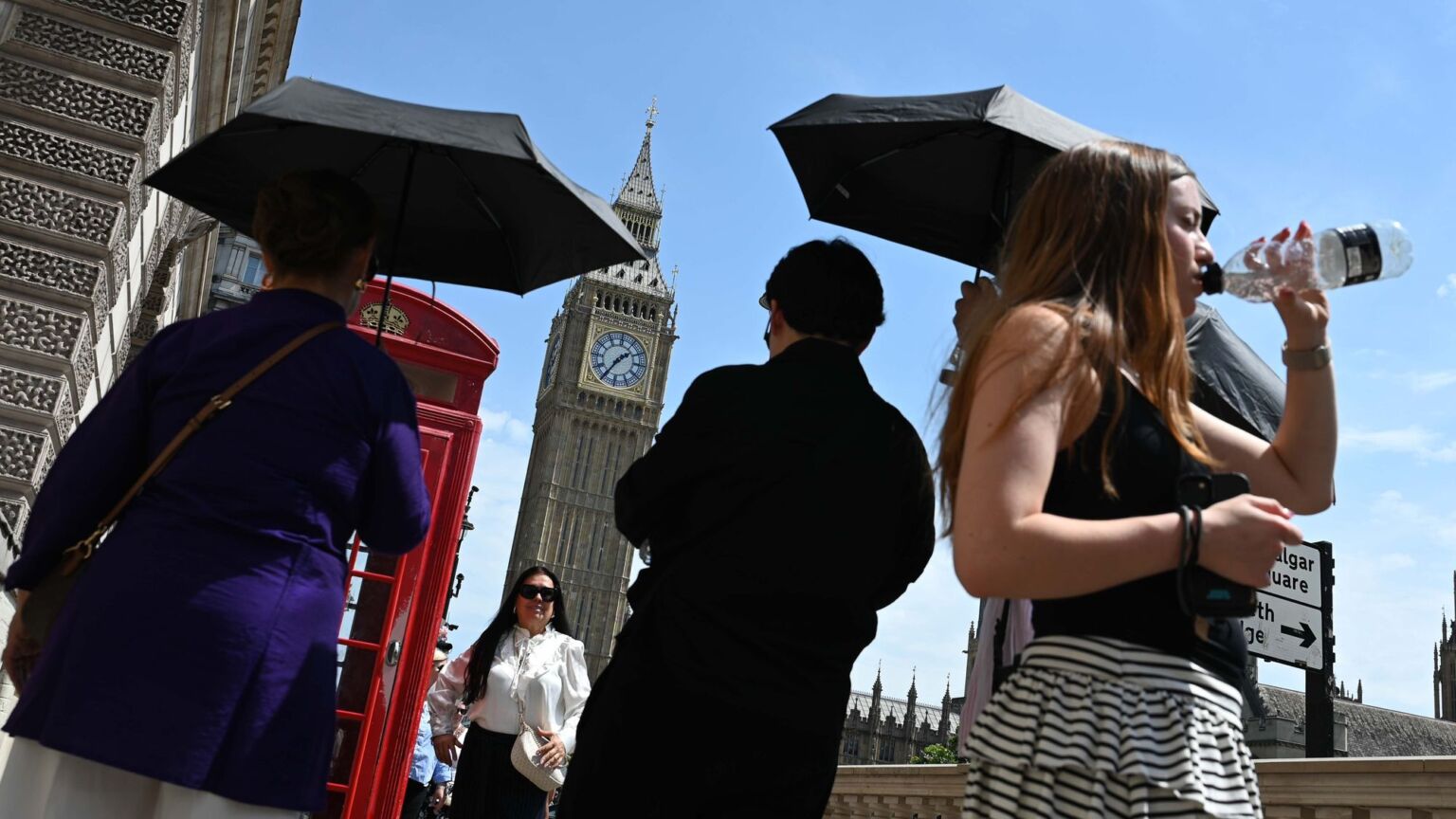
There’s nothing like a heatwave to shine a light on the medieval lunacy of eco-alarmism. The minute the thermometer spikes, all the bourgeois doomsayers are on their soapboxes haranguing humankind. This is ‘hell on Earth’, they cry. It’s ‘global boiling’, they wail. A ‘hound from hell’ is dragging the heat of the ‘Underworld’ into our world, say media scribes, like absolute nutters, blissfully unaware of what faux-priestly, pre-modern fools they sound to the rest of us.
And of course – you already know this – it’s all our fault. We brought this hell upon ourselves by flying and driving and existing. We are reaping the scorched harvest of our own sinful endeavours. As the UN’s climate chief says, it’s our ‘addiction to burning coal, oil and gas’ that is making the crimson sun blare so brightly and causing ‘climate change [to] run rampant’. Your modern living is ‘boiling the planet’ and ‘wrecking our world’, nagged a Guardian writer this week. Repent! Sweat!
Is anyone else tiring of this? Has anyone else had a gutful of the fact that we can’t even enjoy a hot day without being accused of planetary genocide by posh twats in haircloths? Is anyone else sick of those weather maps where the hot countries are Merlot coloured to drive home the crank idea that Cerberus himself has risen from the abyss to put his fiery ass-crack on our planet? I’m not even a fan of heatwaves – being Irish – yet I cannot abide this weaponisation of weather to bully the public.
It’s going to get worse – the heat and the hectoring. Another heatwave is coming. London might even reach 29C, cries the BBC, alongside a blood-red map of our scorched capital. Am I allowed to say that Londoners frequently fly overseas to lounge around in weather hotter than that, or will I be accused of ‘heat-stress denial’? That’s the latest species of ‘denialism’, according to mad old George Monbiot, who says the ‘billionaire press’ has ‘hit rock bottom’ with its denial of the ‘impacts of the heatwave’. We could strap them to the stake for their blasphemous speech, but apparently we’re all on the stake now – we’ve ‘[set] fire to the planet’, says Monbiot. Witches burn themselves these days.
No one is ‘denying’ the impact of the heatwave, of course. Certainly not me. I had to flee a London bus last week. It was a sweatbox on wheels, a rolling tomb of flushed bodies. If only we had air conditioning. But green hysterics, including Monbiot’s own paper, have been wringing their untoiled hands over AC for years. ‘It’s destroying the planet’, said the Guardian during last year’s heatwave. It’s ‘philosophically problematic’, apparently. Nothing – and I mean nothing – better captures the supercilious indifference of our eco-overlords than this vision of a well-fed Guardianista telling the sun-baked masses that it’s ‘philosophically problematic’ to cool your home in a heatwave.
It’s the cruelty of the heatwave hysterics that most startles. For years the climate-change cult has warned us that Earth will shortly be consumed by a hellfire of Man’s own making. Yet anyone who said ‘Let’s get air-con, then’ was damned as a devilish contributor to these End Times fires. The Wall St Journal asked an apt question this week: ‘Europe is hot as hell – why doesn’t it want air-conditioning?’ It reported on the hospitals of our Old World where the ill and elderly are ‘forced to endure… heatwaves’ because their well-fanned rulers have decreed that air-con is an ‘energy-hungry technology’ that undermines ‘the fight against climate change’. The fantasy cause of ‘saving the planet’ takes precedence over the earthly cause of saving the sick from heat.
Air-con is ‘not the solution’, says Time. I don’t know, it’s the solution to my sweating. More importantly, it’s the solution to the sweltering discomfort of elderly folk forced to live in heat-trapping homes and poorly people crammed on to roasting wards because society now fears a fictional apocalypse more than disease. There will be excess deaths this summer, and that’s awful. But it’s far more the fault of the eco-preaching classes than it is of the polluting masses. A hill I’ll die on: the climate-change ideology is a worse killer than climate change itself. I mean, it isn’t Mother Nature going into people’s homes and ripping out the air-con.
This is the story of our times: the elite panic about modernity is far deadlier than modernity. The truth, as Bjorn Lomborg says, is that deaths from climate-related disasters have plummeted in the era of industry. In the 1920s, half-a-million souls perished each year in storms, floods, droughts and heatwaves. In 2020, it was just 14,000. Global annual deaths from climate madness fell by 96 per cent. It is those who libel modernity as a uniquely murderous phenomenon who are signing the death warrant of humankind, for they seek to roll back the very developments that have insulated us from the violent whims of nature. Which includes air-con. To agitate against AC even in a heatwave is to exhibit a staggering misanthropic disregard for one’s fellow humans, especially the vulnerable ones.
And yet still they come, the heatwave hysterics, demonising the very tech that defends us from the heat and wind and water of amoral Nature. ‘[It] seems like End Times – and it’s our own damned fault’, said a green-leaning writer of recent heatwaves. The 2023 heatwave was christened Cerberus, after the hound from hell who rips sinners apart. How fitting. ‘Cerberus’s inferno’, newspapers cried. Even Greta Thunberg, the most celebrated hysteric of our age, has taken a break from berating the Jewish State to say, basically, ‘Fuck, it’s hot’. I guess that’s one upside of the hot weather – it will drag the attention of the idle pricks of the activist class away from the Jews and back to the ‘climate emergency’. Breathe easy, Israel – they’re wanging on about weather, again.
I’m sick of all this luxury apocalypticism. Its medieval strain is undeniable now. Just like our forebears, these fruitcakes see all weather – rain, storm, heat, hail – as a punishment from God / Gaia for our wicked ways. Though at least our ancestors had the excuse of being uneducated. Nature isn’t punishing us. We’re punishing ourselves. The greatest threat to humanity is not the weather but an elite that feverishly seeks to appease the gods of weather by winding back modernity. They’re the reason you’re baking. Rage against them, not the eye of heaven.
Brendan O’Neill is spiked’s chief political writer and host of the spiked podcast, The Brendan O’Neill Show. Subscribe to the podcast here. His latest book – After the Pogrom: 7 October, Israel and the Crisis of Civilisation – is available to order on Amazon UK and Amazon US now. And find Brendan on Instagram: @burntoakboy.
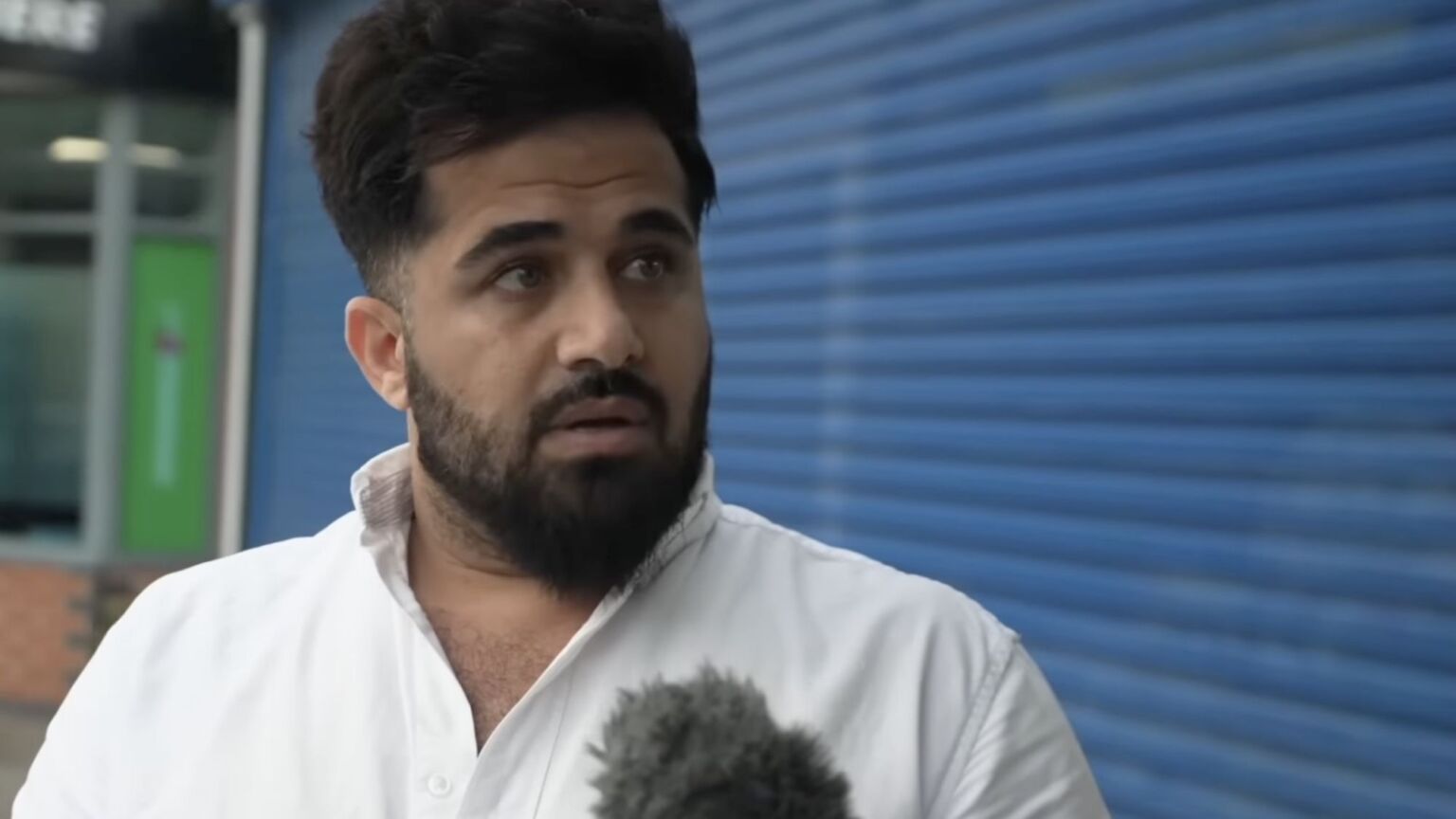
Since arriving in Britain, Twana Jamal prefers to go by the name ‘Sultan Pasha’, which translates to something like ‘King Lord’, or, more tautologically, ‘Ruler Ruler’. The name aptly describes the status the 46-year-old seems to think his new home, Blaby, a village in Leicestershire, has bestowed upon him. ‘We know everyone in this city’, he recently told an acquaintance in a conversation overheard by a BBC reporter. ‘This city is ours.’
Jamal, an Iraqi Kurd, was convicted of people smuggling in France in 2016 and sentenced to five years in prison. French authorities described him as one of the most prolific people smugglers on record, earning around £100,000 per week at the time of his offences. Now, Jamal is applying for asylum in Britain, while reportedly driving without a licence and working in vape and sweet shops owned by his brother.
Watching Jamal being doorstepped by the BBC at one of those shops is a perfect illustration of the absurd farce the British state calls its asylum system. The man lies like he sells flavoured nicotine vapour – which, of course, he also denies doing.
‘Have you told the Home Office you’re a convicted people smuggler?’ the reporter asks. ‘Smuggler? I never did that.’ ‘The courts in France estimate you were the most prolific people smuggler they’d come across’, the reporter continues. ‘What’s the proof? What’s the proof?’ The reporter then asks: ‘why are you claiming asylum?’ ‘I’ve been here for a long, long time’, Jamal insists. ‘[B]ecause I was not safe in my country and then I came to this country.’
The conversation continues in this vein. After about 15 seconds, Jamal’s responses become tediously predictable: one sub-literate lie stumbles over the next, forming a tissue of untruths that all point in the most convenient direction for Jamal. After denying he had been imprisoned in France, the reporter shows him a picture of him in handcuffs. ‘This is you in France’, she says. ‘I don’t care. When was that?’, he asks. ‘2016! How many years ago? What to do with me now?’
There seemed to be genuine incredulity behind that objection, as if the past, for Jamal, had absolutely no bearing on the present, or indeed the future. A system that holds asylum seekers to be broadly benevolent and deserving of sympathy, in which it is far easier for bureaucrats to take them at their word than to justify in writing any nagging doubts they might have, is woefully ill-equipped for men like Jamal, for whom the truth is infinitely negotiable.
Jamal’s is not an isolated case. The BBC found more than 20 other smugglers residing in the UK, some of whom have convictions in Belgium, Germany and France. We can safely assume these individuals are themselves only a fraction of the full picture. Since Brexit, EU members have refused to share access to crime databases, such as Eurodac, which holds biometric data on individuals convicted of crimes in Europe.
Absent this data, it is hard to see how any asylum claim from Europe can be processed without the British public incurring the risks associated with indeterminate criminal backgrounds of their new neighbours. If the Home Office doesn’t know who these people are, how can the rest of us be expected to find out? This is a vast, reckless social experiment in which we have all been enlisted without our consent.
If Britain were a private company, entrusted with the care of vulnerable people, as it is, cases like Jamal’s would amount to criminal negligence. Fines would be issued and executives likely prosecuted. Yet as things stand, the anonymous officials who have allowed him to remain in the country face no penalty for having done so. The only punitive outcome will be absorbed by the people of Blaby, who can only hope Twana Jamal was exaggerating when he said, ‘This city is ours’.
Michael Murphy is a journalist at Outpost.
Politics
The House | “Reframing the debate from a binary discussion of winners and losers”: Yuan Yang reviews ‘We Are Not Machines’
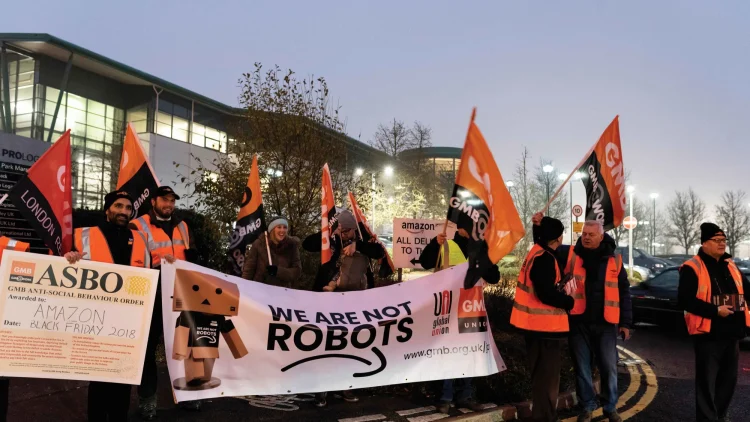

Image by: David Isaacson/Alamy Live News

3 min read
Sarah O’Connor’s examination of technological change is an engrossing discourse on power, politics and humanity
“I used to be a techno-optimist,” writes Sarah O’Connor, the Financial Times columnist, in her debut non-fiction book We Are Not Machines. After starting her career in journalism with a brief stint at The House magazine, O’Connor spent over a decade making a name for herself at the FT through her bold coverage of the world of work, including award-winning investigations into clothing sweatshops in Leicester and “shit-life syndrome” in Blackpool – both discussed in Parliament. O’Connor had seen plenty of bad jobs, she writes: “Why not turn over jobs like these… in which people are expected to work like machines – to the machines?”
Ten years on, O’Connor is not a techno-pessimist either. Instead, she thinks that economists and tech bosses are posing the wrong questions about the rise of artificial intelligence. Rather than pitting humans against machines, she wants to uncover the humans on both sides of the equation: workers, who sometimes try to use AI at work without supervision, and managers, trying to automate the workplace.
O’Connor’s favoured method of reporting is one that “gets [her] shoes dirty”, whether at an Amazon strike near Birmingham, down a mine shaft in Sweden, or on a home visit with a social care company in France.
At the heart of this book is an exploration of how humans not only make tools, but are shaped by them
But while all the people she interviews have access to roughly the same global suite of AI tools, what happens in each setting differs because of the human relationships within them. In one chapter, she visits a Swedish mine run by Boliden, a company that prides itself on its automation experiments. Here, union representatives have seats on the company board, and worked with the management to introduce self-driving, remotely monitored trucks to extend the lifespan and productivity of their mine. They negotiated to do this while preventing new tech features that the workers feared, such as excessive surveillance.
The result was a ‘Swedish compromise’, including Boliden asking its software supplier to redesign technology according to the union’s concerns. Both sides got a far better deal than they would have otherwise. A union official tells O’Connor that their members were “more friendly to doing new things”, and praised the doubling of productivity through automation. In O’Connor’s telling, the fact that both sides had the power and information to be equal partners, and had worked with each other for decades, led to trust, which then led to the ability to navigate change effectively.
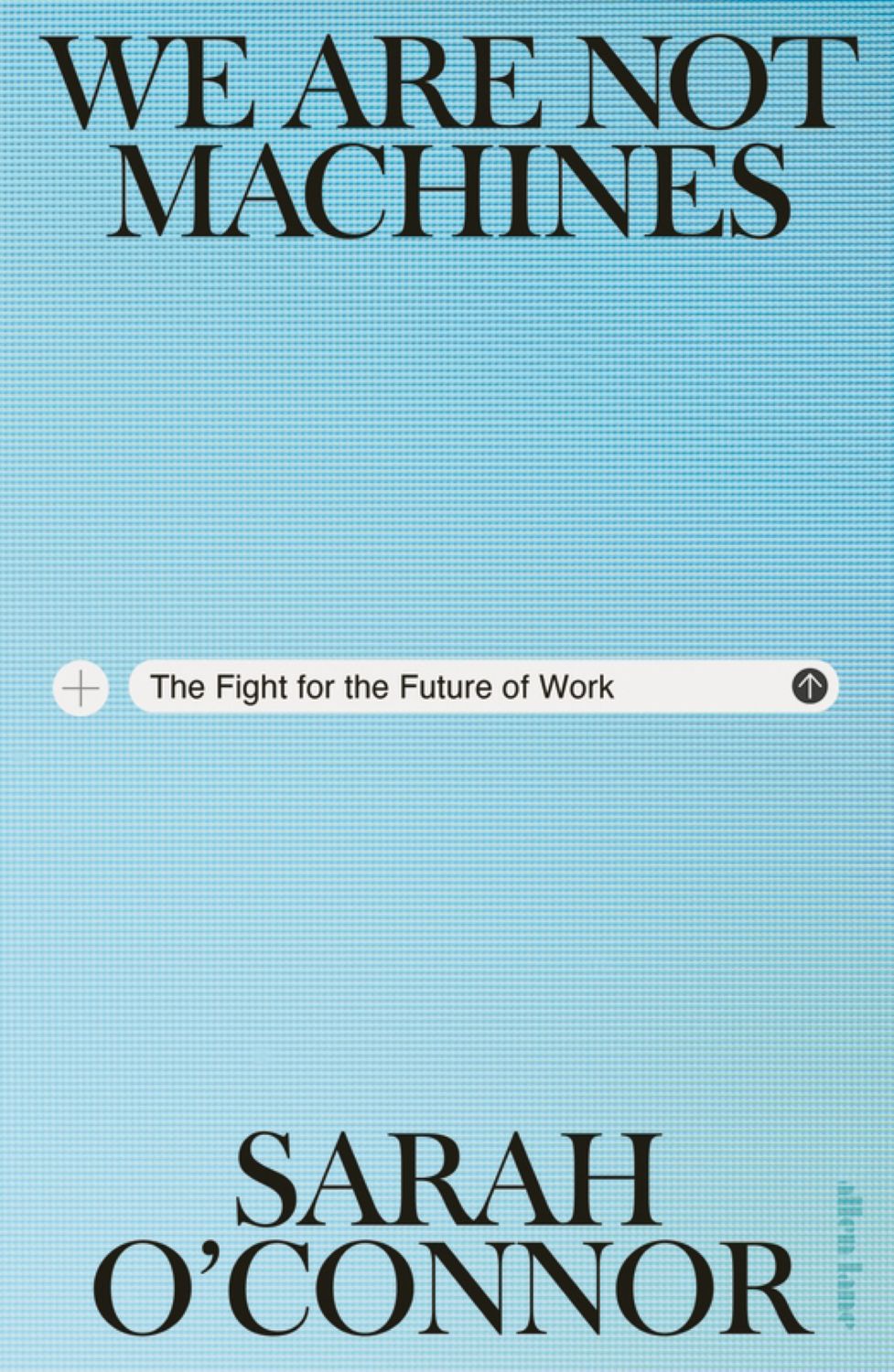 We Are Not Machines is an engrossing read that reframes the ongoing debate about technological change away from binary lists of winners and losers, and towards a discussion of power, politics and humanity. It is well-rooted in economic history yet brisk, taking in the development of factory management since the Industrial Revolution, and why John Ruskin rued that “it is not… the labour that is divided; but the men – divided into mere segments of men”.
At the heart of this book is an exploration of how humans not only make tools, but are shaped by them.
“The future of work can be more worthy of the human mind, more careful of the human body, more satisfying to the human soul,” she concludes. “But not without a fight.”
Yuan Yang is Labour MP for Earley and Woodley
We Are Not Machines: The Fight for the Future of Work
By: Sarah O’Connor
Publisher: Allen Lane

We’ve just sent this letter to the Crown Office and Procurator Fiscal Service.
Dear Sirs/Madams,
Thank you for your response, which I have considered with care.
I note you have advised that “full consideration was given to whether the crime of fraud could be established. That investigation did not disclose sufficient evidence of fraud, or for any crime other than the crime of embezzlement. These conclusions were agreed by the procurator fiscal, by Crown Counsel who was a KC and by a reviewing KC.”
I agree that the evidence to which I have pointed demonstrates the crime of embezzlement, as I said to you in my previous correspondence. The point is, however, that there are two instances of embezzlement: that to which Mr Murrell pled guilty (ie his embezzlement from the SNP); and that which has seemingly not been the subject of investigation and certainly not prosecution, for reasons which remain unclear.
The evidence to which I have pointed admits of little doubt. In short:
- Money was ingathered by the SNP on the basis of assurances that it would be “ringfenced” for defined purposes
- That money was thereafter subject to a trust under Scots law, in terms of which it could only be spent for those defined purposes
- The First Minister of Scotland has now confirmed that the money was spent on other matters.
It really is that simple. It defies belief to think that the Procurator Fiscal and two KCs could look at that simple factual matrix and conclude that there was no evidence of a crime.
That being so inherently unlikely, I can only assume that those involved were not considering that point, and were (as your last reply suggests) considering rather whether or not it could be shown that fraud was involved in the solicitation of donations. I can quite understand that proving fraudulent intent at the time the donations were sought would be difficult.
But again (and at the risk of repetition) that is not the point. Assume that the donations were solicited in bona fide for the defined purposes: thus no fraud in ingathering the money.
That does not answer the question which I am posing, which is on what possible basis could it be lawful for those donations then to be spent on anything other than the defined purposes for which they were solicited?
I thus invite you to reconsider.
I should say that I have instructed the drafting of civil proceedings based on fraudulent breach of trust, which as I am sure you are aware is the civil equivalent of embezzlement.
Given that fact, I dare to suggest that it would be rather embarrassing for the Crown Office to be found to have ignored repeated requests to look at this very point if a civil court decides that what I have described above as a simple factual matrix does indeed show that which I contend is blatantly obvious: embezzlement, in the form of the wrongful use of money held on trust by those to whom it had been entrusted.
Regards etc,
Rev. Stuart Campbell
As ever, we’ll keep you updated.


ESMA Warns Prediction Market Event Contracts May Breach EU Retail Ban

Julie Chen Talks New Season Of ‘Big Brother’

My Crypto Bull Thesis Has A Timeline…(ALTCOIN Reversal?)


-

 Tech6 days ago
Claude Code turned every engineer into three. Now companies need more product thinkers
-

 Crypto World4 days ago
Strategy authorizes up to $1.25B in Bitcoin sales under new capital plan
-

 Politics7 hours ago
The House | “Reframing the debate from a binary discussion of winners and losers”: Yuan Yang reviews ‘We Are Not Machines’
-

 News Videos5 days ago
MAJOR BITCOIN & MARKET UPDATE!!!! (MUST WATCH ASAP!!!)
-

 Tech4 days ago
Anonymous researcher drops 0-day ‘exploitarium’ repo
-

 Crypto World6 days ago
Coinbase, Circle Deepen Crypto Stock Losses Despite Resilient S&P 500
-

 Business4 days ago
Australia treasurer says alleged access of prime minister’s bank data ’incredibly concerning’
-

 Crypto World7 days ago
Kraken's xStocks Opens Bending Spoons IPO Registration to EEA Retail
-

 Sports7 days ago
FIH Pro League: India defeat Pakistan 7-1, register biggest win of campaign | Other Sports News
-

 Tech6 days ago
Bluekit phishing kit adopts browser-in-the-middle for login theft
-

 Tech6 days ago
Russian hackers now target Signal backup recovery keys
-
 Business4 days ago
The AI boom won’t burst all at once. It will pop in ‘rolling bubbles’: Macquarie
-

 Sports2 days ago
Broncos roster: OL Ben Powers (No. 74) entering final year of contract
-

 Tech6 days ago
Silicon Valley paid to kill AI regulation, now it wants the rules back
-

 NewsBeat3 days ago
Presenter Caroline Flack’s brother Paul Flack dies aged 55
-

 Crypto World2 days ago
Binance stock trading tops $1B in first month after launch
-

 Tech6 days ago
OpenAI mulls delaying IPO over valuation concerns
-
 NewsBeat1 day ago
New exhibition reflects five decades of movement between island of Ireland and GB
-

 Crypto World2 days ago
Alibaba-affiliate Ant Group enters the humanoid robot market with 12 deals
-

 News Videos3 days ago
How to Build INSANE Live Financial Dashboards With Claude
You must be logged in to post a comment Login