

Crypto World
France orders ISPs to block Polymarket as scrutiny widens



France’s National Gambling Authority has ordered internet service providers to block Polymarket, escalating a regulatory dispute that began in 2024. The Autorité nationale des jeux, known as the ANJ, said the prediction market platform promotes gambling services that are not authorized under French law.
Summary
- France ordered internet providers to block Polymarket after earlier geoblocking failed to restrict local access.
- ANJ cited illegal gambling, absent identity checks, and concerns that weather sensors may be hacked.
- Czech and EU actions show prediction markets face growing pressure across several regulatory frameworks worldwide.
France ordered the block on July 16 after the ANJ said users had circumvented an earlier geoblocking measure. The regulator has monitored Polymarket since November 2024 over concerns that its prediction markets amount to unauthorized gambling services in the country.
France moves from geoblocking to an ISP block
The ANJ said prediction market websites qualify as illegal gambling services under French law. It also warned that promoting an unauthorized gambling platform can carry a fine of up to €100,000. The same penalty can apply to people who publicly share odds or payout ratios to promote unlicensed gambling services.
The regulator said Polymarket’s audience in France continued to grow despite the earlier restriction. It recorded 578,751 visits and 205,057 unique visitors in June 2026. The ANJ said the platform’s homepage continued to display live odds, which it viewed as promotion of an unauthorized service. The authority blocked 1,290 URLs in 2025 under its administrative powers.
France is not the only European country taking action against the platform. The Czech Republic recently ordered internet service providers to block Polymarket, as reported by crypto.news, after authorities classified the platform as an unauthorized gambling service.
Regulator raises questions over user checks and market integrity
The ANJ also cited concerns about how some event markets operated. It said some bets “appeared to be rigged” and that weather sensors linked to certain markets “may have been hacked.” French prosecutors opened a cybercrime investigation on May 4, with the case assigned to the Office for Combating Cybercrime.
According to the regulator, the investigation also found that Polymarket services available to French and European users lacked an adequate user identification system. The ANJ said stronger identity and location checks would be needed to prevent people in France from accessing the platform.
Concerns about how prediction markets settle contracts have also attracted academic attention. A Stanford-led study identified possible incentives for settlement-price manipulation, as reported by crypto.news. The research examined five-minute Bitcoin prediction markets and estimated that about $1.28 million shifted from regular traders to more sophisticated participants.
European scrutiny of prediction markets keeps growing
Regulators across Europe are taking different approaches to prediction markets. Some authorities treat the platforms as gambling services, while financial regulators are assessing whether certain contracts fall under securities or derivatives rules.
The European Securities and Markets Authority recently said some event-based contracts could qualify as financial instruments under MiFID II. As reported by crypto.news, contracts that fall under those rules could also face existing European restrictions on binary options offered to retail traders.
The different approaches reflect the structure of prediction markets, where users trade contracts based on the outcome of elections, sporting events, economic releases and other future events. France has taken the position that Polymarket operates as an unauthorized gambling service and has now moved from restricting transactions to blocking access to the website.
Polymarket also faces pressure outside France
Polymarket and other prediction market operators are also facing legal disputes in the United States. Kentucky sued several platforms, including Polymarket and Kalshi, accusing them of offering sports betting without state licenses.
The Commodity Futures Trading Commission later challenged state intervention in federally regulated event contracts. The regulator’s dispute with Kentucky is part of a broader fight over who has authority to oversee prediction markets. The CFTC sued Kentucky as the regulatory conflict widened, as reported by crypto.news.
Polymarket has also faced security concerns. A frontend phishing attack resulted in losses of about $3.1 million across 11 wallets, with affected users set to receive refunds.
France’s latest order adds to the growing number of restrictions facing prediction market platforms. The ANJ said it would continue monitoring Polymarket and any measures introduced to verify users’ identities and locations before they can access its services.

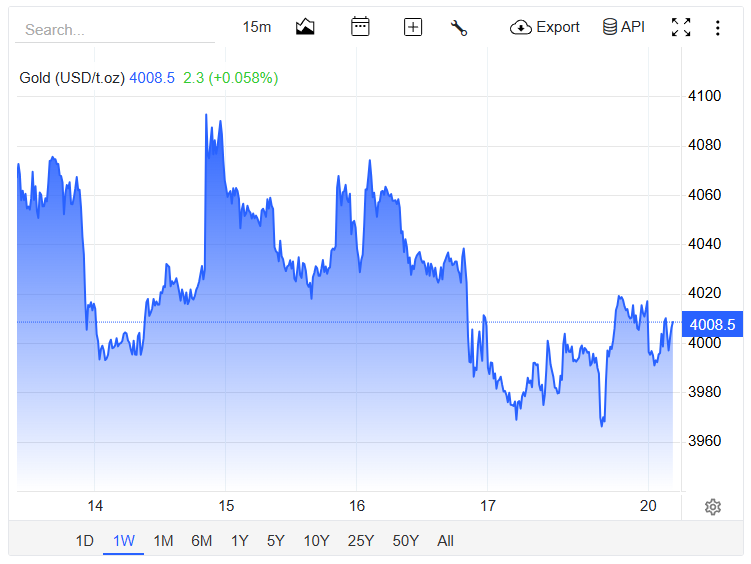
Gold managed to capture $4,000 an ounce Monday after spending the weekend just under that key psychological price point. Brent crude surged past $90 a barrel, and Federal Reserve officials pushed for a July rate hike.
The metal posted a 2.5% weekly loss last week. Gold briefly broke below $4,000, a level it first breached in late June for the first time since November 2025.
Oil Shock Reignites Inflation Fears
The US carried out a ninth consecutive night of strikes against Iran. Two American personnel died in Jordan, and allies reported fresh Iranian attacks Sunday.
The fighting pushed oil prices past $90 a barrel, reviving inflation fears just as June’s data showed cooling prices.
Meanwhile, Cleveland Fed President Beth Hammack joined a growing chorus of officials that argued interest rates may need to rise again. The comments set up a contentious debate at Kevin Warsh’s next meeting, with Warsh already signaling little patience for backsliding.
He told the House Financial Services Committee the Fed has
“no tolerance for persistently elevated inflation”
A Bear Market for Metals
COMEX speculators raised net long gold positions to 119,147 contracts in the week to July 14, CFTC data showed. That build suggests traders still expect further upside.

Gold’s pullback follows broader bear-market signals across precious metals. Silver has also seen a sharp pullback, and gold’s war-hedge performance has been uneven through the conflict.
Oil-driven war risk usually boosts gold’s safe-haven appeal. Here, the same oil spike is fueling rate-hike bets that punish non-yielding bullion instead. That dynamic could offset some safe-haven demand from the Gulf conflict.
Whether gold breaks below $4,000 again may depend on this week’s Fed comments and oil prices.
The post Gold Price Holds Above $4,000: Will Oil Surge Push It Lower? appeared first on BeInCrypto.


Kalshi has added three million new users during the 2026 FIFA World Cup, the prediction market platform told CNBC. Trading volumes across the platform also surged alongside the tournament.
More than $1.2 billion has traded on Kalshi’s contract predicting the World Cup winner, a record for a single market on the platform. That market closed Sunday, when Spain beat Argentina in the final, 1-0.
A Marketing Blitz Built for the World Cup
Kalshi leaned on soccer’s global reach to fuel the surge. Vijay Viswanathan, associate dean of integrated marketing communications at Northwestern University, said football’s presence in nearly every country gives it an addressable market few other events can match.
The platform partnered with ADI Predictstreet, FIFA’s official prediction market sponsor, for stadium co-branding deals during the tournament. Meanwhile, it also worked with OpenAI to surface its odds inside ChatGPT searches, alongside campaigns featuring soccer stars Luka Modric and Jose Mourinho, plus a partnership with the Argentina national team.
Kalshi CEO Tarek Mansour said the strategy prioritizes speed and relevance over volume alone.
“Our volumes are where the news is at.”
— Tarek Mansour, CNBC
Prediction Markets Still Face Regulatory Concerns
Despite the popularity, and the boom from the World Cup, predictions markets carry regulatory risk. Sports event contracts remain caught in a dispute between the federal government and several states, which argue the contracts function as sports betting. That fight has already produced a CFTC lawsuit against Kentucky this year.
In contrast, Brian Sung, a partner at law firm Haynes Boone, said the marketing push does not sway how courts might rule, but it shapes how regulators and the public view prediction markets.
Other bettors have felt the swings too. One Polymarket trader lost $11.6 million on World Cup wagers in early July, while rapper Drake has a five million dollar wager riding on Sunday’s final.
Kalshi now faces a familiar test. Volume drops on days without matches, a pattern Mansour said has repeated after past major events.
He expects fresh catalysts, not a slowdown, to keep prediction market volume climbing once the World Cup ends.
The post Kalshi Adds 3 Million Users During FIFA World Cup Boom appeared first on BeInCrypto.
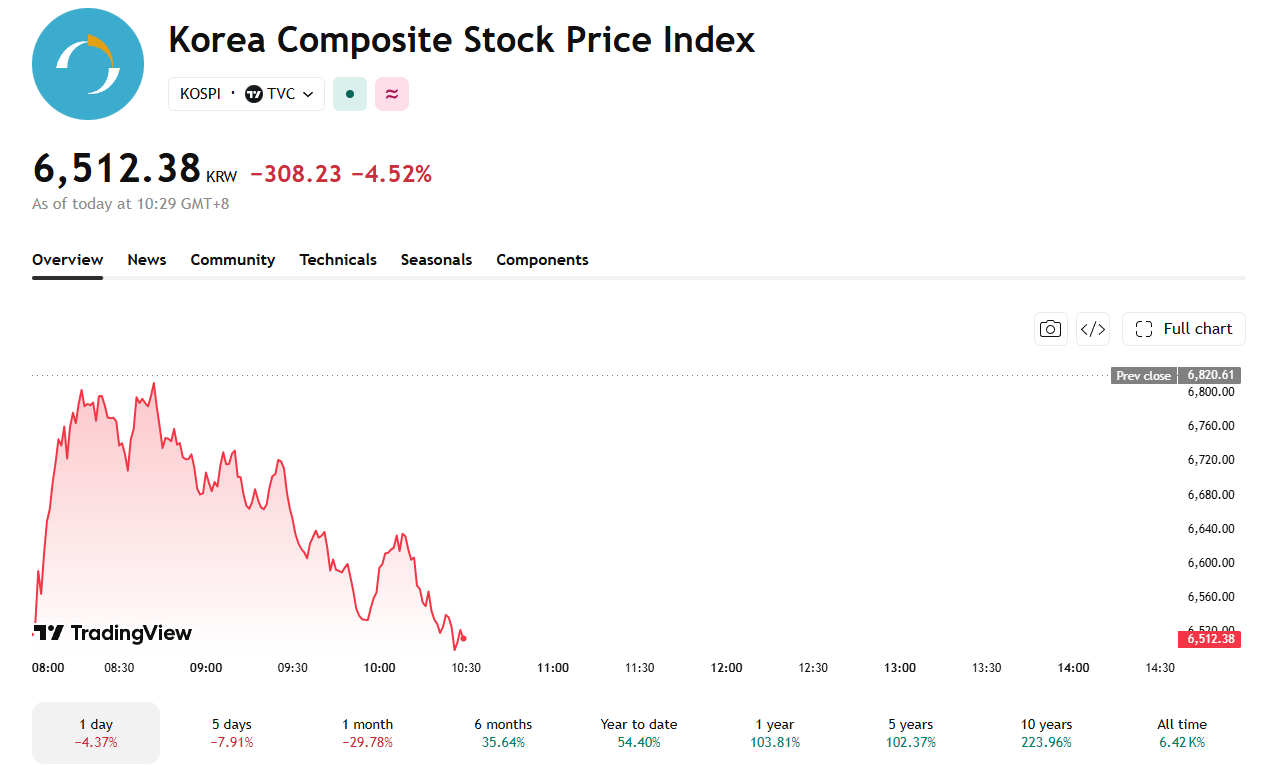
South Korea’s KOSPI index reopened lower on July 20, its first session since Friday’s Constitution Day holiday. The index slid as low as 6,498 points before paring some losses.
The drop pushed the index more than 25% below its June peak, meeting the threshold for a technical bear market. Chip-sector jitters compounded with an escalating US-Iran conflict to drive the slide.
Chip Stocks Swing Hard on Reopening
Samsung Electronics and SK Hynix stock both opened down more than 5% before foreign investors moved in. The Philadelphia Semiconductor Index shed 4.3% while Korean markets stayed shut for the holiday last Friday. Rising competition from Chinese AI models added further pressure on the memory chip trade.

Foreign investors net bought 278.4 billion won ($187.1 million) in early trading, concentrated in electronics stocks. Retail investors net sold 300.8 billion won over the same window. Han Ji-young, a researcher at Kiwoom Securities, said the decline reflects how far leading stocks have fallen.
“Since July, the KOSPI has dropped by about 25% from its peak, entering a technical bear market. A sharp decline of 30–40% in leading stocks such as Samsung Electronics, SK Hynix, and Samsung Electro-Mechanics is amplifying the sense of decline.”
Won Slides as Middle East Risk Builds
The won-dollar rate opened at 1,488.3, extending its slide while oil prices climbed on fears that the conflict could disrupt the Strait of Hormuz. The stronger dollar added to import-price pressure already building after the Bank of Korea’s first rate hike since 2023.
Analysts see this week’s US hyperscaler earnings as the next catalyst. Alphabet reports July 22, with Microsoft, Meta, and Amazon following before month’s end. Their capital spending outlooks could determine whether chip stocks find a floor or extend the slide.
The post KOSPI Falls Over 4% as Trading Resumes After Holiday, Deepening Bear Market appeared first on BeInCrypto.


Alibaba’s Qwen team unveiled Qwen3.8-Max-Preview on Sunday, July 19, a 2.4 trillion-parameter model the company calls its most capable system yet. Alibaba said the model rivals the world’s top AI systems and trails only Anthropic’s Claude Fable 5.
The debut follows days after Moonshot AI’s Kimi K3 stunned markets with a 2.8 trillion-parameter release. Alibaba’s timing suggests China’s AI labs are racing to claim the next benchmark before rivals do.
Qwen3.8-Max Lands on Alibaba’s Developer Platforms First
Alibaba published the news through its official Qwen account on X. The company described Qwen3.8-Max as one of the most powerful models available today. Developers can already test the system through Qoder and QoderWork, Alibaba’s coding platforms. A separate Token Plan tier covers pricing for international and domestic users.
Alibaba did not disclose training data size or independent benchmark scores beyond the parameter count. The company plans to release the model’s weights publicly soon. This open strategy has already helped Qwen gain ground on Anthropic and OpenAI. That access differs sharply, however, from closed systems such as Fable 5. Meanwhile, Washington continues to tighten export rules on rival Chinese systems.
Kimi K3 Raises the Stakes for Chinese AI
Qwen3.8-Max arrives amid fierce competition among Chinese developers. Moonshot AI’s Kimi K3 recently pushed Fable 5 into second place on a closely watched AI coding leaderboard. Bloomberg reported that Kimi K3’s debut jolted global technology stocks and reshaped perceptions of China’s AI capabilities. Moonshot is now preparing a Hong Kong IPO after the model’s debut, seeking a valuation near $30 billion.
Alibaba has not named Kimi K3 directly. Still, the timing of its own preview suggests otherwise. Both companies are racing to prove that Chinese labs can match the leading systems built in the United States. Consequently, each new release now invites direct comparisons with Fable 5.
Why the Apple Intelligence Deal Matters
Alibaba’s announcement builds on a separate win. China’s Cyberspace Administration approved Apple Intelligence for local release this month. Alibaba will serve as a technology partner for the service, alongside Baidu, TechNode reported. The approval matters because it puts Qwen in front of millions of iPhone users in China. Qwen models will power Apple’s on-device AI features there, covering text, image understanding and content generation.
The dual wins position Alibaba as both a model developer and an infrastructure partner in China’s AI market. Chinese systems already process far more tokens each month than American rivals. That shift has rattled US chip stocks, as investors question who leads the AI race.
Whether Qwen3.8-Max keeps its number two ranking may depend on independent tests once Alibaba publishes the weights for outside researchers to check.
The post Alibaba’s Qwen3.8-Max Follows Kimi K3 Release: Another Chinese Challenge to Fable 5? appeared first on BeInCrypto.
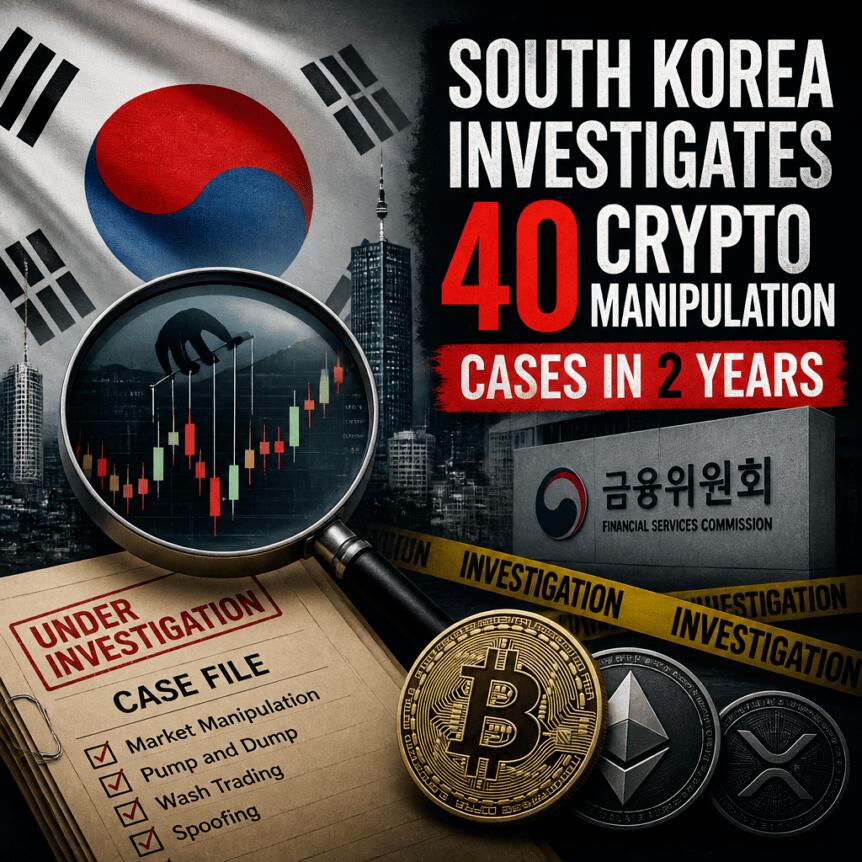
South Korea’s Financial Services Commission (FSC) says it has investigated more than 40 cases of alleged unfair trading involving digital-asset markets over the past two years, ranging from market manipulation to fraudulent crypto trading.
In a post on X, FSC Chair Lee Eog-won reported that 30 of the cases were referred to investigative bodies or reported for further action. He also said the commission identified 25 suspects after the Virtual Asset User Protection Act took effect in July 2024.
Key takeaways
- FSC investigations covered more than 40 unfair trading cases across the past two years, including suspected manipulation and fraud.
- After the Virtual Asset User Protection Act began in July 2024, Lee said the FSC identified 25 suspects and referred or reported 30 cases.
- Lee estimated average unlawful gains at about 1.4 billion won (roughly $940,000) per case.
- The law requires crypto service providers to separate customer deposits and holdings from company assets, with client funds kept in banks.
- South Korea plans to keep expanding AI-assisted surveillance and concentrate on “high-risk areas.”
What the FSC says it has uncovered
Lee Eog-won’s update frames the investigations as a step toward bringing previously less-regulated digital-asset activity under stronger oversight. According to his account, the FSC investigated “more than 40 cases” of alleged unfair trading such as market manipulation and fraudulent trading behavior within the last two years.
Lee added that, within that set of matters, 30 cases were reported or referred to investigative agencies. He linked the period after July 2024—when the Virtual Asset User Protection Act began—to a more structured enforcement pipeline, saying 25 suspects were identified following the law’s implementation.
He also provided an estimate for enforcement economics: average unlawful gains were around 1.4 billion Korean won (about $940,000). While the figure doesn’t break down how gains were calculated in each case, it underlines the FSC’s message that the alleged violations were financially material, not merely technical rule breaches.
How the Virtual Asset User Protection Act changes enforcement
The Virtual Asset User Protection Act is designed to protect users who buy or store crypto assets through regulated virtual asset service providers (VASPs). In practical terms, the FSC highlighted that VASPs must segregate customer deposits and virtual assets from their own corporate holdings.
Under the framework Lee referenced, client deposits are held in banks rather than being commingled with the provider’s own funds. This structure is intended to reduce the risk that customer assets are impaired or diverted if a firm faces operational or financial stress.
The law also targets trading misconduct such as insider trading, wash trading, and market manipulation. Importantly for market participants, the FSC’s role extends beyond licensing and basic compliance: the commission can supervise and inspect VASPs more directly, giving it a clearer enforcement mandate tied to specific categories of prohibited conduct.
Surveillance and AI monitoring—what Lee says will come next
Beyond prosecution and referrals, the FSC chair indicated a continued push to upgrade the monitoring systems used to detect wrongdoing. Lee said the FSC will enhance market surveillance investigation and monitoring systems “based on AI,” and will respond proactively to “high-risk areas.”
That language suggests authorities plan to refine detection for patterns associated with manipulation and other unfair trading tactics, rather than relying solely on post-event investigations. For traders and compliance teams, the key implication is that automated or AI-assisted tools may increasingly shape which activities are flagged, investigated, and escalated for enforcement.
It is also notable that Lee’s update ties enforcement activity to a legal milestone: the second anniversary of the user protection legislation. The emphasis on surveillance capacity—rather than only outcomes—points to an enforcement strategy that seeks earlier identification of misconduct, which can affect how VASPs structure compliance controls and how quickly suspicious behavior is escalated.
Why these enforcement numbers matter to the market
The FSC’s figures—more than 40 investigated cases over two years, with 30 referred or reported and 25 suspects identified after the July 2024 start—serve as a signal to South Korea’s crypto ecosystem that regulatory scrutiny is not limited to paperwork or isolated cases.
For investors, the segregation requirements described by Lee are intended to improve the safety of customer funds. For VASPs, the shift is both operational and reputational: firms must demonstrate that they can comply with asset separation rules while also meeting expectations around market integrity and monitoring.
For traders, the reference to insider trading, wash trading, and market manipulation matters because it underscores that the regulator is actively focused on the mechanics of trading—not just the availability of crypto services. As AI monitoring expands, the compliance burden may increasingly include data-driven controls and more robust reporting processes designed to reduce the risk of violations that authorities can detect and pursue.
Related coverage: South Korea to bring digital assets under new state asset management system.
Going forward, investors and market operators should watch whether the FSC’s AI-assisted surveillance results in a higher rate of referrals and sanctions tied specifically to the law’s protected-user requirements and trading-integrity rules, and whether the average unlawful gains figure is followed by more detailed breakdowns that clarify how investigators assess proceeds and harm.


Allbridge Core paused its protocol after an attacker exploited its stablecoin liquidity pools, with blockchain tracker Onchain Lens estimating losses exceeding $1 million.
The incident adds to a growing number of attacks targeting crypto protocols, with exploits resulting in $57.8 million in losses in July 2026.
How the Allbridge Exploit Unfolded
Onchain Lens reported that Allbridge Core suffered an exploit on Solana, resulting in losses of more than $1.1 million.
According to the firm, the attacker used a $1.12 million USDC flash loan from Kamino to manipulate the protocol’s USDC/USDT stablecoin pool through a series of rapid swaps, distorting the pool’s ratios before withdrawing liquidity at inflated values.
The attacker repaid the flash loan within the same transaction. That move extracted roughly $1.1 million.
Onchain Lens added that the stolen funds were later routed through privacy protocols to obscure their movement. The post also identified the largest single withdrawal at $2.24 million USDC.
Follow us on X to get the latest news as it happens
Allbridge Seeks Recovery of Funds After Exploit
Allbridge paused the protocol as a precaution and opened an investigation. It said the imbalance briefly opened an arbitrage window for some traders. Allbridge asked traders who profited from the imbalance to return funds.
The team said they aim to “return all affected funds.”
“If you took advantage of it, please consider returning funds to the address below – this will go directly toward compensating affected LPs. 0x01a494079DCB715f622340301463cE50cd69A4D0,” the post read.
The latest attack follows another flash loan exploit that targeted Allbridge in April 2023. In that incident, an attacker exploited an Allbridge pool in the BNB network, resulting in losses of approximately $570,000.
BeInCrypto has reached out to Allbridge for comment.
Subscribe to our YouTube channel to watch leaders and journalists provide expert insights
The post Allbridge Core Pauses Protocol After Attacker Drains More Than $1 Million appeared first on BeInCrypto.
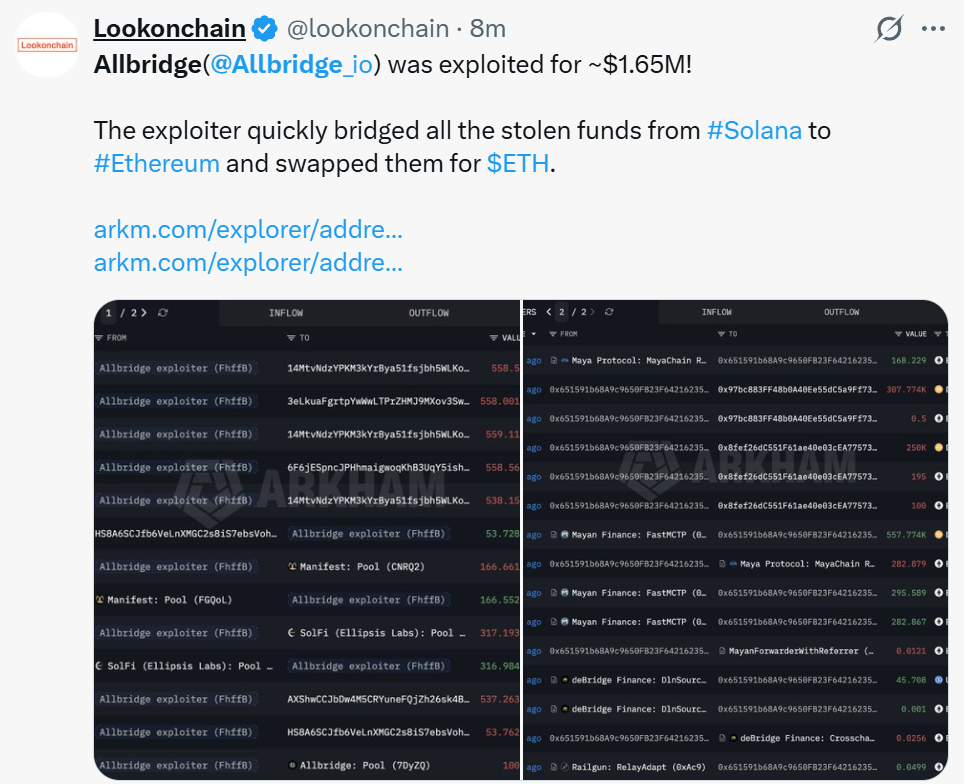
Allbridge Core, a cross-chain stablecoin bridge, said it has paused the protocol as a precaution after a “security incident” that reportedly saw $1.65 million drained on Sunday.
The incident affected Allbridge Core’s Solana deployment, with the attacker having already bridged the stolen funds from Solana to Ethereum before moving them into privacy pools.
“Allbridge Core is experiencing a security incident,” it said in a post on X on Sunday. “We have paused the protocol as a precaution while we investigate. If you have liquidity in affected pools, please withdraw now.”
The Allbridge Core exploit is at least the sixth attack targeting a cross-chain bridge since May. Bridges are attractive targets for attackers because they often hold large pools of funds that back bridged assets on the destination blockchain.
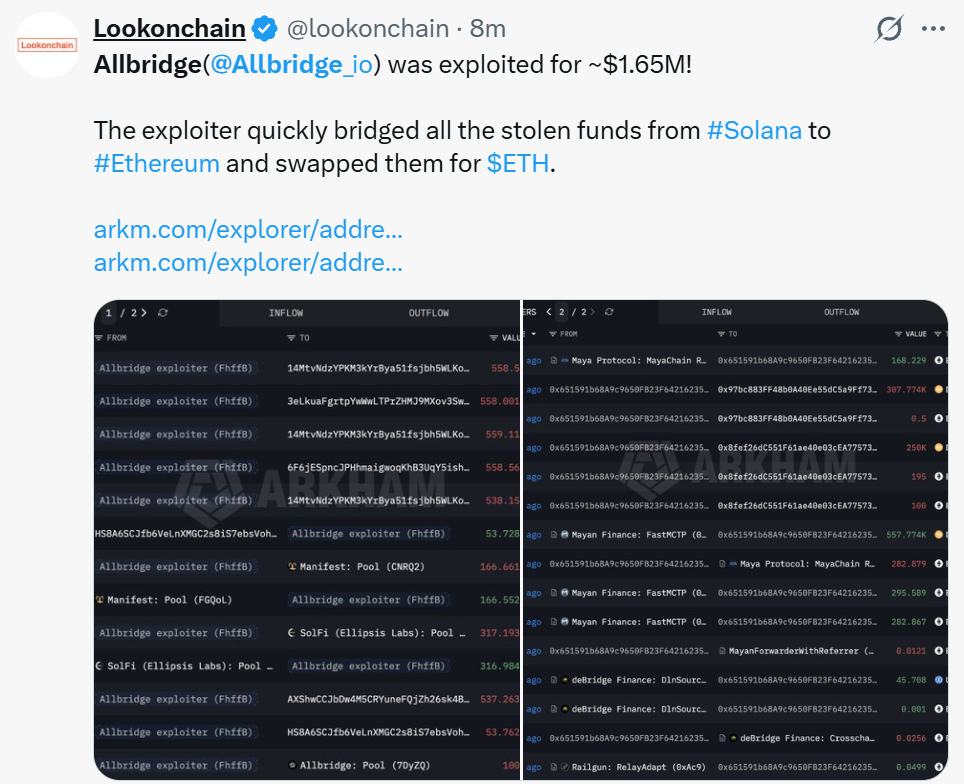
Source: Lookonchain
Onchain Lens reported the attacker made a $1.12 million USDC (USDC) flash loan from Kamino, before rapid USDC/USDT swaps that distorted the Allbridge Core stablecoin pool’s exchange rate.
Related: Taiko reopens bridge after $1.7M exploit, says users made whole
The attacker then withdrew liquidity at manipulated rates, repaying the $1.12 million USDC loan and keeping the difference.
“The resulting pool imbalance created a temporary positive arbitrage window. If you took advantage of it, please consider returning funds… this will go directly toward compensating affected LPs,” it added.
This wasn’t the first time Allbridge Core was hit by a flash loan attack.
In April 2023. Allbridge was exploited for $573,000 through a flash loan attack on Allbridge’s pool on the BNB Chain. The attacker acted as both liquidity provider and swapper, and exploited a flaw in a smart contract that allowed them to manipulate swap prices, which led to $289,900 drained in Binance USD (BUSD) and $290,900 in USDt (USDT).

Warning posted to the Allbridge Core website. Source: Allbridge Core
Cross-chain bridges targeted since May
In June, Taiko, an Ethereum layer-2 blockchain, urged its users to withdraw assets from the network’s bridges after attackers exploited one of its bridge protocols and stole $1.7 million.
Taiko reopened its bridge 11 days later after completing a four-step recovery plan.
Weeks before the Taiko incident, Secret Network was exploited through an “infinite mint” bug on a vulnerable smart contract, which created unbacked versions of Axelar-wrapped assets, resulting in a $4.67 million exploit.
Other recent bridge exploits included the Gravity Bridge, Verus Bridge and the Butter Network.
Magazine: The British Virgin Islands are a top crypto hub no one ever talks about: Here’s why


Moonshot AI paused new subscriptions to its Kimi K3 model on July 19, after demand pushed its GPUs close to full capacity within just 48 hours of launch.
The move highlights the compute crunch even fast-rising AI startups face when a hit model arrives.
Why Moonshot AI Paused Kimi K3 Subscriptions
An open-weight model is an AI system whose trained parameters are publicly released, allowing anyone to download and run it. Kimi K3, launched around July 16, carries 2.8 trillion parameters.
Kimi.ai announced a pause on its official account, saying that two days of surging usage had strained its GPU resources to near capacity.
To protect existing subscribers, it is prioritizing available compute for current members. Active subscriptions remain unaffected, while the firm expands its infrastructure and gradually reopens new spots in batches.
The company also restructured its membership plans. It split them into two tiers, one covering Kimi Web, App, and Work, and a separate Kimi Code Membership aimed at programming workflows. That division targets better resource allocation. The company argues that the split will better match compute and keep the service stable.
The technical profile explains the frenzy. Kimi K3 offers a 1-million-token context window, native multimodal capabilities, and full weights scheduled for public release on July 27.
Follow us on X to get the latest news as it happens.
Benchmarks fueled the hype further. Third-party evaluator Arena ranked K3 first for building web interfaces, ahead of rival frontier models from several leading American and Chinese labs.
What Does the Surge Mean for Moonshot AI
The demand surge lands during a period of rapid growth for Moonshot AI. The company reported annual recurring revenue of $300 million in June, driven largely by strong API demand.
Its valuation has climbed just as fast. The company surpassed $20 billion in May and is now negotiating fresh investment that could push the figure beyond $30 billion. The startup is also eyeing public markets. It sent shareholders a resolution to move toward a possible Hong Kong IPO within roughly six months.
Founded in 2023 by Yang Zhilin, a former Tsinghua University professor, Moonshot AI competes fiercely with other Chinese AI developers racing toward the frontier.
Subscribe to our YouTube channel to watch leaders and journalists provide expert insights.
The pause responds directly to the load created by the new model. The company has not provided exact reopening timelines, but has confirmed it is actively scaling its infrastructure.
The episode reflects a broader operational challenge. AI companies increasingly struggle to keep up with rapid usage spikes, especially amid fierce competition for scarce computing resources across the industry today. For Moonshot AI, the pause is a growth problem rather than a crisis.
The post Kimi K3 Demand Pushes Moonshot AI to Halt New Subscriptions as GPUs Feel Strain appeared first on BeInCrypto.
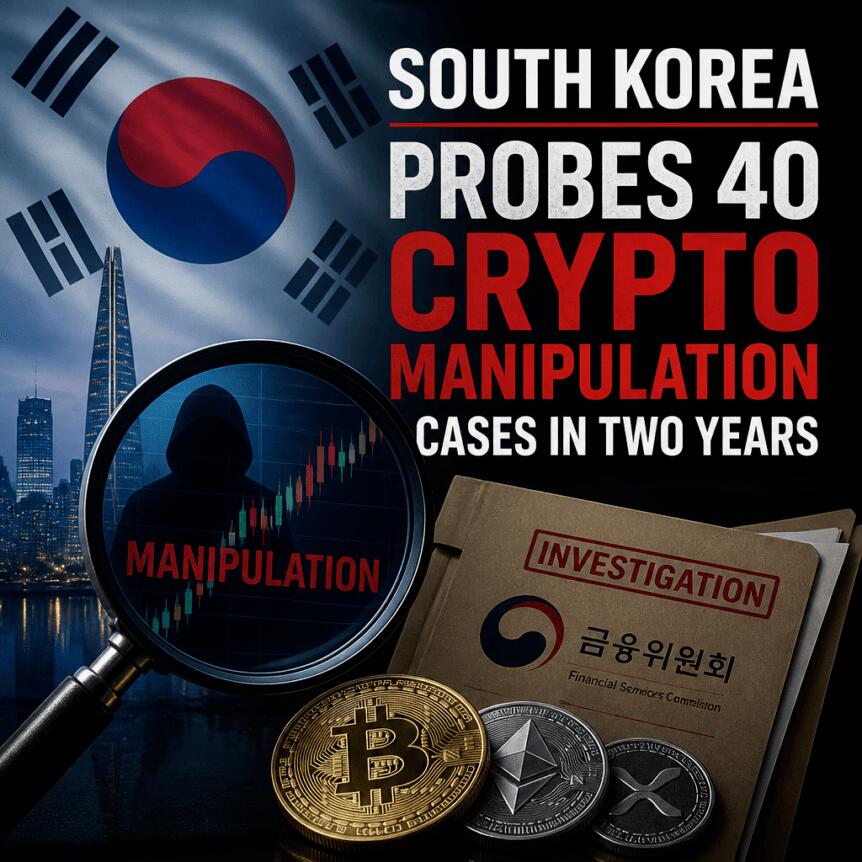
South Korea’s Financial Services Commission (FSC) says it has investigated more than 40 cases of alleged unfair conduct in the crypto market over the past two years, ranging from market manipulation to fraudulent trading activity. The regulator also claims it has identified 25 suspects connected to those matters after the Virtual Asset User Protection Act took effect in July 2024.
FSC Chair Lee Eog-won shared the figures in a post on X, noting that 30 of the cases have been reported to or referred to investigative authorities. He said the average unlawful gains in the matters reviewed were roughly 1.4 billion Korean won (about $940,000).
Key takeaways
- The FSC reports probing 40+ unfair trading cases over two years, including manipulation and fraud.
- After the Virtual Asset User Protection Act began in July 2024, Lee said authorities identified 25 suspects tied to 30 reported or referred cases.
- Lee estimated average unlawful gains of about 1.4 billion won per case.
- The law strengthens the FSC’s ability to supervise and inspect crypto service providers (VASPs), with additional focus on high-risk trading behavior.
- The regulator says it plans to expand market surveillance using AI-assisted monitoring and targeted responses.
Why the numbers matter for South Korean crypto markets
The FSC’s update is significant because it frames crypto enforcement not as isolated incidents, but as an ongoing investigative pipeline. By connecting the latest suspect and case counts to the start of the Virtual Asset User Protection Act, the regulator is effectively signaling that the post-legislation framework is now producing measurable enforcement outcomes.
For traders and users, the practical implication is that conduct previously handled under looser or less specific oversight is increasingly being treated as compliance and supervision issues—especially for activity that regulators typically view as harmful to market integrity, such as wash trading and insider-related behavior.
What the Virtual Asset User Protection Act requires from VASPs
At the core of the regulator’s message is how the July 2024 law changes the relationship between crypto platforms and investors. According to Cointelegraph reporting, the Virtual Asset User Protection Act is designed to protect users who buy and store crypto assets through virtual asset service providers (VASPs).
Under the framework described by the FSC, VASPs are required to separate client deposits and virtual assets from the company’s own holdings. Client deposits are held in banks, creating a structural distinction intended to reduce the risk that user funds could be mixed with corporate assets.
The statute also specifically targets market integrity issues, aiming to deter and address illicit practices such as insider trading, wash trading, and market manipulation. This, in turn, broadens the FSC’s oversight remit and gives the commission more authority to supervise and inspect VASPs.
Focus on market surveillance and enforcement capacity
In the same X post, Lee said the FSC will keep enhancing its market surveillance and investigation systems, explicitly citing the use of AI to support monitoring. He also indicated that authorities will “proactively respond to high-risk areas,” a phrase that suggests the regulator is increasingly focusing resources where it expects the most misconduct risk rather than reacting only after damage has occurred.
This matters because enforcement outcomes often depend not just on legal authority but on the ability to detect patterns in trading behavior at scale. The FSC’s emphasis on AI-based monitoring aligns with the kinds of tactics it named—wash trading and manipulation are frequently identifiable through transaction and order-flow patterns that can be monitored continuously.
Earlier coverage by Cointelegraph has also noted how South Korea is moving to bring digital assets more firmly within state oversight structures, including steps that extend beyond user-protection provisions. The latest enforcement update fits that broader direction by showing how supervision and investigations are being operationalized.
What investors should watch next
Going forward, the most important signal for market participants is whether the FSC’s investigation pipeline translates into sustained compliance pressure on VASPs—especially around surveillance-heavy practices like wash trading and manipulation. Readers should watch for additional enforcement actions and any expansion of AI-assisted monitoring capabilities, since that is likely to determine how quickly suspicious activity is detected and how consistently it leads to referrals and sanctions.


The planned rollout would let thousands of transportation contractors receive digital yen payments more frequently and quickly.

Revealed: The eye-watering amount Spain players will earn for winning the 2026 FIFA World Cup | Football News

Quordle hints and answers for Monday, July 20 (game #1638)

Tomatoes will stay fresh for a fortnight if you wash them with two ingredients


-
 NewsBeat3 days ago
London Mayor Sadiq Khan handed a peerage by Keir Starmer alongside 15 other Labour figures… just days before the PM leaves No10
-

 Fashion2 days ago
Weekend Open Thread – Corporette.com
-

 Politics2 days ago
The House | The City of London can help the new chancellor deliver growth in every postcode
-

 Politics5 days ago
Young campaigners urge incoming PM to act on outdoor junk food ads
-

 Crypto World4 days ago
CFTC blocks Kalshi from unwinding Michigan trades after court order
-

 Business4 days ago
Nvidia Stock Slips After Big Tuesday Rally as Huang Confirms Vera Rubin Chip Is Now in Production Today
-
 Crypto World3 days ago
Two July Windows Left: The CLARITY Act’s Senate Fight and What Failure Means
-

 Crypto World2 days ago
Ripple Payments Joins MiCA With 14 Firms, Does It Mean Anything For XRP?
-

 Politics14 hours ago
Democrats look to World Cup watch parties to register thousands of voters
-

 Crypto World2 days ago
Ripple wins EU-wide access as ESMA adds it to MiCA register
-
 Entertainment4 days ago
Disney’s Most Ambitious Failed Star Wars Attraction Is Coming to SDCC
-

 Business4 days ago
Palantir Shares Rise After Expanded Nvidia Partnership and Fresh Analyst Upgrades Ahead of Earnings Day
-

 Crypto World3 days ago
Injective Submits SEC Transfer-Agent Registration to Onchain Ownership Records
-

 Tech6 days ago
Get Your ESP32 Sunny Side Up With This Solar Dev Board
-

 News Videos5 days ago
XRP BOMBSHELL… XRP OMBOARDED FOR TRANSACTIONS!!!
-

 NewsBeat3 days ago
Registration is now open for March for Men with Kev 2026
-

 Tech5 days ago
Dark Secrets Emerge When Jailbreaking LLMs
-
 Sports4 days ago
New Cornerback Enters Vikings Trade Rumor Mill
-

 News Videos3 days ago
Money | Class 12 Economics | CBSE Board Exam 2026-27
-

 Business3 days ago
Banco Bilbao Vizcaya Argentaria, S.A. (BBVA) Discusses Global Macro Environment and Economic Outlook for Core Markets Transcript
You must be logged in to post a comment Login