






Connect with us

Business

model backs CBD drinks brand

Published

on

model backs CBD drinks brand

Kendall Jenner, the American model and reality television star, has acquired a minority stake in Trip, the London-based drinks and supplements company best known for its cannabidiol (CBD) soft drinks, and will become the face of the brand’s new global campaign.

Jenner, 30, from Los Angeles, has one of the largest social media followings in the world, with 277 million followers on Instagram. She launched her own tequila brand, 818, in 2021, and had been a long-time fan of Trip before the deal, according to Olivia Ferdi, the company’s co-founder.

Trip was founded in 2019 by Ferdi and her husband, Daniel Khoury, and launched in the UK with a range of CBD soft drinks. Its bestselling range, Mindful Blend, combines lion’s mane, an extract of non-psychedelic mushrooms, with magnesium, camomile and L-theanine, a compound associated with relaxation.

Ferdi, 36, said Jenner’s investment was significant for Trip’s next chapter. “Her followers obviously outweigh a lot of countries’ populations … and she has a ton of credibility,” she said. Because Jenner was a “genuine customer [it will] make it more meaningful when she’s speaking to her audience”, Ferdi added.

Jenner said: “When I met Liv and Dan, I instantly connected with what they’re building. I love their vision for the brand and their mission to help more people find calm in their everyday lives. I’m so excited to be part of their journey.”

Advertisement

Celebrity backers

Jenner joins a group of celebrities who have invested in Trip, including the Brazilian model Alessandra Ambrosio and the American musician Joe Jonas. Other backers and ambassadors include the model Ashley Graham and Rosie Huntington-Whiteley, a partner at The Equity Studio, an investment firm that took a stake in the company in 2025.

Other well-known names have put money into drinks businesses: Beyoncé has bought out LVMH’s stake in her SirDavis whisky brand, while Virtue, a UK energy drinks maker, raised £2m from the BrewDog co-founder James Watt and the England footballer Eberechi Eze in 2024.

Ferdi, a former associate at the City law firm Allen & Overy, and her family remain the majority shareholders in Trip. Coefficient Capital, the New York-based venture capital group that has previously backed the British wellness start-up Zoe and is an investor in the cereal brand Magic Spoon, led a $40m investment round in Trip in November 2025, valuing the company at more than $300m.

Ferdi said the business “has sort of doubled since then and is due to double again in 2027”.

Advertisement

Sales and distribution

In the year to the end of February, Trip recorded net revenues of £50.9m, a 132 per cent increase on the year before, on the back of further distribution gains in the UK and new listings in large American retailers including Walmart and Target. The company says revenues are on track to reach $200m (£147m) in 2026.

Trip’s pastel-coloured cans and supplements are sold in 70,000 shops globally, including 25,000 in the United States, according to the company. Only Coca-Cola, Red Bull and Monster had won more shelf space faster than Trip in the UK in the past year, it said.

Ferdi played down fears of growing competition in the healthy drinks market, saying a strong category “endorses that we have created something meaningful”. She added that Trip “fits into a lot of strategic wish lists when you are thinking about health and wellness”.

In August 2026 Nichols, the owner of the soft drinks brand Vimto, announced the €75m acquisition of VitHit, the low-calorie drinks brand founded by the former professional rugby player Gary Lavin. In its announcement, Nichols put the UK functional drinks market at £5.8bn, saying it had grown by 10 per cent between 2025 and 2026.

Advertisement

Jamie Young

Jamie Young

Jamie Young is Senior Reporter at Business Matters, covering SME finance, employment law and Westminster policy since 2016. He has reported on every Budget and Autumn Statement since 2018, helped make sense of the ‘covid era’ and the bounce-back loan scheme from launch through the fraud investigations, and broke the magazine’s coverage of the 2024 late-payment reforms. He joined Business Matters straight from completing his BA in Administration from Exeter University and is NCTJ-qualified. Reach him at jyoung@cbmeg.co.uk

Advertisement
Continue Reading
Click to comment

You must be logged in to post a comment Login

Leave a Reply

Business

At Close of Business podcast September 8 2026

Published

on

At Close of Business podcast September 8 2026

Mark Beyer speaks to Justin Fris about a long-term technology partnership that is considered to be key to Lotterywest’s business.

Plus: Rio strikes Ngarlawangga deal; Premier updates on defence bids; and WA providers respond to aged care funding decision.

Advertisement

Continue Reading

Business

Egyptian TV Presenter Sarah Khalifa, 11 Others Sentenced To Death In Major Drug Trafficking Case In Cairo

Published

on

Strait of Hormuz Traffic Near Standstill Despite US-Iran Ceasefire: Only

CAIRO — Egyptian television presenter Sarah Khalifa and 11 other defendants have been sentenced to death by hanging after being convicted on drug trafficking charges tied to a criminal network accused of importing chemical ingredients used to manufacture illegal narcotics.

According to state-owned newspaper al-Ahram, the defendants were found to be part of a criminal gang that imported raw materials used to produce drugs with the intent to sell them. The group was also found to have possessed illegal firearms and munitions as part of the same operation.

Khalifa, 39, is best known in Egypt for hosting the television program “Mission Impossible,” a show that focused on crime-related issues. She has denied the charges against her throughout the legal proceedings. Nine additional co-defendants were sentenced to life imprisonment, while seven others were acquitted entirely.

The formal verdict was first announced last month but was only confirmed roughly a month later, after the court obtained a required religious opinion from the grand mufti of Egypt, a legal step mandated in all death sentence cases under Egyptian law.

Advertisement

Khalifa’s legal team has already signaled its intent to challenge the sentence. Her lawyer said she would appeal the death sentence following the court’s confirmation of the ruling.

During the trial, prosecutors presented evidence that authorities had seized more than 750 kilograms of narcotics, along with the imported raw materials used to manufacture them. According to al-Ahram, prosecutors also relied on statements from 20 witnesses, in addition to electronic evidence that included recorded conversations and video clips connected to the case.

Khalifa addressed her alleged role directly during a court appearance last September, according to the state-run newspaper Akhbar al-Yom. When questioned by the judge about her connection to the case, Khalifa said she had never seen any drugs prior to being photographed with them inside the offices of Egypt’s anti-narcotics authority, an account that formed part of her defense against the charges.

The case adds to Egypt’s continued use of capital punishment in drug-related prosecutions, a practice that has drawn scrutiny from international human rights organizations. According to a 2025 Amnesty International report, Egypt issued 492 death sentences over the course of that year, with 23 of those sentences actually carried out.

Advertisement

Amnesty International’s report specifically flagged concerns about the use of capital punishment in cases involving drug trafficking and rape convictions, noting that such offenses constitute “crimes that did not amount to ‘intentional killing’ to which the use of the death penalty must be restricted under international law and standards.” The organization’s broader position holds that international human rights law and standards generally call for capital punishment to be reserved specifically for the most serious crimes, typically defined as those involving intentional killing.

Egypt has continued to carry out executions and issue death sentences at a notable pace in recent years, positioning the country among a smaller group of nations that continue applying capital punishment to a relatively broad range of offenses, including drug-related crimes, despite ongoing international criticism of that approach from human rights monitoring organizations.

The case against Khalifa and her co-defendants unfolded amid a broader pattern of drug trafficking-related prosecutions and law enforcement actions reported across multiple countries in recent weeks. In Vietnam, 11 people were separately sentenced to death in a drug trafficking case involving more than 200 individuals convicted over a network accused of smuggling narcotics into the country concealed inside toothpaste tubes and other everyday consumer products. In Ireland, authorities in Dublin seized roughly €2.3 million worth of drugs, including 18 kilograms of suspected cocaine with an estimated street value of approximately €1.8 million, resulting in charges against two individuals. A separate cross-border drug bust led to charges after investigators uncovered 119 kilograms of cannabis in Dundalk, County Louth, along with an additional 45 kilograms of cannabis, cash and suspected cocaine recovered in Newtownabbey, County Antrim.

Elsewhere, Brussels has continued grappling with a significant surge in drug-related violence, with more than 65 shootings reported in the Belgian capital so far this year as rival drug gangs have escalated conflicts across the city, according to reporting on the broader trend. In a separate development tied to international efforts to address drug-related violence, Colombia’s president approved the extradition of rebel leaders to the United States, a move described as part of a broader effort to end violence tied to negotiations with rebel and criminal organizations operating within the country.

Advertisement

Khalifa’s case has drawn particular attention within Egypt given her public profile as a television host whose own program focused on crime coverage, a dynamic that has added to public interest in the proceedings beyond the underlying drug trafficking allegations themselves. Egyptian media coverage of the case has continued closely following developments, including detailed accounts of courtroom testimony and the specific evidence presented by prosecutors throughout the trial.

With Khalifa’s legal team now preparing to pursue an appeal against the death sentence, the case is expected to continue working its way through Egypt’s judicial system in the coming months. The nine co-defendants sentenced to life imprisonment, along with the broader circumstances surrounding the case’s evidentiary record, including the seized narcotics, raw materials and electronic communications presented at trial, are likely to remain central to any subsequent appellate proceedings as Khalifa and her legal representatives seek to challenge the death sentence handed down by the court.

Continue Reading

Business

AI adoption doubles among UK small businesses

Published

on

AI adoption doubles among UK small businesses

Almost half of UK small business owners are now using artificial intelligence tools, according to research released on 8 September by the insurance provider Simply Business, which found adoption has more than doubled from 22 per cent in 2025 to 47 per cent.

A further 13 per cent of owners plan to start using AI within the next six to 12 months, meaning 61 per cent are either using the technology already or expect to be soon, according to the company’s 2026 SME Insights Report. The report draws on a survey of UK small business owners carried out between 30 July and 7 August 2026, alongside earlier studies conducted this year, Simply Business said.

Among businesses using AI, the most common applications are creating content, cited by 63 per cent, problem solving on 53 per cent and generating ideas on 50 per cent. Some 46 per cent say the technology is helping them save time on administration.

Research published in March by the Centre for Economics and Business Research for HSBC UK found that 55 per cent of mid-sized companies were using AI in some form by the end of 2025, up from about 35 per cent two years earlier.

Confidence gap

Confidence has not kept pace with adoption, the report found. Just 19 per cent of small business owners describe themselves as “very confident” using AI day to day, and 33 per cent say they use it only for routine administrative tasks.

Advertisement

Security and privacy concerns are the most commonly cited barrier, mentioned by 44 per cent of owners. Not seeing a clear use for AI is second on 39 per cent, ahead of concerns about accuracy on 36 per cent. Simply Business said the findings indicated that for many small businesses the obstacle was not access to the technology itself but a lack of clarity about its practical application.

Nearly one in three owners, 31 per cent, say they do not understand how to use AI or are wary of integrating it into their work, which the insurer said pointed to a wider skills gap. A Business Matters analysis published in June identified thin margins, scarce digital skills and a shortage of time to experiment among the reasons AI adoption is not spread evenly across the economy.

Calls for guidance

Julie Fisher, chief executive of Simply Business, said: “Adaptability and resilience are central to the DNA of small business owners and time and again they have proven they are drivers of innovation, finding new ways to grow even in the face of challenging trading conditions.”

She said the rise in AI adoption was one of the most significant shifts tracked in this year’s report, but that many owners remained wary of security and privacy around AI tools and unsure how the technology could be useful to them.

Advertisement

“To help unlock even greater levels of innovation and productivity, small businesses need tailored guidance on how AI can be used, accessible tools, and time to discover how it can work for them on their terms,” Fisher said.

Google launched its AI Works for Business programme of free workshops for small firms with the Department for Business & Trade and NatWest in 2025, after its research found UK small businesses lagging US counterparts on adoption.

Fay Phillips-Jones, founder and HR career coach at Coaching With Fay, said: “AI has played an important role in accelerating my business. As a sole founder, I use it to challenge my thinking, support business planning, organise information and develop more efficient systems. However, I treat AI as a thinking partner, not a substitute for thinking.”

She added: “I would welcome greater access to practical, funded education on responsible AI adoption. The opportunity for sole traders and microbusinesses is enormous, but the technology is evolving at an extraordinary pace.”

Advertisement

Ideja Bajra, founder of Edvance AI, said: “The biggest benefit to using AI is speed and efficiency; automating your processes means you can reach clients faster and more consistently. It’s also been a huge help in personal workload for me. There are already some encouraging government initiatives focusing on upskilling and AI integration, but from the perspective of a small specialist advisory firm, the support can sometimes feel fragmented.”


Jamie Young

Jamie Young

Jamie Young is Senior Reporter at Business Matters, covering SME finance, employment law and Westminster policy since 2016. He has reported on every Budget and Autumn Statement since 2018, helped make sense of the ‘covid era’ and the bounce-back loan scheme from launch through the fraud investigations, and broke the magazine’s coverage of the 2024 late-payment reforms. He joined Business Matters straight from completing his BA in Administration from Exeter University and is NCTJ-qualified. Reach him at jyoung@cbmeg.co.uk

Advertisement
Continue Reading

Business

Qatar Warns Of ‘Industrial Catastrophe’ As Hormuz Crisis Deepens Amid Houthi Attacks On Saudi Arabia

Published

on

Strait of Hormuz Traffic Near Standstill Despite US-Iran Ceasefire: Only

DOHA, Qatar — Qatar’s Foreign Ministry has warned that reopening the Strait of Hormuz to normal shipping traffic must become an international priority, cautioning that the world faces an “industrial catastrophe” if the ongoing crisis in one of the world’s most vital maritime chokepoints continues unresolved.

Foreign Ministry spokesperson Majed Al-Ansari delivered the warning to U.S. media Monday, as new data from maritime analytics firm Kpler showed an average of just 10 commodity ships transited the strait per day over the past 10 days, the lowest level recorded since May, following continued U.S. and Iranian strikes on tankers moving through the waterway.

The strait, through which roughly a fifth of the world’s oil and gas supply normally passes, has remained under an effective Iranian blockade since the outbreak of war between the United States and Iran earlier this year. Full-scale military hostilities between the two countries had eased in June following a Memorandum of Understanding, but tensions have escalated sharply again since that agreement expired last month, with Iran resuming attacks on tankers attempting to evade the blockade in recent weeks.

Qatari Prime Minister Sheikh Mohammed bin Abdulrahman bin Jassim Al Thani, who also serves as the country’s foreign minister, met with Chinese Foreign Minister Wang Yi in Beijing to discuss regional developments, including freedom of navigation through the strait, according to a statement posted by Qatar’s Foreign Ministry on X. Sheikh Mohammed affirmed Qatar’s support for diplomatic efforts aimed at securing maritime navigation and “paving the way for a comprehensive agreement,” describing the Beijing talks as “fruitful.”

Advertisement

Separately, the United States and European Union have pushed to refer Iran to the United Nations Security Council through the International Atomic Energy Agency, though analysts say the move is unlikely to meaningfully pressure Tehran. Cyrus Schayegh, a professor of international history and politics at the Geneva Graduate Institute, told Al Jazeera that Iran currently has little incentive to engage diplomatically with Washington.

“Iran is not interested in engaging with the US on the nuclear front until the US starts to engage with Iran,” Schayegh said. “If the Europeans and the US are going to refer Iran to the UN, there is not much Iran can do at this point,” he added, noting Tehran can rely on continued backing from Russia and China. “I don’t think Iran will be particularly afraid.”

Schayegh said Iranian leadership appears increasingly willing to escalate the confrontation rather than de-escalate it, calculating that approaching U.S. midterm elections could increase political pressure on Washington to relent.

“They can push the Americans more, as the political cost for the US will become too high and maybe Trump will then cave,” Schayegh said, adding that growing international criticism of the U.S. position has bolstered Tehran’s confidence. “The Iranians feel that the international scene is moving in their way, so this makes them feel they can escalate and feel confident enough that this will work for them.”

Advertisement

The regional crisis widened further Monday when Yemen’s Houthi militia launched a wave of attacks on southern Saudi Arabia, wounding more than 70 people and striking several oil facilities. Saudi political analyst Khaled Batarfi told Al Jazeera the attacks would likely prompt a Saudi response but not trigger a prolonged conflict.

“This is an escalation of course,” Batarfi said, noting Saudi Arabia had previously sought to avoid direct engagement in Yemen’s civil war. “But now this is too much,” he said, adding that any Saudi retaliation would target the specific Yemeni faction responsible for the attack. “But I don’t see a prolonged war, not with Iran and not with the Houthi.”

Kuwait’s Foreign Ministry condemned the Houthi attacks in a statement, calling them “a blatant violation of the kingdom’s sovereignty and a direct threat to the security and safety of its citizens.” The Gulf Cooperation Council issued its own condemnation, describing the strikes as an “extremist criminal approach” that reveals “the malicious intentions” of the Houthis and their rejection of peace and stability in Yemen.

Fighting inside Yemen itself has continued across multiple fronts between Houthi forces and the internationally recognized government, with key battlegrounds including western Taiz, the Red Sea port of al-Makha near the strategic Bab-el-Mandeb Strait, southern Hodeidah’s vital port infrastructure, and Marib, home to some of Yemen’s most significant oil and gas fields.

Advertisement

Elsewhere in the region, Israeli forces raided the southern Lebanese town of Kfarchouba at dawn Monday and raised the Israeli flag on a nearby hill, according to Lebanese outlet Lebanon 24, following overnight artillery shelling of the al-Salouqi and al-Hujeir valleys in southern Lebanon. Separately, Israeli forces killed a 29-year-old Palestinian man, identified as Abdul Karim Muhammad Salem Khader, in the West Bank town of Aqraba south of Nablus, according to the Palestinian news agency Wafa, which said Israeli forces besieged and partially demolished his home before withholding his body.

Amid the broader deterioration, the United Kingdom moved to announce a trade ban on goods produced in Israeli settlements in the occupied West Bank. UK Pensions Minister Pat McFadden confirmed the move to Times Radio, saying Britain’s foreign secretary would deliver a formal statement to Parliament.

“The foreign secretary will make a statement to Parliament later today, and at the heart of the statement is the idea that the UK, along with many other countries, does not want to see the possibility of a two-state solution in Israel and Palestine being erased,” McFadden said.

Diplomatic efforts to address the region’s overlapping crises continued elsewhere, with Iraqi Foreign Minister Fuad Hussein meeting his Lebanese counterpart, Youssef Rajji, in Cairo on the sidelines of an Arab League ministerial session. Hussein emphasized “the importance of dialogue between the United States of America and the Islamic Republic of Iran,” while Rajji thanked Iraq for its continued support of Lebanon’s security and stability.

Advertisement

With the Strait of Hormuz crisis now stretching well past six months and showing renewed signs of escalation on multiple regional fronts simultaneously, Qatar’s warning of a looming “industrial catastrophe” underscores the mounting economic stakes tied to a resolution that, according to analysts tracking the conflict, remains elusive for now.

Continue Reading

Business

LIC, HDFC Life, other stocks rise up to 3% as Aug new business premium jumps 33% YoY. What Nuvama, others are saying

Published

on

LIC, HDFC Life, other stocks rise up to 3% as Aug new business premium jumps 33% YoY. What Nuvama, others are saying
Shares of life insurers like HDFC Life and LIC rose up to 3% despite the overall market weakness on Tuesday after the companies posted strong monthly growth of 33% year-on-year (YoY) in total new business premium to Rs 41,198 crore in August.

HDFC Life Insurance Company shares jumped nearly 3% to trade at Rs 547.80 apiece on Tuesday morning, while those of insurance behemoth LIC rose nearly 1%. ICICI Prudential Life Insurance Company shares rose nearly 2% but SBI Life shares slipped into the red.

While total new business premium recorded a sharp growth, the underlying retail business expanded at less than half the speed of total income, as the industry depended on single-premium and group business for growth. Retail-weighted premium, calculated by giving full weight to individual non-single premium and 10% weight to individual single premium, grew around 14% last month, according to data released by the Life Insurance Council.

Also read | Life insurers’ new business premium up 33% in August

Advertisement

The August surge was mostly driven by group single-premium business, which jumped over 56% YoY to Rs 23,887 crore. Individual non-single premium, which shows growth in regular retail business, meanwhile rose more than 13% YoY to Rs 10,349 crore, while individual single premium increased around 35% to Rs 5,512 crore.


Insurance behemoth Life Insurance Corporation of India (LIC) reported more than 45% YoY jump in total new business premium to Rs 23,275 crore in August. The increase was largely driven by group single-premium business, which rose more than 70% to Rs 17,141 crore. LIC’s retail-weighted premium increased around 13% YoY in August. For April-August, its total new business premium increased 19%, while retail-weighted premium grew 15.3%.
Among the large listed private insurers, SBI Life reported around 3% YoY growth in its total new business premium in August, while retail-weighted premium increased around 22% YoY. For April-August, SBI Life’s total new business premium grew 12.73%, with retail-weighted premium up 16%.HDFC Life also recorded a strong numbers for August, with total new business premium rising nearly 18% and retail-weighted premium increasing by more than 17%. However, its April-August income was lower, with total premium up 14% and retail-weighted premium also around 6%.

Also read | Indians opt for higher life insurance cover as average premium rises 43%

Nuvama on life insurers

Nuvama noted that LIC’s 13% growth in retail-weighted premium has outpaced private peers, but total APE growth slowed sharply to 3% YoY. It maintained its ‘Buy’ ratings on shares of SBI Life, HDFC Life, Axis Max Life and ICICI Prudential Life.

For SBI Life, Nuvama has a target price of Rs 2,600 apiece, implying more than 50% upside potential from the stock’s previous closing price of Rs 1,732 apiece. For HDFC Life, it has a target price of Rs 790 apiece, implying over 48% upside.

Advertisement

Nuvama has a target price of Rs 1,870 apiece for Axis Max Life, and Rs 700 apiece for ICICI Prudential Life Insurance.

Motilal Oswal on life insurers

Motilal Oswal Financial Services expects the growth momentum to be largely stable going forward, supported by a continued focus on traditional products, improved affordability from GST exemptions, and expanded geographical reach by private insurers.

SBI Life and LIC are the domestic brokerage’s top picks within the sector.

Also read | Festive stock picks: 10 stocks to buy ahead of the festive season. Do you own any?

Advertisement

Disclosure: This article is written by Debaroti Adhikary, who is not a SEBI-registered Research Analyst or an Investment Adviser. Debaroti Adhikary and her ‘relative(s)’ (as defined under Section 2(77) of the Companies Act, 2013) do not hold any financial interest in the companies mentioned in this article as of the date of publication. The views/recommendations mentioned in this article, wherever applicable, are those of the respective SEBI-registered Research Analyst/brokerage and have been reproduced/reported with due attribution. They should not be construed as the views or recommendations of The EconomicTimes Digital or the journalist. Readers are advised to consider the original research report and make their investment decisions based on their own assessment.

Continue Reading

Business

Gary Neville’s Relentless Develpments joins plan for 700 new flats in Manchester

Published

on

Business Live

Scheme revisited after original plan saw dozens of objections

CGI of the proposed development on the site of Stocktons Furniture in Manchester city centre, opposite the future Manchester Digital Campus.

CGI of the proposed development on the site of Stocktons Furniture in Manchester city centre, opposite the future Manchester Digital Campus(Image: Truth PR / Relentless Developments)

Gary Neville’s property firm has joined a controversial plan to build more than 700 flats in Manchester city centre in two new towers.

Advertisement

A total of 723 build-to-rent apartments could be built in towers 24 and 44 stories tall, along with new office space.

Proposals for the scheme are based on the site of Stocktons Furniture in Ancoats, based over the road from the Manchester Digital Campus on Great Ancoats Street which is expected to become a future base for Andy Burnham’s Number 10 North.

The plans were initially proposed by Liquid Funding Business, but the scheme was delayed last year after major concerns about the impact on daylight on surrounding properties, particularly Oxygen tower.

More than 130 objections were sent to Manchester City Council about the plans and councillors in Manchester delayed the scheme in both November and December 2025, before voting to block it in January this year.

Advertisement

The plans have since been revised and resubmitted to the council for approval, and it has become a joint venture with Relentless Developments, the firm led by Anthony Kilbride and Gary Neville.

One of the key changes is that the tallest building in the development has been lowered from 49 stories to 44 stories.

Anthony Kilbride, CEO of Relentless Developments, said: “Since joining the JV [joint venture], we’ve reviewed the project with fresh eyes, listened carefully to the comments made during the previous planning process and spent a lot of time assessing the scheme with the existing consultancy team, ward councillors and local residents.

“We want to make it the best it can be and ensure it meets our ambitions and approach to development.”

Advertisement

A total of 50 apartments in the revised plans would be at Manchester Living Rent levels, and these would be spread throughout the development with the same specification, size and access to amenities.

These homes would be managed through an agreement with Manchester City Council.

If the plans are approved, bosses behind the project hope construction could get started at the end of 2027, with the project finish set to coincide with the opening of the Manchester Digital Campus in 2032.

Daniel Green, CEO of Liquid Business, said: “Stocktons reflects our ambition to bring together commercial vision, quality and meaningful social value. We believe the scheme can make a lasting contribution to this part of Manchester and to the city’s continued growth.”

Advertisement

Other schemes delivered by Relentless Developments include Hotel Football in Old Trafford, the Stock Exchange Hotel and No.1 St Michael’s in the city centre.

Anthony Kilbride added: “Ultimately, Stocktons will make an important contribution to the city’s growth plans and growing need for new apartments, while acting as a catalyst for further investment and development.

“We’re proud to be playing a positive part in the wider vision for this increasingly important area of Manchester and specifically the wider Manchester Piccadilly masterplan announced at MIPIM earlier this year.”

To find all the planning applications, traffic diversions, road layout changes, alcohol licence applications and more in your community, visit the Public Notices Portal.

Advertisement
Continue Reading

Business

Jersey business owner says minimum wage comments are ‘madness’

Published

on

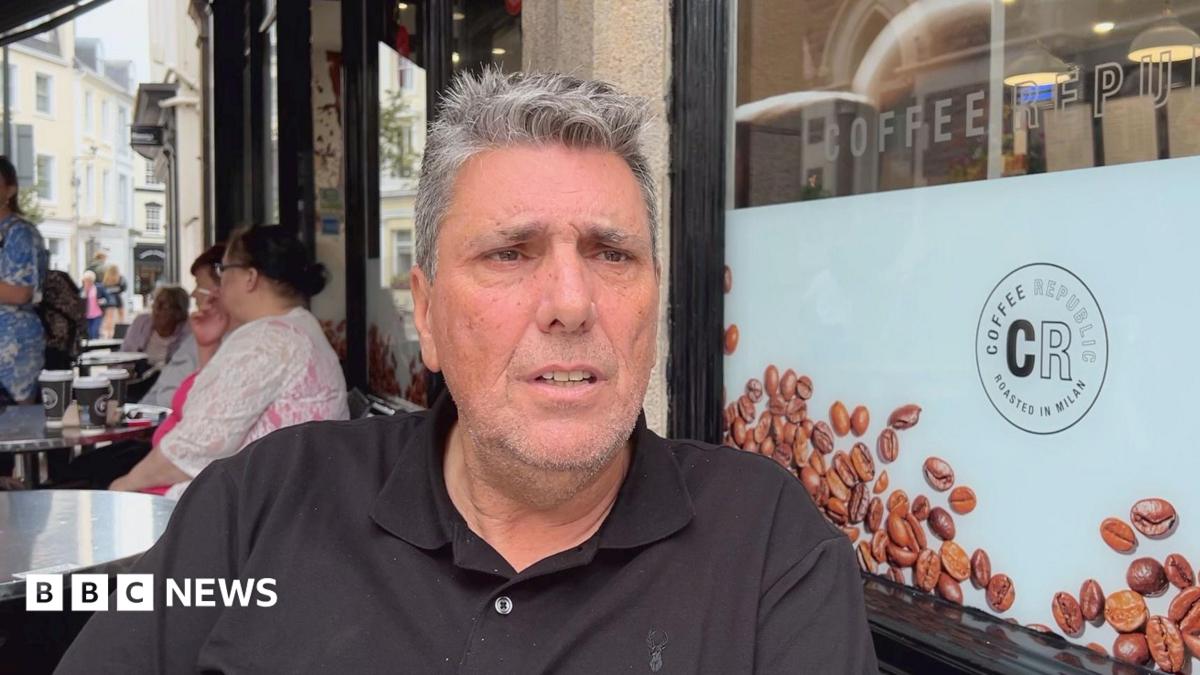
A person wearing a black polo shirt sits at an outdoor café table beside a large window displaying coffee bean graphics and the text “Coffee Republic” and “Roasted in Milan.” Several takeaway coffee cups are visible on nearby tables, with other café patrons seated in the background along a pedestrian street lined with buildings. The scene is photographed in daylight, with the seated person in sharp focus and the café surroundings clearly visible.

Businesses, charities and politicians have reacted to criticism of the minimum wage by the economic development minister, with one coffee shop owner calling his public comments “madness”.

Earlier this week, the chief minister rejected Deputy Gerald Voisin’s suggestion that the minimum wage was “strangling our economy” and said the minister’s views did not reflect that of the government or States Assembly.

Frank De Jesus, who runs Coffee Republic, said the cost of living and of doing business in Jersey were a “far-reaching issue”. He has called on the council of ministers to “get their act together” and discuss workers’ pay.

The BBC has contacted Voisin for comment.

Advertisement

De Jesus said to get good staff he often has to pay above the minimum wage, currently set at £13.59 an hour.

He said the cost of labour was a “polarising issue” with most businesses on the high street “just getting by”.

He said: “On one hand, obviously, retailers and hospitality need to make a profit… but we’re also very aware that our workers need to feel as if they’re valued and that they have a chance to get on in life.”

Responding to the disagreement between ministers, he said Voisin’s public comments had “opened a can of worms”.

Advertisement

He said: “Maybe they [ministers] should get around the table and talk about it, I would think, before going publicly with statements that are going to cause huge consternation.

“I think it’s madness, really.”

He suggested the government should increase the income tax threshold so workers earning minimum wage weren’t taxed.

Advertisement
Continue Reading

Business

Green light for $28m Cockburn shopping centre

Published

on

Green light for $28m Cockburn shopping centre

The rapidly growing suburb is set for another neighbourhood centre following approval of the project from planning authorities.

Continue Reading

Business

ASX 200 Slips Today as Gold Miners Slide and Bond Yields Surge After CSL’s Blockbuster Earnings Rally

Published

on

Australia Housing Market 2026: Two-Speed Boom Persists as Prices Hit

SYDNEY — The S&P/ASX 200 fell 24.4 points, or 0.27%, to 9,045.6 as of 3:22 p.m. AEST Wednesday, as sliding gold prices and surging global bond yields weighed on the market a day after biotechnology giant CSL delivered one of the strongest single-session rallies of the current earnings season.

Wednesday’s decline followed a steadier session Tuesday, when the index closed nearly flat at 9,070 points, halting a four-day losing streak that had pushed the benchmark to a two-week low. According to Trading Economics, bargain hunters stepped into the market Tuesday as August consumer confidence data improved, with mortgage holders reporting less anxiety about the prospect of further interest rate hikes.

CSL was the standout performer of Tuesday’s session, surging 17.25% after the biopharmaceutical company’s underlying profit exceeded analyst forecasts and management signaled a return to growth following what had been described as a difficult reset year for the business. Following the result, brokerage Bell Potter retained its hold rating on CSL shares while lifting its price target significantly, to $150.00 from $120.00. “Based on the new underlying NPAT metric, CSL trades on a PE multiple of ~19x FY26 and ~18x FY27 earnings, with flat revenue growth and low-to-mid single digit earnings growth expected for FY27,” Bell Potter said in a note. “While the result today suggests the worst (by way of earnings declines) is in the rear-view for CSL, we find it difficult to justify a greater premium than is now being attributed relative to global biopharma peers.”

Mining giant BHP also posted strong gains Tuesday, rising 2.65% after reporting that its underlying annual profit had increased 30% to $13.20 billion. Operating earnings from the company’s copper division reached $18.19 billion, surpassing the $14.53 billion generated by its traditional iron ore business, underscoring the increasing importance of copper to BHP’s overall earnings mix. Argo Investments portfolio manager Andy Forster offered a succinct assessment of the result. “Solid overall, and copper doing all the work,” Forster said, reflecting broader market commentary that gains in copper and healthcare had lifted the overall index Tuesday even as interest-rate-sensitive sectors, including the major banks, lagged behind.

Advertisement

Banks acted as the primary drag on Tuesday’s session, with the sector continuing to face pressure from concerns over the interest rate outlook. National Australia Bank slumped 4.7% amid investor concerns that a proposed repeal of property-investment tax breaks could weigh on the bank’s future earnings and credit growth, according to Trading Economics.

Wednesday’s pullback has been driven in significant part by a sharp fall in gold prices overnight. According to CNBC, gold futures fell 1.8% to $4,394 an ounce as traders sold off the precious metal following a surge in global bond yields to their highest levels in decades. That decline is expected to weigh heavily on ASX-listed gold miners, including Westgold Resources and Northern Star Resources, both of which were flagged as likely to face a difficult session Wednesday given their direct exposure to the falling gold price.

Wednesday’s session also carries added significance given the scheduled release of Australia’s Wage Price Index at 11:30 a.m. AEST. The previous quarter’s wage growth figure came in at 0.8%, with annual wage growth running at 3.3%. Economists and investors are watching the release closely given its potential to shift interest rate expectations across several rate-sensitive sectors, including banking, property and retail.

A busy slate of corporate earnings continued to roll out Wednesday, with Santos, Evolution Mining, Temple & Webster, Breville, Mirvac and Whitehaven Coal all scheduled to release results during the session. Among the more notable individual results, one electrical and communications contractor delivered record profitability despite a 10.3% decline in revenue to $718.7 million, as project completions tied to the CBESS and Western Sydney International Airport Terminal developments wound down during the first half. Gross profit for that company rose 29.1% to a record $136.7 million, with gross margin expanding significantly to 19.0% from 13.2% a year earlier. Underlying net profit after tax rose 24.3% to $39.4 million, though statutory net profit fell 77.6% to $7.1 million due to $46.1 million in costs tied to a dispute over the WestConnex toll road project. The company lifted its total fully franked dividend by 33.3% to 10.0 cents per share, including a record final dividend of 7.5 cents, while maintaining a record cash balance of $261.5 million and no outstanding debt.

Advertisement

Separately, a finance and insurance-focused company reported its loan book had grown a further 7.5% since March, with arrears holding up well, while reiterating a medium-term target of $100 million in net profit before tax by fiscal 2031 as it continues expanding its auto retail branch network.

Wednesday’s session also featured a notable ex-dividend adjustment affecting the broader index, with shares tied to a $2.70 fully franked dividend beginning trading ex-dividend at the ASX’s opening phase at 9:59:45 a.m. AEST, a technical adjustment that tends to exert modest automatic downward pressure on the headline index independent of broader market sentiment.

Looking at the broader context, the ASX 200 remains well below the all-time high of 9,198.6 points it reached in February, having settled closer to the 8,800 level by July before recovering ground through the current August earnings season. With reporting season continuing through the remainder of the week alongside Wednesday’s wage data release, investors are likely to remain focused on how individual corporate results, particularly from the mining, energy and consumer sectors still due to report, continue to shape the index’s trajectory against a backdrop of volatile gold prices and rising global bond yields.

Advertisement
Continue Reading

Business

Nifty falls for sixth straight session; oil surge, CAS volatility rattle markets

Published

on

Nifty falls for sixth straight session; oil surge, CAS volatility rattle markets
Mumbai: Indian markets remained under pressure on Tuesday, with the Nifty ending lower for the sixth straight trading session, as the rebound in oil prices amid the lingering West Asia conflict and persistent volatility around the Closing Auction Session (CAS) kept traders on the toes.

NSE’s Nifty fell 132.75 points, or 0.55%, to close at 24,154.9. The BSE Sensex declined 492.7 points, or 0.6%, to end at 77,235.46.

“Markets remained under pressure as there have been no positive cues from the US-Iran talks, especially with the MOU having expired and crude oil prices moving higher,” said Shrikant Chouhan, head of equity research at Kotak Securities.

Brent crude October futures were trading near the $91-a-barrel mark on Tuesday and have remained in the $85-$90 range over the past week. Chouhan said oil sustaining above the $85 mark is a key concern, as it raises inflationary risks, which is already reflected in the sharp rise in US 10-year and 30-year bond yields. “We believe this could lead to outflows from both emerging and developed equity markets,” he said.

Advertisement

The price adjustments on account of the CAS resulted in the benchmark indices dropping nearly 0.2% in the last 15 minutes before trade close.

Will Indian markets continue their six-day losing streak as oil prices and geopolitical tensions rise?</p><p>ET Bureau

Chouhan said the volatility seen during the CAS session is largely due to lower participation.
On Tuesday, FPIs net bought shares worth ₹1,651.5 crore. Domestic institutional investors were buyers to the tune of ₹2,579 crore. The Nifty Midcap 150 fell 0.4%, while the Nifty Smallcap 250 rose 0.2%. Of the total 4,530 stocks on the BSE, 1,890 advanced and 2,426 declined.
In Asia, Japan fell 2.5%, South Korea declined 1.55%, Taiwan dropped 1.2%, while China advanced 0.2% and Hong Kong rose 0.1%. The STOXX 600 index was down 0.5% at the time of going to press.

Read more: Regulatory tailwinds to boost growth for MCX, says HDFC Securities, retains Buy for 18% gains

Technical indicators suggest the indices could move in a band in the near term. “The market’s sentiment has shifted, with the index now consolidating within the 24,000-24,500 range, and this phase of consolidation could continue over the next few trading sessions,” said Dharmesh Shah, head of technical research at ICICI Securities.

Shah said after 1,100-point rally, the Nifty is undergoing a retracement and may find support in the 23,900-24,000 zone before resuming its upward trajectory towards the upper end of the channel at 24,500-24,600. “While Q1 earnings was better than expected, a decline in crude oil prices, a reversal in US 10-year bond yields, or a de-escalation of tensions in West Asia could act as positive catalysts and trigger the market’s next rally,” said Shah.

Advertisement
Continue Reading

Trending

Copyright © 2025