
Business
Qatar Warns Of ‘Industrial Catastrophe’ As Hormuz Crisis Deepens Amid Houthi Attacks On Saudi Arabia


DOHA, Qatar — Qatar’s Foreign Ministry has warned that reopening the Strait of Hormuz to normal shipping traffic must become an international priority, cautioning that the world faces an “industrial catastrophe” if the ongoing crisis in one of the world’s most vital maritime chokepoints continues unresolved.
Foreign Ministry spokesperson Majed Al-Ansari delivered the warning to U.S. media Monday, as new data from maritime analytics firm Kpler showed an average of just 10 commodity ships transited the strait per day over the past 10 days, the lowest level recorded since May, following continued U.S. and Iranian strikes on tankers moving through the waterway.
The strait, through which roughly a fifth of the world’s oil and gas supply normally passes, has remained under an effective Iranian blockade since the outbreak of war between the United States and Iran earlier this year. Full-scale military hostilities between the two countries had eased in June following a Memorandum of Understanding, but tensions have escalated sharply again since that agreement expired last month, with Iran resuming attacks on tankers attempting to evade the blockade in recent weeks.
Qatari Prime Minister Sheikh Mohammed bin Abdulrahman bin Jassim Al Thani, who also serves as the country’s foreign minister, met with Chinese Foreign Minister Wang Yi in Beijing to discuss regional developments, including freedom of navigation through the strait, according to a statement posted by Qatar’s Foreign Ministry on X. Sheikh Mohammed affirmed Qatar’s support for diplomatic efforts aimed at securing maritime navigation and “paving the way for a comprehensive agreement,” describing the Beijing talks as “fruitful.”
Separately, the United States and European Union have pushed to refer Iran to the United Nations Security Council through the International Atomic Energy Agency, though analysts say the move is unlikely to meaningfully pressure Tehran. Cyrus Schayegh, a professor of international history and politics at the Geneva Graduate Institute, told Al Jazeera that Iran currently has little incentive to engage diplomatically with Washington.
“Iran is not interested in engaging with the US on the nuclear front until the US starts to engage with Iran,” Schayegh said. “If the Europeans and the US are going to refer Iran to the UN, there is not much Iran can do at this point,” he added, noting Tehran can rely on continued backing from Russia and China. “I don’t think Iran will be particularly afraid.”
Schayegh said Iranian leadership appears increasingly willing to escalate the confrontation rather than de-escalate it, calculating that approaching U.S. midterm elections could increase political pressure on Washington to relent.
“They can push the Americans more, as the political cost for the US will become too high and maybe Trump will then cave,” Schayegh said, adding that growing international criticism of the U.S. position has bolstered Tehran’s confidence. “The Iranians feel that the international scene is moving in their way, so this makes them feel they can escalate and feel confident enough that this will work for them.”
The regional crisis widened further Monday when Yemen’s Houthi militia launched a wave of attacks on southern Saudi Arabia, wounding more than 70 people and striking several oil facilities. Saudi political analyst Khaled Batarfi told Al Jazeera the attacks would likely prompt a Saudi response but not trigger a prolonged conflict.
“This is an escalation of course,” Batarfi said, noting Saudi Arabia had previously sought to avoid direct engagement in Yemen’s civil war. “But now this is too much,” he said, adding that any Saudi retaliation would target the specific Yemeni faction responsible for the attack. “But I don’t see a prolonged war, not with Iran and not with the Houthi.”
Kuwait’s Foreign Ministry condemned the Houthi attacks in a statement, calling them “a blatant violation of the kingdom’s sovereignty and a direct threat to the security and safety of its citizens.” The Gulf Cooperation Council issued its own condemnation, describing the strikes as an “extremist criminal approach” that reveals “the malicious intentions” of the Houthis and their rejection of peace and stability in Yemen.
Fighting inside Yemen itself has continued across multiple fronts between Houthi forces and the internationally recognized government, with key battlegrounds including western Taiz, the Red Sea port of al-Makha near the strategic Bab-el-Mandeb Strait, southern Hodeidah’s vital port infrastructure, and Marib, home to some of Yemen’s most significant oil and gas fields.
Elsewhere in the region, Israeli forces raided the southern Lebanese town of Kfarchouba at dawn Monday and raised the Israeli flag on a nearby hill, according to Lebanese outlet Lebanon 24, following overnight artillery shelling of the al-Salouqi and al-Hujeir valleys in southern Lebanon. Separately, Israeli forces killed a 29-year-old Palestinian man, identified as Abdul Karim Muhammad Salem Khader, in the West Bank town of Aqraba south of Nablus, according to the Palestinian news agency Wafa, which said Israeli forces besieged and partially demolished his home before withholding his body.
Amid the broader deterioration, the United Kingdom moved to announce a trade ban on goods produced in Israeli settlements in the occupied West Bank. UK Pensions Minister Pat McFadden confirmed the move to Times Radio, saying Britain’s foreign secretary would deliver a formal statement to Parliament.
“The foreign secretary will make a statement to Parliament later today, and at the heart of the statement is the idea that the UK, along with many other countries, does not want to see the possibility of a two-state solution in Israel and Palestine being erased,” McFadden said.
Diplomatic efforts to address the region’s overlapping crises continued elsewhere, with Iraqi Foreign Minister Fuad Hussein meeting his Lebanese counterpart, Youssef Rajji, in Cairo on the sidelines of an Arab League ministerial session. Hussein emphasized “the importance of dialogue between the United States of America and the Islamic Republic of Iran,” while Rajji thanked Iraq for its continued support of Lebanon’s security and stability.
With the Strait of Hormuz crisis now stretching well past six months and showing renewed signs of escalation on multiple regional fronts simultaneously, Qatar’s warning of a looming “industrial catastrophe” underscores the mounting economic stakes tied to a resolution that, according to analysts tracking the conflict, remains elusive for now.

Business
LIC, HDFC Life, other stocks rise up to 3% as Aug new business premium jumps 33% YoY. What Nuvama, others are saying

HDFC Life Insurance Company shares jumped nearly 3% to trade at Rs 547.80 apiece on Tuesday morning, while those of insurance behemoth LIC rose nearly 1%. ICICI Prudential Life Insurance Company shares rose nearly 2% but SBI Life shares slipped into the red.
While total new business premium recorded a sharp growth, the underlying retail business expanded at less than half the speed of total income, as the industry depended on single-premium and group business for growth. Retail-weighted premium, calculated by giving full weight to individual non-single premium and 10% weight to individual single premium, grew around 14% last month, according to data released by the Life Insurance Council.
Also read | Life insurers’ new business premium up 33% in August
The August surge was mostly driven by group single-premium business, which jumped over 56% YoY to Rs 23,887 crore. Individual non-single premium, which shows growth in regular retail business, meanwhile rose more than 13% YoY to Rs 10,349 crore, while individual single premium increased around 35% to Rs 5,512 crore.

Insurance behemoth Life Insurance Corporation of India (LIC) reported more than 45% YoY jump in total new business premium to Rs 23,275 crore in August. The increase was largely driven by group single-premium business, which rose more than 70% to Rs 17,141 crore. LIC’s retail-weighted premium increased around 13% YoY in August. For April-August, its total new business premium increased 19%, while retail-weighted premium grew 15.3%.
Among the large listed private insurers, SBI Life reported around 3% YoY growth in its total new business premium in August, while retail-weighted premium increased around 22% YoY. For April-August, SBI Life’s total new business premium grew 12.73%, with retail-weighted premium up 16%.HDFC Life also recorded a strong numbers for August, with total new business premium rising nearly 18% and retail-weighted premium increasing by more than 17%. However, its April-August income was lower, with total premium up 14% and retail-weighted premium also around 6%.
Also read | Indians opt for higher life insurance cover as average premium rises 43%
Nuvama on life insurers
Nuvama noted that LIC’s 13% growth in retail-weighted premium has outpaced private peers, but total APE growth slowed sharply to 3% YoY. It maintained its ‘Buy’ ratings on shares of SBI Life, HDFC Life, Axis Max Life and ICICI Prudential Life.
For SBI Life, Nuvama has a target price of Rs 2,600 apiece, implying more than 50% upside potential from the stock’s previous closing price of Rs 1,732 apiece. For HDFC Life, it has a target price of Rs 790 apiece, implying over 48% upside.
Nuvama has a target price of Rs 1,870 apiece for Axis Max Life, and Rs 700 apiece for ICICI Prudential Life Insurance.
Motilal Oswal on life insurers
Motilal Oswal Financial Services expects the growth momentum to be largely stable going forward, supported by a continued focus on traditional products, improved affordability from GST exemptions, and expanded geographical reach by private insurers.
SBI Life and LIC are the domestic brokerage’s top picks within the sector.
Also read | Festive stock picks: 10 stocks to buy ahead of the festive season. Do you own any?
Disclosure: This article is written by Debaroti Adhikary, who is not a SEBI-registered Research Analyst or an Investment Adviser. Debaroti Adhikary and her ‘relative(s)’ (as defined under Section 2(77) of the Companies Act, 2013) do not hold any financial interest in the companies mentioned in this article as of the date of publication. The views/recommendations mentioned in this article, wherever applicable, are those of the respective SEBI-registered Research Analyst/brokerage and have been reproduced/reported with due attribution. They should not be construed as the views or recommendations of The EconomicTimes Digital or the journalist. Readers are advised to consider the original research report and make their investment decisions based on their own assessment.

Kendall Jenner, the American model and reality television star, has acquired a minority stake in Trip, the London-based drinks and supplements company best known for its cannabidiol (CBD) soft drinks, and will become the face of the brand’s new global campaign.
Jenner, 30, from Los Angeles, has one of the largest social media followings in the world, with 277 million followers on Instagram. She launched her own tequila brand, 818, in 2021, and had been a long-time fan of Trip before the deal, according to Olivia Ferdi, the company’s co-founder.
Trip was founded in 2019 by Ferdi and her husband, Daniel Khoury, and launched in the UK with a range of CBD soft drinks. Its bestselling range, Mindful Blend, combines lion’s mane, an extract of non-psychedelic mushrooms, with magnesium, camomile and L-theanine, a compound associated with relaxation.
Ferdi, 36, said Jenner’s investment was significant for Trip’s next chapter. “Her followers obviously outweigh a lot of countries’ populations … and she has a ton of credibility,” she said. Because Jenner was a “genuine customer [it will] make it more meaningful when she’s speaking to her audience”, Ferdi added.
Jenner said: “When I met Liv and Dan, I instantly connected with what they’re building. I love their vision for the brand and their mission to help more people find calm in their everyday lives. I’m so excited to be part of their journey.”
Celebrity backers
Jenner joins a group of celebrities who have invested in Trip, including the Brazilian model Alessandra Ambrosio and the American musician Joe Jonas. Other backers and ambassadors include the model Ashley Graham and Rosie Huntington-Whiteley, a partner at The Equity Studio, an investment firm that took a stake in the company in 2025.
Other well-known names have put money into drinks businesses: Beyoncé has bought out LVMH’s stake in her SirDavis whisky brand, while Virtue, a UK energy drinks maker, raised £2m from the BrewDog co-founder James Watt and the England footballer Eberechi Eze in 2024.
Ferdi, a former associate at the City law firm Allen & Overy, and her family remain the majority shareholders in Trip. Coefficient Capital, the New York-based venture capital group that has previously backed the British wellness start-up Zoe and is an investor in the cereal brand Magic Spoon, led a $40m investment round in Trip in November 2025, valuing the company at more than $300m.
Ferdi said the business “has sort of doubled since then and is due to double again in 2027”.
Sales and distribution
In the year to the end of February, Trip recorded net revenues of £50.9m, a 132 per cent increase on the year before, on the back of further distribution gains in the UK and new listings in large American retailers including Walmart and Target. The company says revenues are on track to reach $200m (£147m) in 2026.
Trip’s pastel-coloured cans and supplements are sold in 70,000 shops globally, including 25,000 in the United States, according to the company. Only Coca-Cola, Red Bull and Monster had won more shelf space faster than Trip in the UK in the past year, it said.
Ferdi played down fears of growing competition in the healthy drinks market, saying a strong category “endorses that we have created something meaningful”. She added that Trip “fits into a lot of strategic wish lists when you are thinking about health and wellness”.
In August 2026 Nichols, the owner of the soft drinks brand Vimto, announced the €75m acquisition of VitHit, the low-calorie drinks brand founded by the former professional rugby player Gary Lavin. In its announcement, Nichols put the UK functional drinks market at £5.8bn, saying it had grown by 10 per cent between 2025 and 2026.

Jamie Young
Jamie Young is Senior Reporter at Business Matters, covering SME finance, employment law and Westminster policy since 2016. He has reported on every Budget and Autumn Statement since 2018, helped make sense of the ‘covid era’ and the bounce-back loan scheme from launch through the fraud investigations, and broke the magazine’s coverage of the 2024 late-payment reforms. He joined Business Matters straight from completing his BA in Administration from Exeter University and is NCTJ-qualified. Reach him at jyoung@cbmeg.co.uk
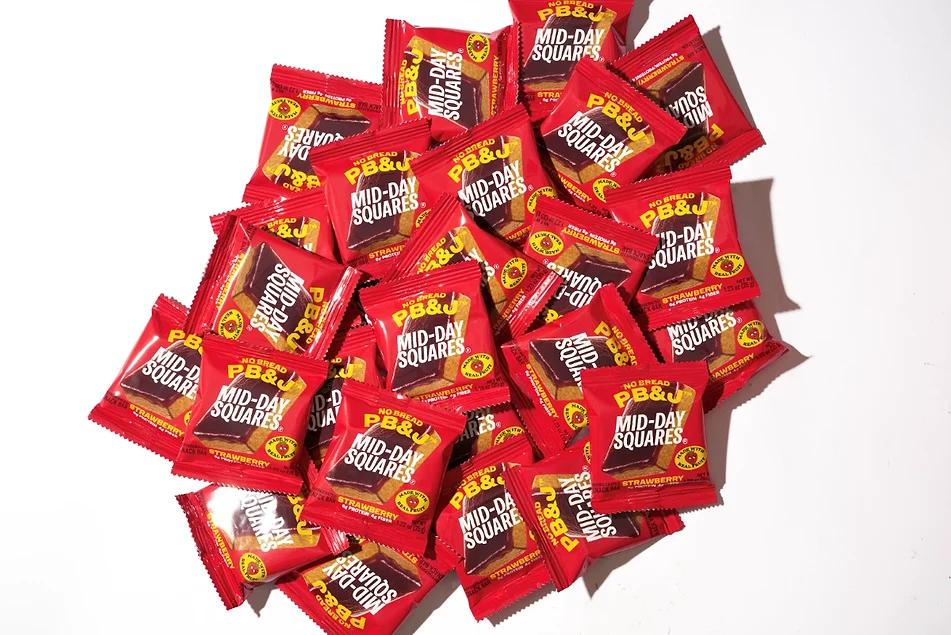
 MONTREAL — Mid-Day Squares, which self-manufactures refrigerated snack bars, has raised $8 million in a debt funding round led by Investissement Quebec and Canada Economic Development for Quebec Regions.
The funding round will be used to expand its Montreal manufacturing facility and launch into Walmart and Costco in the United States.
“This fundraise will get us to be able to handle $250 million of capacity,” said Nick Saltarelli, co-founder and co-chief executive officer of Mid-Day Squares. “We launched across the country in 300 Walmart stores as a test. We’ll be launching into Costco by Sept. 1.”
The company’s facility will expand from approximately 16,000 square feet to 35,000 square feet and will receive a new production line.
The expansion is happening to handle demand from the rise of consumers taking GLP-1 drugs, Saltarelli said.
“GLP-1 are completely changing snacking habits and what we’re seeing is demand from our retailers to bring to market smaller snacks,” he said. “So typically sub 40 grams in weight, snackable packages, items that can bring value to their customers in forms of protein, fiber, satiation, etc. Mid-Day Squares happens to fit that white space perfectly and as a result we’re seeing it in our revenue and volume.”
Additional growth has come from the company’s first non-chocolate product launch, a No Bread PB&J line that debuted in January.
The bars, available in strawberry and grape flavors, feature a fruit-based top layer formulated with tapioca syrup, grapes and or strawberries, fruit and veggie concentrate, soluble tapioca fiber, Jerusalem artichoke fiber, water, blackcurrant, fruit pectin, okra powder and agar agar.
The peanut butter bottom is formulated with tapioca syrup, pea protein, Jerusalem artichoke fiber, fava bean protein, coconut oil, and shea butter among other ingredients.
“They’re already almost 20% of our entire business,” Saltarelli said. “We can’t keep those things on the shelf. America loves peanut butter and jam sandwiches, that’s why we built them.”
Enjoying this content? Learn about more disruptive startups on the Food Entrepreneur page.

Shamel Studio co-founder and CEO Feras Alfuqaha told Fox News Digital how his company’s artificial intelligence tool aims to dramatically cut the time and cost of scheduling and budgeting during film pre-production.
President Donald Trump is calling on Congress to approve a federal tax incentive aimed at bringing film and television production and entertainment jobs back to the United States, drawing support from both a major Hollywood trade group and Democratic California Sen. Adam Schiff.
Trump announced the push Monday after meeting with actor Jon Voight, one of his Hollywood ambassadors, saying Voight and others in the entertainment industry have urged the administration to support federal incentives for domestic production.
“I am going to suggest that Republicans and Democrats get together, and immediately craft Legislation to save the Movie, Television, and Entertainment Business in America,” Trump wrote on Truth Social, adding: “Congress should approve, immediately, a Federal Production Incentive to create Entertainment Jobs in America.”
TRUMP URGES CANADIAN COMPANIES TO IMMEDIATELY MOVE TO US, SAYS ‘I DON’T WANT CANADIAN ANYTHING’

President Donald Trump announced what he called the “biggest oil deal in world history” between the United States and Venezuela, saying the agreement would increase U.S. oil supplies and lower gas prices. (Al Drago/The Washington Post/Bloomberg via Getty Images / Getty Images)
Trump said U.S. film and television work has increasingly moved to Canada and other countries and that meetings are being arranged with leaders of both parties in an effort to advance legislation.
The president did not specify the size or structure of the incentive he wants Congress to enact. However, a proposal backed by Voight allies would provide a 20% federal tax credit for U.S. labor costs on qualifying film and television productions.
SP Media Group CEO Steven Paul, a producer and Voight’s agent, and SP Media President Scott Karol have proposed the 20% credit, according to Reuters.
HOW DOLLY PARTON TRANSFORMED A SMALL TENNESSEE TOWN INTO A TOURISM EMPIRE
Voight is working with a coalition that includes the Motion Picture Association, Directors Guild of America and unions representing actors, writers and other entertainment workers as the industry seeks to stem the movement of production overseas, Reuters reported.
Trump’s Monday post did not say whether he supports that specific 20% proposal.
Schiff quickly backed Trump’s broader call, marking a rare area of agreement between the longtime political adversaries.
“I am in strong agreement with the President. Congress should immediately take up and pass a federal film tax incentive to bring back these good-paying jobs that we’ve lost to other countries,” Schiff wrote on X. “Let’s work together — Republicans and Democrats — to get this done, and bring the movie magic back to America.”
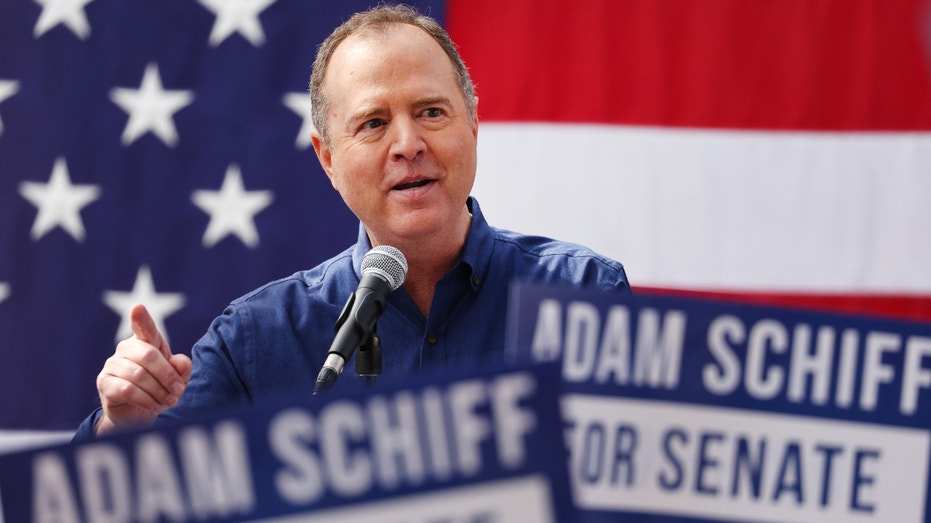
Rep. Adam Schiff, D-Calif., speaks to supporters outside the International Alliance of Theatrical Stage Employees Union Hall on Feb. 11, 2023 in Burbank, California. (Mario Tama/Getty Images / Getty Images)
The Motion Picture Association, whose members include Netflix, Paramount Pictures, Sony Pictures, Universal Studios, The Walt Disney Studios, Prime Video, Amazon MGM Studios and Warner Bros. Discovery, also welcomed Trump’s announcement.
DISNEY OFFERS VOLUNTARY EARLY RETIREMENT PACKAGES TO LONGTIME EXECUTIVES AMID RESTRUCTURING PUSH
“A federal incentive would be a landmark step toward bringing more production to local communities in all 50 states, strengthening our nation’s economy, and making our country a more competitive place to produce, create, and tell great stories,” MPA Chairman and CEO Charles Rivkin said.

The Hollywood Sign is pictured during a ceremony marking the 100th anniversary of the first time it was lit, in Los Angeles, California, on December 8, 2023. (DAVID SWANSON/AFP via Getty Images / Getty Images)
Rivkin said the group looks forward to working with the White House and bipartisan leaders in Congress to enact a national production incentive.
Voight has previously advocated for a federal tax credit designed to bolster U.S. film and television production.
Trump said he believes the economic activity generated by a federal incentive would more than offset its cost to the government, although he did not provide an analysis supporting that projection.
CLICK HERE TO GET FOX BUSINESS ON THE GO
“What we watch on the Silver Screen should be made in what was once the Movie and Motion Picture Capital of the World,” Trump wrote. “Let’s get this done!”

South African rand weakens as manufacturing sentiment falls

Volkswagen plans to close four German plants by 2034, report says
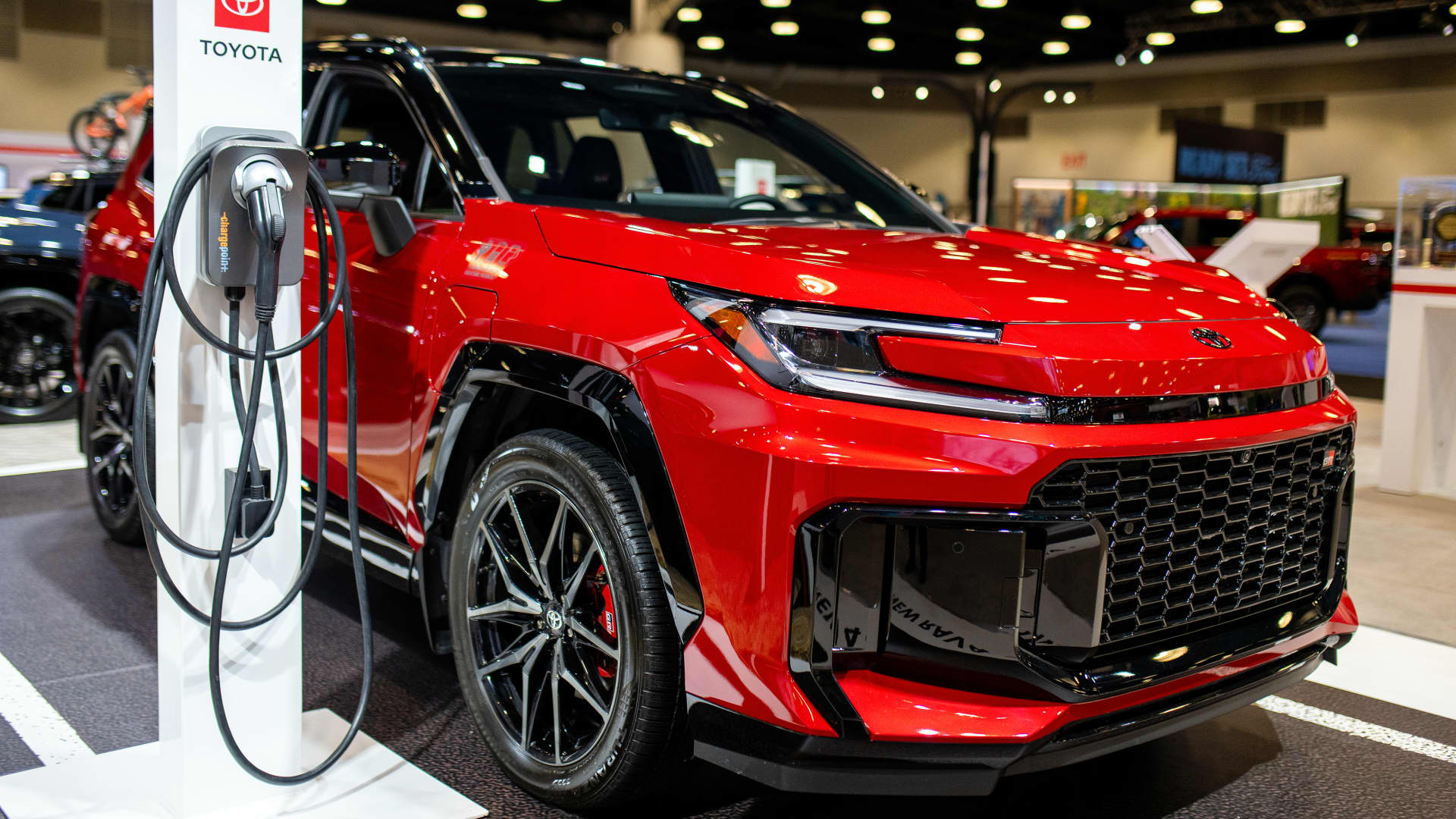

Toyota Motor has a rare problem for an automaker: There is so much demand for its new RAV4 and the inventory is so limited that dealers only have a few days’ supply.
“It is really unusual to see cars fly off the dealers’ lots like this,” said Jessica Caldwell, head of product insight at Edmunds. “It is not something that exists in that very practical, very suburban, small-midsize crossover segment.”
At Colonial Toyota in Milford, Connecticut, the lack of RAV4s has left owner Bobby Crabtree with several open spots for new vehicles at his dealership.
“This lot can handle another 250 vehicles, so I am probably about a third full of that capacity,” Crabtree said as he looked out at scores of new and used Toyotas.
Not all of those open spaces would be filled with new RAV4s during normal times, but there certainly would be more, he said.
The 2026 Toyota RAV4 Plug-in Hybrid GR Sport at the Vancouver Auto Show in Vancouver, British Columbia, Canada, on Wednesday, March 25, 2026.
James MacDonald | Bloomberg | Getty Images
Toyota’s RAV4 has been a red-hot model over the past several years, with almost 480,000 sold in the U.S. last year. It was the third best-selling model in the country in 2025 behind the Ford F-150 and Chevrolet Silverado, two full-size pickups that have been top sellers for years, according to Cox Automotive.
When Toyota announced it would be rolling out new versions of the RAV4, two things stood out. First, the crossover utility vehicle would only be sold as a hybrid. Second, production would be limited at first and then steadily increase. In other words, there would not be the normal allotment of new RAV4s at dealerships.
That has not stopped buyers like Nancy and Ira Berman of Danbury, Connecticut. When they ordered their RAV4 in March, they knew they would be waiting a while before they got their new SUV.
“The wait was a slight annoyance,” said Nancy Berman. “It didn’t stop us from going and doing this because we do have our other Toyotas to drive.”
Six months after placing their order, the Bermans will soon get their new RAV4.
For Toyota, the shift to an all-hybrid RAV4 lineup comes as more buyers are pivoting to those types of cars due to gas prices that remain elevated. In 2026, more than 18% of the vehicles sold in the U.S. have been hybrids, according to J.D. Power, still well behind the 75% of vehicles with internal combustion engines but above the 7% of pure electric vehicles.

With dealers unable to stock their lots with new RAV4s and customers being told they will have to wait weeks or perhaps even months for a vehicle, it raises the question of whether Toyota could lose sales. So far, Toyota’s U.S. sales in 2026 are still up 0.3% through July. Given the appeal of the RAV4, Caldwell said the impact of dealers having a limited supply is likely limited.
“There are other vehicles within the Toyota lineup that consumers can go to,” Caldwell said. “Toyota has a lot of brand loyalty, people who buy a Toyota usually stay with Toyota for many years not just one vehicle purchase but several.”


From a warehouse just north of Chicago, Sarah Potempa – celebrity hairstylist and CEO of the viral Beachwaver hair curling iron – keeps thousands of viewers hooked for hours selling products on TikTok live.
This kind of livestream shopping, which has boomed in China over the past decade, is building momentum in the U.S. thanks to social media giant TikTok and live commerce platform Whatnot, which just reached a $20 billion valuation.
Beachwaver did about $8,000 in sales during the first four hours of a TikTok livestream in late July, which CNBC sat in for. She auctioned off limited-edition curling irons as her teenage son DJed behind her; demoed hair care products; and promised viewers she would shave her brother-in-law’s head live on camera if they sold 500 orders.
It was one of hundreds of livestreamed shows that Beachwaver does each year. About a quarter of its $1 million in TikTok Shop sales so far in 2026 originated from livestreams, where the company hosts its own selling shows and works with affiliate creators on the popular social media app.
Beachwaver CEO Sarah Potempa hosts livestreams from the company’s warehouse in Gurnee, Illinois.
CNBC
Reminiscent of the QVC craze of the past few decades, livestream shopping puts consumers in front of hosts who sell products in real time.
Now, QVC is live on TikTok for more than 200 hours per week across seven channels, according to the company, as it prioritizes digital after recently emerging from bankruptcy.
“QVC is a great example of a large established retailer that might have been seen as a competitor to TikTok shop … but in fact they have turned out to be a really successful merchant,” said Patrick Nommensen, president of strategic initiatives for TikTok Shop in the Americas.
Beachwaver got its start on QVC. TikTok and Whatnot have reinvented the wheel.
“Nobody is saying, OK, you have 10 minutes at 7 p.m. and get ready and here’s your 10 minutes and you’re done,” said Potempa. “You definitely need to be on longer on a digital platform, but you really are more in control of the revenue.”
Beachwaver CEO Sarah Potempa uses the company’s namesake product, a patented rotating curling iron.
CNBC
Following in China’s footsteps
The U.S. live shopping industry is forecast to reach nearly $20 billion in sales in 2026, about 35% higher year over year, according to eMarketer industry estimates.
Still, it’s a far cry from the rapid growth that live shopping experienced in China.
Alibaba introduced Taobao Live in China in 2016. Within five years, the market crossed $50 billion, and it’s projected to top $1.1 trillion in 2026, according to eMarketer.
Live shopping has been increasingly integrated into Chinese “super apps,” which are utilized by millions of users and combine features like social media and messaging in the case of WeChat or artificial intelligence assistance, food delivery and travel booking on Alibaba’s Qwen.
“[Chinese consumers] still like stores, but they use the livestream part of the digital experience as the entertainment, the engagement, the inspiration,” said Globaldata managing director Neil Saunders. “In the U.S., we’ve tended to rely traditionally more on stores to fulfill that role.”
Saunders said that’s changing now as younger consumers lean more into live commerce to discover products.
U.S. live shopping winners
TikTok Shop launched in 2023. The company shared exclusively with CNBC that live shopping sales more than doubled in the first half of 2026 compared with the same time frame in 2025.
The number of live shopping sessions increased by more than 60% during the same period, TikTok said, and total live hours grew by more than 80%.
Founded in 2019, Whatnot built its audience on novelties and collectibles. It’s grown rapidly over the past year, doubling its valuation since October. Whatnot ranked No. 8 on this year’s CNBC Disruptor 50 list, which identifies the most promising venture-backed companies.
Whatnot says it’s the largest live shopping platform in the U.S. but declined to share its domestic sales figures. The company told CNBC that a majority of the $8 billion in global sales it reported for 2025 were in the U.S.
“You can have [5,000], 10,000 people on Whatnot or TikTok watching your show at one time,” said Eric Pagan, who sells for brands on both platforms, during an interview in mid-August. “I did a show on TikTok this weekend that was well into six figures … I think what brands are not aware of yet is that that exists.”
Whatnot’s core focus is auctions, where viewers can bid on products in real time. TikTok rolled out live auctions in January.
“It feels like things are really, really clicking and live shopping is becoming a bit more mainstream,” said Whatnot’s chief revenue officer, Armand Wilson. “In year one, it was largely all collectibles. … Now pretty much anyone can download Whatnot and find something for them.”
Whatnot sellers showcasing Funko Pops on the platform.
Source: Whatnot Inc.
Legacy online marketplaces like Amazon, Walmart and eBay also have native platforms for sellers to host live shopping streams, though those platforms aren’t as inherently video-first as social media sites.
Amazon and Walmart declined to comment about their live shopping businesses, while a representative for eBay Live described the offering as making shopping “more human.” All three companies declined to share livestream sales figures with CNBC.
Mark Yuan, a former business development lead for eBay’s live shopping division and now the owner of e-commerce consulting company And Luxe, said legacy marketplaces benefit from the consumer trust that comes with how long they have been around.
“Those are the things you can’t buy with money, but unfortunately, what gives them the advantage also might be their barriers as well,” he said. “Structurally it’s very hard to transform themselves into a discovery-first or content-first [platform].”
The future of shopping?
Where newer entrants are succeeding is in creating forums for like-minded consumers.
Whatnot, which is especially popular for collectibles, says it prioritizes community and has seen success in areas like Funko Pop figurines, Pokemon cards, sneakers and fashion.
“Going into a community, really deeply understanding their problems and building a product around them has been the ethos that I think has gotten us to where we are today and what really differentiates us” said Wilson.
Pagan, the livestream host, said without the trust of your viewers, “there is no point in even being live.”
“Those people are my friends,” he added. “I believe that they know things about me that a normal person on the street wouldn’t know. And we had those conversations on a livestream.”
TikTok Shop logo on a smartphone.
Costfoto | Nurphoto | Getty Images
Marshal Cohen, chief retail analyst at Circana, said livestream shopping helps to bridge the gap between e-commerce and traditional retail.
“You can’t touch and feel the product, but you can hear from others what they think about it,” said Cohen. “[Live shopping] bridges that shortfall of the inability to touch and feel. And that’s always been online’s biggest challenge.”
But the platforms have their own set of challenges. Whatnot and TikTok have had to contend with issues of counterfeit and stolen goods.
For the sellers, leveraging a large platform comes at a cost: Whatnot takes a commission fee of between 4% and 8% of sales depending on the product, and TikTok takes 6% — plus additional payment processing fees.
And, the growing popularity of live shopping has made it harder to compete for eyeballs.
“The biggest challenge really is visibility,” said Globaldata’s Saunders. “You have to make sure that your feed is aligned with the algorithm and that it’s putting you in front of the right people.”
Amazon (AMZN) stock extended its losses to a second day early Tuesday, after the tech giant was hit by a lawsuit from the Federal Trade Commission and 22 states over its advertising practices. Amazon stock fell nearly 2% to 255.29 in early trading on the stock market today. Shares fell 2.5% following news of the FTC lawsuit Monday afternoon. Shares…
Copyright ©2026 Investor’s Business Daily, LLC. All rights reserved. 87990cbe856818d5eddac44c7b1cdeb8

Most brands come to YOCTO asking us to fix retention, with the diagnosis already written: onboarding is not landing, the storytelling has gone flat, or the cancellation flow needs rebuilding.
The diagnosis is sincere, and usually wrong. When we open the account, the broken thing is rarely a flow. It is a number: how long it takes to earn back the cost of a customer, what a subscriber is worth once discounts are counted, how the offer is structured at the point of sale.
The most expensive version of the mistake is borrowed maths. A founder watches a famous brand run at a loss for the best part of a year before the money comes back, and concludes this is simply how ecommerce works now. Invisible from the outside is everything underneath that tolerance: a decade of paid-media experience, in-house teams, systems tuned over years, and enough capital to be wrong for a while. Adopt the tolerance without the advantages and nothing dramatic happens at first. The dashboards stay green while the road quietly runs out.
Why changing agencies changes nothing
It is why brands churn through agency after agency and conclude nobody can help. Each new partner is hired to produce deliverables, because that is what the brief asked for. The welcome series is rebuilt, the cancellation page redesigned, and the number that was actually broken sits untouched, because nobody was ever hired to find it. Cycling is rarely evidence that agencies do not work; more often it means the brief bought deliverables when the business needed a diagnosis.
Buy the diagnosis before the deliverables
Invert the purchase. Before anything is redesigned, establish which numbers are out of range: how many new customers start as subscribers, how many leave in the first month, what is lost to failed payments, what a recurring order is worth. At YOCTO we track nine such numbers, and no work ships unless we can say which one it should move. Skio’s published account of our work with Gratsi runs in that order, departing subscribers surveyed before any rebuild: cancellations down 48 per cent, the reactivation rate more than doubled. Loop Subscriptions recorded Evereden’s subscriber acquisition growing eightfold in three months. Neither figure is ours; the platforms wrote the case studies.
None of this argues against help; it is an argument about what you buy first. When you next brief a customer retention agency, ask it to name the number it intends to fix before it shows you a single design. If the answer comes slowly, keep looking. If the diagnosis shows your maths already works, you have learned the problem really is the creative, for less than a year of rebuilt flows. Either way, you stop guessing. For a subscription business, that is the cheapest thing you will buy all year.
George Kapernaros is the founder of YOCTO, the Klaviyo Elite retention agency for fast-growing DTC and subscription brands.

Qatar Warns Of ‘Industrial Catastrophe’ As Hormuz Crisis Deepens Amid Houthi Attacks On Saudi Arabia

Visa expands stablecoin card network to 160 programs

India’s para archers shine with twin golds, silver at World Archery Para Series | More sports News





-
 Crypto World7 days ago
Polymarket CLARITY Act Odds Slashed to 15% of Being Passed in 2026
-
 Crypto World7 days ago
Bitcoin price stalls below $78K as ADX falls to 12
-
 Crypto World7 days ago
Ethereum Price Holds as Tom Lee’s BitMine Makes Biggest ETH Buy Since June
-

 Politics7 days ago
Keir Starmer to stand down as an MP
-
Crypto World7 days ago
Bitcoin Makes History With First-Ever Green August During a Bear Market
-
 Crypto World7 days ago
Richer Than Anyone Thinks? Why Justin Sun Will Never Cash Out His Crypto
-
 Politics7 days ago
Labour On Track To Win Election But Lose Commons Majority
-

 Tech7 days ago
uGreen NASynch DXP 4800 Pro review: performance, cost
-

 Crypto World7 days ago
Singapore proposes 100% reserves and a ban on yields for stablecoin issuers
-

 Business7 days ago
Musk Says Tesla FSD Pothole Avoidance Is Coming Soon, Seven Years After He First Teased This Feature
-

 Business7 days ago
TikTok, Whatnot livestream shopping gains steam in the U.S.
-
 NewsBeat7 days ago
Moment safari vehicle packed with Swiss tourists plunges into crocodile-infested river in Tanzania as shocked tourists watch on
-

 Tech7 days ago
32GB Corsair Vengeance DDR5-6000 RAM kit is $115 off right now
-
 Entertainment7 days ago
10 Cancelled Superhero Shows Fans Are Still Begging To Bring Back
-

 News Videos7 days ago
XRP It’s happening soon. FED news you MUST SEE
-
 Entertainment7 days ago
The 10 Greatest Video Games Based on Horror Movies, Ranked
-
 Crypto World7 days ago
Fed Governor Barr says he’ll support rate hike if inflation doesn’t ease
-

 Politics7 days ago
Ariana Grande’s Eternal Sunshine Tour: Setlist, Stage Times, Bag Rules And Everything To Know
-

 Politics7 days ago
The Size Of Your Calves Could Predict How Long You’ll Live
-

 Politics7 days ago
Trump Gets Reality Check Over Irans Kharg Island Claim
You must be logged in to post a comment Login