
Crypto World
Tracking cocoa may be just the beginning for PwC, Merck, Hashgraph provenance system



The firms say their combination of physical authentication, digital traceability and enterprise process design has no precedent in supply chains, and cocoa is just the start.



Validators rolled back nearly two hours of blockchain history to recover user assets. But the attackers still managed to get away with $9.19 million before Cronos halted the network.


Humo Digital will test HUMO payments with more than 20 merchants under a sandbox jointly overseen by NAPP and Uzbekistan’s central bank.
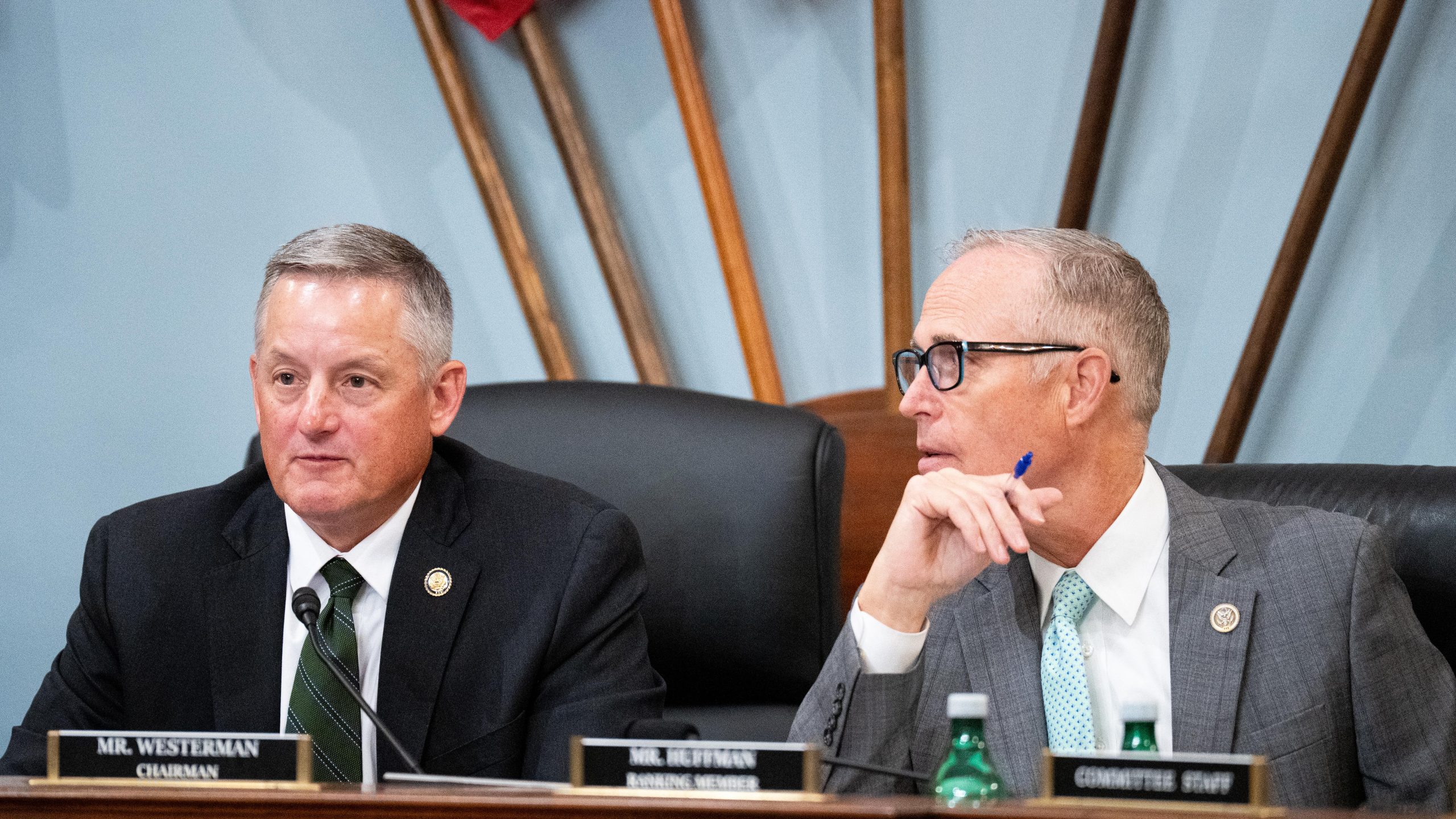
Huffman says that if Democrats win the House the committee would seek records showing how the projects were approved, how much public money had been spent, and whether donors received or sought favorable treatment from the Administration. The private financing, he says, would receive particular scrutiny. He wants to know who donated, how much they contributed and what business they had before the federal government.
Last year, the White House released a partial list of ballroom donors, including crypto and tech billionaires and defense contractors, but has not revealed how much each donor is giving.
Huffman also questioned why money and Park Service personnel were being concentrated in Washington while the Administration was cutting staff and services elsewhere in the national park system.
“You could look at it and say, well, you know, why die on that hill? These are just little pet projects of Donald Trump,” Huffman says. “But this is real money that is being misprioritized. It’s an abuse of the public trust.”
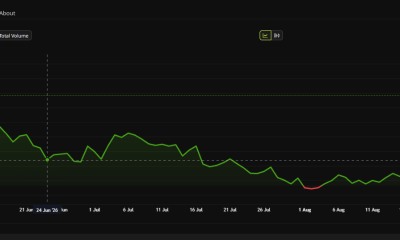
Everyone is waiting for the Hyperliquid Season 3 airdrop, Machi Big Brother posted on Monday. His fix is a Solana meme coin called Season 3 (S3), and he says it pays HYPE to holders.
Jeffrey Huang is the Taiwanese-American entrepreneur behind the account. His pick spiked early Tuesday, then gave back about three-quarters of the move within hours.
Machi Big Brother Says He Is Not the Dev
Huang framed the coin as a way to skip the wait. He also borrowed a phrase, “let’s dance,” from trader Ansem, who had used it days earlier for a different coin. Then he stepped back from the project itself.
That disclaimer matters given his record. In March, he absorbed roughly $75 million in liquidations on Hyperliquid. Days ago, he pulled his $1M Friend.tech offer.
The Hyperliquid Season 3 Airdrop Nobody Announced
Hyperliquid ran two-point phases, both before its Genesis Event. Farmers label them Season 1 and Season 2. The protocol never used the word season.
Nobody learned the exact rules either. Hyperliquid said only that its criteria changed on a recurring basis, and it never confirmed that points set the payouts.
That event released 310 million HYPE, or 31% of supply. No campaign and no payout have followed it.
Hope rests on the treasury. Another 388.88 million HYPE stays unminted for future emissions and community rewards.
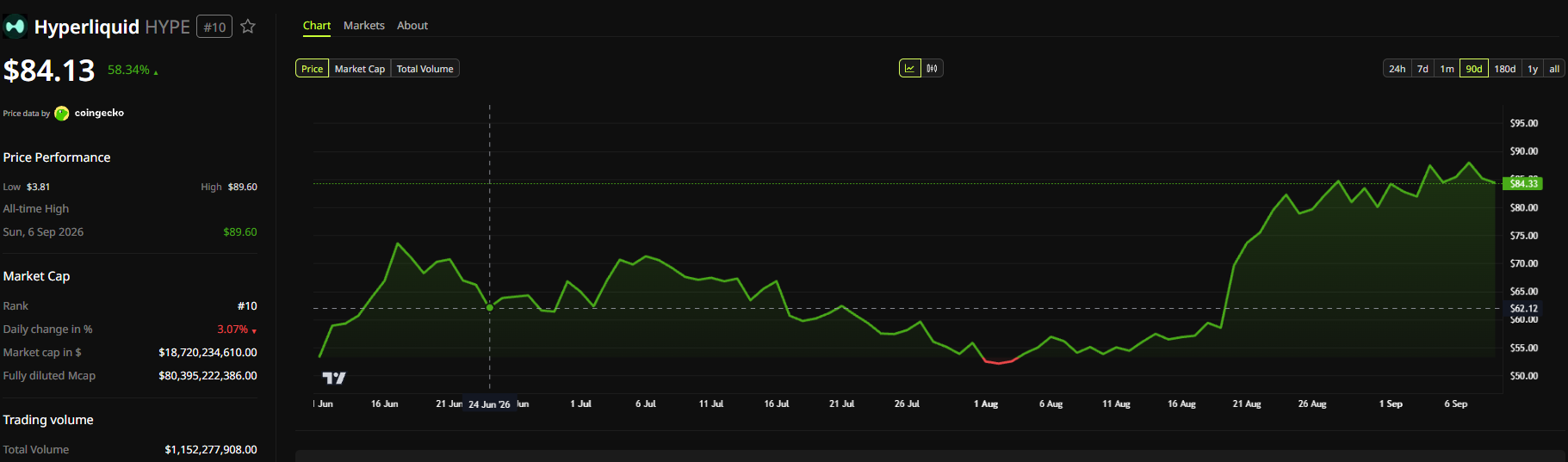
HYPE itself trades around $84 after approaching record highs last weekend. Season 3 buyers are pricing a distribution that has no schedule.

The payout pitch does have a mechanism. Raydium lets token creators claim a cut of trading fees once liquidity reaches its main pools. Fees on the HYPE-quoted launchpad pool, therefore, arrive in HYPE.
S3 copies a template that is already running. Anonymous Cat, a Solana coin quoted in Zcash, opened on August 30 and now carries a $95 million market cap. Zcash, meanwhile, crossed $1,000 last week. Ansem promoted that one.
Neither coin runs on the chain it borrows from. S3 sits on Solana, not HyperEVM.
Liquidity stays thin. The HYPE pool carries about three-quarters of all S3 trading, near $3.6 million over 24 hours. It holds just $175,000 of depth. Total liquidity across every pool sits near $500,000.
Pools disagree on the price by more than 60%. Buyers are paying up for a claim that no named developer has confirmed.
The post Hyperliquid Season 3 Airdrop Wait Fuels a Meme Coin Machi Big Brother Promotes appeared first on BeInCrypto.

To generate and scale innovative AI solutions, leaders rely on a repertoire of interrelated roles, what we refer to as the “ABCs” of leadership: architects, bridgers, and catalysts.
Architects know they cannot mandate innovation; they foster the culture and capabilities that enable co-creation. These leaders start by raising their organization’s collective aspirations through a shared sense of purpose and values. By re-shaping the social environment of their organizations, these leaders encourage their colleagues to work through the inevitable conflicts of collaborating with others and the fear of failure. They reward thoughtful risk-taking, treat intelligent failures as learning opportunities, and provide people the tools, data, and perhaps most importantly, the permission to try.
Bridgers work at the boundaries of their enterprises, building trust-based partnerships with those outside their walls. No company, no matter how well-resourced, has all the talent and tools they need for innovation given the unprecedented pace at which technology is advancing. With AI, I hear that there is a shortage of individuals who know how to translate and work across technology and business. Technical experts who are developing AI solutions typically do not have the contextual intelligence about the realities of business and what customers want, while the businesspeople do not appreciate the opportunities and risks of implementing the technology.


Visa said on Sept. 8 that more than 160 stablecoin-linked card programs were operating globally during its fiscal second quarter of 2026, while their payment volume increased nearly 200% year over year.
Summary
- 160 stablecoin-linked Visa card programs were live globally during the company’s fiscal second quarter 2026.
- Payment volume across Visa’s stablecoin-linked card programs increased nearly 200% from the previous year globally.
- Visa’s stablecoin settlement volume surpassed a $20 billion annualized rate, rising more than fifteenfold year-over-year.
- Credit Coop says its platform financed $2.5 billion cumulatively since 2023 without recording any defaults.
- Participating card programs reduced borrowing costs by up to 30%, according to Visa’s published figures.
The payments company also reported that its stablecoin settlement volume had surpassed a $20 billion annualized run rate. That represents growth of more than 15 times from the corresponding period one year earlier.
Visa disclosed the figures while announcing expanded work with Credit Coop. The companies are using stablecoin-denominated revolving credit facilities to help card programs finance daily settlement obligations.
The statistics come from Visa and Credit Coop rather than independently audited transaction reports. An annualized run rate also projects recent activity over a full year. It does not mean Visa has already processed $20 billion in stablecoin settlement during 2026.
Visa stablecoin cards reach 160 live programs
Stablecoin-linked cards connect a customer’s crypto wallet or stablecoin account with Visa’s existing merchant network. The digital assets are converted or used to fund the transaction while the merchant receives payment through familiar card infrastructure.
Visa said payment volume across these programs grew nearly 200% year over year. The company did not publish the underlying dollar value, regional breakdown or transaction count in its announcement.
The latest disclosure updates figures Visa presented in June. At the time, it said more than 160 programs were either live or in development and that stablecoin settlement had reached a $7 billion annualized rate as of March.
The latest $20 billion figure suggests the settlement run rate has nearly tripled since March. However, the two figures cover Visa’s stablecoin settlement activity, not necessarily consumer purchases made through stablecoin-linked cards alone.
Card payment volume and settlement volume measure different processes. Payment volume covers purchases initiated by cardholders. Settlement volume covers money transferred between Visa and participating financial institutions or program operators. Visa previously placed its stablecoin settlement run rate near $7 billion while expanding pilots across more regions, blockchains and currencies.
Credit Coop finances the daily settlement gap
Visa’s announcement focused on a working-capital problem facing new stablecoin card programs. Operators must fund settlement obligations before receiving all corresponding payments from cardholders.
Large, established card portfolios can use warehouse credit lines or securitizations. Smaller programs may need only several million dollars, drawn and repaid daily. Legal and administrative costs can make conventional facilities uneconomical at that scale.
Credit Coop’s structure uses a stablecoin-denominated revolving credit facility secured by settlement receivables. Borrowers draw from the facility to meet their daily Visa obligations and repay the credit line as cardholder proceeds arrive.
Incoming receivables pass through Credit Coop’s Spigot smart contract. The contract automatically directs part of the proceeds toward principal and interest before transferring the remaining funds to the borrower’s operating account.
The process resembles a controlled bank lockbox. The difference is that the routing and repayment instructions execute through smart contracts, creating publicly visible transaction records.
Visa said Credit Coop receives authorized programs’ daily settlement files through a secure data connection. Credit decisions, facility sizes and repayment checks can therefore use both Visa records and onchain transaction history.
According to Visa, stronger access to settlement data helped reduce borrowing costs for some participating programs by as much as 30%. The company did not disclose individual interest rates or identify every program that received lower pricing.
Rain provides the first operating case
Rain, a Visa principal member offering stablecoin card infrastructure, has used a Credit Coop revolving facility since August 2023. The facility finances Rain’s daily Visa settlement requirements.
Credit Coop transfers funds to Rain based on the relevant Visa settlement file. Rain then funds its settlement obligation. Cardholder payments subsequently pass through smart contracts that service interest and replenish the facility.
Visa said every settlement obligation covered by the facility had been funded on time. Credit Coop reported more than $2.5 billion in cumulative financing since 2023, covering over 3,000 borrowing events and 9,000 repayment events.
Credit Coop also reported zero defaults across the platform. Those performance figures are company claims and have not been supported by a published independent audit.
Rain accounted for approximately $2 billion of the reported cumulative settlement financing. Visa said the arrangement had processed more than 2,000 borrowing events and 7,000 repayment events for Rain, generating at least $1.58 million in interest.
Rain previously confirmed that it joined Visa’s stablecoin settlement pilot. The company said it settles Visa card obligations in USDC seven days a week, including weekends and holidays.
Visa has also described Rain’s use of USDC-backed receivables financing in its broader work on onchain credit. The structure is intended to reduce the need for issuers to hold idle settlement capital.
U.S. card programs test the financing route
Karta, a U.S.-issued premium Visa card operating under Rain’s bank identification number, also launched using Credit Coop financing while developing its performance record.
Visa said Karta later announced $140 million in financing in June 2026. The package included a $15 million Series A led by Galaxy Ventures and a $125 million institutional credit facility from Community Investment Management.
Visa presented Karta as an example of an early card program moving from a smaller revolving facility to institutional financing. The company said Karta’s daily settlement history contributed to the record available to larger lenders.
Moto and Xplace also use Credit Coop financing under Rain’s issuing infrastructure, according to the announcement. Visa did not disclose their facility sizes, borrowing costs or settlement volumes.
The partnership adds a credit layer to Visa’s wider stablecoin strategy. In March, Visa and Stripe-owned Bridge announced that their card programs were live in 18 countries and planned to reach more than 100 countries by the end of 2026.
Bridge-enabled cards can be used through platforms including Phantom and MetaMask. Visa said customers could spend their balances across more than 175 million merchant locations, while merchants continue receiving conventional payments.
Visa linked cards and stablecoins with its wider programmable commerce strategy, including settlement pilots and payment tools for AI agents.
Visa plans just-in-time settlement funding
Visa and Credit Coop are now working toward just-in-time funding. Under the planned model, a program’s daily settlement file would trigger a stablecoin disbursement matching the exact net amount owed.
The funds would move directly to the relevant Visa settlement address. Programs would avoid drawing a full facility in advance and holding unused capital between settlement cycles.
Visa said this model could shorten borrowing periods from days to hours. Lenders could also align their exposure more closely with actual daily obligations instead of committing the entire credit line continuously.
The model remains dependent on accurate settlement data, reliable smart contracts and sufficient stablecoin liquidity. Operational failures could prevent a program from meeting a settlement deadline even when the credit facility remains adequately funded.
Credit Coop’s zero-default record does not guarantee future performance. Stablecoin depegging, contract vulnerabilities, borrower failures and changing regulations remain potential risks.
Visa has not announced a deadline for launching just-in-time funding across all 160 programs. It also has not disclosed which stablecoins or blockchains future facilities will support.
The next stage will involve extending the model to additional issuers and determining whether their onchain repayment records can support larger institutional facilities. Visa said it expects more programs to follow Karta’s path, but that remains a company forecast.
Crypto World
Stablecoins could save South Korean merchants up to $3.8 billion a year, budget office says


South Korea’s budget office warned that stablecoin adoption could reduce banks’ roles as credit intermediaries and potentially destabilize token pegs during mass redemptions.
Robinhood’s partnership with Uniswap is helping the brokerage rapidly build liquidity on its new blockchain, potentially removing a key obstacle to attracting users and assets, according to Standard Chartered.
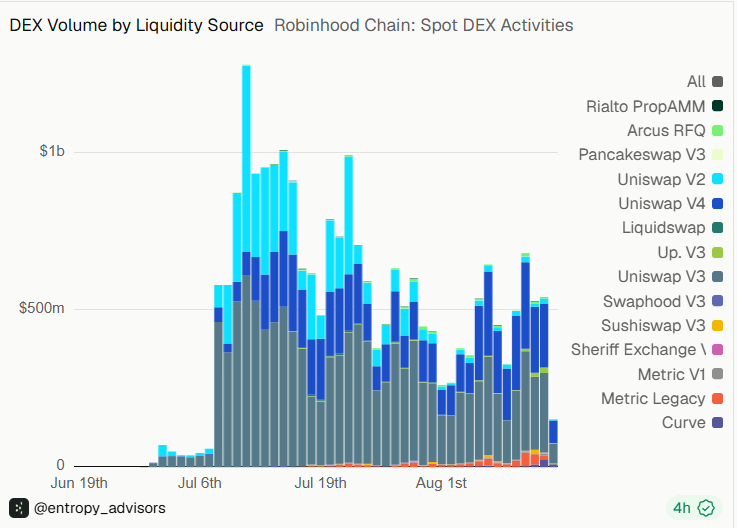
In a recent note, Standard Chartered analyst Geoffrey Kendrick said Robinhood Chain has grown to nearly $1 billion in total value locked (TVL), which he described as the fastest growth of any blockchain by that measure. Virtually all of Robinhood Chain’s liquidity needs are being met through Uniswap V2, V3 and V4, Kendrick said.
The arrangement gives Robinhood access to established decentralized finance infrastructure as it scales its blockchain, potentially strengthening its ability to attract users without having to build liquidity from scratch.
The partnership is also having a significant impact on Uniswap’s token economics. According to Standard Chartered, protocol fees generated through Robinhood are now the largest source of UNI token burns.
The UNI burn rate has roughly doubled since a Robinhood-linked fee switch was activated on July 27, reaching an annualized pace of about $90 million. At UNI’s current price of roughly $3.50 apiece, that would translate to 25 million UNI tokens, or just over 4% of the circulating supply, being burned annually.
Robinhood Chain’s liquidity sources. Source: Standard Chartered
Robinhood Chain launched on July 1 with a focus on bringing real-world assets onchain. Adoption accelerated quickly after launch, reaching 194,000 daily active users during its first week.
Related: Robinhood Chain sees over $70M in ETH bridged during first week
Robinhood’s crypto push expands into tokenization and prediction markets
Robinhood Chain is part of the brokerage’s broader push beyond traditional stock trading, with the company expanding into crypto, prediction markets and tokenization. The strategy has drawn attention from Wall Street, with analysts at Bernstein raising their price target for Robinhood (HOOD) stock to $160 per share and identifying tokenization and prediction markets as key growth drivers.
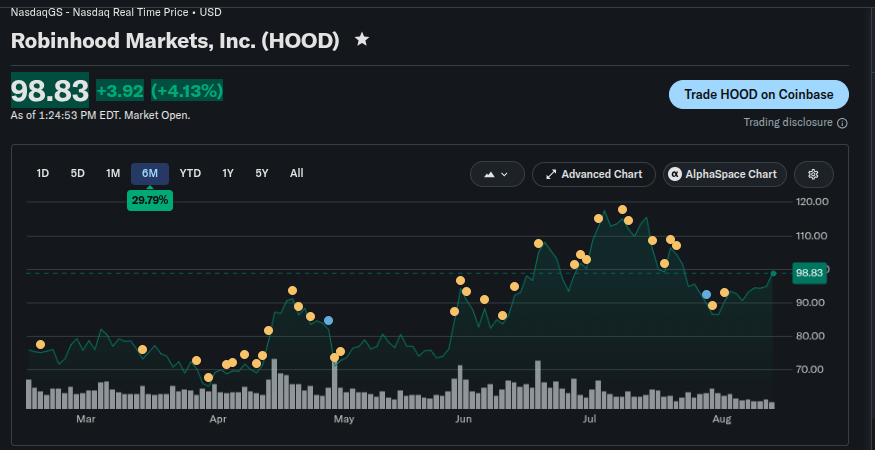
HOOD shares were up more than 4% on Thursday, extending six-month gains to almost 30%. Source: Yahoo Finance.
The expansion has coincided with mixed trends across Robinhood’s crypto business. The company reported record revenue and earnings in the second quarter, even as crypto trading volumes and revenues declined.
Related: Robinhood in talks with Crypto.com over prediction markets: WSJ
The Blockchain Association urged the US Supreme Court to hear Custodia Bank’s challenge to the Federal Reserve’s denial of its application for a master account, which would give the crypto-focused bank direct access to the Fed’s payment system.
In an amicus brief filed Wednesday, the industry group argued that federal law requires the central bank to make its payment services available to eligible nonmember banks and that the Fed should not have broad discretion to deny access.
The association said the appeals court’s decision effectively gives the Fed veto power over state-chartered banks by allowing it to withhold services needed to operate independently. It also linked Custodia’s case to alleged crypto debanking under “Operation Choke Point 2.0,” arguing that federal regulators discouraged banks from serving the digital asset industry.
Custodia, a Wyoming-chartered bank focused on digital assets, applied for a Fed master account in 2020, seeking direct access to the central bank’s payment services without relying on an intermediary bank.
The Federal Reserve Bank of Kansas City denied Custodia’s application in 2023, and the Tenth Circuit Court of Appeals later ruled that the regional Fed bank had discretion to reject its request. In March, the appeals court voted 7-3 against rehearing the case, leaving the Supreme Court as Custodia’s only remaining avenue for review.
The Blockchain Association said the Tenth Circuit interpreted the Fed’s authority too broadly, potentially allowing it to deny payment-system access to eligible state-chartered banks serving the crypto industry.
Blockchain Association backs Custodia’s Supreme Court petition. Source: US Supreme Court filing
Related: Goldman Sachs CEO backs ‘not perfect’ CLARITY Act as vote expected soon
Crypto companies push deeper into US banking
Custodia’s challenge comes as other crypto companies are gaining greater access to the US banking system, including federal charters and, in one case, direct access to Federal Reserve payment rails.
In March, Kraken Financial became the first crypto banking unit to receive a limited-purpose master account from the Federal Reserve Bank of Kansas City, giving it direct access to Fedwire. The approval contrasts with Custodia’s rejection by the same regional Fed bank in 2023.
In April, Coinbase received conditional approval from the Office of the Comptroller of the Currency (OCC) to establish a national trust company, bringing its custody business under federal oversight without allowing it to take retail deposits or operate as a commercial bank.
Circle received final OCC approval for its national trust bank in July, while Kraken parent Payward applied for its own national trust company charter the following month. The OCC also conditionally approved national trust bank applications from Ripple, BitGo, Fidelity Digital Assets and Paxos in December.
The trend has drawn resistance from traditional banking groups. The Independent Community Bankers of America opposed Coinbase’s approval in April, arguing that crypto companies are seeking the benefits of bank charters without being subject to the full regulatory framework applied to traditional banks.
Magazine: Bitcoin will never fall below $60K again: Nansen founder
Crypto World
Trump Is Sued Over Selling Early Access to Truth Social Posts Amid Backlash Against Scheme

Trump and other White House officials are listed as defendants but TMTG is not. (Trump holds the largest stake in TMTG through a revocable trust which owns around 41% of the company.)
TIME has reached out to the White House and TMTG for comment.
The legal challenge lands in the midst of mounting backlash over the data feed, as Democratic lawmakers have already called for probes into the service, citing concerns over potential market impacts.
Here’s what you need to know:
What exactly does the lawsuit say?
The complaint argues that the Truth Social early access service violates the First and Fifth Amendments of the U.S. Constitution.
“The First Amendment guarantees equal access to the President’s public announcements, and even content-neutral burdens on that access must be narrowly tailored to serve a significant government interest,” the lawsuit reads.
“Similarly, the Fifth Amendment prohibits charging unreasonable sums that cannot be justified to offset the cost of the government benefit, and granting preferential access to crucial government information for arbitrary and irrational reasons, as is the case here.”

Claim Your Share Of $50 Million Disney Streaming Price Settlement By Sept. 8 Tonight

Cronos executes controversial blockchain rollback to recover crypto worth $111 million

Brandi Glanville Reveals 18-Hour IV Routine Amid Health Crisis

Weekend Open Thread: Wit & Wisdom

Why Trees Belong on the Risk Register

Commonwealth Games boxing: Jadumani Singh seals dominant 5-0 win over Pakistan’s Sumama Rehman to enter quarter-finals | Commonwealth Games News
![How far can I walk from my house surviving only from money I find on the ground? [PART 1]](https://wordupnews.com/wp-content/uploads/2026/09/1788864064_maxresdefault-80x80.jpg)
How far can I walk from my house surviving only from money I find on the ground? [PART 1]

Get Ready: Bitcoin About To Explode Higher?

Financial Freedom, When to Say ‘Go Live Your Life!’ – Morgan Lemaitre on The Dean’s List Podcast
-

 Business21 minutes ago
Egyptian TV Presenter Sarah Khalifa, 11 Others Sentenced To Death In Major Drug Trafficking Case In Cairo
-
 Tech38 minutes ago
Strong Password Policy and Password Manager Guide
-
 NewsBeat46 minutes ago
‘Shocking, disappointing, woeful’: Reaction to Wales’ fall in the global schools Pisa scores – live
-

 Business47 minutes ago
model backs CBD drinks brand
-
 Entertainment16 minutes ago
The 10 Most Influential Books of the 20th Century, Ranked
-

 Crypto World48 minutes ago
Stablecoins could save South Korean merchants up to $3.8 billion a year, budget office says
-

 Crypto World35 minutes ago
Visa expands stablecoin card network to 160 programs
-
 Entertainment30 minutes ago
5 Artists Who Need to Sing the Next James Bond Theme Song
-

 News Videos32 minutes ago
MASSIVE XRP RECORD SET! EVERYTHING CHANGES TODAY!!!
-
 NewsBeat33 minutes ago
Manchester United fans announce ticket protest before Manchester derby
-
 NewsBeat40 minutes ago
I’ve spotted this luxury luggage brand in The Gentleman season 2
-

 Entertainment43 minutes ago
Chiefs Reporter Reveals Patrick Mahomes Message After Dad’s Death
-
 Sports37 minutes ago
India’s para archers shine with twin golds, silver at World Archery Para Series | More sports News
-

 NewsBeat27 minutes ago
They’re resilient, low-effort and beautiful: how to plant a rubble garden
-

 Sports24 minutes ago
Lindermann back to his best in 2026 Chelmsford Stakes
-
 Crypto World22 minutes ago
Hyperliquid Season 3 Airdrop Wait Fuels a Meme Coin Machi Big Brother Promotes
-

 Crypto World14 minutes ago
How Democrats Plan to Investigate Trump’s Ballroom
-

 Crypto World28 minutes ago
The Leaders AI Innovation Needs
-

 NewsBeat20 minutes ago
US Open 2026: Carlos Alcaraz can end American dreams by beating Ben Shelton, plus Frances Tiafoe or Alex Michelsen, in New York
-

 Crypto World8 minutes ago
Uzbekistan begins government bond-backed stablecoin payment pilot
You must be logged in to post a comment Login