
Business
10 Essential Facts About the Cambridge Rare Disease Drug Discovery Pioneer


CAMBRIDGE, England — Healx, a leading UK artificial intelligence-powered biotech company, continues to reshape drug discovery for rare diseases in 2026, leveraging advanced machine learning to accelerate treatments for conditions that affect millions but often lack approved therapies.
Founded in 2014, the Cambridge-based firm stands out in the competitive AI drug discovery landscape by focusing on repurposing and enhancing existing compounds through data-driven insights rather than starting from scratch. With a growing pipeline advancing toward clinical stages, strategic partnerships and recent expansions into oncology and neuroregeneration, Healx exemplifies how AI can address the high failure rates and costs of traditional pharmaceutical development.

Here are 10 key things to know about Healx and its mission to bring hope to rare disease patients.
- Patient-inspired origins: Healx traces its roots to a 2014 meeting between co-founders Dr. Tim Guilliams and Dr. David Brown with Nick Sireau, whose son has alkaptonuria, a rare genetic disorder. This encounter highlighted the urgent need for faster treatments for the estimated 10,000 rare diseases affecting 300 million people worldwide, 90% of which have no approved therapies.
- Cambridge techbio powerhouse: Headquartered in the heart of the UK’s leading life sciences cluster, Healx benefits from proximity to world-class research institutions like the University of Cambridge. The company recently opened new labs at Chesterford Research Park, enhancing its capabilities in AI-driven biology and chemistry while maintaining a team of around 69 employees focused on interdisciplinary expertise.
- AI platform at the core: Healx’s proprietary next-generation AI platform analyzes millions of drug and disease data points to uncover novel connections. By integrating generative AI, machine learning, biomedical knowledge graphs and frontier technologies, it runs discovery stages in parallel and hypothesis-free, significantly shortening timelines from prediction to patient compared to conventional methods.
- Co-founder with Viagra pedigree: Chairman and co-founder Dr. David Brown is the co-inventor of the blockbuster erectile dysfunction drug Viagra and former global head of drug discovery at Roche. His deep pharmacology expertise complements CEO Dr. Tim Guilliams’ background in biophysics, neuroscience and tech entrepreneurship, creating a strong foundation for blending AI with proven drug development know-how.
- Substantial funding secured: Healx has raised approximately $115-134 million to date across multiple rounds. Key milestones include a $47 million Series C in 2024 co-led by Atomico and R42 Group, a $2 million later-stage investment from SCI Ventures in 2025, and earlier rounds backed by Balderton Capital, Amadeus Capital and others. This capital has fueled pipeline advancement and platform enhancements.
- Advancing clinical-stage pipeline: The company’s pipeline features assets in rare and pediatric oncology and neurology. HLX-1502 and HLX-0213 target Neurofibromatosis Type 1, with FDA clearance for a Phase 2 trial of HLX-1502 secured in 2024. Other candidates address Fragile X Syndrome, Angelman Syndrome, osteosarcoma and undisclosed rare conditions, with several programs in preclinical or IND-enabling stages.
- Strategic oncology expansion: In September 2025, Healx entered a strategic transaction with Vuja De Sciences to strengthen its focus on preventing cancer recurrence and metastatic endurance. The deal advances HLX-4310 and integrates expertise in rare and pediatric oncology, marking a significant step beyond traditional rare genetic disorders while leveraging the AI platform’s predictive power.
- Partnerships tackling paralysis: In 2025, Healx partnered with SCI Ventures — the world’s first specialist venture fund dedicated to curing paralysis — to apply its AI platform to spinal cord injury (SCI) therapies. The collaboration targets chronic SCI, a condition with lifetime care costs of $3-6 million per patient and limited treatment options, combining AI insights with neuroregeneration expertise.
- Additional high-profile collaborations: Healx has worked with Sanofi to identify new rare disease indications for proprietary compounds and maintains ties with organizations like the Children’s Tumor Foundation. These partnerships validate the platform’s ability to generate therapeutic rationale quickly and support milestone-driven progress toward the clinic.
- Mission-driven impact and recognition: Healx aims to deliver novel treatments faster, more cost-effectively and with higher success probability than the traditional 5% rate in drug discovery. The company has earned accolades such as AI Company of the Year and continues to emphasize ethical, patient-centric innovation. Its approach not only accelerates individual programs but also contributes to broader advancements in AI for biomedicine.
Healx’s technology combines three key drug discovery paradigms — AI predictions, in-house expert validation and patient insights — to create a more efficient pipeline. Traditional methods often take 10-15 years and cost billions, with most candidates failing. By contrast, Healx’s data-intensive method identifies repurposing opportunities or novel enhancements, potentially reaching clinical trials in as little as 24 months for some programs.
In 2026, the company remains active at major industry events, including the BIO International Convention, where it showcases its platform’s potential for rare and neglected conditions. Recent moves, such as the Vuja De Sciences transaction and SCI Ventures partnership, demonstrate strategic evolution while staying true to its rare disease roots.
The broader context for Healx includes a booming AI drug discovery sector, where UK firms benefit from strong talent pools, government support for life sciences and a regulatory environment that increasingly embraces innovative technologies. Challenges persist, including the need for robust clinical validation, competition for compute resources and navigating complex biology in heterogeneous rare diseases.
Yet Healx’s progress stands out. With assets advancing toward or in clinical stages, the firm positions itself as a bridge between cutting-edge AI research and tangible patient benefits. CEO Tim Guilliams has highlighted the emotional drive behind the work, noting that every rare disease patient deserves a treatment and that AI can help solve humanity’s toughest health challenges, from genetic disorders to cancer recurrence.
Industry observers view Healx as part of the UK’s vibrant AI biotech ecosystem, alongside companies like Isomorphic Labs. Its patient-inspired model — starting from real unmet needs rather than purely technological curiosity — resonates with investors and partners seeking meaningful impact alongside commercial potential.
As clinical data emerges in the coming years, particularly from the Neurofibromatosis Type 1 program expected to yield results in 2026 or beyond, Healx could provide proof points for AI’s role in transforming pharma. Success would not only benefit specific patient communities but also validate scalable approaches for thousands of rare conditions.
For now, the Cambridge company continues refining its platform, expanding collaborations and advancing its pipeline with disciplined execution. Its story illustrates how AI, when paired with deep domain expertise and human-centered focus, can address long-neglected areas of medicine.
Healx’s journey from a 2014 conversation about one boy’s rare disease to a clinical-stage biotech with international partnerships underscores the power of technology to drive hope. As the firm pushes forward in 2026, it stands as a compelling example of British innovation tackling global health inequities, one AI-driven discovery at a time.


Trump says Iran could be ’taken out’ on Tuesday, Hegseth says major strikes to come
Micron Technology: Betting On The AI Memory Supercycle
Business
Xiao-I Corp Stock Explodes 157% as China Court Victory Over Apple Patent Bolsters AI Patent Portfolio
Shares of Xiao-I Corp (NASDAQ: AIXI) skyrocketed more than 156% Monday, surging to around $0.34 in afternoon trading as retail investors piled into the micro-cap artificial intelligence company following a major legal victory in its long-running patent dispute with Apple in China.
The dramatic intraday move saw the stock open sharply higher and maintain strong momentum, with trading volume spiking to extraordinary levels for the small company. The rally built on earlier gains triggered by news that China’s Supreme People’s Court rejected Apple’s appeal to invalidate key AI patents held by Xiao-I’s variable interest entity (VIE) in Shanghai.
Xiao-I Corporation, a Shanghai-based provider of cognitive intelligence solutions founded in 2001, specializes in natural language processing, conversational AI, knowledge graphs, hyperautomation and multimodal technologies. The company serves sectors including finance, contact centers, government services, manufacturing and healthcare through platforms that integrate deep learning and affective computing.
The patent ruling, finalized on March 27, 2026, affirmed the validity of Xiao-I’s core AI intellectual property that forms the basis of its infringement lawsuit against Apple. The Supreme Court’s decision, which is final and non-appealable on the validity issue, removed a significant legal hurdle and validated the company’s technological claims. While the infringement proceedings continue and no financial compensation is guaranteed, the outcome strengthened Xiao-I’s position in China’s competitive AI landscape.
The stock had already shown volatility in early April. It surged more than 33% on April 2 following initial reports of the court decision, with massive volume reflecting retail enthusiasm. Monday’s continuation pushed the price well above recent levels, though it remained far below its 52-week high near $4 and reflected the stock’s history of sharp swings as a low-float micro-cap name.
Analysts and market observers described the move as driven primarily by sentiment and short-term momentum rather than fundamental shifts in operations. Xiao-I’s market capitalization stayed under $5 million even after the surge, underscoring its status as a highly speculative play. The company has faced challenges including dilution from convertible notes, governance issues and limited revenue scale compared with global AI leaders.
Despite the legal win, risks remain substantial. The broader infringement case against Apple entities in China is ongoing, and outcomes on damages or licensing are uncertain. Xiao-I operates primarily through a VIE structure, a common but complex arrangement for foreign-listed Chinese companies that carries inherent regulatory and ownership risks.
The company’s core offerings include a conversational AI platform, knowledge fusion tools, intelligent voice systems and hyperautomation solutions. It has positioned itself as a pioneer in cognitive intelligence since its early days, with applications in smart city services, financial institutions and industrial digitization. Revenue comes from software licenses, maintenance services and cloud-based AI products.
Recent company updates highlighted client renewals in the automotive sector and continued development of metaverse and vision analysis platforms. However, like many small AI firms, Xiao-I competes against much larger players with deeper resources, including domestic giants and international technology firms.
Monday’s trading frenzy echoed patterns seen in other low-priced, news-driven stocks where retail participation on platforms can amplify moves. Volume exceeded typical daily averages by multiples, with significant pre-market and intraday interest. Some traders noted the stock breaking technical levels, including attempts to reclaim the 50-day moving average for the first time in months.
Wall Street coverage of AIXI is limited due to its size. Price targets and ratings are sparse, and the stock carries high volatility warnings. Investors are cautioned about the potential for rapid reversals, as micro-cap names often experience profit-taking after sharp rallies.
For long-term holders, the patent victory could enhance licensing opportunities or strengthen negotiating power in China’s AI ecosystem. Yet execution risks, competition and the need for sustained revenue growth remain key concerns. The company has emphasized its 20-plus years of R&D in cognitive technologies and partnerships across industries.
As of Monday afternoon, AIXI traded with elevated volatility, reflecting the speculative nature of the move. Broader market sentiment, including interest in Chinese AI plays amid geopolitical and regulatory developments, may have contributed to the enthusiasm.
Xiao-I Corporation went public on Nasdaq in 2023 through an American Depositary Shares offering. Its business model focuses on industrializing AI technologies for practical enterprise applications rather than consumer-facing products. The firm maintains research centers and collaborates with universities and industry partners.
Retail investors on forums and social platforms celebrated the surge, with some calling it validation of the company’s IP strength. Skeptics warned of classic pump dynamics in low-float stocks and urged caution, noting the absence of immediate revenue impact from the court ruling.
Company officials have stated they will continue updating shareholders on material developments in the Apple litigation. No specific timeline for resolution of the remaining infringement claims has been provided.
In the wider AI sector, patent battles are increasingly common as companies seek to protect innovations in natural language processing, machine learning and related fields. Xiao-I’s win, while significant for the firm, highlights the strategic importance of intellectual property in China’s rapidly evolving technology market.
Monday’s price action pushed the stock well into positive territory for the session, though it continued to trade as a high-risk name with limited institutional following. Market participants will watch for any follow-through momentum or profit-taking in coming sessions.
Xiao-I Corp, with roughly 162 employees, operates from Shanghai and focuses on delivering AI solutions that drive industrial digitization and intelligent transformation. Its technologies power applications from intelligent customer service to smart city initiatives.
As trading continued Monday, the surge in AIXI served as a reminder of the speculative opportunities — and risks — in small-cap AI stocks reacting to legal or technological developments. Investors are advised to conduct thorough due diligence, considering the company’s financial position, competitive landscape and the uncertain path from patent validation to commercial success.

Trump threatens jail over Iran rescue operation leak

Jefferies cuts Hexcel stock price target to $80 on valuation


US service sector cools in March, inflation heating up amid Iran war

Andrew Hecht is a 35-year Wall Street veteran covering commodities and precious metals.
He runs the investing group The Hecht Commodity Report, one of the most comprehensive commodities services available. It covers the market movements of 20 different commodities and provides bullish, bearish and neutral calls; directional trading recommendations, and actionable ideas for traders. Learn more.
Analyst’s Disclosure: I/we have no stock, option or similar derivative position in any of the companies mentioned, and no plans to initiate any such positions within the next 72 hours. I wrote this article myself, and it expresses my own opinions. I am not receiving compensation for it (other than from Seeking Alpha). I have no business relationship with any company whose stock is mentioned in this article.
The author always has positions in commodities markets in futures, options, ETF/ETN products, and commodity equities. These long and short positions tend to change on an intraday basis.
Seeking Alpha’s Disclosure: Past performance is no guarantee of future results. No recommendation or advice is being given as to whether any investment is suitable for a particular investor. Any views or opinions expressed above may not reflect those of Seeking Alpha as a whole. Seeking Alpha is not a licensed securities dealer, broker or US investment adviser or investment bank. Our analysts are third party authors that include both professional investors and individual investors who may not be licensed or certified by any institute or regulatory body.

Form 13D/A Evotec SE For: 6 April
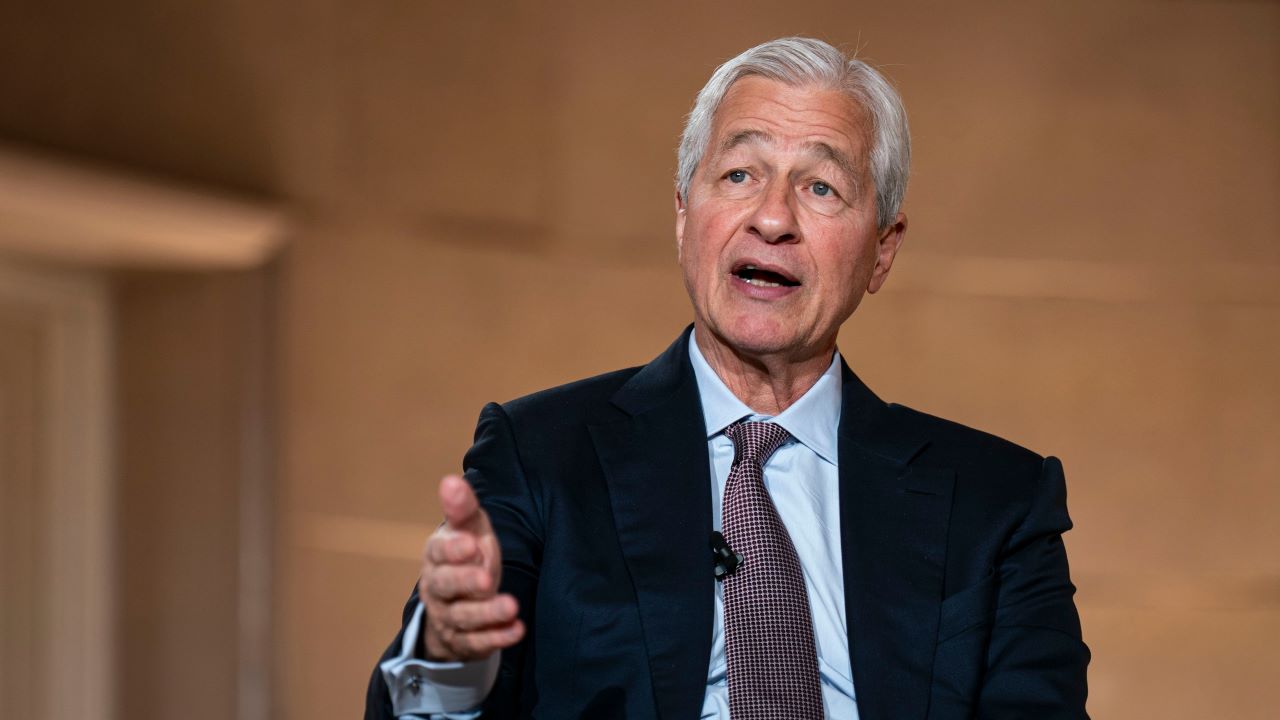
M2 Communities CEO Mitch Roschelle breaks down rising mortgage rates as war-driven inflation hits affordability and raises questions about when relief may come on Varney & Co.
JPMorgan Chase CEO Jamie Dimon warned in his annual letter to shareholders that the war in Iran could lead to more stubborn inflation as well as higher interest rates than what the market is currently anticipating.
Dimon’s letter was released Monday in conjunction with JPMorgan’s annual report for 2025 and said that the Iran war may cause energy shocks along with disruptions to global supply chains that could cause inflation to remain higher than expected.
Inflation that persists above the Federal Reserve’s 2% and rises further from its already elevated level could also prompt the central bank to raise interest rates to slow the pace of price growth.
“Now, because of the war in Iran, we additionally face the potential for significant ongoing oil and commodity price shocks, along with the reshaping of global supply chains, which may lead to stickier inflation and ultimately higher interest rates than markets currently expect,” Dimon wrote.
NY FED PRESIDENT JOHN WILLIAMS WARNS IRAN-DRIVEN OIL SPIKE COULD RIPPLE THROUGH ECONOMY
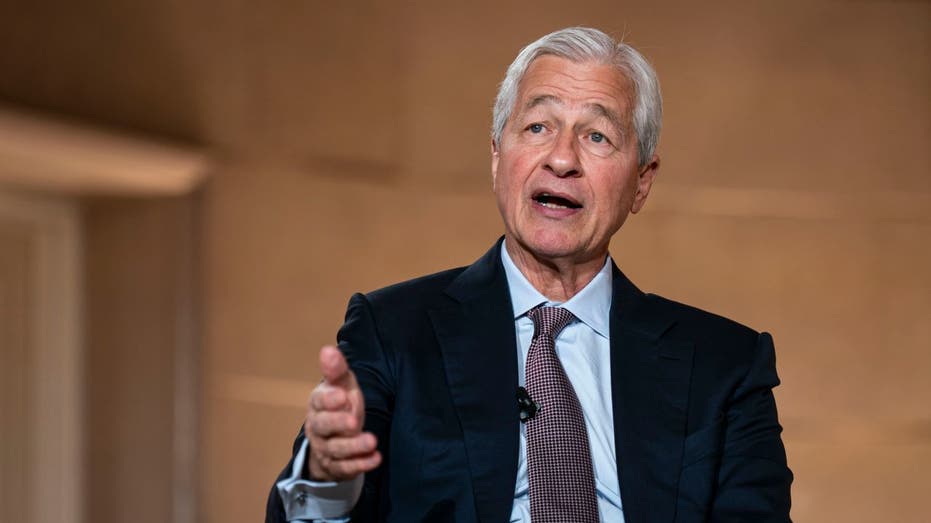
JPMorgan Chase CEO Jamie Dimon said that the Iran war could push inflation and interest rates higher. (Al Drago/Bloomberg via Getty Images)
Dimon said that the foremost risks facing financial markets and the economy are geopolitical in nature, including the Iran war and Russia’s war in Ukraine, as both conflicts have an “impact on countries and economies across the globe that are not directly involved in war.”
“Nations that are heavily dependent upon imported energy are already seeing the effects. And it’s not just energy, it’s commodity products that are byproducts of oil and gas, like fertilizer and helium. And given our complex global supply chains, countries are experiencing disruptions in shipbuilding, food and farming, among others,” Dimon wrote.
“The outcome of current geopolitical events may very well be the defining factor in how the future global economic order unfolds – then again, it may not,” he added.
Dimon said that while the most important outcome of those conflicts should be the “proper resolution of the current wars and, ultimately, peace on Earth, we do need to understand and track the economic effects” of those conflicts and the risks they pose.
POWELL WARNS OF NEW ENERGY SUPPLY SHOCK AS GAS PRICES SURGE: ‘NO ONE KNOWS HOW BIG IT WILL BE’
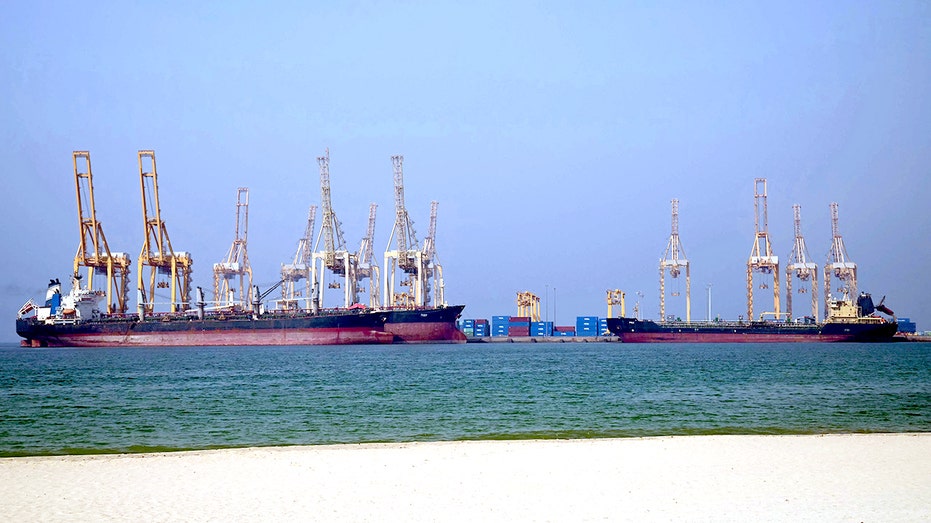
The Iran war has disrupted the flow of oil through the Strait of Hormuz, a key choke point for ships transiting the Persian Gulf. (Giuseppe Cacace/AFP via Getty Images)
He said that a “bad confluence of events” can generally cause some degree of a recession accompanied by high credit losses and market volatility, as well as lower asset prices and elevated unemployment, though it could play out in different ways in different places.
“There are some scenarios that would result in a recession, which generally reduces inflation, and other scenarios that would lead to a recession with inflation (stagflation – where inflationary forces overcome deflationary ones),” Dimon said.
“The skunk at the garden party – and it could happen in 2026 – would be inflation slowly going up, as opposed to slowly going down,” he added. “This alone could cause interest rates to rise and asset prices to drop. Interest rates are like gravity to almost all asset prices. And falling asset prices at one point can change sentiment rapidly and cause a flight to cash.”
IRAN WAR COULD PUSH INFLATION HIGHER THIS YEAR, GOLDMAN SACHS SAYS
| Ticker | Security | Last | Change | Change % |
|---|---|---|---|---|
| JPM | JPMORGAN CHASE & CO. | 294.60 | -0.78 | -0.26% |
Dimon said it’s too early to tell how the Iran war will play out and what it means for the region’s balance of power, and said that the Iranian regime has fomented terrorism around the world while also violently repressing its own populace.
“Time will tell whether the current war in Iran achieves our short-term and long-term objectives in the region and at what cost. We should not turn a blind eye to the role the current regime in Iran has played in fostering terrorism and killing thousands of people, including Americans and many of its own citizens, over many years,” he said.
GET FOX BUSINESS ON THE GO BY CLICKING HERE
“That threat must be addressed in an appropriate manner (by those who have more intel and knowledge than I do) – and urgently if Iran ever acquires a nuclear ballistic missile. Nuclear proliferation remains the gravest threat to the future of mankind,” Dimon wrote.
Business
Is Kuwait International Airport Open Today? Airport Remains Closed to Commercial Flights Due To Drone Strikes
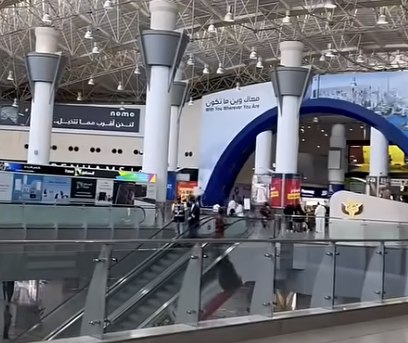
KUWAIT CITY — Kuwait International Airport (KWI) stayed largely closed to regular commercial passenger traffic Monday as authorities continued safety assessments and repairs following a series of Iranian-linked drone attacks that damaged radar systems, fuel storage facilities and infrastructure since late February 2026.

The Directorate General of Civil Aviation (DGCA) and the Public Authority for Civil Aviation have suspended most operations, with no confirmed reopening date announced. Flight tracking sites and the official airport website showed virtually no scheduled arrivals or departures, displaying messages prompting travelers to contact airlines directly. Kuwait Airways has suspended all flights indefinitely from KWI, rerouting some operations through alternative hubs such as King Fahd International Airport in Dammam, Saudi Arabia.
The troubles escalated with multiple drone strikes reported in late February and early March, including attacks on March 28 that damaged radar systems and sparked fires at fuel depots. Additional strikes in early April targeted fuel tanks, causing large fires and further structural damage to Terminal 1 and runways. Officials described one incident as a “brazen attack” on critical infrastructure, with smoke visible from affected areas and emergency teams responding to contain blazes.
As of April 6, 2026, the airport has been effectively shut to standard commercial traffic for more than five weeks. Some limited cargo or military-related movements may continue under strict controls, but civilian passenger flights remain heavily disrupted or canceled. FlightStats reported excessive and increasing delays where any activity occurred, while Flightradar24 and other trackers showed near-zero commercial operations.
Travelers face significant chaos. Hundreds of passengers have been stranded or forced to rebook through neighboring countries. Kuwait Airways advised customers to check with local offices or the airport for updates, with many long-haul routes to destinations such as London, New York, Geneva and regional hubs either canceled or suspended. Some airlines have implemented hybrid ground-and-air transfer arrangements via Saudi Arabia to maintain limited connectivity.
The closures stem from both physical damage and precautionary airspace restrictions imposed amid heightened regional tensions involving the U.S., Israel and Iran. Kuwait’s airspace has been closed to most commercial civilian flights since late February, with air defense operations taking priority. Even after repairs, full resumption will require safety inspections, clearance of restricted airspace and confirmation that infrastructure meets international aviation standards.
Kuwait International Airport, one of the busiest in the Gulf with millions of passengers annually before the crisis, serves as a key hub for Kuwait Airways and several international carriers. The prolonged shutdown has sent shockwaves through regional travel, affecting tourism, business travel and expatriate movements in a country heavily reliant on foreign labor and oil-driven commerce.
Authorities have held cabinet-level meetings focused on aviation recovery, economic safeguards and coordination with international partners. Repair timelines remain unclear, with estimates ranging from several weeks to months depending on the extent of damage to radar, terminals, runways and fuel systems. No casualties were reported in the strikes, but the psychological and economic impact on travelers and the aviation sector has been significant.
Regional ripple effects include increased pressure on alternative airports in Saudi Arabia, the UAE, Bahrain and Qatar. Some carriers have added or expanded flights from those hubs to accommodate displaced passengers. Jazeera Airways and other low-cost operators have adjusted networks, with some launching or restarting routes that bypass Kuwait temporarily.
For passengers holding tickets involving KWI, airlines recommend checking flight status frequently and preparing for rebooking or refunds. Many have faced difficulties contacting customer service amid high call volumes. Travel insurance claims related to disruptions are expected to rise, while some governments have issued or updated advisories urging caution in the region.
The situation highlights the vulnerability of Gulf aviation infrastructure to geopolitical conflicts. Previous incidents, including temporary airspace closures and refueling interruptions, caused shorter disruptions, but the current series of drone attacks has caused more sustained damage. Smoke from fuel facility fires and reports of panic in terminals during incidents underscored the severity.
Kuwait’s government has activated emergency response protocols, with civil defense and military units involved in securing the site and supporting repairs. International aviation bodies are monitoring developments, though no formal global alerts beyond standard conflict-zone advisories have been issued.
As Monday progressed, scattered reports mentioned temporary refueling interruptions causing further delays on any limited departing flights, according to statements from the General Authority for Civil Aviation. However, the broader picture remained one of suspended operations rather than normal activity with delays.
Travelers planning trips to or through Kuwait are urged to contact their airlines well in advance and monitor official channels, including the Kuwait Airport website and Kuwait Airways updates. No immediate resumption of full services is expected, with some advisories suggesting the situation could persist into mid-April or beyond.
The prolonged closure has broader economic implications for Kuwait, a nation where aviation supports significant expatriate flows and business ties. Oil sector workers, medical tourists and family visitors have been particularly affected.
While exact repair costs and timelines remain undisclosed, officials emphasize that safety remains the top priority. Full operations will resume only after comprehensive assessments confirm the airport meets all required standards.
In the meantime, passengers are advised to explore alternative routes via neighboring Gulf states. Some carriers have offered flexible rebooking policies or compensation where applicable under international regulations.
The events at Kuwait International Airport serve as a stark reminder of how regional conflicts can rapidly disrupt global travel networks. As repairs continue and diplomatic efforts unfold, travelers and airlines alike await clearer signals on when normal operations might return to this vital Gulf hub.
Anyone affected by cancellations should retain all documentation for potential claims and stay updated through reliable sources. The situation remains fluid, with new developments possible as assessments progress.

‘The Boys’ Season 5: Episode Release Schedule and How to Watch
Grow a Garden Easter Bunny guide: Ability, acquisition, and more

Emergency services attend fire at industrial estate in Derry


-

 NewsBeat4 days ago
Steven Gerrard disagrees with Gary Neville over ‘shock’ Chelsea and Arsenal claim | Football
-

 Business4 days ago
No Jackpot Winner and $194 Million Prize Rolls Over
-

 Fashion3 days ago
Weekend Open Thread: Spanx – Corporette.com
-

 Crypto World5 days ago
Gold Price Prediction: Worst Month in 17 Years fo Save Haven Rock
-

 Business18 hours ago
Three Gulf funds agree to back Paramount’s $81 billion takeover of Warner, WSJ reports
-
Crypto World6 days ago
Dems press CFTC, ethics board on prediction-market insider trades
-

 Sports2 days ago
India men’s 4x400m and mixed 4x100m relay teams register big progress | Other Sports News
-

 Business5 days ago
Login and Checkout Issues Spark Merchant Frustration
-

 Tech6 days ago
EE TV is using AI to help you find something to watch
-

 Sports6 days ago
Tallest college basketball player ever, standing at 7-foot-9, entering transfer portal
-

 Politics7 days ago
Should Trump Be Scared Strait?
-
Tech7 days ago
Daily Deal: StackSkills Premium Annual Pass
-

 Tech7 days ago
Flipsnack and the shift toward motion-first business content with living visuals
-

 Sports7 days ago
Women’s hockey camp eyes fitness boost, tactics ahead of WC 2026 campaign | Other Sports News
-

 Crypto World7 days ago
U.S. rule change may open trillions in 401(k) funds to crypto
-

 Tech6 days ago
How to back up your iPhone & iPad to your Mac before something goes wrong
-

 NewsBeat7 days ago
Newscast – Scott Mills Sacked By BBC
-

 Politics7 days ago
Usha Vance: Disney Hats Over MAGA Caps?
-
Crypto World7 days ago
Valinor raises $25m to put private credit on-chain
-

 Business7 days ago
Functional benefits brewing in coffee innovation
You must be logged in to post a comment Login