Connect with us
DAPA Banner
DAPA Coin
DAPA
COIN PAYMENT ASSET
PRIVACY · BLOCKDAG · HOMOMORPHIC ENCRYPTION · RUST
ElGamal Encrypted MINE DAPA
🚫 GENESIS SOLD OUT
DAPAPAY COMING

Business

Barclays initiates oncology-focused biotechs with positive outlook

Published

on

Continue Reading
Click to comment

You must be logged in to post a comment Login

Leave a Reply

Business

Zoetis Inc. (ZTS) Presents at Stifel Jaws & Paws Conference 2026 Transcript

Published

on

OneWater Marine Inc. (ONEW) Q1 2026 Earnings Call Transcript

Zoetis Inc. (ZTS) Stifel Jaws & Paws Conference 2026 May 28, 2026 3:00 PM EDT

Company Participants

Wetteny Joseph – Executive VP & CFO
Kristin Peck – CEO & Director

Advertisement

Conference Call Participants

Jonathan Block – Stifel, Nicolaus & Company, Incorporated, Research Division

Presentation

Advertisement

Jonathan Block
Stifel, Nicolaus & Company, Incorporated, Research Division

All right, guys. Good afternoon. Next up, we have Zoetis. I’m pleased to have on stage with us their CEO, Kristin Peck; and Wetteny Joseph, their CFO.

I got a lot to discuss, a lot to get into. Guys, if you have questions, throw up your hand. I’m going to try to go in some sort of order or structure and see if I can abide by that.

Advertisement

Question-and-Answer Session

Jonathan Block
Stifel, Nicolaus & Company, Incorporated, Research Division

So let’s start with the updated 2026 guidance. Top line organic operational growth was 0 in the quarter — in the first quarter. It did have a benefit. And the updated full year guidance calls for 2% to 5%. So some of the incoming that I’ve been getting is like, look, other than comps, why do things get better for the balance of the year? Maybe if you could just call out maybe some of the drivers there.

Advertisement

Wetteny Joseph
Executive VP & CFO

Sure. I’ll start, Jon, on this. And as we shared on the call, as we look at the balance of the year, there are a number of areas that we anticipate sequential improvement in. You would have seen in the quarter, for the first time in 5 quarters, we saw OA pain actually saw sequential growth. We’ve been talking about, although modest, but we’ve been talking about stabilizing OA pain for some time now and our multipronged execution is taking hold, and we’re seeing some of that impact as we saw in the quarter. If you look at

Advertisement
Continue Reading

Business

American Eagle (AEO) earnings Q1 2026

Published

on

American Eagle (AEO) earnings Q1 2026

American Eagle‘s two key brands are moving in different directions.

Revenue at the retailer’s namesake banner fell during its fiscal first quarter, even after it ramped up its marketing campaign with actress Sydney Sweeney. Meanwhile, sales at its intimates brand Aerie spiked during the quarter.

The trends at the retailer appeared to disappoint Wall Street, as shares tumbled more than 10% in extended trading.

In the three months ended May 2, comparable sales at the American Eagle banner fell 2%, far worse than the 3.1% growth that analysts had expected, according to StreetAccount. Meanwhile, comparable sales at Aerie soared 25%, beating expectations of 19.1%.

Advertisement

Net revenue for the American Eagle brand dropped 2% to $678.4 million, while Aerie revenue jumped about 34% to $480.83 million.

Combined, the business saw comparable sales grow 8%, short of expectations of 8.6%, according to StreetAccount. 

“While results at American Eagle were mixed, our teams are moving decisively to reignite the women’s business and strengthen product execution and brand positioning,” CEO Jay Schottenstein said in a news release

“Looking ahead, our priorities are clear. Despite continued consumer and macroeconomic uncertainty, we remain confident in our ability to navigate near-term headwinds,” he added.” We are focused on operational excellence and disciplined execution to drive long-term value for AEO and our shareholders.” 

Advertisement

Here’s how the apparel company performed during the fiscal first quarter compared with what Wall Street was anticipating, based on a survey of analysts by LSEG:

  • Earnings per share: 14 cents vs. 12 cents expected
  • Revenue: $1.20 billion vs. $1.19 billion expected

During the quarter, American Eagle posted net income of $23.53 million, or 14 cents per share, compared with a loss of $64.90 million, or 36 cents per share, a year earlier. 

Sales rose to $1.20 billion, up 10% from $1.09 billion a year earlier. 

American Eagle reiterated full-year guidance and issued an outlook for the current quarter. For the year, the company expects mid-single digit percentage comparable sales growth and an increase in gross margin.

In the second quarter, the retailer is expecting comparable sales to rise by a mid-to-high single digit percentage, compared to estimates of 6.5% growth, according to StreetAccount. It’s expecting its gross margin to be down compared to the prior year during the period.

Advertisement

During the quarter, American Eagle reignited its campaign with the “Euphoria” star Sweeney ahead of the summer shopping season, but took a tamer approach than the controversial campaign it launched last year under the slogan: “Sydney Sweeney has great jeans.” This time around, instead of cleavage and double entendres, Sweeney was all smiles in a modest, casual look on the beach. 

Though the two campaigns were different, the effect has been the same – neither led to a major increase in sales at American Eagle’s namesake banner. 

During a call with analysts, Schottenstein said marketing is leading to stronger engagement among new and existing customers, but moving forward, the company will “recalibrate spending” to ensure it’s getting the strongest return on investment. Later on, President Jennifer Foyle said marketing has driven “awareness and consideration” and now the company is “focused on conversion.”

During the quarter, selling, general and administrative costs, which include marketing, increased 11% to $376 million — which was in line with sales growth at Aerie but less so at American Eagle. For the back half of the year, the company said it plans to focus more of its marketing dollars on social influencers and other forms of digital media, which carry a higher propensity of conversion, the company said.

Advertisement

Beyond marketing woes, Foyle said the sales declines at American Eagle primarily came from the women’s bottoms segment — not having enough of the styles shoppers wanted and too much of the ones they didn’t.

“As merchants, we move quickly when we see opportunities and when we see misses. And we are already making adjustments. As we head into the crucial back-to-school season, we are refining our bottoms architecture, specifically optimizing key silhouettes and risers while leveraging our chase capabilities to inject fresh newness,” said Foyle. “At the same time, we are scaling high-demand categories within women’s tops to fully maximize ongoing consumer momentum.”

When asked how its core consumer was holding up given high gas prices and other macroeconomic pressures, Schottenstein said he thinks the U.S. economy is “very strong” and only going to get better.

“We think with gas prices hopefully will start settling down very shortly and with the, you know, current affairs, hopefully we’ll come to some type of finish,” said Schottenstein. “Hopefully it’ll be a very good finish for the world and we’re very optimistic on that.”

Advertisement
Continue Reading

Business

Disney’s ABC files early FCC broadcast licenses renewal

Published

on

FCC launches review of Disney broadcast licenses

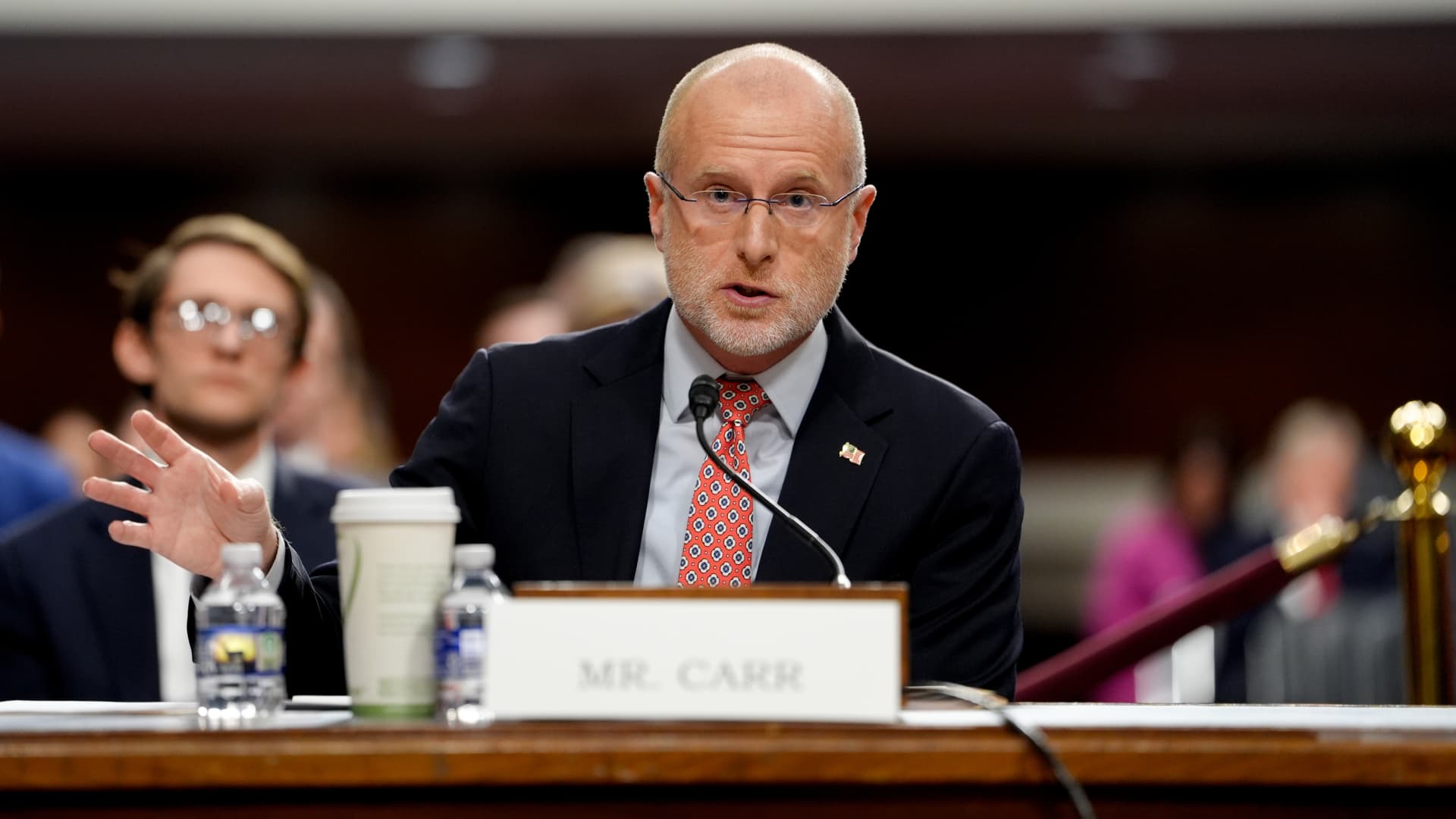
Brendan Carr, commissioner at the Federal Communications Commission (FCC), during a Senate Commerce, Science, and Transportation Committee oversight hearing in Washington, DC, US, on Wednesday, Dec. 17, 2025.

Kent Nishimura | Bloomberg | Getty Images

Disney shot back at the Federal Communications Commission on Thursday as part of an early renewal process for broadcast licenses for eight of the company’s stations.

Advertisement

Disney said in filings it was submitting the applications “under protest in response to an unlawful, arbitrary, and unconstitutional order” from the FCC.

In late April the FCC said it was launching an early review of the Disney-owned ABC stations years ahead of schedule following concerns around the company’s diversity, equity and inclusion efforts. The licenses of the eight stations were originally up for renewal between 2028 and 2031.

Last year the FCC, the federal entity that regulates the media and telecommunications industry, began an investigation into the DEI efforts of Disney and other media companies.

The agency said it began investigating Disney last March for possible violations of the Communications Act of 1934 and the FCC’s rules regarding its prohibition on unlawful discrimination.

Advertisement

In April, the FCC said it had determined further action was needed. Disney had until Thursday to file the renewals.

The FCC’s early review came shortly after ABC faced renewed political backlash from President Donald Trump following comments made by comedian Jimmy Kimmel during his late night TV show that airs on the broadcast network.

The timing raised eyebrows from critics of the Trump administration — as well as from a sitting FCC commissioner — who said the scrutiny was politically motivated.

In Thursday’s filing, Disney said it objected to the process and added that the FCC hadn’t called for an early renewal in more than five decades.

Advertisement

“The order has no legitimate purpose,” Disney said in the filing. “There is no information that the application will reveal that the Commission could not obtain through other means. The order is inconsistent with a legitimate exercise of investigative authority and is plainly incompatible with the First Amendment.”

In a statement Thursday, FCC Chairman Brendan Carr defended the agency’s actions and said they stemmed from the agency’s probe into Disney’s DEI practices that started last year. He said Disney “only filed these applications to renew their ABC broadcast licenses after the FCC informed the company that their responses to the agency’s investigation had been disingenuous, deficient, and improper.”

He added the FCC will “follow the facts and law wherever they may lead.”

Choose CNBC as your preferred source on Google and never miss a moment from the most trusted name in business news.
Advertisement
Continue Reading

Business

Zscaler: Golden Buying Opportunity

Published

on

Zscaler: Golden Buying Opportunity

Zscaler: Golden Buying Opportunity

Continue Reading

Business

Trump officials preparing for $250 note featuring Trump’s face

Published

on

Trump officials preparing for $250 note featuring Trump's face

“As Americans struggle with the rising cost of gas, groceries, housing, and health care, President Trump’s priorities for taxpayer dollars are completely detached from the challenges families face every day,” Warner, a Democrat from Virginia, said in a statement.

Continue Reading

Business

What’s Behind the Remarkable Rise of Aroma Therapy Products

Published

on

What's Behind the Remarkable Rise of Aroma Therapy Products

Something is in the air – quite literally. Across the UK and beyond, sales of aroma therapy and scent-based wellness products have been climbing steadily for the better part of a decade, accelerating sharply in the years following the global disruption of the early 2020s.

Diffusers, essential oils, room sprays, scented candles, and inhalable aroma compounds have moved from the margins of the wellness market to its mainstream centre, and the momentum shows no sign of slowing.

The numbers reflect a genuine cultural shift. The global aromatherapy market was valued at over five billion dollars in the mid-2020s and is projected to continue growing at a compound annual rate that outpaces most comparable wellness categories. In the UK specifically, consumer interest in scent-based products has expanded well beyond the traditional spa and relaxation context into everyday home environments, workplace wellness, fitness recovery, and intimate settings.

What is driving this? The answer involves a confluence of science, lifestyle change, commercial innovation, and a growing consumer appetite for products that engage the body directly rather than through the intermediary of a screen or a pill.

The Science That Legitimised the Category

Aroma therapy has a credibility problem that it has been slowly but steadily resolving. For much of the twentieth century, the idea that inhaled scents could produce meaningful physiological or psychological effects sat uncomfortably between established medicine and the fuzzier edges of wellness culture. Enthusiasts were convinced; sceptics were unconvinced; and the research base was thin enough that neither side had to work very hard to maintain their position.

Advertisement

That has changed considerably. A growing body of peer-reviewed research has begun to map the mechanisms through which olfactory stimulation produces real, measurable effects on the body and mind. The olfactory system’s direct connection to the limbic region of the brain – the area governing emotion, memory, and stress response – provides a plausible and increasingly well-evidenced pathway through which scent-based compounds can influence mood, anxiety, and physiological state.

Lavender has accumulated perhaps the strongest evidence base. Multiple clinical studies have found that lavender inhalation produces statistically significant reductions in anxiety markers, heart rate, and cortisol levels. Peppermint has been studied for its effects on alertness and cognitive performance. Citrus compounds have shown promise in mood elevation research. The NHS acknowledges that while aromatherapy does not constitute medical treatment, the evidence for its role in supporting general wellbeing and stress management is sufficient to warrant serious consideration.

This gradual scientific legitimisation has had a significant commercial effect. Products that were once marketed almost entirely on lifestyle aspiration can now point to a growing body of research, and retailers have been quick to incorporate that credibility into how they present their ranges.

Lifestyle Change as a Market Driver

Science alone does not explain the scale of the growth. The timing of the aromatherapy boom aligns closely with broader shifts in how people relate to their home environments, their health, and their stress levels.

Advertisement

The disruption of normal routines during the early 2020s accelerated trends that were already in motion. With more people spending more time at home, the quality of the domestic sensory environment became a live concern rather than a background consideration. Investing in how a space smells – and how that scent makes its occupants feel – moved from an indulgence to a priority for a significant portion of the population.

At the same time, a wider cultural shift toward what might loosely be called embodied wellness has been gathering pace. The dominant wellness conversation of the previous decade had centred heavily on nutrition, fitness, and digital self-tracking. The limitations of that approach – its tendency toward abstraction, its reliance on willpower and data rather than sensation and experience – have prompted a countermovement toward products and practices that work through direct physical engagement.

Aroma therapy sits squarely in this countermovement. It requires no app, no subscription, no performance. It works through the oldest and most direct of the human senses, and it produces effects that are felt immediately rather than inferred from a graph.

Beyond Essential Oils: The Full Spectrum of the Category

Public discussion of aroma therapy tends to default to essential oils and diffusers, but the category is considerably broader than that framing suggests. Understanding its full scope helps explain both the scale of the market and the diversity of the people it serves.

Advertisement

At the gentler end sit the familiar products – reed diffusers, pillow sprays, bath oils, and scented candles. These products work primarily through ambient olfactory stimulation, gradually altering the scent profile of a space to produce cumulative mood and atmosphere effects. They are the entry point for most consumers and account for the largest share of market volume.

Further along the spectrum sit more targeted inhalable compounds, including room aromas based on alkyl nitrite formulations. These products operate through a more direct physiological mechanism – rapid vasodilation producing an immediate sensation of warmth and physical relaxation – and appeal to users seeking a fast-acting, intense, and short-lived effect rather than a gradual ambient one. Specialist retailers in this space, including long-established operations like Prowler Poppers, have seen sustained demand for alkyl nitrite-based room aromas over several decades, reflecting the enduring appeal of products that deliver an immediate and clearly felt physical response.

The breadth of the category is itself part of what has driven its growth. There is an aroma therapy product for virtually every use case, budget, and preference – from the three-pound supermarket reed diffuser to the premium essential oil blend from a specialist supplier. That accessibility at every price point has allowed the category to recruit consumers who might not have considered themselves wellness shoppers at all.

The Ritual Dimension

One of the most frequently underestimated factors in the appeal of aroma therapy products is the role of ritual. Research into the psychology of habit and behaviour consistently shows that deliberate, sensory-rich rituals are among the most effective mechanisms for signalling a shift in mental state – from stressed to calm, from distracted to focused, from fatigued to alert.

Advertisement

Aromatherapy products lend themselves to ritual in a way that few other wellness categories can match. The act of lighting a candle, filling a diffuser, or opening a bottle of room aroma is brief, tactile, and immediately rewarding. It requires no preparation, no equipment, and no expertise. And because scent is so powerfully linked to memory and association, a ritual repeated consistently with the same product begins to acquire a conditioned effect – the scent itself becomes a trigger for the mental state it has previously accompanied.

According to research highlighted by the Mental Health Foundation, sensory rituals and environmental cues play a meaningful role in supporting psychological wellbeing, particularly in managing the transition between different modes of daily life. The growing popularity of aroma therapy products reflects, in part, a widespread and intuitive understanding of this dynamic – one that consumers have reached through experience rather than instruction.

What Comes Next for the Category

The aroma therapy market is not simply growing – it is maturing. Early growth was driven largely by novelty and lifestyle aspiration. The next phase of growth is being driven by something more durable: a consumer base that has tried these products, experienced their effects, and built them into daily life.

That shift from novelty to habit is the most bullish possible signal for a product category. Habitual purchasers are more loyal, less price-sensitive, and more likely to expand their use into new product lines within the same category. They are also more likely to recommend products to others, generating the kind of organic word-of-mouth growth that marketing budgets cannot easily replicate.

Advertisement

The innovation pipeline reflects this maturity. Formulators are developing more targeted compounds, retailers are building more sophisticated product ranges, and the conversation around aroma therapy is becoming more nuanced – distinguishing between different mechanisms, different use cases, and different user needs with a precision that the early market lacked entirely.

What began as a niche interest has become a mainstream behaviour. Science has caught up, the lifestyle context has aligned, and the products have diversified to meet a demand that turns out to be both broad and deep. The rise of aroma therapy is not a trend in the pejorative sense – a passing enthusiasm that will fade as attention moves elsewhere. It is a genuine and durable shift in how people think about their sensory environment and what they are willing to invest in shaping it.

The air, it turns out, matters quite a lot.

Advertisement

Continue Reading

Business

Moody’s Corporation (MCO) Presents at Bernstein 42nd Annual Strategic Decisions Conference Transcript

Published

on

OneWater Marine Inc. (ONEW) Q1 2026 Earnings Call Transcript

Moody’s Corporation (MCO) Bernstein 42nd Annual Strategic Decisions Conference May 28, 2026 4:30 PM EDT

Company Participants

Robert Fauber – President, CEO & Director

Advertisement

Conference Call Participants

Chinedu Bolu – Autonomous Research US LP

Presentation

Advertisement

Chinedu Bolu
Autonomous Research US LP

Good afternoon, everyone, and thanks for being at this far to the last the day. Very, very pleased to have our next slide side chat Moody’s Corporation. Pleased to welcome back again once again, Moody’s President and CEO, Rob Fauber. Rob, thank you very much for coming back to the conference. And thank you today. I know you’ve been in meetings all day, so I appreciate you making it all the way here.

Robert Fauber
President, CEO & Director

Advertisement

Christian, first of all, thanks. I’ve been in a windowless room in the basement all day. So it’s great to be above ground. But I did get the 4:00 slot. So I know we’ve got to be exciting here. But I just want to say thanks. This is a really high-quality conference and some great investor discussions. So thanks for inviting us.

Question-and-Answer Session

Advertisement

Chinedu Bolu
Autonomous Research US LP

Good stuff. No better place to start than AI strategy. How did I know that was going to be the first question. I would say is from my observation, your AI offering is involved. It’s gone from stand-alone assistant tool. Now you’re doing more MCP based API models, more integrating into developer workflows like Microsoft 365. Maybe talk us through what you see as the evolution of your thinking around AI, what did you learn from what you’ve done so far? And then sort of what’s the next step from what ties in Moody’s Woods Intelligence?

Robert Fauber
President, CEO & Director

Advertisement

Yes. So Christian, over the last, let’s call it, 8 years or

Advertisement
Continue Reading

Business

Untouched Cash Prompts Major New Theory on Kidnapping Motive

Published

on

Savannah Guthrie & Nancy Guthrie

TUCSON, Ariz. — Nearly four months after Nancy Guthrie vanished from her Catalina Foothills home, investigators are confronting fresh questions about the motive behind what they believe was her abduction, as new public analysis highlights more than $1 million in untouched cash and challenges the assumption of a straightforward ransom plot.

The 84-year-old mother of NBC “Today” show co-anchor Savannah Guthrie was last seen on January 31, 2026. She was reported missing the following day. Blood evidence believed to be hers and a removed doorbell camera fueled immediate concerns of foul play. As of May 27, marking the 118th day since her disappearance, no arrests have been made and her whereabouts remain unknown.

A new public theory introduced this week by former law enforcement officer Charles Brewer has shifted some focus away from the celebrity-adjacent ransom narrative that dominated early speculation. In a 21-minute YouTube video posted on May 24, Brewer questioned whether financial gain was ever the primary driver.

“If this truly was a celebrity-targeted kidnapping connected directly to Savannah Guthrie, why has there been no meaningful ransom communication?” Brewer asked in the video. He pointed to reports that substantial cash remained untouched and that the few ransom-style messages reportedly made little sense. “Why leave over a million dollars untouched?” he continued. “Why create ransom-style messages that reportedly make little sense? Why no sustained negotiations or proof of life, no sophisticated extortion strategy?”

Advertisement

Brewer suggested the behavior surrounding the case appeared “chaotic, disconnected, even emotionally driven, or possibly connected to something far more personal than the public originally believed.” He was careful not to directly accuse any family members, instead raising the possibility of someone in the family’s broader circle — a friend, associate or acquaintance — potentially being involved.

Pima County Sheriff Chris Nanos has acknowledged progress in the investigation but has not publicly endorsed Brewer’s theory. In recent comments, Nanos expressed confidence that the case was advancing. When asked by reporters whether authorities were getting closer to a resolution, he replied simply, “We are.”

FBI and Local Police Tensions

The case has also exposed underlying tensions between local authorities and the FBI over early evidence handling. In a May 5 podcast interview, FBI Director Kash Patel stated that the bureau was “kept out” of the first four days of the investigation. He suggested that sending DNA evidence to a private laboratory in Florida rather than the FBI’s facility in Quantico may have slowed progress.

Sheriff Nanos responded in a written statement, insisting the FBI was promptly notified and that coordination began without delay. He defended the decision to use a private lab based on operational needs and noted ongoing collaboration with the FBI’s Quantico facility.

Advertisement

Forensic analysis of mixed DNA recovered from the scene continues. Detectives maintain that a masked man captured on Nancy Guthrie’s Nest doorbell camera was responsible for the abduction.

Online Speculation and Family Strain

The high-profile nature of the case, tied to Savannah Guthrie’s national television role, has fueled intense online interest. Amateur investigators and true-crime content creators have scrutinized family members, including daughter Annie and son-in-law Tommaso Cioni, sometimes crossing into harassment.

Sheriff Nanos has pushed back against such activity. “We appreciate their concern, and we all want to find Nancy — but this work is best left to professionals,” he told The New York Times.

Brewer’s video reflects growing frustration with the lack of public breakthroughs. While his claims remain unverified by law enforcement, they have resonated with some observers who question the ransom motive after more than 100 days without clear demands or proof-of-life communications.

Advertisement

Savannah Guthrie has continued balancing her professional duties with private advocacy for her mother. The family has offered a $1 million reward for information leading to Nancy Guthrie’s safe return, in addition to the FBI’s $50,000 reward.

Investigation Challenges

The prolonged search has tested resources and patience. Volunteers have assisted in organized efforts, including the recent discovery of clothing possibly linked to Nancy Guthrie along Highway 79. Forensic testing on that item and other evidence remains ongoing.

Pima County authorities have received thousands of tips. While many have been ruled out, officials say active leads persist. The mixed DNA sample is considered particularly important, though processing delays have frustrated some observers.

The case highlights broader challenges in missing persons investigations involving elderly victims. Rapid response is critical, yet initial evidence can sometimes lead investigations in multiple directions before a clearer picture emerges.

Advertisement

Community and National Attention

Tucson-area residents have expressed continued concern and solidarity. Local organizations have offered support resources for the family and community members affected by the prolonged uncertainty.

Nationally, the case has maintained visibility due to Savannah Guthrie’s public platform. Her occasional on-air appeals and social media messages have kept attention focused on the need for information.

As the investigation moves largely behind the scenes, authorities continue urging anyone with relevant details to come forward. Tips can be submitted to the FBI at 1-800-CALL-FBI or the Pima County Sheriff’s Department at 520-351-4900.

Nancy Guthrie’s disappearance has become one of the most closely watched missing persons cases of 2026. The combination of an elderly victim, a prominent family member, and the absence of quick resolution has created a vacuum filled by both professional investigators and public speculation.

Advertisement

While Brewer’s theory introduces new questions about motive, official efforts remain centered on forensic evidence, digital analysis, and traditional detective work. The untouched cash, if confirmed, does add a puzzling element that investigators must now reconcile with other findings.

For the Guthrie family, the wait continues. Savannah and her siblings have asked for privacy while expressing gratitude for ongoing public support and prayers. Their hope for Nancy’s safe return remains, even as the investigation explores increasingly complex possibilities.

The coming weeks may bring further forensic results or new tips spurred by sustained media coverage. Until then, the search for Nancy Guthrie stands as both a personal family ordeal and a public mystery that continues to unfold in Tucson and beyond.

Advertisement
Continue Reading

Business

Dow Jones Falls 242 Points as Geopolitical Tensions and Inflation Worries Pressure Wall Street

Published

on

FTSE 100 Surges 0.8% Today as Oil Eases and Markets

NEW YORK — The Dow Jones Industrial Average dropped 241.85 points, or 0.48 percent, to close at 50,402.43 on Thursday, as renewed U.S.-Iran military exchanges and persistent inflation concerns linked to elevated oil prices weighed on investor sentiment and pushed bond yields higher.

The blue-chip index opened lower and remained under pressure throughout the session, reflecting broader risk-off sentiment across global markets. The S&P 500 and Nasdaq Composite also finished in negative territory, though losses were more moderate as technology shares showed some resilience.

Trading volume was above average as participants reacted to fresh developments in the Middle East and mixed signals from upcoming economic data. The decline extends a pattern of choppy trading seen throughout May, with the Dow giving back some of its earlier 2026 gains amid uncertainty over Federal Reserve policy and global growth prospects.

Key Factors Driving the Sell-Off

Analysts pointed to escalating geopolitical risks as the primary catalyst. Reports of U.S. strikes near the Strait of Hormuz and Iranian retaliation heightened fears of potential disruptions to global energy supplies. Oil prices rose more than 2 percent, with West Texas Intermediate crude climbing above $90 per barrel, adding to inflationary pressures.

Advertisement

Higher energy costs have complicated the Federal Reserve’s path toward easing monetary policy. With consumer prices showing stickiness and the labor market remaining stable, expectations for aggressive rate cuts have diminished. This dynamic supported higher Treasury yields, which rose across the curve and put pressure on rate-sensitive sectors.

The 10-year Treasury yield climbed toward 4.4 percent, increasing borrowing costs for businesses and consumers. Mortgage rates recently hit a nine-month high, further weighing on housing-related stocks and consumer confidence.

Sector Performance Breakdown

Energy stocks were among the few bright spots, benefiting from higher crude prices. However, financials, industrials and consumer discretionary names led the declines. Banks faced pressure from the rise in long-term yields, while industrial companies with global supply chains expressed caution over potential shipping disruptions.

Technology shares provided some defensive support, with several large-cap names holding relatively steady amid broader weakness. Investors rotated toward perceived safe havens within the market, though overall risk appetite remained subdued.

Advertisement

Smaller companies on the Russell 2000 index underperformed the major benchmarks, highlighting selective pressure on domestically focused businesses amid economic uncertainty.

Broader Market and Economic Context

The Dow’s performance mirrored moves in other major indices. European markets closed mostly lower, while Asian markets had opened mixed earlier in the session. U.S. futures pointed to continued caution heading into Friday’s trading.

Recent economic data has painted a mixed picture. While job growth has held up, inflation readings have been hotter than expected, partly due to energy costs tied to Middle East developments. The Federal Reserve’s new leadership under Chair Kevin Warsh faces the challenge of balancing growth risks with price stability.

Corporate earnings season has delivered mixed results. Several major companies have issued cautious guidance citing higher input costs and softer consumer demand in certain segments. However, sectors exposed to AI infrastructure and defense spending have shown resilience.

Advertisement

Technical and Sentiment Analysis

From a technical perspective, the Dow broke below a recent support level around 50,600, potentially targeting the 50,000 psychological mark if selling momentum persists. Volatility measures edged higher but remained below levels seen during previous geopolitical flare-ups.

Investor sentiment has shifted toward caution. Fund managers report trimming exposure to cyclical sectors while maintaining positions in high-quality defensive names and companies with strong pricing power. Retail investor participation remained active but tilted defensive.

Outlook for U.S. Equities

Market strategists expect continued volatility in the near term. Key upcoming data releases, including employment figures and inflation updates, will help shape expectations for Federal Reserve policy. Any signs of de-escalation in the Middle East could support a rebound in risk assets.

Longer-term, analysts remain constructive on U.S. equities due to strong corporate fundamentals, technological innovation and resilient consumer spending. However, external shocks from geopolitics and commodity cycles are likely to remain dominant themes.

Advertisement

Investment professionals advise diversification and a focus on companies with robust balance sheets. While near-term challenges persist, attractive valuations in certain sectors may emerge for long-term portfolios.

The current environment underscores the interconnected nature of global markets. Developments in distant regions continue to influence trading floors in New York, highlighting the challenges facing multinational corporations.

As the trading week progressed, attention turned toward U.S. economic releases and overnight news flow from diplomatic channels. The Dow’s moderate decline reflects a market balancing geopolitical risks against underlying economic resilience.

Analysts will continue monitoring oil prices, currency movements and central bank communications for directional cues. While the index faces near-term pressure, its long-term appeal as a barometer of U.S. corporate strength remains intact for many investors.

Advertisement

Thursday’s 0.48 percent drop ranks as a moderate session rather than an extreme move. However, it contributes to a pattern of heightened sensitivity to international events seen throughout 2026.

Market participants will watch closely for signs of stabilization in energy prices and progress on international diplomatic fronts. Until clearer direction emerges, volatility is expected to remain a feature of equity trading.

The Dow’s performance highlights the delicate balance investors must strike between opportunity and risk in an uncertain global environment. As summer approaches, attention will shift toward corporate earnings, policy decisions and any resolution of current geopolitical tensions.

Advertisement
Continue Reading

Business

Verisk Analytics, Inc. (VRSK) Presents at Bernstein 42nd Annual Strategic Decisions Conference Transcript

Published

on

OneWater Marine Inc. (ONEW) Q1 2026 Earnings Call Transcript

Verisk Analytics, Inc. (VRSK) Bernstein 42nd Annual Strategic Decisions Conference May 28, 2026 2:30 PM EDT

Company Participants

Lee Shavel – CEO, President & Director

Advertisement

Conference Call Participants

Kelsey Zhu – Autonomous Research US LP

Presentation

Advertisement

Kelsey Zhu
Autonomous Research US LP

Good afternoon, everyone. Thanks so much for joining us today. My name is Kelsey Zhu. I’m the information services analyst at Autonomous. With me on stage today, I’m very pleased to welcome Lee Shavel, the CEO of Verisk. Thanks so much for joining us today. Lee. Really appreciate it.

Lee Shavel
CEO, President & Director

Advertisement

Thanks for having us, Kelsey. It’s great to be here.

Question-and-Answer Session

Advertisement

Kelsey Zhu
Autonomous Research US LP

So AI has probably been the hottest topic within the information services sector this year, and I think that’s a good place to start. And I know Lee, you recently launched your MCP server. So maybe talk us through a little bit more about the rationale behind that launch. What data is included in the MCP server? How do you protect your data? How do you protect your customers’ data and the pricing and the target audience for this MCP?

Lee Shavel
CEO, President & Director

Advertisement

So we’re just going to dive right in. So let me start, and I will get to that. Kelsey has shared that we may have some generalists in the room. And so I just want to provide a very brief overview. Verisk started out as a utility to the U.S. property and casualty insurance industry. And we were there to serve a role in collecting data, collecting regulatory filings, managing those on the part of the industry. And it gave us access to an extraordinary wealth of data, particularly loss costs and the ability to standardize forms that enabled us to help the industry understand loss experience across individual product

Advertisement
Continue Reading

Trending

Copyright © 2025