

Business
Benefits and pensions rise as two-child cap ends



Business
The next phase of India manufacturing: HDFC AMC’s Rakesh Sethia breaks down real winners in EMS, aerospace & auto
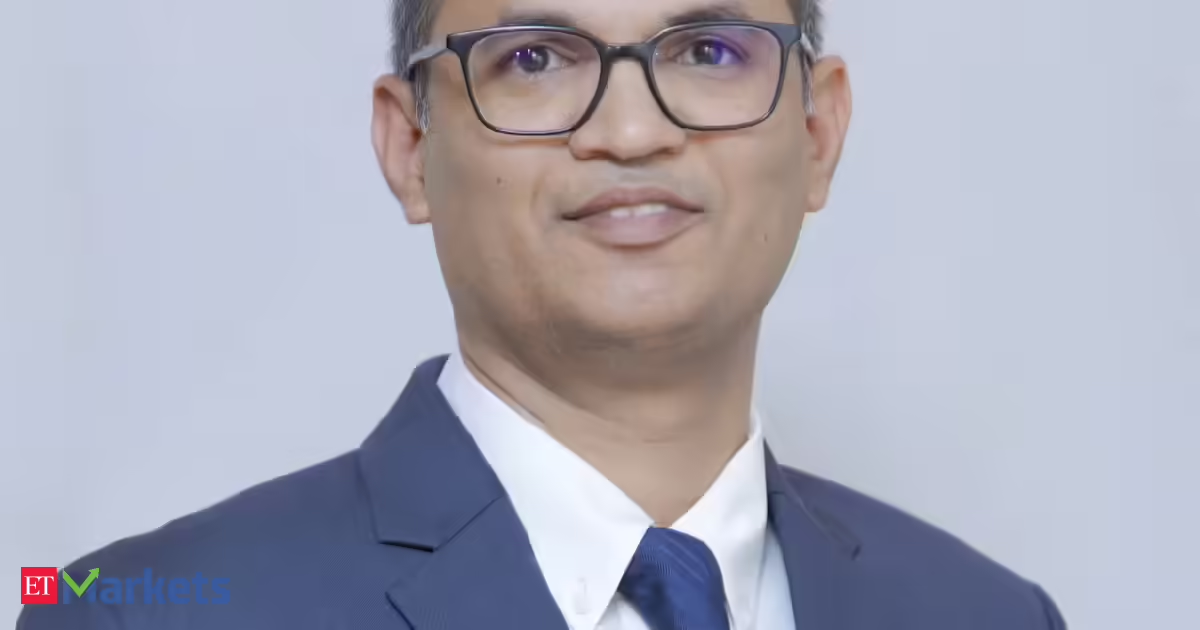
Edited excerpts from a chat with Rakesh Sethia:
How compelling is the India manufacturing story over the next 5–10 years, and what are the biggest structural triggers that can sustain this cycle?
We remain positive on India manufacturing over the next 5–10 years. The biggest structural advantage is India’s large domestic market. Outside China, India is now one of the few large demand pools across categories such as autos, mobiles, air conditioners, solar modules, motors, cement and steel. This scale allows companies to build volumes, localise vendors and gradually become cost competitive.The second driver is policy support through Production Linked Incentive (PLI), capex incentives, infrastructure spending and supply-chain realignment. The story is no longer only about low labour cost. It is now about domestic scale, improving technology depth, better infrastructure, targeted policy support and India’s gradual integration into global supply chains.

Which manufacturing sub-sectors currently offer the best risk-reward — capital goods, industrials, defence, EMS, auto ancillaries, railways, or chemicals?
Most of these manufacturing sub-sectors have structural tailwinds, but the risk-reward differs by valuation and execution visibility.
While we are selectively positive on capital goods and industrials because the cycle is supported by renewables, transmission, electrification, automation and data centres however valuations in general has become very expensive In Electronics Manufacturing Services (EMS), the opportunity is large, but we prefer companies that can move beyond assembly into components, design, testing and exports. In auto ancillaries, we like powertrain-agnostic businesses with higher content per vehicle, premiumisation and export relevance.
Defence and railways are structurally attractive, but valuations and execution cycles need to be watched carefully. Chemicals are more mixed. Commodity chemicals remain cyclical, while specialty chemicals and Contract Research, Development and Manufacturing Organisation still have long-term opportunities from supply-chain diversification.
At the portfolio level, we are not buying only because a sector is attractive. We are focused on bottom-up selection: quality of business, return ratios, execution track record, margins, cash flow, balance sheet strength and valuation comfort.
EMS has emerged as a major market theme over the last two years. Do you believe the opportunity is still underpenetrated, or are valuations now running ahead of fundamentals?
We believe that the EMS opportunity is still underpenetrated, but stock selection is now very important.
The first phase of growth was largely around assembly. The next phase of value creation should come from backward integration into components. Some consumer EMS areas such as mobiles and AC assembly are now relatively more mature. But the component ecosystem is still at a very early stage. For example, PCB manufacturing in India is less than 1% of the US$100bn global market, while import dependence remains above 90%.
This is where the next growth leg can come from. Under the Electronics Manufacturing Services (EMS) scheme, ~₹55,000 crore of investment has already been committed across 46 applications. This should support deeper localisation and higher domestic value addition over time. The opportunity is large, but valuations already reflect a lot of optimism in some names.
Are Indian EMS players now moving up the value chain beyond assembly into design, exports, and higher-margin manufacturing?
Yes, Indian EMS players are moving up the value chain, but this remains a gradual process.
India has moved beyond basic assembly in several areas. Companies are now doing PCB assembly, testing, box-build, tooling, plastics, chargers, battery packs, supply-chain management and early Original Design Manufacturer work. But India is still far from China or Taiwan, where component ecosystems, supplier clusters and design capabilities were built over decades.
The positive change is that policy support is becoming more targeted. ECMS is focused on components and sub-assemblies, while the India Semiconductor Mission is supporting fabs, display fabs, compound semiconductors, ATMP/OSAT and chip design.
The direction is positive, but value creation will be selective. Pure assemblers can grow revenues, but sustainable margins will come from companies that build localisation, design capability, testing depth, vertical integration and export relationships.
Auto ancillaries remain a core manufacturing theme. How are you positioning the portfolio amid EV transition, premiumisation, and export opportunities?
Auto ancillaries remain a core manufacturing theme for us, but we are selective. Our positioning is towards companies benefiting from premiumisation, higher content per vehicle and exports.
We are not playing EV as a binary theme; we prefer powertrain-agnostic businesses. We also like segments where India has a durable advantage, such as forging, casting, machining and precision engineering. So, the focus is on durable growth, export relevance, execution quality and valuation comfort — not just the EV narrative.
Aerospace stocks have seen significant traction in the last 1–2 months. How strong is the tailwind for the sector and are valuations still attractive?
We like aerospace from a top-down perspective. India is one of the fastest-growing aviation markets globally, and local manufacturing of components is still at an early stage. Over time, this can become a meaningful opportunity as global Original Equipment Manufacturers (OEMs) diversify supply chains and Indian companies build precision manufacturing capabilities.
However, listed opportunities are still limited. A large part of the deeper aerospace manufacturing ecosystem is currently in private entities, including certain conglomerates that have stronger integration with OEM supply chains. In the listed space, there are only a few names. Some are too small, while valuations in others have already become expensive. So, the sector tailwind is strong, but public-market risk-reward is not uniformly attractive.
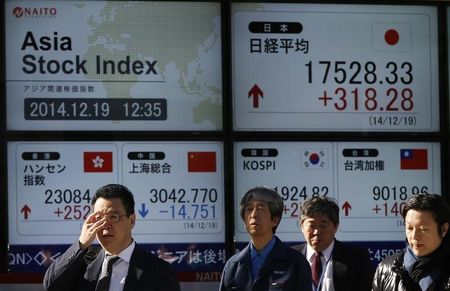
Asia stocks mixed as new US strikes curb Iran peace hopes; KOSPI hits record high
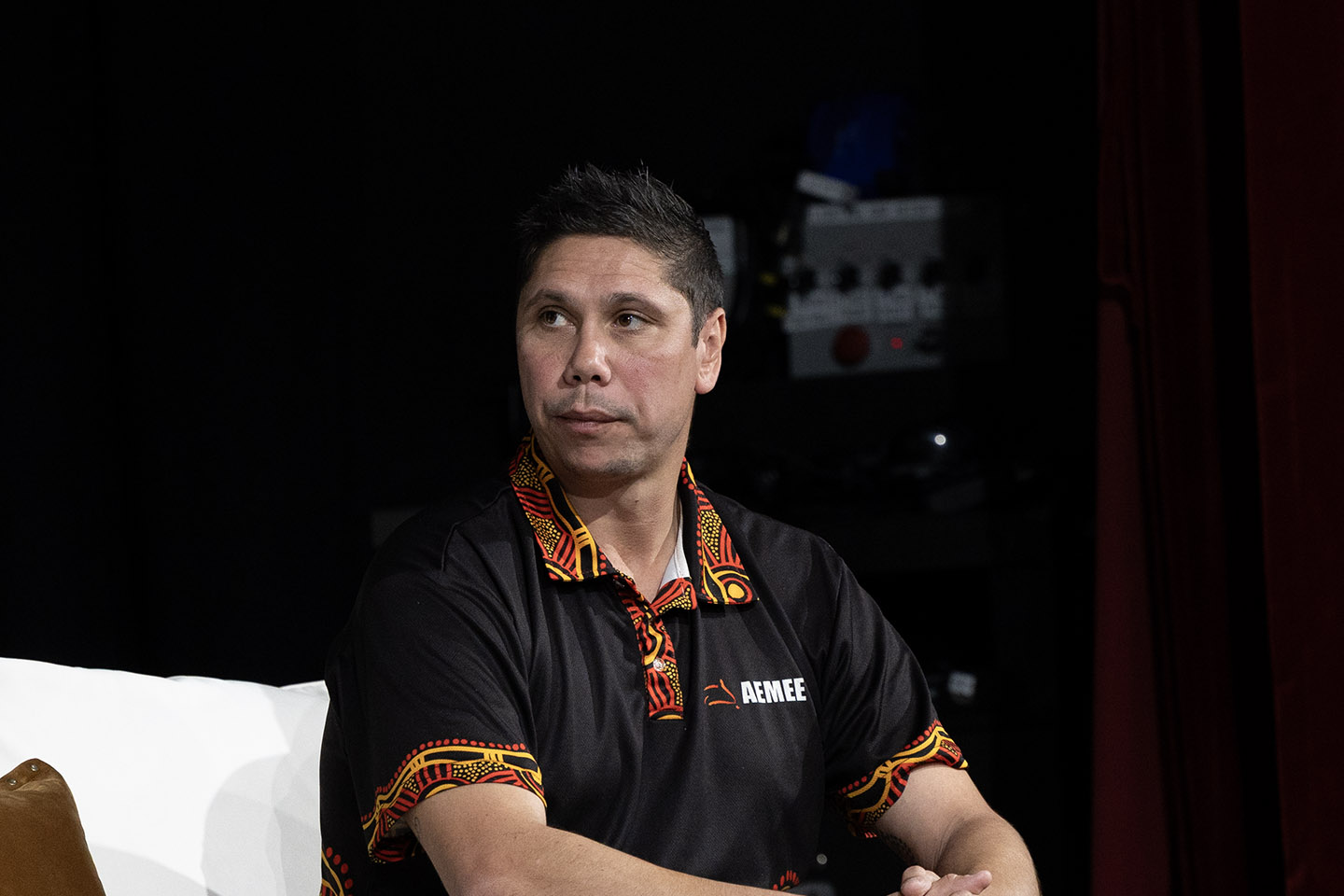
A serious lack of Indigenous businesses operating in the mining industry presents a compelling case for entrepreneurship to plug the gap in the Kimberley.


Rubio says Iran deal could take days as US launches fresh strikes
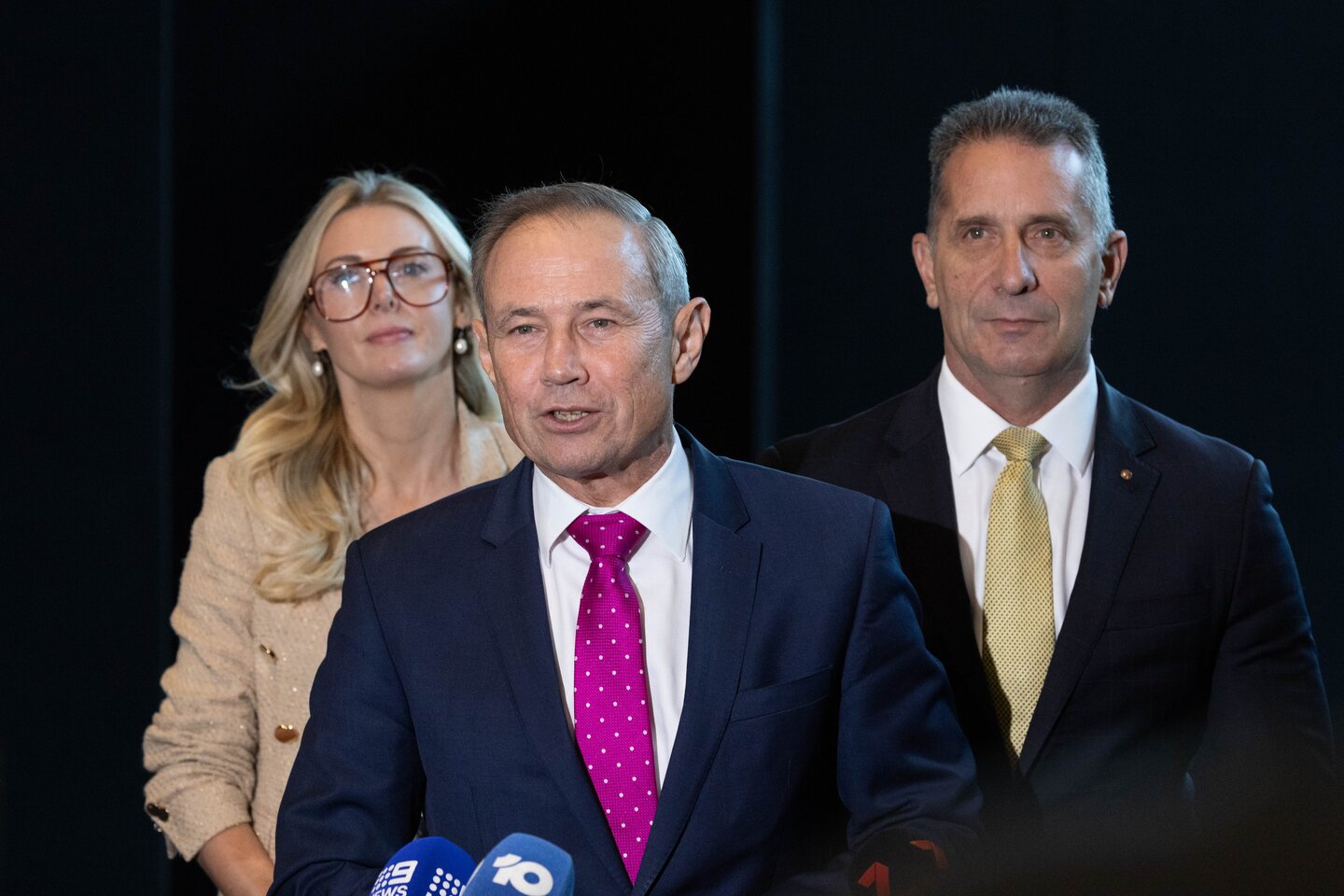
Premier Roger Cook has told a conference of global defence industry and military leaders that Western Australia is planning to build a manufacturing facility that could produce guided missiles and be located in Collie.


Sonny Rollins, saxophone ’colossus’ who honed his sound on a New York bridge, dies at 95

Hansa Biopharma trial results to be presented at ATC in June

Dollar firms after US-Iran strikes spark doubts over peace deal
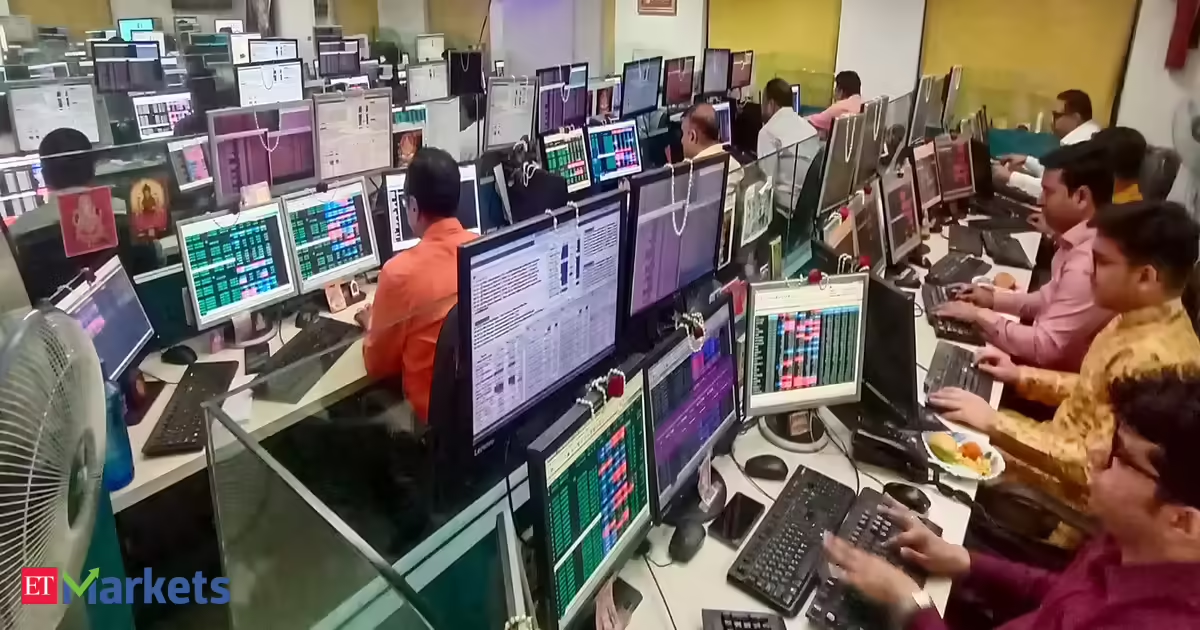
The NSE Nifty 50 advanced 1.3%, or 312.40 points, to close at 24,031.70, reclaiming the 24,000 mark after about two weeks, while the S&P BSE Sensex climbed 1.4%, or 1,073.61 points, to 76,488.96.
Sentiment was buoyed after reports the US and Iran were nearing an agreement that could ease tensions and restore energy flows. US President Donald Trump said over the weekend that both sides had largely negotiated a memorandum of understanding, according to Reuters.
Brent crude declined more than 5% to around $98 a barrel, easing concerns over inflation.
Asian markets rallied in tandem, with Taiwan gaining 3.3%, Japan 2.9%, and China 1%, while Hong Kong and South Korea were shut.
“With every day of delayed truce, there is a chance that the inflation can be higher, so the earlier we have a solution, the better,” said George Thomas, equity fund manager, Quantum AMC.
 Agencies
Lower Risk Outlook
“Even if there was to be a resolution immediately, it would take some time for things to normalise,” said Thomas of Quantum. “While a resolution may not be immediate, incrementally, things will be positive.”
Volatility eased, with the India VIX declining 6.7% to 16.7, signalling that risk expectations are easing. The rupee climbed to 95.23 per dollar Monday, its highest in more than two weeks, versus its previous close of 95.69. Benchmark 10-year bond yields fell to 7.025% Monday, from 7.088% Friday, according to investing.com data. Technically, the rally was aided by short covering, with the index breaking key levels. “Nifty witnessed a decisive breakout and closed strong- driven by short covering,” said Rajesh Palviya, Head of Research, Axis Securities. “Call writers are on the backfoot and if Nifty sustains over 24,000 levels, gains of 200-300 points are expected on an immediate basis.”
Palviya said further gains toward 24,800 levels could materialise if positive triggers emerge on the geopolitical or domestic front. Sectorally, the gains were broad-based, with financial stocks leading the rally as improving macro sentiment supported the space. The Bank Nifty and Nifty Financial Services indices rose 2.3% and 2.2%, respectively, while PSU banks gained 2.9% and private banks 2.1%. Auto and realty indices also advanced. “Banking stocks are available at decadal low valuation which is lending comfort to investors,” said Thomas. “But if this crisis prolongs for a longer time, then there could be an impact on credit cost.”

In the Nifty500 pack, 11 stocks’ closing prices crossed above their 200 DMA (Daily Moving Averages) on May 25, 2026, according to stockedge.com’s technical scan data. Traders use the 200-day daily moving average (DMA) as a key indicator for determining the overall trend in a particular stock. As long as the stock is priced above the 200-day SMA on the daily timeframe, it is generally considered to be in an overall uptrend. Take a look:

Kyle Busch’s Widow Discussed Husband Dying in Podcast Clip

Lenovo, Dell, and HP Financially Support Linux Vendor Firmware Service

Ripple , China Russia Bypassing SWIFT & XRP Scarcity Shockwave


-

 Crypto World4 days ago
Blockchain.com files with SEC for U.S. IPO
-

 Fashion3 days ago
Holiday Weekend Open Thread – Corporette.com
-

 Business4 days ago
Dell Technologies DELL Stock Surges 15% on AI Server Momentum and Analyst Upgrades in 2026
-

 Crypto World4 days ago
Bitcoin Accumulation Weakens as BTC Realized Losses Hit $600M
-

 Crypto World4 days ago
Space X IPO Is ‘Bad News’ for Tech Stocks: But What About Bitcoin?
-

 Politics3 days ago
Makerfield: a tale of two social-media histories
-

 Crypto World3 days ago
Robinhood crypto COO Tanya Denisova exits
-

 Crypto World4 days ago
MicroStrategy’s Saylor Says Miners No Longer Set Bitcoin Price, Another Force Has Taken Over
-

 Business1 day ago
NYT Strands Answers May 24 2026 Revealed for Puzzle No. 812 Theme Summer Essentials
-
 Tech4 days ago
A 0.12% parameter add-on gives AI agents the working memory RAG can’t
-

 Crypto World4 days ago
AI infrastructure race heats up as IREN pitches full-stack strategy, WhiteFiber lands $160M deal
-

 Tech4 days ago
WhatsApp ads could make Irish debut after discussions with DPC
-

 Tech4 days ago
You Can Now Add ChatGPT To PowerPoint
-

 Business4 days ago
Trump Invests $1M-$5M in Kura Sushi USA Chain With 27 California Locations
-
 NewsBeat5 days ago
Charity run by Reform leader Malcolm Offord accused of ‘law breaking’ over Scottish registration
-

 Crypto World5 days ago
Exa Labs raises $250 million in funding led by a16z
-

 Sports4 days ago
2026 CJ Cup Byron Nelson leaderboard: Brooks Koepka finds putting stroke in Round 1
-
Business4 days ago
Goldman Sachs reinstates Ageas stock coverage with neutral rating
-

 Crypto World4 days ago
Trump Media’s Bitcoin Stash Shrinks Again as 2,650 BTC Lands on Crypto.com
-
 Business4 days ago
Marine engineering firm Avantis eyeing expansion on equity boost
You must be logged in to post a comment Login