Connect with us
DAPA Banner

Business

Cardiff-based 1st Choice Accident Repair Centre acquired in an MBO

Published

on

Business Live

The deal, which provides an exit for the Development Bank of Wales, has been part funded by UK Steel Enterprise

1st Choice Accident Repair Centre MBO deal, left to right. Mervyn Ham and Mike Summers, 1st Choice; Mark Halliday, Development Bank of Wales.

One of the UK’s largest motor vehicle repair businesses has been acquired in a management buyout.

The deal, for Cardiff-based 1st Choice Accident Repair Centre, the value of which has not been disclosed, has been part funded with an investment of £600,000 from UK Steel Enterprise.

The deal provides an equity exit for the Development Bank of Wales, which backed a previous MBO of the business in 2018. The development bank would not disclosed the return on its equity investment. 1st Choice has expanded significantly in recent years, including the opening of a 30,204 sq ft flagship facility in 2022 following a £975,000 Development Bank loan. The business now employs 37 people and has grown into a £5m operation.

READ MORE: Work under way on the UK’s first nuclear small modular reactors in North WalesREAD MORE: Plans still of track for Wales’ first dedicated museum of contemporary art

Advertisement

The newly completed MBO sees executive chairman Mervyn Ham – formerly non-executive chairman and principal advisor – lead a strengthened management structure. It also retains founding MBO lead Mike Summers, who brings over 45 years’ sector experience, who becomes a senior advisor to the board while retaining an equity stake.

Eight employees become shareholders. Joining Mr Ham and Mike Summers on the board are Calum Young, part of the original 2018 MBO team, along with Matthew Willecome, Joe Callaghan and Natalie Willecome.

Mr Ham said “1st Choice operates in a sector facing well‑documented pressures – rising repair costs, increasingly complex vehicle technology and the need for continuous investment in skills and performance standards. The business has consistently positioned itself at the forefront of these challenges through investment, strong governance and a commitment to high-quality repair excellence.

“Eight years on from the company’s first buy-out, today’s milestone signals continuity, confidence and a broader ownership model designed to support long-term resilience and growth.

Advertisement

“As a shared‑ownership model, this deal blends the engagement and loyalty often seen in employee‑owned firms with the discipline and performance focus commonly associated with private equity-led structures.

“The development Bank has been an excellent partner over the past eight years, providing equity, debt and property finance that has helped drive 1st Choice’s growth. This MBO represents the next chapter – an opportunity for the management team and our employee shareholders to build on strong foundations and take the business forward with real ambition. Most of the team started as apprentices, and we are now fully committed to supporting them as owners.”

Michelle Noble, area manager at UKSE, said: “We’re delighted to support the management buy‑out at 1st Choice Accident Repair Centre. The team has demonstrated strong leadership, a clear growth strategy and an unwavering commitment to high‑quality service. Their continued investment in people, technology and operational excellence has positioned the business as a leading repair centre in the region. This transaction represents exactly the type of ambition UKSE aims to back a skilled local team building a resilient, future‑focused business with long‑term potential. We’re proud to play a part in their next chapter and look forward to seeing the company continue to grow and contribute to the local economy.”

Mark Halliday of the Development Bank of Wales said: “Our relationship with 1st Choice spans eight years and reflects the full breadth of what the Development Bank can offer – from equity to debt and property finance. The team has grown the business into a market‑leading operation, and this transaction marks a strong and successful exit for us. We’re proud to have supported their journey and wish the new management team every success as they take the business forward.”

Advertisement
Continue Reading
Click to comment

You must be logged in to post a comment Login

Leave a Reply

Business

Bringing Throne Sport Coffee to the mainstream

Published

on

Bringing Throne Sport Coffee to the mainstream

Functional coffee brand recently named Julia Perez as its chief marketing officer. 

Continue Reading

Business

Is Facebook Messenger Down? Web Version Shuts Today as Meta Redirects Users to Facebook Chat in April 2026

Published

on

X, Formerly Twitter, Offers Valuable Insights Into Self-Reported Chronic Pain Using Machine Learning: Study

NEW YORK — Facebook Messenger’s standalone website messenger.com stopped functioning for messaging on April 16, 2026, as Meta Platforms Inc. completed a long-planned consolidation that forces desktop users to switch to Facebook’s integrated messaging interface at facebook.com/messages.

The change, first announced in February 2026, took effect Thursday, leaving many desktop users confused when they tried to access the familiar dedicated site and found themselves automatically redirected. Mobile apps for iOS and Android continue operating normally, but the web-only experience has ended, marking the latest step in Meta’s effort to streamline its messaging ecosystem and cut costs on separate desktop platforms.

Meta’s official help page clearly states the transition: starting April 2026, messenger.com is no longer available for messaging. Users attempting to visit the site are redirected to facebook.com/messages, where conversations sync seamlessly. The standalone Messenger desktop apps for Windows and Mac, already discontinued earlier, followed the same fate. For those who accessed Messenger without a linked Facebook account, web access is now unavailable, and they must rely on the mobile app to continue chats.

The move has sparked widespread frustration among users who preferred the clean, distraction-free interface of messenger.com. On social media and forums like Reddit, complaints poured in Thursday morning from people who opened their browsers expecting quick access to messages only to be funneled into the full Facebook experience. Many reported that the redirect works but feels slower or cluttered with news feed elements and ads.

Advertisement

Downdetector and similar monitoring sites showed a spike in reports Thursday, with users noting problems accessing Messenger on Chrome and other browsers. Some described the service as “deadsies in Chrome but OK on phone,” while others simply saw the shutdown as the final nail in the coffin for the independent web version. Meta’s business status page and developer tools reported no widespread outages for the Messenger Platform itself, confirming the issue is intentional rather than a technical failure.

The decision fits Meta’s broader strategy of unifying its apps and reducing maintenance overhead. Last year the company phased out standalone Messenger desktop applications, already pushing users toward the Facebook web interface. By eliminating messenger.com, Meta simplifies its infrastructure while encouraging deeper integration within the main Facebook platform. Executives have emphasized that core messaging features — sending texts, voice notes, video calls, group chats and disappearing messages — remain fully intact across supported channels.

For most users the transition should be painless. Conversations, media and chat history sync automatically. Users can restore older chats using a PIN code on any device. The mobile apps, which handle the vast majority of Messenger traffic, are completely unaffected and continue receiving updates with new features such as improved AI-powered replies and enhanced end-to-end encryption options.

Still, the change hits certain groups harder. Power users who relied on messenger.com for work or personal separation from their Facebook feeds now face a less streamlined experience. People without Facebook accounts — a shrinking but notable segment — lose web access entirely and must download or continue using the mobile app. Business users who integrated Messenger into workflows or browser extensions may need to update bookmarks and scripts pointing to the old domain.

Advertisement

Industry analysts view the shutdown as part of Meta’s ongoing efficiency drive under CEO Mark Zuckerberg. The company has faced pressure to control costs while investing heavily in artificial intelligence, the metaverse and advertising tools. Consolidating messaging reduces server overhead and development resources previously split across separate web properties. Similar moves have occurred with Instagram and WhatsApp features migrating toward unified experiences.

User reaction has been mixed but vocal. On Threads, X and Facebook groups, some welcomed the simplification, noting they already used facebook.com/messages without issues. Others expressed annoyance at losing a dedicated space, joking that Meta is slowly erasing the boundaries between its apps. Tech reviewers noted that while the functional impact is minimal for most, the symbolic loss of an independent Messenger web presence feels like another step toward tighter platform control.

Meta has not provided detailed statistics on how many users relied exclusively on messenger.com, but the volume of pre-shutdown discussions on Reddit and tech forums suggests millions accessed it regularly for quick desktop messaging. The company rolled out in-app and browser notifications months in advance, giving users time to adjust habits or export data if needed.

For those still encountering problems Thursday, basic troubleshooting steps include clearing browser cache and cookies, trying a different browser or device, or simply using the mobile app as a temporary bridge. Meta’s help center offers guides for restoring chats and managing notifications after the switch. Business and developer users should check Meta’s status page for any API-related impacts, though the core Messenger Platform shows no known issues.

Advertisement

The shutdown arrives amid broader questions about Meta’s messaging strategy. With WhatsApp dominating international markets and Instagram DMs overlapping heavily with Messenger, the company continues experimenting with cross-app interoperability while maintaining separate identities. Future updates may bring even tighter integration, potentially including shared inboxes or unified notifications across Facebook, Instagram and Messenger.

As of midday April 16, 2026, the majority of users appear to have adapted quickly. Redirects function smoothly for most, and mobile usage remains stable. Any residual spikes on outage trackers likely stem from confusion rather than service failures. Meta has not commented publicly beyond its existing help documentation, a sign the company views the change as routine maintenance rather than a major disruption.

For longtime Messenger fans the day marks the quiet end of an era. Launched as a standalone app in 2011 and spun into its own web presence, Messenger once symbolized Facebook’s ambition to own communication beyond the blue social network. Today it operates more as a feature set embedded across Meta’s family of apps, reflecting a mature platform focused on efficiency over separate branding.

Travelers, remote workers and anyone who preferred keeping messaging separate from scrolling feeds will feel the shift most acutely. Many have already migrated workflows to WhatsApp, Signal or iMessage, while others simply accept the new reality and bookmark facebook.com/messages.

Advertisement

Meta’s larger ecosystem remains robust. Billions of messages flow daily across its platforms with strong encryption and reliability. The company continues investing in spam detection, parental controls and AI features designed to make conversations safer and more useful.

As the dust settles on messenger.com’s final day, the episode serves as a reminder of how quickly digital habits evolve. What felt like a permanent fixture for desktop users has now joined the list of phased-out products in tech’s relentless march toward consolidation. Mobile remains king, and Facebook’s messaging hub stands ready to absorb the traffic.

Users who encounter persistent issues can visit Meta’s help center or contact support through the app. For the vast majority, however, the change is seamless: open Facebook, click Messages, and continue exactly where you left off. The conversations haven’t disappeared — they’ve simply found a new home in the heart of the world’s largest social network.

Whether this consolidation improves the experience or frustrates dedicated users will play out in the coming weeks. For now, Messenger lives on, just not quite as independently as it once did. The standalone web chapter has closed, but billions of daily chats continue uninterrupted across phones and the redirected desktop interface.

Advertisement
Continue Reading

Business

JPMorgan, MUFG near completion of Oracle’s $38 billion data center loan – Bloomberg

Published

on


JPMorgan, MUFG near completion of Oracle’s $38 billion data center loan – Bloomberg

Continue Reading

Business

Uber: Favorable Ride Pricing Tailwinds For 2026 Underlie A Cheap Ebitda Multiple

Published

on

Uber: Favorable Ride Pricing Tailwinds For 2026 Underlie A Cheap Ebitda Multiple

Uber: Favorable Ride Pricing Tailwinds For 2026 Underlie A Cheap Ebitda Multiple

Continue Reading

Business

Trump says Iran war ’close to over’; Pakistan army chief arrives in Tehran to mediate

Published

on

Trump says Iran war ’close to over’; Pakistan army chief arrives in Tehran to mediate


Trump says Iran war ’close to over’; Pakistan army chief arrives in Tehran to mediate

Continue Reading

Business

Bessent says he is optimistic Warsh will be Fed chair ’on time’

Published

on

Bessent says he is optimistic Warsh will be Fed chair ’on time’


Bessent says he is optimistic Warsh will be Fed chair ’on time’

Continue Reading

Business

Graco recalls 5,000 SnugRide infant car seats over increased injury risk

Published

on

Graco recalls 5,000 SnugRide infant car seats over increased injury risk

More than 5,000 Graco infant car seats sold through Target, Walmart and other major retailers are being recalled in the United States after the company and federal regulators warned of an injury risk tied to the seat base.

The recall applies to Graco SnugRide Turn & Slide car seats sold in the United States from January 2026 through March 2026 at Amazon, Babylist, Target, Walmart and on Graco’s website.

Advertisement

“At Graco, the safety of children and the trust of parents and caregivers are at the heart of everything we do,” Graco said in a statement announcing the voluntary recall on Monday. 

“We know parents rely on Graco products every day, and we understand this may create frustration and disruption for families,” the statement continued. “We are working quickly to support affected families and will provide a replacement product at no cost.”

FORD RECALLS 1.74 MILLION VEHICLES DUE TO REARVIEW CAMERA BLACKOUTS, ISSUES

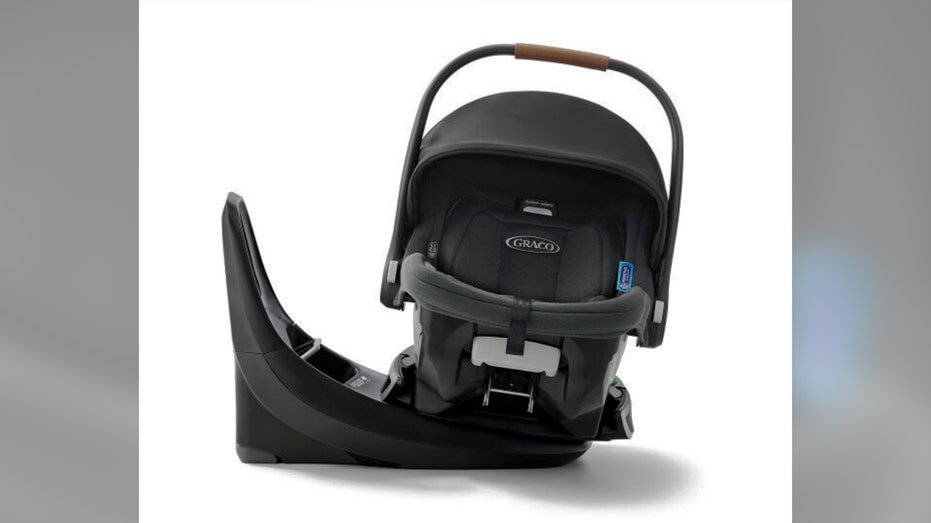
SnugRide Turn & Slide Rotating Infant Car Seat Base

Graco has announced a voluntary recall of select SnugRide Turn & Slide products sold at major retailers including Amazon, Target, and Walmart between January 2026 and March 2026. The company stated the recall was initiated after a structural issu (Graco)

This recall was “due to a structural issue identified during a post-production laboratory test,” according to Graco.

Advertisement

According to a Department of Transportation recall report, 5,126 units are potentially involved. The report warns of “increased risk of injury.”

“A properly seated carrier may detach from the convenience base under certain crash conditions,” the DOT defect description for the Rearfacing Infant Seat reads. “The base locking hooks may allow the carrier to detach.”

CALIFORNIA TODDLER FALLS OUT OF MOVING CAR, MOTHER CHARGED

SnugRide Turn & Slide Rotating Infant Car Seat Base

The recall impacts as many as 5,126 infant car seats. (Graco)

The recall applies only to select SnugRide Turn & Slide models, including some infant car seats, bases and Modes Nest travel systems with the matching car seat. Graco said no other rotating car seats are affected, including EasyTurn and Turn2Me, and no other SnugRide models are included.

Advertisement

Consumers are being told to stop using the seat with the base, though Graco said the seat can still be used without the base if installed with the vehicle seat belt and according to product instructions.

CLICK HERE TO READ MORE ON FOX BUSINESS

Ticker Security Last Change Change %
GRACO NO DATA AVAILABLE

The company is offering free replacement products, including infant seats, toddler seats or, for base-only purchases, a replacement base.

Graco said affected owners should check the model number on the base label, upload a photo of the white label and complete the company’s recall registration form.

Advertisement

GET FOX BUSINESS ON THE GO BY CLICKING HERE

Customers should not return the product to stores, according to Graco.

Continue Reading

Business

Trump threatens to fire Fed chair Powell if he doesn’t leave in May

Published

on

Trump threatens to fire Fed chair Powell if he doesn't leave in May

Thom Tillis, an influential Republican senator on the committee which oversees nominations for the Federal Reserve chair, has threatened to block Warsh’s confirmation. If Warsh is not confirmed before Powell’s term expires, he plans to stay on temporarily in the post.

Continue Reading

Business

M&T Bank: Robust Performance In Q1 (NYSE:MTB)

Published

on

M&T Bank: Robust Performance In Q1 (NYSE:MTB)

This article was written by

The Pioneer Of Seeking Alpha’s BAD BEAT Investing, Quad 7 Capital is a team of 7 analysts with a wide range of experience sharing investment opportunities for nearly 12 years. They are best known for their February 2020 call to sell everything & go short, & have been on average 95% long 5% short since May 2020. The broader company has expertise in business, policy, economics, mathematics, game theory, & the sciences. They share both long & short trades & invest personally in equities they discuss within their investing group BAD BEAT Investing, focused on short- & medium-term investments, income generation, special-situations, & momentum trades. Rather than just give you trades, they focus on teaching investors to become proficient traders through their playbook. Their goal is to save you time by providing in depth, high-quality research, with crystal clear entry and exit targets. They have a proven track record of success.Benefits of BAD BEAT Investing include: Learning how to understand the pinball nature of markets, executing well-researched written trade ideas each week, use of 4 chat rooms, receive daily complimentary key analyst upgrade/downgrade summaries, learning basic options trading, & extensive trading tools. If you would like to learn more, click the link above!

Analyst’s Disclosure: I/we have no stock, option or similar derivative position in any of the companies mentioned, and no plans to initiate any such positions within the next 72 hours. I wrote this article myself, and it expresses my own opinions. I am not receiving compensation for it (other than from Seeking Alpha). I have no business relationship with any company whose stock is mentioned in this article.

Seeking Alpha’s Disclosure: Past performance is no guarantee of future results. No recommendation or advice is being given as to whether any investment is suitable for a particular investor. Any views or opinions expressed above may not reflect those of Seeking Alpha as a whole. Seeking Alpha is not a licensed securities dealer, broker or US investment adviser or investment bank. Our analysts are third party authors that include both professional investors and individual investors who may not be licensed or certified by any institute or regulatory body.

Advertisement
Continue Reading

Business

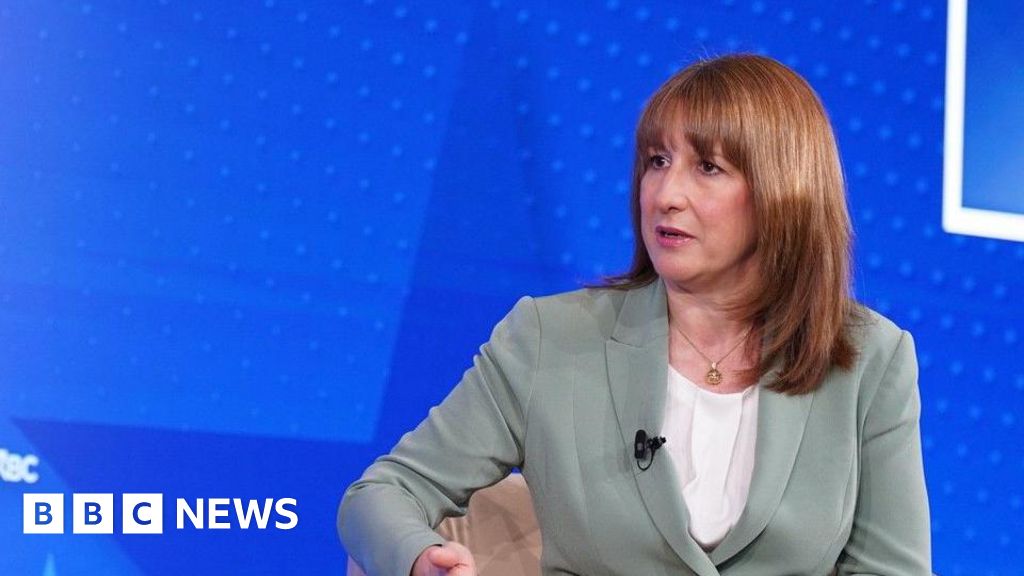
US war on Iran was a 'mistake', says Reeves

Published

on

US war on Iran was a 'mistake', says Reeves

The chancellor’s criticism follows a report that the conflict will hit the UK harder than other big economies.

Continue Reading

Trending

Copyright © 2025