

Business
Chinese-linked ships turned back at Strait of Hormuz after IRGC Navy warning

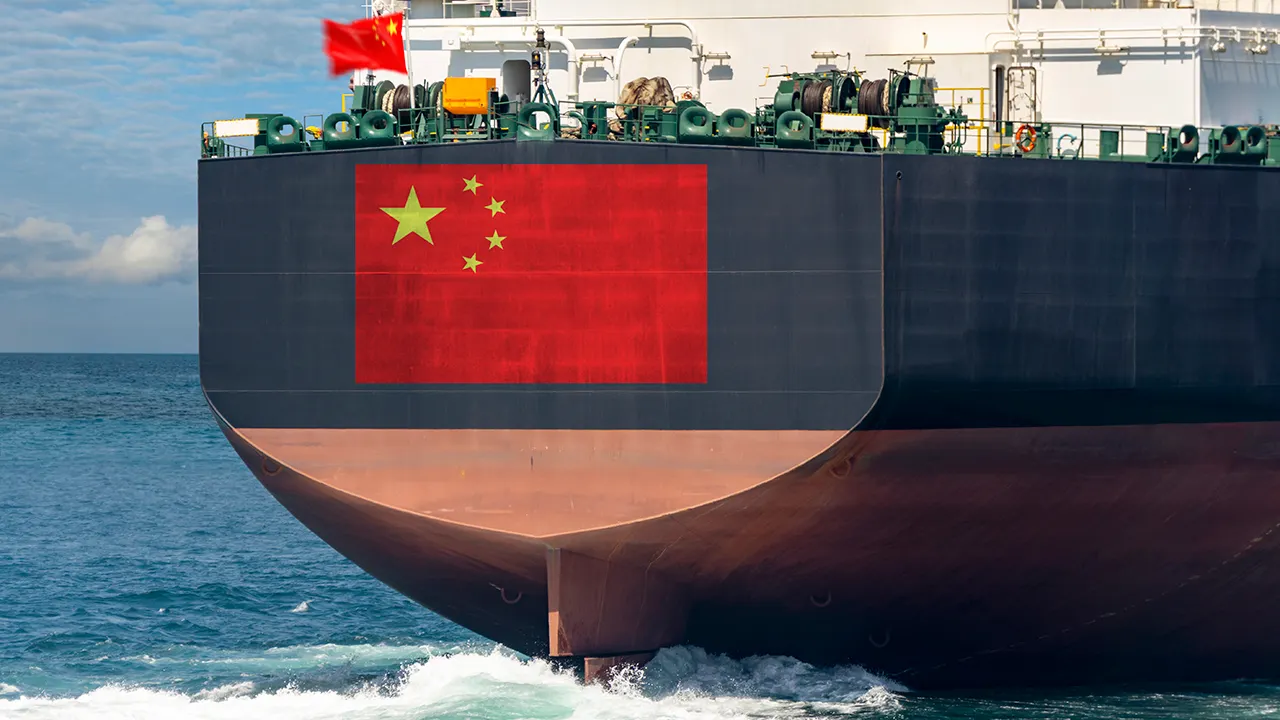
Sen. Tommy Tuberville, R-Ala., discusses Iran allowing non-hostile ships to transit the Strait of Hormuz and Democrats’ continued opposition to I.C.E. funding on ‘The Evening Edit.’
At least three Chinese-linked vessels reportedly turned back abruptly after attempting to cross the Strait of Hormuz last Friday, signaling an unusual move in typically friendly Tehran‑Beijing relations amid the ongoing regional crisis.
Two ships owned by China’s state‑run Cosco Shipping, the CSCL Indian Ocean and CSCL Arctic Ocean, as well as Hong Kong-owned Lotus Rising made sudden U‑turns near Larak Island, according to ship‑tracking service MarineTraffic and research group FDD. The narrow channel has repeatedly been described as Iran’s de facto “toll booth,” with the Islamic Revolutionary Guard Corps (IRGC) Navy, allowing passage only for authorized vessels.
This was the first attempted outbound transit by major Cosco container ships since tensions in the Strait of Hormuz began on Feb. 28, triggering disruptions to 20% of the world’s oil supply.
The ships reportedly violated Iranian rules banning traffic to and from countries considered supportive of the United States and Israel, including the UAE and Saudi Arabia, according to an IRGC statement cited by IRGC-affiliated outlet Nour News.
OIL HAS SURGED SINCE THE IRAN CONFLICT, BUT GAS PRICES MAY NOT BE DONE RISING.
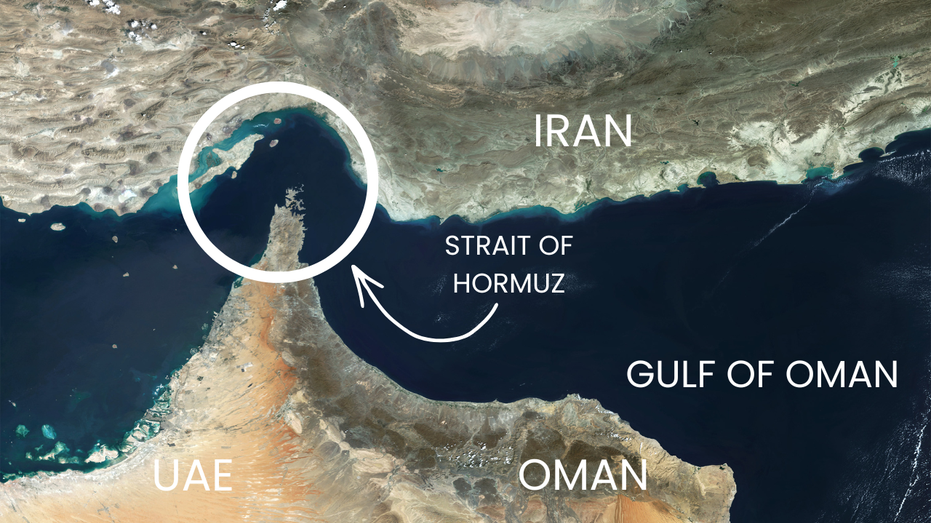
A satellite image shows the Strait of Hormuz, a key maritime passage connecting the Persian Gulf to the Gulf of Oman, vital for global energy supply. (Amanda Macias/Fox News Digital / Getty Images)
“Three container ships of different nationalities attempted to move towards the designated corridor for licensed ships, which were forced to return after being warned by the IRGC Navy,” the outlet said Friday afternoon.
“Sailing of any ship ‘to and from’ the ports of the allies and supporters of the Zionist-American enemies to any destination and from any corridor is prohibited,” it added.
IRAN WAR FUELS ASIA ENERGY CRUNCH AS INDIA, JAPAN, OTHERS FEEL STRAIN

Multiple Chinese container ships aborted their attempt to pass through the Strait of Hormuz last Friday. (STR/AFP/Getty Images / Getty Images)
It is not immediately clear why the vessels halted their transit, but the Cosco ships have reportedly visited ports in enemy countries considered hostile since mid-February, including Jebel Ali in Dubai; Dammam in Saudi Arabia; and Khalifa Port in Abu Dhabi, United Arab Emirates, according to maritime outlet Lloyd’s List.
Analysts noted that the ships may have lacked proper paperwork or authorization to transit the Strait of Hormuz, and safe passage could not be guaranteed, the outlet added.
CLICK HERE TO GET FOX BUSINESS ON THE GO
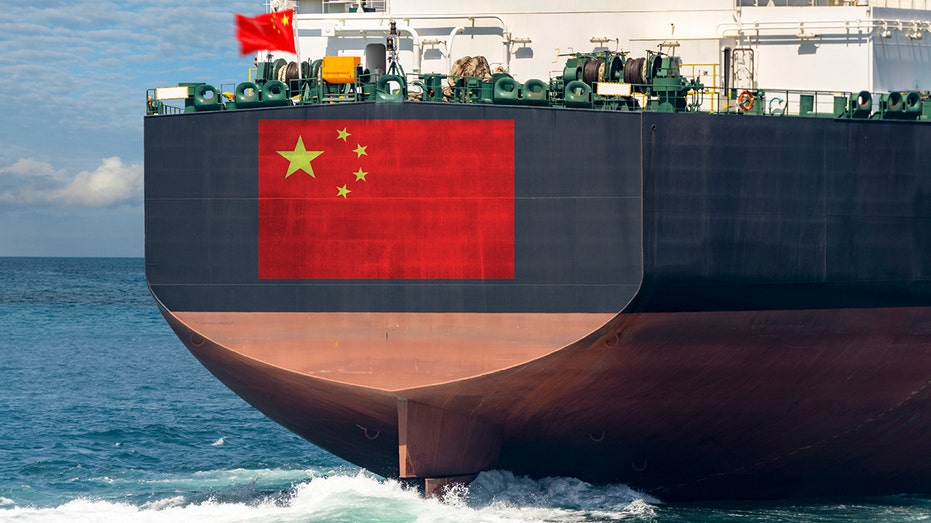
Chinese-flagged container cargo freight ship departs from a port. (iStock / Fox News)
The incident highlights a gap between Iran’s earlier diplomatic assurances that China and other friendly nations, including Russia and India, could coordinate safe passage through the Strait of Hormuz.
The CSCL Indian Ocean and CSCL Arctic Ocean had also broadcast messages on their identification systems signaling that they had Chinese owners and crew as a precautionary move to signal friendliness to Iran, Reuters reported, but the effort was apparently deemed insufficient by Iranian authorities at the checkpoint.
Reuters contributed to this report.


Morgan Stanley initiates HawkEye 360 stock at overweight on SIGINT demand

New GSMA report maps a region of striking contrasts, where blockchain-powered payment rails and AI-driven credit scoring coexist with deep divides in access, literacy, and trust.
Key takeaways
- Asia Pacific holds 41% of the world’s 2.1 billion mobile money accounts, yet 1.3 billion adults globally remain locked out of the formal financial system.
- India, Cambodia and Thailand show how digital public infrastructure like UPI, Bakong and PromptPay can drive near universal payment adoption, while Pakistan and Myanmar reveal how far the inclusion frontier still stretches.
- Closing the gender, literacy, and trust gaps, not just expanding access, will determine whether the region’s fintech boom translates into real financial health for the unbanked.
From Cambodia’s blockchain backed payment system processing transactions worth three times the country’s GDP, to Pakistan’s gender gap that still leaves millions of women outside the formal financial system, a sweeping new report from the GSMA paints a complex portrait of digital finance across Asia Pacific, a region that is simultaneously a world leader in fintech innovation and home to the largest concentration of unbanked adults on the planet.
The report, Digital Financial Services in Asia Pacific: Driving Inclusion Through Innovation, published by GSMA Intelligence in April 2026, examines twelve markets across the region and concludes that while digital financial services (DFS) have delivered transformative gains in financial inclusion, progress remains deeply uneven, shaped by regulatory ambition, infrastructure investment, and the persistent barriers of literacy, trust, and gender.
A Global Surge, Unevenly Distributed
The headline trend is unmistakably positive. According to the World Bank’s Findex 2025 study cited in the report, global account ownership climbed from 62% of adults in 2014 to 79% in 2024, a jump driven largely by the proliferation of mobile-based financial services. In low-income countries, the proportion of adults holding a mobile money account rose from just 2% a decade ago to 16% globally by the end of 2024, with the figure reaching 32% in the world’s poorest nations.
By December 2024, East Asia & Pacific and South Asia together accounted for 41% of the world’s 2.1 billion registered mobile money accounts. South Asian markets recorded a 20% year on year growth in transaction volume, while East Asia & Pacific saw a 16% increase, with transaction values of $257 billion and $238 billion, respectively.
Yet approximately 1.3 billion adults, the majority of them in Africa and the Asia Pacific, remain entirely outside the formal financial system. And even where accounts exist, the report warns, access has not always translated into improved financial health. “Increased access to financial services has not always resulted in improved financial health,” the report states, noting that many account holders still depend on informal savings and credit and struggle to manage irregular incomes.
The economic stakes are considerable. GSMA Intelligence analysis cited in the report estimates that, as of 2023, countries with mobile money systems had GDP levels $720 billion higher than they would otherwise have been, a 1.7% uplift attributed directly to mobile money adoption.
Three Models, One Convergence
One of the report’s central analytical contributions is its mapping of the operating models that define DFS across the region. It identifies three principal types: bank-led models, where traditional financial institutions retain primary customer relationships; non-bank-led models, where mobile network operators (MNOs) and fintech firms hold the dominant position; and hybrid models, increasingly the direction of travel for the entire region.
The report documents a clear and accelerating shift toward hybrid DFS structures, driven by a convergence of government incentives to promote financial inclusion, technological advances such as AI and cloud computing, and market demand for personalised, scalable, and secure services that no single entity model can reliably deliver.
This evolution has unfolded in four identifiable stages, from basic single-use mobile wallets offering airtime top-ups, through QR payment ecosystems and bank integrations, to fully fledged super apps and digital banks. The Philippines’ GCash, which began in 2004 as a USSD-based airtime service, and Cambodia’s Wing Bank, which evolved from a simple money transfer operator into a licensed commercial bank, exemplify how DFS providers have matured into comprehensive financial hubs within a single generation.
Country by Country: Pioneers and Laggards
The report’s twelve market profiles reveal a region that defies simple generalisations.
India stands apart as a benchmark for digital public infrastructure (DPI). Its Unified Payments Interface (UPI), introduced in 2016, has become a global protocol, now accepted in France, Singapore, and the UAE, enabling Indian tourists to pay local merchants in rupees without forex markups. By mid 2025, digital payments represented 99.8% of total transaction volume in India, an extraordinary achievement for a country of 1.45 billion people where 63% of the population lives in rural areas. India’s Aadhaar biometric identity system underpins the entire ecosystem, reducing customer acquisition costs, minimising fraud, and enabling access to credit and insurance.
Cambodia’s Bakong platform, built on blockchain by the National Bank of Cambodia, has become one of the region’s most ambitious DPI stories. As of September 2025, it had connected 70 financial institutions, supported 34 million user accounts, and processed over 600 million transactions valued at $147 billion. More than 4.5 million Cambodian merchants now accept KHQR, the national QR standard, which has overtaken cash to become the country’s leading payment method, accounting for 47.2% of transactions.
Thailand presents perhaps the clearest model of government-led digital transformation. PromptPay, the country’s flagship instant payment system, launched in 2017, processes more than 75 million daily transactions. Thailand’s financial inclusion rate stands at 92% of adults, with women slightly ahead of men, a phenomenon the report attributes in part to cultural norms in which women manage household finances. Three new digital bank licences were issued in 2025, with operations expected by 2026, targeting underserved segments such as SMEs.
Indonesia has seen an extraordinary rise in QR payments. Its QRIS system, introduced in 2019, recorded 2.6 billion transactions between March 2024 and March 2025, a year on year increase of 596%, making it the fastest-growing form of digital payment in the country. Around 80% of Indonesian adults now have access to formal financial services, up from just 36% in 2014.
Pakistan, by contrast, illustrates the scale of the challenge that remains. Financial inclusion reached 67% in 2025, up from 47% in 2018, driven by microfinance and digital banking initiatives, a significant leap, but still below the regional average. The gender gap, while narrowing from 47 to 30 percentage points, remains “significantly higher than in most other countries in the region,” the report notes. Only 27% of the population uses a smartphone, and 62% lives in rural areas. The country’s Raast instant payment platform, launched in 2021, has processed over 3 billion transactions worth nearly PKR 80 trillion ($285 billion) since launch, offering a foundation on which further inclusion can be built.
Myanmar presents a distinctive case of mobile-led inclusion in a constrained environment. With the most recent financial inclusion estimate dating to 2018 at 48%, the country has shifted almost entirely toward DFS, capitalising on 70% smartphone penetration. Wave Money, the first non-bank entity licensed under Myanmar’s mobile financial services regulation, now serves 35 million customers through an agent network of over 58,000 outlets, the majority operated by women.
The Three Pillars: Regulation, Infrastructure, Partnership
The report identifies three interlocking enablers that determine the pace and depth of digital financial inclusion in any given market: progressive regulation, robust digital public infrastructure (DPI), and collaborative cross-sector partnerships.
On regulation, the emergence of specialised licensing regimes, digital banking licences, e-money issuance permits, branchless banking authorisations, and fintech licences has been transformative, allowing non-traditional players to enter markets that were previously the exclusive domain of commercial banks. Regulatory sandboxes have become a cornerstone of DFS policy across the region, offering controlled environments for testing blockchain remittances, AI-driven credit scoring, and P2P lending before full-scale deployment.
On infrastructure, the availability of national instant payment systems and secure digital identity frameworks is increasingly the decisive factor separating markets that are scaling rapidly from those that are stagnating. Countries that invested early in DPI, India’s UPI, Thailand’s PromptPay, Pakistan’s Raast, have seen markedly faster adoption, broader use cases, and smoother participation from both banks and non-banks.
On partnerships, the report is categorical: “DFS ecosystems are highly complex, making it challenging for any single provider to achieve success independently.” Strategic alliances between MNOs, banks, fintech firms, government agencies, and commercial platforms, from GCash’s agricultural supply chain partnerships in the Philippines to Wave Money’s collaboration with MoneyGram for international remittances in Myanmar, are described as vital catalysts for scaling inclusion to the hardest-to-reach populations.
The Persistent Gaps: Gender, Literacy, and Trust
Alongside the progress narrative, the report catalogues a set of recurring barriers that threaten to entrench a usage gap even as access gaps close.
The digital gender divide remains acute across the region. In Cambodia, only 60% of women have access to formal financial services compared to 73% of men. Pakistan’s gender gap in financial access, while narrowing, remains the starkest in the study. The report attributes these disparities to compounding disadvantages: lower digital and financial literacy, reduced smartphone ownership, greater exposure to fraud risk, and cultural barriers to engaging with formal institutions.
Low digital financial literacy is consistently identified as a primary obstacle to DFS uptake. “Even when services are available, user willingness to adopt or effectively use them plays a crucial role,” the report notes. Apprehensions about fraud, difficulty navigating app interfaces, and a reluctance to move away from cash all dampen take-up, particularly among rural populations, older citizens, and those employed in the informal economy.
Business model sustainability presents a parallel challenge. Many DFS providers, the report acknowledges, are squeezed by low-value transactions, high distribution costs, and narrow margins, a combination that makes it commercially difficult to serve remote areas or develop the more sophisticated products, such as credit, savings, and micro insurance, that could deliver deeper financial health outcomes.
Eight Priorities for the Decade Ahead
The report concludes with a set of eight strategic opportunities for stakeholders, governments, regulators, MNOs, fintech firms, and development partners, seeking to accelerate inclusion:
Enhancing digital and financial literacy through targeted community campaigns, SMS programmes, and locally developed applications.
Expanding agent networks by leveraging existing businesses as trusted community hubs, particularly in underserved rural areas.
Accelerating cross-border transfer initiatives to reach unbanked populations that depend on remittances for basic needs, education, and business investment.
Addressing demand side barriers, including the cost of DFS relative to cash, fraud risk perceptions and the degree to which available products genuinely meet user needs.
Adopting best practice in DPI development, building interoperable layers for digital identification, instant payments, and secure data exchange to replace fragmented, siloed systems.
Digitalising government payment flows, both from government to citizens (G2P) and from citizens to government (P2G), which often serve as a first point of entry into the formal financial system for vulnerable groups.
Using alternative data for credit scoring, including mobile transaction history, utility payments, and social media behaviour, to develop models that extend credit access to rural women, gig workers, and SMEs who lack conventional financial records.
Incorporating AI, edge computing, and blockchain into product development to support scalability, inclusion, and regulatory compliance, and as a gateway to more advanced services, including decentralised finance.
Conclusion
The GSMA’s analysis offers a timely corrective to two competing narratives about digital finance in Asia Pacific: the triumphalist account of a region leading the world in fintech innovation, and the pessimistic view that structural inequalities render inclusion aspirations hollow.
The reality, as the report demonstrates across twelve distinct markets, is more nuanced and ultimately more hopeful. The infrastructure is increasingly in place. The regulatory frameworks are maturing. The partnerships are forming. What remains is a question of will and design, whether governments, companies, and development partners can direct the momentum of DFS toward the populations it has not yet fully reached: rural women in Cambodia, informal workers in Indonesia, smallholder farmers in Nepal, the unbanked millions in Pakistan and Myanmar.
As the report’s authors conclude, recognising the diversity of the DFS landscape is not just an analytical necessity; it is the prerequisite for advancing financial inclusion on a meaningful scale.
Other People are Reading
Lucid Group names Silvio Napoli as CEO effective immediately
Business
(VIDEO) Elon Musk Revives 2022 Promise to Eat Happy Meal on Live TV if McDonald’s Accepts Dogecoin

NEW YORK — Elon Musk reignited a long-dormant promise on Monday, June 1, 2026, by replying “True” to a post reminding the public of his 2022 offer to eat a McDonald’s Happy Meal on live television if the fast-food giant begins accepting Dogecoin as payment.

The comment, posted on X, quickly went viral and sparked renewed speculation about a potential partnership between McDonald’s and the meme-inspired cryptocurrency. Musk’s simple affirmation referenced a January 2022 tweet in which he stated he would consume a Happy Meal on air if the company integrated Dogecoin payments.
The exchange has drawn significant attention from cryptocurrency enthusiasts and Dogecoin supporters, many of whom have called on McDonald’s to respond to the renewed interest. As of Monday afternoon, the original post Musk replied to had amassed millions of views, with thousands of users tagging the fast-food chain and urging acceptance of the cryptocurrency.
Musk, who serves as a prominent advocate for Dogecoin, has previously used his platform to boost the token’s visibility. His companies, including Tesla and The Boring Company, have accepted Dogecoin for select merchandise in the past, though broader adoption remains limited.
Background of the Original Promise
In January 2022, Musk posted on Twitter (now X): “I will eat a Happy Meal on tv if @McDonalds accepts Dogecoin.” The lighthearted remark came during a period of heightened Dogecoin enthusiasm fueled by Musk’s frequent social media commentary. While McDonald’s never officially responded at the time, the statement became a memorable moment in the cryptocurrency community.
Monday’s affirmation has revived that moment, with users creating memes, videos and calls to action. Some have suggested collaborative promotions, including limited-edition Dogecoin-themed Happy Meals or live events featuring Musk.
Market Reaction and Dogecoin Movement
Dogecoin experienced a modest price increase following Musk’s post, rising approximately 2-3 percent in the hours after the tweet. The cryptocurrency, which often reacts strongly to Musk’s commentary, has seen heightened trading volume as supporters speculate about potential McDonald’s integration.
Cryptocurrency analysts note that while a McDonald’s partnership would represent a major mainstream milestone for Dogecoin, practical challenges including regulatory compliance, transaction fees and corporate risk assessment would need to be addressed.
McDonald’s has not issued any official comment on Musk’s renewed reference. The company has previously experimented with cryptocurrency payments in limited markets but maintains a cautious approach to volatile digital assets.
Broader Context of Musk’s Crypto Engagement
Musk has maintained an influential but unpredictable relationship with the cryptocurrency space. His companies have accepted Dogecoin for merchandise, and he has frequently highlighted the token’s potential for everyday transactions. However, he has also faced criticism for market-moving statements that some view as promotional.
The timing of Monday’s post coincides with broader discussions about cryptocurrency adoption by major corporations. Several large companies have explored digital payment options, though mainstream fast-food chains have moved more slowly due to volatility concerns.
Community and Social Media Response
The response on X has been enthusiastic, with users sharing creative ideas ranging from Dogecoin-themed menu items to global live events. Hashtags such as #DogeMeal and #McDoge trended briefly following Musk’s reply.
Dogecoin supporters have framed the moment as an opportunity for mainstream validation, while others view it primarily as entertainment. The interaction has generated significant engagement, with Musk’s post receiving tens of thousands of likes and comments within hours.
Corporate Considerations for McDonald’s
For McDonald’s, accepting Dogecoin would represent a significant step into cryptocurrency payments. The company would need to evaluate technological infrastructure, customer demand, tax implications and potential brand risks associated with volatile assets.
Industry experts suggest that any partnership would likely begin as a limited-time promotion rather than a permanent payment method. Previous corporate experiments with cryptocurrency have often been promotional in nature to generate publicity while minimizing long-term exposure.
Musk’s influence in both technology and popular culture could make such a collaboration particularly high-profile if pursued. A live event featuring Musk consuming a Happy Meal would likely generate substantial media coverage and social media engagement.
Looking Ahead
Whether McDonald’s chooses to engage with Musk’s revived offer remains uncertain. The company has a history of participating in viral marketing campaigns, but cryptocurrency integration would require careful consideration of business strategy and customer preferences.
For now, Musk’s brief “True” has successfully rekindled public interest in the idea. The cryptocurrency community continues to watch closely for any response from the fast-food giant, while Musk’s comment adds another chapter to his long-running engagement with Dogecoin.
As of Monday evening, no official statement had been issued by McDonald’s. The story continues to develop rapidly on social media, with fans and cryptocurrency enthusiasts eagerly awaiting the next development in this unusual corporate-crypto saga.
The interaction highlights the ongoing intersection between celebrity influence, social media and emerging payment technologies. Whether it leads to an actual partnership or remains a viral moment, Musk’s post has once again demonstrated his ability to capture global attention with a single word.

The children’s commissioner says child poverty in Jersey “is a big red flag” for the community.
KEY POINTS
BHP Group Shares Rise 0.27% to $62.48 on June 1 as Copper and Iron Ore Prices Stabilize
SYDNEY — BHP Group Ltd shares climbed 0.27 percent to close at $62.48 on Monday, June 1, 2026, reflecting modest investor optimism amid stabilizing commodity prices and positive developments in the global mining sector.
The Australian mining giant, one of the world’s largest diversified resource companies, traded in a relatively narrow range during the session, with strong support from its copper operations and steady iron ore demand from China. The modest gain came as broader market sentiment improved slightly at the start of the new month following mixed economic signals from major trading partners.
BHP has maintained a resilient performance in 2026 despite volatility in commodity markets. The company benefits from its diversified portfolio spanning iron ore, copper, nickel, and coal, providing a buffer against price swings in any single commodity.
Recent Operational Performance
BHP reported solid full-year results for the period ending June 2025, with underlying attributable profit reaching $13.7 billion. Copper production showed particularly strong growth, supported by the successful ramp-up of the Spence Growth Option in Chile and continued performance at Olympic Dam in South Australia. Iron ore production remained robust, with the company maintaining its position as a leading global supplier.
The company’s focus on operational excellence and cost discipline has helped offset challenges including labor constraints and weather-related disruptions in Western Australia. BHP’s commitment to disciplined capital allocation has also supported shareholder returns through dividends and share buybacks.
Commodity Market Context
Iron ore prices have stabilized around $100-$110 per tonne in recent weeks, supported by steady Chinese steel production and infrastructure spending. Copper prices have shown resilience amid strong demand from the electric vehicle and renewable energy sectors, though supply constraints continue to influence market dynamics.
Analysts note that BHP is well-positioned to benefit from the global energy transition. Its copper assets are increasingly viewed as strategic holdings as demand for the metal grows with electrification trends. The company has invested significantly in expanding copper production capacity to capitalize on this long-term structural shift.
Analyst Views and Valuation
Wall Street consensus on BHP remains generally positive. Most covering analysts maintain Buy or Hold ratings, citing the company’s strong balance sheet, diversified assets and exposure to future-facing commodities. Average price targets cluster around $65-$70, suggesting moderate upside potential from current levels.
Some analysts have highlighted risks including potential slowdowns in Chinese economic growth, regulatory challenges in key operating jurisdictions and volatility in energy transition metals. However, BHP’s scale, operational expertise and financial strength are frequently cited as mitigating factors.
The stock currently offers an attractive dividend yield, making it popular among income-focused investors. BHP has a long history of reliable payouts, even during periods of commodity price weakness.
Strategic Initiatives and Sustainability
BHP continues advancing its portfolio toward lower-carbon commodities. The company has set ambitious targets for Scope 1 and 2 emissions reduction and is investing in technologies to improve the environmental performance of its operations.
Recent developments include progress on the Jansen potash project in Canada, which is expected to become a significant contributor to future earnings. The company has also explored potential acquisitions and partnerships to strengthen its position in copper and other critical minerals.
Sustainability reporting and engagement with indigenous communities remain central to BHP’s operating model, particularly in Australia where the company maintains large-scale iron ore operations.
Broader Market and Economic Factors
Monday’s trading occurred against a backdrop of cautious global markets. Commodity prices showed mixed signals, with some metals gaining on supply concerns while others faced pressure from demand uncertainty. The Australian dollar’s performance also influenced investor sentiment toward resource stocks.
BHP’s share price movement often serves as an indicator for the broader resources sector on the ASX. Its performance influences sentiment toward other major miners and provides insight into global commodity demand trends.
Investment Considerations for 2026
Investors evaluating BHP shares should consider its exposure to both traditional and future-facing commodities. The company offers a balance of near-term cash flow generation and longer-term growth potential through its copper and nickel assets.
Risks include geopolitical tensions affecting trade flows, regulatory changes impacting operations and potential volatility in Chinese economic activity. Opportunities exist if global infrastructure spending accelerates and energy transition demand exceeds expectations.
Analysts generally recommend a long-term approach to BHP given the cyclical nature of commodity markets. The stock’s defensive qualities and dividend reliability appeal to conservative portfolios, while its growth exposure attracts those bullish on the green economy.
Professional financial advice tailored to individual circumstances is recommended before making investment decisions in the resources sector. Market conditions can shift rapidly based on macroeconomic developments and commodity price movements.
Technical Outlook
Technically, BHP shares are trading above key support levels but face resistance near recent highs. Volume patterns suggest consolidation, with potential for upward movement if commodity prices strengthen further.
The stock maintains a strong correlation with iron ore and copper futures, making it sensitive to developments in those markets. International investors monitor currency fluctuations, particularly movements in the Australian dollar against the US dollar.
BHP Group remains one of Australia’s most important corporate citizens and a bellwether for the resources industry. Its ability to navigate the current environment while positioning for long-term structural changes will be closely watched by investors throughout 2026.
Monday’s modest gain represents normal market fluctuations rather than a significant shift in fundamentals. With strong operational performance and strategic focus on high-value commodities, BHP continues to occupy a leading position in the global mining landscape.
As the new month begins, attention turns to upcoming production reports and any guidance on full-year expectations. For now, BHP shares reflect steady confidence in the company’s diversified business model and long-term prospects in a changing global economy.
Calnex non-executive director purchases shares at 69.9p

NEW YORK — Selena Gomez maintains a slight overall popularity advantage over Olivia Rodrigo in 2026, driven by her massive social media following and long-term global brand presence, though the younger singer-songwriter leads in current streaming momentum and younger demographic appeal.
As of late May 2026, Gomez boasts approximately 54.4 million Spotify followers and around 44 million monthly listeners, alongside more than 406 million Instagram followers. Rodrigo trails slightly on Spotify with about 53.8 million followers but shows stronger recent streaming numbers, reaching peaks above 60 million monthly listeners following the release of her 2026 single “drop dead.”
The comparison highlights two different phases of stardom. Gomez, 33, represents sustained mainstream success across music, acting, producing and beauty entrepreneurship with Rare Beauty. Rodrigo, 23, embodies the Gen Z pop-punk wave with raw emotional songwriting and rapid chart dominance.
Social Media Dominance
Gomez’s Instagram following of over 406 million remains one of the largest in the world, giving her unmatched reach for brand partnerships and cultural influence. This massive audience allows consistent engagement even during periods of lower musical output. Her Rare Beauty brand and mental health advocacy through Wondermind further cement her as a lifestyle figure beyond entertainment.
Rodrigo has built a dedicated and highly engaged following, particularly among teenagers and young adults. While her Instagram numbers are substantial, they lag behind Gomez’s. However, her fanbase demonstrates intense loyalty, driving strong first-week streams and social media trends with each release.
Streaming and Music Metrics
Rodrigo has shown explosive streaming power in 2026. Her single “drop dead” achieved one of the biggest debuts by a female artist on Spotify’s global chart, with strong daily numbers that frequently push her monthly listeners above Gomez’s in recent weeks. Her catalog continues to perform well, especially tracks from “Sour” and “Guts.”
Gomez maintains steady catalog streams, recently surpassing 29 billion total Spotify streams across her career. Her music benefits from long-term familiarity and placement in playlists, films and television. However, she has released less new music in recent years compared to Rodrigo’s more frequent output.
Broader Cultural Impact
Gomez’s influence extends into acting with roles in “Only Murders in the Building” and producing credits. Her openness about mental health and lupus has built genuine admiration across age groups. Public perception data shows high fame recognition, with strong positive sentiment in many markets.
Rodrigo’s impact centers on musical innovation and emotional authenticity. Her songs frequently top charts and spark cultural conversations about heartbreak, anxiety and female empowerment. She has quickly become a voice for her generation, winning multiple Grammy awards and earning critical praise for her songwriting.
Demographic Appeal
Gomez enjoys broader, multi-generational appeal. Her fans span from teenagers discovering her Disney-era work to adults who follow her evolution. This cross-demographic strength gives her an edge in overall popularity metrics and brand collaborations.
Rodrigo dominates among Gen Z and younger millennials. Her relatability and social media-savvy approach create intense but more concentrated fandom. This demographic focus translates into powerful streaming numbers and sold-out tours but may limit broader mainstream penetration compared to Gomez.
Market and Industry Views
Industry analysts note that Gomez’s diversified career provides more stability. Her business ventures generate significant revenue and keep her relevant even without constant musical releases. Rodrigo’s trajectory remains music-first, with potential for even greater heights if she sustains her current creative momentum.
Both artists maintain strong touring careers. Gomez’s past tours have drawn massive crowds, while Rodrigo’s arena shows sell out quickly due to passionate fan demand. Merchandise and sponsorship deals further highlight their commercial value.
Global Reach Comparison
Gomez holds stronger appeal in Latin America and parts of Asia due to her heritage and long career. Rodrigo has rapidly expanded internationally, particularly in English-speaking markets and Europe. Both benefit from strong support in the United States, where they frequently trend on social platforms.
Search interest and brand value studies consistently rank Gomez higher in overall recognition, while Rodrigo often leads in “buzz” or current cultural conversation metrics, especially following new releases.
Future Outlook
As 2026 progresses, the comparison may shift depending on upcoming projects. Gomez has hinted at new music and continued acting work, while Rodrigo’s recent singles suggest sustained activity. Both artists are expected to remain major forces in entertainment for years to come.
Their different career stages make direct comparison complex. Gomez represents established, multifaceted stardom with exceptional longevity. Rodrigo exemplifies breakout success and generational resonance with potential for long-term dominance.
Ultimately, Selena Gomez currently holds a modest edge in overall popularity due to broader reach and sustained presence. However, Olivia Rodrigo’s current momentum and connection with younger audiences make her a formidable and fast-rising competitor in the pop landscape.
The entertainment industry benefits from both artists’ contributions. Their success stories highlight different paths to stardom in the modern digital era, from Gomez’s gradual evolution to Rodrigo’s explosive breakthrough. As metrics evolve throughout 2026, their influence on music and culture remains undeniable.

The technology giant’s boss Jensen Huang called the move the “reinvention of the computer”.
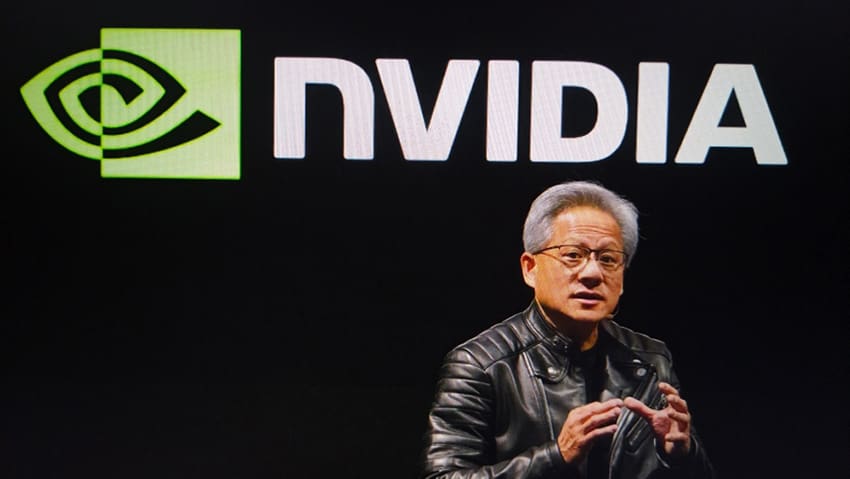
Nvidia has fired its loudest shot yet at the personal computing market, unveiling a new superchip that chief executive Jensen Huang says will turn the humble Windows PC into a “teammate” capable of running personal artificial intelligence agents.
Speaking on Monday at a keynote ahead of the Computex technology show in Taipei, Mr Huang likened the moment to the arrival of the smartphone. “This reinvention of the computer is as big of a deal as the reinvention of the phone into what we now know as the smartphone,” he told delegates as he lifted the lid on the RTX Spark.
The chip, which Nvidia describes as a “superchip for the era of personal AI agents”, will sit at the heart of a new generation of Windows machines from Asus, Dell, HP, Lenovo, Microsoft Surface and MSI when they reach shelves this autumn. Acer and Gigabyte are expected to follow with their own models shortly afterwards. According to Nvidia’s own briefing notes, Spark pairs a Blackwell GPU with an Arm CPU and up to 128GB of unified memory, delivering roughly one petaflop of AI performance on the desk.
For Britain’s small and medium-sized businesses, the implications are significant. On-device AI promises to run drafting, scheduling, customer-service triage and basic analytics without sending sensitive data into the cloud, a development that chimes with the productivity story Business Matters has been tracking in our recent coverage of small businesses embracing AI for quick productivity wins. It also raises the bar for the next hardware refresh, with finance directors now needing to weigh AI-capable specifications alongside the usual considerations of price and support.
The move puts Nvidia squarely in the path of Apple and Intel in a consumer PC market that has been searching for a story to tell since the post-pandemic slump. With an estimated stock-market value north of $5 trillion (£3.7 trillion), a milestone first reported in detail by CNN Business, Nvidia has both the firepower and the brand recognition to disrupt the established order on the high street as well as in the data centre.
The announcement was not without geopolitical noise. On Sunday, the US Department of Commerce moved to close a loophole that had allowed the most advanced Nvidia hardware, including its Blackwell processors, to reach subsidiaries of Chinese firms operating outside the mainland. Washington’s broader campaign to keep cutting-edge silicon out of Chinese hands has been a recurring drag on Nvidia’s growth narrative, even as demand elsewhere remains ferocious.
For UK owner-managers, the strategic question is no longer whether AI belongs in the workplace, but where it should live. As we noted in our analysis of why AI and green tech are vital to SME growth, the businesses that move first on practical, on-the-ground deployment tend to widen the gap on those that wait. That trend is already showing up in the lending figures, with our recent report on UK SME lending climbing to £17.5bn on the back of AI-led growth suggesting balance sheets are being shaped around the technology, not the other way round. Spark, if it delivers on Mr Huang’s billing, may finally make the case for putting that intelligence on the desk rather than in the cloud.
Whether it really represents a “smartphone moment” will depend less on the silicon and more on the software that ships with it. But after a decade in which the PC has felt increasingly like a commodity, Nvidia has at least given the industry something fresh to argue about.

Jamie Young
Jamie is Senior Reporter at Business Matters, bringing over a decade of experience in UK SME business reporting.
Jamie holds a degree in Business Administration and regularly participates in industry conferences and workshops.
When not reporting on the latest business developments, Jamie is passionate about mentoring up-and-coming journalists and entrepreneurs to inspire the next generation of business leaders.

Man charged after Downpatrick attack on police officer as two others arrested
Morgan Stanley initiates HawkEye 360 stock at overweight on SIGINT demand

Wintermute Adds Liquidity to Rapidly Expanding Prediction Markets


-

 NewsBeat5 days ago
Israel says it has killed new Hamas military leader in Gaza City airstrikes
-

 Tech5 days ago
NASA taps Blue Origin to deliver lunar rovers for Moon Base initiative
-

 Politics7 days ago
Bridgerton Season 5: Cast, Release Date And Everything We Know So Far
-

 Sports6 days ago
2026 NBA Finals schedule, odds: Knicks await Thunder or Spurs after winning East
-

 News Videos5 days ago
XRP *JUST* SUCCEEDED!!!! CLARITY ACT EXPOSED!!! (SHE EXPOSED IT)
-

 News Videos3 days ago
This is BROKEN! INSANE 5x MONEY CAR WASH WEEK! The NEW GTA Online UPDATE Today! (GTA5 New Update)
-
 Crypto World5 days ago
Micron Crosses $1 Trillion Market Cap as AI Demand Reshapes Memory Sector
-
 NewsBeat7 days ago
Hottest May day ever as London hits 34.8C in 2C leap from previous records
-

 Business5 days ago
Selena Gomez Reportedly Upset Over Benny Blanco’s Comments on Her ‘Terrible’ Diet
-
 Tech6 days ago
China assigns ID codes to 28,000+ humanoid robots
-

 Business7 days ago
BTS Sells Out Four Las Vegas Shows at Allegiant Stadium for ARIRANG World Tour
-

 Business6 days ago
Nikkei 225 Surges Past 65,000 for First Time as Iran Peace Hopes Fuel Record Rally
-

 Tech7 days ago
Microsoft’s quiet Claude Code retreat and the real cost of enterprise AI
-

 Tech3 days ago
Waymo dominates autonomous vehicle registrations as Tesla trails behind
-
 Entertainment6 days ago
‘Breaking Bad’ Star’s Easy-to-Binge 6-Part Crime Series Spin-Off Is Finally Heading to Free Streaming
-

 NewsBeat7 days ago
Crowds find riverside shade in York as temperatures soar
-
Tech5 days ago
The Samsung pay deal is the moment Korean unions changed register
-

 Tech7 days ago
Westone Audio and Etymotic Acquired by Fidelity Collective in Major IEM Market Move
-

 Tech5 days ago
Millions of AI agents imperiled by critical vulnerability in open source package
-

 Entertainment6 days ago
Days of our Lives 2-Week Spoilers May 25-June 5: Gwen Rages, Abe Confesses & 2 Tragic Anniversaries!
You must be logged in to post a comment Login