Kate Alessi, Google’s managing director for the UK and Ireland, has pushed back firmly against warnings that artificial intelligence will trigger widespread unemployment, insisting that the greater risk lies in failing to equip workers with the skills to thrive alongside the technology.
Speaking as Google unveiled a new national upskilling programme backed by £2 million in grant funding from Google.org, Alessi argued that history offered a reassuring precedent. Every previous wave of technological disruption, she noted, had prompted the same anxieties about disappearing jobs – and every time, the fears had proved overblown as new roles emerged to replace the old.
Her intervention comes at a pointed moment. In January, the Mayor of London, Sadiq Khan, cautioned that AI could bring about a new era of mass unemployment without proper oversight, while Bank of England governor Andrew Bailey drew comparisons with the Industrial Revolution, stressing the need for retraining and education on a significant scale.
Alessi does not deny that change is coming, but she frames it rather differently. Citing research from the policy consultancy Public First, she pointed out that roughly six in ten UK jobs are expected to be enhanced rather than eliminated by AI. The challenge, she maintained, is ensuring that people are prepared to step into the roles the technology creates, not simply bracing for the ones it displaces.
The figures suggest there is considerable ground to make up. According to new research commissioned by Google, although nearly two thirds of the UK population have tried AI tools, just one in ten consider themselves advanced users. Only a quarter felt they were deploying AI in ways that saved them meaningful time or gave them genuinely new capabilities.
Advertisement
“Most people are really only scratching the surface,” Alessi said.
To address that gap, Google is rolling out a series of practical initiatives. Alongside the grant funding, the company plans to run Gemini tours across universities, aimed at ensuring graduates enter the workplace with a working knowledge of AI. It will also stage a series of pop-up events branded as “squeeze the juice” bars in towns and cities around the country, designed to show ordinary users how to move beyond basic prompting to tackle more complex tasks – from automating routine admin to conducting in-depth research.
Jamie Young
Jamie is Senior Reporter at Business Matters, bringing over a decade of experience in UK SME business reporting.
Jamie holds a degree in Business Administration and regularly participates in industry conferences and workshops.
When not reporting on the latest business developments, Jamie is passionate about mentoring up-and-coming journalists and entrepreneurs to inspire the next generation of business leaders.
FILE PHOTO: A for sale sign is shown for a residential home in Encinitas, California, U.S. July 25, 2025.
Mike Blake | Reuters
A version of this article first appeared in the CNBC Property Play newsletter with Diana Olick. Property Play covers new and evolving opportunities for the real estate investor, from individuals to venture capitalists, private equity funds, family offices, institutional investors and large public companies. Sign up to receive future editions, straight to your inbox.
Advertisement
The all-important spring housing market is well underway, but expectations are falling short due to the war in Iran and its impact on both the U.S. economy and consumer sentiment.
Mortgage rates, which were previously forecast to be far lower this spring than last, are now much higher, and concerns over employment and inflation are throwing cold water on pent-up homebuyer demand.
Buyers in the first quarter of this year were more concerned about the economy and mortgage rates than they were about home prices, according to real estate agents who participated in the quarterly CNBC Housing Market Survey.
“They’re fearful of the war, they’re fearful of gas prices, [for] their job security,” said Faith Harmer, an agent in the Las Vegas metropolitan area.
Advertisement
The CNBC Housing Market Survey is a national inquiry of real estate agents selected randomly across the United States. Responses for the first-quarter survey were collected between March 24 and March 30. This quarter, 70 agents shared their insights.
When asked about their buyers’ primary concern, about one-third of agents said the economy, while another third said mortgage rates. The latter marked a big jump from just 26% in the fourth quarter.
Only 9% of agents in the first-quarter survey said prices were their buyers’ biggest concern, down from 18% in the previous period.
This should come as no surprise, as the average rate on the 30-year fixed mortgage hit a low of 5.99% the day before the Iran war started and then began to climb. It’s now hovering around 6.5%.
Advertisement
Still, while most agents said prices were either flat or falling, nearly twice as many agents, 29%, reported home prices rising during the first quarter than did in the previous quarter. Price dynamics can vary widely depending on the market and region of the country.
But affordability is not improving as much as most experts had forecast. When asked how affordability was hitting buyers, 19% of agents said it was causing them to get out of the market. That was up from just 11% at the end of last year.
More than half of agents reported at least one contract cancellation.
“Buyers that were on the fence and deciding to buy are now on the fence and going the other direction, saying, ‘I’m not going to buy,’” said Eric Bramlett, an agent in Austin, Texas.
Advertisement
As buyer demand drops, homes are sitting on the market longer. In the first quarter, 31% of agents reported that their listings were on the market for more than six weeks, compared with 26% in the fourth quarter.
“We just had one recently where they wanted what they wanted, and they wouldn’t come down to a price that the market could bear,” Harmer, the agent in Las Vegas, said. “So, in the end, they just pulled it off the market.”
Sellers are now more worried about that wait time. Fully 37% of responding agents said time on the market was their sellers’ top concern, compared with 30% at the end of last year.
That took share from price as sellers’ top concern, falling from nearly half of agents ranking it first to 39%.
Advertisement
Still, fewer agents reported price cuts than the previous quarter, but that may be the result of seasonal dynamics and the impact of lower mortgage rates in the middle of the first quarter, which gave buyers more purchasing power.
That may also be why fewer agents said they had to delist homes compared with the fourth quarter, when agents reported a slower-than-usual fall market with more frustrated sellers.
Even as concerns over the economy and interest rates rise, agents in the first quarter still said the market was either in the buyer’s favor or balanced. The share that called it a buyer’s market did drop quarter to quarter, from 42% to 36%, likely due to those new buyer headwinds – higher mortgage rates, the war and a weaker job market. And sellers are taking note.
“We’ve had two sellers who were planning on listing in May already decide, ‘Let’s hold, let’s search later in the summer for our next home to buy, and then we’ll try and list in the fall,’” said Dana Bull, an agent in the Boston area. “So they originally thought that the spring would be perfect for them, because it just felt like it was going to be the best time, and now they don’t feel as confident, and they want to wait and see.”
Advertisement
Just over half of agents surveyed said they expect the market to improve as the spring goes on, but that share is way down from the end of last year, when there was no war in the picture.
A higher share of agents said they expect the market to stay the same as last quarter, which is significant, given that the market is going from the historically slowest season for housing to the usually busiest.
Get Property Play directly to your inbox
CNBC’s Property Play with Diana Olick covers new and evolving opportunities for the real estate investor, delivered weekly to your inbox.
Chris Rhodes is set to retire in September following the completion of the £2.9bn takeover
Samuel Norman www.cityam.com
10:18, 07 Apr 2026
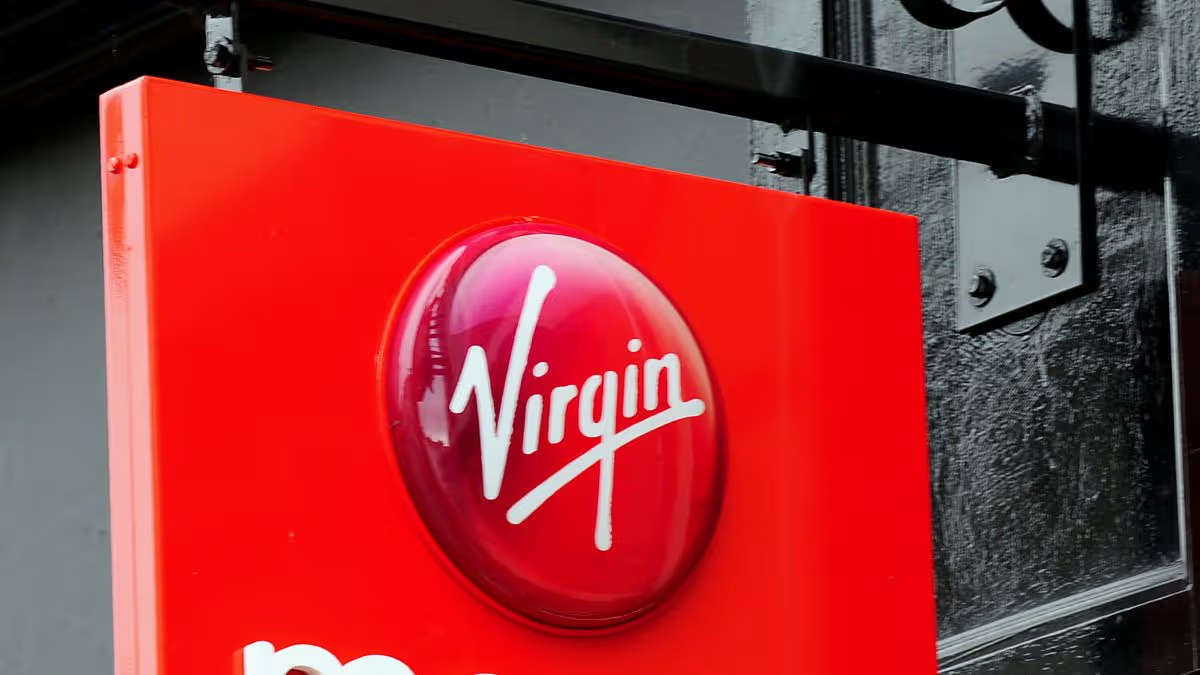
A general view of a branch of Virgin Money in Derby city centre.
The chief executive of Virgin Money is poised to leave the company later this year as the UK lender becomes fully integrated into the Nationwide umbrella.
Advertisement
Chris Rhodes assumed leadership at Virgin Money following its acquisition by Swindon-headquartered Nationwide in late 2024. Prior to this role, Rhodes held the position of finance chief at the UK’s largest building society for more than five years.
On Tuesday, Nationwide announced Rhodes would step down in September 2026.
Dame Debbie Crosbie, chief executive of Nationwide, said Rhodes “steadied and strengthened the Virgin Money business” over the past 18 months.
The building society giant struck a deal for the then FTSE 250-listed Virgin Money in March for approximately £2.9bn.
Advertisement
The firm subsequently secured around £2.3bn from the acquisition, which raised questions about Virgin’s leadership decision to accept a deal that some felt undervalued the bank, which held a £4.4bn book value, as reported by City AM.
The acquisition – finalised at the beginning of October – helped create the UK’s second-largest retail banking provider, ahead of NatWest and behind Lloyds Banking Group.
Nationwide confirmed the completion of a legal mechanism known as Part VII Transfer on Tuesday, which enables a bank to transfer all its customers, accounts, and contracts to another bank without requiring individual consent from every single customer.
his paves the way for Virgin Money and Nationwide to be merged into a single organisation, with suggestions that a replacement for Rhodes will not be necessary.
Advertisement
The procedure encompasses the whole of Clydesdale Bank, which is the legal entity that owned Virgin Money and Yorkshire Bank.
As part of the arrangement, Nationwide therefore assumes responsibility for customer accounts, mortgages, credit cards, data and banking contracts at the former brands.
English business magnate Sir Richard Branson established Virgin Money in March 1995, initially known as Virgin Direct.
Branson secured a windfall of approximately £724m from the transaction with Nationwide, which comprised £414m for his 14.5 per cent stake.
Advertisement
The balance of the sum derived from Nationwide agreeing to pay for the use of the Virgin Money brand – a fee that includes £15m in annual royalties for the first four years as well as a £250m exit fee, which positions the brand to vanish from the high street within six years from the date of the acquisition.
SYDNEY — Australia’s electric vehicle market has surged in 2026, with sales climbing sharply as more affordable models from Chinese brands challenge established players like Tesla. As of early April, EVs are on track to capture over 15% of new car sales nationally, driven by competitive pricing, improved range and expanding charging infrastructure.
With dozens of options now available, buyers face a crowded field spanning budget city cars to family SUVs and premium performance models. Factors such as driveaway pricing, real-world range, safety ratings, warranty coverage, charging speed and ownership costs help narrow the choices.
Here are five of the strongest contenders for Australian buyers in 2026, selected for their combination of value, popularity, performance and practicality based on recent sales data, expert reviews and awards from Drive Car of the Year and other sources.
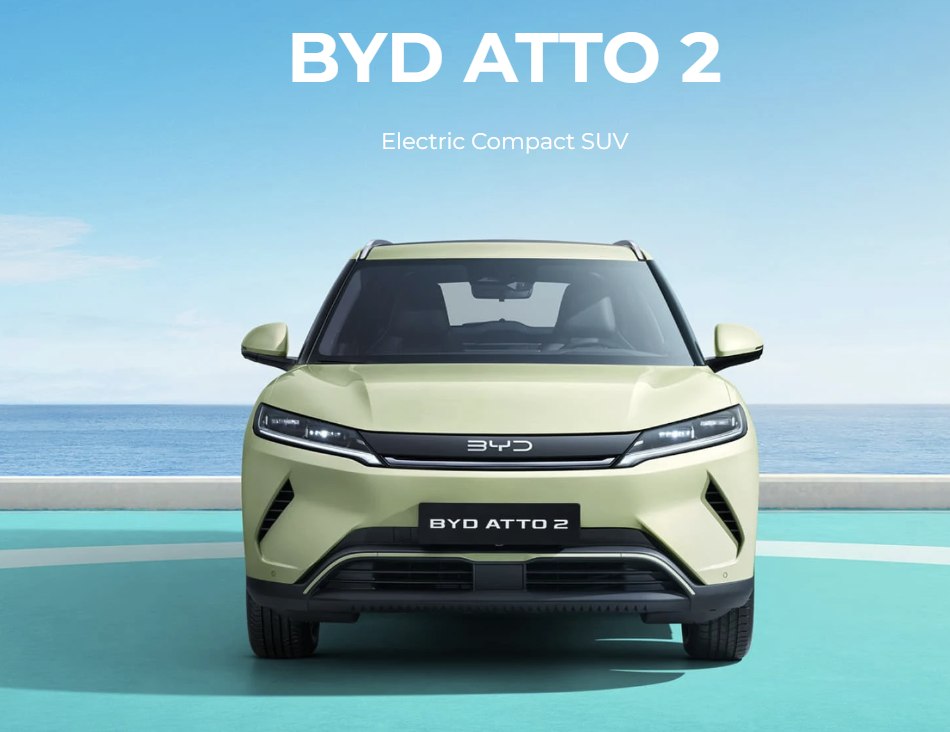
BYD Atto 2
BYD Atto 2 — Best budget small SUV under $40,000 The BYD Atto 2 has emerged as a standout winner in the sub-$40,000 electric vehicle category, earning recognition as the best electric vehicle under $40k at Drive Car of the Year 2026. Positioned below the Atto 3, this compact SUV delivers premium features without heavy cost-cutting, including a spacious interior, decent cargo capacity and competitive specifications for urban and suburban driving.
Driveaway prices start around $35,000–$40,000 depending on variant and state incentives, making it accessible for first-time EV buyers. It offers a WLTP range of approximately 400–450km in higher trims, with efficient battery management that performs well in mixed Australian conditions. Standard equipment includes advanced driver assistance systems, a large touchscreen infotainment setup and comfortable seating for five.
Advertisement
Buyers praise its build quality, quiet cabin and low running costs, with many noting it feels more premium than its price suggests. As one of the top-selling BYD models year-to-date, the Atto 2 benefits from the brand’s expanding dealer network and strong after-sales support. It suits commuters and small families seeking an affordable entry into electric motoring without sacrificing everyday usability.
Tesla Model Y
Tesla Model Y — Australia’s best-selling EV and versatile family SUV The Tesla Model Y continues to dominate Australian EV sales charts in 2026, with thousands of units moved monthly and year-to-date figures leading the pack. Available in rear-wheel-drive, Long Range and Performance variants, it offers exceptional range — up to 681km WLTP in top configurations — along with Tesla’s renowned Supercharger network, over-the-air software updates and minimalist yet highly functional interior.
Driveaway pricing begins around $58,900 for the base rear-wheel-drive model, positioning it as a premium yet attainable family hauler. Its spacious cabin, large boot and frunk provide genuine practicality, while acceleration and handling impress drivers seeking both efficiency and fun. Safety features, including Autopilot, contribute to strong ANCAP ratings.
Despite competition from Chinese rivals, the Model Y retains loyalty through its ecosystem, rapid charging capability and regular improvements delivered wirelessly. It appeals to tech-savvy buyers and those planning long road trips across Australia’s vast distances. Analysts credit its sustained popularity to proven reliability and the convenience of Tesla’s charging infrastructure.
Zeekr 7X — Premium electric SUV with standout value and features The Zeekr 7X has quickly gained attention as one of the most impressive new electric SUVs in Australia, often undercutting the Tesla Model Y on price while offering superior standard equipment and a luxurious cabin feel. Priced from around $57,900 before on-roads, it delivers up to 615km WLTP range and a refined driving experience that reviewers describe as belonging in a vehicle costing significantly more.
Advertisement
Buyers highlight the high-quality interior materials, advanced technology suite and comfortable ride quality. Strong sales figures place it among the top performers in early 2026, reflecting growing consumer confidence in Geely-owned brands. Features such as fast charging, comprehensive safety systems and spacious accommodation make it ideal for families or those upgrading from conventional SUVs.
The Zeekr 7X represents the maturing Chinese EV segment, combining cutting-edge battery technology with practical Australian-suited attributes like generous ground clearance and efficient thermal management for varying climates. It stands out for those wanting premium features at a more accessible price point than traditional European or American alternatives.
Geely EX5 — Affordable family SUV delivering exceptional value Frequently cited as unbeatable value around the $45,000 mark, the Geely EX5 offers a compelling package of space, equipment and efficiency that surprises many buyers. With competitive range figures around 475km WLTP and a feature-packed cabin, it provides a strong alternative for families seeking a mid-size electric SUV without stretching budgets.
Reviewers note its comfortable ride, modern infotainment and solid build quality, often comparing it favorably to more expensive rivals. Year-to-date sales have been robust, underscoring its appeal in a market increasingly dominated by value-driven Chinese offerings. The EX5 benefits from Geely’s engineering expertise, delivering refined dynamics and reliable performance suited to daily commuting and weekend getaways.
Advertisement
Its balance of price, practicality and technology makes it a smart choice for buyers prioritizing bang-for-buck in the growing affordable EV segment. Additional perks such as competitive warranties and improving dealer support further enhance its ownership proposition.
BYD Sealion 7 — High-performing electric SUV with strong sales momentum The BYD Sealion 7 has rocketed up the sales charts in 2026, consistently ranking near the top alongside the Tesla Model Y. This mid-size electric SUV combines striking design, impressive performance and a competitive range that appeals to buyers seeking style and substance.
Available in multiple variants with driveaway prices starting in the mid-$50,000 range, it offers strong acceleration, refined handling and a premium interior experience. Real-world range supports longer journeys, while fast-charging capability minimizes downtime. Its success reflects BYD’s aggressive pricing strategy and expanding model lineup tailored to Australian preferences.
The Sealion 7 excels as a versatile family vehicle with modern safety technology and efficient powertrain. High sales volumes indicate broad consumer acceptance, making it a safe recommendation for those wanting a well-rounded EV from a brand with proven local momentum.
Advertisement
Australia’s EV landscape in 2026 features rapidly falling prices, with several models now available under $35,000 driveaway and more than 20 options below $40,000. State and federal incentives, including potential FBT exemptions via novated leases (though under review), continue to influence affordability, alongside expanding public and home charging options.
Buyers should consider individual needs such as daily commute distance, family size, budget and access to charging. Real-world range can vary based on driving style, weather and load, while total cost of ownership benefits from lower fuel and maintenance expenses compared with petrol or diesel vehicles.
Experts recommend test-driving multiple options and checking current driveaway pricing, which fluctuates with promotions and on-road costs varying by state. Warranty coverage — often 6–8 years on vehicles and longer on batteries — provides reassurance, as does improving resale value as the market matures.
As charging infrastructure grows and battery technology advances, the five models highlighted represent a cross-section of today’s best choices: affordable entry points, proven best-sellers, value-packed newcomers and premium performers. Whether prioritizing cost savings, long-range capability or luxurious features, Australian buyers have more compelling electric options than ever in 2026.
Advertisement
The shift toward EVs reflects broader environmental goals and economic realities, with running costs significantly lower for most households. As sales momentum builds, these top contenders are helping drive the transition to cleaner, quieter motoring across the country.
At a time when global uncertainties are intensifying and crude oil prices remain volatile, the Reserve Bank of India (RBI) finds itself navigating one of the most complex policy environments in recent years. The upcoming monetary policy review is being closely watched, not just for rate decisions, but for signals on how the central bank plans to tackle rising external risks, currency weakness, and inflationary pressures.
Speaking with ET Now, Tanvee Gupta Jain, Chief India Economist, UBS underscored how dramatically the landscape has evolved since the previous policy meeting. “You are right in pointing out that the macro situation has changed a lot since the last policy. I mean that time the entire focus was on the having a trade deal with the US. We were signing so many of FTAs and the outlook was looking very good. But right now, I would say, the external risk have come to the forefront and especially at a time because Indian economy remains vulnerable to higher oil prices,” she said.
India’s dependence on imported crude—nearly 88% of its requirement—makes it particularly sensitive to geopolitical disruptions, especially in West Asia. With almost half of these imports sourced from the region, the ongoing conflict has raised concerns about both inflation and growth.
Jain pointed out that the RBI faces a delicate balancing act. “I would say at this point RBI has a lot more things to look out. Definitely the downside risks to growth are going up. Inflationary concerns are rising,” she said, adding that the central bank is likely to maintain a cautious stance. “In our base case we are expecting RBI to either continue with the neutral stance or announce a withdrawal of accommodation. At this point it is too early to expect the RBI to shift to a tightening stance because the things are still unfolding.”
Advertisement
According to UBS estimates, if crude oil averages around $100 per barrel, India’s GDP growth could moderate to about 6.3%, while inflation may climb above 5%, compared to earlier expectations of 7% growth.
Live Events
Currency Takes Centre Stage While interest rates and liquidity remain important, Jain emphasized that the real focus of the RBI’s policy response may lie elsewhere. “I would say that rather the more important point of view from an RBI policy tomorrow, more than liquidity and more than policy rate is, how are they going to tackle the INR weakness,” she said. The Indian rupee has underperformed in recent months, prompting the RBI to deploy regulatory measures such as curbs on FX positions and restrictions in the non-deliverable forward (NDF) market. However, Jain cautioned that these steps may not address deeper structural imbalances. “Recent moves by the RBI… are more regulatory, more to curb speculation. But they are not likely to fix the structural FX imbalances,” she explained.
Liquidity support measures such as FX swaps and open market operations (OMOs) are expected, but the broader challenge remains stabilizing the currency amid global volatility.
Echoes of 2013, But Not Quite the Same Market participants have drawn parallels between the current situation and the 2013 taper tantrum, when the rupee saw a sharp depreciation. Jain acknowledged the comparison but stressed key differences.
“A lot of investors… are comparing this current episode with the 2013 taper tantrum… But that time India was an outlier. Macro imbalances were quite high. This time around it is a global shock,” she said.
Advertisement
While India’s macro fundamentals are relatively stronger today, the scale of the external shock—particularly if oil prices remain elevated—poses a significant risk.
Limits of Traditional Tools On the question of whether tools like FCNR deposits could be reintroduced, Jain remained cautious. “Yes, NRI deposit is one option… maybe one of the last things you want to pull out from the bag,” she said, noting that such measures would only partially address the funding gap.
She also highlighted concerns around India’s current account deficit, which could widen significantly if oil prices remain elevated. “We would be staring at a current account deficit of more than $100 billion at this point in time,” she warned.
Stagflation Risks and Policy Trade-offs The possibility of a stagflationary environment—characterized by slowing growth and rising inflation—has also entered the conversation.
Advertisement
“I would say in a scenario what we are talking about maybe if oil prices sustain higher we could be looking at a stagflationary kind of scenario, not only for India but globally,” Jain said.
In such a scenario, she believes fiscal policy, rather than monetary policy, should take the lead. “It is always a fiscal policy which should do the heavy lifting more than the monetary policy,” she noted, arguing that rate hikes may not be effective against supply-driven inflation.
Government’s Role and Fiscal Space The government has already taken steps to cushion the impact, including a ₹10 per litre cut in fuel prices. However, Jain cautioned that there are limits to how much can be absorbed.
“I still think they still have some more fiscal space… but beyond a point you need to let the shock pass on to the consumers,” she said, pointing to the importance of demand adjustment in managing macro imbalances.
Advertisement
Two Scenarios, Diverging Outcomes Looking ahead, Jain outlined two possible paths depending on how the geopolitical situation evolves.
If the crisis is short-lived and oil stabilizes around $95–$100 per barrel, GDP growth could settle at around 6.3%, with inflation rising moderately. However, in a prolonged disruption scenario with oil at $150 per barrel, growth could slow sharply to 5.5%, while inflation may breach the RBI’s upper tolerance band of 6%.
“I think the impact is largely asymmetric and most important is the duration of the impact,” she said, emphasizing that both the level and persistence of oil prices will determine the trajectory of India’s macroeconomic outlook.
As the RBI prepares to announce its policy decision, experts feel this is not just another policy review, but a defining moment that could shape the economic narrative in the months ahead.
Buy-side hedge professionals conducting fundamental, income oriented, long term analysis across sectors globally in developed markets. Please shoot us a message or leave a comment to discuss ideas.DISCLOSURE: All of our articles are a matter of opinion, informed as they might be, and must be treated as such. We take no responsibility for your investments but wish you best of luck.
Analyst’s Disclosure: I/we have a beneficial long position in the shares of STLA either through stock ownership, options, or other derivatives. I wrote this article myself, and it expresses my own opinions. I am not receiving compensation for it (other than from Seeking Alpha). I have no business relationship with any company whose stock is mentioned in this article.
Seeking Alpha’s Disclosure: Past performance is no guarantee of future results. No recommendation or advice is being given as to whether any investment is suitable for a particular investor. Any views or opinions expressed above may not reflect those of Seeking Alpha as a whole. Seeking Alpha is not a licensed securities dealer, broker or US investment adviser or investment bank. Our analysts are third party authors that include both professional investors and individual investors who may not be licensed or certified by any institute or regulatory body.






















































You must be logged in to post a comment Login