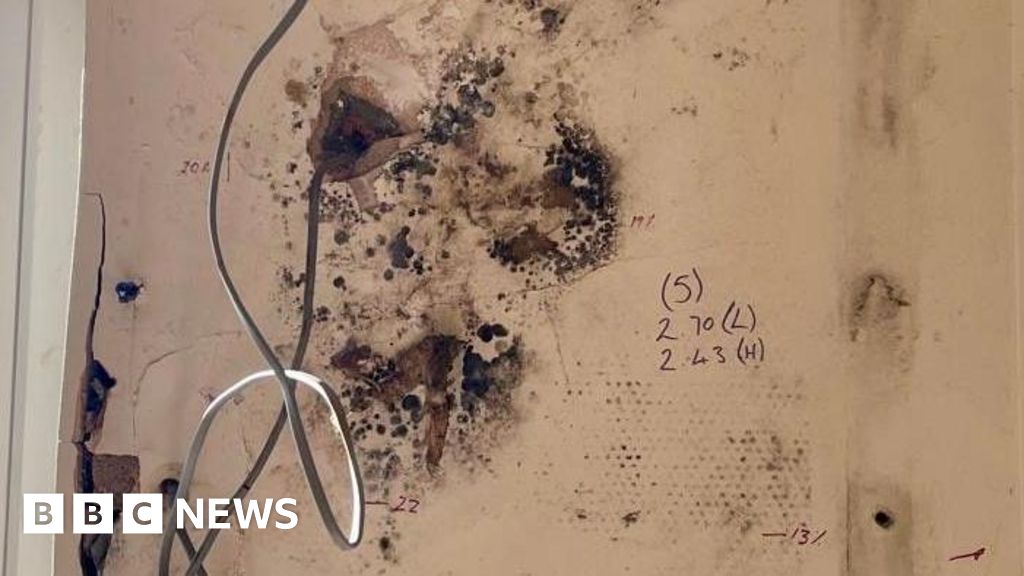
He said the “sheer amount of money” that may have been fraudulently claimed, estimated at £44m, “serves only to underline further that the known levels of fraud in the scheme, as our committee warned earlier in the year, must be being significantly underestimated”.
With an investment banking cash and derivatives trading background, Binary Tree Analytics (‘BTA’) aims to provide transparency and analytics in respect to capital markets instruments and trades. BTA focuses on CEFs, ETFs and Special Situations, and aims to deliver high annualized returns with a low volatility profile. We have been investing for over 20 years after obtaining a Finance major at a top university.
Analyst’s Disclosure: I/we have no stock, option or similar derivative position in any of the companies mentioned, but may initiate a beneficial Long position through a purchase of the stock, or the purchase of call options or similar derivatives in JCPB over the next 72 hours. I wrote this article myself, and it expresses my own opinions. I am not receiving compensation for it (other than from Seeking Alpha). I have no business relationship with any company whose stock is mentioned in this article.
Seeking Alpha’s Disclosure: Past performance is no guarantee of future results. No recommendation or advice is being given as to whether any investment is suitable for a particular investor. Any views or opinions expressed above may not reflect those of Seeking Alpha as a whole. Seeking Alpha is not a licensed securities dealer, broker or US investment adviser or investment bank. Our analysts are third party authors that include both professional investors and individual investors who may not be licensed or certified by any institute or regulatory body.
WASHINGTON — Skywatchers and astronauts alike captured the annual Lyrid meteor shower in spectacular fashion as it peaked Tuesday night into Wednesday, with bright streaks lighting up dark skies on the ground and unique perspectives from 250 miles above Earth aboard the International Space Station.
Stunning Lyrid Meteor Shower 2026 Captured in Breathtaking Views From Earth and Space
The Lyrids, one of the oldest known meteor showers with records dating back nearly 3,000 years to ancient China, reached maximum activity around 19:15 UTC on April 22 as Earth plowed through debris left by long-period comet C/1861 G1 (Thatcher). Under favorable conditions with a slim waxing crescent moon setting early and minimal interference, observers reported seeing 10 to 20 meteors per hour, including occasional fast-moving fireballs that outshone Venus.
From the ground, amateur and professional photographers across the Northern Hemisphere documented the display with long-exposure cameras, revealing colorful trails against starry backdrops. Reports flooded in from locations in North America, Europe and Asia, where clear weather allowed prime viewing after midnight and before dawn on April 22. The radiant point in the constellation Lyra rose higher in the northeastern sky as morning approached, increasing the chance of spotting meteors.
Advertisement
NASA astronaut Jessica Meir, aboard the orbiting laboratory, shared jaw-dropping photographs snapped from the station’s cupola observation module. Using a three-second exposure, Meir captured a Lyrid meteor streaking through Earth’s upper atmosphere, appearing as a sharp flash against the planet’s curved horizon. City lights glowed below, while a faint red arc of airglow — caused by solar radiation exciting atmospheric molecules — framed the scene.
“Caught a Lyrid from above,” Meir posted alongside the image, highlighting the rare orbital vantage point that shows meteors burning up from outside the atmosphere rather than looking up from within it. Similar views from past missions, including footage by astronaut Don Pettit in 2012, have shown clusters of meteors ablating as bright points against the nighttime Earth.
The Lyrid shower is active from roughly April 14-30, but activity builds to a narrow peak centered on April 22. This year’s timing aligned well with relatively dark skies, as the moon was only about 27% illuminated and set before prime viewing hours in many locations. Experts from NASA and the American Meteor Society noted that while the zenithal hourly rate — the theoretical maximum under perfect conditions with the radiant overhead — hovers around 18, real-world sightings often range from 5 to 20 per hour depending on light pollution and observer location.
Unlike more prolific showers such as the Perseids or Geminids, the Lyrids are not known for producing massive storms, though occasional outbursts have historically pushed rates toward 100 meteors per hour. In 2026, no such surge materialized, but the shower still delivered reliable bright meteors traveling at about 30 miles per second. Many left short, glowing trains rather than long persistent ones.
Advertisement
Scientists explain that the particles responsible are tiny bits of dust and rock, some no larger than a grain of sand, shed by Comet Thatcher during its 415-year orbit around the Sun. When these enter Earth’s atmosphere at high speed, friction causes them to heat up and vaporize in a flash of light — the “shooting star” effect. Larger fragments can create fireballs that fragment or produce sonic booms if they survive longer.
Ground-based observations benefited from networks like the Global Meteor Network, which provides real-time fireball data and helps triangulate trajectories. Skywatchers were encouraged to face northeast after midnight, lie back in a reclining chair or blanket, and allow eyes to dark-adapt for at least 20-30 minutes. Binoculars or telescopes are unnecessary and can even limit the wide-field view needed to catch fast meteors.
The dual perspective — Earth and space — offered a fuller scientific picture. From the ISS, astronauts witness meteors against the thin blue line of the atmosphere, sometimes seeing them enter from directions not visible from any single ground location. Such images help researchers study atmospheric entry dynamics and meteoroid populations.
The 2026 Lyrids coincided with heightened public interest in astronomy, coming just days after Earth Day and amid growing awareness of near-Earth objects. No significant risks were associated with the shower; the particles are too small to reach the surface as meteorites in any meaningful quantity.
Advertisement
For those who missed the peak, the shower continued at lower rates through late April, overlapping slightly with the emerging Eta Aquariids in early May. Experts recommend checking weather forecasts and finding dark-sky sites away from city lights for the best experience. Apps and websites from NASA, the American Meteor Society and timeanddate.com provide tailored visibility predictions by location.
Photographs and videos shared widely on social media amplified the event’s reach. Images from rural Canada, European countrysides and U.S. national parks showed vivid streaks cutting through the Milky Way. Meanwhile, Meir’s ISS shot, released April 20-21, quickly went viral, offering a perspective that reminded viewers of humanity’s place in a dynamic solar system.
The Lyrids hold historical significance as one of the few showers with ancient documentation. Chinese astronomers noted them as far back as 687 B.C., describing “stars falling like rain.” Modern science has refined our understanding, linking the display directly to Comet Thatcher, discovered in 1861.
As the shower waned Wednesday, stargazers already looked ahead to stronger summer displays. Yet the 2026 Lyrids stood out for their favorable moon conditions and the striking space-based imagery that bridged ground observers with those living and working off-planet.
Advertisement
NASA and international partners continue to monitor meteoroid environments for both scientific value and spacecraft safety. The ISS and satellites routinely encounter small particles, though shielding protects crews and systems. Data from showers like the Lyrids contribute to models predicting debris risks.
For amateur astronomers, the event reinforced simple joys of backyard observing. No special equipment was required beyond patience and a clear view of the sky. Families and educators used the shower as a teaching moment about comets, orbits and the protective role of Earth’s atmosphere.
In the hours following the peak, reports confirmed solid activity without record-breaking numbers. Some lucky observers spotted colorful meteors — greens, blues and yellows — resulting from different chemical compositions in the incoming particles.
The combination of terrestrial and orbital captures provided a complete visual narrative of the Lyrid meteor shower 2026. From dark fields on Earth to the cupola windows of the ISS, the ancient comet’s dust trail created a shared moment of wonder across continents and altitudes.
Advertisement
As April 22 turned to 23, the Lyrids gradually diminished, but their images lingered online, inspiring late viewers to step outside for any remaining trails. With the shower’s end approaching by April 30, astronomers reminded enthusiasts that the night sky offers continuous celestial events for those willing to look up.
The successful documentation from both Earth and space highlighted advancing camera technology and international collaboration in astronomy. Future missions may include dedicated meteor observation campaigns from lunar orbit or deep-space habitats, building on experiences like Meir’s.
For now, the 2026 Lyrids delivered exactly what skywatchers hoped for: a reliable spring display under good conditions, enhanced by perspectives that only human spaceflight can provide. Whether seen as fleeting streaks from a backyard or dramatic flashes above the glowing Earth, the meteors reminded everyone of the constant, gentle bombardment our planet endures — and the beauty it creates in the process.
The first new version of the car rolled off the production line in 2001
Neil Lancefield, Press Association Transport Correspondent and Hannah Baker South West Business Editor
00:01, 23 Apr 2026
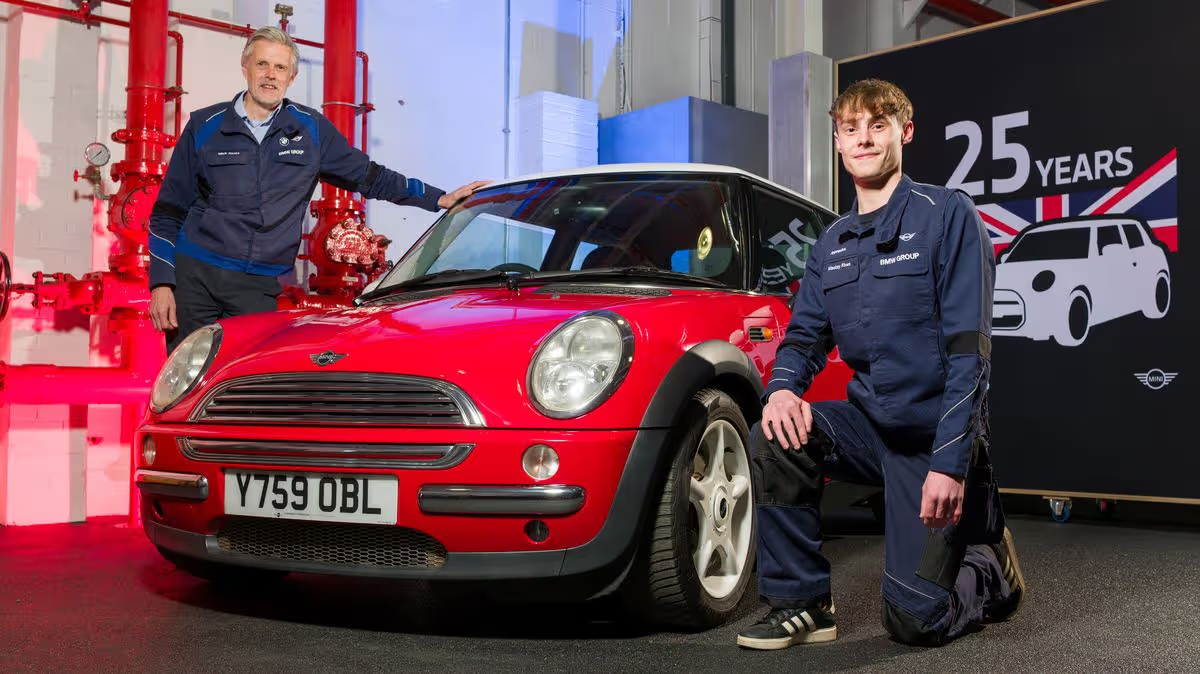
Mick Rivers physical logistics manager, and his son Mackay Rivers, maintenance apprentice, at BMW Group Plant Oxford as the Mini celebrates 25 years of modern production(Image: Richard Dawson/PA Media Assignments)
BMW Group has hailed the “global success” of the Mini as it marked the 25th anniversary of the modern version. The first new generation Mini rolled off the production line at the company’s factory in Oxford on April 26, 2001.
This was “the start of a new chapter” for a car that was already “firmly established as a cultural icon”, BMW Group said. Nearly 4.7 million Minis have been built in Oxford over the past quarter of a century – with body parts made at BMW’s Swindon factory since early 2001 – and the cars have been exported to more than 100 countries.
Advertisement
More than 3,000 people are employed across the Oxford and Swindon plants.
Markus Gruneisl, BMW Group’s chief executive for UK manufacturing, said: “This 25-year milestone is a proud moment for Mini and for everyone involved in its production here in the UK.
“From the very beginning, our plants in Oxford and Swindon have been at the heart of Mini’s global success, combining exceptional craftsmanship with innovation.
“Above all, it is our people – their creativity, expertise and pride in what they do – that continue to make Mini so special.”
Advertisement
The first Mini was launched in 1959 to meet demand for affordable motoring.
The small cars – easy to manoeuvre and with an unusual shape – soon became popular, featuring as getaway cars in movie The Italian Job and being driven by pop stars and fashion legends.
In February, Swindon’s Mini factory announced a new partnership with global logistics giant GXO. BMW Group appointed the US-headquartered company to manage operations at the site on Bridge End Road.
The Wiltshire plant produces parts and panels for cars that are then assembled at its group facility in Oxford and at other international facilities within its network.
Advertisement
The Swindon site, which employs 500 staff and spans more than 400,000 sq m, has been a cornerstone of UK automotive manufacturing since 1955.
It plays a critical role in the global production network for cars, manufacturing key body components and sub-assemblies such as doors, bonnets, tailgates and fenders for Mini vehicles, including the Mini Cooper 3 and 5 door hatch and the Mini convertible.
Good day, and welcome to the AMERISAFE First Quarter 2026 Earnings Call. Today’s conference is being recorded. At this time, I would like to turn the conference over to Kathryn Shirley, Chief Administrative Officer. Please go ahead.
Thank you, operator, and good afternoon, everyone. Welcome to the AMERISAFE 2026 First Quarter Investor Call. If you have not received the earnings release, it is available on our website at amerisafe.com.
Today, this call is being recorded. A replay of today’s call will be available. Details on how to access the replay are in the earnings release.
During this call, we will be making forward-looking statements intended to fall within the safe harbor provided under the securities law. These statements are based on current expectations and assumptions that are subject to various risks and uncertainties. Actual results may differ materially from the results expressed or implied in these statements.
If the underlying assumptions prove to be incorrect or as the results of risks, uncertainties and other factors, including factors discussed in the earnings release, in the comments made during today’s call and in the Risk Factors section of our Form 10-K, Form 10-Q and other reports and filings with the Securities and Exchange Commission. We do not undertake any duty to update any forward-looking statements.
SAN FRANCISCO — xAI’s popular Grok chatbot faced scattered connectivity issues and response delays Thursday as some users reported errors while trying to interact with the AI on the web, mobile apps and integrated X platform, though official status pages indicated services remained largely operational with no major declared incidents.
Complaints surfaced Wednesday evening and early Thursday, with users describing messages such as “Sorry about that, something didn’t go as planned. Please try again” or temporary unavailability for chat responses and image generation. A handful of posts on X directly asked whether Grok was down, while others noted slower replies or failed prompts even for simple queries.
xAI’s official status dashboard at status.x.ai showed “Service fully operational” for Grok (Web), Grok on iOS and Android, and API endpoints as of early Thursday. The company reported no active incidents and high uptime over the past 30 days. Independent monitoring sites presented a mixed picture: some detected user-reported spikes in problems linked to high demand, while others confirmed normal operation.
Downdetector and similar trackers logged increased reports in the past 24 hours, with the majority centered on the mobile app followed by the website. Common issues included delayed responses, login hiccups and temporary “high demand” messages that prevented immediate access for some free-tier or lighter-subscription users. StatusGator noted hundreds of user-submitted reports attributing slowdowns to surging traffic rather than outright server failure.
Advertisement
The timing coincided with growing global interest in Grok, which has seen rapid adoption since its launch and subsequent model updates. As one of the more uncensored and real-time capable AI assistants, Grok often experiences traffic spikes during major news events, viral memes or when competing chatbots face their own limitations. Analysts suggested that recent model enhancements and expanded features could be driving heavier usage, occasionally straining resources even without a full outage.
xAI has not issued a public statement on the latest reports. In past episodes of high demand, the company has encouraged users to wait a few minutes and retry, noting that backend systems automatically scale but can still show temporary friction for some accounts. SuperGrok subscribers and X Premium users have generally reported fewer interruptions, pointing to possible prioritization in resource allocation during peak loads.
For affected users, common troubleshooting steps include refreshing the browser, restarting the app, clearing cache, checking internet connection or trying the service at a less busy time. Some also switched between grok.x.ai, the X app integration and mobile versions to regain access. Persistent problems may warrant checking xAI’s status page or waiting for automatic resolution, as many prior “outages” resolved within one to two hours without intervention.
This is not the first time Grok has drawn attention for availability questions. Earlier in 2026, brief disruptions occurred around major updates or high-traffic periods, often resolved quickly. Unlike some competitors that have suffered prolonged global blackouts, Grok’s issues have typically been localized or demand-related rather than widespread infrastructure failures.
Advertisement
The chatbot’s integration with the X platform adds another layer: when X experiences heavy usage, Grok responses embedded in the app can feel slower even if core servers are stable. Users in different regions, including Asia and Europe, reported varying experiences, with some in high-demand time zones noticing more delays.
xAI continues to invest heavily in infrastructure, including new data centers and optimized inference systems, to support growing demand. Elon Musk, xAI’s founder, has publicly emphasized the goal of making Grok maximally truth-seeking and available to as many users as possible, while balancing compute costs and performance.
Industry observers noted that AI services worldwide face similar challenges as adoption surges. Rapid growth in conversational AI means companies must constantly balance user experience against backend capacity. Grok’s real-time knowledge via X and less restrictive personality have made it especially popular, sometimes leading to usage patterns that stress systems more than purely productivity-focused tools.
For subscribers wondering about paid tiers, SuperGrok and higher X Premium plans often provide priority access during congested periods. Free users may encounter rate limits or “try again later” prompts more frequently. xAI has not detailed exact thresholds but has hinted at ongoing improvements to fairness and scalability.
Advertisement
As of Thursday morning, most users appeared able to access Grok normally after short waits, suggesting the reported problems were intermittent rather than a systemic outage. Monitoring sites showed reports tapering off after initial spikes, consistent with past demand-driven fluctuations.
The episode highlights the evolving nature of consumer AI services. What once were occasional server issues have become tests of how well companies manage explosive growth. Grok’s team has a track record of transparent communication via status pages and quick fixes, helping maintain user trust even during rough patches.
Meanwhile, competitors like OpenAI’s ChatGPT, Google’s Gemini and Anthropic’s Claude have faced their own intermittent availability questions in recent months, underscoring that no major AI chatbot is immune to scaling pains. Users have grown accustomed to checking dedicated status dashboards rather than assuming permanent downtime.
For those still encountering errors, experts recommend trying incognito mode, a different device or network, and monitoring official channels. If problems persist beyond a few hours, reaching out through X support or xAI feedback channels can help surface individual account issues.
Advertisement
Grok’s development team continues pushing model improvements, with hints of larger versions and enhanced capabilities on the horizon. Such updates often precede temporary strain as new features attract fresh waves of users testing limits.
In the broader context, Thursday’s scattered reports serve as a reminder of how reliant millions have become on AI assistants for everything from quick facts to creative tasks. Brief hiccups, while frustrating, rarely signal deeper problems when official systems show green across the board.
As traffic normalizes, most users should regain seamless access. xAI’s focus on rapid iteration suggests any underlying demand pressures will be addressed through expanded capacity rather than reduced features.
The situation remains fluid, but current indicators point to high demand rather than a full-scale outage. Users are advised to stay patient, try again shortly, and consult status.x.ai for the latest confirmed information.
Advertisement
Grok’s resilience amid rapid growth reflects both its popularity and the challenges of delivering cutting-edge AI at global scale. For now, the service appears operational for the vast majority, with only pockets of users navigating temporary speed bumps on an otherwise busy Thursday.
The broader market has undergone a sharp correction, with the Sensex falling nearly 8% from its 52-week high. In contrast, the BSE 150 MidCap index has been relatively resilient, slipping only around 3%. But beneath this surface stability lies considerable damage — 42 midcap stocks in the index have corrected between 25% and 50%.To understand the deeper trend, we analysed FII activity in the March 2026 quarter, using shareholding data available for about 135 midcap companies. The numbers offer valuable insight into foreign investor sentiment amid the selloff.Read more

















































You must be logged in to post a comment Login