
Business
ICC moves ahead with disciplinary proceedings against chief prosecutor Khan, WSJ reports





The local share market has suffered its worst loss in more than a month on fears the Middle East conflict could delay US interest rate cuts.

Rolls-Royce has been crowned the nation’s most iconic trade mark in a public poll marking 150 years since Britain became one of the first countries in the world to formalise the protection of brands, the Intellectual Property Office (IPO) has announced.
The Goodwood-built marque pipped Radio Caroline, Twinings and Cadbury to the top spot in a survey that drew around 2,000 nominations, with the public asked to choose the brands they felt had most shaped daily life in the UK. Rounding out the top ten were Bass, Burberry, the Transport for London roundel, Calpol, Mini and the BBC, a roll-call that reads less like a marketing list and more like a cultural autobiography of post-war Britain.
The poll coincides with the 150th anniversary of the UK trade mark register, which opened for business on 1 January 1876 following the passage of the Trade Marks Registration Act 1875. The very first mark to be registered, on day one, was the Bass & Co red triangle label, a piece of intellectual property still in use today and still, as one respondent succinctly observed, attached to “good beer”.
For the SME community, the milestone is more than ceremonial. The register now protects more than 2.5 million marks, with around 200,000 fresh applications received in the past year alone, a record-breaking figure that points to the value modern entrepreneurs place on owning their identity in an increasingly crowded marketplace.
More than 400 trade marks filed before 1900 remain live on the register, a remarkable testament to brand longevity. Bovril (1886), Drambuie (1893), Lyle’s Sugar (1887), Bird’s Custard Powder (1891), Rose’s Lime Juice Cordial (1876) and Woodward’s Gripe Water (1876) are all still trading on the goodwill first banked by their Victorian founders. Even Lyle’s Golden Syrup carries with it the gloriously biblical “Out of the Strong Came Forth Sweetness”, registered in 1884 and quietly enduring on supermarket shelves ever since.
Other Victorian filings border on the prophetic. Kodak was registered in 1888, just as mass photography was emerging, while a mark named “Millennium” was filed in January 1892, more than a century before the date it would come to evoke.
Adam Williams, chief executive of the IPO, said the anniversary underscored the role of trade marks as the bedrock of consumer confidence. “Trade marks are the foundation of brand trust. For 150 years, they’ve helped British businesses, from corner shops and market stalls to app stores and global online retailers, build lasting relationships with consumers and stand behind the quality of their products,” he said. “The tens of thousands who register a trade mark each year are making a statement: we’ve built something good, and we’re putting our name to it.”
Tom Reynolds, chief executive of the British Brands Group, described trade marks as “a legal promise” between business and customer. “Some trade marks have become so embedded in our lives that they’ve become shorthand for the thing itself. Think of a tick, a swoosh, or even a silver lady on a car bonnet. Instantly, you know exactly what you’re getting. That’s the power of a trade mark, and it’s the foundation every iconic brand is built on.”
Kelly Saliger, president of the Chartered Institute of Trade Mark Attorneys (CITMA), said the application surge confirmed the UK’s continuing pull as a centre of enterprise. “Brand recognition is a powerful asset, and a registered trade mark protects it, acting as a marker in the sand that warns other businesses to steer clear, and giving the owner the means to take action against those who come too close.”
Rolls-Royce, whose Silver Ghost was officially dubbed “the best car in the world” in 1913, has long since transcended the motor industry. Julian Jenkins, director of sales and brand at Rolls-Royce Motor Cars, said the result reflected the way the marque had become “a global shorthand for the best of the best in any field”. Matthew Hill, head of intellectual property at Rolls-Royce plc, added that the recognition acknowledged the company’s “continuing commitment to powering, protecting and connecting people everywhere”.
Radio Caroline, the offshore station that sailed into broadcasting history from the North Sea in 1964 and was finally registered as a trade mark in 1992, was second on the list. Station manager Peter Moore said the recognition was “a testament to our past, present and future”, while listeners reminisced about passing O-Levels to its broadcasts.
Twinings, which has traded from the same Strand address since 1706 and registered its mark in 1908, was third. Chief brand officer Heather Hartridge said the logo was “more than just a logo, it is a symbol of the craftsmanship, expertise and care that goes into every blend”.
Cadbury, first traded in 1824 and registered in 1886, was fourth. Equity marketing director Phil Warfield said the brand’s “iconic glass and a half” remained “a promise to our customers for generations”. Ewa Chappell, legal and corporate affairs director at Budweiser Brewing Group UK/Ireland, current custodians of Bass, noted that the original red triangle had been “copied so often that it proved just how powerful the demand for Bass truly was”.
Burberry’s check, born in the trenches of the First World War, made the list alongside the Transport for London roundel, first protected in 1917. TfL customer director Emma Strain said the symbol had “guided Londoners and visitors safely through the capital as a trusted and globally renowned emblem” for more than a century.
Calpol, the small bottle that has soothed generations of feverish children, sat eighth, with one parent describing it simply as “the first thing you reach for at 3am”. Mini, the diminutive motor that defined British car-making from 1959 onwards, was ninth. Head of MINI Jean-Philippe Parain said the brand “continues to stand for timeless design, go-kart handling, and distinctive personality”. The BBC completed the top ten.
When the 1875 Act took effect, applications arrived by post, were entered by hand, and could only protect marks used on physical goods. Today’s register tells a rather different story. Services as well as goods are covered, and registrable marks now include holograms, motion marks, multimedia marks and patterns of light. Applications cover categories that would have bewildered a Victorian clerk, from snack products derived from insects and edible ant larvae to wearable smartphones, humanoid robots, downloadable virtual handbags, and perfumes for use in virtual worlds.
For SMEs, the practical message is that trade mark protection has never been more accessible, or more strategically important. Registration costs a fraction of the goodwill it preserves, lasts for ten years and can be renewed indefinitely, providing the legal armoury to defend brand value as businesses scale.
After 150 years, Britain’s trade mark system has, in the IPO’s own words, “no sign of standing still”. For the small businesses building tomorrow’s iconic brands, that should be a reassuring thought.

Amy Ingham
Amy is a newly qualified journalist specialising in business journalism at Business Matters with responsibility for news content for what is now the UK’s largest print and online source of current business news.
Nine Entertainment has signed a two-year broadcast rights agreement with the National Basketball League for an undisclosed amount.
Business
Meta Installs Software to Track US Employees’ Mouse Movements and Keystrokes for AI Training
NEW YORK — Meta Platforms Inc. is rolling out new tracking software on the computers of its U.S.-based employees to capture mouse movements, clicks and keystrokes, using the data to train artificial intelligence models aimed at building autonomous AI agents capable of performing everyday work tasks, according to internal memos obtained by Reuters.

The tool, known as the Model Capability Initiative or MCI, will operate on a curated list of work-related applications and websites. It will also take occasional snapshots of screen content to provide context for the interactions, a staff AI research scientist posted Tuesday in an internal channel for the company’s Meta SuperIntelligence Labs team.
Meta’s push reflects the intensifying race among tech giants to develop more capable AI agents that can navigate computer interfaces like humans — selecting dropdown menus, using keyboard shortcuts and handling multi-step digital workflows. Current models often struggle with these practical interactions despite advances in language understanding.
“If we’re building agents to help people complete everyday tasks using computers, our models need real examples of how people actually use them — things like mouse movements, clicking buttons, and navigating dropdown menus,” Meta spokesperson Andy Stone said in a statement. “To help, we’re launching an internal tool that will capture these kinds of inputs on certain applications to help us train our models.”
The initiative forms part of a broader effort rebranded as the Agent Transformation Accelerator, according to a separate memo from Meta CTO Andrew Bosworth. Bosworth told staff the company aims for a future where AI agents primarily handle routine work while humans direct, review and refine their performance. The data collected will help agents learn to identify when human intervention occurs and improve autonomously in subsequent attempts.
Meta emphasized that the tracking data will not be used for employee performance evaluations or any purpose beyond AI model training. The company said safeguards are in place to protect sensitive content, though specifics were not detailed in the memos.
The announcement quickly sparked internal debate and external backlash. Employees expressed concerns about privacy, surveillance and the long-term implications for job security in discussions on internal forums. Some viewed the program as turning workers into unwitting trainers for systems that could eventually automate their roles. Online reactions ranged from accusations of dystopian workplace monitoring to pragmatic acceptance that high-quality interaction data remains scarce for training reliable agents.
Privacy advocates and labor groups raised questions about consent, data minimization and potential misuse. While Meta limits the tool to U.S.-based full-time employees and contingent workers on work devices and approved applications, critics worry about the precedent for broader workplace surveillance in the AI era. Similar tracking tools have drawn scrutiny at other companies, though Meta’s explicit link to training replacement-level agents has amplified the reaction.
The move comes as Meta ramps up its massive AI investments. The company plans to spend roughly $140 billion on AI infrastructure and related efforts in 2026, nearly double the previous year’s outlay. CEO Mark Zuckerberg has repeatedly positioned AI as central to the company’s future, from improving content recommendations on Facebook and Instagram to developing advanced agents that could transform productivity tools.
Building effective computer-using agents requires vast amounts of real-world demonstration data showing not just what actions to take but the precise sequences of mouse clicks, keystrokes and navigation decisions humans make. Public web data or synthetic examples often fall short in replicating the nuances of enterprise software, internal tools and dynamic interfaces. By harvesting anonymized interaction data from its own workforce, Meta aims to close that gap without relying solely on expensive human annotation or simulated environments.
Industry experts note that Meta is not alone in pursuing this approach. Several tech firms and AI startups are exploring ways to capture human-computer interaction data, either through voluntary contributions, synthetic generation or controlled monitoring. However, Meta’s scale — with tens of thousands of U.S. employees using diverse internal systems — offers a rich, varied dataset that could accelerate progress.
The timing coincides with Meta’s aggressive hiring in AI research while simultaneously managing efficiency initiatives across other parts of the business. Reports have circulated about potential layoffs in non-AI divisions, adding to employee anxiety that the tracking program could contribute to workforce reductions as agents mature.
Meta has a history of heavy internal data collection for product improvement, from user behavior on its social platforms to developer interactions with its tools. The company maintains strict policies on data handling and has faced past regulatory scrutiny over privacy practices, leading to billions in fines and settlements. Officials insist the new tool includes protections against capturing or retaining personal or highly sensitive information.
Still, the rollout highlights tensions in the AI development race. On one side, the need for high-fidelity training data to create genuinely useful agents; on the other, growing societal and employee discomfort with pervasive monitoring. European privacy regulations such as GDPR impose stricter limits on workplace surveillance, potentially complicating similar initiatives for Meta’s international staff.
As AI agents evolve, their ability to autonomously handle tasks like scheduling, data entry, report generation or customer support workflows could reshape white-collar work. Meta’s internal memos frame the effort positively as empowering employees to focus on higher-value work by offloading routine activities. Critics counter that it risks accelerating job displacement without adequate transition support.
The program’s effectiveness will depend on the quality and diversity of the captured data. Mouse trajectories, click patterns and keystroke dynamics provide rich signals about intent, hesitation and workflow efficiency that text-based logs alone cannot convey. Occasional screen snapshots add crucial context, such as the layout of specific applications or the content being manipulated.
Meta has not disclosed technical details about data storage, anonymization techniques or deletion policies. Employees were informed of the rollout but it remains unclear whether participation is mandatory or if opt-out options exist for certain roles.
The development underscores how Big Tech companies are increasingly turning inward for AI training resources as external data sources face legal challenges, quality issues or saturation. Similar efforts have included using customer service transcripts, code repositories and internal documents, but granular interaction data represents a newer frontier.
For now, the Model Capability Initiative is limited to U.S. employees and specific applications. Its success could influence whether Meta expands the approach or inspires competitors to follow suit. As the technology industry grapples with the dual challenges of advancing AI capabilities and addressing ethical concerns around labor and privacy, Meta’s experiment will be closely watched.
Company leaders have signaled confidence that transparent communication and strict boundaries will alleviate concerns. Whether the initiative ultimately boosts AI performance enough to justify the surveillance tradeoff remains an open question that will likely be tested in the coming months as agents trained on the new data enter internal testing.
In the broader context of 2026’s AI boom, Meta’s decision reflects a pragmatic — if controversial — step toward solving one of the field’s persistent bottlenecks: teaching machines not just what to do, but exactly how humans do it in the messy reality of daily digital work.

British small and medium-sized enterprises are facing a fresh squeeze on margins after official figures revealed inflation jumped to 3.3 per cent in March, the first hard evidence of how the Middle East conflict is feeding through to the real economy.
Data released by the Office for National Statistics on Wednesday showed the Consumer Prices Index accelerated from 3 per cent in February, in line with City forecasts and marking the first uptick in the headline rate since December. It is also the first inflation reading to capture the surge in global oil and gas prices since hostilities erupted two months ago, with Brent crude up roughly 30 per cent and trading around the $100-a-barrel mark for several weeks.
The pain at the pump was unmistakable. Petrol rose by 8.6 pence per litre to an average of 140.2p, its highest since August 2024, while diesel, the lifeblood of the haulage and trades sector, leapt by 17.6p to 158.7p, a level not seen since November 2023. For the nation’s 5.5 million SMEs, many of whom rely on vans, lorries and company cars to service customers, it amounts to a significant and largely unhedgeable operating cost.
Air fares added further heat, climbing 10 per cent month-on-month against a 0.3 per cent fall over the same period a year earlier. That is the steepest February-to-March rise since 2016, although the ONS noted that prices were collected before the outbreak of war and were inflated by the timing of long-haul flights immediately after Easter.
Grant Fitzner, chief economist at the ONS, said: “Inflation climbed in March, largely due to increased fuel prices, which saw their largest increase for over three years. Airfares were another upward driver this month, alongside rising food prices. The only significant offset came from clothing costs, where prices rose by less than this time last year.”
Economists at the International Monetary Fund and elsewhere have warned that the headline rate could climb through the summer and potentially peak above 5 per cent, more than double the Bank of England’s 2 per cent target. Core inflation, which strips out volatile food and energy components, edged down to 3.1 per cent from 3.2 per cent, but services inflation, the measure most closely watched by Threadneedle Street, ticked up to 4.5 per cent from 4.3 per cent. Food prices were 3.7 per cent higher year-on-year, a number that will ripple through hospitality margins.
The Bank of England’s monetary policy committee is expected to leave Bank Rate on hold at 3.75 per cent when it meets next Thursday, though rate-setters are facing an uncomfortable dilemma. Martin Beck, chief economist at WPI Strategy, said: “With inflation likely to remain above target for longer, the Bank of England is unlikely to cut rates any time soon. But equally, the case for further tightening remains weak. A prolonged period of policy on hold looks the most likely outcome, leaving the economy exposed to the trajectory of the conflict and its impact on energy markets.”
Peter Dixon, senior economist at the National Institute of Economic and Social Research, went further, arguing that the Bank “cannot risk appearing complacent, and we therefore expect one precautionary [quarter point] rate increase over the coming months”. A move of that kind would raise the cost of variable-rate borrowing for millions of homeowners and small business owners, and set back those attempting to step onto the property ladder.
There are, however, glimmers of resilience. GDP grew by a stronger-than-expected 0.5 per cent in February and unemployment fell unexpectedly to 4.9 per cent in the three months to February, down from 5.2 per cent, suggesting that, for now at least, the labour market is holding up despite the external shock.
Rachel Reeves, the chancellor, struck a sympathetic note: “This is not our war, but it is pushing up bills for families and businesses. That’s why it’s my number one priority to keep costs down.” The Treasury has so far extended support to a limited number of rural households dependent on heating oil and has widened an existing scheme aimed at cutting energy bills for businesses, though SME lobby groups are already pressing for more targeted relief for firms whose fuel and logistics costs cannot easily be passed on to customers.
For British SMEs, the immediate message from March’s data is stark: energy-driven cost inflation is back, interest rate relief is further away than many had hoped, and the next phase of the Middle East conflict will do as much to shape the outlook for cash flow and investment as anything decided in Westminster.
Amy Ingham
Amy is a newly qualified journalist specialising in business journalism at Business Matters with responsibility for news content for what is now the UK’s largest print and online source of current business news.
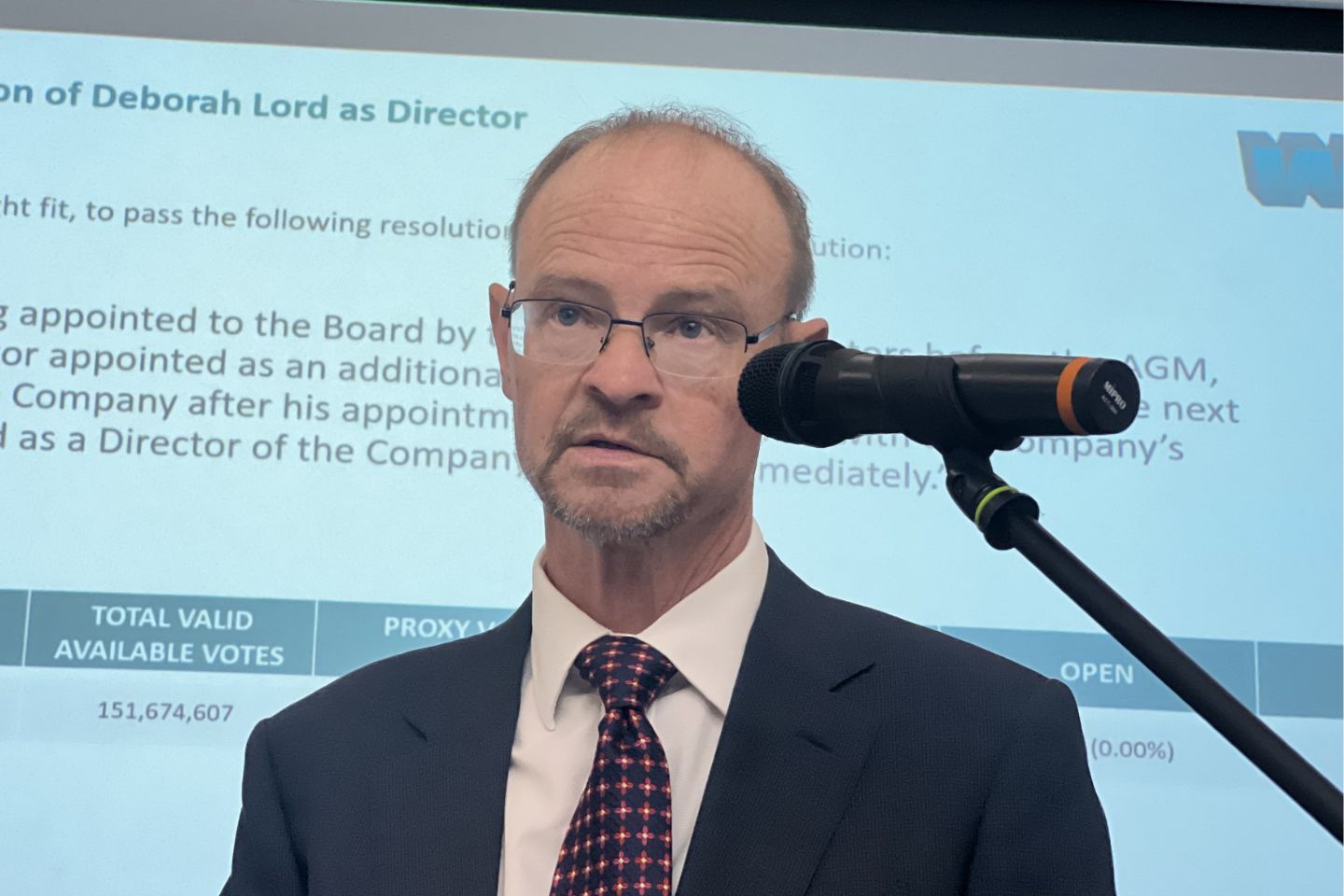
The battle for Wiluna Mining Corporation and its lucrative gold portfolio is heating up again, with management seeking to dodge a Creasy-led control attempt and change its name ahead of a relisting.

Earnings call transcript: Nordea Bank Q1 2026 sees robust growth amid challenges
Houlihan Lokey: Restructuring Countercyclical, But Efficient Alternatives Exist

The move could further delay payouts to millions of drivers who were mis-sold motor finance.
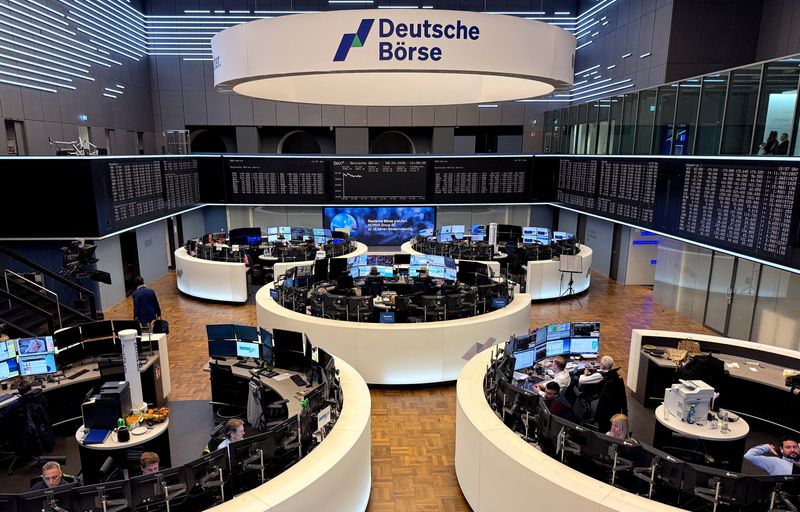

European shares steady after Trump extends Iran ceasefire; corporate earnings on tap
Josh Frey’s 2026 NFL Mock Draft

5 Money Rules That Will Change Your Life & Create Financial Freedom

PEEL report rates North Yorkshire Police good in 6 areas

Manchester United reach agreement with Casemiro over contract clause amid transfer speculation

Steven Gerrard disagrees with Gary Neville over ‘shock’ Chelsea and Arsenal claim | Football

US brings back mandatory military draft registration


-

 Fashion5 days ago
Weekend Open Thread: Theodora Dress
-

 Sports5 days ago
NWFL Suspends Two Players Over Post-Match Clash in Ado-Ekiti
-

 Politics5 days ago
Palestine barred from entering Canada for FIFA Congress
-
Entertainment2 days ago
NBA Analyst Charles Barkley Chimes in on Ice Spice McDonald’s Fiasco
-

 Business3 days ago
Powerball Result April 18, 2026: No Jackpot Winner in Powerball Draw: $75 Million Rolls Over
-

 Politics3 days ago
Zack Polanski demands ‘council homes not luxury flats for foreign investors’
-

 Crypto World4 days ago
Russia Pushes Bill to Criminalize Unregistered Crypto Services
-

 Politics2 days ago
Gary Stevenson delivers timely reminder to register to vote as deadline TODAY
-

 Tech3 days ago
Auto Enthusiast Scores Running Tesla Model 3 for Two Grand and Turns It Into Bare-Bones Go-Kart
-

 Tech6 days ago
‘Avatar: Aang, The Last Airbender’ Leaked Online. Some Fans Say Paramount Deserves the Fallout
-
 Business6 days ago
Creo Medical agree sale of its manufacturing operation
-

 Crypto World4 days ago
Russia Introduces Bill To Criminalize Unregistered Crypto Services
-
 Crypto World3 days ago
Kelp DAO rsETH Bridge Hack Drains $292M as DeFi Losses Top $600M in Two Weeks
-

 Sports6 days ago
British climbers complete new route in Swiss Alps
-

 Tech6 days ago
Ford EV and tech chief leaving automaker
-

 Sports6 days ago
“Felt Much Better Today”: Josh Hazlewood Opens Up On His Recovery Win Over LSG
-

 Business6 days ago
Cheaper Doritos and Lays helps PepsiCo win back struggling snackers
-
 Entertainment6 days ago
Clavicular Says Streaming May Not Work Without Substances
-

 Entertainment7 days ago
Ruby Rose Accuses Katy Perry Of Sexual Assault, Police React
-

 Crypto World12 hours ago
New York sues Coinbase, Gemini over prediction market offerings
You must be logged in to post a comment Login