Connect with us
DAPA Banner

Business

If you want to have good governance, you cannot be in a yes-sir mode: Sashidhar Jagdishan

Published

on

If you want to have good governance, you cannot be in a yes-sir mode: Sashidhar Jagdishan
HDFC Bank will convene board meetings to review past decisions following Atanu Chakraborty‘s resignation as chairman citing “values and ethics”, MD & CEO Sashidhar Jagdishan told ET in an interview. The bank will fix gaps, tighten controls and act “ruthlessly” against misconduct. Edited excerpts:

How do you assess the damage due to this episode?

It’s not that we are facing this for the first time. We will have to convert this threat into an opportunity. In the past we knew the areas to be remediated and fixed. This case is like fighting a ghost. We had never anticipated this in the five and a half years where Atanu Chakraborty was at the helm. On March 18, when we confronted the issue of his resignation, we saw these two contentious lines. We said that we have a well-established process which you have instituted so intensely. If you have concerns, put it there and we collectively address it. To which he said, I do not have any to share. If you do not have any to share, then you please remove the lines. To which he was steadfast and he refused to budge. That is where it stands.

Over the years, has he ever raised any of these ethics and values issues for discussion?
No, he did not. (Under) the system, wherein all of us comment, there are no issues which can be stratified into ethics or personal values. There may be some errors, which have been addressed. Is there a complete agreement in terms of addressing these issues? Absolutely. Is there a difference in the proportionality of the action? Yes, some of us feel a response is fair, others feel it is harsh or too lenient. But trust me, there is nothing which is not addressed.

Advertisement

Also Read: HDFC Bank: What exactly was it? Atanu Chakrabarty’s shock exit baffles global investors


What is your understanding about why he did what he did?
I wish I had known. I wish the board knew. The very next day, on the 19th, Chakraborty said in a conversation that his resignation was routine in nature and that there is no wrongdoing in the bank’s operations. So, he seemed to have retracted his position-probably thinking he had done something he should not have. Unfortunately, the damage was already created and we have to confront it. Our performance will speak for itself. It’s possible he may come out with new issues. I’m sure there is nothing new, because many of these are already addressed or are being addressed. If something extremely new arises, we will take it up. Will there be differences in views between you and me? Absolutely. This is not a governance issue.
Were there differences between him and the management over the years?
Yes, and I am not apologetic about it because if you want to have good governance, you cannot be in a yes-sir mode. You must have views. We are a democratic organisation. If we collectively strongly believe that there are certain things which are not right, I will speak up. We have always had a lot of constructive discussions. It is something that, if at all, I have been more at the receiving end rather than the one which is giving from the other side.

Also Read: HDFC Bank to review decisions, ensure full transparency: CEO, Sashidhar Jagdishan

Following this development, shareholders have lost money. Will you be seeking any legal remedy?
This event has caused a lot of angst within the company, board, shareholders, more so the retail shareholders. I am not a legal expert, but as we speak, we are engaged with one to examine all possibilities. The company has a certain process and that will take its course.

How do you plan to remedy the situation?
We will convene multiple board meetings over the next month to get the views of all directors on decisions taken over time. We will re-examine them, evaluate the action points and see where we need to improve. This issue was not of our making; it was thrust upon us. We will take stock of past matters and address all issues-existing or new-without hiding anything. If these are operational issues, we will tighten design and controls. If these are conduct issues, we will be ruthless. I acknowledge that an institution of this size will have issues, but we have robust systems to address them. Even if, hypothetically, he (Atanu Chakraborty) raises a fresh issue that isn’t visible to us today but was visible to him, we will address it.

Advertisement

Also Read: HDFC Bank sacks 3 senior executives over Credit Suisse AT1 bond mis-selling allegations

Will you be offering yourself as CEO for a third term when your second ends in October this year?
I am able and willing, but I would prefer the board to complete the process and decide. I’m not the decision maker here.

Can you tell us what went wrong with the Dubai operations? You have acted against a few employees.
HDFC Bank operates in the Middle East through branches in Dubai and Bahrain-customer engagement typically happens in Dubai, while transactions are booked in Bahrain. This model had been followed for years. In June 2023, the Dubai Financial Services Authority clarified that clients who are continuously engaged in Dubai must also be onboarded there, even if accounts are booked in Bahrain. The issue surfaced after losses on Credit Suisse AT1 bonds, when some investors raised concerns about onboarding gaps. Our assessment is that this was a technical lapse in documentation and regulatory interpretation-not fraud or mis-selling. We initiated an internal review and took staff accountability actions through our disciplinary and board-level committees, with a right to appeal. There is no fraud, no misappropriation, and no integrity issue that has surfaced so far.

How do you see the synergies of the merger between HDFC and HDFC Bank?
I believe the merger is the best thing that could have happened. The housing industry will drive growth over the next few years. For an institution of this scale and distribution, if we didn’t manufacture home loans, we would have missed a massive runway opportunity. Presently we penetrate about 4-5% of our customers with home loans. Over the next 5-10 years, that could be 8-10%, which itself will be massive. Once you start the customer’s primary banking relationship with us, the impact becomes very significant over time. The entire management recognises we’ve gone through a lot of pain because we took on assets but no deposits. Building deposits to substitute borrowings that are running down isn’t easy, especially in a liquidity environment that has been extremely tight since July 2023. Some investors know the engine has to slow temporarily. They’ve said, ‘We’ve stayed with them through this; let’s step aside, invest elsewhere for quick returns, and come back when the visibility on what’s committed improves.’

Advertisement

You have talked about restructuring the organisation. Can you tell us more?
We review the leadership and organisation structure periodically; it’s time for a refresh. But these are all simple business-as-usual, tactical strategies, which energise the organisation periodically.

What is that one message that you want to convey to the shareholders as well as the depositors?
Our values, ethos and governance principles remain intact. The institution is financially strong. Day-to-day issues-whether errors and omissions or conduct-are addressed promptly and appropriately. The future is bright, we’re well positioned post-merger, and we’re very positive on India compared with parts of the world facing turmoil. The economy is in a better place, and we’re best positioned to capture the opportunities over the next couple of years.

Continue Reading
Click to comment

You must be logged in to post a comment Login

Leave a Reply

Business

CRF: A Soft Market Will Hurt Its Premium

Published

on

CRF: A Soft Market Will Hurt Its Premium

CRF: A Soft Market Will Hurt Its Premium

Continue Reading

Business

UK CFO confidence hits lowest level since Covid as Iran war rattles business outlook

Published

on

UK CFO confidence hits lowest level since Covid as Iran war rattles business outlook

Britain’s finance chiefs have retreated into full defensive mode as the fallout from the war in Iran sends confidence tumbling to levels not recorded since the country was plunged into its first coronavirus lockdown more than six years ago.

Two of the most closely watched barometers of corporate sentiment, Deloitte’s monthly CFO survey and BDO’s output index, paint a picture of a business community bracing for prolonged turbulence rather than plotting for growth. The message from boardrooms is unambiguous: conserve cash, cut costs and wait for the storm to pass.

Deloitte’s survey places CFO confidence at a six-year low, with geopolitics once again cited as the single greatest external threat. The firm’s chief economist, Ian Stewart, said the Middle East conflict had delivered a genuine shock, dragging optimism back to the darkest days of the pandemic. For finance leaders accustomed to navigating uncertainty, the comparison is a sobering one.

BDO’s figures tell a similarly bleak story. Business output contracted last month for the first time since February 2021, with services and manufacturing bearing the brunt. Scott Knight, the firm’s head of growth, pointed to soaring energy and commodity prices as the principal culprits, noting that a fragile truce between Washington and Tehran had offered only fleeting respite.

The knock-on effects are already filtering through the economy. Higher commodity costs are eroding manufacturers’ margins, while both businesses and consumers have begun tightening their belts in anticipation of rising inflation. Deloitte found that business leaders are most anxious about the war’s impact on energy prices, inflation and interest rates, all of which economists now expect to climb this year. The spectre of increased cyber-attacks, potentially orchestrated by state-sponsored actors, is adding a further layer of unease.

Advertisement

The labour market is feeling the chill. BDO’s employment index has slumped to a 15-year low as firms signal that inflationary pressures will curtail their ability to take on new staff. Hiring demand, the accountancy firm warned, is likely to remain subdued for the remainder of 2026. A separate report from KPMG and the Recruitment and Employment Confederation found that permanent placements and worker demand continued to fall in March, albeit at a gentler pace than in preceding months. Wage growth, meanwhile, was described as marginal.

There is a slender thread of hope. Jon Holt, chief executive of KPMG, suggested that the prolonged decline in hiring activity may be starting to level off. Yet he was quick to caution that any meaningful recovery hinges on greater clarity over the trajectory of the conflict and its wider economic consequences. Without that, he warned, hiring decisions and capital investment risk being deferred once more, stalling any sustained improvement in the jobs market.

For now, the overwhelming priority among Britain’s finance chiefs, many drawn from the FTSE 100 and FTSE 250, is balance sheet resilience. The vast majority told Deloitte they intend to pare back both spending and recruitment in the months ahead. As Stewart put it, rarely in the past 16 years have UK CFOs been so single-mindedly focused on controlling costs.

It is a posture born not of panic but of hard-headed pragmatism. Until the geopolitical fog lifts and energy markets find some semblance of stability, corporate Britain appears content to hunker down and ride it out.

Advertisement

Amy Ingham

Amy is a newly qualified journalist specialising in business journalism at Business Matters with responsibility for news content for what is now the UK’s largest print and online source of current business news.

Advertisement
Continue Reading

Business

OpenAI doubles down on London with first permanent office despite Stargate U-turn

Published

on

OpenAI doubles down on London with first permanent office despite Stargate U-turn

The decision by OpenAI to plant its flag in King’s Cross with a permanent London headquarters, just days after walking away from a major data centre project in the northeast, tells you something important about where the real value lies in Britain’s artificial intelligence ambitions: it is in people, not power grids.

The ChatGPT developer has secured an 88,500 sq ft space in the Regent Quarter capable of housing 544 staff, a clear signal that it intends to more than double the roughly 200 employees it currently has working across research, engineering, policy, marketing and sales in the capital. Around 30 of those are researchers, and the company has committed to making London its largest research hub outside the United States.

The move comes at a politically awkward moment. Last week OpenAI shelved its Stargate data centre plans for Cobalt Park in North Tyneside, citing high energy costs and uncertainty around the future of UK copyright law. That project would have seen some 8,000 Nvidia chips deployed in a designated AI growth zone and was widely regarded as a cornerstone of Sir Keir Starmer’s ambitions to bolster Britain’s sovereign computing capacity.

Benedict Macon-Cooney, chief AI and innovation officer at the Tony Blair Institute, captured the tension neatly, noting that whilst Britain excels as a hub for talent, it continues to struggle to secure the large-scale AI infrastructure needed to compete globally.

But not everyone views the data centre retreat as the more telling indicator. Saul Klein, founder of venture capital firm Phoenix Court, argued that signing a commercial property lease is a far stronger commitment than headline-grabbing announcements about hyperscale compute. Leasing office space and filling it with people, he suggested, is not something a company can easily walk away from.

Advertisement

Klein’s firm has dubbed the King’s Cross corridor the world’s third most productive technology cluster after San Francisco’s Bay Area and Beijing, home to thousands of venture-backed companies and more than 200 unicorns. The neighbourhood already counts Google DeepMind, Meta, University College London, the Francis Crick Institute and the Alan Turing Institute among its residents, alongside homegrown AI success stories such as Synthesia and Wayve. Its proximity to King’s Cross, St Pancras and Euston also gives it unrivalled connectivity across Britain and into mainland Europe.

OpenAI is not alone in eyeing London for expansion. Anthropic, its closest rival, is understood to be in discussions with both the London mayor Sir Sadiq Khan and the government about growing its own UK presence, where it also employs around 200 people.

The government, meanwhile, has sought to reinforce Britain’s credentials in fundamental AI research, announcing £40 million in funding over six years for a new blue-sky research laboratory.

Phoebe Thacker, OpenAI’s global head of data research programmes and London site lead, pointed to the depth of British talent and the growing adoption of AI tools across UK businesses and institutions as key drivers of the investment.

Advertisement

For the UK’s technology sector, the message is encouragingly clear: even when infrastructure plans falter, the gravitational pull of world-class talent remains irresistible.


Amy Ingham

Amy is a newly qualified journalist specialising in business journalism at Business Matters with responsibility for news content for what is now the UK’s largest print and online source of current business news.

Advertisement
Continue Reading

Business

Founders lobby Treasury for capital gains tax break on start-up reinvestment

Published

on

Founders lobby Treasury for capital gains tax break on start-up reinvestment

Some of Britain’s most prominent entrepreneurial voices are pressing the Treasury to introduce a targeted tax incentive designed to keep the proceeds of successful exits circulating within the domestic start-up ecosystem, rather than drifting into passive wealth management or overseas opportunities.

The proposal, which has been dubbed “repeat entrepreneur relief”, would allow founders who sell shares in their companies and reinvest the gains into a new venture within twelve months to defer capital gains tax indefinitely. The liability would only crystallise when the new shares were eventually sold without further reinvestment.

The idea has been put forward in various forms by the Founders Forum Group, Schroders and UK Private Capital as part of a recent Treasury consultation on the tax treatment of entrepreneurs. Each submission makes broadly the same case: that the UK’s tax framework does a reasonable job of supporting businesses as they grow, but does far too little to encourage founders to recycle their capital and experience once they have cashed out.

UK Private Capital, the trade body representing venture capital and private equity firms, argued there is a compelling rationale for aligning tax incentives with the post-exit phase, when founders hold significant capital, possess hard-won operational expertise and face decisions about where to base themselves and where to deploy their money next.

The Founders Forum Group, co-founded by Brent Hoberman and Jonnie Goodwin, drew a comparison with the American Qualified Small Business Stock scheme, under which founders pay no capital gains tax on gains of up to $10 million or ten times their original investment. The group described that exemption as a primary driver of the reinvestment culture that has long defined Silicon Valley, where exit proceeds are routinely funnelled straight back into the next generation of companies.

Advertisement

A survey conducted by the Founders Forum Group found that nearly nine in ten founders said such a measure would make them more likely to reinvest in the UK, with more than seven in ten describing the effect as significant.

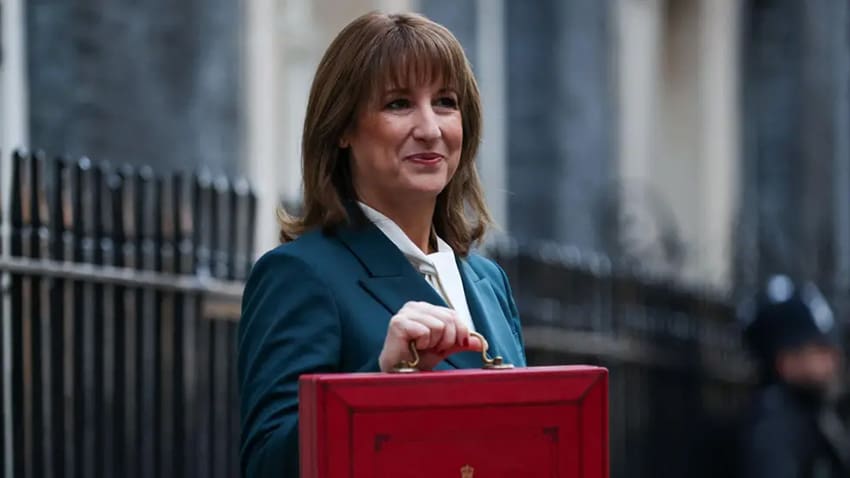
The lobbying comes at a sensitive moment for the government’s relationship with the entrepreneurial community. Since taking office, Chancellor Rachel Reeves has progressively increased the rate of business asset disposal relief, the levy formerly known as entrepreneurs’ relief, from its longstanding rate of ten per cent to fourteen per cent last year, then to eighteen per cent from this month. The standard capital gains tax rate remains at twenty-four per cent.

Many founders have argued that the increases make Britain a less attractive place to build and exit a business, though a number of tax analysts have countered that the previous relief was poorly targeted and did relatively little to encourage genuinely productive reinvestment.

The government has sought to balance these changes with fresh incentives at the earlier stages of the company lifecycle. In November, Reeves extended a package of measures making it easier for founders to offer equity to employees and raise capital, provisions that came into force last week.

Advertisement

A Treasury spokesperson pointed to these steps as evidence that the government has the right economic plan in place, highlighting changes to the enterprise management incentive scheme and venture capital tax schemes that are expected to support around £100 million of additional investment annually.

Whether the Treasury is willing to go further and address the post-exit gap that the lobbying groups have identified remains to be seen, but the volume of submissions suggests the argument for repeat entrepreneur relief is gathering serious momentum.


Jamie Young

Jamie Young

Jamie is Senior Reporter at Business Matters, bringing over a decade of experience in UK SME business reporting.
Jamie holds a degree in Business Administration and regularly participates in industry conferences and workshops.

When not reporting on the latest business developments, Jamie is passionate about mentoring up-and-coming journalists and entrepreneurs to inspire the next generation of business leaders.

Advertisement

Continue Reading

Business

New ADF chief and first female army boss

Published

on

New ADF chief and first female army boss

Changes at the top of Australia’s defence force have been announced by Prime Minister Anthony Albanese, including the appointment of the army’s first female chief of army.

Continue Reading

Business

Inpex diverts Ichthys cargo

Published

on

Inpex diverts Ichthys cargo

Japanese LNG producer Inpex will divert a condensate cargo from its Ichthys project off the WA coast to domestic refiners in the east, in a bid to support the nation’s fuel security.

Continue Reading

Business

Another $1.5b into health budget

Published

on

Another $1.5b into health budget

A further $1.5 billion will be spent on health infrastructure and the establishment of a new central coordination office as the Cook government pledges to “unlock” more than 900 hospital beds.

Continue Reading

Business

Two industrial estate buildings set for approval at site focusing on nuclear and clean energy

Published

on

Business Live

Leconfield Industrial Estate is key Cumberland ‘business cluster’

Two new buildings on a Cumbrian industrial estate could get the green light if the plans are approved next week.

The plans for two new buildings on a Cumbrian industrial estate (Image: ONE Environments via Cumberland Council planning application)

Two new buildings on a Cumbrian industrial estate could get the green light if the plans are approved this week.

Advertisement

Members of Cumberland Council’s planning committee are due to meet at The Civic Centre in Carlisle on Wednesday to consider the application for two sites at Leconfield Industrial Estate in Cleator Moor.

It is proposed that they would be for general industrial and ancillary office use with 6,356 square metres floorspace and associated car parking, hard and soft landscaping, infrastructure and biodiversity enhancements.

The planning application is being placed before the committee because the site exceeds two hectares in area.

It is recommended that members approve planning permission subject to planning conditions and agree a legal agreement to secure:

Advertisement
  • a Travel Plan monitoring fee of £6600;
  • a contribution of £74,032 towards the highway improvements at Moresby Road, Cleator Moor Road and Main Street; and
  • a contribution £30,039 towards the cost of junction improvement works at Cleator Moor Road and Overend Road.

According to the report Leconfield is an established industrial estate which comprises 17.6 hectares in area and is strategically located within Cleator Moor, between the town centre and the built-up area to the north-west.

It states: “It forms part of what is known as Cleator Moor Innovation Quarter (CMIQ), a ‘business cluster’ for the new nuclear and clean energy sectors, as a focus for collaboration, innovation and diversification.

“The estate currently accommodates some 20 industrial and warehouse units of varying sizes, a number of which are vacant.

“There are also several vacant or cleared plots. This established industrial estate has been in use since the 1940s and more recently has suffered from a period of decline.”

The application requests planning permission for two large buildings which will break down further into: Unit nine – four 658 square metre units, and Unit 12 – five 710 square metre units.

Advertisement

It adds: “The intention is for businesses to grow and move nearby within the wider estate into larger more self-contained accommodation. Plots nine and 12 will be ‘Grow On’ units and will cater for businesses in their growth stages and are sized accordingly.”

To find all the planning applications, traffic diversions, road layout changes, alcohol licence applications and more in your community, visit the Public Notices Portal.

Continue Reading

Business

Element 25 taps investors for $18m

Published

on

Element 25 taps investors for $18m

Osborne Park-based Element 25 has announced another capital raise in order to further expand its Butcherbird manganese project in the Pilbara.

Continue Reading

Business

Oil shock threat looms over Dalal Street rally

Published

on

Oil shock threat looms over Dalal Street rally
India’s stock indices and its currency face reversal risks from last week’s relief-inducing firmness after the US threatened to blockade the Hormuz Strait following the breakdown of peace talks between the US and Iran, spotlighting the fragility of a truce that dictates oil prices and capital allocation.

Last week’s stock market rebound—the best over a seven-day period since February 2021–hinges on the broad direction of oil prices in the aftermath of seemingly inconclusive talks in Islamabad, although Reuters cited shipping data to report the passage Saturday of three fully laden super-tankers through the Strait of Hormuz that accounts for a fourth of the global oil trade. “The market would see a gap down opening, though there should not be panic,” said Sham Chandak, head of institutional equities at Elios Financial Services.

“The market will take cues from oil prices, which are at the centre of this conflict.”

Last week, India’s equity indices climbed 6%, snapping a relentless six-week losing run, after the announcement of two-week truce. Oil slumped below $100 a barrel to $95.2 Friday, having climbed to nearly $120 in the immediate aftermath of the war.

Advertisement

For the currency, the bias would likely be weak, too. Stage-gated central bank curbs on speculative trading helped the rupee climb from record lows last week and those regulations could still provide the bulwark against a currency slide due to the oil prices, but the gains are expected to be capped if geopolitical concerns resurface.


The rupee’s upside may be capped in the 92.40/$ to 92.50/$ range in the absence of a further retreat in oil prices. On the downside, the central bank is expected to step up intervention around the 94.80/$ level, which is the currency’s record closing low.
‘TENTATIVE’
“Most avenues for speculative trades have been shut, so the market is now largely left with hedgers and market makers. That does make liquidity thinner, but at this point, stability is more important,” said Anindya Banerjee, head of commodity and currency, Kotak Securities.Banerjee expects meaningful intervention by the central bank at levels beyond 94.50/$, as these levels are psychologically very significant.

The rupee depreciated 10% in FY26, from 85.75/$ in April to close at 94.83/$ on March 31. The currency deprecated more than 4% in March alone, after the war started.

To curb the pace of deprecation, the Reserve Bank of India (RBI) came up with two back-to-back circulars on March 27 and April 1, restricting arbitrage trades between offshore and onshore markets.

“Currently, the ‘tweet risk’ outweighs traditional risk concerns. Despite talks of a ceasefire, the absence of a definitive agreement continues to sustain uncertainty,” said Kunal Sodhani, head of treasury at Shinhan Bank India. “This is evident in crude oil prices, which remain elevated in the $95–$100 per barrel range instead of easing meaningfully.”

Advertisement

‘ALL ISN’T LOST’
To be sure, market participants across asset classes expect the two-week time window to be fully utilised to hammer out a solution that is reasonably durable. “The market is cognisant of the fact that the current ceasefire expires on April 22. So there is still time for the parties involved to negotiate,” said Elios’ Chandak.

Some expect short sellers to return, pushing stock prices lower.

“The markets are expected to react negatively to the failure of talks and that is likely to imbue volatility,” said A Balasubramanian, managing director and CEO, Aditya Birla Sun Life AMC. “But typically, these dialogues involve a lot of back and forth and a strong outcome can’t be expected in a single day of talks.”

Advertisement
Continue Reading

Trending

Copyright © 2025