
Connect with us
DAPA Banner

Business

Inflation risk more persistent than growth shock, says Tanvee Gupta Jain amid oil price surge

Published

on

Inflation risk more persistent than growth shock, says Tanvee Gupta Jain amid oil price surge
The ongoing geopolitical tensions in West Asia and their ripple effects on global energy markets are beginning to weigh on India’s macro outlook, prompting a downward revision in growth estimates and a reassessment of inflation risks, according to Tanvee Gupta Jain from UBS Securities.

Speaking on ET Now, she underlined that the Middle East conflict represents “a historically large energy shock with an asymmetric macro risk,” adding that high-frequency indicators are already signalling a moderation in momentum.

Growth momentum softens as activity indicators weaken
Gupta Jain pointed to internal indicators tracking economic momentum, noting a divergence between demand and activity trends.She said, “As you rightly pointed out, this Middle East conflict represents a historically large energy shock with an asymmetric macro risk. In fact, we have a lead indicator known as UBS India Composite Economic Indicator, which is basically a compilation of 15 high frequency data points on India. And this is telling me that for the month of March, economic momentum has started to moderate.”

However, she highlighted resilience in consumption demand even as broader activity cools.
“If I look at the auto sales data for the month of March, even for the month of April, the demand indicators are actually holding up. The activity indicators have started to moderate and that is where the problem is because supply disruptions is having a disproportionate impact on selective sectors.”
GDP forecast cut to 6.2%, downside risks remain open
The growth forecast has been revised downward, incorporating both external energy shocks and domestic monsoon uncertainty.

“We are now estimating GDP growth from 6.7% which was our estimate earlier to 6.2%. This is almost 50 basis point below consensus and this is actually taking into account both the external shock on account of the energy and as well as monsoon related uncertainty,” she said.

Advertisement

She added that scenarios remain highly fluid:

“In case the conflict deescalates quickly and from June onwards we start to see oil starting to flow through the Hormuz, there will be upside towards 6.5% to my GDP growth forecast. But in an extended energy shock scenario where say oil is at $150, eventually India’s GDP can even slow down to 5–5.5%.”

Supply-side stress visible; demand impact likely delayed
On transmission of shocks, Gupta Jain noted that supply-side disruptions are already visible in data, while demand tends to respond with a lag.

“I can clearly see fertiliser production contracting by nearly 25% year-on-year. We did realise that now the gas supply to the fertiliser sector was actually adjusted higher in the month of April, so that would have provided some relief,” she said.

Advertisement

She added that demand resilience may not last indefinitely if supply pressures persist.

“Supply disruptions at least in the data is already visible. Demand side data points when you start seeing a slowdown, it should happen with at least a quarter lag.”

Inflation concerns rise; CPI forecast revised upward
While growth risks remain significant, inflation appears to be the more persistent macro challenge.

“Even if there is a quick deescalation, the inflation concerns could linger a bit longer than the growth concerns,” she said.

Advertisement

The CPI inflation forecast has been revised higher.

“We have also revised our CPI inflation forecast from 4.6% which we were estimating earlier to 5.2%. This is reflecting both higher energy prices plus the broader spillover from the Middle East conflict.”

She flagged multiple inflationary triggers already visible:

“Airfare prices have started going up driven by elevated ATF prices, prices because of higher commercial LPG cost, there are supply chain disruptions on the ground. Rupee has underperformed and there are inflation risks coming because of weaker INR.”

Advertisement

Fiscal pressure manageable, but risks of overshoot remain
On the fiscal side, Gupta Jain said policy response has leaned more on fiscal tools in the current global stagflation-like environment.

“We have seen that the policy mix has actually tilted towards fiscal rather than monetary,” she noted.

She added that while the official fiscal target remains largely intact, risks persist if energy disruptions continue.

“The central government targeted a fiscal deficit of 4.3% of GDP. My starting point of fiscal deficit is coming at 4.4% of GDP. As of now, we are seeing that the government might actually stick to the 4.4% GDP fiscal deficit target. There is definitely a risk of temporary overshoot of around 20 to 30 basis points if the energy disruptions persist for longer.”

Advertisement

Outlook: Inflation to outlast growth shock
Even in a scenario of geopolitical de-escalation, Gupta Jain believes inflation pressures may prove stickier than growth disruptions, with food inflation and currency weakness emerging as key watchpoints for policymakers in the coming quarters.

Continue Reading
Click to comment

You must be logged in to post a comment Login

Leave a Reply

Business

AI marine monitoring venture Ecodetect looking to scale on equity boost

Published

on

Business Live

Based at M-SParc in Ecodetect has developed an advanced ecology detection toolkit that combines artificial intelligence and machine learning

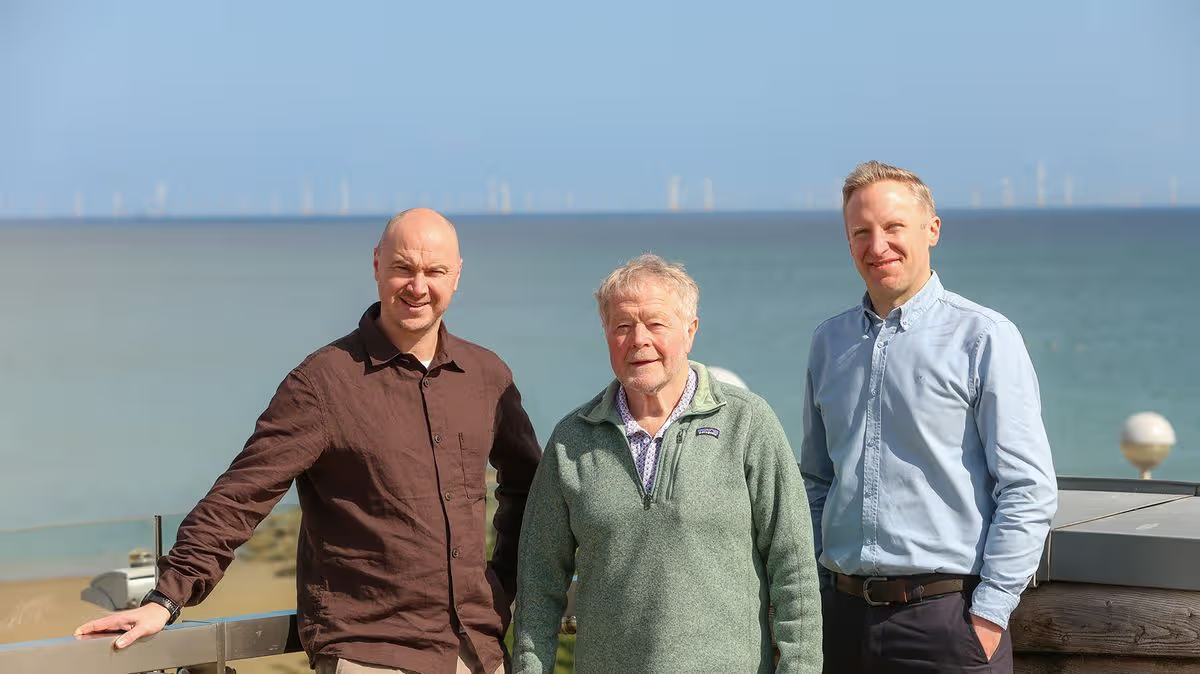
Ecodetech investment: Left to right: David Gold, founder and CEO of Ecodetect; Bobby Williams, lead Investor; Tom Preene, Fund Manager for the Wales Angel Co-Investment Fund.

Anglesey-based Ecodetech,, which specialises in AI-driven marine monitoring for offshore infrastructure, has secured a £490,000 equity investment to help scale its technology.

The funding round includes £245,000 from a six-strong angel syndicate led by Bobby Williams, a member of the M-SParc Angel Network, which also included £25,000 from climate-focused investor OnePlanet Capital. This has been matched by another £245,000 from the Wales Angel Co-Investment Fund, managed by the Development Bank of Wales.

The equity investment will help the business strengthen its team over the next six months, with four new jobs being created, and increase its ability to deliver its technology at scale as offshore and floating renewable energy projects expand.

The new roles are expected to be created over the next six months, with the business looking to recruit from the local area wherever possible as it builds its capability in marine monitoring, AI and offshore renewables.

Advertisement

Based at M-SParc in Ecodetect has developed an advanced ecology detection toolkit that combines artificial intelligence and machine learning with specialist programming to automatically identify and record wildlife interactions with marine infrastructure using data captured by underwater imaging sensors. Its core customers are renewable energy developers, who must monitor and report environmental impacts as part of project licensing and compliance requirements.

The company says the latest investment will allow it to expand in parallel with the wider renewable energy market, where developers are moving from small numbers of turbines to larger-scale installations that generate large volumes of environmental monitoring data. The funding will also support further technology development, including marine communication systems designed to improve how data is transmitted, processed and analysed.

Founded and led by managing director Dr David Gold, Ecodetect brings together three key areas of expertise: offshore and renewable energy, marine wildlife, and advanced technology including AI.

Dr Gold has a background in the energy sector and has built the business around the goal of helping renewable energy developers meet environmental obligations more efficiently while supporting marine conservation. The wider team combines technical, scientific and commercial capability, with the business already recognised for eco-tech innovation in the UK and Europe.

Advertisement

The company is targeting growth in offshore wind, floating wind and tidal energy, including opportunities emerging in Welsh waters. It also sees wider applications for its marine monitoring technology across other sectors including aquaculture, fishing and broader marine infrastructure.

READ MORE: Wendy Hopkins Family Law Practice marks 30 years as it continues to expandREAD MORE: What the parties are promising on transport in Wales ahead of the Senedd Election

Dr Gold, founder and managing director of Ecodetect, said:“This investment gives us the platform to grow the team, strengthen our technology and make sure we are ready to support the rapid expansion of offshore and floating renewables. There is huge momentum building in the sector and a clear need for robust, scalable monitoring solutions that can keep pace with that growth.

“We are proud to be building this business in North Wales. We want to create high-quality local jobs, contribute to the green economy and develop technology here in Wales that can be deployed internationally.”

Advertisement

Bobby Williams, lead investor, said:“Ecodetect is working at the intersection of AI, marine science and renewable energy at exactly the right time. The business has developed a compelling solution to a real and growing challenge for offshore developers, and David has built a company with strong technical foundations and clear market relevance.

“I’m pleased to be joining the board and supporting the next stage of the company’s growth as it scales its capability and builds its presence in a sector with significant long-term potential.”

Tom Preene, fund manager for the Wales Angel Co-Investment Fund, said:“Ecodetect is a strong example of the kind of innovative Welsh business attracting investment from angel investors that the Wales Angel Co-Investment Fund is designed to support. The company is developing specialist technology in a sector with clear global demand, while also creating skilled jobs and contributing to the growth of Wales’ green economy.

“This investment also shows the value of bringing together experienced angel investors and public capital to help ambitious businesses build the capacity they need to scale.”

Advertisement

Pryderi ap Rhisiart, M-SParc’s managing director, said: “Ecodetect’s success reflects the strength of the innovation ecosystem we are continuing to build at M-SParc. From early support through to investment, scale-up and global opportunity, this is a great example of how ambitious businesses can grow here on Anglesey. It’s particularly encouraging to see connections through our wider network, including angel investors, playing a role in this journey. Supporting companies like Ecodetect to scale from North Wales while creating high-value local jobs is exactly what we are here to do.”


Continue Reading

Business

FIIs sell Indian equities on 150 of last 240 trading days. What does it say about their return timing?

Published

on

FIIs sell Indian equities on 150 of last 240 trading days. What does it say about their return timing?
Foreign institutional investors have sold Indian equities on nearly 150 of the last 240 trading sessions, a pattern that says as much about global capital flows as it does about the changing structure of Indian markets. The numbers show that foreign investors have been net sellers on roughly three out of every five market days over the past year.

That is not a one-off reaction to elections, earnings misses or a single geopolitical event. It points to a sustained reassessment of India by global money managers at a time when oil prices are rising, the rupee is under pressure, US bond yields are climbing and the global technology trade is pulling capital back toward developed markets.

The intensity of the selling has also picked up sharply in recent months. The biggest single-day outflow during the period came on April 2, 2026, when FIIs sold a net Rs 19,837 crore worth of Indian equities. That was followed by a cluster of heavy selling days in March, including Rs 11,299 crore on March 24, Rs 10,966 crore on March 20, and Rs 10,827 crore on March 16.

Another major selloff was seen on May 21 last year, when foreign investors pulled out over Rs 10,000 crore in a single session.

Advertisement

Most of the heavy selling has come since tensions in West Asia escalated earlier this year, pushing crude oil prices sharply higher and reviving concerns about India’s macroeconomic stability. Since the conflict intensified, foreign investors have pulled out more than Rs 1 lakh crore from Indian equities, while the Nifty has corrected over 9% from its recent highs.


For a country that imports more than 80% of its crude requirement, every sustained rise in Brent crude increases India’s import bill, widens the current account deficit and creates inflationary pressure across the economy. When oil moves toward $100-115 a barrel, as it has in recent weeks, foreign investors start reassessing not just earnings forecasts but the broader macro picture.
That pressure is now visible in the currency market as well. The rupee recently slipped beyond 95 against the US dollar, touching record lows. For dollar-based investors, that creates another problem. Even if Indian equities deliver returns in local currency terms, those gains can be reduced or even erased once translated back into dollars.At the same time, the global interest rate environment has become less supportive for emerging markets. The US 10-year Treasury yield moving toward 4.5% has significantly changed the risk-reward equation. When investors can earn close to 4.5% in dollar assets with virtually no credit risk, they become more selective about paying premium valuations in emerging markets.

India, despite the recent correction, still trades at a premium compared with most major Asian peers. Global investors today are not looking at India in isolation. They are comparing Indian valuations with markets such as South Korea, Taiwan and even parts of China, where earnings multiples are lower and, in some cases, currency risks are less pronounced.

That valuation gap has become harder to justify at a time when global money is chasing another powerful theme — artificial intelligence.

VK Vijayakumar, Chief Investment Strategist at Geojit Investments, says the AI-driven shift in global capital is becoming an important force behind FII behaviour.

Advertisement

“The continuing momentum in the AI trade implies that FIIs will continue to sell in India. This might keep largecaps under check with activity moving significantly to the broader market,” he said. He believes even political triggers or domestic sentiment rallies may not be enough to reverse that trend immediately.

“Any rally triggered by domestic political developments will be used by FIIs to sell more. The global AI trade will continue to weigh on markets in the near term,” Vijayakumar added.

That helps explain an unusual market trend seen this year. Even as FIIs continue to exit, several smallcap and midcap stocks have delivered strong gains, supported by domestic institutional investors and retail participation. In April alone, the Nifty Smallcap index staged one of its strongest monthly rebounds in nearly two decades.

This is where the story of Indian markets has changed. A decade ago, selling on 150 out of 240 trading days by foreign investors would likely have triggered a much deeper market correction. Today, domestic institutional investors have become an equally powerful force.

Advertisement

Mutual fund SIP inflows, insurance money and pension allocations have created a steady domestic liquidity base. That domestic money has absorbed a significant portion of foreign selling and prevented sharper drawdowns in benchmark indices.

This does not mean foreign money has stopped mattering. FIIs still dominate largecap price discovery, currency sentiment and sector leadership. But the market is no longer entirely dependent on them for direction.

Analysts say the current phase should not be interpreted as foreign investors giving up on India. It is more accurately described as a period of “risk recalibration.”

Bajaj Broking believes the next phase of institutional flows will be driven largely by global macro developments rather than domestic headlines. The brokerage said developments in US-Iran negotiations, central bank commentary from the Federal Reserve and the Bank of Japan, and movements in global energy prices will remain the key variables influencing institutional activity.

Advertisement

Oil prices need to cool. The rupee needs to stabilise. And US bond yields need to stop climbing. Until then, foreign investors may continue doing what they have done on 150 of the last 240 trading days — selling selectively, especially into strength.

(Disclaimer: Recommendations, suggestions, views and opinions given by the experts are their own. These do not represent the views of Economic Times)

Continue Reading

Business

Gap co-founder Doris Fisher dies aged 94

Published

on

Gap co-founder Doris Fisher dies aged 94

She opened the first store with her husband Don in 1969, with the company calling her “a pioneering force in American retail”.

Continue Reading

Business

Tata Tech shares soar over 7% after Q4 results, but Motilal Oswal sees 15% downside; here’s why

Published

on

Tata Tech shares soar over 7% after Q4 results, but Motilal Oswal sees 15% downside; here’s why
Shares of Tata Technologies rallied as much 7.5% to the day’s high of Rs 635 on the BSE on Tuesday after it reported a consolidated net profit of Rs 204 crore for the March quarter, up 8% from Rs 189 crore in the same period last year. The profit is attributable to the company’s shareholders.

Revenue from operations for Q4 came in at Rs 1,572 crore, marking a 22% increase from Rs 1,286 crore in the year-ago quarter.

On a sequential basis, total operating revenue rose 15% to Rs 1,572 crore. Revenue from the services segment stood at Rs 1,220 crore, also up 15% quarter-on-quarter (QoQ). In dollar terms, services revenue was $132.6 million, reflecting an 11.9% sequential increase in constant currency.

Operating EBITDA for the quarter was Rs 252 crore, up 31% QoQ, while the EBITDA margin improved to 16% from 14.1% in the previous quarter. Adjusted net income stood at Rs 163 crore, up 20% sequentially, with net income margin at 10.3%, higher by 45 basis points on a QOQ basis.

Advertisement

Profit after tax surged 2,975% sequentially from Rs 6.64 crore reported in the previous quarter. Revenue also increased 15% from Rs 1,366 crore in the previous quarter.


What are experts saying?
Motilal Oswal maintains ‘Sell’ on Tata Tech share price with TP of Rs 500, a 15% downside. The brokerage said that while 4QFY26 saw a strong rebound and deal momentum has improved, revenue growth remains in the early stages of recovery and is dependent on execution over the next few quarters. Margin expansion is likely to be gradual and back-ended. We remain watchful of deal ramp-ups, FVP conversions and sustainability of demand before turning constructive. Auto spending is yet to see a clear inflection and recovery remains at an early stage, and management execution over the next couple of quarters will be key.
Commenting on performance, Chief Executive Officer and Managing Director Warren Harris said the momentum seen in Q3 continued into Q4, resulting in 12% revenue growth in constant currency and a 190 basis point expansion in margins.He noted that growth was broad-based rather than driven by a single client or program. He added that strong execution, better order book visibility, and increasing wins in full-vehicle programs support the company’s outlook for FY27, where it expects double-digit organic growth along with sustained margin expansion.

(Disclaimer: Recommendations, suggestions, views and opinions given by the experts are their own. These do not represent the views of The Economic Times)

Continue Reading

Business

Manchester United: Return To The Champions League

Published

on

Manchester United: Return To The Champions League

Manchester United: Return To The Champions League

Continue Reading

Business

Commerzbank notes UniCredit offer at 8.7% discount to market

Published

on


Commerzbank notes UniCredit offer at 8.7% discount to market

Continue Reading

Business

Microsoft Leases Soho’s Film House for UK AI Hub

Published

on

Microsoft Leases Soho's Film House for UK AI Hub

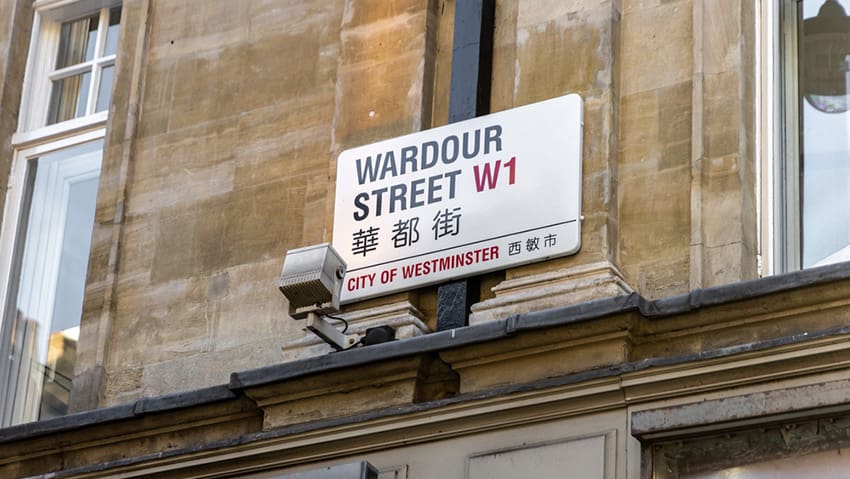
Microsoft is to plant a fresh flag in central London, taking the entirety of Film House, an eight-storey Art Deco landmark on Wardour Street, to serve as the principal home of its rapidly expanding UK artificial intelligence operations.

The deal underscores how the world’s deepest-pocketed technology groups are doubling down on the capital as the AI arms race intensifies. Microsoft, alongside Meta and Amazon, is committing billions of dollars to compute, talent and real estate in pursuit of a slice of what is shaping up to be the defining commercial contest of the decade.

Film House carries no small amount of cinematic provenance. Built in the 1920s as the first British outpost of French film studio Pathé, complete with private screening rooms, the building later housed HMV before serving as Nike’s UK headquarters. Texas-based developer Hines acquired the property in 2023 and has since refurbished it to court the buoyant demand for premium workspace. Tenants will find a gym, a bar, a rooftop terrace, a so-called hidden courtyard, showers and changing rooms, and, in a nod to the building’s heritage, a cinema in the basement.

Even with Film House secured, Microsoft is understood to be hunting for a substantially larger London headquarters to consolidate its wider workforce in the capital. Property agents suggest the company has its eye on a 300,000 sq ft footprint, three times the size of the Soho building, somewhere along the Elizabeth Line, where transport connectivity has reshaped occupier appetite.

A Microsoft spokesman declined to comment on the Film House lease but said: “We are committed to the UK and have facilities across the country. We regularly review our portfolio to make sure it meets the needs of our people and our long-term business.” Hines also declined to comment.

Advertisement

The American group is far from alone. Last month OpenAI signed a lease for a larger base near King’s Cross, just around the corner from rival Anthropic, which recently confirmed plans to move into the same neighbourhood. The clustering effect is unmistakable, and is rippling through the wider SME ecosystem of AI start-ups, scale-ups and supporting professional services drawn to the gravitational pull of the majors.

Mike Gedye, head of European technology leasing at CBRE, said: “We expect London’s depth of talent and established tech ecosystem to continue reinforcing its position as a global hub for technology and AI. Tech and AI businesses are making a footprint in London on a relatively small or short-term lease, but upsizing significantly within 18 to 24 months.”

That trajectory has profound implications for the capital’s commercial property market. CBRE estimates AI companies could absorb close to half of all the speculative office space currently under construction in London. Between now and 2033, the firm’s analysts forecast that AI occupiers will take up to four million sq ft of workspace, the equivalent of roughly eight Gherkins.

Not everyone is convinced the boom will hold. Some in the property industry warn that AI’s productivity gains may ultimately translate into fewer jobs across the wider economy, eroding tenant demand. Landlords, however, are betting the other way, calculating that the explosive growth of start-up technology businesses will more than compensate for any contraction at more traditional employers.

Advertisement

For London’s smaller technology firms, the message from Microsoft’s Soho move is clear: the capital’s AI gold rush is gathering pace, and the postcodes around it are about to get very crowded indeed.


Amy Ingham

Amy is a newly qualified journalist specialising in business journalism at Business Matters with responsibility for news content for what is now the UK’s largest print and online source of current business news.

Advertisement
Continue Reading

Business

UnitedHealth, Cigna, Humana earnings show insurers are recovering

Published

on

UnitedHealth, Cigna, Humana earnings show insurers are recovering

Piotr Swat | SOPA Images | Lightrocket | Getty Images

Major health insurers appear to be off to an encouraging start this year — but a crucial test for the sector is still ahead.

Solid first-quarter results have helped lift investor sentiment, even as insurers continue to grapple with higher medical costs. Companies including UnitedHealth, Elevance, Cigna and Humana all beat estimates for the quarter, with some hiking their 2026 outlooks. 

Advertisement

Those results were largely expected due to seasonal factors such as a milder flu season and weather disruptions that temporarily suppressed medical costs, said Barclays analyst Andrew Mok. A more meaningful signal, Mok said, is that insurers strengthened medical reserves — money set aside to pay future claims — adding a cushion that could support their outlooks.

But there’s still a “huge caveat,” according to Baird analyst Michael Ha.

Insurers have incomplete data on medical costs in the first quarter due to a lag in claims processing, as expenses like hospital stays and procedures can take one or two months to be fully reviewed and reimbursed. By the end of the quarter, companies may only have “real hard claims data” from January, so “we always tell investors to take the first quarter with a grain of salt,” Ha said. 

That sets up the second quarter as the real proving ground. As those delayed claims come in, insurers and investors can get a clearer read on whether medical costs are actually tracking as expected, whether companies have priced their plans appropriately and how their earnings could be shaping up for the rest of the year.

Advertisement

“The second quarter is the real underwriting hurdle to pay attention to as you get more claims data that crystallizes your performance for the year in a bigger way,” Ha said. “If you clear that hurdle, that could imply positive earnings implications for 2026.”

A solid first quarter 

Beneath the surface, insurers’ stronger start to the year also reflects steps they’ve taken to rein in costs after two years of significant pressure.

Ha said he attributes the quarterly beats to “conservative pricing” for key plans like Medicare Advantage. Those privately run Medicare plans have been a driving source of runaway medical costs for many insurers, as seniors use more medical services after the pandemic. 

Companies have exited less profitable markets and shrunk membership, while also adjusting pricing and benefits to better align with rising medical expenses, Ha noted. For example, UnitedHealth in October said it will stop offering Medicare Advantage plans in 109 U.S. counties starting in 2026, impacting 180,000 members who had to look for new insurance options.

Advertisement

“Heading into this year, companies came in with a lot of inherent pricing cushion,” Ha said. 

Those efforts are beginning to show up in metrics such as medical loss ratios — a key measure of medical costs as a share of premiums — which came in lower than the Street had expected for several companies in the first quarter. 

Barclays’ Mok noted that first-quarter results were supported by strength across all major segments. In commercial coverage, higher premiums helped offset rising medical costs, while offering fewer benefits boosted Medicare performance, he said

Mok also said improved cost controls and stabilizing medical costs contributed to “surprisingly solid results” in Medicaid. He called that an “encouraging sign,” even as states tighten eligibility and Medicaid enrollment shrinks.

Advertisement

Still, the industry isn’t out of the woods yet. 

Key test in the second quarter

The question is whether those improvements will hold as more complete data comes in during the second quarter. 

Because of the lag in medical claims processing, insurers rely more heavily on estimates when reporting first-quarter results. Companies receive more medical claims by the second quarter, giving them a clearer read on underlying cost trends. 

“Seeing how those claims develop into the second quarter will really help you understand whether you’ve priced your plans correctly,” Mok said. 

Advertisement

A screen displays the logo and trading information for CVS at the New York Stock Exchange, March 24, 2026.

Jeenah Moon | Reuters

Ha said the second quarter will be especially key for Humana, which expects Medicare Advantage membership to grow 25% in 2026 while keeping benefits stable.

He said CVS Health followed a similar pattern in the second quarter of 2024, growing Medicare Advantage membership while maintaining benefits. But the company later missed its medical loss ratio targets by a wide margin as costs came in higher than expected.

Advertisement

While CVS is not a direct comparison, Ha said a repeat of its disappointing results has become a potential concern heading into Humana’s second-quarter results.

The Affordable Care Act marketplace is also closely watched in the second quarter for insurers like Centene, Molina and Elevance, Ha added. A key data point is the Wakely analysis, released in late June, which helps determine whether insurers’ revenue assumptions match the actual health risk profile of enrolled members, he said. 

Even small shifts in enrollment or member health can lead to meaningful earnings gains or losses, Ha added. 

Investors will be watching medical loss ratios closely, along with any changes to full-year outlooks as second-quarter results come in.

Advertisement

For now, insurers are benefiting from a favorable setup, but the coming months will determine whether that momentum is sustainable.

Choose CNBC as your preferred source on Google and never miss a moment from the most trusted name in business news.
Continue Reading

Business

Ferguson reports Q1 sales rise 3.6% to $7.5 billion

Published

on


Ferguson reports Q1 sales rise 3.6% to $7.5 billion

Continue Reading

Business

Eminem Sparks 2026 Buzz with Merch Drops, Re-Releases and Persistent Tour Album Rumors

Published

on

Kanye West, pictured in 2020, has seen his commercial relationships crumble after a series of anti-Semitic comments

DETROIT — Marshall Mathers, the artist known as Eminem, continues to dominate hip-hop conversations in 2026 without a new studio album or confirmed world tour, fueling intense fan speculation while focusing on merchandise, re-releases and selective live appearances that keep his legend alive more than 25 years into his career.

Eminem
Eminem Sparks 2026 Buzz with Merch Drops, Re-Releases and Persistent Tour Album Rumors

As of early May 2026, the 53-year-old Detroit rapper has no official tour dates listed on Ticketmaster and no confirmed release for a follow-up to 2024’s “The Death of Slim Shady (Coup de Grâce).” Yet social media and fan communities buzz daily with rumors of a potential “final ride” tour or 13th studio album, even as Eminem’s official channels emphasize catalog celebration and new collectibles.

Eminem.com recently highlighted fresh merchandise, including Stan dog tag pendants and chains launched in March, alongside the Feb. 23 re-release of “The Shady LPs” featuring “The Slim Shady LP” and “The Death of Slim Shady.” These moves keep his brand active while fans dissect every hint for signs of new music.

Catalog Strength and Recent Activity

Eminem’s enduring popularity shows in streaming and catalog performance. His “Stans” soundtrack, tied to a documentary of the same name, achieved top 10 placements on U.K. charts earlier in the year, demonstrating sustained demand for his work even without fresh material.

Advertisement

A January 2026 private performance at Little Caesars Arena in his hometown showcased his enduring stage power, with fans sharing clips of classics like “Stan.” He also appeared at events tied to Michigan Central Station and other Detroit milestones, reinforcing his deep local roots.

No large-scale 2026 tour has been confirmed by Eminem’s team, Live Nation or promoters. Multiple unverified social media posts and fan pages have circulated claims of “The Monster Tour,” “One Last Ride” or farewell dates across North America, Europe and beyond, but these lack official backing and Ticketmaster shows zero upcoming concerts.

Album Speculation and Industry Odds

Complex magazine gave Eminem only an 18% chance of releasing a new album in 2026 as part of its most anticipated list, reflecting cautious optimism amid his history of deliberate pacing. Reports of him working on “various projects” surfaced in legal contexts, but nothing points to an imminent drop.

Advertisement

Fans on Reddit and X debate possible themes for a hypothetical 2026 project, from personal reflection to cultural commentary. Past patterns suggest Eminem could surprise with quick releases after gaps, but 2026 remains uncertain.

Collaborations and fan-made tracks, including rumored or remix-style projects with Rihanna or Akon, have circulated online but remain unverified. Eminem’s last major album explored the death of his Slim Shady alter ego, leaving open questions about future creative directions.

Merchandise and Business Moves

Eminem’s official store stays active with drops like the Stan dog tag collection, appealing to dedicated collectors. The Shady LPs re-release bundled key catalog entries, introducing newer listeners to his foundational work while rewarding longtime fans.

Advertisement

These efforts maintain commercial momentum without the pressure of a full rollout. Eminem has long balanced selective output with strong catalog performance, a strategy that has sustained his relevance across generations.

Cultural Impact and Fan Engagement

Eminem remains one of hip-hop’s most influential figures, with a career defined by technical brilliance, controversy and resilience. His ability to spark conversation persists even in quieter periods, as seen in ongoing debates about potential political bars, personal growth or industry commentary.

Social platforms amplify every rumor. Hashtags related to 2026 tours or albums trend periodically, reflecting a global fanbase eager for more from the artist who reshaped rap with albums like “The Marshall Mathers LP” and “The Eminem Show.”

Advertisement

Critics and analysts note his selective live approach — favoring high-impact appearances over exhaustive treks — aligns with his career stage. Any future tour would likely command massive demand, but nothing is locked in as of May 2026.

Looking Ahead

For now, Eminem’s activity centers on curation and connection through merch, reissues and occasional performances. Fans scanning for clues will continue parsing official posts, while the artist maintains his trademark privacy amid the noise.

Whether 2026 brings a new album, a major tour or continued catalog focus remains to be seen. What is certain is Eminem’s unshakable place in music history and his ability to captivate attention with or without new releases. As summer approaches, the hip-hop world watches closely for the next move from one of its most compelling voices.

Advertisement

The Detroit icon’s journey from underground battle rapper to global superstar continues influencing culture. In an era of constant content, Eminem’s measured pace reminds fans that quality and timing often matter more than frequency. As speculation swirls, one thing holds: when Slim Shady decides to speak — or perform — again, the world will listen.

Continue Reading

Trending

Copyright © 2025