The pre-pack sale of First-Rate Maintenance means it will continue trading under its own name
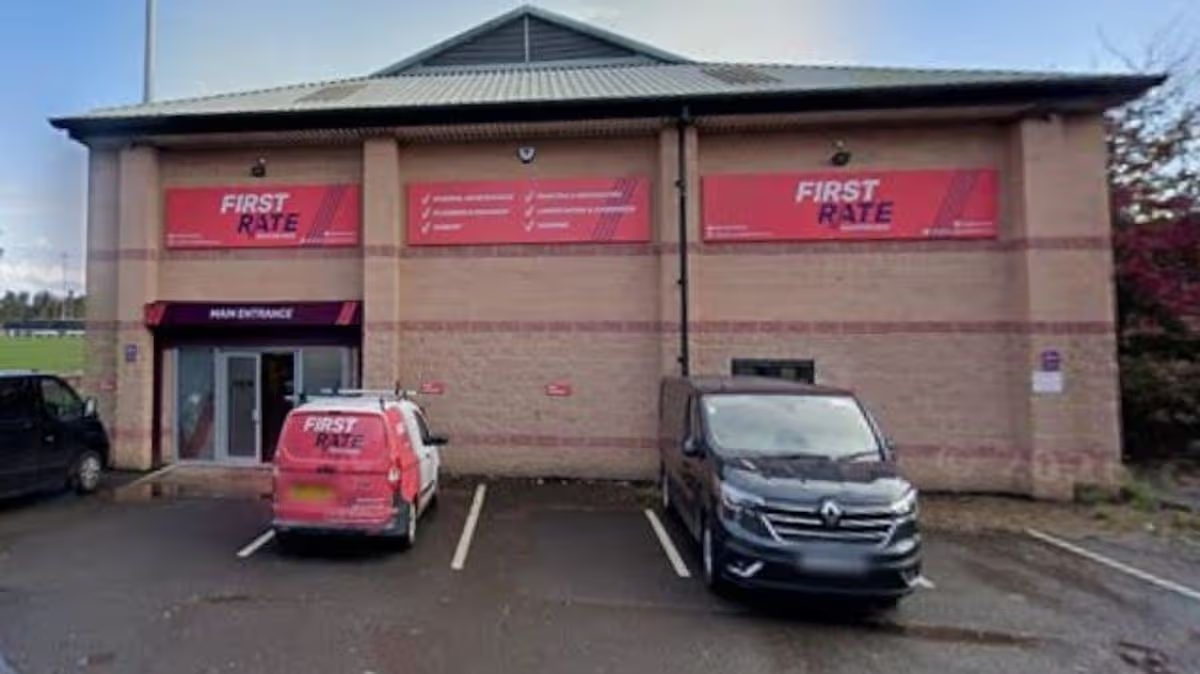
First-Rate Maintenance’s base in North Shields.(Image: Google Streetview)
A maintenance firm covering properties on Tyneside has been rescued out of administration.
First-Rate Maintenance, which began life in Newcastle in early 2020 before moving to North Shields three years later, has been sold via pre-pack administration to Scottish-based operator Dima Group. The move saves 28 jobs at the handyman services business which offers general maintenance, decorating, roofing, joinery, plumbing, landscaping, tiling and more.
Administrators from FRP Advisory said the Percy Park Rugby Club-based business had built a reputation for delivering services to housing associations, local authorities, landlords and national retailers. But last year the business began to experience cashflow pressures.
Joint administrators Steven Ross and Shaun Hudson said efforts had been made to stabilise the business but that the challenges faced meant directors had to call in professional insolvency advisors who arranged the sale.
Advertisement
First-Rate was originally launched with the support of its sister company and Newcastle student property specialist, Seekers – formerly known as Walton Robinson. The business touted itself as an expert in odd jobs and property maintenance across Tyneside and Newcastle, working with homeowners, landlords and managing agents on anything from minor repairs to full refurbishments.
Having been appointed earlier this month, the administrators completed a pre-pack sale to Dima Group FM, trading as First-Rate Maintenance Limited, an unconnected party. They said the deal allows First-Rate to continue trading under its current name and that it will keep existing contracts and services in place for clients.
Steven Ross, restructuring advisory partner at FRP and joint administrator of First-Rate Maintenance Limited, said: “This transaction delivers a positive outcome for all stakeholders. The sale preserves employment, maintains service continuity for customers and secures the future of a well‑regarded regional business, while achieving the best possible result for creditors.”
Andrew Gilmour of Dima Group added: “As the new operator, First-Rate Maintenance is committed to building on its established platform supporting its workforce, customers and partners as the business enters its next phase.”
Advertisement
Dunfermline-based Dima Group was launched in October 2018, originally as a security company, from a kitchen table with the aid of just a laptop and a phone. Two years later the firm opened its first office but then faced the Covid-19 pandemic within a matter of weeks.
The business has since relocated four times and now has a head offices on the city’s Enterprise Way, where it employs nearly 100 staff. It has since diversified into other services including provision of hospitality agency staff and chefs.
Dima works across Scotland and even provides services for every Dunfermline Athletic FC home game – including staff on the turnstiles, terraces, and hospitality areas that cater for fans.
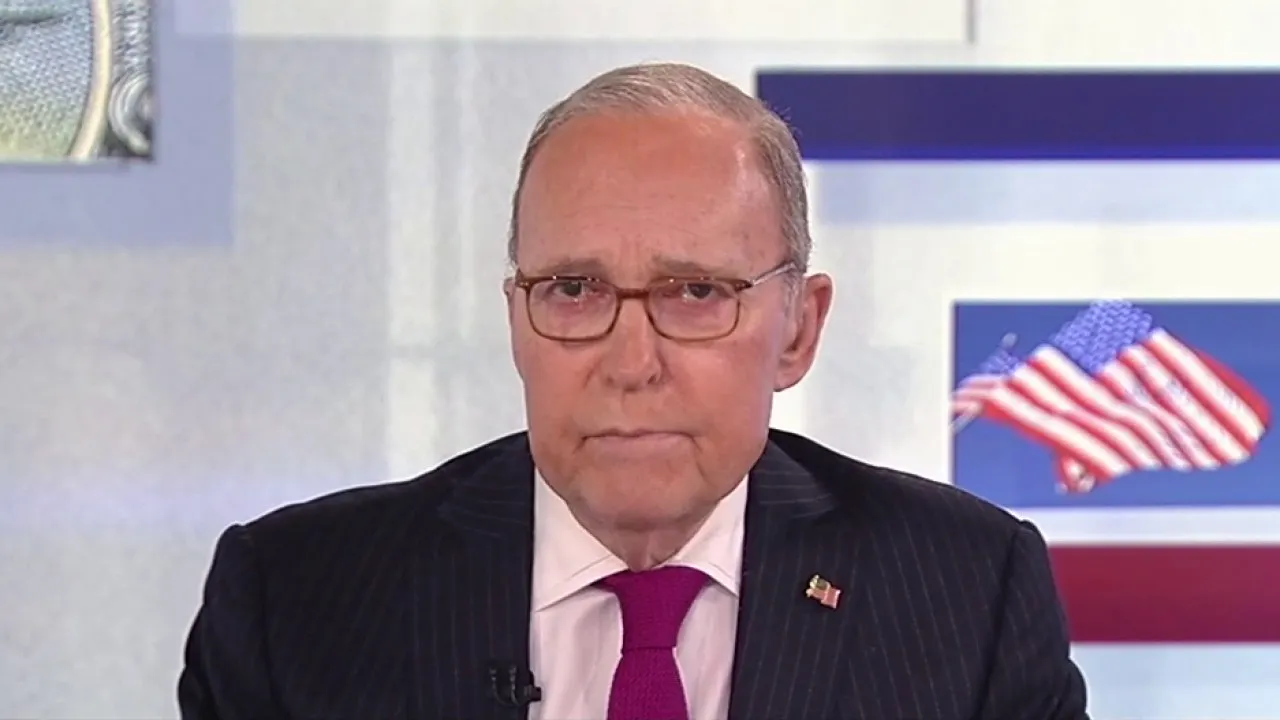
FOX Business host Larry Kudlow discusses the state of the conflict in the Middle East on ‘Kudlow.’
“The blockade scares them even more than the bombing — they’ve been bombed for years, but the blockade they hate.” That’s President Trump talking to Fox News’ Martha MacCallum in a very telling statement. And it may well be that the factionalized Iranians simply cannot come up with any kind of unified agreement to present American negotiators.
It also may well be that there’s no such thing as an agreement, other than unconditional surrender. All nuclear activity stops. Enriched uranium must be transferred from Iran to America. All proxy and other forms of terrorism must be stopped. The Strait of Hormuz must be completely open. And frankly whatever other American demands are placed on a badly defeated Iran.
Advertisement
In a sense, there is a ceasefire now, but American military combat operations, which are even stronger today than at the beginning of the war, may be resumed at any moment. And perhaps most importantly, the United States Navy’s blockade of Iranian ports continues. That’s the state of play and the state of war right now. No oil, no money. That’s Iran’s dilemma.
Fox News senior strategic analyst Ret. Gen. Jack Keane dissects the future of U.S.-Iran talks and President Donald Trump’s ‘no time pressure’ ceasefire stance on ‘Kudlow.’
America presumably will control the entire Persian Gulf theatre, including the Strait of Hormuz. It’s probably costing Iran something near $450 million a day, annualizing to nearly $160 billion a year, for a budget that’s estimated at only $100 billion annually. Put simply, there’s no money to meet payroll or retirement.
All the thugs, and barbarians, and Islamic Revolutionary Guard Corps and the rest of the government, and all the businesses that they have stolen and looted, and all kinds of fanatics who are just not going to get paid.
Advertisement
If we actually took out Kharg Island, that would knock out an additional 1.5 million barrels a day, worth about $140 million at current prices, covering 190,000 personnel, according to a NY Post op-ed by a retired United States Navy captain, Lance B. Gordon. And there may be roughly 200 million barrels a day of Iranian oil floating on the high seas mostly near Communist China, that could be worth about $20 billion. Yet the economic crunch from the blockade is the biggest and most powerful financial weapon; we’ve never tried this before, and it just might work. I’d love to see the United States Treasury seize all the bank accounts of the criminals running Iran, but that’s a separate story.
The point is for the moment, Mr. Trump is content to let the blockade inflict its punishment on Iran for the foreseeable future, perhaps as long as it takes to just bring them to their unconditional knees.
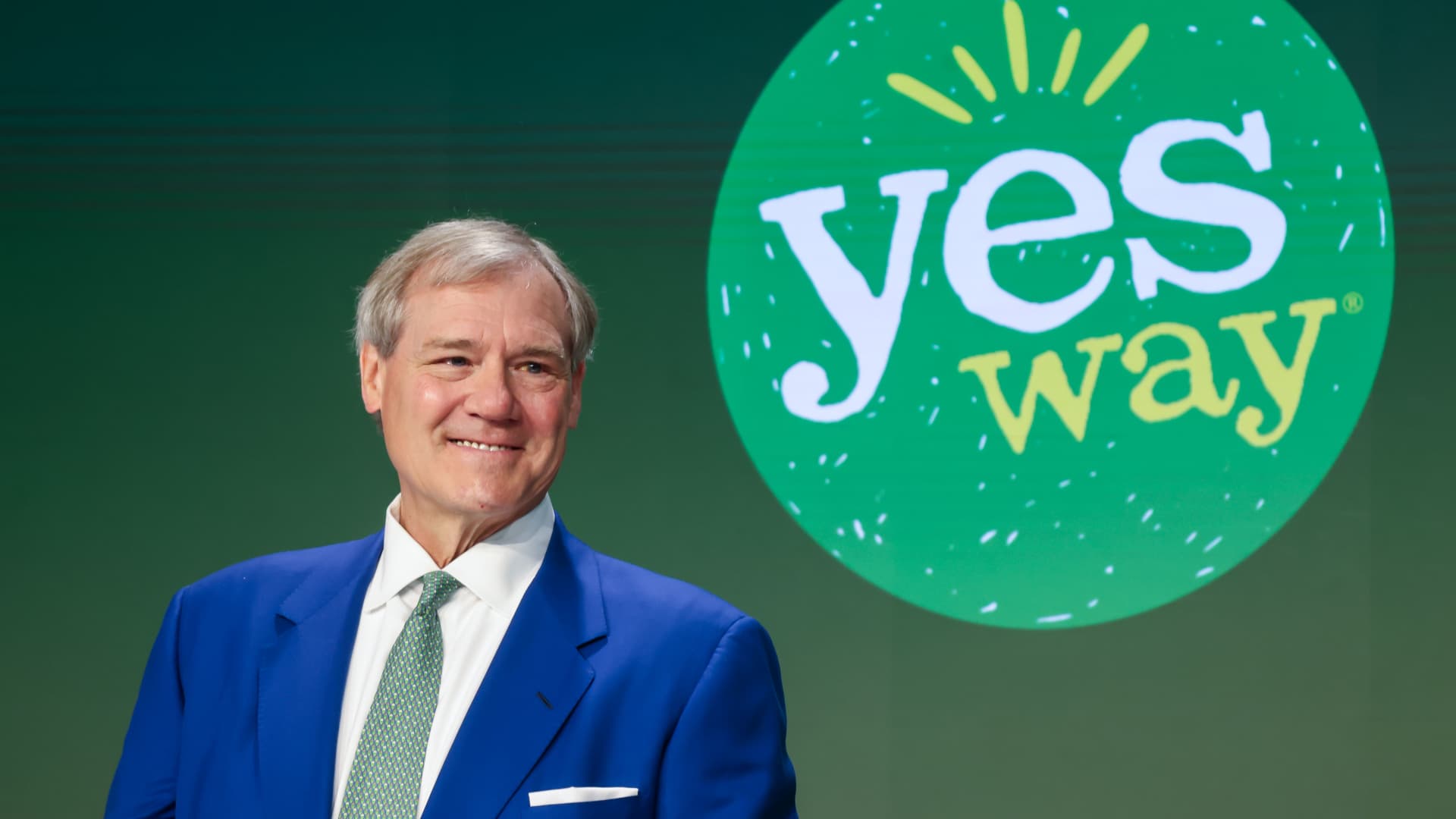
Thomas Trkla, chairman and CEO of Yesway, during the company’s initial public offering at the Nasdaq MarketSite in New York, April 22, 2026.
Michael Nagle | Bloomberg | Getty Images
Deep-fried burritos and chimichangas from convenience store chain Allsup’s are helping its parent company Yesway steal customers from fast-food chains, even with higher fuel prices, Yesway CEO Tom Trkla said Wednesday.
Advertisement
“A lot of the data that we get from our data providers show that our sales are up and some of their competitors’ sales are down,” he told CNBC. “We infer that we are taking some market share, both from other c-store chains and from other [quick-service restaurant chains] that sell food and compete with our burrito platform.”
Yesway made its public market debut on Wednesday, trading on the Nasdaq Stock Exchange under “YSWY.” It raised $280 million in its initial public offering, pricing shares at $20 for a valuation of $1.21 billion. The stock began trading at $22 a share.
The jump in the stock — and demand for Yesway’s food offerings — underscore how the convenience store industry has steadily chipped away at fast food’s dominance.
In 2025, Allsup’s sold roughly 41 million proprietary food products, including 24 million burritos, according to regulatory filings.
Advertisement
About two-thirds of Yesway’s revenue comes from fuel, while the merchandise sold inside stores accounts for the remaining third. And while fuel prices have risen as a result of the war in Iran, Yesway is still seeing high demand for its food.
“People come to our stores, not just for fuel, and that helps a lot too in these environments,” Trkla said. “The other thing I should mention is that we’re already a value shop …. We actually are already at the $4, $5, $6 price for our meals, so we’ve actually seen increases of inside merchandise sales.”
Over the last decade, c-stores have been taking market share from fast-food chains. Chains like Wawa, Buc-ee’s and Casey’s General Stores have won over customers with their fresh food, boosted by their offerings’ low prices and convenience. Breakfast, in particular, has become a battleground between c-stores and fast-food rivals like McDonald’s and Taco Bell.
The c-store industry’s overall food service sales reached $121 billion in 2024, according to data from the National Association of Convenience Stores.
Advertisement
Brookwood, a real estate-focused private equity firm, founded Yesway in 2015. In 2019, the company acquired Allsup’s. By the end of 2025, Yesway and Allsup’s combined had 448 locations, primarily concentrated in the Midwest and Southwest.
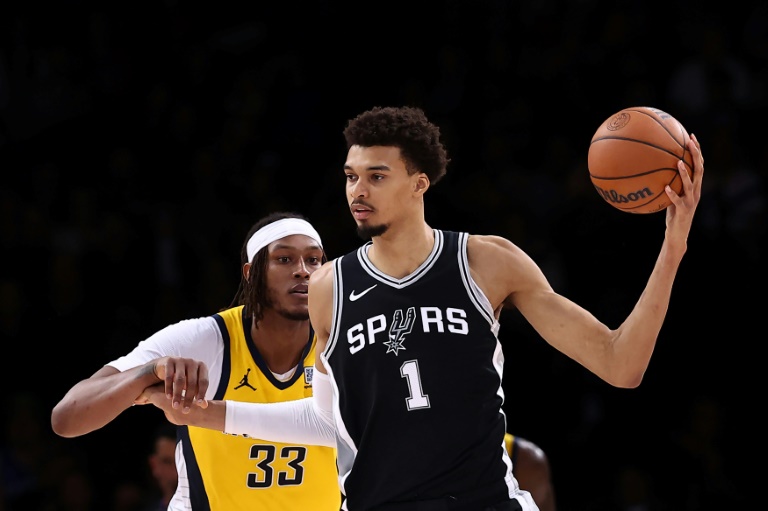
SAN ANTONIO — San Antonio Spurs superstar Victor Wembanyama was diagnosed with a concussion after a frightening fall in Game 2 of the team’s first-round playoff series against the Portland Trail Blazers, thrusting the 22-year-old phenom into the NBA’s strict concussion protocol and raising questions about his availability for the remainder of the postseason.
Victor Wembanyama AFP
Wembanyama suffered the injury with 8:57 left in the second quarter of Tuesday night’s 106-103 loss that evened the Western Conference series at 1-1. Driving to the basket, the 7-foot-4 center was fouled and lost his balance, slamming face-first onto the court at full speed. He lay on the floor momentarily before struggling to his feet and heading to the locker room. He played just 12 minutes, recording five points and four rebounds.
Spurs coach Mitch Johnson confirmed after the game that Wembanyama had entered the league’s concussion protocol and would not return. NBA insider Shams Charania reported Wednesday that Wembanyama had been officially diagnosed with a concussion and would undergo further testing that day. The team provided no immediate timeline for his return.
The incident comes at a critical juncture for the Spurs, who earned the West’s top seed with a strong regular season. Wembanyama, a leading candidate for both MVP and Defensive Player of the Year honors, has been the cornerstone of San Antonio’s resurgence. His absence could significantly impact the series against a resilient Portland team featuring Scoot Henderson and Jrue Holiday.
Under the NBA’s 2025-26 Concussion Policy, a player diagnosed with a concussion cannot return to full participation without restrictions for at least 48 hours after the time of injury. The player must also complete a structured return-to-participation process and receive final clearance.
Advertisement
The protocol begins with coordinated medical care. Any suspected concussion triggers an immediate evaluation. If diagnosed, the player undergoes regular monitoring for the first 24 hours to track symptom evolution. Physical and cognitive exertion is limited under the direction of the team’s medical staff. This includes advising reduced screen time, appropriate sleep, nutrition, hydration and avoiding large crowds or media obligations.
After an initial period of relative rest — typically 24 to 48 hours — the player may begin a graduated return-to-participation exertion process, but only when a team physician determines it is appropriate. The process features progressive steps of increasing physical demand, each closely monitored by medical staff with focused neurological examinations:
Stationary bike or light aerobic activity.
Jogging.
Agility work.
Non-contact team drills.
A player must remain completely symptom-free at rest and during each stage to advance. If symptoms return, the player stops and restarts at the previous successful step. There is no fixed timetable; recovery varies by individual and injury severity.
Final clearance requires multiple layers of approval. The player must be symptom-free at rest. A physician with specific training in sports-related concussion management must evaluate him. The player must successfully complete the full exertion process. Finally, the Director of the NBA Concussion Program, currently Dr. Jeffrey Kutcher, must confirm that the team physician’s clearance aligns with league policy.
League officials and team doctors review game video to assess the injury mechanism, adding another layer of caution. The policy emphasizes that no player returns the same day as a diagnosed concussion.
Advertisement
Average recovery time for NBA concussions ranges from seven to 10 days, though some players clear the protocol faster if symptoms resolve quickly. In Wembanyama’s case, the minimum 48-hour inactivity window from Tuesday’s injury means he could theoretically begin light exertion steps as early as Thursday. Game 3 is scheduled for Friday in Portland, giving him roughly 72 hours from the time of injury.
Medical experts note that severity matters. A harder impact, such as Wembanyama’s face-first fall where his head bounced off the court, may prolong symptoms like headache, dizziness, sensitivity to light or noise, cognitive fog or balance issues. Spurs officials have not disclosed the extent of his symptoms.
This marks the latest health concern for Wembanyama this season. He previously missed time with a left rib contusion but returned to play key minutes in the regular-season finale push for awards eligibility. His towering frame and explosive style make him a defensive anchor and offensive threat, but also expose him to high-impact collisions.
The Spurs’ depth will be tested without their star. Veterans and younger contributors must step up in scoring, rebounding and rim protection. Portland, meanwhile, will look to exploit any rust or matchup advantages in Wembanyama’s potential absence.
Advertisement
Fan and analyst reaction poured in quickly after the fall, with many expressing concern over the visual of the lanky center struggling to stand. Social media filled with well-wishes and calls for caution, highlighting the league’s evolving emphasis on player safety following past high-profile head injuries.
NBA concussion protocols have strengthened over the years in response to growing awareness of long-term risks, including chronic traumatic encephalopathy. The current policy balances competitive needs with medical caution, requiring independent oversight to prevent premature returns.
For San Antonio, the best-case scenario has Wembanyama progressing smoothly through the steps and gaining clearance in time for Game 3 or 4. Worst case, symptoms linger and sideline him for a week or more, potentially shifting series momentum.
Spurs general manager Brian Wright and the medical staff will provide daily updates as testing continues. The organization has built a reputation for cautious handling of injuries to protect young talent like Wembanyama, selected No. 1 overall in 2023.
Advertisement
As the NBA playoffs intensify, Wembanyama’s situation underscores the physical toll of the postseason. Teams rely heavily on star power, yet health remains the ultimate wildcard. The protocol’s step-by-step approach aims to ensure that when players return, they do so safely, minimizing risk of second-impact syndrome or prolonged recovery.
Wembanyama’s teammates expressed support after Tuesday’s game, emphasizing the need to stay focused regardless of his status. “We prepare for every possibility,” one player said. “Wemby is our leader, but we have to execute as a group.”
With further testing scheduled for Wednesday, the basketball world awaits the next update on one of the sport’s brightest young stars. Whether Wembanyama returns for Game 3, later in the series or beyond will depend on his body’s response to the rigorous, individualized recovery process mandated by NBA rules.
The incident serves as a reminder that even in a sport defined by athleticism and resilience, brain health takes precedence. Protocols exist not just to comply with league standards but to safeguard careers and futures. For the Spurs and their franchise cornerstone, the coming days will determine if Wembanyama can help lead San Antonio deeper into the playoffs or if the team must navigate the series without its most dominant force.
With an investment banking cash and derivatives trading background, Binary Tree Analytics (‘BTA’) aims to provide transparency and analytics in respect to capital markets instruments and trades. BTA focuses on CEFs, ETFs and Special Situations, and aims to deliver high annualized returns with a low volatility profile. We have been investing for over 20 years after obtaining a Finance major at a top university.
Analyst’s Disclosure: I/we have no stock, option or similar derivative position in any of the companies mentioned, but may initiate a beneficial Long position through a purchase of the stock, or the purchase of call options or similar derivatives in JCPB over the next 72 hours. I wrote this article myself, and it expresses my own opinions. I am not receiving compensation for it (other than from Seeking Alpha). I have no business relationship with any company whose stock is mentioned in this article.
Seeking Alpha’s Disclosure: Past performance is no guarantee of future results. No recommendation or advice is being given as to whether any investment is suitable for a particular investor. Any views or opinions expressed above may not reflect those of Seeking Alpha as a whole. Seeking Alpha is not a licensed securities dealer, broker or US investment adviser or investment bank. Our analysts are third party authors that include both professional investors and individual investors who may not be licensed or certified by any institute or regulatory body.
WASHINGTON — Skywatchers and astronauts alike captured the annual Lyrid meteor shower in spectacular fashion as it peaked Tuesday night into Wednesday, with bright streaks lighting up dark skies on the ground and unique perspectives from 250 miles above Earth aboard the International Space Station.
Stunning Lyrid Meteor Shower 2026 Captured in Breathtaking Views From Earth and Space
The Lyrids, one of the oldest known meteor showers with records dating back nearly 3,000 years to ancient China, reached maximum activity around 19:15 UTC on April 22 as Earth plowed through debris left by long-period comet C/1861 G1 (Thatcher). Under favorable conditions with a slim waxing crescent moon setting early and minimal interference, observers reported seeing 10 to 20 meteors per hour, including occasional fast-moving fireballs that outshone Venus.
From the ground, amateur and professional photographers across the Northern Hemisphere documented the display with long-exposure cameras, revealing colorful trails against starry backdrops. Reports flooded in from locations in North America, Europe and Asia, where clear weather allowed prime viewing after midnight and before dawn on April 22. The radiant point in the constellation Lyra rose higher in the northeastern sky as morning approached, increasing the chance of spotting meteors.
Advertisement
NASA astronaut Jessica Meir, aboard the orbiting laboratory, shared jaw-dropping photographs snapped from the station’s cupola observation module. Using a three-second exposure, Meir captured a Lyrid meteor streaking through Earth’s upper atmosphere, appearing as a sharp flash against the planet’s curved horizon. City lights glowed below, while a faint red arc of airglow — caused by solar radiation exciting atmospheric molecules — framed the scene.
“Caught a Lyrid from above,” Meir posted alongside the image, highlighting the rare orbital vantage point that shows meteors burning up from outside the atmosphere rather than looking up from within it. Similar views from past missions, including footage by astronaut Don Pettit in 2012, have shown clusters of meteors ablating as bright points against the nighttime Earth.
The Lyrid shower is active from roughly April 14-30, but activity builds to a narrow peak centered on April 22. This year’s timing aligned well with relatively dark skies, as the moon was only about 27% illuminated and set before prime viewing hours in many locations. Experts from NASA and the American Meteor Society noted that while the zenithal hourly rate — the theoretical maximum under perfect conditions with the radiant overhead — hovers around 18, real-world sightings often range from 5 to 20 per hour depending on light pollution and observer location.
Unlike more prolific showers such as the Perseids or Geminids, the Lyrids are not known for producing massive storms, though occasional outbursts have historically pushed rates toward 100 meteors per hour. In 2026, no such surge materialized, but the shower still delivered reliable bright meteors traveling at about 30 miles per second. Many left short, glowing trains rather than long persistent ones.
Advertisement
Scientists explain that the particles responsible are tiny bits of dust and rock, some no larger than a grain of sand, shed by Comet Thatcher during its 415-year orbit around the Sun. When these enter Earth’s atmosphere at high speed, friction causes them to heat up and vaporize in a flash of light — the “shooting star” effect. Larger fragments can create fireballs that fragment or produce sonic booms if they survive longer.
Ground-based observations benefited from networks like the Global Meteor Network, which provides real-time fireball data and helps triangulate trajectories. Skywatchers were encouraged to face northeast after midnight, lie back in a reclining chair or blanket, and allow eyes to dark-adapt for at least 20-30 minutes. Binoculars or telescopes are unnecessary and can even limit the wide-field view needed to catch fast meteors.
The dual perspective — Earth and space — offered a fuller scientific picture. From the ISS, astronauts witness meteors against the thin blue line of the atmosphere, sometimes seeing them enter from directions not visible from any single ground location. Such images help researchers study atmospheric entry dynamics and meteoroid populations.
The 2026 Lyrids coincided with heightened public interest in astronomy, coming just days after Earth Day and amid growing awareness of near-Earth objects. No significant risks were associated with the shower; the particles are too small to reach the surface as meteorites in any meaningful quantity.
Advertisement
For those who missed the peak, the shower continued at lower rates through late April, overlapping slightly with the emerging Eta Aquariids in early May. Experts recommend checking weather forecasts and finding dark-sky sites away from city lights for the best experience. Apps and websites from NASA, the American Meteor Society and timeanddate.com provide tailored visibility predictions by location.
Photographs and videos shared widely on social media amplified the event’s reach. Images from rural Canada, European countrysides and U.S. national parks showed vivid streaks cutting through the Milky Way. Meanwhile, Meir’s ISS shot, released April 20-21, quickly went viral, offering a perspective that reminded viewers of humanity’s place in a dynamic solar system.
The Lyrids hold historical significance as one of the few showers with ancient documentation. Chinese astronomers noted them as far back as 687 B.C., describing “stars falling like rain.” Modern science has refined our understanding, linking the display directly to Comet Thatcher, discovered in 1861.
As the shower waned Wednesday, stargazers already looked ahead to stronger summer displays. Yet the 2026 Lyrids stood out for their favorable moon conditions and the striking space-based imagery that bridged ground observers with those living and working off-planet.
Advertisement
NASA and international partners continue to monitor meteoroid environments for both scientific value and spacecraft safety. The ISS and satellites routinely encounter small particles, though shielding protects crews and systems. Data from showers like the Lyrids contribute to models predicting debris risks.
For amateur astronomers, the event reinforced simple joys of backyard observing. No special equipment was required beyond patience and a clear view of the sky. Families and educators used the shower as a teaching moment about comets, orbits and the protective role of Earth’s atmosphere.
In the hours following the peak, reports confirmed solid activity without record-breaking numbers. Some lucky observers spotted colorful meteors — greens, blues and yellows — resulting from different chemical compositions in the incoming particles.
The combination of terrestrial and orbital captures provided a complete visual narrative of the Lyrid meteor shower 2026. From dark fields on Earth to the cupola windows of the ISS, the ancient comet’s dust trail created a shared moment of wonder across continents and altitudes.
Advertisement
As April 22 turned to 23, the Lyrids gradually diminished, but their images lingered online, inspiring late viewers to step outside for any remaining trails. With the shower’s end approaching by April 30, astronomers reminded enthusiasts that the night sky offers continuous celestial events for those willing to look up.
The successful documentation from both Earth and space highlighted advancing camera technology and international collaboration in astronomy. Future missions may include dedicated meteor observation campaigns from lunar orbit or deep-space habitats, building on experiences like Meir’s.
For now, the 2026 Lyrids delivered exactly what skywatchers hoped for: a reliable spring display under good conditions, enhanced by perspectives that only human spaceflight can provide. Whether seen as fleeting streaks from a backyard or dramatic flashes above the glowing Earth, the meteors reminded everyone of the constant, gentle bombardment our planet endures — and the beauty it creates in the process.
The first new version of the car rolled off the production line in 2001
Neil Lancefield, Press Association Transport Correspondent and Hannah Baker South West Business Editor
00:01, 23 Apr 2026
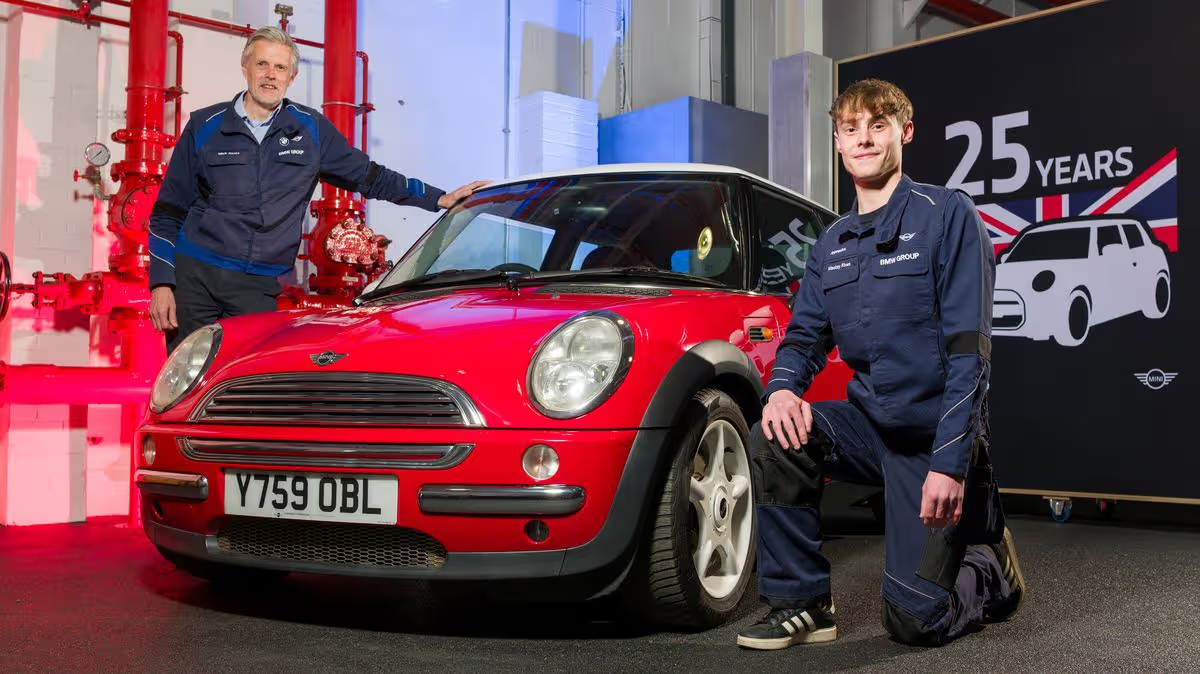
Mick Rivers physical logistics manager, and his son Mackay Rivers, maintenance apprentice, at BMW Group Plant Oxford as the Mini celebrates 25 years of modern production(Image: Richard Dawson/PA Media Assignments)
BMW Group has hailed the “global success” of the Mini as it marked the 25th anniversary of the modern version. The first new generation Mini rolled off the production line at the company’s factory in Oxford on April 26, 2001.
This was “the start of a new chapter” for a car that was already “firmly established as a cultural icon”, BMW Group said. Nearly 4.7 million Minis have been built in Oxford over the past quarter of a century – with body parts made at BMW’s Swindon factory since early 2001 – and the cars have been exported to more than 100 countries.
Advertisement
More than 3,000 people are employed across the Oxford and Swindon plants.
Markus Gruneisl, BMW Group’s chief executive for UK manufacturing, said: “This 25-year milestone is a proud moment for Mini and for everyone involved in its production here in the UK.
“From the very beginning, our plants in Oxford and Swindon have been at the heart of Mini’s global success, combining exceptional craftsmanship with innovation.
“Above all, it is our people – their creativity, expertise and pride in what they do – that continue to make Mini so special.”
Advertisement
The first Mini was launched in 1959 to meet demand for affordable motoring.
The small cars – easy to manoeuvre and with an unusual shape – soon became popular, featuring as getaway cars in movie The Italian Job and being driven by pop stars and fashion legends.
In February, Swindon’s Mini factory announced a new partnership with global logistics giant GXO. BMW Group appointed the US-headquartered company to manage operations at the site on Bridge End Road.
The Wiltshire plant produces parts and panels for cars that are then assembled at its group facility in Oxford and at other international facilities within its network.
Advertisement
The Swindon site, which employs 500 staff and spans more than 400,000 sq m, has been a cornerstone of UK automotive manufacturing since 1955.
It plays a critical role in the global production network for cars, manufacturing key body components and sub-assemblies such as doors, bonnets, tailgates and fenders for Mini vehicles, including the Mini Cooper 3 and 5 door hatch and the Mini convertible.
Good day, and welcome to the AMERISAFE First Quarter 2026 Earnings Call. Today’s conference is being recorded. At this time, I would like to turn the conference over to Kathryn Shirley, Chief Administrative Officer. Please go ahead.
Thank you, operator, and good afternoon, everyone. Welcome to the AMERISAFE 2026 First Quarter Investor Call. If you have not received the earnings release, it is available on our website at amerisafe.com.
Today, this call is being recorded. A replay of today’s call will be available. Details on how to access the replay are in the earnings release.
During this call, we will be making forward-looking statements intended to fall within the safe harbor provided under the securities law. These statements are based on current expectations and assumptions that are subject to various risks and uncertainties. Actual results may differ materially from the results expressed or implied in these statements.
If the underlying assumptions prove to be incorrect or as the results of risks, uncertainties and other factors, including factors discussed in the earnings release, in the comments made during today’s call and in the Risk Factors section of our Form 10-K, Form 10-Q and other reports and filings with the Securities and Exchange Commission. We do not undertake any duty to update any forward-looking statements.
SAN FRANCISCO — xAI’s popular Grok chatbot faced scattered connectivity issues and response delays Thursday as some users reported errors while trying to interact with the AI on the web, mobile apps and integrated X platform, though official status pages indicated services remained largely operational with no major declared incidents.
Complaints surfaced Wednesday evening and early Thursday, with users describing messages such as “Sorry about that, something didn’t go as planned. Please try again” or temporary unavailability for chat responses and image generation. A handful of posts on X directly asked whether Grok was down, while others noted slower replies or failed prompts even for simple queries.
xAI’s official status dashboard at status.x.ai showed “Service fully operational” for Grok (Web), Grok on iOS and Android, and API endpoints as of early Thursday. The company reported no active incidents and high uptime over the past 30 days. Independent monitoring sites presented a mixed picture: some detected user-reported spikes in problems linked to high demand, while others confirmed normal operation.
Downdetector and similar trackers logged increased reports in the past 24 hours, with the majority centered on the mobile app followed by the website. Common issues included delayed responses, login hiccups and temporary “high demand” messages that prevented immediate access for some free-tier or lighter-subscription users. StatusGator noted hundreds of user-submitted reports attributing slowdowns to surging traffic rather than outright server failure.
Advertisement
The timing coincided with growing global interest in Grok, which has seen rapid adoption since its launch and subsequent model updates. As one of the more uncensored and real-time capable AI assistants, Grok often experiences traffic spikes during major news events, viral memes or when competing chatbots face their own limitations. Analysts suggested that recent model enhancements and expanded features could be driving heavier usage, occasionally straining resources even without a full outage.
xAI has not issued a public statement on the latest reports. In past episodes of high demand, the company has encouraged users to wait a few minutes and retry, noting that backend systems automatically scale but can still show temporary friction for some accounts. SuperGrok subscribers and X Premium users have generally reported fewer interruptions, pointing to possible prioritization in resource allocation during peak loads.
For affected users, common troubleshooting steps include refreshing the browser, restarting the app, clearing cache, checking internet connection or trying the service at a less busy time. Some also switched between grok.x.ai, the X app integration and mobile versions to regain access. Persistent problems may warrant checking xAI’s status page or waiting for automatic resolution, as many prior “outages” resolved within one to two hours without intervention.
This is not the first time Grok has drawn attention for availability questions. Earlier in 2026, brief disruptions occurred around major updates or high-traffic periods, often resolved quickly. Unlike some competitors that have suffered prolonged global blackouts, Grok’s issues have typically been localized or demand-related rather than widespread infrastructure failures.
Advertisement
The chatbot’s integration with the X platform adds another layer: when X experiences heavy usage, Grok responses embedded in the app can feel slower even if core servers are stable. Users in different regions, including Asia and Europe, reported varying experiences, with some in high-demand time zones noticing more delays.
xAI continues to invest heavily in infrastructure, including new data centers and optimized inference systems, to support growing demand. Elon Musk, xAI’s founder, has publicly emphasized the goal of making Grok maximally truth-seeking and available to as many users as possible, while balancing compute costs and performance.
Industry observers noted that AI services worldwide face similar challenges as adoption surges. Rapid growth in conversational AI means companies must constantly balance user experience against backend capacity. Grok’s real-time knowledge via X and less restrictive personality have made it especially popular, sometimes leading to usage patterns that stress systems more than purely productivity-focused tools.
For subscribers wondering about paid tiers, SuperGrok and higher X Premium plans often provide priority access during congested periods. Free users may encounter rate limits or “try again later” prompts more frequently. xAI has not detailed exact thresholds but has hinted at ongoing improvements to fairness and scalability.
Advertisement
As of Thursday morning, most users appeared able to access Grok normally after short waits, suggesting the reported problems were intermittent rather than a systemic outage. Monitoring sites showed reports tapering off after initial spikes, consistent with past demand-driven fluctuations.
The episode highlights the evolving nature of consumer AI services. What once were occasional server issues have become tests of how well companies manage explosive growth. Grok’s team has a track record of transparent communication via status pages and quick fixes, helping maintain user trust even during rough patches.
Meanwhile, competitors like OpenAI’s ChatGPT, Google’s Gemini and Anthropic’s Claude have faced their own intermittent availability questions in recent months, underscoring that no major AI chatbot is immune to scaling pains. Users have grown accustomed to checking dedicated status dashboards rather than assuming permanent downtime.
For those still encountering errors, experts recommend trying incognito mode, a different device or network, and monitoring official channels. If problems persist beyond a few hours, reaching out through X support or xAI feedback channels can help surface individual account issues.
Advertisement
Grok’s development team continues pushing model improvements, with hints of larger versions and enhanced capabilities on the horizon. Such updates often precede temporary strain as new features attract fresh waves of users testing limits.
In the broader context, Thursday’s scattered reports serve as a reminder of how reliant millions have become on AI assistants for everything from quick facts to creative tasks. Brief hiccups, while frustrating, rarely signal deeper problems when official systems show green across the board.
As traffic normalizes, most users should regain seamless access. xAI’s focus on rapid iteration suggests any underlying demand pressures will be addressed through expanded capacity rather than reduced features.
The situation remains fluid, but current indicators point to high demand rather than a full-scale outage. Users are advised to stay patient, try again shortly, and consult status.x.ai for the latest confirmed information.
Advertisement
Grok’s resilience amid rapid growth reflects both its popularity and the challenges of delivering cutting-edge AI at global scale. For now, the service appears operational for the vast majority, with only pockets of users navigating temporary speed bumps on an otherwise busy Thursday.




















































You must be logged in to post a comment Login