

Business
Lidl Overtakes Morrisons to Become UK’s Fifth-Biggest Supermarket

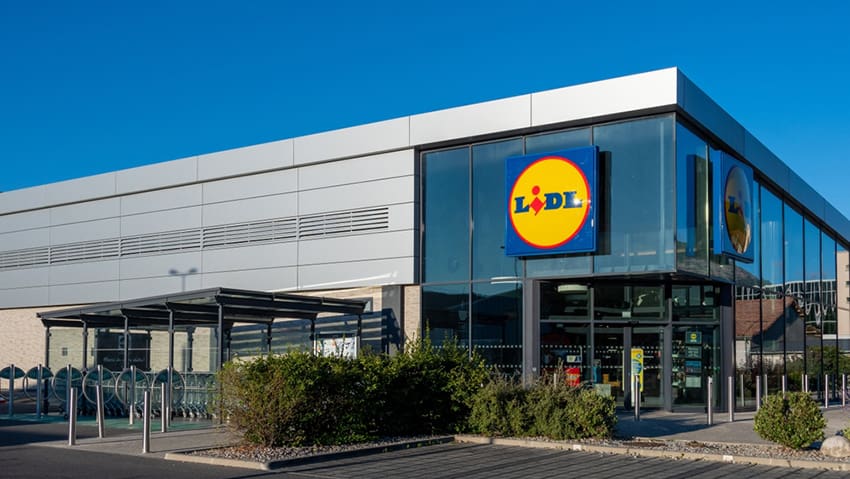
The German discounter has capitalised on the relentless household hunt for value, plotting a further 50 stores and a £600 million expansion that piles fresh pressure on the traditional big four.
When Lidl quietly opened its first British shop in the Leicestershire market town of Lutterworth in 1994, its competition came in the shape of names now consigned to retail history — Safeway, Somerfield and the original pile-it-high pioneer, Kwik Save. Three decades on, the German-owned chain has not only outlived those rivals but has now overtaken one of the original “big four” itself.
Lidl has surpassed Morrisons to become Britain’s fifth-biggest supermarket, capping a long run of market-share gains built on a stubbornly simple recipe of high volumes, lean ranges and aggressive everyday pricing. The discounter now commands a record 8.6 per cent of the UK grocery market, with sales rising 8.8 per cent to £3.2 billion over the 12 weeks to 17 May, according to the latest figures from consumer analyst Worldpanel by Numerator.
To put the trajectory into context, Lidl held just 1.4 per cent of the market at the turn of the millennium. It now sits ahead of Co-op (5.1 per cent), Waitrose (4.5 per cent), Iceland (2.2 per cent) and, in a milestone moment, Morrisons itself on 8.3 per cent. Sales growth at the chain has outpaced every other bricks-and-mortar grocer for almost three years on the trot.
Owned by Germany’s €167.3 billion-turnover Schwarz Group, Lidl GB now employs more than 35,000 people across 1,000 stores and 13 distribution centres. It has earmarked another 50 outlets for the year ahead as part of a wider £600 million investment in its British infrastructure, a programme that follows its £4 billion pledge to invest in British food suppliers as it tightens grip on its UK supply chain.
A familiar German playbook
The rise of Lidl and its fellow German discounter Aldi has been one of the defining storylines of UK retail over the past decade. Both have leant on aggressive price positioning, no-frills shopping environments and tightly edited ranges to wrong-foot the traditional grocers, and crucially, both have hoovered up middle-class shoppers along the way, forcing the rest of the sector to follow them down on price.
Cost-of-living pressures have only sharpened that shift. With food inflation still sticky, weekly shop tickets have become the household budget line that British families watch most closely. Looser planning and competition rules have also worked in the discounters’ favour, making it harder for incumbents to lock them out of prime new sites.
Yet the two German rivals are now diverging. Aldi’s market share has eased from 11 per cent to 10.8 per cent over the past year, while Lidl continues to motor, pushing into premium wine, in-store bakeries and plant-based ranges, and using its Lidl Plus loyalty app to do the kind of personalised promotional work that Tesco’s Clubcard and Sainsbury’s Nectar scheme have long relied on. Aldi has so far resisted following suit. According to Worldpanel, that range and loyalty push helped Lidl pull in an additional £661 million from switching shoppers last year alone.
“Becoming Great Britain’s fifth-largest supermarket is a significant milestone and a clear indication of the momentum we have built,” said Ryan McDonnell, chief executive of Lidl GB. “As customer expectations shift, households are looking for value they can rely on without compromising on quality, and we remain laser-focused on delivering exactly that. As we move forward with our ambitious expansion plans, we’ll bring great value and quality products to even more communities across Great Britain.”
Morrisons under the cosh
The mirror image of Lidl’s ascent is the strain showing at Morrisons. The Bradford-based grocer is wrestling with a debt pile of more than £3 billion under its private equity owner Clayton Dubilier & Rice, and its sales rose just 1.3 per cent year-on-year to £3.1 billion in the latest 12-week window, well behind Tesco, Sainsbury’s and Waitrose, as reported by Bloomberg.
Morrisons argues the Worldpanel figures “underestimate” its true position because they exclude its convenience footprint. A spokesperson added that the grocer had “maintained our share while not opening new supermarkets, unlike the discounters who continue to add significant new space”.
Even so, the wider numbers are sobering. Morrisons posted a pre-tax loss of £381 million in its latest financial year, modestly improved on the £414 million loss the year before, and recently confirmed plans to close more than 100 loss-making Morrisons Daily convenience stores, blaming government policy choices for adding cost it could not absorb. The shift will be familiar to SME owners, particularly those running multi-site operations, who have spent the past year recalibrating models in the face of higher employer national insurance contributions and a steeper minimum wage.
For independent food producers, suppliers and store-fit specialists, the centre of gravity in UK grocery is moving, and quickly. Lidl’s pledged £600 million spend on stores, depots and logistics is exactly the kind of capital programme that pulls SMEs into the supply chain, from groundworks contractors to regional bakeries and challenger drinks brands hoping for a slot on the “middle aisle”. Aldi’s previous milestone moment, when it overtook Morrisons to become Britain’s fourth-largest supermarket, triggered a similar wave of supplier opportunity, and a brisk culling of those that could not flex on price.
The macro backdrop will not make life any easier for the traditional players. The ongoing conflict in the Middle East has lifted energy prices and squeezed fertiliser supply, factors that are widely expected to push food price inflation higher over the coming months — only partially cushioned by the intensifying price war among the supermarkets themselves.
Overall spending at Britain’s biggest grocers rose 2.3 per cent to £36.6 billion in the three months to mid-May. Tesco remains untouchable at the top with 28.2 per cent market share, while Asda, like Morrisons, private equity-owned, saw the sharpest decline, with sales down 3 per cent to £4.2 billion and its share slipping to 11.5 per cent.
Fraser McKevitt, head of retail and consumer insight at Worldpanel by Numerator, said shoppers had “leant on promotions to keep costs down”. Spending on promotional lines rose 9.5 per cent year-on-year, while full-price spend was virtually flat, a signal that, for now at least, the discount mindset that has powered Lidl’s rise is the defining feature of the British grocery basket.

Amy Ingham
Amy is a newly qualified journalist specialising in business journalism at Business Matters with responsibility for news content for what is now the UK’s largest print and online source of current business news.


People load their car after shopping at a Costco Wholesale store on March 21, 2026, in Bayonne, New Jersey.
Gary Hershorn | Corbis News | Getty Images
Costco Wholesale on Thursday reported an increase in net sales for its fiscal third quarter, beating Wall Street revenue expectations for the period.
The company reported net sales of $69.15 billion, up 11.6% from last year. It said adjusted comparable sales were up 6.6% for the quarter, with digital sales up nearly 21%.
Shares of the company were largely unchanged in extended trading.
Here’s how Costco performed in the period ended May 10 compared with what Wall Street was expecting, based on a survey of analysts by LSEG:
- Earnings per share: $4.93 vs. $4.93 expected
- Revenue: $70.53 billion vs. $69.81 billion expected
For the three-month period, Costco reported net income of $2.19 billion, or $4.93 per share, compared with $1.9 billion, or $4.28 per share, the year prior. Revenue rose to $70.53 billion from $63.2 billion in the year-ago period.
Costco said it saw paid memberships grow 4.1% for the quarter, along with a 37% increase in traffic on its website and app. Its top sales categories included pharmacy, home furnishings and gold and jewelry.
Costco has been at the forefront of a tariff dispute with the Trump administration after a Supreme Court decision invalidated some of President Donald Trump’s levies on foreign imports. The retailer previously said it would lower its prices if it received tariff refunds following the Supreme Court decision.
Analysts had previously expected the company to see higher demand at the onset of the war in the Middle East because of its cheaper gas prices and value offerings that appeal to a more cost-conscious consumer.
This story is developing. Please check back for updates.

Stifel reports 19% rise in client assets, loan growth

Rigel Pharmaceuticals director Ali-Jackson Kamil sells $72,925 in stock

CFRA Research senior vice president and head of technology Angelo Zino explains why Nvidia, AMD, Microsoft and Meta remain top ‘strong buy’ picks amid the ongoing AI-driven tech rally on ‘Making Money.’
Meta is rolling out paid subscription plans for Facebook, Instagram and WhatsApp as the company expands premium features and artificial intelligence offerings across its platforms.
Meta head of product Naomi Gleit announced the rollout in a video posted Wednesday, describing the subscriptions as part of a broader effort to offer enhanced tools across Meta’s apps and AI products.
“We’re starting to roll out Facebook Plus, Instagram Plus, WhatsApp Plus with enhanced features that our community already loves,” Gleit said in the video.
Meta said Instagram Plus and Facebook Plus will cost $3.99 per month, while WhatsApp Plus will cost $2.99 monthly. The plans are expected to begin rolling out globally in the coming weeks.
META LAYS OFF NEARLY 1,400 WASHINGTON EMPLOYEES IN LATEST TECH WORKFORCE CUT

Mark Zuckerberg, chief executive officer of Meta Platforms Inc., appears during the Meta Connect event in Menlo Park, Calif., on Sept. 17, 2025. (David Paul Morris/Bloomberg via Getty Images)
The subscriptions include platform-specific features focused on customization, messaging and audience engagement. Instagram Plus subscribers will gain access to expanded Story controls, audience insights, profile customization options and additional profile pins.
Facebook Plus users will receive enhanced Story features, animated reactions and profile personalization tools. WhatsApp Plus includes premium stickers, app themes, custom ringtones and expanded pinned chat capabilities.

Russia blocked the U.S.-based messaging app WhatsApp, citing the company’s failure to comply with local laws. (Reuters/Thomas White/File Photo)
Meta is also expanding subscription offerings tied to artificial intelligence tools under a broader “Meta One” umbrella. The company said it plans to test AI-focused subscription tiers priced at $7.99 per month and $19.99 per month that provide expanded access to more compute-intensive AI features, including advanced reasoning capabilities and additional image and video generation tools.
“We’re also testing new subscription plans that offer premium features for those who want to unlock more from our apps and AI glasses,” Gleit said.
Meta said the AI-focused subscriptions will initially be tested in select international markets and will include bundled premium features across Facebook, Instagram and WhatsApp.

The apps Instagram, Facebook and WhatsApp can be seen on the display of a smartphone in front of the logo of the Meta internet company. (Jens Büttner/picture alliance via Getty Images)
The company is also preparing subscription plans for businesses and creators that include enhanced profile visibility, audience insights, collaboration tools, clickable links in Instagram posts and Reels, and account support features.
Meta said the creator and business plans will initially launch in select test markets and are intended to help users grow audiences and manage their online presence more effectively.
Gleit said Meta is testing subscriptions under the name “Meta One.”
“Eventually, we see Meta One as the one place that brings our subscriptions together across all of our apps,” she said.
The new offerings appear separate from Meta Verified, the company’s existing subscription product focused on account verification and impersonation protections. The rollout comes as technology companies increasingly push subscription-based AI products and premium platform tools as they look to generate recurring revenue from artificial intelligence services.
Meta shares rose following reports of the subscription rollout. Shares of the company are up nearly 5% over the last five trading sessions.
CLICK HERE TO GET FOX BUSINESS ON THE GO
Gleit described the rollout as “just the beginning,” adding that Meta plans to introduce additional features over time.
Business
GameStop Shares Edge Higher to $21.76 as Retail Investor Interest Persists in Volatile 2026 Market

NEW YORK — GameStop Corp. shares rose modestly on Thursday, climbing 0.37 percent to $21.76, as retail traders continued to show interest in the video game retailer despite ongoing challenges in its core business and broader market uncertainty.
The stock’s movement came amid light trading volume in a session dominated by geopolitical tensions and shifting expectations for Federal Reserve policy. GameStop, once at the center of a massive retail trading frenzy in 2021, has seen its share price remain volatile throughout 2026, trading well below its meme-stock peaks but still drawing attention from individual investors.
The company, which operates hundreds of retail stores selling video games, consoles and collectibles, has been transitioning toward e-commerce and collectibles while reducing its physical footprint. First-quarter results earlier this year showed continued revenue pressure from declining brick-and-mortar sales, though cost-cutting measures helped stabilize margins.
Analysts remain divided on GameStop’s long-term prospects. While some see potential in its cash reserves and digital pivot, others question whether the company can successfully reinvent itself in an industry increasingly dominated by downloads and online platforms. The consensus rating among covering firms leans toward Hold, with average price targets well below current levels.
Recent Performance and Market Context
GameStop shares have experienced significant swings in 2026. The stock surged earlier in the year on renewed retail enthusiasm but has since given back gains amid weaker industry trends and macroeconomic headwinds. Thursday’s modest uptick reflects ongoing speculative interest rather than fundamental improvement.
The broader market environment has been challenging for discretionary retailers. Elevated interest rates, cautious consumer spending and competition from digital giants have weighed on traditional game retailers. GameStop’s heavy reliance on physical sales makes it particularly sensitive to these trends.
Despite these challenges, the company maintains a dedicated following among retail investors who view it as a symbol of grassroots market power. Social media platforms continue to feature discussions about potential short squeezes and turnaround narratives, though trading volumes remain far below 2021 peaks.
Company Strategy and Challenges
GameStop has taken steps to adapt to changing consumer habits. The company has expanded its e-commerce offerings, invested in collectibles and explored new revenue streams. However, progress has been uneven, and same-store sales have remained under pressure.
Leadership has emphasized cost discipline and inventory management. The company ended its most recent quarter with a strong cash position, providing some buffer against industry softness. Yet analysts caution that without a clear path to sustainable profitability, the stock could face further downside.
The video game industry itself is undergoing transformation. Major publishers are focusing on live-service models and subscription platforms, reducing the importance of traditional retail distribution. GameStop’s ability to carve out a meaningful role in this evolving landscape remains a key question for investors.
Retail Investor Sentiment
GameStop continues to attract attention from individual traders, many of whom first discovered the stock during the 2021 meme frenzy. Online forums and social media groups remain active, with users sharing price targets and speculation about potential catalysts.
This retail interest has contributed to periodic volatility, though without the same intensity seen in previous years. Short interest has moderated but remains elevated compared to most stocks, keeping the potential for sharp moves alive.
Market watchers note that while retail enthusiasm provides liquidity, it can also lead to disconnects between share price movements and underlying business fundamentals. GameStop’s earnings reports often trigger sharp reactions regardless of broader market trends.
Broader Retail Sector Trends
The discretionary retail environment in 2026 has been difficult. Higher borrowing costs and selective consumer spending have hurt many traditional retailers. GameStop’s performance reflects these pressures while also highlighting its unique position as a meme stock with a loyal following.
Competitors in the space have pursued different strategies, with some focusing exclusively on digital channels or diversifying into entertainment experiences. GameStop’s hybrid approach aims to leverage both its physical presence and online capabilities, but execution remains critical.
Outlook and Analyst Views
Looking ahead, analysts expect GameStop to face continued headwinds in its core business. Revenue projections for the year remain muted, though cost savings and potential new initiatives could provide some support.
Several firms have maintained neutral ratings, citing uncertainty around the company’s strategic direction. Price targets generally reflect skepticism about near-term catalysts, though a few more bullish voices see value in the company’s cash position and brand recognition.
Investors considering GameStop stock should weigh its speculative nature against traditional valuation metrics. The stock’s history of extreme volatility makes it unsuitable for conservative portfolios but potentially appealing for those comfortable with high risk.
As the company navigates industry changes and retail investor attention, its performance will likely remain a topic of interest across financial media and social platforms. Thursday’s modest gain adds another chapter to GameStop’s ongoing story in 2026’s unpredictable market environment.
The coming weeks will bring further earnings updates and industry developments that could influence the stock’s direction. For now, GameStop continues to trade as both a traditional retailer and a symbol of retail investor power, creating a unique dynamic that keeps market participants watching closely.
El Pollo Loco authorizes $40 million stock buyback program


California sues 23andMe over large 2023 data breach

If you’ve paid any attention to the sudden explosion of online keno in Australia, you’re actually looking at a symptom of a much larger shift.
Over the past ten years, the way Australians interact with entertainment, mobile tech, and online services has completely transformed. We’ve moved away from rigid schedules and bulky setups.
Instead, whether it’s interactive gaming ecosystems, streaming media, or real-time digital experiences, today’s businesses like keno online in Australia are having to adapt to an audience that demands total convenience. We want instant engagement, and we want it across all our connected devices without a single hiccup.
The Shift Toward Bite-Sized, Mobile-First Entertainment
A massive piece of this puzzle comes down to the simple fact that our phones and networks are finally good enough to handle our demands. Widespread smartphone adoption paired with high-speed mobile connectivity means Australians now expect to be entertained instantly, no matter where they are. This has opened up huge opportunities for platforms that can deliver fast and responsive services.
Australia’s underlying tech infrastructure deserves a lot of the credit here. We now have much better broadband access and stronger mobile networks, which have essentially wiped out the technical bottlenecks that used to make online entertainment so frustrating. Because of this, digital platforms can handle a lot more traffic and deliver smooth, real-time experiences whether you’re sitting in a Sydney cafe or relaxing in a regional town.
This mobile-first mentality has also fundamentally changed how we fit leisure into our day. Gone are the days when we always needed to set aside a two-hour block for entertainment. Instead, people gravitate toward short-session experiences that slide easily into a busy routine. The massive shift toward remote and hybrid work environments has only amplified this. With more flexible schedules and a lot more time spent hovering near connected devices, people are sprinkling quick gaming or streaming sessions into their daily lives far more frequently than they used to.
How AI and Personalization Keep Us Hooked
Modern consumers have zero patience for generic experiences. We expect platforms to figure out what we want almost automatically. If you look at any major entertainment ecosystem right now, customized interfaces and behavior-driven content suggestions are the absolute bare minimum. Businesses are heavily leveraging data analytics and machine learning simply because they have to—it’s the only way to keep people engaged and stop them from jumping to a competitor.
Behind the curtain, Artificial Intelligence is doing an incredible amount of heavy lifting. AI systems are constantly chewing through behavioral data to figure out how to optimize the user experience. They recommend the right content, streamline customer support, and even flag unusual account activity to prevent fraud. It’s this technology that allows companies to manage millions of users while somehow making the experience feel entirely individualized.
Australia’s younger, digitally native demographics are really driving this push. They adopt new tech faster than anyone else and have incredibly high standards for how responsive a mobile experience should be. To win them over, businesses have to prioritize clean designs, deep personalization, and platforms that encourage continuous interaction. On top of that, social media is now deeply baked into the experience. Online communities, user-generated content, and influencer marketing aren’t just add-ons; they are core strategies for bringing in new users and keeping them around through strong social engagement loops.
Seamless Payments and the Invisible Tech Keeping Things Running
Of course, none of this growth happens if it’s hard for people to spend their money. Payment innovation has been a massive accelerator for the online leisure market. We now expect transactions to be completely frictionless. Whether it’s instant deposits or secure mobile checkouts integrated directly into an app, fintech advancements like digital wallets and biometric logins have made spending money online incredibly easy.
This slick financial infrastructure is exactly what has allowed subscription models and transaction-driven entertainment to take off so rapidly. People are comfortable managing their money within these digital ecosystems, giving businesses a golden opportunity to offer fully integrated, hassle-free account systems.
But keeping all of this running requires some serious backbone, which is where cloud computing steps in. Entertainment platforms deal with wildly unpredictable traffic—think of a massive surge during a live event or a Friday night. Scalable cloud infrastructure lets these companies expand their computing power on the fly so the platform doesn’t crash when everyone logs on at once.
Naturally, as more money and time flow into these platforms, cybersecurity has become a monumental priority. Businesses are pouring money into advanced encryption, AI-powered threat monitoring, and fraud detection. They know that if they lose consumer trust, the whole ecosystem falls apart.
Navigating a Crowded, Highly Regulated Future
The competition in Australia’s digital economy is getting fierce. With aggressive new startups and massive international platforms constantly flooding the market, businesses can’t just rely on having good content or cheap pricing anymore. They have to stand out through flawless user experiences, genuine technological innovation, and rock-solid reliability.
At the same time, the rules of the game are changing. Regulatory developments surrounding privacy, consumer data, and digital transactions are constantly evolving on a global scale. Companies are walking a tightrope—trying to build highly personalized, data-hungry platforms while staying strictly compliant with ethical data practices and new legal obligations.
Looking ahead, Australia’s digital leisure economy is only going to keep expanding. As mobile connectivity gets even faster, AI gets smarter, and fintech becomes more invisible, we are going to see entirely new forms of interactive entertainment emerge. Digital leisure isn’t just some secondary offshoot of the economy anymore. It has grown into a powerhouse of innovation and investment, completely reshaping Australia’s technological and cultural landscape.
Vestis Corp stock hits 52-week high at 12.61 USD
Pitney Bowes CEO Wolf sells $3.82 million in company stock

Costco (COST) Q3 2026 earnings

French Company Abandons Crypto Treasury Strategy, Will Liquidate Bitcoin Holdings

Football gossip: Hincapie, Dias, Diomande, Wharton, Kamada, Scott, Rayan, Junior Kroupi


-

 Fashion6 days ago
Holiday Weekend Open Thread – Corporette.com
-

 Politics3 days ago
Bridgerton Season 5: Cast, Release Date And Everything We Know So Far
-

 Crypto World7 days ago
Bitcoin Accumulation Weakens as BTC Realized Losses Hit $600M
-

 Crypto World5 days ago
Robinhood crypto COO Tanya Denisova exits
-

 Business7 days ago
Trump Invests $1M-$5M in Kura Sushi USA Chain With 27 California Locations
-

 Tech3 days ago
Microsoft’s quiet Claude Code retreat and the real cost of enterprise AI
-

 Business4 days ago
NYT Strands Answers May 24 2026 Revealed for Puzzle No. 812 Theme Summer Essentials
-

 Business6 days ago
Dell Technologies DELL Stock Surges 15% on AI Server Momentum and Analyst Upgrades in 2026
-

 Business2 days ago
Selena Gomez Reportedly Upset Over Benny Blanco’s Comments on Her ‘Terrible’ Diet
-
 Crypto World2 days ago
Micron Crosses $1 Trillion Market Cap as AI Demand Reshapes Memory Sector
-

 Politics6 days ago
Makerfield: a tale of two social-media histories
-

 Crypto World6 days ago
Space X IPO Is ‘Bad News’ for Tech Stocks: But What About Bitcoin?
-

 Business3 days ago
BTS Sells Out Four Las Vegas Shows at Allegiant Stadium for ARIRANG World Tour
-

 Tech7 days ago
WhatsApp ads could make Irish debut after discussions with DPC
-

 Crypto World7 days ago
MicroStrategy’s Saylor Says Miners No Longer Set Bitcoin Price, Another Force Has Taken Over
-
Tech1 day ago
The Samsung pay deal is the moment Korean unions changed register
-
 Tech6 days ago
A 0.12% parameter add-on gives AI agents the working memory RAG can’t
-

 Crypto World6 days ago
AI infrastructure race heats up as IREN pitches full-stack strategy, WhiteFiber lands $160M deal
-

 Tech3 days ago
Westone Audio and Etymotic Acquired by Fidelity Collective in Major IEM Market Move
-
 Crypto World3 days ago
Nvidia (NVDA) CEO Calls on Super Micro to Strengthen Export Controls Amid Smuggling Probe
You must be logged in to post a comment Login