

Business
Oil Price Today (May 29): Crude oil falls as peace deal hopes offset constant tensions. What are experts saying?


Crude oil price on May 29
Brent crude futures for July, which expire on Friday’s settlement, slipped 35 cents, or 0.37%, to $93.36 a barrel. U.S. crude futures declined 63 cents, or 0.71%, to $88.27 a barrel. The August Brent contract was down 46 cents, or 0.50%, at $92.24.
Despite the decline, oil prices have been highly volatile in recent sessions. Brent is down more than 8% for the week after touching a low of $87.11, compared with last week’s high of $109.47. Markets have swung sharply on mixed signals surrounding a possible end to the three-month.
On Thursday, geopolitical tensions also intensified after fresh U.S. strikes targeted an Iranian military site overnight, even as diplomatic talks between Washington and Tehran continued.

Iran’s Revolutionary Guards later said they struck a U.S. airbase, according to the semi-official Tasnim news agency, although the base’s location was not disclosed.
Reuters reported that the U.S. and Iran agreed on Thursday to extend their ceasefire and remove restrictions on shipping through the strait. However, U.S. President Donald Trump has yet to approve the agreement, while Iranian state media reported that the deal had not been finalized.
Speaking to reporters, Vice President JD Vance said Washington and Tehran were still working through a few unresolved issues, including Iran’s enriched uranium stockpile and enrichment-related concerns.
“I can’t guarantee that we’re going to get there, but right now I feel pretty good about it,” Vance said, adding that the U.S. remained capable of significantly setting back Tehran’s nuclear programme.
Analysts said that even if a ceasefire agreement is reached, normal shipping operations through the Strait of Hormuz may take months to recover, while damaged energy infrastructure could take even longer to fully return to normal.
Earlier this month, Saudi Aramco CEO Amin Nasser warned that disruptions in the Strait of Hormuz could delay stability in global oil markets until 2027, with nearly 100 million barrels of oil supply per week potentially affected. Saudi Aramco is the world’s largest oil producer.
Morgan Stanley described the current oil market as being in “a race against time”, noting that the factors preventing a sharper rise in crude prices may weaken if the Strait of Hormuz remains shut through June.
The brokerage said increased U.S. crude exports and weaker Chinese demand had so far helped offset part of the supply shock. However, it warned that a prolonged closure of Hormuz could tighten global supplies once again if disruptions continue beyond what the U.S. and China are able to absorb comfortably.
(Disclaimer: Recommendations, suggestions, views and opinions given by the experts are their own. These do not represent the views of The Economic Times)



I have been managing investments for over eight years in capital markets. By qualification I am a CFA Charter holder. I primarily look for discrepancies between the price and value of a security. With a focus on first-principal mindset, I try breaking down ideas into their core- most tangible parts, affecting the theses while deliberately avoiding the non-significant matter into crowding the analysis. If you like my ideas or frameworks, reach out via email/message for more granular and concentrated- portfolio level specific investment researches and ideas. I am at prakhar@shrihittruealphacapital.com.
Analyst’s Disclosure: I/we have no stock, option or similar derivative position in any of the companies mentioned, and no plans to initiate any such positions within the next 72 hours. I wrote this article myself, and it expresses my own opinions. I am not receiving compensation for it (other than from Seeking Alpha). I have no business relationship with any company whose stock is mentioned in this article.
Readers are advised to fact-check thoroughly before making any investment-related decisions; this reflects the personal views of the author and should not be pursued as formal financial or investment advice in any manner. While every effort has been made to ensure accuracy, errors may exist in the data and financial projections presented. The author is not responsible for any financial gains or losses incurred from investments made based on this content.
Seeking Alpha’s Disclosure: Past performance is no guarantee of future results. No recommendation or advice is being given as to whether any investment is suitable for a particular investor. Any views or opinions expressed above may not reflect those of Seeking Alpha as a whole. Seeking Alpha is not a licensed securities dealer, broker or US investment adviser or investment bank. Our analysts are third party authors that include both professional investors and individual investors who may not be licensed or certified by any institute or regulatory body.

Coca-Cola Co. enters the second half of 2026 with resilient performance, prompting Wall Street analysts to maintain a broadly bullish stance on its shares despite macroeconomic pressures and shifting consumer tastes.
The beverage giant, trading around $79 recently, benefits from consistent volume growth, pricing power and a strong dividend history that appeals to income-focused investors. Consensus among roughly 15 analysts points to a “Buy” rating, with average 12-month price targets clustering near $86 to $88 — implying potential upside of about 9% to 12% from late-May levels.
Coca-Cola’s first-quarter results, released in late April, underscored its defensive qualities. Net revenues climbed 12% to $12.5 billion, while organic revenues rose 10%. Comparable earnings per share jumped 18% to 86 cents, beating expectations. Global unit case volume grew 3%.
The company raised its full-year 2026 guidance for comparable EPS growth to 8% to 9% from a prior 7% to 8% range, while holding organic revenue growth at 4% to 5%. Management cited resilient consumer demand in many markets and effective cost management.
New leadership eyes faster adaptation
Henrique Braun, who assumed the CEO role in late March after succeeding James Quincey, has emphasized accelerating innovation. In February remarks ahead of the transition, Braun stressed the need to respond to evolving preferences, including demand for lower-sugar options amid the rise of weight-loss drugs.
“We need to get closer to the consumer and improve our speed to market,” Braun said. “While we have made some progress with our overall success rates over the past several years, our innovation today is not where it needs to be.”
This push aligns with Coca-Cola’s broader strategy to expand beyond traditional carbonated soft drinks into teas, waters, sports drinks, juices and functional beverages. The company has invested in product development to capture growth in emerging categories while protecting its core brands like Coca-Cola, Sprite and Fanta.
Analysts highlight the company’s pricing discipline and geographic diversification as key strengths. Emerging markets in Asia, Latin America and Africa continue to offer long-term volume upside as middle-class populations expand and per-capita consumption remains below developed-market levels.
Financial resilience amid headwinds
Coca-Cola’s balance sheet remains solid. The company generates robust free cash flow — approximately $1.8 billion in the first quarter alone — supporting its dividend, currently yielding around 3%. Its net debt leverage sits comfortably below target levels.
Yet challenges persist. Inflationary pressures, currency volatility in certain regions and cautious consumer spending in developed markets have tempered growth expectations. Some categories face competition from private labels and health-focused alternatives. Geopolitical tensions and supply-chain issues add layers of uncertainty.
Braun acknowledged these dynamics in post-earnings commentary, noting that while many consumers remain resilient, others face pressure from persistent inflation and macroeconomic uncertainty.
The stock has delivered steady gains in 2026 so far, outperforming broader market benchmarks at times, though it remains sensitive to interest-rate movements given its premium valuation. Shares trade at a forward price-to-earnings multiple in the mid-20s, reflecting investor confidence in its moat but leaving limited room for error.
Analyst perspectives and price targets
Major firms maintain positive outlooks. Recent targets range from lows near $80 to highs of $92. Barclays, Citigroup and others have issued upbeat notes citing brand strength and execution.
MarketBeat data shows 15 buy ratings with no sells in recent coverage. The average target of around $86.80 suggests moderate but reliable upside. Longer-term models project continued mid-single-digit revenue growth and EPS expansion into the late 2020s, driven by efficiency gains and portfolio optimization.
Value-oriented investors point to Coca-Cola’s status as a classic defensive play. Its products enjoy near-universal recognition, and the bottling system provides operational leverage. Dividend aristocrat status — with decades of increases — supports its appeal for retirement portfolios.
Growth investors, meanwhile, focus on digital transformation initiatives, sustainability efforts in packaging and water stewardship, and potential in ready-to-drink coffee and energy drinks.
Risks to monitor
Potential downsides include a sharper-than-expected slowdown in consumer spending, adverse rulings in ongoing tax disputes, or failure to innovate quickly enough in health-conscious segments. An escalation in global trade tensions could pressure input costs or currency translation.
Analysts generally view these risks as manageable given Coca-Cola’s scale, pricing power and history of navigating cycles. The company has consistently beaten earnings estimates in recent quarters.
Investment considerations for 2026
For investors weighing buy or sell decisions, Coca-Cola presents a case for accumulation on dips rather than aggressive new purchases at current levels, according to several models. Its stability suits conservative portfolios seeking income and modest capital appreciation.
Those with shorter horizons may prefer waiting for pullbacks closer to the lower end of analyst targets. Long-term holders benefit from the total return potential of dividends reinvested over time.
Coca-Cola’s trajectory in the remainder of 2026 will hinge on execution under Braun’s leadership, macroeconomic conditions and the success of new product launches. With a fortress balance sheet and iconic brands, the company is well-positioned to deliver for shareholders seeking reliability in an uncertain environment.
The stock closed at $79.01 on May 29. Volume and volatility remain typical for a large-cap consumer staple.
As always, individual investors should consider their risk tolerance, time horizon and consult financial advisers. Past performance does not guarantee future results, and stock prices can fluctuate.


Tiny Guyana poised for big Iran oil gains and growth strains
Business
Dianthus Therapeutics: A Financed Autoimmune Platform With More Than One Way To Win (NASDAQ:DNTH)


I have a strong inclination towards high-growth companies, often treading in sectors poised for exponential expansion. My expertise lies in understanding and investing in disruptive technologies and forward-thinking enterprises. My approach is a mix of fundamental analysis and future trend prediction. I believe in the power of innovation to yield substantial returns and aim to provide insightful analysis on such companies here on SeekingAlpha.
Analyst’s Disclosure: I/we have no stock, option or similar derivative position in any of the companies mentioned, and no plans to initiate any such positions within the next 72 hours. I wrote this article myself, and it expresses my own opinions. I am not receiving compensation for it (other than from Seeking Alpha). I have no business relationship with any company whose stock is mentioned in this article.
Seeking Alpha’s Disclosure: Past performance is no guarantee of future results. No recommendation or advice is being given as to whether any investment is suitable for a particular investor. Any views or opinions expressed above may not reflect those of Seeking Alpha as a whole. Seeking Alpha is not a licensed securities dealer, broker or US investment adviser or investment bank. Our analysts are third party authors that include both professional investors and individual investors who may not be licensed or certified by any institute or regulatory body.
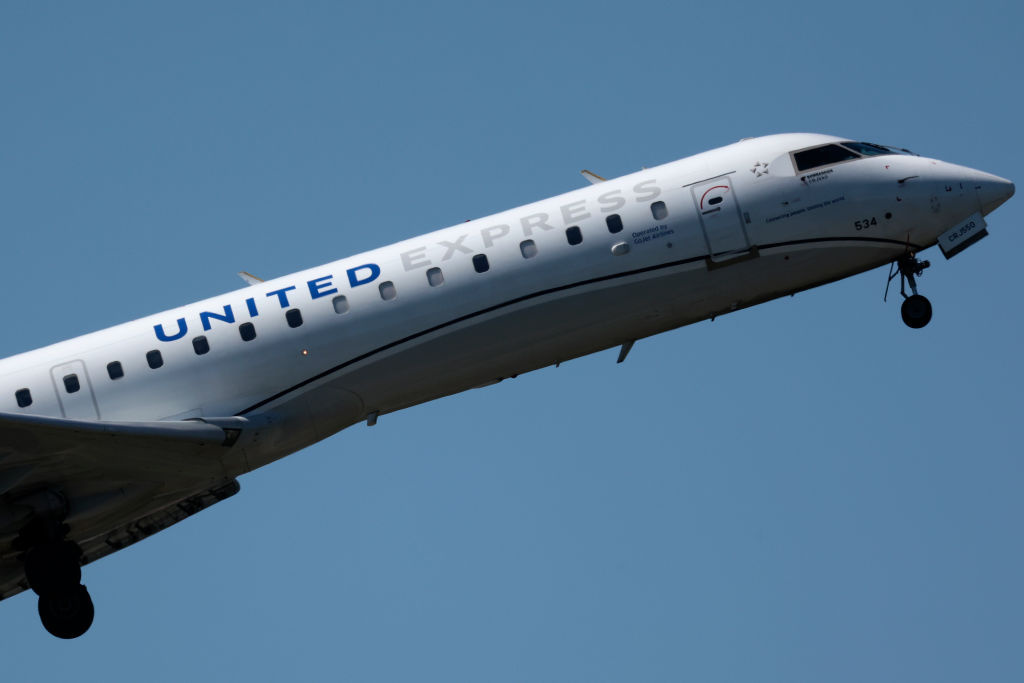
MADISON, Wis. — A United Airlines flight from Chicago to Minneapolis was forced to divert to Dane County Regional Airport on Friday night after a passenger attempted to breach the cockpit, according to air traffic control recordings and law enforcement statements.
The incident occurred aboard Flight 2005, a Boeing 737-900 carrying more than 140 passengers and six crew members. The plane landed safely in Madison just before 9:30 p.m. local time after the disturbance prompted an emergency diversion.
United Airlines confirmed the diversion was due to a “security concern with an unruly passenger.” The airline declined to provide additional details, citing an ongoing investigation.
The FBI Milwaukee Field Office stated that its Madison Resident Agency and local law enforcement partners responded immediately. “A subject was detained by the Dane County Sheriff’s Office and afterwards, passengers resumed their flight,” FBI spokesperson Caroline Clancy said in a statement.
Audio recordings from the airport tower reviewed by investigators captured communications indicating the situation was serious. One transmission noted that off-duty law enforcement officers were on board the flight and had intervened. “Don’t think they were able to cuff him but were able to get control of him after multiple attempts to try to breach the cockpit,” the recording stated. “He is seated in a seat and flanked by law enforcement officers on either side.”
The passenger was ultimately subdued and detained by authorities on the ground. The plane remained in Madison for several hours before continuing to Minneapolis, where it landed shortly before 2:30 a.m. Saturday.
No injuries were reported among passengers or crew. The exact motive behind the passenger’s actions remains under investigation, and federal authorities have not released the individual’s identity or any charges filed as of Saturday morning.
The event highlights ongoing concerns about aviation security despite enhanced protocols implemented since the September 11, 2001 attacks. Cockpit doors on commercial aircraft are reinforced and locked during flight, with access strictly controlled. However, incidents involving unruly or disruptive passengers continue to occur, sometimes escalating into more serious threats.
Federal Aviation Administration data shows hundreds of unruly passenger incidents reported annually, though the vast majority do not involve attempts to access the cockpit. When such attempts do occur, they trigger immediate responses from crew, air traffic control and law enforcement.
United Airlines said the safety of its passengers and crew remains its top priority. The carrier cooperated fully with law enforcement and is conducting its own internal review of the incident.
The diversion caused significant inconvenience for travelers. Passengers on the flight were delayed by several hours before reaching their final destination. Some expressed gratitude to the off-duty officers who helped restrain the individual, while others described the atmosphere on board as tense during the episode.
Aviation experts noted that the presence of off-duty law enforcement on commercial flights is relatively common and often plays a critical role in managing in-flight disturbances. These individuals are not formally deputized to act in such situations but frequently assist crew members when needed.
The incident comes at a time when airlines are balancing increased passenger volumes with heightened security measures. The Transportation Security Administration has emphasized the importance of the “see something, say something” campaign, encouraging passengers and crew to report suspicious behavior promptly.
Dane County Regional Airport handled the unscheduled arrival efficiently, with emergency personnel on standby. Airport officials confirmed that operations returned to normal shortly after the aircraft departed for Minneapolis.
This is not the first time a United Airlines flight has faced a security-related diversion. Previous incidents involving disruptive passengers have led to strengthened training programs for crew members on de-escalation techniques and emergency protocols.
Federal authorities, including the FBI and TSA, are expected to conduct a thorough investigation. This will likely include interviews with passengers and crew, review of cabin surveillance footage if available, and analysis of the individual’s background and possible motivations.
The broader implications for airline security could prompt renewed discussions about cockpit access procedures, passenger screening enhancements and crew training. While modern aircraft are designed to withstand such attempts, the human element remains a critical variable in maintaining safety.
Travelers are reminded that interference with flight crew members is a serious federal offense that can result in significant penalties, including fines and imprisonment. The FAA and Department of Justice take such matters seriously, often pursuing prosecution to deter future incidents.
As details continue to emerge, the aviation community will monitor the investigation closely. For now, the successful resolution of the incident — thanks in part to quick action by those on board — prevented what could have been a far more serious event.
United Airlines has not commented further on the matter beyond its initial statement, deferring to law enforcement. Passengers affected by the diversion are being offered compensation and rebooking assistance in accordance with the airline’s policies.
The event serves as a reminder of the vigilance required in commercial aviation. Even with advanced security systems and protocols, the cooperation of passengers and crew remains essential to maintaining safety in the skies.

Albert Anthony is the pen name of a business author on Amazon and his newest book is “How To Pick Stocks: 8 Steps For Long-Term Investing with Fundamental & Technical Analysis,” now available as a 2026 edition paperback and Kindle ebook in several regions including the US, UK, Canada, and Europe. The author is an analyst & contributor for investing platform Seeking Alpha since 2023, where he has nearly 2,000 followers and has covered hundreds of stocks in multiple sectors including banks/financials, REITs, insurance, pharma, and more. He has also written for platforms like Investing dot com, and has taken part in many business conferences includes Bloomberg Adria’s Investment Outlook 2026 as well as Money Motion 2026. Albert Anthony has Croatian-American roots, having grown up in the US and living in the NYC/New Jersey area as well as the Austin Texas area while working in enterprise IT roles at several prominent companies, including a top 10 financial firm. The author earned a B.A. from Drew University, and also completed certifications from Microsoft, CompTIA, and Corporate Finance Institute where he earned the specialization in risk management. He is founder of a boutique equities research firm, Albert Anthony & Company, which is a trade name both in the US and Croatia. Besides his writing and analyst work, the author has been active on camera as well, as a film/TV extra for casting agencies in Croatia/Europe, and also took part in roundtable panel discussions and appeared in several media stories in that region. You can also check out the author’s video content on the Albert Anthony channel on YouTube where he discusses investing topics, @author.albertanthony Please note: The author does not write about non-publicly traded companies, small cap stocks, crypto, or startup CEOs, so any such mail received and pitches from PR agencies will be deleted. Any official mail to the author should be sent to albertanthony.info@gmail.com. *Author Disclaimer: Albert Anthony and Albert Anthony & Co, is a US-based sole proprietorship registered as a trade name in Austin, Texas, and a sole proprietor registered in Croatia. The author nor his company are registered financial advisors and do not provide personalized financial advisory services to clients and do not manage client assets but provide general markets commentary and research as well as actionable insights based on publicly-available data and their own analysis. The author does not sell or market financial products and services, nor is compensated by any company for rating them. The author does not hold any material position in any stock he rates at the time of writing, unless otherwise disclosed. All investment is assumed to be at risk and readers are expected to do their due diligence beyond the scope of this author’s commentary, agreeing to indemnify the author of any liability for potential investment losses.
Analyst’s Disclosure: I/we have no stock, option or similar derivative position in any of the companies mentioned, and no plans to initiate any such positions within the next 72 hours. I wrote this article myself, and it expresses my own opinions. I am not receiving compensation for it (other than from Seeking Alpha). I have no business relationship with any company whose stock is mentioned in this article.
Seeking Alpha’s Disclosure: Past performance is no guarantee of future results. No recommendation or advice is being given as to whether any investment is suitable for a particular investor. Any views or opinions expressed above may not reflect those of Seeking Alpha as a whole. Seeking Alpha is not a licensed securities dealer, broker or US investment adviser or investment bank. Our analysts are third party authors that include both professional investors and individual investors who may not be licensed or certified by any institute or regulatory body.

Five midcap mutual funds delivered strong long-term performance, generating over 20% annualised returns in the last three years, led by HSBC Midcap Fund, ICICI Prudential Midcap Fund and WhiteOak Capital Mid Cap Fund.

Oddity Tech: Cheap, But The Ad Fix Still Has To Show Up
Business
Dalal Street Week Ahead: Nifty stuck in consolidation zone; 23,800 remains key breakout hurdle
The sharp decline witnessed on Friday was largely driven by MSCI rebalancing-related flows, resulting in accelerated profit-taking and a weak close for the week. India VIX rose by 9.60% to 16.19, reflecting a pickup in volatility expectations and some increase in market nervousness following the late-week selloff. Nifty ended the week with a loss of 171.55 points (-0.72%).
 Agencies
The broader technical structure remains in a consolidation phase. However, the sharp selloff towards the end of the week has once again dragged the immediate resistance levels lower, with the 23,800 zone emerging as the first significant hurdle that the index must overcome. As long as Nifty remains below this level, the ongoing consolidation is likely to continue.
On the downside, the index continues to hold above the lower boundary with the support zone placed in the 23,300-23,400 area. A decisive move beyond either end of this range could set the tone for the next directional move.
The markets are likely to begin the coming week on a cautious note after Friday’s sharp decline. Immediate resistance levels are placed at 23,800 and 24,000, while supports come in at 23,350 and 23,100.
A sustained move above 23,800 would improve the near-term technical outlook and may trigger fresh buying interest. Conversely, any violation of the 23,300 area could invite renewed weakness and increase downside pressure.
The weekly RSI stands at 40.84 and remains below the neutral 50 mark, indicating subdued momentum and showing no divergence against price. The weekly MACD remains below its signal line and continues to stay in negative territory, reflecting a lack of strong upward momentum.A study of the overall pattern shows that Nifty continues to trade within a consolidation beneath a key supply area. The index remains below its 50-week and 100-week moving averages, placed near 24,936 and 24,535, respectively, indicating that the intermediate trend has yet to regain full strength. At the same time, the index remains comfortably above its rising 200-week moving average near 22,057, keeping the long-term structure intact. The ongoing compression between channel support and overhead resistance suggests that the market may be approaching a decisive phase where a directional breakout could emerge over the coming weeks.
Given the current technical setup, traders should continue to maintain a balanced and selective approach. The rise in India VIX alongside the failure to sustain higher levels warrants caution, especially near overhead resistance. Fresh buying should remain stock-specific and focused on pockets displaying relative strength. Traders would be better served by protecting gains, maintaining disciplined risk management, and avoiding aggressive directional bets until the index confirms strength by moving above 23,800. The coming week is likely to reward selectivity and prudent positioning rather than broad-based aggressive exposure.
In our look at Relative Rotation Graphs®, we compared various sectors against the CNX500 (NIFTY 500 Index), representing over 95% of the free-float market cap of allthe listed stocks.
The Relative Rotation Graph (RRG) shows that the Nifty Midcap 100, Energy, Media, Pharma, and Metal Indices are inside the leading quadrant. While the Pharma and Energy groups are showing a slowdown in their relative momentum, overall, these groups are likely to relatively outperform the broader markets.
AgenciesAgenciesThe Nifty Infrastructure and the PSE Indices are inside the weakening quadrant. Collectively speaking, these groups may see a slowdown in their relative performance against the broader markets.
The PSU Bank Index has rolled inside the lagging quadrant. The Nifty Bank, Services Sector, Financial Services, and Auto Indices also continue to languish inside the lagging quadrant. These groups are set to relatively underperform the broader markets. The Nifty IT Index is also in the lagging quadrant; however, it is showing a sharp improvement in relative momentum against the broader Nifty 500 Index.
The FMCG and the Realty Index are inside the improving quadrant; they may continue to improve their relative performance against the benchmark.
Important Note: RRGTM chartsshow the relative strength and momentum of a group ofstocks. In the above Chart, they show relative performance against the NIFTY500 Index (Broader Markets) and should not be used directly as buy or sell signals.
CNH Industrial: Weak Earnings, Mounting End-Market Pressures, And An Unjustified Valuation

Ex-footballer arrested as beheaded pal’s body found in suitcase

FDL: Regular Dividends And Relative Value (Reaffirming Buy) (NYSEARCA:FDL)

Dow Jones Futures: Market Hits Highs On Iran Hopes; Nvidia, Tesla Lead 5 Trillion-Dollar Stocks Near Buy Points

Steven Gerrard disagrees with Gary Neville over ‘shock’ Chelsea and Arsenal claim | Football

US brings back mandatory military draft registration

Register Renaming | Hackaday

Tom Lee: The Cryptocurrency Supercycle Has Begun (DO THIS NOW)

POV: “what financial relief actually looks like” #lifestylecreator #relatable #softlife #money

XRP: “EXTREME UNDERVALUED ZONE FOR XRP” On-Chain Analytics Firm Reports
-

 Business6 days ago
NYT Strands Answers May 24 2026 Revealed for Puzzle No. 812 Theme Summer Essentials
-

 NewsBeat3 days ago
Israel says it has killed new Hamas military leader in Gaza City airstrikes
-

 Politics5 days ago
Bridgerton Season 5: Cast, Release Date And Everything We Know So Far
-

 Business4 days ago
Selena Gomez Reportedly Upset Over Benny Blanco’s Comments on Her ‘Terrible’ Diet
-
 Crypto World4 days ago
Micron Crosses $1 Trillion Market Cap as AI Demand Reshapes Memory Sector
-

 Tech5 days ago
Microsoft’s quiet Claude Code retreat and the real cost of enterprise AI
-

 Business5 days ago
BTS Sells Out Four Las Vegas Shows at Allegiant Stadium for ARIRANG World Tour
-
 Tech4 days ago
China assigns ID codes to 28,000+ humanoid robots
-

 News Videos3 days ago
XRP *JUST* SUCCEEDED!!!! CLARITY ACT EXPOSED!!! (SHE EXPOSED IT)
-

 Tech1 day ago
Waymo dominates autonomous vehicle registrations as Tesla trails behind
-
Tech3 days ago
The Samsung pay deal is the moment Korean unions changed register
-

 Tech5 days ago
Westone Audio and Etymotic Acquired by Fidelity Collective in Major IEM Market Move
-

 Tech4 days ago
Millions of AI agents imperiled by critical vulnerability in open source package
-
Crypto World6 days ago
Brian Armstrong Outlines Crypto Vision for the Future Financial System
-
 Entertainment5 days ago
‘Breaking Bad’ Star’s Easy-to-Binge 6-Part Crime Series Spin-Off Is Finally Heading to Free Streaming
-
Crypto World3 days ago
SpaceX’s $2 Trillion IPO: Why Tech Giants Nvidia (NVDA), Apple (AAPL), and Microsoft (MSFT) May Face Pressure
-
 Crypto World5 days ago
Nvidia (NVDA) CEO Calls on Super Micro to Strengthen Export Controls Amid Smuggling Probe
-

 Tech3 days ago
NASA taps Blue Origin to deliver lunar rovers for Moon Base initiative
-
 NewsBeat5 days ago
Hottest May day ever as London hits 34.8C in 2C leap from previous records
-
 Crypto World21 hours ago
Snowflake (SNOW) Stock Rallies on Strong Q1 Results and AI Product Growth
You must be logged in to post a comment Login