

Business
Penguin Solutions closes $750 million convertible notes offering



Jordan has not ordered evacuation of Aqaba airport or seaport, gov’t spokesperson says
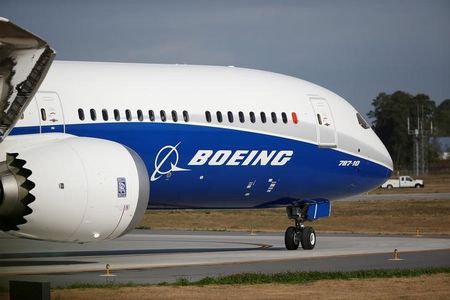
Boeing focused on production, not new orders at Farnborough Airshow
Business
L7 Bassist Jennifer Finch, Longtime Grunge-Era Punk Icon, Dies at 59 After Courageous Brain Cancer Battle


Jennifer Finch, the bassist, vocalist and songwriter whose ferocious stage presence helped power the influential rock band L7 through the 1990s alternative-rock boom, has died at age 59, the group announced Saturday. Finch’s death came following an aggressive form of brain cancer, just over a week after the band publicly revealed her diagnosis.
L7 confirmed Finch’s death in an emotional statement posted to Instagram. “With a very heavy heart we announce that our beloved bandmate, friend, and fellow troublemaker Jennifer Finch has passed away today,” the post read. “She had a long courageous fight with brain cancer and was loved by many wonderful friends, musical peers and fans worldwide. We love you Jennifer.” The band followed with a fuller statement through its representatives, writing, “We are shattered by the loss of our beloved bandmate, sister and friend Jennifer Finch, whose fierce spirit, humor and boundless creativity helped shape L7 and changed all of our lives forever. Jennifer was a true original who lived entirely on her own terms, and the impact she made on music, art and everyone lucky enough to know her cannot be measured. We love her beyond words and will carry her with us always. Rest in power our dear friend.”
Finch was born Jennifer Precious Finch on August 5, 1966, and raised in West Los Angeles by her adoptive parents, Robert Edward Finch and Sandra Jacobson. Her musical career began in 1984, when she teamed up with future Hole and Babes in Toyland founders Courtney Love and Kat Bjelland to form the short-lived group Sugar Babydoll. Around the same period, Finch also played in Hollywood band The Pandoras alongside Gwynne Kahn.
Finch joined L7 in 1986, roughly a year after the Los Angeles band was formed by Donita Sparks and Suzi Gardner, becoming a core member of the group’s classic lineup alongside Sparks, Gardner and drummer Dee Plakas. In the 2016 documentary “L7: Pretend We’re Dead,” Sparks described Finch as “persistent,” crediting her networking instincts and stage presence with helping push the band forward during its rise. A 2017 Rolling Stone profile similarly captured her impact, describing her at the time as “an ill-behaved and untrained bassist who added instant verve to their live act.”
Over the course of the band’s most influential years, Finch played on four of L7’s studio albums, including their 1988 self-titled debut, 1990’s “Smell the Magic,” 1992’s “Bricks Are Heavy” and 1994’s “Hungry for Stink,” contributing songwriting credits on tracks including “(Right On) Thru,” “Everglade,” “One More Thing” and “Shirley.” “Bricks Are Heavy,” produced by Butch Vig, became a defining release of the era, pairing sludgy, distortion-heavy riffs with sharp humor and pointed political commentary, helping cement L7’s place at the intersection of punk, metal, grunge and alternative rock during the genre’s commercial peak.
Finch departed L7 in 1996 at age 30, a decision she later described as rooted in newfound sobriety, financial pressure and ongoing grief following the death of her father and the band’s longtime roadie. Reflecting on her exit in the 2017 Rolling Stone interview, Finch said, “When you’re younger, there’s so much pressure riding on everything. I know I caved under that specific pressure — of not being able to be everything [I felt] was expected.”
After leaving L7, Finch continued building an active career in music and beyond. She fronted the band OtherStarPeople alongside Xander Smith, releasing the album “Diamonds in the Belly of the Dog” in 1999 on A&M Records and Interscope. In 2002, she founded the punk group The Shocker, serving as its primary songwriter and singer, and later co-founded Sex in Progress with Evie Evil of Evil Beaver in 2011. She also launched her own record label, Little Pusher Records, and built a respected parallel career as a photographer, having documented Los Angeles’ early punk and alternative-rock scene starting from the age of 13.
Finch reunited with L7 in 2014, touring extensively with Sparks, Gardner and Plakas and contributing the song “Garbage Truck” to the band’s 2019 reunion album, “Scatter the Rats.” The band’s documentary “L7: Pretend We’re Not Dead” was nominated for a VO5 NME Award in 2018, further cementing the group’s enduring cultural relevance decades after their initial breakthrough.
In May, L7 announced “The Last Hurrah,” planned as the band’s final tour and set to begin this October. Finch was forced to withdraw from the tour’s upcoming U.S. leg following her diagnosis, which was publicly announced on July 13 alongside news that she had undergone multiple surgeries and was facing serious complications requiring rehabilitation, physical therapy and in-home care. A GoFundMe campaign organized by Finch’s friend Aubree Miller, initially aiming to raise $150,000 to cover treatment costs and preserve an extensive archive of Finch’s creative work, quickly surpassed its goal, raising nearly $400,000 in the days before her death.
The fundraising effort drew support from a wide swath of the music community, including members of Tool, Pearl Jam, Korn, Garbage, Fugazi and Bikini Kill, alongside R.E.M.’s Michael Stipe, Tool frontman Maynard James Keenan and Korn guitarist Brian “Head” Welch, reflecting the breadth of Finch’s influence and connections built across more than three decades in music.
Finch is remembered by bandmates, collaborators and fans as a defining figure of the 1990s alternative and grunge scene, whose blunt, melodic bass style and fearless creative instincts helped shape L7’s sound during one of the most influential runs in the genre’s history. Funeral and memorial arrangements had not been publicly announced as of Saturday, with plans previously underway to preserve and eventually release an extensive archive documenting Finch’s decades of work across music and photography.

TSMC: The AI Supercycle Just Got Stronger

The AI Bubble Looks A Lot Like Dot-Com Bust

‘Varney & Co.’ host Stuart Varney weighs in on FIFA President Gianni Infantino praising the incredible enthusiasm for the World Cup across American host cities during an appearance on ‘Fox & Friends.’
The richest FIFA World Cup in history will culminate Sunday when Argentina and Spain compete not only to lift soccer’s most coveted trophy, but also for a record $50 million champion’s prize.
The 2026 tournament marked the first World Cup to feature 48 teams and 104 matches, prompting FIFA to increase its total financial distribution to a record $871 million. Of that total, $655 million is tied to performance-based prize money, with payouts increasing each round as teams advanced through the tournament.
HOW TO WATCH ARGENTINA VS. SPAIN: LIVE STREAM THE 2026 FIFA WORLD CUP FINAL MATCH

With the trophy and a record $50 million on the line, Sunday’s final will bring the richest FIFA World Cup in history to a close. (Jordan Bank/FIFA/Getty Images / Getty Images)
Beyond the performance-based prize money, every nation that qualified for the World Cup was guaranteed a significant financial windfall before kickoff. FIFA awarded each participating federation $10 million in qualification funding and another $2.5 million in preparation funding, along with additional contributions to help cover travel, logistics and delegation expenses.
That meant every country was guaranteed at least $12.5 million before kicking a ball, with the opportunity to dramatically increase its earnings by advancing out of the group stage and making a deep run through the knockout rounds.
Teams reaching the quarterfinals earned $19 million, while those eliminated in the Round of 16 received $15 million. Nations knocked out in the Round of 32 took home $11 million, and the 16 teams eliminated in the group stage each collected $9 million.
FOX ONE, USO TEAM UP TO BRING LIVE WORLD CUP GAMES TO US TROOPS OVERSEAS
Sunday’s winner will earn $50 million, while the runner-up will receive $33 million, meaning the championship match carries a $17 million swing in prize money.
The financial rewards have grown dramatically alongside the tournament itself. When Italy won the 1982 World Cup, the total prize pool stood at just $20 million and the champion earned $2.2 million. Forty-four years later, FIFA’s overall financial distribution has climbed to a record $871 million, while the champion’s prize alone has increased more than 20-fold to $50 million.
The United States, which reached the Round of 16 before falling to Belgium, earned $15 million in performance-based prize money.
GET FOX BUSINESS ON THE GO BY CLICKING HERE

Lionel Messi celebrates with fans and team mates after winning the FIFA World Cup Qatar 2022 Final match between Argentina and France at Lusail Stadium on December 18, 2022 in Lusail City, Qatar. (Michael Regan/FIFA via Getty Images / Getty Images)
The prize money is paid to each national soccer federation, which then determines how it is distributed among players, coaches and development programs according to its own policies.
The 2026 World Cup was also historic off the field, becoming the first tournament to be jointly hosted by three countries: the United States, Canada and Mexico.
US hurricane center says 80% chance of cyclone in next 48 hours near Florida
Business
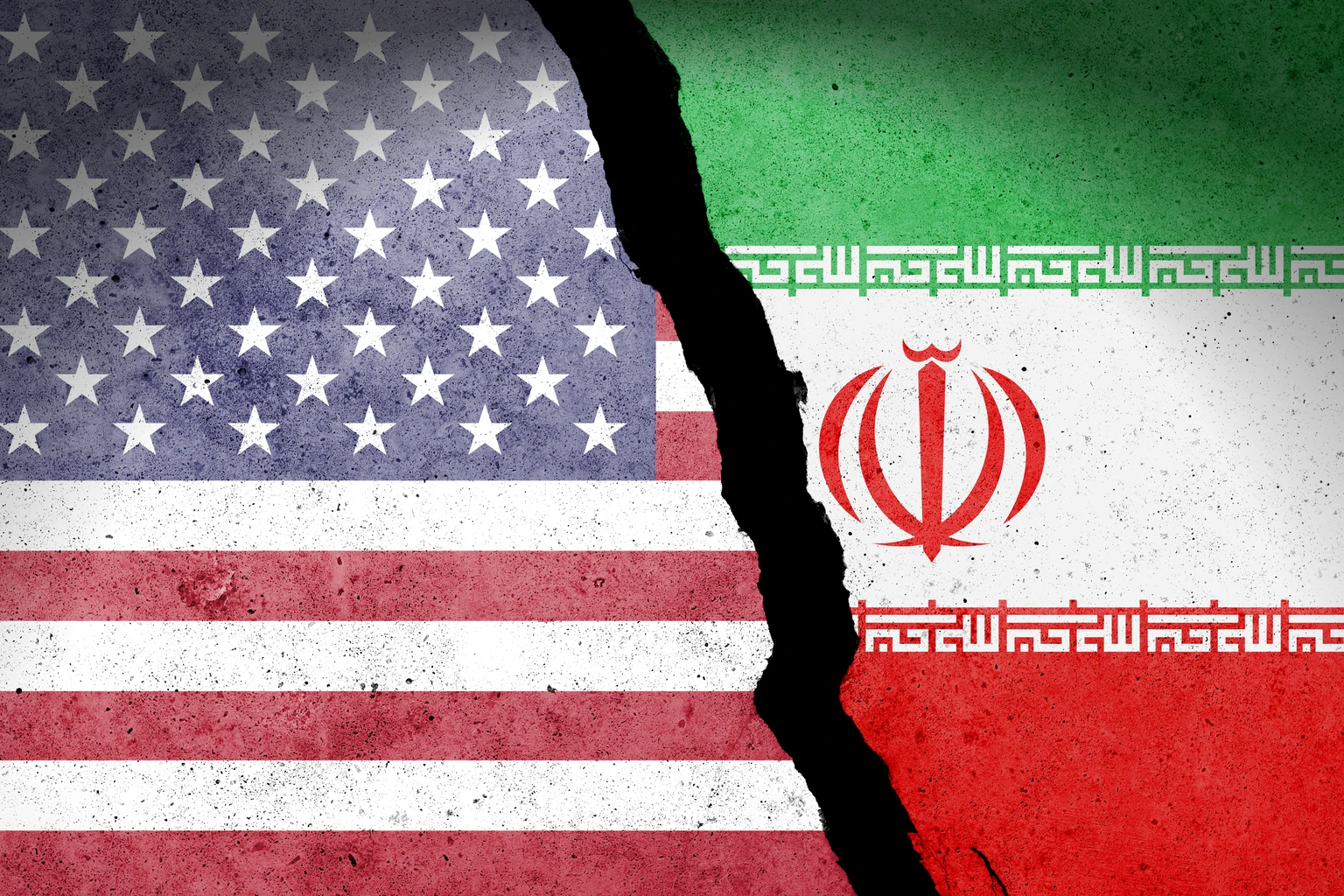
Israel to receive more US refuelling planes as Iran attacks intensify, Israeli officials say

Israel to receive more US refuelling planes as Iran attacks intensify, Israeli officials say

Alex Pettee is President and Director of Research and ETFs at Hoya Capital. Hoya manages institutional and individual portfolios of publicly traded real estate securities.Alex leads the investing group iREIT®+HOYA Capital. The service features a team of analysts focusing on real income-producing asset classes that offer the opportunity for reliable income, diversification, and inflation hedging. Learn More.
Analyst’s Disclosure: I/we have a beneficial long position in the shares of RIET, HOMZ, IRET, ALL HOLDINGS IN THE IREIT+HOYA PORTFOLIOS either through stock ownership, options, or other derivatives. I wrote this article myself, and it expresses my own opinions. I am not receiving compensation for it (other than from Seeking Alpha). I have no business relationship with any company whose stock is mentioned in this article.
Hoya Capital Research & Index Innovations (“Hoya Capital”) is an affiliate of Hoya Capital Real Estate, a registered investment advisory firm based in Rowayton, Connecticut, that provides investment advisory services to ETFs, individuals, and institutions. Hoya Capital Research & Index Innovations provides non-advisory services, including market commentary, research, and index administration focused on publicly traded securities in the real estate industry. This published commentary is for informational and educational purposes only. Nothing on this site nor any commentary published by Hoya Capital is intended to be investment, tax, or legal advice or an offer to buy or sell securities. This commentary is impersonal and should not be considered a recommendation that any particular security, portfolio of securities, or investment strategy is suitable for any specific individual, nor should it be viewed as a solicitation or offer for any advisory service offered by Hoya Capital Real Estate. Please consult with your investment, tax, or legal adviser regarding your individual circumstances before investing. The views and opinions in all published commentary are as of the date of publication and are subject to change without notice. Information presented is believed to be factual and up-to-date, but we do not guarantee its accuracy, and it should not be regarded as a complete analysis of the subjects discussed. Any market data quoted represents past performance, which is no guarantee of future results. There is no guarantee that any historical trend illustrated herein will be repeated in the future, and there is no way to predict precisely when such a trend will begin. There is no guarantee that any outlook made in this commentary will be realized. Readers should understand that investing involves risk, and loss of principal is possible. Investments in real estate companies and/or housing industry companies involve unique risks, as do investments in ETFs. The information presented does not reflect the performance of any fund or other account managed or serviced by Hoya Capital Real Estate. An investor cannot invest directly in an index, and index performance does not reflect the deduction of any fees, expenses, or taxes. Hoya Capital Real Estate and Hoya Capital Research & Index Innovations have no business relationship with any company discussed or mentioned and never receive compensation from any company discussed or mentioned. Hoya Capital Real Estate, its affiliates, and/or its clients and/or its employees may hold positions in securities or funds discussed on this website and in our published commentary. A complete list of holdings and additional important disclosures is available at www.HoyaCapital.com.
Seeking Alpha’s Disclosure: Past performance is no guarantee of future results. No recommendation or advice is being given as to whether any investment is suitable for a particular investor. Any views or opinions expressed above may not reflect those of Seeking Alpha as a whole. Seeking Alpha is not a licensed securities dealer, broker or US investment adviser or investment bank. Our analysts are third party authors that include both professional investors and individual investors who may not be licensed or certified by any institute or regulatory body.
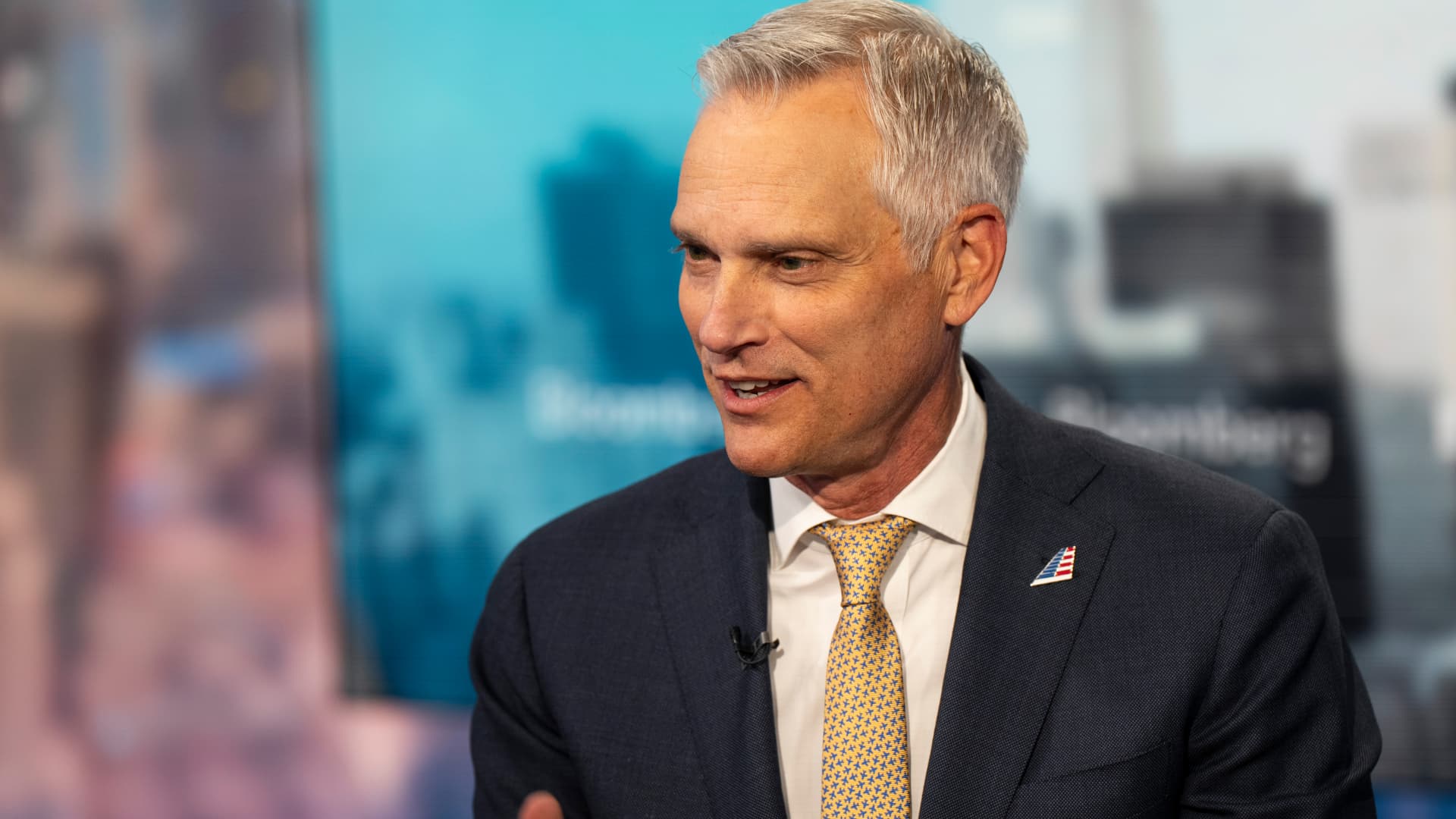
Robert Isom, chief executive officer of American Airlines Group Inc., speaks during a Bloomberg Television interview in New York, US, on Wednesday, Dec. 10, 2025.
Christian Monterrosa | Bloomberg | Getty Images
FORT WORTH, Texas — American Airlines CEO Robert Isom has a math problem.
The carrier is flying about 6,500 flights per day this year — nearly an entire Alaska Airlines more worth of travel more than its closest competitor, according to Cirium — yet American’s profit gap has grown. United Airlines brought in about $3 billion more than American last year, and U.S. profit leader Delta Air Lines made nearly $5 billion more.
In an exclusive interview with CNBC late last month, Isom said American and its nearly 140,000 employees want “to be best at everything that we do.” He said that carrier’s “long-range plan is certainly making up the margin gap,” but he didn’t put a timeline on that goal.
American’s top executives at the carrier’s headquarters late last month outlined new initiatives to CNBC: bigger, more luxe airport lounges, a new wide-body aircraft order, and fresh interiors for even more of its long-haul fleet to attract big spenders.
Isom described the carrier’s identity as “a premium global airline with the largest footprint in North America.”
American has more decisions it needs to make — and soon — to close the gap. Perhaps its biggest challenge is getting customers to shell out more to fly, something Delta and United zeroed in on years ago.
American has mastered running an efficient business but “what we will measure over time is: Are we closing this revenue gap and closing the unit revenue gap?” American CFO Devon May said.
Cabins, planes and lounges
The carrier’s executives reiterated that American’s plan rests on growing its ever-more important loyalty program, improving customers’ experience, expanding its network and increasing higher-end revenue.
The airline is forecast to earn 64 cents a share this year, on an adjusted basis, which would be up almost 80% from last year, according to analyst estimates. It will give an updated forecast when it reports second-quarter results on Thursday.
United and Delta earlier this month reported bookings are still strong. The surge in fuel prices have both helped and hurt the industry this year: The sudden run-up in prices because of the Iran war took carriers off guard, though they’re passing more of those costs along to travelers, and executives don’t expect fares will drop much anytime soon.
Wall Street is optimistic American will continue to improve, expecting it to quadruple adjusted earnings in 2027 to $2.58 a share.
American is now remodeling cabins across the fleet and taking deliveries of new planes with interiors that feature new amenities and more premium seats. Executives have said they’re considering but haven’t decided on bringing back seatback screens to much of its narrow-body fleet, though American recently joined the ranks of airlines that are adding satellite Wi-Fi from SpaceX‘s Starlink.
Customers who are willing to pay more for premium seats or other perks like lounge access have been a bright spot across the industry, and everyone from profit leader Delta to now-defunct budget carrier Spirit Airlines has tried to woo those travelers as airlines rush to get fancy, new seats — small but profitable real estate — in the air.
Isom told CNBC that work to refresh cabins will soon expand to American’s Boeing 787-8 Dreamliners. Its revamped cabins on its largest planes, the 777-300ERs, could debut in the next few weeks. Each business-class, lie-flat seat can bring in close to $10,000 on some long-haul international routes compared with $2,000 or even much less for a seat in the back.
Keeping up high-touch service levels could be a challenge, the airline’s flight attendant union said, as the 70-seat business class soon comes online. American has been phasing out planes with separate first and business classes.
“Now, as American introduces 70 Business Suites and markets a premium international experience, they’re expecting a reduced number of Flight Attendants to deliver significantly more personalized service,” Julie Hedrick, president of the Association of Professional Flight Attendants, said in a statement. (American reduced flight attendant staffing on those aircraft from 13 to 11 in 2020. Other carriers have made similar moves.) “The result will be longer service times and a customer experience that falls short of what passengers expect.”
In another lure for premium travelers, Chief Customer Officer Heather Garboden told CNBC that American is going to build the biggest Admirals Club lounge in its network, at 37,000 square feet, at its sprawling Dallas Fort Worth International Airport hub in Terminal C.
Dallas Fort Worth International Airport under construction, American Airlines’ largest hub, June 2026.
Leslie Josephs/CNBC
At the under-construction Terminal F at that airport, American is also planning a grab-and-go Provisions airport lounge, as well as a Flagship check-in area in Terminal D. The entire airport, American’s largest hub, is undergoing a $12 billion makeover, and the carrier recently unveiled new gates in Terminal C, which will expand further. American and others have been upgrading and expanding airport lounges for the spendiest customers around the U.S.
But United has had a roughly decade head start at catering to higher-paying travelers, while Delta has close to two decades of experience. In the late 2000s, Delta was giving away about 90% of its domestic first-class seats through free upgrades for frequent flyers, but now it says it sells the vast majority, with customers paying cash or redeeming miles, now a trend among big carriers, though American wants to increase buy-ups.
Under Isom, American has been upping its game in premium investments. American’s commercial team is working on technical changes that aim to offer customers more opportunities to buy pricier seats.
Aside from its of fortress hubs, American’s chief commercial officer, Nat Pieper, said the airline needs to win in so-called jump-ball markets like Los Angeles, Chicago and Washington, D.C. He said American continues to grow sign-ups for its lucrative credit card program in some of those, including New York.
American said it’s flying is split about 80% domestic versus 20% international. International flights often carry a high premium compared with domestic routes — and the planes serving them generally have more luxurious seats on board.
Isom said the airline’s network breadth is a major strong suit and will continue to be.
While American and other airlines rely on alliances and partnerships to expand reach, United is flying a lot of that itself.
United flies more internationally than Delta and American, and made its geography quiz-like network a calling card and , adding dots on the map from Mongolia to Galicia, Spain.
‘Never been deterred’
Robert Isom, chief executive officer of American Airlines Group Inc., center, following a news conference at the US Department of Transportation in Washington, DC, US, on Thursday, May 8, 2025.
Samuel Corum | Bloomberg | Getty Images
A mechanical engineer by education who took his first flight at about age 4, Isom rose up the ranks at Northwest Airlines and America West Airlines, which through mergers became modern-day Delta and American, respectively.
The airline industry is one of the most insular. In part, because of the safety-critical and specific knowledge needed to keep thousands of planes on track every day, airlines don’t often hire from other industries, especially at the top.
The executive team that long worked at American is split between that carrier and United. The CEO of United, Scott Kirby, used to work at American, until he was fired almost exactly 10 years ago. United announced it hired Kirby as president the same day.
Isom, 62, took over the top role at American in March 2022, after the airline industry had been rocked by the pandemic.
“I’ve never been deterred, no matter what the challenges that we face,” he said.
He took over in a quarter when American lost $1.6 billion.
“I’m clear-eyed about the challenges in this business,” he said, pointing to an industry that has been through everything from the 9/11 terrorist attacks, to the financial crisis, bankruptcies, mergers and wars and disease.
American ranked sixth of 11 U.S. airlines in punctuality in the first half of the year, according to Cirium data that pointed to with a 76.6% on-time rate, while Delta and United took the No. 2 and No. 3 spots, respectively. Under Isom and COO David Seymour, the carrier is working to improve its on-time rate, spreading out its schedule instead of jamming chaotic connecting banks in major hubs, and using artificial intelligence to predict maintenance problems.
On top of that, the carrier’s earnings are still hamstrung from its $35 billion debt load though American has slashed that from around a $54 billion peak coming out of the pandemic, with balance sheet improvement a major priority.
“They’re a giant — with a limp,” said Dennis Tajer, spokesman for the Allied Pilots Association, which represents American’s 15,000 aviators. Earlier this year, the APA and the flight attendants’ union called Isom’s leadership into question. Underperformance from the broader company means less profit-sharing for staff.
Getting customers to notice improvements could take time.
“Changing a service culture is hard, but not impossible,” said Jay Barney, a professor of strategic management at the University of Utah David Eccles School of Business. To alter overall brand perception, he said, “You have to make the changes obvious and visible, to current customers and potential customers.”
One issue is that flyers are often locked in because the biggest airlines have such overwhelming market share at major hub airports, he added.
What airlines might be trying to do is “charge more to their current customers,” Barney said.
Wide-body planes
An American Airlines Boeing 787-9 Dreamliner approaches for a landing at the Miami International Airport on December 10, 2021 in Miami, Florida.
Joe Raedle | Getty Images
American might be behind in its premium game, but Isom said customer satisfaction scores are rising. Chief Commercial Officer Pieper, an airline industry veteran whom the company appointed last fall as the carrier was recovering from a failed corporate sales strategy in 2024, said demand is strong across the board.
Buying new wide-body planes will be key to the airline’s next phase, Isom said. An order is on the table for this year, with both Boeing and Airbus in the mix, he said.
American’s more than 1,000 planes make up the youngest fleet of the three largest U.S. airlines, according to 2025 annual filings, thanks in part to a more than 400-airplane order it made about 15 years ago for new Boeing and Airbus narrow-body planes, but dozens of its Boeing 777 wide-bodies average more than two decades old.
American’s refresh of those older planes, Boeing 777-200s, are next, Isom said, but the carrier is shopping for new planes.
“I think that Airbus could play a big role” in the new order, Isom said. American’s wide-bodies are all currently Boeing planes.
American declined to say the size of its planned order. New aircraft for American would likely arrive in the early or middle of the next decade.
Up in Chicago, rival United — which has been duking it out with American at O’Hare International Airport — snatched up delivery slots for more than 100 Boeing Dreamliners in the last four years.
A future without United
As Isom lays out his vision for the future of the airline, there’s one path he says the carrier doesn’t see as feasible.
United CEO Kirby suggested this year a merger with American, an idea the airline rebuffed.
“I spoke with Scott,” Isom told CNBC. “Given history, given law, given past mergers, there wasn’t anyone that we talked to, our advisors, interested parties, politicians, that said that there was any chance of this happening.
“At the end of the day, we spend time looking at things that have a chance of happening. We don’t spend a lot of time pursuing impossibilities,” he said.
United has a partnership with JetBlue (American had a more involved one with JetBlue in the Northeast but it was blocked by a judge on antitrust grounds in 2023). But Kirby has repeatedly said this year he’s not interested in acquiring that New York airline. He also acknowledged that a merger with American won’t happen without a willing partner in that carrier’s management.
United, meanwhile, gets several slots at New York’s John F. Kennedy International Airport as early as next year under the JetBlue deal.
“Why buy the cow if you’re getting the milk for free?” said Brett Snyder, who writes the Cranky Flier blog.
Isom gave a standard line from executives when CNBC asked his own appetite for possible mergers and acquisitions, saying the carrier is always on the lookout for opportunities to serve the company’s customers.
For now, though, Isom said he is firmly focused on American’s new chapter.
He said he gravitated toward the industry “to be involved with something where you can make a difference.
“This is this one that you never wake up in the morning or going to bed at night thinking: Did I do good for somebody or something?” he said. “You certainly had the chance to in this business.”

The Company Brain and the future of go-to-market strategy

The Tartan Army’s best World Cup moments as 2026 tournament comes to an end
Jordan has not ordered evacuation of Aqaba airport or seaport, gov’t spokesperson says


-
 NewsBeat3 days ago
London Mayor Sadiq Khan handed a peerage by Keir Starmer alongside 15 other Labour figures… just days before the PM leaves No10
-

 Fashion2 days ago
Weekend Open Thread – Corporette.com
-

 Politics1 day ago
The House | The City of London can help the new chancellor deliver growth in every postcode
-

 Politics4 days ago
Young campaigners urge incoming PM to act on outdoor junk food ads
-

 Crypto World4 days ago
CFTC blocks Kalshi from unwinding Michigan trades after court order
-

 Business3 days ago
Nvidia Stock Slips After Big Tuesday Rally as Huang Confirms Vera Rubin Chip Is Now in Production Today
-

 Crypto World1 day ago
Ripple Payments Joins MiCA With 14 Firms, Does It Mean Anything For XRP?
-
 Entertainment4 days ago
Disney’s Most Ambitious Failed Star Wars Attraction Is Coming to SDCC
-

 Crypto World2 days ago
Ripple wins EU-wide access as ESMA adds it to MiCA register
-

 Business3 days ago
Palantir Shares Rise After Expanded Nvidia Partnership and Fresh Analyst Upgrades Ahead of Earnings Day
-

 Crypto World3 days ago
Injective Submits SEC Transfer-Agent Registration to Onchain Ownership Records
-

 Tech5 days ago
Get Your ESP32 Sunny Side Up With This Solar Dev Board
-
 Crypto World2 days ago
Two July Windows Left: The CLARITY Act’s Senate Fight and What Failure Means
-

 News Videos5 days ago
XRP BOMBSHELL… XRP OMBOARDED FOR TRANSACTIONS!!!
-

 NewsBeat2 days ago
Registration is now open for March for Men with Kev 2026
-

 Tech5 days ago
Dark Secrets Emerge When Jailbreaking LLMs
-
 Sports4 days ago
New Cornerback Enters Vikings Trade Rumor Mill
-

 News Videos2 days ago
Money | Class 12 Economics | CBSE Board Exam 2026-27
-

 Business3 days ago
Banco Bilbao Vizcaya Argentaria, S.A. (BBVA) Discusses Global Macro Environment and Economic Outlook for Core Markets Transcript
-

 Crypto World3 days ago
Claude Fable 5 Slips to Second in AI Coding Leaderboard
You must be logged in to post a comment Login