

Business
ProVen VCT admits 9.6 million new shares to LSE trading




Universal Music Group declines Pershing Square proposal


The candy is available in four varieties.

Abstract
- Japan’s easing of defence export restrictions marks a significant shift in Tokyo’s strategic posture, driven by China’s military expansion, North Korean threats, Russia’s invasion of Ukraine, and uncertainty over US foreign policy. This moves Japan from constitutional pacifism toward an active stabilising role in the Indo-Pacific.
- Southeast Asian nations including Indonesia, the Philippines, and Vietnam are diversifying their security partnerships in response. ASEAN institutions must strengthen operational frameworks to manage great power tensions, with Malaysia’s role as China-ASEAN coordinator considered especially critical to preventing regional polarisation.
Japan’s relaxation of defence export limitations marks a significant strategic transformation throughout Asia. With geopolitical pressures intensifying, Southeast Asian countries such as Indonesia, the Philippines, and Vietnam are broadening their security alliances. Japan’s well-regarded position within the region strengthens its expanding influence, although the dangers of major-power competition remain a concern.
Key Points
• Japan’s decision to ease defence export restrictions signals a profound strategic shift, driven by China’s military rise, North Korean threats, Russia’s war in Ukraine, and uncertainty over US foreign policy, transforming Tokyo from a pacifist economic giant into an active Indo-Pacific stabilising power.
• Southeast Asian nations, particularly Indonesia, Philippines, and Vietnam, are responding by diversifying security partnerships beyond economic diplomacy, recognising that regional stability increasingly requires military modernisation and deeper defence cooperation amid escalating geopolitical competition.
• While Japan’s expanded role carries risks of heightening China’s suspicions and deepening regional polarisation, ASEAN must evolve beyond rhetoric, strengthening institutional frameworks to prevent great power rivalry from escalating into open confrontation across the Indo-Pacific.
Japan’s Strategic Transformation and Its Regional Implications
A Historic Policy Shift Japan’s decision to lift major restrictions on defence exports represents far more than a technical policy revision — it signals a profound transformation in Asia’s strategic architecture. For decades, Tokyo maintained strict constitutional pacifism, avoiding conventional military power despite possessing immense technological capabilities. That era is rapidly ending. Structural pressures, including China’s military rise, North Korean missile testing, Russia’s war in Ukraine, and uncertainty surrounding American foreign policy under President Trump’s second administration, have compelled Japan to redefine itself as an active Indo-Pacific stabilising power rather than a passive beneficiary of American strategic protection.
Southeast Asia’s Evolving Security Calculus
Deepening Defence Partnerships Japan’s strategic recalibration is generating measurable responses across Southeast Asia. Indonesia and Japan have agreed to deepen defence industrial collaboration, the Philippines has embraced Japanese maritime patrol vessels and surveillance systems amid South China Sea tensions, and Vietnam is quietly diversifying its security partnerships. Indonesia, under President Prabowo Subianto, remains officially committed to non-alignment while simultaneously modernising its armed forces and engaging multiple defence partners. This reflects a regional consensus that economic diplomacy alone is insufficient to manage intensifying geopolitical risks in an era of maritime competition, cyber warfare, and accelerating military modernisation.
ASEAN’s Balancing Act in a Fragmented World Order
Navigating Great Power Rivalry Japan benefits from relatively high trust across ASEAN, combining technological sophistication with restrained diplomacy. However, China views Tokyo’s changing defence posture with growing suspicion, creating delicate tensions for regional institutions. Frameworks such as the ASEAN Defence Ministers’ Meeting Plus and the ASEAN Outlook on the Indo-Pacific must become more operationally coherent to prevent rivalry from escalating into open confrontation. Malaysia, as coordinator of China-ASEAN relations from 2025 to 2028, holds a particularly sensitive diplomatic role, ensuring ASEAN remains a platform for dialogue rather than becoming entrapped within dangerous great power polarisation.
Other People are Reading
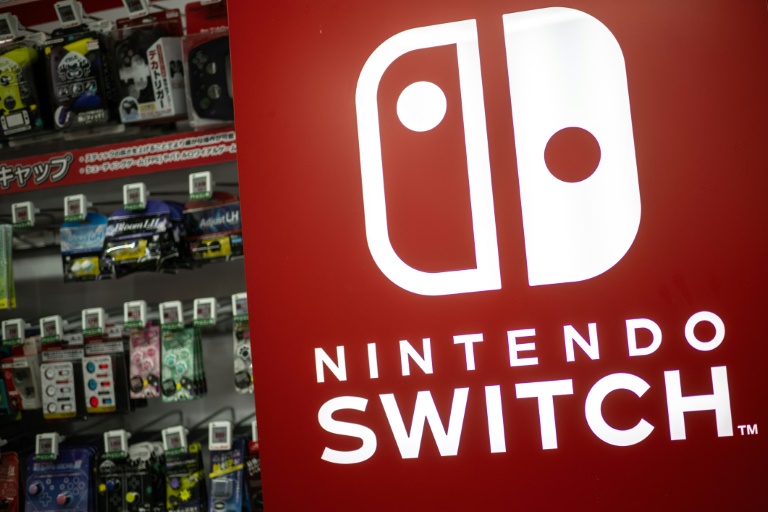
Tokyo — As investors weigh opportunities in the video game sector amid shifting console cycles and entertainment diversification, Sony Group Corp. and Nintendo Co. present contrasting bets for 2026, with Sony offering broader business stability and Nintendo riding the early success of its Switch 2 platform.
Sony shares (NYSE: SONY) closed recently around $21.72, down about 15% year-to-date in 2026, reflecting pressure from gaming softness and electric vehicle losses. Nintendo’s U.S.-traded shares (OTCPK: NTDOY) have traded near $10.92–$11.00, significantly off prior highs following a post-Switch 2 launch pullback.
Both companies reported strong fiscal 2026 results ended March 31, but face different headwinds and tailwinds heading into the new fiscal year.
Sony’s Diversified Empire
Sony Group posted fiscal 2026 revenue of approximately ¥12.48 trillion, with gaming and network services remaining a key profit driver despite challenges. The PlayStation division continues to anchor entertainment, supported by a large installed base, subscription services like PlayStation Plus, and a growing portfolio of first-party titles.
However, the fourth quarter showed weakness. Sony reported a net profit drop in the final quarter due in part to losses at its Honda joint venture for electric vehicles and softer game performance. Full-year net profit guidance for fiscal 2027 points to double-digit growth at ¥1.16 trillion, aided by a ¥500 billion share buyback program.
Analysts maintain a generally positive stance. Consensus price targets hover around $26–$29, implying potential upside from current levels, with some optimistic forecasts reaching $33–$34. Sony trades at forward multiples reflecting its mix of imaging sensors, music, pictures, and financial services.
Sony’s imaging and sensing solutions segment benefits from demand in smartphones and automotive applications, while music and film provide relatively stable cash flows. The company has emphasized efficiency and strategic investments, including in live services and PC porting of select titles, though it maintains a console-first approach for many exclusives.
Nintendo’s Hardware-Driven Surge
Nintendo delivered exceptional fiscal 2026 results, with net sales surging 98.6% to ¥2.313 trillion, driven by the successful launch of Switch 2. Hardware sales for the new console reached 19.86 million units by fiscal year-end, exceeding initial expectations.
Operating profit rose 27.5% to ¥360.1 billion. The company also benefits from strong software attach rates, digital sales growth, and expansion into movies and other intellectual property ventures. Nintendo’s balance sheet remains fortress-like, with substantial cash reserves supporting dividends and potential buybacks.
For fiscal 2027, Nintendo guided more conservatively: net sales of ¥2.05 trillion and operating profit of ¥370 billion, with Switch 2 hardware sales targeted at 16.5 million units. The outlook accounts for a maturing cycle and component cost pressures, leading to some analyst disappointment and stock volatility.
Nintendo’s strategy centers on family-friendly, innovative hardware-software integration. The Switch 2 has maintained strong momentum in key markets, with titles leveraging the hybrid design. Long-term, the company eyes recurring revenue through digital platforms, IP licensing, and experiences beyond gaming.
Head-to-Head Comparison
Sony offers greater diversification. Its gaming segment, while important, represents a smaller portion of overall revenue compared to Nintendo’s near-total dependence on the category. This provides Sony a buffer during console transitions but can dilute pure-play gaming upside.
Nintendo delivers higher volatility tied to hardware launches and hit titles but boasts superior margins in successful cycles and legendary first-party IP with enduring cultural relevance. Its stock has historically rewarded patient investors through console generations, though transitions can pressure near-term results.
Valuation metrics show Nintendo trading at lower multiples in recent periods following the post-launch adjustment, while Sony reflects its conglomerate structure. Risk-adjusted returns have varied, with Nintendo showing higher volatility.
Market and Industry Context
The global gaming industry continues expanding through cloud gaming, mobile, PC, and live services. Both companies navigate competition from Microsoft, as well as free-to-play and cross-platform titles. Supply chain issues, currency fluctuations, and consumer spending trends remain watchpoints.
Sony benefits from scale in content creation and distribution. Nintendo excels in ecosystem lock-in and innovation, as seen with Switch 2’s market reception. Analysts note Nintendo’s potential for recovery if hardware sales meet or exceed guidance, while Sony’s outlook hinges on broader entertainment recovery and cost management.
Risks and Considerations
For Sony, key risks include EV venture performance, yen strength impacting overseas earnings, and competition in premium consoles. Execution on live-service games and PC strategy will matter.
Nintendo faces cyclical hardware risks, potential tariff or cost pressures on components, and the challenge of sustaining software momentum. Guidance conservatism has historically preceded beats in strong cycles.
Both stocks carry technology sector volatility, regulatory scrutiny on content, and macroeconomic sensitivity.
Analyst and Investor Views
Wall Street leans Hold to Buy on both, with varying targets. Sony’s diversification appeals to conservative portfolios, while Nintendo attracts growth-oriented investors seeking high-margin IP leverage. Long-term, Nintendo’s pure-play focus and balance sheet strength draw comparisons to past successful cycles.
Outlook for 2026 and Beyond
In 2026, Sony may provide steadier performance supported by multiple revenue streams and share repurchases. Nintendo’s trajectory depends heavily on Switch 2 adoption and software lineup, potentially offering higher reward if execution remains strong.
Neither represents a clear “buy” without considering individual risk tolerance, time horizon, and portfolio fit. Diversification across the sector or broader tech remains advisable. Investors should monitor upcoming quarterly results, with Sony’s next key update expected around July–August and Nintendo’s in the fall.
The choice ultimately hinges on preference for diversified entertainment exposure versus dedicated gaming innovation. Both companies have demonstrated resilience over decades, adapting to industry shifts while leveraging powerful brands.


Innovations are rolling out in the snack category.
Business
Moody’s upgrades Reliance Industries rating to Baa1, now 2 notches above India’s sovereign rating

With the latest upgrade, Reliance Industries is now rated two notches above India’s sovereign rating by both Moody’s and S&P Global Ratings, reflecting the company’s strong credit profile and diversified business operations.
In a statement, Moody’s said the upgrade “reflects its fundamentally strong and resilient credit profile, supported by its large scale, diversified operations, and leading market positions across oil-to-chemicals, digital, and retail sectors.”
The ratings agency said Reliance benefits from “counter-cyclical business segments, significant international exposure (with over one-third of revenues derived from exports), and limited reliance on government-linked revenues,” which support its ability to generate stable earnings across business cycles.
The upgrade follows Moody’s publication of its revised cross-sector methodology, Impact of Sovereign Credit Quality on Issuer Ratings, which changes how the agency assesses the extent to which companies can be rated above their home country’s sovereign rating.

According to Moody’s, Reliance’s business characteristics are “consistent with entities that can be rated two notches above the sovereign under the revised methodology.”
Highlighting the company’s financial strength, Moody’s said Reliance has “consistently demonstrated impeccable project execution and financial discipline, including being among the first Indian corporates to publicly commit to and achieve a net debt zero position, while maintaining conservative financial policies consistent with a higher rating level.”The agency also cited Reliance’s strong liquidity profile, noting that the company has “around USD 25 billion of cash against modest debt,” along with robust cash flow generation and strong access to domestic and international capital markets.
However, Moody’s said the rating remains capped at two notches above India’s Baa3 sovereign rating because of Reliance’s significant linkages to the domestic economy through its retail and digital businesses.
“The rating remains capped at two notches above India’s Baa3 sovereign rating, reflecting RIL’s meaningful linkages to the domestic economy, particularly through its large and growing digital and retail businesses, which anchor its operations to India’s macroeconomic and policy environment,” the agency said.
Moody’s maintained a stable outlook on Reliance’s ratings, in line with the stable outlook on India’s sovereign rating.
“The stable outlook also reflects our expectation that the company’s earnings will continue to grow across most of its business segments, such that its credit metrics will remain solidly positioned for its ratings over the next 1-2 years,” Moody’s said.
The agency added that while Reliance’s credit metrics are strong enough to support a higher unconstrained credit assessment, any further upgrade would depend on an upgrade of India’s sovereign rating because the company’s ratings are currently capped at two notches above the sovereign.
Separately, Moody’s also upgraded ratings of Tata Consultancy Services, Infosys and Tata Steel following the methodology revision. TCS and Infosys were upgraded to A2 from Baa1, while Tata Steel’s foreign currency issuer rating was raised to Baa2 from Baa3. The agency cited strong standalone credit profiles, global diversification and parent support factors behind the upgrades.

The company, whose AI servers are crucial components in the global AI infrastructure build-out, is set to add $68 billion to its market value of about $206 billion, if gains hold.
A household name in the PC market, Dell has in recent years scaled up its AI hardware business. Dell’s AI server revenue of $16.1 billion surpassed its PC unit’s $14.6 billion in sales in the quarter.
The company’s infrastructure solutions segment, home to both traditional and AI-optimized servers as well as other storage, software and networking solutions, has consistently eclipsed PC business revenue in the past four quarters.
“We’ve been following Dell a long time and never seen anything like this. Not only do they get an “A” for execution, but you can make an argument that Dell is even the best way to play AI out there,” Melius Research analysts said.
Dell’s outlook for “AI and traditional servers are still very conservative,” as the firm has stronger prospects for selling CPU racks to AI cloud providers like CoreWeave and Nscale, the brokerage said.
The blowout quarter lifted shares of server makers Super Micro Computer and Hewlett Packard Enterprise 16% and 12%, respectively, while Dell’s PC rival HP also rose 8%.Hewlett Packard Enterprise, which reports results on Monday, has also been prioritizing higher-margin product orders. But it has a smaller server business compared with Dell.
Dell Chief Operating Officer Jeff Clarke acknowledged the ongoing “supply constrained” environment, particularly concerning memory chips, but said that its customers were actively securing supply for extended periods.
The company has banked on balanced price hikes as well as its scale and strong supplier relationships to wade through the memory crisis. Strong returns from its AI server business are also helping cushion the blow to margins from the soaring memory prices.
HP, which focuses mostly on PCs and printers, reported 13.2% growth in its personal systemsdivision, while sales in Dell’s PC business unit grew 17%, driven by a Windows 11 refresh cycle and growing focus on AI PCs.
At least 13 brokerages raised their price targets on Dell stock following the results, giving it a median price target of $255, according to data compiled by LSEG. That is up from $170 before the report.
Dell is on track to record its biggest one-day percentage gain if gains hold. It has a 12-month forward price-to-earnings ratio of 20.21, compared with HP’s 8.39 and HPE’s 14.70.

Euro zone bond yields steady amid mixed inflation data


Putin says it’s too early to say if the drone which strayed into Romania was Russian

If you run a business that deals with physical products, inventory management can quickly become stressful. You may struggle with stock shortages, excess inventory, delayed deliveries, or inaccurate records. Handling everything manually, whether in spreadsheets or on paper, often increases the risk of errors and confusion.
This is where accounting software becomes useful. Modern accounting software does much more than track income and expenses. It also helps you manage inventory efficiently, improve stock visibility and make better business decisions.
Benefits of Accounting Software for Inventory Management
Here are 10 practical ways accounting software helps with inventory management.
1. Tracks Inventory in Real Time
One of the biggest advantages of accounting software is real-time inventory tracking. Whenever you make a sale, purchase new stock or return items, the inventory records update automatically.
This helps you know exactly how much stock is available at any moment. You do not need to update spreadsheets or check physical records repeatedly manually. Real-time tracking also reduces the risk of overselling products that are already out of stock.
2. Reduces Human Errors
Manual inventory management often leads to mistakes such as duplicate entries, incorrect stock counts or missing transactions. Even small errors can affect your profits and customer satisfaction.
Accounting software automates calculations and stock updates, which lowers the chances of human error. This helps you maintain accurate inventory records and avoid confusion during audits or stock checks.
3. Helps Prevent Overstocking
Keeping too much stock increases storage costs, while insufficient stock can lead to missed sales opportunities. Accounting software helps you maintain the right inventory levels by showing stock movement patterns and reorder alerts.
You can identify fast-moving and slow-moving products more easily. This allows you to reorder products at the right time and avoid unnecessary inventory pile-ups.
4. Improves Purchase Management
Good inventory management also depends on efficient purchasing. Accounting software helps you monitor supplier orders, purchase bills and incoming stock in one place.
You can track pending purchase orders, compare supplier costs and review past purchasing trends. This makes it easier to plan purchases according to your business demand and budget.
5. Simplifies Batch and Expiry Tracking
If your business deals with products such as medicines, food items or cosmetics, tracking expiry dates is extremely important. Many accounting software solutions support batch-wise inventory management.
This feature helps you track manufacturing dates, expiry dates and product batches accurately. You can identify products nearing expiry and take timely action to reduce losses.
6. Generates Useful Inventory Reports
Inventory reports help you understand how your stock is performing. Accounting software can automatically generate reports such as stock summary reports, item-wise sales reports and low stock reports.
These reports give you valuable insights into product demand, inventory turnover and purchasing patterns. With better information, you can make smarter business decisions and improve profitability.
7. Supports Multi-Location Inventory Management
If you operate from multiple warehouses, stores or branches, managing inventory manually becomes more complicated. Accounting software allows you to monitor stock across different locations from a single system.
You can check stock availability at each branch, transfer inventory between locations and maintain centralised control. This improves coordination and prevents stock mismatches.
8. Integrates Sales and Inventory Data
Inventory management becomes much easier when your sales and accounting systems work together. Accounting software automatically links sales transactions with inventory updates.
Whenever a customer buys a product, the stock quantity reduces instantly and the sales entry gets recorded simultaneously. This saves time and ensures that your financial records and inventory records stay consistent.
9. Makes Physical Stock Verification Easier
Regular stock verification is necessary to identify damaged goods, missing stock or inventory mismatches. Accounting software simplifies this process by maintaining organised inventory records.
You can compare physical stock with system records more efficiently and quickly identify discrepancies. This helps improve inventory accuracy and strengthens internal controls within your business.
10. Helps You Save Time and Costs
Managing inventory manually takes a significant amount of time and effort. Accounting software automates many routine tasks such as stock updates, invoice creation, reorder reminders and report generation.
This improves operational efficiency and allows you to focus more on business growth. Better inventory control also reduces unnecessary expenses related to storage, wastage and emergency purchases.
Final Thoughts
Inventory management directly affects your business operations, customer satisfaction and profitability. Relying on manual processes may work for a small business initially, but it often becomes difficult as your business grows.
Accounting software helps you organise inventory, reduce errors, track stock movement and make informed decisions with greater confidence. Whether you run a retail shop, wholesale business or manufacturing unit, the right software can make inventory management simpler, faster and more accurate.

Bitcoin Approaches ‘Crucial’ Reversal Zone as $72K Gets Closer

How Rishabh Pant’s Rs 27 crore LSG move turned into an IPL disaster in just two seasons

ChargePoint, Powers Parts partner on transit EV bus charging


-

 Fashion7 days ago
Holiday Weekend Open Thread – Corporette.com
-

 Business5 days ago
NYT Strands Answers May 24 2026 Revealed for Puzzle No. 812 Theme Summer Essentials
-

 Politics4 days ago
Bridgerton Season 5: Cast, Release Date And Everything We Know So Far
-

 Crypto World6 days ago
Robinhood crypto COO Tanya Denisova exits
-

 Tech4 days ago
Microsoft’s quiet Claude Code retreat and the real cost of enterprise AI
-

 Business3 days ago
Selena Gomez Reportedly Upset Over Benny Blanco’s Comments on Her ‘Terrible’ Diet
-
 Crypto World3 days ago
Micron Crosses $1 Trillion Market Cap as AI Demand Reshapes Memory Sector
-

 Politics7 days ago
Makerfield: a tale of two social-media histories
-

 Business4 days ago
BTS Sells Out Four Las Vegas Shows at Allegiant Stadium for ARIRANG World Tour
-
Tech2 days ago
The Samsung pay deal is the moment Korean unions changed register
-

 Tech4 days ago
Westone Audio and Etymotic Acquired by Fidelity Collective in Major IEM Market Move
-

 Tech13 hours ago
Waymo dominates autonomous vehicle registrations as Tesla trails behind
-

 Tech3 days ago
Millions of AI agents imperiled by critical vulnerability in open source package
-
 Crypto World4 days ago
Nvidia (NVDA) CEO Calls on Super Micro to Strengthen Export Controls Amid Smuggling Probe
-
 Tech4 days ago
China assigns ID codes to 28,000+ humanoid robots
-
Crypto World2 days ago
SpaceX’s $2 Trillion IPO: Why Tech Giants Nvidia (NVDA), Apple (AAPL), and Microsoft (MSFT) May Face Pressure
-

 Tech2 days ago
NASA taps Blue Origin to deliver lunar rovers for Moon Base initiative
-
 Entertainment4 days ago
‘Breaking Bad’ Star’s Easy-to-Binge 6-Part Crime Series Spin-Off Is Finally Heading to Free Streaming
-
Crypto World5 days ago
Brian Armstrong Outlines Crypto Vision for the Future Financial System
-

 Business4 days ago
Yatra Online, Inc. 2026 Q4 – Results – Earnings Call Presentation (NASDAQ:YTRA) 2026-05-25
You must be logged in to post a comment Login