

Business
Son of Mango boss arrested over father's fatal fall from cliff





I have been investing in the stock market since I was 17 years old, and over the 25+ years since I have learned the joy of compounding, the value of dividend reinvesting, and the principle that patient investing through good times and bad brings the greatest rewards. I believe the key to creating wealth is the slow accumulation of high quality equities, and the key to enjoying the process of investing is to mix this steady approach with some high risk/high reward opportunities, underappreciated turnaround plays, and transformative technologies. I invest with integrity, only putting my money into companies and industries that aim to make the world a better place. I only analyze companies that embrace this same principal too.I am entirely self-taught, with no formal education in investing or business, but I’m smart at figuring out who is worth listening to. I read widely and embrace the notion that my own growth comes from learning from others. In my other life, I have been teaching at the college/university level for over 20 years. I have a PhD from Brunel University and am an accomplished academic writer and editor.
Analyst’s Disclosure: I/we have a beneficial long position in the shares of JOBY, UBER either through stock ownership, options, or other derivatives. I wrote this article myself, and it expresses my own opinions. I am not receiving compensation for it (other than from Seeking Alpha). I have no business relationship with any company whose stock is mentioned in this article.
Seeking Alpha’s Disclosure: Past performance is no guarantee of future results. No recommendation or advice is being given as to whether any investment is suitable for a particular investor. Any views or opinions expressed above may not reflect those of Seeking Alpha as a whole. Seeking Alpha is not a licensed securities dealer, broker or US investment adviser or investment bank. Our analysts are third party authors that include both professional investors and individual investors who may not be licensed or certified by any institute or regulatory body.
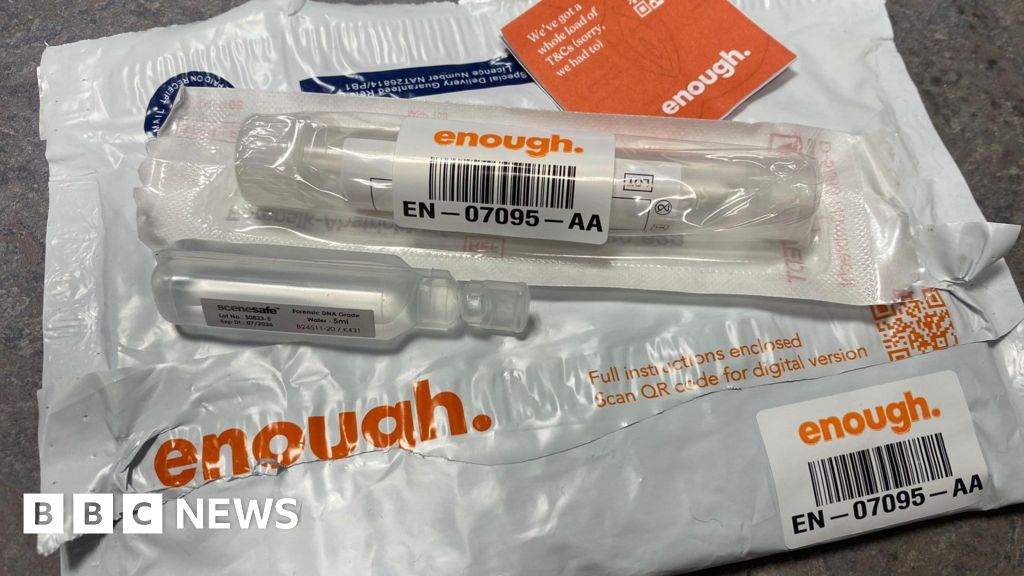
Sir Martin Narey, the former head of the Prison and Probation Services in England and Wales who brought the complaint about the adverts, said: “I thought they were frightening young women and terrifying their parents by exaggerating the likelihood of being raped.”

Earnings call transcript: Napier Port Q1 2026 sees strong growth, stock up

Leaving crypto in an earn account feels risky, at least at first glance. That instinct is understandable, given the industry’s history.
But it is also worth examining whether that instinct holds up under scrutiny, because the landscape has changed considerably over the past few years, and modern earn products on reputable platforms are built very differently from the structures that failed.
Products like CoinEx Flexible Savings are designed with transparency and liquidity at the forefront. Interest is generated by real borrowing demand, assets are fully backed by verified reserves, and users can redeem at any time without penalty. That combination addresses most of the concerns that made earlier earn products feel precarious.
Why Earn Accounts Have a Better Safety Record Than the Headlines Suggest?
The high-profile collapses that shook the industry between 2022 and 2023 were not failures of the earn account model itself. They were failures of governance, transparency, and asset management. Platforms that commingled user funds, operated without reserves, and obscured their financial position created the conditions for collapse. Those failures were real, and the damage to retail investors was serious.
What followed, however, was a significant industry-wide reckoning. Exchanges that had operated with limited accountability began facing pressure to publish verifiable reserve data. Those that already maintained full reserves and robust security infrastructure were able to demonstrate exactly why their earn products operated differently. The distinction between well-governed platforms and poorly governed ones became much clearer.
Proof of Reserves Changed the Conversation
Proof-of-reserves verification allows any user to confirm that the funds they see in their account are genuinely held by the platform. Exchanges that publish this data regularly and submit to third-party audits are making a quantifiable commitment rather than a marketing claim. That level of transparency is increasingly becoming the baseline expectation.
For users considering earn accounts, the presence of verified reserve data is one of the most meaningful signals available. It indicates the platform is not lending out user deposits beyond its capacity to cover withdrawals, which was the core mechanism behind the industry failures that generated the most public concern.
What Makes Earn Products Low Risk in Practice
-
Flexible vs. Fixed Products
Flexible earn products allow instant subscription and redemption. Users can exit at any time, without notice periods or penalties, which limits their exposure to the duration they actively choose.
Fixed-term products typically offer higher yields in exchange for a commitment period. Users accept a longer window of platform exposure for a better rate. Both can be reasonable choices, but flexible products give conservative users the most direct control over their risk.
Sustainable earn yields come from lending to margin traders and borrowers on the same platform. Those borrowers pay interest, and the platform distributes a portion of that interest to savings depositors.
Because the yield is tied to genuine borrowing demand, rates fluctuate with market activity rather than staying artificially elevated. This is a meaningful indicator of a well-structured product. Rates that are consistently far above market norms, with no clear explanation for where the return comes from, warrant closer scrutiny.
Security Infrastructure on Modern Platforms
A well-operated exchange does not store all user assets in a single accessible location. Standard security architecture involves cold storage for the majority of holdings, with a smaller portion in hot wallets to handle withdrawals efficiently. Multi-signature protocols, physical system isolation, and real-time monitoring systems add further layers of protection against internal and external threats.
Platforms that have operated for many years without a major security incident have demonstrated something that newer entrants simply cannot offer: a track record. Longevity in the crypto exchange space, combined with growing user numbers and transaction volume, is evidence that the underlying infrastructure is functioning reliably under real-world conditions.
How to Use Earn Accounts Responsibly
The most sensible approach treats an earn account as one component of a broader allocation strategy rather than a passive storage solution. Keeping a portion of idle assets in a flexible earn product while maintaining personal custody of long-term holdings offers a balance between earning yield and limiting platform exposure.
Checking reserve publications periodically, paying attention to platform communications during periods of market volatility, and diversifying across multiple platforms for larger holdings are straightforward habits that reduce concentrated risk without requiring any technical expertise.
The Bigger Picture
Exchange earn accounts, when offered by transparent, well-capitalised platforms with verified reserves and strong security infrastructure, represent a genuinely useful tool for crypto holders. The risks that once made these products feel precarious have been substantially addressed by the generation of platforms that prioritise accountability. For investors who understand what they are using and choose their platform carefully, earning yield on idle crypto assets is a reasonable strategy.

People say they are frustrated families have to turn to food banks in a “rich island like Jersey”.

Outlaw Light Beer CEO Ari Opsahl joins ‘Making Money’ to discuss the drop in beer volume, its nationwide footprint and gives advice to entrepreneurs and small businesses.
One of America’s once-dominant beer brands is being discontinued after more than 175 years.
Schlitz Premium, a beer brand that traces its roots to Milwaukee in the 1840s and was once among the largest breweries in the country, is being put “on hiatus,” parent company Pabst Brewing Co. confirmed Friday after Wisconsin Brewing Company announced it would brew the brand’s final batch later this month.
“Unfortunately, we have seen continued increases in our costs to store and ship certain products and have had to make the tough choice to place Schlitz Premium on hiatus,” Zac Nadile, Pabst head of brand strategy, said in a statement to Milwaukee Magazine.
“Any brand or packaging configuration that is put on hiatus is still a cherished part of our history and hopefully our future. We continually look for opportunities to bring back beloved brands, and customer feedback is important in shaping those discussions.”
HEINEKEN TO CUT UP TO 6,000 JOBS GLOBALLY, LOWERS PROFIT GROWTH FORECAST AMID INDUSTRY STRUGGLES

The brand was founded in 1849 as the Joseph Schlitz Brewing Company in Milwaukee, Wisconsin. (Getty Images)
The Schlitz brand became famous for its longtime slogan, “the beer that made Milwaukee famous,” and was once the nation’s largest brewery before Anheuser-Busch overtook it in the late 1950s.
The company was originally founded in 1849 after August Krug opened a tavern brewery in Milwaukee. Joseph Schlitz later took over the business after marrying Krug’s widow and helped transform it into one of the world’s largest beer brands.
Schlitz rose to prominence after the Great Chicago Fire in 1871, when the brewery shipped beer to Chicago as residents struggled to access clean drinking water.
“It’s a nostalgia factor,” Joseph Conforti, general manager of Milwaukee Brat House, told ABC7 Chicago. “People from out of town are surprised that they still make it.”
HOW REAL AMERICAN BEER AIMS TO FULFILL LATE FOUNDER HULK HOGAN’S GOAL OF TOPPLING BUD LIGHT, RIVALS

Cars on Woodhaven Boulevard drive past a Schlitz beer billboard in Queens, New York, on Oct. 1, 1960. (Walter Leporati/Getty Images)
Schlitz began losing popularity in the 1970s after cost-cutting recipe changes altered the beer’s flavor. The brand was later sold to Stroh Brewing in 1982 before Pabst acquired it in 1999.
Kirby Nelson, brewmaster at Wisconsin Brewing Company, said the company wanted to give the historic beer brand a proper farewell after learning production was ending.
“We decided that, Schlitz being what Schlitz was, it deserved a proper sendoff. One with dignity and respect,” Nelson said.

A can of Schlitz beer, produced by Pabst Brewing Company. (Getty Images)
GET FOX BUSINESS ON THE GO BY CLICKING HERE
Wisconsin Brewing Company said it plans to brew “the last Schlitz” at its Verona, Wisconsin, brewery on May 23, with a limited release scheduled for June 27. Milwaukee-area bars and breweries are also planning farewell events tied to the final batches.
Representatives for Schlitz and Pabst Brewing Co. did not immediately respond to FOX Business’ request for comment.

The rapid digitalization of the global economy, combined with heightened geopolitical tensions, has significantly increased the frequency and severity of cyberattacks, posing a serious threat to global financial stability. The financial sector is particularly vulnerable, as sophisticated attacks targeting sensitive data and critical infrastructure can erode market confidence, cause deposit outflows, and trigger systemic shocks.
Key Points
- Rising Threat Landscape: Cyberattacks against financial institutions have more than doubled since the pandemic, with the magnitude of extreme losses from such incidents quadrupling to $2.5 billion since 2017.
- Systemic Risk: Financial firms, particularly banks, are primary targets. Successful attacks can lead to bank runs, market volatility, and the disruption of critical national payment systems, as evidenced by recent events in Lesotho and the United States.
- Third-Party Vulnerabilities: Increased reliance on third-party IT providers and emerging AI technologies expands the attack surface, creating the risk of widespread, simultaneous outages across multiple institutions.
- Policy Gaps: Many countries, especially in developing markets, lack sufficient national cybersecurity strategies or dedicated regulations to address these systemic threats.
- Recommended Actions: The IMF advocates for:
- Enhanced board-level cybersecurity expertise and better organizational “cyber hygiene.”
- Regular systemic risk assessments regarding institutional interconnectedness.
- Improved data collection, incident reporting, and information sharing among financial participants.
- Strengthened international cooperation to combat cross-border cyber threats.
- Resilience Focus: Since total prevention is unlikely, the sector must prioritize robust response and recovery procedures to ensure the continuity of critical business services during and after an attack.
To mitigate these risks, the IMF emphasizes that firms and regulators must move beyond individual defense mechanisms to establish comprehensive national and international cybersecurity frameworks that prioritize systemic resilience, improved governance, and standardized incident reporting.
To strengthen resilience in the financial sector, authorities should develop an adequate national cybersecurity strategy accompanied by effective regulation and supervisory capacity that should encompass:
- Periodically assessing the cybersecurity landscape and identifying potential systemic risks from interconnectedness and concentrations, including from third-party service providers.
- Encouraging cyber “maturity” among financial sector firms, including board-level access to cybersecurity expertise, as supported by the chapter’s analysis which suggests that better cyber-related governance may reduce cyber risk.
- Improving cyber hygiene of firms—that is, their online security and system health (such as antimalware and multifactor authentication)—and training and awareness.
- Prioritizing data reporting and collection of cyber incidents, and sharing information among financial sector participants to enhance their collective preparedness.
While cyber incidents will occur, the financial sector needs the capacity to deliver critical business services during these disruptions. To this end, financial firms should develop, and test, response and recovery procedures and national authorities should have effective response protocols and crisis management frameworks in place.
Other People are Reading

The finance watchdog warns bogus brokers are selling fake car insurance through social media.

Some careers are built through one major breakthrough. Others are built through years of steady decisions, small improvements, and a willingness to adapt. For Ian Reight, success in medicine came from learning how to stay calm, think ahead, and embrace change long before many others did.
Today, Reight is known as a general surgeon, healthcare leader, and former chief of surgery who helped guide teams through changing technology and growing demands inside modern hospitals. But his story started far away from operating rooms and robotic surgery systems.
Growing up in Maryland, Reight spent part of his early life as a volunteer firefighter and paramedic. The work exposed him to pressure, urgency, and responsibility at a young age.
“I learned early that people look for leadership when situations become chaotic,” Reight says. “You do not always have time for perfect decisions. You have to stay focused and move forward.”
That lesson would shape nearly every stage of his career.
How Ian Reight Built His Career in Medicine
Before entering medicine, Reight studied psychology at the University of Maryland College Park. Later, he earned his medical degree from the Medical University of the Americas.
He says studying psychology gave him an advantage many physicians overlook.
“Medicine is about people as much as science,” he explains. “You can be technically skilled, but if you cannot communicate well, patients and teams lose confidence.”
As Reight moved into surgery, he quickly realized the profession required far more than medical knowledge alone. Surgeons often lead teams during high-pressure situations where timing, communication, and trust all matter.
Over time, he took on larger leadership roles. He served as medical staff president, chief of surgery, medical director of a breast center, and medical director of wound care and hyperbaric medicine.
Each position brought different challenges. Some involved patient care. Others focused on managing teams, solving operational problems, and improving hospital systems.
“You cannot only think like a surgeon,” Reight says. “You also have to think about how every part of the hospital works together.”
Why Ian Reight Embraced Robotic Surgery Early
One of the biggest ideas that influenced Reight’s career was his willingness to adapt to new technology instead of resisting it.
As robotic surgery became more common in hospitals, many physicians were cautious about changing long-established methods. Reight chose a different approach. He became deeply involved in robotic surgery and eventually served as a lead robotic surgeon.
“At first, people naturally questioned whether it would become the future,” he says. “But medicine always evolves. You either learn with it or fall behind.”
Robotic surgery introduced greater precision and helped reduce recovery times for many patients. Reight believed the technology could improve patient outcomes if surgeons approached it with the right mindset and training.
“The technology itself is not enough,” he explains. “You still need discipline, preparation, and strong decision-making.”
His openness to innovation became one of the defining themes of his career. Rather than staying comfortable, he focused on learning continuously and helping teams adjust during periods of change.
“The moment you stop learning is the moment you become ineffective,” Reight says.
Leadership Lessons From the Operating Room
As Reight’s responsibilities grew, so did his focus on leadership. He believes many of the same principles that guide surgery also apply to business, management, and life.
In surgery, preparation matters. Communication matters. Consistency matters.
According to Reight, those same habits help organizations succeed during uncertain periods.
“People want leaders who stay calm when things become difficult,” he says. “Panic spreads quickly in any environment.”
During his years in leadership positions, Reight often worked between physicians, nurses, administrators, and staff members with different priorities and pressures. Keeping everyone aligned was not always easy.
He says one of the biggest mistakes leaders make is focusing only on their own responsibilities instead of understanding the bigger picture.
“You have to understand the pressures other people are dealing with,” he explains. “That is how strong teams are built.”
His leadership style focused less on authority and more on trust, communication, and consistency over time.
What Ian Reight Says About Long-Term Success
Reight believes long careers are rarely built through dramatic moments alone. Instead, they come from repeated habits and steady improvement.
That mindset helped him move through multiple areas of healthcare leadership while continuing to practice medicine directly with patients.
“Success usually comes from small decisions repeated over many years,” he says. “People often underestimate consistency.”
Outside the hospital, Reight enjoys spending time with his dogs and cooking, which he says helps him stay balanced after years in demanding medical environments.
Interestingly, he sees similarities between cooking and surgery.
“There is timing, preparation, and attention to detail involved in both,” he says with a laugh. “You learn patience very quickly.”
Looking back, Reight says the biggest ideas that shaped his career were not complicated. Stay adaptable. Keep learning. Communicate clearly. Stay calm under pressure.
Those ideas helped him navigate medicine during a period of enormous technological and organizational change.
And in an industry where change never stops, Reight believes those lessons matter now more than ever.
“Leadership is not about having all the answers,” he says. “It is about staying steady enough for other people to trust you when challenges come.”

Radar, a startup backed by American Eagle CEO Jay Schottenstein that helps retailers manage in-store inventory and cut back on theft and lost merchandise, reached unicorn status with its latest funding round, CNBC has learned.
The company, founded in 2013 by Spencer Hewett, raised $170 million at a valuation of over $1 billion in its series B funding round, which was co-led by Gideon Strategic Partners and Nimble Partners with participation from Align Ventures.
The company also counts Schottenstein among its investors. He said American Eagle was the first retailer to implement Radar’s technology across its stores.
Through Radar, “American Eagle has unlocked greater inventory visibility, empowered our associates and sharpened our insights,” said Schottenstein. “With inventory digitized in real-time, we have enabled our creative, operations and technology teams to place their focus on creating seamless, customer-first experiences that define the American Eagle brand.”
Radar also works with Gap‘s Old Navy and other major retailers, covering more than 1,400 stores.
When Hewett started the company with a boost from venture capitalist Peter Thiel’s fellowship for young entrepreneurs, his goal was to create a better way to do instant checkout, but the strategy evolved to inventory management. Using hardware mounted to the ceilings of brick-and-mortar stores, Radar’s technology can read any radio-frequency identification, or RFID, tag with 99% accuracy, the company said.
The tech addresses one of the most challenging aspects of running a retail business: inventory management. Between figuring out how much product to make, deciding where to send it and then keeping track of it once it arrives, retailers face a persistent challenge in overseeing their inventory. Errors can lead to lost sales and crush profit margins.
Radar primarily functions at the store level. It enables in-store employees to quickly hunt down an item a customer wants, addressing a pain point among shoppers who come to a store to buy a product listed as available online only to find it’s actually out of stock.
“If a customer asks them, ‘I want this in a different size’ they can immediately see where in the store it is, no matter where it’s been moved, and get it for the customer,” Hewett told CNBC in an interview. “It gives them certainty that they can actually help the customer without them, like, saying we might have it in the back and disappear for like 15 minutes and then come back and be like, ‘Okay, actually the inventory system said we had it, but we don’t have it. I can’t find it.’”
As a result, some of Radar’s retail clients who offer a buy online and pick up in store option have seen order cancellation rates go from 25% to 3%, said Hewett.
The tech also helps managers to keep a better eye on deliveries and more easily identify shrink, or inventory loss from theft, error or damage. Shrink sometimes comes from would-be customers stealing merchandise, but it’s murkier than that in many cases. It also frequently results from employees across the supply chain taking items or from administrative error.
For example, if a store expects a shipment of 100 T-shirts but receives 80, either because of theft at a distribution center or a packing error, it can be hard for a store manager to identify it, leading to out-of-stocks and lost sales.
“You don’t have the labor hours to go and count every box that gets shipped, so you have to accept what they say is there and assume it’s true,” said Hewett. “With Radar, like, you actually have a real time check to make sure that it is true, and then flag it immediately if it’s not.”
The company declined to share overall customer data showing the effectiveness of the tech, but Hewett said one of his clients saw a 60% reduction in shrink after launching Radar at one of its stores.
When measuring shrink, companies tend to look at it on a net basis, factoring in both overages and shortages. One company may have a 15% shortage and a 15% overage, reflecting a net shrink of 0%, but that would also mean inventory was off by 30% for the customer, Hewett said.
“Sizes and colors matter, like, if you don’t have my size, I’m not going to buy it, therefore, that’s a lost sale, and it shows up in your revenue and margin,” Hewett said. “We effectively eliminate that issue to make sure you’re always in stock in the sizes and colors and products that you want to have.”

Piero Hincapie trolls Man City fans during Arsenal FC’s wild title celebrations

Joby Aviation: On Track For 2026 Commercial Launch And Attractively Valued (NYSE:JOBY)

JPMorgan says ether needs activity to catch BTC

Manchester United reach agreement with Casemiro over contract clause amid transfer speculation

US brings back mandatory military draft registration

Steven Gerrard disagrees with Gary Neville over ‘shock’ Chelsea and Arsenal claim | Football


-

 Crypto World4 days ago
BloFin War of Whales 2026 Grand Prix opens registration for $5M trading championship
-

 Fashion4 days ago
Weekend Open Thread: Theory – Corporette.com
-

 Crypto World4 days ago
E-Estate Announces 1 Year Live: Washington DC Summit as Real Estate Tokenization Enters Its Next Phase
-
Crypto World7 days ago
Bitcoin Suisse expands with Digital Asset License and Investment Business Act Registration Approval in Bermuda
-

 Tech5 days ago
Tech Moves: Microsoft AI leader jumps to OpenAI; former AI2 exec joins Meta; and more
-

 Crypto World7 days ago
Bitcoin Suisse expands with Digital Asset License and Investment Business Act Registration Approval in Bermuda
-

 Crypto World5 days ago
Google’s Gemini AI Predicts Incredible Solana Price by the End of 2026
-

 Tech4 days ago
Google reimburses Register sources who were victims of API fraud
-

 Business4 days ago
H&R Real Estate Investment Trust (HR.UN:CA) Q1 2026 Earnings Call Transcript
-

 Sports4 days ago
Napoleonic enters 2026 Doomben 10,000 field via Abounding withdrawal
-
 Entertainment5 days ago
Zara Larsson Has Blunt Response To Chris Brown Diss
-
 Crypto World6 days ago
Two AI Tokens Lead May Rally, But Risks Are Rising
-

 Fashion3 days ago
On the Scene at Gucci’s Cruise Show in New York City: Mariah Carey, Kim Kardashian, Lindsay Lohan, Iman, and More!
-

 Crypto World4 days ago
BeInCrypto 100 Institutional Awards Nomination: KAST for Best Digital Assets Neobank and Best Digital Assets Fintech
-
 Tech7 days ago
Why AI is making typography a boardroom conversation
-
 Crypto World4 days ago
Wall Street’s Boldest Gold Prediction Has Russians Rushing to Buy
-

 Entertainment7 days ago
The Young and the Restless: Phyllis & Victor Both Crash in Huge Twist!
-
 Crypto World4 days ago
Bitcoin Battles US Bond Nerves With BTC Price Dip Toward New May Lows
-

 Fashion4 days ago
Trending Western Style Vests Perfect for Summer
-
 Crypto World7 days ago
Bermuda to Transition ‘Key’ Financial Services to Stellar Blockchain
You must be logged in to post a comment Login