

Business
Ian Reight and the Ideas That Shaped a Surgical Career

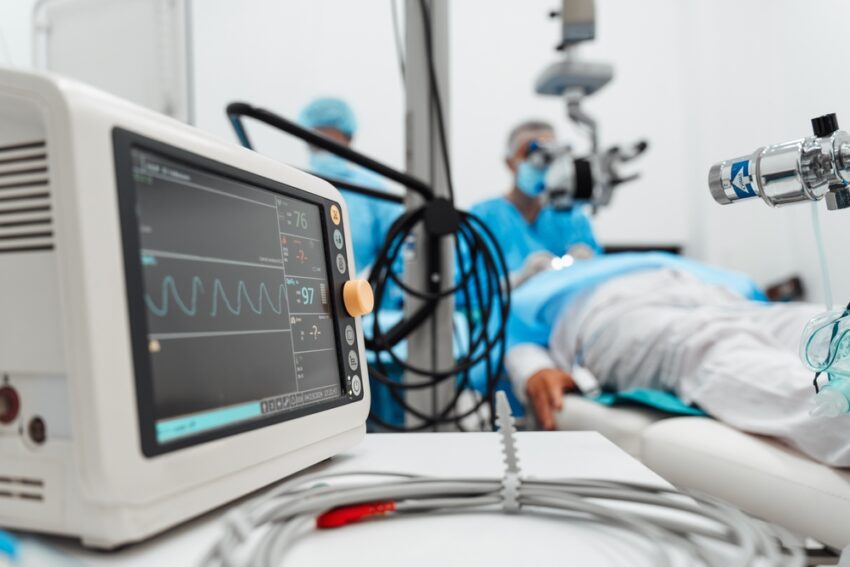
Some careers are built through one major breakthrough. Others are built through years of steady decisions, small improvements, and a willingness to adapt. For Ian Reight, success in medicine came from learning how to stay calm, think ahead, and embrace change long before many others did.
Today, Reight is known as a general surgeon, healthcare leader, and former chief of surgery who helped guide teams through changing technology and growing demands inside modern hospitals. But his story started far away from operating rooms and robotic surgery systems.
Growing up in Maryland, Reight spent part of his early life as a volunteer firefighter and paramedic. The work exposed him to pressure, urgency, and responsibility at a young age.
“I learned early that people look for leadership when situations become chaotic,” Reight says. “You do not always have time for perfect decisions. You have to stay focused and move forward.”
That lesson would shape nearly every stage of his career.
How Ian Reight Built His Career in Medicine
Before entering medicine, Reight studied psychology at the University of Maryland College Park. Later, he earned his medical degree from the Medical University of the Americas.
He says studying psychology gave him an advantage many physicians overlook.
“Medicine is about people as much as science,” he explains. “You can be technically skilled, but if you cannot communicate well, patients and teams lose confidence.”
As Reight moved into surgery, he quickly realized the profession required far more than medical knowledge alone. Surgeons often lead teams during high-pressure situations where timing, communication, and trust all matter.
Over time, he took on larger leadership roles. He served as medical staff president, chief of surgery, medical director of a breast center, and medical director of wound care and hyperbaric medicine.
Each position brought different challenges. Some involved patient care. Others focused on managing teams, solving operational problems, and improving hospital systems.
“You cannot only think like a surgeon,” Reight says. “You also have to think about how every part of the hospital works together.”
Why Ian Reight Embraced Robotic Surgery Early
One of the biggest ideas that influenced Reight’s career was his willingness to adapt to new technology instead of resisting it.
As robotic surgery became more common in hospitals, many physicians were cautious about changing long-established methods. Reight chose a different approach. He became deeply involved in robotic surgery and eventually served as a lead robotic surgeon.
“At first, people naturally questioned whether it would become the future,” he says. “But medicine always evolves. You either learn with it or fall behind.”
Robotic surgery introduced greater precision and helped reduce recovery times for many patients. Reight believed the technology could improve patient outcomes if surgeons approached it with the right mindset and training.
“The technology itself is not enough,” he explains. “You still need discipline, preparation, and strong decision-making.”
His openness to innovation became one of the defining themes of his career. Rather than staying comfortable, he focused on learning continuously and helping teams adjust during periods of change.
“The moment you stop learning is the moment you become ineffective,” Reight says.
Leadership Lessons From the Operating Room
As Reight’s responsibilities grew, so did his focus on leadership. He believes many of the same principles that guide surgery also apply to business, management, and life.
In surgery, preparation matters. Communication matters. Consistency matters.
According to Reight, those same habits help organizations succeed during uncertain periods.
“People want leaders who stay calm when things become difficult,” he says. “Panic spreads quickly in any environment.”
During his years in leadership positions, Reight often worked between physicians, nurses, administrators, and staff members with different priorities and pressures. Keeping everyone aligned was not always easy.
He says one of the biggest mistakes leaders make is focusing only on their own responsibilities instead of understanding the bigger picture.
“You have to understand the pressures other people are dealing with,” he explains. “That is how strong teams are built.”
His leadership style focused less on authority and more on trust, communication, and consistency over time.
What Ian Reight Says About Long-Term Success
Reight believes long careers are rarely built through dramatic moments alone. Instead, they come from repeated habits and steady improvement.
That mindset helped him move through multiple areas of healthcare leadership while continuing to practice medicine directly with patients.
“Success usually comes from small decisions repeated over many years,” he says. “People often underestimate consistency.”
Outside the hospital, Reight enjoys spending time with his dogs and cooking, which he says helps him stay balanced after years in demanding medical environments.
Interestingly, he sees similarities between cooking and surgery.
“There is timing, preparation, and attention to detail involved in both,” he says with a laugh. “You learn patience very quickly.”
Looking back, Reight says the biggest ideas that shaped his career were not complicated. Stay adaptable. Keep learning. Communicate clearly. Stay calm under pressure.
Those ideas helped him navigate medicine during a period of enormous technological and organizational change.
And in an industry where change never stops, Reight believes those lessons matter now more than ever.
“Leadership is not about having all the answers,” he says. “It is about staying steady enough for other people to trust you when challenges come.”


Why Micron’s Stock Dip Is a Buying Opportunity

NATO leaders meet in Ankara as US ceasefire with Iran teeters

Great Southern Fuel Supplies directors have purchased a 2.3 hectare BP fuel station in Port Hedland’s Wedgefield Industrial Precinct for $10.3 million.
Allan and Faye McWhirter established the bulk fuel and lubricant distributor in Lake Grace 50 years ago.
It now operates or supplies more than 85 of Western Australia’s rural BP retail outlets, as well as delivers to metropolitan retail sites and BP commercial accounts.
HM Horizon Pty Ltd bought 1 Hematite Drive, Wedgefield from Acure Funds Management Ltd in May, according to RP Data.
HM Horizon is owned by the McWhirters, an Australian Securities and Investments Commission filing shows.
Allan, Faye, Steven McWhirter, and Dianne and Aaron Harvey are named as directors.
Acure Funds Management’s directors are linked to Perth-based Acure Asset Management, including managing director Angelo Del Borrello, and non-executive directors Gianni Redolatti and Chris Allen.
In 1976, the McWhirters stumbled into the fuel transportation industry through a house purchase that happened to have a fuel station attached to it.
Great Southern has grown to encompass major depots at Katanning, Narrogin, Albany, Corrigin, Koorda, Wongan Hills, Geraldton, Kalgoorlie, Kewdale, Moora, Merredin, Jerramungup, Carnamah and other regional locations.
Starting as a one-truck operation with a 166-litre drum, the company now drives majority Volvo trucks with the ability to hold 146,000 litres.
With the founders in their 80s, they plan on passing their business down to Steven (or Steve) and Dianne.
The Forrestfield-based company employs around 250 staff.

The country’s biggest student landlord has been cutting asking rents to fill its halls before September, a move that tells smaller landlords and property investors a good deal about where pricing power in Britain’s rental market now sits.
Unite Group, which operates some 200 student halls across the UK, said “targeted pricing initiatives” at a number of its buildings had delivered a “strong” couple of months of bookings.
The company now expects its buildings to be between 94 per cent and 96 per cent full when the new academic year begins, an upgrade on previous guidance that pointed towards the “lower end” of a 93 per cent to 96 per cent range.
The discounting has been concentrated in cities such as Leicester, Nottingham and Sheffield, where a wave of new development has swung the balance between supply and demand in students’ favour. According to Unite’s trading update published on Tuesday, 86 per cent of its beds are now reserved for the 2026/27 academic year, up from 85 per cent at the same point last year.
Fuller buildings have come at a cost, however. Unite had expected to push through rent increases of 2 to 3 per cent next year. Reflecting those “targeted adjustments to pricing in select markets”, its rental growth forecast has been pared back to between 1 per cent and 2 per cent.
The two effects broadly cancel each other out, leaving revenue and profit predictions unchanged. Income is set to grow by between 0 and 2 per cent, while adjusted earnings per share is still expected to fall to between 41.5p and 43p, compared with 47.5p last year.
Joe Lister, Unite Group chief executive, said: “We have seen strong progress in reservations for the 2026/27 academic year since our last update in May. This reflects our strong direct marketing and sales performance together with targeted adjustments to pricing in selected markets.”
Investors were unimpressed. Unite shares, already down 38 per cent over the past year, fell a further 2.7 per cent, or 14p, to 506p in early trading.
For the SME landlords and HMO operators who still house the majority of Britain’s students, the signal is hard to ignore. When the largest operator in the market is discounting to fill rooms in Leicester, Nottingham and Sheffield, smaller landlords in those cities are competing against a cheaper, newer product. Local supply, rather than national demand, is increasingly what sets the rent.
It is a dynamic already visible in the wider lettings market, where advertised rents outside London have slipped for the first time since 2019 as more properties come to market and tenant demand cools.
Regulation is adding to the squeeze. The Renters’ Rights Act, which came into force on 1 May, allowed students on existing tenancies to leave with two months’ notice under transitional arrangements, a change Unite says has seen some students exit their contracts early. For private landlords, the legislation is rewriting the business case for buy-to-let altogether.
Unite’s response is to concentrate its firepower where demand is most reliable. The group is targeting £300 million to £400 million of disposals this year as it repositions its portfolio towards the strongest universities, building on partnerships such as its £250 million joint venture with Newcastle University.
For smaller operators without that luxury, the lesson from the market leader is a sobering one: in 2026, even the biggest landlord in the country cannot raise rents where the cranes have been busy.

Amy Ingham
Amy is a newly qualified journalist specialising in business journalism at Business Matters with responsibility for news content for what is now the UK’s largest print and online source of current business news.

The stock had gained about 30% over the past three months, driven by optimism over leadership clarity and improving sentiment toward the banking sector.
Meanwhile, the bank said the Reserve Bank of India (RBI) has approved the appointment of Mahesh Muralidhar Pai as its Managing Director & Chief Executive Officer for a three-year term, effective October 1, 2026.
In a regulatory filing, the bank said the RBI, through its letter dated July 7, 2026, conveyed its approval for Pai’s appointment. The proposal will be placed before the bank’s Board of Directors at its meeting scheduled for July 16, 2026. The appointment will subsequently be subject to shareholders’ approval in accordance with the provisions of the Companies Act, 2013, and the SEBI Listing Regulations.
Share Price Trend and Technical Indicators
South Indian Bank’s stock has delivered a strong performance in recent months, gaining around 30% over the past three months. Following Wednesday’s decline, the bank commands a market capitalisation of Rs 12,478 crore. The stock’s 52-week high stands at Rs 49.90.

On the technical front, the stock’s 14-day Relative Strength Index (RSI) is 66.2, indicating positive momentum while remaining below the overbought threshold of 70. Generally, an RSI reading below 30 is considered oversold, while a reading above 70 signals overbought conditions.
However, the trend remains mixed as the stock is trading below four of its eight key Simple Moving Averages (SMAs), reflecting some near-term technical weakness.
In terms of shareholding, Foreign Institutional Investors (FIIs) increased their stake in the bank to 24.21% in the March 2026 quarter, up from 20.94% in the previous quarter. Meanwhile, Mutual Funds trimmed their holdings marginally to 11.29% from 11.90% during the same period.
(Disclaimer: Recommendations, suggestions, views and opinions given by the experts are their own. These do not represent the views of Economic Times)

The stock opened at HK$301, slightly above its IPO price of HK$295.60. It climbed to an intraday high of HK$314.80 before easing to trade around HK$299, indicating that early gains were short-lived as investors assessed valuations in the technology sector.
IPO debut tests appetite for Chinese AI firms
According to Reuters, Momenta’s market debut is being closely watched as a gauge of investor demand for Chinese artificial intelligence and advanced technology companies. The listing also comes at a time when Hong Kong is facing a record wave of lock-up expirations following a strong first half for new share offerings.Market participants noted that investors have become more selective after a busy IPO period, with valuations in AI and technology stocks drawing closer scrutiny.
Strong cornerstone backing supports listing
Momenta attracted a high-profile group of cornerstone investors ahead of the offering, underscoring international interest in China’s AI sector.
Existing investor Mercedes-Benz participated alongside global asset managers including BlackRock, GIC, Fidelity International, Oaktree Capital Management, Franklin Templeton and ChinaAMC. Chinese investment firm Boyu Capital also backed the offering, according to the company’s prospectus.Reuters reported that analysts viewed the strong lineup of cornerstone investors and the pricing of the IPO at the top end of the marketed range as evidence of continued global interest in China’s AI industry, even as broader market sentiment remains measured.
Mixed performance for Hong Kong’s new listings
Momenta’s listing coincided with several other IPO debuts in Hong Kong, which delivered mixed performances.
Visual AI company Reconova fell sharply at the open, while mining autonomous-driving technology firm Eacon posted modest gains. Trench-cover manufacturer Baogai opened flat, whereas silicon carbide chipmaker BasicSemi recorded stronger early gains.
The varied performance highlighted investors’ increasingly selective approach toward newly listed companies, particularly within the technology sector.
Company focuses on autonomous driving technology
Founded in 2016 by former Microsoft researcher Cao Xudong, Momenta develops advanced driver-assistance software for automobile manufacturers. Its technology enables vehicles to perform functions such as steering, braking, lane changes and parking, while still requiring drivers to remain attentive and ready to assume control.
According to the company’s prospectus, vehicles equipped with Momenta’s software exceeded 680,000 by the end of 2025. Its customer and partner roster includes Toyota, Mercedes-Benz, SAIC Motor, General Motors, BYD and Audi.
IPO proceeds earmarked for expansion
Reuters reported that Momenta plans to allocate around 60% of the IPO proceeds toward research and development to strengthen its autonomous-driving technology.
Another 20% will be invested in robotaxi services, while 10% will support its mass-produced vehicle business. The remaining 10% has been earmarked for worki
 Reuters
Momenta’s market debut is being closely watched as a gauge of investor demand for Chinese artificial intelligence and advanced technology companies.
ng capital and general corporate purposes.
The allocation underscores the company’s strategy of expanding both its core driver-assistance business and its presence in the emerging autonomous mobility market.

Small firms were meant to be the biggest winners from Britain’s shift to paperless trade. Three years on, government-commissioned research has found them “untouched” by the reforms, while large companies and shipping carriers quietly pocket the savings.
The Electronic Trade Documents Act 2023 made the UK the first G7 country to give digital trade documents full legal status, promising smaller exporters lower courier fees, less administration and better access to trade finance.
The scale of the potential prize is hard to overstate. The World Trade Organisation estimates that a typical cross-border transaction requires the exchange of 36 documents and 240 copies of the paperwork. The government suggested the reforms could generate £1.4 billion in net benefits for importers and exporters over ten years, with bilateral trade with a country such as the US rising by 6.8 per cent for non-agricultural goods.
Yet evidence gathered by Ipsos for the Department for Business and Trade, drawn from 23 interviews with traders and industry experts in March, tells a different story. Awareness of the reforms among small business owners is “low”, and most simply follow whatever their courier asks for rather than driving change themselves.
The researchers concluded that widespread adoption of electronic trade documentation would only happen “once Customs authorities, carriers, and ports stopped issuing physical paper.” The common view among experts was that “voluntary adoption by small businesses would not scale, and that progress depended on co-ordinated action by the government and large supply chain actors.”
The big players are not waiting. Use of electronic bills of lading, the legally binding document that acts as receipt, contract and proof of ownership in one, has doubled since 2023, but largely thanks to major commodity traders and shipping lines. Nine of the biggest carriers, representing 75 per cent of global capacity, have committed to 100 per cent digital adoption by 2030.
For the SME owner, the practical catch is worse than the awareness gap. Even where digital documents are legally accepted, Customs, health authorities, banks and couriers “still require paper originals for some steps”, so early adopters end up running costly hybrid paper and digital processes. Overseas banks and trading partners may reject UK digital documents simply because they lack the software to verify them.
Nor did Whitehall’s sales pitch land. Government messaging about “improved access to trade finance” did not resonate with owners, who were far more interested in direct savings on courier fees and less red tape, a familiar refrain from firms already frustrated by post-Brexit border checks and paperwork.
The findings have prompted the British Chambers of Commerce, which has repeatedly warned that small exporters are being left behind while larger firms surge ahead, to call for paper documentation to be phased out and for closer co-ordination with the UK’s leading trading partners.
William Bain, head of trade policy at the BCC, said: “This research paints a clear picture: that governments, globally, must work together better to advance digital trade.
“It is a travesty that far too few SMEs are taking advantage of the time and cost savings that a shift to using online documentation can bring.
“This is not just about authorities passing laws to digitise documents, it also needs them to get behind the drive to increase take up. This should include a timeline for phasing out paper-based documentation.
“More resources also need to be invested in implementation by the government. Our chamber network is ready to work in partnership with them to raise awareness and fully embed digitisation into our trade culture.”
With Britain nursing a £74 billion slump in goods exports since Brexit, the stakes for getting smaller firms trading efficiently are considerable.
A government spokesperson said: “Making trade paperless saves businesses a lot of time and money, which is why the UK was the first G7 country to give electronic documents full legal status.
“We want more business across the country to benefit from these changes, and are working hard to address remaining barriers so we can make digital trade simpler, faster and more efficient.”

Jamie Young
Jamie is Senior Reporter at Business Matters, bringing over a decade of experience in UK SME business reporting.
Jamie holds a degree in Business Administration and regularly participates in industry conferences and workshops.
When not reporting on the latest business developments, Jamie is passionate about mentoring up-and-coming journalists and entrepreneurs to inspire the next generation of business leaders.
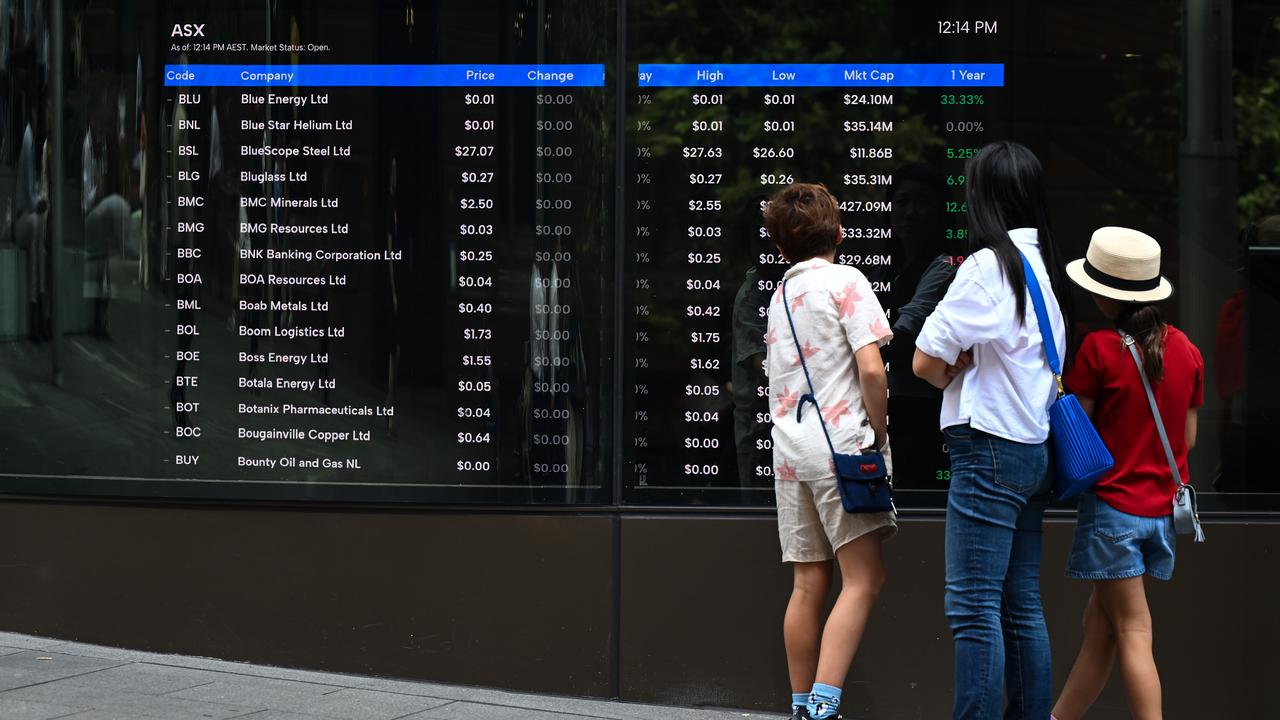
The local share market has staged a dramatic turnaround, finishing only modestly lower after earlier being on pace for its worst day in five weeks.
Mark Beyer speaks to Sam Jones about the growth of in-house construction divisions.
Business
Multibagger Cupid shares rally 19% in 6 days after Q1 update, skyrocket 940% in one year. What lies ahead?

Cupid shares hit a fresh 52-week high of Rs 226 apiece on NSE on Wednesday morning. The stock has surged more than 60% in one month, and is up more than 114% in 2026 so far. In the longer term, the shares of the company have skyrocketed 940% in one year, and a whopping 9,155% in just three years.
The company manufactures and supplies male and female condoms, water-based lubricant jelly and IVD kits. It operates a manufacturing facility in Sinnar near Nashik, about 200 km from Mumbai. It says it is the first company in the world to receive prequalification from the World Health Organization and United Nations Population Fund for the supply of both male and female condoms.
Cupid Q1 business update
Cupid at the end of June said it is on track to report revenue exceeding Rs 150 crore in the first quarter of FY27, which it described as one of the strongest quarterly performances in its history. Aided by the strong start to the financial year and improved visibility across international and domestic markets, the company has also raised its FY27 revenue guidance.
The company now expects FY27 revenue to stand at more than Rs 660 crore, up from its earlier guidance of Rs 600 crore, implying an upward revision of at least 10%. Cupid said the revised outlook is backed by its diversified business model, an expanding global opportunity pipeline and increasing operating scale across multiple business verticals.
Also Read | Cupid raises FY27 guidance, expects Q1 revenue to top Rs 150 crore
Cupid also continues to make steady progress in its In Vitro Diagnostics (IVD) business. While management’s near-term growth estimates for this segment remain conservative, it believes the business has the potential to become a meaningful contributor over the coming years, supported by regulatory approvals, new product launches, and continued commercialisation efforts, the company said.
What Cupid’s management said
“Our strong start to FY27 reflects the transformation Cupid has undergone over the past few years. We have built a diversified business with multiple growth engines that are now beginning to scale together. We are seeing strong momentum across our international B2B business, supported by expanding opportunities in private markets, institutional procurement, and government tenders across the world. Our strategic relationship with PFSCM has commenced on a very encouraging note and further strengthens our long-term position in global healthcare procurement,” said Cupid Chairman and Managing Director Aditya Kumar Halwasiya.
He added that in the past twelve months, Cupid has significantly strengthened its male condom and female condom businesses through enhanced manufacturing capabilities, customer acquisition, and wider market reach. “At the same time, our lubricants portfolio continues to gain traction across both institutional and consumer segments. On the consumer side, we remain focused on building Cupid into a trusted mainstream personal care and wellness brand. We see significant long-term opportunities across modern trade, organised retail, and pharmacy channels as we continue to expand our presence across Bharat,” he further said.Also Read | Skyrocketing rally makes Cupid the costliest stock in its category
What lies ahead?
The Cupid chart is a textbook late-stage momentum extension with the stock touching a fresh 52-week high today, said Harshal Dasani, Business Head at INVasset PMS. Extreme momentum stocks that print vertical price action of this magnitude typically enter a corrective or consolidation phase before the next durable leg begins, the analyst cautioned.
“The RSI at 83.79 is the immediate flag. This is deep into overbought territory, well beyond the level at which the classic 70-line divergence signal starts firing, and while overbought can stay overbought in strong trends, the risk-reward at this print is skewed unfavourably for chasing. The supporting indicators are constructive, with MACD and ADX both confirming continued buying strength, and the long-consolidation breakout that took the stock to this zone is a structurally valid move, so the trend itself remains intact. The technical framework calls for waiting either on a cooling of the RSI back toward the 60 to 65 zone through a sideways consolidation, or a shallow pullback to the Rs 190 to Rs 200 support band before the setup becomes favourable again, rather than entering at the 52-week high print,” he said.
A close below Rs 190 would signal that the vertical phase has ended and a deeper base needs to build before continuation, while above Rs 230 with volume, the trend extends further but the price paid at that entry gets progressively more punishing on any subsequent correction, according to Dasani.
(Disclaimer: Recommendations, suggestions, views and opinions given by the experts are their own. These do not represent the views of The Economic Times)

Taylor Swift’s wedding secrets revealed by Greg James as he says he watched the ceremony with Hugh Grant and had clandestine ‘Traitors-style’ talks with Graham Norton
Why Micron’s Stock Dip Is a Buying Opportunity

Secret Network Plans Departure from Cosmos to Arbitrum Following $4.7M Security Breach


-

 Fashion5 days ago
Weekend Open Thread: High Hopes
-
 NewsBeat3 days ago
Taylor Swift and Travis Kelce wedding staffer hilariously struggles to keep her cool while checking in megastars
-
Crypto World7 days ago
Airdrop Registration Becomes Key Focus For Remittix As RTX Launch Updates Approach
-

 Fashion2 days ago
Open Thread: What Great Books Have You Read Recently?
-

 Politics5 days ago
The House | “Reframing the debate from a binary discussion of winners and losers”: Yuan Yang reviews ‘We Are Not Machines’
-

 Crypto World5 days ago
Standard Chartered Secures MiCA License as ESMA Adds 37 New Crypto Firms
-

 Sports7 days ago
Broncos roster: OL Ben Powers (No. 74) entering final year of contract
-

 Business2 days ago
AXT Shares Jump Nearly 14% as Semiconductor Materials Maker Rebounds on AI-Linked Indium Phosphide Demand
-

 Crypto World6 days ago
Binance stock trading tops $1B in first month after launch
-
Crypto World2 days ago
SK hynix (000660.KS) Stock Dips as $28B Nasdaq ADR Offering Drives AI Memory Expansion
-

 Crypto World6 days ago
Alibaba-affiliate Ant Group enters the humanoid robot market with 12 deals
-

 Crypto World3 days ago
South Africa proposes crypto tax guidance under existing rules
-

 News Videos1 day ago
Whats Hidden Inside This Cash Register? #treasure #reselling #money
-

 News Videos2 days ago
Best Time to Enter Small Caps Right Now? Another Bull Run? | Financially Free
-

 Tech3 days ago
Lenovo laptops are now shipping with YMTC SSDs, a sign of Chinese NAND entering the mainstream
-

 Business6 days ago
Meta Platforms Stock Jumps 7% Today as Bloomberg Reports Company Plans to Enter the Cloud Business
-
 NewsBeat6 days ago
New exhibition reflects five decades of movement between island of Ireland and GB
-
 Tech1 day ago
Anthropic’s new “J-lens” reveals a silent workspace inside Claude that mirrors a leading theory of consciousness
-

 Business5 days ago
What a 10 Percent Drop Means for Buyers, Sellers and Renters
-

 Crypto World5 days ago
Binance Re-Enters Philippines As EU MiCA Rules Restrict Access
You must be logged in to post a comment Login