



Editor’s note: This article is intended to provide a general overview of the ETF for educational purposes only and, unlike other articles on Seeking Alpha, does not offer an investment opinion about the ETF.
Business
The Hidden Costs of Inheriting a Property in the UK


Inheriting a property can feel like a windfall, but it often comes with a string of costs that catch people off guard. There’s the emotional weight of dealing with a bereavement, and then, sometimes before you’ve had a chance to process it, the financial reality starts to take shape.
Solicitors get in touch, bills arrive, and decisions need to be made quickly. Let’s see how you can navigate this once-in-a-lifetime situation.
Probate Fees and Legal Costs
Before you can do anything with an inherited property, you’ll usually need to go through the probate process. Probate is the legal procedure that confirms the validity of a will and gives the executor authority to deal with the estate.
In England and Wales, the probate application fee is £300 for estates valued over £5,000, following an increase from £273 in May 2024. That’s relatively modest, but solicitor fees on top can run into thousands.
If the estate is complex, for instance, if there’s no will, or the will is contested, legal costs can climb quickly. Some solicitors charge a percentage of the estate’s value, which on a property worth £300,000 could mean a bill of several thousand pounds. It’s worth getting a few quotes and understanding exactly what’s included before you commit to a firm.
Don’t Forget About Probate Home Insurance Cover
Probate can take months, sometimes longer. During that time, the property sits in a kind of administrative limbo. It can’t usually be sold until probate is granted, but it still needs to be maintained and protected. This is where many families get caught out.
A standard home insurance policy may become invalid once the policyholder dies and the property is unoccupied. This is a real risk, because an empty house is more vulnerable to water damage from burst pipes, fire, theft, vandalism, storm damage and other risks.
Specialist probate home insurance cover exists specifically for this situation, providing buildings cover while the estate is being settled. It’s the kind of policy most people don’t know about until they need it.
Inheritance Tax
This is the big one. In the UK, inheritance tax (IHT) is charged at 40% on the portion of an estate above the nil-rate band, which currently sits at £325,000. There’s an additional residence nil-rate band of up to £175,000 if you’re inheriting a property that was the deceased’s main home and you’re a direct descendant.
Married couples and civil partners can also combine their allowances. This means a married couple or civil partnership could potentially pass on up to £1 million free of inheritance tax, provided both nil-rate bands and residence nil-rate bands are available and the qualifying conditions are met.
Even so, property values in much of the UK mean that IHT can easily apply. And crucially, the tax usually needs to be paid before probate is granted, which means before you’ve had a chance to sell the property to raise the funds. HMRC does allow IHT on property to be paid in instalments, which can help, but it’s something you’ll need to plan for.
Council Tax and Utility Bills
Once someone dies, their council tax liability ends. Under the Class F exemption, a property that is left empty following the death of its owner is exempt from council tax for the entire period that probate is pending, however long that takes.
Once probate is granted, a further six-month exemption applies, provided the property remains unoccupied and has not been transferred to a beneficiary or sold. After that, the standard rate of council tax becomes payable. Crucially, a premium surcharge for long-term empty or second homes cannot be levied for a further 12 months from the date probate is granted, even once the Class F exemption has ended.
Utility bills also continue. If the property is connected to gas, electricity, and water, those accounts will need to be transferred or closed. Standing charges still apply even with zero usage, so this is a cost that quietly accumulates over time.
Maintenance and Security Costs
An empty property deteriorates faster than one that’s occupied. Gardens become overgrown, minor leaks go unnoticed, and opportunists sometimes target vacant homes. You may need to arrange regular checks, basic maintenance, or even security measures depending on the location and type of property.
If the property needs work before it can be sold or let, you’re also looking at renovation costs. These vary hugely depending on the state of the building, but a property that hasn’t been updated in decades could require significant investment before it’s market-ready.
Capital Gains Tax When You Sell
If you decide to sell the inherited property, you may be liable for capital gains tax (CGT). Your gain is calculated from the property’s value at the date of death, not the original purchase price. So if the property was worth £250,000 when you inherited it and you sell it for £280,000, you’d potentially pay CGT on that £30,000 difference.
For the 2025/26 tax year, the annual CGT exempt amount is £3,000, meaning gains below that threshold are tax-free. Above that, residential property gains are taxed at 18% if you are a basic rate taxpayer, or 24% if you are a higher or additional rate taxpayer. Other reliefs may also apply, so it’s worth getting proper tax advice before you sell. This is one cost that sometimes comes as a surprise, particularly if the property is sold some time after probate is granted.
To Sum Up
Inheriting a property in the UK involves far more than simply receiving the keys. Between probate fees, inheritance tax, council tax, maintenance, insurance, and potential CGT, the costs can add up to tens of thousands of pounds depending on the estate. That’s why it’s important to get proper legal and financial advice early, and make sure the property is protected while probate is ongoing. This will save you a lot of headaches down the line.
Continue Reading
Business
US stocks today: S&P 500 hits record closing high on AI optimism, Micron joins $1 trillion club

The S&P 500 hit a record closing high on Tuesday, while the tech-heavy Nasdaq notched further gains, as AI-fueled optimism offset concerns over Middle East peace talks, which were compounded by recent U.S. strikes on Iran. Semiconductor stocks, which have surged on AI-driven demand, led gains, with Micron gaining sharply, hitting $1 trillion in market value for the first time after UBS increased its price target on the stock to $1,625 from $535.
Upbeat earnings and renewed confidence in AI trade have driven U.S. equities higher despite the ongoing conflict with Iran, with investors now turning their attention to IPOs of some of the largest private AI companies, including SpaceX.
“For those of us that have been working that long, the tech rallies we’ve been seeing this year are reminiscent of the boom at the end of the 1990s,” said Chris Zaccarelli, chief investment officer for Northlight Asset Management.
“It’s also possible that some of the lessons that were learned after the tech bubble burst over 25 years ago will prevent the same thing from happening again.” The market took comfort from comments by U.S. Secretary of State Marco Rubio, who said that a deal with Tehran to halt the conflict could “take a few days,” while Iran’s Tasnim news agency reported that Tehran was seeking the release of $24 billion of Iranian funds frozen overseas.
“Even though we don’t have an end of the war yet, there’s a very high likelihood the situation will resolve itself in a peaceful fashion sooner rather than later,” said Adam Sarhan, chief executive of 50 Park Investments.
“But the reality is that earnings are expected to grow even with high inflation. The economy is still growing, and the market is a mirror of the economy to a large extent.”
According to preliminary data, the S&P 500 gained 46.00 points, or 0.62%, to end at 7,519.47 points, while the Nasdaq Composite gained 311.92 points, or 1.18%, to 26,655.89. The Dow Jones Industrial Average fell 106.60 points, or 0.21%, to 50,473.10.The S&P 500, the Nasdaq and the Russell 2000 touched intraday record highs on Tuesday, underscoring the strength of the recent rally.
Brent crude futures climbed about 4% on Tuesday after the U.S. military carried out strikes in Iran, adding to uncertainty over whether a deal would be reached soon to end the war and open up shipping flows through the Strait of Hormuz. Qualcomm rose after Bloomberg News reported it reached a deal with TikTok owner ByteDance to supply chips, while Marvell Technology ended higher. The Philadelphia SE Semiconductor Index hit an all-time high.
With the earnings season winding down, first-quarter earnings growth is expected to be 29% year-on-year compared with the 16.1% estimated a month ago, according to LSEG data from Friday.

Operator
Thank you, everyone, for joining us. My name is [ Hitin Sanny ], and I’ll be the operator for today’s call. Welcome to Tribe Property Technology Fiscal First Quarter 2026 Financial Results Conference Call. This call is being recorded. We will be having a question-and-answer session at the end of the call. On our call today, we have Tribe’s CEO, Joseph Nakhla; and the company’s CFO, Scott Ullrich.
I trust that everyone has received a copy of our financial results press release that was issued earlier today. Listeners are also encouraged to download a copy of our financial statements and management discussion analysis from SEDAR+. Please note portions of today’s call, other than historical performance, include statements of forward-looking information within the meaning of applicable securities laws. These statements are made under the safe harbor provisions of those laws. Forward-looking statements are based on management’s current views and assumptions. Please review our press release and Tribe’s reports filed on SEDAR+ for various risk factors that could cause actual results to differ materially from our projections.
We use terms such as gross profit, gross margin, adjusted EBITDA and recurring revenue on this conference call, which are non-IFRS and non-GAAP measures. For more information on how we define these terms, please refer to the definition set out in our management discussion analysis. In addition, reconciliations between any adjusted EBITDA and net income is included in the press release this morning. Please note that all financial information is provided in Canadian dollars unless otherwise noted. With that, I will now turn the call over to Tribe’s CEO, Joseph Nakhla.
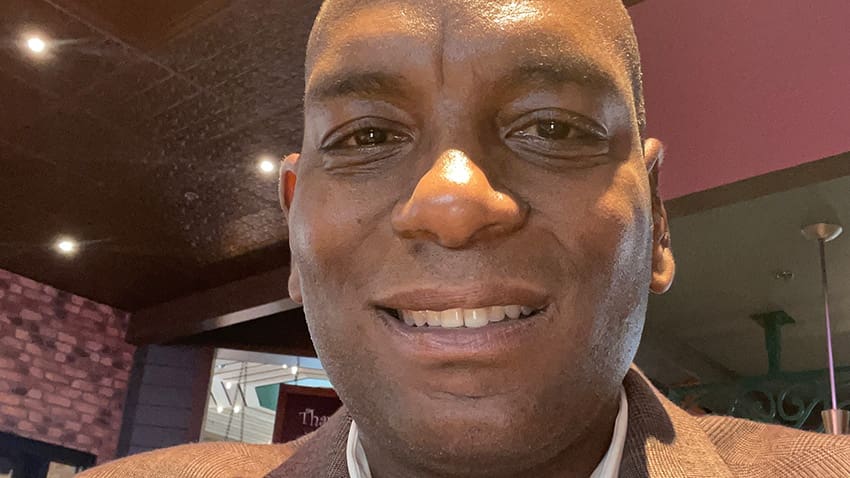
Neiman C. Young is an executive coach, retired U.S. Army officer, and former municipal leader with more than two decades of leadership experience across military operations and public sector management.
Based in Corpus Christi, Texas, Young has built a career around leading organisations through complex environments while maintaining a strong focus on discipline, clarity, and long-term performance.
Young served 23 years in the U.S. Army, where he held a variety of leadership roles around the world, including deployments to Iraq and Afghanistan. His military career culminated in command of a Special Operations company in support of Operation Enduring Freedom. Those experiences shaped his practical approach to leadership under pressure and his belief in resilience, accountability, and strategic thinking.
Following his retirement from the Army in 2017, Young transitioned into local government leadership. He worked in King George County, Virginia, where he led major strategic initiatives, including the County’s Debt Mitigation Plan and its first Economic Development Strategic Plan since 1999. In 2021, he was appointed Assistant City Manager for the City of Corpus Christi, Texas, where he oversaw more than 900 employees and managed nearly $1.6 billion in combined operating and capital budgets.
Today, Young focuses on executive coaching and leadership development. His work centres on helping senior leaders improve clarity, resilience, and sustainable performance through structured, values-driven leadership practices.
Q&A With Neiman Young
Q: Let’s start at the beginning. What first pushed you towards leadership?
Leadership was something I grew into over time. I grew up in Houston, Texas, and from an early age I was drawn to structure, teamwork, and responsibility. When I joined the Army, I quickly realised leadership was not just about authority. It was about trust, communication, and staying calm under pressure.
Over 23 years in the military, I had the opportunity to lead in many different environments. That included deployments to Iraq and Afghanistan. Those experiences shaped how I approach leadership today.
Q: What did commanding a Special Operations company teach you about leadership?
It taught me that clarity matters. In high-pressure environments, people look to leaders for direction and confidence. You cannot create unnecessary confusion.
I also learned that leadership is not about ego. It is about service. Your team performs best when they know you are focused on the mission and on supporting them.
Those lessons stayed with me long after my military career ended.
Q: You moved directly from the Army into local government. What was that transition like?
It was quicker than most people expected. I retired from the Army on 17 February 2017, and four days later I started working in local government in King George County, Virginia.
The environments were different, but many of the leadership principles were the same. You still have to solve problems, build trust, and manage competing priorities.
One of the major projects I worked on was the County’s Debt Mitigation Plan. We also developed the first Economic Development Strategic Plan the County had seen since 1999. Those projects required collaboration across multiple groups and agencies.
Q: What prepared you for becoming Assistant City Manager in Corpus Christi?
The Army prepared me to lead under pressure, but local government taught me how to lead large systems with many moving parts.
As Assistant City Manager in Corpus Christi, I managed more than 900 employees and oversaw nearly $1.6 billion in combined operating and capital budgets. That role required constant communication and long-term thinking.
You are balancing infrastructure, public services, staffing, budgets, and community expectations all at once.
Q: What made you move into executive coaching?
Over the years, I noticed that many high-performing leaders were operating at a very intense pace without enough focus on sustainability.
I have personally experienced periods where the pressure and pace became difficult to maintain. That forced me to reassess how leadership should work over the long term.
Today, my coaching work focuses on helping leaders stay effective, grounded, and aligned while still performing at a high level.
Q: How would you describe your coaching philosophy?
I believe strong leadership starts with self-awareness and discipline.
A lot of people focus only on external results. Results matter, of course, but sustainable performance also depends on clarity, emotional intelligence, resilience, and consistency.
I often tell people that leadership is not about short bursts of intensity. It is about showing up consistently over time.
Q: Was there a moment where you realised your approach needed to evolve?
Absolutely. Early on, I launched a wellness workshop series that did not connect with people the way I expected.
Attendance was low, and the format was not engaging enough. Instead of scrapping the idea, I gathered feedback and rebuilt the programme around a more interactive coaching model.
That experience taught me the importance of listening and adapting. Sometimes setbacks are simply information that helps you improve.
Q: How do you personally stay focused and disciplined?
I rely on structure. I break goals into long-term vision, annual priorities, quarterly focus areas, and weekly execution.
I also make time for reflection. Meditation, exercise, and stepping away from constant noise help me stay clear mentally.
Leadership can become reactive if you do not create space to think.
Q: What qualities do you think leaders need most today?
Emotional intelligence is critical. Leaders need to communicate clearly and understand how their actions affect others.
Resilience is also important because every industry is changing quickly. Leaders need to adapt without losing focus.
Finally, integrity matters. People follow leaders they trust.
Q: What does success mean to you now?
Success means creating meaningful impact while staying aligned with your values.
I think many leaders are beginning to realise that long-term effectiveness matters more than temporary intensity. If you can build something sustainable while helping others grow, that is success to me.


We Are/DigitalVision via Getty Images
The NEOS Russell 2000 High Income ETF (IWMI) is a buy-write strategy designed to provide investors equity exposure to the Russell 2000 while overlaying a call options strategy to earn income for the portfolio. With a 13.66% yield, IWMI can be utilized by investors seeking current income in place of capital growth as part of an income-oriented investment strategy.
About NEOS Russell 2000 High Income ETF
IWMI was launched by NEOS ETF Trust on June 24, 2024, on the CBOE BZX Exchange. IWMI has a competitive expense ratio of 76 bps, 68 bps of which derives from the management fee.
Seeking Alpha
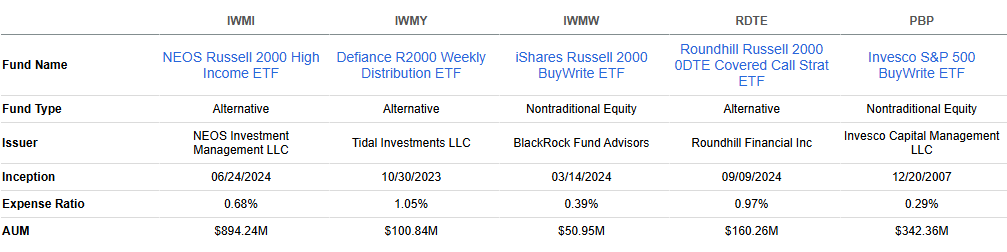
IWMI pays out a monthly distribution largely derived from the performance of the options strategy. The ETF has paid out $7.03/share over the last twelve months for a yield of 13.66%. The distribution can vary from month to month, though the fund has generally remained in a relatively narrow range since inception. In general, the majority of the distribution will derive from return of capital, returning investors’ principal investment over time. The result of this will lower the investor’s cost basis as a tax-deferred benefit until the cost basis reaches $0/share, at which point excess ROC will be taxed as short-term capital gains or ordinary income. While this type of strategy may not be suitable for investors seeking long-term growth through index investing, the strategy can be used by those seeking current income, effectively facilitating retirement distributions without the need to sell shares.
Seeking Alpha
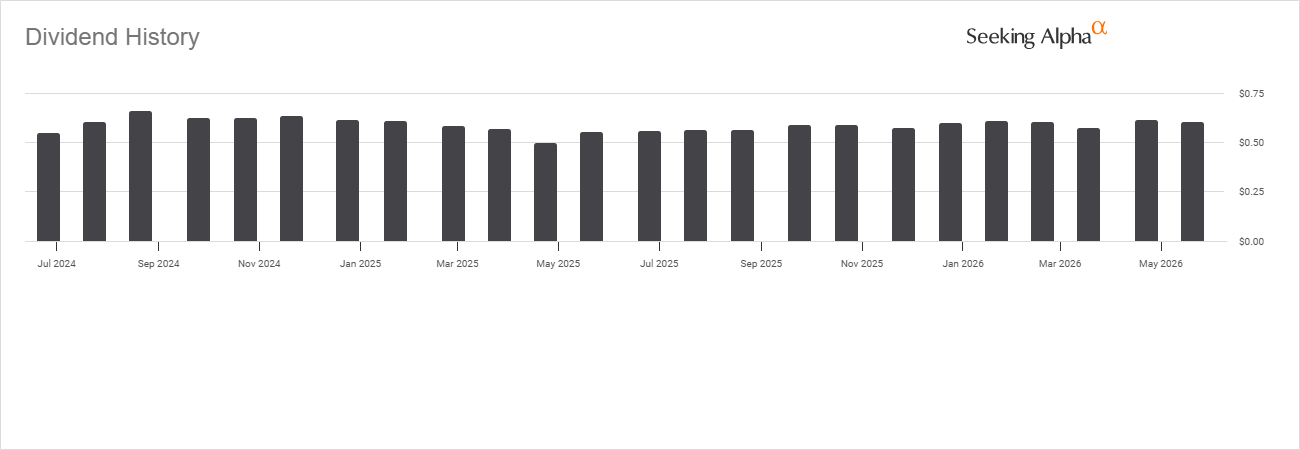
One result of ROC will be NAV erosion over time, which will be present when comparing the price return of the Russell 2000 Index and IWMI. When comparing the performance of the fund, investors should view IWMI on a total return basis to evaluate the relative performance of the fund to the Index.
IWMI has two components that make up the portfolio:
Equity investments.
Options investments.
The equity component of the portfolio consists entirely of the Vanguard Russell 2000 ETF (VTWO). From an investment perspective, exposure to VTWO will provide investors with equity growth with respect to the Russell 2000 Index.
The options strategy utilizes Section 1256 Russell 2000 (RUT) index options contracts to gain short exposure to the Index. These contracts exhibit a special tax benefit with a 60/40 split between long- and short-term capital gains, potentially lowering the entirety of the tax burden on investors. The fund will effectively write covered call options on the underlying Index to earn income for investors.
The options trading strategy comes with some caveats that may limit the full upside potential of the equity component of the fund. Given that the fund writes call options on the Index, the fund will limit its upside potential to the strike price of these short option positions. If the Index were to exceed the strike price, the fund may lose money making up the difference between the strike price and the price of the Index at the time the options are rolled forward. In order to protect the fund from significant losses, IWMI may trade call spreads in order to limit the full downside risk. This means that the fund will purchase call options with a higher strike price with respect to the written options, limiting the exposure to risk. The call spreads will essentially create an opportunity for IWMI to limit the downside potential of the short options positions with respect to the strike price of the long call options, limiting losses to the spread between options and the premium paid for the protection.
Investor Suitability
IWMI can be best utilized by income-oriented investors seeking current income while investing in an equity-linked portfolio strategy. Investing in IWMI will provide both equity upside potential along with options premium income over time. The benefit of utilizing IWMI over a standard Index fund is that monthly income can be pulled without having to sell shares of the fund. IWMI can be utilized as an alternative strategy for fixed income or as an equity component as part of a diversified portfolio strategy. Investors will be issued a Form 1099-DIV at the end of the calendar year for tax reporting purposes.
Risks Related To IWMI
IWMI is a buy-write strategy designed to provide equity and options income exposure to the Russell 2000 Index, creating certain risks that should be considered prior to making a final investment decision. IWMI may limit the full upside potential with respect to the underlying Index as a result of the covered call strategy. The fund may also face losses during periods of significant Index growth, which would result in IWMI experiencing a potential loss on the short options positions. The options positions are actively traded by the portfolio management team, exposing investors to manager risk and their ability to effectively purchase and sell call options.
Final Thoughts
IWMI can be utilized by income-focused investors seeking to gain equity exposure using the Russell 2000 Index. The fund’s distributions can benefit income investors by returning invested capital over time, reducing the need to sell shares for portfolio distributions.
This article answers three main questions about IWMI:
- What type of investor is IWMI best suited for?
- What are the benefits and risks of investing in IWMI?
- Does IWMI have any tax advantages for investors?

Cy Xayarath is a registered nurse based in Omaha, Nebraska, whose career reflects discipline, consistency, and a strong commitment to patient care.
Originally from Grand Island, Nebraska, he developed a practical work ethic early in life that would later shape both his military and healthcare careers.
Before entering nursing, Xayarath served in the United States Army. The experience taught him the importance of accountability, teamwork, and staying calm under pressure. Those lessons became a strong foundation for his future work in healthcare.
After completing his military service, he pursued a Bachelor of Science in Nursing at Nebraska Wesleyan University. He chose nursing because it offered a direct way to help people while working in an environment that required focus, adaptability, and clear communication.
Today, Xayarath works with CHI Health in Omaha, where he supports patients and medical teams in a fast-paced clinical setting. He is known for his steady approach and attention to detail. In an industry where small decisions can make a major difference, he believes consistency and presence matter most.
Xayarath also believes strong healthcare begins with trust and communication. He often speaks about the importance of listening to patients and remaining dependable during difficult moments.
Outside of work, he enjoys fishing and spending time outdoors, which helps him maintain balance away from the demands of healthcare.
Q&A with Cy Xayarath
Q: Tell us about your background growing up in Nebraska.
Cy Xayarath: I grew up in Grand Island, Nebraska. It was a good place to learn responsibility and hard work. Life was pretty straightforward. You learned to show up, do what you said you were going to do, and respect people. Those values stayed with me as I got older.
Q: Before nursing, you served in the military. How did that experience shape you?
Cy Xayarath: Serving in the U.S. Army had a huge impact on me. It taught me discipline and how to stay calm in stressful situations. You learn quickly that people rely on you, so you have to stay focused and accountable. I still carry that mindset into healthcare today.
Q: What made you decide to move into nursing?
Cy Xayarath: I wanted a career where I could actually help people in a real way. Nursing felt practical and meaningful at the same time. Every day is different, and your work directly affects someone’s life. That stood out to me.
I went on to earn my Bachelor of Science in Nursing from Nebraska Wesleyan University. The education was challenging, but it prepared me for the reality of working in healthcare.
Q: What is your role today with CHI Health?
Cy Xayarath: I work as a registered nurse with CHI Health in Omaha. A big part of the job is supporting patients and working closely with healthcare teams. You have to pay attention to details and communicate clearly because situations can change quickly.
A lot of nursing happens behind the scenes. Patients may only see part of it, but there’s always something happening to keep care moving forward safely.
Q: What skills are most important in nursing today?
Cy Xayarath: Communication is probably one of the biggest things. Patients want to feel heard, especially when they’re stressed or worried. You also need patience and consistency. Healthcare can move fast, so staying calm matters.
I also think reliability is underrated. People need to know they can depend on you. That applies whether you’re working with patients or with your team.
Q: Has healthcare changed since you entered the industry?
Cy Xayarath: Definitely. There’s more technology now, and expectations are always evolving. Healthcare workers have to adapt quickly. But even with all the changes, the core of the job is still the same. Patients want quality care and honest communication.
That part never changes.
Q: What keeps you motivated in such a demanding field?
Cy Xayarath: Knowing the work matters. Even small things can make a difference for someone having a difficult day. Sometimes it’s just being present and paying attention.
I’ve always believed consistency matters more than anything. If you keep showing up and doing your job properly, people notice over time.
Q: What have you learned about leadership through your career?
Cy Xayarath: Leadership is not always about titles. A lot of it comes down to setting an example. Being dependable. Staying calm under pressure. Helping others when things get difficult.
In healthcare, teams work best when people trust each other. That trust is built through actions, not words.
Q: How do you maintain balance outside of work?
Cy Xayarath: I enjoy fishing. It gives me time to slow down and clear my head. Healthcare can be intense, so having something outside of work helps you reset mentally.
Q: What advice would you give to someone considering nursing?
Cy Xayarath: Be ready to work hard and stay adaptable. Nursing is challenging, but it’s rewarding too. You have to care about people and be willing to keep learning.
Most importantly, stay consistent. Small actions matter more than people realise.

Marpai secures 192,000 new member lives, projects profitability

NEW YORK — The Dow Jones Industrial Average rose nearly 195 points in early trading Tuesday, extending recent gains as investors welcomed signs of progress toward a potential peace agreement between the United States and Iran that could ease tensions in the Middle East and stabilize global energy markets.
The blue-chip index stood at 50,774.56, up 194.86 points or 0.39%, building on momentum from the previous session. The advance came amid broader optimism across equity markets, with the S&P 500 and Nasdaq Composite also trading higher as risk appetite improved on hopes that diplomatic efforts could prevent further escalation in the region.
The latest uptick reflects a shift in sentiment following reports of ongoing negotiations aimed at resolving the conflict. A successful agreement could reopen critical shipping routes and ease pressure on oil supplies, providing relief to global economies sensitive to energy costs. Lower oil prices in recent sessions have supported consumer spending expectations and corporate margins.
Market participants have grown more confident that a deal could materialize, reducing immediate fears of supply disruptions through the Strait of Hormuz. This waterway remains a vital artery for global petroleum trade, and any prolonged closure would have significant inflationary implications worldwide.
The Dow’s performance highlights resilience in the face of mixed economic signals. While some sectors continue to grapple with higher borrowing costs, technology and industrial names have provided leadership amid expectations of sustained corporate earnings growth. Blue-chip companies with strong balance sheets and global reach have been particular beneficiaries of the improved risk environment.
Analysts noted that the index has now surpassed several psychological milestones in recent months, reflecting underlying strength in the U.S. economy despite geopolitical uncertainties. The advance comes as traders return from the Memorial Day holiday weekend, with many positioning for potential further gains if diplomatic progress continues.
Broader market context includes steady consumer spending and moderating inflation trends that have kept the Federal Reserve on a path toward potential policy easing later in the year. Investors are balancing optimism about corporate earnings with caution around fiscal policy and international developments.
Energy stocks showed mixed performance as oil prices fluctuated. While some producers benefited from earlier price spikes, the prospect of stabilized supplies weighed on certain names. Conversely, consumer discretionary and technology sectors gained ground as lower energy costs supported spending and growth expectations.
The rally in the Dow was broad-based, with gains across financials, industrials and consumer staples. Major contributors included companies with significant international exposure that stand to benefit from reduced geopolitical risk premiums.
This session’s movement extends a pattern of record-setting behavior in major indexes. The Dow has repeatedly tested new highs in recent weeks, supported by resilient corporate results and expectations of a soft economic landing. Market breadth has improved, suggesting participation beyond a handful of mega-cap names.
Looking ahead, investors will monitor upcoming economic data releases and any further updates from U.S.-Iran negotiations. Inflation readings, employment figures and consumer confidence surveys will help shape expectations for Federal Reserve policy in the coming months.
The current environment presents both opportunities and risks. While peace prospects have boosted sentiment, any breakdown in talks could quickly reverse gains and reignite volatility. Traders remain nimble, adjusting positions based on real-time developments in the Middle East.
For individual investors, the Dow’s performance underscores the importance of diversification and long-term perspective. While short-term swings driven by geopolitical news can create anxiety, historical patterns show markets tend to reward patience amid periods of uncertainty.
Corporate America continues to adapt to the evolving landscape. Many companies have reported solid first-quarter earnings, with forward guidance reflecting confidence in demand resilience. Technology firms, in particular, have highlighted artificial intelligence investments as a key growth driver that transcends cyclical concerns.
The housing market has shown signs of stabilization, with pending home sales surprising to the upside in recent data. This resilience provides additional support for consumer-related stocks within the Dow.
International markets have reacted positively to the same developments. European and Asian indexes posted gains as risk appetite improved globally. Currency markets showed the dollar holding steady against major counterparts, reflecting balanced views on U.S. economic strength.
Bond yields have remained relatively contained, with the 10-year Treasury note trading in a tight range. This stability has supported equity valuations by keeping borrowing costs from rising sharply.
As trading continues, attention will shift to individual company earnings and any fresh headlines from diplomatic channels. The Dow’s ability to maintain gains will depend on sustained positive news flow and broader economic data supporting the soft-landing narrative.
The index’s climb today adds to what has been a strong year for U.S. equities. Despite periodic volatility tied to geopolitical events, major averages have posted solid gains, driven by corporate innovation and economic adaptability.
For retirement savers and long-term investors, the current market environment reinforces the value of staying invested through cycles. While headlines can create short-term noise, underlying fundamentals continue to support gradual wealth accumulation over time.
The Dow’s performance on this post-holiday session illustrates the market’s forward-looking nature. By pricing in potential positive outcomes from diplomacy, investors are positioning for a scenario where reduced global tensions support broader economic growth.
As the trading day progresses, all eyes remain on both domestic data releases and international developments. The combination of improving sentiment and solid corporate foundations has created conditions for continued market advances, though vigilance around unfolding events remains essential.
The Dow Jones Industrial Average’s rise to new territory reflects confidence in America’s economic engine and its capacity to navigate complex global challenges. With diplomacy offering hope for stabilization, markets are rewarding the potential for lower risk premiums and sustained expansion.
Tencent: The Bull Case Keeps Getting Stronger As The Price Falls
Business
JOYY Shares Surge Over 17% as Strong Q1 Revenue Growth and $1.5 Billion Shareholder Return Plan Spark Optimism

NEW YORK — Shares of JOYY Inc. jumped more than 17% in midday trading Wednesday after the Singapore-based technology company reported first-quarter results that showed its fastest year-over-year revenue growth in recent years and unveiled an expanded $1.5 billion shareholder return program.
The stock climbed to $63.95, up $9.53 or 17.50%, as of about 1:15 p.m. EDT, with heavy volume reflecting strong investor reaction to the earnings beat and capital return announcement. The move followed a more modest session the prior day, highlighting the market’s focus on the company’s progress in diversifying its business.
JOYY, known for its global social entertainment platforms including Bigo Live, reported net revenues of $555.7 million for the quarter ended March 31, 2026, up 12.4% from $494.4 million a year earlier. The figure exceeded analyst consensus estimates around $543 million and marked the highest year-over-year growth rate in recent periods.
Social entertainment revenue, the company’s core segment, rose 3.2% to $400.4 million. BIGO Ads, its advertising technology business, surged 55.6% to $124.8 million, while SHOPLINE, the e-commerce platform, grew 16.1% to $30.5 million. The results reflect JOYY’s shift toward a three-pillar structure where social entertainment, advertising and e-commerce reinforce one another.
Non-GAAP operating income increased 22.5% to $38.0 million, and non-GAAP EBITDA rose 13.2% to $45.7 million. Operating cash flow came in at $46.0 million, contributing to a solid net cash position of $3.18 billion at quarter-end.
“We delivered a strong start to 2026,” said Ting Li, JOYY’s chairperson and chief executive officer. “Total revenues for the first quarter reached US$555.7 million, up by 12.4% year over year, our strongest year-over-year growth rate in recent years. This quarter marks the first time we are reporting results under our new three-segment structure: Social Entertainment, BIGO Ads, and SHOPLINE. Our AI-driven globally diversified ecosystem is taking shape with social entertainment, advertising, and e-commerce reinforcing one another in a powerful strategic flywheel.”
The company also announced a new shareholder return initiative totaling $1.5 billion through 2028, including up to $600 million in share repurchases and approximately $900 million in quarterly dividends. This expands on a previous $900 million program and underscores confidence in its cash generation capabilities.
From January to late May 2026, JOYY had already returned $156.8 million to shareholders under the prior program, including $87.9 million in repurchases and $68.9 million in dividends.
Business Momentum Across Segments
JOYY’s social entertainment business showed signs of stabilization and modest recovery. Global average mobile monthly active users reached 276.3 million, up 6.1% year-over-year. Core livestreaming paying users grew 5.9%. Bigo Live benefited from improved streamer incentives, AI tools for content creation and targeted regional events, including galas in South Korea, Indonesia and the Philippines.
BIGO Ads continued its rapid expansion, driven by broader traffic coverage, multi-vertical advertiser growth and algorithm optimizations. Third-party Audience Network revenue jumped 78.8%. SDK traffic grew 109% year-over-year, with strong gains in North America and Western Europe.
SHOPLINE, now reported as a standalone segment, posted healthy growth with gross margins expanding to 51.5%. Cross-border merchant revenue rose more than 60%, as the platform positions itself as an AI-native omnichannel commerce infrastructure.
Analysts have generally viewed the results positively. The company provided second-quarter revenue guidance of $562 million to $581 million, above consensus estimates around $559 million.
Company Background and Strategy
Founded in 2005 and listed on Nasdaq in 2012, JOYY operates a portfolio of social platforms focused on live streaming and short-form video. Its flagship Bigo Live serves users across more than 150 countries, emphasizing real-time interaction and creator economies. The company has increasingly invested in AI to enhance content recommendation, ad targeting and merchant tools.
Headquartered in Singapore with significant operations in Asia, JOYY has navigated a challenging post-pandemic environment for social entertainment while building advertising and e-commerce as growth engines. The integration of AI across segments aims to create a self-reinforcing ecosystem that deepens user engagement and monetization opportunities.
Wall Street has shown optimism. Multiple analysts maintain “Buy” ratings, with average price targets suggesting substantial upside from recent levels. The stock has traded in a 52-week range of roughly $42 to $71.
Market Reaction and Outlook
The sharp intraday gain reflects relief that social entertainment has returned to growth while newer businesses accelerate. Investors appear to appreciate the combination of operational progress, a robust balance sheet and aggressive capital returns in an environment where many tech companies face scrutiny over profitability and growth sustainability.
However, challenges remain. The social sector is highly competitive, with platform fatigue and regulatory risks in key markets. Currency fluctuations, particularly in emerging markets where JOYY derives significant revenue, could pressure results. The company has noted foreign exchange impacts in past quarters.
Broader market context also plays a role. Technology shares have been volatile amid interest rate expectations and economic data, but consumer-facing internet platforms with strong cash flows have found favor.
JOYY executives expressed confidence in the strategic flywheel. AI investments are expected to drive further efficiency in content, advertising and commerce, potentially supporting sustained growth into the second half of 2026 and beyond.
The company plans to continue hosting regional events and rolling out AI features for streamers and merchants to maintain engagement momentum.
As of midday Wednesday, the rally had pushed JOYY’s market capitalization above $3 billion. Trading volume was elevated compared to recent averages, signaling broad participation.
Looking ahead, JOYY’s ability to execute on its $1.5 billion return program while investing in growth will be key. The second-quarter guidance suggests continued momentum, though management will need to navigate macroeconomic uncertainties and competitive dynamics.
For a company that has evolved from primarily a live-streaming player to a diversified tech ecosystem, Wednesday’s results and stock reaction underscore improving investor sentiment around its long-term positioning. Whether the momentum sustains will depend on consistent delivery in upcoming quarters.
Operator
Ladies and gentlemen, welcome to the Annual General Meeting of Tidewater Renewables Limited. [indiscernible] recorded. I would like to introduce Jeremy Baines, Chair of the Board of Directors and Chief Executive Officer of the company. Mr. Baines, the floor is yours.
Jeremy Baines
CEO & Chairman of the Board
Good morning, and welcome to the 2026 Meeting of the Shareholders of Tidewater Renewables Limited. My name is Jeremy Baines and as Chair of the Board of Directors and Chief Executive Officer of Tidewater. It is my privilege to act as the Chair of this meeting.
I welcome our registered shareholders, proxy holders and all guests that are joining this meeting through our virtual meeting platform. We are excited to have your participation in the meeting, and thank you for your interest in Tidewater.
I would now like to introduce the other directors of Tidewater here with us today, Thomas Dea, Jeffery Hamilton and Todd Moser. I would also like to introduce the other principal member of our executive committee here with us today, Ian Quartly, Chief Financial Officer.
In terms of our agenda today, I will deal first with the formal business of the meeting as described in the circular. A question period will then follow. As this meeting is being held virtually via live webcast, I would like to set out a few rules for the orderly conduct of the meeting. Only registered shareholders and proxy holders who have properly logged in with their control numbers will be able to vote on the motions being brought forth.
Questions in respect of a motion can be submitted by any registered shareholder or proxy holder

Sports1 minute ago
NFL news: Super Bowl champ talks excitement over Aaron Rodgers Steelers return

Tech2 minutes ago
Pope Leo XIV says humanity needs to disarm AI before it's too late

News Videos3 minutes ago
Why $1012.65 XRP Might Actually Happen in The Near Future…??!

Politics2 months ago
US brings back mandatory military draft registration

NewsBeat2 months ago
Steven Gerrard disagrees with Gary Neville over ‘shock’ Chelsea and Arsenal claim | Football

Tech4 weeks ago
Register Renaming | Hackaday
News Videos3 minutes ago
Why $1012.65 XRP Might Actually Happen in The Near Future…??!

News Videos17 minutes ago
Make Money FAST in Forza Horizon 6 – 20 MILLION Credits in 5 MINUTES – Unlimited Credits Glitch 2026

News Videos23 minutes ago
OH MY GOD! XRP And Crypto Getting Pummeled! I’m So DAMN TIRED Of This!
-

 Crypto World5 days ago
Blockchain.com files with SEC for U.S. IPO
-

 Fashion4 days ago
Holiday Weekend Open Thread – Corporette.com
-

 Business4 days ago
Dell Technologies DELL Stock Surges 15% on AI Server Momentum and Analyst Upgrades in 2026
-

 Crypto World5 days ago
Bitcoin Accumulation Weakens as BTC Realized Losses Hit $600M
-

 Crypto World3 days ago
Robinhood crypto COO Tanya Denisova exits
-

 Crypto World4 days ago
Space X IPO Is ‘Bad News’ for Tech Stocks: But What About Bitcoin?
-

 Politics4 days ago
Makerfield: a tale of two social-media histories
-

 Business2 days ago
NYT Strands Answers May 24 2026 Revealed for Puzzle No. 812 Theme Summer Essentials
-

 Tech1 day ago
Microsoft’s quiet Claude Code retreat and the real cost of enterprise AI
-

 Crypto World5 days ago
MicroStrategy’s Saylor Says Miners No Longer Set Bitcoin Price, Another Force Has Taken Over
-

 Tech5 days ago
WhatsApp ads could make Irish debut after discussions with DPC
-

 Crypto World4 days ago
AI infrastructure race heats up as IREN pitches full-stack strategy, WhiteFiber lands $160M deal
-
 Tech4 days ago
A 0.12% parameter add-on gives AI agents the working memory RAG can’t
-

 Tech5 days ago
You Can Now Add ChatGPT To PowerPoint
-
 NewsBeat5 days ago
Charity run by Reform leader Malcolm Offord accused of ‘law breaking’ over Scottish registration
-

 Business5 days ago
Trump Invests $1M-$5M in Kura Sushi USA Chain With 27 California Locations
-
 Crypto World1 day ago
Nvidia (NVDA) CEO Calls on Super Micro to Strengthen Export Controls Amid Smuggling Probe
-

 Tech1 day ago
Westone Audio and Etymotic Acquired by Fidelity Collective in Major IEM Market Move
-

 Sports5 days ago
2026 CJ Cup Byron Nelson leaderboard: Brooks Koepka finds putting stroke in Round 1
-

 Crypto World6 days ago
Exa Labs raises $250 million in funding led by a16z
You must be logged in to post a comment Login